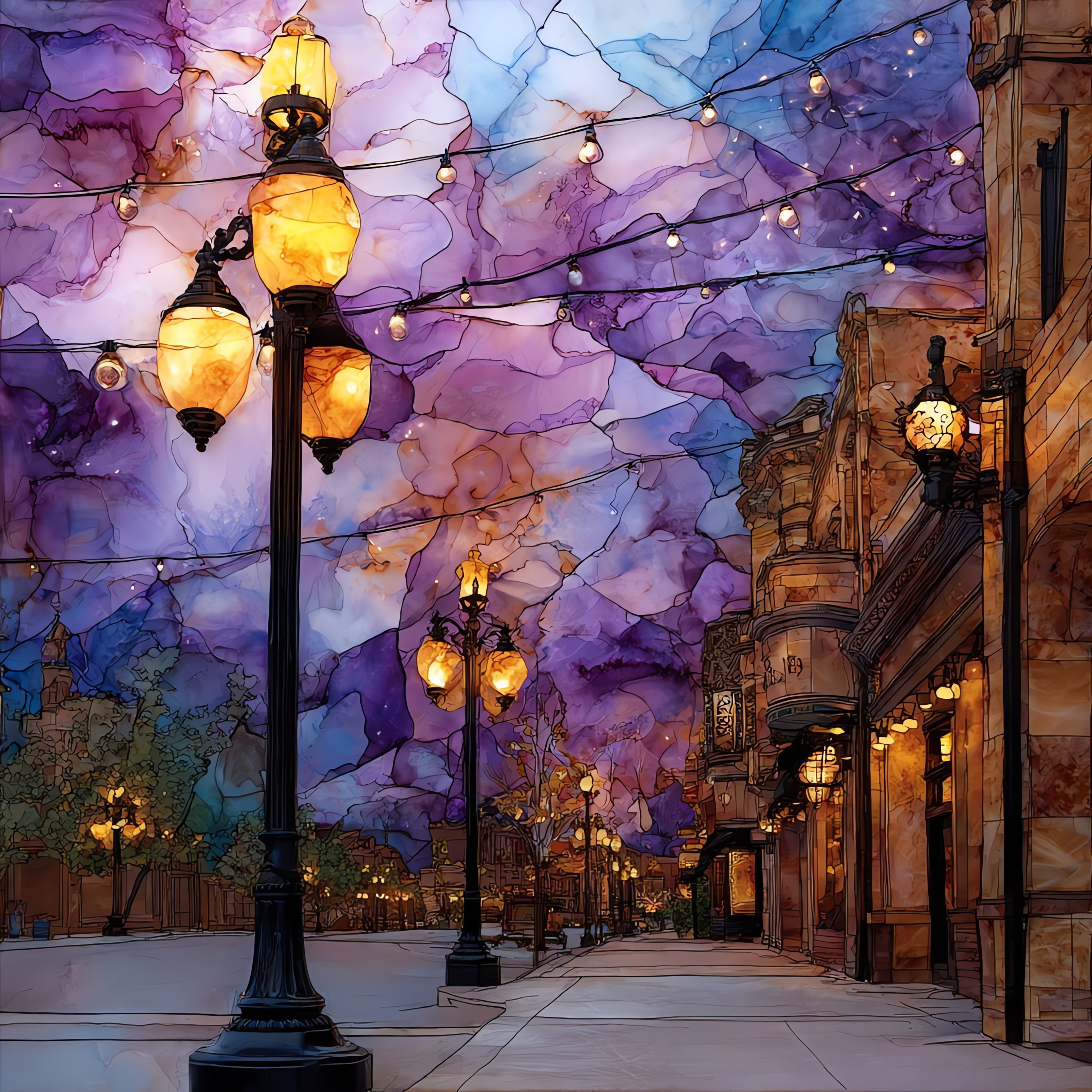
Gaslamp Quarter
— — the brick that kept its century.
Not only on a wall.
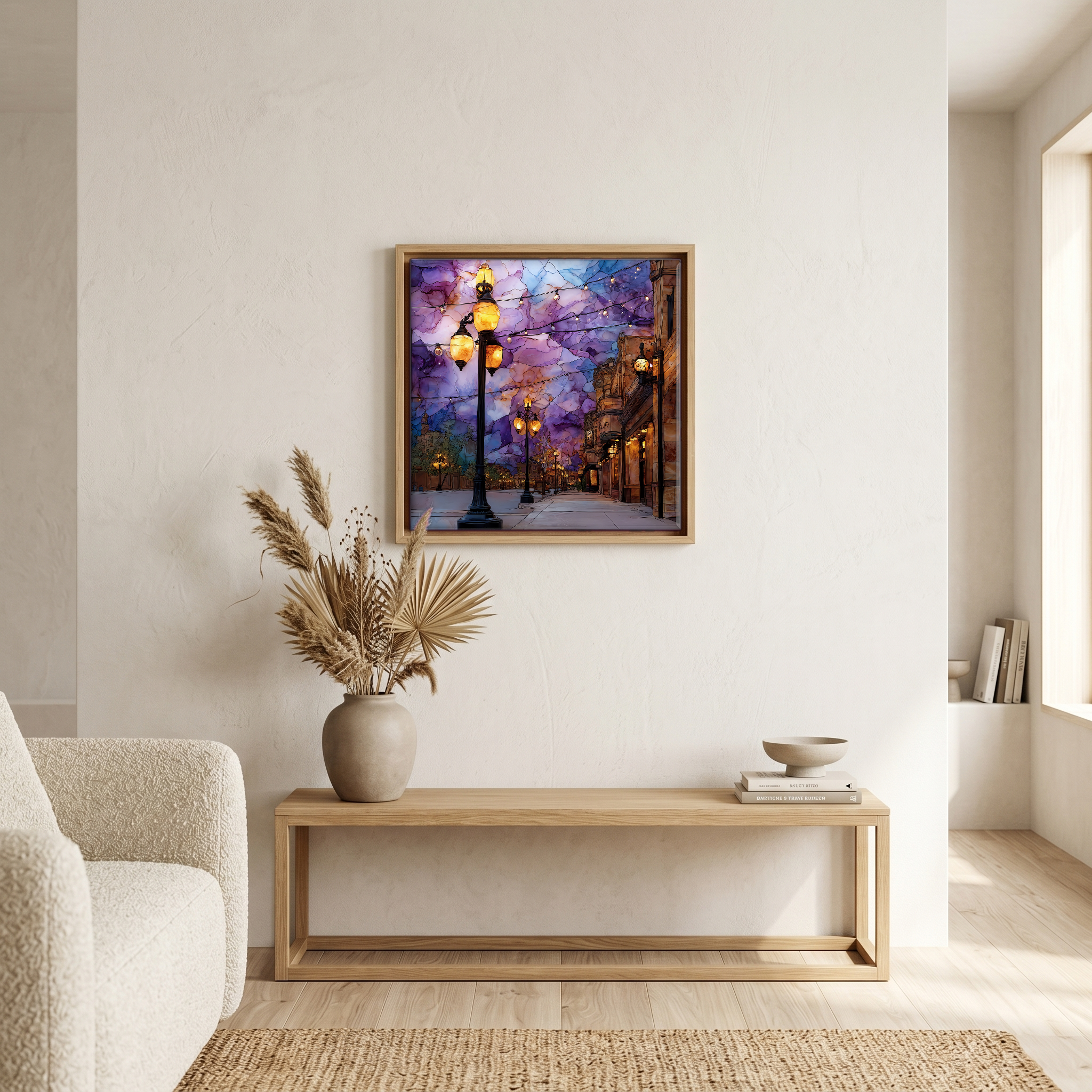
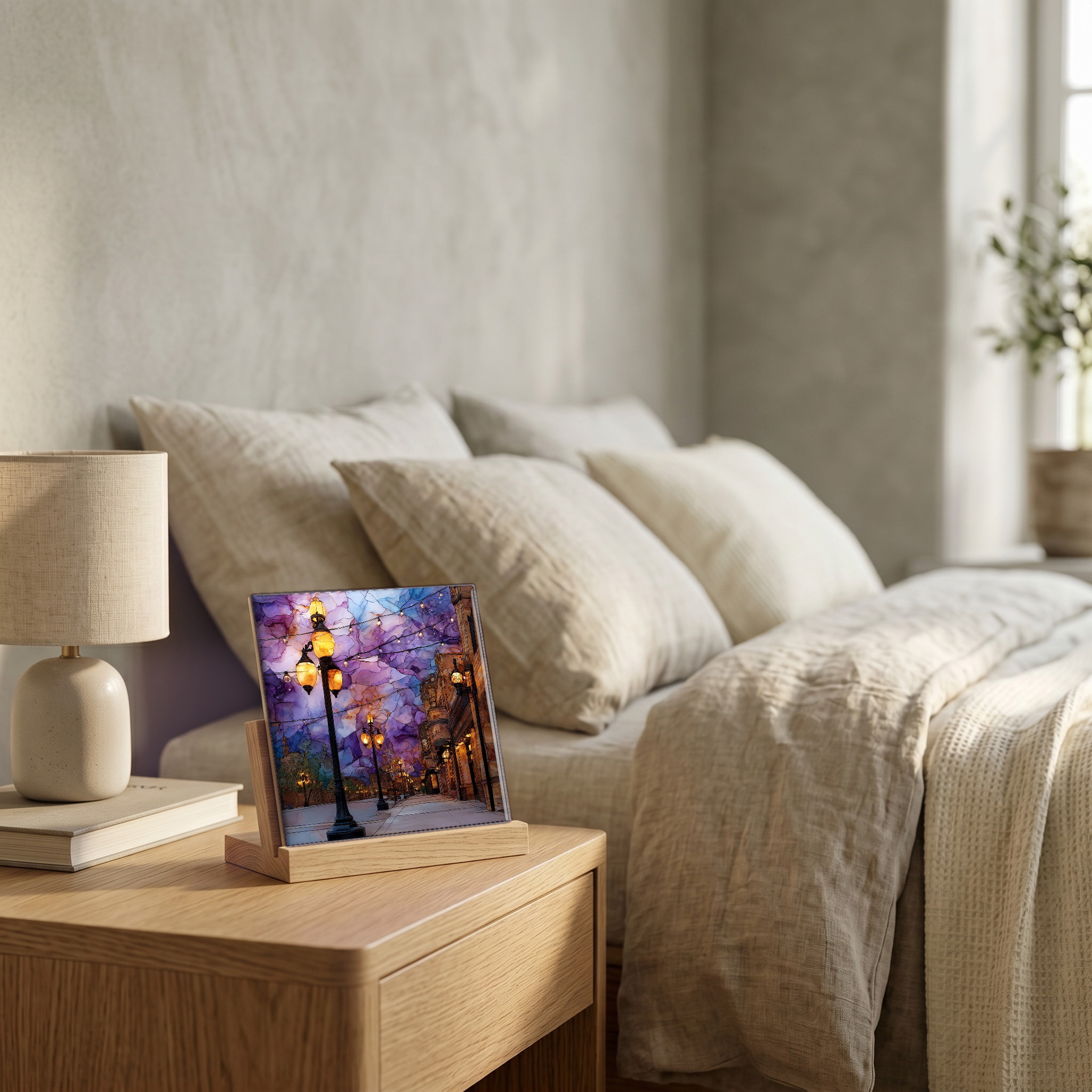
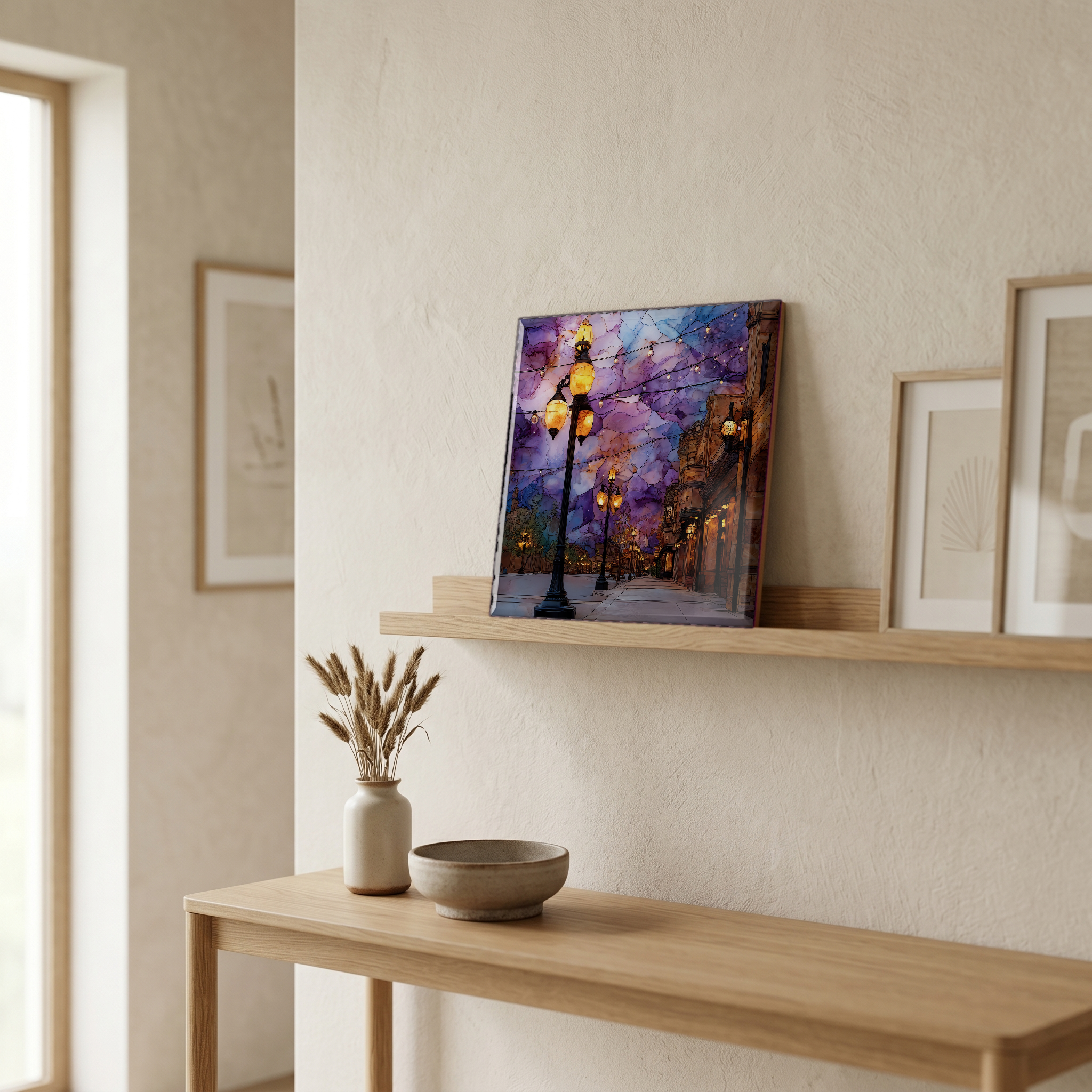
“Sixteen and a half blocks of Victorian brick in downtown San Diego, saved from demolition in the seventies and now lit each evening by the cast-iron lamps that gave the restored quarter its modern name. The Louis Bank of Commerce still anchors Fifth Avenue with its twin turrets; the William Heath Davis House, hauled here from Maine in 1850, is the oldest framed building downtown. Walk through at dusk and the lamps come on one by one against the brick. Petco Park stands one block east. The bay is two blocks south. The light here is its own thing.
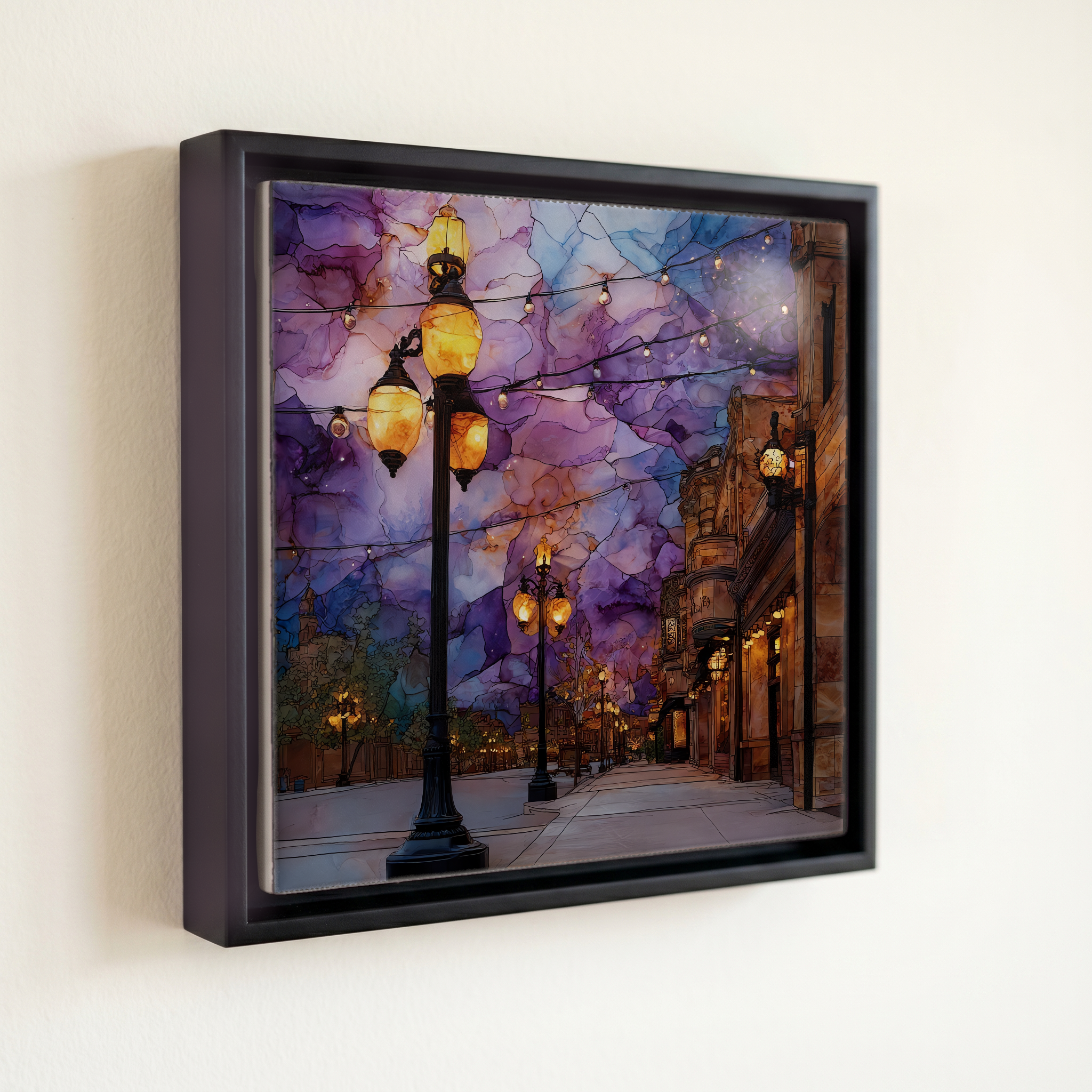
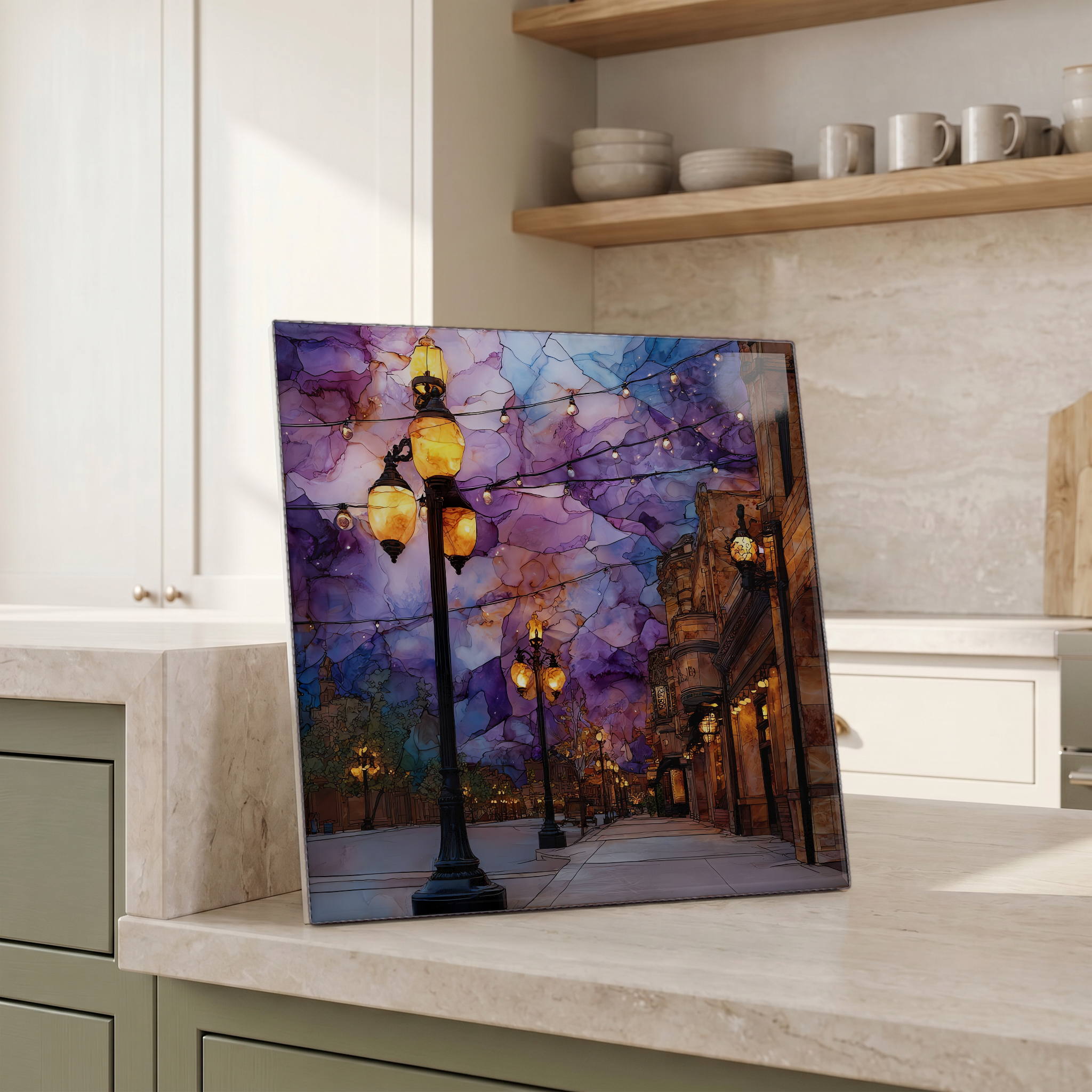
Gaslamp Quarter, on ceramic.
Each tile is finished by hand in our Knoxville studio. Artwork is slowly infused into the ceramic surface under high heat and pressure, and rests beneath a thin glossy finish. The colour lives in the surface, not on top of it.
Pick any four 4-inch tiles — National Parks you've been to, a Smokies set, the four seasons of one place. $ for a set of , cork-backed, ready to live on the table.
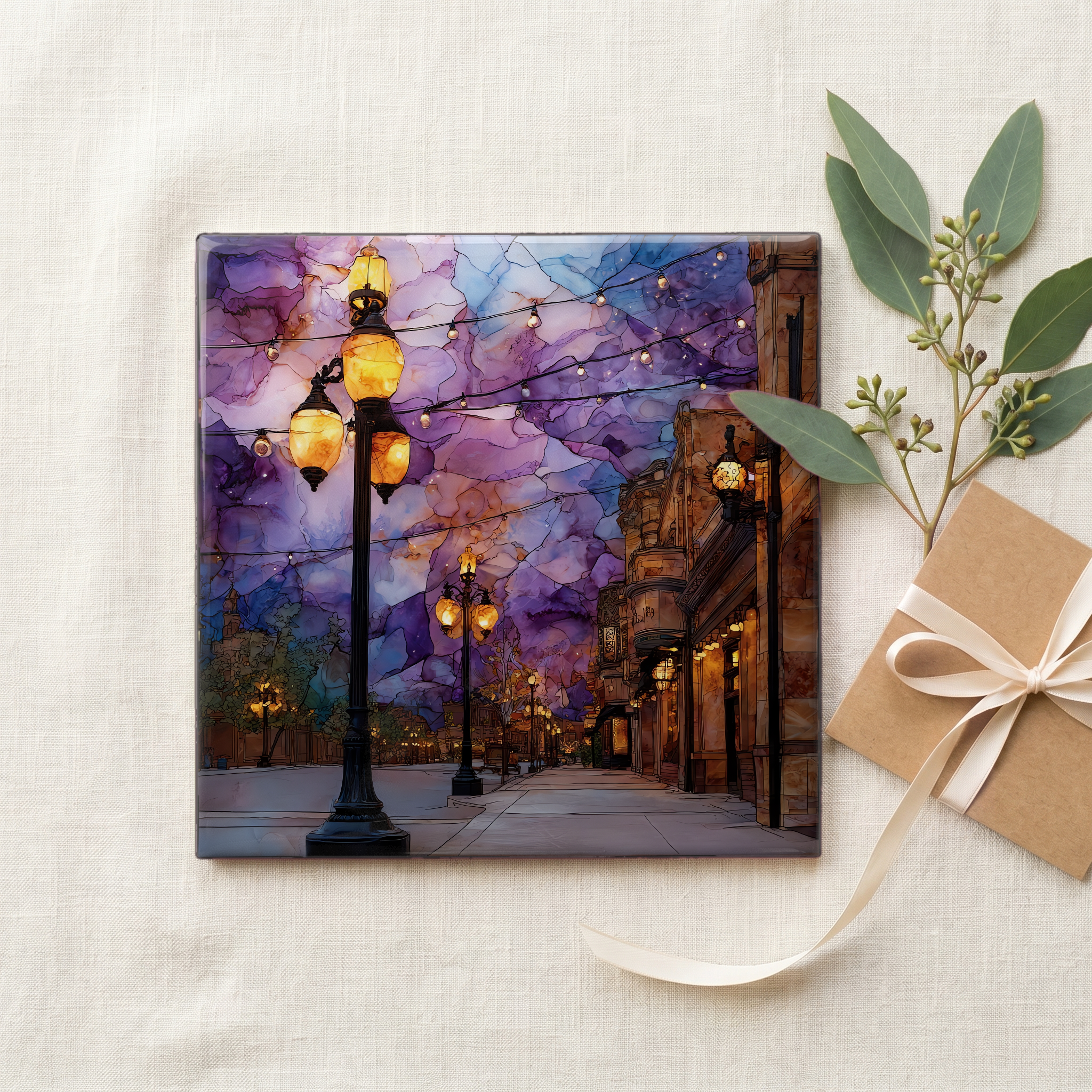
Each tile ships in a kraft box, tied with cream ribbon, with a handwritten note from the studio if you'd like to add one.
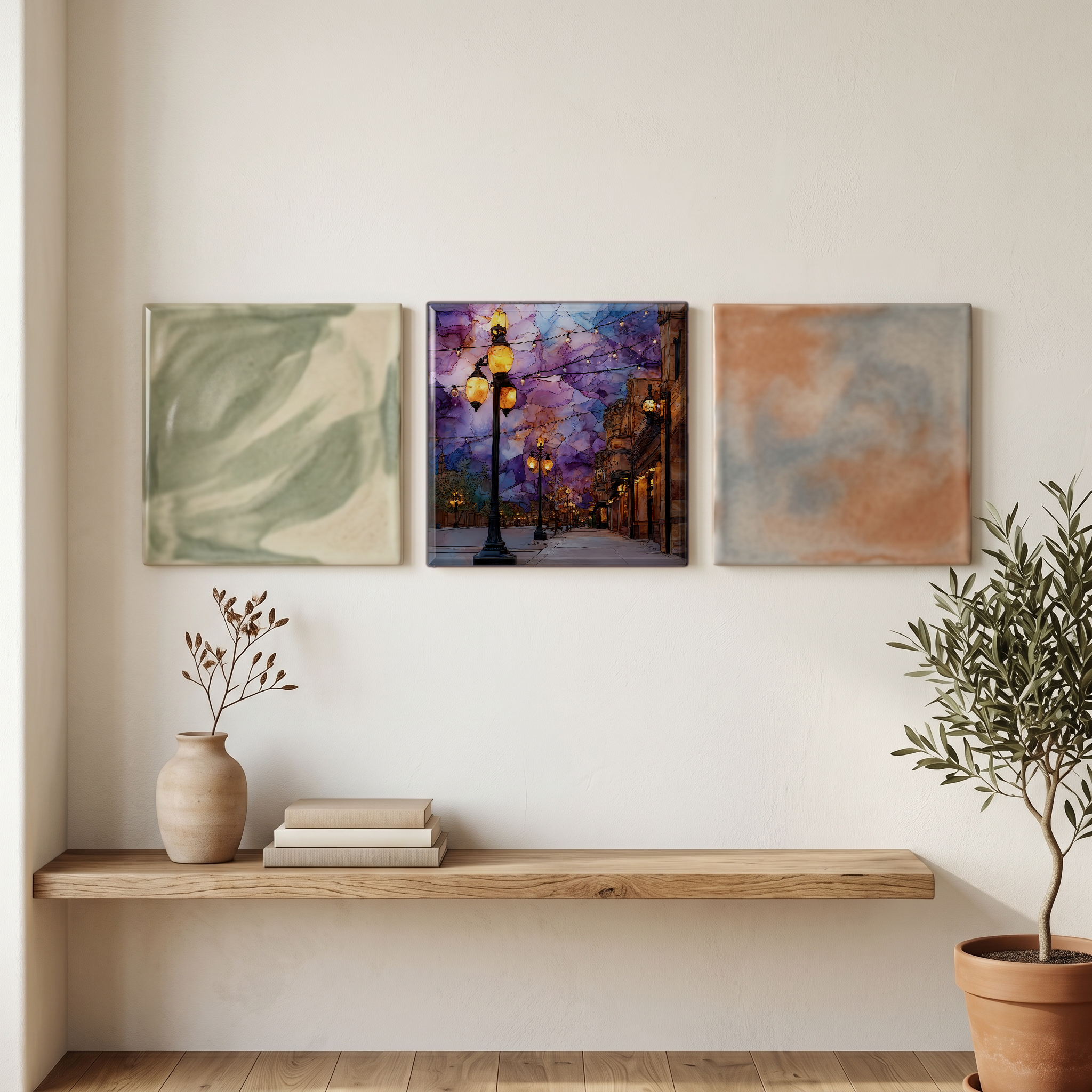
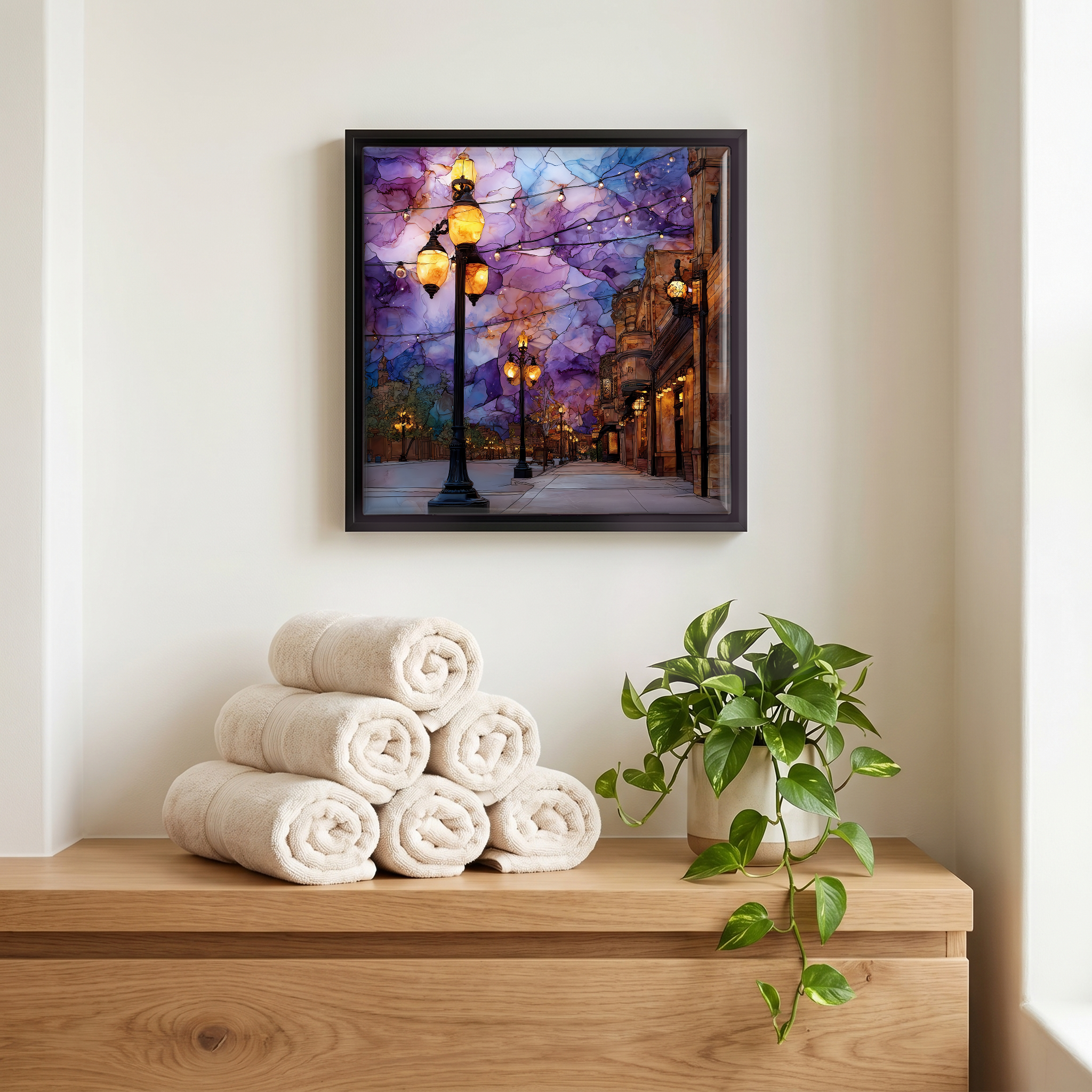
Three or five different vistas, hung together — a chapter of places you've been, or want to go.
The place, in three passes.
The Gaslamp Quarter covers 16.5 blocks of downtown San Diego, bounded roughly by Broadway, Harbor Drive, Fourth Avenue, and Sixth Avenue, and lies on land that real-estate developer Alonzo Horton acquired in 1867 to build a new commercial district closer to the bay than the original Old Town settlement. The neighborhood was added to the National Register of Historic Places in 1980 as the Gaslamp Quarter Historic District. Around 94 buildings within the district predate 1910, most in the Victorian Italianate and Romanesque Revival styles of the 1880s building boom. The quarter sits one block from Petco Park, the Padres' downtown ballpark opened in 2004, and two blocks from the San Diego Convention Center.
The district's signature is its concentration of Victorian Italianate and Romanesque Revival commercial buildings, most built between 1880 and 1893, when the arrival of the Santa Fe line in 1885 turned San Diego from a frontier town into a building boom. The Louis Bank of Commerce, completed in 1888 on Fifth Avenue, is one of the oldest stone-faced commercial buildings in the city, with two baroque turrets crowning its corners. The Yuma Building and the Keating Building, both built within the following two years, are among the better-preserved examples of the era's Italianate commercial style. The oldest structure is the William Heath Davis House, a saltbox prefabricated in Portland, Maine in 1850 and shipped around Cape Horn. It was moved to its current site at 410 Island Avenue in 1984.
The quarter's name comes from the gas lamps that lit Victorian commercial streets across late nineteenth-century American cities; the present-day lamps along Fifth, Fourth, and Sixth Avenues are electric replicas installed during the 1980s historic restoration that gave the district its modern identity. Before the restoration the area was known as the Stingaree, the late-Victorian red-light and gambling district. The cast-iron replica lamps come on at dusk and throw a low, warm light against red brick and sandstone facades whose detail disappears into shadow until lit from below. Photographers favour the half-hour after sunset, when the western sky still carries colour from the Pacific just over a mile west and the lamps read as gold against the deepening blue.