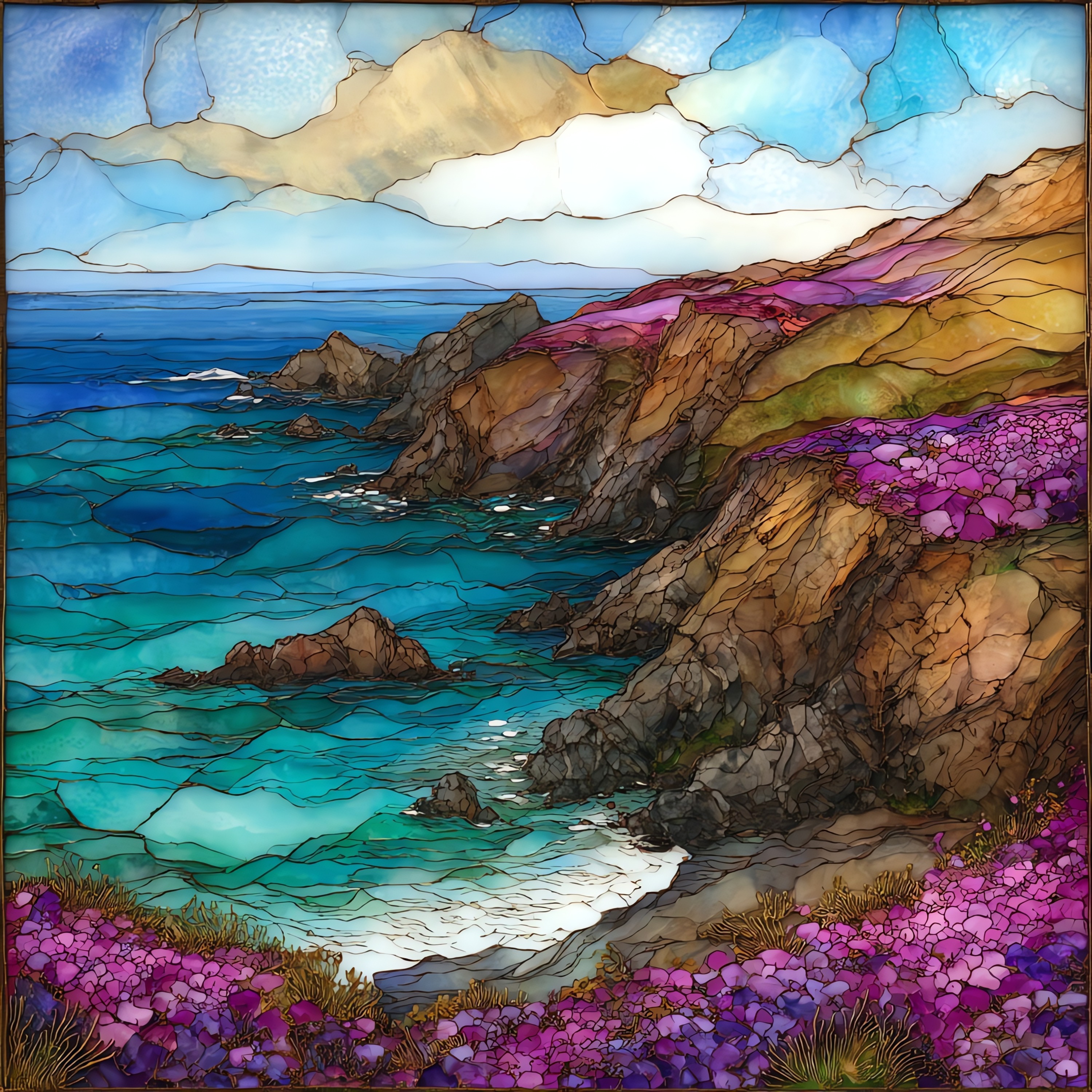
Garrapata Coast
— the coast the fog keeps remembering.
Not only on a wall.
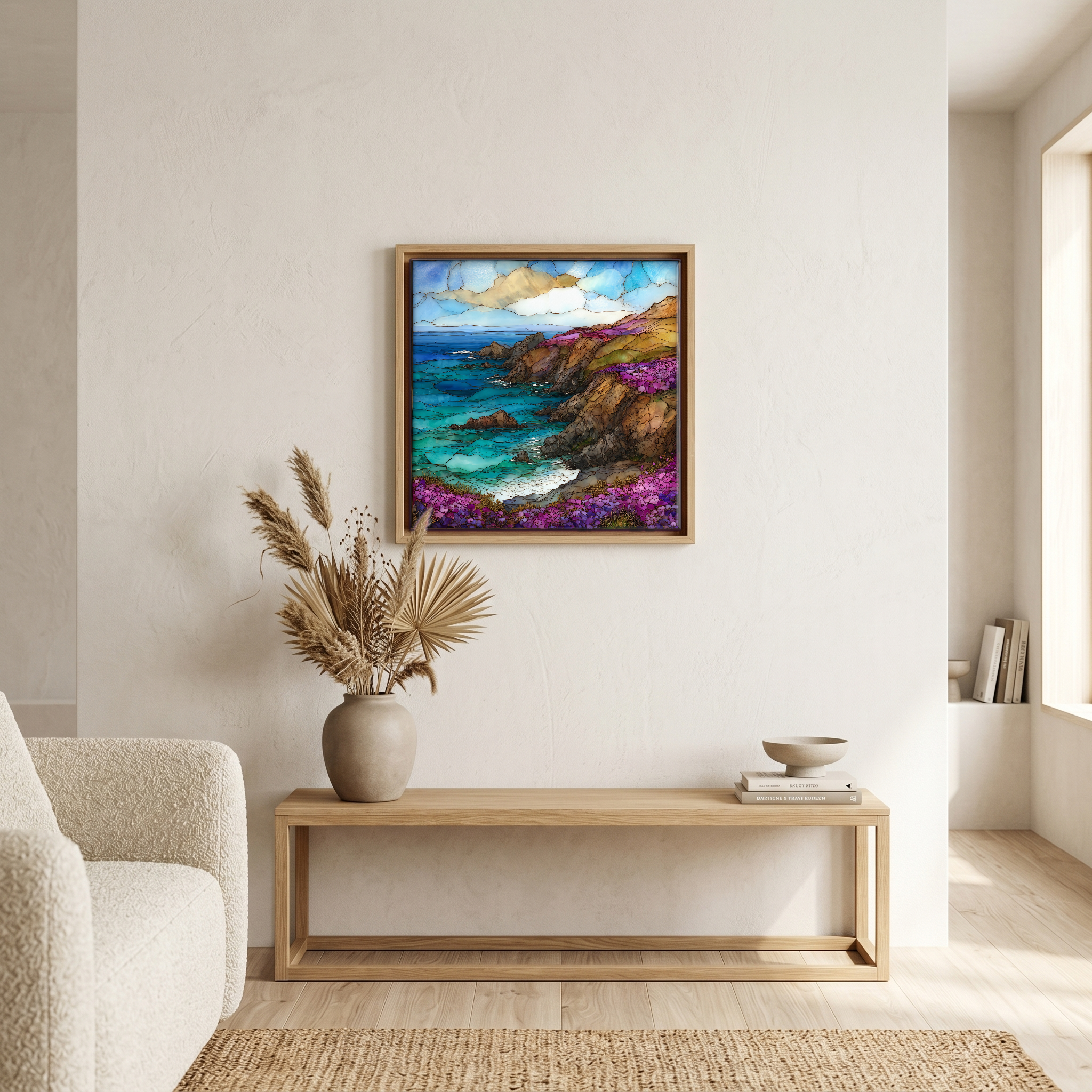
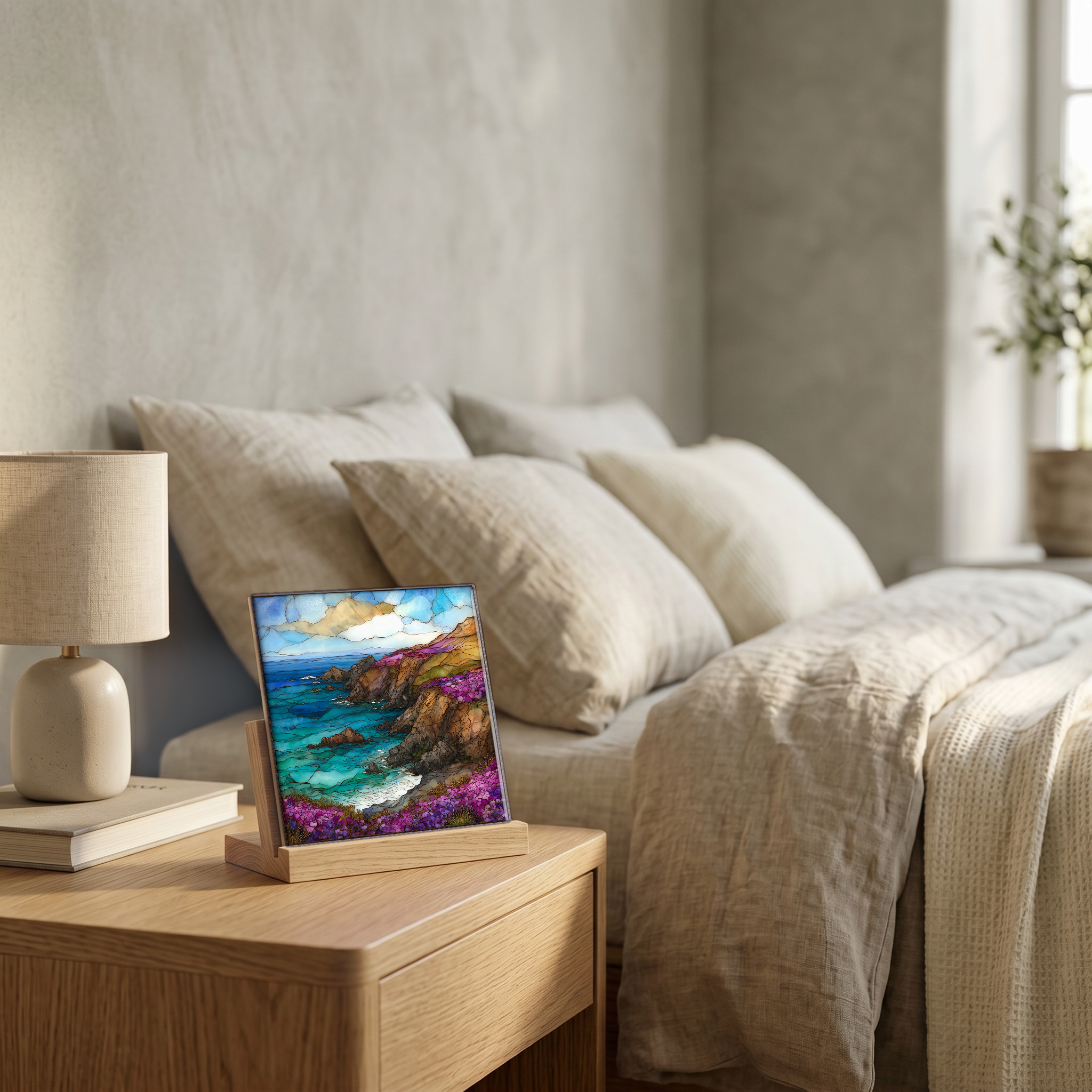
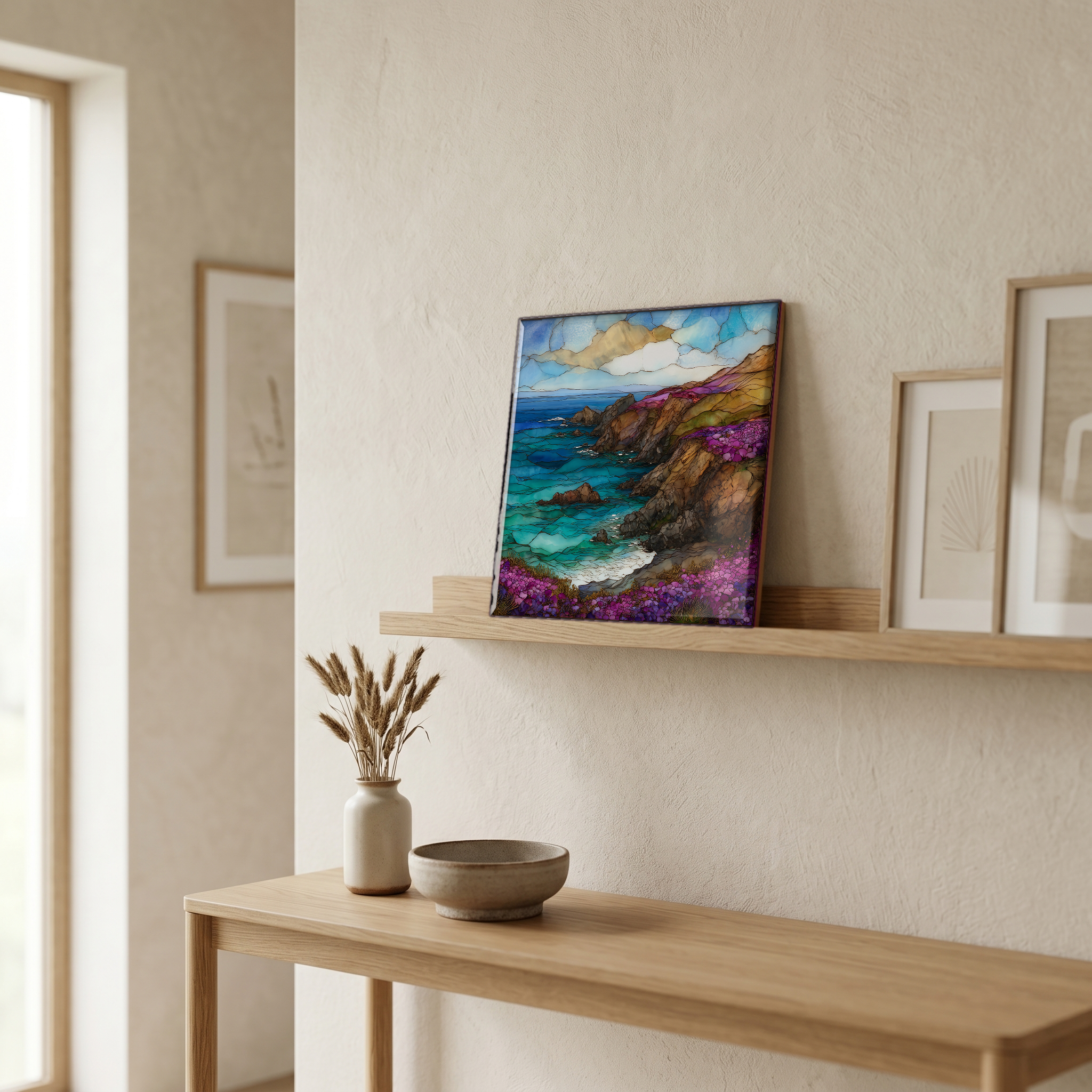
“Six miles south of Carmel, Garrapata is where the coast stops being polite. Highway 1 narrows along the bluff and the surf comes in hard against the rocks below. Monterey cypress lean toward the water; calla lilies pile up in the canyon at the beach end in January and February, white against the wet sand. Gray whales pass close offshore on their winter migration. The fog comes in by afternoon and the headland at Soberanes Point goes silver, then gone. The park has no gate, just nineteen numbered turnouts along the road. Cars pull off; nobody hurries.
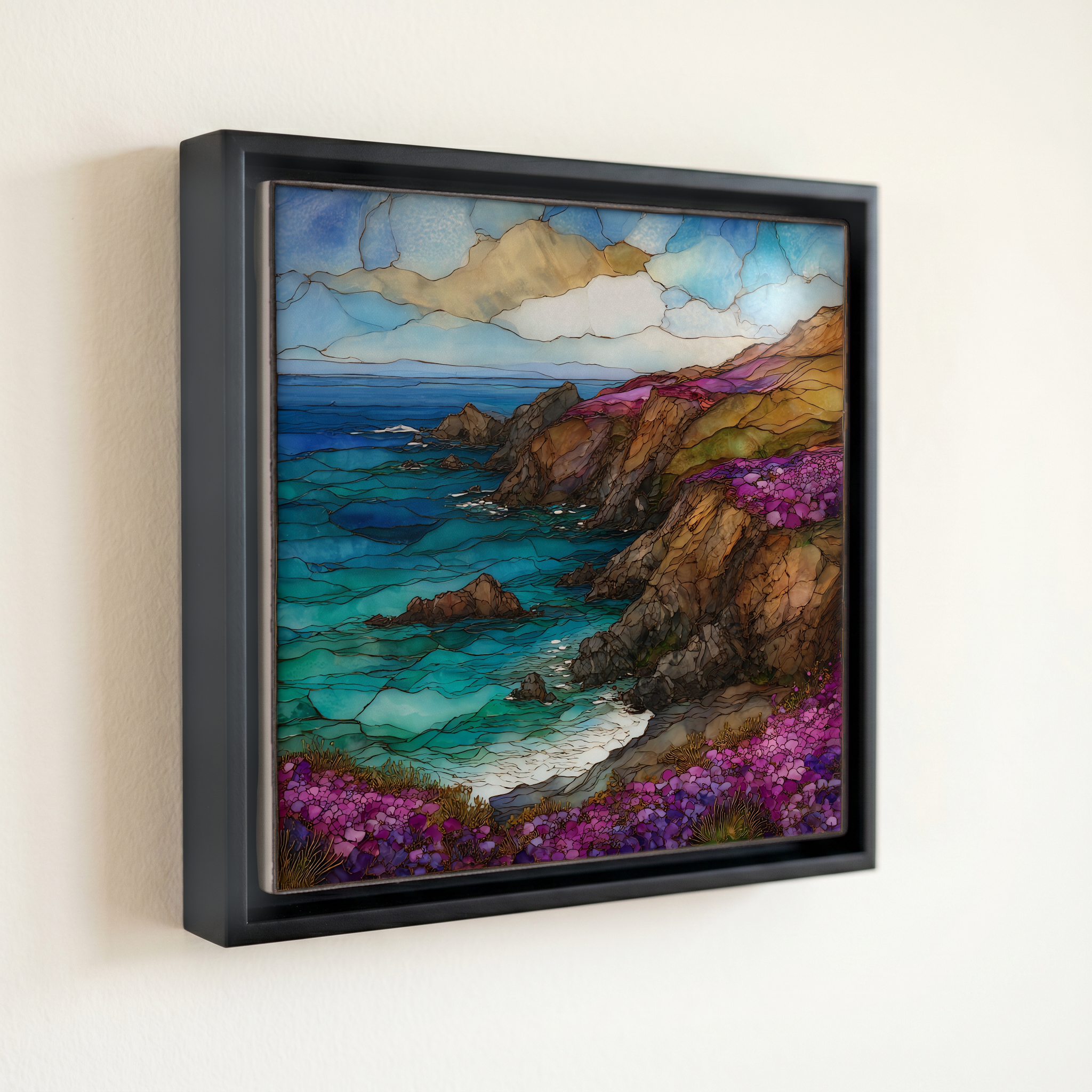
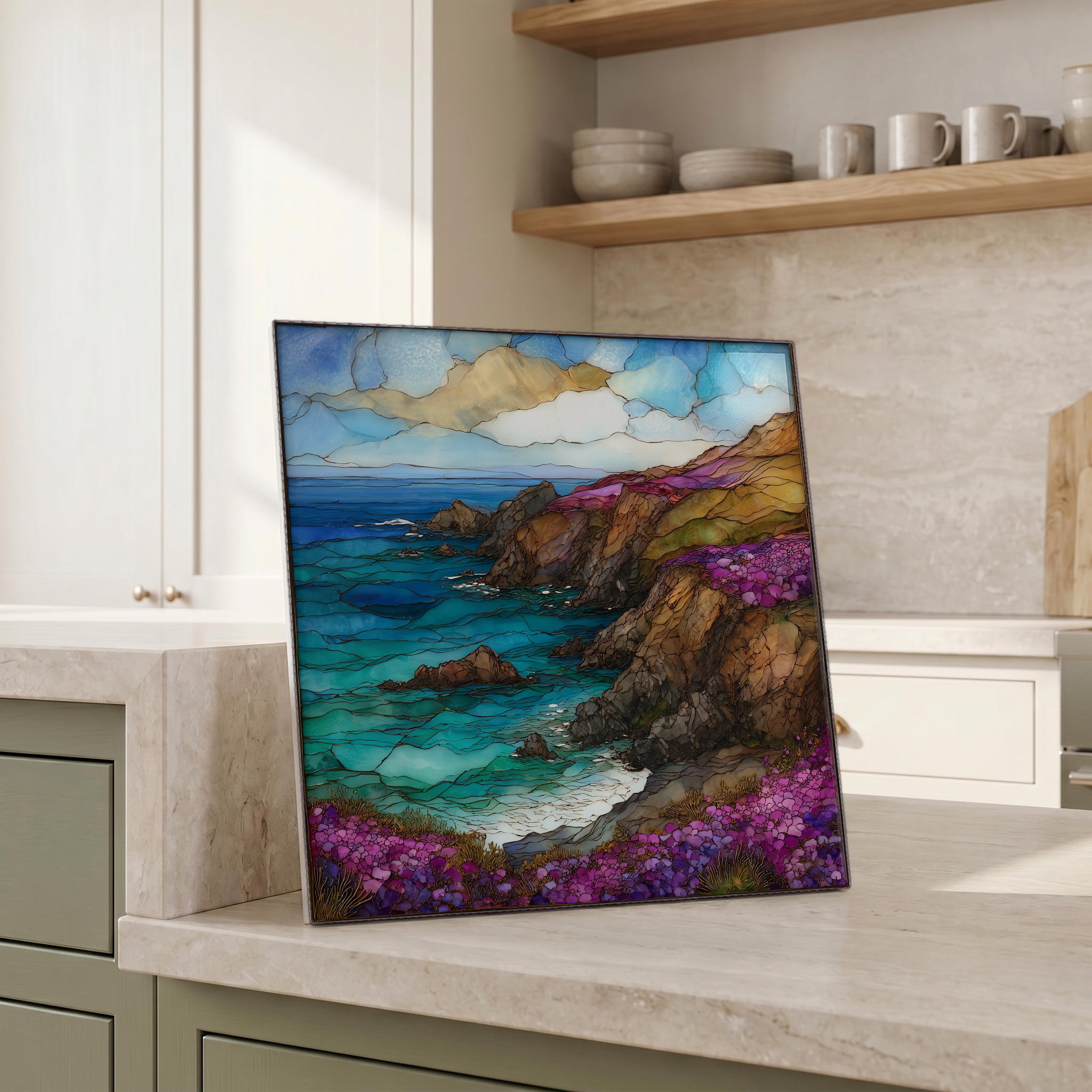
Garrapata Coast, on ceramic.
Each tile is finished by hand in our Knoxville studio. Artwork is slowly infused into the ceramic surface under high heat and pressure, and rests beneath a thin glossy finish. The colour lives in the surface, not on top of it.
Pick any four 4-inch tiles — National Parks you've been to, a Smokies set, the four seasons of one place. $ for a set of , cork-backed, ready to live on the table.

Each tile ships in a kraft box, tied with cream ribbon, with a handwritten note from the studio if you'd like to add one.

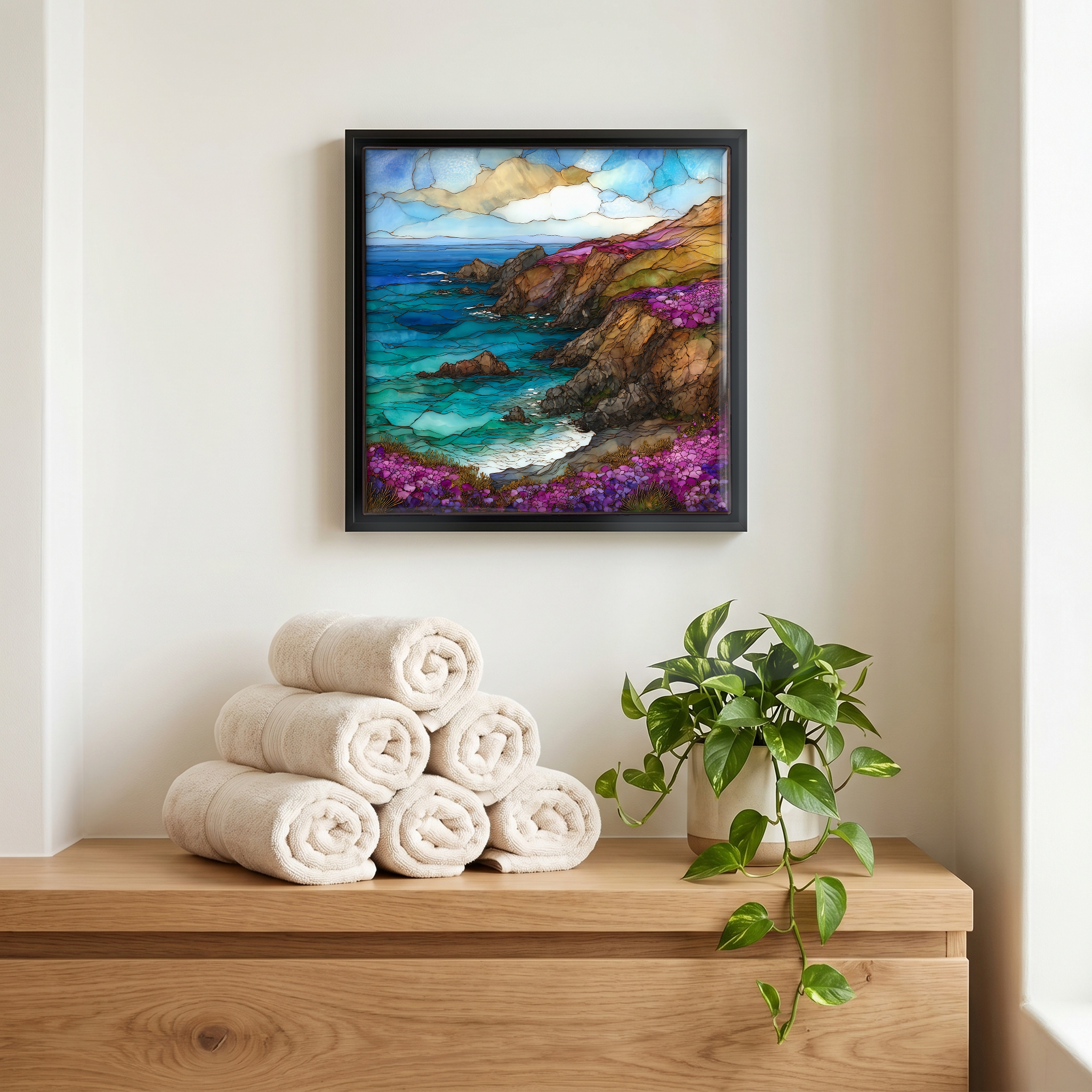
Three or five different vistas, hung together — a chapter of places you've been, or want to go.
The place, in three passes.
Garrapata State Park spans roughly 2,939 acres along Highway 1 in Monterey County, six and a half miles south of Carmel-by-the-Sea. The park protects about two miles of granite-cliffed shoreline and reaches inland to Rocky Ridge, near 1,977 feet, where coast redwoods stand in the upper drainage of Soberanes Creek. The coastal terrace was the territory of the Rumsen Ohlone, then a Mexican-era cattle rancho; the State of California established the park in 1979. There is no entrance kiosk. Nineteen numbered turnouts along the highway serve as access points to bluff trails, the beach, and Soberanes Point. The name is Spanish for tick.
Garrapata reads differently across the year. From late December through February, gray whales pass close to the bluffs on their southbound migration to Baja; the return trip with calves comes through March and April. Wild calla lilies bloom in a small canyon at the south end of Garrapata Beach for a few weeks in January and February, fed by a creek that cuts down to the sand. The hills above Highway 1 turn green in winter and gold by June. Summer brings dense afternoon fog that climbs the canyons and erases the headlands. The 2016 Soberanes Fire burned much of the inland trail network; recovery along Soberanes Canyon is ongoing.
There is no kiosk, no gate, and no day-use fee. Nineteen numbered turnouts along Highway 1 mark the access points, and most visits begin by parking on the shoulder and stepping over a wooden stile. The southern gates lead down a steep eroded path to Garrapata Beach, the broad sand cove that holds the wild calla lilies in winter. Gates near the north end reach Soberanes Point, a knot of granite headlands with the clearest whale-watching sightlines in the park. Soberanes Canyon Trail climbs from the highway into redwoods along the creek and on toward the open chaparral of Rocky Ridge. Highway 1 is narrow and turnouts fill on weekends; arrive before nine.