Wender·Vista
Fonts Point
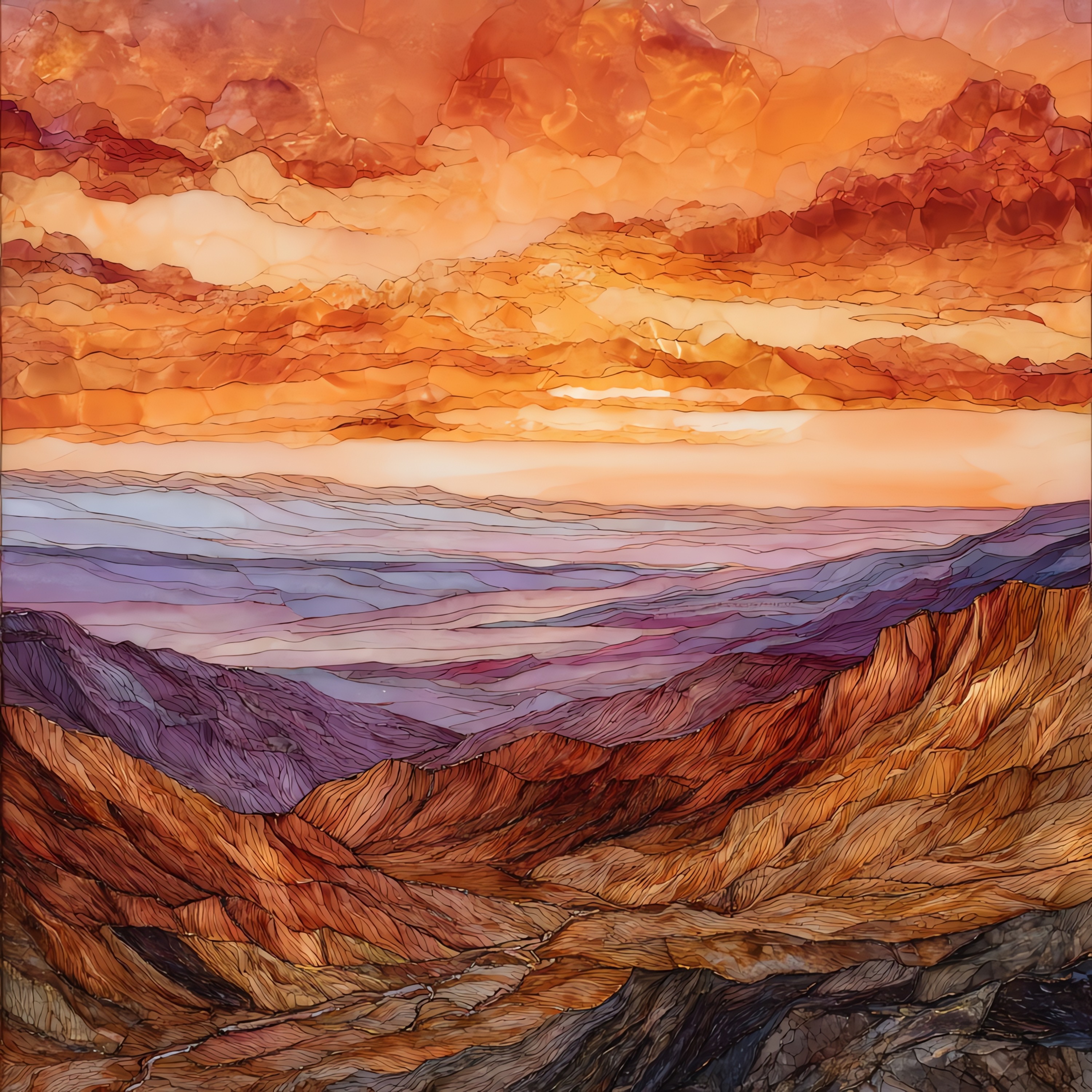
shown on ceramic, 12-inch tileCalifornia · United States
at the rim of the Borrego Badlands, east of San Diego

Fonts Point

the half-hour the badlands turn to gold.

Where it lives

Not only on a wall.

A small tile on the nightstand catching the morning. A larger one above the fire. Yours, wherever you spend the slow hours.
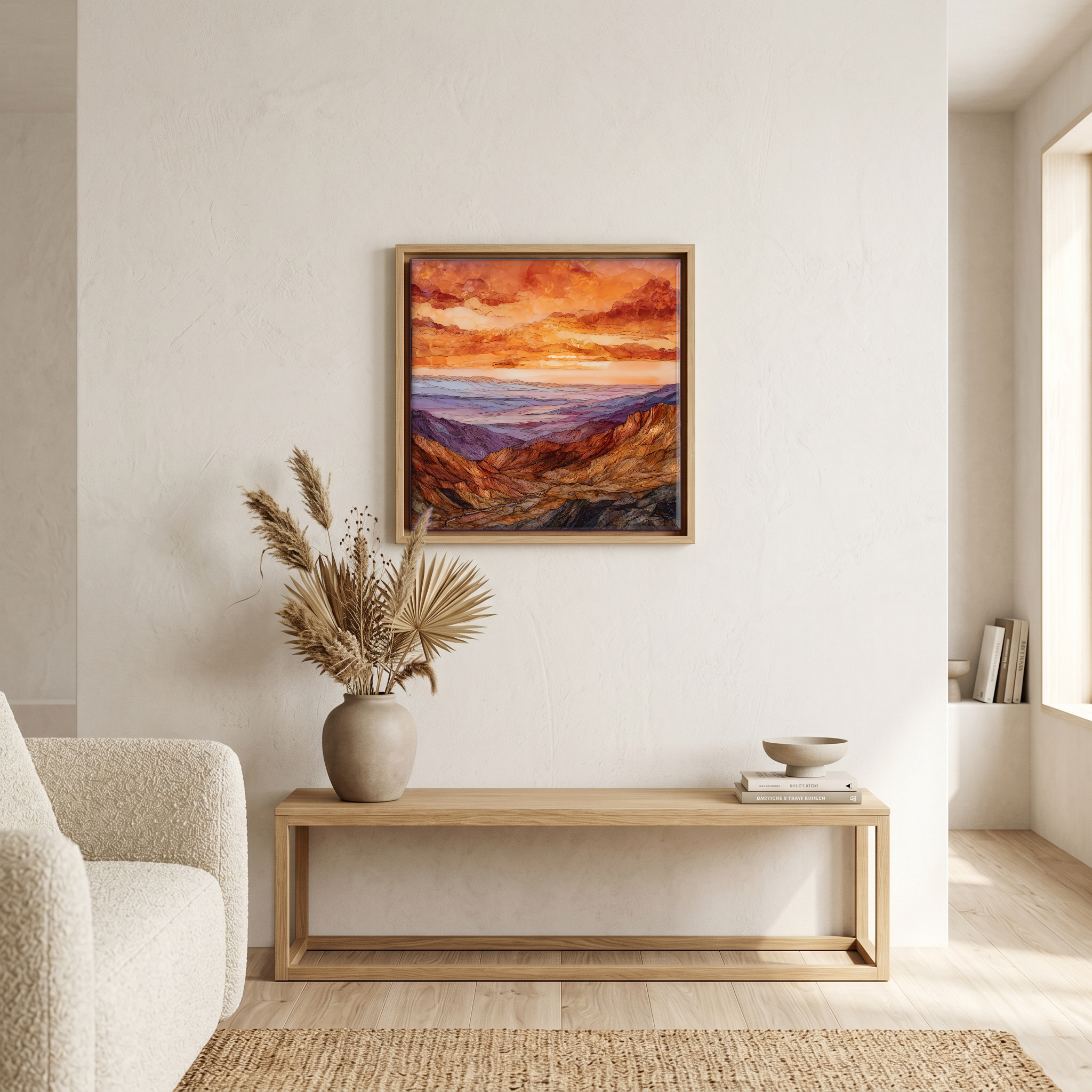
Above the bench, in a warm oak surround.
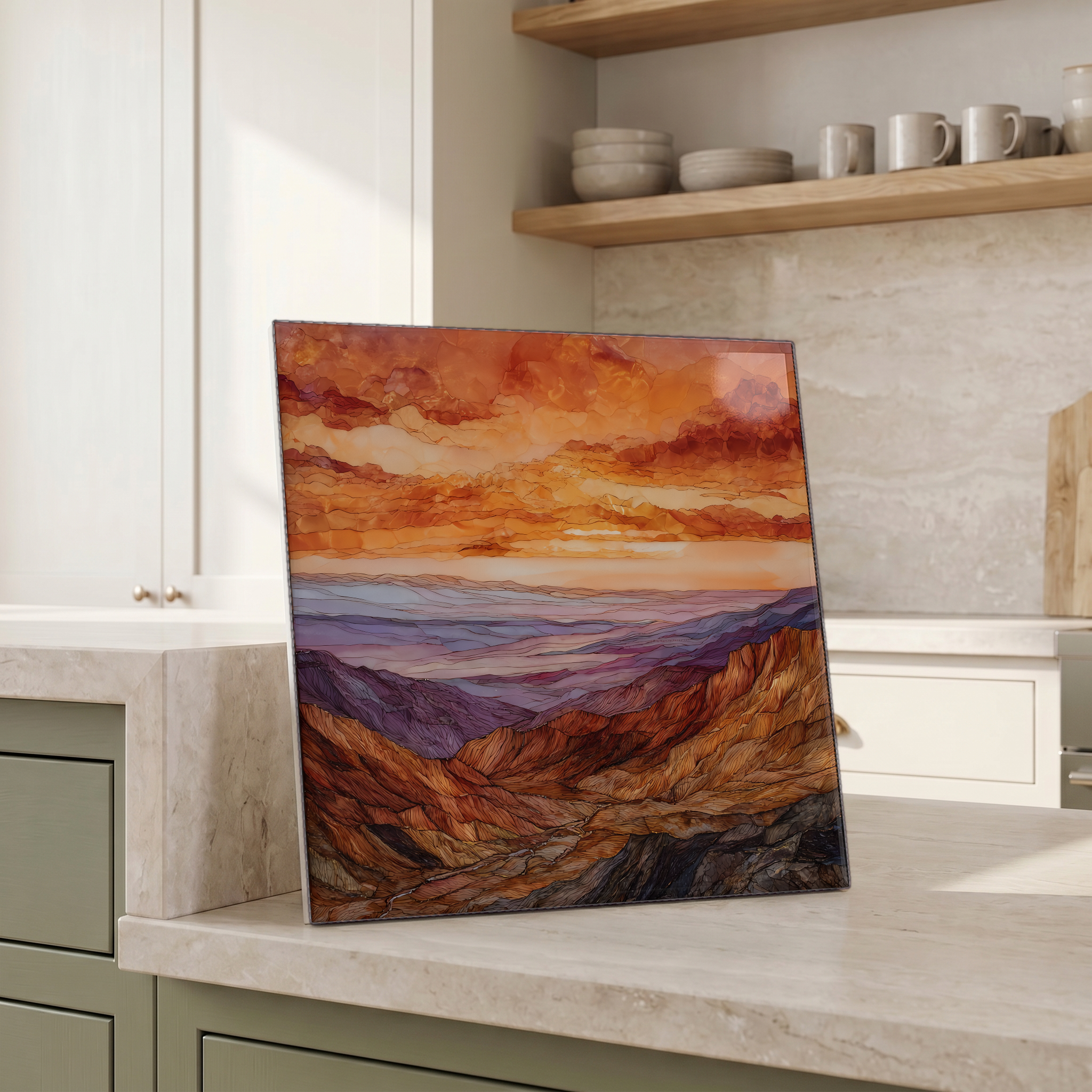
Beside the kettle, propped on the counter.
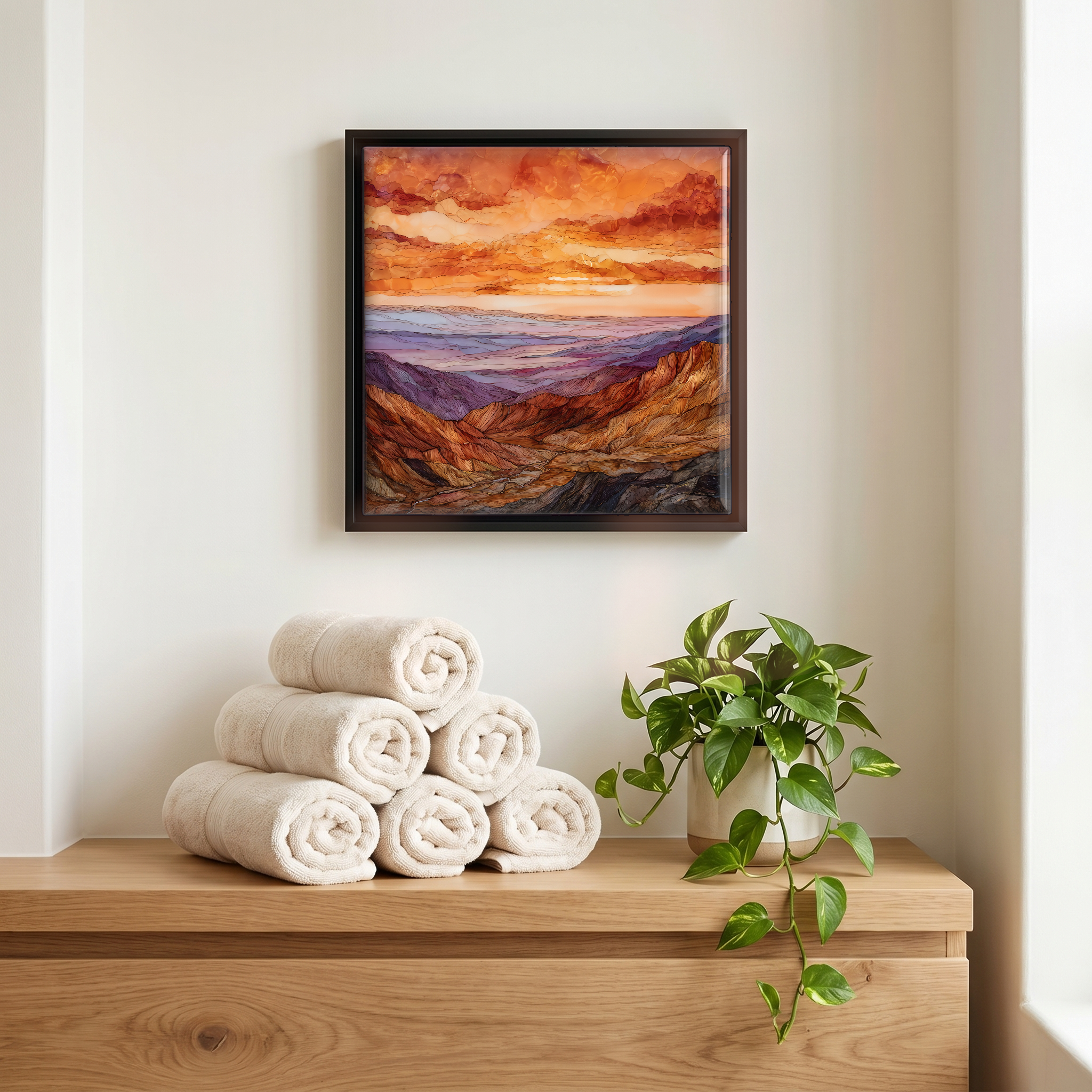
Above the linens, in a slim black surround.
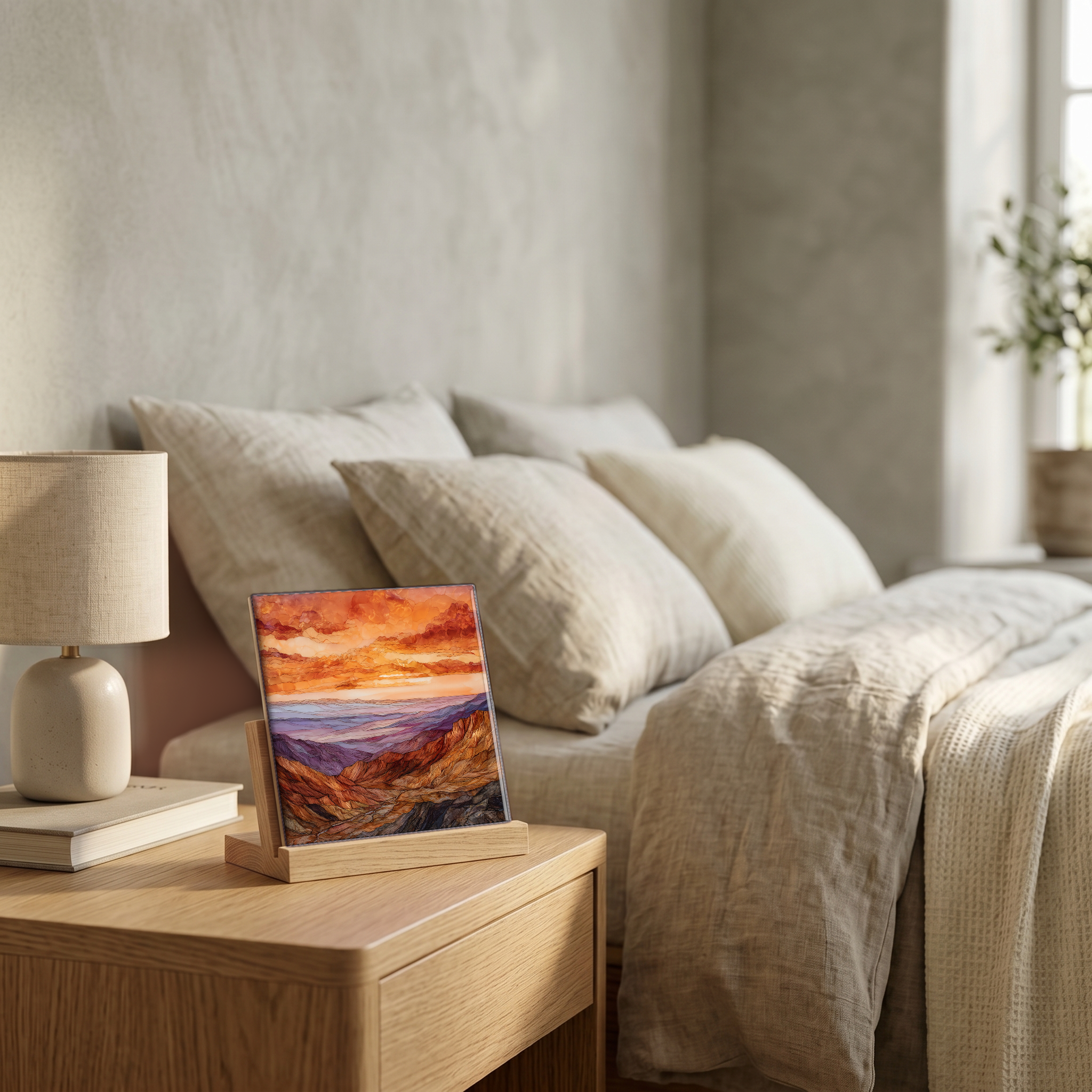
On the nightstand, on a light oak stand.
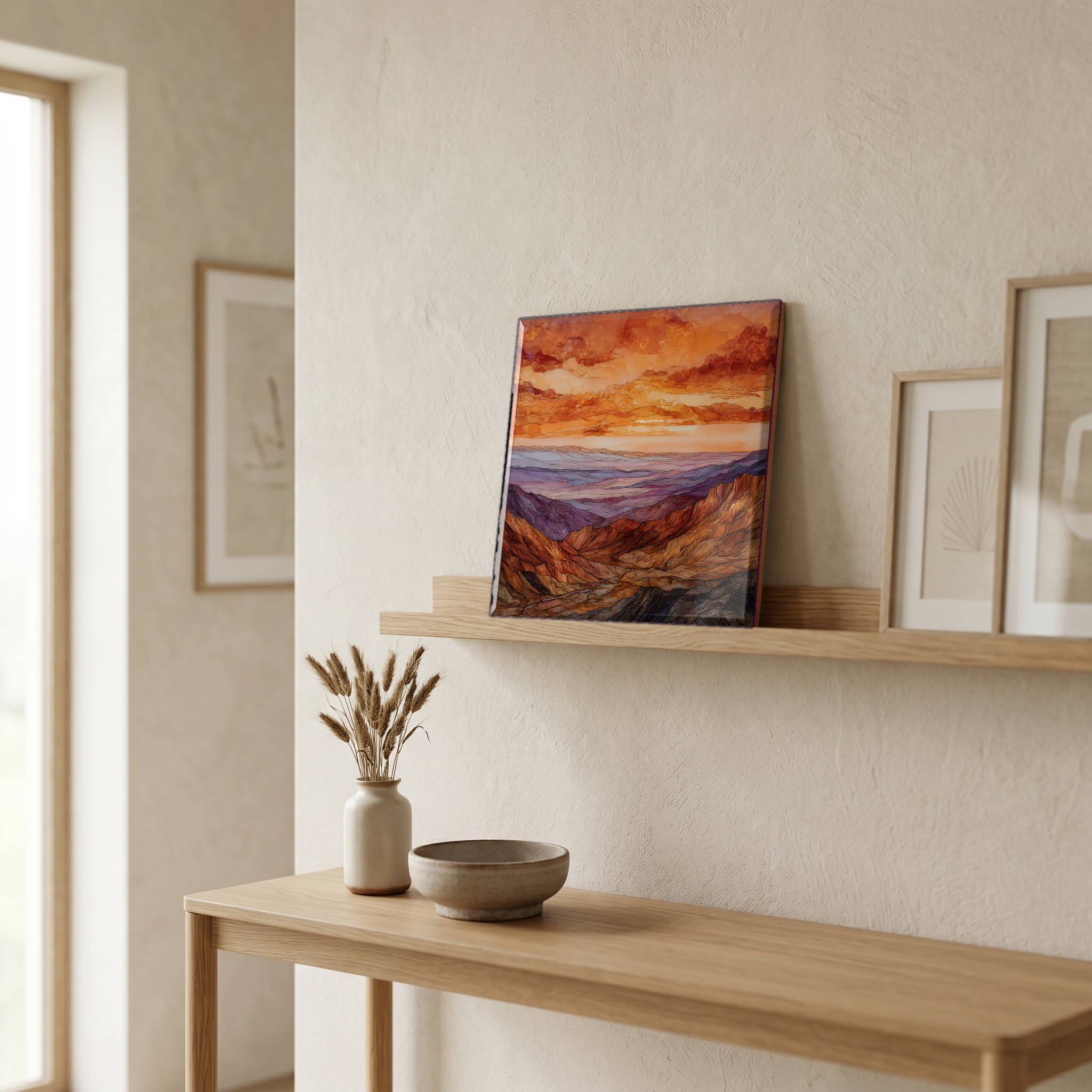
On a picture ledge, where the light comes in.
a note from the studio

A 4-mile dirt road turns off the desert highway east of Borrego Springs, slow and sandy, climbing a long ridge in Anza-Borrego. The cars stop at the rim. The badlands fall away below: eroded mudstone and sandstone laid down when the Gulf of California still reached this far north, now a four-million-year cross-section of a sea that drained. Father Font, who came through with the Anza expedition in 1776, called it the sweepings of the earth. Late in the day the light catches every ridge edge and the whole valley turns the colour of a kept coal. Nobody talks much at the rim.
from the studio
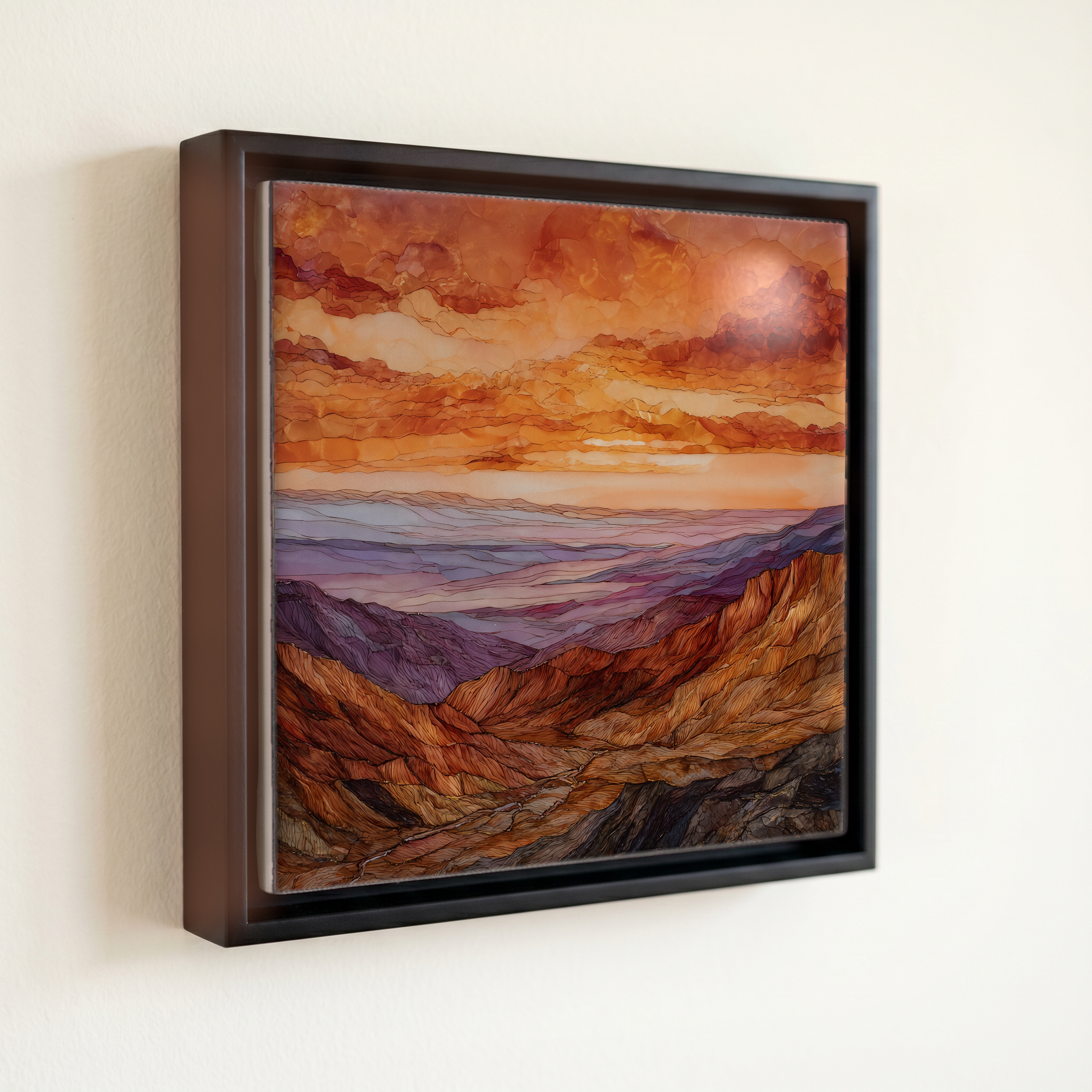
shown in a slim black floating frame · 6 × 6 in
— bring it home

Fonts Point, on ceramic.

Each tile is finished by hand in our Knoxville studio. Artwork is slowly infused into the ceramic surface under high heat and pressure, and rests beneath a thin glossy finish. The colour lives in the surface, not on top of it.

What kind of piece?
One tile — square or rectangle.
How big?
the popular one — counter, shelf, nightstand
6 × 6 in · 15 cm · 1.6 lb
Surface finish
A clear glossy finish — the artwork reads as if under resin. Ideal for show-pieces and framed wall art.
How it sits
A hidden cleat — sits ¼″ proud of the wall.
$58
Hand-finished and shipped from our studio at the foot of the Smokies. On your wall in about ten days.
size
6 × 6 in
15 cm
weighs
1.6 lb
solid in the hand
surface
ceramic, hand-finished
art rests beneath a thin glossy finish
from
Knoxville, TN
our family studio, at the foot of the Smokies
— start a Coaster Set

Pick any four 4-inch tiles — National Parks you've been to, a Smokies set, the four seasons of one place. $ for a set of , cork-backed, ready to live on the table.
comes gift-ready
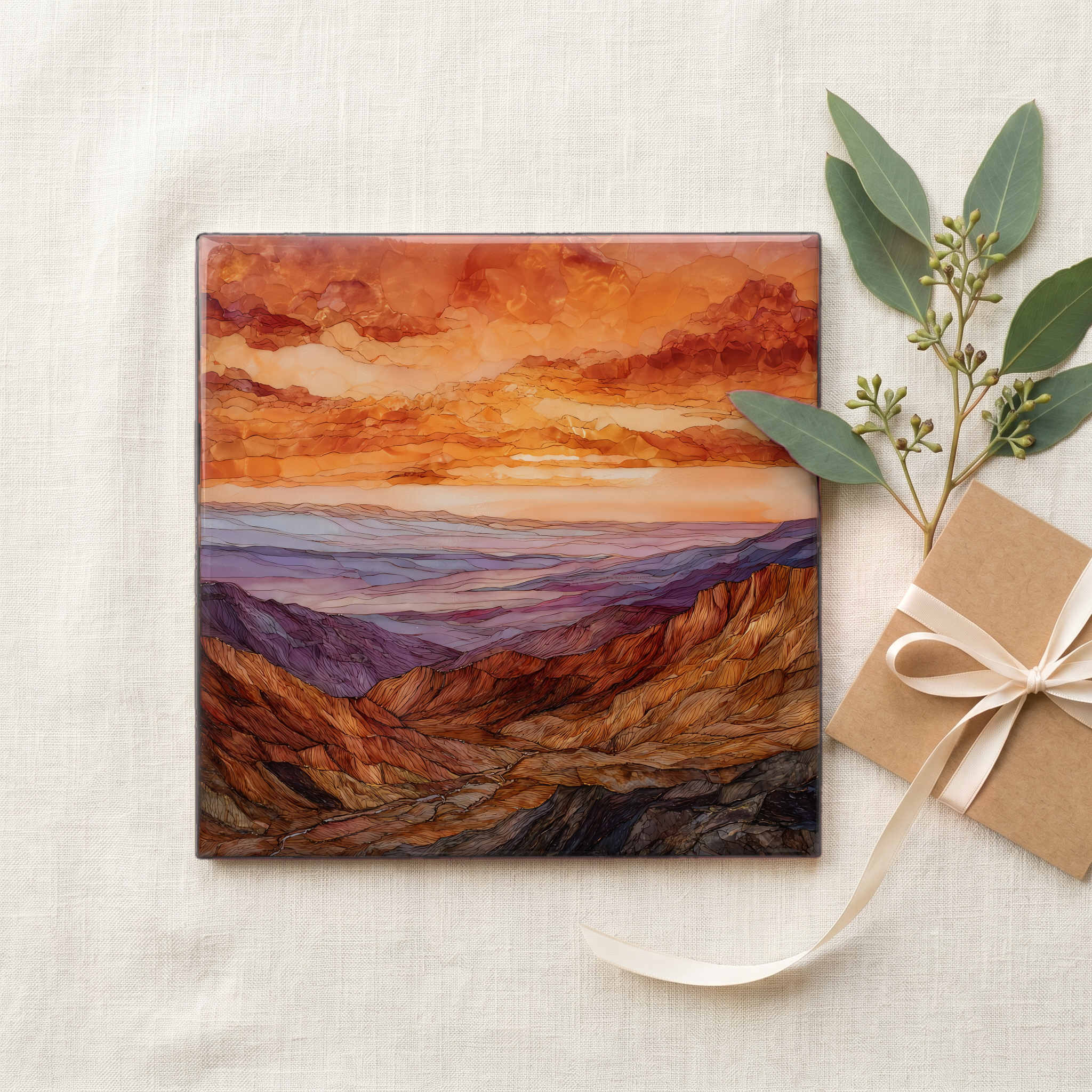
comes gift-ready

Each tile ships in a kraft box, tied with cream ribbon, with a handwritten note from the studio if you'd like to add one.
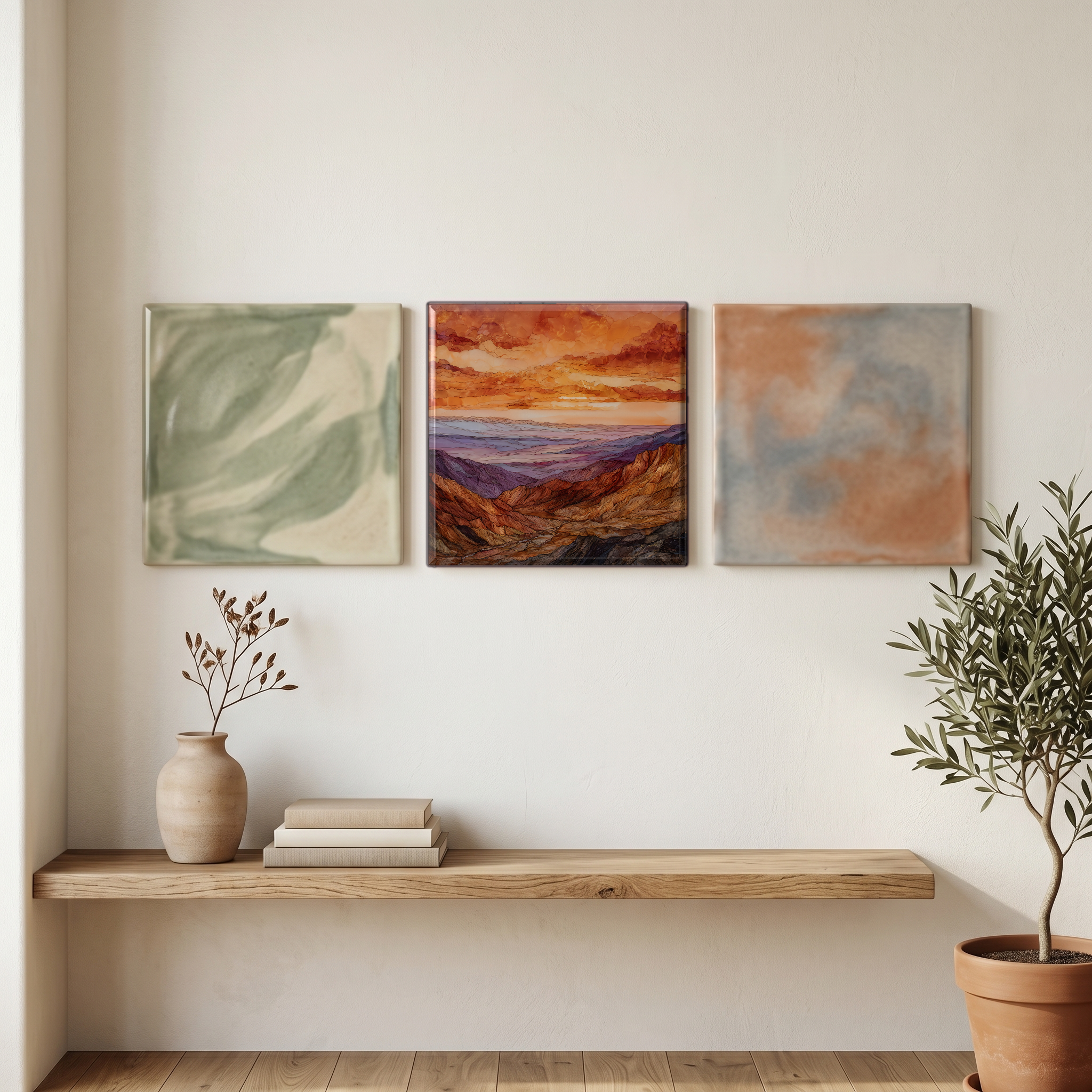
or build a grouping
or build a grouping

Three or five different vistas, hung together — a chapter of places you've been, or want to go.

about Fonts Point

The place, in three passes.

A little of what's known, in case you fall down the rabbit hole — or want to go see it yourself.
the place

Fonts Point is a ridgetop overlook on the western edge of the Borrego Badlands, in Anza-Borrego Desert State Park, at 650,000 acres the largest state park in California. It sits at 1,253 feet of elevation, reached by a 4-mile sandy dirt road that turns off County Road S-22, the Borrego-Salton Seaway, east of Borrego Springs in San Diego County. The road is unsigned, soft, and rutted; California State Parks consistently recommends high-clearance four-wheel drive, particularly after rain has washed out the wheel tracks. The point is named for Pedro Font, the Franciscan friar who served as diarist on Juan Bautista de Anza's 1775-1776 overland expedition from Sonora to Monterey, which passed through the valley below this rim.

the stone

The badlands below the overlook are a layered cross-section of sediment laid down over roughly four million years, from a time when the northern Gulf of California still reached up into what is now Imperial County. Conglomerates, sandstones, claystones, and mudstones, alternating layers of sea bottom, river delta, and dry lake, were compressed, uplifted by the San Jacinto fault zone, and then carved by intermittent flash floods into the ribbed amphitheatre visible from the rim. Paleontologists working the formation have pulled mammoth, sabre-toothed cat, camel, and giant sloth fossils from these layers, one of the richest Pliocene-Pleistocene assemblages on the Pacific coast.

the light

Fonts Point is photographed almost exclusively in the last hour of daylight. The overlook faces east, so at sundown the low light rakes across the badlands from behind the viewer, and each ridge throws its own shadow into the gully behind it. The whole valley reads in layers: gold on the top edges, deep maroon in the troughs, dust hanging in the air about a thousand feet below the rim. Father Pedro Font, passing this country with the Anza expedition in the winter of 1775-76, called it the sweepings of the earth in his diary. The light at the end of the day is what changed that judgement.

where
United States · San Diego County, California
within
Anza-Borrego Desert State Park
elevation
382 m · 1,253 ft
position
33.2700° N · 116.2400° W
the neighborhood

What's nearby.

A handful of named places within an hour's walk or short drive. Some we've already painted; some we will.
21 km W
Borrego Springs
desert town
21 km W
Galleta Meadows
outdoor sculpture park
22 km W
Anza-Borrego Desert State Park Visitor Center
park visitor center
25 km W
Borrego Palm Canyon
palm-oasis canyon
30 km NE
Salton Sea
saline lake
N
Fonts Point
Borrego Springs
Galleta Meadows
Anza-Borrego Desert State Park Visitor Center
Borrego Palm Canyon
Salton Sea
common questions

What people ask.

A few questions we get about Fonts Point — and about bringing the piece home.
about the place

Fonts Point is a ridgetop overlook in Anza-Borrego Desert State Park, in eastern San Diego County, California. The 4-mile sandy access road turns off County Road S-22, the Borrego-Salton Seaway, about 13 miles east of Borrego Springs.

The overlook is named for Father Pedro Font, the Franciscan friar who served as diarist on Juan Bautista de Anza's 1775-1776 overland expedition from Sonora to Monterey. Font's journal contains one of the earliest written descriptions of the Borrego Badlands; he called them the sweepings of the earth.

The Borrego Badlands, an eroded sedimentary basin that records roughly four million years of geological history. The layers were laid down when the northern Gulf of California reached this far north, then uplifted by the San Jacinto fault zone and carved by flash floods into the ribbed amphitheatre visible from the rim.

Yes, in practice. The 4-mile access road from County Road S-22 is unsigned, sandy, and rutted; California State Parks recommends high-clearance four-wheel drive, particularly after rain has cut new tracks. Standard sedans regularly get stuck in the soft sand.

The last hour before sunset, October through April. The overlook faces east, so the setting sun rakes the badlands from behind the viewer and the ridges light up gold and maroon. Summer afternoons routinely run over 110 degrees Fahrenheit and are dangerous for the unprepared.

Yes. Juan Bautista de Anza's second overland expedition, about 240 colonists bound for the founding of San Francisco, crossed the Borrego Valley below Fonts Point in the winter of 1775-76. Father Pedro Font, the expedition diarist, recorded his observations of the badlands from this country.

The colours record different depositional environments. Reds and oranges come from iron-oxidized sandstones laid down in dry river beds; the pale grey-greens are lake-bottom claystones; the darker conglomerates are old alluvial fans. Low-angle sunset light intensifies the iron oxides and turns the whole formation gold.

about the piece in your home

It has been a meaningful gift for many of our customers with ties to the park. Fonts Point is one of the signature views in Southern California's high desert; people who have stood on that rim at sundown tend to know it on sight. A Coaster or Small with a handwritten note from the studio carries well.

The gold-and-maroon palette of the desert at sundown reads warm. It sits well in Southwestern, desert-modern, and warm-earth interiors, and against terracotta, sun-bleached oak, and Saltillo tile. A Large above a leather sofa or in a plaster-walled hallway carries the room.

Desert-modern and warm-earth palettes have moved into the centre of American interior design over the last several years, alongside the wider Southwestern-revival category. Reds, ochres, and clay tones are reading especially well in 2026. The Fonts Point tile reads as a window into a real place rather than a generic desert motif.

For a standard sofa or console, the Large reads at proper scale. For a longer wall or a statement above a king bed or fireplace, the 4-tile Mural is the next step up, and the 9-tile Mural reaches gallery-wall proportions on a long room.

Yes, in Dura Satin or Matte finish. Both are scratch-resistant and hold up to humidity, cleaning, and direct sun. The Glossy finish is intended for show-piece wall installations rather than backsplashes or shower surrounds.

A soft microfibre cloth with water handles everyday dust and fingerprints. For anything stubborn, a damp cloth with a drop of dish soap, then a dry pass with the microfibre. The colour is slowly infused into the ceramic surface under high heat and pressure, so it does not fade or scratch off.

Yes. Every WenderVista piece is made in our studio in Knoxville, Tennessee, under the eye of Reid Wender. We do not license third-party imagery and we do not resell stock art. Each tile is hand-finished, then shipped in studio packaging.

if this one stayed with you

A few you might also love.

Hand-picked by the eye that found Sorapis. Same air, same kind of quiet.