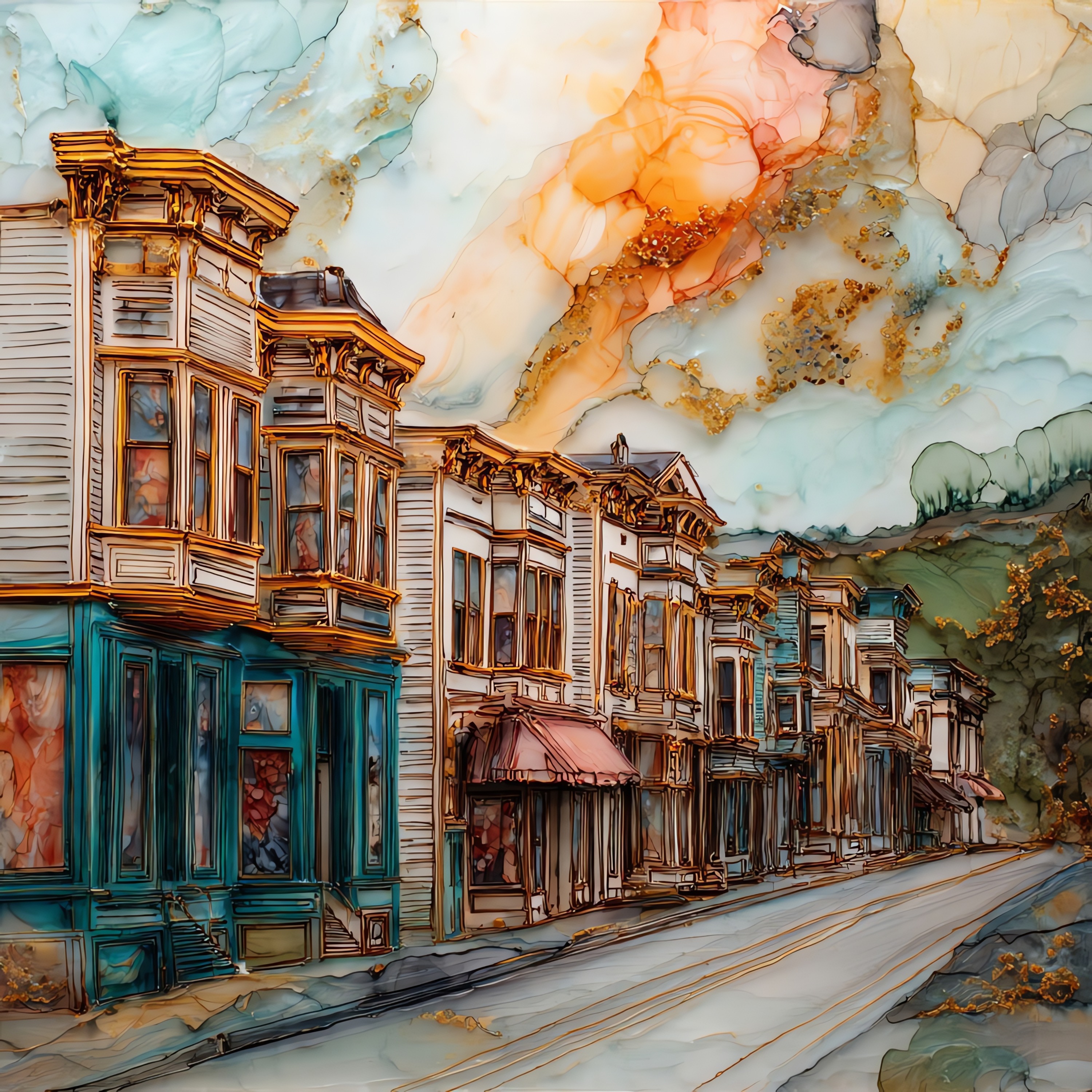
Ferndale Main Street
— — a painted block the fog won't age.
Not only on a wall.
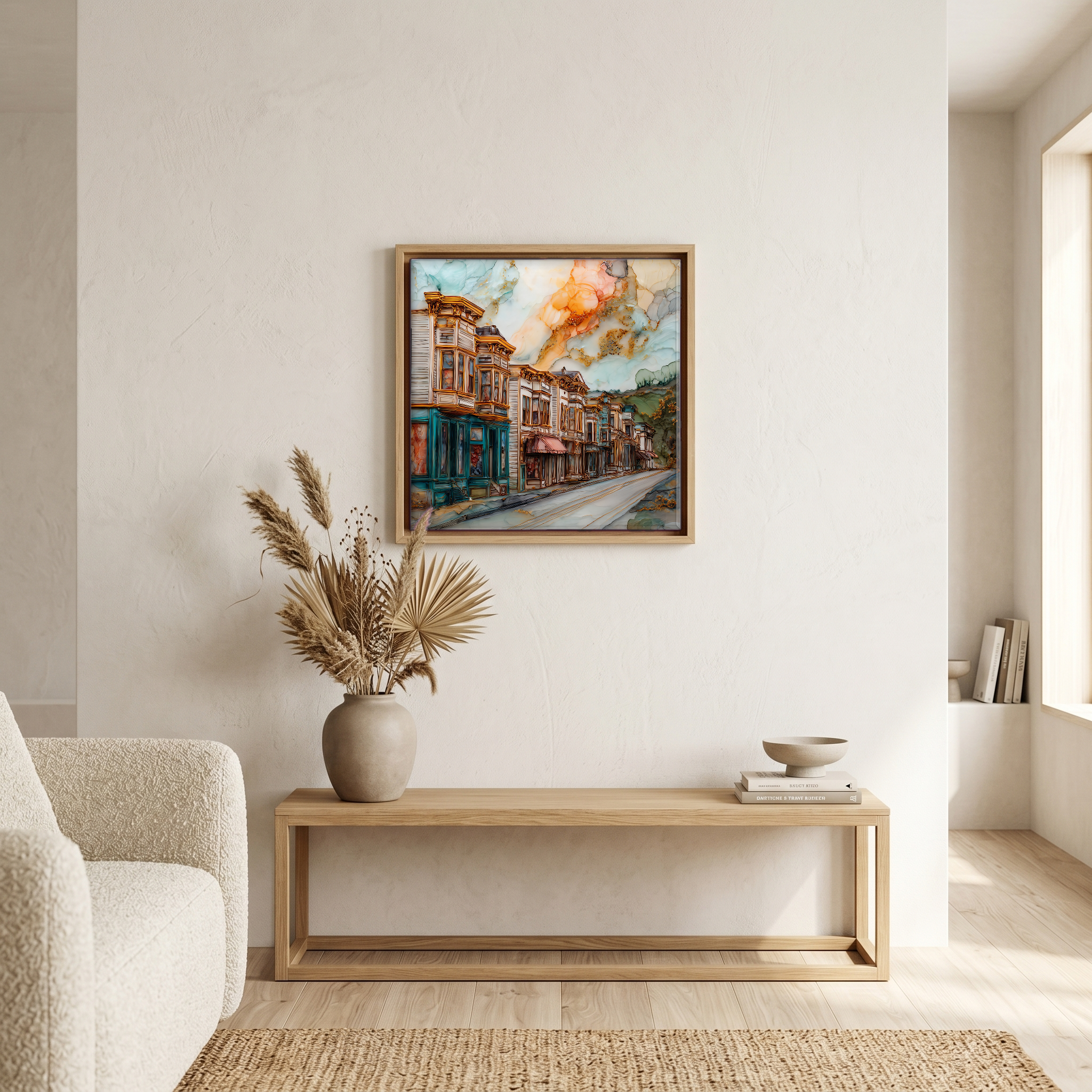
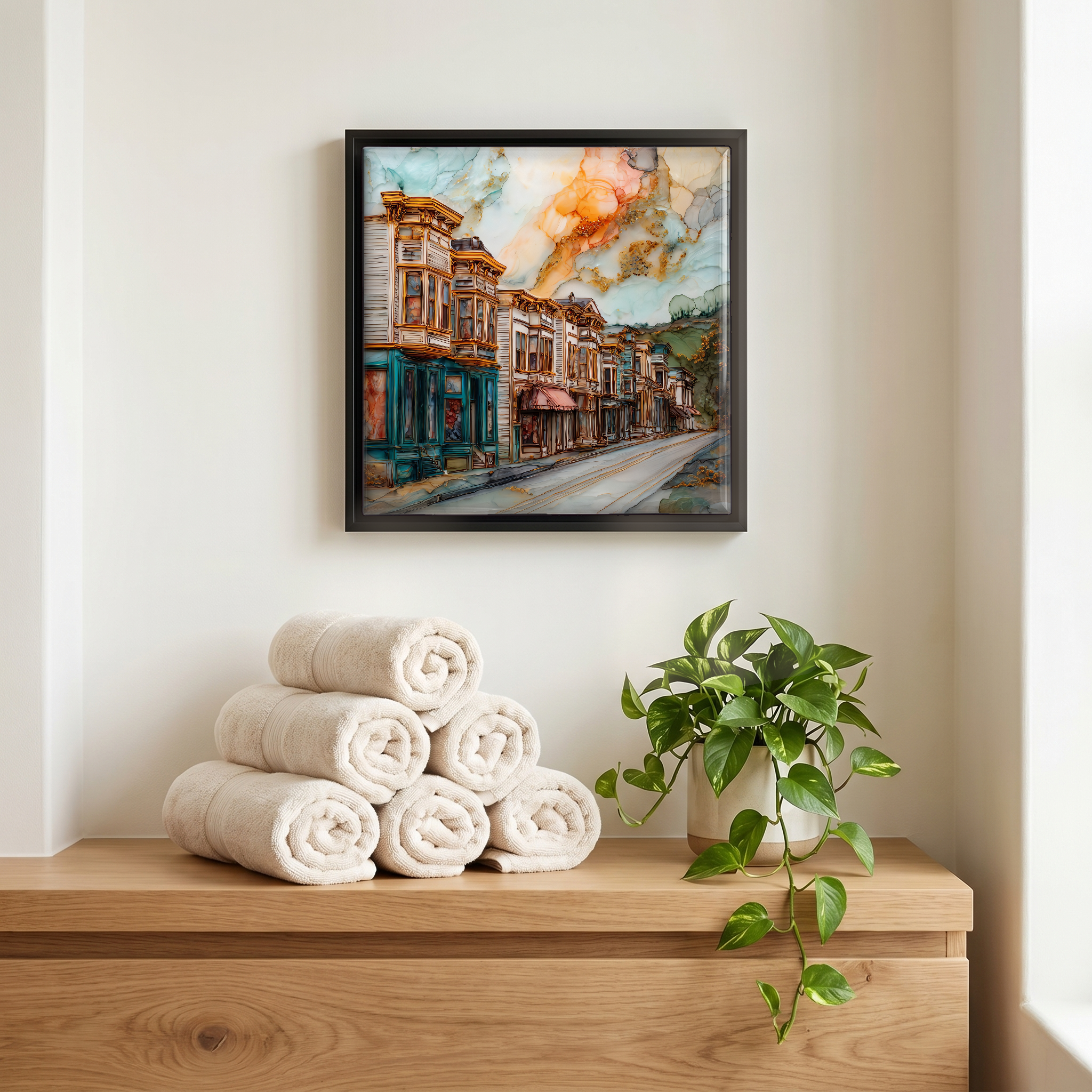
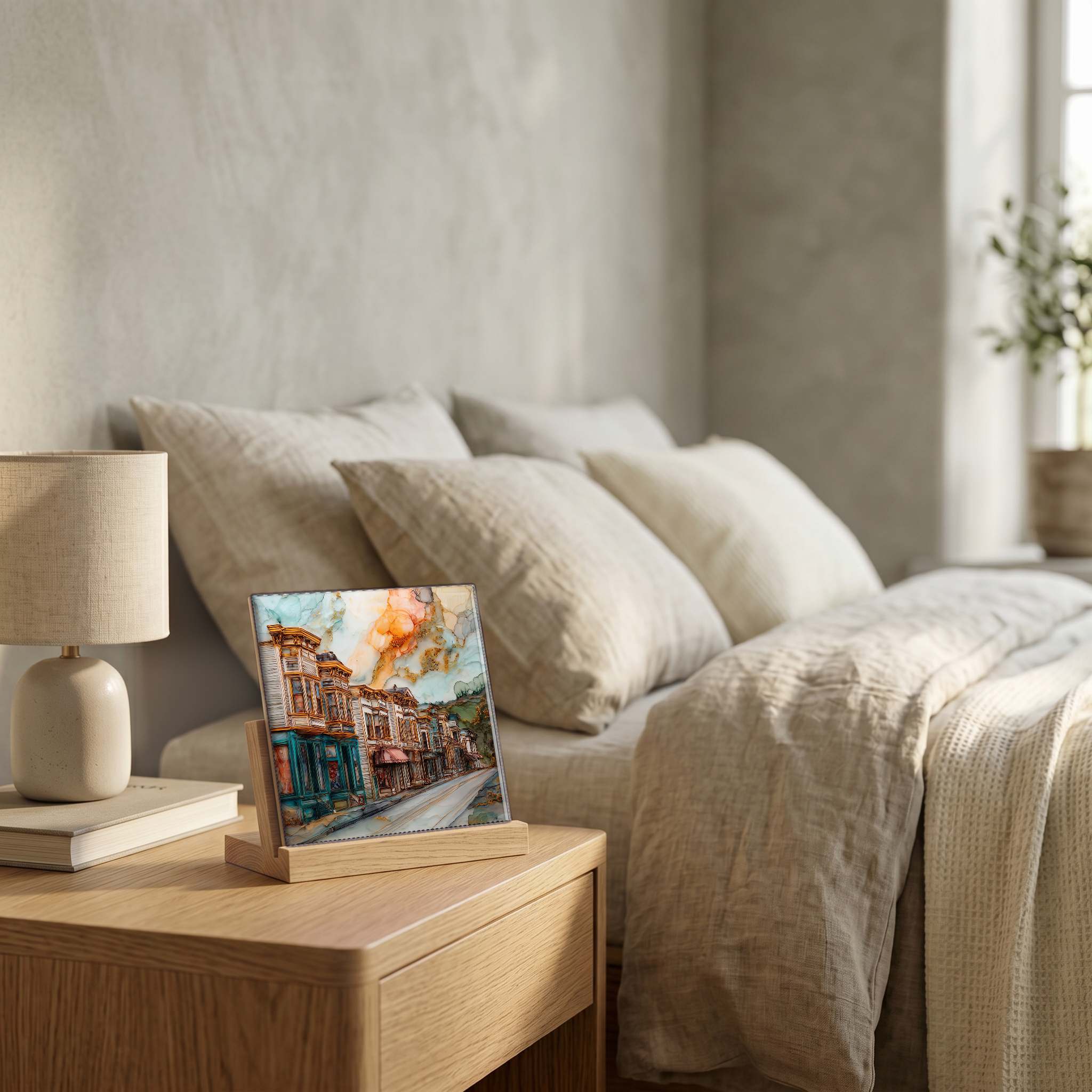
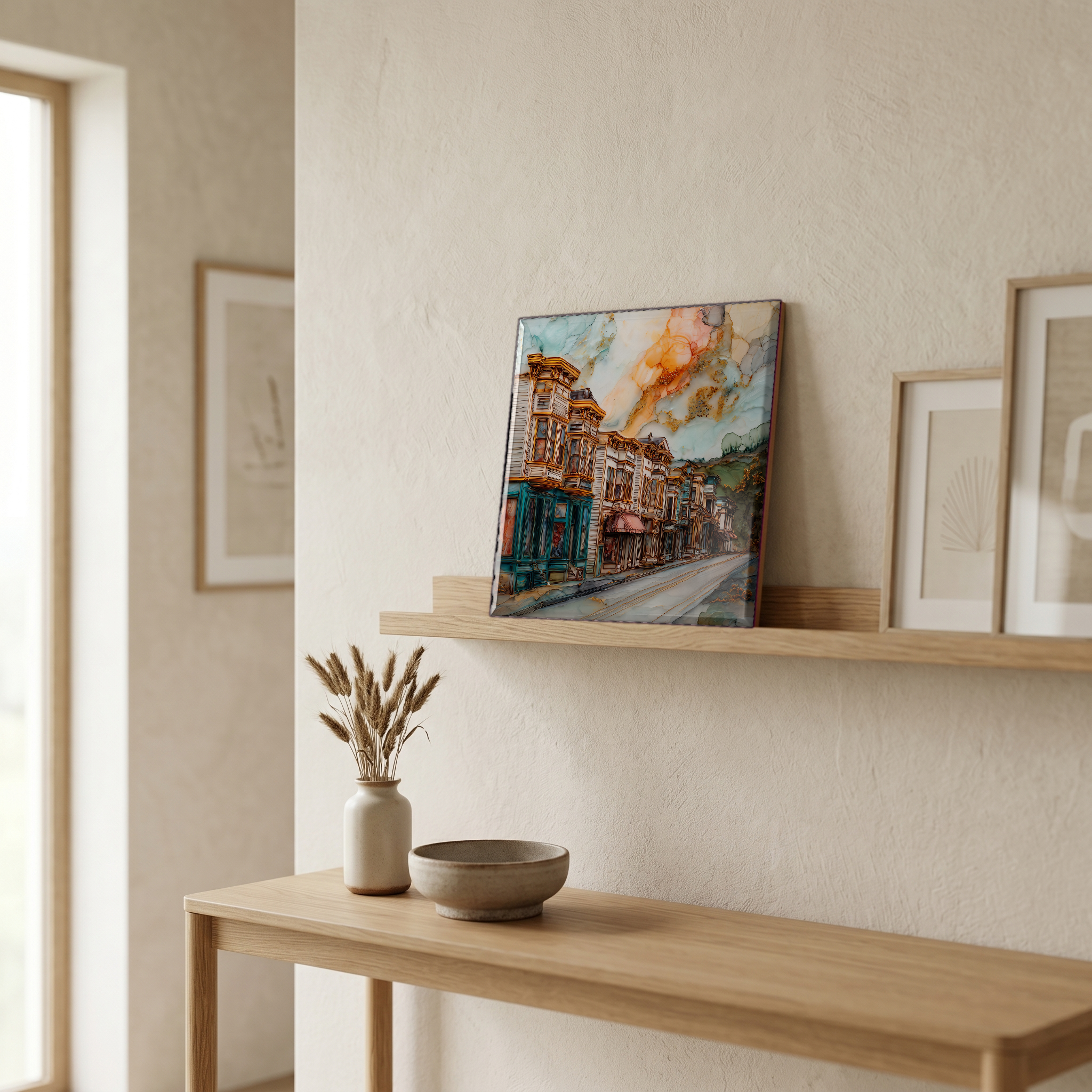
“A two-block stretch of Victorian storefronts in Humboldt County, fifteen miles south of Eureka. Dairy money built them in the 1880s and 1890s, and the town has spent a hundred and forty years keeping them in their original pale yellows, deep greens, and dusty roses. The whole village is a State Historic Landmark. Coastal fog comes up off the Eel River delta most mornings and softens the paint for an hour before the light burns through. The same Pacific haze that holds Mendocino in the south holds Ferndale here. People walk slowly. Nobody hurries the photograph.
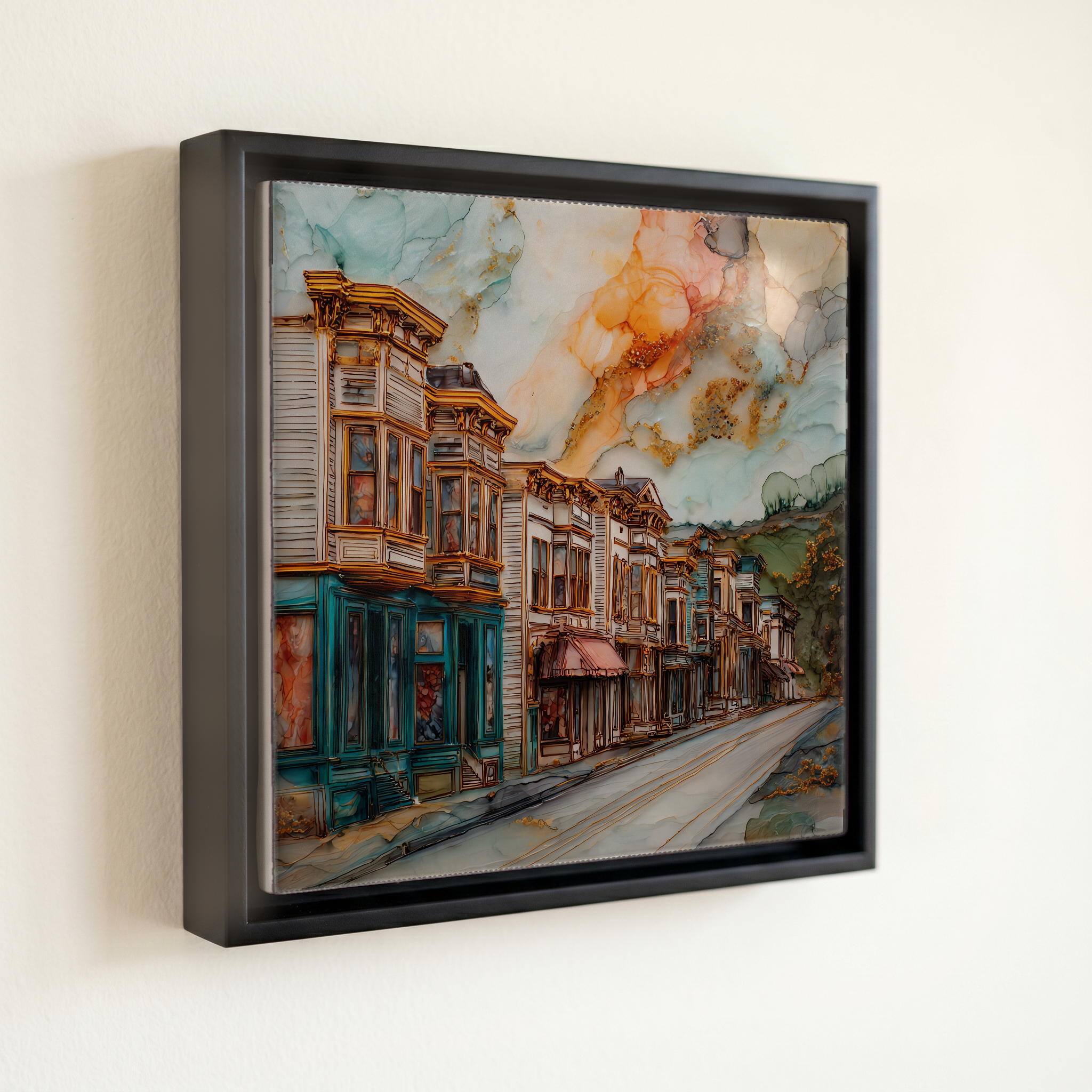
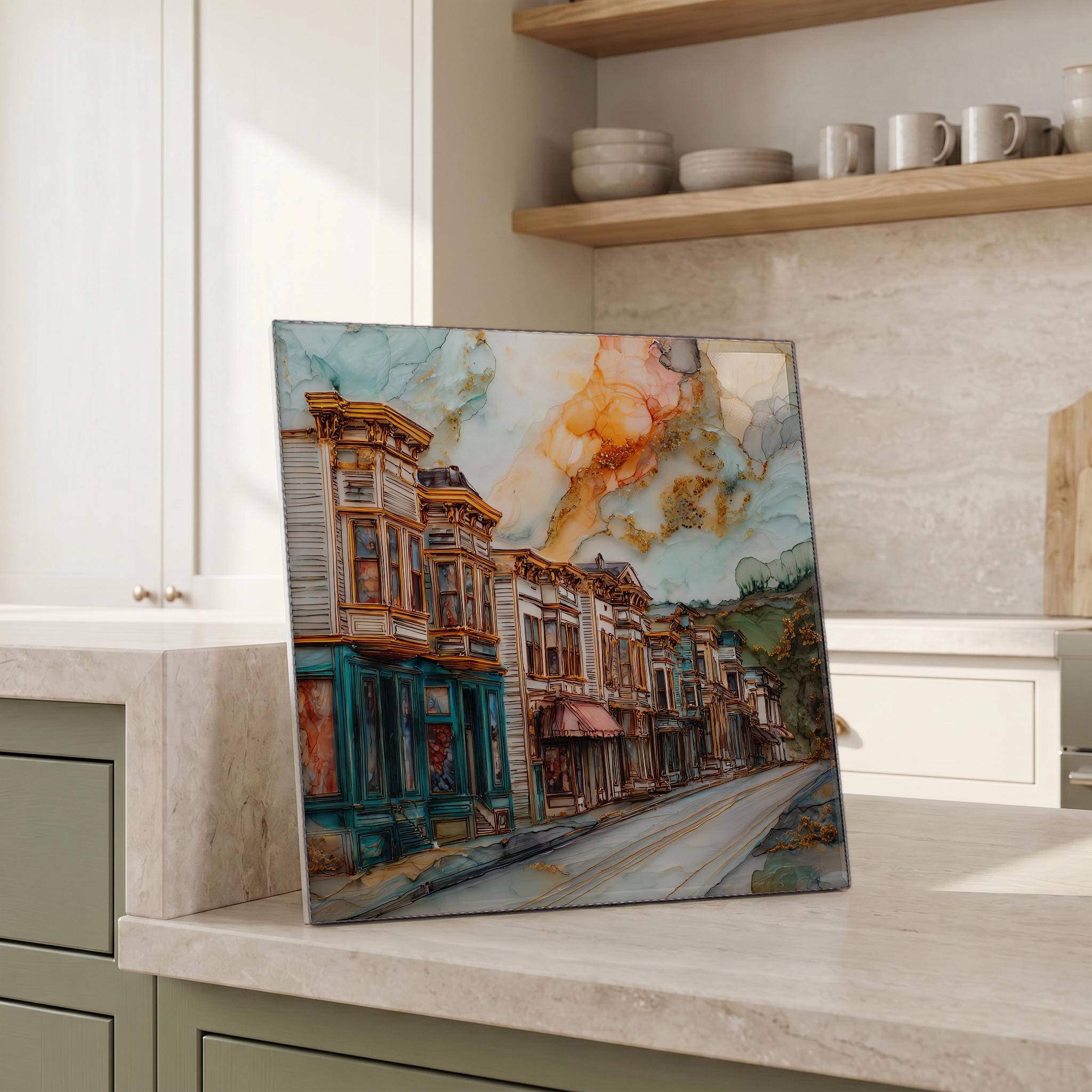
Ferndale Main Street, on ceramic.
Each tile is finished by hand in our Knoxville studio. Artwork is slowly infused into the ceramic surface under high heat and pressure, and rests beneath a thin glossy finish. The colour lives in the surface, not on top of it.
Pick any four 4-inch tiles — National Parks you've been to, a Smokies set, the four seasons of one place. $ for a set of , cork-backed, ready to live on the table.
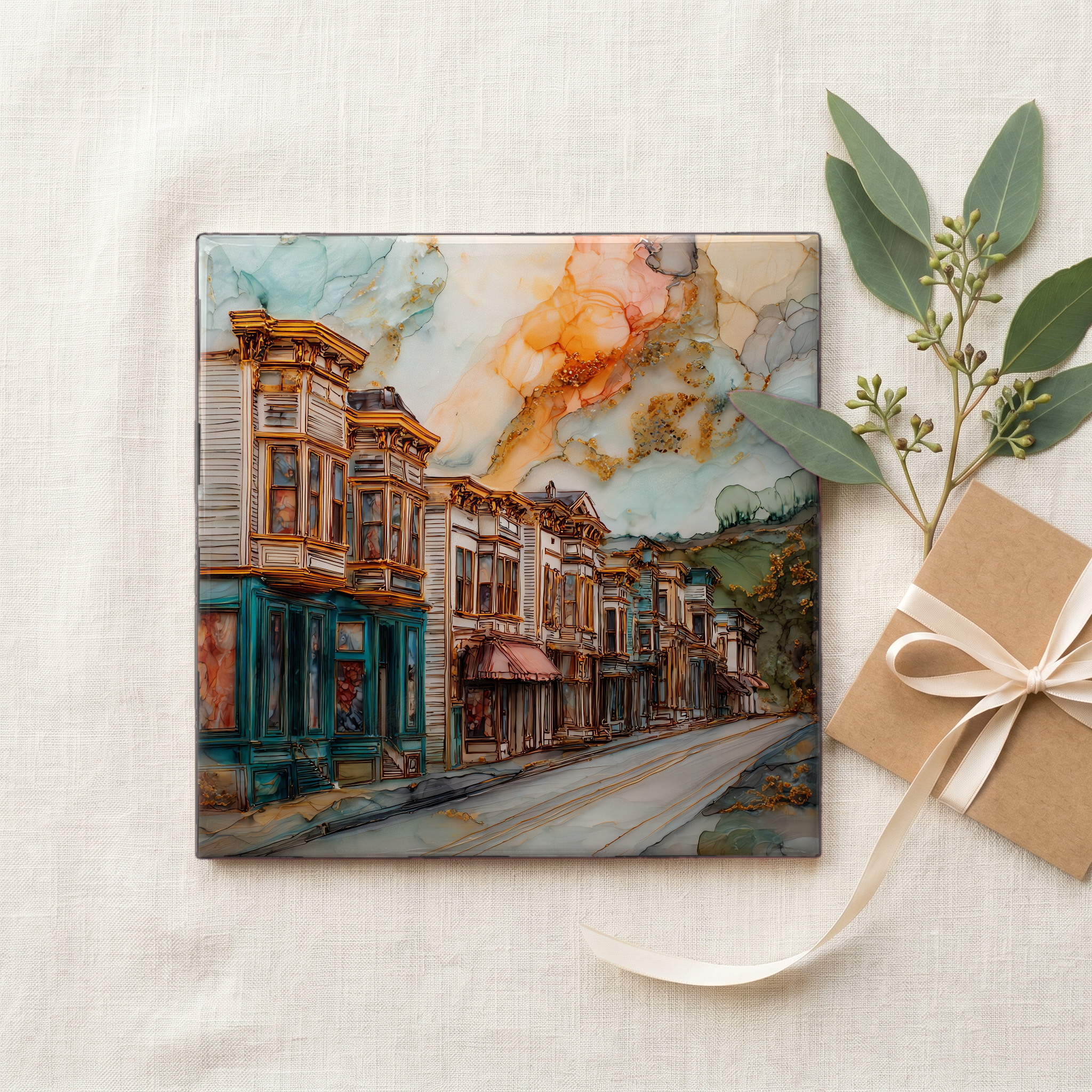
Each tile ships in a kraft box, tied with cream ribbon, with a handwritten note from the studio if you'd like to add one.
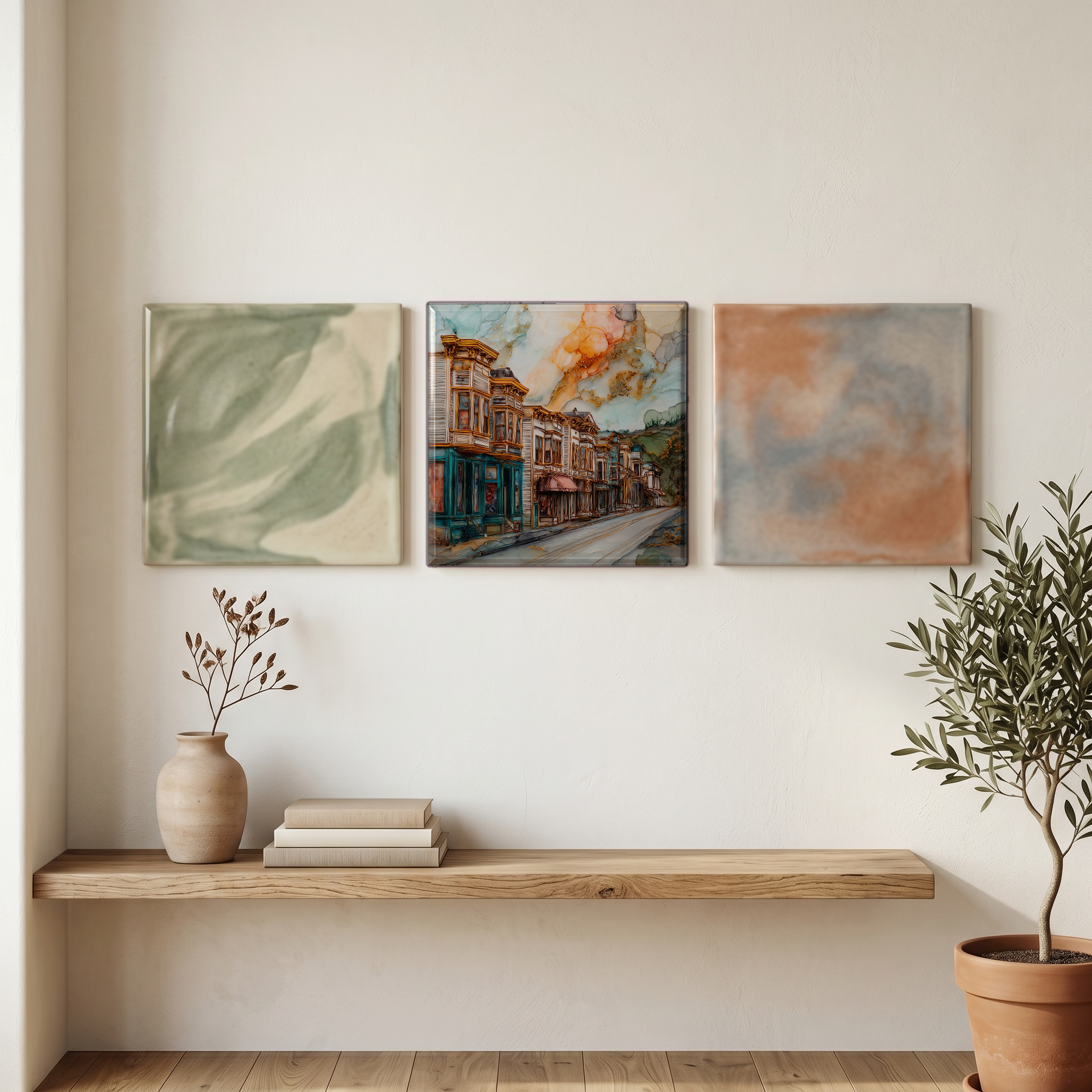
Three or five different vistas, hung together — a chapter of places you've been, or want to go.
The place, in three passes.
Ferndale sits in the Eel River Delta on California's Lost Coast, about fifteen miles south of Eureka in Humboldt County. The village was settled in 1852 by Danish, Swiss, and Portuguese dairy farmers; the wealth from the cream and butter trade funded a building boom in the 1880s and 1890s that produced the elaborate Italianate, Queen Anne, and Stick-style storefronts along Main Street today. The entire town is California Historical Landmark No. 883 and was later listed on the National Register of Historic Places. The population at the 2020 census was 1,371. Main Street runs as State Route 211; the Pacific is roughly five miles west, at Centerville Beach.
Main Street's commercial block is one of the most complete collections of small-town Victorian storefronts in California. False-front facades, bracketed cornices, and decorated parapets repeat down two long blocks, almost all in milled coast redwood from the surrounding forests. A few streets off Main, the residential lanes hold the more famous showpieces: the 1899 Gingerbread Mansion on Berding Street, and the Shaw House (1854), built by founder Seth Louis Shaw and often called the oldest standing house in Humboldt County. Local builders adapted Italianate, Queen Anne, and Stick-Eastlake patterns from East Coast pattern books and applied the elaborate paint schemes after the dairy boom of the 1880s.
Ferndale lies five miles inland from the Pacific in a fold of the Eel River delta, and the same coastal-fog pattern that defines the redwood belt comes off the ocean nearly every summer morning. The fog reaches the village before the light does and holds the painted facades in a soft, even illumination for an hour or two before the marine layer lifts. The Lost Coast section of California, immediately to the south, has some of the lowest summer sunshine hours on the Pacific seaboard precisely because of this pattern. Photographers working the block come early; landscape painters call the hour before the burn-off the only time the colour reads true.