Wender·Vista
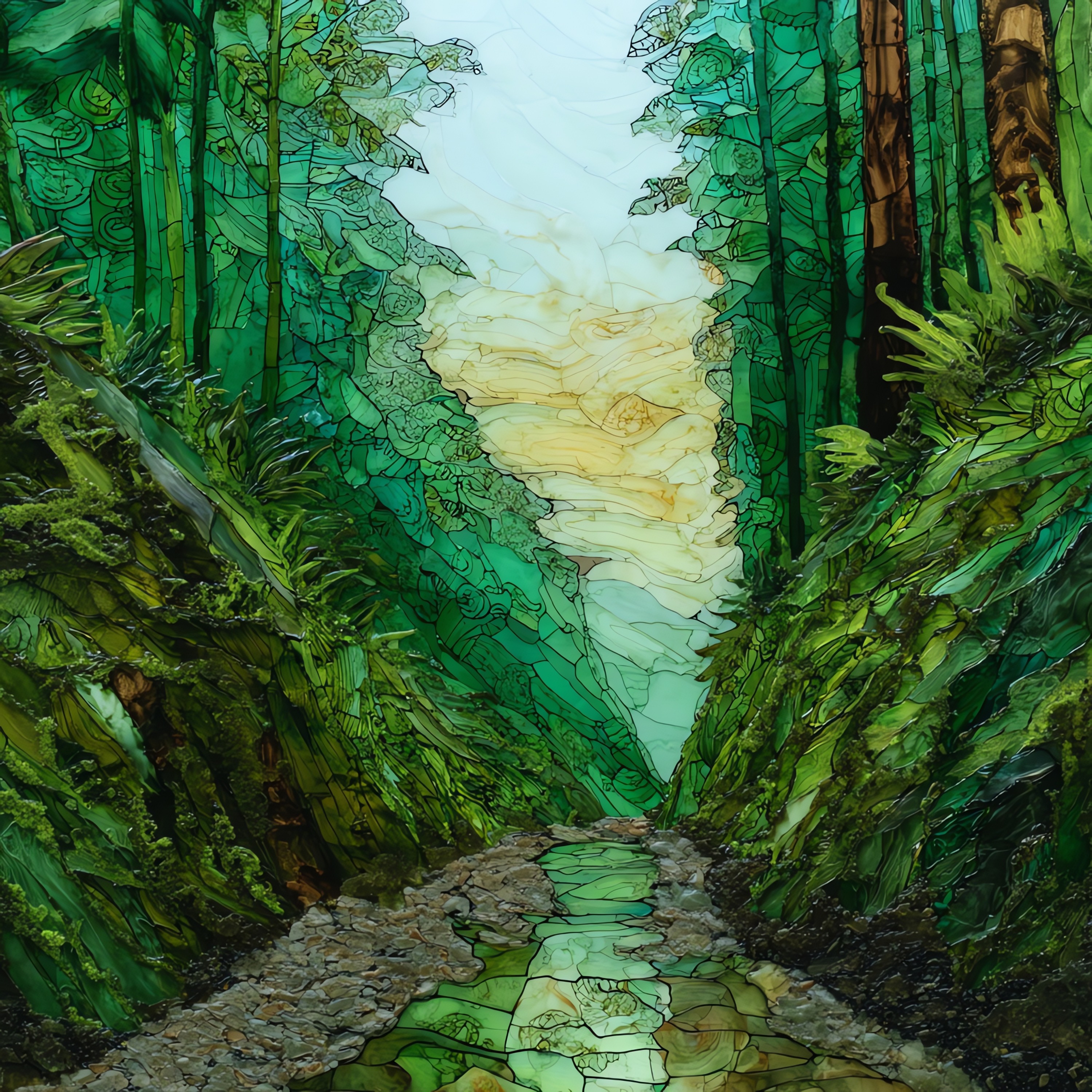
Fern Canyon
shown on ceramic, 12-inch tileCalifornia · United States
on the redwood coast, just back from Gold Bluffs Beach

Fern Canyon

— the corridor the ferns took back.

Where it lives

Not only on a wall.

A small tile on the nightstand catching the morning. A larger one above the fire. Yours, wherever you spend the slow hours.
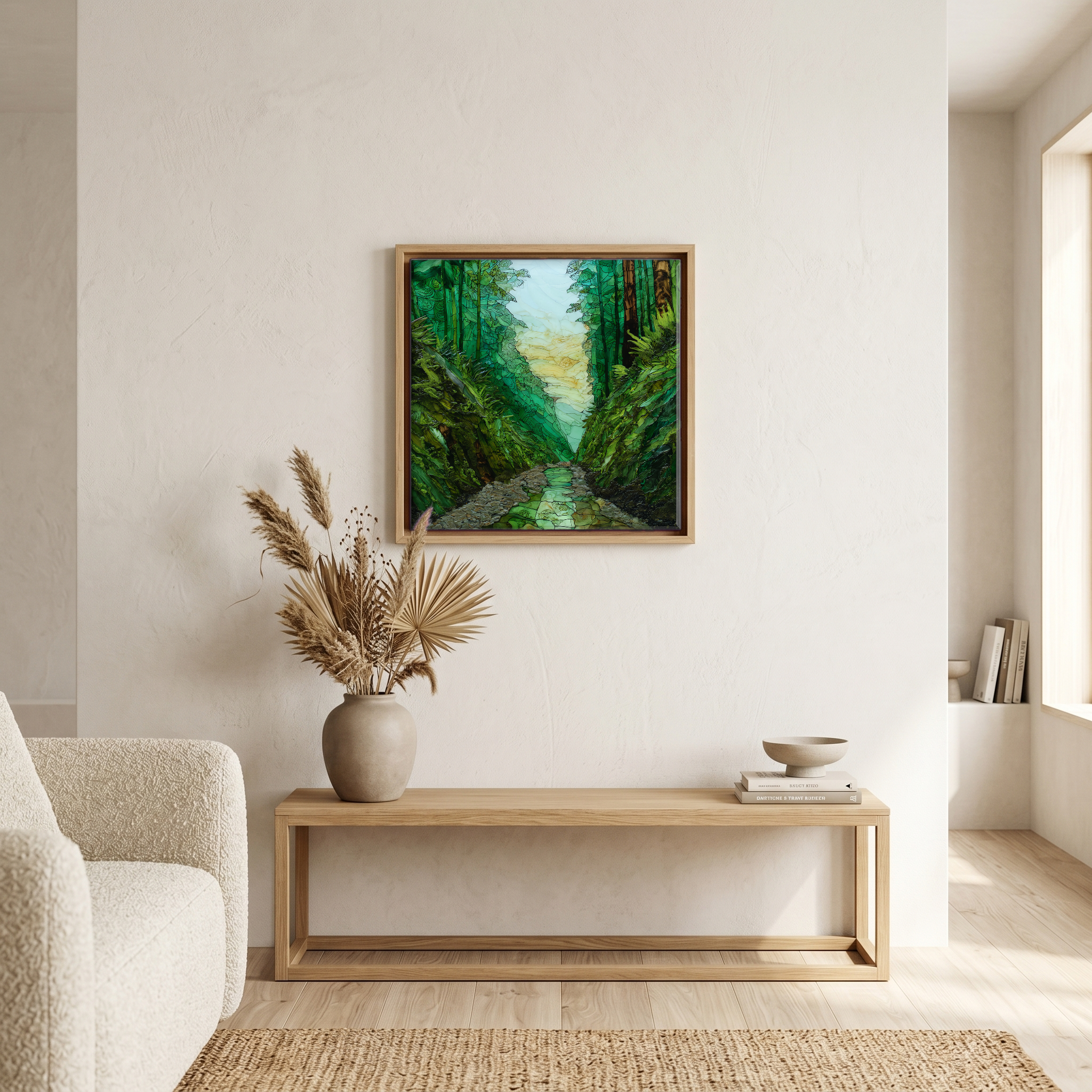
Above the bench, in a warm oak surround.
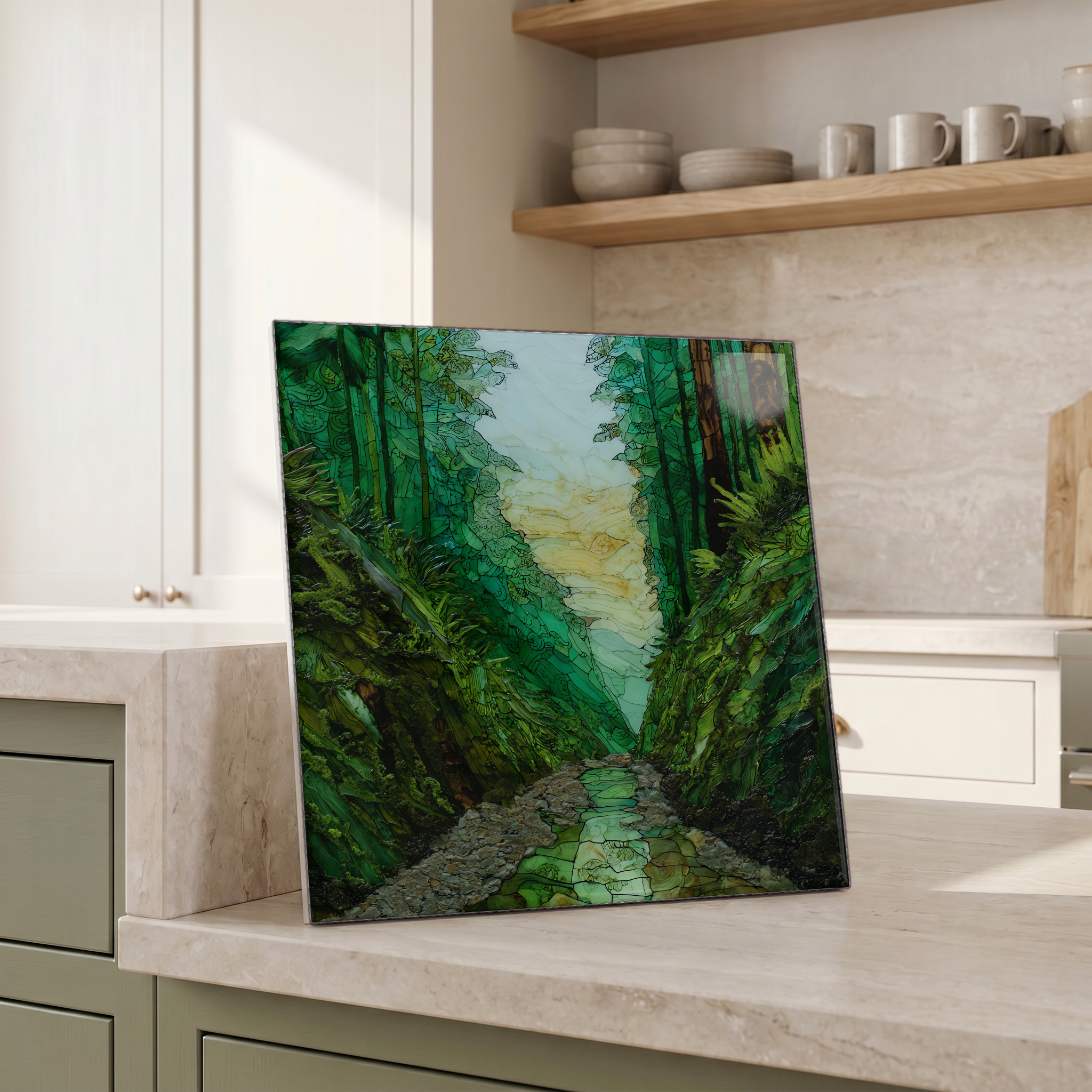
Beside the kettle, propped on the counter.
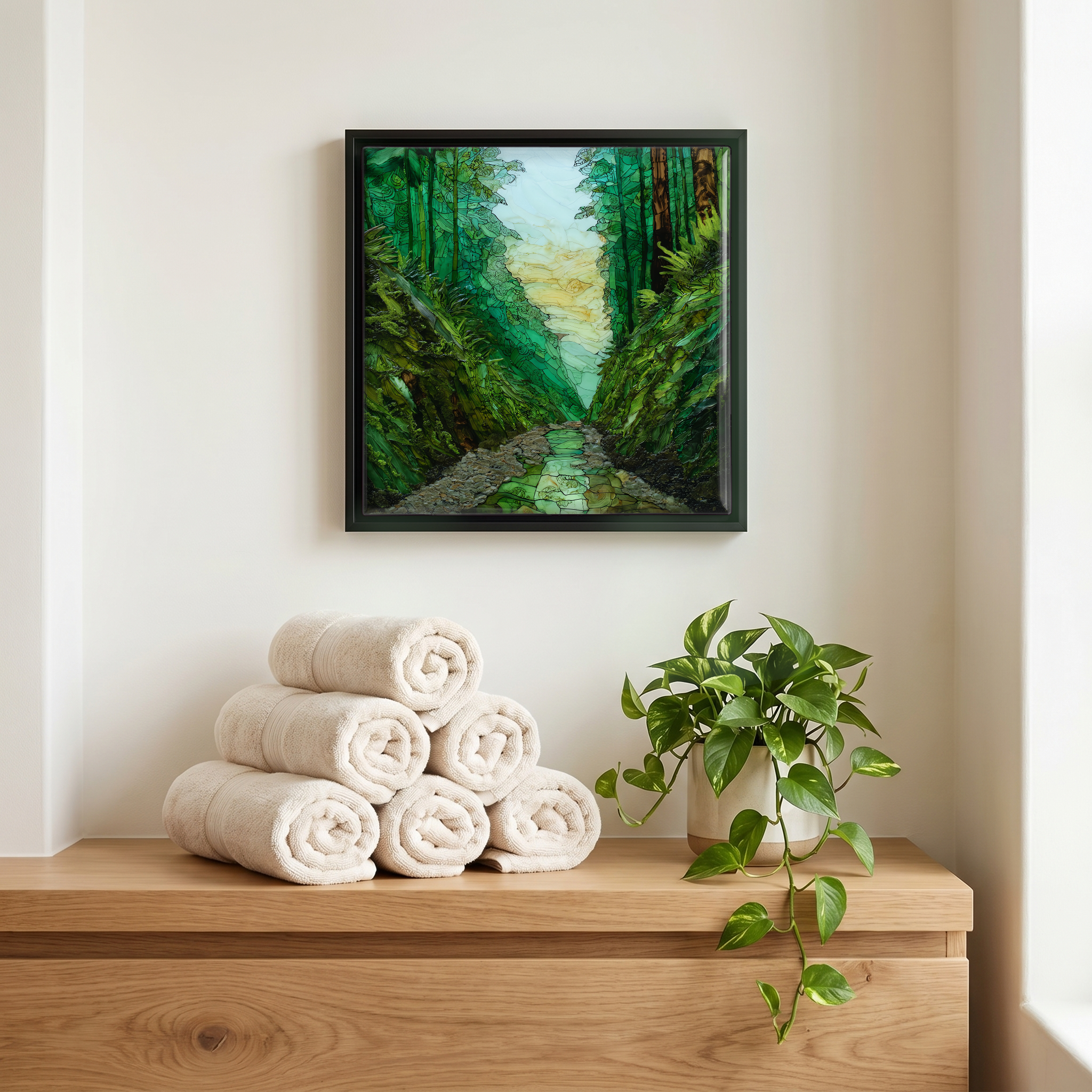
Above the linens, in a slim black surround.
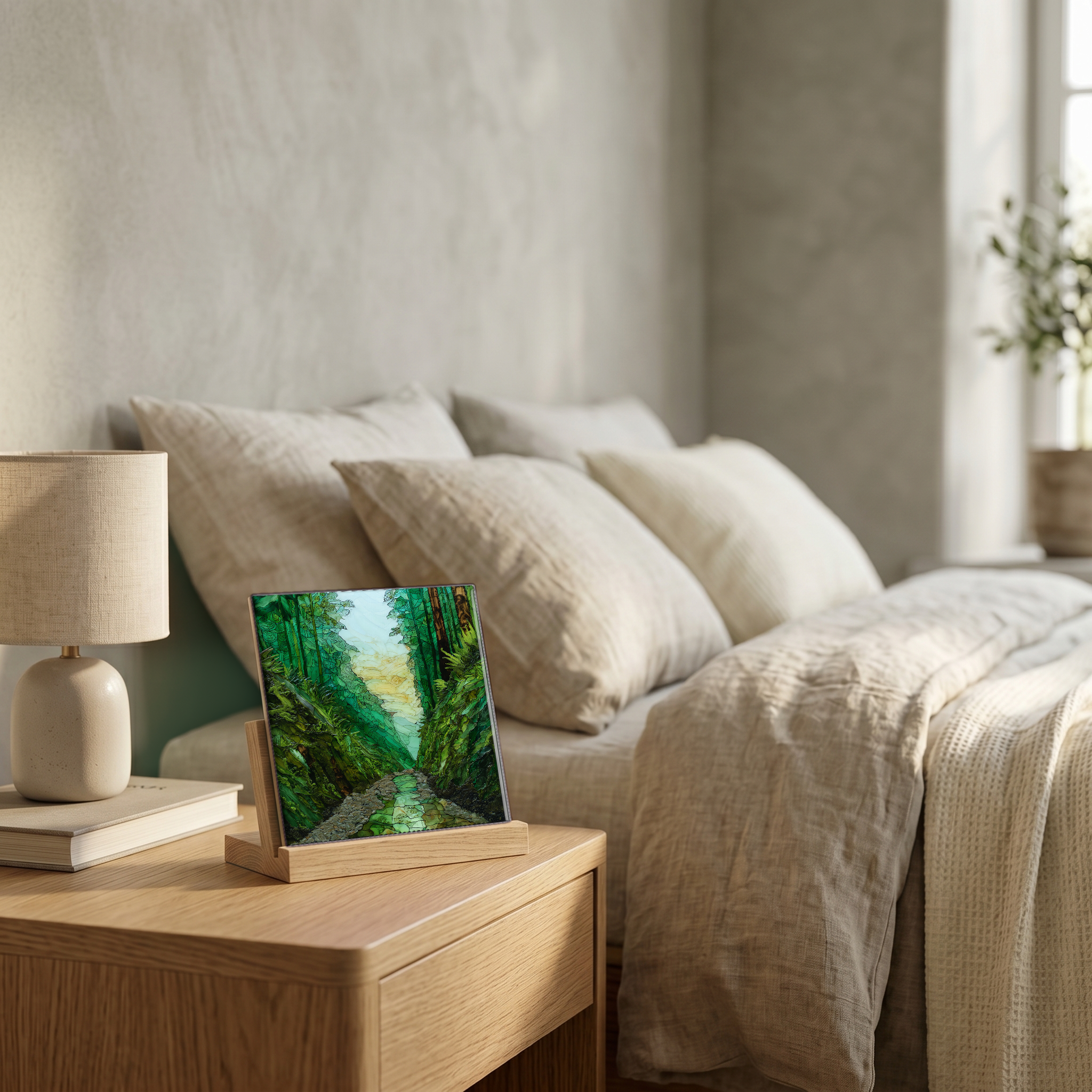
On the nightstand, on a light oak stand.
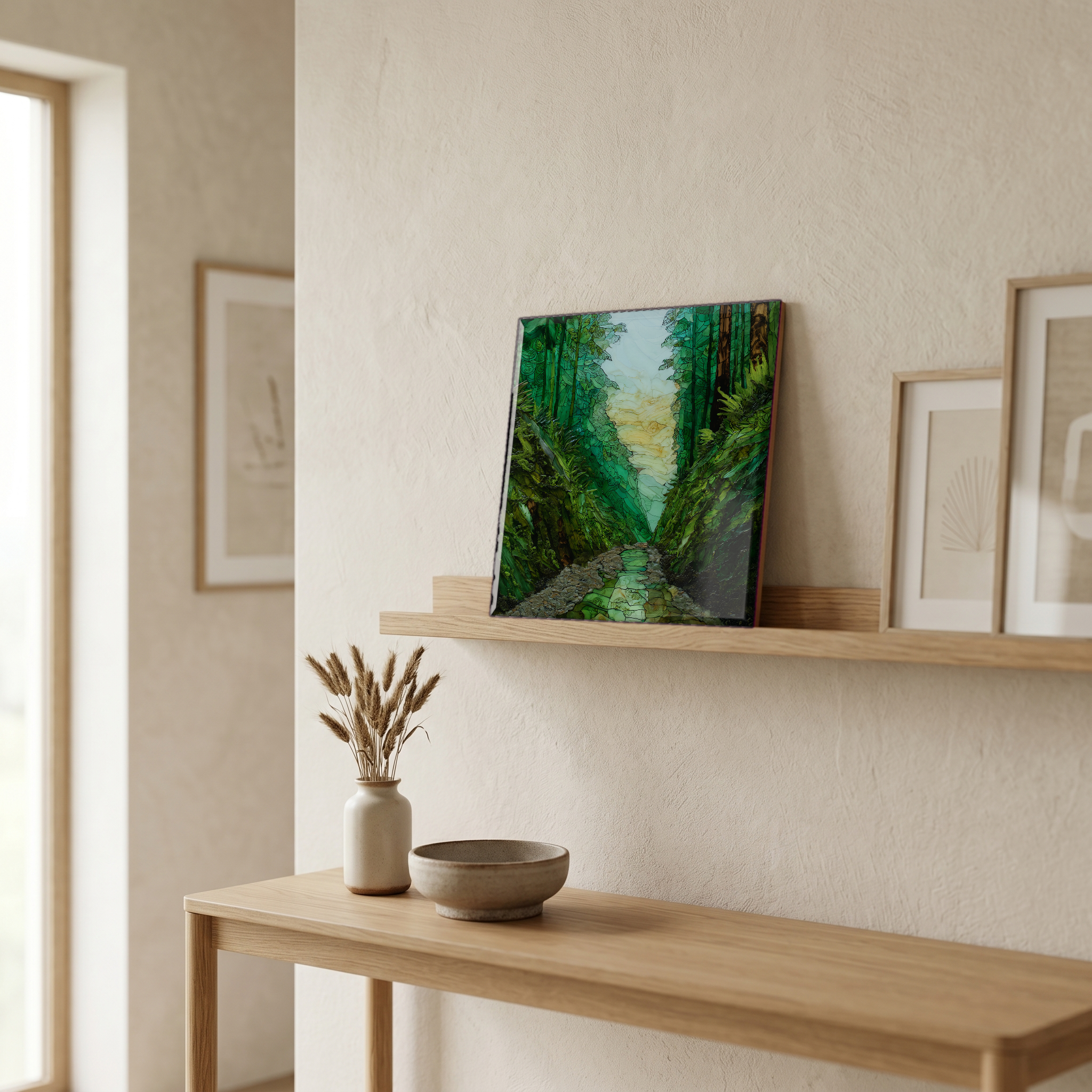
On a picture ledge, where the light comes in.
a note from the studio

A narrow slot cut by Home Creek through the bluffs above Gold Bluffs Beach. The walls climb about fifty feet, covered base to rim in five-finger and lady fern, water pulling down through the moss in small threads. The light gets in slowly, from straight overhead. Most visitors plank their way over the creek in rubber boots, and most go quiet without meaning to. The kind of place that holds its own weather.
from the studio
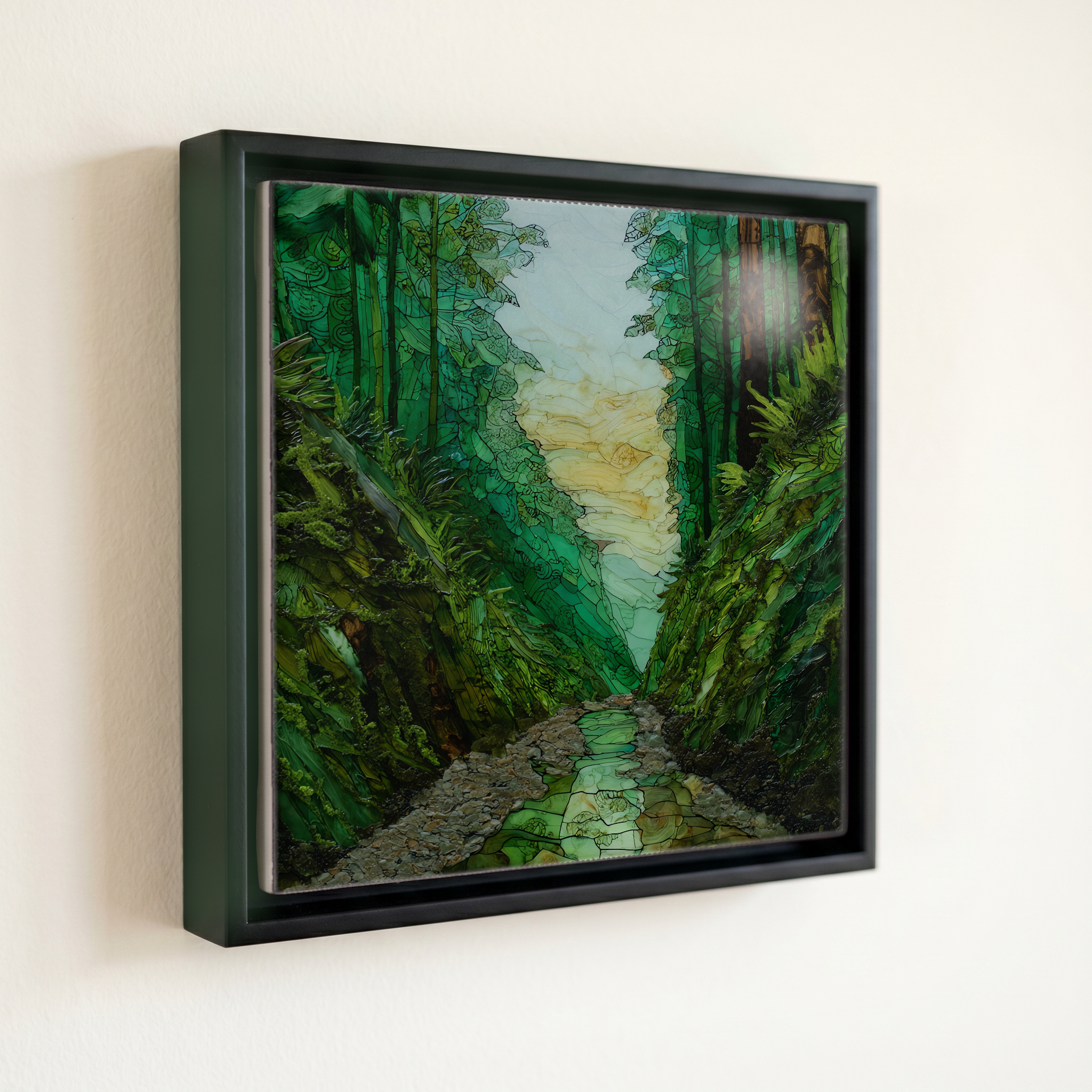
shown in a slim black floating frame · 6 × 6 in
— bring it home

Fern Canyon, on ceramic.

Each tile is finished by hand in our Knoxville studio. Artwork is slowly infused into the ceramic surface under high heat and pressure, and rests beneath a thin glossy finish. The colour lives in the surface, not on top of it.

What kind of piece?
One tile — square or rectangle.
How big?
the popular one — counter, shelf, nightstand
6 × 6 in · 15 cm · 1.6 lb
Surface finish
A clear glossy finish — the artwork reads as if under resin. Ideal for show-pieces and framed wall art.
How it sits
A hidden cleat — sits ¼″ proud of the wall.
$58
Hand-finished and shipped from our studio at the foot of the Smokies. On your wall in about ten days.
size
6 × 6 in
15 cm
weighs
1.6 lb
solid in the hand
surface
ceramic, hand-finished
art rests beneath a thin glossy finish
from
Knoxville, TN
our family studio, at the foot of the Smokies
— start a Coaster Set

Pick any four 4-inch tiles — National Parks you've been to, a Smokies set, the four seasons of one place. $ for a set of , cork-backed, ready to live on the table.
comes gift-ready
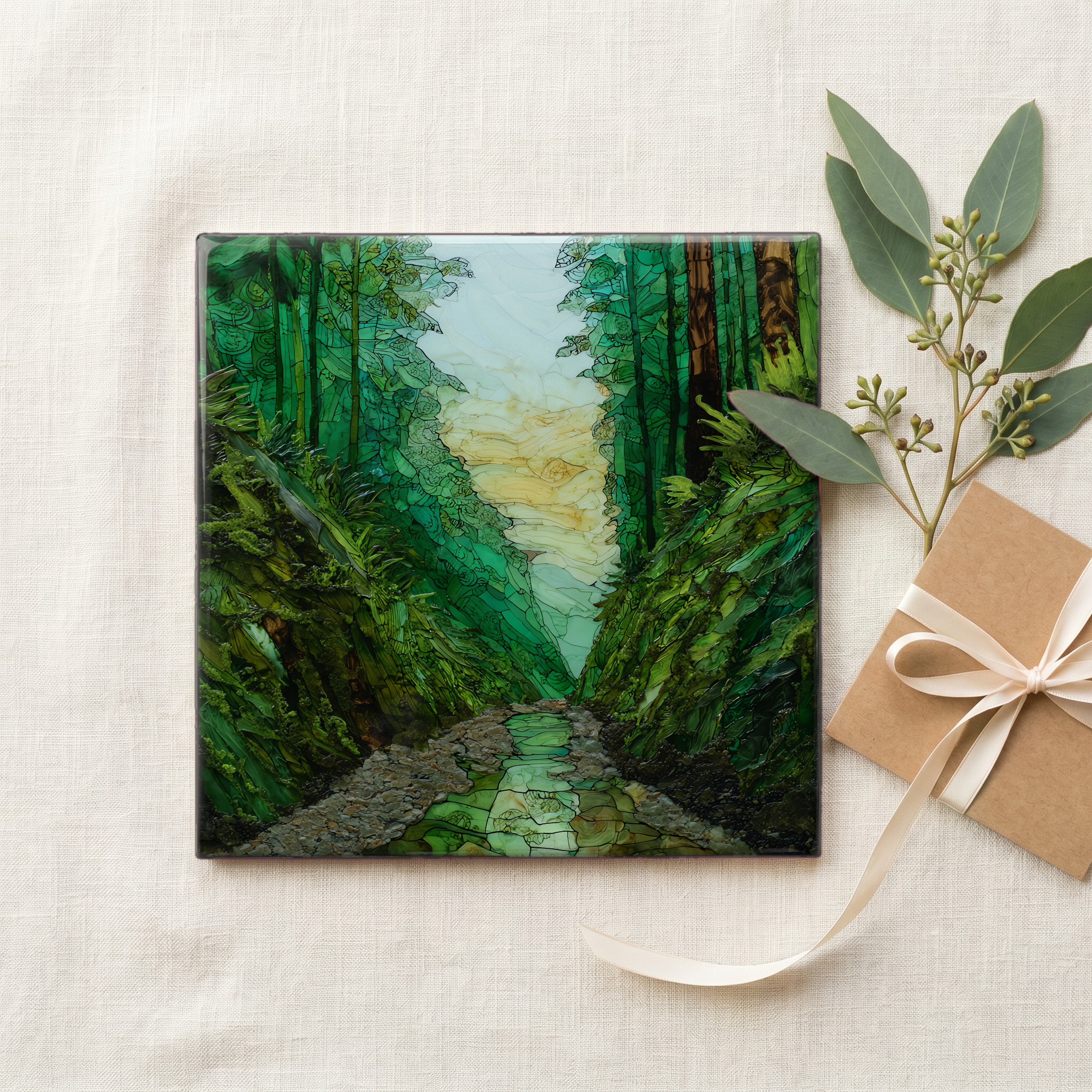
comes gift-ready

Each tile ships in a kraft box, tied with cream ribbon, with a handwritten note from the studio if you'd like to add one.
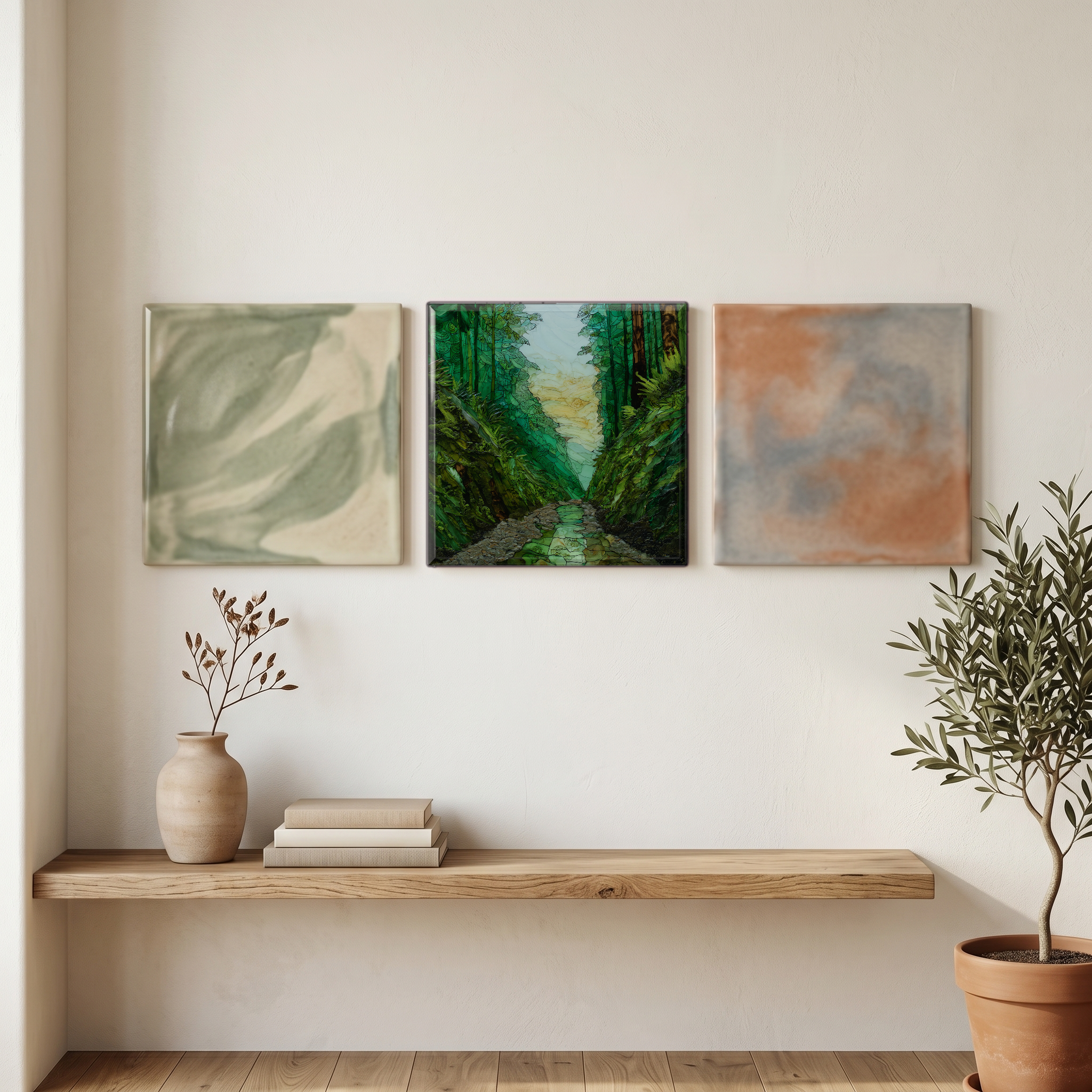
or build a grouping
or build a grouping

Three or five different vistas, hung together — a chapter of places you've been, or want to go.

about Fern Canyon

The place, in three passes.

A little of what's known, in case you fall down the rabbit hole — or want to go see it yourself.
the place

Fern Canyon is a half-mile slot in Prairie Creek Redwoods State Park, on the northern California coast about fifty miles south of the Oregon border. The park is one of three California state parks jointly administered with Redwood National Park; the federal park was established in 1968 to protect the last unprotected stretches of old-growth coast redwood, and the cooperative management agreement followed in 1994. Access begins outside the village of Orick on Highway 101, then six unpaved miles of Davison Road across two shallow creek fords to the trailhead at Gold Bluffs Beach. Home Creek runs the floor of the canyon for about a half-mile before reaching the Pacific.

the water

Home Creek does the work. The canyon was cut by tens of thousands of years of this small drainage running to the sea, scoring a slot about fifty feet deep into the marine terrace above the beach. The walls stay damp year-round. Runoff from the bluffs above keeps a slow vertical curtain of water on the rock, which is what allows the ferns to colonise from base to rim. Five fern species are usually counted on the walls: five-finger, lady, deer, sword, and chain. In winter the creek runs high enough to fill the canyon floor; in summer it is typically ankle deep, ankle cold, and slow.

the visit

From mid-May through mid-September a free day-use permit is required for the drive in on Davison Road, issued in a small daily quota. The road is unpaved, has two shallow creek fords, and is closed to trailers and RVs year-round. The canyon floor itself runs about a half-mile, with seasonal plank bridges across Home Creek installed by the park service during the permit window. The longer route follows the James Irvine Trail back through old-growth redwoods toward the Prairie Creek Visitor Center, several miles inland. Footing on the canyon floor is wet, uneven, and covered in river cobbles; sturdy waterproof boots are standard kit.

where
United States · Humboldt County, California
within
Prairie Creek Redwoods State Park
elevation
15 m · 50 ft
position
41.4014° N · 124.0628° W
the neighborhood

What's nearby.

A handful of named places within an hour's walk or short drive. Some we've already painted; some we will.
at the lake
Gold Bluffs Beach
Pacific beach
6 km SE
Big Tree Wayside
old-growth grove
8 km S
Trillium Falls
waterfall
14 km SE
Tall Trees Grove
redwood grove
28 km N
Klamath River Mouth
river estuary
50 km S
Sue-meg State Park
coastal headland park
N
Fern Canyon
Gold Bluffs Beach
Big Tree Wayside
Trillium Falls
Tall Trees Grove
Klamath River Mouth
Sue-meg State Park
common questions

What people ask.

A few questions we get about Fern Canyon — and about bringing the piece home.
about the place

Fern Canyon is in Prairie Creek Redwoods State Park, on the northern California coast about fifty miles south of the Oregon border. The trailhead sits at Gold Bluffs Beach, reached by six unpaved miles of Davison Road from Highway 101 near the village of Orick.

Steady runoff from the marine terrace above keeps the rock face wet year-round. The constant moisture allows five fern species to root the full height of the walls: five-finger, lady, deer, sword, and chain. The walls themselves stand about fifty feet from the creek floor to the rim.

Home Creek cut the canyon into ancient marine terrace gravels over tens of thousands of years. The same creek still runs the floor today, ankle deep in summer and considerably bigger in winter. Its slow exit to the Pacific keeps the walls saturated and the ferns in place.

Yes, in summer. From mid-May through mid-September a free day-use permit is required for the drive in on Davison Road, with a small daily quota. Outside the permit window the road is open without reservation, though winter storms often close it for weeks at a time.

Yes. The canyon appears in The Lost World: Jurassic Park (1997), where its vertical fern walls served as a Site B exterior location. Its primordial look has long made it a standing choice for documentary and feature crews shooting prehistoric or pre-human landscapes.

Late spring through early autumn offers the most reliable footing, with the park service's seasonal plank bridges installed across Home Creek. Winter is the wettest stretch and the road is often closed, but the saturated greens are at their strongest then for visitors who can reach the canyon on foot.

Wading is the standard way to cross outside the plank season; the water is shallow but cold year-round, and the cobbled bed is uneven. Sturdy waterproof boots and trekking poles are recommended. Full swimming is impractical given the depth, and the appeal of the canyon is the walls, not the creek.

about the piece in your home

It has been a meaningful gift for customers who grew up around Humboldt and Del Norte counties or who hiked Prairie Creek as kids. Fern Canyon is one of the corners of the coast people remember in detail: the smell of wet earth, the green light. A Small or Medium with a handwritten note from the studio carries well.

The deep saturated green pairs well with biophilic, mountain-modern, and craftsman interiors. The tile reads as a single colour field from across a room and as fine fern detail up close, which lets it hold its own against natural wood, linen, and unpolished stone.

Yes. Biophilic interiors lean on real or rendered plant life as a primary visual anchor, and a saturated-green vertical composition is one of the genre's strongest moves. The tile delivers the look of a moss or fern wall without the upkeep, watering, or humidity load.

Above a standard sofa (84 to 96 inches wide), a single Large works as an anchor, or a 4-tile Mural fills the wall more fully. Above a console table, a Medium centred reads well. A 9-tile Mural carries the canyon's vertical sense of scale better than any single tile can; plan on at least 60 inches of clear height.

Yes, in the Dura Satin or Matte finish. Both are scratch-resistant and stand up to humidity and steam, which makes them the right choice for vertical installation in wet rooms. The Glossy finish is intended for framed wall art in drier spaces.

A microfibre cloth with plain water is enough for everyday dust and fingerprints. The colour is slowly infused into the ceramic surface under high heat and pressure and lives in the surface itself, so it will not lift or fade with cleaning. Abrasive cleaners and solvents are unnecessary.

Yes. Every WenderVista piece is original work from our studio in Knoxville, Tennessee. We do not license or resell stock art. The Fern Canyon piece is a Wender Studios composition curated by Reid Wender for the WenderVista atlas, hand-finished and slowly infused into the ceramic surface under high heat and pressure.

if this one stayed with you

A few you might also love.

Hand-picked by the eye that found Sorapis. Same air, same kind of quiet.