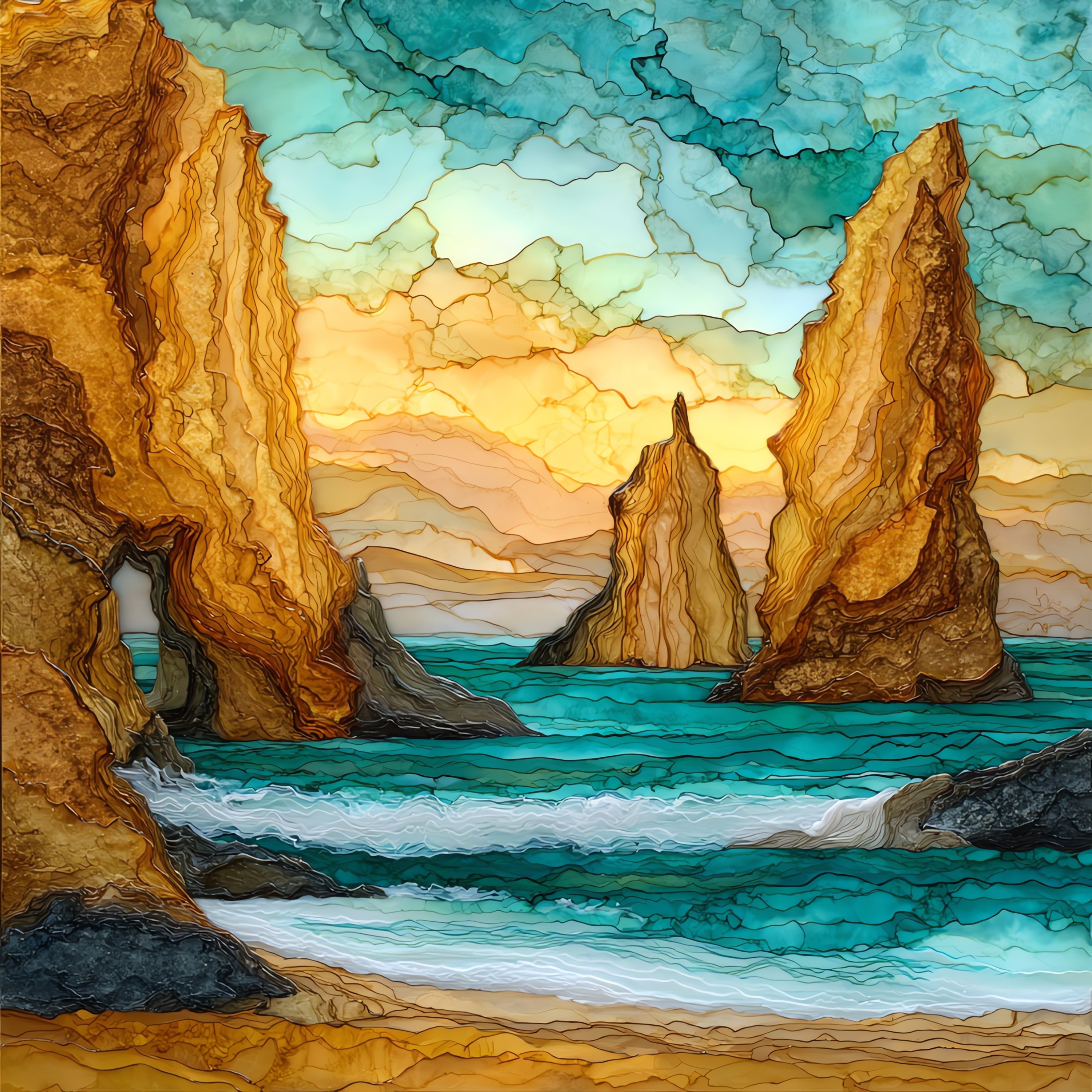
El Matador Beach Malibu
— — the hour the light gets caught in the rock.
Not only on a wall.
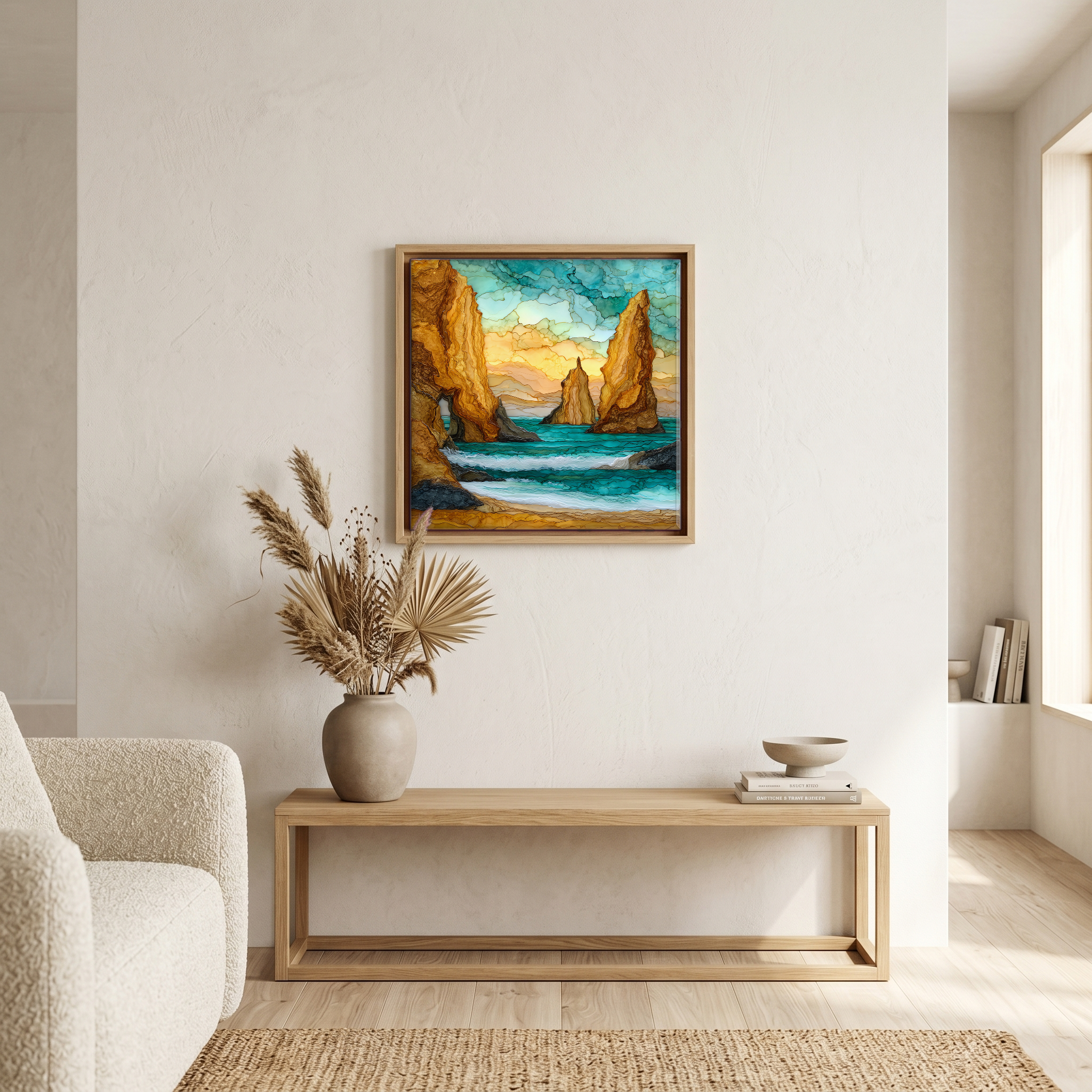
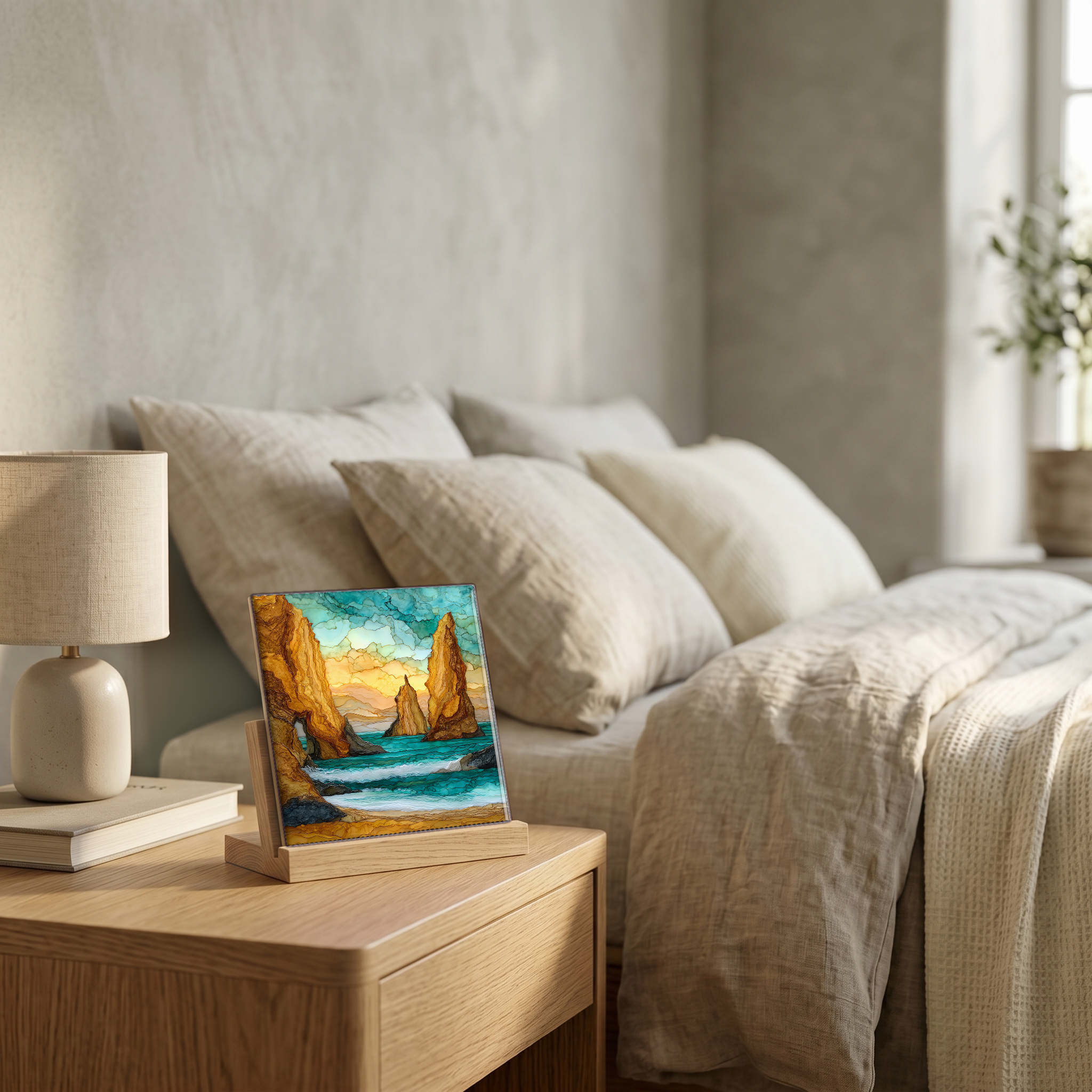
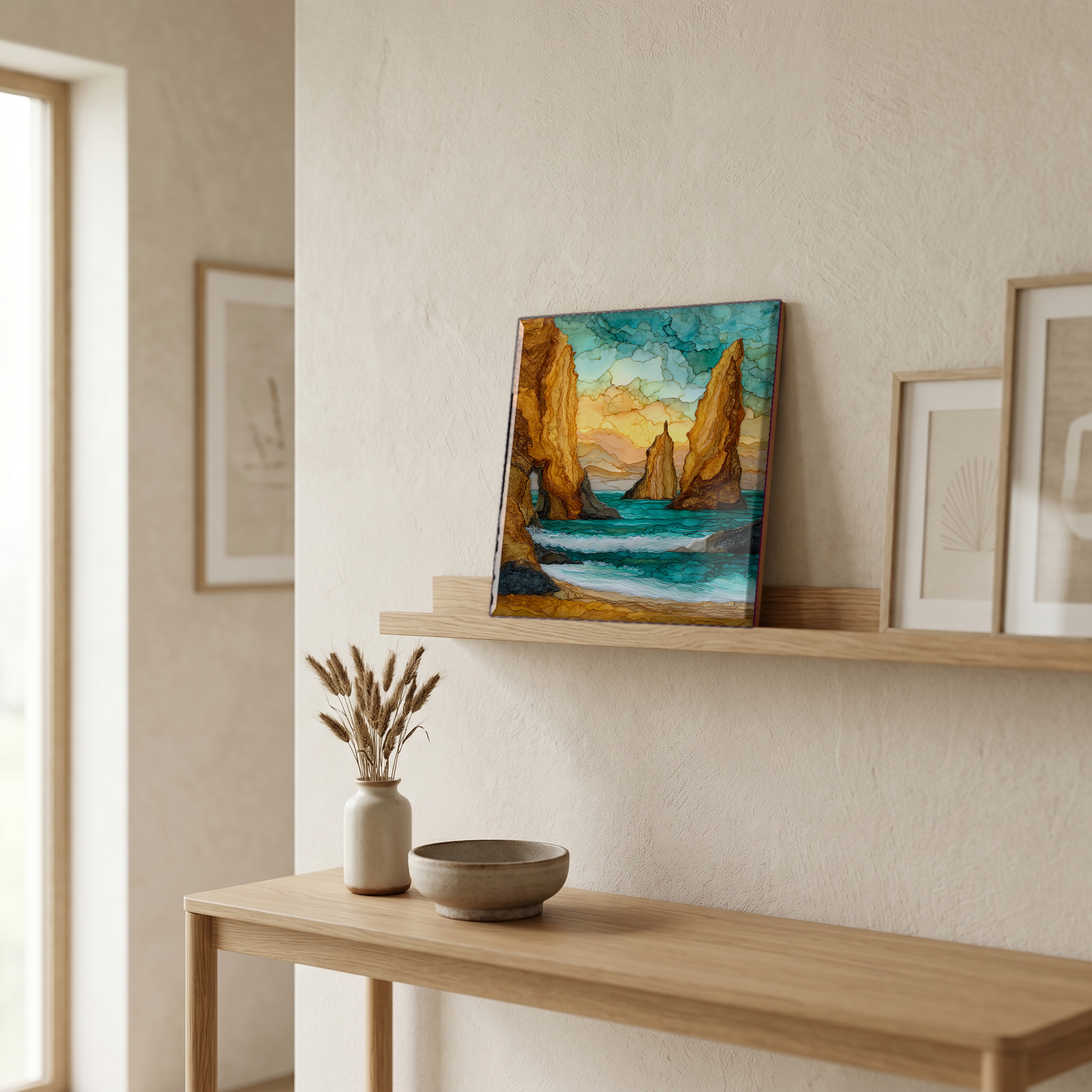
“The Malibu coast bends west, and the bluff drops close to a hundred feet to a strand of sea stacks and arches. The tide goes out and the caves open. Photographers come for the last hour of light, when the sun catches the inside of the rock and the sand reads more gold than tan. The lot at the top is small. The stairway down is steep. Most afternoons the beach quiets after the surf school packs up. The arches are still there.
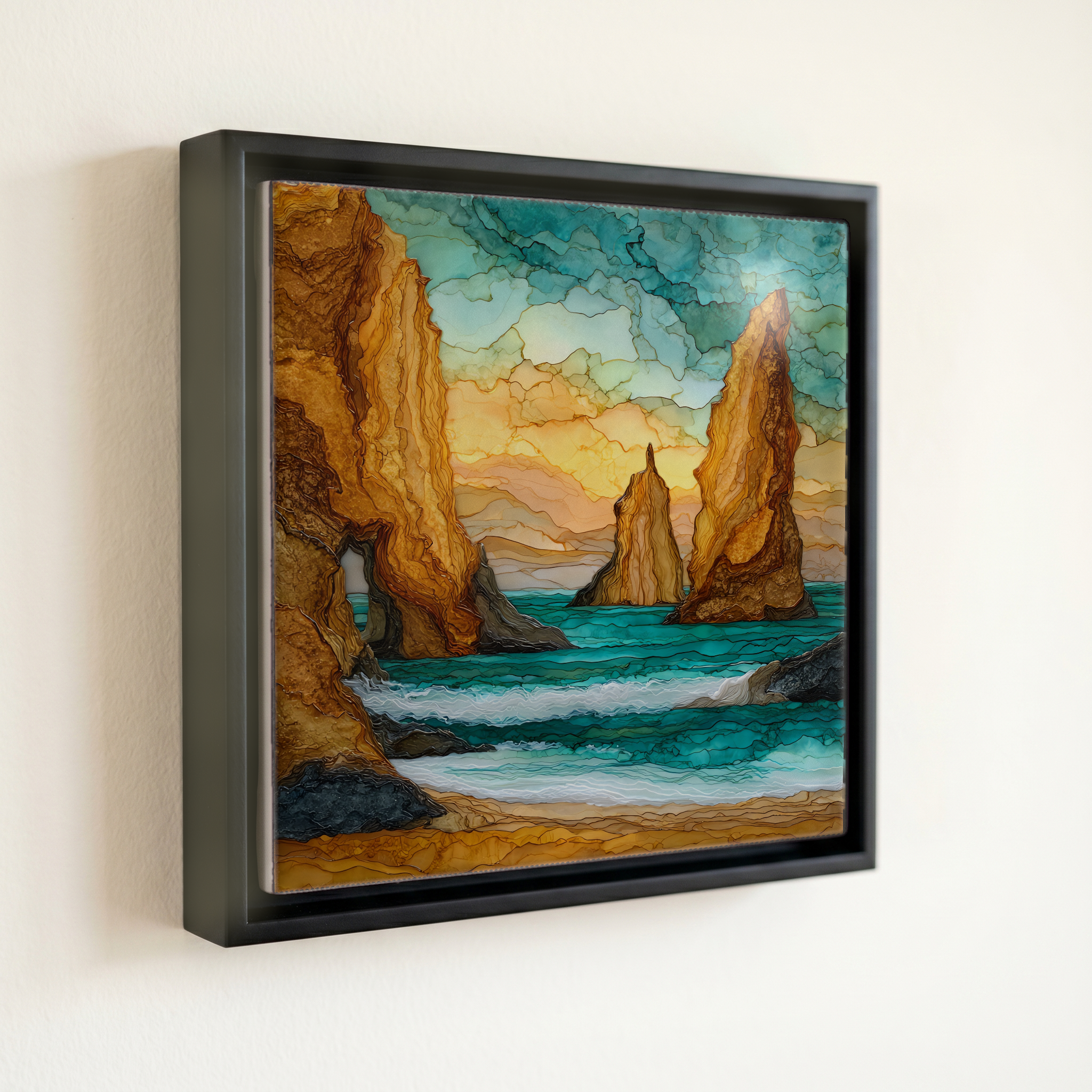
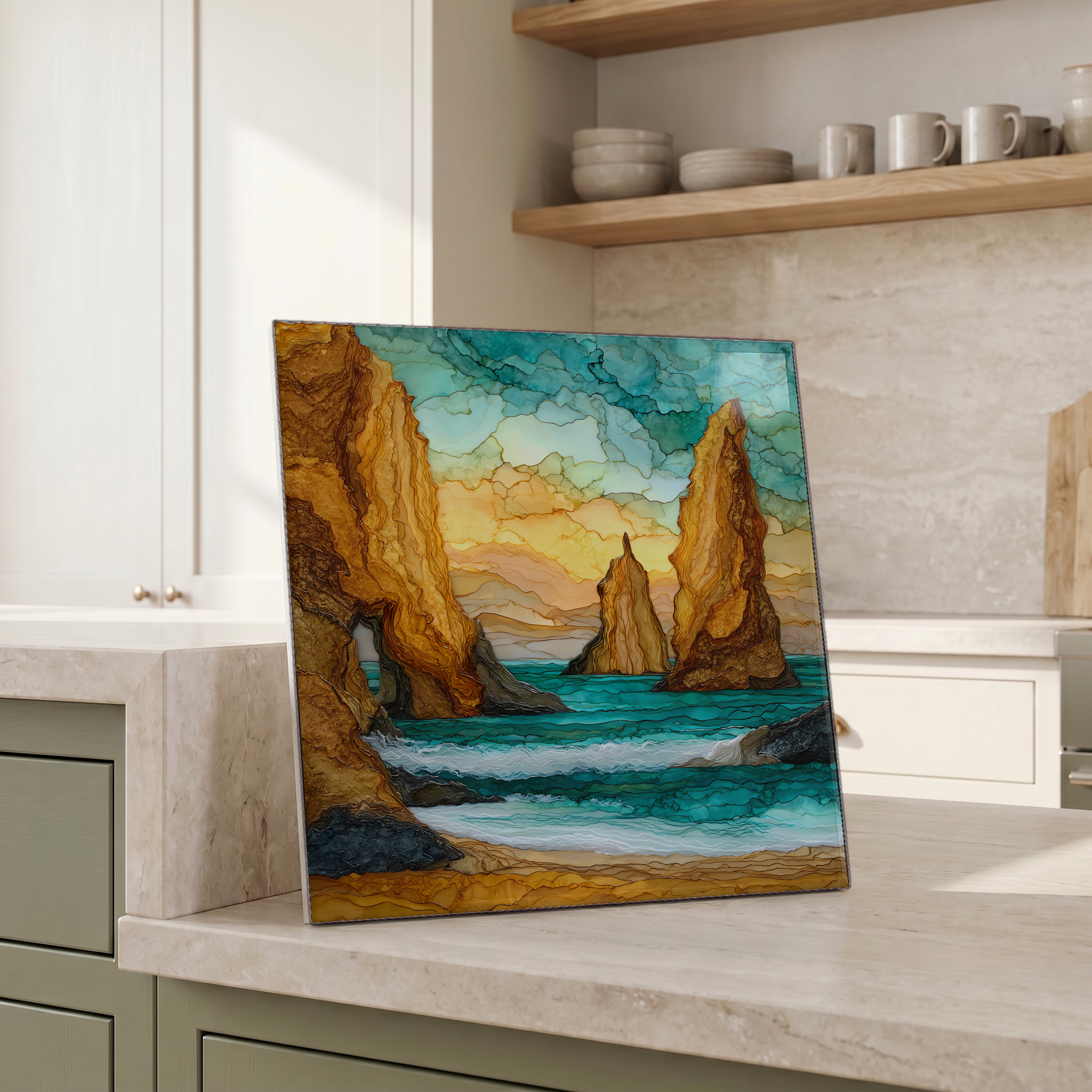
El Matador Beach Malibu, on ceramic.
Each tile is finished by hand in our Knoxville studio. Artwork is slowly infused into the ceramic surface under high heat and pressure, and rests beneath a thin glossy finish. The colour lives in the surface, not on top of it.
Pick any four 4-inch tiles — National Parks you've been to, a Smokies set, the four seasons of one place. $ for a set of , cork-backed, ready to live on the table.
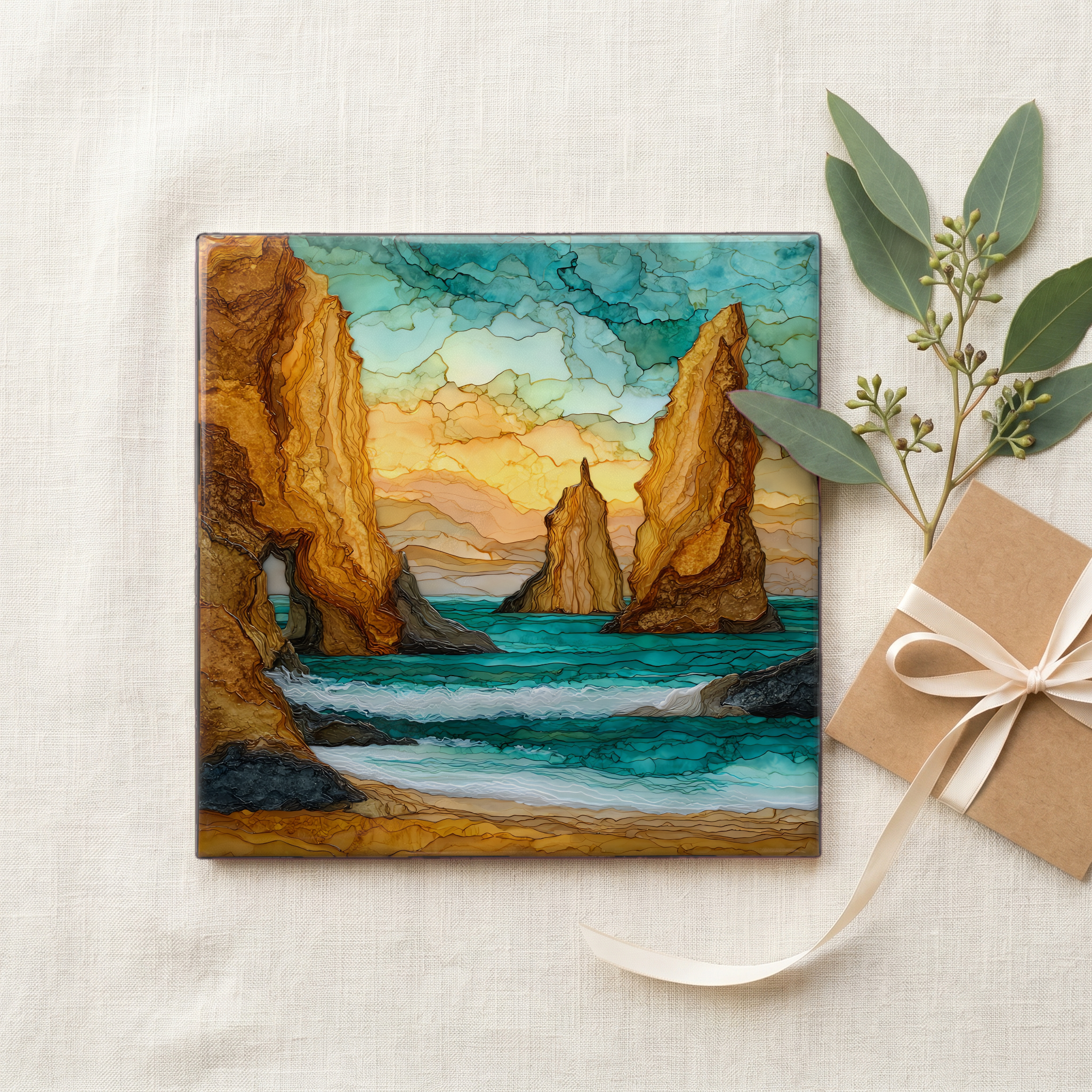
Each tile ships in a kraft box, tied with cream ribbon, with a handwritten note from the studio if you'd like to add one.
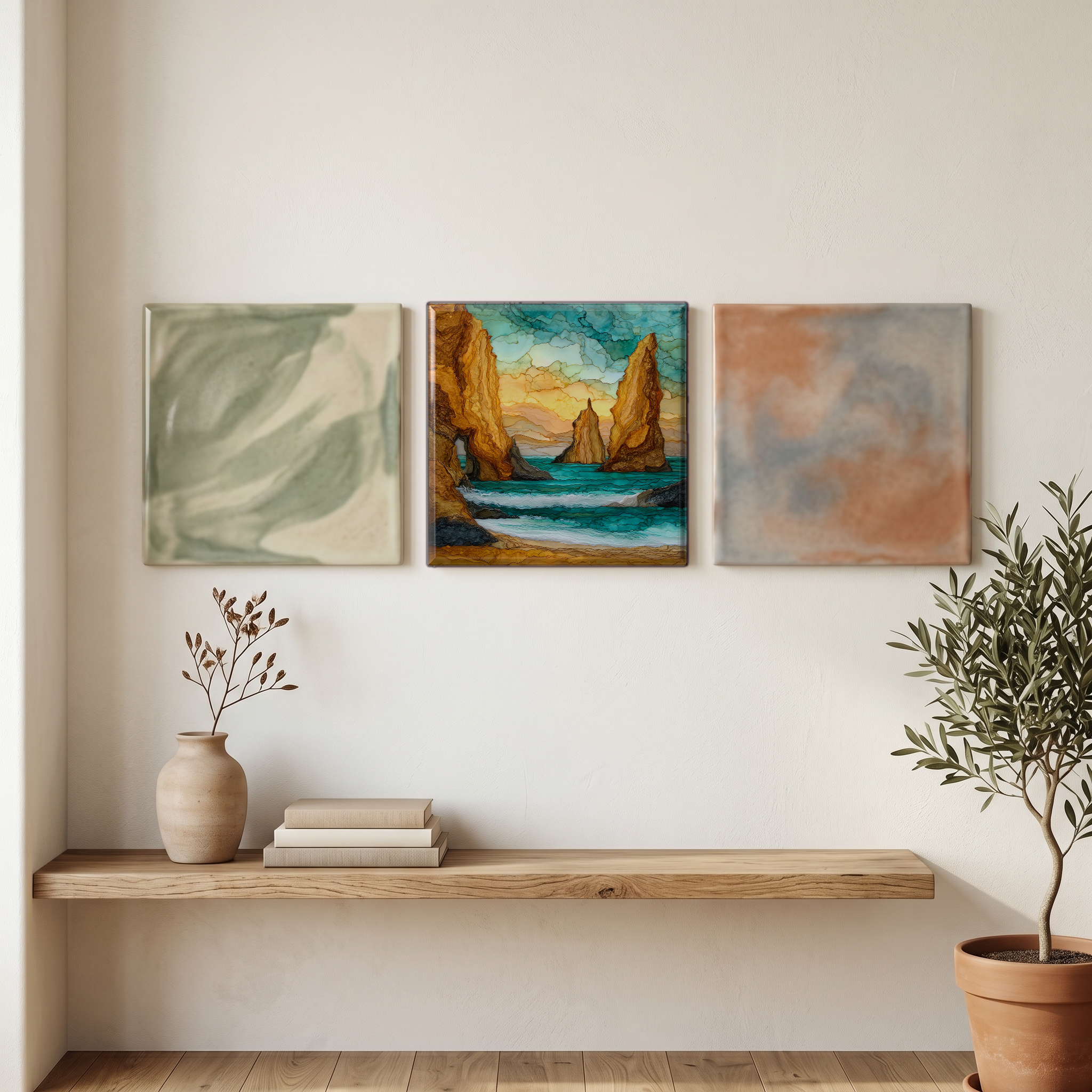
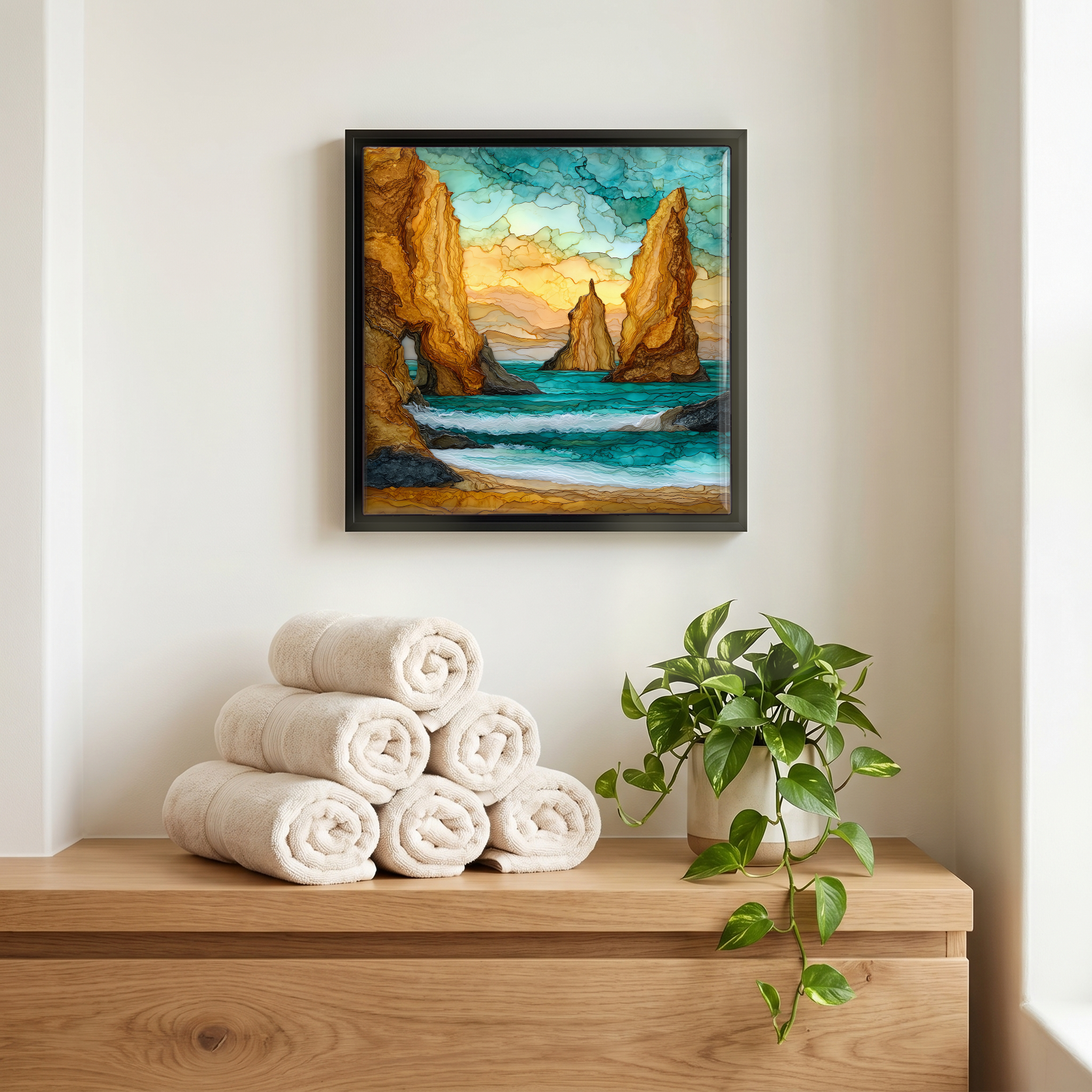
Three or five different vistas, hung together — a chapter of places you've been, or want to go.
The place, in three passes.
El Matador is the southernmost of three pocket beaches that together form Robert H. Meyer Memorial State Beach, a string of coves on the Malibu coast about ten miles west of central Malibu and roughly thirty miles west of downtown Los Angeles. A small bluff-top lot off Pacific Coast Highway holds about twenty-five vehicles. From the lot a wooden stairway and a packed-dirt path descend a sandstone bluff close to a hundred feet to a narrow strand. Since 1979, the California state park system has managed the three coves as a single unit: El Matador, La Piedra, and El Pescador.
The sea stacks and arches are erosional remnants of the same soft marine sandstone that forms the bluff above. Pacific wave action over thousands of years has cut sea caves into the headland and isolated rock pillars on the beach. The inside walls of the caves catch reflected light in the last hour of the day, which is why photographers favour the place at sunset. At low tide a southern cave opens through to a second pocket of sand. At high tide it closes again. The bluff is unstable; California State Parks posts active slide warnings seasonally.
The bluff-top lot off Pacific Coast Highway opens at 8 a.m. and closes at sunset, with a state-parks day-use fee paid at the iron-ranger kiosk. The descent is a wooden stairway, then a packed-dirt switchback that drops close to a hundred feet, with no handrail on the lower section. There are no lifeguards, no restrooms past the lot, and no shade on the sand. Best access is two hours either side of low tide; the caves and arches close off when the tide is in. Photographers favour the last hour before sunset for the colour the cliffs throw back.