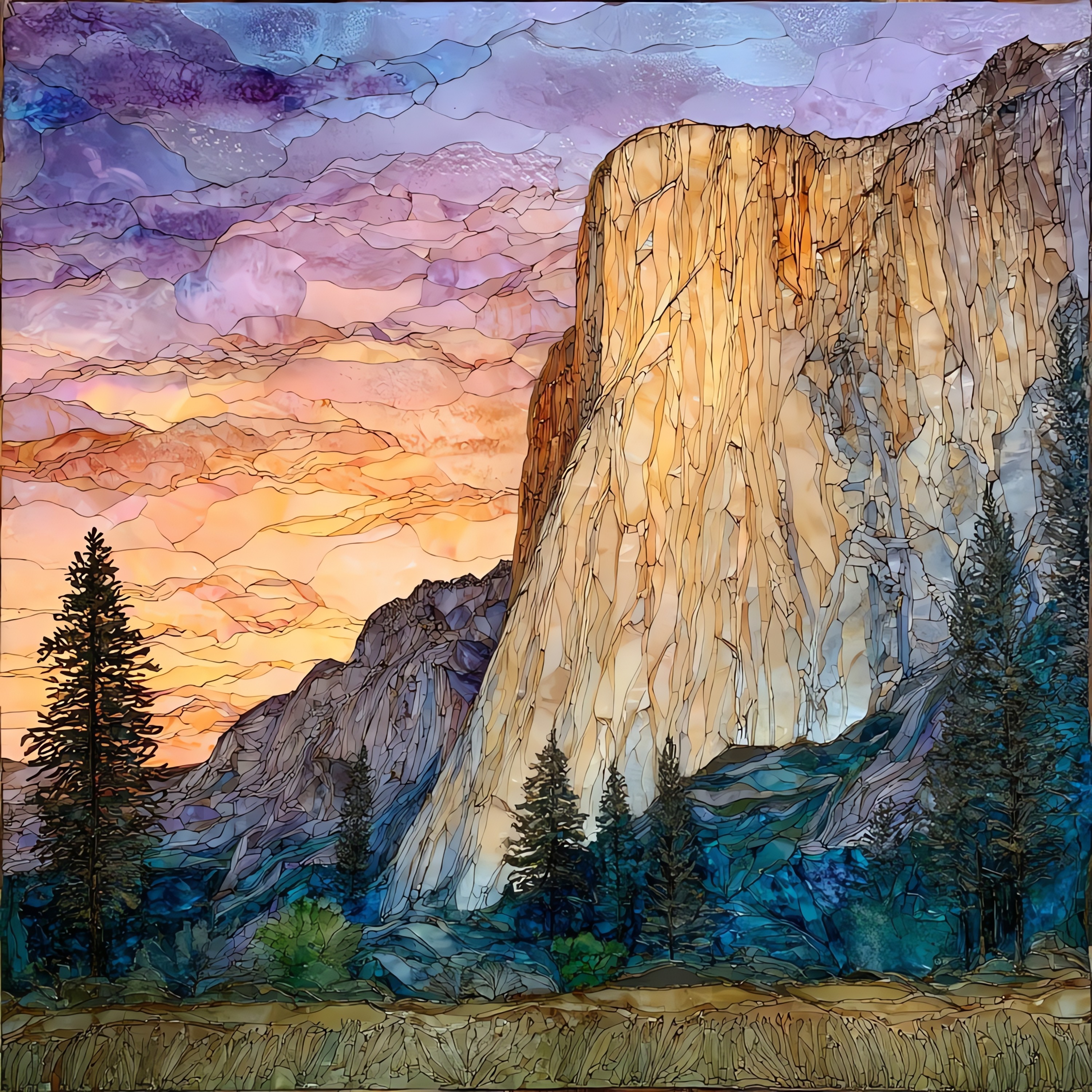
El Capitan Dawn
— the first light on three thousand feet of granite.
Not only on a wall.
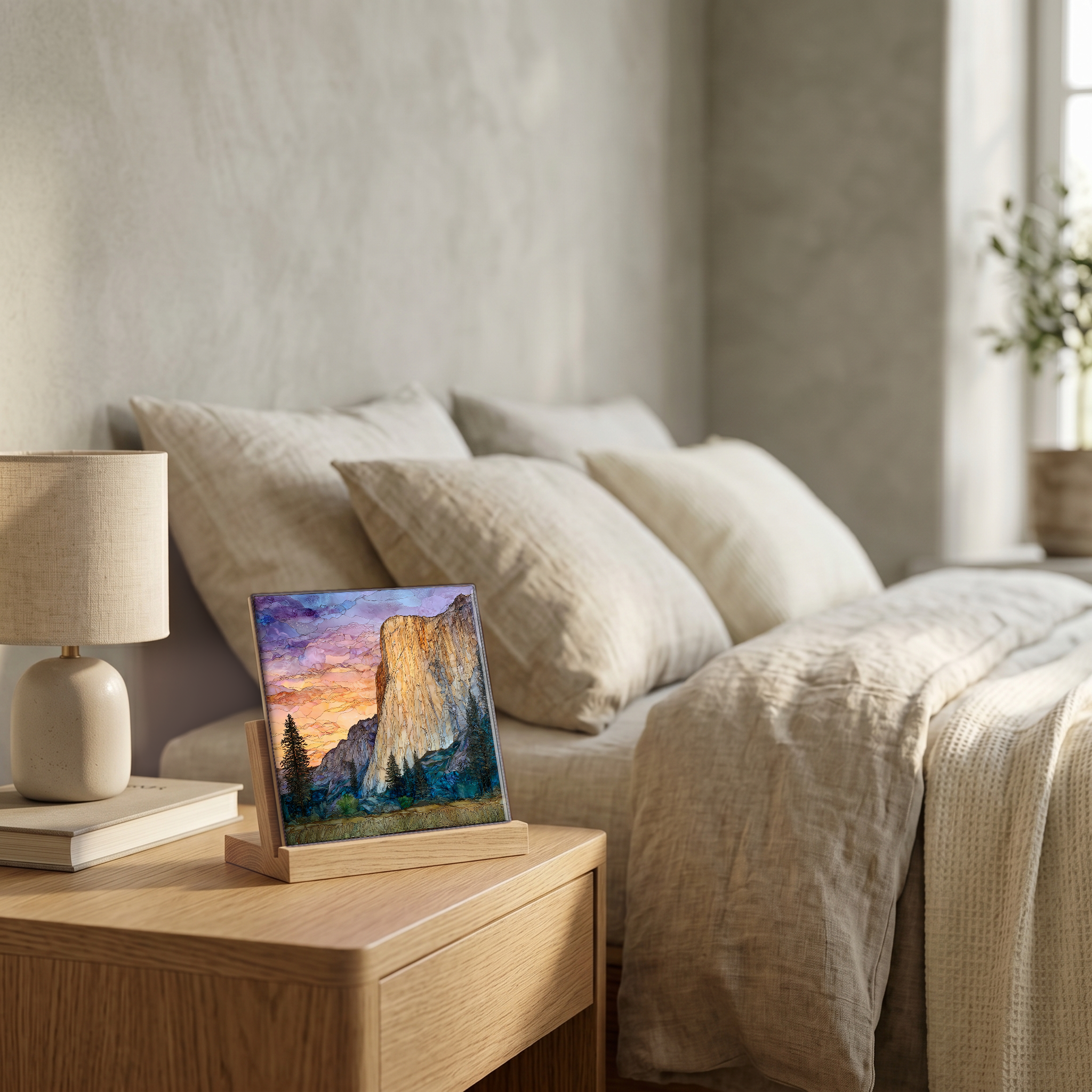
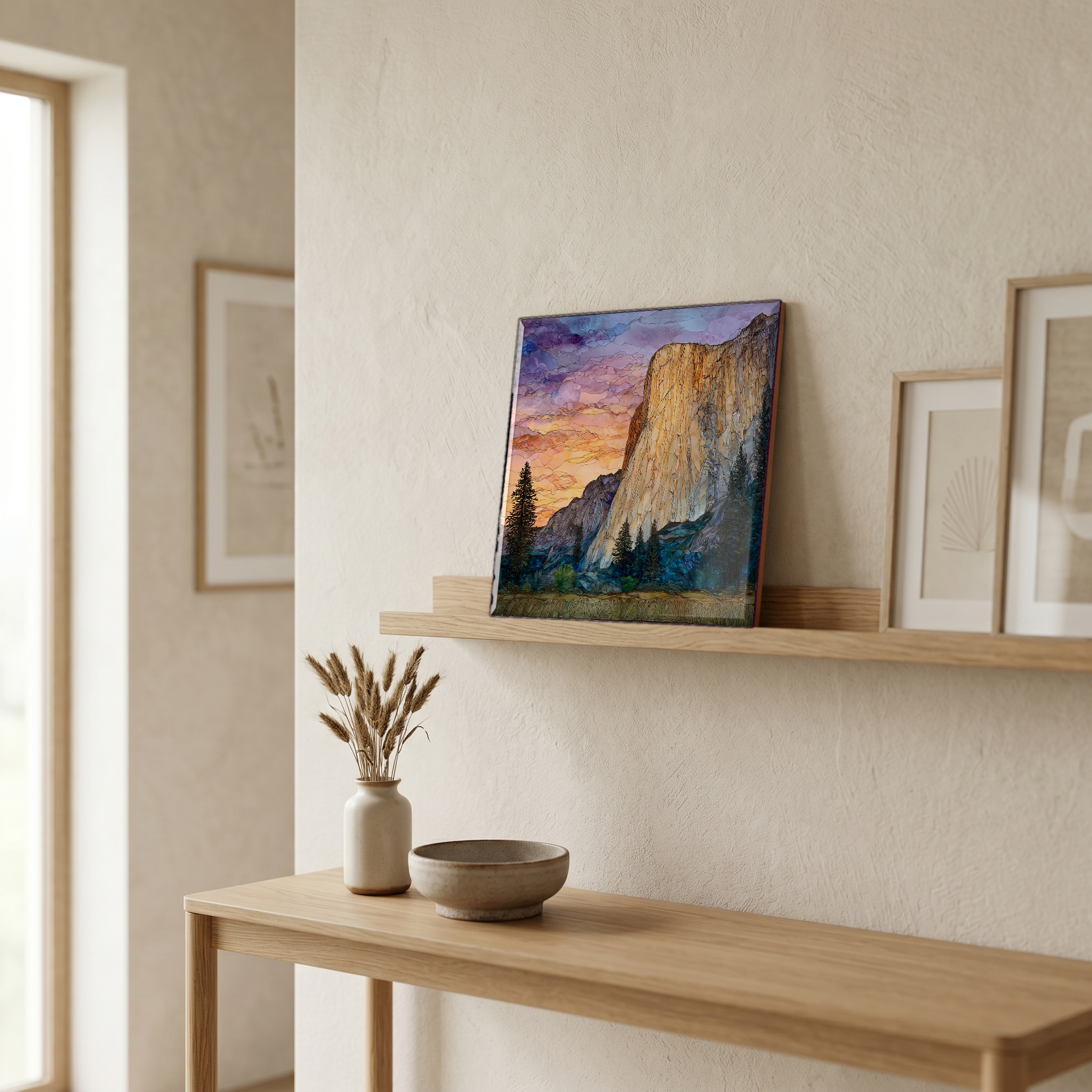
“The southeast face of El Capitan catches the sun before the valley floor does. From the meadow at the base, the granite holds a colour for a few minutes: a flushed rose, then a paler gold, then the working light of an ordinary morning. Climbers on the wall watch the line of light move down past their portaledges. Photographers stake out Tunnel View an hour before. The Ahwahneechee called the monolith Tu-tok-a-nu-la. Three thousand feet of stone, lit from the top down.
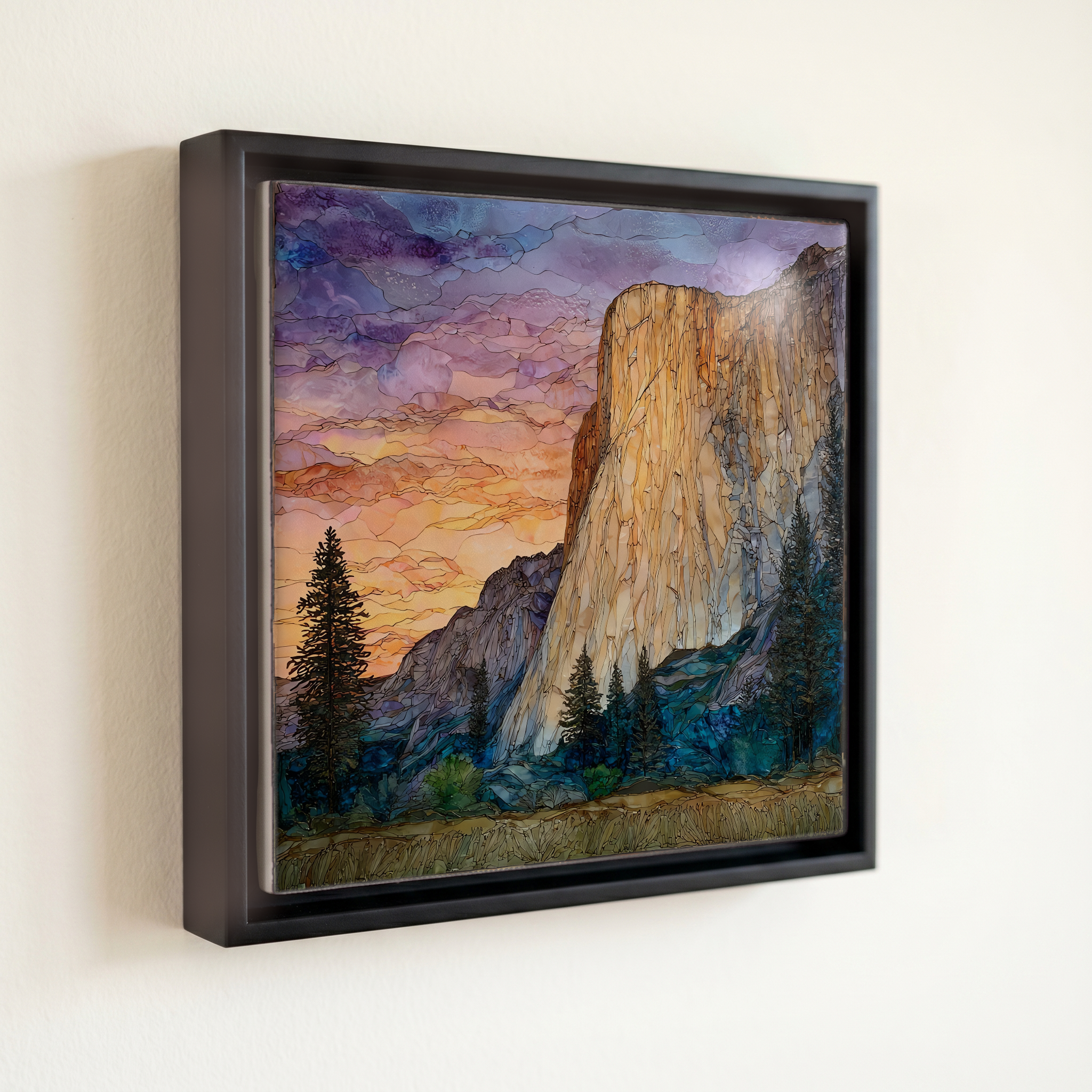
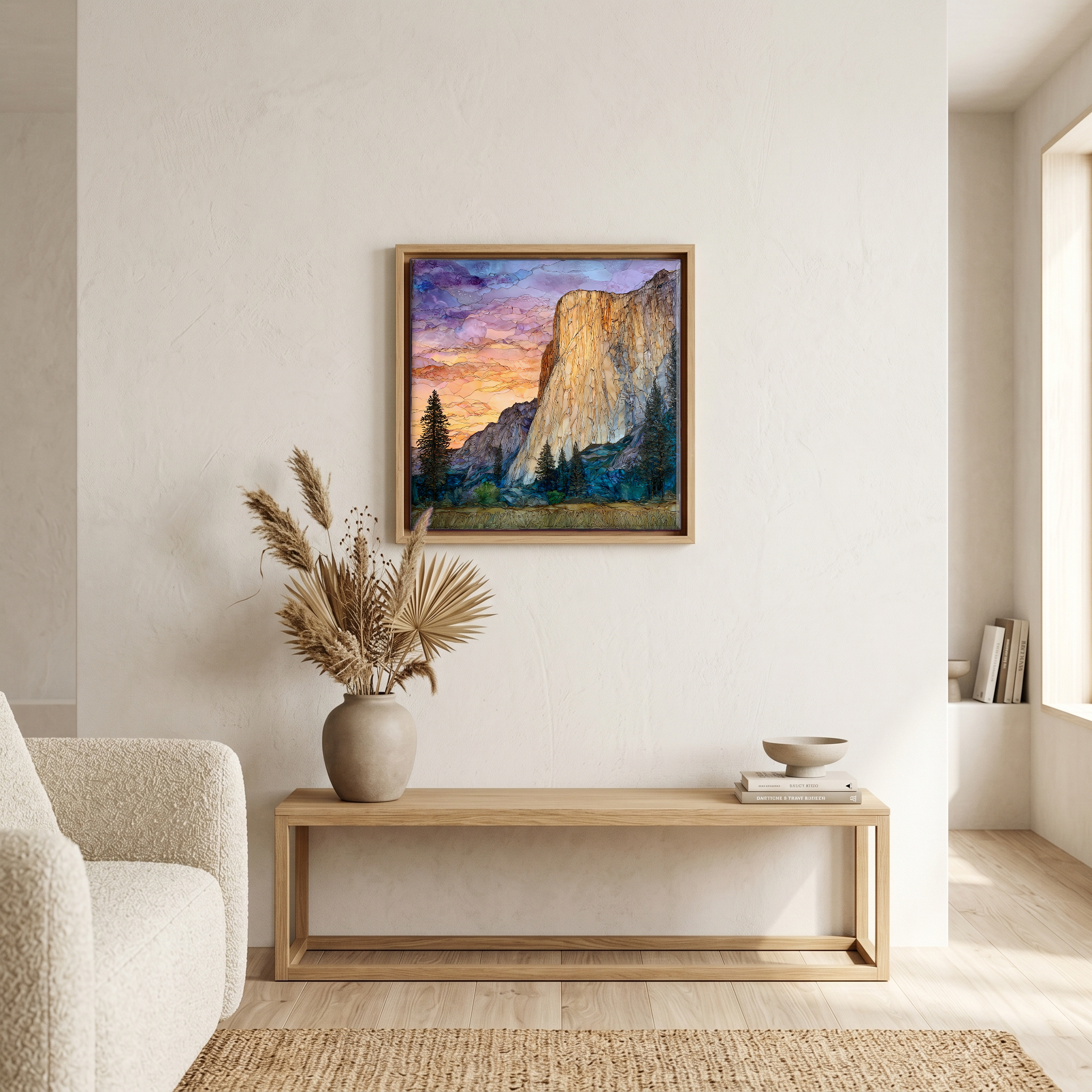
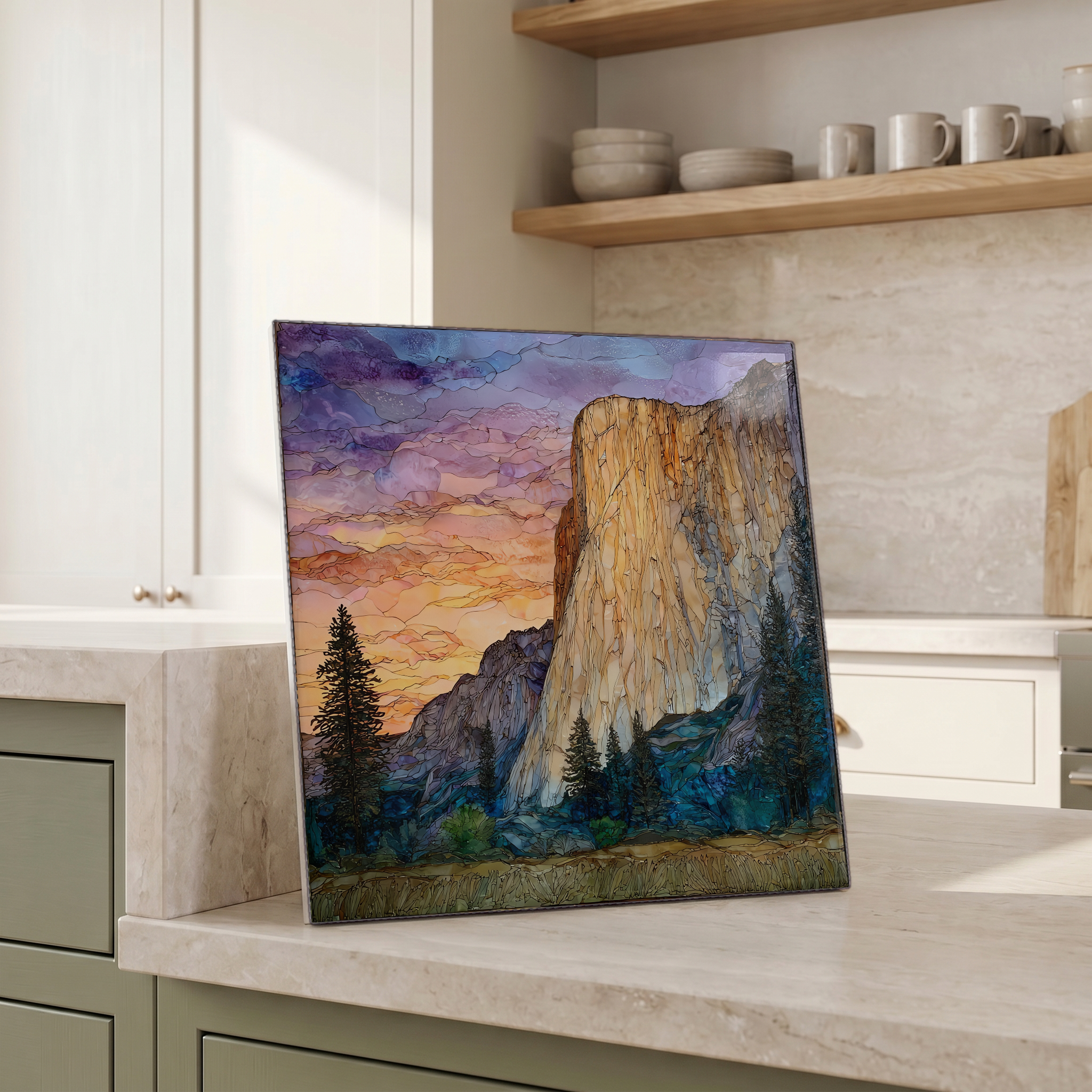
El Capitan Dawn, on ceramic.
Each tile is finished by hand in our Knoxville studio. Artwork is slowly infused into the ceramic surface under high heat and pressure, and rests beneath a thin glossy finish. The colour lives in the surface, not on top of it.
Pick any four 4-inch tiles — National Parks you've been to, a Smokies set, the four seasons of one place. $ for a set of , cork-backed, ready to live on the table.
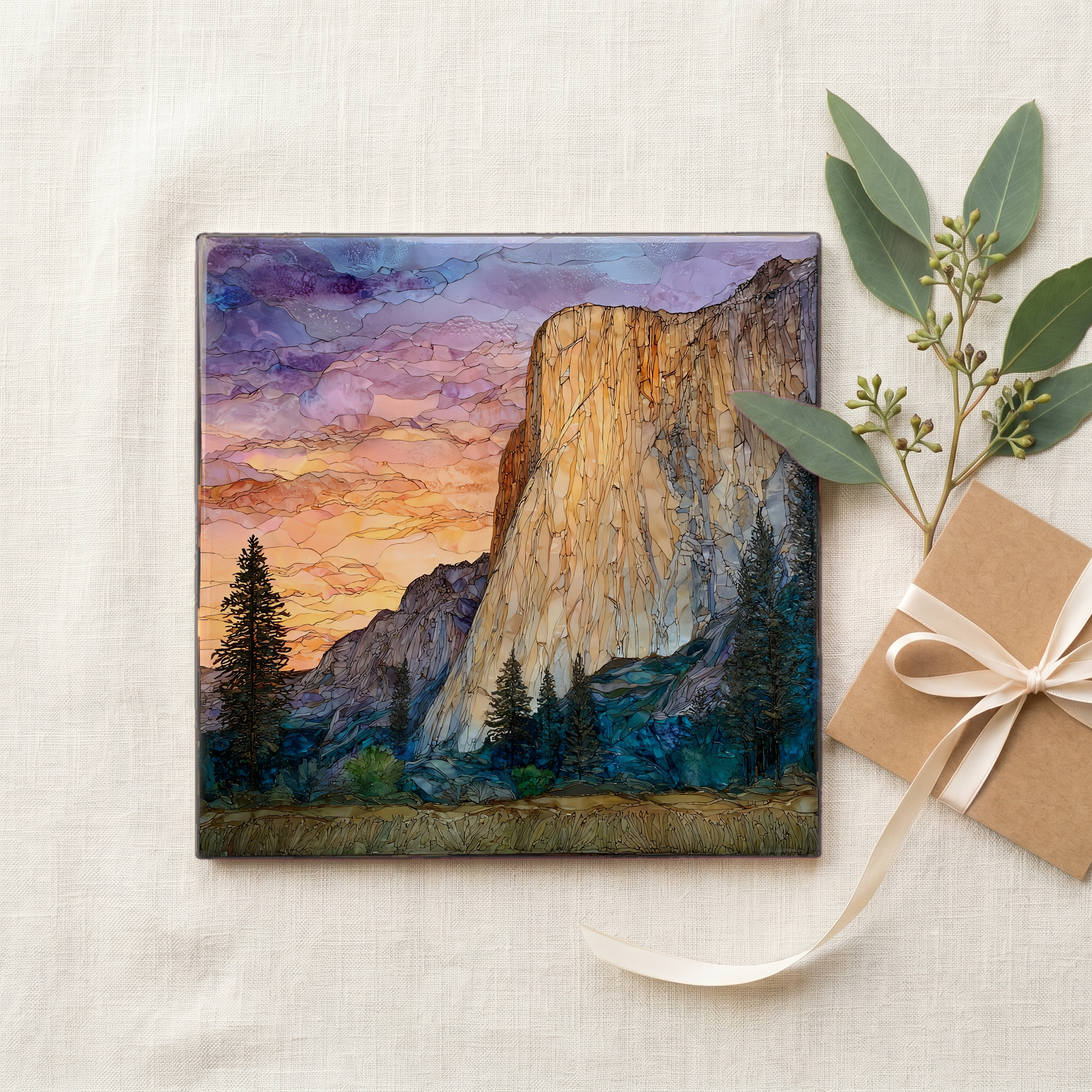
Each tile ships in a kraft box, tied with cream ribbon, with a handwritten note from the studio if you'd like to add one.
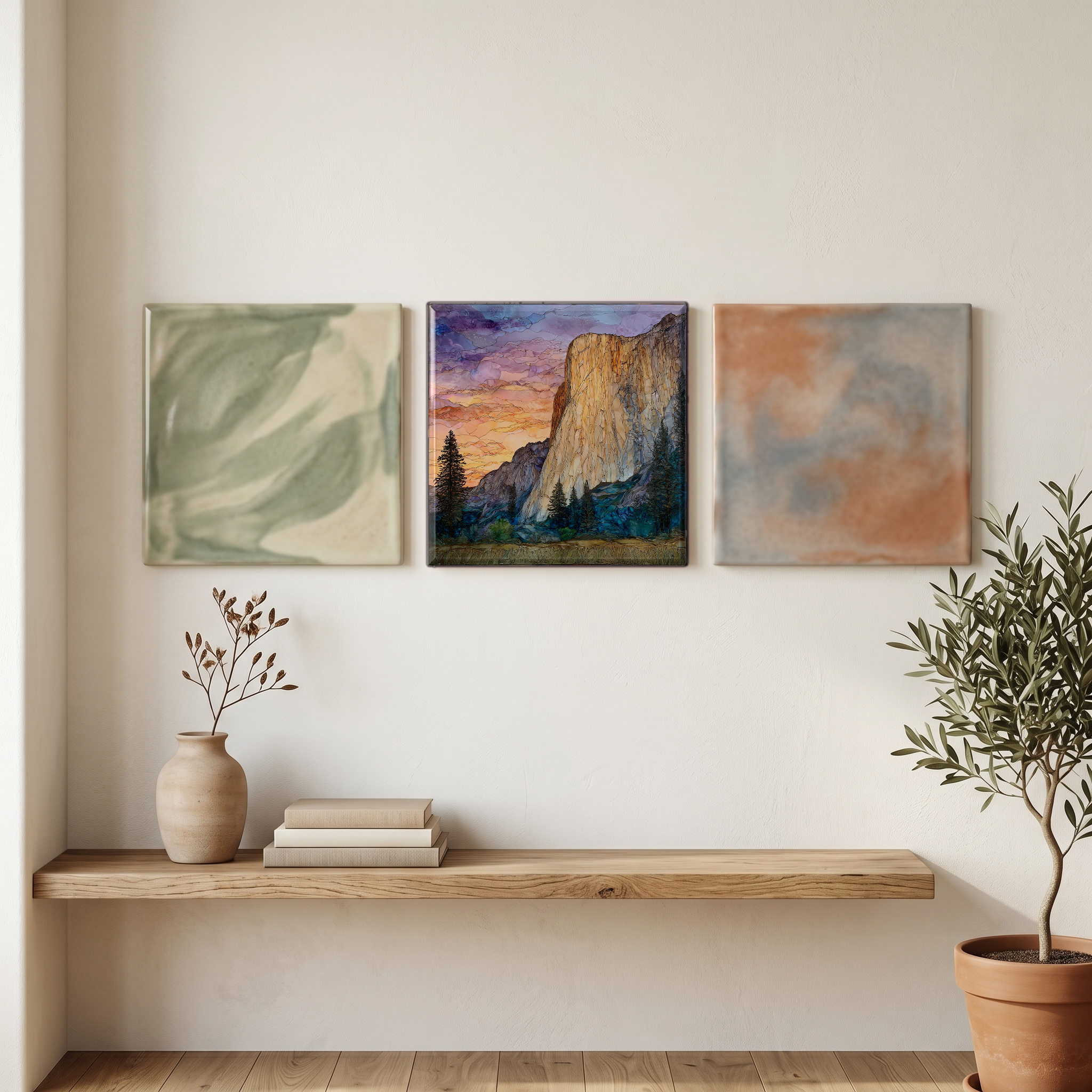
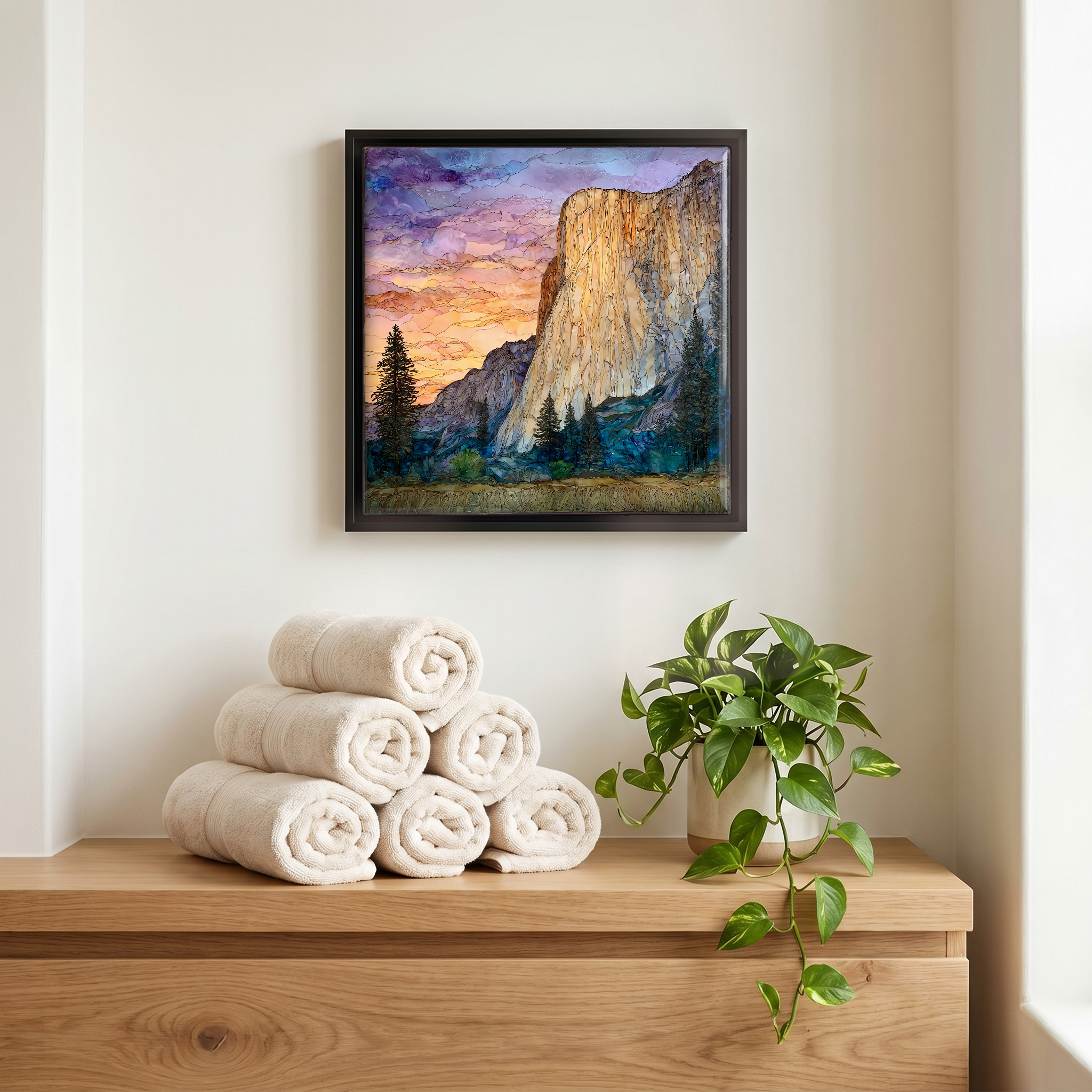
Three or five different vistas, hung together — a chapter of places you've been, or want to go.
The place, in three passes.
El Capitan is a vertical granite formation on the north side of Yosemite Valley, in California's Sierra Nevada. The summit reaches 7,573 feet, with the wall rising about 3,000 feet from the valley floor below. It sits within Yosemite National Park, established by Congress in 1890 and managed today by the National Park Service. The valley itself was federally protected earlier, in 1864, when President Lincoln signed the Yosemite Grant Act setting it aside for public use. El Capitan Meadow at the base is reached via Northside Drive, about seven miles east of the park's Arch Rock Entrance. The closest park lodging is Yosemite Valley Lodge, less than two miles away.
The rock is El Capitan Granite, an intrusive igneous pluton that solidified beneath the surface roughly 100 million years ago, during the Cretaceous. The face exposed today was carved by glaciers during the Pleistocene; the most recent ice age scrubbed Yosemite Valley clear and left the monolith standing. The U.S. Geological Survey describes the wall as one of the largest exposed granite faces on Earth. The southeast aspect, which catches the dawn, is the section climbers know as the Dawn Wall, free-climbed for the first time by Tommy Caldwell and Kevin Jorgeson over 19 days in January 2015. The route is regarded as one of the most difficult big-wall free climbs ever completed.
First light reaches the top of El Capitan well before it touches the meadow at the base. The alpenglow holds longest in winter, when the sun rises farther south and strikes the southeast face at a fuller angle. Photographers favour Tunnel View, on Wawona Road above the valley, for the wide composition that takes in El Capitan, Half Dome, and Bridalveil Fall in one frame. El Capitan Meadow, on Northside Drive, gives the closer, vertical read of the wall itself. The Ahwahneechee, the valley's first people, called the monolith Tu-tok-a-nu-la, a name recorded in 19th-century ethnographies. The Spanish name El Capitan was given by the Mariposa Battalion in 1851 as a translation of the Indigenous meaning, the rock chief.