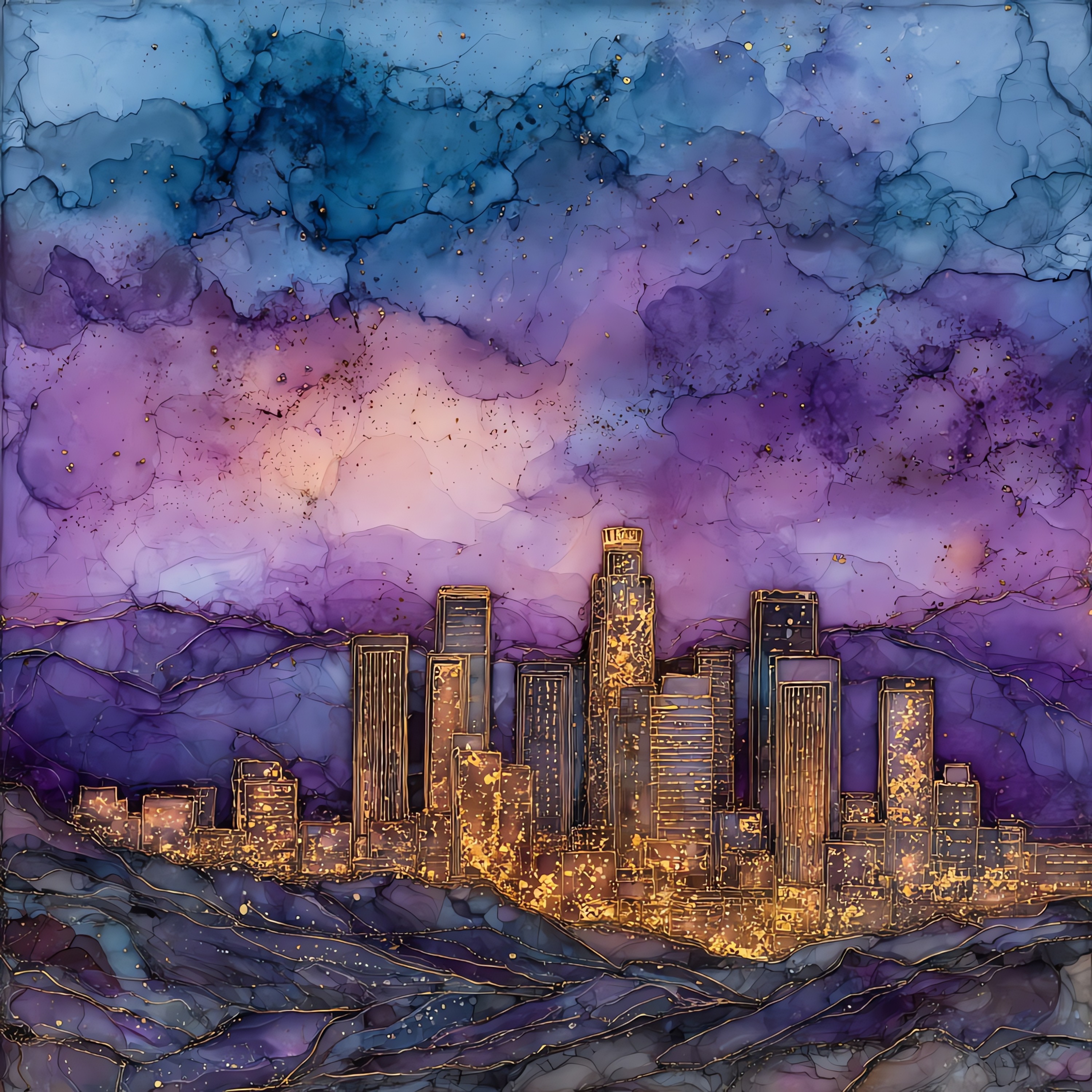
Downtown LA Skyline
— — the half-hour the glass turns to copper.
Not only on a wall.
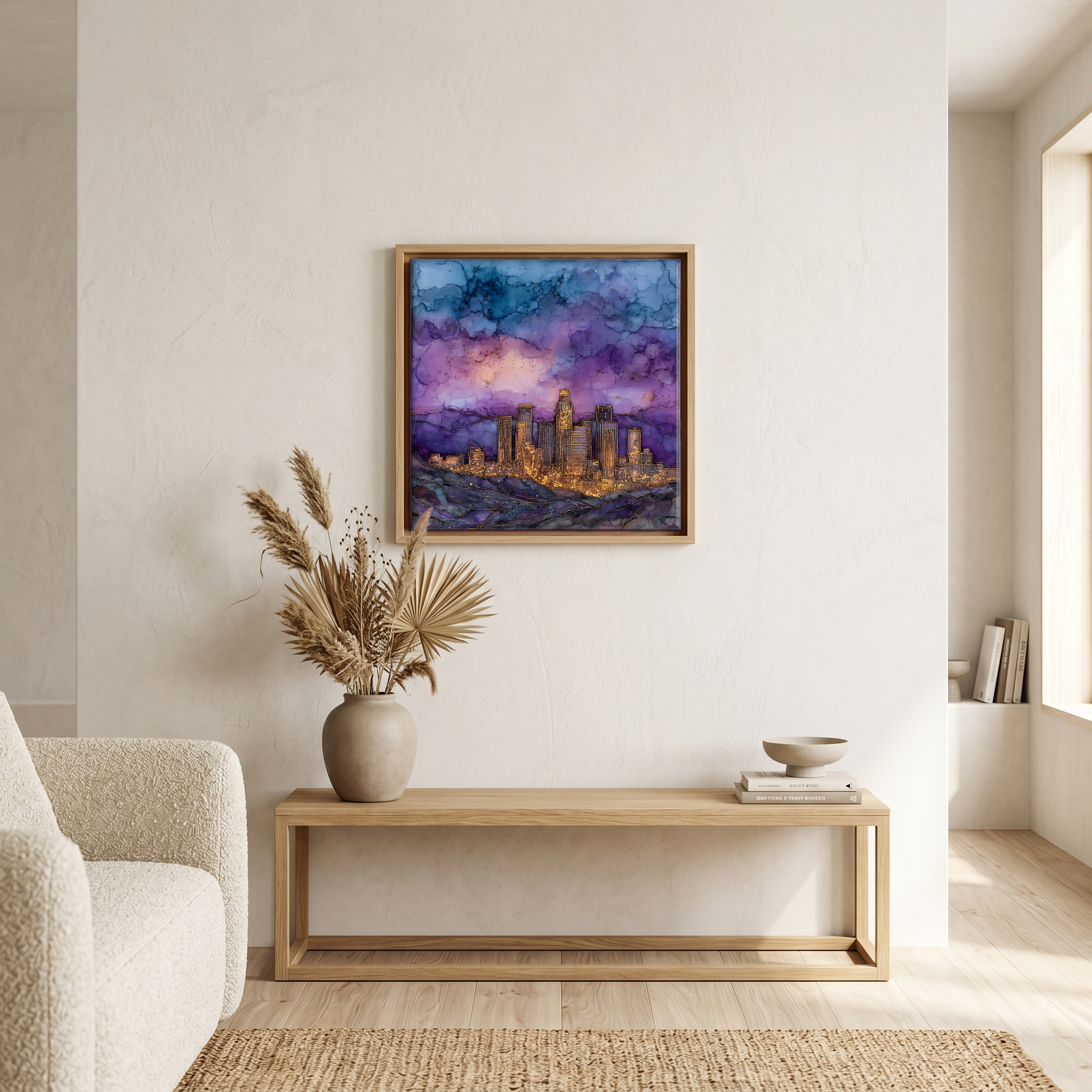
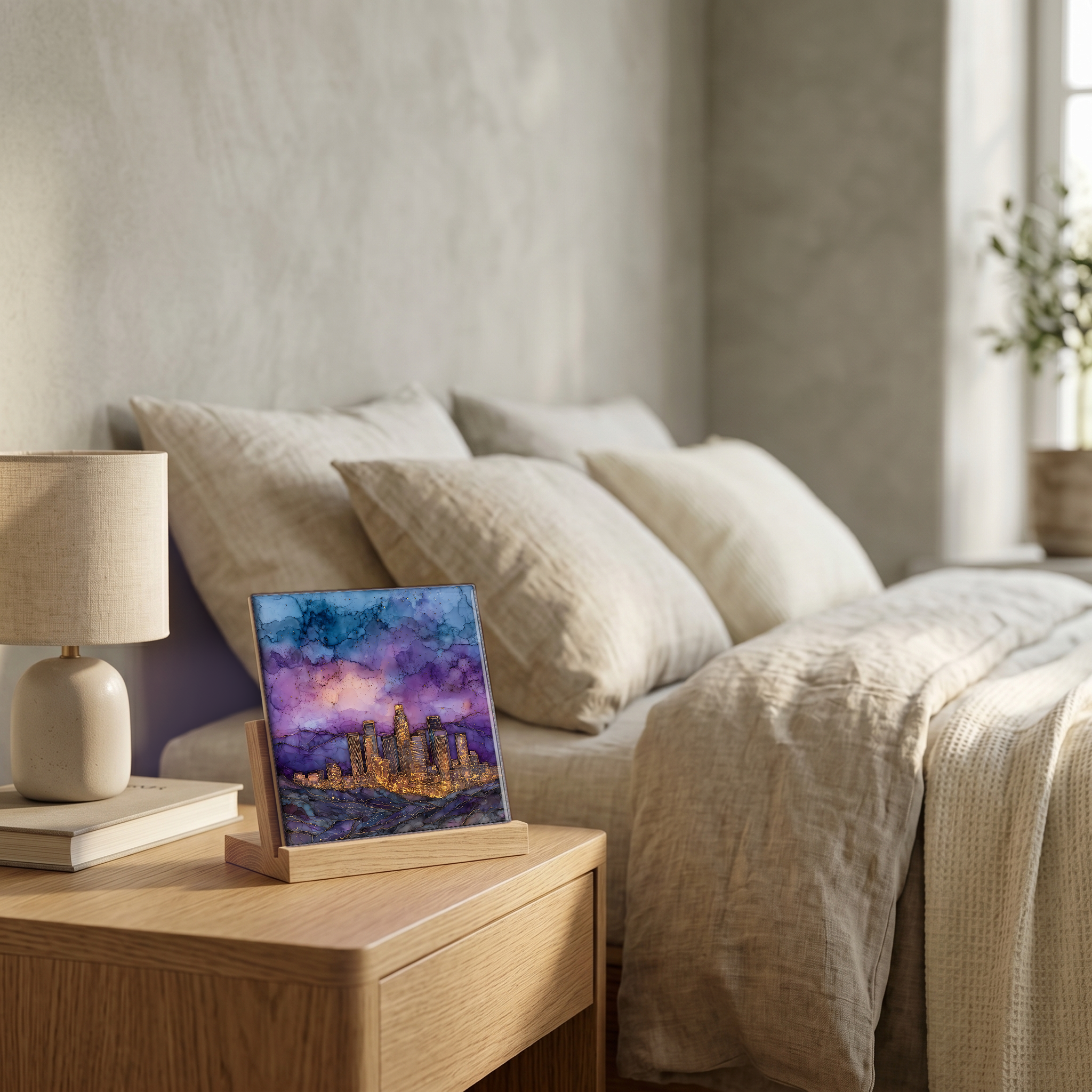
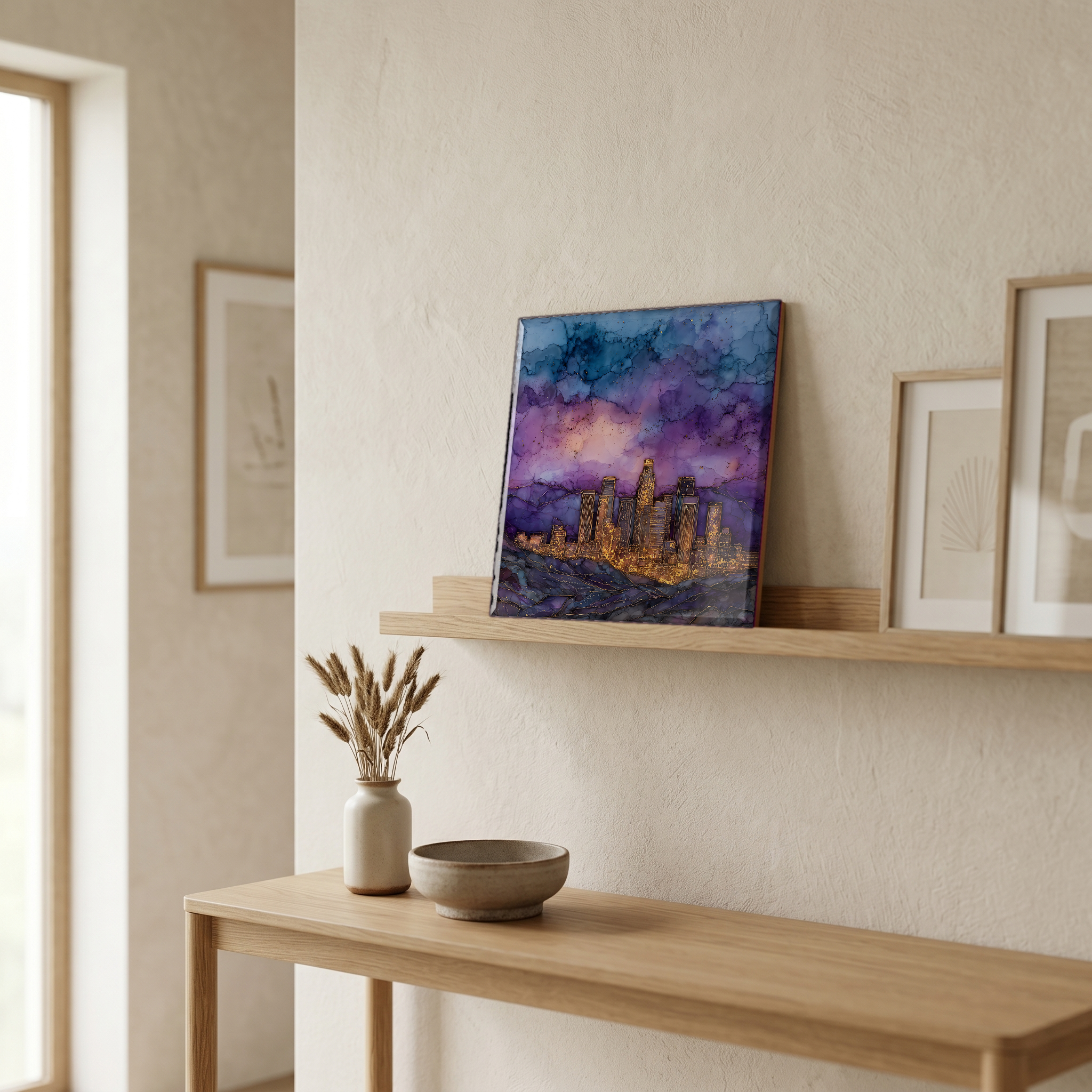
“The view from Griffith Observatory at twilight, when the basin fills with smog or marine layer and the towers light up one by one. The Wilshire Grand Center carries the highest light in California; its spire is visible from Long Beach on a clear morning. There's an old helipad rule that gave LA its flat-roofed skyline for forty years; it was lifted in 2014, and the new towers have started to grow proper crowns again. On the right evening, only the upper floors clear the layer, and the city looks like an island.
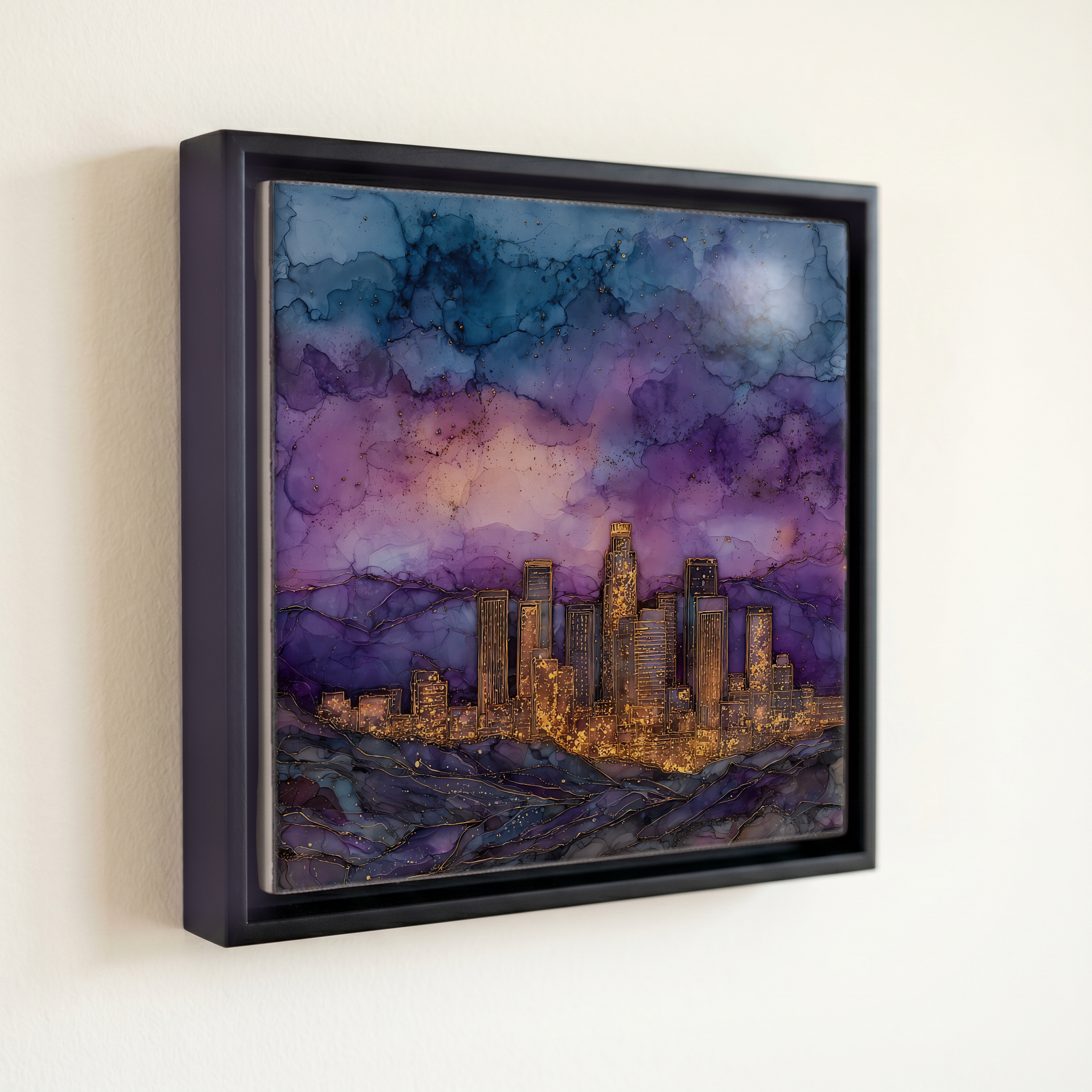
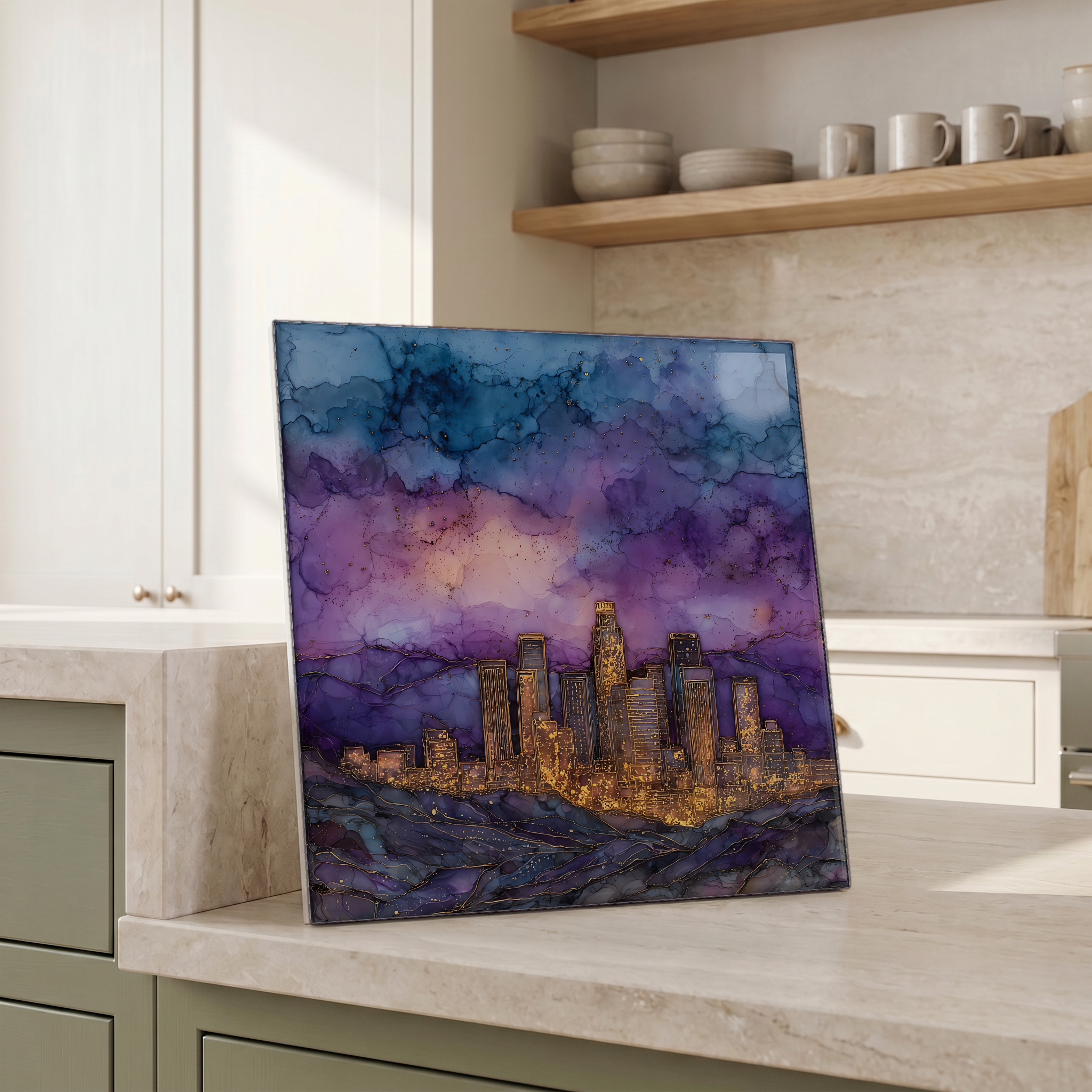
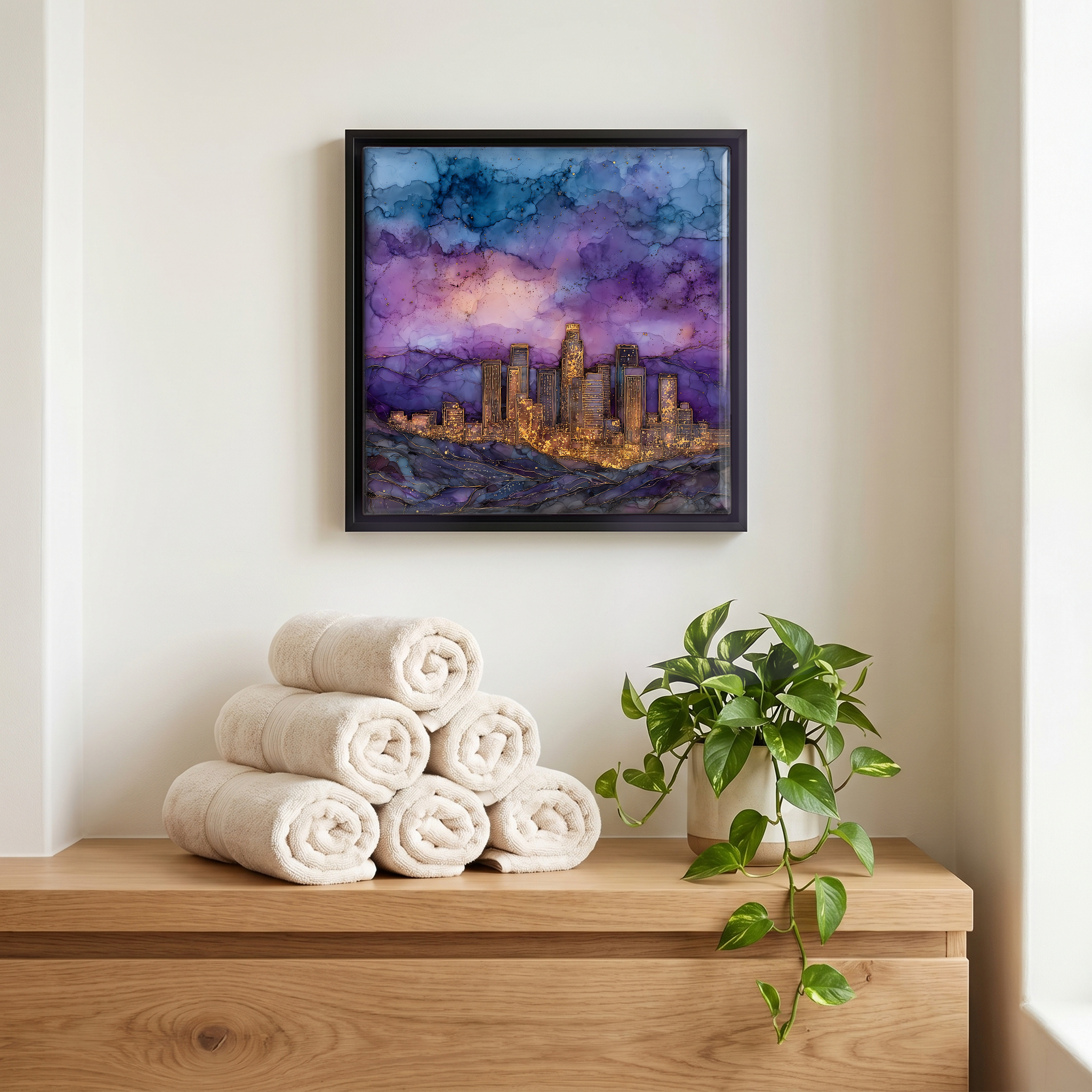
Downtown LA Skyline, on ceramic.
Each tile is finished by hand in our Knoxville studio. Artwork is slowly infused into the ceramic surface under high heat and pressure, and rests beneath a thin glossy finish. The colour lives in the surface, not on top of it.
Pick any four 4-inch tiles — National Parks you've been to, a Smokies set, the four seasons of one place. $ for a set of , cork-backed, ready to live on the table.
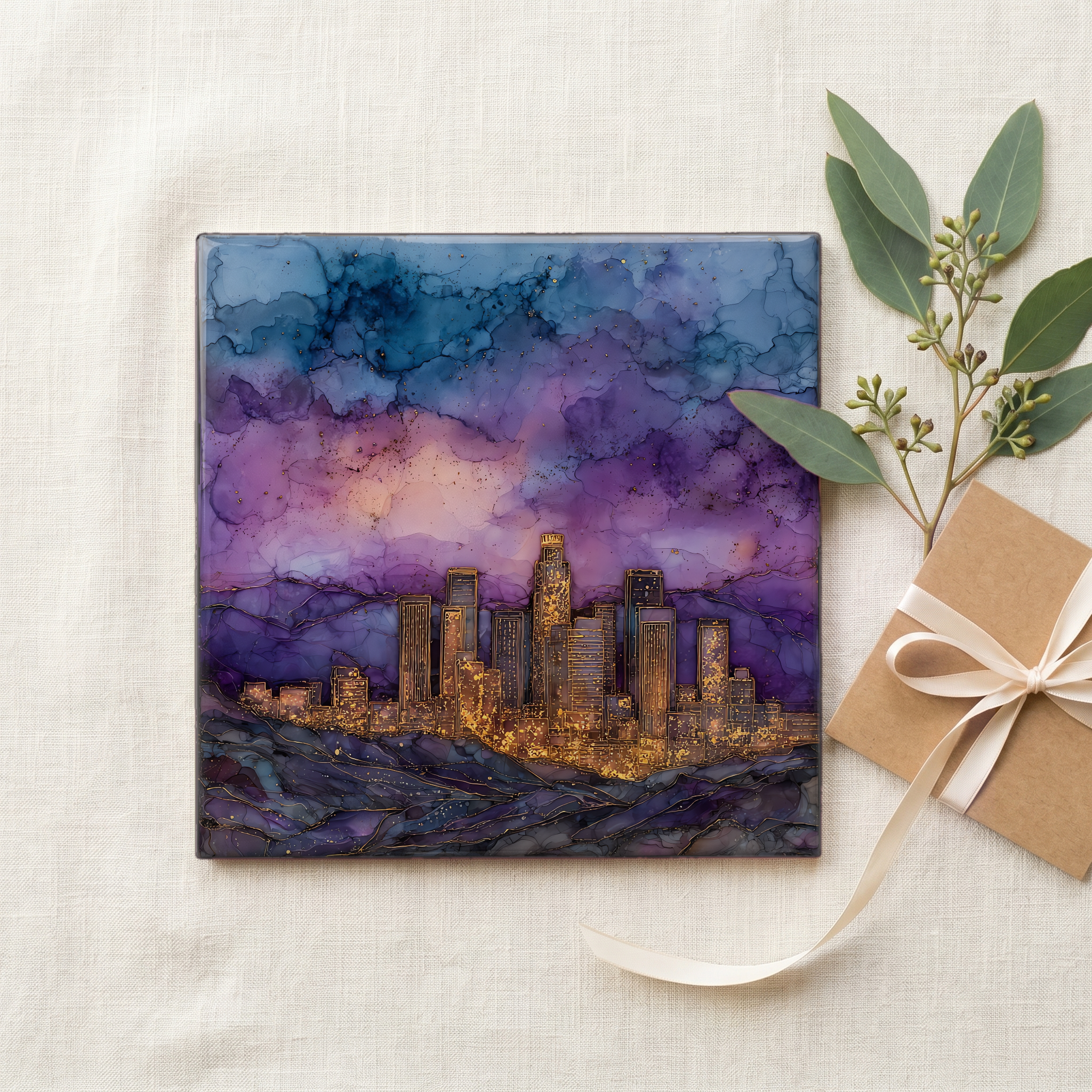
Each tile ships in a kraft box, tied with cream ribbon, with a handwritten note from the studio if you'd like to add one.
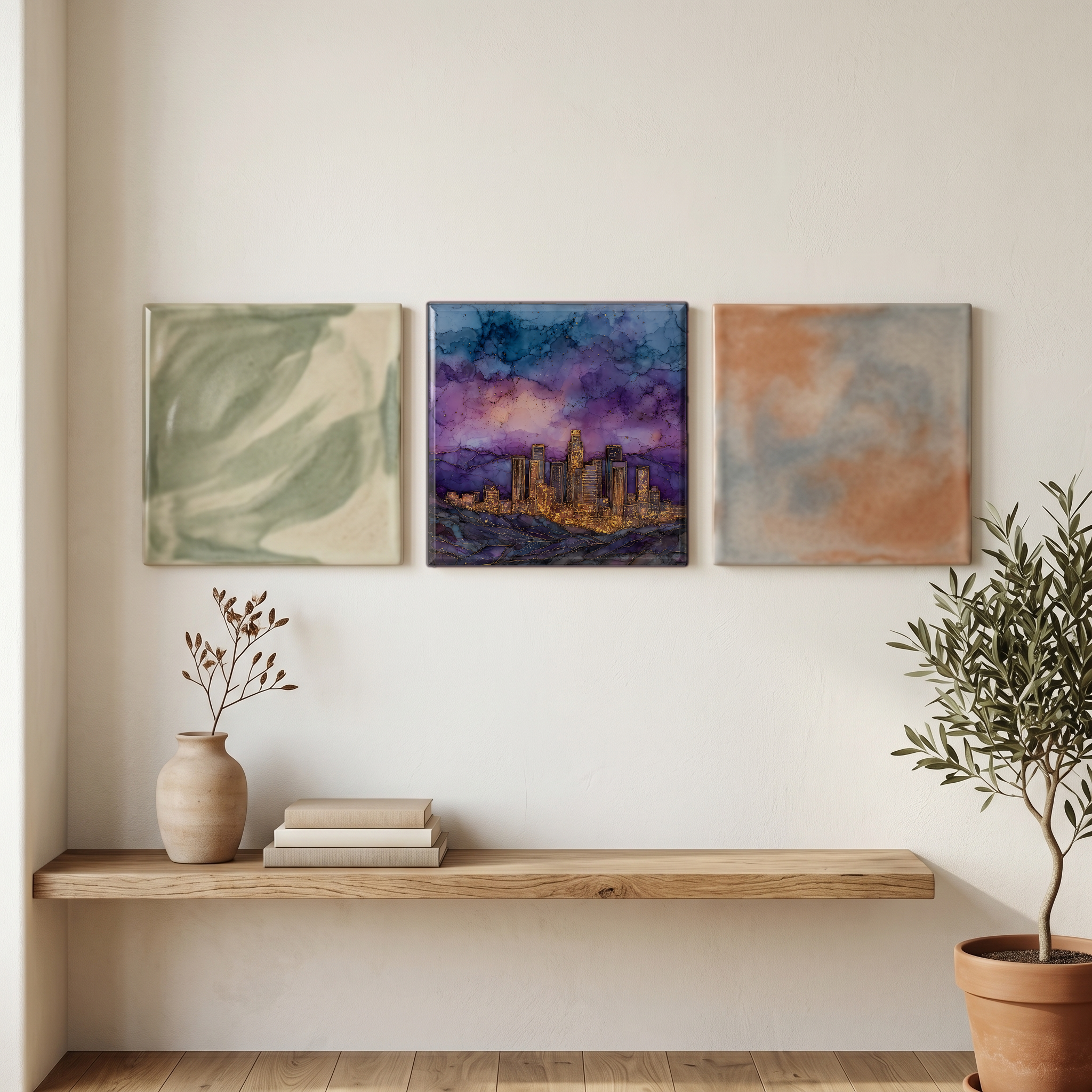
Three or five different vistas, hung together — a chapter of places you've been, or want to go.
The place, in three passes.
The Downtown Los Angeles skyline stands on the eastern edge of the Los Angeles basin, between the LA River and the 110 Freeway, at roughly 285 feet of elevation. The basin is bounded north by the Santa Monica Mountains, east by the San Gabriel Mountains, and south by the Pacific Ocean, a fifty-mile bowl that holds light and weather differently from anywhere else in the country. The skyline itself sits in the Financial District, a roughly twelve-block stand of towers anchored by the 1,100-foot Wilshire Grand Center at Wilshire and Figueroa. Best seen from outside: Griffith Observatory, four miles north; the 4th Street Bridge over the LA River, a mile east; Baldwin Hills, eight miles southwest.
What people remember about LA light is partly the marine layer. Cool, damp air comes inland off the Pacific most evenings and settles below the tops of the towers, leaving the upper floors clear while the streets below soften. The west-facing glass on the financial-district buildings catches the descending sun in a long band of copper that lasts roughly half an hour. The San Gabriels behind, which rise to over 10,000 feet at Mount San Antonio, hold the late light differently from the city: dry, pink, almost gold in winter. Cinematographers have used this combination since the 1940s. The hardest shot in any LA skyline image is finding the night that the smog is thin enough to see all of it.
The classic vantage is Griffith Observatory, on the south slope of Mount Hollywood at about 1,135 feet, four miles north of the towers and the basin floor below them. It is free to enter, with hours that run to 10 p.m. on most evenings. The Baldwin Hills Scenic Overlook, eight miles southwest, gives the side angle the LA Times and most film studios use. The 4th Street Bridge over the LA River is the working photographer's frame, with the towers stacked behind the Sixth Street Viaduct. Sunrise is gentler than sunset; the sun comes in over the San Gabriels and hits the west-facing glass head-on. The clearest days for the skyline follow winter rain. Late January through early March is the most reliable window.