Wender·Vista
Devils Postpile
shown on ceramic, 12-inch tileCalifornia · United States
in the Sierra Nevada, near Mammoth Lakes

Devils Postpile

the columns the glacier polished from above.

Where it lives

Not only on a wall.

A small tile on the nightstand catching the morning. A larger one above the fire. Yours, wherever you spend the slow hours.
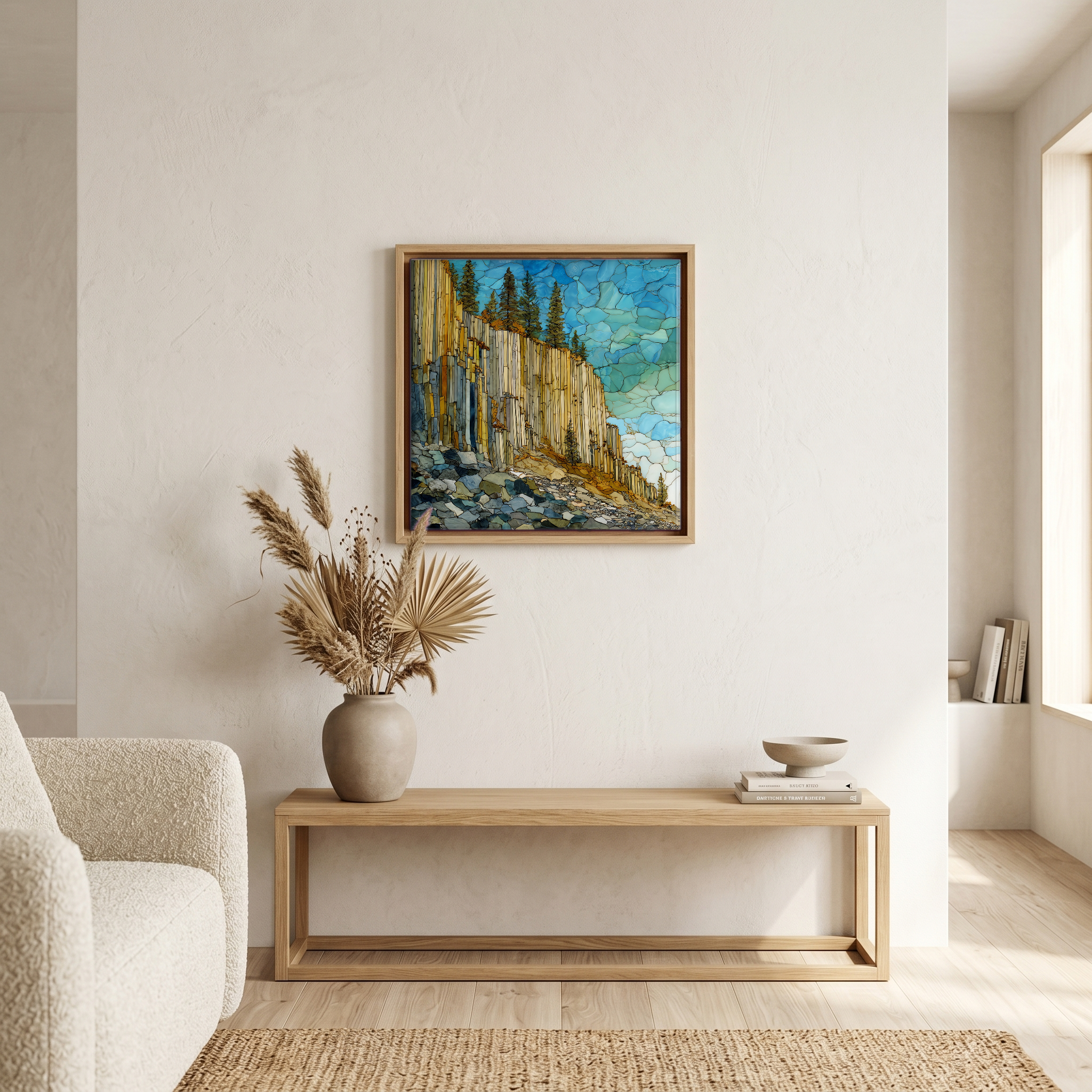
Above the bench, in a warm oak surround.
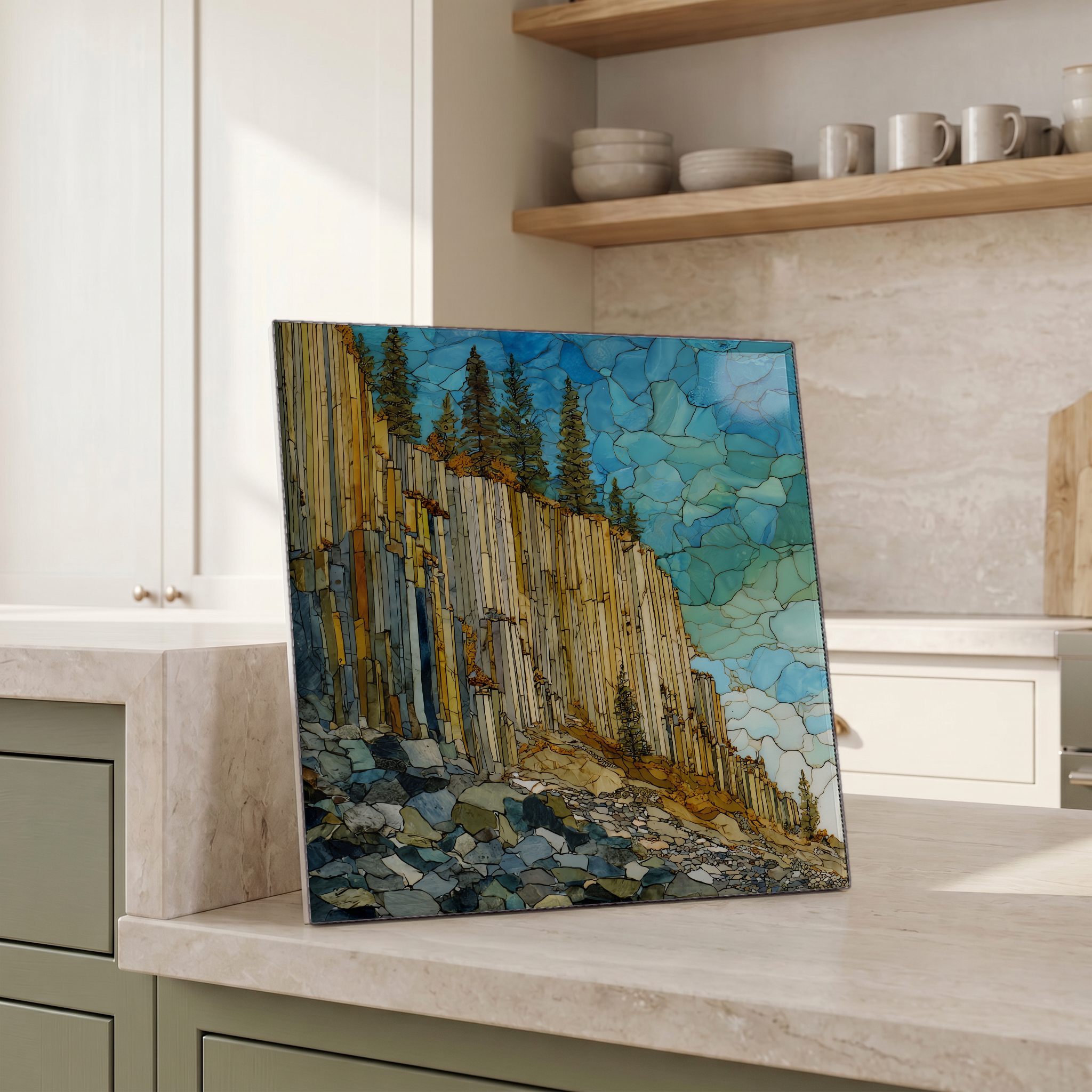
Beside the kettle, propped on the counter.
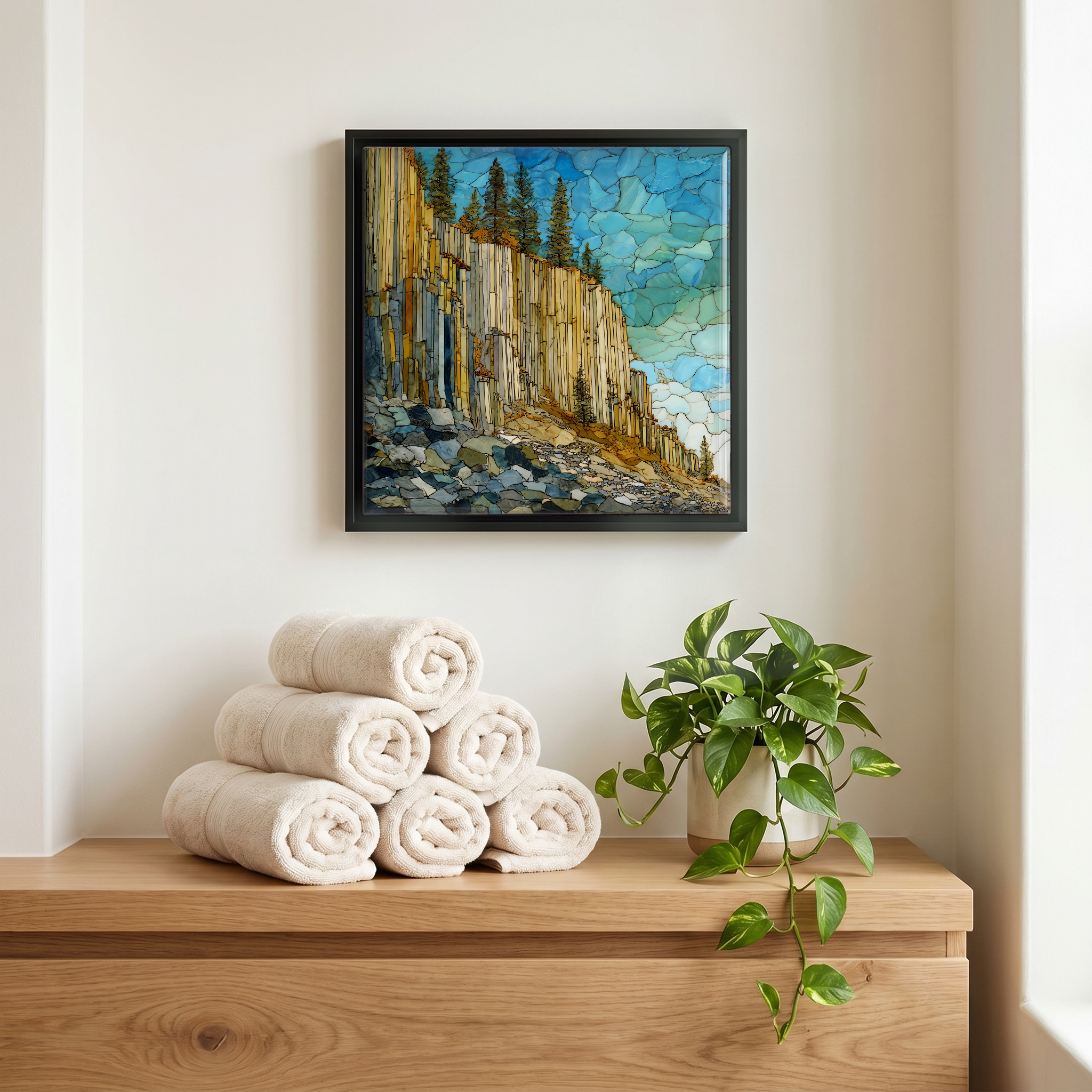
Above the linens, in a slim black surround.
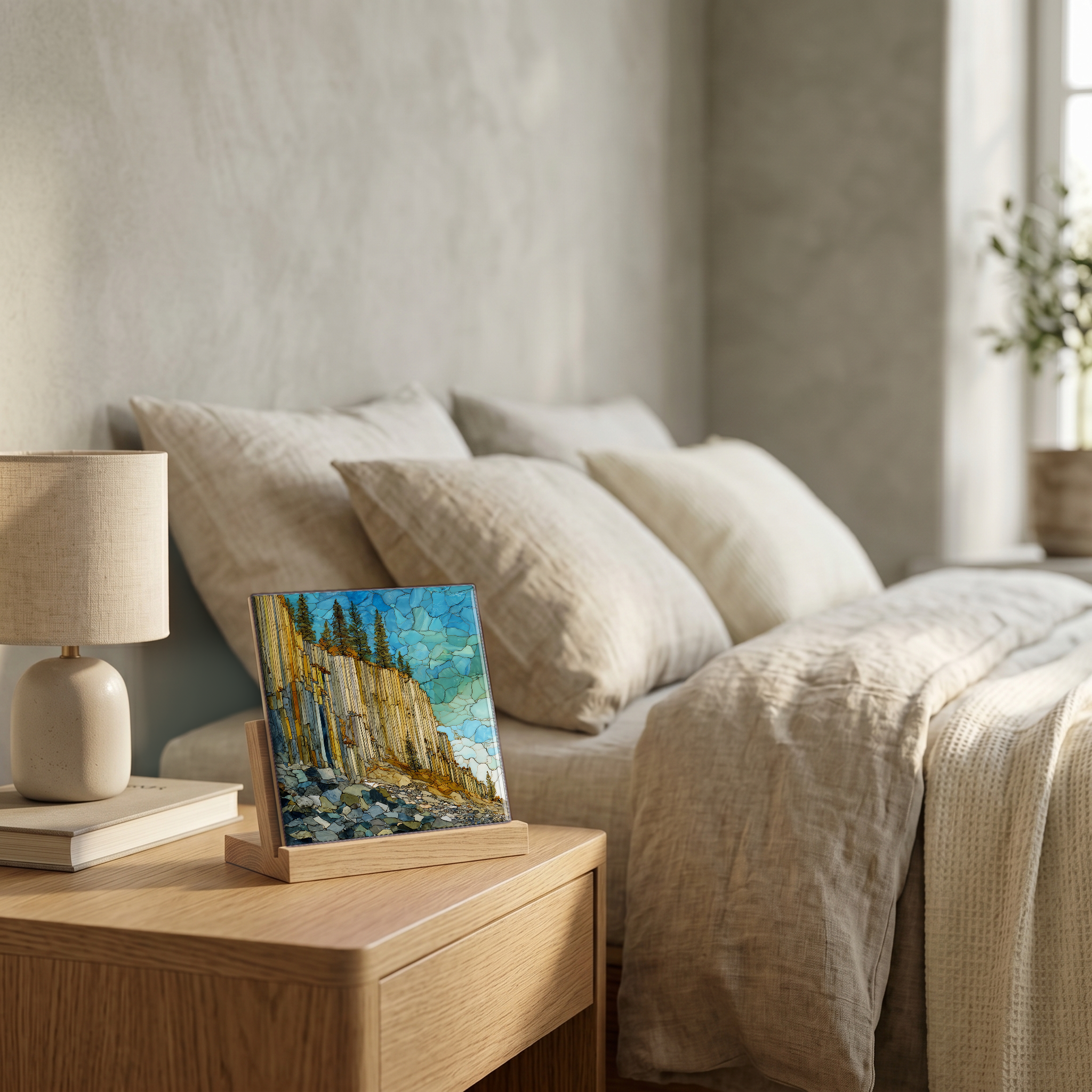
On the nightstand, on a light oak stand.
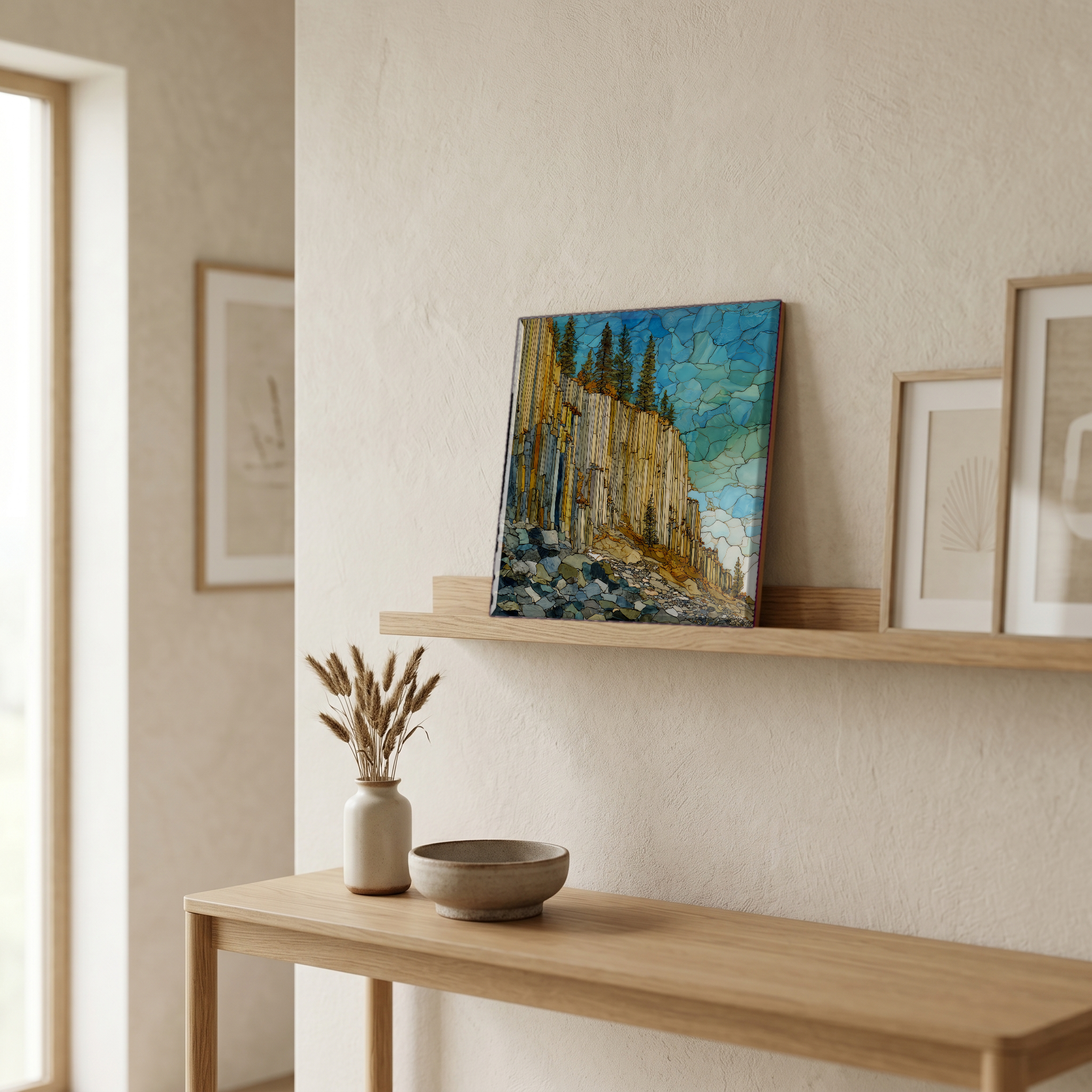
On a picture ledge, where the light comes in.
a note from the studio

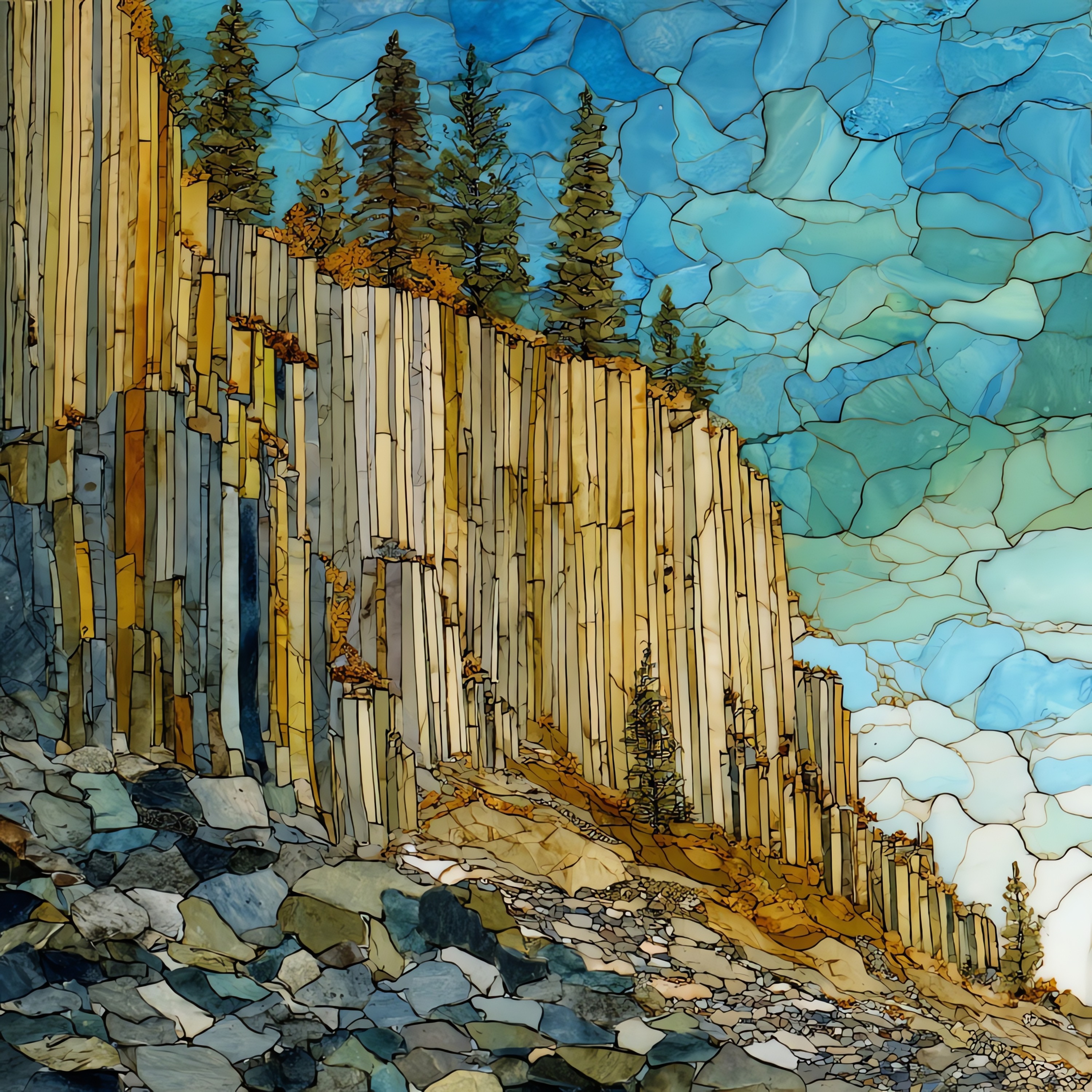
A wall of basalt columns about sixty feet tall, at the end of a half-mile walk through lodgepole pines in the Sierra Nevada. The lava cooled and cracked into hexagons eighty thousand years ago; a glacier later passed over the top and polished the column-ends smooth. The road in opens for a few months each summer and closes when the snow returns. Most of the year the monument belongs to the river and the marmots.
from the studio
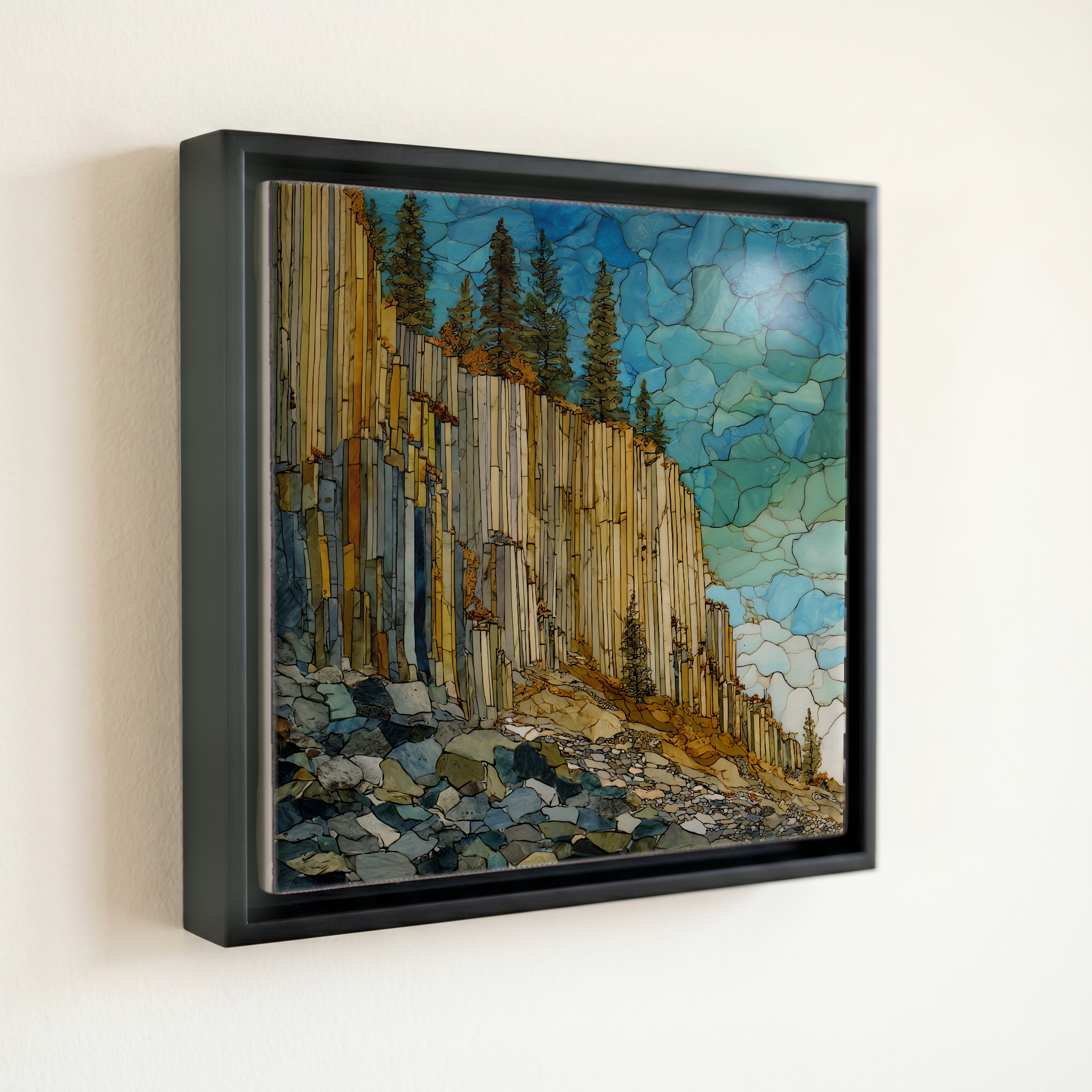
shown in a slim black floating frame · 6 × 6 in
— bring it home

Devils Postpile, on ceramic.

Each tile is finished by hand in our Knoxville studio. Artwork is slowly infused into the ceramic surface under high heat and pressure, and rests beneath a thin glossy finish. The colour lives in the surface, not on top of it.

What kind of piece?
One tile — square or rectangle.
How big?
the popular one — counter, shelf, nightstand
6 × 6 in · 15 cm · 1.6 lb
Surface finish
A clear glossy finish — the artwork reads as if under resin. Ideal for show-pieces and framed wall art.
How it sits
A hidden cleat — sits ¼″ proud of the wall.
$58
Hand-finished and shipped from our studio at the foot of the Smokies. On your wall in about ten days.
size
6 × 6 in
15 cm
weighs
1.6 lb
solid in the hand
surface
ceramic, hand-finished
art rests beneath a thin glossy finish
from
Knoxville, TN
our family studio, at the foot of the Smokies
— start a Coaster Set

Pick any four 4-inch tiles — National Parks you've been to, a Smokies set, the four seasons of one place. $ for a set of , cork-backed, ready to live on the table.
comes gift-ready
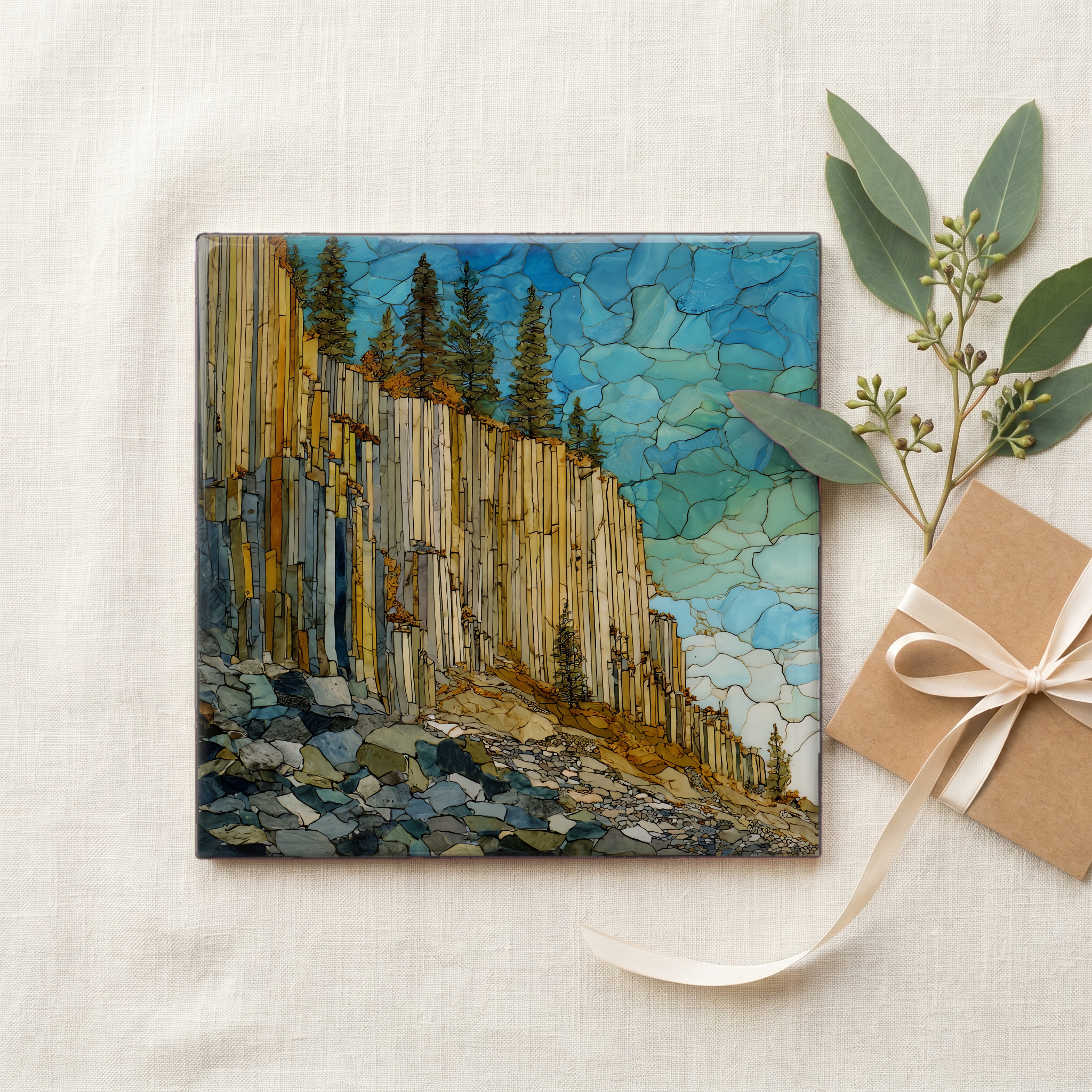
comes gift-ready

Each tile ships in a kraft box, tied with cream ribbon, with a handwritten note from the studio if you'd like to add one.
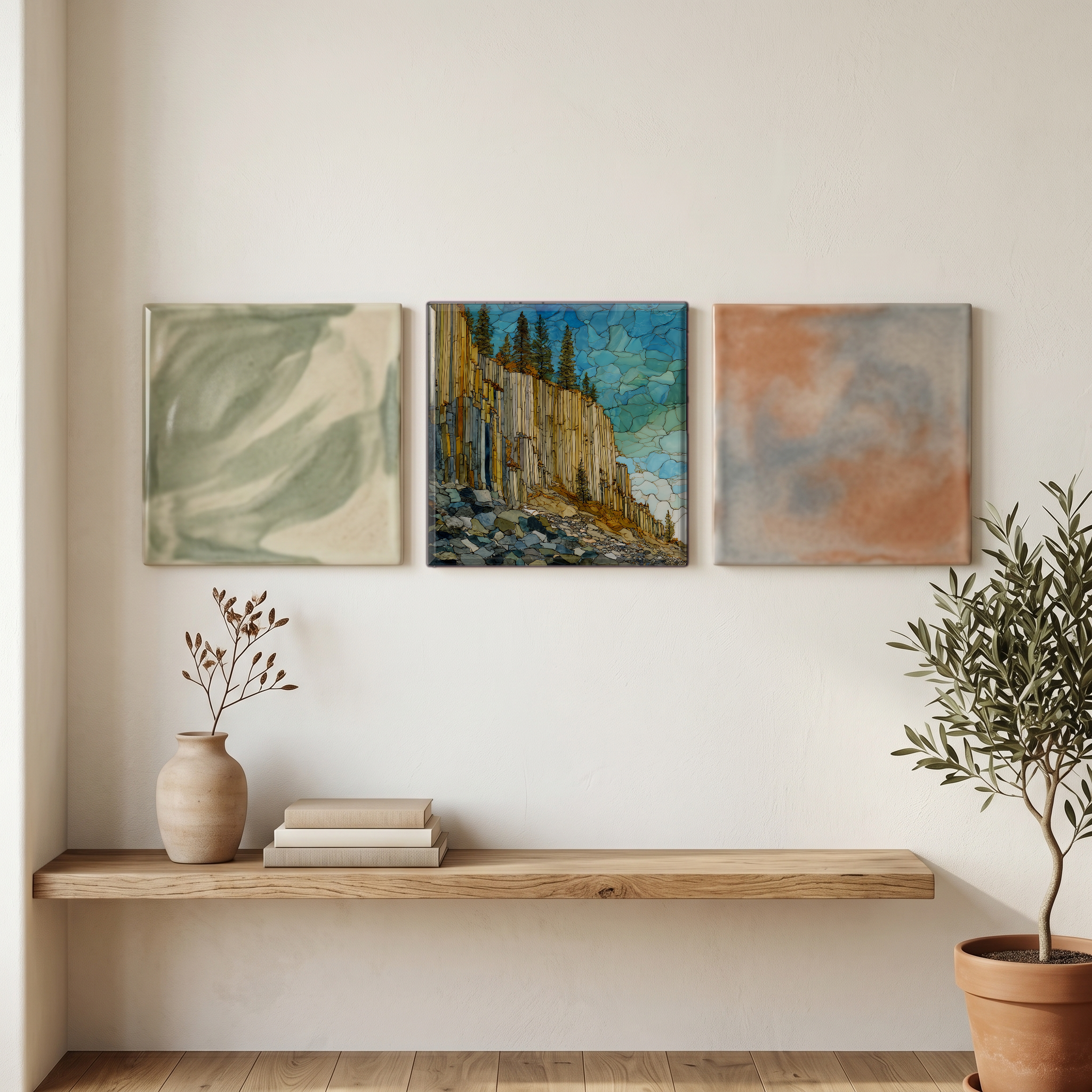
or build a grouping
or build a grouping

Three or five different vistas, hung together — a chapter of places you've been, or want to go.

about Devils Postpile

The place, in three passes.

A little of what's known, in case you fall down the rabbit hole — or want to go see it yourself.
the place

Devils Postpile National Monument sits at about 7,560 feet in the Sierra Nevada, in California's Madera County, just west of the Sierra Crest from the town of Mammoth Lakes. The Middle Fork of the San Joaquin River runs past the base of the formation. The monument covers roughly 800 acres and was carved out of the surrounding Inyo National Forest by presidential proclamation in 1911, after this section was excluded from Yosemite National Park during the 1905 boundary revision. Access is from Mammoth Mountain by a single narrow mountain road that is plowed open only between June and October; for most of the summer the National Park Service requires visitors to ride a mandatory shuttle bus from the Mammoth Mountain Adventure Center.

the stone

The columns are basalt, formed when a single lava flow some 82,000 years ago pooled against an ice-dammed valley, cooled slowly, and contracted into a network of polygonal cracks. The cracks propagated downward through the cooling rock, producing the tall columns visible today. Most have six sides; the rest have three to seven. The wall stands about 60 feet at its tallest. Tens of thousands of years later, a glacier overrode the basalt and quarried away the upper part, leaving a polished pavement of column-tops reached by a short trail above the main wall. The same cooling geometry produced Giant's Causeway in Northern Ireland and Fingal's Cave in Scotland; the glacial polish on the top surface is what sets Devils Postpile apart.

— informed by NPS Geology, Wikipedia
the visit

The narrow paved road into the monument drops from Minaret Vista to the canyon of the Middle Fork, descending roughly 1,700 feet over about seven miles. It opens around the third week of June and closes in mid-October when the first heavy snow falls. From mid-June through early September the National Park Service runs a mandatory shuttle bus from the Mammoth Mountain Adventure Center; outside those dates private vehicles may drive in. From the ranger station a half-mile trail through lodgepole pine reaches the base of the columns. A 2.5-mile trail leads downstream to Rainbow Falls, a 101-foot drop on the Middle Fork named for the rainbow that forms in its spray on summer afternoons.

where
United States · Madera County, California
within
Devils Postpile National Monument
elevation
2,304 m · 7,560 ft
position
37.6244° N · 119.0861° W
the neighborhood

What's nearby.

A handful of named places within an hour's walk or short drive. Some we've already painted; some we will.
4 km S
Rainbow Falls
waterfall
1 km E
Reds Meadow
backcountry lodge
5 km NE
Minaret Vista
overlook
12 km E
Mammoth Lakes
mountain town
5 km W
Ansel Adams Wilderness
wilderness area
N
Devils Postpile
Rainbow Falls
Reds Meadow
Minaret Vista
Mammoth Lakes
Ansel Adams Wilderness
common questions

What people ask.

A few questions we get about Devils Postpile — and about bringing the piece home.
about the place

Devils Postpile National Monument is in the Sierra Nevada of California, in Madera County, just west of the Sierra Crest from Mammoth Lakes in Mono County. The Middle Fork of the San Joaquin River flows past the base of the columns at about 7,560 feet elevation.

About 82,000 years ago, a lava flow ponded against an ice-dammed valley and cooled slowly, contracting into a network of polygonal cracks. The cracks extended downward through the cooling rock, producing the tall columns visible today. Most columns have six sides; others have three to seven.

A later glacier overrode the basalt and quarried away the upper part of the columns, leaving a smooth pavement of column-tops. The glacial polish is visible from a short trail that climbs above the main wall, and the tile-like pattern from above is one of the monument's most distinctive features.

The road into the monument is plowed open from around mid-June through mid-October, weather permitting. From mid-June through early September the National Park Service runs a mandatory shuttle bus from the Mammoth Mountain Adventure Center; outside those dates private vehicles may drive in.

The monument covers about 800 acres and was set aside by presidential proclamation in 1911. It was carved out of the Inyo National Forest after this section was removed from Yosemite National Park during the 1905 boundary revision.

Rainbow Falls, a 101-foot waterfall on the Middle Fork of the San Joaquin, sits about 2.5 miles downstream of the postpile by trail. A rainbow forms in its spray on sunny summer afternoons, which is how the falls got their name.

They share the same mechanism. Slow, even cooling of thick basalt produces polygonal contraction columns, the same geometry visible at Giant's Causeway in Northern Ireland and Fingal's Cave in Scotland. Devils Postpile is distinctive for the glacial polish on the top surface of the columns.

about the piece in your home

It travels well as a gift for hikers and skiers who know the road in from Mammoth. Devils Postpile is one of the small wonders of the high Sierra, and the tile keeps a piece of the place. A Small or a Medium with a handwritten note from the studio reads well.

It reads well in Mountain-modern interiors, alpine cabins, and rooms anchored by walnut or oak. The columnar geometry also lands in a Minimalist Asian room where graphic stone elements stand on their own. In a Maximalist setting, it pairs with deeper earth tones and brass.

Stone and forest motifs are a steady part of alpine-modern and rustic-modern design, and the columnar geometry adds a graphic anchor that most cabin art lacks. The piece works above a hearth, in an entry, or as a quiet counterpoint on a wall of bookshelves.

Above a console table, a single Large reads at the right scale. Above a standard three-cushion sofa, a 4-tile Mural or a 9-tile Mural carries the wall. The Small and Medium are better suited to side walls, hallways, or a desk arrangement.

Yes, with the Dura Satin or Matte finish. Both are water-tolerant and scratch-resistant and suit installations near a sink, a backsplash, or a shower surround. The Glossy finish is meant for dry framed display rather than wet rooms.

A microfibre cloth and a small amount of water. The colour is slowly infused into the ceramic surface under high heat and pressure and sits beneath a thin protective finish, so it does not scratch off with normal handling or wiping.

Yes. Every WenderVista piece is made in the studio in Knoxville, Tennessee, and the artwork is not licensed from any third party. Reid Wender curates the atlas of places and each tile is hand-finished in-house.

if this one stayed with you

A few you might also love.

Hand-picked by the eye that found Sorapis. Same air, same kind of quiet.