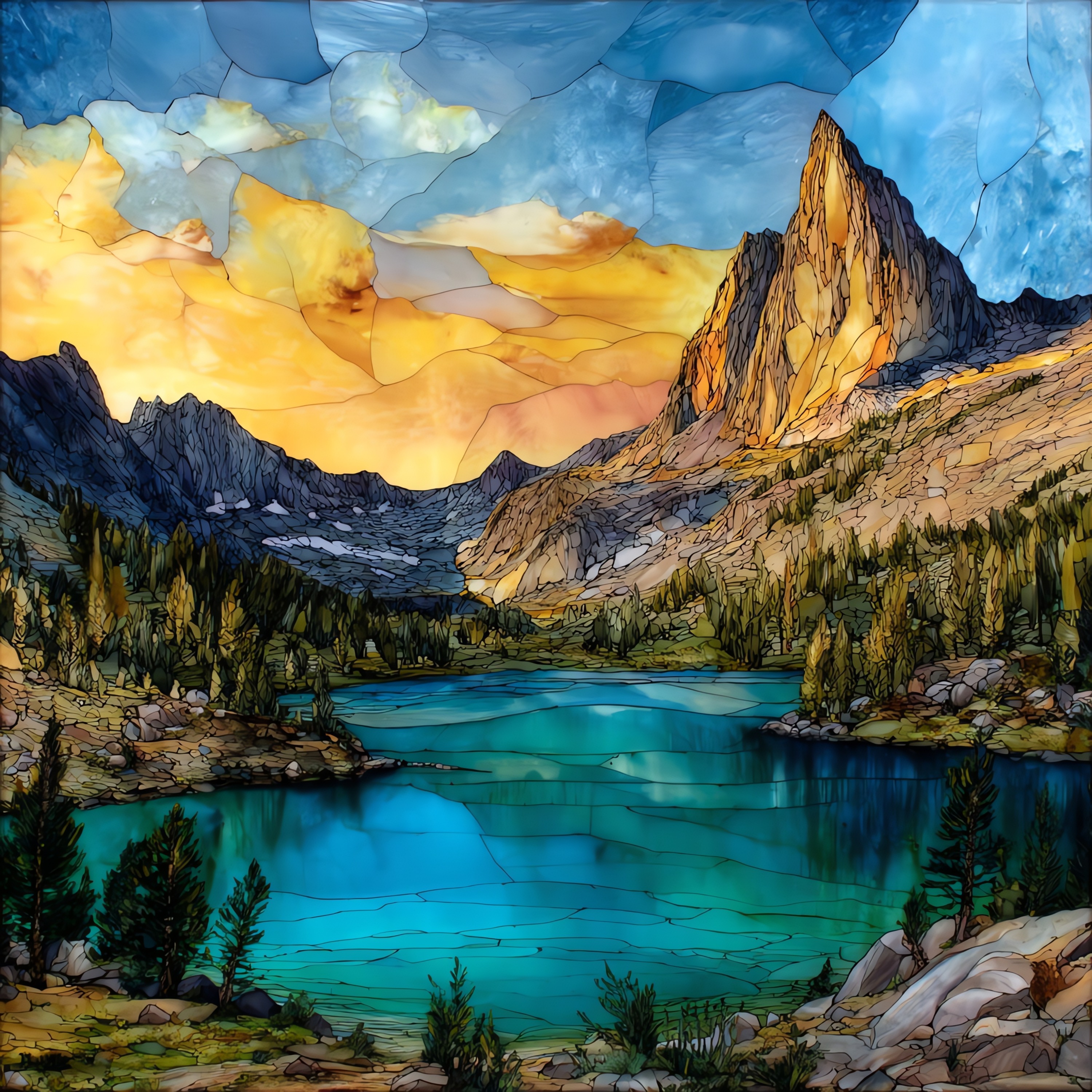
Crystal Crag
— a vein of light in the granite.
Not only on a wall.

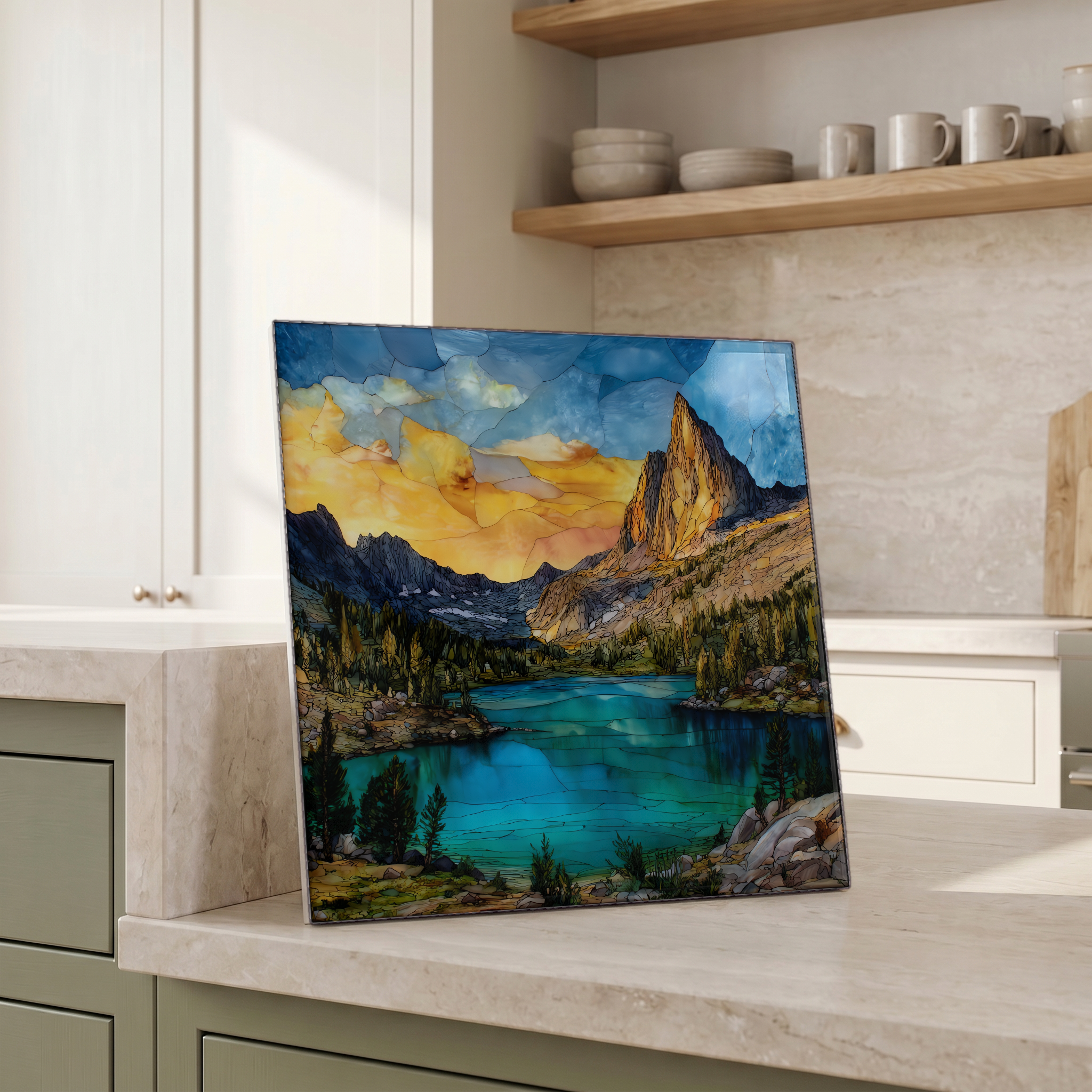

“A granite spire above Lake George, three miles south of the town of Mammoth Lakes. The shape is unmistakable from the basin: a sharp fin of pale granite cut through by a bright band of quartz. From the lake the north face rises about thirteen hundred feet in half a mile. Hikers know it from the Crystal Lake trail; climbers come for the North Arete. By late October the road closes and the basin belongs to the snow.
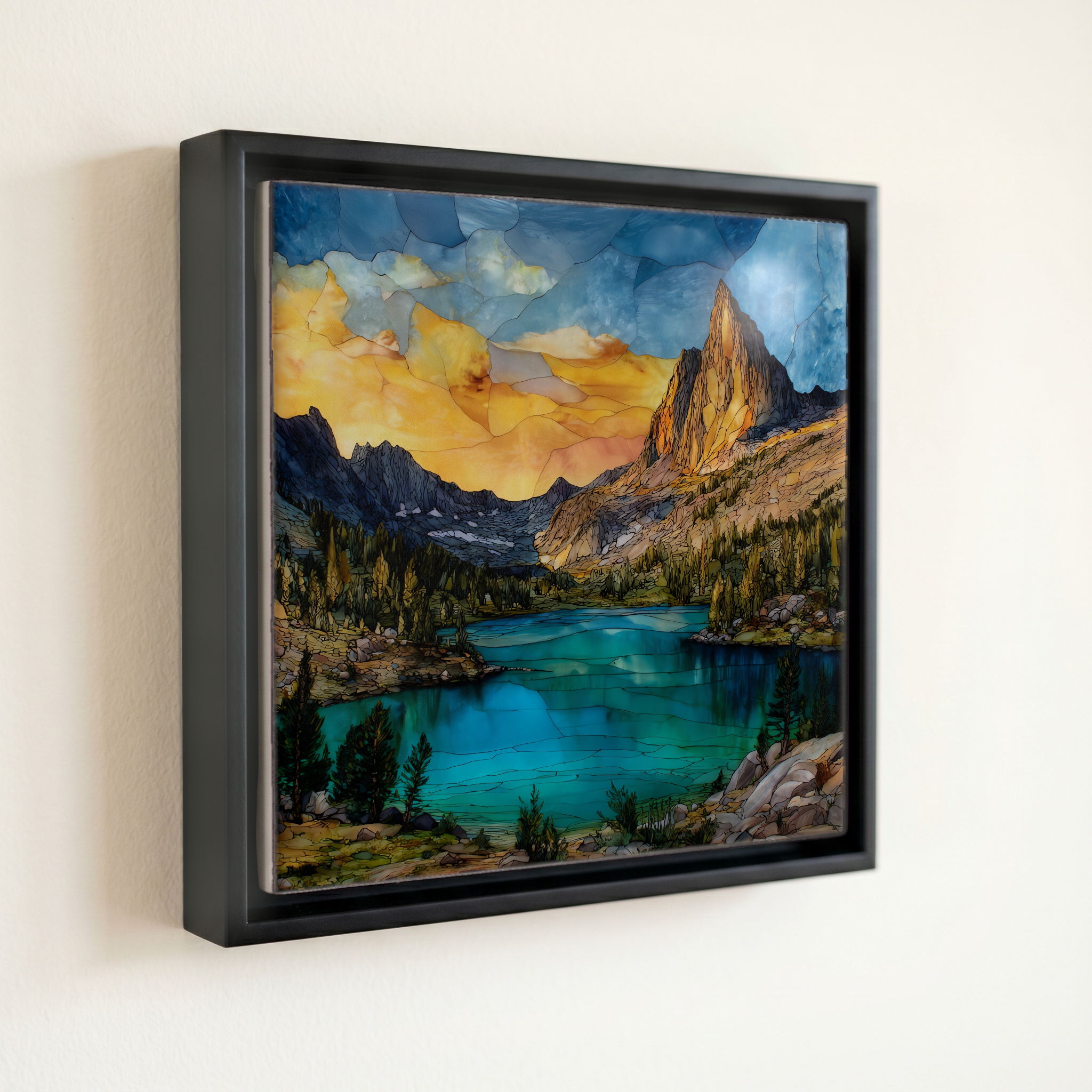
Crystal Crag, on ceramic.
Each tile is finished by hand in our Knoxville studio. Artwork is slowly infused into the ceramic surface under high heat and pressure, and rests beneath a thin glossy finish. The colour lives in the surface, not on top of it.
Pick any four 4-inch tiles — National Parks you've been to, a Smokies set, the four seasons of one place. $ for a set of , cork-backed, ready to live on the table.
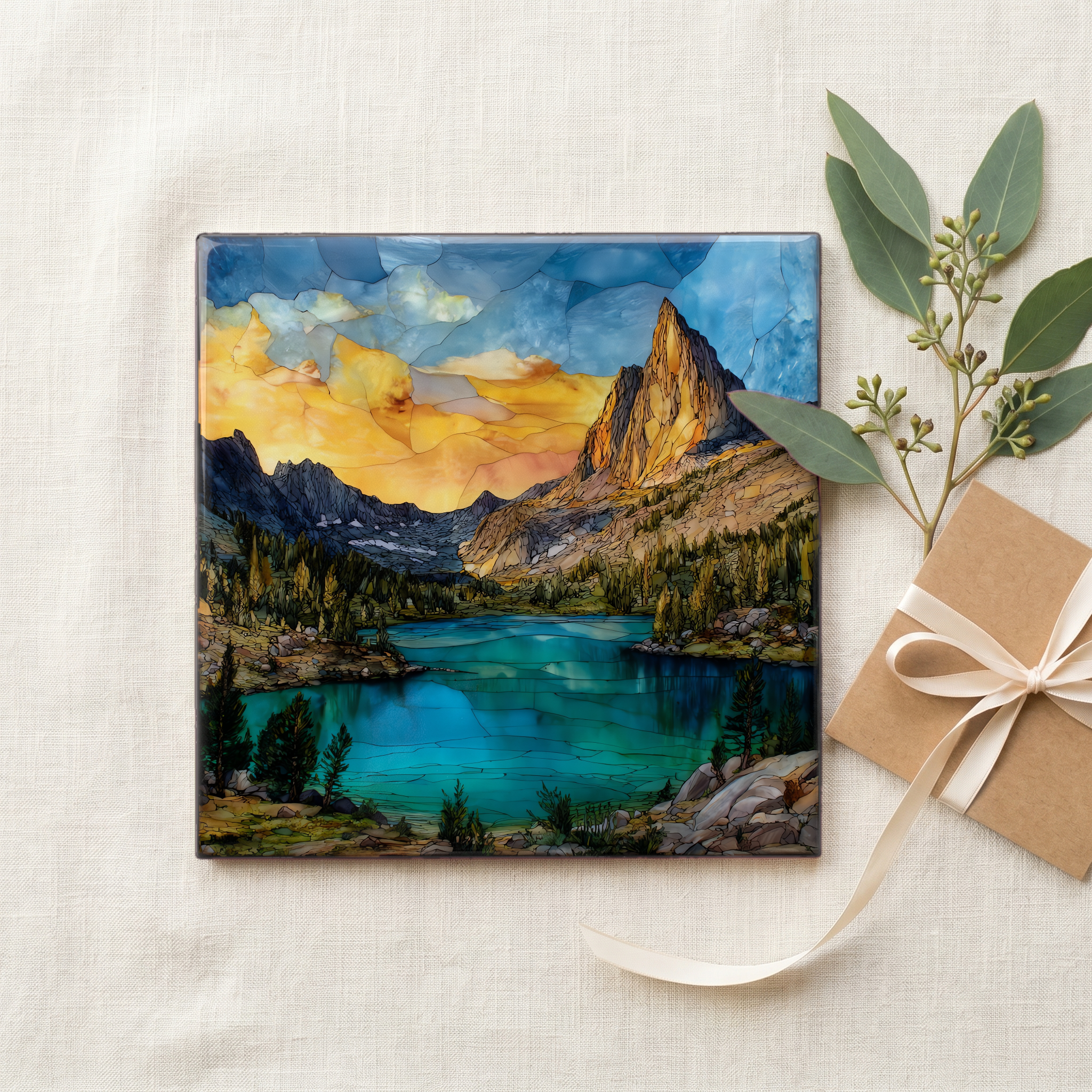
Each tile ships in a kraft box, tied with cream ribbon, with a handwritten note from the studio if you'd like to add one.

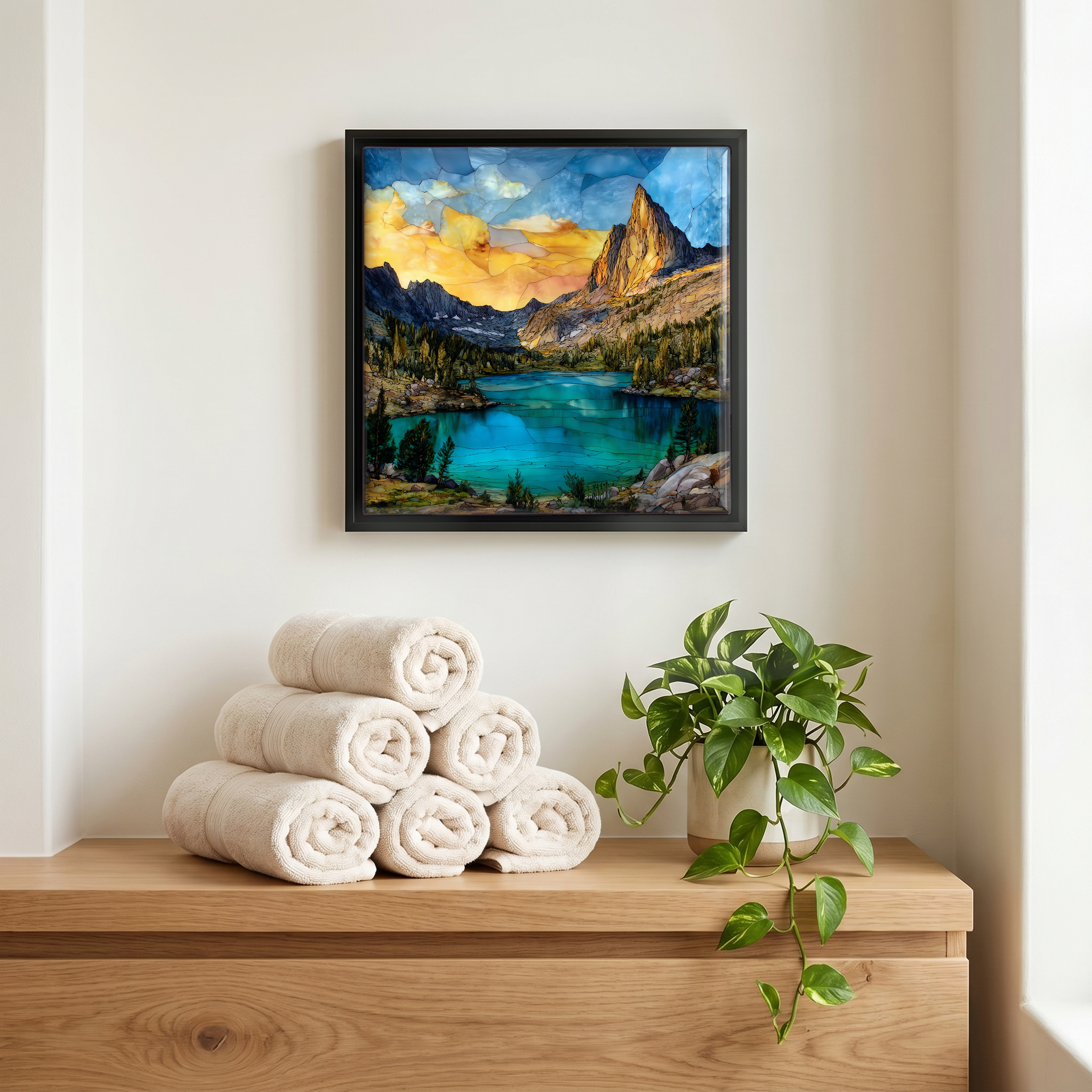
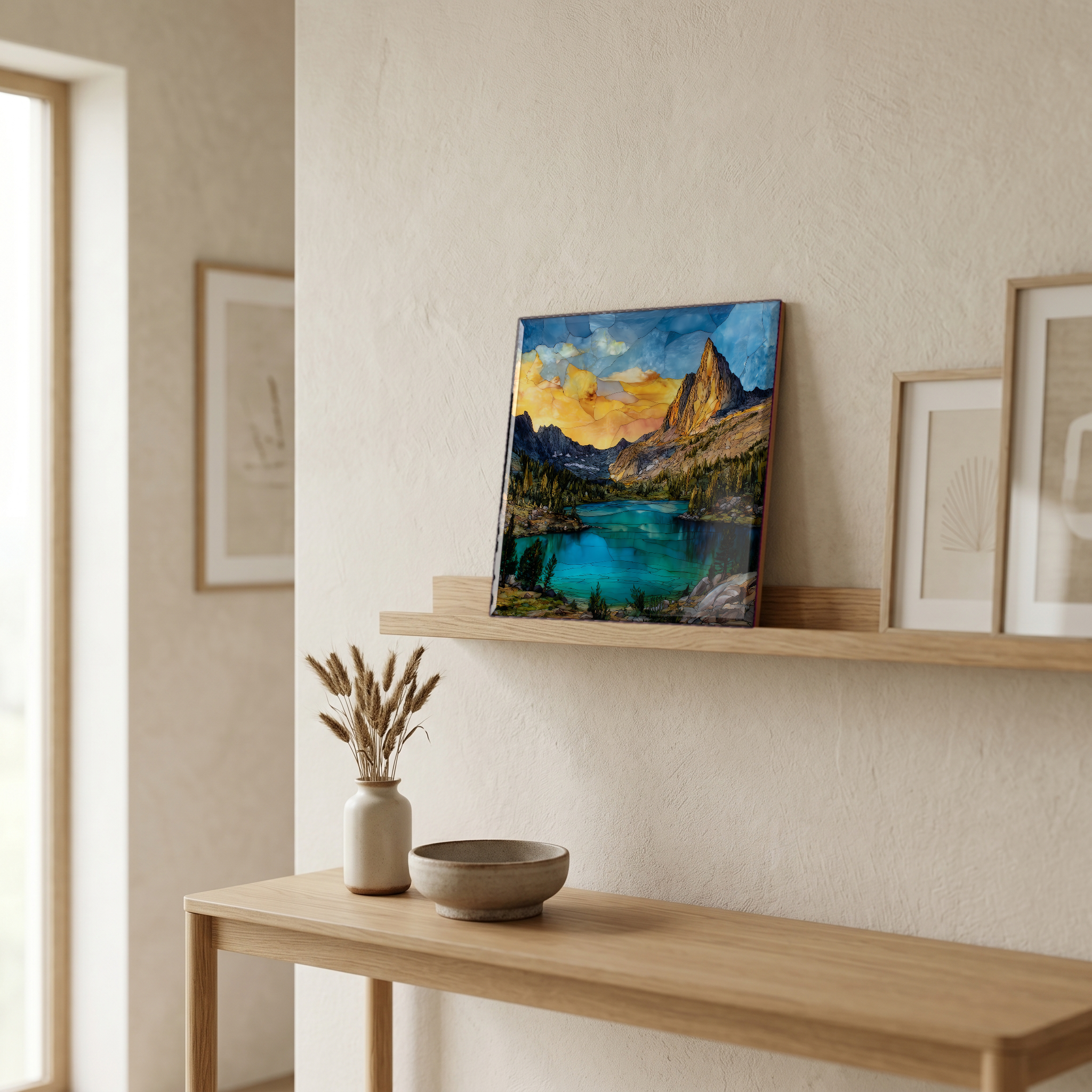
Three or five different vistas, hung together — a chapter of places you've been, or want to go.
The place, in three passes.
Crystal Crag stands at 10,377 feet above sea level in the Sierra Nevada range of Mono County, California, about three miles south of the town of Mammoth Lakes. The peak rises directly out of the Mammoth Lakes Basin, with Lake George at its north foot, Crystal Lake to the west, and T J Lake to the east. Its drainage flows north into Mammoth Creek. The land is part of Inyo National Forest, on the eastern edge of the John Muir Wilderness. The most common approach starts at the Lake George trailhead at the head of Lake Mary Road, where a 1.75-mile path climbs roughly 800 feet to Crystal Lake at the foot of the north face.
The peak is a fin of pale Sierra granite with a distinctive band of white quartz cutting through it. The quartz seam is the reason the mountain reads from miles away, even in flat midday light: a bright line across an otherwise grey wall. The north face rises about 1,300 feet above Lake George in half a mile, the kind of relief that makes Crystal Crag a long-standing classroom for alpine rock climbing in the eastern Sierra. The easiest line to the summit is rated class 3 on the Yosemite Decimal System. The harder routes, including the North Buttress and a winter East Face climbed by Galen Rowell and Vern Clevenger in January 1973, are still working objectives for guided parties.
The Mammoth Lakes Basin is a high alpine bowl, and Crystal Crag is rarely seen without snow on it. Lake Mary Road, the only paved approach, typically closes for the winter once snow accumulates in late autumn and reopens for the summer season in late May or June, depending on the Sierra snowpack. Crystal Lake at the foot of the north face sits at about 9,600 feet, where ice can linger well into July. The shoulder season from August through early October is when the trails are clear, the air is dry, and the quartz reads bright against the granite. By November the basin belongs to backcountry skiers and the seam disappears under fresh snow.