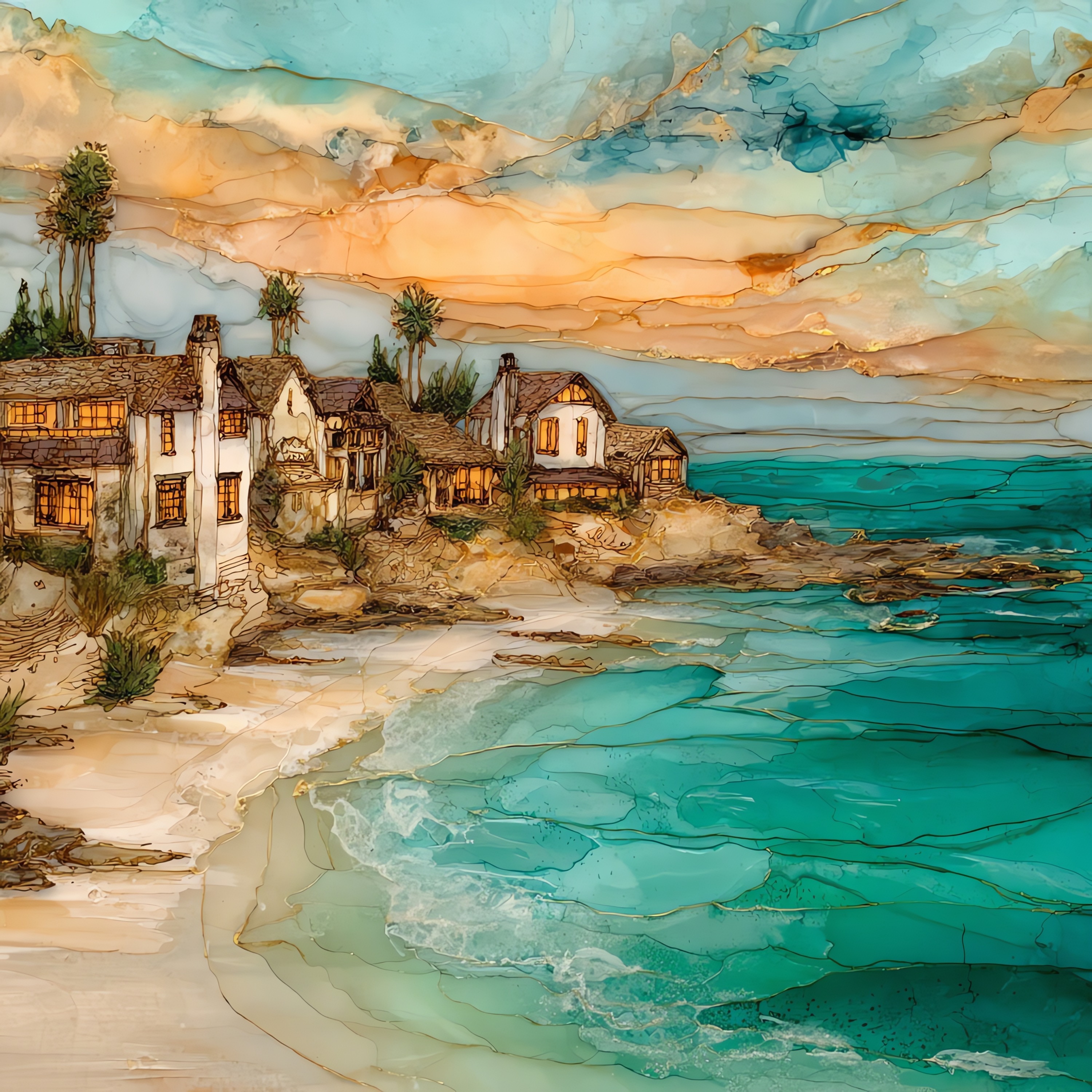
Crystal Cove
— the long light before the cottages turn on.
Not only on a wall.
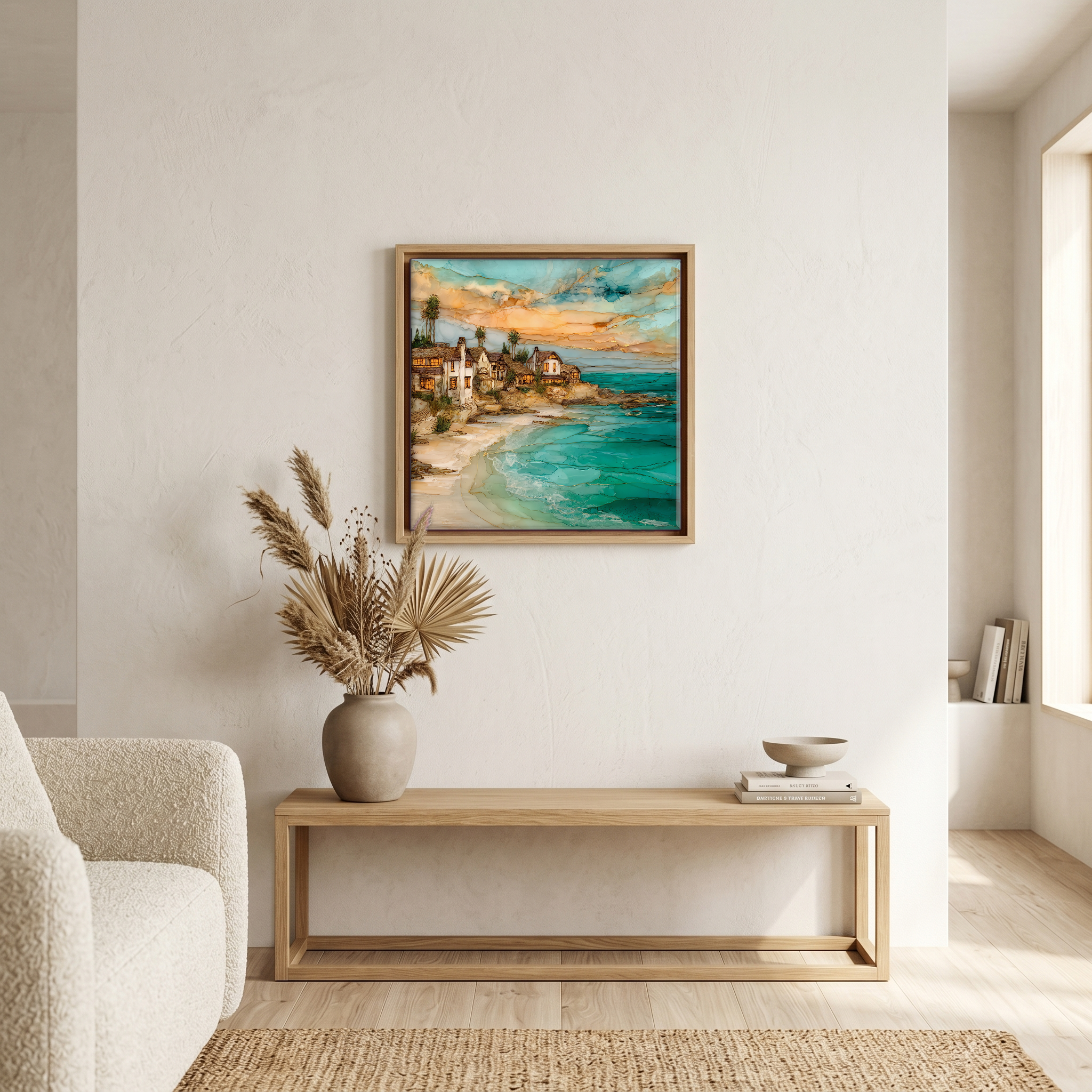
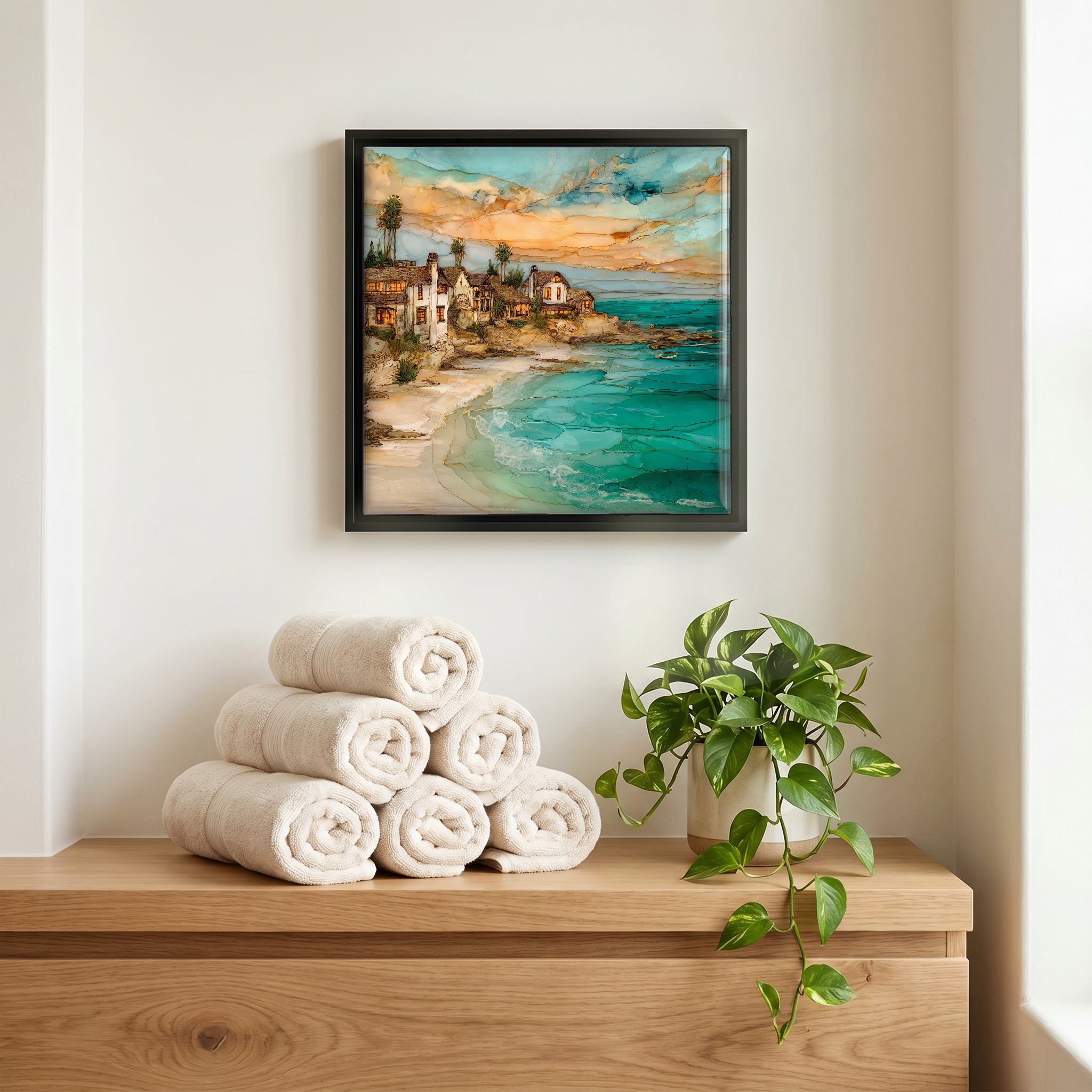
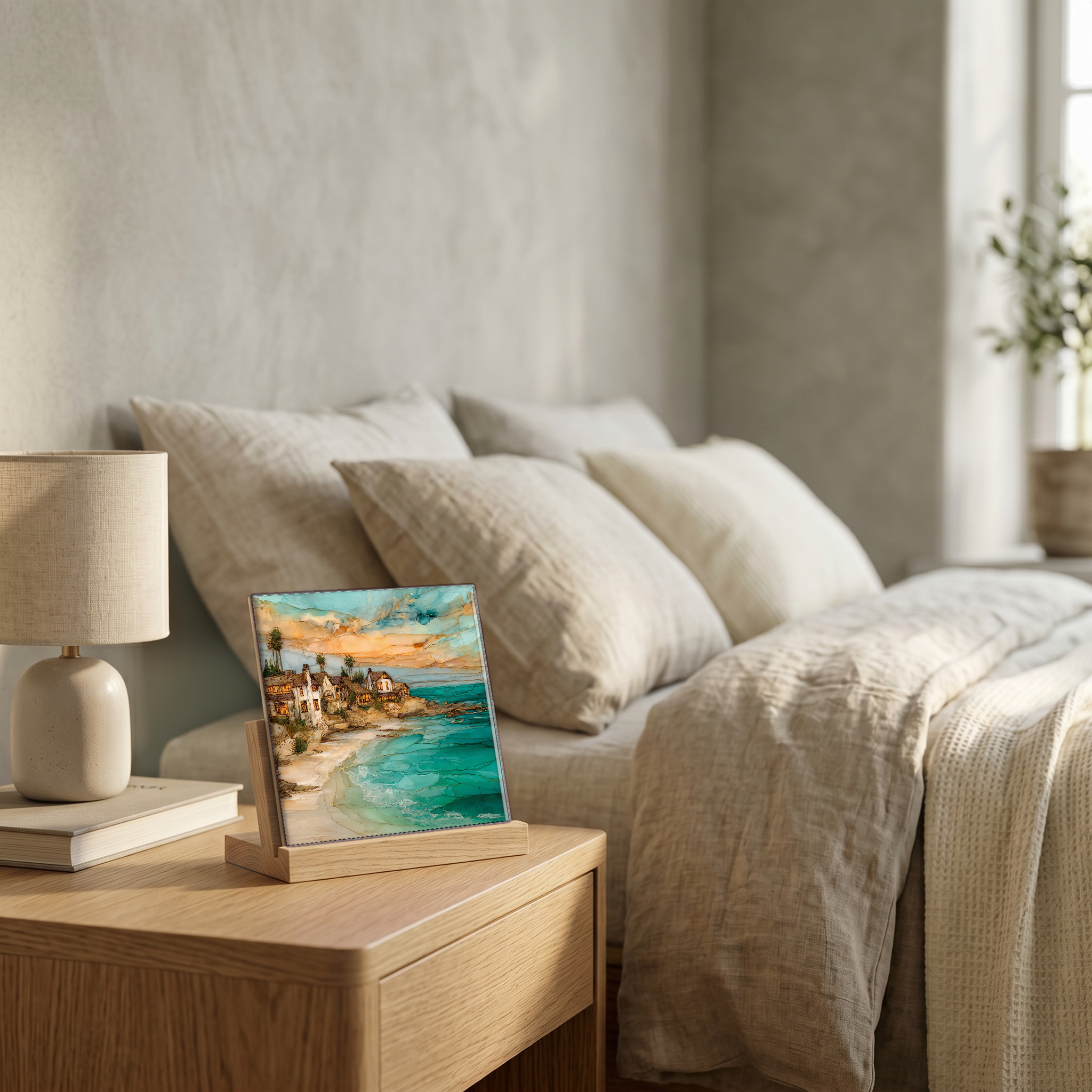
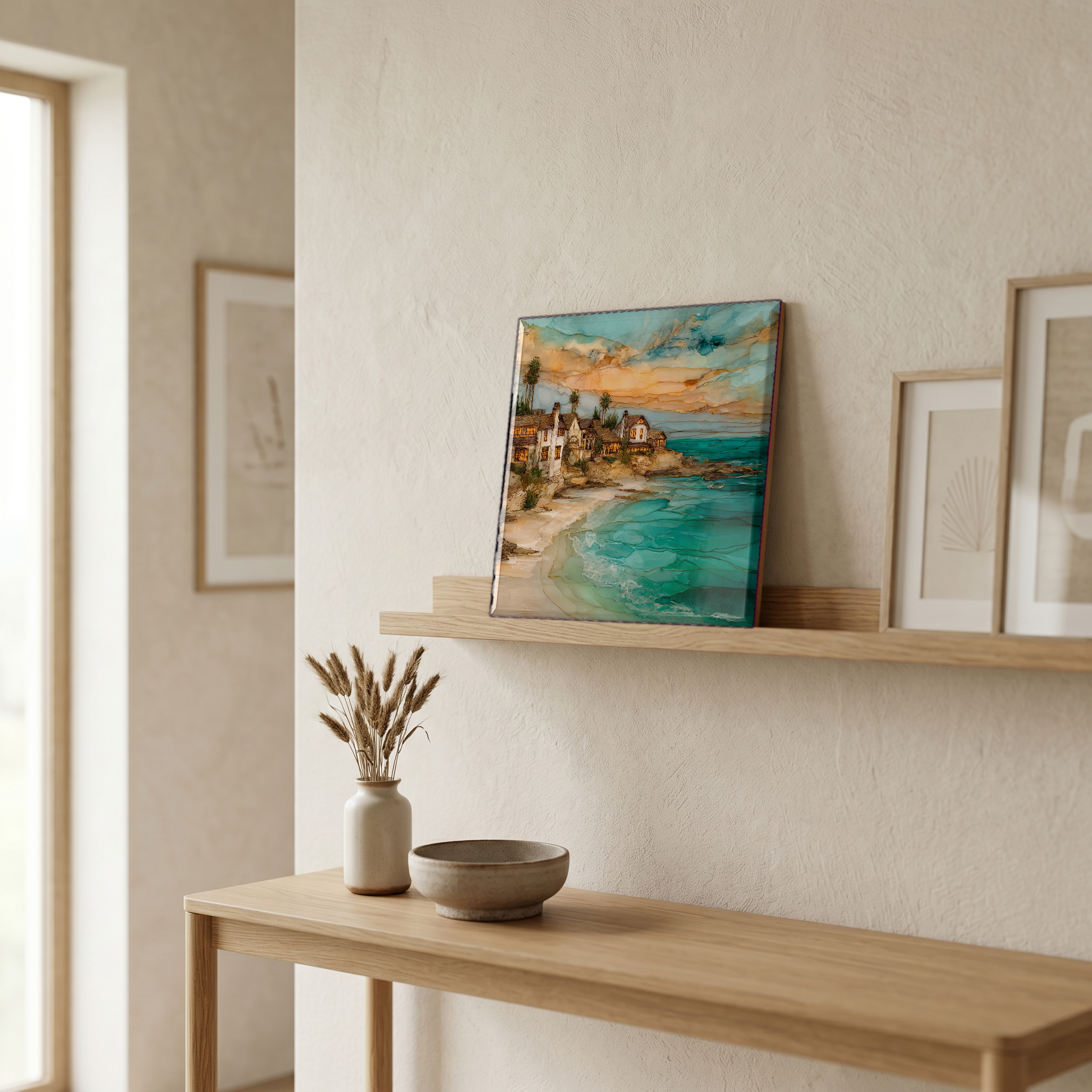
“Crystal Cove holds three miles of California coast between Corona del Mar and Laguna Beach, the last open stretch before the developed coast resumes. Forty-six wooden cottages from the 1920s and '30s still stand along the sand. A few rent overnight; one serves breakfast on the porch. At low tide the rocks at the south end fill with anemones and small crabs. The sun goes down over open water with nothing in the way. The state took the land into care in 1979 so the cove could go on looking like itself.
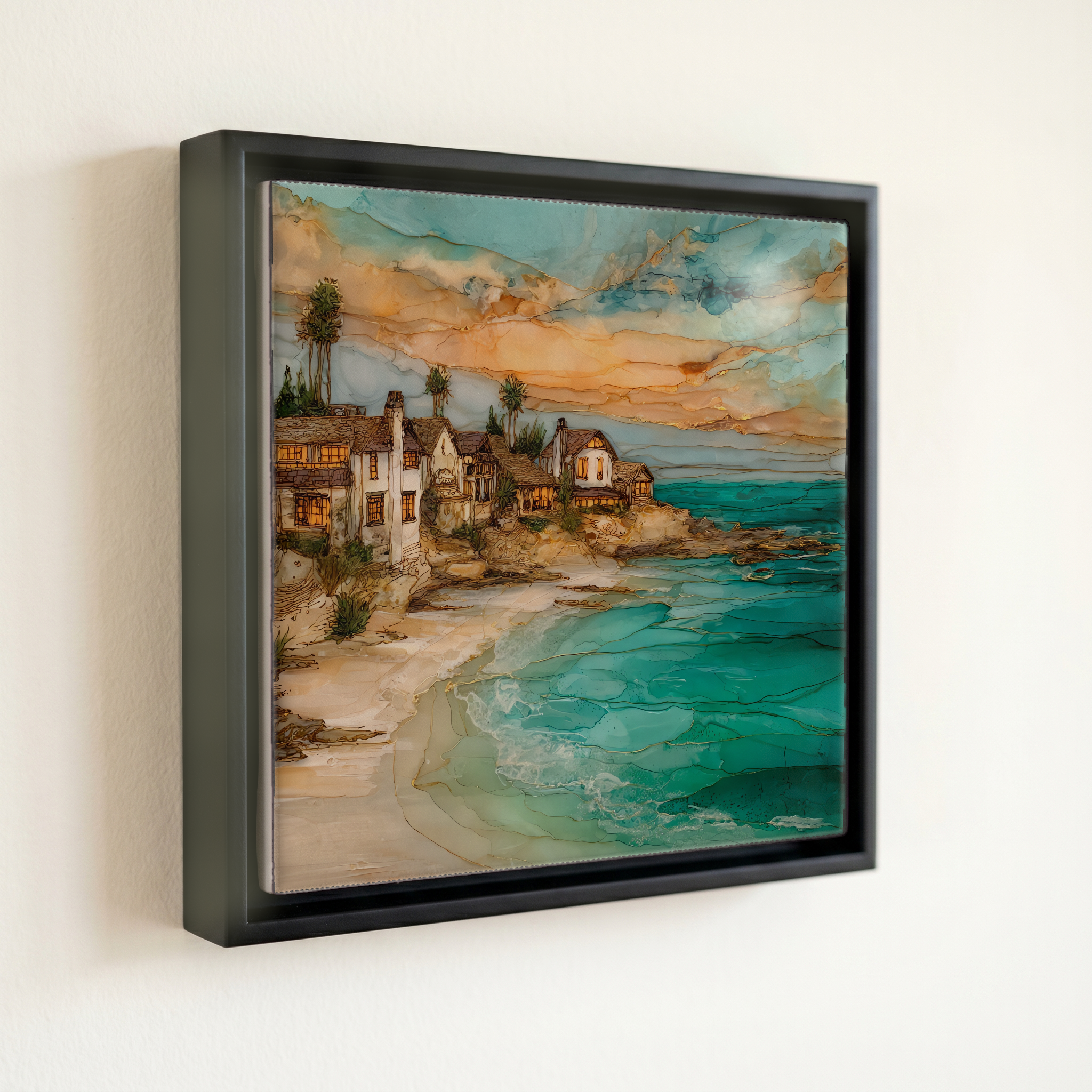
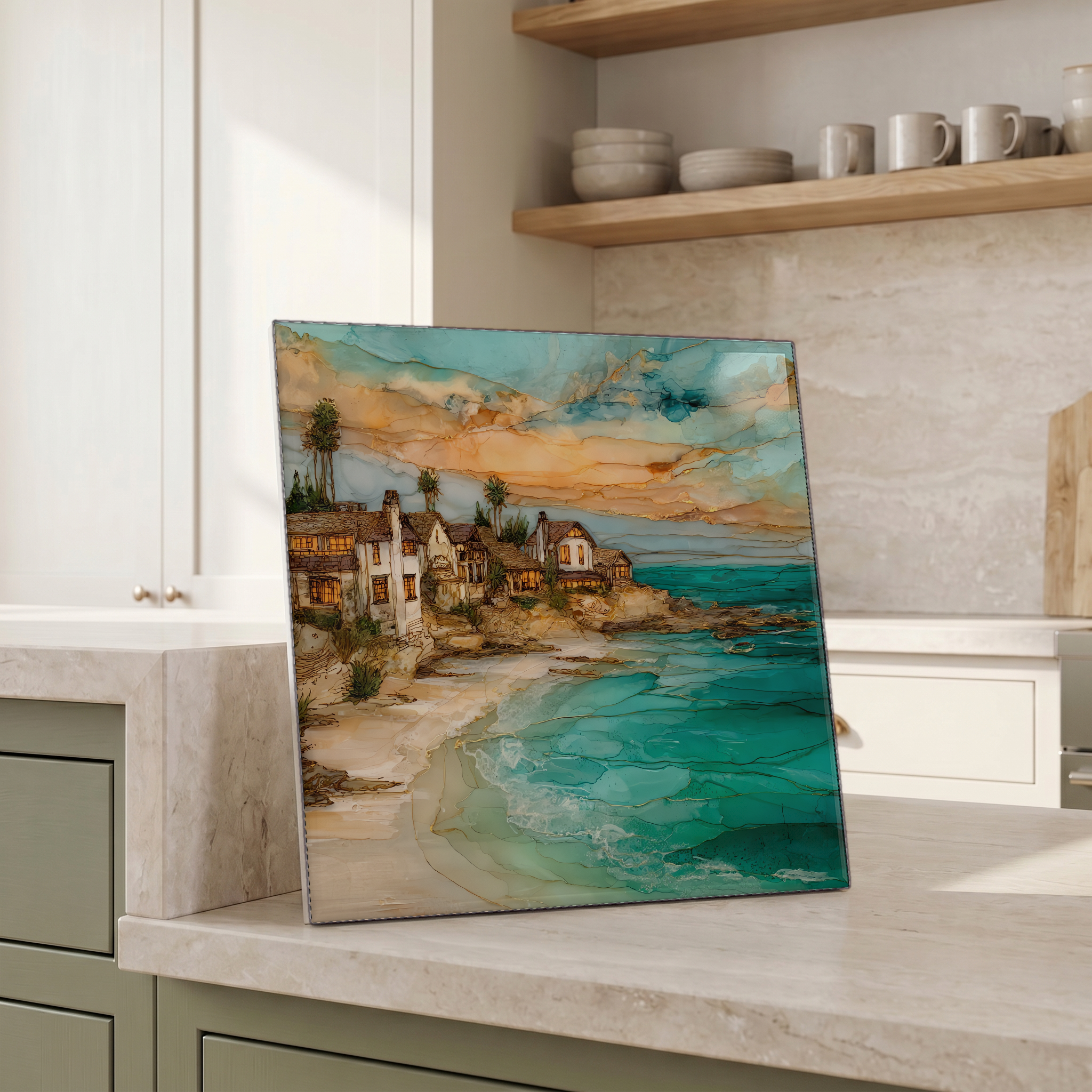
Crystal Cove, on ceramic.
Each tile is finished by hand in our Knoxville studio. Artwork is slowly infused into the ceramic surface under high heat and pressure, and rests beneath a thin glossy finish. The colour lives in the surface, not on top of it.
Pick any four 4-inch tiles — National Parks you've been to, a Smokies set, the four seasons of one place. $ for a set of , cork-backed, ready to live on the table.

Each tile ships in a kraft box, tied with cream ribbon, with a handwritten note from the studio if you'd like to add one.
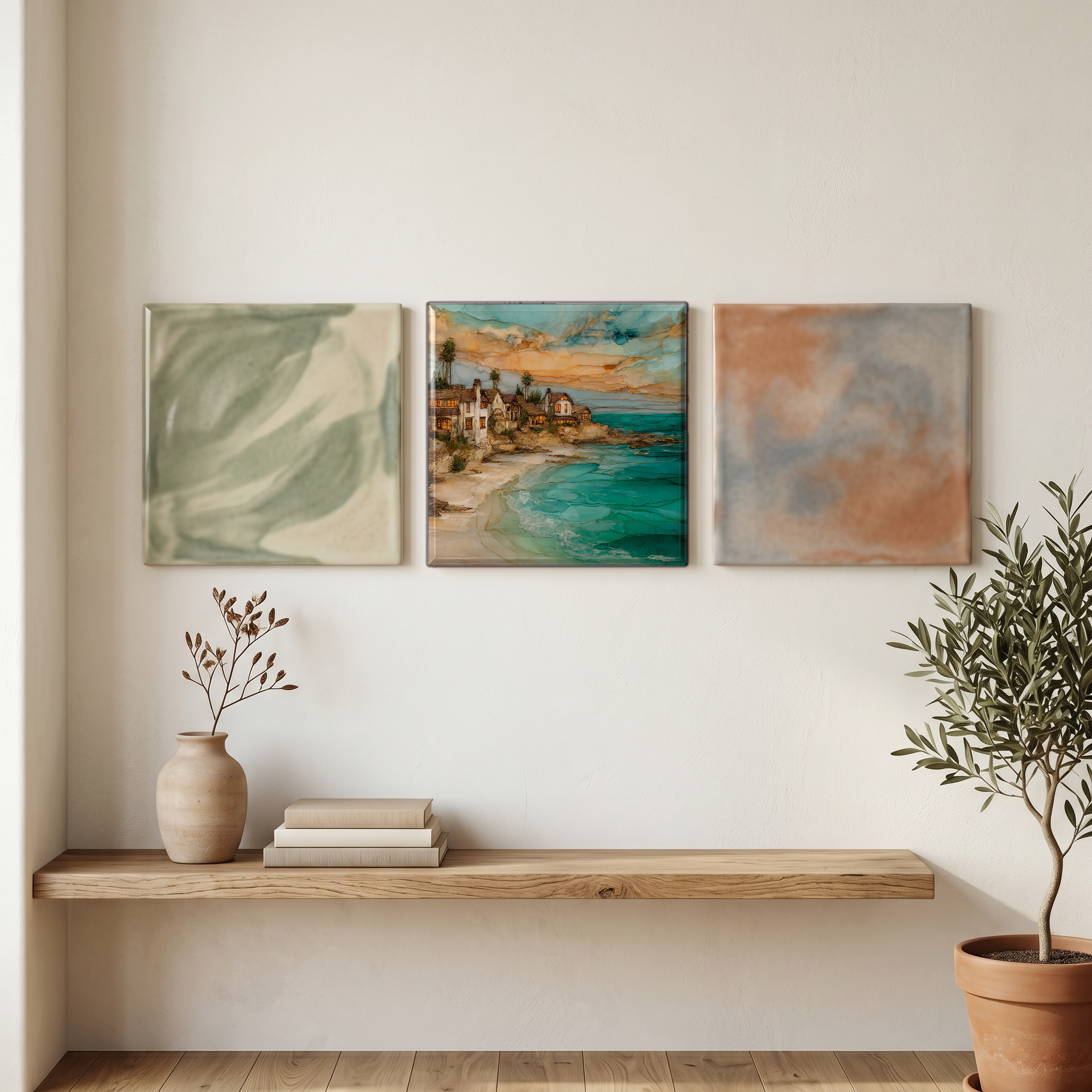
Three or five different vistas, hung together — a chapter of places you've been, or want to go.
The place, in three passes.
Crystal Cove State Park spans 3,936 acres along Orange County's coast in southern California, between the towns of Corona del Mar and Laguna Beach. The park preserves 3.2 miles of Pacific shoreline and reaches inland through the El Moro Canyon backcountry, which rises into the San Joaquin Hills. California acquired the land in 1979 from the Irvine Company, creating the state park as a single contiguous unit of coast and canyon. Pacific Coast Highway runs along the top of the bluffs; paved paths and stairs drop down to the sand. The Crystal Cove Historic District, forty-six wooden cottages on the beach at Los Trancos, was added to the National Register of Historic Places the same year [Wikipedia]. The park is administered by California State Parks, with restoration and education programs run by the Crystal Cove Conservancy [Crystal Cove Conservancy].
At the south end of the beach, near Reef Point and Pelican Point, the intertidal zone falls within the Crystal Cove State Marine Conservation Area, which extends roughly half a mile offshore. At low tide the rocks open onto pools of sea anemones, hermit crabs, ochre sea stars, and the occasional octopus tucked under a ledge. Collecting marine life is prohibited; the rocks themselves are protected as part of the conservation area. The strongest windows are the negative low tides on winter mornings, when the sand pulls back farther than the rest of the year. California State Parks posts the daily tide chart at the trailhead, and the Crystal Cove Conservancy runs guided low-tide walks throughout the year [Crystal Cove Conservancy].
The park gate opens at 6 a.m. and closes at sunset; parking is paid by the day at four lots along Pacific Coast Highway. The Historic District sits below the bluff at Los Trancos and is reached on foot down a ramped path or by the free park shuttle from the upper lot. Several of the restored cottages serve as overnight rentals through ReserveCalifornia, with reservations opening seven months in advance and selling out within minutes. The Beachcomber Café, on the sand in one of the cottages, takes walk-ins for breakfast and lunch. Above on the bluff, Ruby's Shake Shack has stood since the 1940s. Dogs are not permitted on the beach [California State Parks].