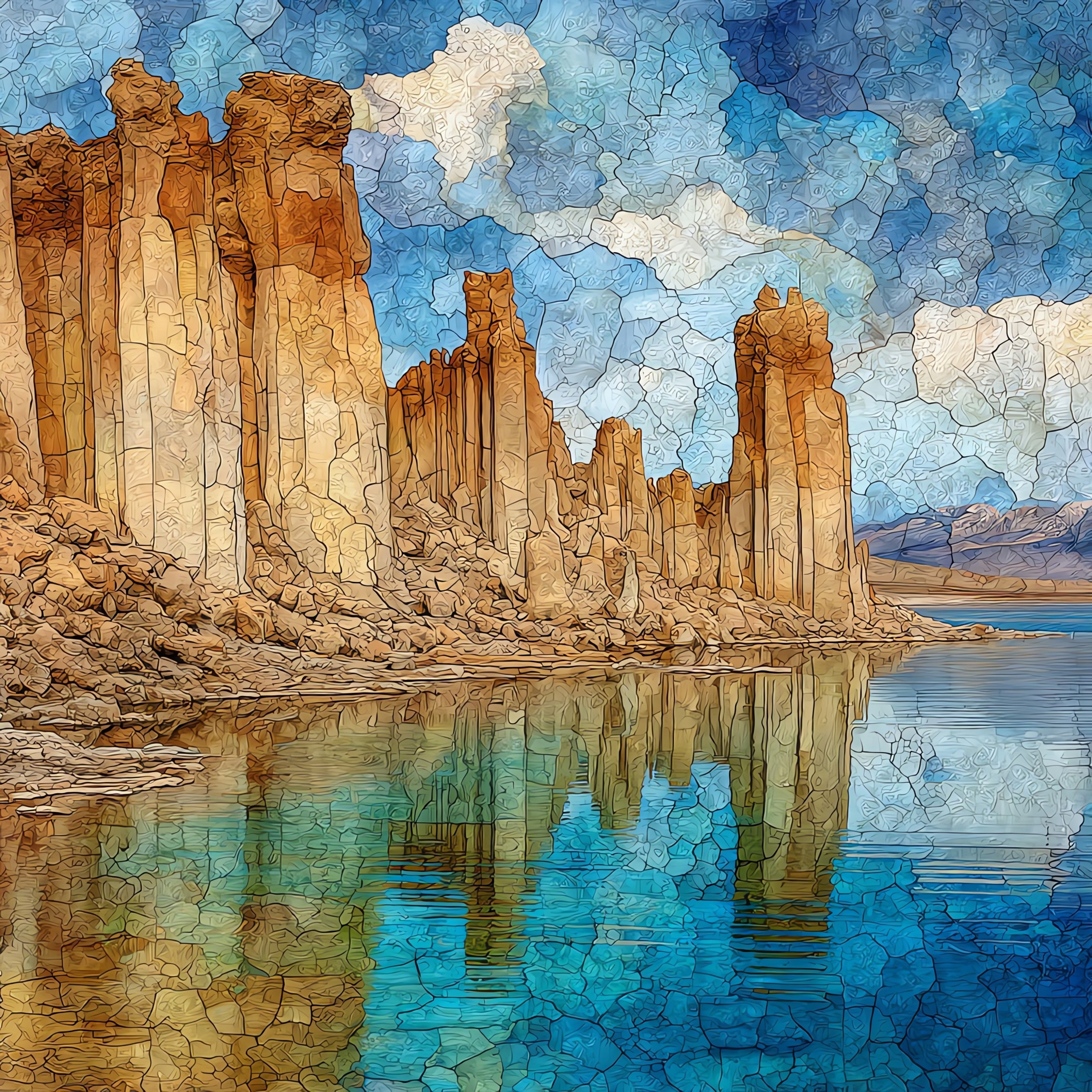
Crowley Lake Columns
— what cold rain left in hot ash.
Not only on a wall.


“On the eastern shore of Crowley Lake, where the reservoir level rises and falls with the Owens River, the wave-cut bank uncovers a colonnade of nearly five thousand stone columns. They stand fifteen to twenty feet tall, spaced about two meters apart, regular as a Roman cloister. The volcanic ash that holds them was laid down by an eruption of the Long Valley Caldera roughly 760,000 years ago. Cold snowmelt percolated down through the hot ash, the boiling water rose in evenly spaced convection cells, and the ash hardened around them. The lake found them. Most people drive past Bishop without knowing they are there.
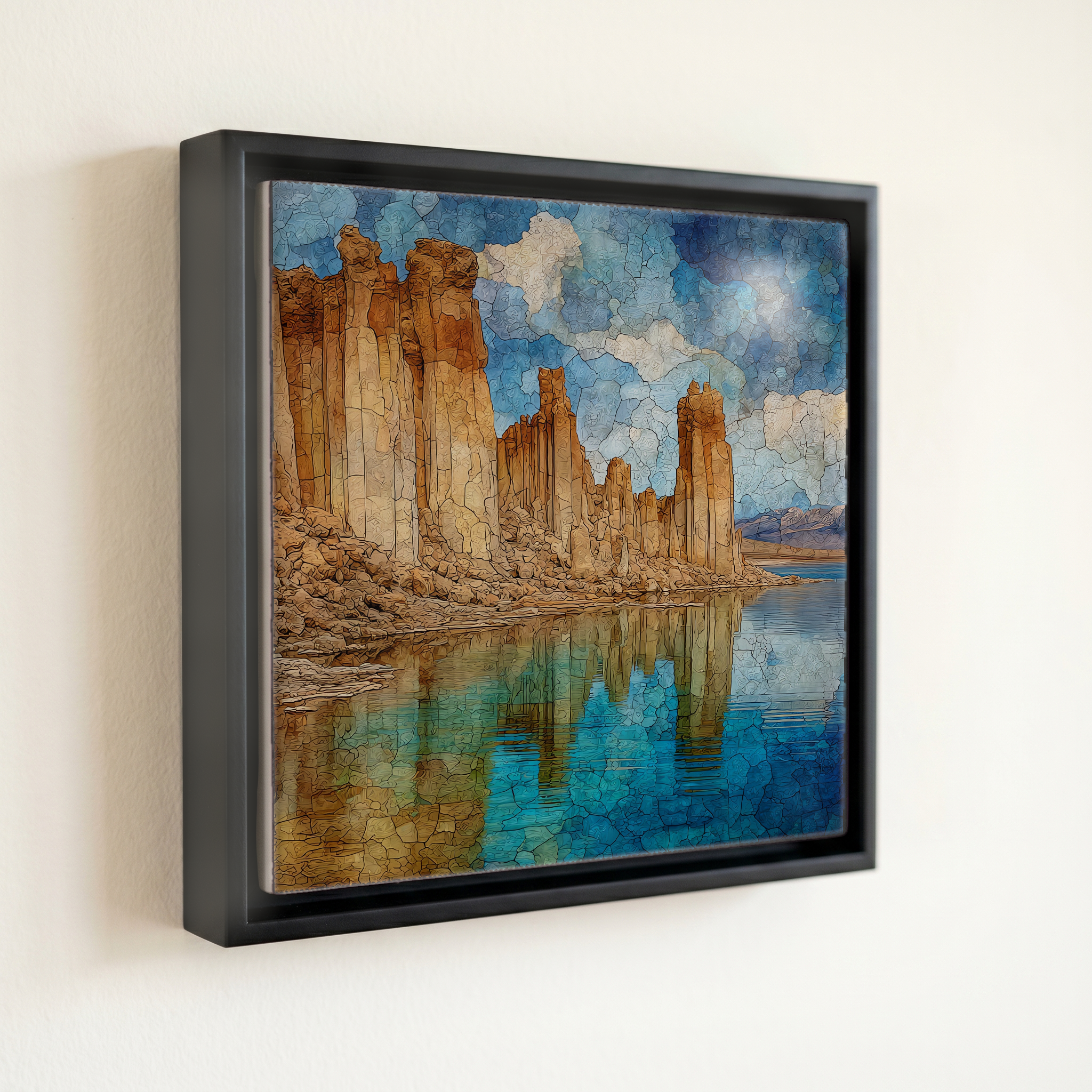
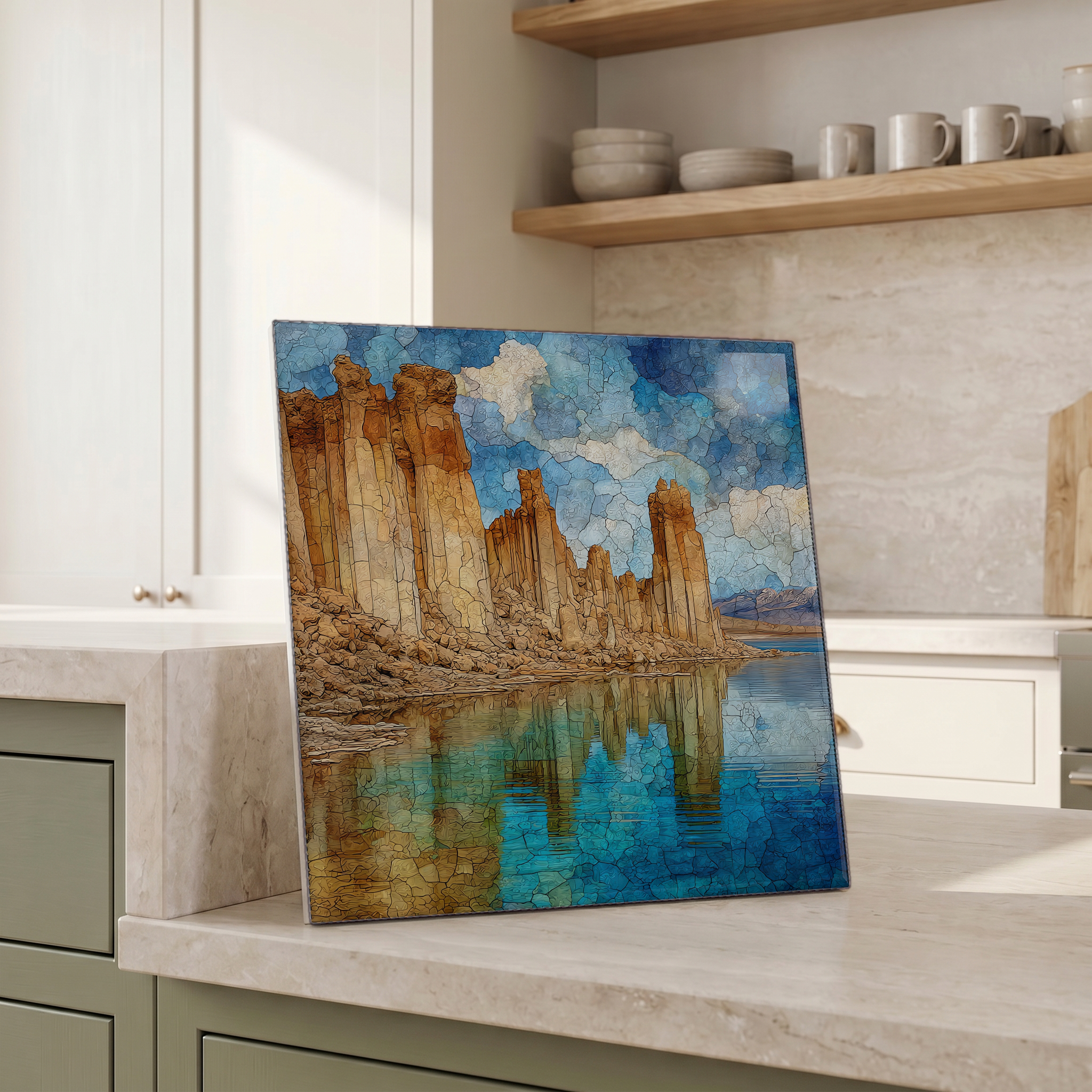
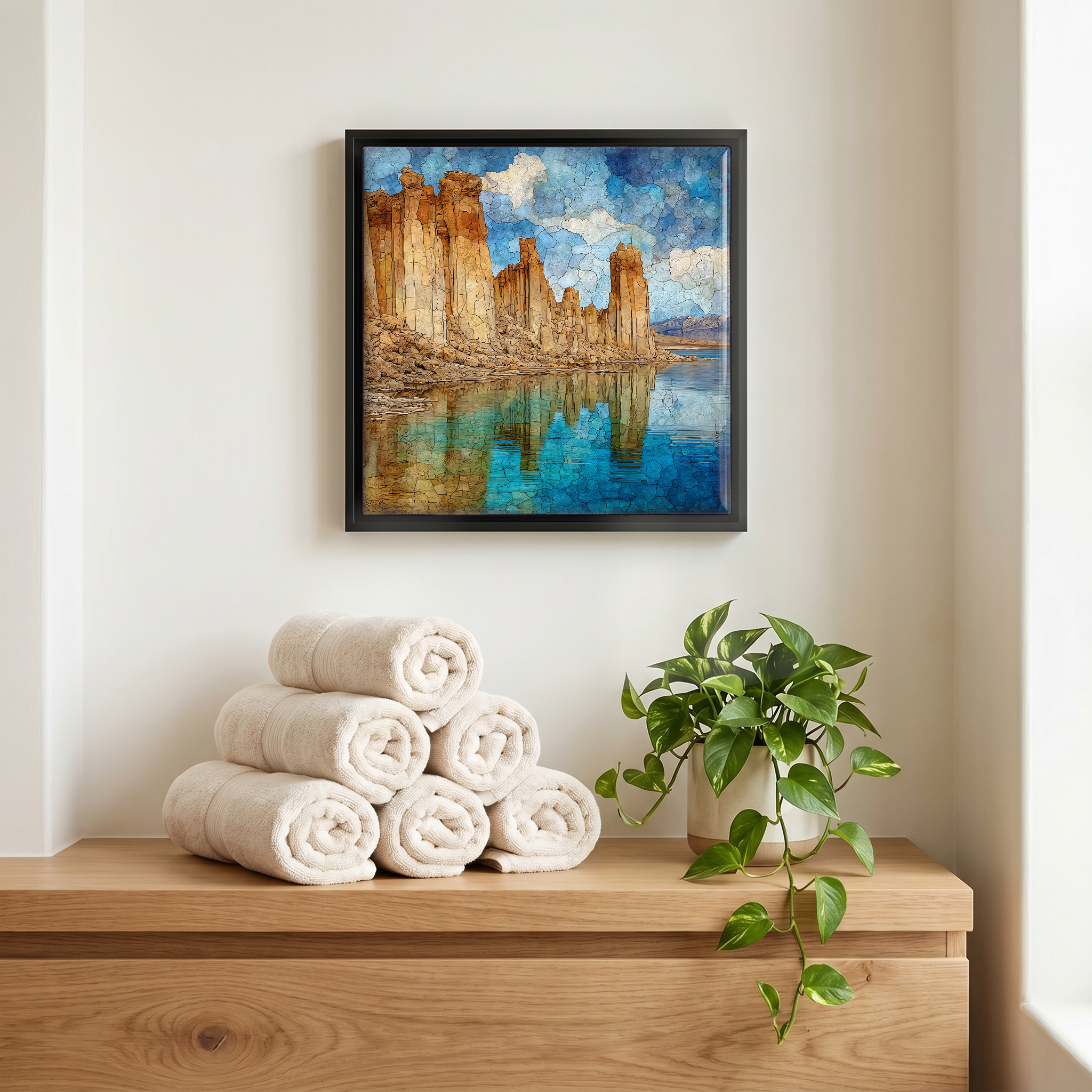
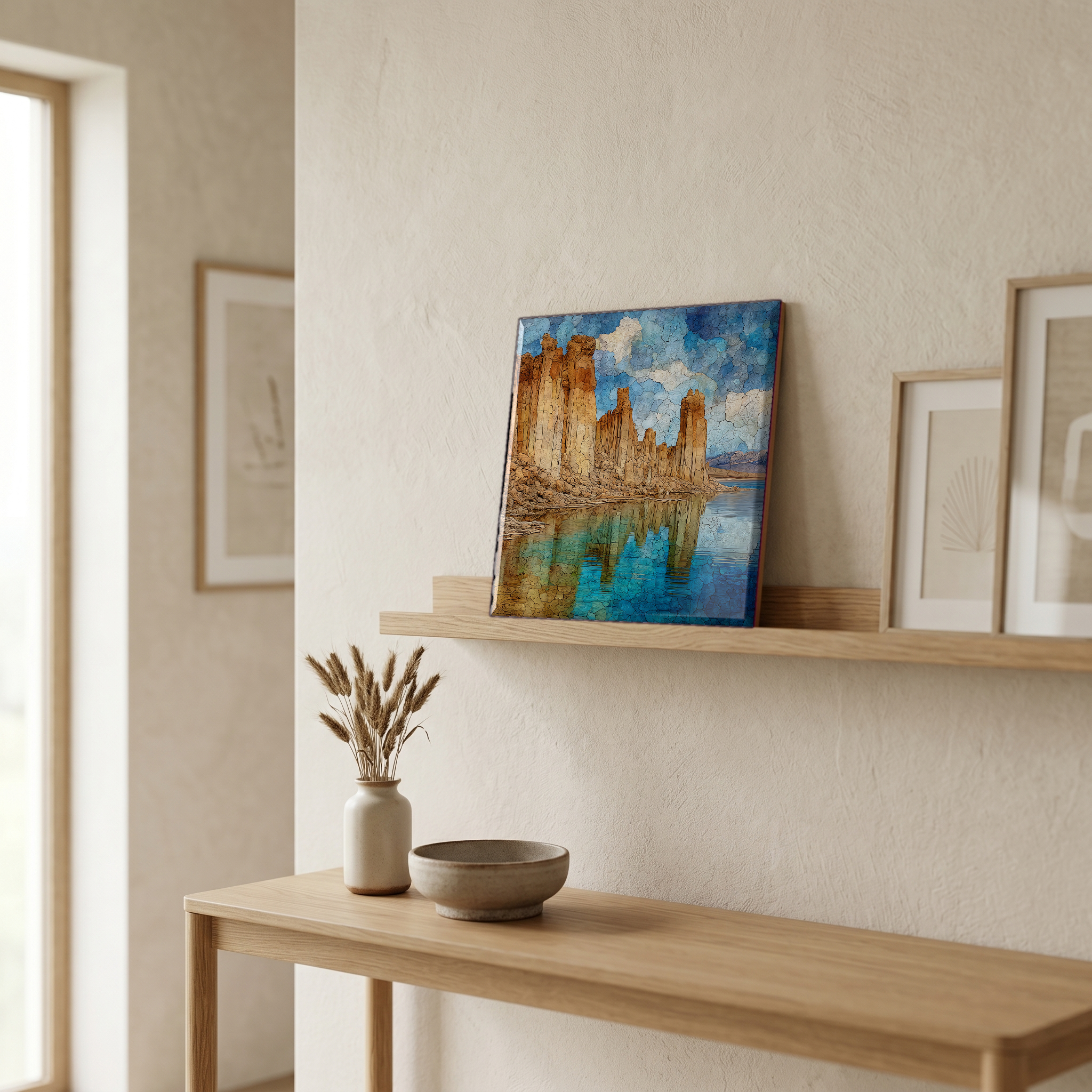
Crowley Lake Columns, on ceramic.
Each tile is finished by hand in our Knoxville studio. Artwork is slowly infused into the ceramic surface under high heat and pressure, and rests beneath a thin glossy finish. The colour lives in the surface, not on top of it.
Pick any four 4-inch tiles — National Parks you've been to, a Smokies set, the four seasons of one place. $ for a set of , cork-backed, ready to live on the table.
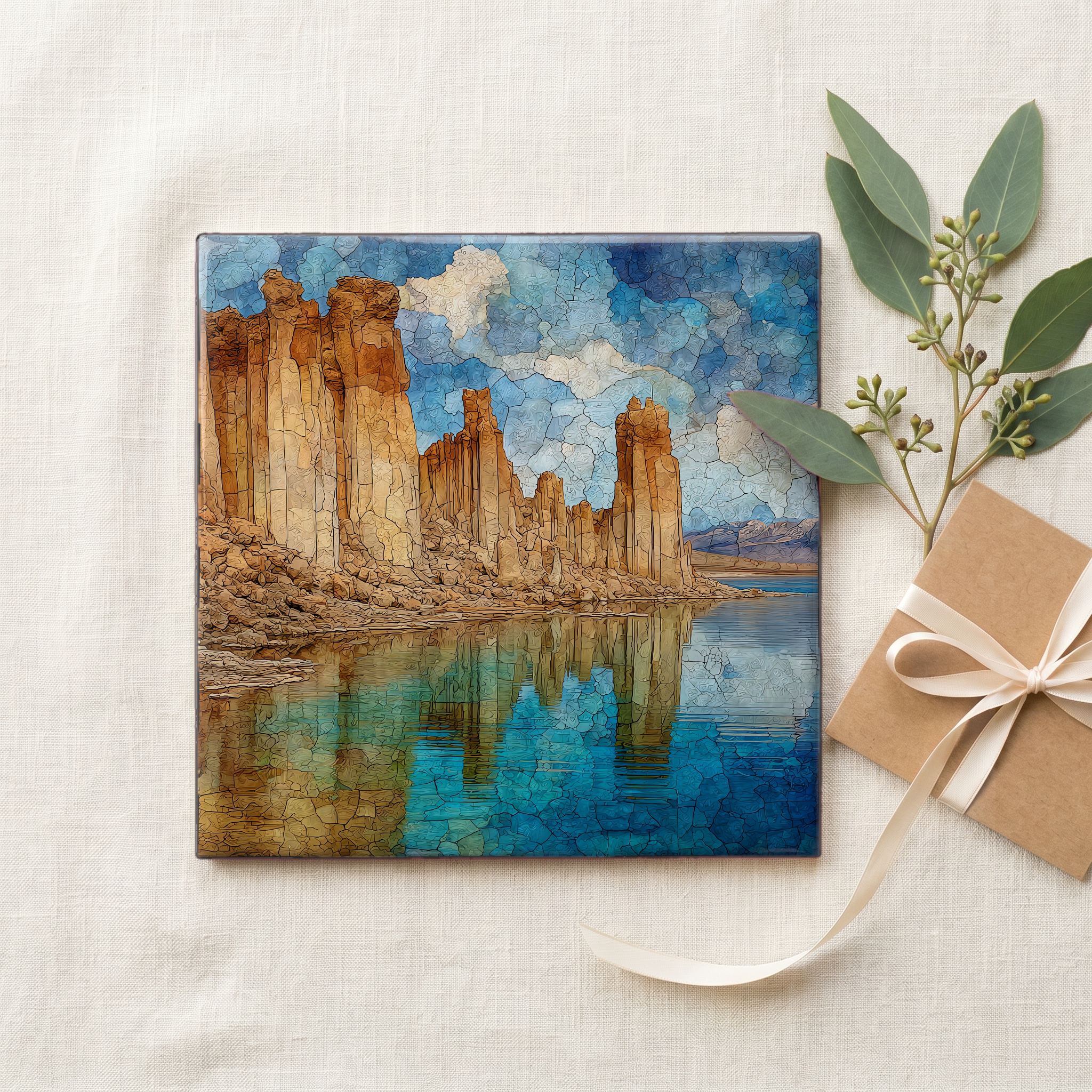
Each tile ships in a kraft box, tied with cream ribbon, with a handwritten note from the studio if you'd like to add one.

Three or five different vistas, hung together — a chapter of places you've been, or want to go.
The place, in three passes.
Crowley Lake sits at 6,781 feet in California's Mono County, on the upper Owens River, east of the Sierra Nevada crest. The reservoir was completed by the Los Angeles Department of Water and Power in 1941 to feed the Los Angeles Aqueduct, flooding a long basin between the Long Valley Caldera to the north and the Owens Gorge to the south. The stone columns occupy a series of alcoves along the lake's eastern shore, accessible by boat or by a high-clearance drive on Owens Gorge Road followed by a short walk down to the waterline. The nearest town is Mammoth Lakes, about twenty miles to the north; Bishop is about thirty miles south.
The columns are part of the Bishop Tuff, a thick layer of welded volcanic ash deposited by the Long Valley Caldera eruption about 760,000 years ago — one of the largest volcanic events in North American history, ejecting roughly 150 cubic miles of material. Their formation puzzled geologists until a 2015 paper in Geophysical Research Letters by Noah Randolph-Flagg and Michael Manga of UC Berkeley proposed an explanation: cold snowmelt and surface water sank into the still-hot ash and boiled, setting up evenly spaced convection cells. Hot vapour rose through the ash in regular columns, and minerals carried by the moving water cemented the ash around each column harder than the surrounding rock. Wave erosion on the reservoir's shore later wore away the softer material between them, leaving the columns standing.
The columns sit on land owned by the Los Angeles Department of Water and Power and are reached most easily by boat from Crowley Lake Fish Camp on the western shore. The overland route follows Owens Gorge Road south from US 395 near Tom's Place, then turns off onto an unmarked dirt track that requires a high-clearance vehicle in dry weather and becomes impassable when wet. From the rim it is a steep half-mile descent on loose ground down to the shore. The columns are most exposed in late summer and early autumn, when the reservoir is drawn down. There is no signage, no ranger station, and no formal trail — the site sits inside an active watershed and visitors are asked to leave nothing behind.