Wender·Vista
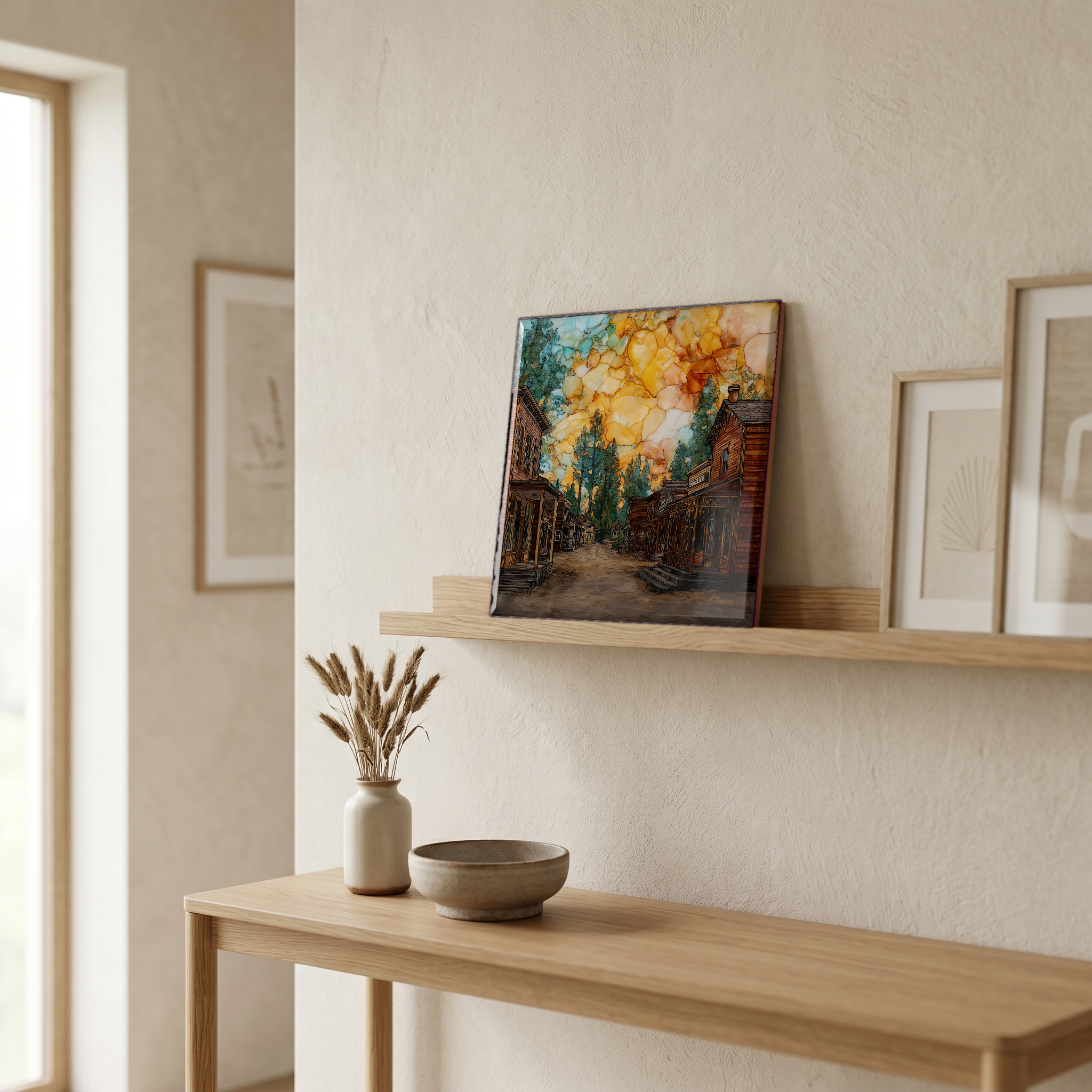
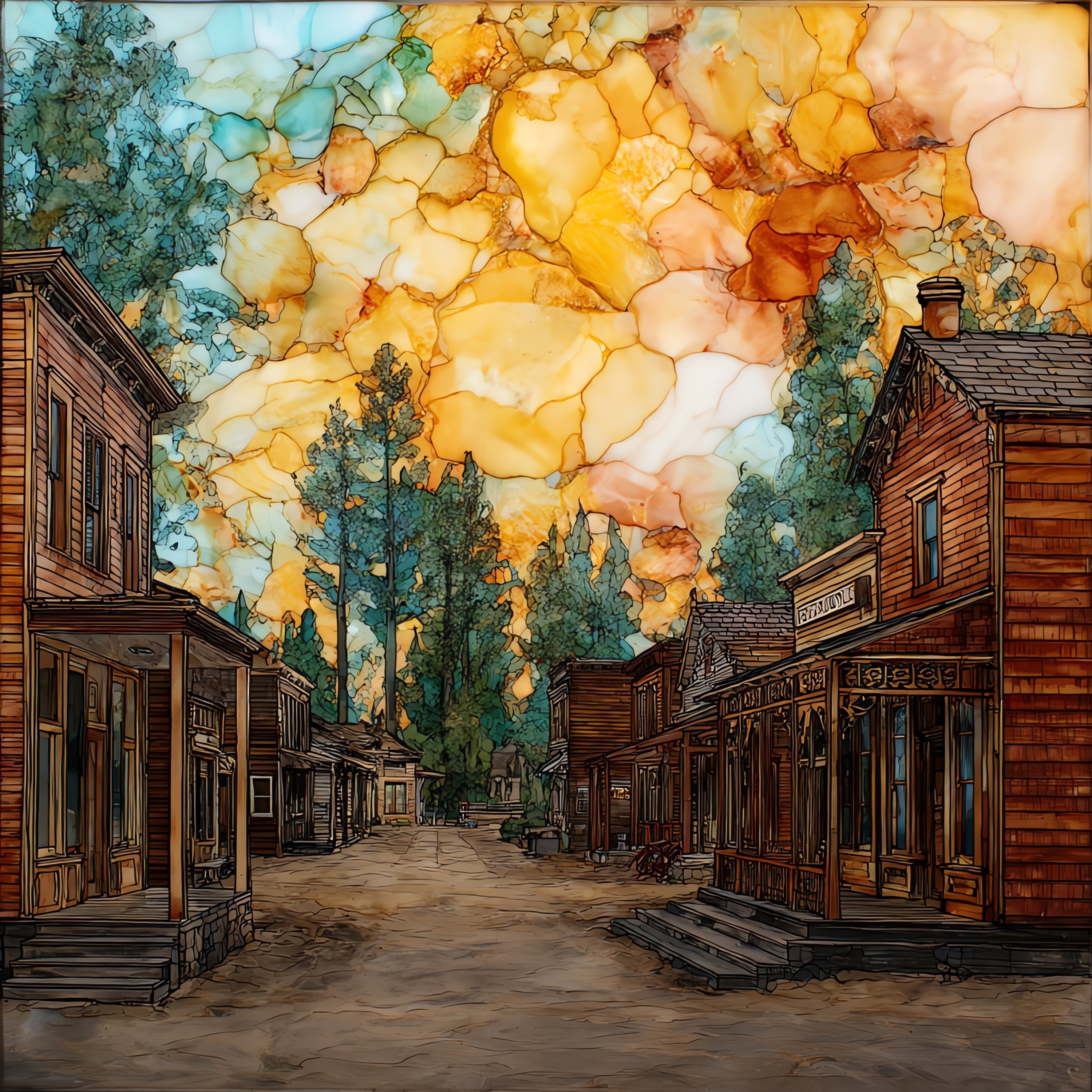
Columbia Historic Park
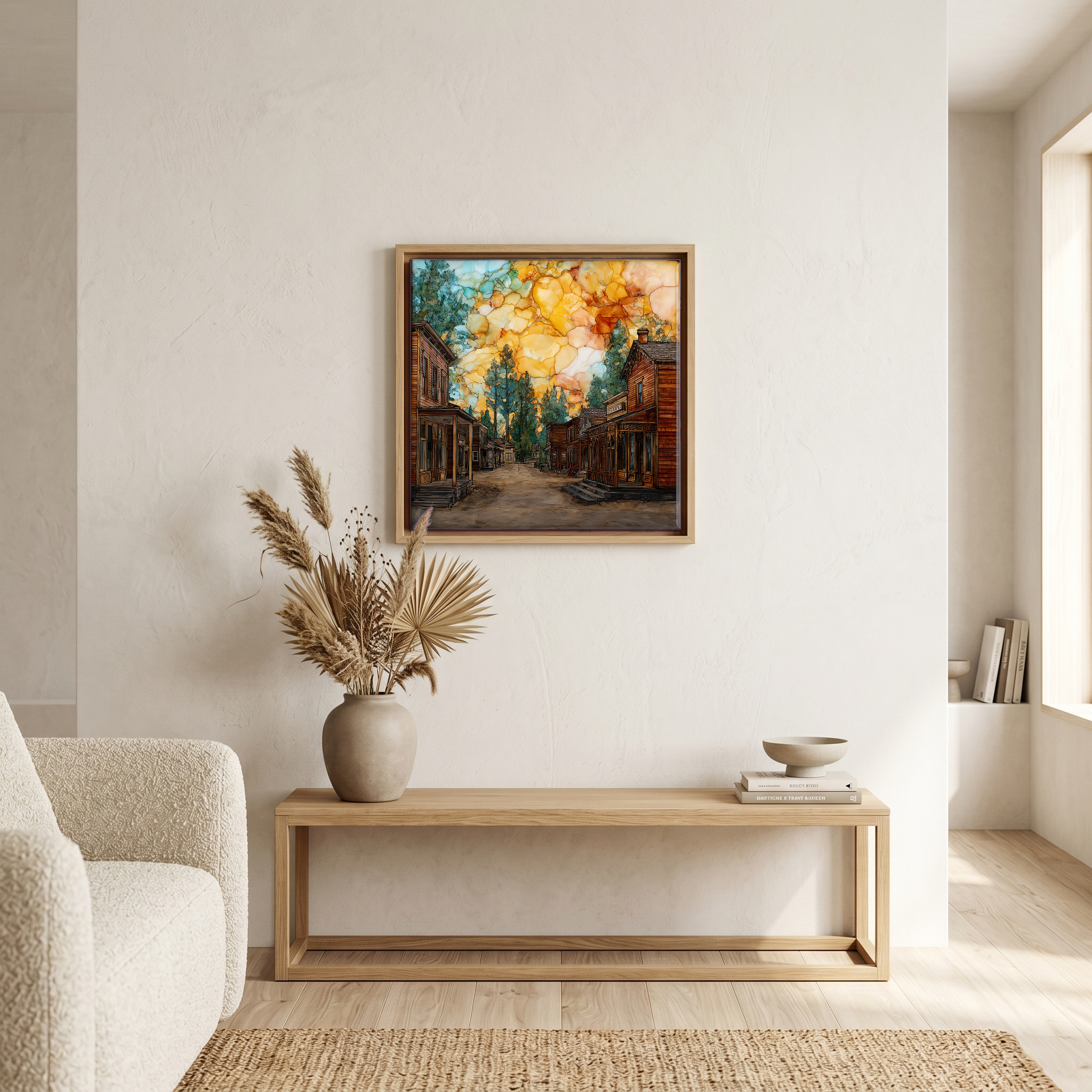
shown on ceramic, 12-inch tileCalifornia · United States
in the Sierra foothills, north of Sonora

Columbia Historic Park

the gold rush, after the noise.

Where it lives

Not only on a wall.

A small tile on the nightstand catching the morning. A larger one above the fire. Yours, wherever you spend the slow hours.
Above the bench, in a warm oak surround.
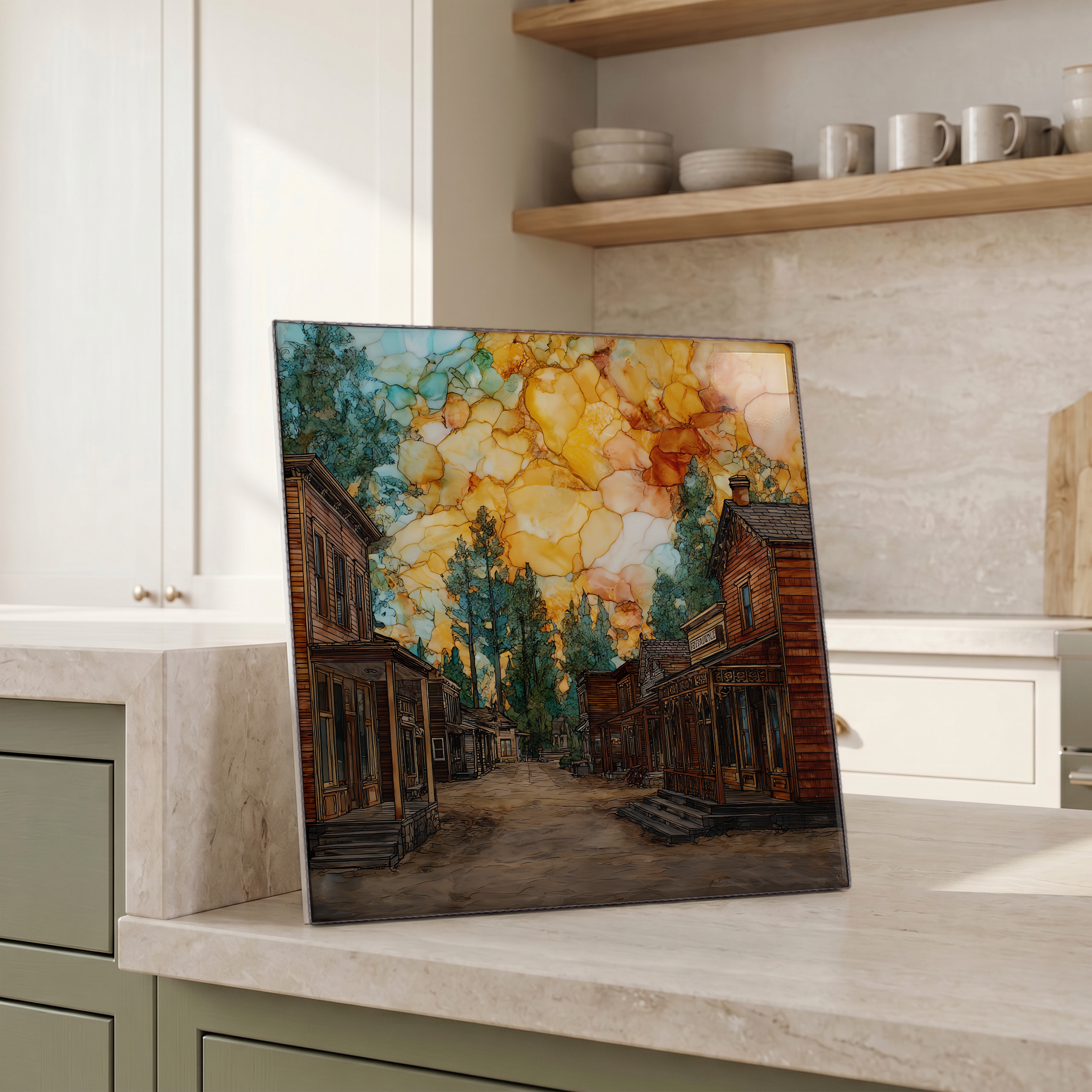
Beside the kettle, propped on the counter.
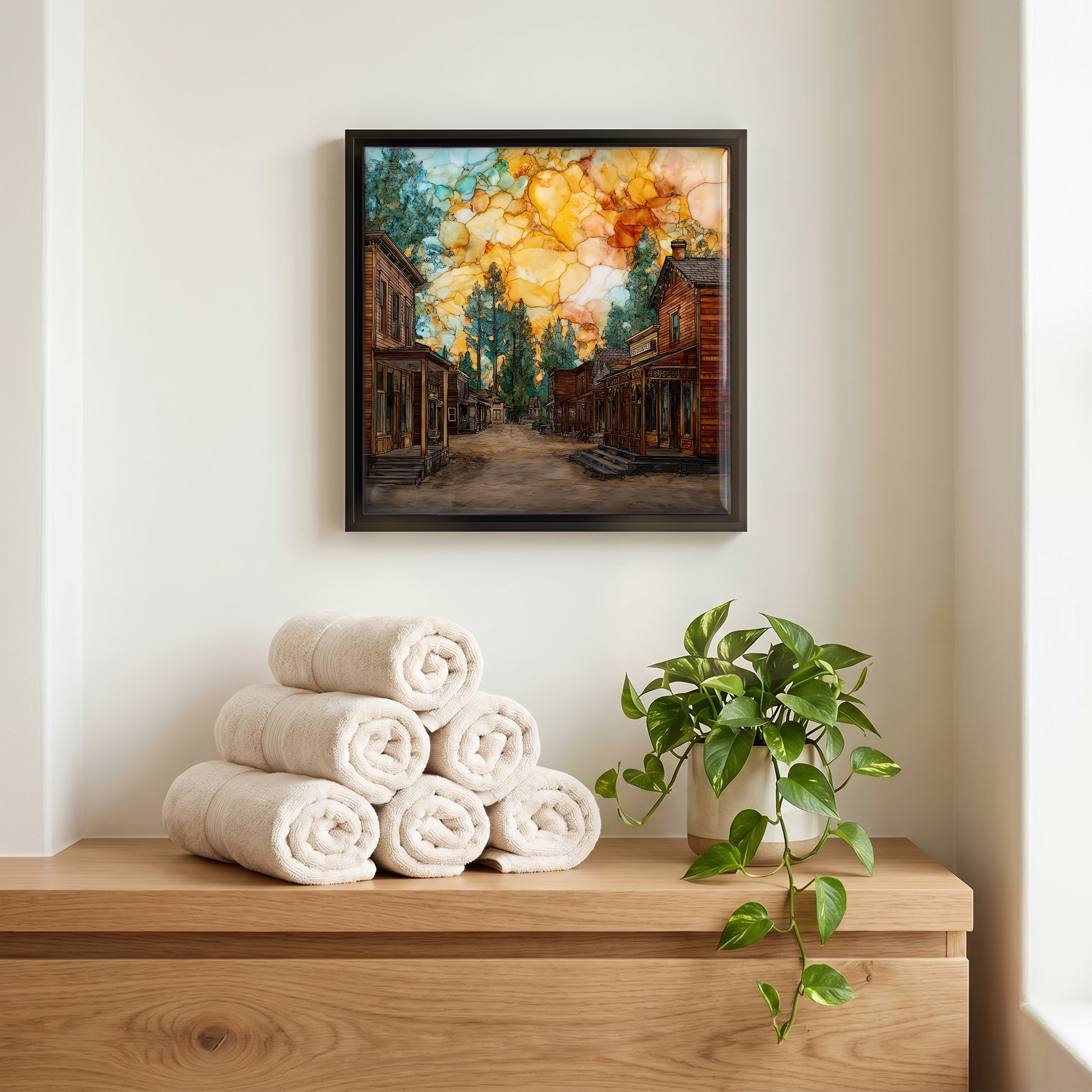
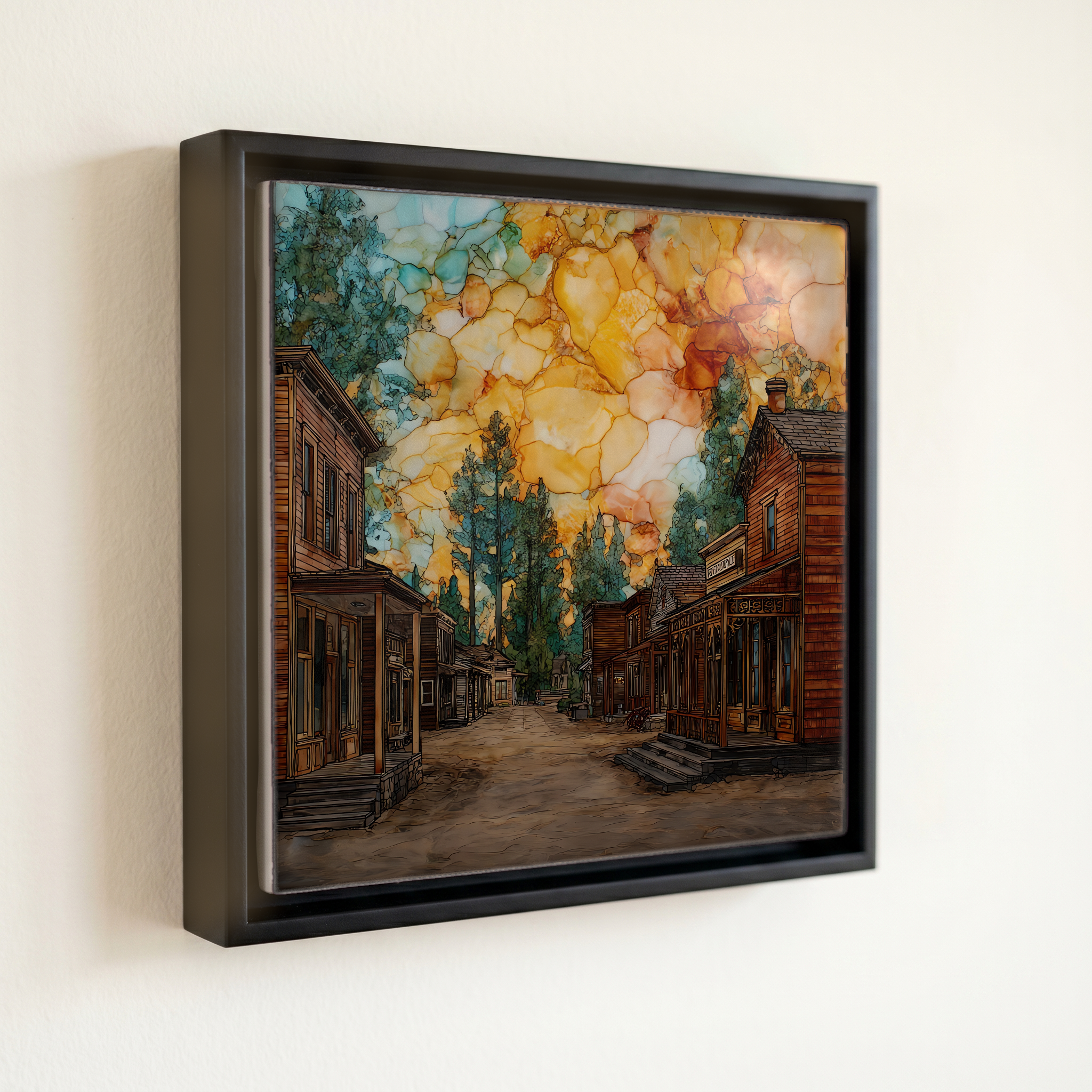
Above the linens, in a slim black surround.
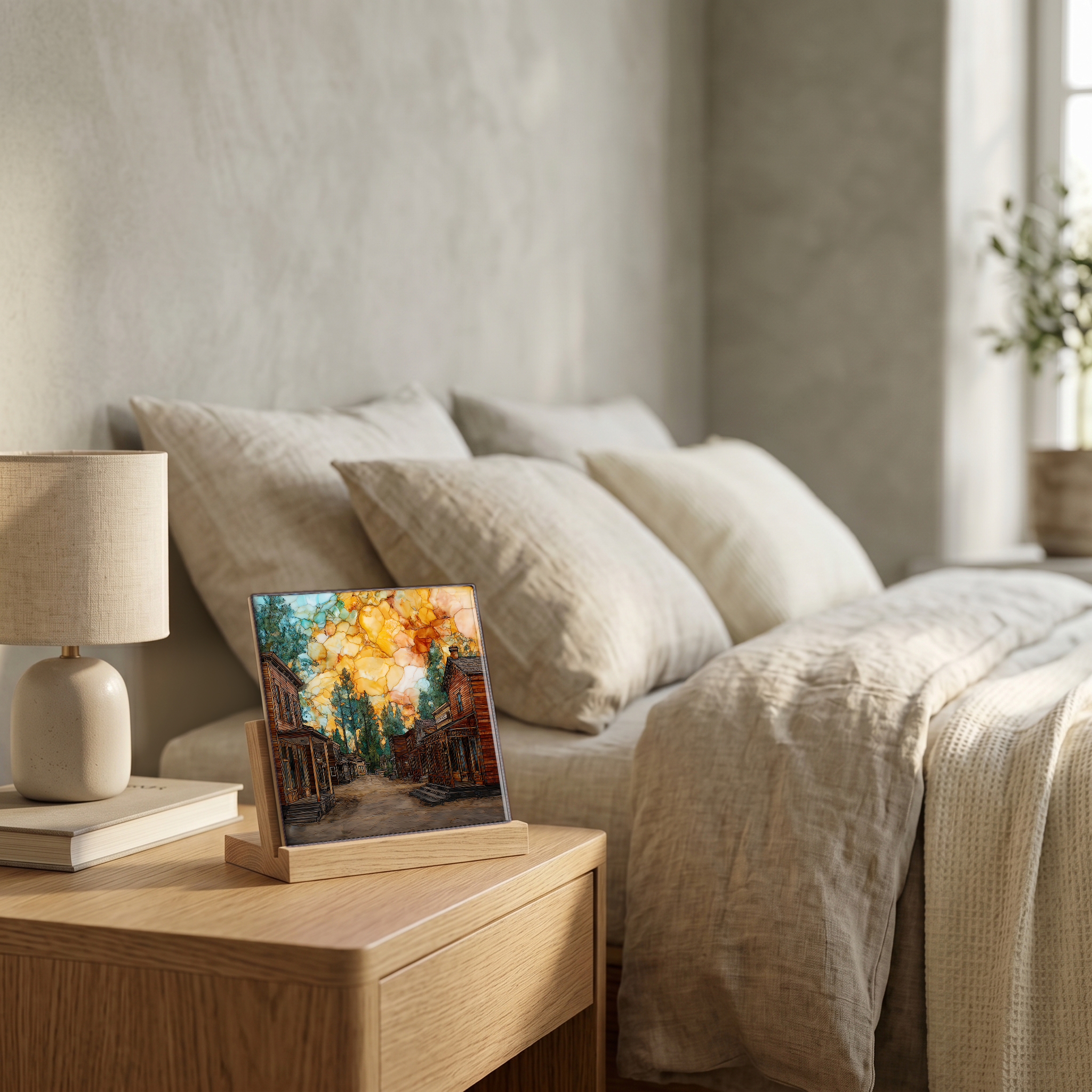
On the nightstand, on a light oak stand.
On a picture ledge, where the light comes in.
a note from the studio

For a few years one of California's largest towns, before the gold ran shallow and the prospectors moved on. What stayed is a Main Street of brick and boardwalk that never paved over and never widened for cars. The Wells Fargo office still has its scale on the counter. The City Hotel still rents its rooms. A stagecoach makes the afternoon loop. School kids on field trips pan for gold in the same gulch the Hildreth brothers worked in March of 1850. The Sierra foothills hold the heat into evening. The light goes amber against the brick around six.
from the studio
shown in a slim black floating frame · 6 × 6 in
— bring it home

Columbia Historic Park, on ceramic.

Each tile is finished by hand in our Knoxville studio. Artwork is slowly infused into the ceramic surface under high heat and pressure, and rests beneath a thin glossy finish. The colour lives in the surface, not on top of it.

What kind of piece?
One tile — square or rectangle.
How big?
the popular one — counter, shelf, nightstand
6 × 6 in · 15 cm · 1.6 lb
Surface finish
A clear glossy finish — the artwork reads as if under resin. Ideal for show-pieces and framed wall art.
How it sits
A hidden cleat — sits ¼″ proud of the wall.
$58
Hand-finished and shipped from our studio at the foot of the Smokies. On your wall in about ten days.
size
6 × 6 in
15 cm
weighs
1.6 lb
solid in the hand
surface
ceramic, hand-finished
art rests beneath a thin glossy finish
from
Knoxville, TN
our family studio, at the foot of the Smokies
— start a Coaster Set

Pick any four 4-inch tiles — National Parks you've been to, a Smokies set, the four seasons of one place. $ for a set of , cork-backed, ready to live on the table.
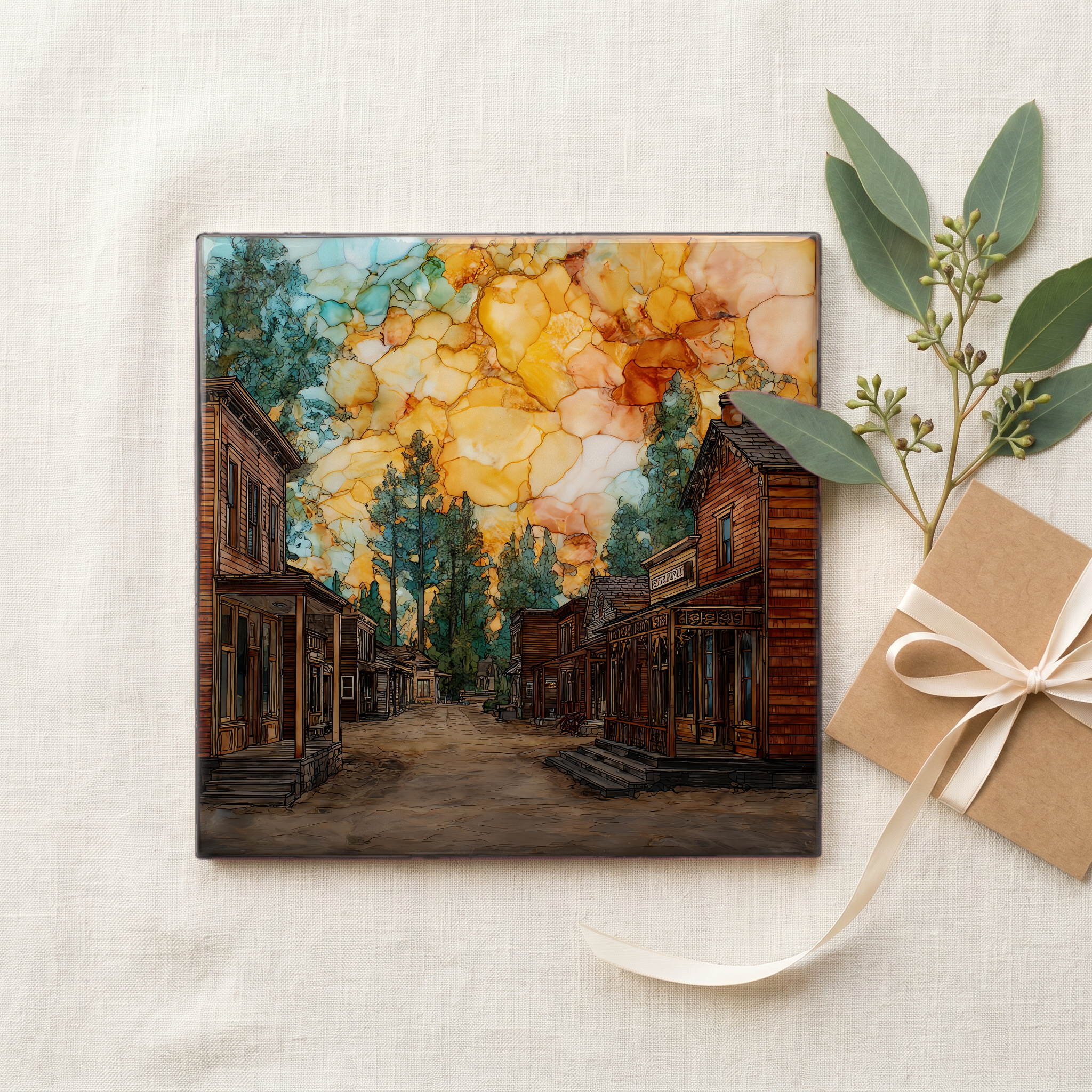
comes gift-ready
comes gift-ready

Each tile ships in a kraft box, tied with cream ribbon, with a handwritten note from the studio if you'd like to add one.
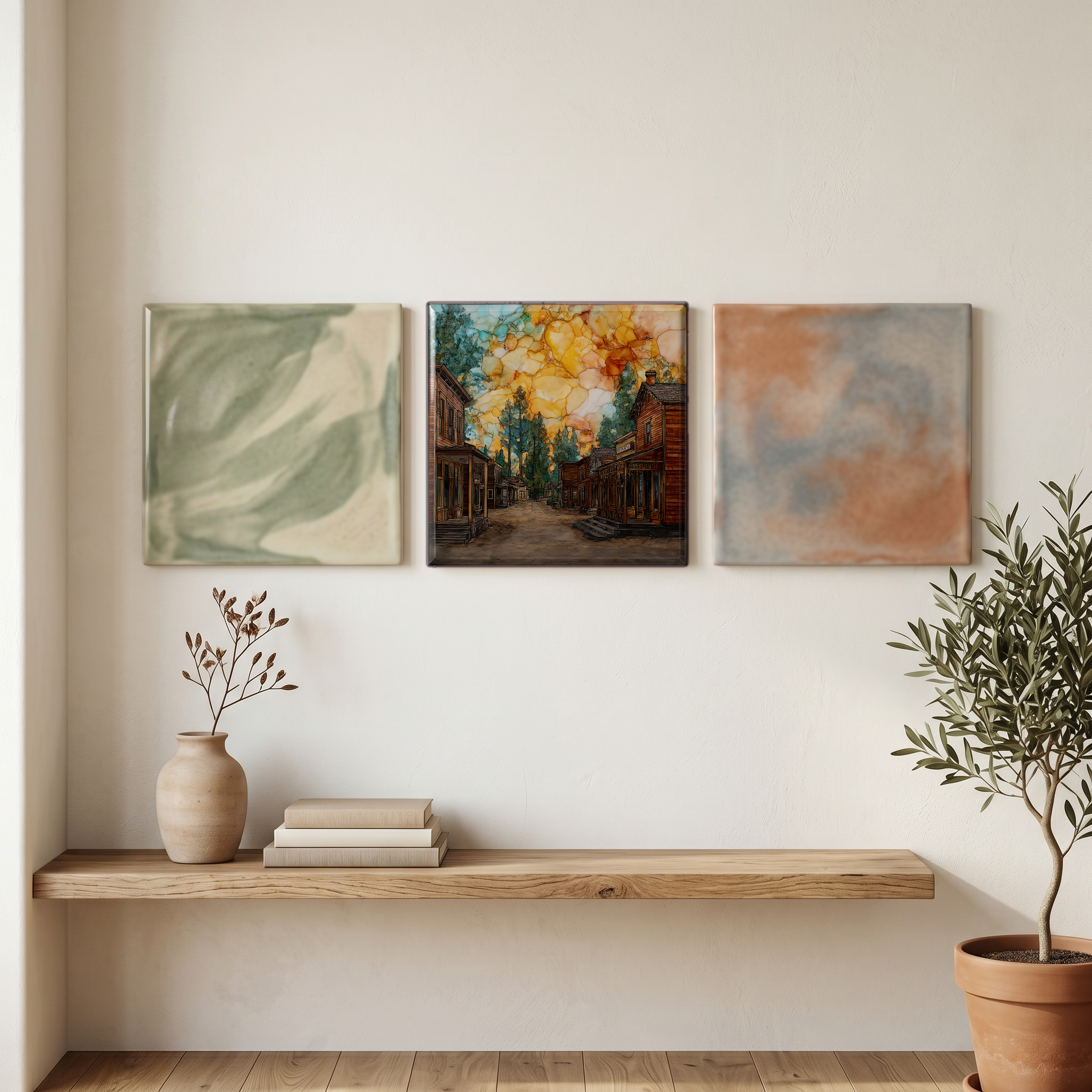
or build a grouping
or build a grouping

Three or five different vistas, hung together — a chapter of places you've been, or want to go.

about Columbia Historic Park

The place, in three passes.

A little of what's known, in case you fall down the rabbit hole — or want to go see it yourself.
the place

Columbia sits in the Sierra Nevada foothills of Tuolumne County, California, four miles north of Sonora at roughly 2,140 feet of elevation. Gold was struck on the gulch on March 27, 1850 by Dr. Thaddeus Hildreth and a small party from Maine; within months the town held several thousand residents. By the mid-1850s it was one of the largest settlements in the southern Mother Lode, with dozens of saloons, two newspapers, and a brick row of merchants. The diggings eventually ran shallow, the rush moved on, and most of the population went with it. In 1945 California made what remained a State Historic Park: twelve blocks of original 1850s buildings, the largest single concentration of Gold Rush-era architecture in the state.[1]

— informed by Wikipedia
the stone

What survived the rush is a Main Street of brick. Columbia burned twice in the 1850s, once in 1854 and again in 1857, and the merchants rebuilt the second time in fire-resistant brick with iron shutters at every storefront. The Wells Fargo Express Office, the City Hotel, the Fallon Hotel, and the one-room schoolhouse are all originals from the late 1850s, restored rather than reconstructed. The boardwalks are wood, the storefronts are brick, and the working blacksmith shop on Main still forges hardware for the buildings around it. The street itself was closed to automobile traffic when the park was created, so the proportions of the town read the way they did when stagecoaches were the actual transportation.[1]

— informed by Wikipedia
the visit

The park is open daily and entrance is free, though several in-town experiences are operated by concessioners. Stagecoach rides leave from near the Wells Fargo office on a regular afternoon schedule from spring through fall. The Hidden Treasure Gold Mine offers underground tours by reservation, and gold panning is available at a sluice on Main Street. The City Hotel and the Fallon Hotel both operate as historic lodgings under park concession, with rooms restored to 1850s appointments. Costumed docents work the schoolhouse, the print shop, and the smithy during living-history weekends, particularly around Columbia Diggins 1852, the park's annual early-summer re-enactment of a working camp from the height of the rush. Most shops close by five; the boardwalks are quiet after the last stagecoach turns in.[1]

— informed by Wikipedia
where
United States · Tuolumne County, California
within
Columbia State Historic Park
elevation
652 m · 2,140 ft
position
38.0367° N · 120.4014° W
the neighborhood

What's nearby.

A handful of named places within an hour's walk or short drive. Some we've already painted; some we will.
6 km S
Sonora
county seat
13 km SW
Jamestown
Gold Rush town
20 km NW
Murphys
Gold Rush town
20 km W
New Melones Lake
reservoir
50 km NE
Calaveras Big Trees State Park
state park
90 km E
Yosemite National Park
national park
N
Columbia Historic Park
Sonora
Jamestown
Murphys
New Melones Lake
Calaveras Big Trees State Park
Yosemite National Park
common questions

What people ask.

A few questions we get about Columbia Historic Park — and about bringing the piece home.
about the place

Columbia sits in the Sierra Nevada foothills of Tuolumne County, California, four miles north of Sonora and roughly 130 miles east of San Francisco. Highway 49, the Mother Lode highway, runs nearby. The town center itself is closed to vehicle traffic.

Columbia was one of the largest boomtowns of California's southern Mother Lode. Gold was struck by Dr. Thaddeus Hildreth and a small party on March 27, 1850; within months the town had several thousand residents, two newspapers, and dozens of saloons, and at peak it rivaled the largest settlements in the state.

Two fires in the 1850s, in 1854 and 1857, taught the merchants to rebuild in brick with iron shutters. The diggings then ran shallow before another fire could finish the town, and most of the population left rather than the buildings. When California made Columbia a State Historic Park in 1945, the brick row of Main Street was largely intact.

The park was established in 1945, when California acquired the largely-empty townsite and twelve blocks of original Gold Rush-era buildings. The acquisition included the Wells Fargo Express Office, the City Hotel, the Fallon Hotel, and the schoolhouse. Restoration of the storefronts and street has continued ever since.

Yes. Concessioners on Main Street run gold-panning operations using sluice boxes and pans, primarily through the spring-through-fall season. The Hidden Treasure Gold Mine, also operated as a concession, offers guided underground tours of an actual hard-rock mine on the edge of town.

No. Entrance to the park and the historic town is free. Several in-town experiences carry a fee: the stagecoach ride, the Hidden Treasure mine tour, and gold panning are all run by concessioners and charge per-person rates. Lodging at the City Hotel and the Fallon Hotel is booked separately.

Sonora, the Tuolumne County seat, is four miles south. Jamestown and Railtown 1897 State Historic Park are about eight miles southwest. Calaveras Big Trees State Park is roughly thirty miles north. Yosemite National Park is about ninety miles east on Highway 120. The whole region is California's Gold Country.

about the piece in your home

It's been a meaningful gift for customers with ties to the southern Mother Lode. Columbia is a place many California schoolchildren visit on fourth-grade field trips, so the tile reads as a childhood memory rendered back in brick-and-boardwalk colour. A Small or a Medium with a handwritten note from the studio carries well.

The palette tilts amber and brick under deep alcohol-ink shadows, so the tile sits well in Western-modern, Mountain-modern, and Heritage-Americana interiors. It also reads cleanly in a Jewel-tone Maximalist room where the stained-glass treatment can answer a velvet sofa or a brass lamp. A simple oak frame suits the Sierra foothills setting.

Western-modern and Heritage-Americana have been steady categories for the studio over the last two years, particularly in mountain-state and southwest homes. The Voynich treatment gives the brick a stained-glass depth that pairs with leather, dark wood, and unbleached linen without reading as costume.

A single Large reads well above a console table. Above a standard three-cushion sofa, a 4-tile Mural or a 9-tile Mural carries the wall better, with the larger Mural giving the brick row of Main Street room to extend. A Triptych is a strong vertical option for a narrow stairwell.

Yes. For a kitchen backsplash, a powder-room wall, or anywhere with humidity, choose the Dura Satin or the Matte finish. Both are scratch-resistant and tolerate steam. The Glossy finish is for framed wall art and dry display only. The same artwork is available across all three finishes.

A soft microfibre cloth and water handles everyday dust and fingerprints. For a kitchen install with cooking residue, a mild dish soap diluted in water and the same microfibre cloth works without harming the surface. No abrasive cleaners or scouring pads on any finish.

Yes. The Columbia piece is part of WenderVista's California program, rendered in the studio's Voynich stained-glass and alcohol-ink visual language. The art lives only in Wender Studios pieces. There are no third-party licensors and no other shops carrying the same image.

if this one stayed with you

A few you might also love.

Hand-picked by the eye that found Sorapis. Same air, same kind of quiet.