Wender·Vista
Coit Tower
shown on ceramic, 12-inch tileCalifornia · United States
high on Telegraph Hill, in San Francisco

Coit Tower

a pale column the fog finds first.

Where it lives

Not only on a wall.

A small tile on the nightstand catching the morning. A larger one above the fire. Yours, wherever you spend the slow hours.
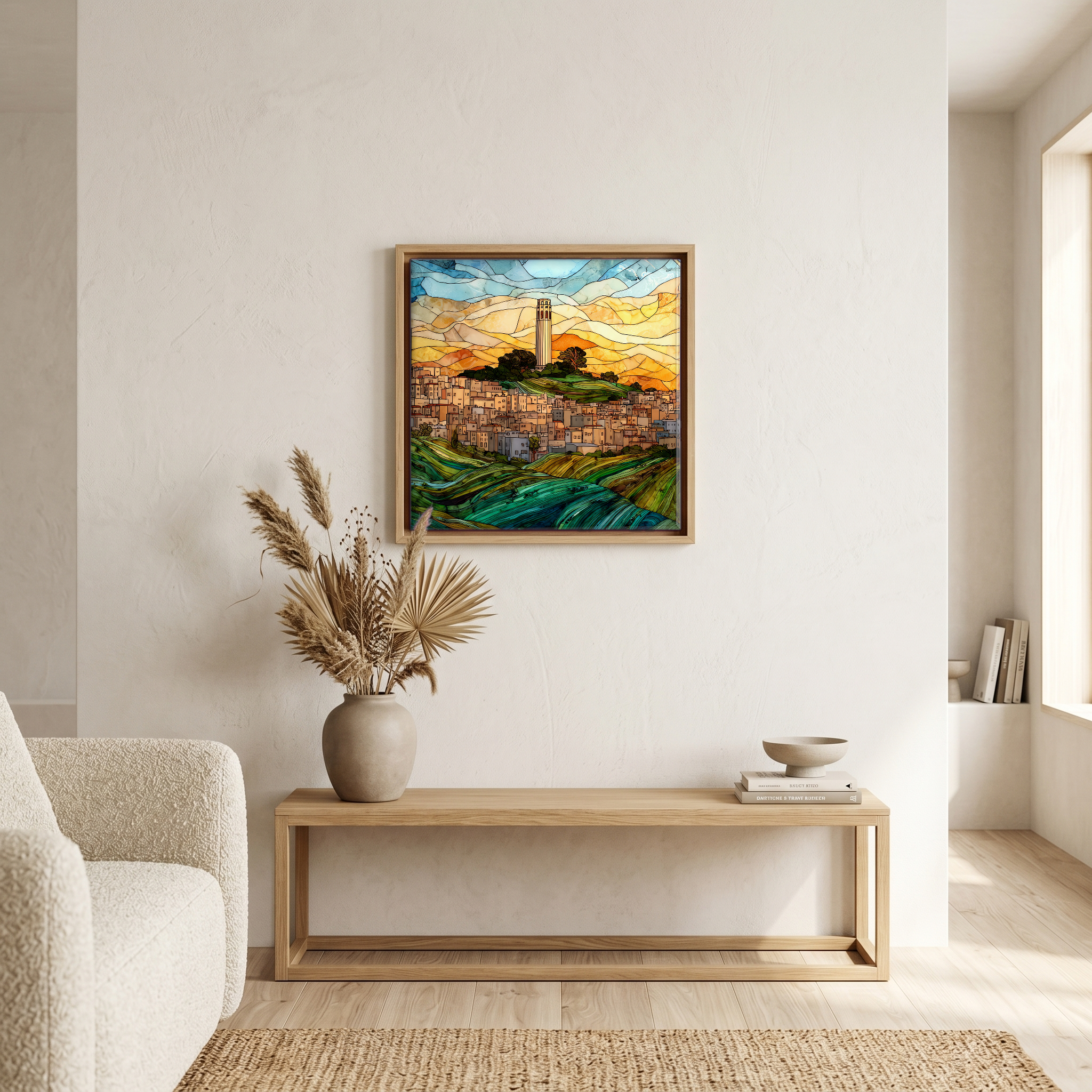
Above the bench, in a warm oak surround.
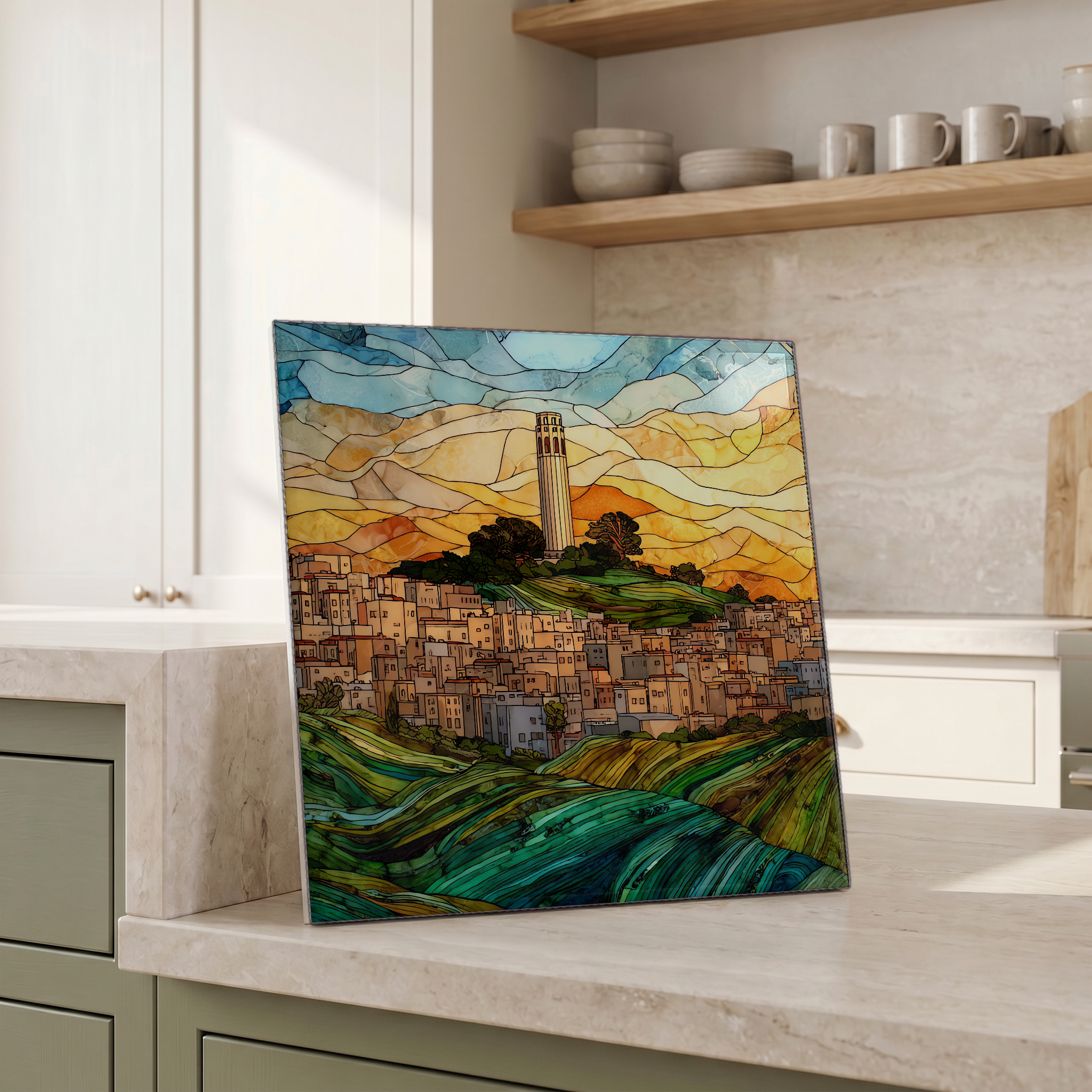
Beside the kettle, propped on the counter.
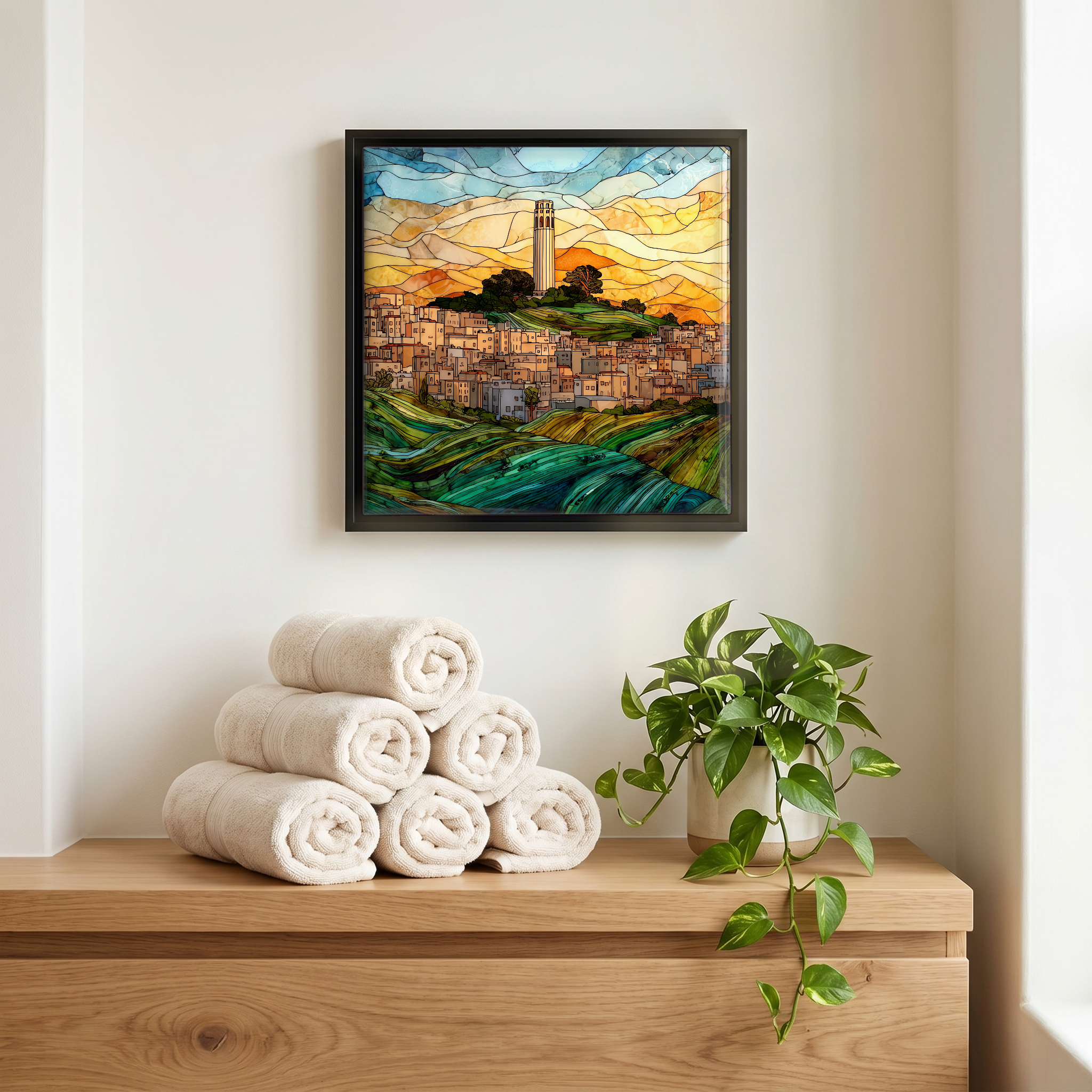
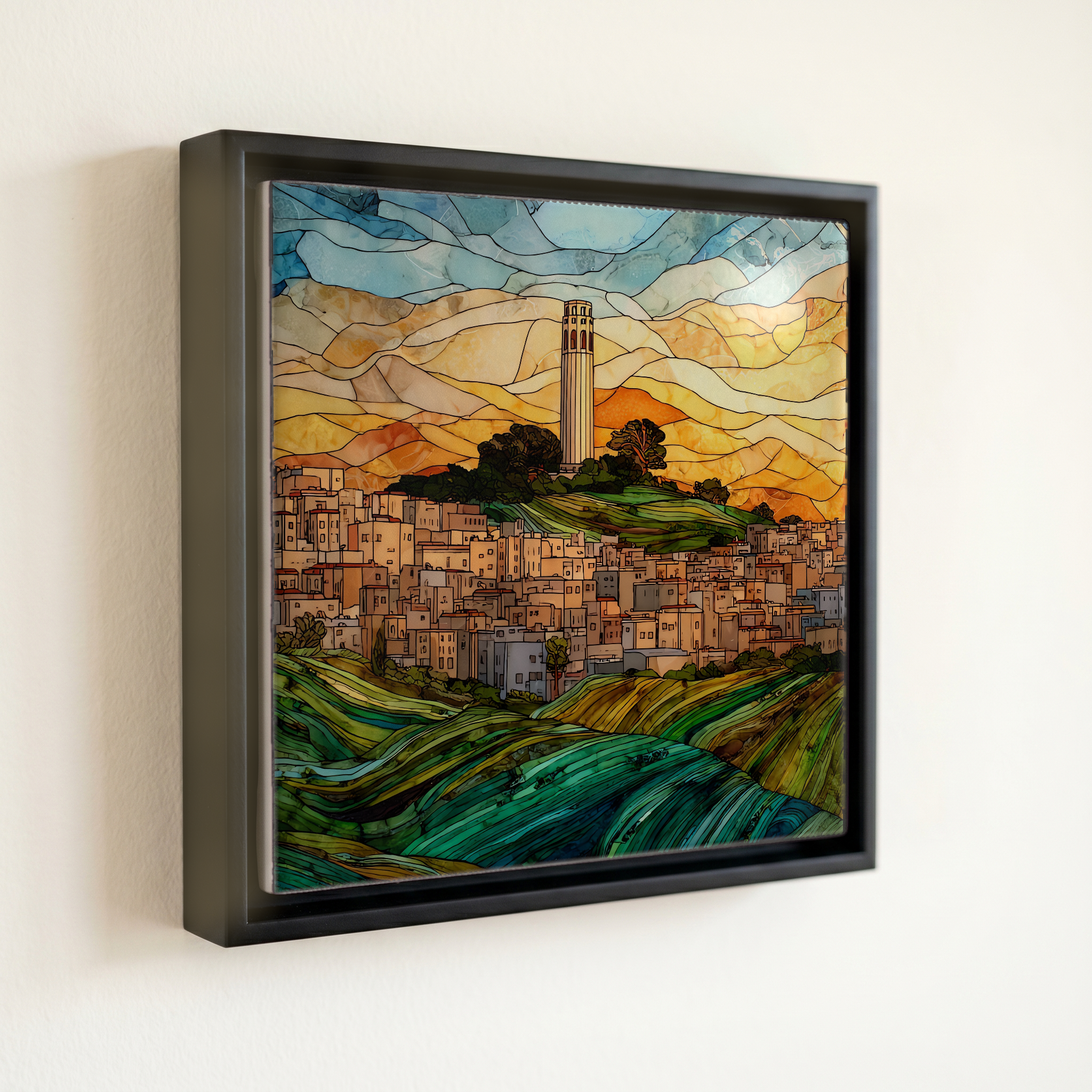
Above the linens, in a slim black surround.
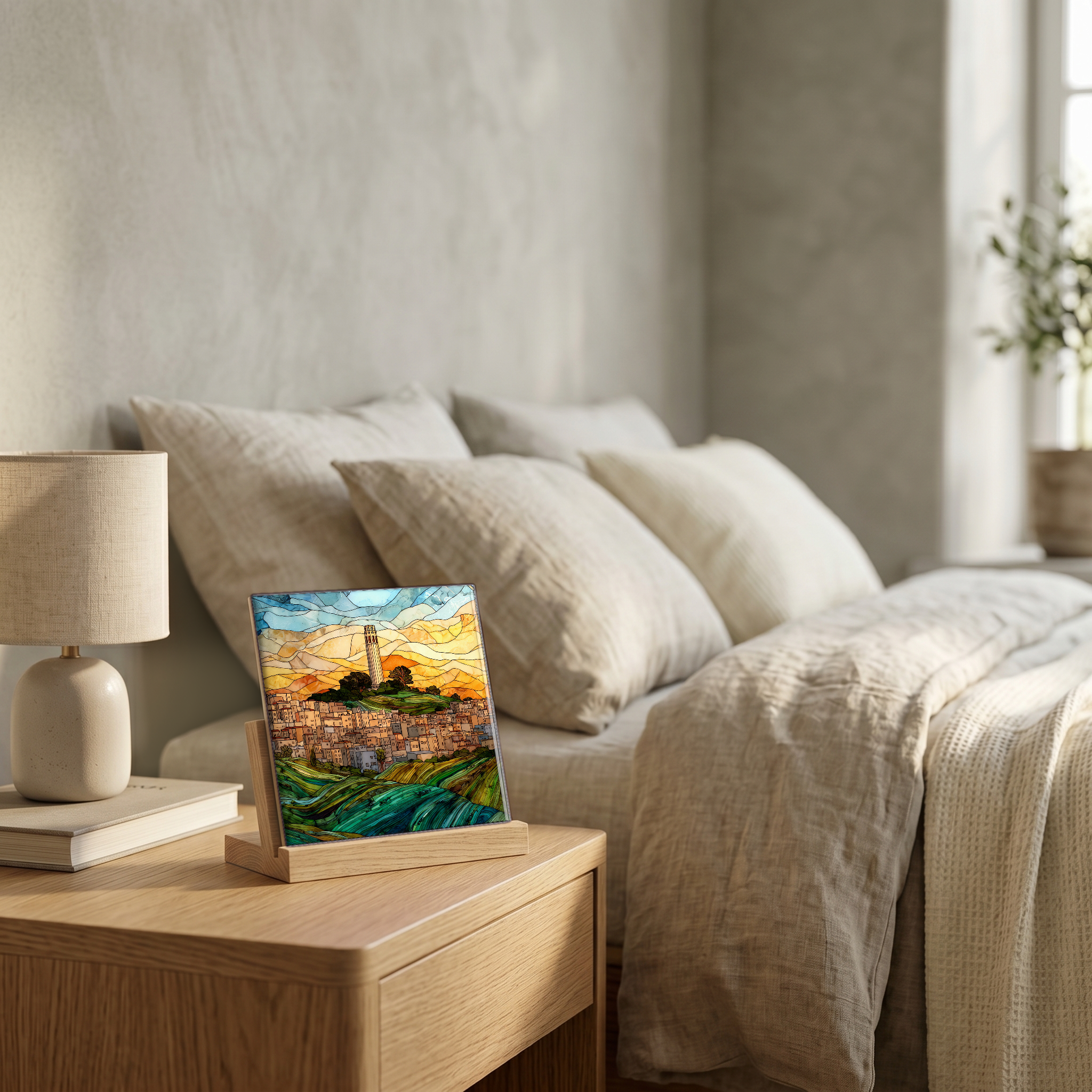
On the nightstand, on a light oak stand.
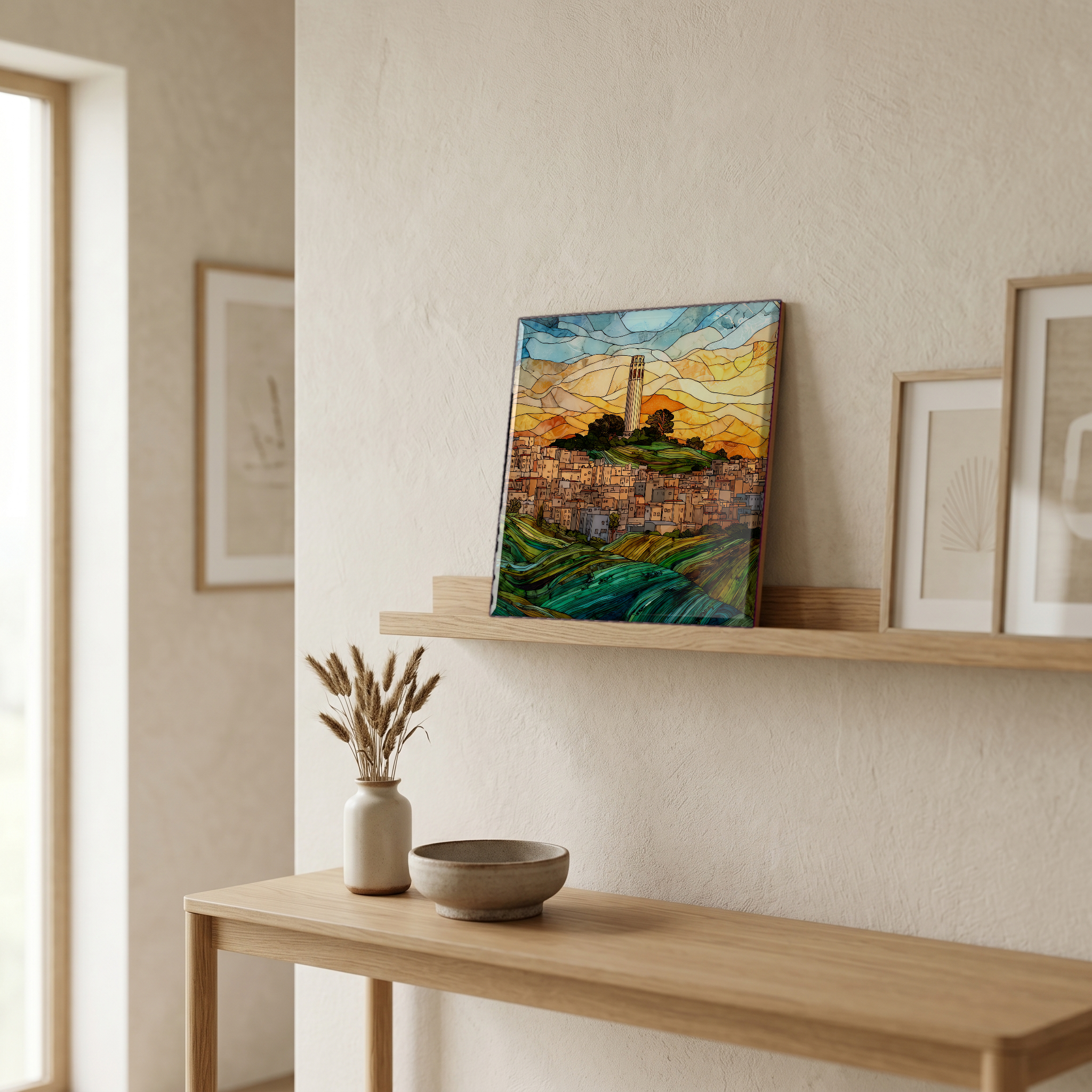
On a picture ledge, where the light comes in.
a note from the studio

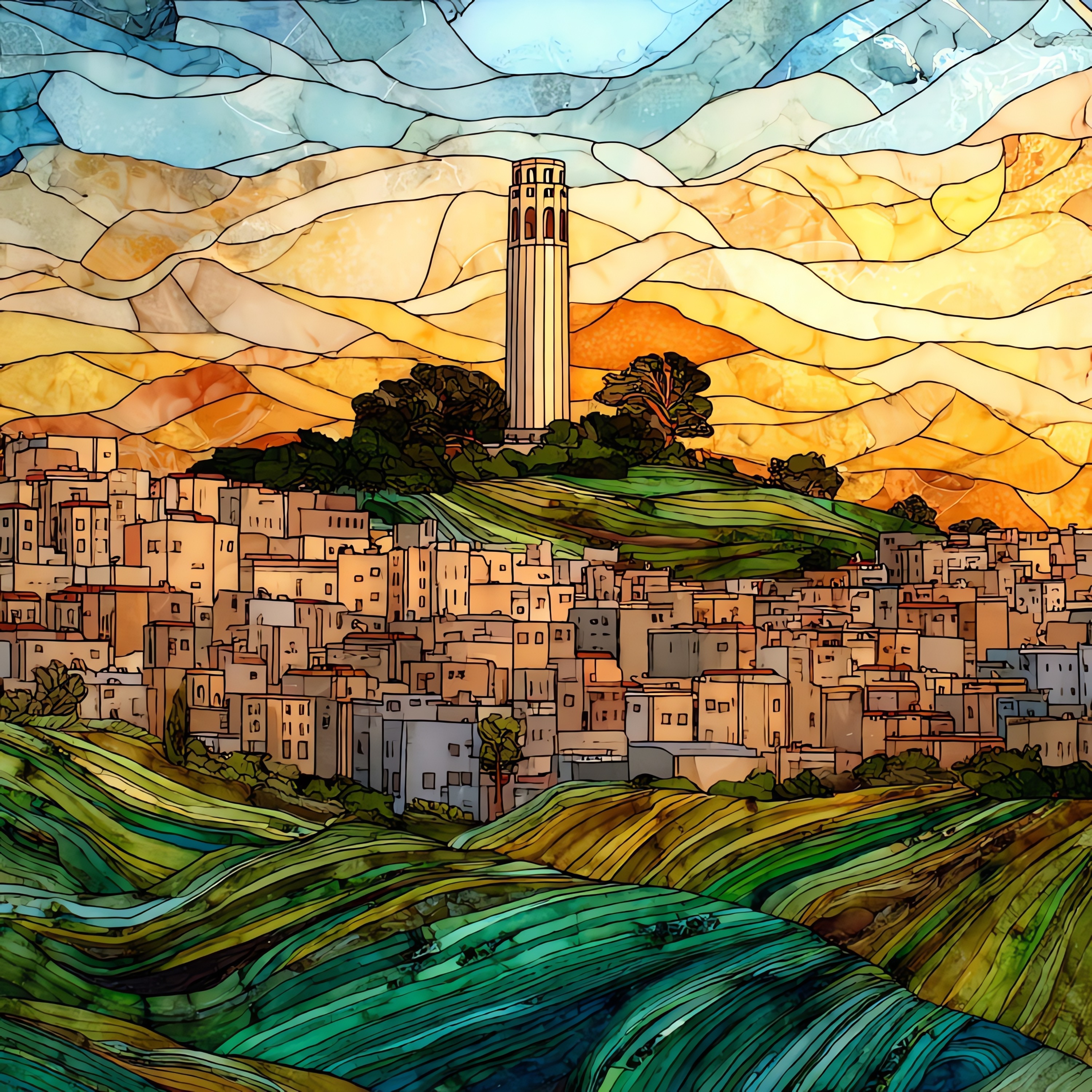
A pale concrete column on Telegraph Hill, finished in 1933 with money Lillie Hitchcock Coit left to the city she'd spent her childhood chasing fire engines through. The shape is plain: fluted, two hundred and ten feet of art deco, set in the small park at the top. From the observation deck the body of San Francisco reads at one glance: the bay, Alcatraz, the Golden Gate, the Bay Bridge. Inside the base, twenty-seven painters of the Public Works of Art Project covered the walls in 1934 while the country was still in the Depression. The frescoes are still there. People go up for the view and stay for the murals.
from the studio
shown in a slim black floating frame · 6 × 6 in
— bring it home

Coit Tower, on ceramic.

Each tile is finished by hand in our Knoxville studio. Artwork is slowly infused into the ceramic surface under high heat and pressure, and rests beneath a thin glossy finish. The colour lives in the surface, not on top of it.

What kind of piece?
One tile — square or rectangle.
How big?
the popular one — counter, shelf, nightstand
6 × 6 in · 15 cm · 1.6 lb
Surface finish
A clear glossy finish — the artwork reads as if under resin. Ideal for show-pieces and framed wall art.
How it sits
A hidden cleat — sits ¼″ proud of the wall.
$58
Hand-finished and shipped from our studio at the foot of the Smokies. On your wall in about ten days.
size
6 × 6 in
15 cm
weighs
1.6 lb
solid in the hand
surface
ceramic, hand-finished
art rests beneath a thin glossy finish
from
Knoxville, TN
our family studio, at the foot of the Smokies
— start a Coaster Set

Pick any four 4-inch tiles — National Parks you've been to, a Smokies set, the four seasons of one place. $ for a set of , cork-backed, ready to live on the table.
comes gift-ready
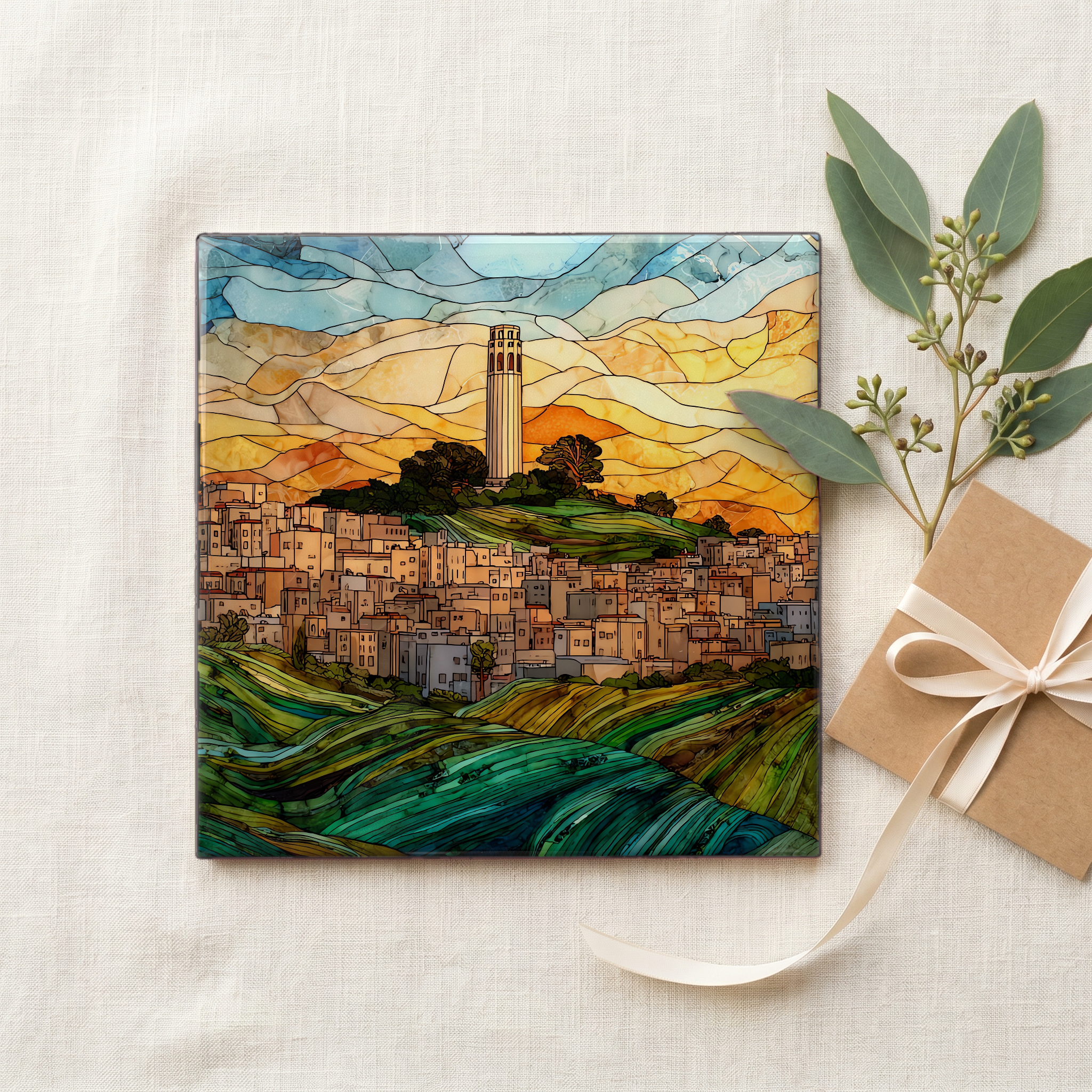
comes gift-ready

Each tile ships in a kraft box, tied with cream ribbon, with a handwritten note from the studio if you'd like to add one.
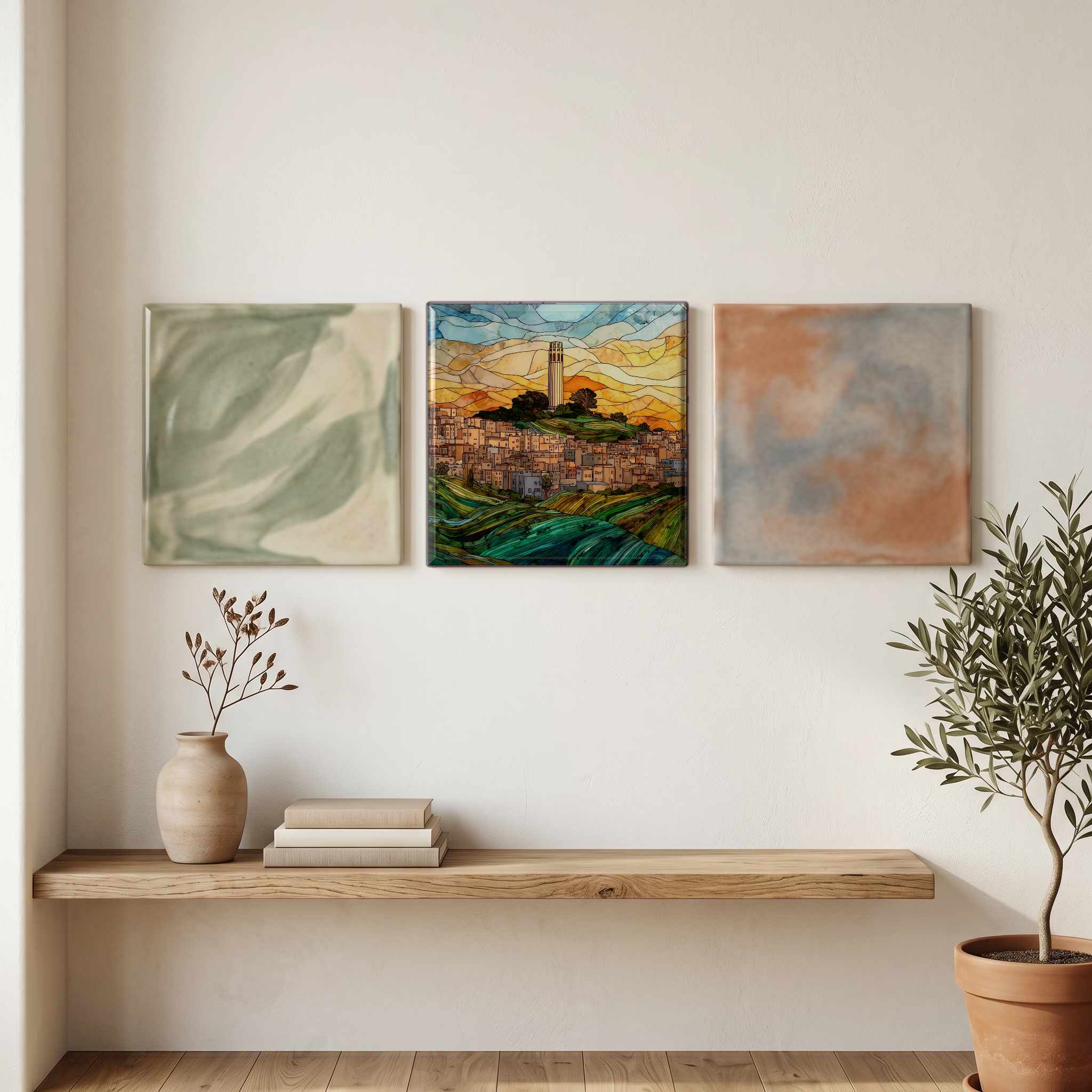
or build a grouping
or build a grouping

Three or five different vistas, hung together — a chapter of places you've been, or want to go.

about Coit Tower

The place, in three passes.

A little of what's known, in case you fall down the rabbit hole — or want to go see it yourself.
the place

Coit Tower stands on Telegraph Hill in San Francisco, two hundred and ten feet of unpainted reinforced concrete set inside Pioneer Park. The hill rises to roughly two hundred and seventy-five feet above San Francisco Bay, in the Italian-American neighbourhood of North Beach, and the tower's observation deck takes in Alcatraz, the Golden Gate, and the Bay Bridge in one slow turn. The structure was funded by a bequest from Lillie Hitchcock Coit, a San Francisco socialite who left the city about a third of her estate for civic beautification when she died in 1929. Construction finished in 1933. The site is administered by the San Francisco Recreation and Parks Department and is listed on the National Register of Historic Places.

the stone

The tower is the work of Arthur Brown Jr., the San Francisco architect also responsible for the dome of City Hall and the War Memorial Opera House. The exterior is plain art deco, fluted at the crown, and Brown denied the persistent rumour that the shape echoes a firehose nozzle in tribute to Lillie Coit's affection for the city's volunteer firemen. Inside the base, twenty-seven painters worked through the spring of 1934 on a continuous fresco cycle commissioned by the Public Works of Art Project, the first federal art programme of the New Deal. The murals depict California life during the Depression in a style that takes after Diego Rivera, and they remain almost entirely unchanged today.

the visit

The tower is open daily except major holidays, with admission to the ground-floor murals free and an elevator fee for the observation deck. The site is reached by car up Telegraph Hill Boulevard from North Beach, or on foot from the Embarcadero by way of the Filbert Steps and Greenwich Steps, which climb past private gardens and the wild parrots that nest in the cypresses on the eastern face of the hill. Parking at the top is limited, and the line for the elevator on a clear weekend afternoon can run forty minutes. The quietest hour for the murals' natural light is usually the hour after opening, before the bus tours arrive.

where
United States · San Francisco, California
within
Pioneer Park
position
37.8024° N · 122.4058° W
the neighborhood

What's nearby.

A handful of named places within an hour's walk or short drive. Some we've already painted; some we will.
1 km W
Lombard Street
crooked street
1 km N
Fisherman's Wharf
waterfront district
2 km N
Alcatraz Island
former federal prison
2 km SE
Bay Bridge
suspension bridge
6 km NW
Golden Gate Bridge
suspension bridge
N
Coit Tower
Lombard Street
Fisherman's Wharf
Alcatraz Island
Bay Bridge
Golden Gate Bridge
common questions

What people ask.

A few questions we get about Coit Tower — and about bringing the piece home.
about the place

It was funded by a bequest from Lillie Hitchcock Coit, a San Francisco socialite who left roughly a third of her estate to beautify the city when she died in 1929. Construction was completed in 1933 atop Telegraph Hill. The shape is architectural; the popular firehose-nozzle story is a myth the architect denied.

The tower stands 210 feet tall, built in unpainted reinforced concrete. It sits on top of Telegraph Hill, which itself rises about 275 feet above San Francisco Bay, putting the observation arcade close to 500 feet above the water.

Twenty-seven painters working under the federal Public Works of Art Project covered the lobby walls in fresco through the spring of 1934. It was the first New Deal arts programme. The cycle depicts California life during the Depression in a style influenced by Diego Rivera.

Yes. The ground-floor lobby is free and holds the 1934 frescoes. A separate ticketed elevator runs to the observation deck near the top, with views of Alcatraz, the Golden Gate Bridge, the Bay Bridge, and most of the city. The site is operated by San Francisco Recreation and Parks.

No. Arthur Brown Jr., the architect, denied the rumour during his lifetime. Lillie Coit was devoted to the city's volunteer firemen as a child, which seeded the story, but the design is straightforward art deco: a plain fluted column topped by an observation arcade.

From the Embarcadero by way of the Filbert Steps and Greenwich Steps, which climb about 275 feet through private gardens on the eastern face of Telegraph Hill. The walk passes under the cypress canopy where the wild parrots of Telegraph Hill have nested for decades.

Construction began in 1932 and finished in 1933, using funds from Lillie Hitchcock Coit's 1929 bequest. The lobby murals followed in the spring of 1934. The tower is a designated San Francisco Landmark and is listed on the National Register of Historic Places.

about the piece in your home

It often is. Coit Tower is one of the city's most recognised silhouettes, and the murals make it a meaningful piece for anyone who lived in North Beach, walked the Filbert Steps, or trained at the city's old firehouses. A Small or Medium with a handwritten note from the studio carries well; a Coaster Set works as a smaller token.

The pale tower against the bay sky reads well in three rooms: a coastal-modern living room with linen and bleached oak, a mid-century San Franciscan flat with walnut and brass, and a maximalist gallery wall where the tile sits among other places. The palette is restrained, so it does not fight existing art.

Yes. The current California-modern direction favours regionally specific art over generic landscape, pieces that name a place a guest can recognise. A Medium or Large of Coit Tower above a credenza or behind a dining table earns the wall as conversation.

Above a standard three-seat sofa, a single Large reads cleanly. For a longer wall, a four-tile Mural carries more weight without crowding the room. Above a console or buffet, a Medium or a Coaster trio in a stand sits at the right scale.

Yes. For a bathroom or a kitchen backsplash, order the Dura Satin or Matte finish. Both are scratch-resistant and hold up to humidity. The Glossy finish is intended for framed wall pieces and dry rooms.

A soft microfibre cloth with water is enough. The colour is slowly infused into the ceramic surface under high heat and pressure and lives in the surface, so it will not lift with normal household cleaning. Avoid abrasive sponges and scouring powders.

Yes. Every WenderVista piece is painted by Reid Wender, the studio's curator, and produced in-house in Knoxville, Tennessee. We do not license artwork in or out. Each tile is hand-finished before it leaves the studio.

if this one stayed with you

A few you might also love.

Hand-picked by the eye that found Sorapis. Same air, same kind of quiet.