Wender·Vista
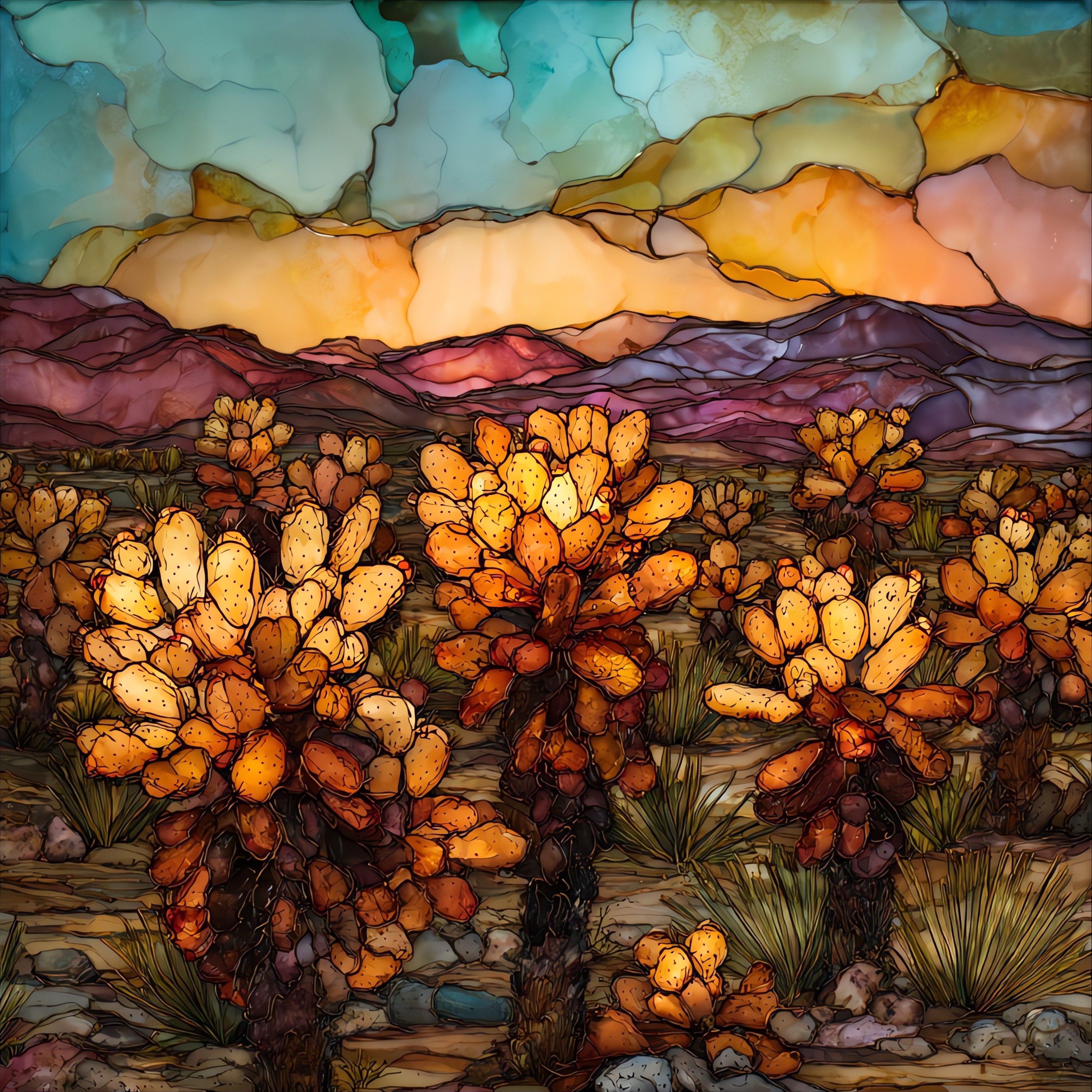
Cholla Cactus Garden
shown on ceramic, 12-inch tileCalifornia · United States
in Joshua Tree, where two deserts meet.

Cholla Cactus Garden

— light caught in a field of spines.

Where it lives

Not only on a wall.

A small tile on the nightstand catching the morning. A larger one above the fire. Yours, wherever you spend the slow hours.
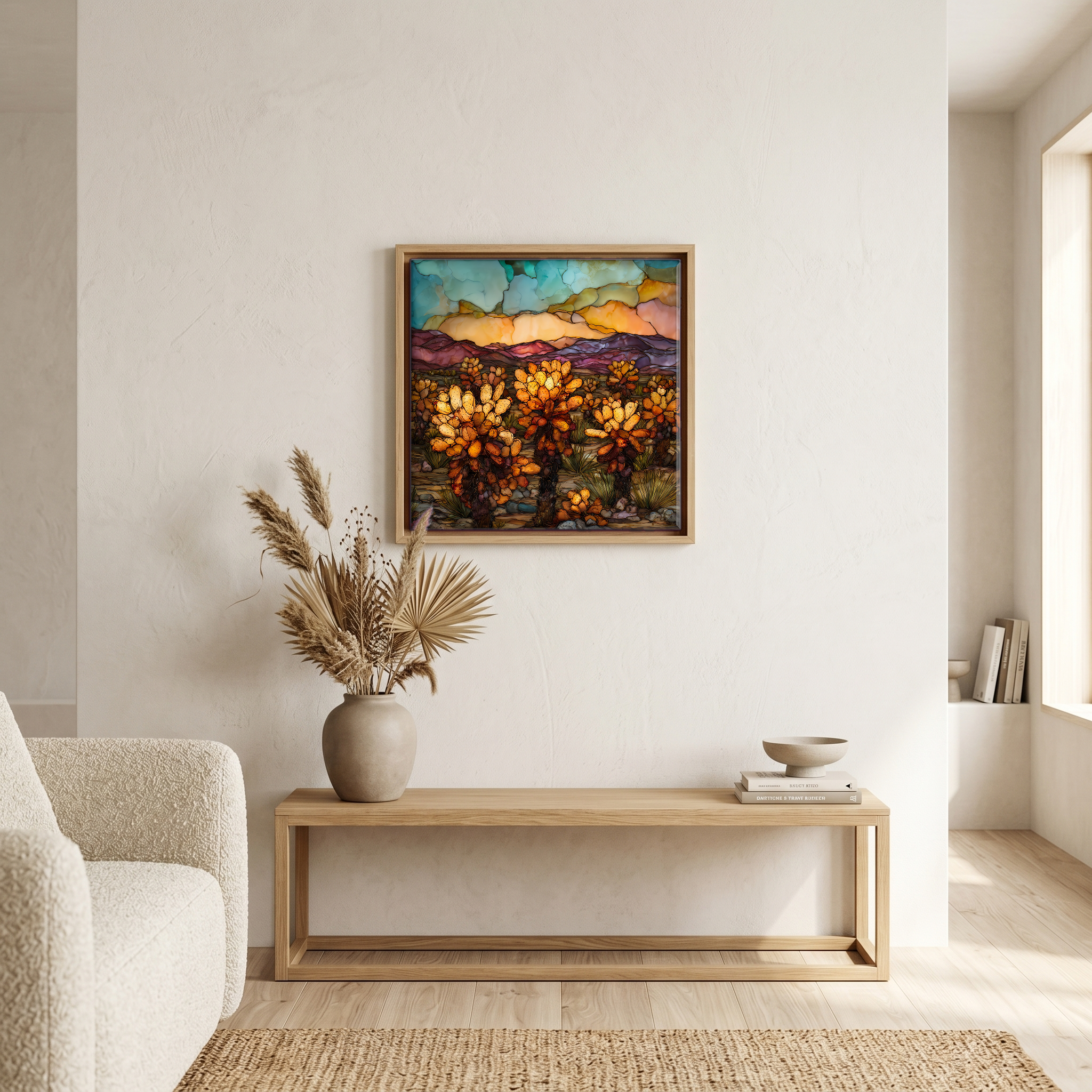
Above the bench, in a warm oak surround.
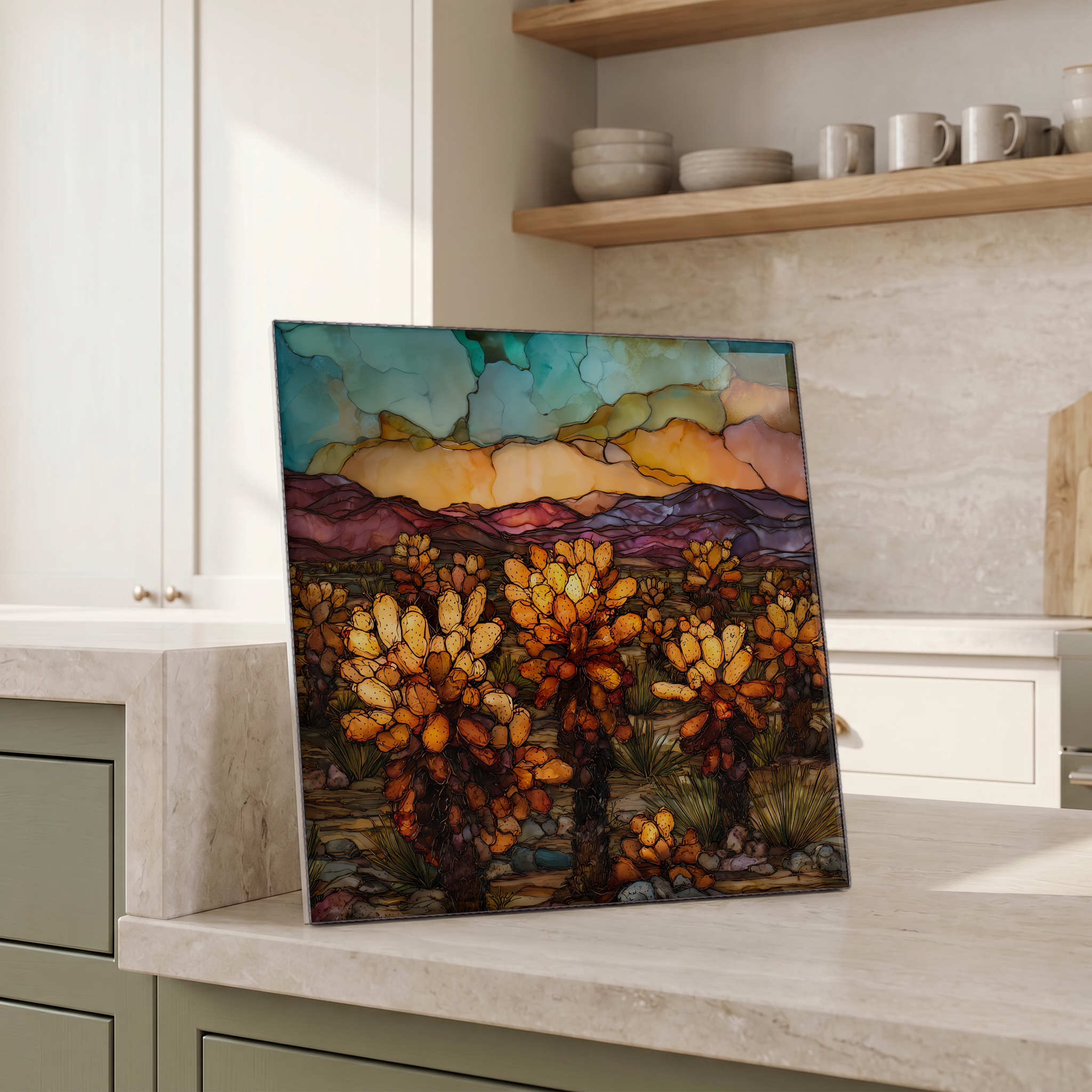
Beside the kettle, propped on the counter.
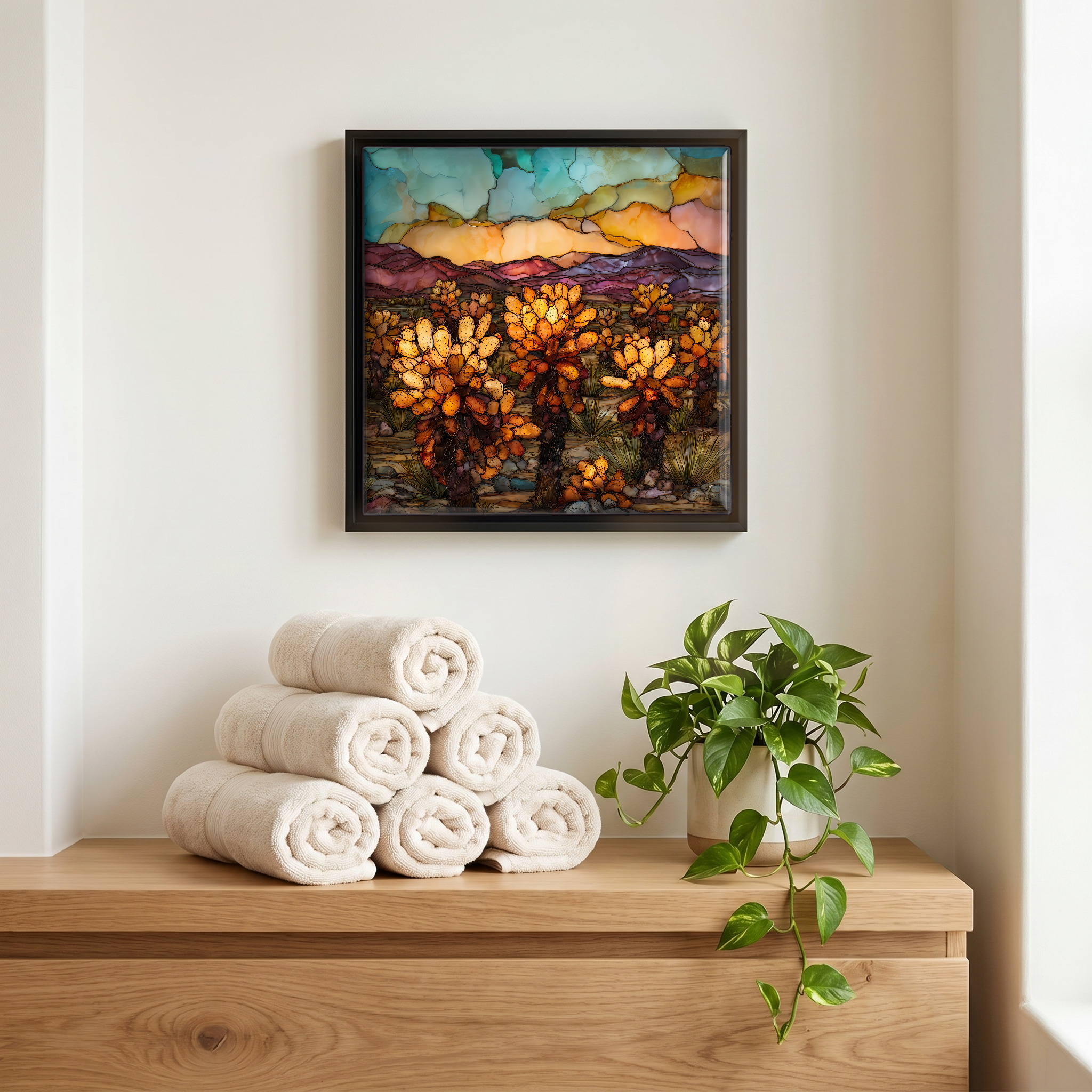
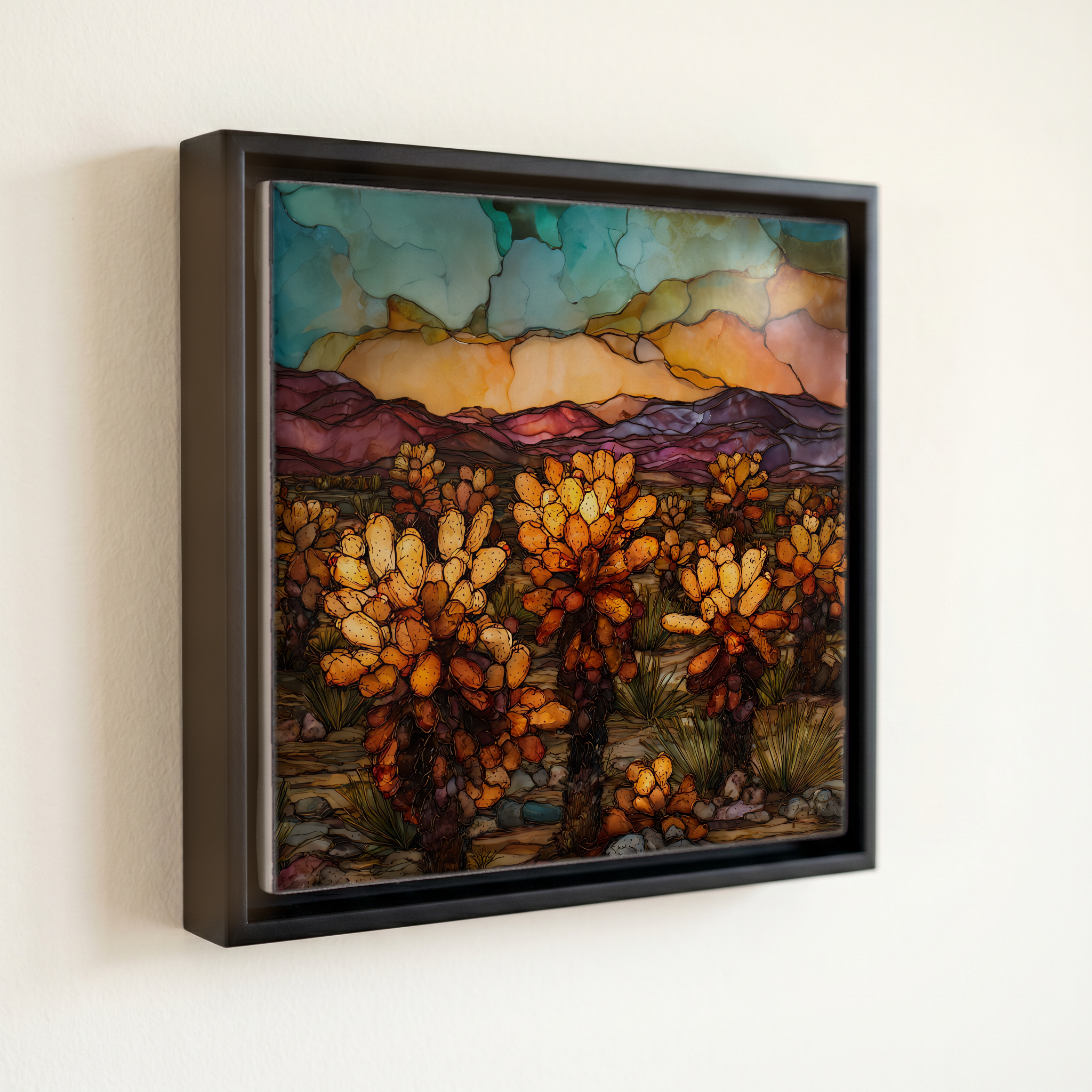
Above the linens, in a slim black surround.
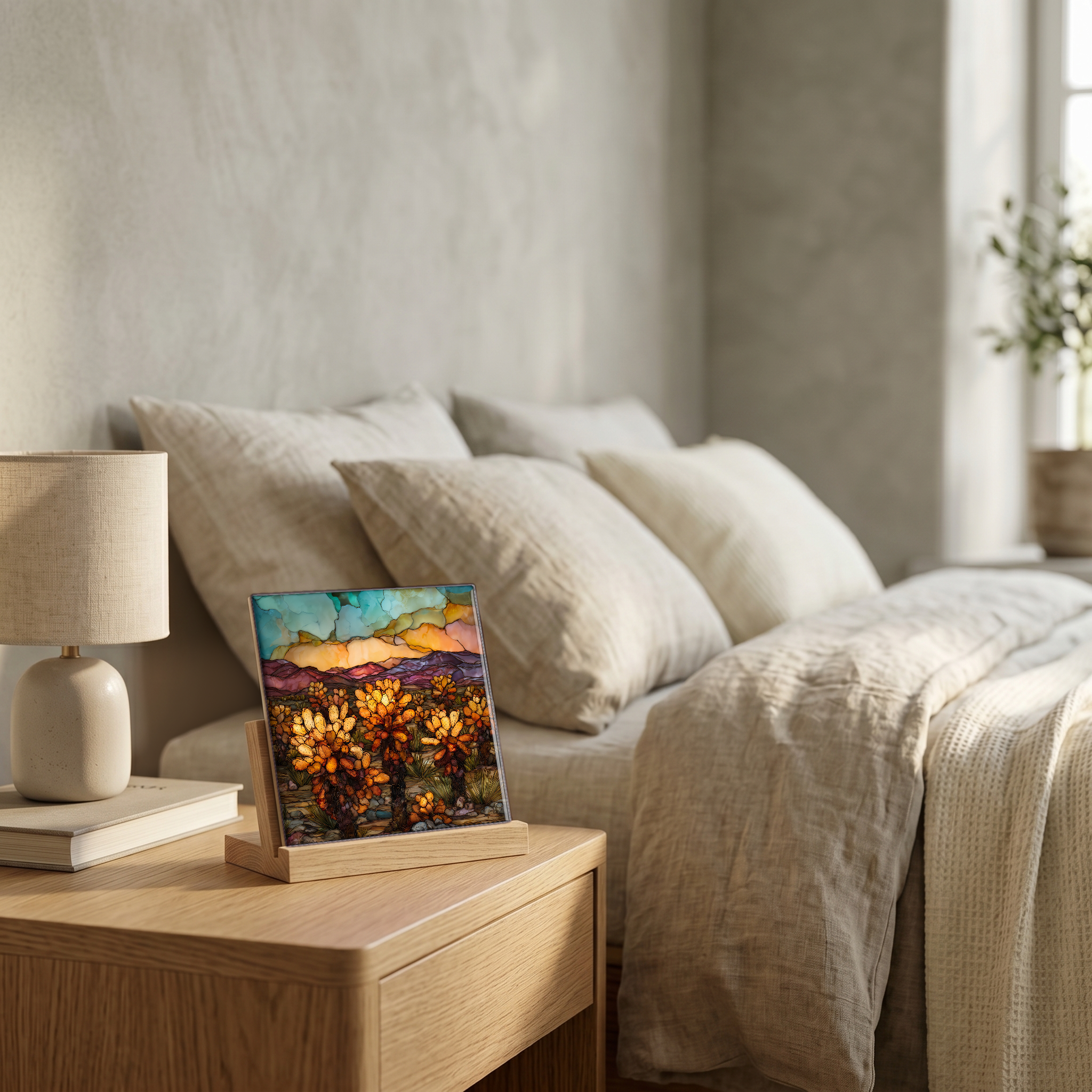
On the nightstand, on a light oak stand.
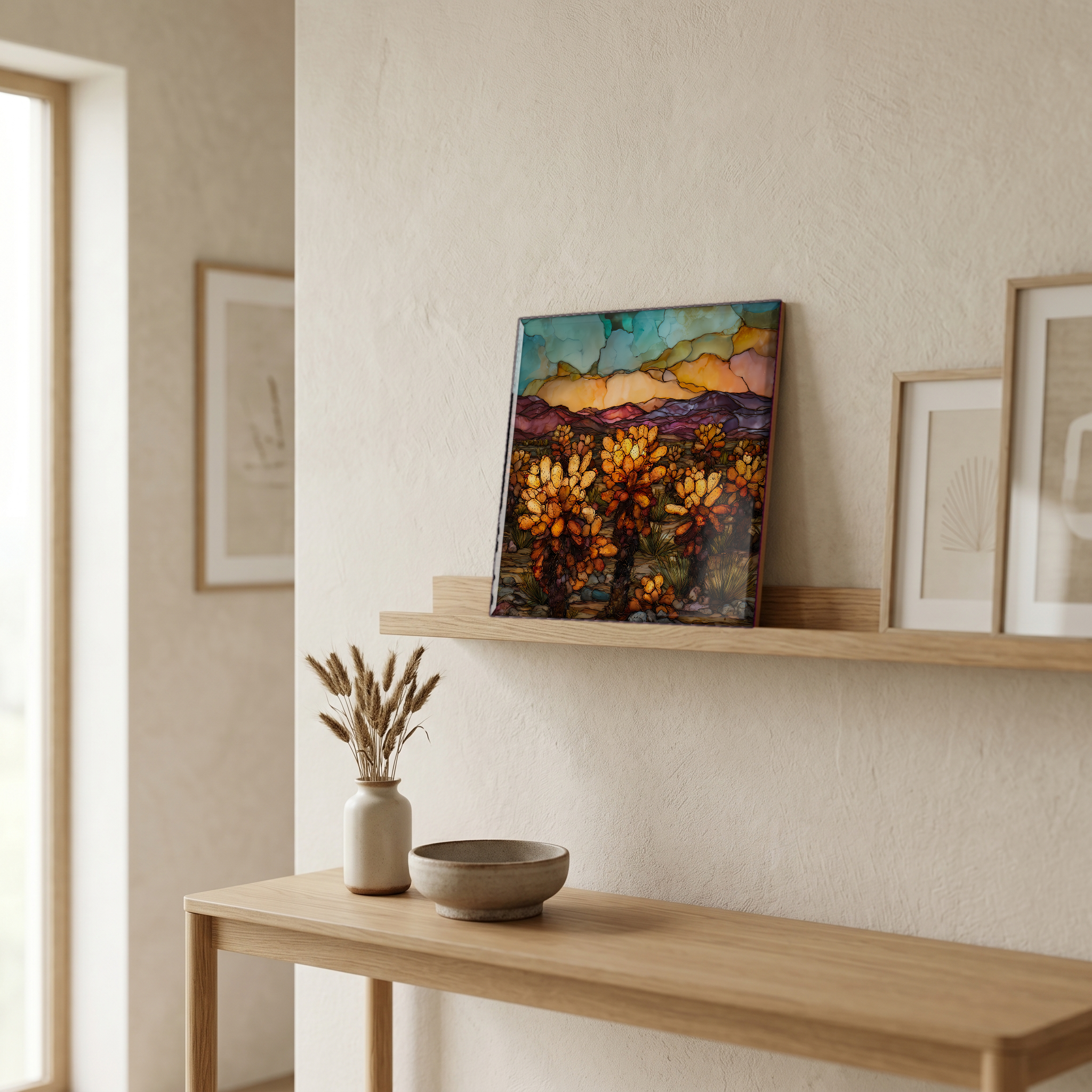
On a picture ledge, where the light comes in.
a note from the studio

A quarter-mile loop through a dense stand of teddybear cholla in the Pinto Basin, where the Mojave Desert hands off to the Colorado. The cactus looks soft from a distance, gold and silver in the right light, but every walker on the trail learns the same lesson about its spines, which detach at a touch. The garden is best the half-hour before sunset, when the low sun comes through from behind and the whole grove turns translucent. The wind picks up around then. The air smells of creosote.
from the studio
shown in a slim black floating frame · 6 × 6 in
— bring it home

Cholla Cactus Garden, on ceramic.

Each tile is finished by hand in our Knoxville studio. Artwork is slowly infused into the ceramic surface under high heat and pressure, and rests beneath a thin glossy finish. The colour lives in the surface, not on top of it.

What kind of piece?
One tile — square or rectangle.
How big?
the popular one — counter, shelf, nightstand
6 × 6 in · 15 cm · 1.6 lb
Surface finish
A clear glossy finish — the artwork reads as if under resin. Ideal for show-pieces and framed wall art.
How it sits
A hidden cleat — sits ¼″ proud of the wall.
$58
Hand-finished and shipped from our studio at the foot of the Smokies. On your wall in about ten days.
size
6 × 6 in
15 cm
weighs
1.6 lb
solid in the hand
surface
ceramic, hand-finished
art rests beneath a thin glossy finish
from
Knoxville, TN
our family studio, at the foot of the Smokies
— start a Coaster Set

Pick any four 4-inch tiles — National Parks you've been to, a Smokies set, the four seasons of one place. $ for a set of , cork-backed, ready to live on the table.
comes gift-ready
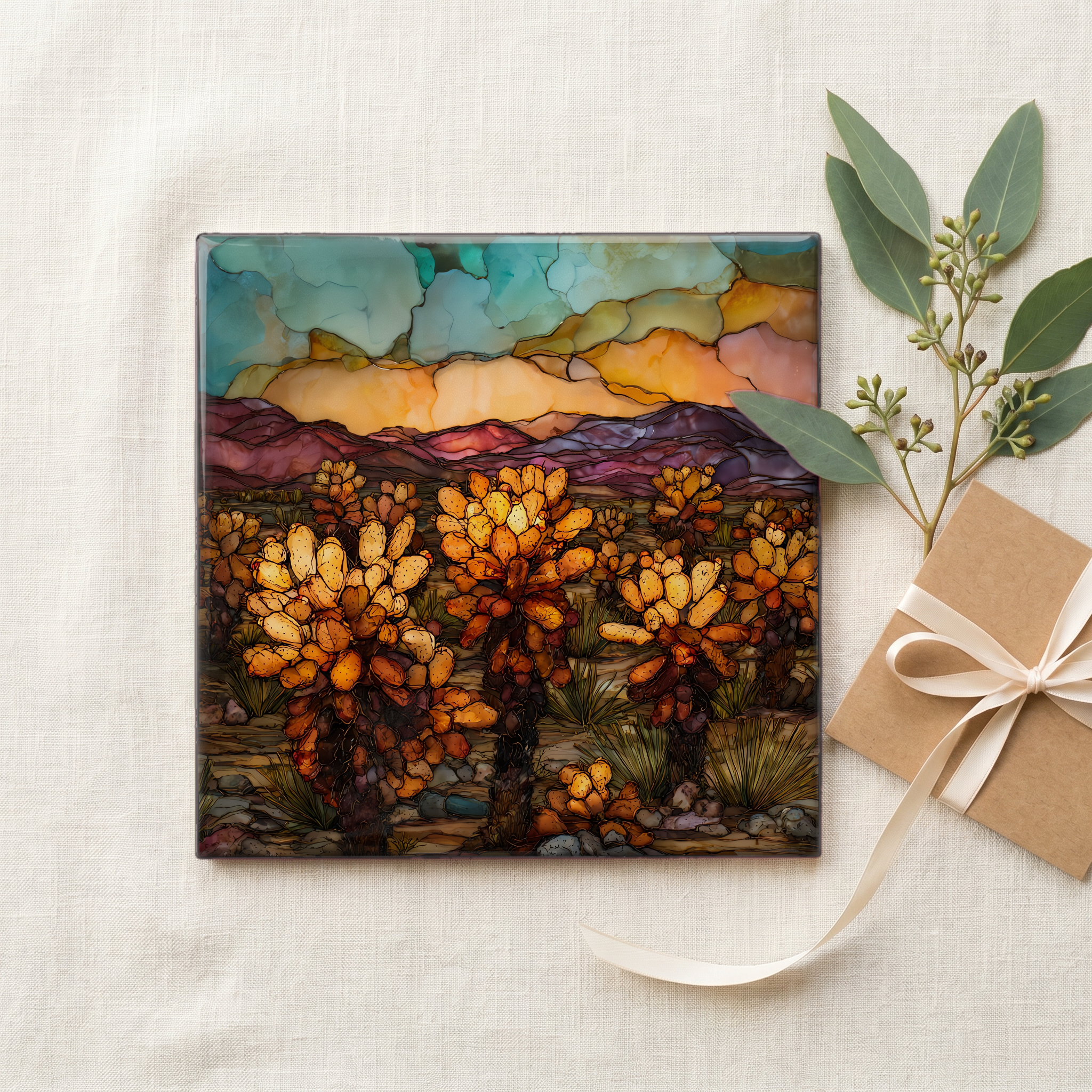
comes gift-ready

Each tile ships in a kraft box, tied with cream ribbon, with a handwritten note from the studio if you'd like to add one.
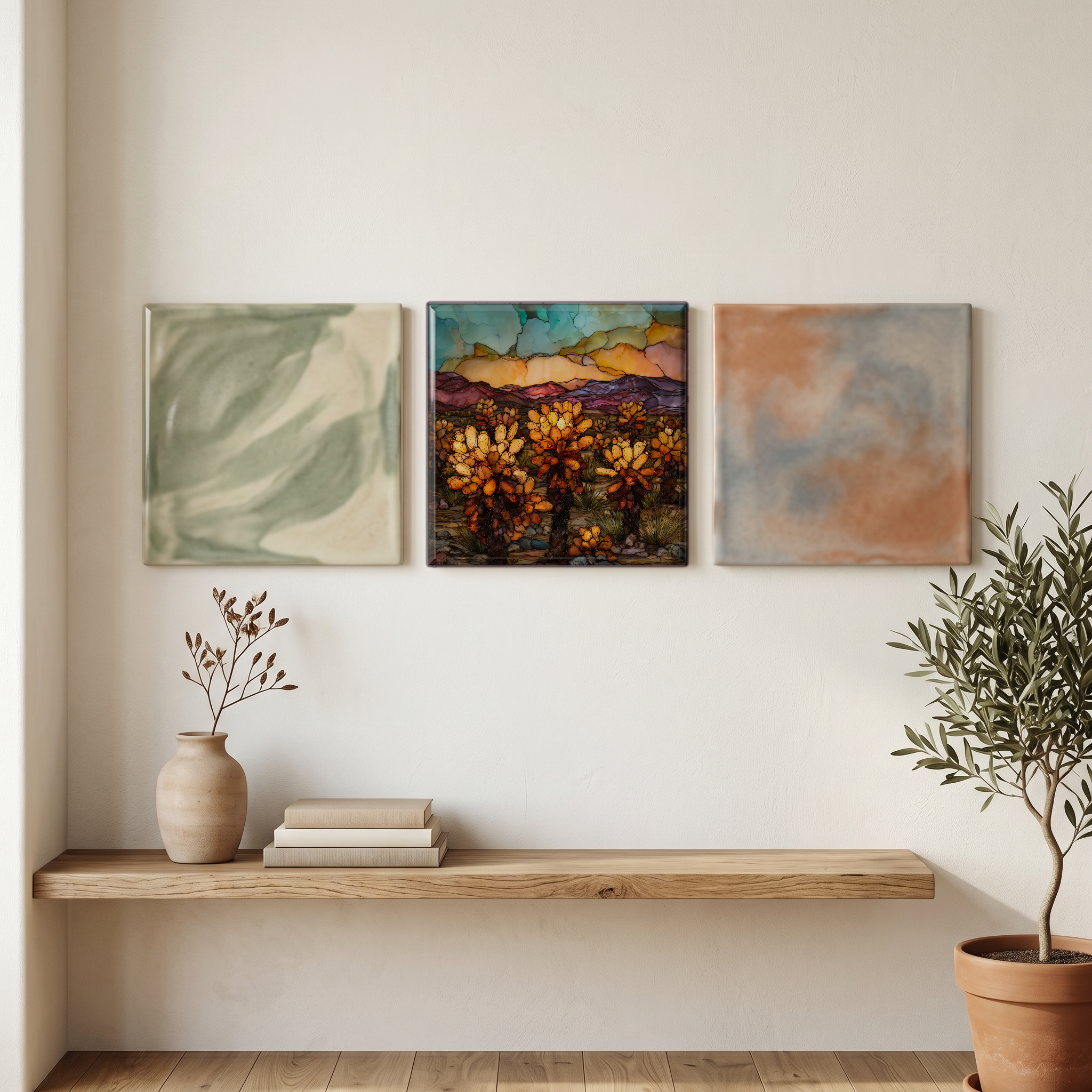
or build a grouping
or build a grouping

Three or five different vistas, hung together — a chapter of places you've been, or want to go.

about Cholla Cactus Garden

The place, in three passes.

A little of what's known, in case you fall down the rabbit hole — or want to go see it yourself.
the place

The Cholla Cactus Garden sits in the Pinto Basin of Joshua Tree National Park, in the transition zone where the higher, cooler Mojave Desert meets the lower, hotter Colorado Desert. The basin floor here is about 2,000 feet above sea level. A quarter-mile loop trail runs through a roughly ten-acre stand of teddybear cholla, Cylindropuntia bigelovii. Joshua Tree was set aside as a national monument by Franklin Roosevelt in 1936 and redesignated a national park by Congress in 1994. The garden is about twenty miles south of the Oasis Visitor Center in Twentynine Palms, on Pinto Basin Road.

the light

The garden is defined less by colour than by light. Teddybear cholla, sometimes called jumping cholla because its joints detach at the slightest contact, is densely covered in straw-coloured spines that act like tiny optical fibres. In the half-hour after sunrise and the half-hour before sunset, the low sun strikes the grove from behind and the spines glow, plant by plant, gold against the dark basin. The effect ends as quickly as it begins. The garden then returns to its daylight palette of olive green, ochre, and rust.

the visit

The Cholla Cactus Garden trailhead is on Pinto Basin Road, about twenty miles south of the Oasis Visitor Center at the Twentynine Palms park entrance and about thirty miles north of Cottonwood Visitor Center near Interstate 10. The loop is roughly a quarter-mile, mostly flat, on a sand-and-gravel path with interpretive signs. The cholla spines barb at the tip and detach in clusters, so visitors are asked to stay on the trail and keep dogs out. The standard park entrance fee covers the stop. The garden is open every hour the park is, which is most of the year.

where
United States · Joshua Tree National Park, California
within
Joshua Tree National Park
elevation
610 m · 2,000 ft
position
33.9243° N · 115.9268° W
the neighborhood

What's nearby.

A handful of named places within an hour's walk or short drive. Some we've already painted; some we will.
3 km S
Ocotillo Patch
ocotillo grove
13 km NW
Arch Rock
granite arch
22 km NW
Skull Rock
granite formation
40 km W
Keys View
ridge vista
32 km N
Twentynine Palms
park-gate town
N
Cholla Cactus Garden
Ocotillo Patch
Arch Rock
Skull Rock
Keys View
Twentynine Palms
common questions

What people ask.

A few questions we get about Cholla Cactus Garden — and about bringing the piece home.
about the place

It's in the Pinto Basin of Joshua Tree National Park, about twenty miles south of the Oasis Visitor Center at the Twentynine Palms entrance, in southern California. The site is on Pinto Basin Road and marked with a turnoff and a small parking area.

Almost the entire stand is teddybear cholla, Cylindropuntia bigelovii, a species that propagates by joints that detach and root where they fall. The garden is about ten acres of nearly pure stand, which is unusually dense for the species.

The plant's spine clusters detach at the lightest contact and tend to follow whatever brushes them, so it looks as if the joint has jumped. The spines are barbed at the tip and difficult to remove without pliers, which is why visitors are asked to stay on the trail.

The half-hour after sunrise and the half-hour before sunset, when the low sun backlights the spines and the grove takes on a golden cast. Cooler months from October to April are easier for walking the loop; summer afternoons regularly exceed 100°F.

The interpretive loop is about a quarter-mile, mostly flat, on a sand-and-gravel surface. Most walkers finish it in fifteen to twenty minutes, longer if they stop to read the signs or wait for the light.

The garden is inside Joshua Tree National Park, so the standard park entrance fee applies. An America the Beautiful annual pass also covers it. There is no separate ticket for the cholla garden trail.

No. The teddybear cholla's spine clusters detach on contact and the spines are barbed, so they don't pull out cleanly. Park guidance asks visitors to stay on the trail, keep small children close, and leave dogs in the car.

about the piece in your home

It's been a meaningful gift for many of our customers with desert ties. The Cholla Cactus Garden is one of the most photographed places in the park, and the backlit golden tone reads as desert light without needing to be explained. A Small or Medium with a handwritten note from the studio carries well.

The piece sits naturally in three rooms: Desert-modern interiors (warm whites, oak, woven texture), Southwest-traditional (terracotta, leather, kilim), and Earthtone Maximalist (ochre, rust, mustard layered with brass). The gold-and-rust palette carries warmth without competing for the focal wall.

The look has been in the rotation since around 2019 and shows no sign of cooling. Trend forecasters in the warm-earth category continue to publish desert palettes — ochre, terracotta, rust, warm white — as enduring through the late 2020s. The piece anchors the trend without dating itself to one year.

Above a standard sofa, a single Large tile reads as an intimate study; a four-tile Mural reads as a focal artwork; a nine-tile Mural becomes the wall. Above a console table, a Medium or a Coaster Set in a small stand sits well.

Yes, with the Dura Satin or Matte finish. Both resist water, steam, and the scratches that come with daily use, so the piece behaves the way a tile splashback does. The Glossy finish is meant for dry wall installations.

A soft microfibre cloth and water are enough for routine dust and fingerprints. For kitchen splatter on a Dura Satin or Matte surface, a drop of mild dish soap on the cloth works well. Do not use abrasive sponges or bleach-based cleaners.

Yes. Every WenderVista piece is painted in-house by Reid Wender, the studio's curator, and slowly infused into the ceramic surface under high heat and pressure here in Knoxville. We do not license artwork in or out.

if this one stayed with you

A few you might also love.

Hand-picked by the eye that found Sorapis. Same air, same kind of quiet.