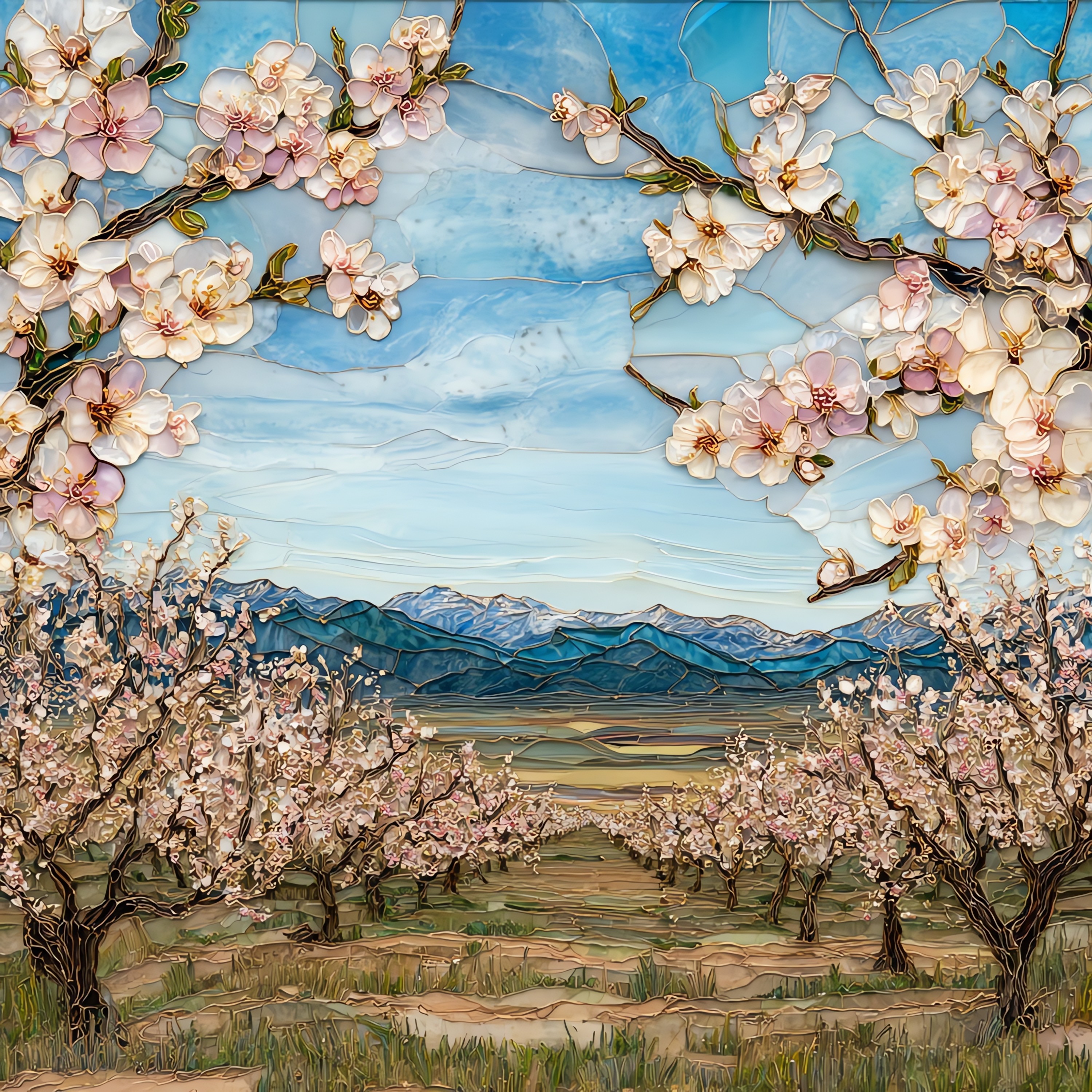
Central Valley Almond Bloom
— — the few weeks the valley turns pink.
Not only on a wall.
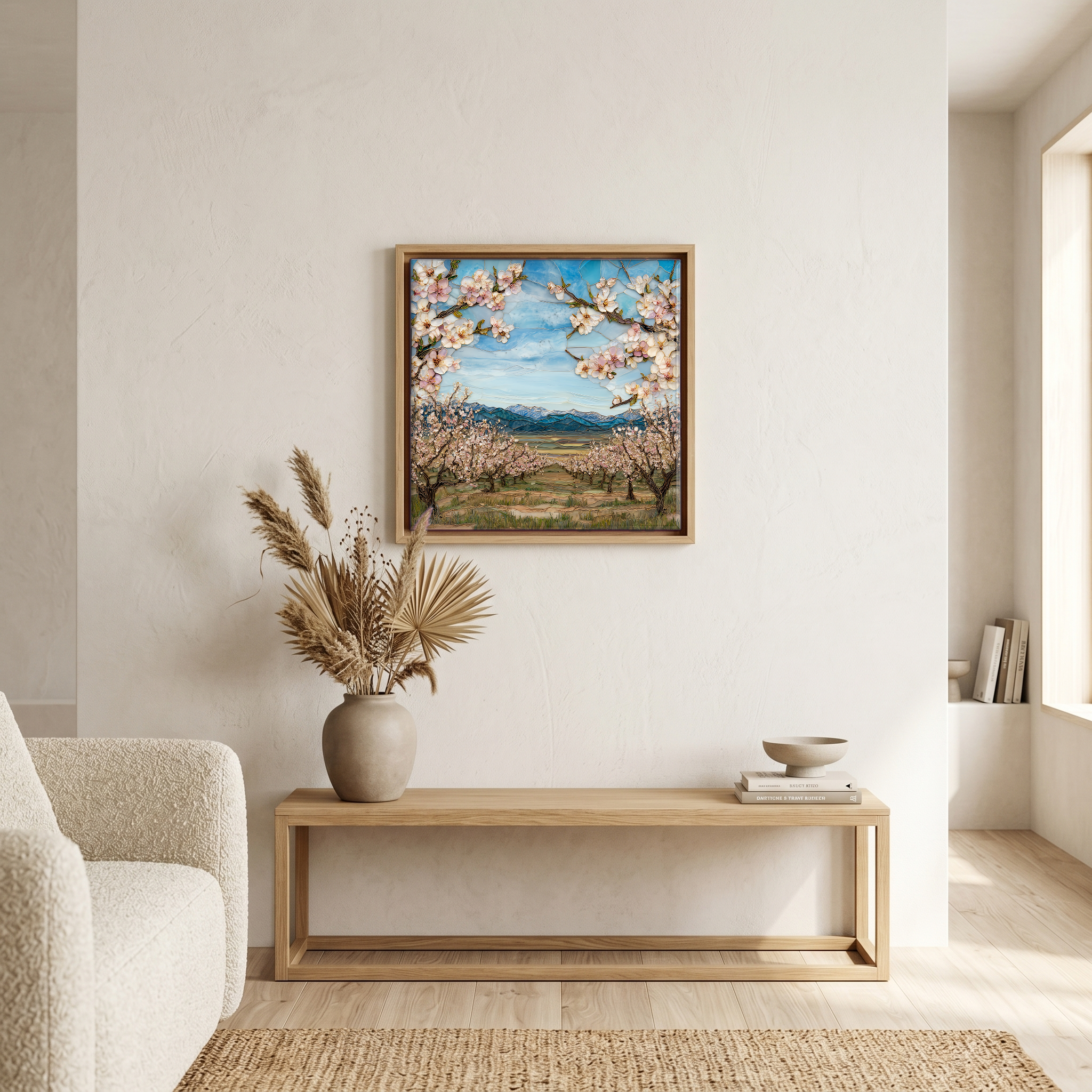
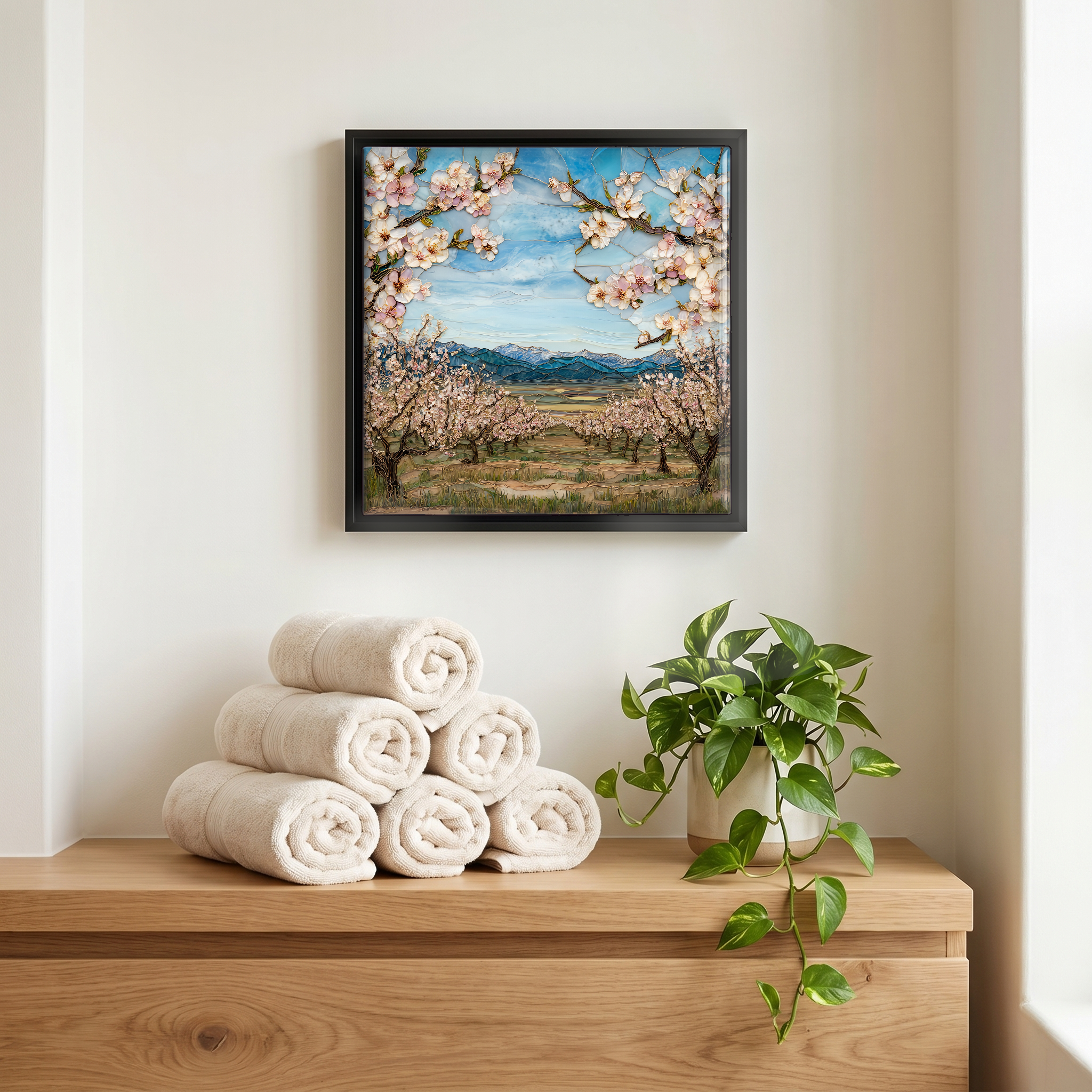

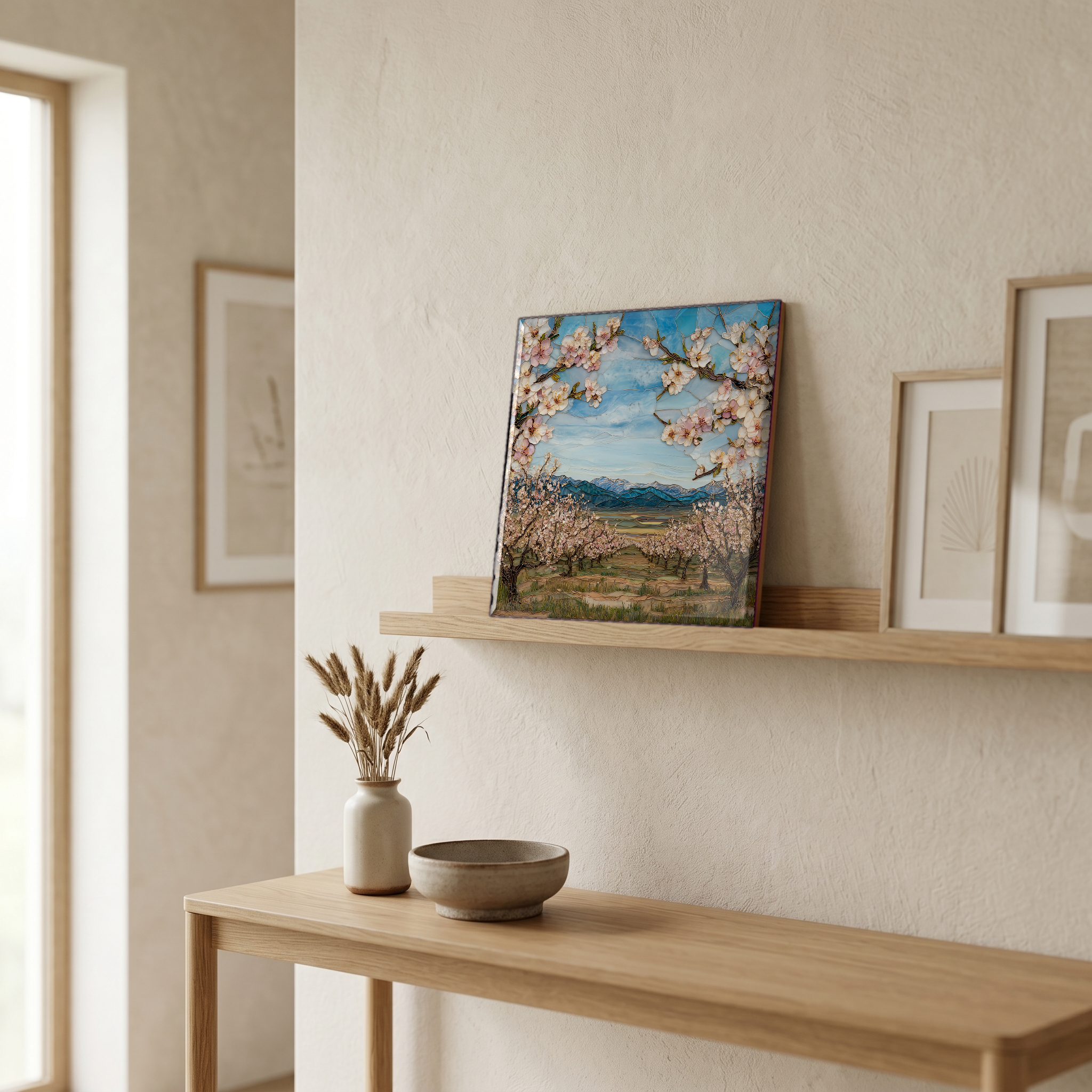
“The Central Valley is roughly 450 miles long, bordered by the Sierra Nevada and the Coast Ranges. For about three weeks in February, more than a million acres of almond orchards bloom at once. The blossoms are pale pink and white, and beekeepers truck honey-bee colonies in from across the United States to pollinate them. From the air it reads like a wash of pink down the floor of California. From the road, between Modesto and Bakersfield, the orchards run straight to the horizon. By the end of March the petals are already on the ground.
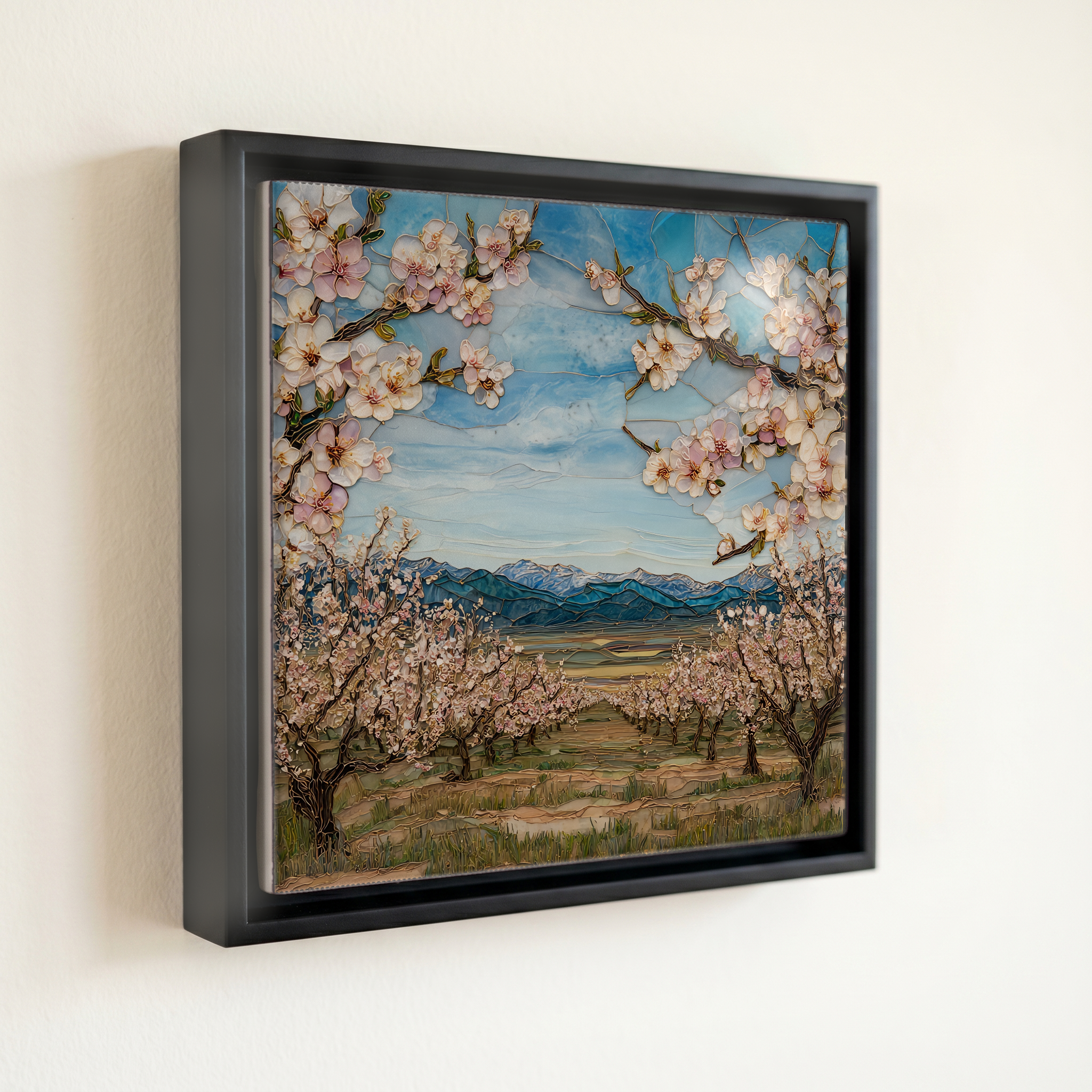
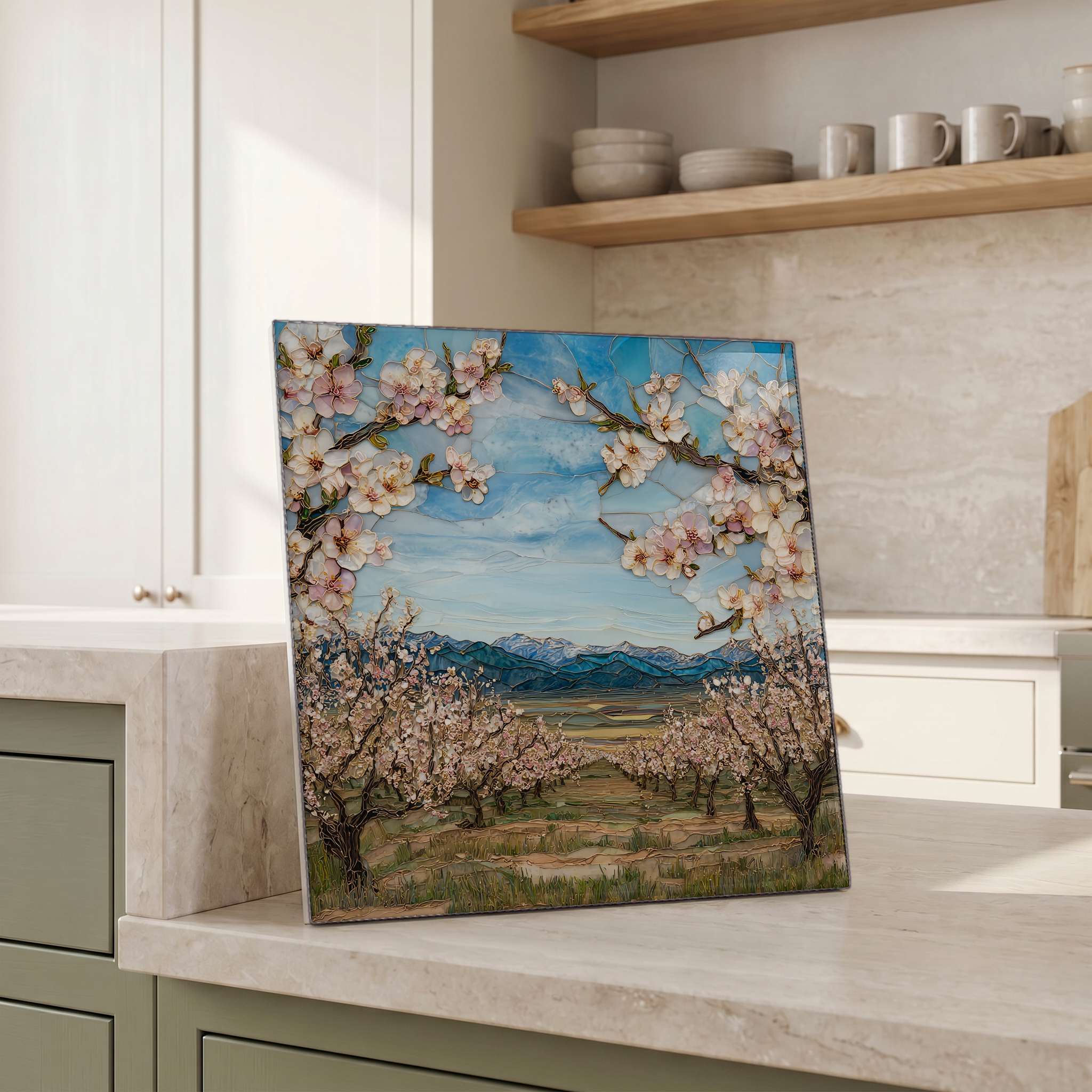
Central Valley Almond Bloom, on ceramic.
Each tile is finished by hand in our Knoxville studio. Artwork is slowly infused into the ceramic surface under high heat and pressure, and rests beneath a thin glossy finish. The colour lives in the surface, not on top of it.
Pick any four 4-inch tiles — National Parks you've been to, a Smokies set, the four seasons of one place. $ for a set of , cork-backed, ready to live on the table.
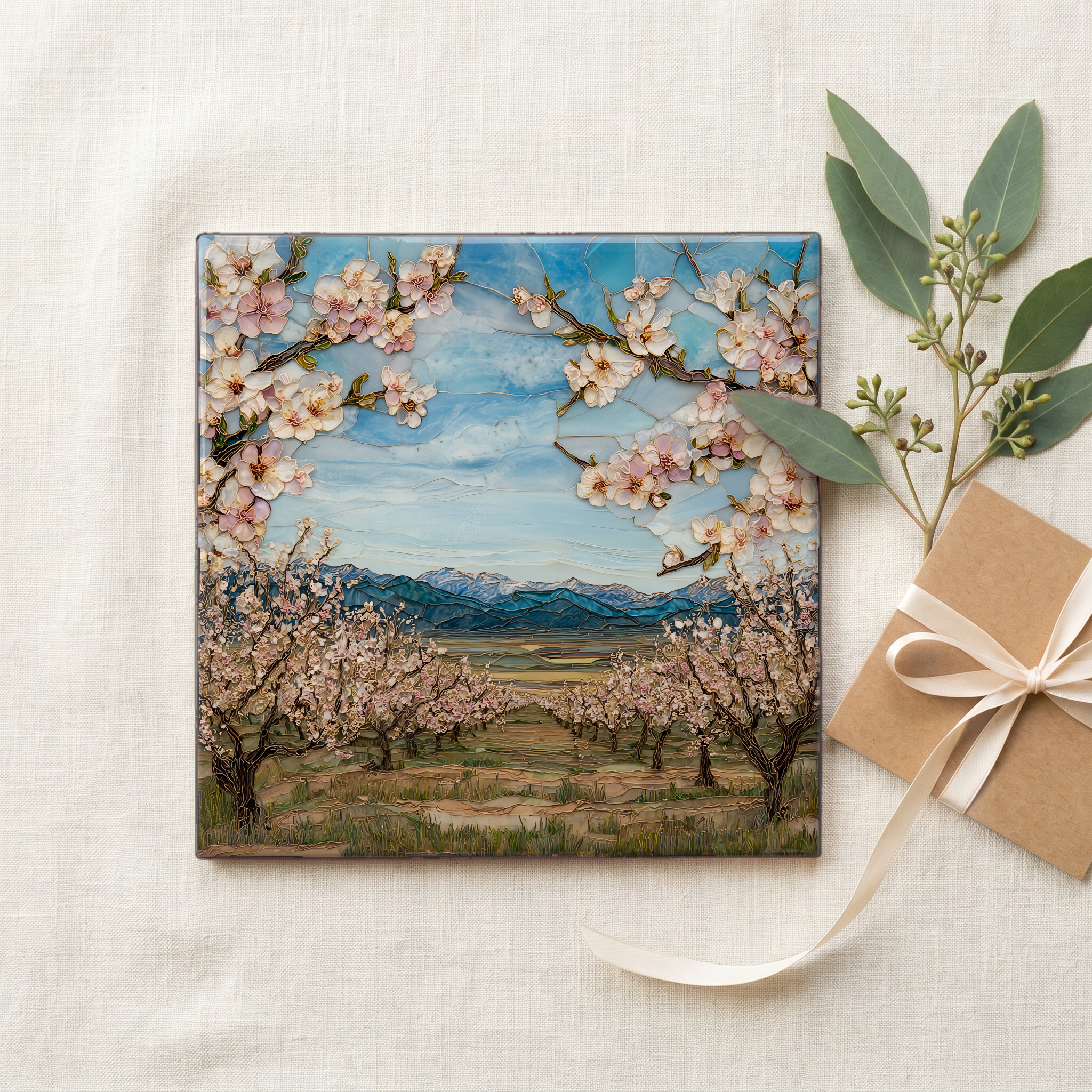
Each tile ships in a kraft box, tied with cream ribbon, with a handwritten note from the studio if you'd like to add one.
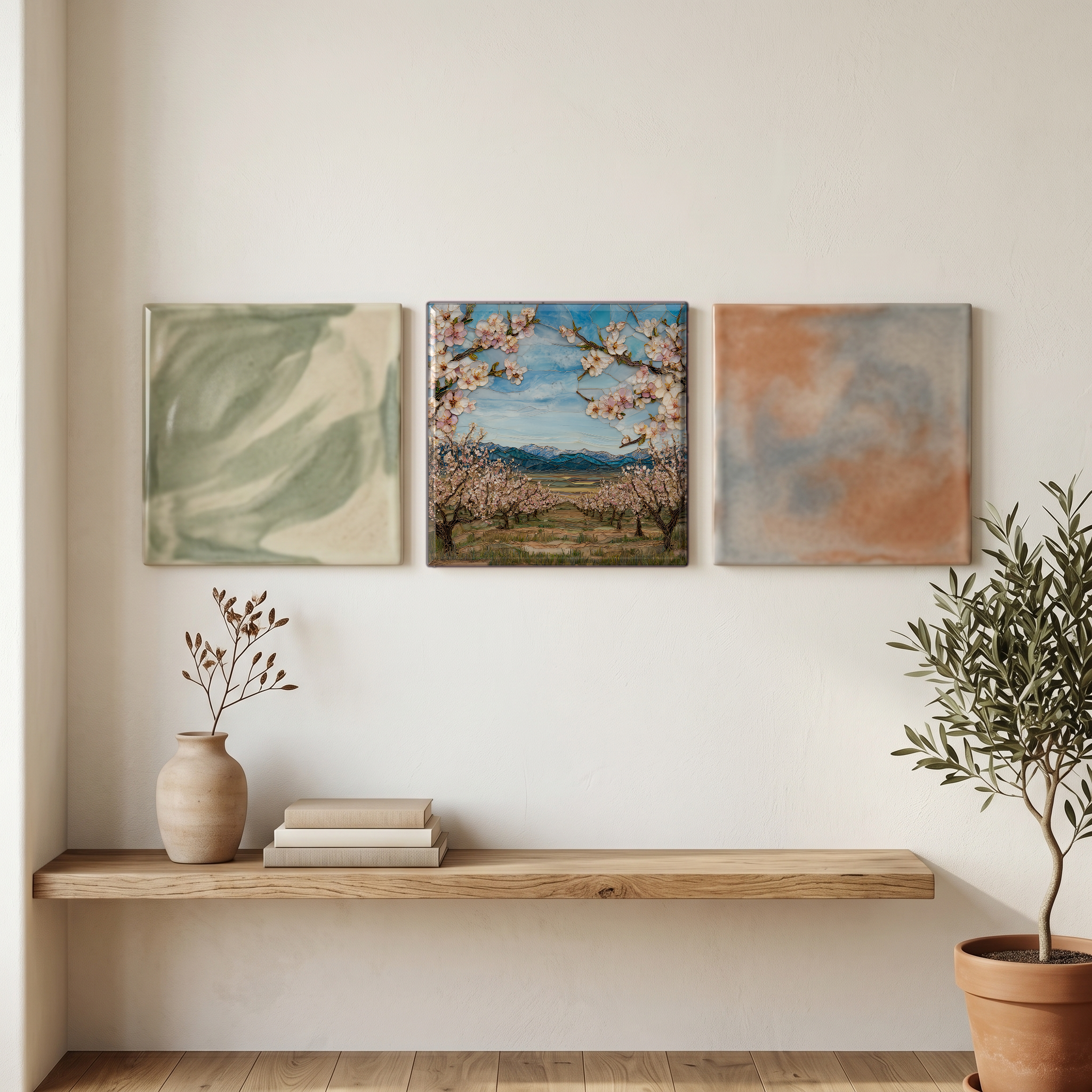
Three or five different vistas, hung together — a chapter of places you've been, or want to go.
The place, in three passes.
The Central Valley is a flat, alluvial basin running about 450 miles down the middle of California, between the Sierra Nevada to the east and the Coast Ranges to the west. It is divided into the Sacramento Valley in the north and the San Joaquin Valley in the south, and produces roughly a quarter of the food grown in the United States. Almonds are the valley's signature tree crop, planted across approximately 1.38 million bearing acres concentrated in Kern, Fresno, Stanislaus, and Merced counties. The bloom is a regional event rather than a single location, visible from agricultural roads off State Route 99 from Bakersfield north toward Sacramento.
The colour reads as pink from a distance but is more accurately a pale wash, five-petaled white-to-rose blossoms set against bare branches. Almond trees flower before they leaf, so the orchards have no green to soften the colour. There is only blossom, brown wood, and the brown earth between rows. Each tree carries between 25,000 and 100,000 flowers in a full bloom year. From the road the orchards read as solid pink for the first week. As petals begin to drop and small green leaves emerge, the colour softens to a faded watercolour through early March. The Almond Board of California publishes a public bloom-tracker each season.
The bloom runs from mid-February to mid-March, beginning earliest in the southern San Joaquin Valley near Bakersfield and moving north toward Sacramento as the days lengthen. Each orchard is in full flower for about a week. Almond trees set fruit through cross-pollination by honey bees, so the bloom draws roughly 2 million managed colonies, the largest managed pollination event in the world. Beekeepers truck hives in from across the United States. By early April the petals are on the ground and the orchards turn back to working green. Peak photography is typically the second and third weeks of February.