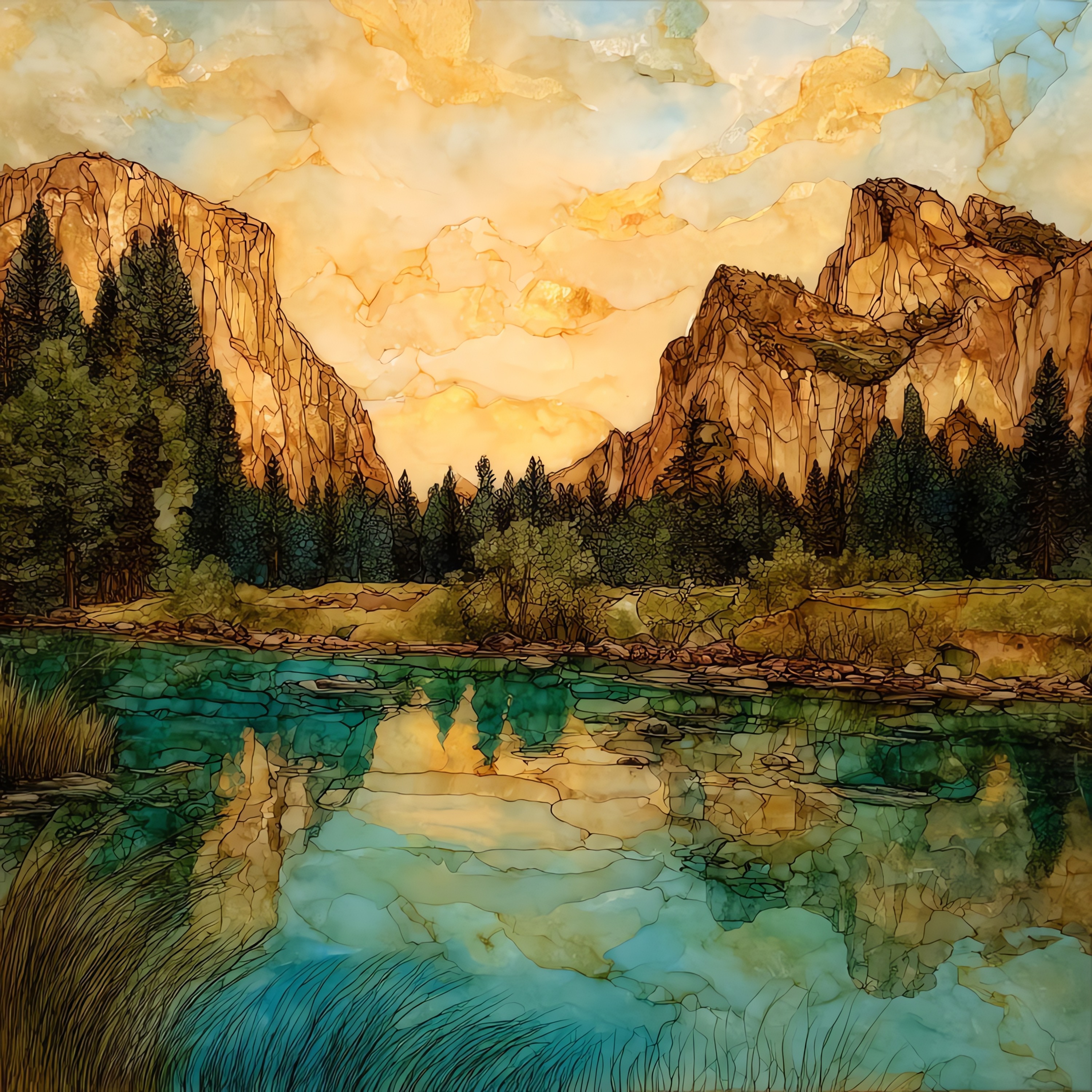
Cathedral Rocks
— — three towers where the late light lands.
Not only on a wall.

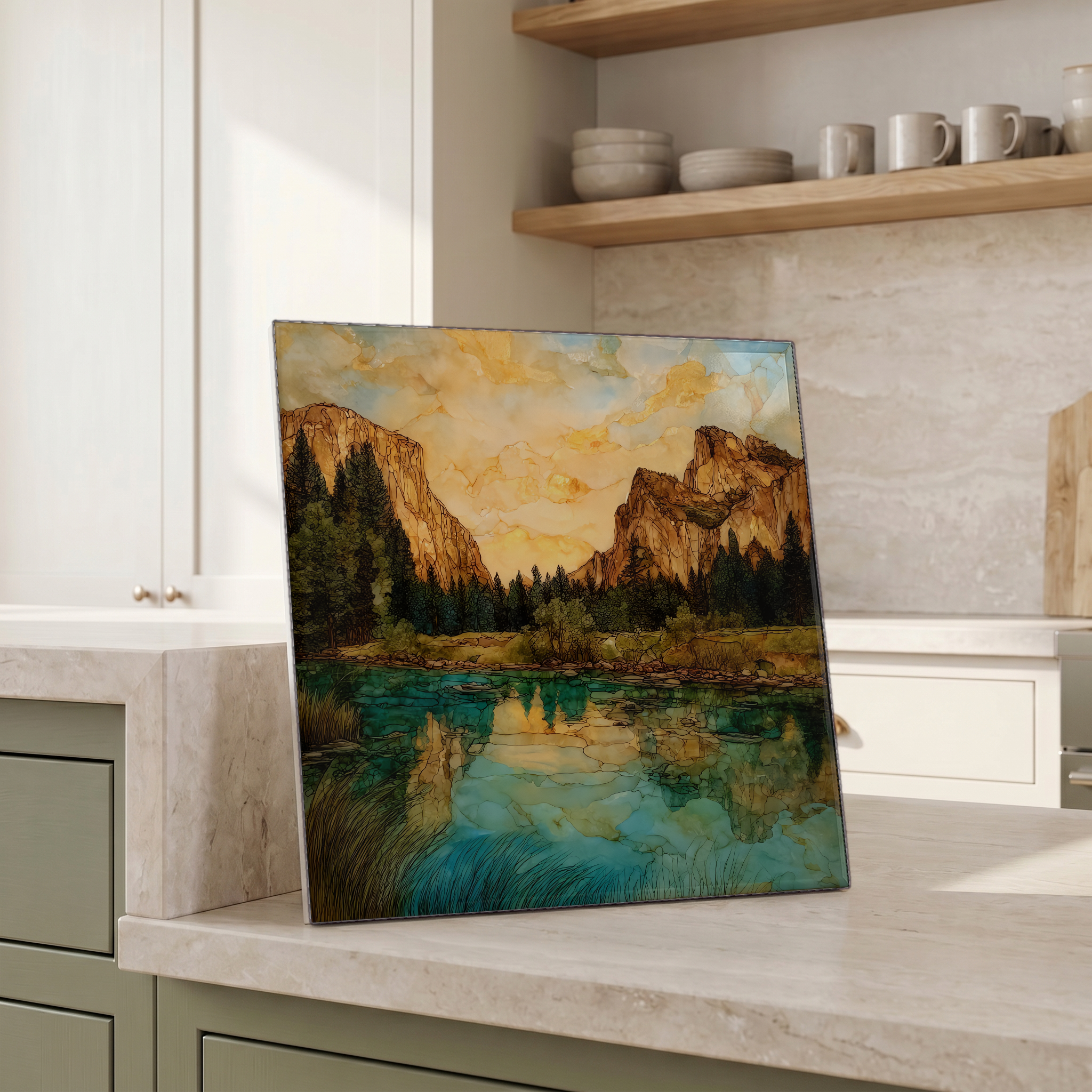


“Three granite peaks on the south wall of Yosemite Valley, opposite El Capitan, just east of Bridalveil Fall. The highest is Cathedral Rock at roughly 6,840 feet, rising about 2,600 feet above the valley floor. Early surveyors named the formation for its resemblance to a gothic cathedral, three towers in a row above the Merced. In late afternoon the west light slides across the valley and lifts the granite for about an hour. Most photographs of Yosemite Valley have it in them. Few captions name it.
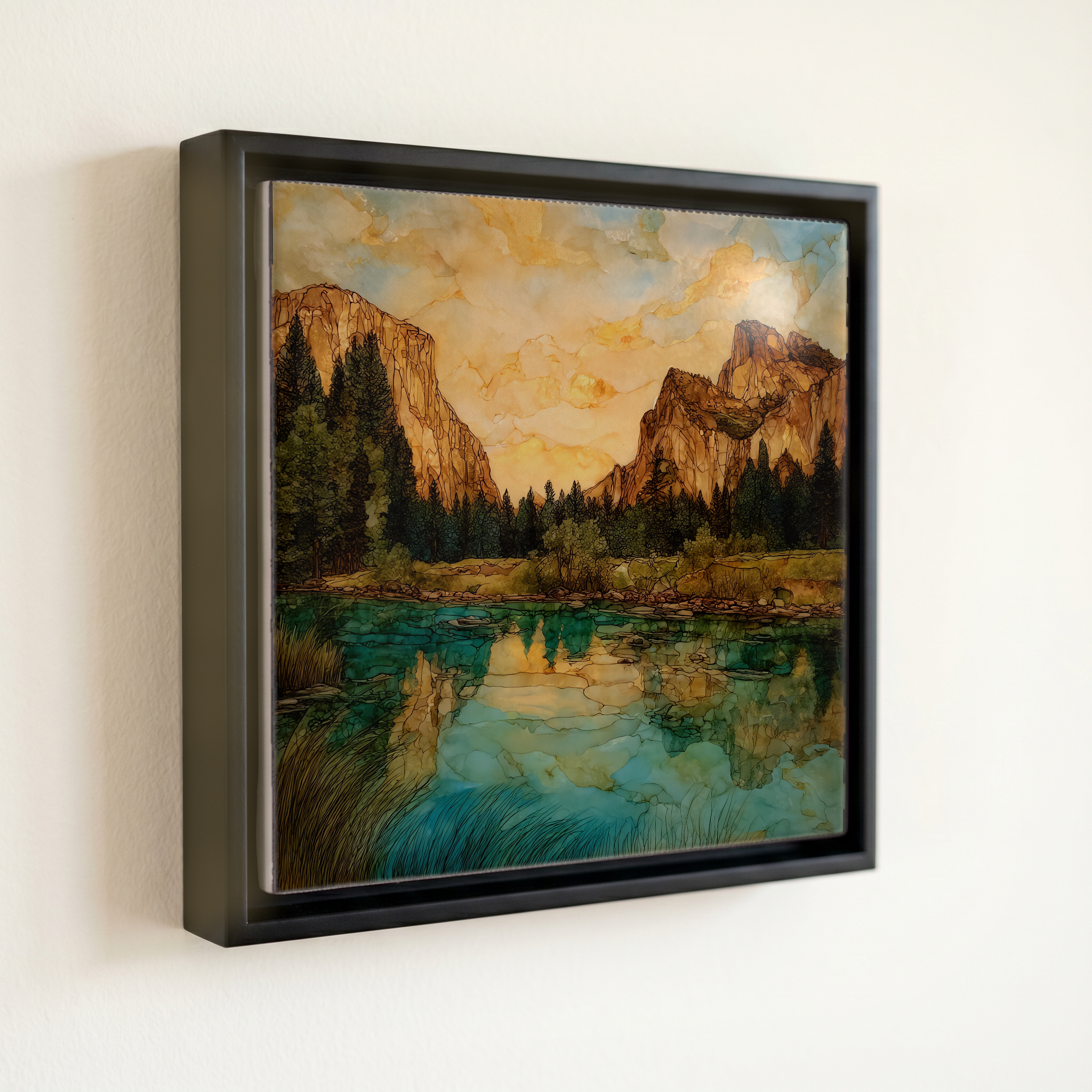
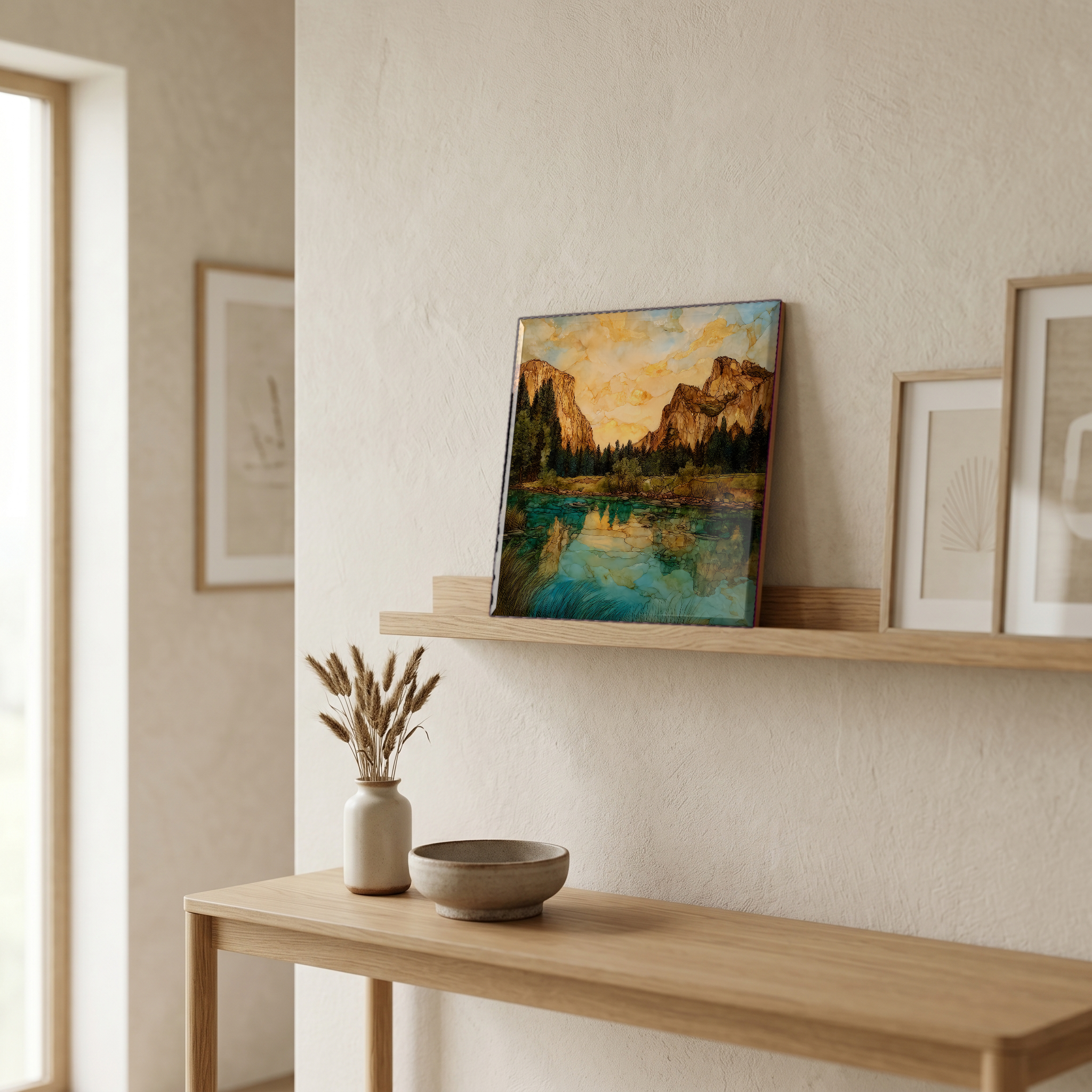
Cathedral Rocks, on ceramic.
Each tile is finished by hand in our Knoxville studio. Artwork is slowly infused into the ceramic surface under high heat and pressure, and rests beneath a thin glossy finish. The colour lives in the surface, not on top of it.
Pick any four 4-inch tiles — National Parks you've been to, a Smokies set, the four seasons of one place. $ for a set of , cork-backed, ready to live on the table.

Each tile ships in a kraft box, tied with cream ribbon, with a handwritten note from the studio if you'd like to add one.

Three or five different vistas, hung together — a chapter of places you've been, or want to go.
The place, in three passes.
Cathedral Rocks is a row of three granite peaks rising from the south wall of Yosemite Valley in California's Sierra Nevada, directly across the valley from El Capitan and just east of Bridalveil Fall. The highest summit reaches roughly 6,840 feet (2,085 m), about 2,600 feet above the Merced River on the valley floor. The formation sits within Yosemite National Park in Mariposa County, administered by the National Park Service, and is reached from the valley floor via Wawona Road and Southside Drive. Two slender pinnacles, the Cathedral Spires, stand just to the south and are a separate landmark in Yosemite climbing history.
Cathedral Rocks rises along the south wall of Yosemite Valley as part of the El Capitan Granite, a granodiorite emplaced in the Cretaceous Period and dated to roughly 103 million years ago within the Sierra Nevada batholith. The U-shaped trough of the valley was scoured by glaciers during the Pleistocene, with the Tioga glaciation peaking around 20,000 years ago and the Merced Glacier carving the valley walls to their present line. The same body of granite makes the opposite face of El Capitan, which is why the two cliffs read as one composition across the valley. The Cathedral Spires south of the main wall owe their slenderness to vertical jointing in the rock.
Yosemite Valley runs roughly east-west, which means the late afternoon sun crosses the valley at a low angle and lights the south wall almost from the side. Cathedral Rocks, facing north into that light, catches a long warm slide from about an hour before sunset until the moment the light leaves the valley. Photographers working from the Tunnel View pull-off on Wawona Road frame the formation between El Capitan and Half Dome at this hour. In winter the shadows arrive earlier; in summer the light stays longer but at a higher, gentler angle. The shadow line climbs the wall as the sun goes.