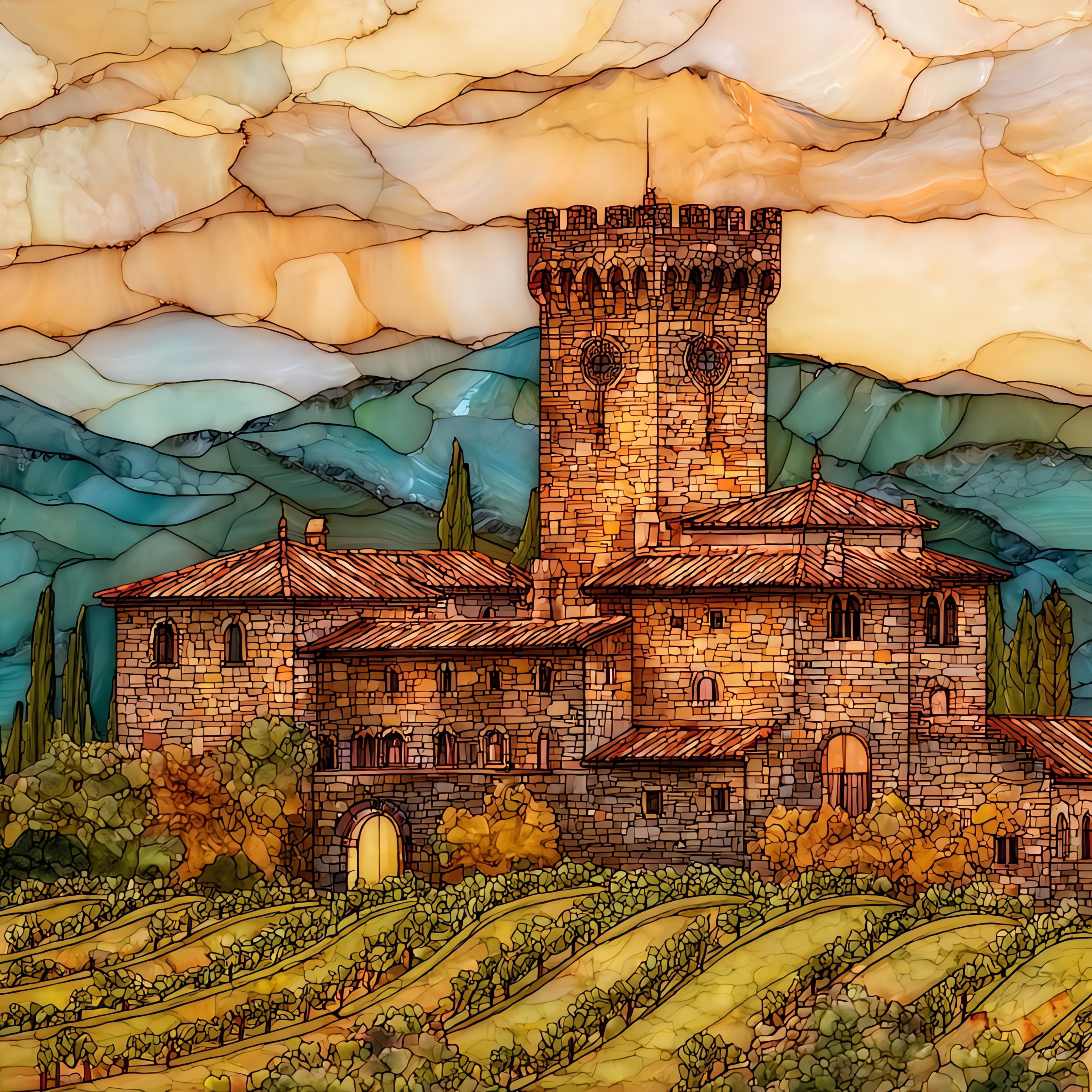
Castello di Amorosa
— a castle built one stone at a time.
Not only on a wall.
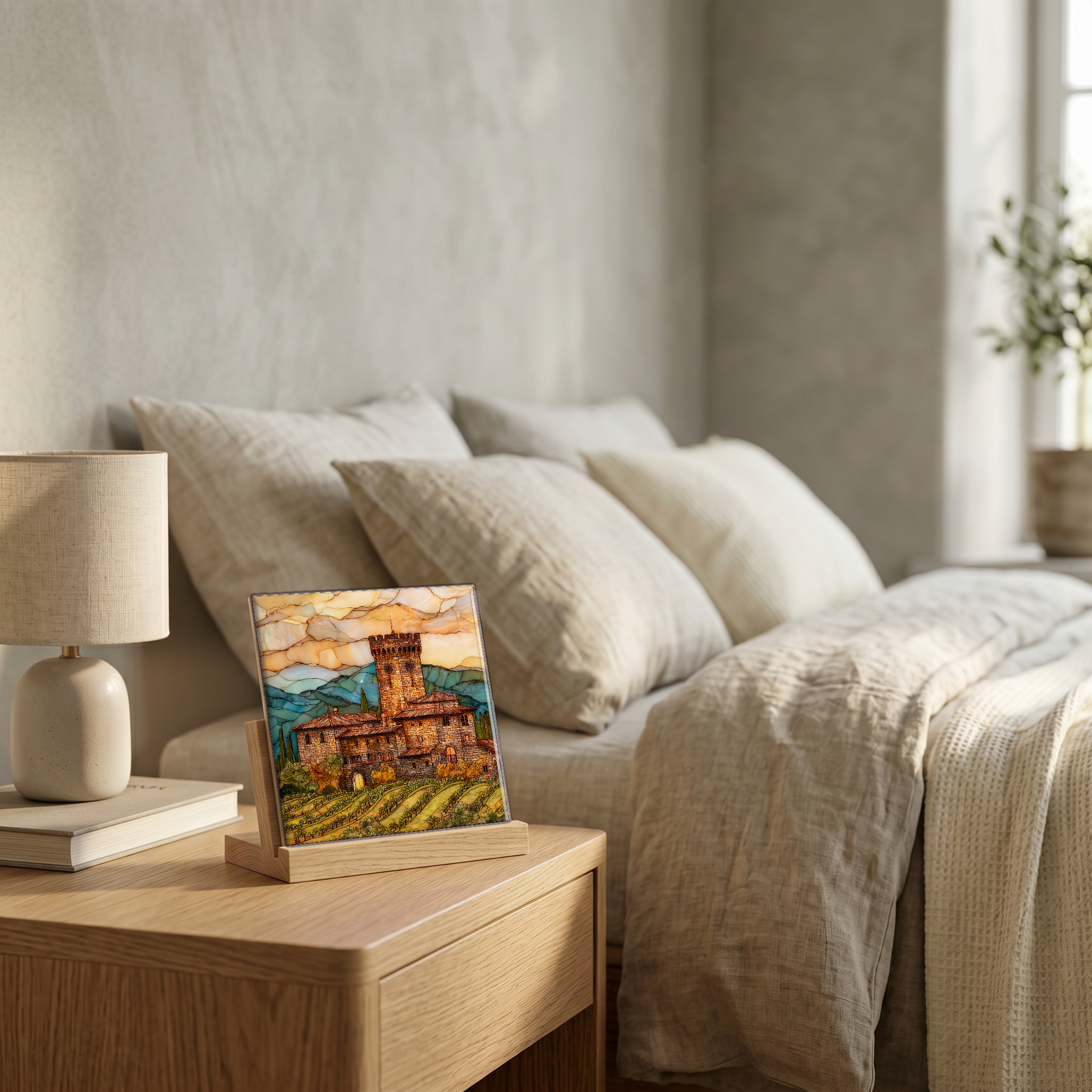
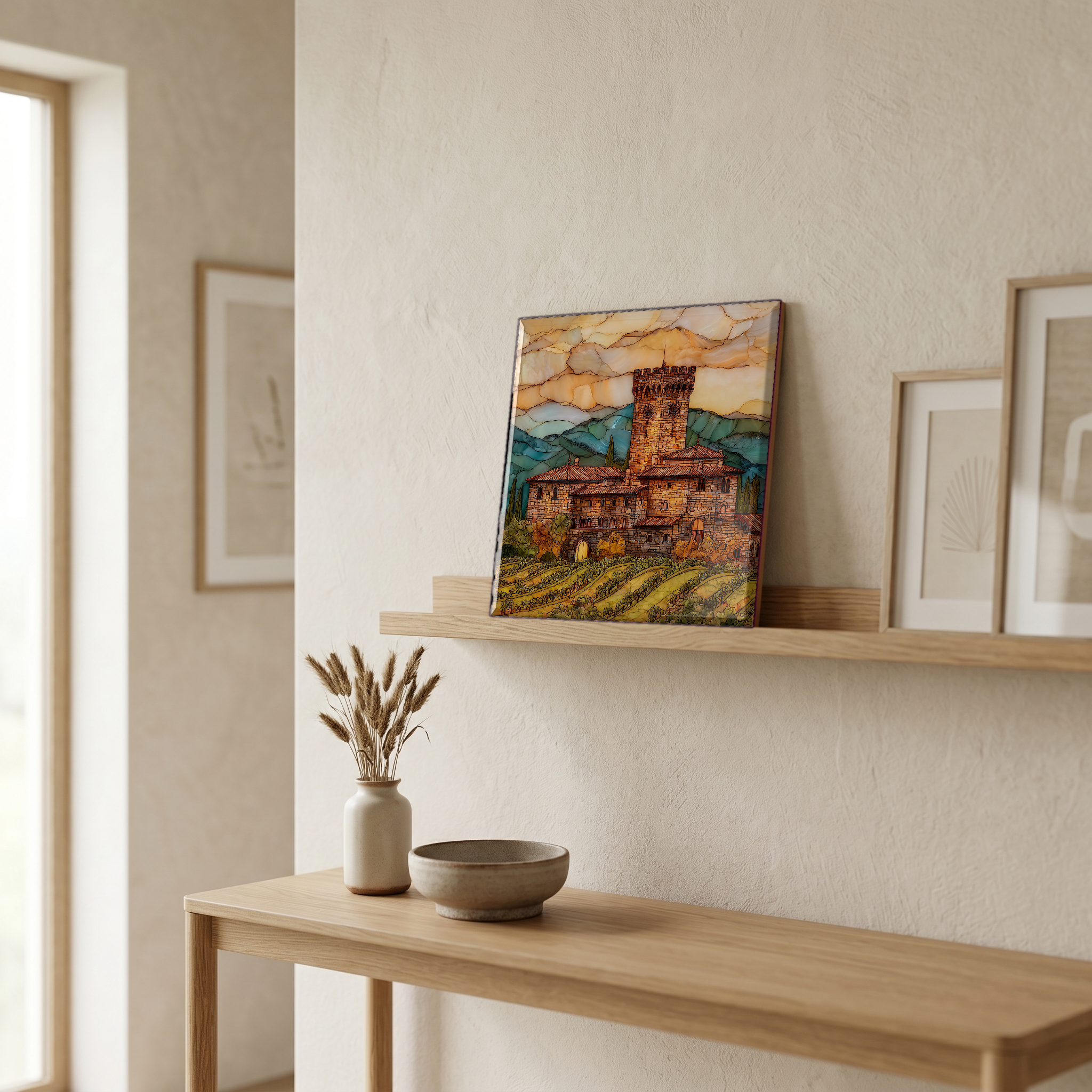
“A Tuscan castle at the north end of Napa Valley. Dario Sattui spent fourteen years building it by hand. Eight thousand tons of hand-chiselled stone. Antique bricks shipped from Europe. Frescoes painted by Italian artists. There is a drawbridge over a real moat, a chapel above, a dungeon below. The vines on the slope are Sangiovese, the same grape that grows in Tuscany. It opened to the public in 2007. Most days you can walk the courtyards before the tour groups arrive.
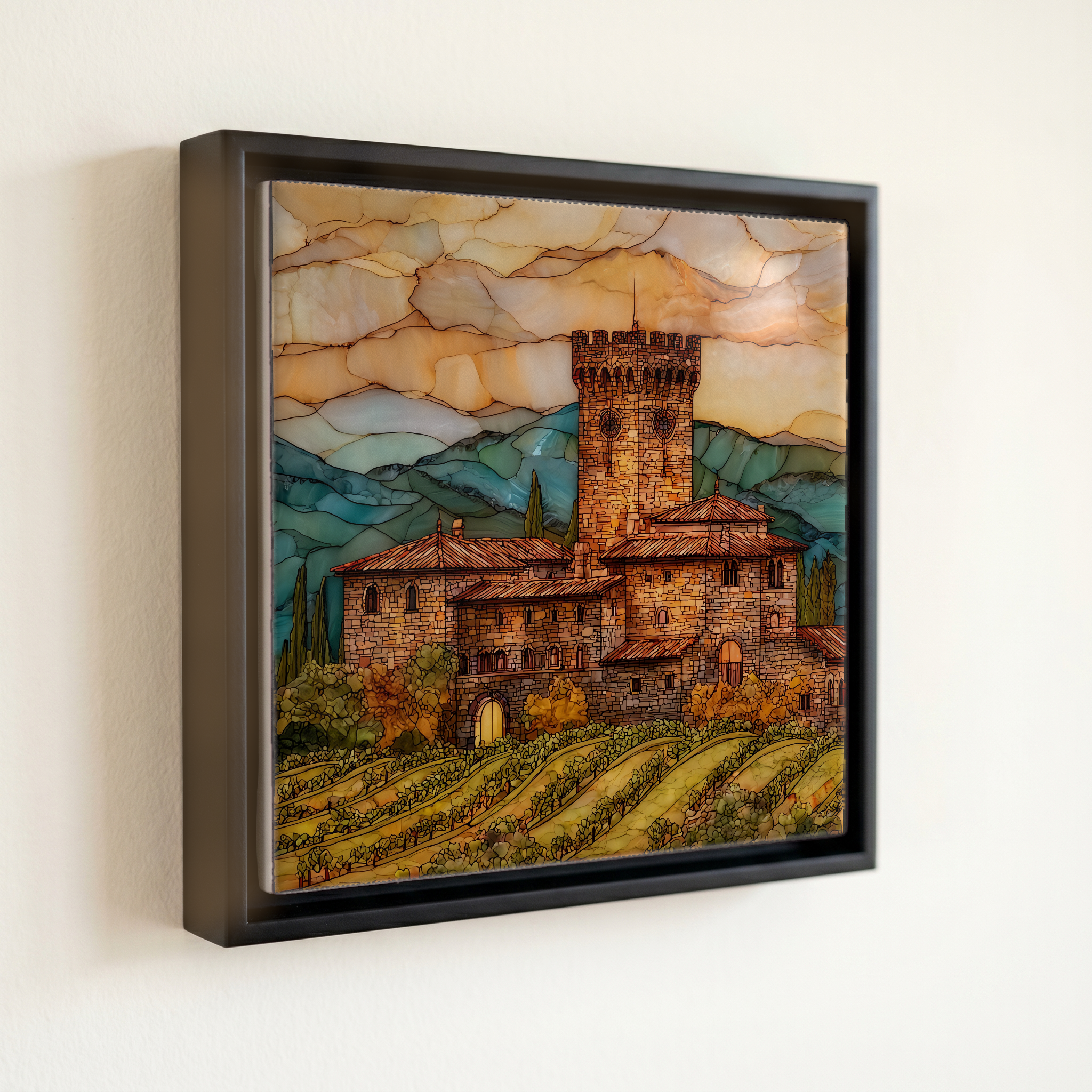
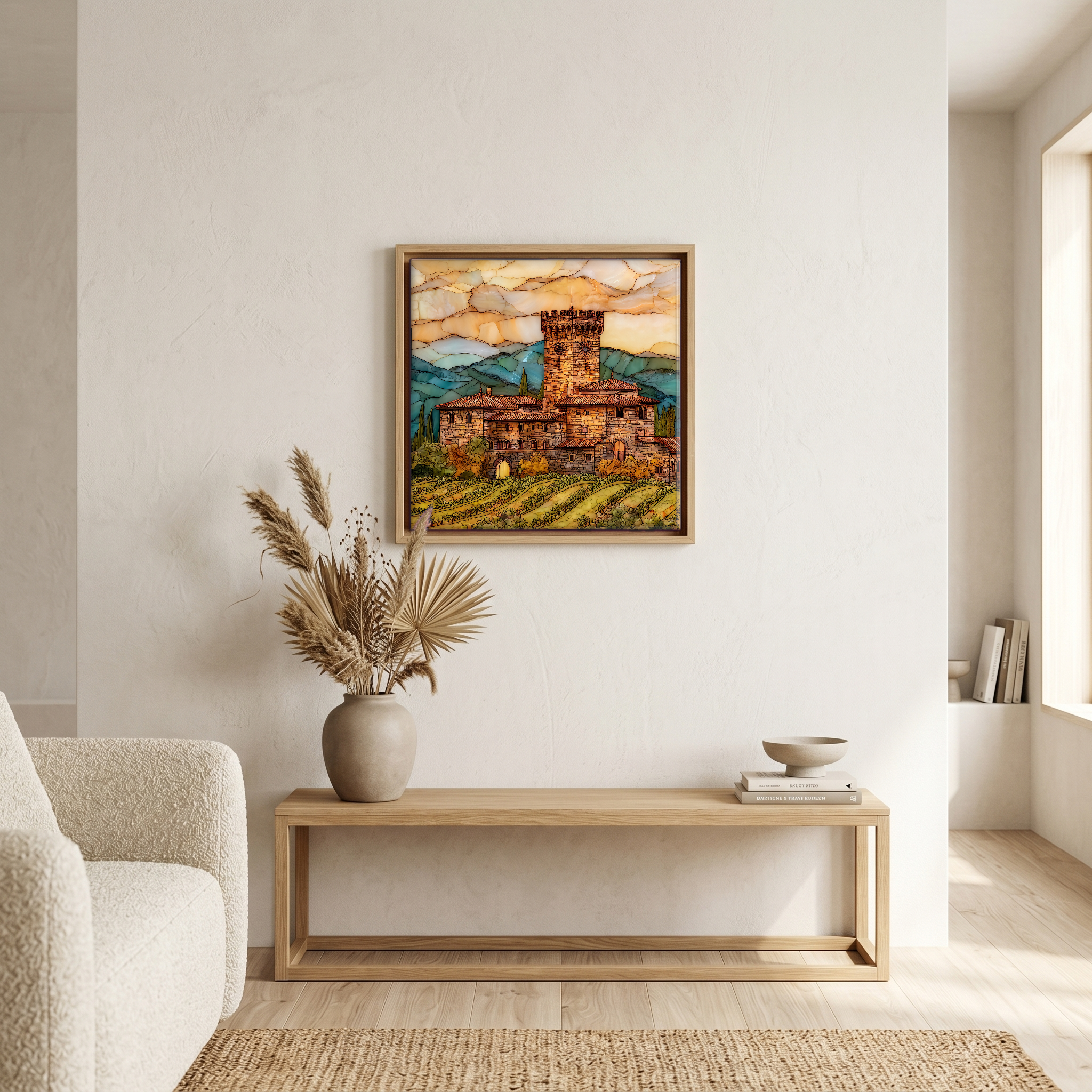
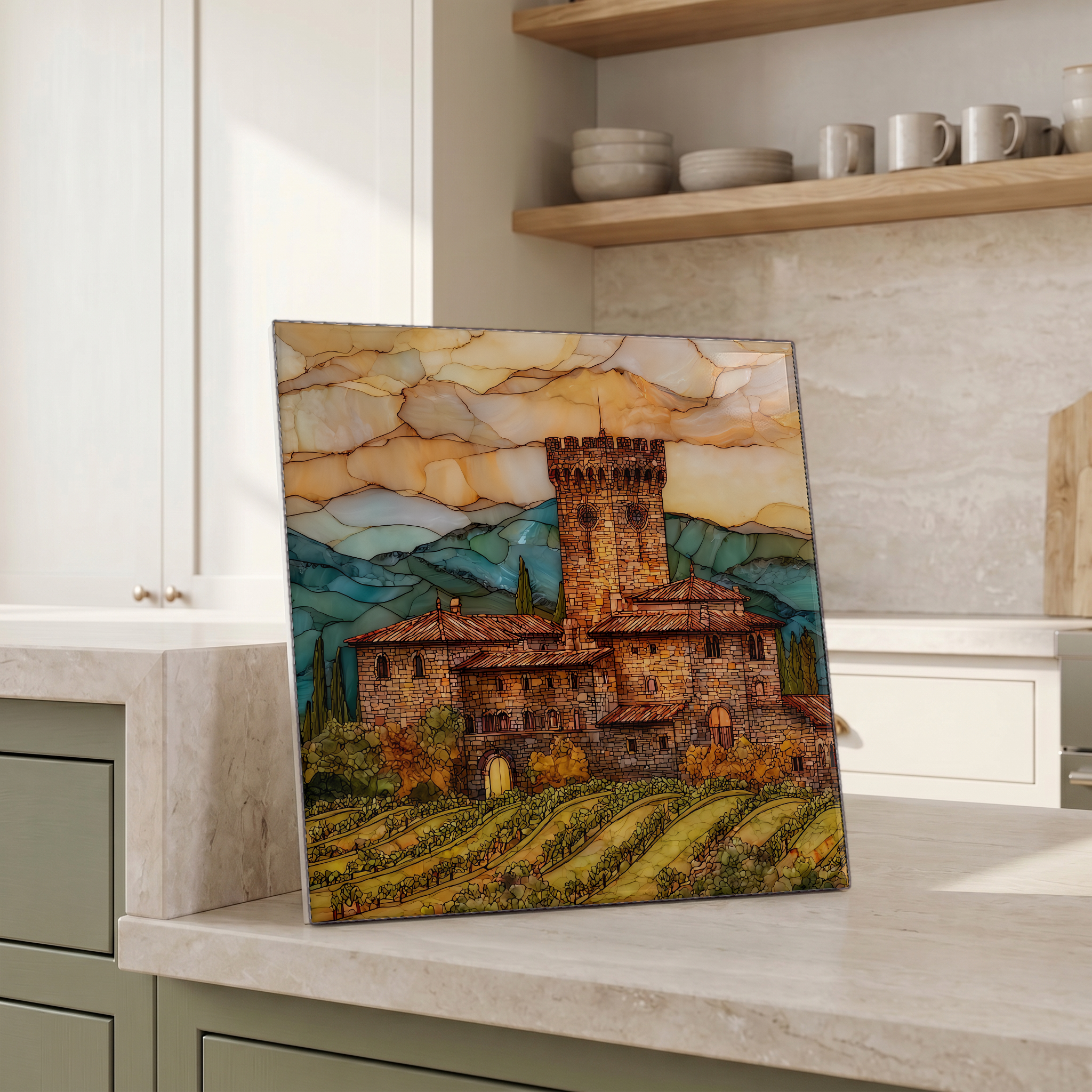
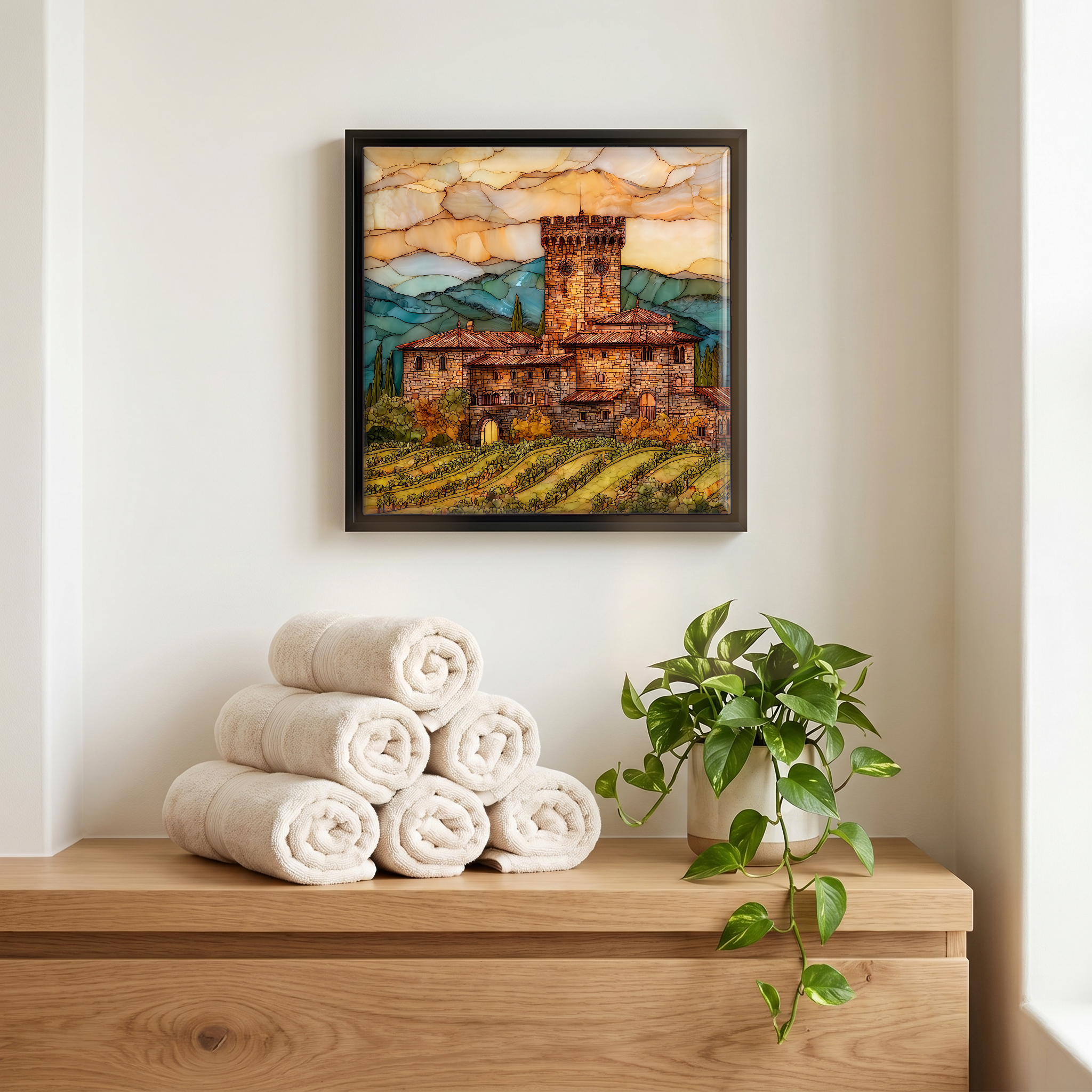
Castello di Amorosa, on ceramic.
Each tile is finished by hand in our Knoxville studio. Artwork is slowly infused into the ceramic surface under high heat and pressure, and rests beneath a thin glossy finish. The colour lives in the surface, not on top of it.
Pick any four 4-inch tiles — National Parks you've been to, a Smokies set, the four seasons of one place. $ for a set of , cork-backed, ready to live on the table.
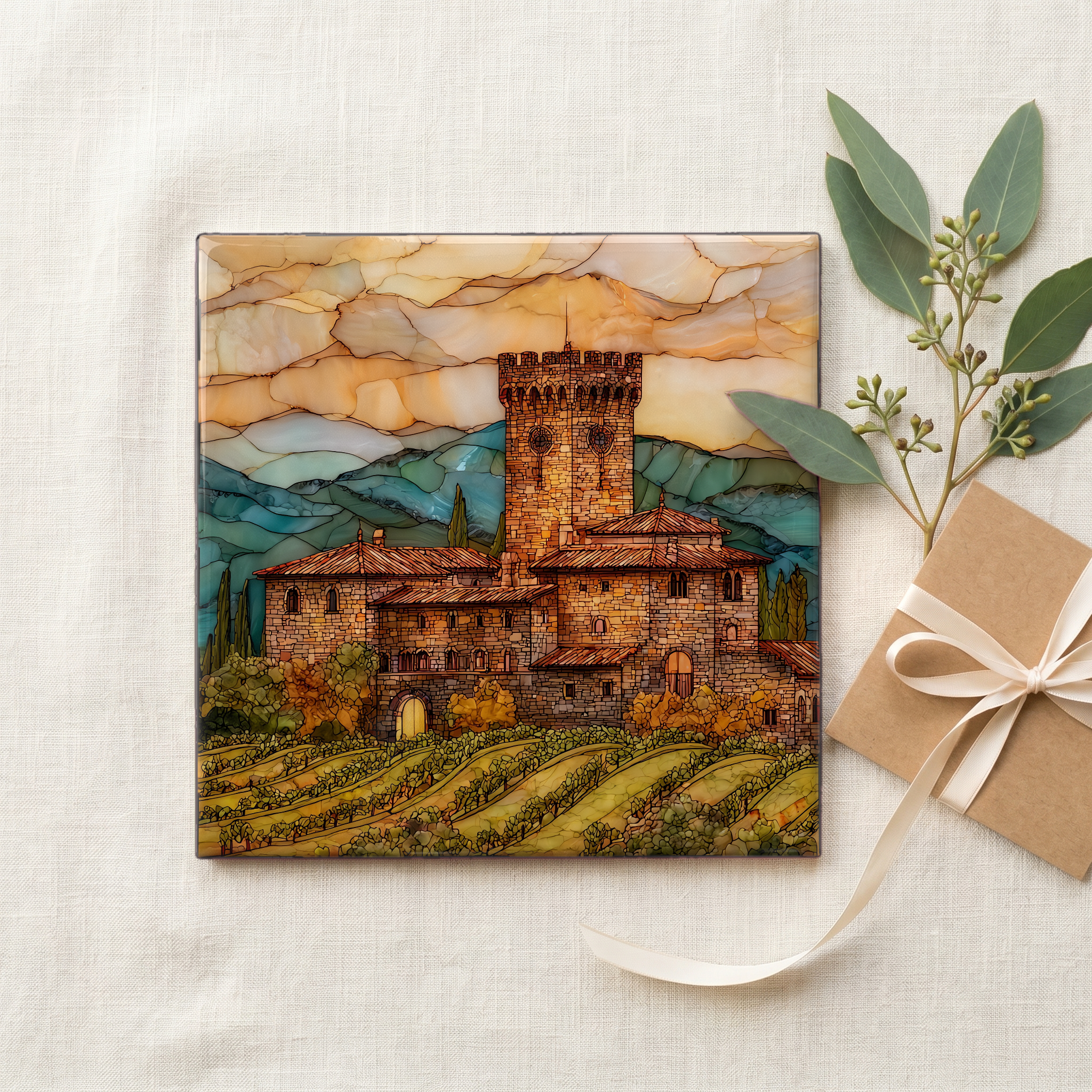
Each tile ships in a kraft box, tied with cream ribbon, with a handwritten note from the studio if you'd like to add one.
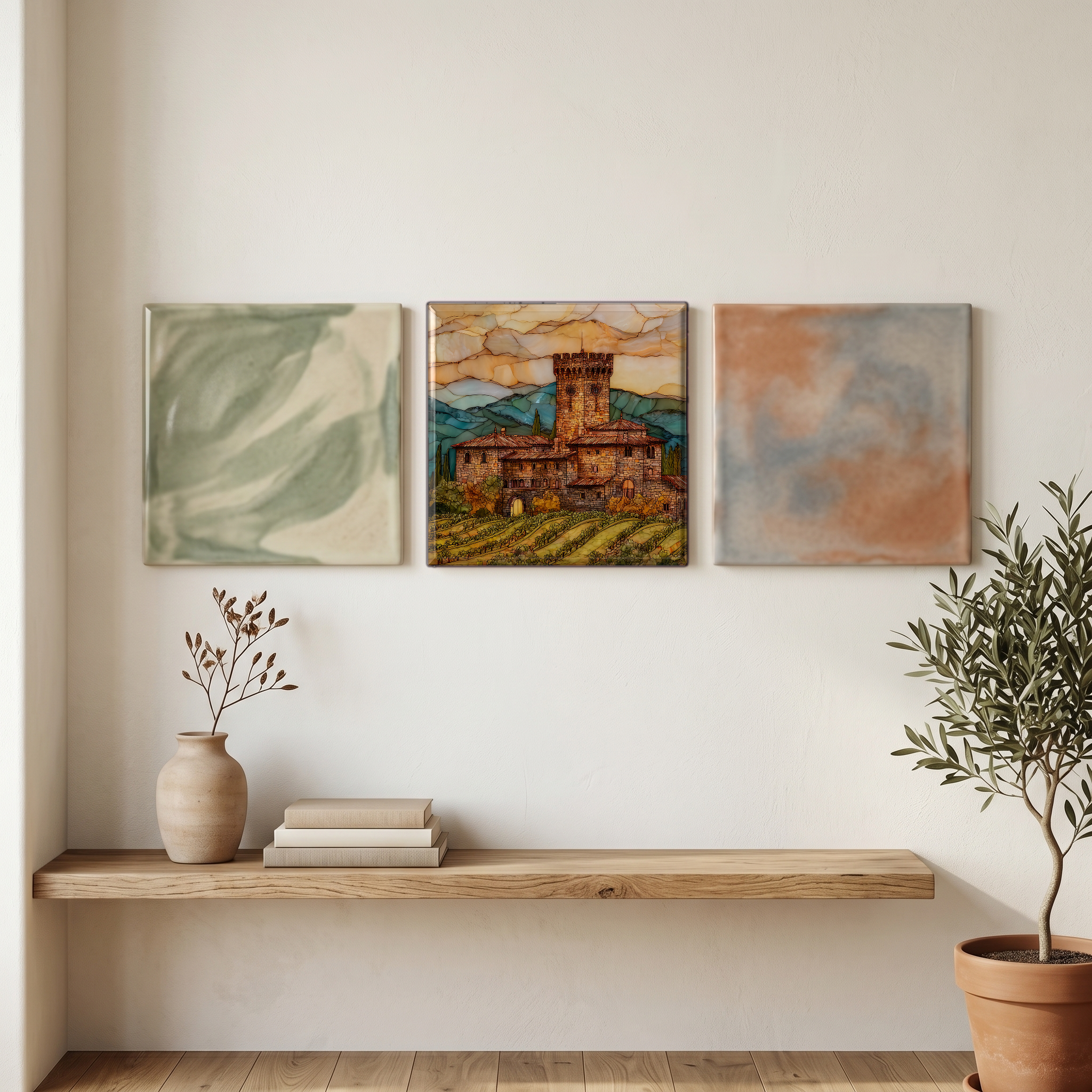
Three or five different vistas, hung together — a chapter of places you've been, or want to go.
The place, in three passes.
Castello di Amorosa stands above the Napa Valley floor at the north end of California's wine country, about a mile south of the town of Calistoga along Highway 29, the road that runs the length of the valley from Napa to Calistoga (about 27 miles). The property covers 171 acres, with roughly 30 acres planted to Italian varietals including Sangiovese, Pinot Grigio, and Cabernet Sauvignon. The castle itself runs to about 121,000 square feet across eight levels, four above ground and four below. The closest major airport is San Francisco International, about 75 miles south. Mount Saint Helena rises behind the property to the north, inside Robert Louis Stevenson State Park.
Construction began in 1994 and took roughly fourteen years; the castle opened to the public in April 2007. Owner Dario Sattui used 8,000 tons of locally quarried and hand-chiselled stones, around a million antique bricks imported from Europe, and an interior of frescoes by Italian artists Fabio Sanzogni and Romina Latini. The 107-room building includes a working drawbridge, a moat, a Great Hall modelled on a Tuscan medieval courtyard, a chapel, defensive towers, and a dungeon with a 300-year-old iron maiden Sattui acquired from a Piedmont collector. Almost every fixture, including beams, doors, hardware, and terracotta tiles, was sourced from European salvage so the building would read as a real period structure.
The castle is open daily for tours and tastings, with last entry typically about an hour before close. Reservations are required for the guided tour and tasting. The basic ticket covers the courtyard and a tasting of five wines; the guided tour adds the Great Hall, the chapel, the barrel rooms, and the dungeon. Children are welcome on the standard tour with adult supervision. The wines are sold direct only, through the tasting room and the Castello's wine club, and not distributed to retail stores. The 2020 Glass Fire burned the farmhouse on the property and destroyed roughly 120,000 bottles of wine in storage. The main castle building was largely spared, and the winery reopened after cleanup.