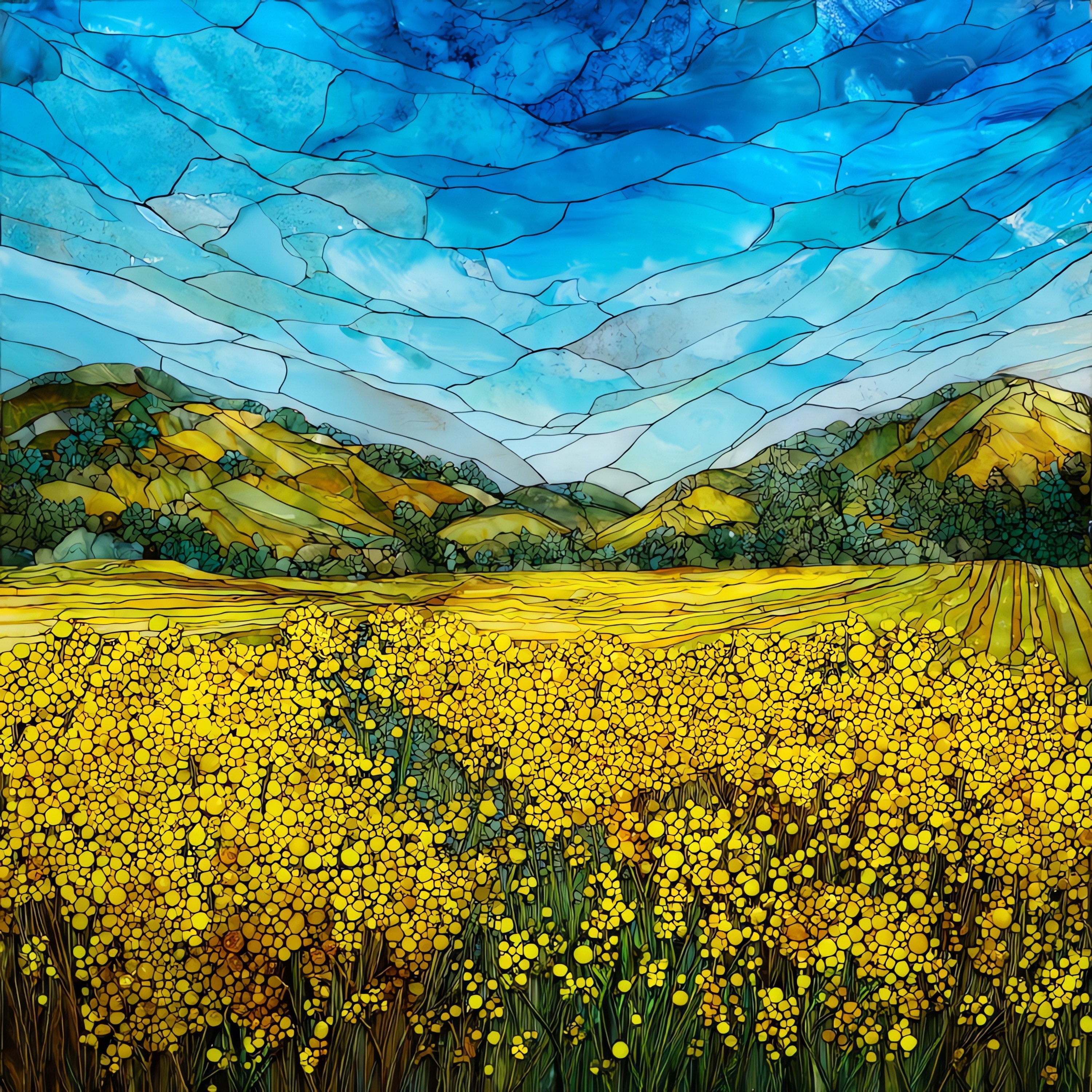
Carneros Mustard Bloom
— — what fills the rows before the vines wake.
Not only on a wall.
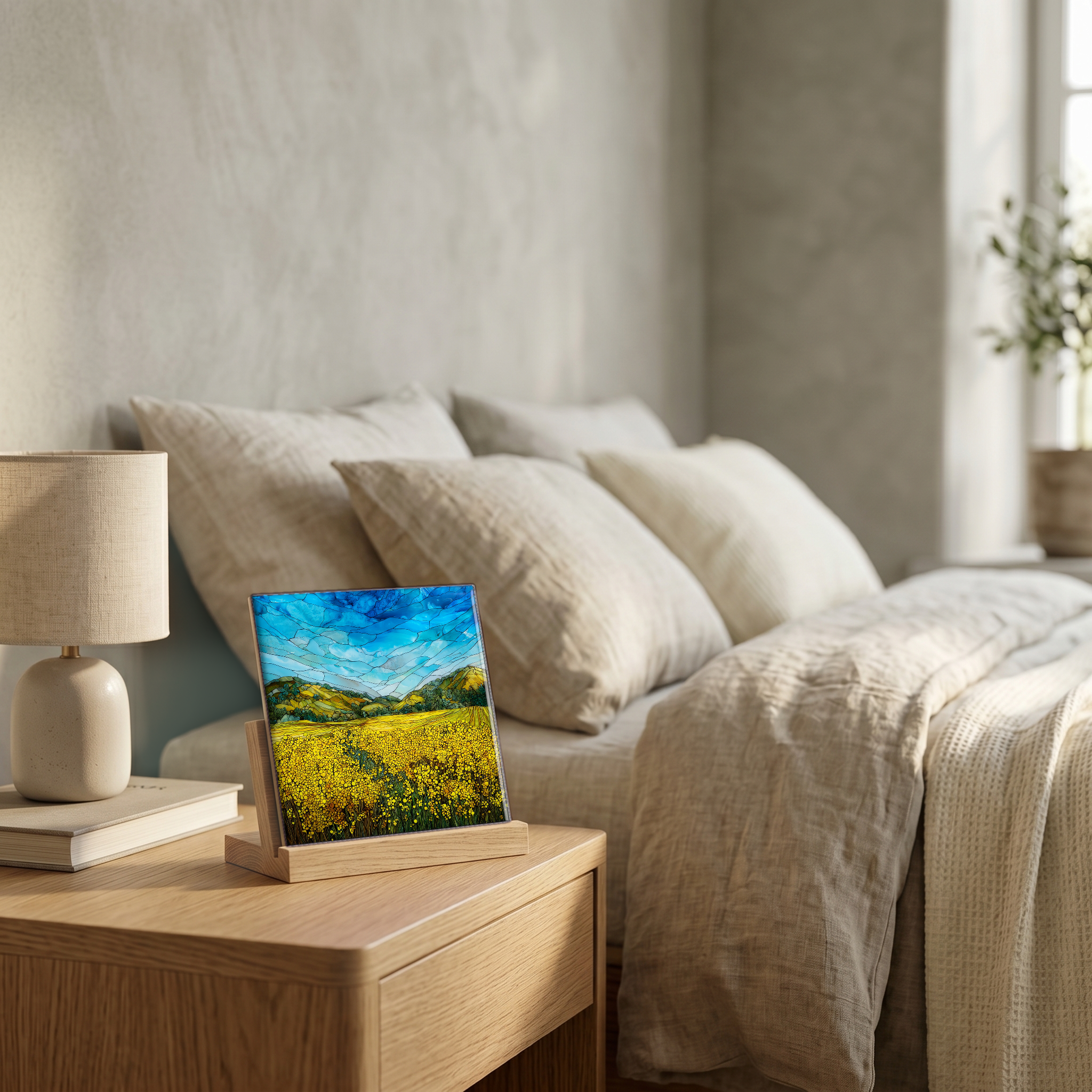
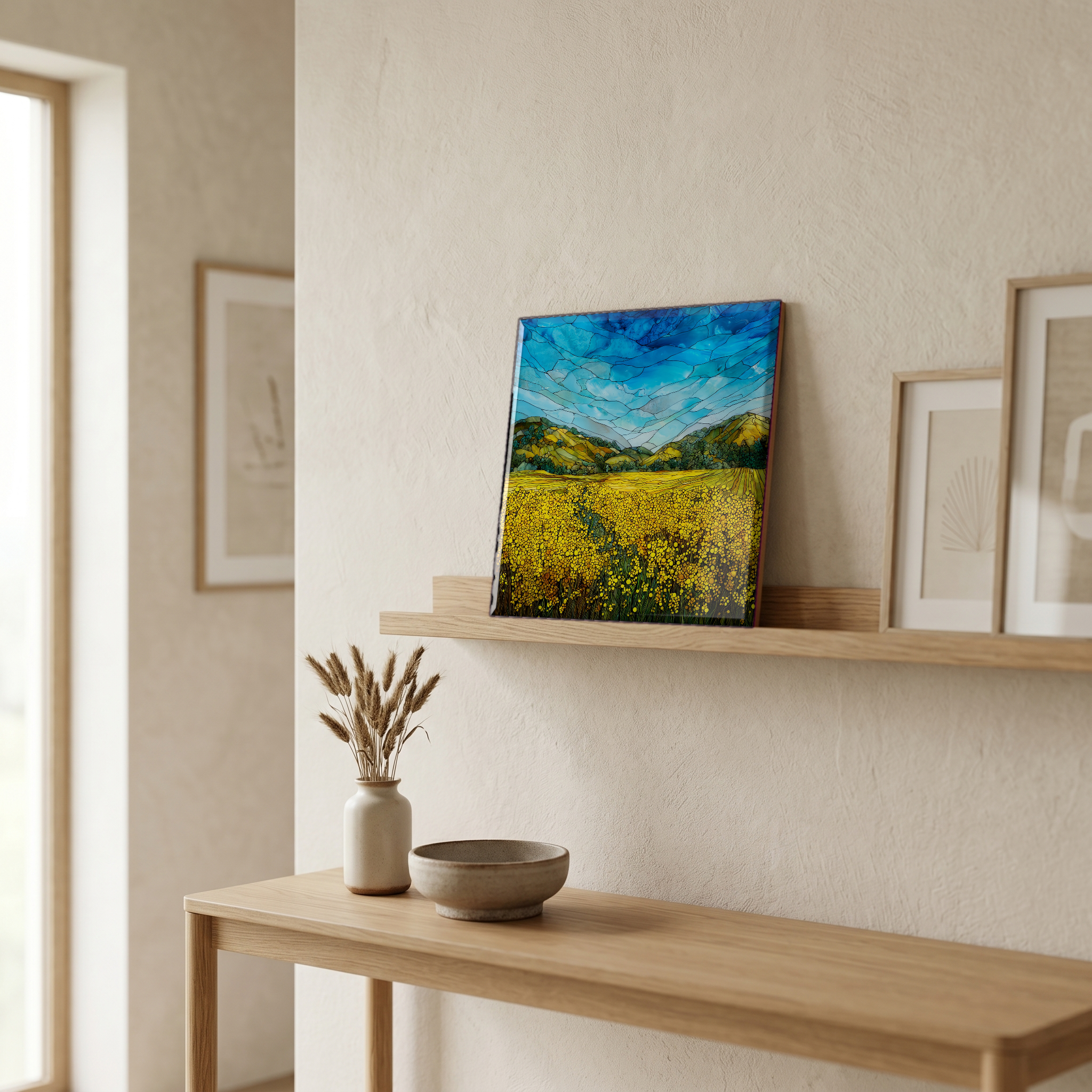
“Two valleys come down toward the bay and meet at the bottom — Napa to the east, Sonoma to the west — and where they overlap, in the cooler ground at the foot of both, the vines spend February asleep. The cover crop doesn't. Wild mustard opens in waves, low and bright between the bare rows. The Spanish padres are said to have scattered the seed along El Camino Real in the 1700s; the vineyards now use it as a winter cover. For about six weeks the floor of the wine country is yellow. By April the vines wake and the colour is mowed under.
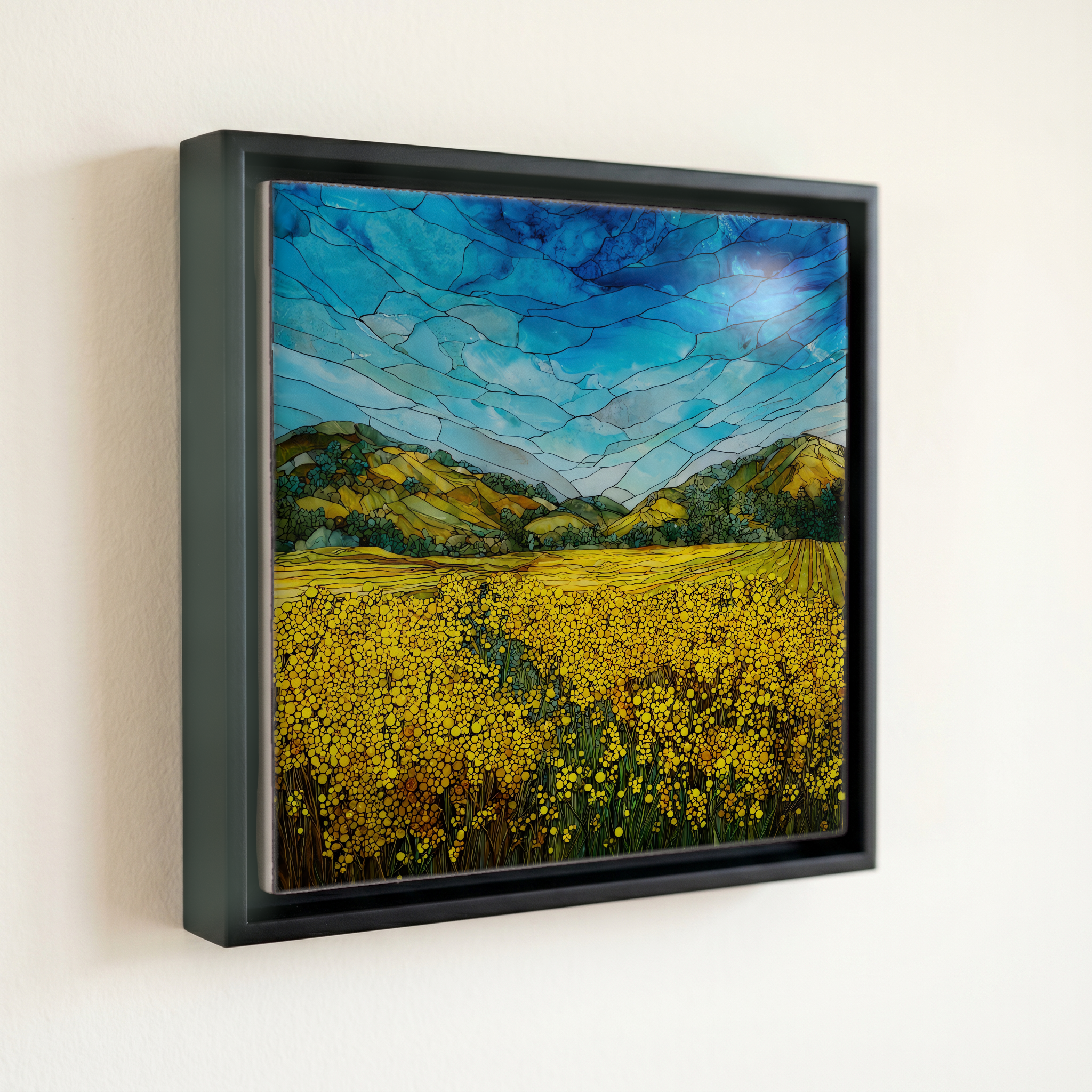
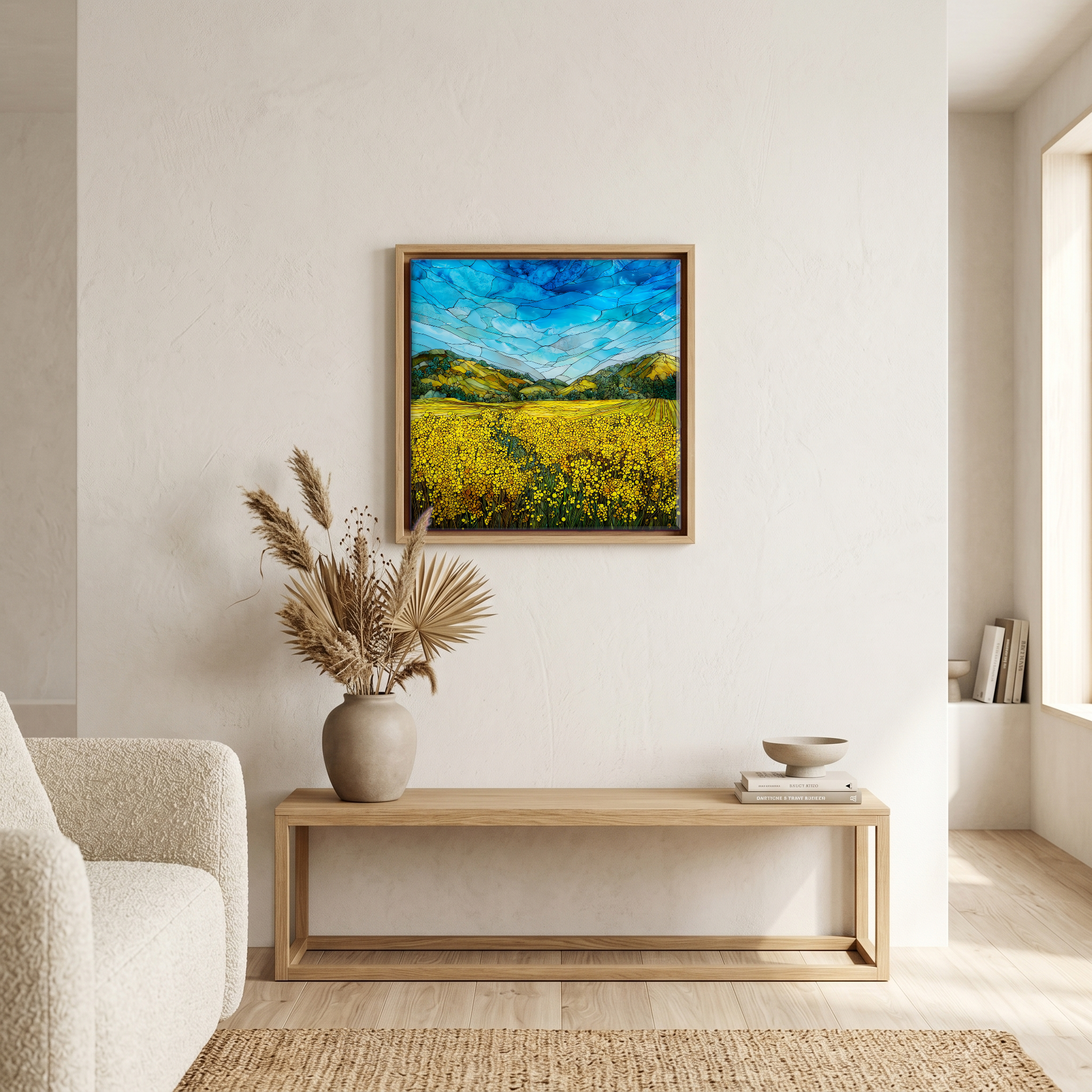
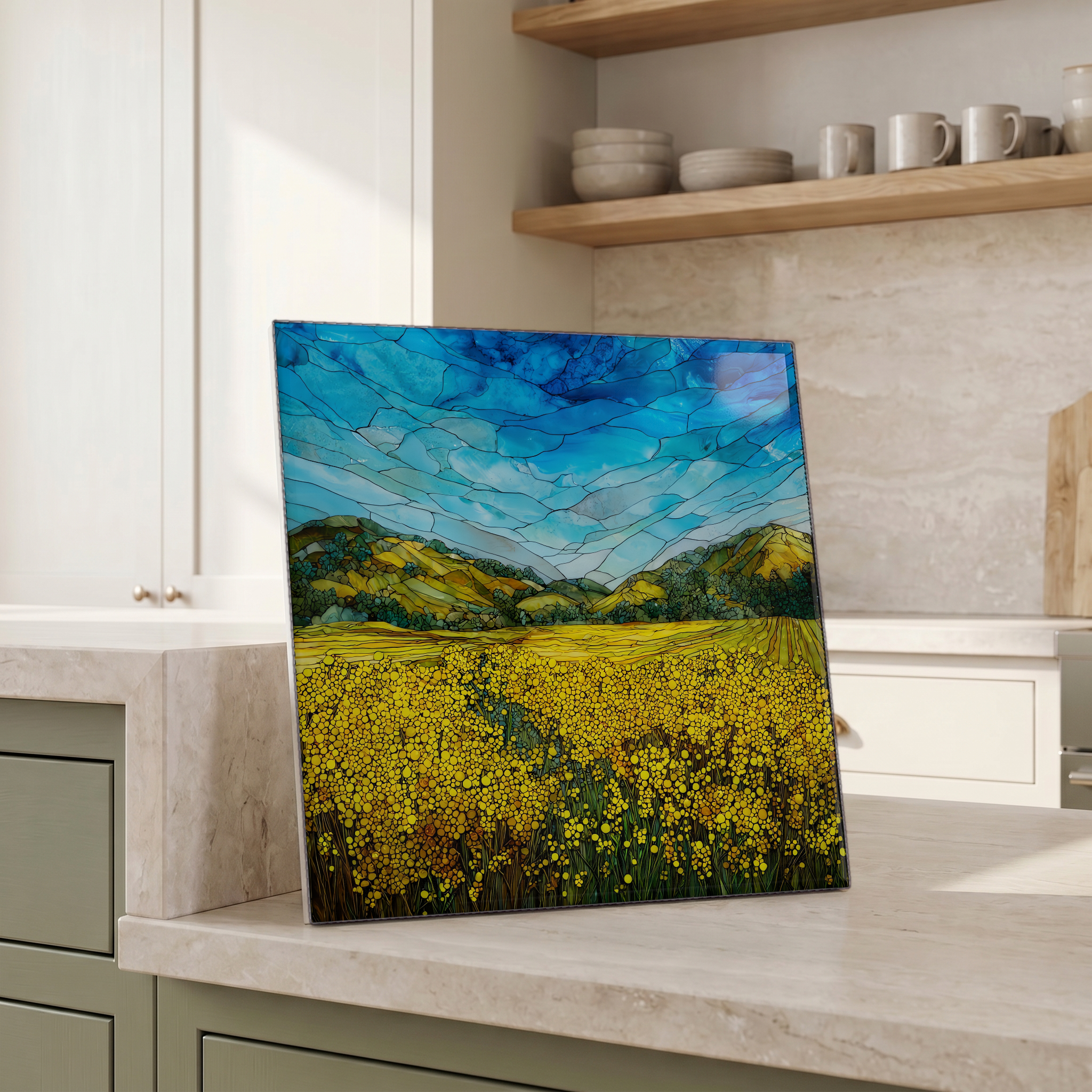
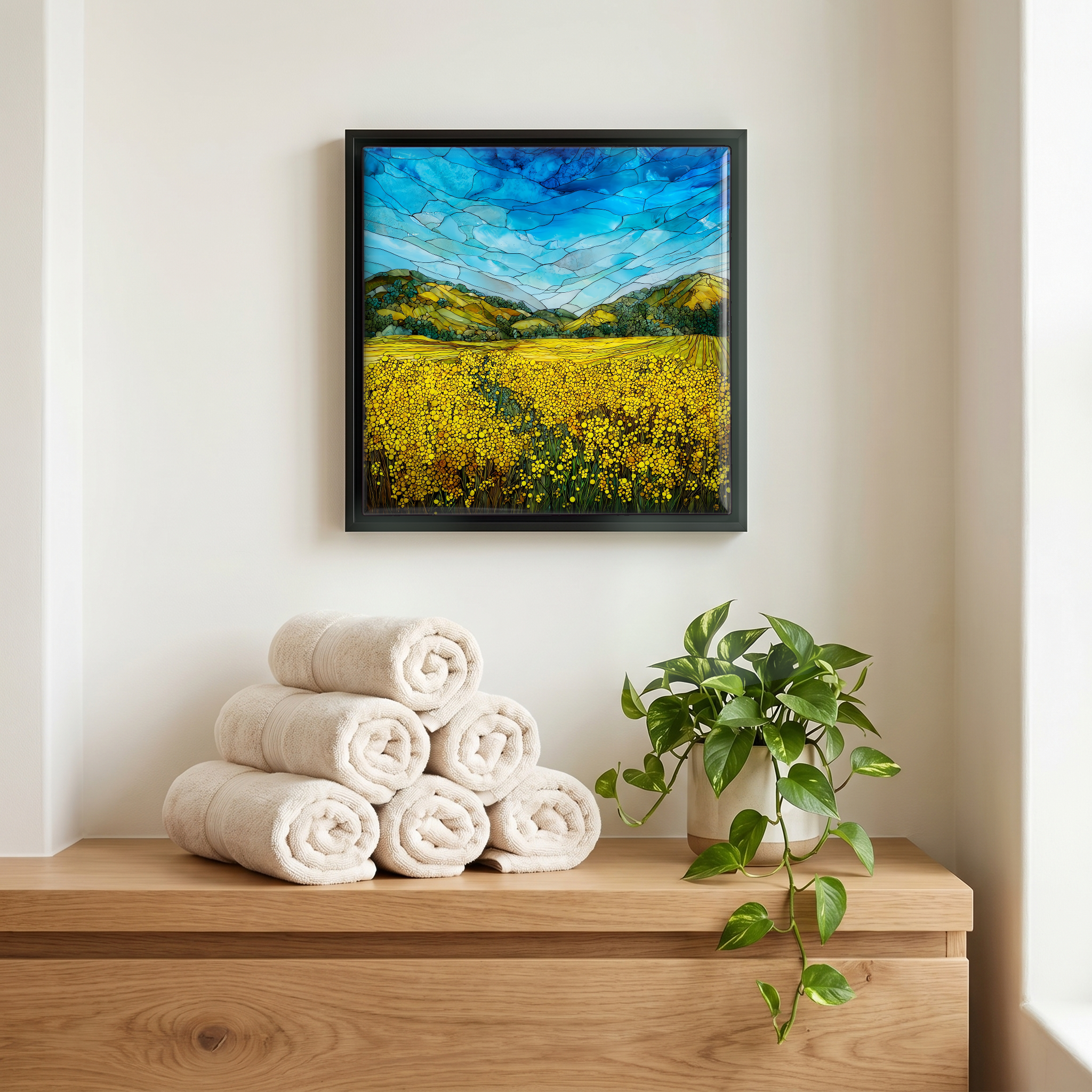
Carneros Mustard Bloom, on ceramic.
Each tile is finished by hand in our Knoxville studio. Artwork is slowly infused into the ceramic surface under high heat and pressure, and rests beneath a thin glossy finish. The colour lives in the surface, not on top of it.
Pick any four 4-inch tiles — National Parks you've been to, a Smokies set, the four seasons of one place. $ for a set of , cork-backed, ready to live on the table.
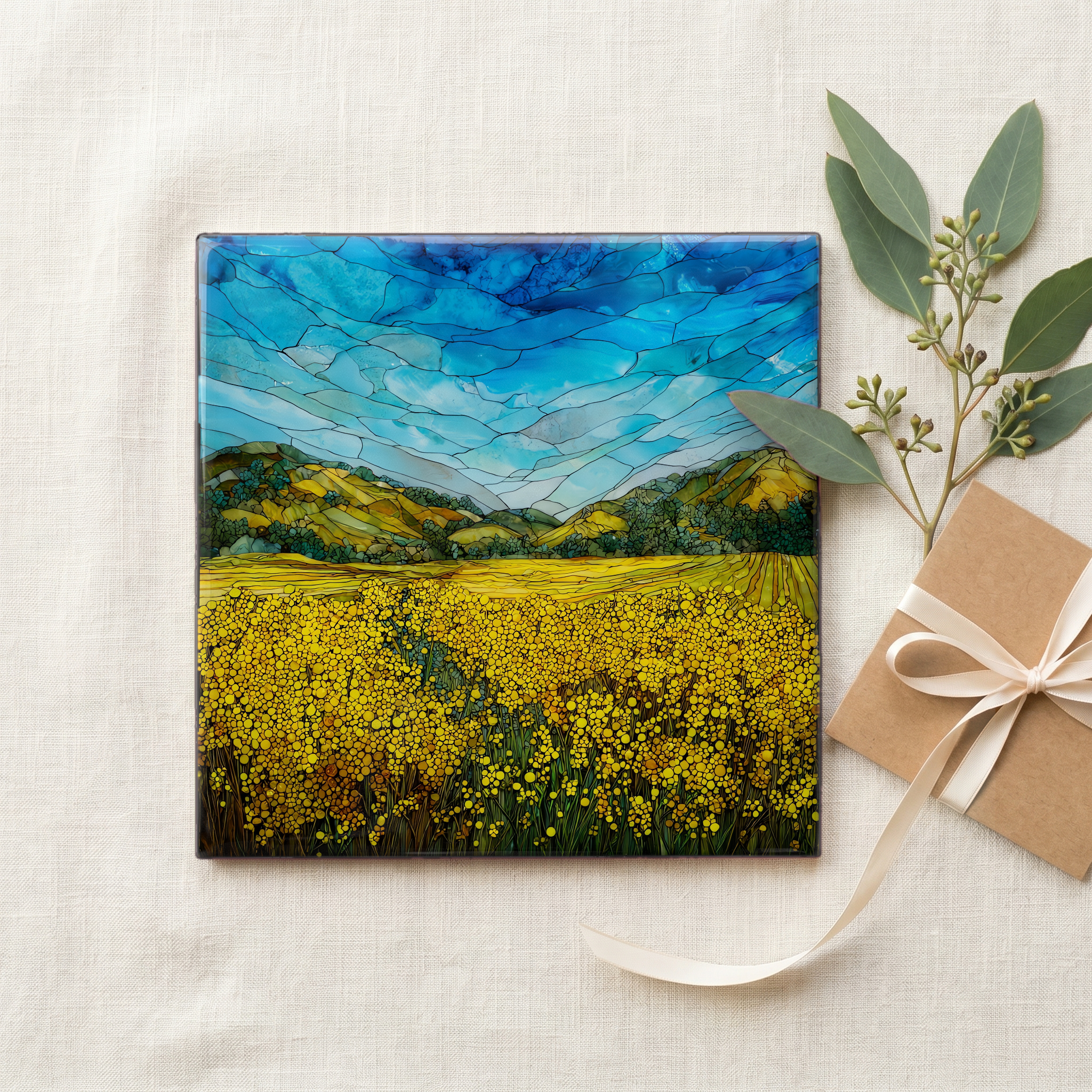
Each tile ships in a kraft box, tied with cream ribbon, with a handwritten note from the studio if you'd like to add one.
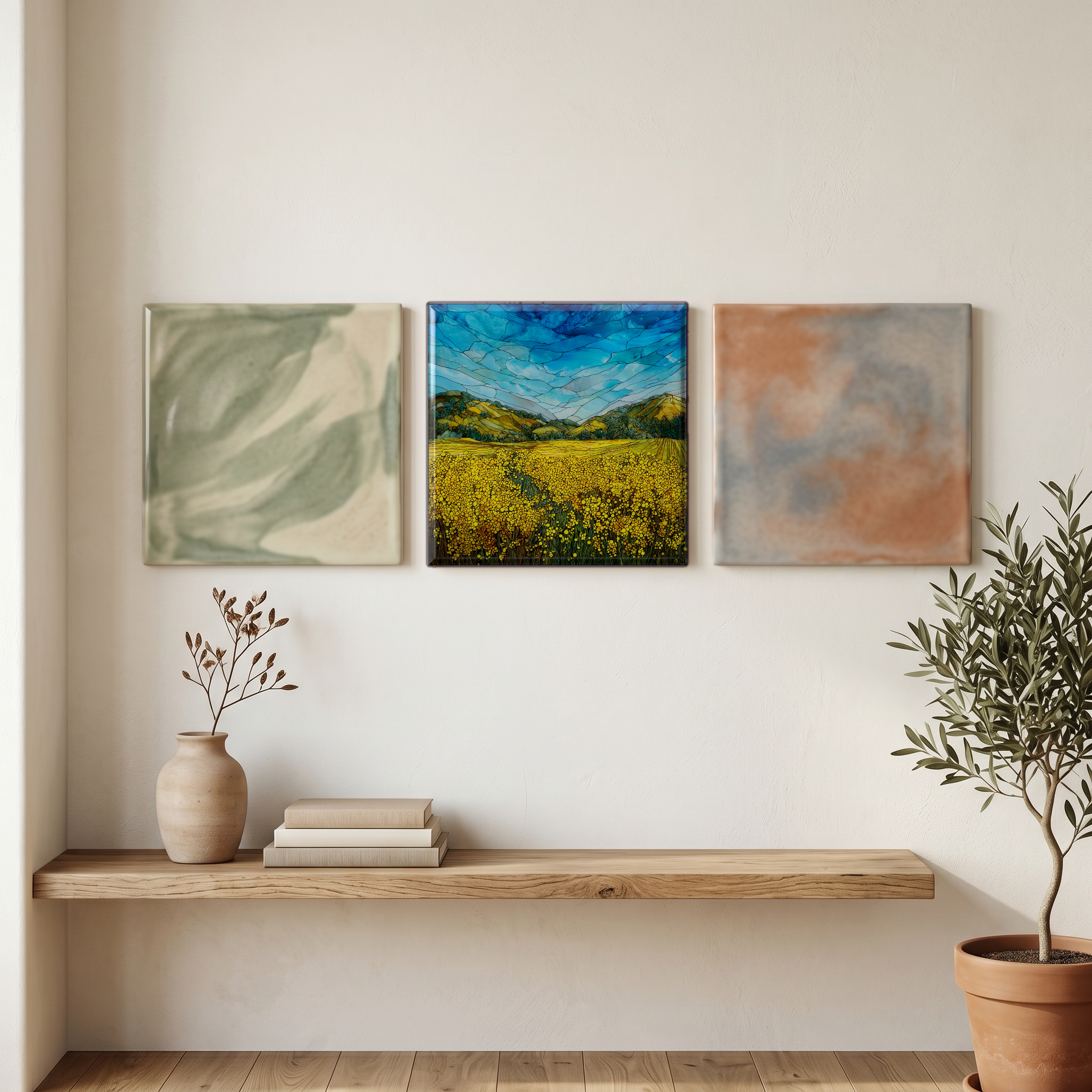
Three or five different vistas, hung together — a chapter of places you've been, or want to go.
The place, in three passes.
Los Carneros is an American Viticultural Area approved in 1983, straddling the southern ends of Napa and Sonoma counties in California along the north shore of San Pablo Bay, the upper arm of San Francisco Bay. The land is rolling rather than vertical: roughly 38,000 acres of grass, oak savanna, and vineyard between sea level and the low coastal hills. State Route 121, the Carneros Highway, runs east-west through it from the town of Sonoma to the city of Napa. The Spanish word *carneros* means rams; the area was sheep range for most of the nineteenth century before the wine vines arrived.
The bloom runs roughly six weeks, peaking in late February. Two species do the work — field mustard (*Brassica rapa*) and black mustard (*Brassica nigra*) — both naturalised in California since the eighteenth century. Wineries plant them deliberately as a winter cover crop: the deep taproots break up clay, the flowers feed bees ahead of the first orchard bloom, and the green mass is mowed under in spring to return nitrogen to the soil before bud break. The Napa Valley Mustard Festival celebrated the event annually from 1993 until it wound down in 2014. The bloom still arrives on its own schedule, set by the late rains and the angle of the sun.
The colour is close to cadmium yellow — distinct from the softer ochre of the summer hills above the bay or the rust of autumn vines. It registers as bright because of what frames it: the vines overhead are black and bare in February, the soil is wet, and the morning sky carries the low pewter light off San Pablo Bay. Field mustard flowers in tight clusters near the top of a thin stem, so a bloom seen from the side of the road reads as a flat yellow plane held a foot or two above the ground. Photographers work the rows toward the low sun and the colour lifts off the field.