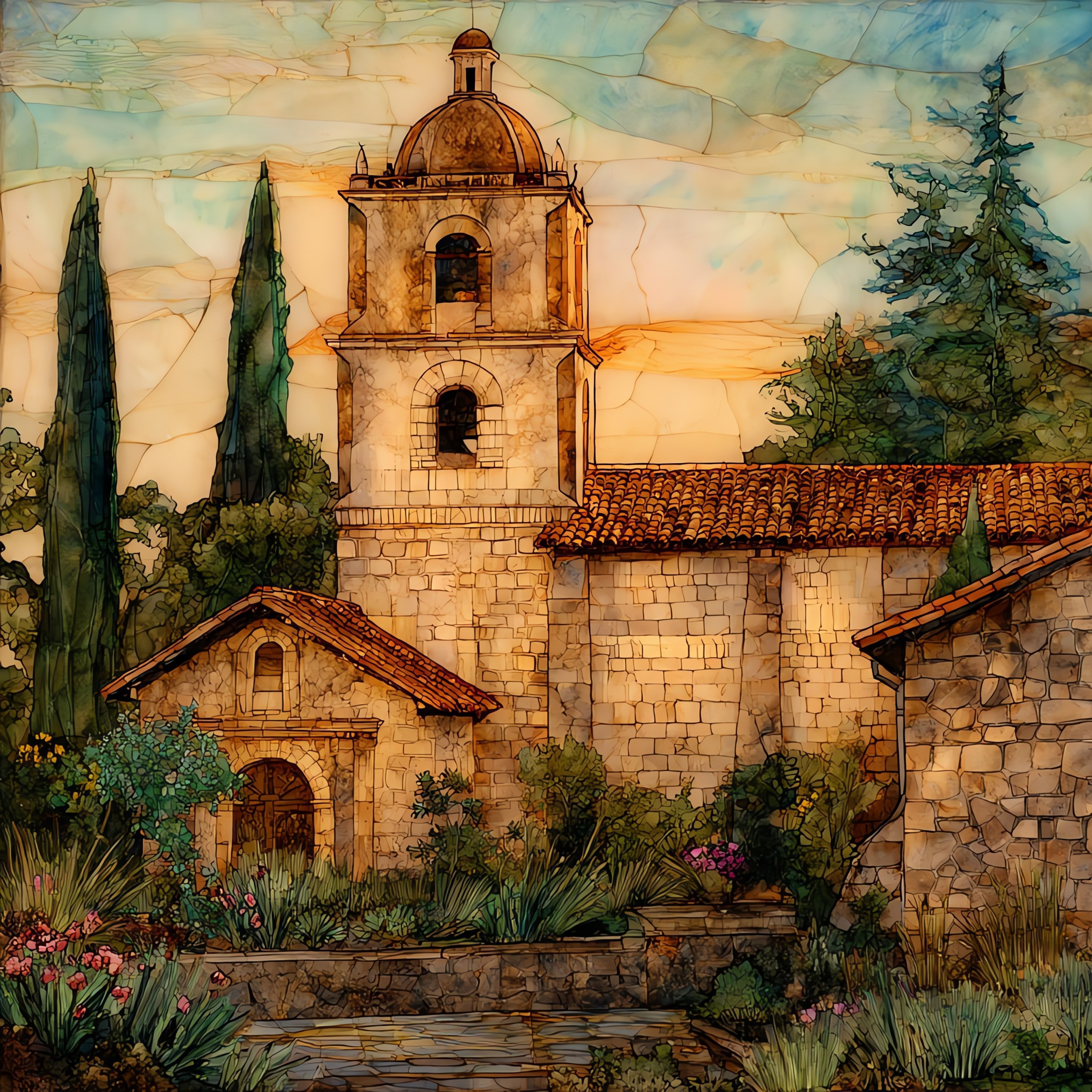
Carmel Mission
— the sandstone the evening light finds first.
Not only on a wall.
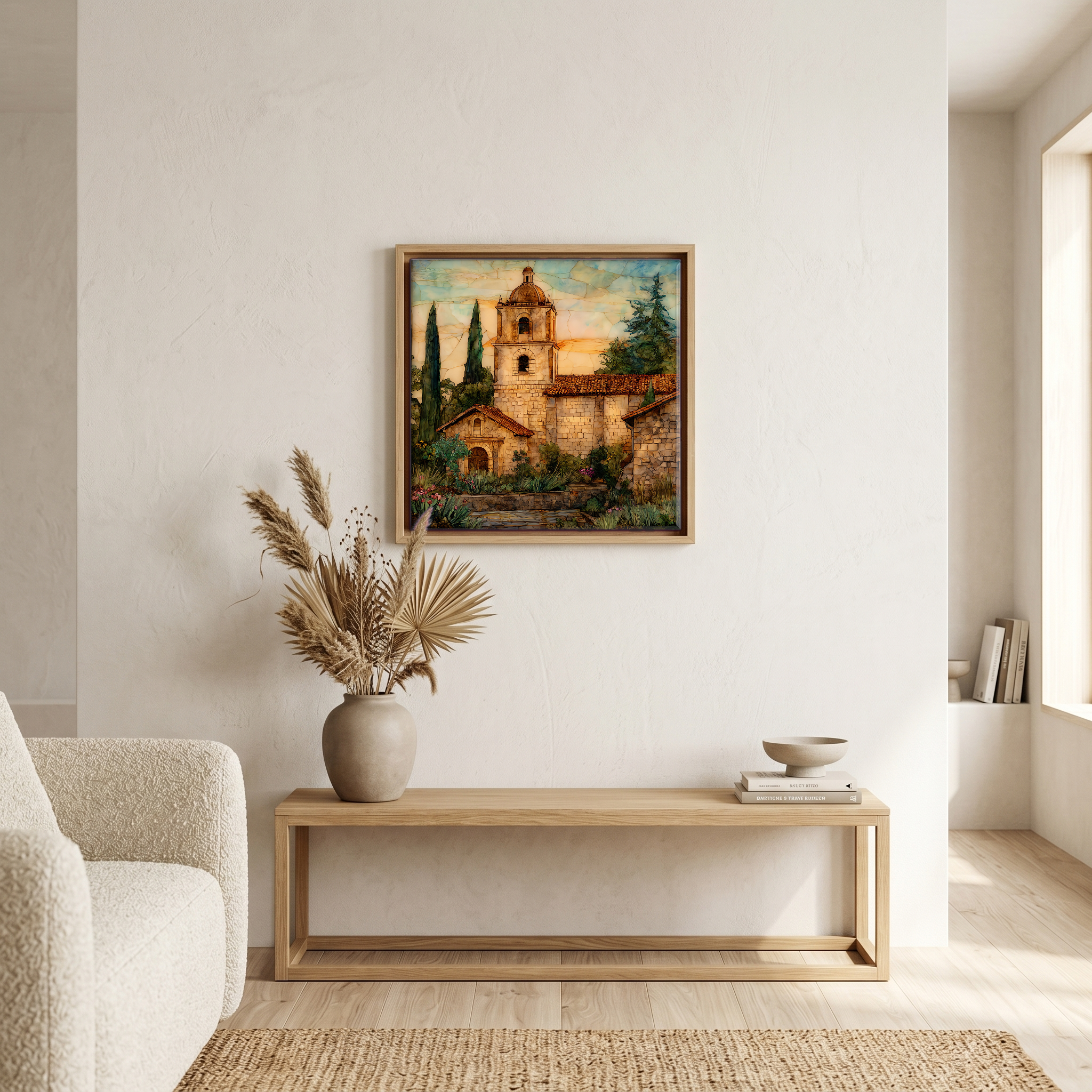
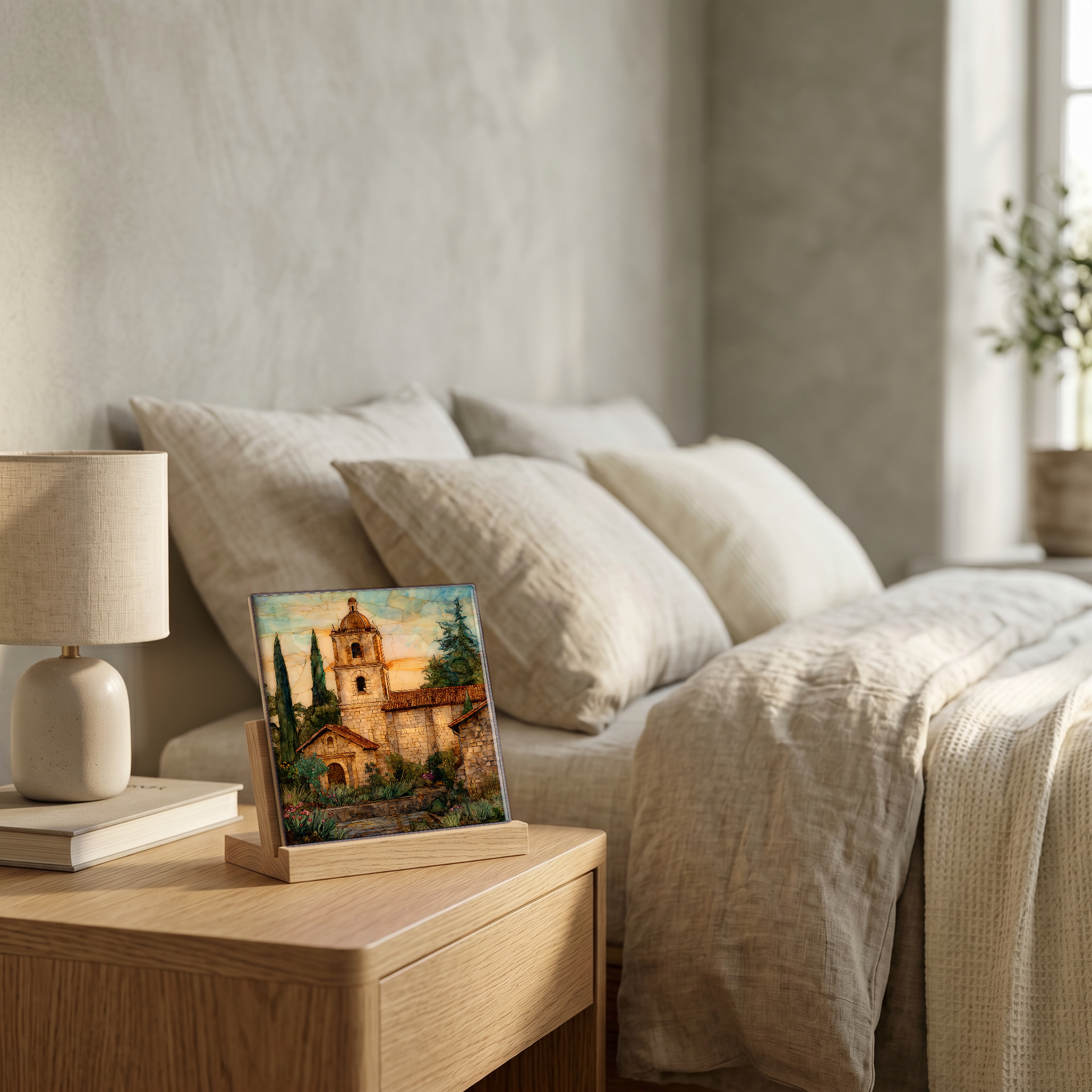
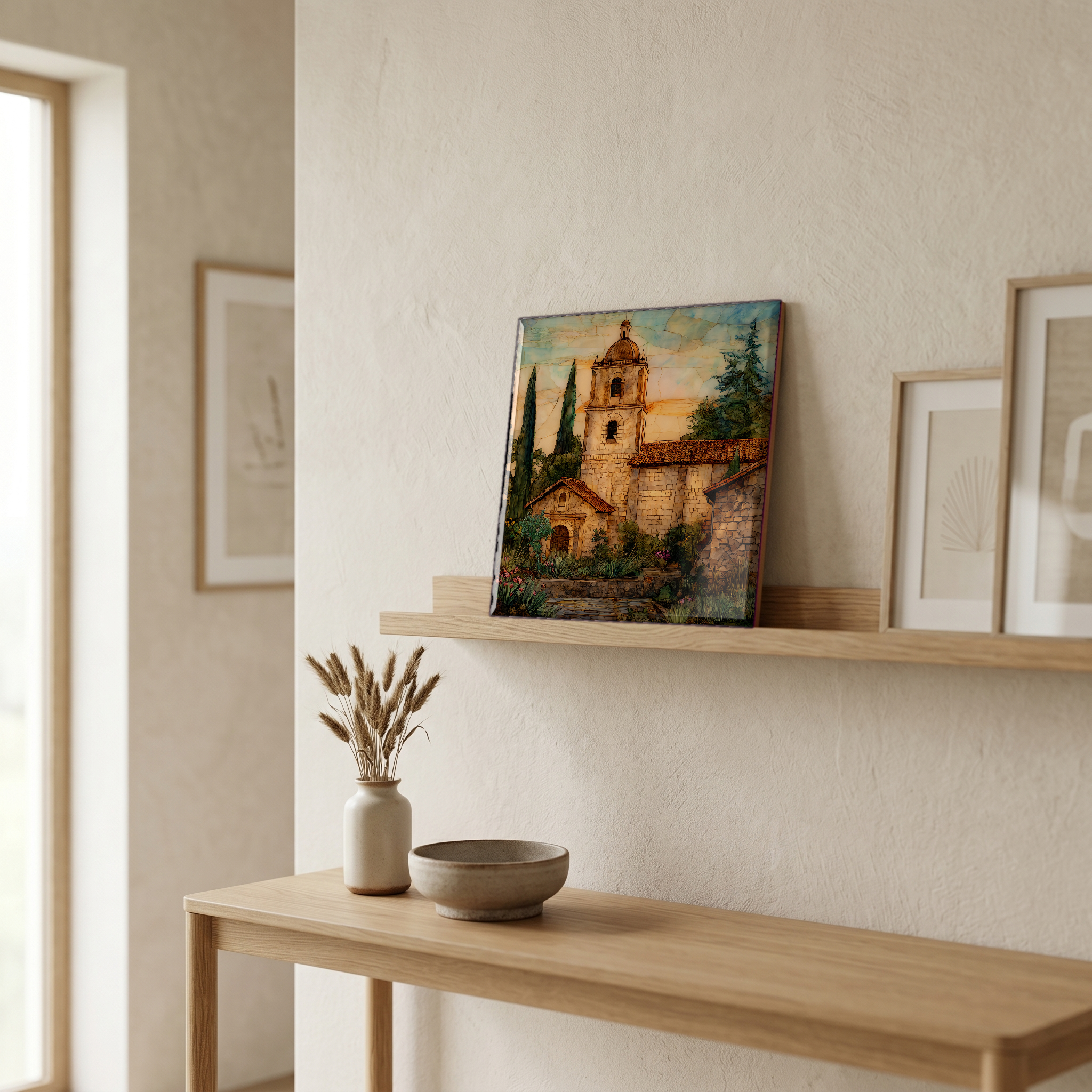
“The basilica just south of Carmel-by-the-Sea, near the mouth of the river. Serra founded it in 1770 and was buried under the chancel fourteen years later. The stone church that stands now was finished in 1797; its catenary ceiling and Moorish bell tower are unlike any other on the California coast. The courtyard fountain has run for more than two centuries. In the late afternoon the sandstone goes the colour of warm milk, and the bells still mark the hour. Visitors come for the architecture, the museum, the gardens, and stay for the quiet.
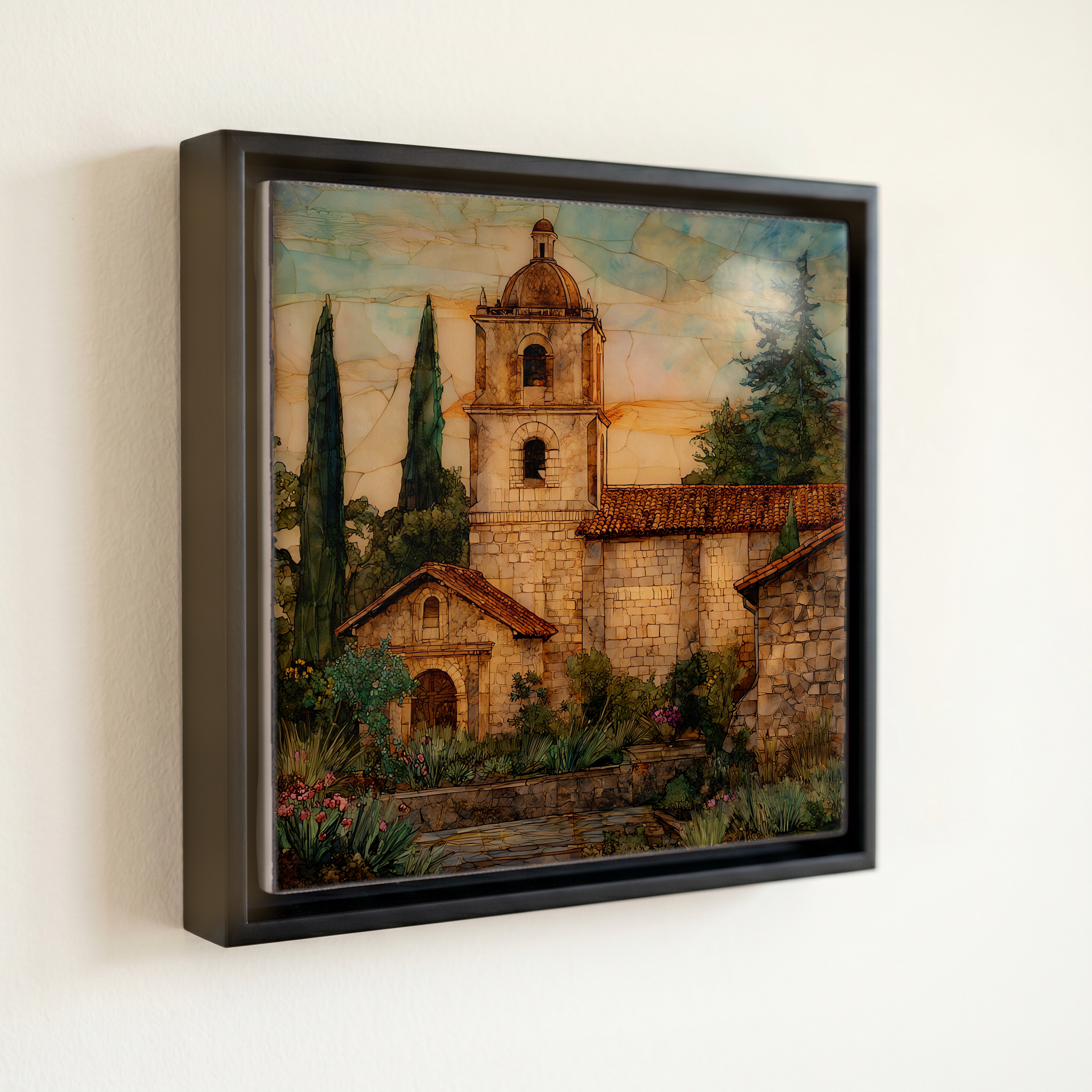
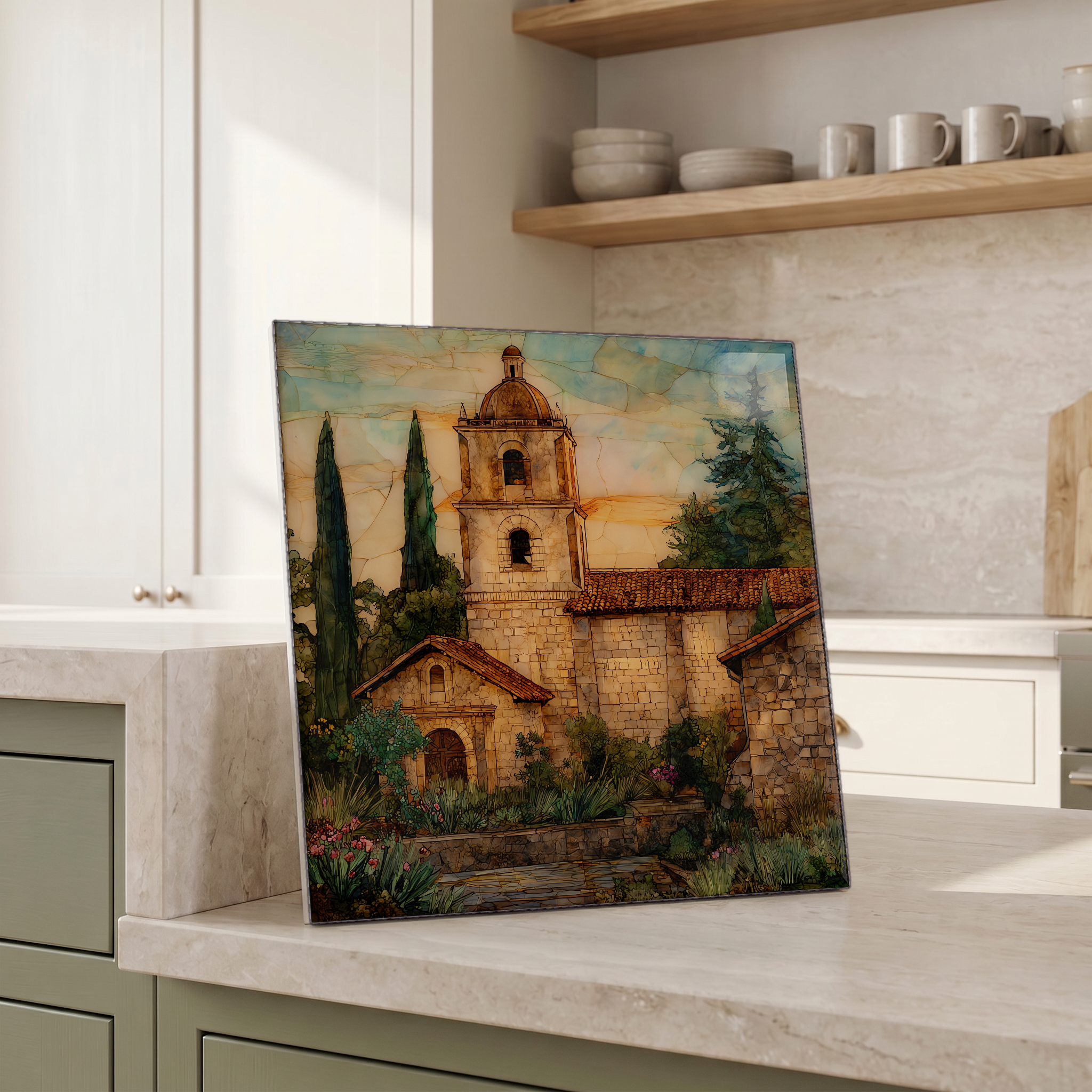
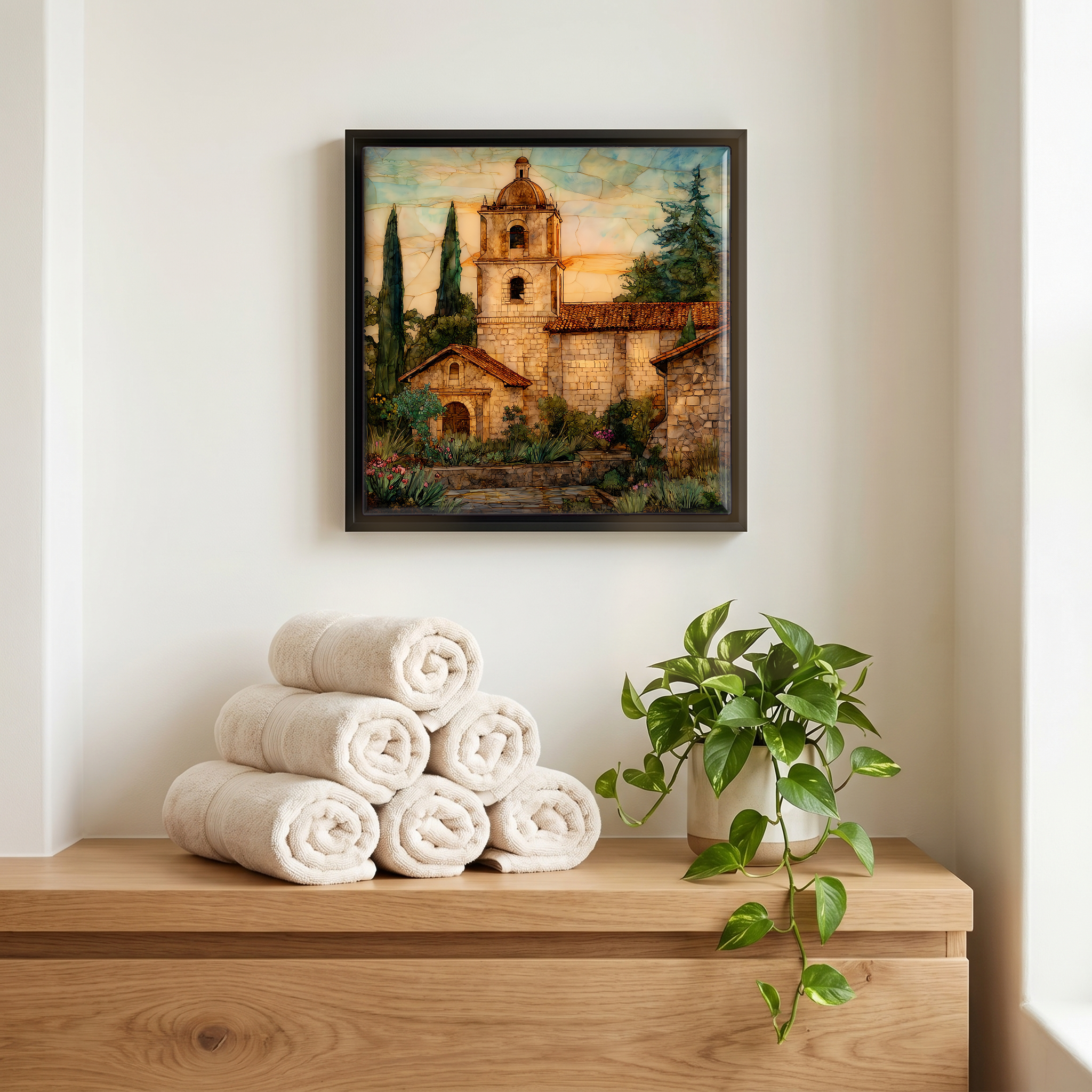
Carmel Mission, on ceramic.
Each tile is finished by hand in our Knoxville studio. Artwork is slowly infused into the ceramic surface under high heat and pressure, and rests beneath a thin glossy finish. The colour lives in the surface, not on top of it.
Pick any four 4-inch tiles — National Parks you've been to, a Smokies set, the four seasons of one place. $ for a set of , cork-backed, ready to live on the table.
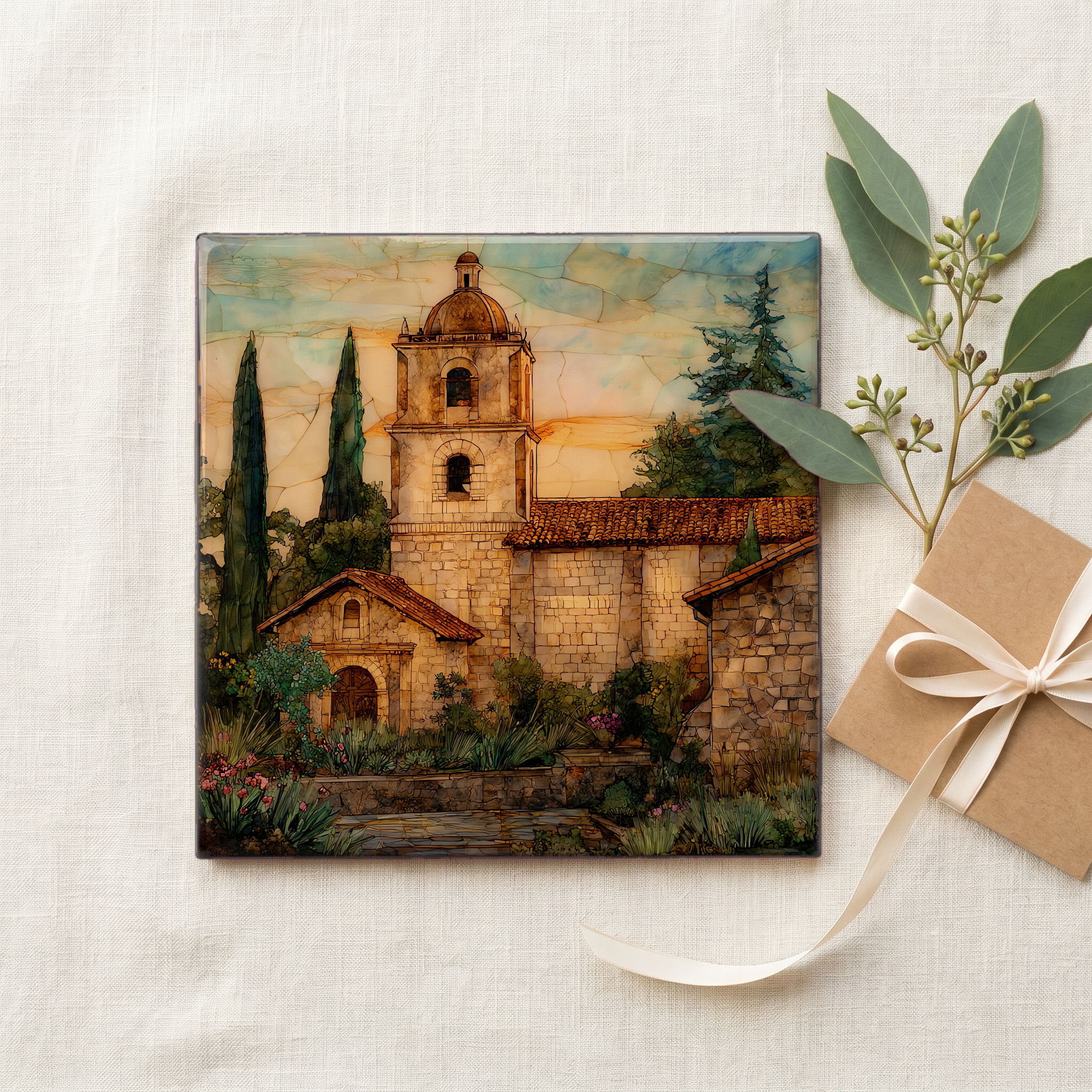
Each tile ships in a kraft box, tied with cream ribbon, with a handwritten note from the studio if you'd like to add one.
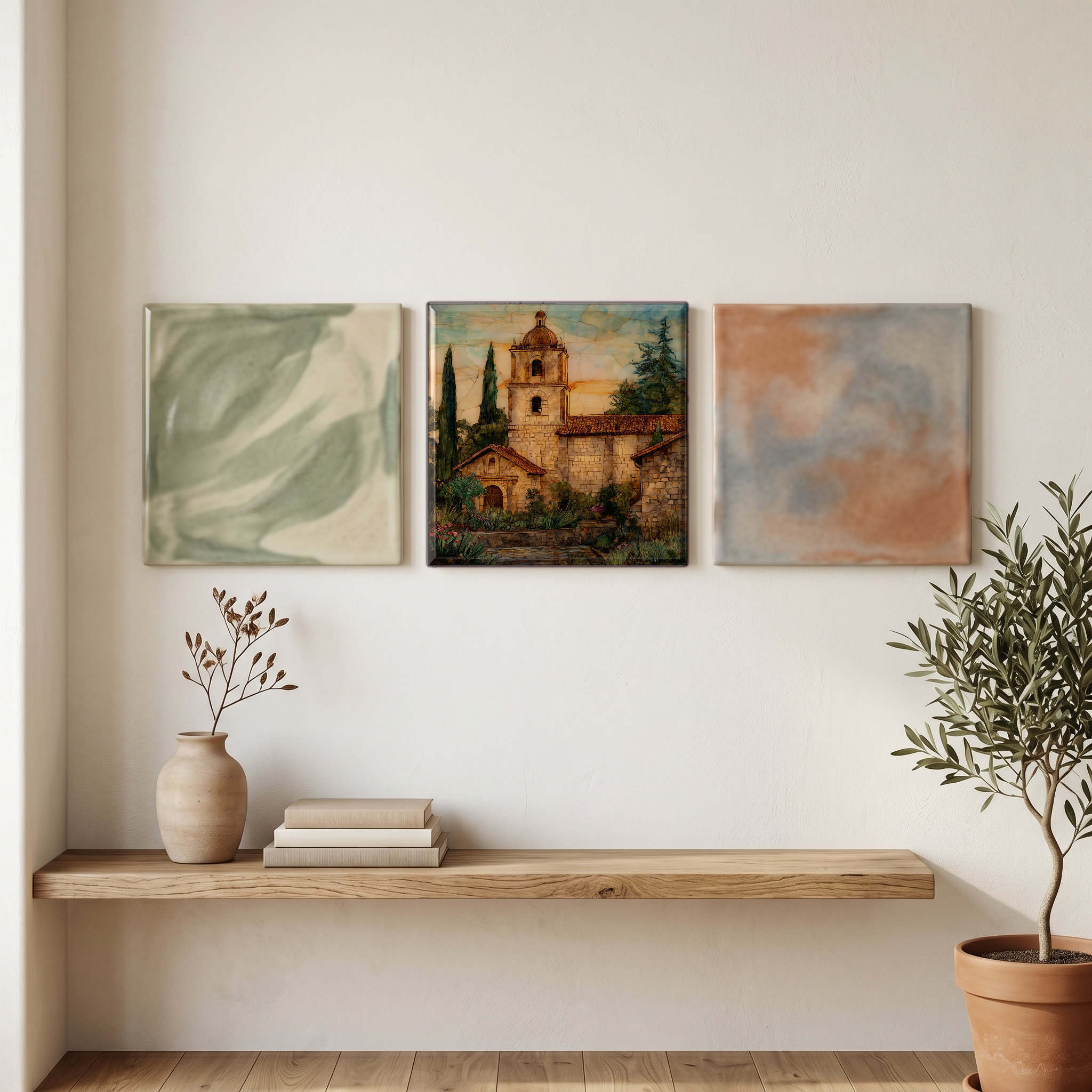
Three or five different vistas, hung together — a chapter of places you've been, or want to go.
The place, in three passes.
Mission San Carlos Borroméo del Río Carmelo, founded by Junípero Serra in June 1770 as the second of California's 21 Spanish missions. Originally established in Monterey, the mission was moved to its present site near the mouth of the Carmel River in 1771 to be closer to fresh water and farmland and farther from the Monterey Presidio. The stone basilica that stands today was completed in 1797 by master mason Manuel Estévan Ruiz. The complex sits about a mile south of central Carmel-by-the-Sea, in Monterey County, on the Monterey Peninsula. The site was designated a National Historic Landmark in 1961, a year after Pope John XXIII raised the church to the dignity of a minor basilica.
The basilica's most distinctive feature is its catenary curved ceiling, an architectural form rarely attempted in California mission construction. Ruiz, the Mexican-trained master mason who oversaw construction from 1793 to 1797, used local Santa Lucia sandstone quarried within a few miles of the site. The Moorish bell tower and the star-shaped window above the main entrance give the church a Catalan-Romanesque character unlike any other surviving California mission. By the late nineteenth century the roof had collapsed and the walls were weathering open to the sky. Restoration began in 1884 under Father Angelo Casanova, and continued in waves through the careful work of Sir Harry Downie from the 1930s into the 1970s.
The basilica and museum complex sit at 3080 Rio Road, about a mile south of central Carmel-by-the-Sea. The grounds are open to visitors most days, with reduced hours on Sundays around Mass. A general admission fee supports preservation; current rates and seasonal hours are posted on the parish website. The site includes the basilica, a working parish, the Junípero Serra Museum, the courtyard gardens with their two-hundred-year-old fountain, and the cemetery. Allow at least an hour. Late afternoon, an hour before closing, gives the most generous light on the sandstone façade and the most reliable quiet hour inside the nave. Photography is permitted on the grounds; flash is not used inside the basilica.