Wender·Vista
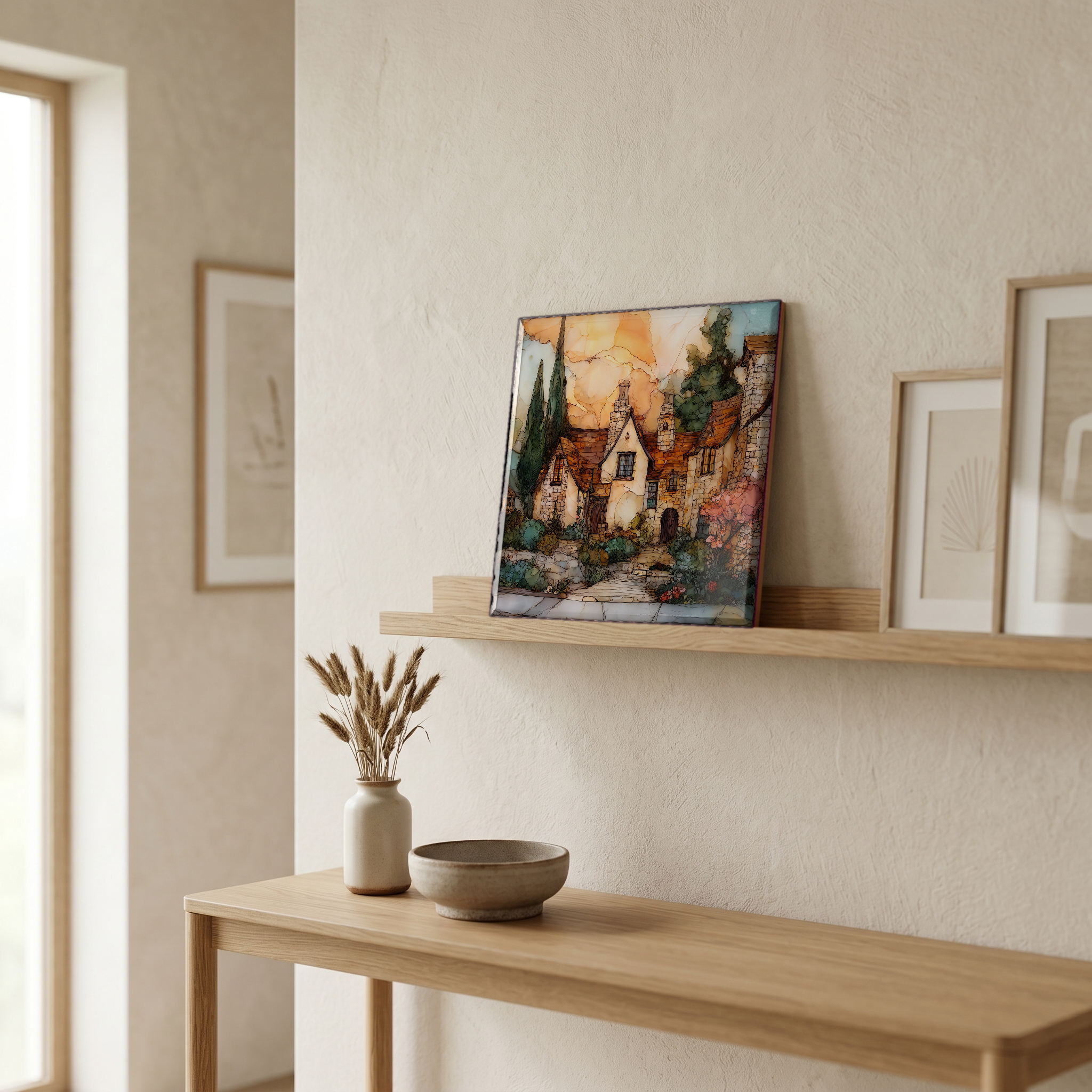
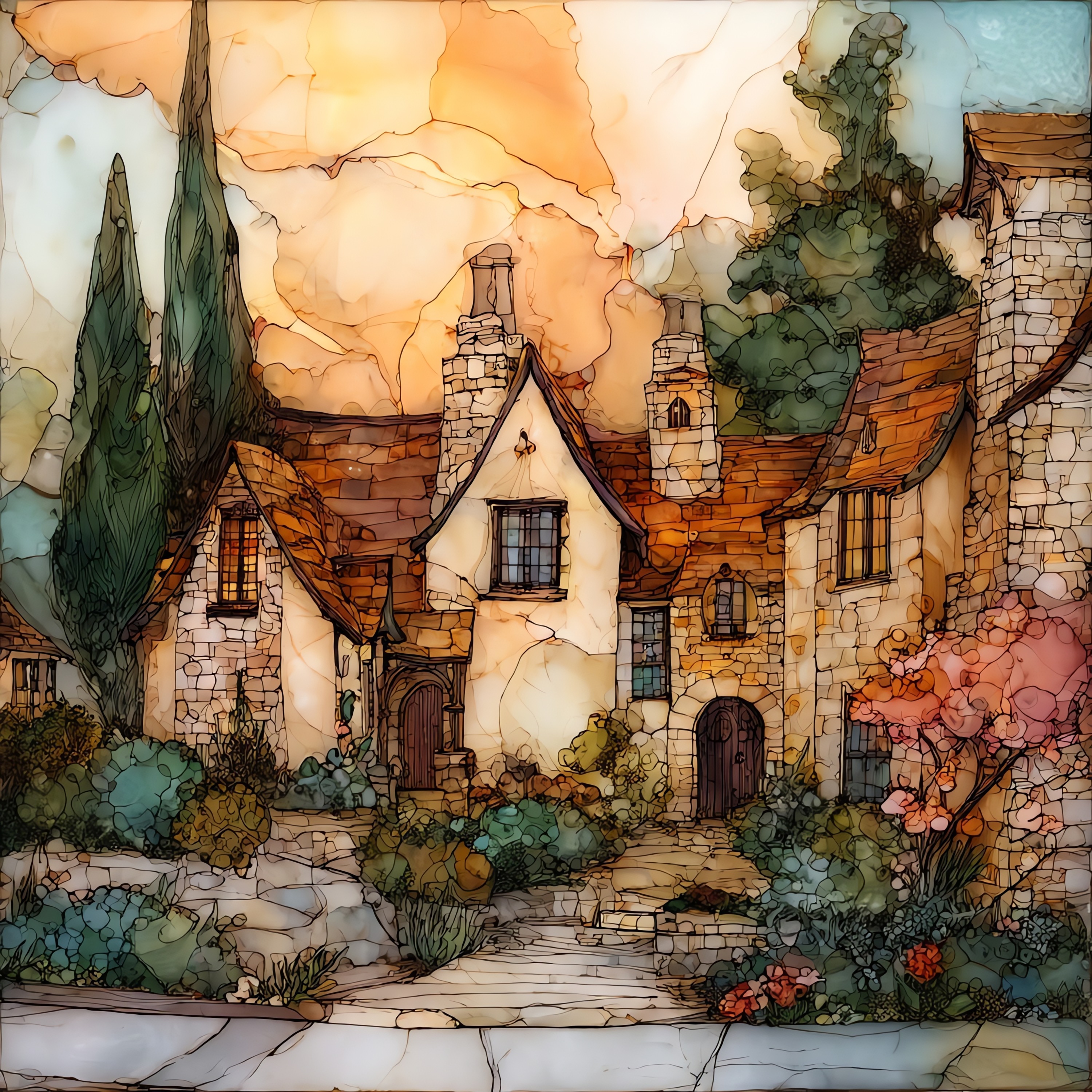
Carmel-by-the-Sea Cottages
shown on ceramic, 12-inch tileCalifornia · United States
on the Monterey Peninsula, just south of Pebble Beach

Carmel-by-the-Sea Cottages

houses smaller than the stories about them.

Where it lives

Not only on a wall.

A small tile on the nightstand catching the morning. A larger one above the fire. Yours, wherever you spend the slow hours.
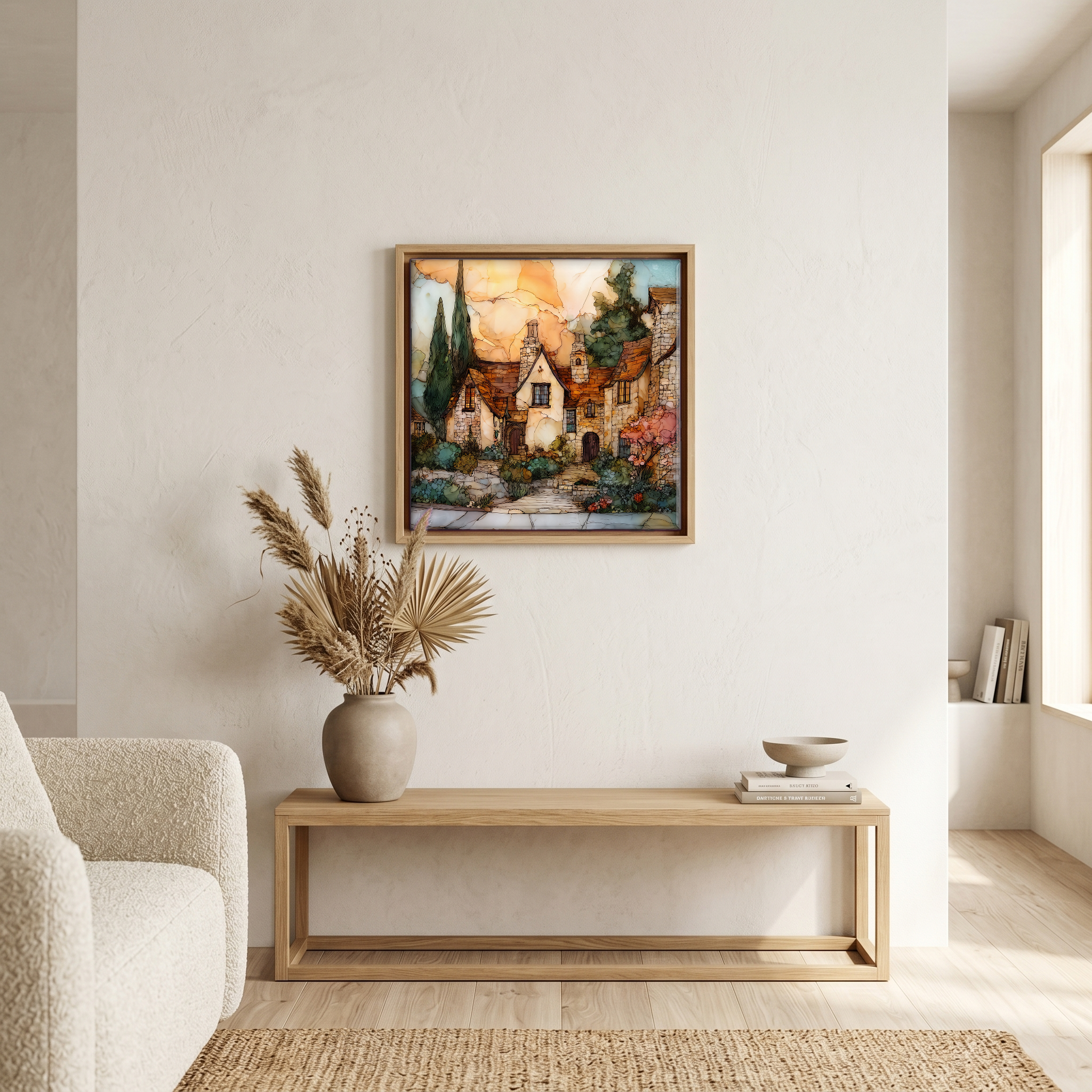
Above the bench, in a warm oak surround.
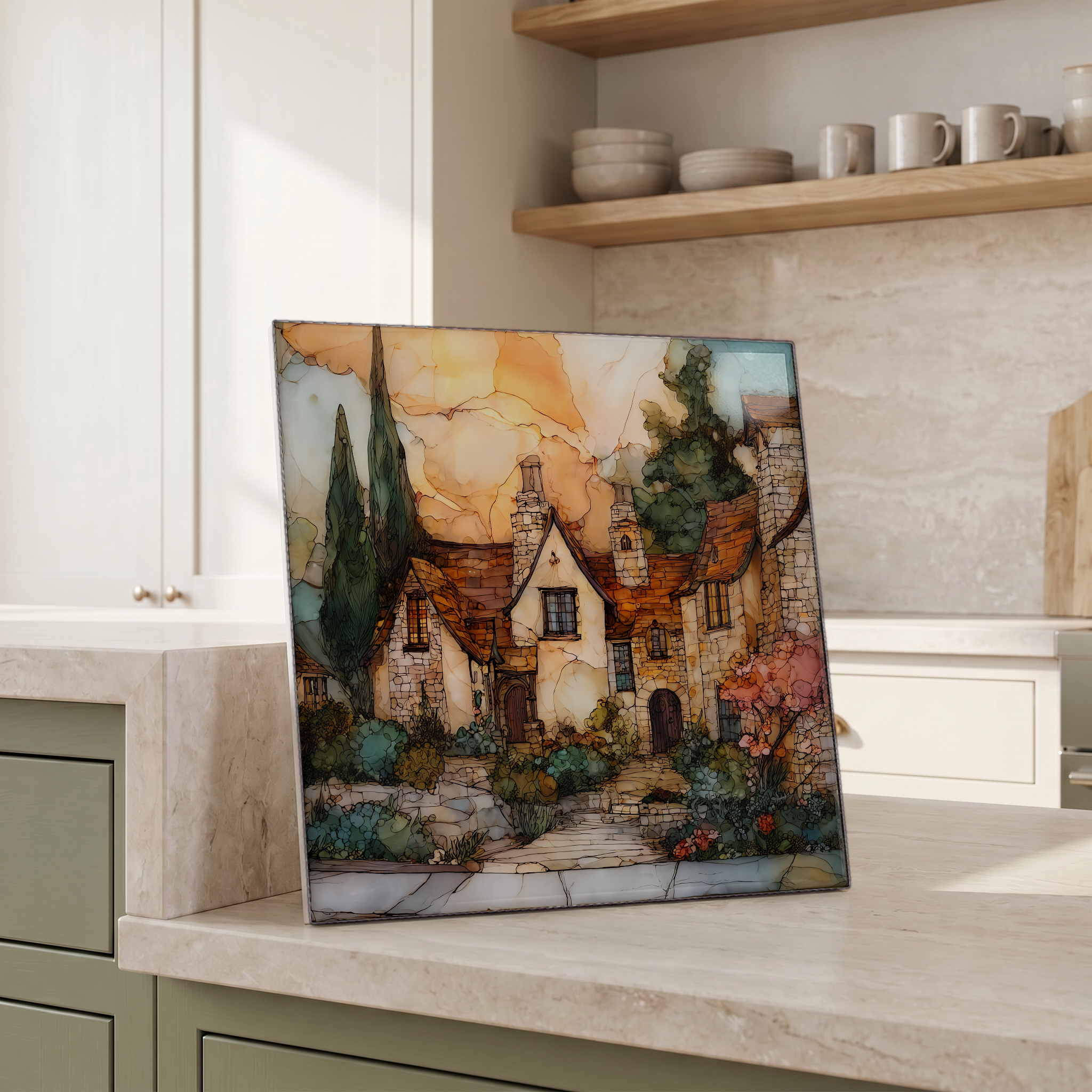
Beside the kettle, propped on the counter.
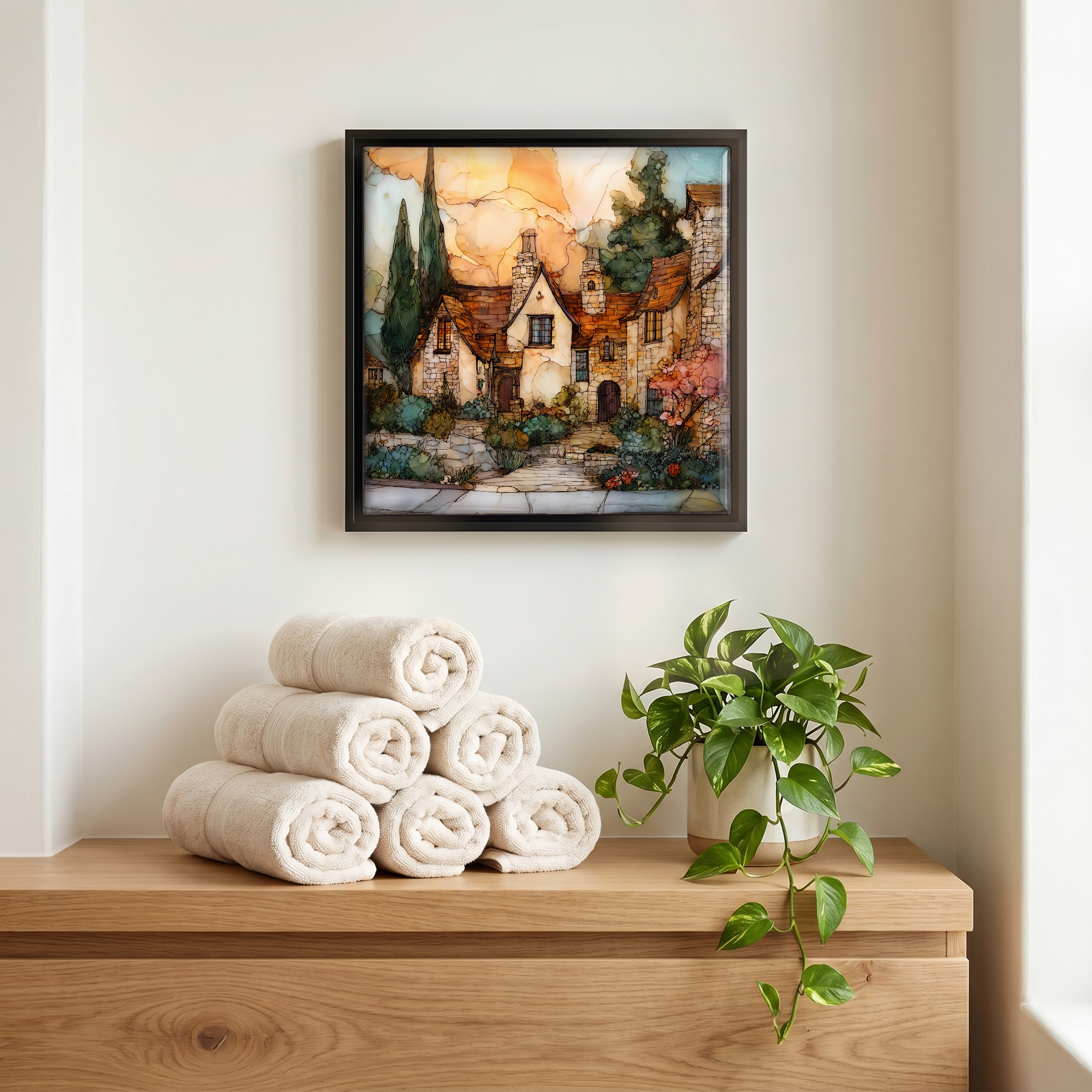
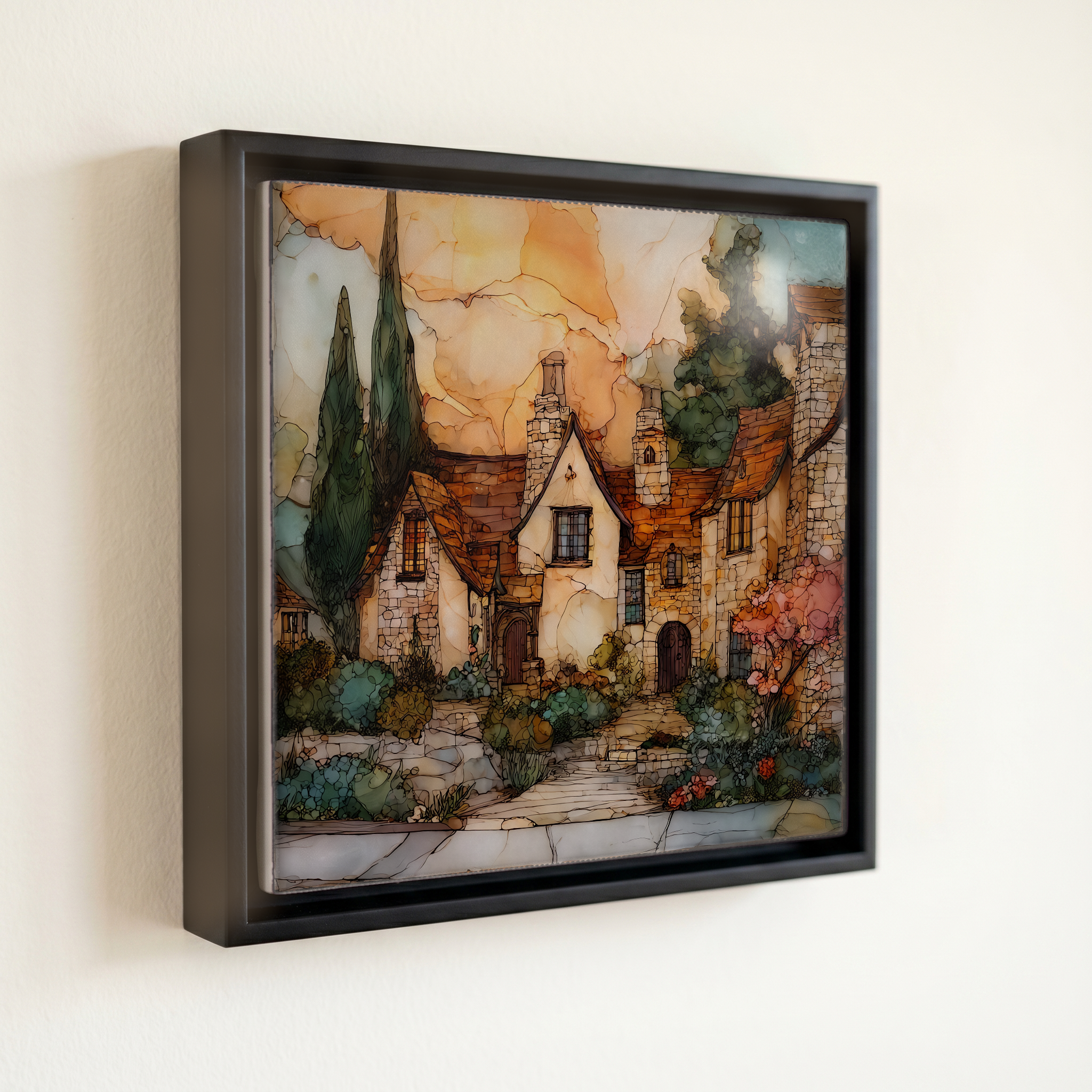
Above the linens, in a slim black surround.
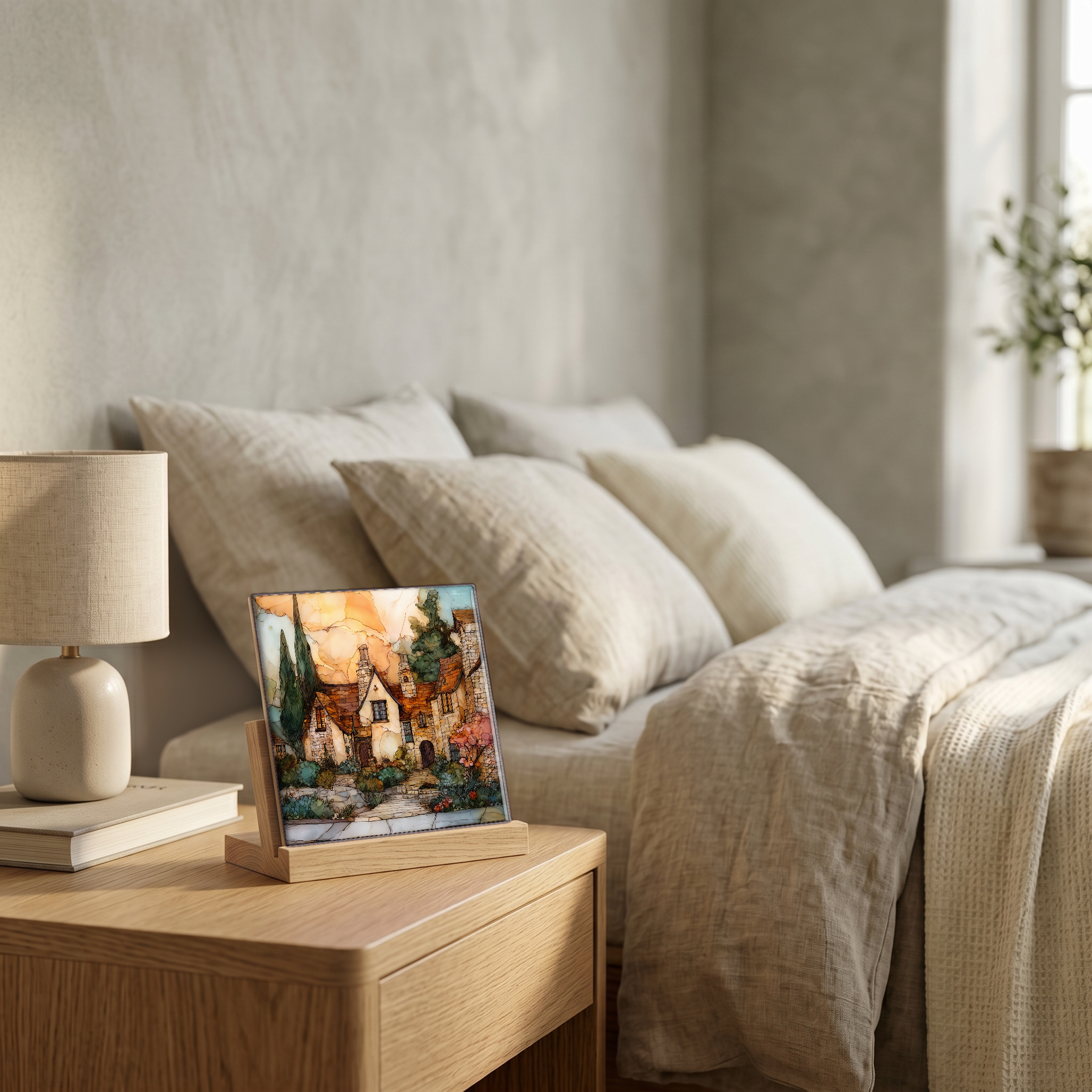
On the nightstand, on a light oak stand.
On a picture ledge, where the light comes in.
a note from the studio

A small village on the Monterey Peninsula, an hour south of Santa Cruz. About twenty of Hugh Comstock's storybook cottages still stand in the village he started building for his wife in 1924. Hansel, Gretel, the Tuck Box, all under 500 square feet, with rolled-shingle roofs that ripple like fabric and chimneys that lean. Residents collect their mail at the post office; the village has never had street addresses. The streets keep their oaks. Tourists come for the beach and the mission. The cottages reward walking.
from the studio
shown in a slim black floating frame · 6 × 6 in
— bring it home

Carmel-by-the-Sea Cottages, on ceramic.

Each tile is finished by hand in our Knoxville studio. Artwork is slowly infused into the ceramic surface under high heat and pressure, and rests beneath a thin glossy finish. The colour lives in the surface, not on top of it.

What kind of piece?
One tile — square or rectangle.
How big?
the popular one — counter, shelf, nightstand
6 × 6 in · 15 cm · 1.6 lb
Surface finish
A clear glossy finish — the artwork reads as if under resin. Ideal for show-pieces and framed wall art.
How it sits
A hidden cleat — sits ¼″ proud of the wall.
$58
Hand-finished and shipped from our studio at the foot of the Smokies. On your wall in about ten days.
size
6 × 6 in
15 cm
weighs
1.6 lb
solid in the hand
surface
ceramic, hand-finished
art rests beneath a thin glossy finish
from
Knoxville, TN
our family studio, at the foot of the Smokies
— start a Coaster Set

Pick any four 4-inch tiles — National Parks you've been to, a Smokies set, the four seasons of one place. $ for a set of , cork-backed, ready to live on the table.
comes gift-ready
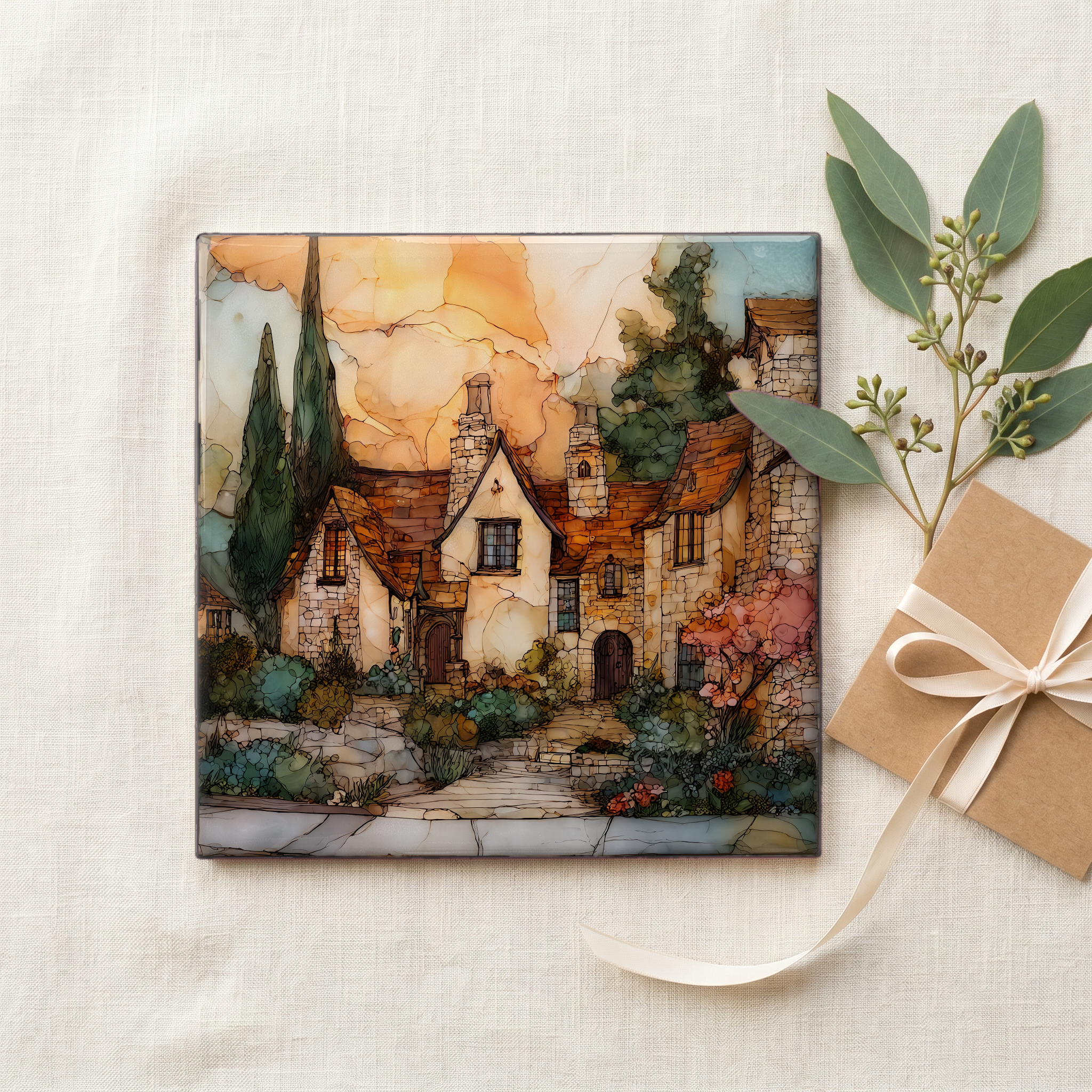
comes gift-ready

Each tile ships in a kraft box, tied with cream ribbon, with a handwritten note from the studio if you'd like to add one.
or build a grouping
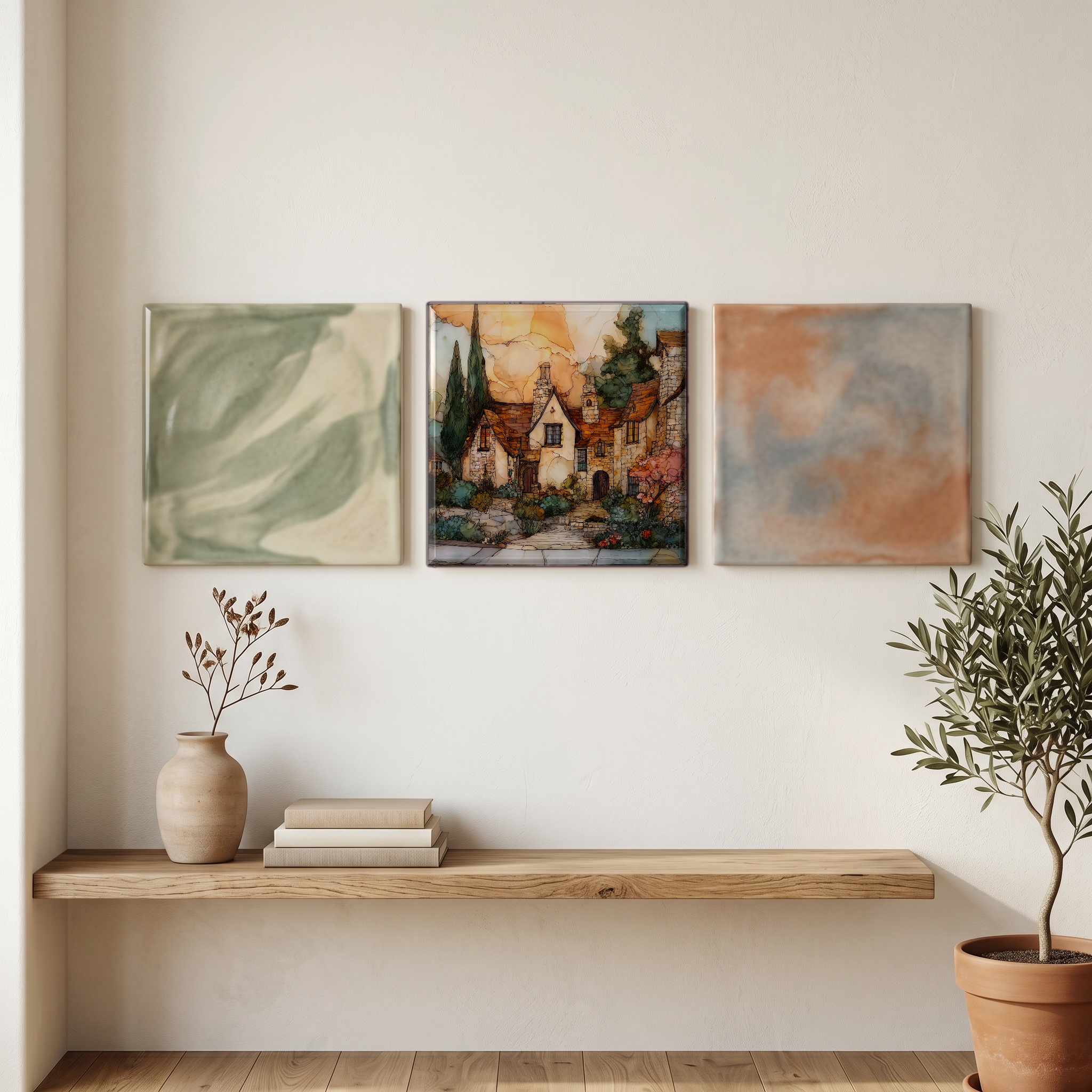
or build a grouping

Three or five different vistas, hung together — a chapter of places you've been, or want to go.

about Carmel-by-the-Sea Cottages

The place, in three passes.

A little of what's known, in case you fall down the rabbit hole — or want to go see it yourself.
the place

Carmel-by-the-Sea is a one-square-mile village on the Monterey Peninsula in central California, about 120 miles south of San Francisco. The settlement began in 1902 as a planned artists' colony promoted by developer James Frank Devendorf, who offered favourable terms to writers and painters. The village was incorporated in 1916. It sits between the white sand of Carmel Beach and Highway 1, with the Carmel River reaching the Pacific just to the south. Mission San Carlos Borromeo del Río Carmelo, founded in 1771 by Junípero Serra and now a basilica, anchors the south end of the village. Residents still collect their mail at the post office; addresses are described by cross-streets and block side.

the stone

The fairy-tale cottages were the work of Hugh Comstock, a self-taught builder who arrived in Carmel in 1924 to marry Mayotta Browne, a doll-maker. Browne needed display houses for her Otsy-Totsy dolls, so Comstock built her two: Hansel in 1924 and Gretel in 1925. The roofs swelled like risen dough, the chimneys leaned, and the houses held not a single right angle. Buyers wanted their own. Comstock went on to build about twenty more storybook houses in the village before turning to adobe in the 1930s. Most are under 500 square feet. The Tuck Box on Dolores Street, still a tearoom, is the most photographed. No two are alike.

the visit

Carmel sits about a ninety-minute drive south of San Jose on US-101 and Highway 1, or roughly two hours from San Francisco. The cottages are private homes, viewed from the sidewalk. The Carmel Heritage Society sells a self-guided walking map of the Comstock houses at the First Murphy House on Lincoln and Sixth. The village keeps no streetlights, no parking meters, and no chain restaurants; an old ordinance even requires permits for shoes with heels over two inches, though no one has ever been cited. Carmel Beach at the foot of Ocean Avenue is free and open daily. The Tuck Box on Dolores serves morning scones. Parking is hardest on summer weekends; mornings and weekday afternoons are quieter.

where
United States · Monterey County, California
elevation
66 m · 217 ft
position
36.5552° N · 121.9233° W
the neighborhood

What's nearby.

A handful of named places within an hour's walk or short drive. Some we've already painted; some we will.
1 km S
Carmel Mission Basilica
Spanish mission
5 km S
Point Lobos State Natural Reserve
coastal reserve
5 km N
Pebble Beach
coastal community
6 km N
17-Mile Drive
scenic road
8 km N
Monterey
harbour city
40 km S
Big Sur
coast
N
Carmel-by-the-Sea Cottages
Carmel Mission Basilica
Point Lobos State Natural Reserve
Pebble Beach
17-Mile Drive
Monterey
Big Sur
common questions

What people ask.

A few questions we get about Carmel-by-the-Sea Cottages — and about bringing the piece home.
about the place

Carmel-by-the-Sea is a small village on the Monterey Peninsula in California, about 120 miles south of San Francisco and 5 miles south of Monterey. It sits between Highway 1 and the Pacific, with the Carmel River reaching the ocean just to the south.

Most were built by Hugh Comstock, a self-taught builder who arrived in Carmel in 1924. He built the first, Hansel, that year for his wife Mayotta Browne, a doll-maker. About twenty Comstock cottages still stand in the village.

Hugh Comstock had no formal training and built the first cottage to display his wife's Otsy-Totsy dolls. The wavy rolled-shingle roofs, leaning chimneys, and absence of right angles came from improvising, then became the style buyers asked for. The vocabulary is now called Storybook architecture.

The Comstock cottages are private homes; visitors view them from the sidewalk. The Carmel Heritage Society sells a walking map of about twenty cottages, available at the First Murphy House on Lincoln and Sixth. The Tuck Box on Dolores is the only one routinely open as a tearoom.

The village has never had home mail delivery. Residents collect mail at the post office on Fifth Avenue, a tradition kept since incorporation in 1916. Properties are identified by their cross-streets and the side of the block, sometimes by name. The village still preserves the custom.

Spring and autumn are usually the clearest. Summer mornings often bring marine fog off the Pacific that burns off by midday; weekend parking is hardest from June through August. Winter is the quietest season, with rain and the lowest visitor volumes.

Yes. The Tuck Box on Dolores Street between Ocean and Seventh was built by Hugh Comstock in the late 1920s as a tea house. It has operated as a tearoom for most of the century since, currently serving English-style breakfast and scones. It is the most photographed of the Comstock cottages.

about the piece in your home

It has been a meaningful gift for many of our customers connected to the area. The Comstock cottages are one of the village's most-loved signatures, recognised instantly by anyone who has walked Dolores Street. A Coaster Set or a Small with a handwritten note from the studio carries well.

The piece sits naturally in coastal-modern, cottage-traditional, and English-storybook rooms. It also reads well in a child's room or a reading nook, where the storybook character of the building does most of the work and the warmer colours soften a hard-edged space.

The storybook vocabulary is having a moment as cottage-core and English-country styles return to interiors. The piece reads coastal because of the Monterey light in the palette and storybook because of the building. It crosses both categories without belonging fully to either.

A single Large reads well above a standard sofa or console. For a fuller installation, the 4-tile Mural carries the same image at scale, and the 9-tile Mural is built for a wall that wants the storybook street to read end to end.

Yes. Order it in the Dura Satin or Matte finish for any room with steam or splash: kitchen backsplash, bathroom wall, shower surround. The colour lives in the ceramic surface and is scratch-resistant. The Glossy finish is for framed wall art in dry rooms.

Microfibre cloth and water for routine cleaning. For tougher residue, a mild dish soap is fine. Avoid abrasive scrubbers and bleach-based cleaners. The colour is slowly infused into the ceramic surface under high heat and pressure, so it does not sit on top to be scrubbed off.

Yes. Every WenderVista piece is made and hand-finished in our Knoxville studio. We do not license artwork from third parties or reprint stock images. Reid Wender is the curator; the studio holds the work.

if this one stayed with you

A few you might also love.

Hand-picked by the eye that found Sorapis. Same air, same kind of quiet.