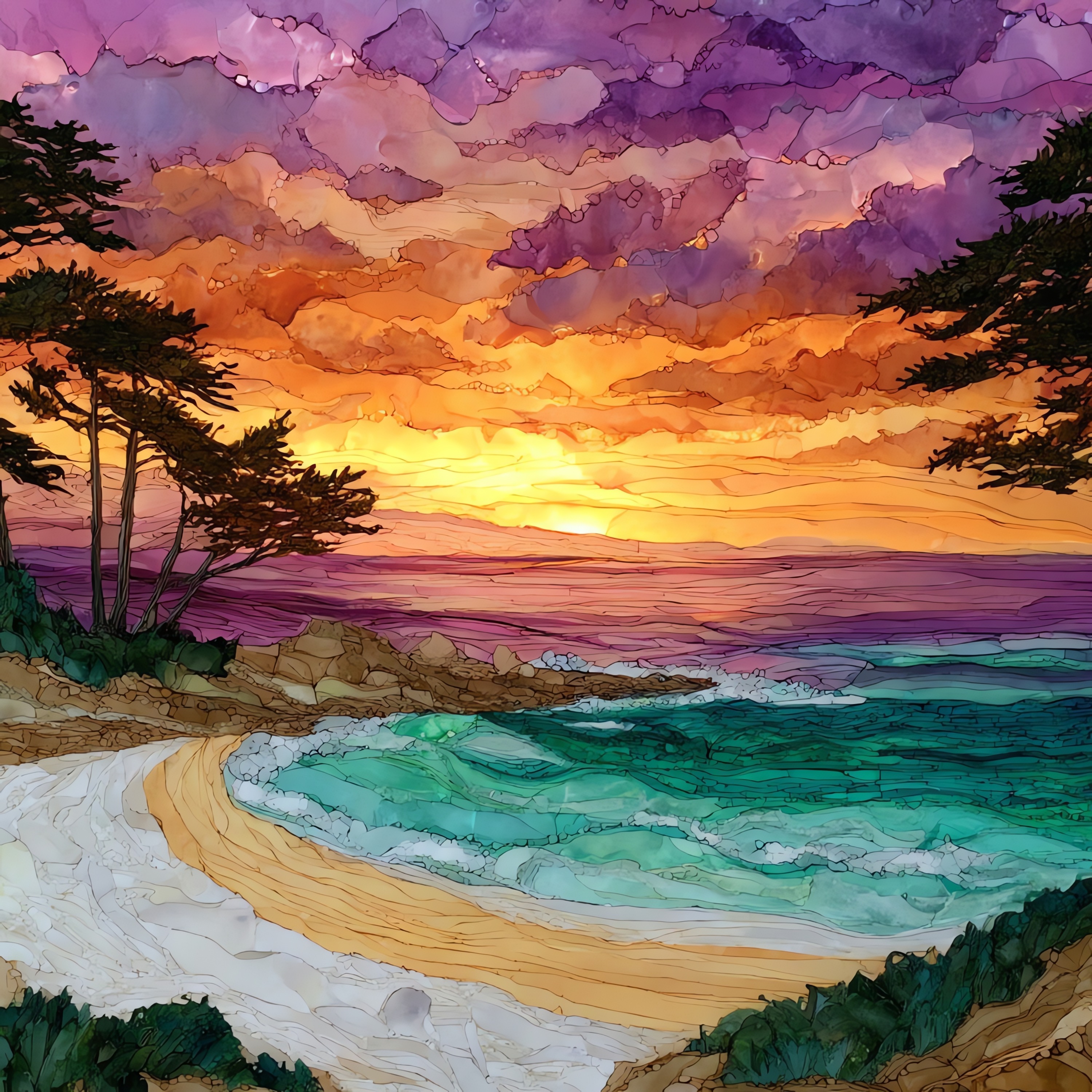
Carmel Beach Sunset
— — the colour the cypresses hold last.
Not only on a wall.
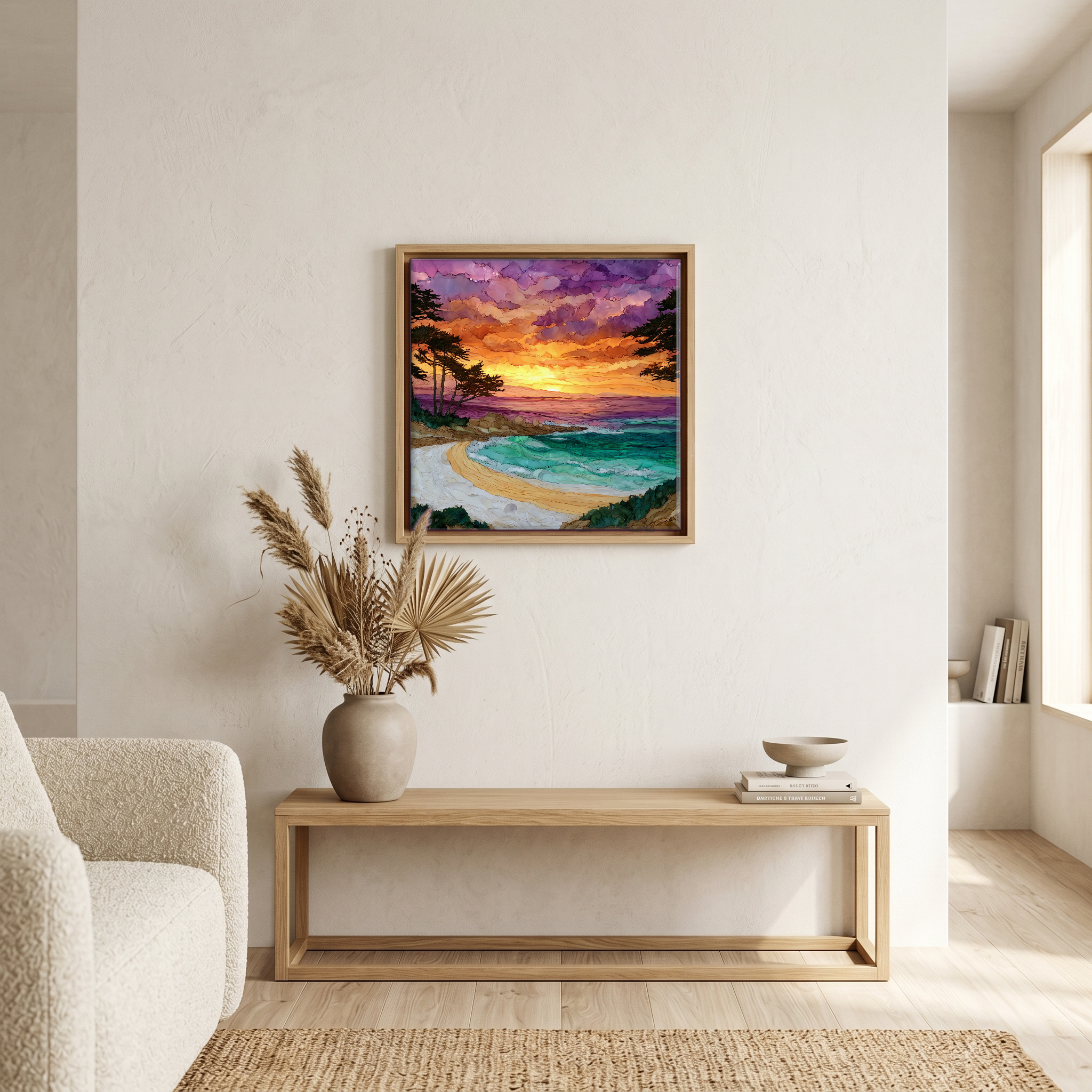
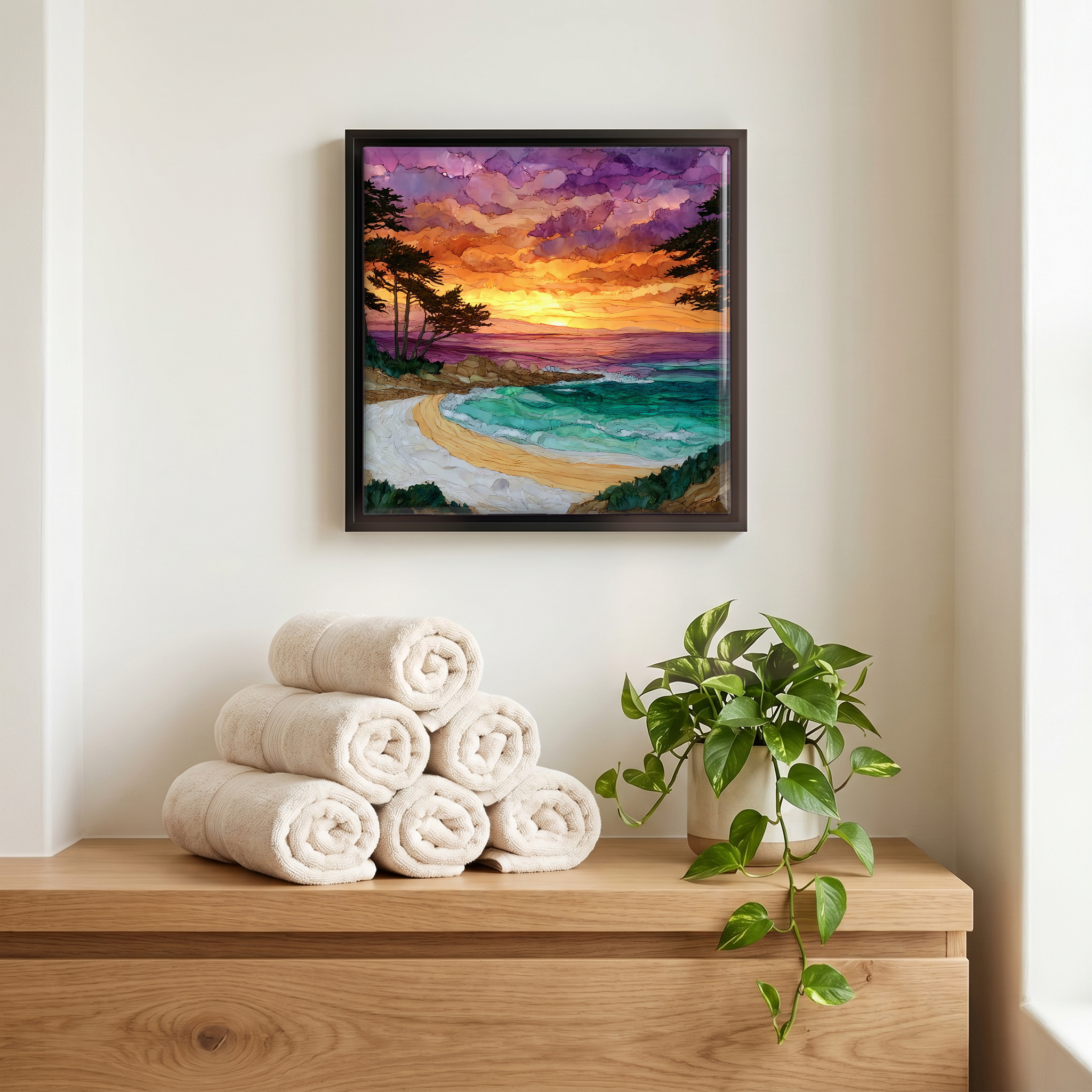
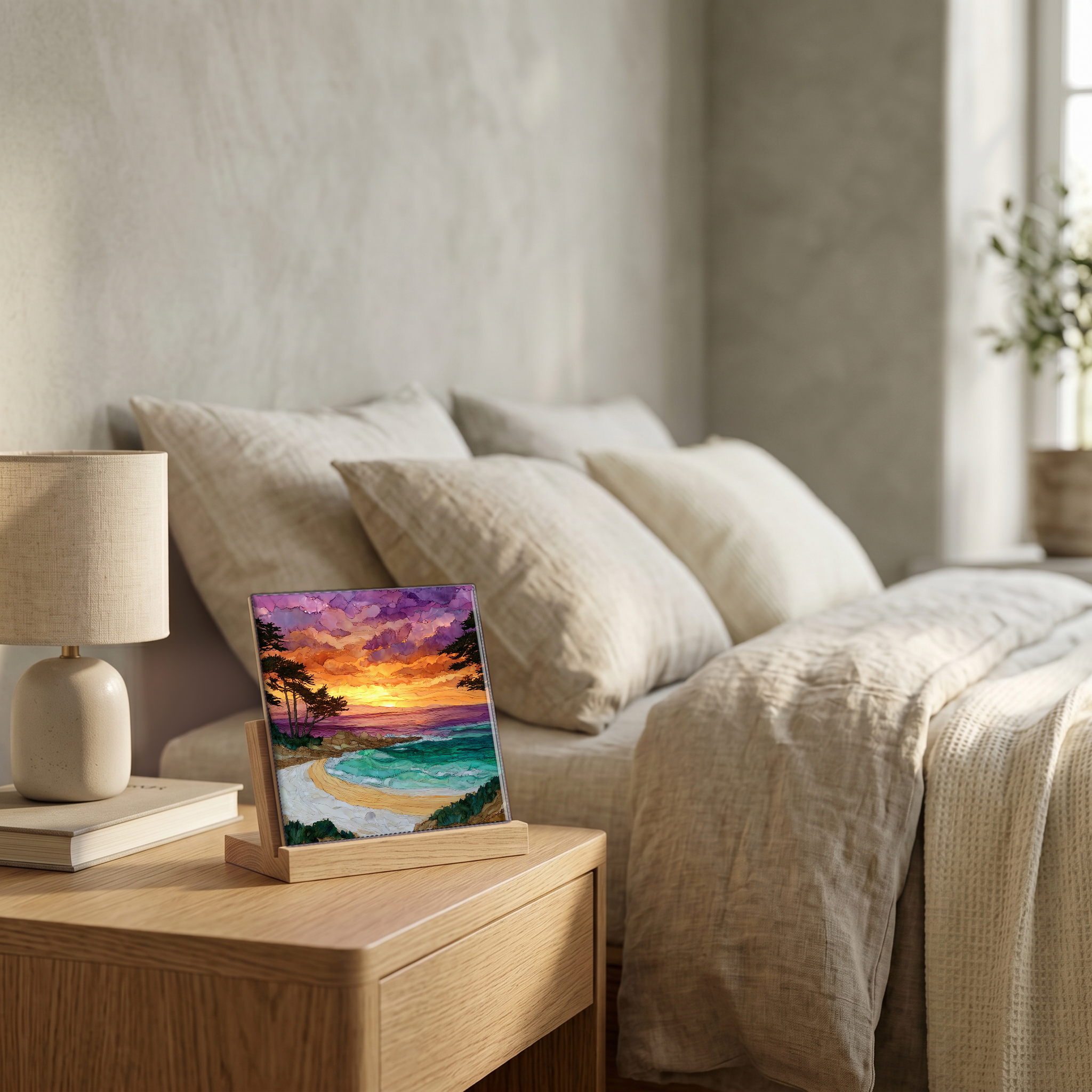
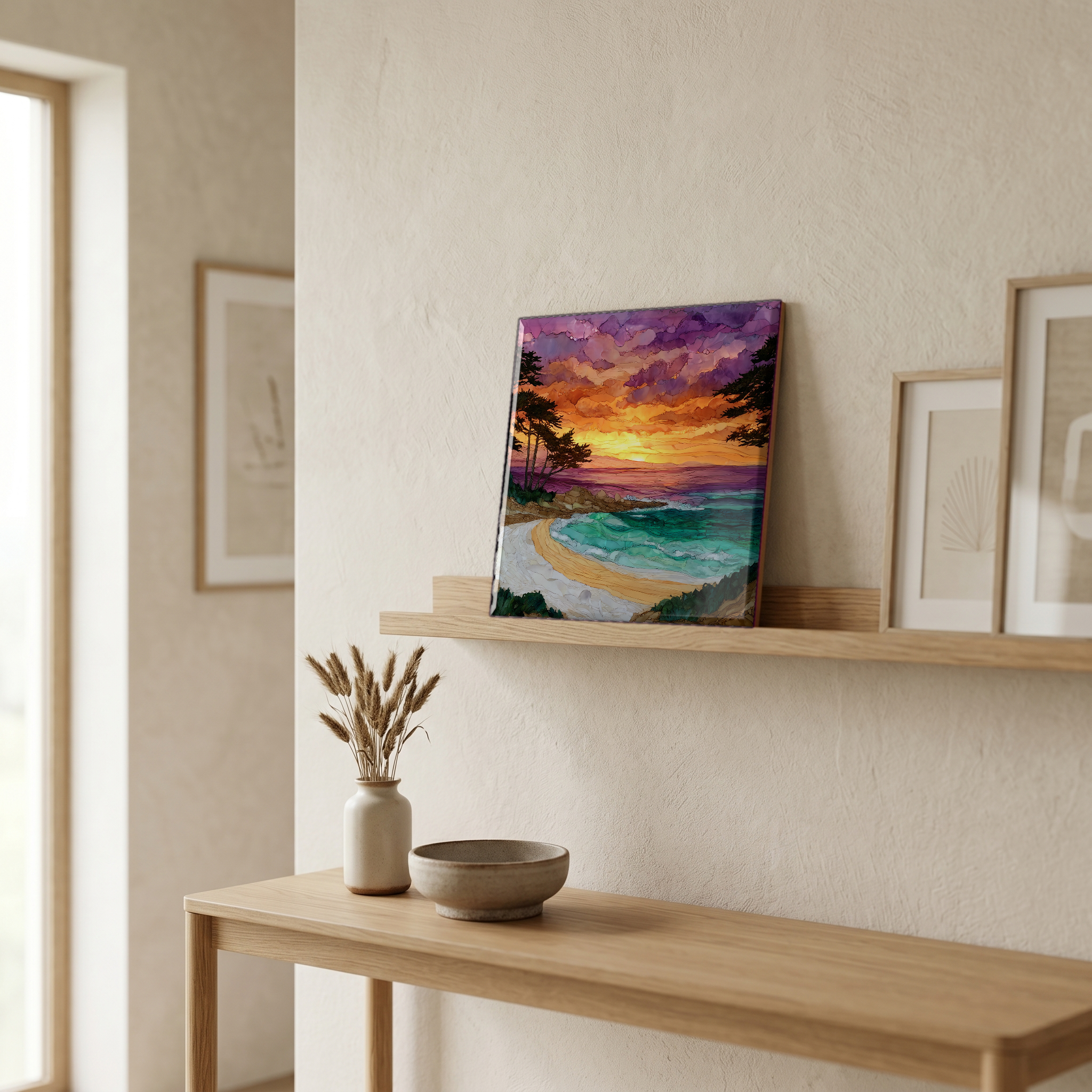
“The crescent of white sand at the foot of Ocean Avenue, where the town gives out and the Pacific begins. The cypresses on the bluff above are Monterey cypress, a species that grows wild in only two places on earth, both within a few miles of where you'd be standing. The sand stays bright for a long time after the sun drops. Dogs run off-leash along the surf line. The light goes pink, then orange, then a slow indigo that the cypresses hold longer than anything else in the frame.
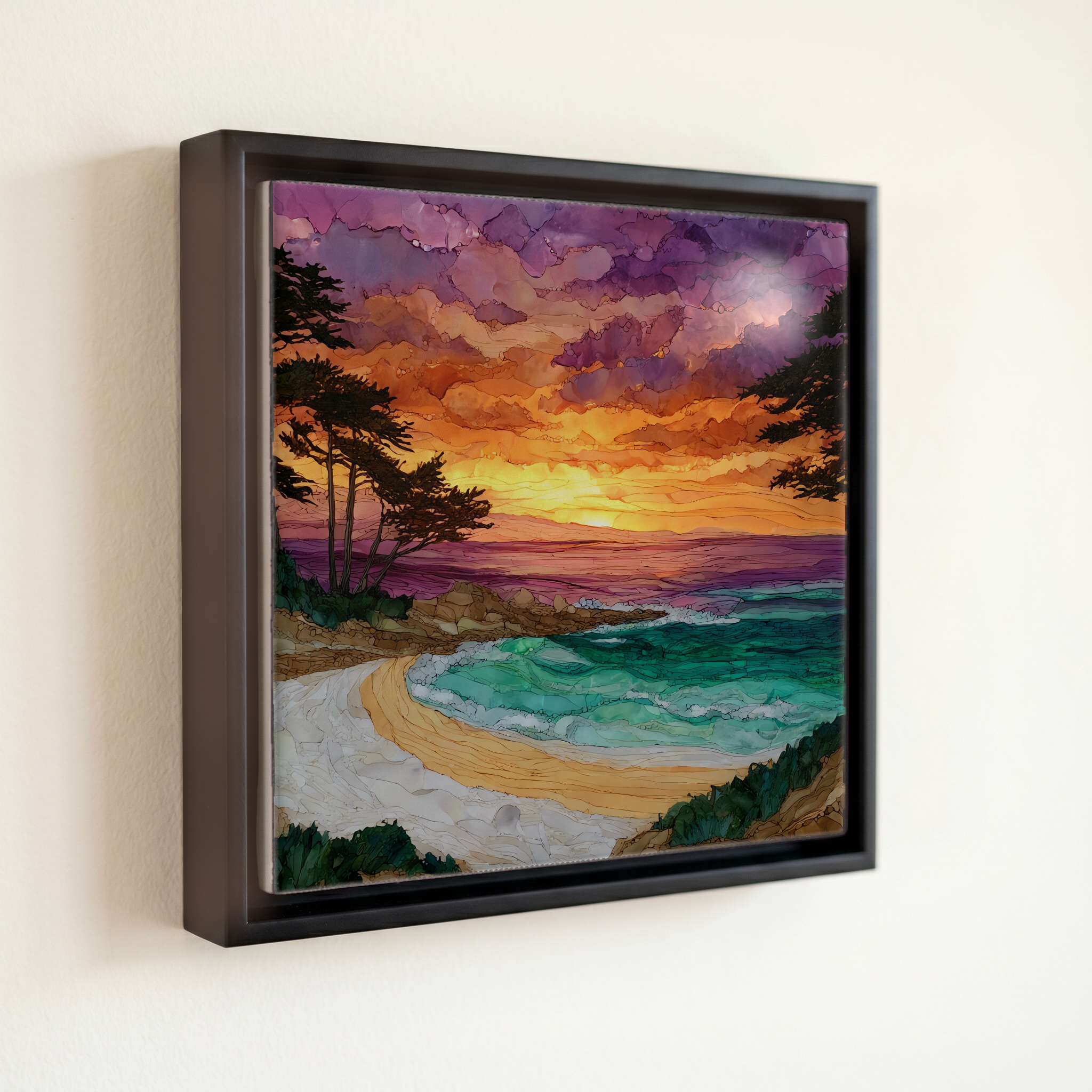
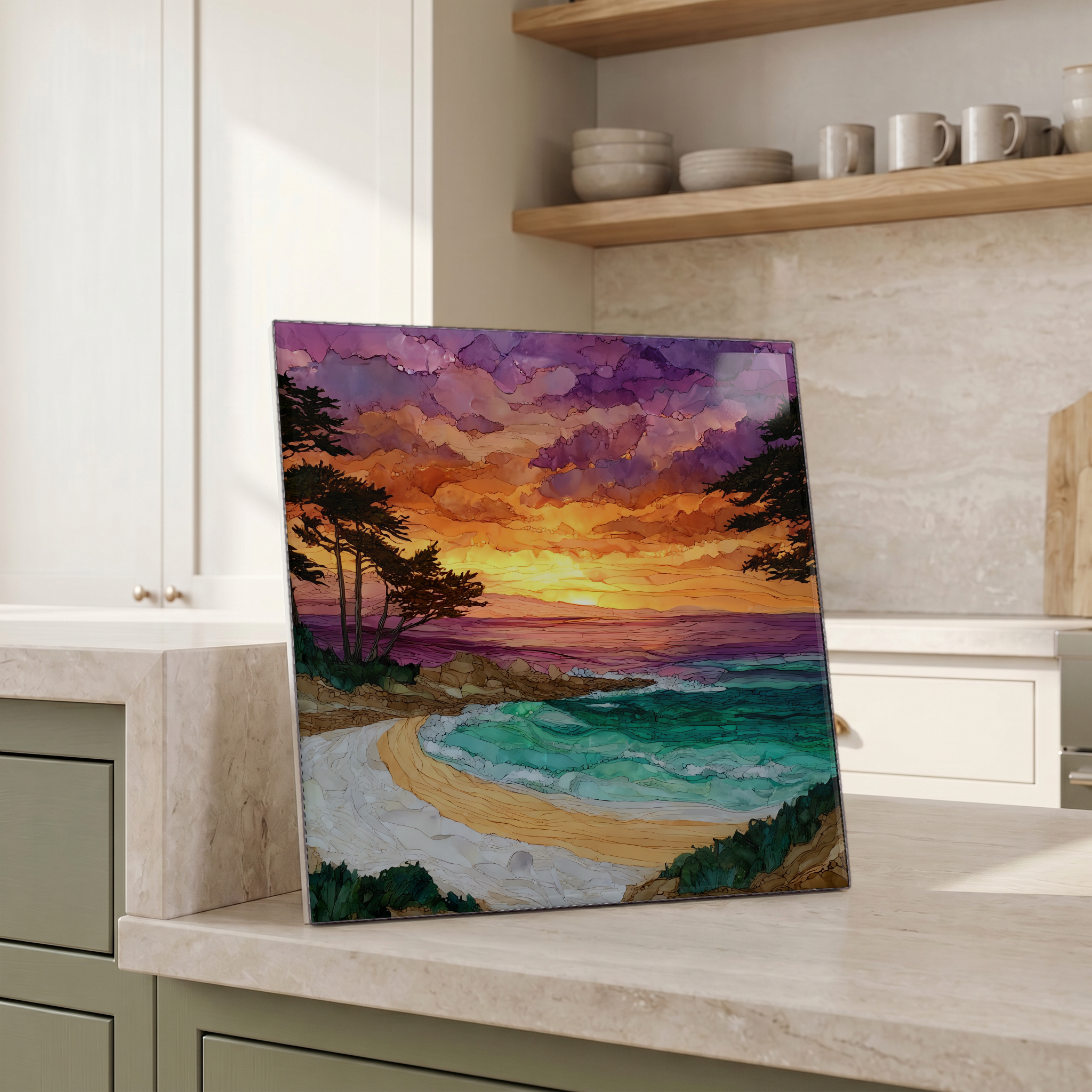
Carmel Beach Sunset, on ceramic.
Each tile is finished by hand in our Knoxville studio. Artwork is slowly infused into the ceramic surface under high heat and pressure, and rests beneath a thin glossy finish. The colour lives in the surface, not on top of it.
Pick any four 4-inch tiles — National Parks you've been to, a Smokies set, the four seasons of one place. $ for a set of , cork-backed, ready to live on the table.
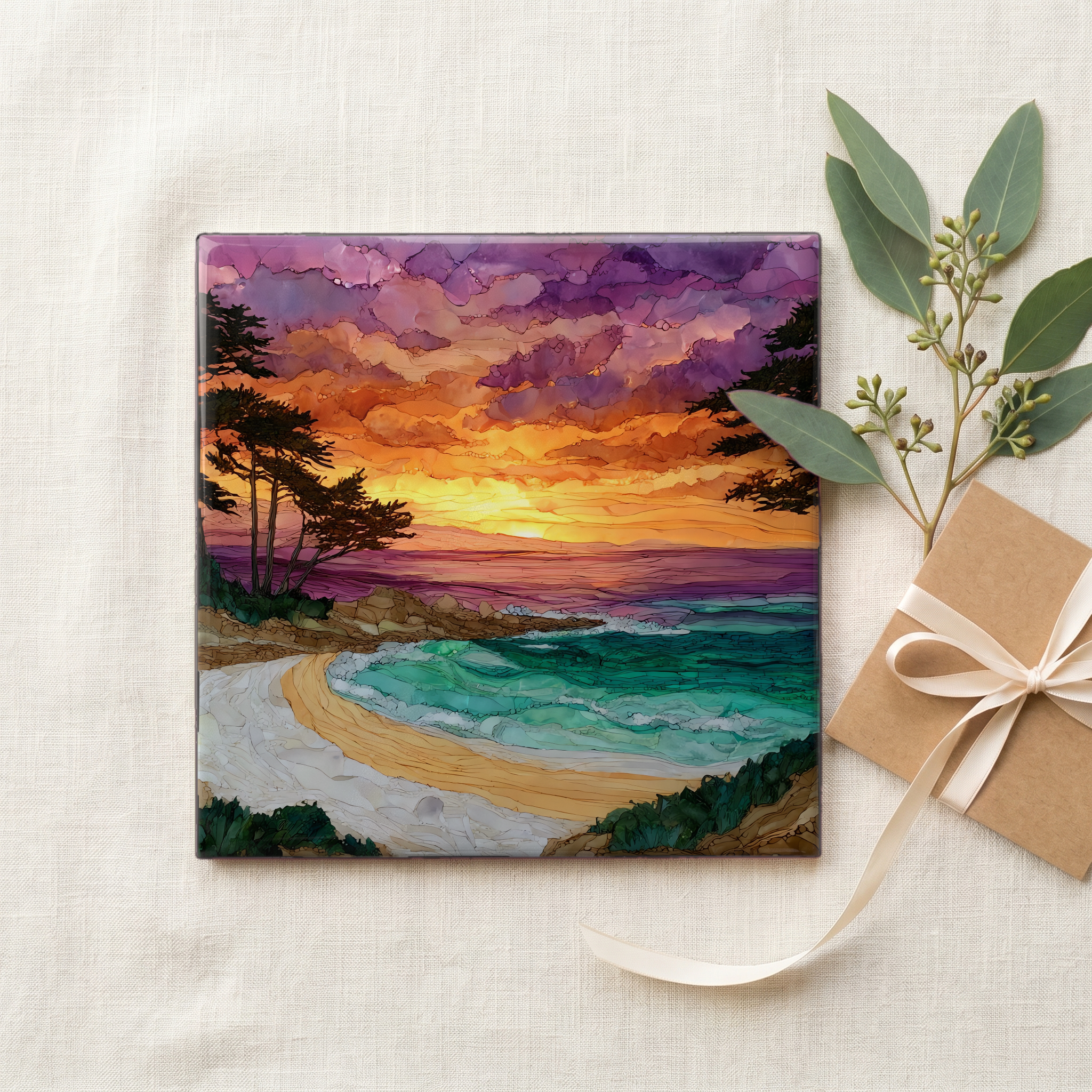
Each tile ships in a kraft box, tied with cream ribbon, with a handwritten note from the studio if you'd like to add one.
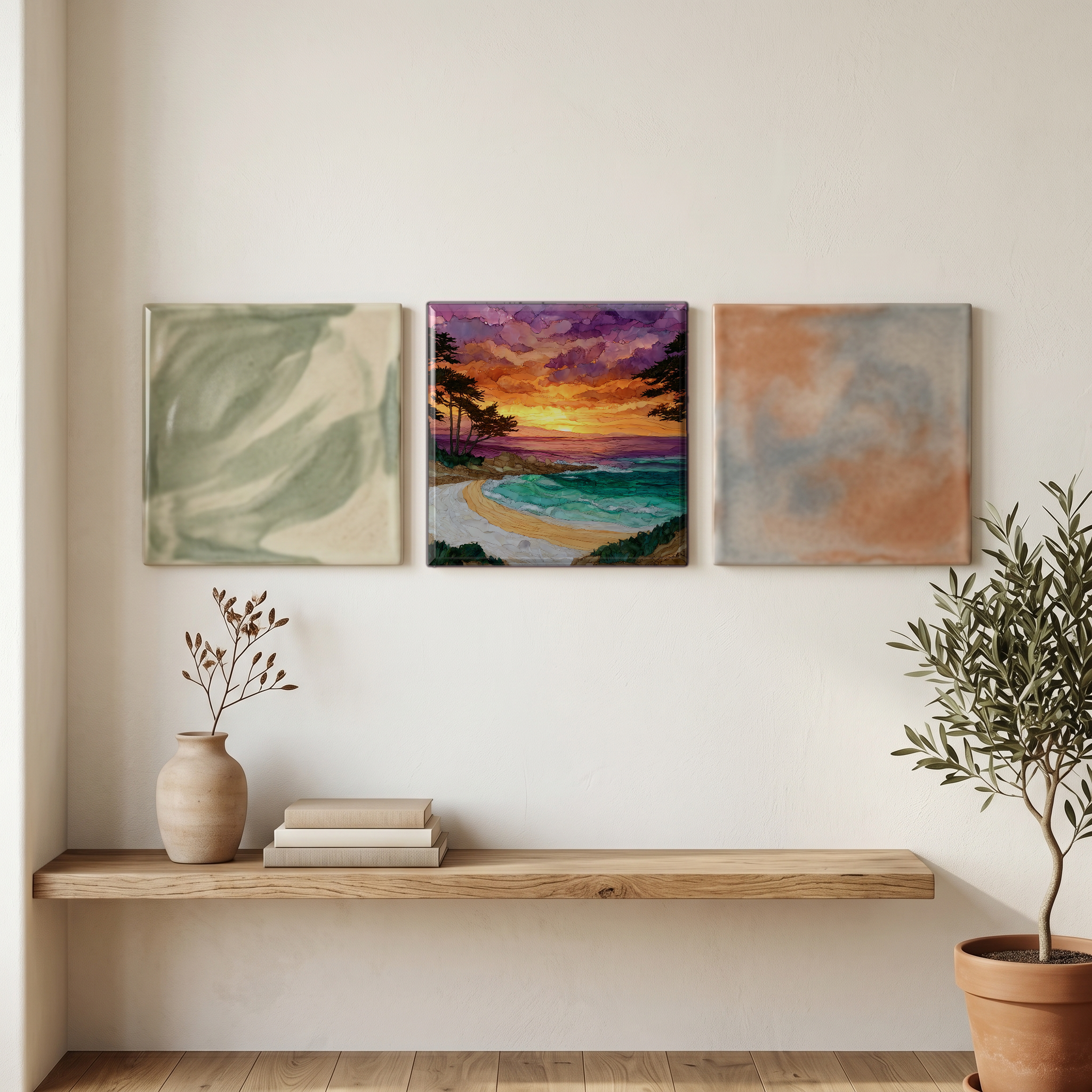
Three or five different vistas, hung together — a chapter of places you've been, or want to go.
The place, in three passes.
Carmel Beach lies at the western end of Ocean Avenue in Carmel-by-the-Sea, a one-square-mile city on the central California coast. The town sits in Monterey County, about 120 miles south of San Francisco and 5 miles south of the city of Monterey. The beach is a crescent of white sand roughly a mile long, bounded to the north by the rocks where the Pebble Beach links begin, and to the south by the mouth of the Carmel River. The bluffs above the sand are lined with Monterey cypress, a tree native to only this stretch of coast and to Point Lobos a few miles south. Access is free, and parking runs along Scenic Road above the beach.
The beach faces due west across the Pacific, which means the sun sets directly into the water for most of the year. From the spring equinox through late summer, the sun drops behind the horizon between 7:30 and 8:30 p.m. The white sand, composed mostly of fine-grained quartz and feldspar weathered from local granite, holds the colour of the sky for a long time after the sun is down. The Monterey cypress on the bluffs go to silhouette first; the surf line stays luminous; the wet sand becomes a mirror of whatever colour the clouds are doing. There is no artificial light on the beach itself, and the colour can hold for a full half-hour after the horizon goes dark.
Carmel Beach is open to the public at all hours, at no charge. Dogs are permitted off-leash, an ordinance the city has held since the 1970s and one that draws visitors from across the state. Beach fires are restricted to designated pits south of Tenth Avenue during posted hours. The town of Carmel-by-the-Sea sits a five-minute walk uphill, with restaurants, galleries, and a small post office that doubles as the city's mail-delivery point. The village has no home delivery and no street numbers, so a stop at the post office is built into local routine. Parking is on Scenic Road; the lot at the foot of Ocean Avenue fills early on weekends, especially when the cypress shadows are long.