Wender·Vista
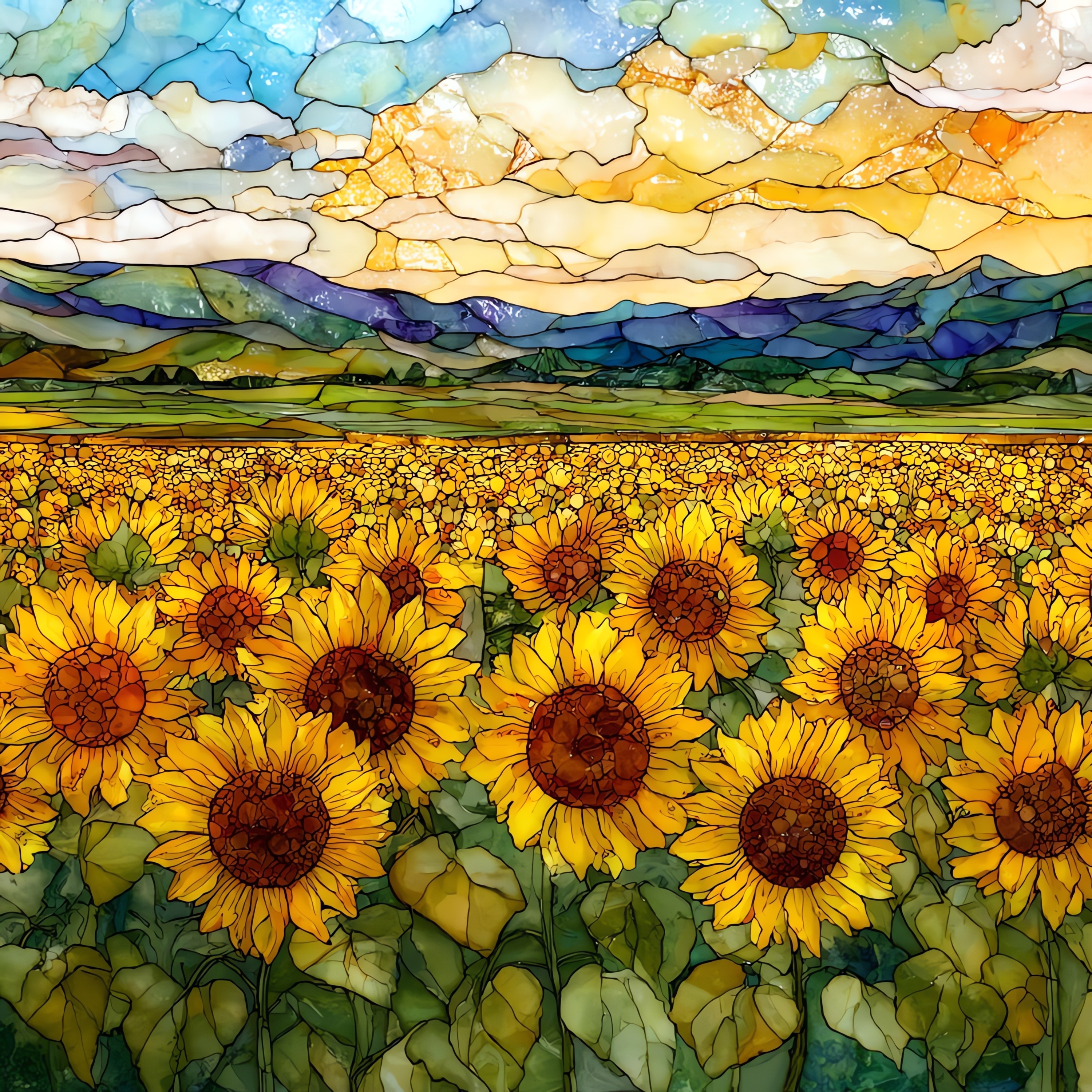
Capay Valley Sunflowers
shown on ceramic, 12-inch tileCalifornia · United States
an hour northwest of Sacramento, along Highway 16

Capay Valley Sunflowers

the week the valley turns to face the sun.

Where it lives

Not only on a wall.

A small tile on the nightstand catching the morning. A larger one above the fire. Yours, wherever you spend the slow hours.
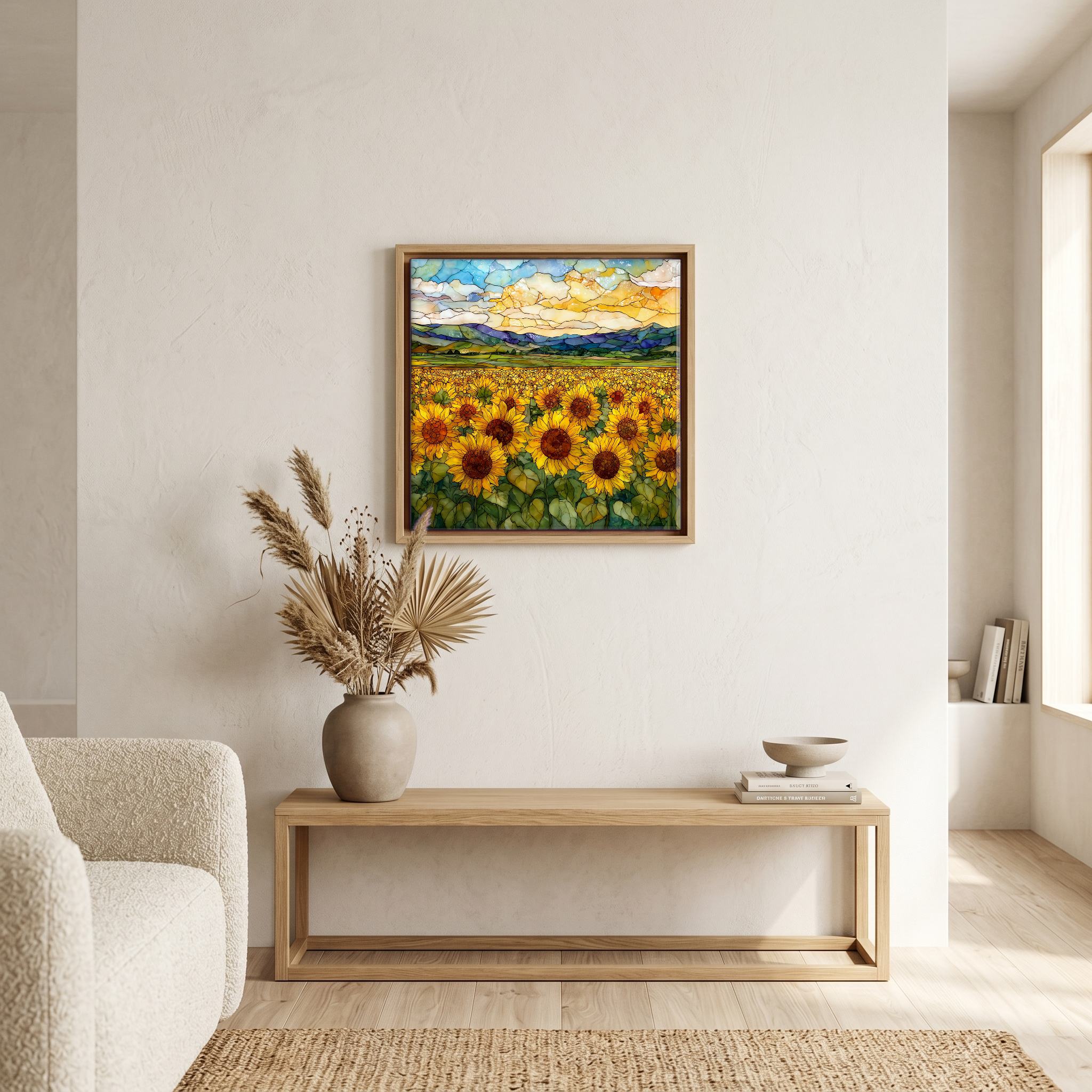
Above the bench, in a warm oak surround.
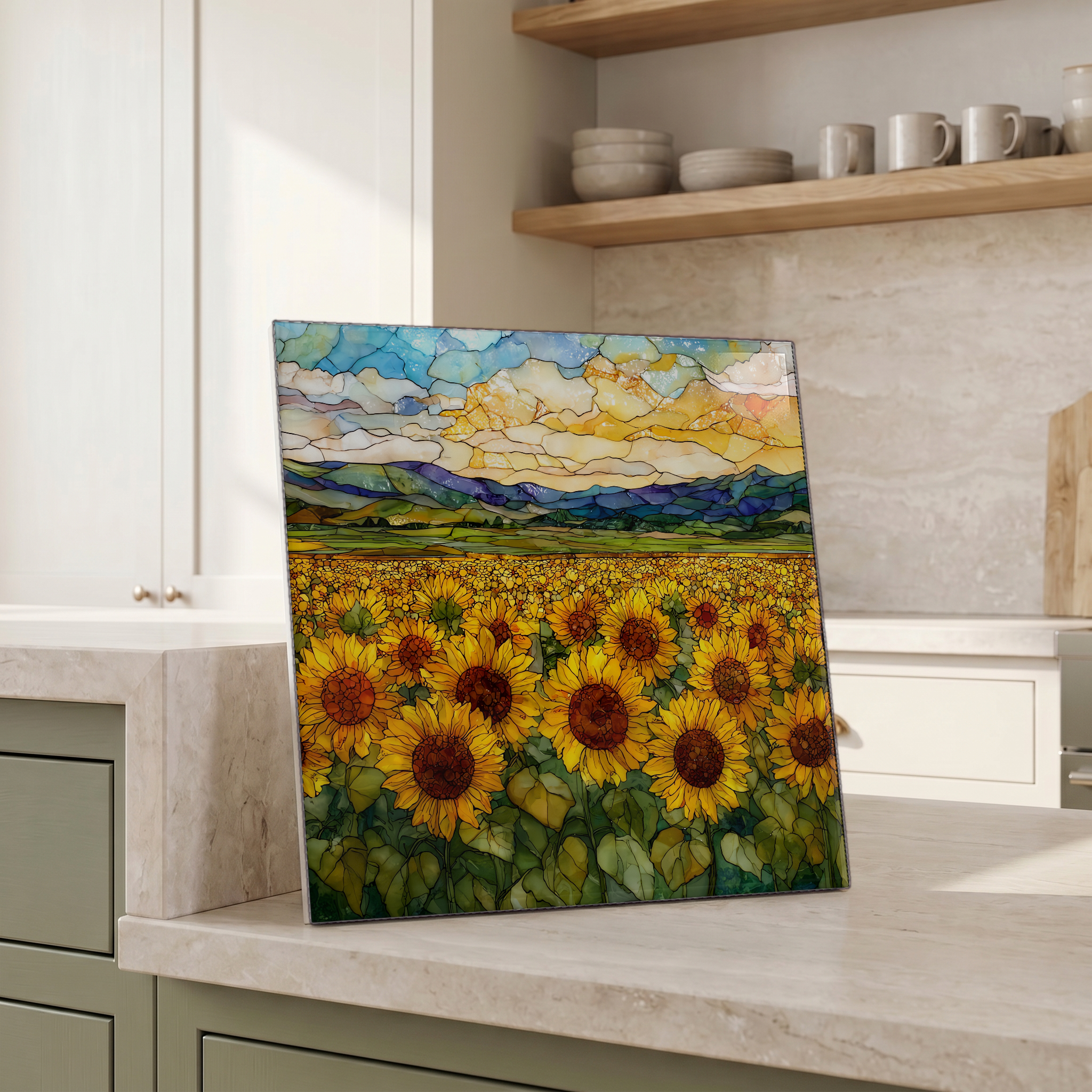
Beside the kettle, propped on the counter.
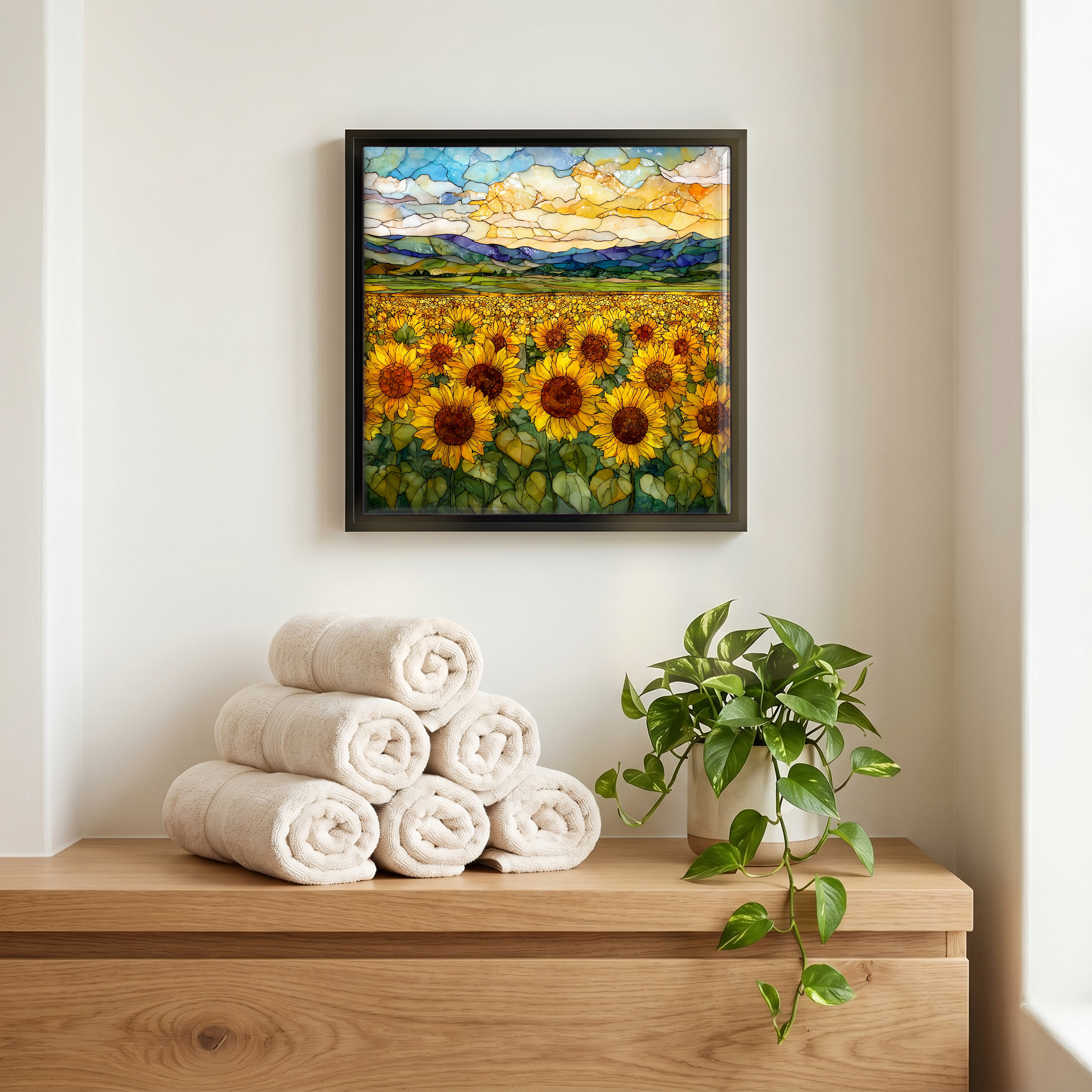
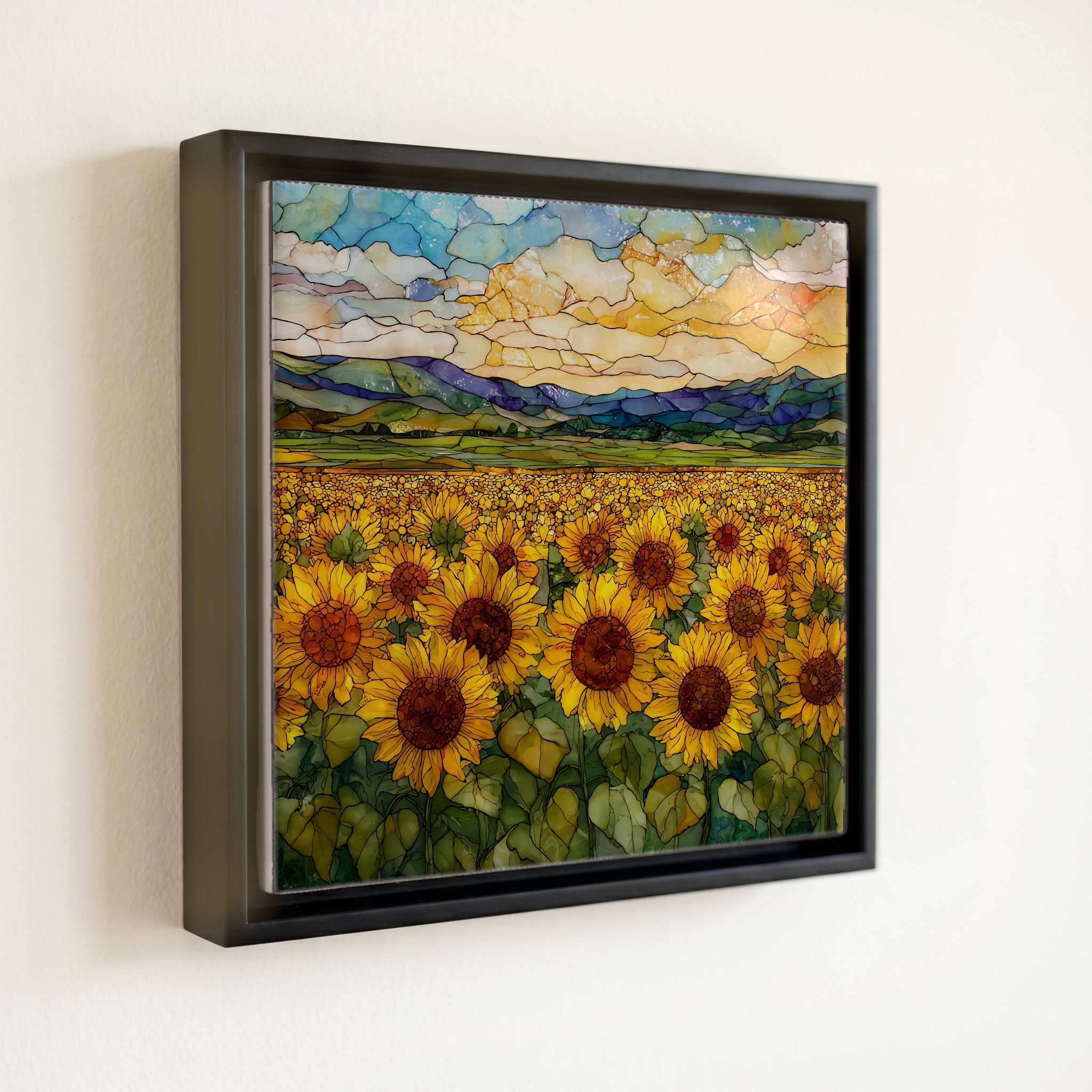
Above the linens, in a slim black surround.
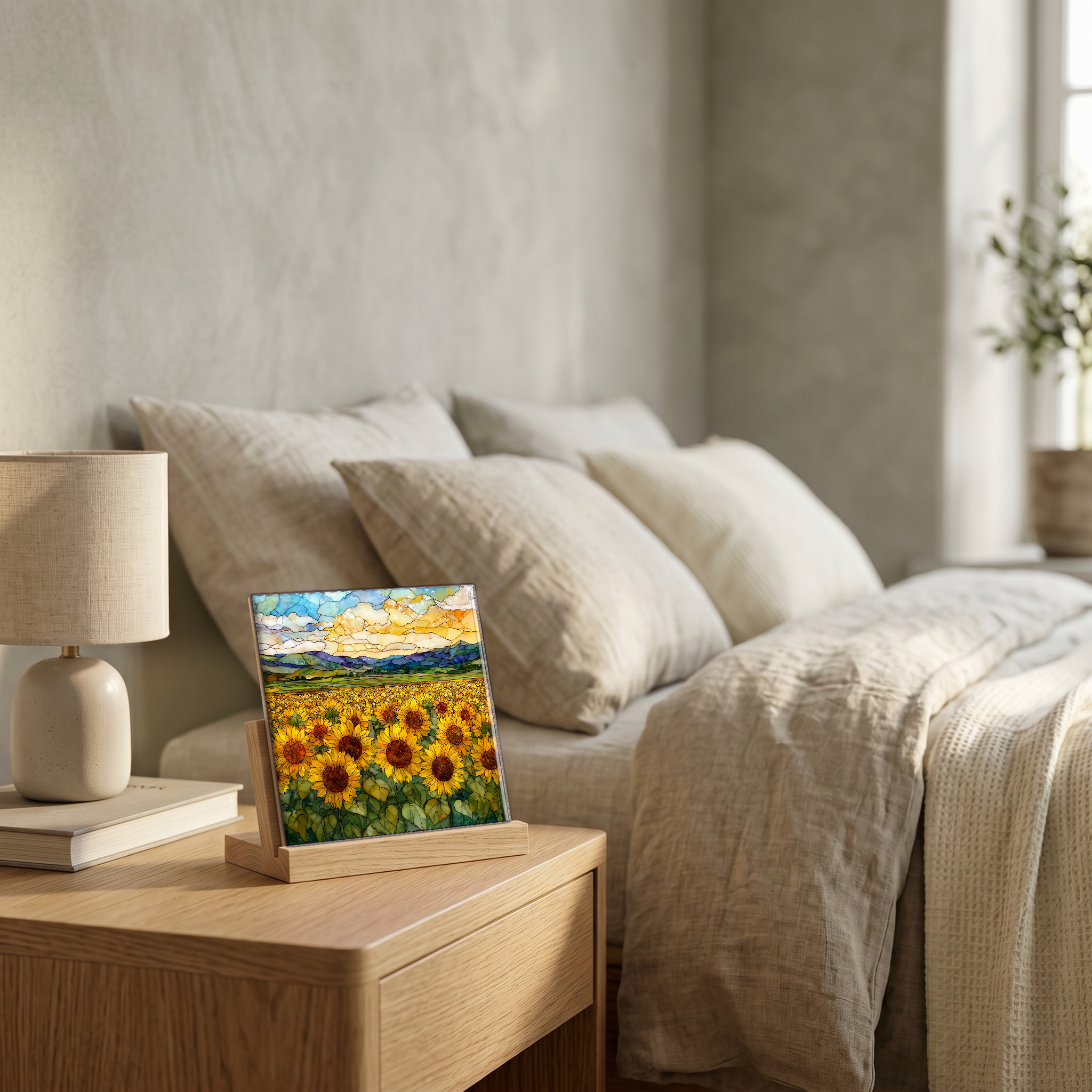
On the nightstand, on a light oak stand.
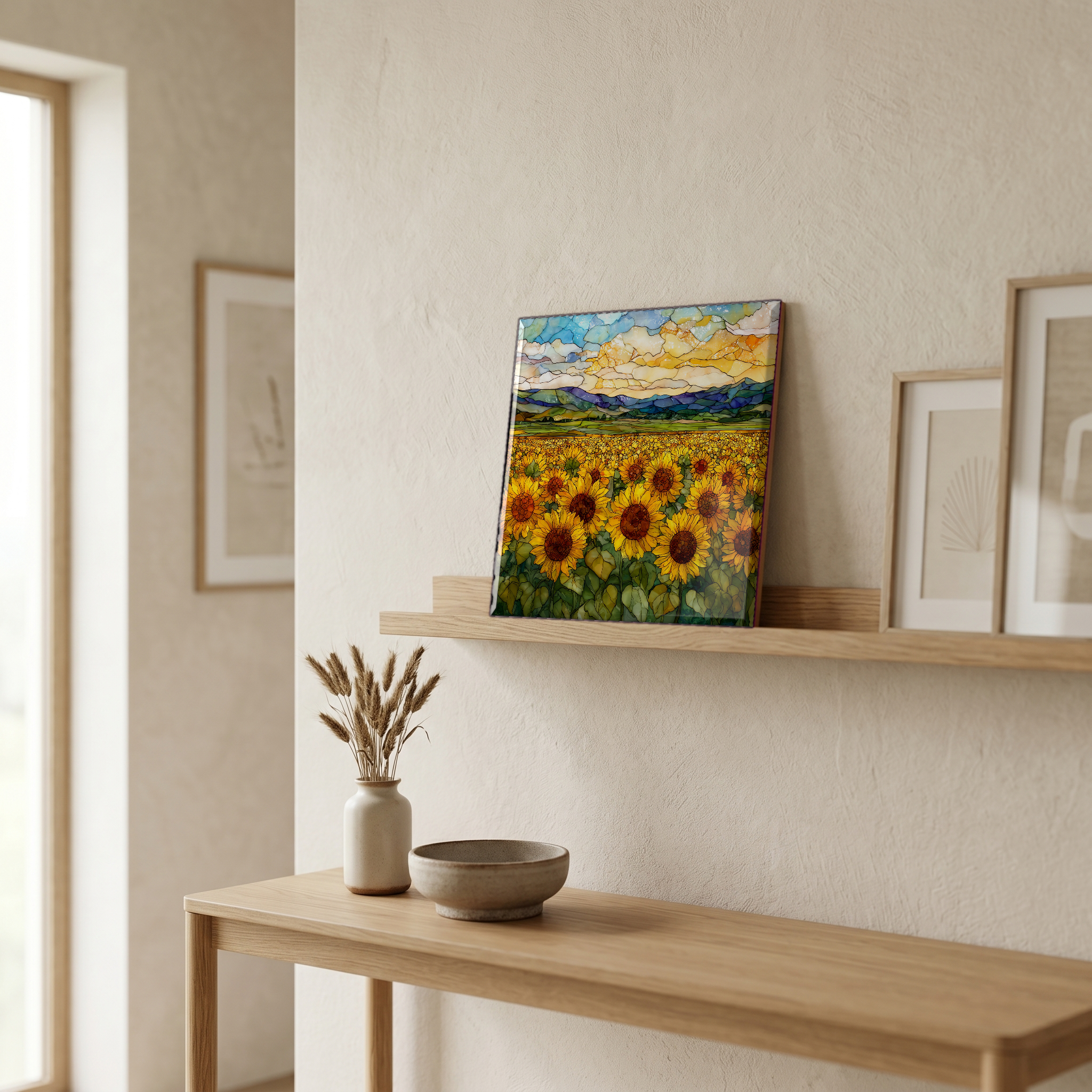
On a picture ledge, where the light comes in.
a note from the studio

Late June into mid-July, the floor of Capay Valley turns to bright yellow plate. The bloom isn't planted for tourists. These are hybrid seed fields, and Yolo County ships them to Russia, Argentina, half the world. The flowers all face east in the morning, west by afternoon, an old habit they keep until the heads grow heavy and stop. Highway 16 runs the length of the valley between Blue Ridge and the Capay Hills, and the fields belong to the families who plant them. Best to drive slowly, pull off at the shoulder, and take the picture from the fence line.
from the studio
shown in a slim black floating frame · 6 × 6 in
— bring it home

Capay Valley Sunflowers, on ceramic.

Each tile is finished by hand in our Knoxville studio. Artwork is slowly infused into the ceramic surface under high heat and pressure, and rests beneath a thin glossy finish. The colour lives in the surface, not on top of it.

What kind of piece?
One tile — square or rectangle.
How big?
the popular one — counter, shelf, nightstand
6 × 6 in · 15 cm · 1.6 lb
Surface finish
A clear glossy finish — the artwork reads as if under resin. Ideal for show-pieces and framed wall art.
How it sits
A hidden cleat — sits ¼″ proud of the wall.
$58
Hand-finished and shipped from our studio at the foot of the Smokies. On your wall in about ten days.
size
6 × 6 in
15 cm
weighs
1.6 lb
solid in the hand
surface
ceramic, hand-finished
art rests beneath a thin glossy finish
from
Knoxville, TN
our family studio, at the foot of the Smokies
— start a Coaster Set

Pick any four 4-inch tiles — National Parks you've been to, a Smokies set, the four seasons of one place. $ for a set of , cork-backed, ready to live on the table.
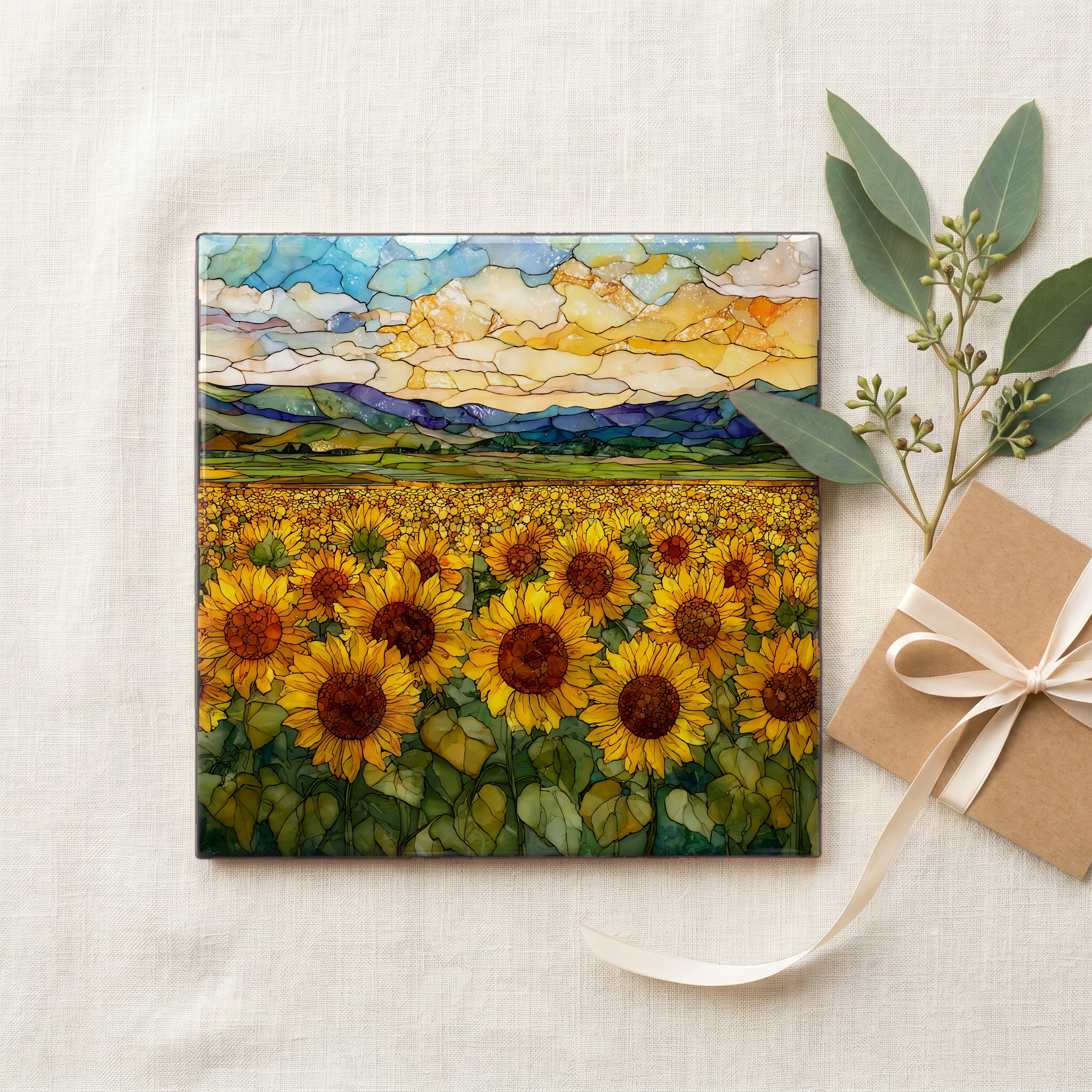
comes gift-ready
comes gift-ready

Each tile ships in a kraft box, tied with cream ribbon, with a handwritten note from the studio if you'd like to add one.
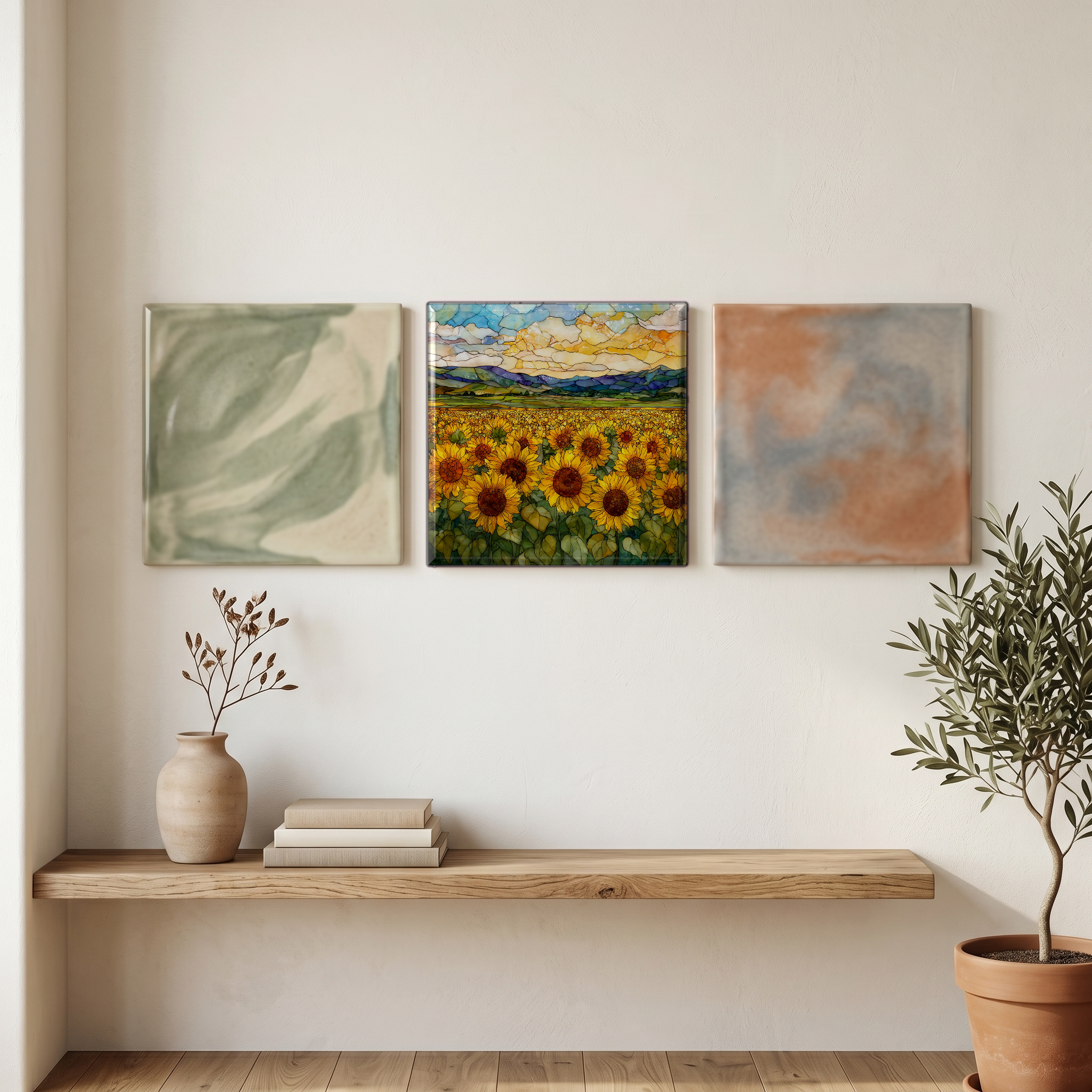
or build a grouping
or build a grouping

Three or five different vistas, hung together — a chapter of places you've been, or want to go.

about Capay Valley Sunflowers

The place, in three passes.

A little of what's known, in case you fall down the rabbit hole — or want to go see it yourself.
the place

Capay Valley stretches northwest from Esparto along California State Route 16, hemmed in by Blue Ridge on the west and the Capay Hills on the east. Cache Creek threads the floor of the valley, sustaining about 4,000 residents across the unincorporated communities of Esparto, Capay, Brooks, Guinda, and Rumsey. The valley is the traditional homeland of the Patwin people, today the Yocha Dehe Wintun Nation, whose Cache Creek Casino Resort sits at Brooks. Most of the valley floor is farmed: orchards of almonds and olives, vineyards under the federally recognised Capay Valley AVA, organic produce moved weekly by farm-to-doorstep operations like Farm Fresh to You, and the hybrid sunflower fields the valley is increasingly known for in summer.

the season

Sunflowers in Capay Valley are planted in early April and bloom from mid-June through mid-July, with peak colour usually in the first two weeks of July. Yolo County grows around 75 percent of California's roughly 43,000 acres of sunflowers, and most of what blooms in Capay is hybrid seed stock destined for farms in Russia, Argentina, and dozens of other countries. Growers stagger plantings or separate fields by at least a mile and a quarter to prevent unwanted cross-pollination, so the bloom doesn't all happen at once. Bees do the actual work. The window is short: by August the heads are tilted down, the fields are bronze rather than yellow, and harvest begins.

the visit

The sunflowers in Capay Valley are working farmland, not a destination garden. Every field is private property, and the standing rule across Yolo County is the same: view from the road only, never enter the rows. The reason is practical as well as legal. Wandering among the plants disturbs the bees that pollinate the crop, damages the heads the grower is paid for, and risks heatstroke in midsummer temperatures that often clear 100°F. The clearest viewing is a slow drive along California State Route 16 between Esparto and Guinda, with safe shoulder pull-offs and a long lens. The Yolo County Visitors Bureau publishes a yearly sunflower trail map once the bloom begins.

where
United States · Yolo County, California
position
38.7100° N · 122.0500° W
the neighborhood

What's nearby.

A handful of named places within an hour's walk or short drive. Some we've already painted; some we will.
8 km SE
Esparto
valley town
15 km NW
Rumsey
valley town
3 km S
Cache Creek Casino Resort
tribal casino resort
12 km N
Cache Creek Nature Preserve
nature preserve
25 km W
Berryessa Snow Mountain National Monument
national monument
N
Capay Valley Sunflowers
Esparto
Rumsey
Cache Creek Casino Resort
Cache Creek Nature Preserve
Berryessa Snow Mountain National Monument
common questions

What people ask.

A few questions we get about Capay Valley Sunflowers — and about bringing the piece home.
about the place

Capay Valley is a rural valley in Yolo County, California, about an hour northwest of Sacramento. It runs along California State Route 16 from Esparto in the southeast up to Rumsey in the northwest, between Blue Ridge and the Capay Hills, with Cache Creek flowing through the floor.

Sunflowers in Capay Valley typically bloom from mid-June through mid-July, with peak colour in the first two weeks of July. Growers plant in early April and stagger their fields, so different blocks reach peak at slightly different times across the bloom window.

Yolo County grows roughly 75 percent of California's sunflower acreage, and California in turn produces about 95 percent of the United States' hybrid sunflower seed. The warm days, cool nights, and isolation distance available in Capay Valley are ideal for producing pure hybrid seed.

No. Every sunflower field in Capay Valley is private working farmland, and entering damages the crop, disturbs the bees pollinating it, and constitutes trespass. The Yolo County Visitors Bureau asks visitors to view the bloom from the road only, with no exceptions.

Most Capay Valley sunflowers are grown for hybrid seed, not oil or snacking. The seed is shipped worldwide to farms in Russia, Argentina, the European Union, and elsewhere, where it is replanted the following season to grow oilseed and confection sunflower crops.

Young sunflowers are heliotropic, tracking the sun from east at sunrise to west at sunset and resetting overnight. As the heads mature and grow heavy with seed, they lock in place facing east, which is why most photographed fields look uniformly oriented at dawn.

The valley is also known for almond and olive orchards, the Capay Valley AVA wine region, organic vegetable farms tied to Farm Fresh to You, and the Cache Creek Casino Resort at Brooks. The Yocha Dehe Wintun Nation operates the casino and is the valley's traditional steward.

about the piece in your home

The summer bloom is a quiet point of local pride for people who grew up in Yolo County or the broader Sacramento Valley. A Small or Medium with a handwritten note from the studio carries that recognition well, and the colour reads from across a room.

The yellows and warm greens sit naturally in California Modern, sun-warmed Farmhouse, and Mediterranean-leaning interiors. It also reads well as the single colour note in an otherwise neutral Minimalist room, where one warm tile can carry the whole wall.

Yes. Bright agrarian colour and locally rooted imagery have been a steady thread in current interior trends, and yellow-forward art has shown up across recent forecasts. The piece fits sunrooms, breakfast nooks, and kitchen walls where the warm colour gets afternoon light.

Above a standard sofa, a single Large reads cleanly, and a 4-tile or 9-tile Mural carries the longer wall. Above a console or sideboard, the Medium is the most common choice, with a Small flanking pair if the wall is wide.

Yes. Order the Dura Satin or Matte finish for any bathroom, kitchen, or backsplash use. Both are soft-sheen, scratch-resistant, and made for vertical wet environments. The Glossy finish is for framed wall art in dry rooms only.

A soft microfibre cloth with water is all the tile needs. The colour lives in the surface, so there is no top layer to wear off with normal handling. Skip household cleaners and abrasive pads, which can dull the finish over time.

Yes. Every WenderVista piece is original to our studio in Knoxville, Tennessee, painted in our distinctive stained-glass and alcohol-ink visual language. We do not license or reuse third-party images. The colour is slowly infused into the ceramic surface under high heat and pressure.

if this one stayed with you

A few you might also love.

Hand-picked by the eye that found Sorapis. Same air, same kind of quiet.