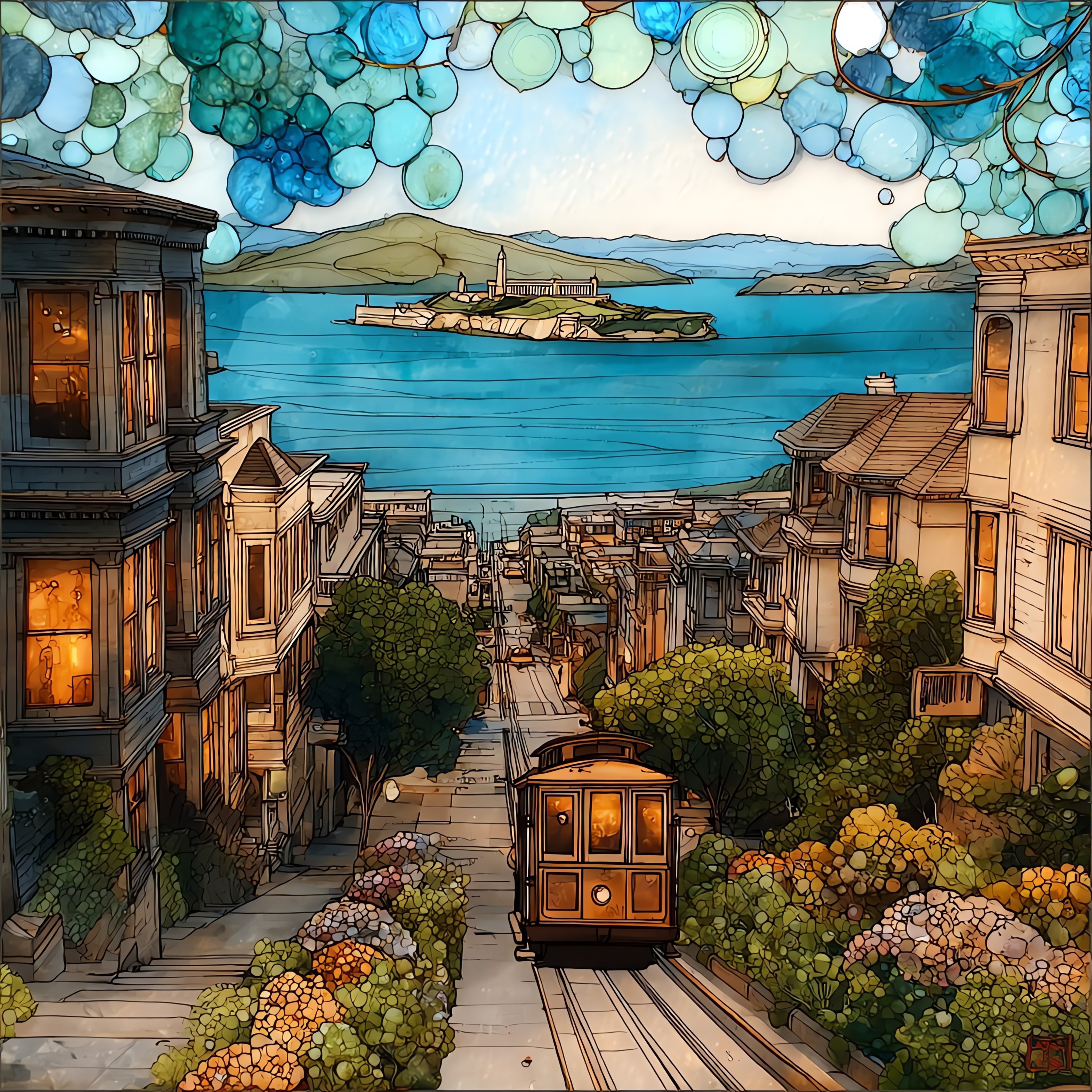
Cable Car Hyde Street
— — the corner where the city tips into the bay.
Not only on a wall.
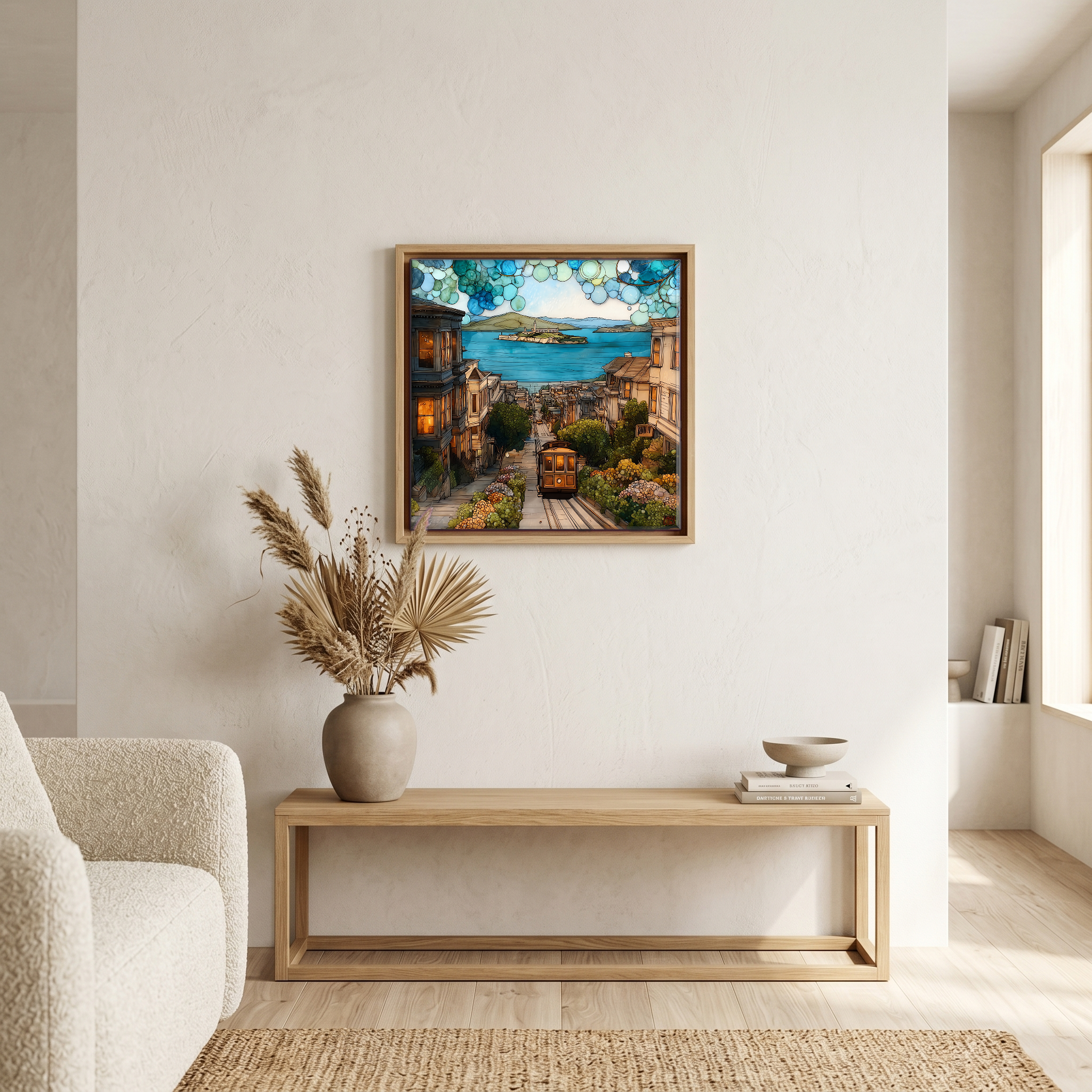

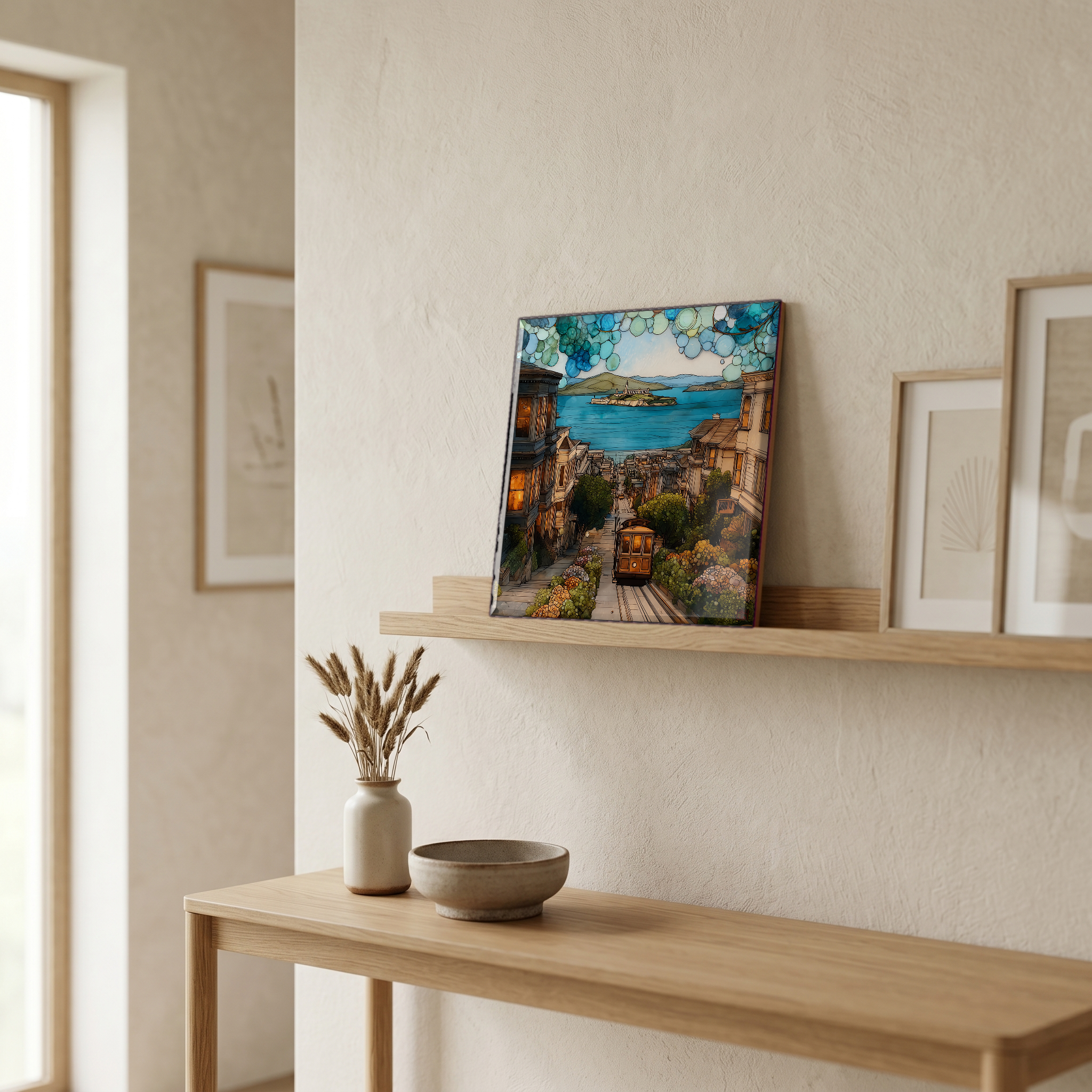
“The Powell-Hyde line earns its reputation on this block. Cable car cresting Russian Hill, then a twenty-one-percent grade down Hyde Street, with Alcatraz floating out in the bay. The cable runs nine and a half miles an hour under the slot in the street; everything else is the gripman, the brake, the bell, the moment the city falls away. People queue an hour at Powell and Market for this thirteen-block stretch. The reason is what happens at Lombard, where the car tilts forward and the bay rises up to meet the windshield.
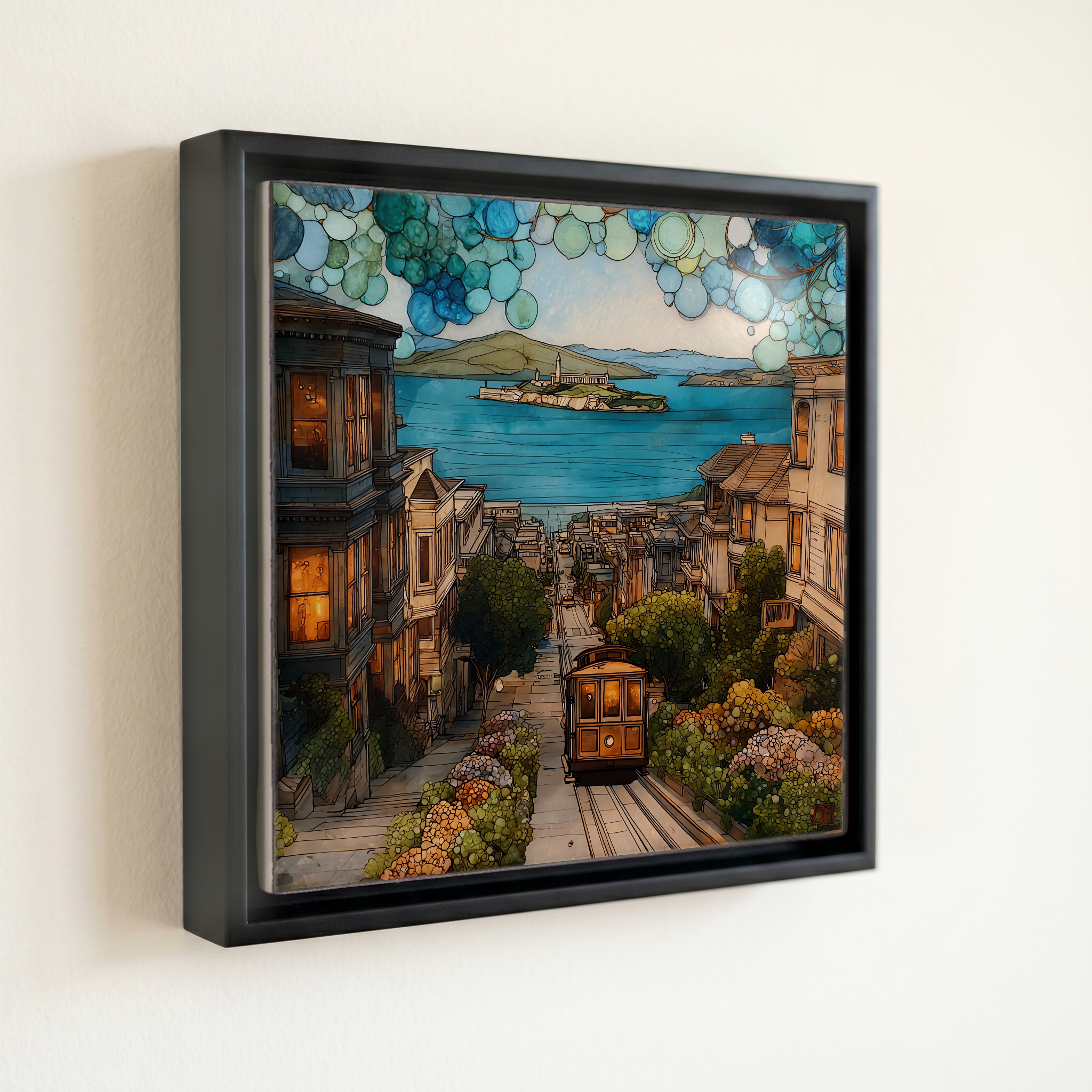
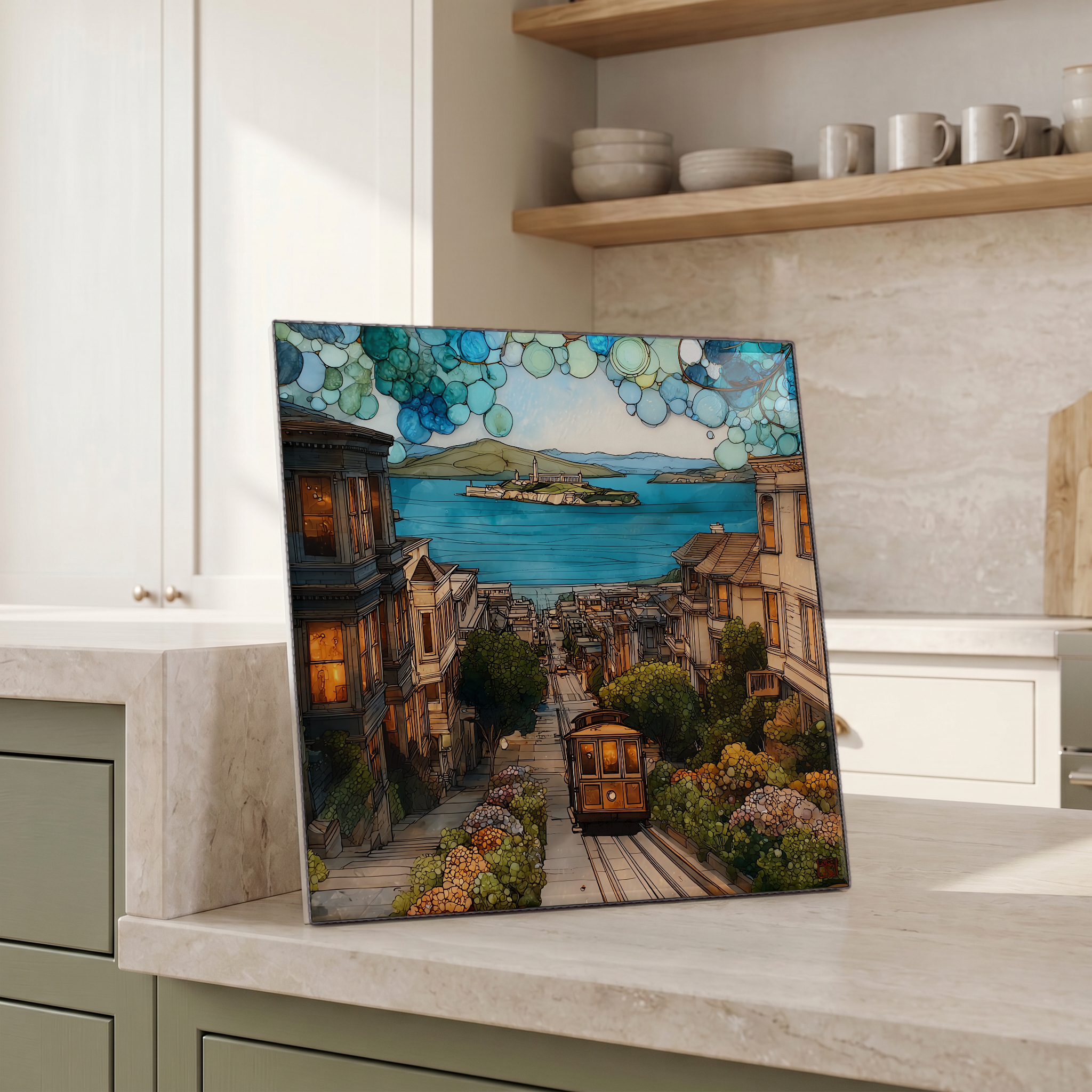
Cable Car Hyde Street, on ceramic.
Each tile is finished by hand in our Knoxville studio. Artwork is slowly infused into the ceramic surface under high heat and pressure, and rests beneath a thin glossy finish. The colour lives in the surface, not on top of it.
Pick any four 4-inch tiles — National Parks you've been to, a Smokies set, the four seasons of one place. $ for a set of , cork-backed, ready to live on the table.
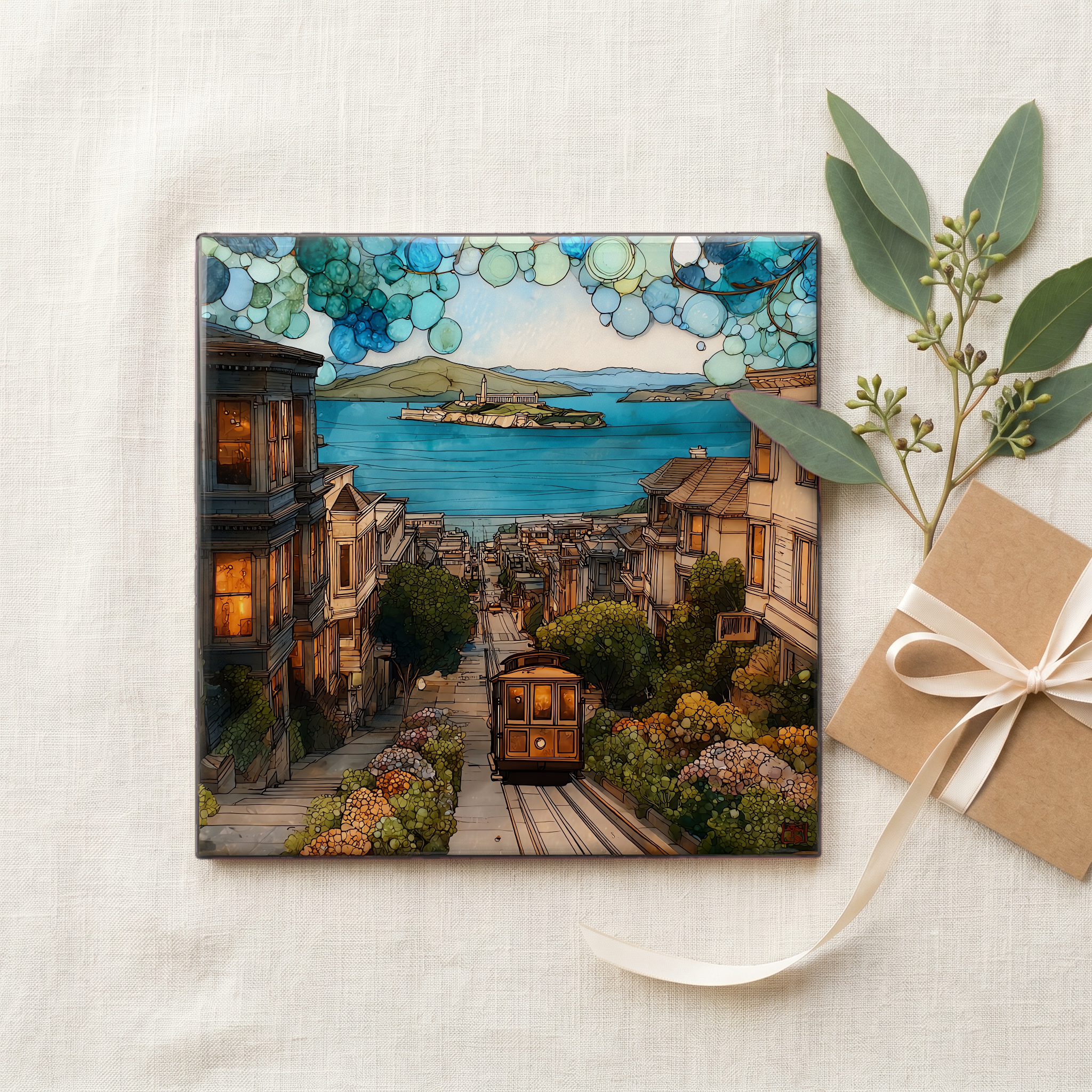
Each tile ships in a kraft box, tied with cream ribbon, with a handwritten note from the studio if you'd like to add one.
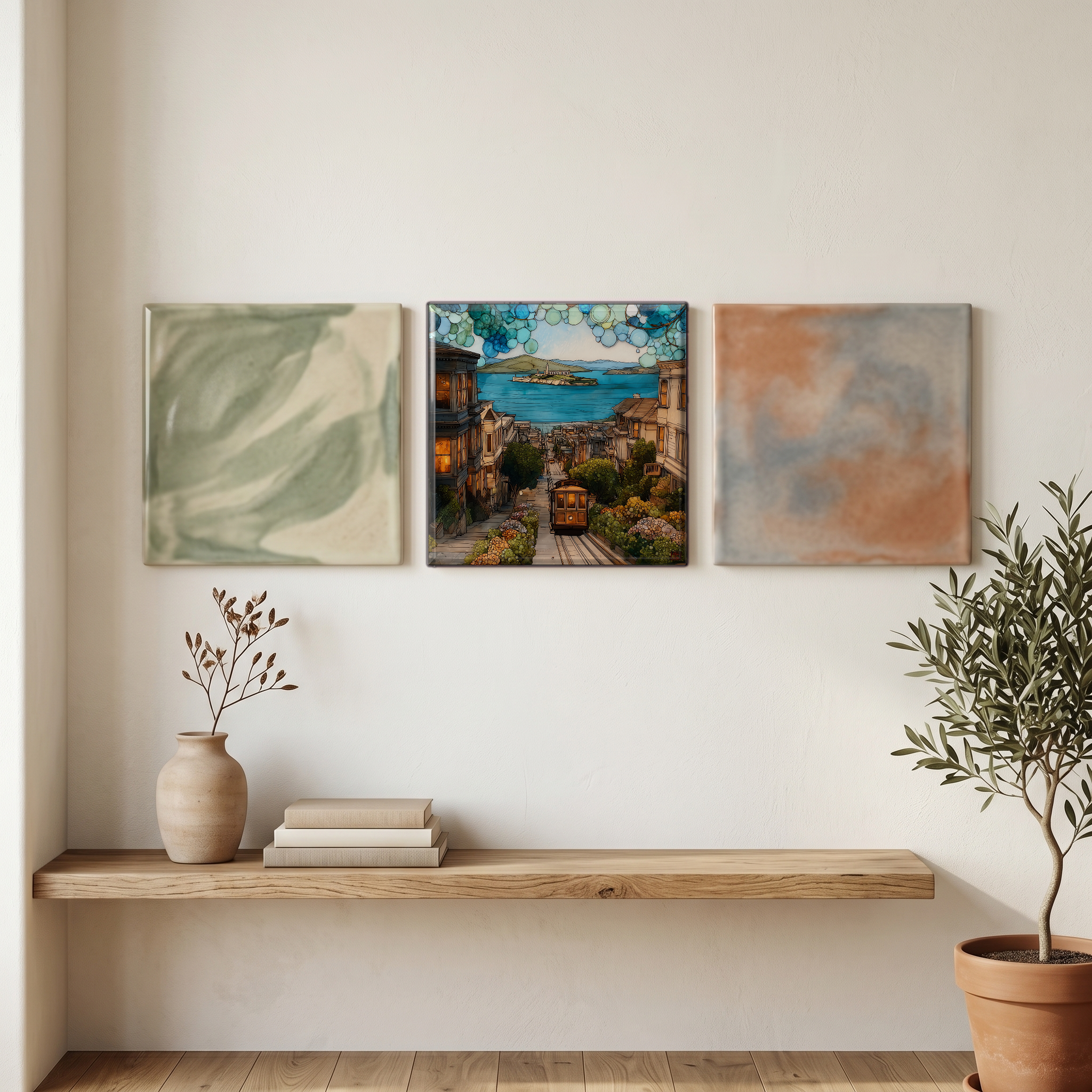
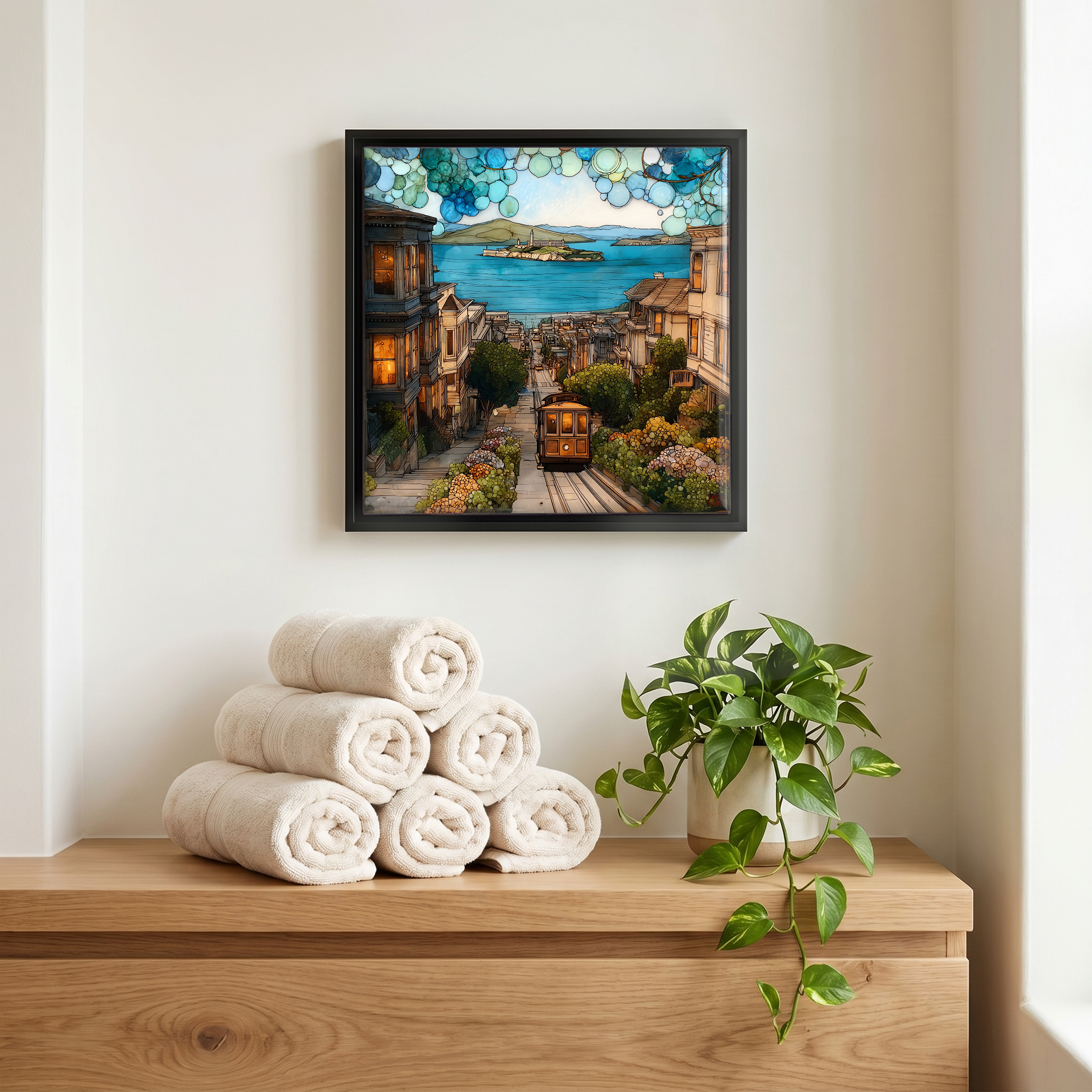
Three or five different vistas, hung together — a chapter of places you've been, or want to go.
The place, in three passes.
The Powell-Hyde cable car line runs 2.1 miles from the turntable at Powell and Market, up over Nob Hill and Russian Hill, down to the waterfront terminus at Hyde and Beach beside Aquatic Park. Hyde Street itself is the line's signature thirteen-block descent through Russian Hill, crossing Lombard Street, with its famous switchbacks one block east, and ending near Ghirardelli Square and Fisherman's Wharf. The line was assembled in 1957 from segments of two older routes, the Washington-Jackson and the O'Farrell, Jones and Hyde, the latter dating to 1891. It is operated by the San Francisco Municipal Transportation Agency, the last manually operated cable car system in the world.
The Hyde Street descent drops at a twenty-one-percent grade, the steepest on the cable car system. The cars themselves do not have engines; an endless loop of steel cable runs continuously under the street at 9.5 miles per hour, and the gripman uses a lever to clamp the car's grip onto the cable to move, or release it and apply the wheel and track brakes to stop. Andrew Smith Hallidie, a Scots-born mining engineer, ran the first cable car down Clay Street after midnight on August 2, 1873, after his gripman quit on seeing the grade. The entire system was named the first moving National Historic Landmark in 1964.
The Powell-Hyde line begins at the Powell Street turntable at Powell and Market in downtown San Francisco, and ends at the Hyde and Beach turntable beside Aquatic Park, a short walk from Ghirardelli Square. A single one-way ride costs $9 as of late 2025, paid on board with cash, a Clipper card, or the MuniMobile app, with day passes and visitor passports available through SFMTA. Service runs roughly 6:30 a.m. to midnight every day of the year, weather permitting. Waits at the Powell terminal can run an hour or more during summer and weekends; boarding at Hyde and Beach in the other direction is usually faster, and the descent toward the bay is visible from the very first block.