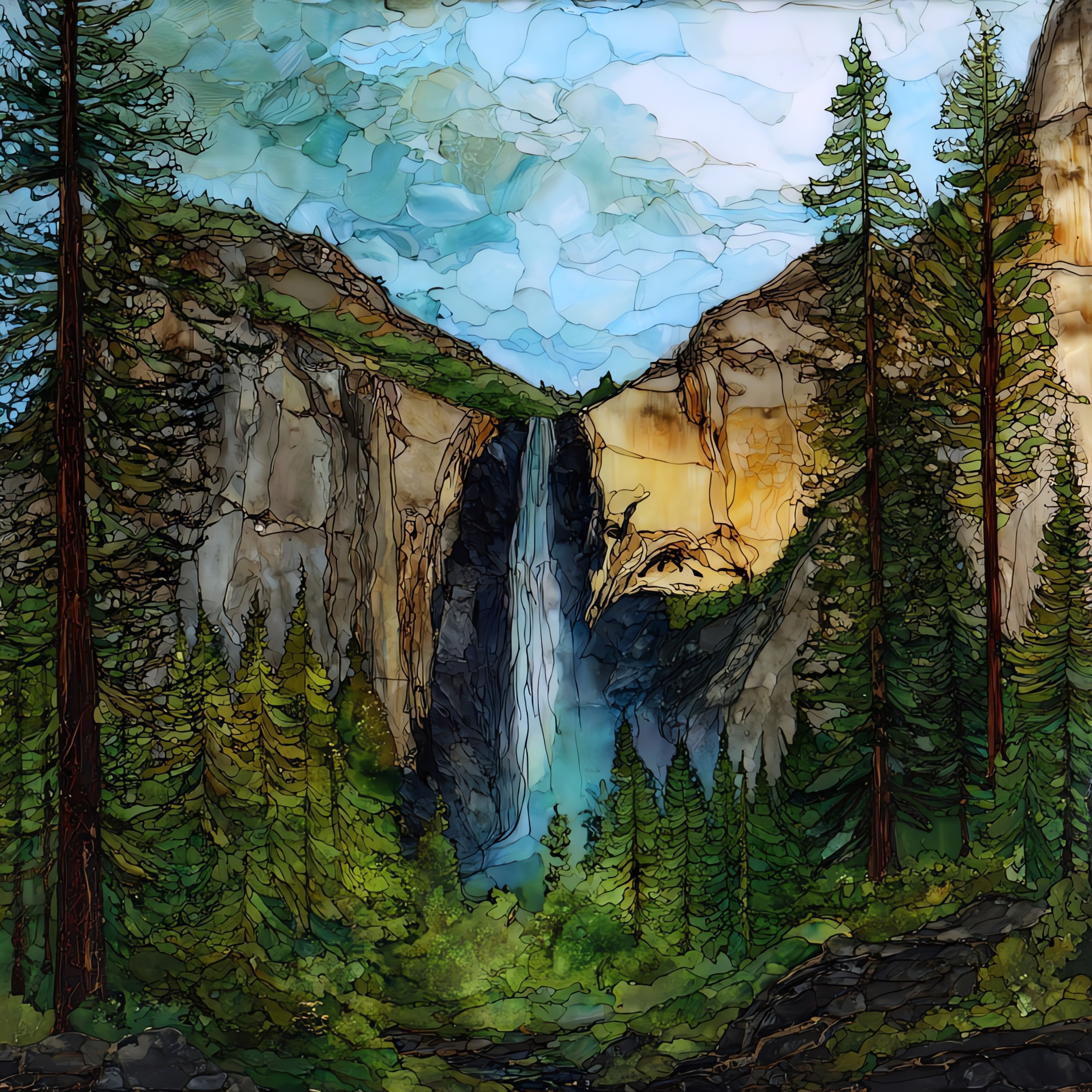
Bridalveil Fall
— — the water the wind takes sideways.
Not only on a wall.

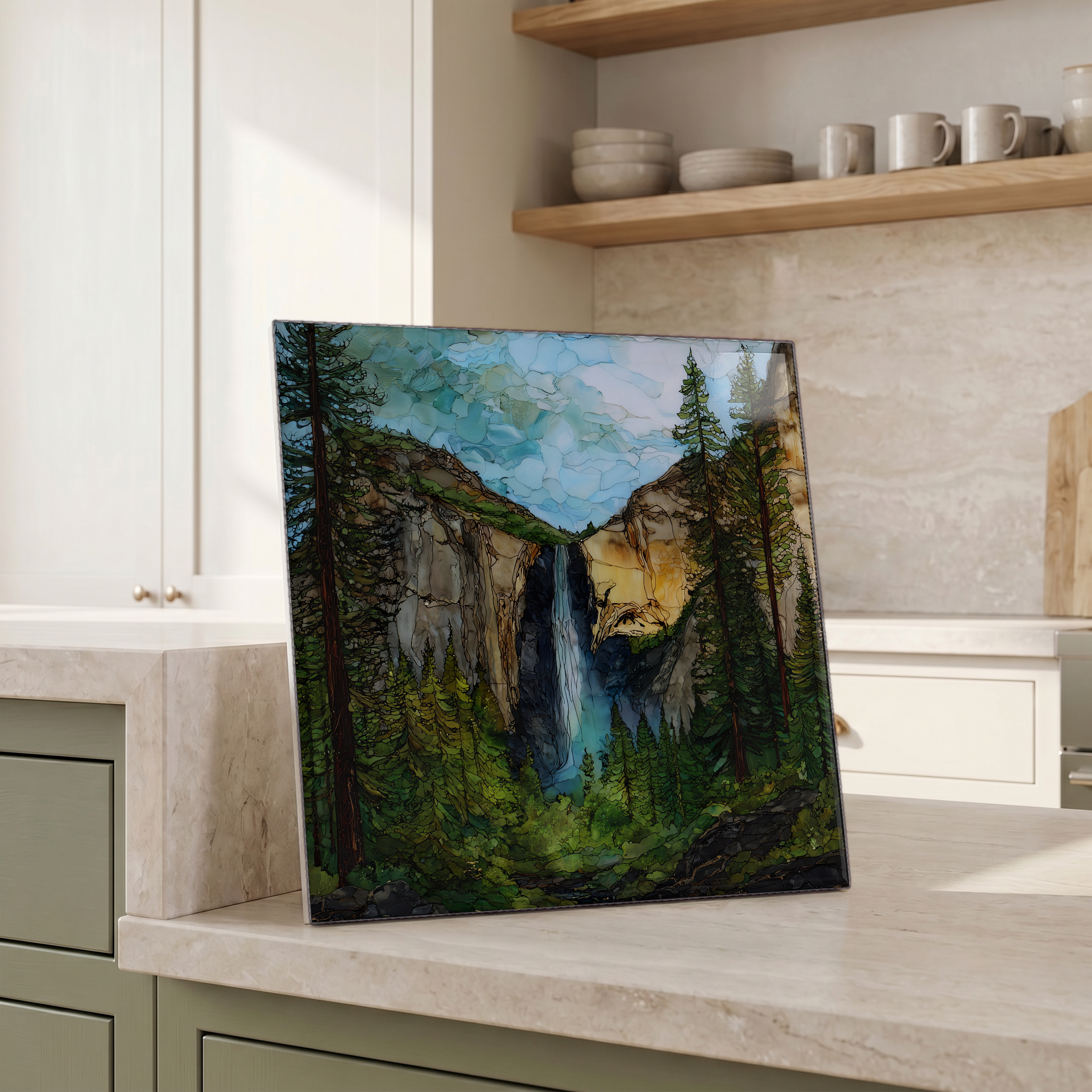
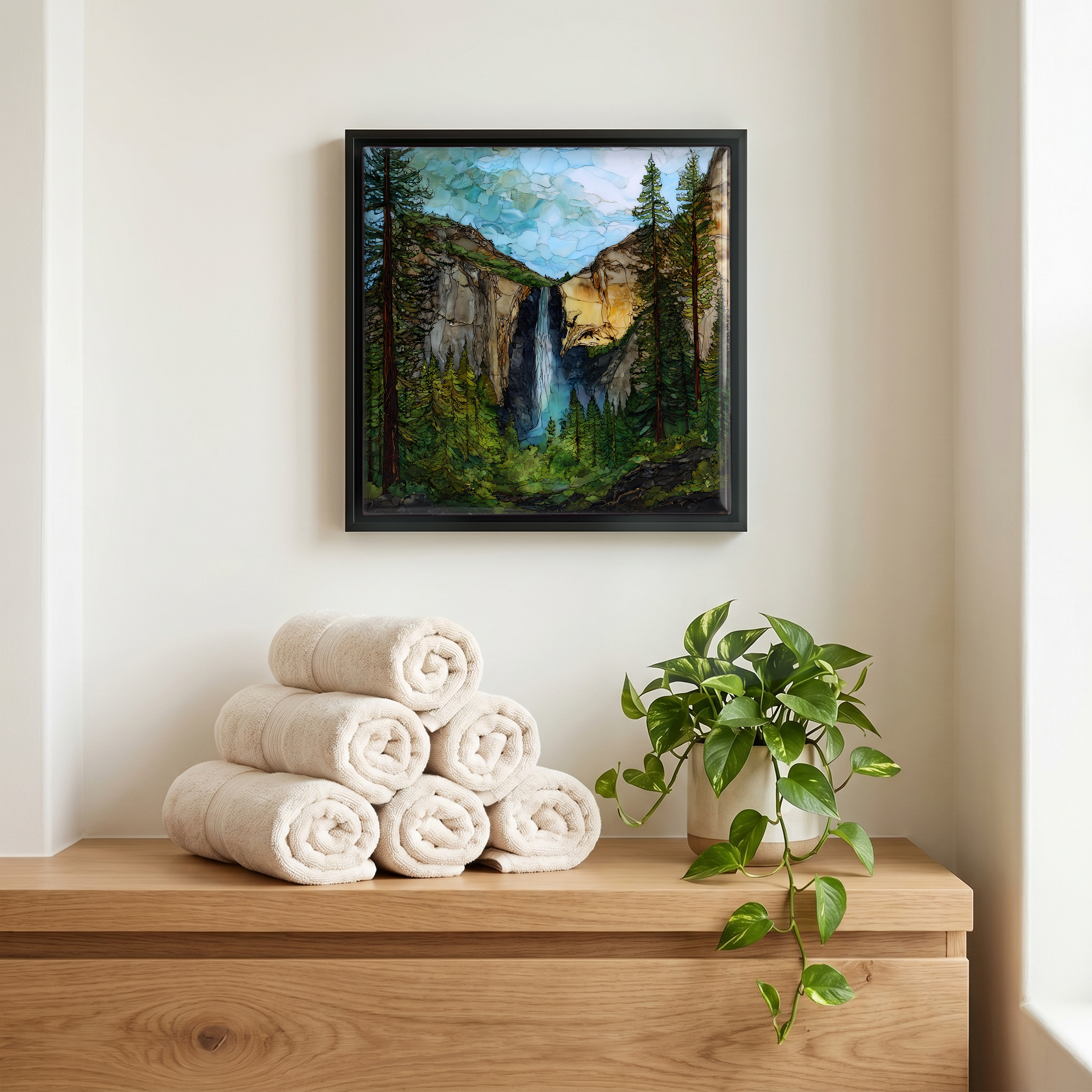

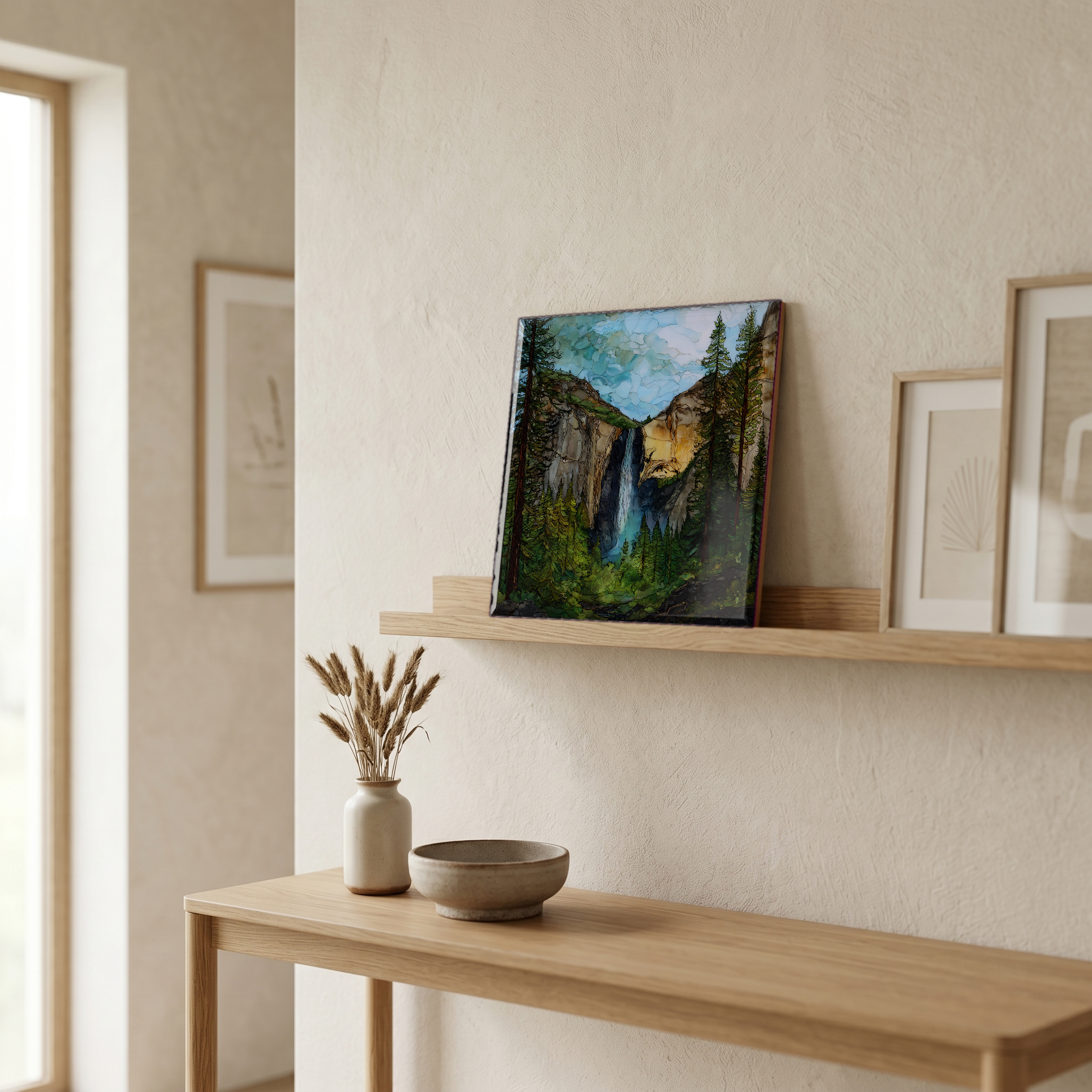
“Six hundred and twenty feet of water down a granite face on the south side of Yosemite Valley. In spring the plume is heavy and the spray reaches the parking lot. By August the fall has thinned to a ribbon and the wind takes it sideways. The Ahwahneechee called it Pohono, the spirit of the puffing wind. Late afternoon, the mist catches the light low and the rainbows come on without being asked.
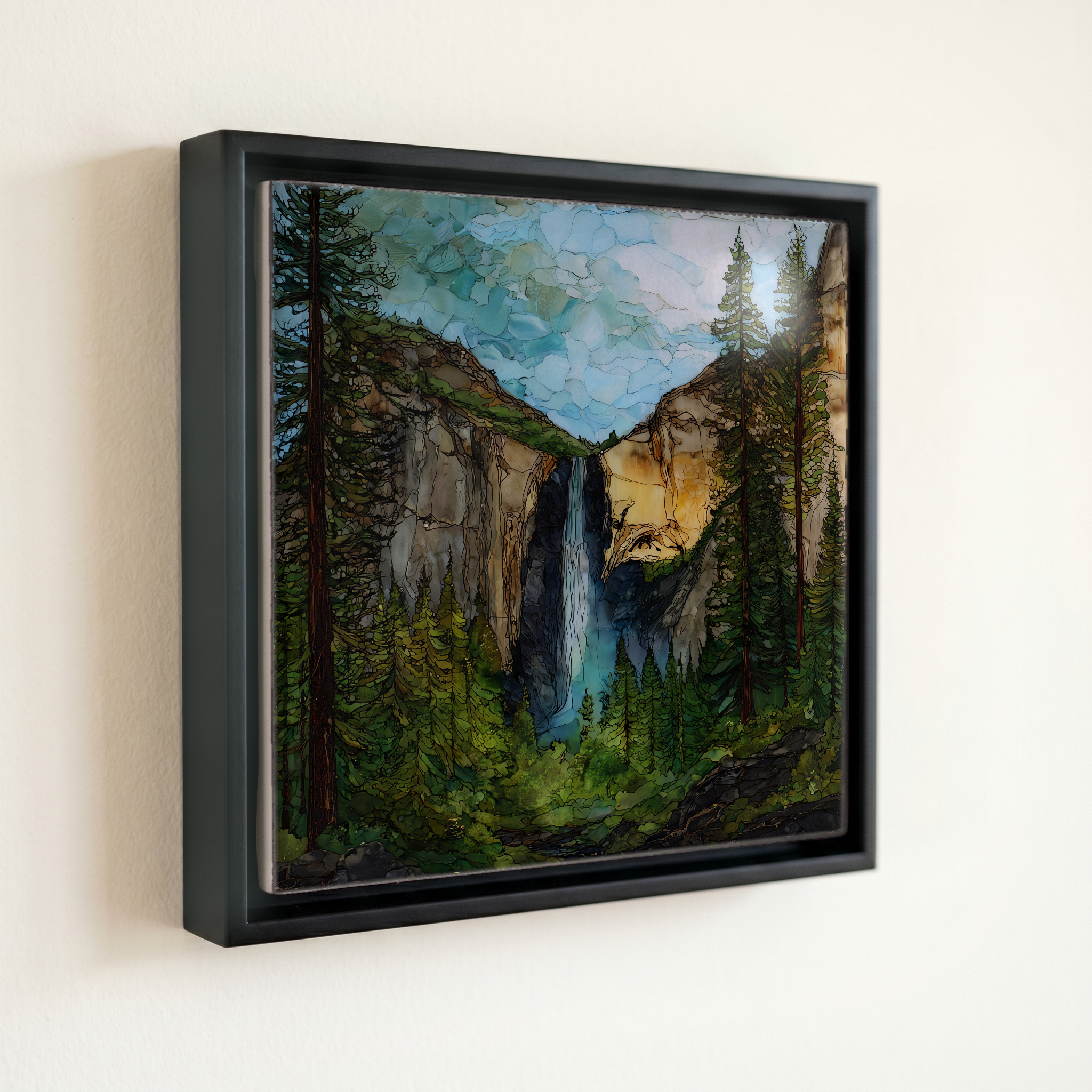
Bridalveil Fall, on ceramic.
Each tile is finished by hand in our Knoxville studio. Artwork is slowly infused into the ceramic surface under high heat and pressure, and rests beneath a thin glossy finish. The colour lives in the surface, not on top of it.
Pick any four 4-inch tiles — National Parks you've been to, a Smokies set, the four seasons of one place. $ for a set of , cork-backed, ready to live on the table.
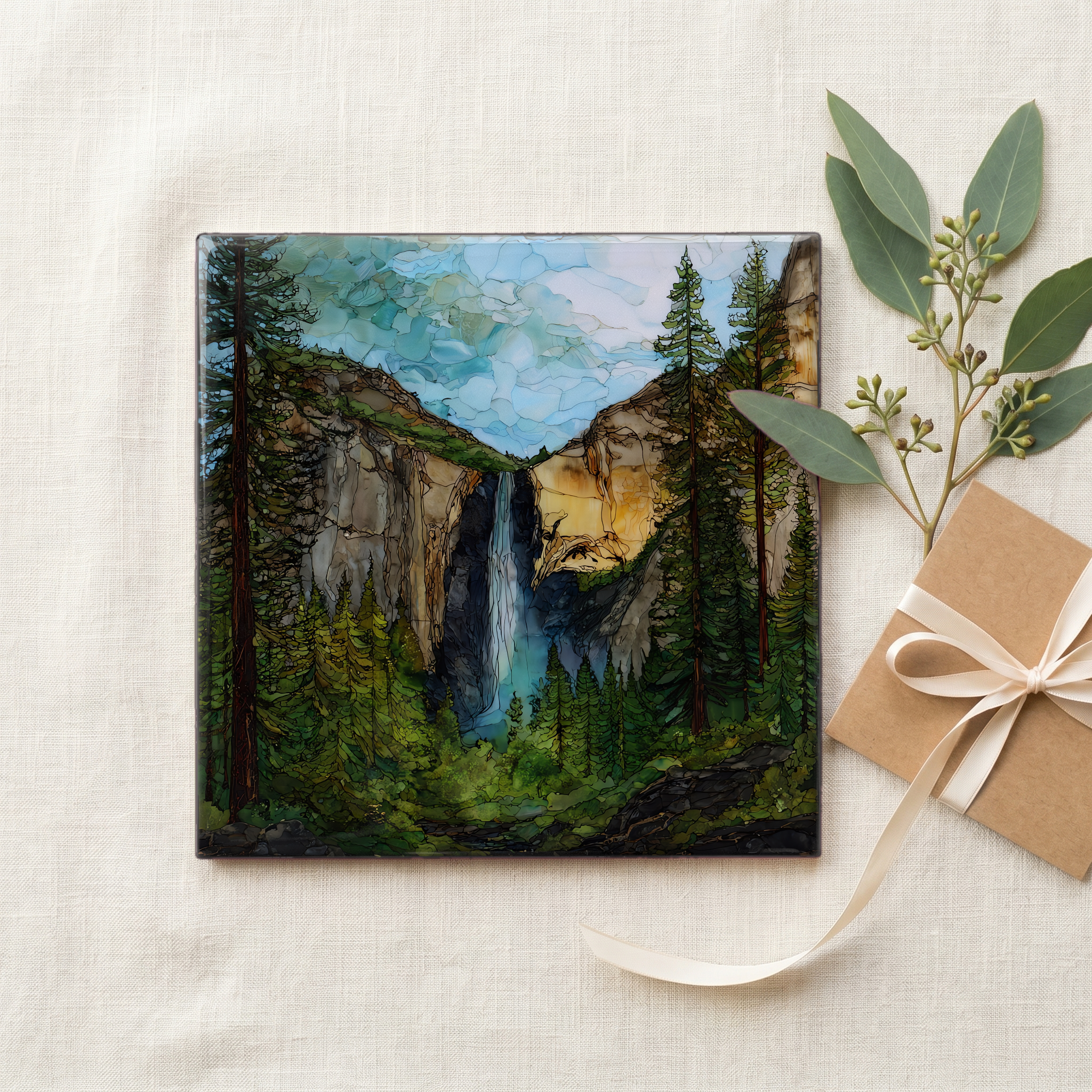
Each tile ships in a kraft box, tied with cream ribbon, with a handwritten note from the studio if you'd like to add one.

Three or five different vistas, hung together — a chapter of places you've been, or want to go.
The place, in three passes.
Bridalveil Fall drops 620 feet from a hanging valley on the south wall of Yosemite Valley, in Mariposa County, California. It is one of the first waterfalls visitors see entering the valley from the west, framed in the right side of the view from Tunnel View, just above Highway 41. The fall is fed by Bridalveil Creek, which drains a meadow on the rim of Yosemite National Park before it reaches the lip. Unlike Yosemite Falls, which slows to a trickle by August, Bridalveil keeps a thin plume into autumn because the watershed sits in shaded, north-facing terrain above the cliff.
Bridalveil Fall is what geologists call a hanging-valley waterfall. During the Pleistocene, the main Merced glacier carved Yosemite Valley a thousand feet deeper than the tributary glaciers that fed it, leaving side valleys like Bridalveil's stranded high above the floor. Water now leaves the lip as a single plume that the wind catches and disperses into mist long before it reaches the rock below. The Ahwahneechee called the fall Pohono, often translated as 'spirit of the puffing wind.' On still afternoons the spray narrows and the lower third of the fall vanishes into a soft fan; in spring the volume is heavy enough that the mist soaks the trail two hundred yards from the base.
Bridalveil Fall runs in every season, but the character of the water changes through the year. Peak flow is May, when the Sierra snowpack drains through Bridalveil Creek and the plume thickens into a heavy white column visible from Tunnel View and most of the valley floor. By late June the fall lightens, and by August it can shrink to a narrow stream that the wind shreds completely before it hits the talus. Winter brings a thinner, colder fall and sometimes a frozen cone of mist at the base; the parking area off Wawona Road stays open, though ice can close the half-mile trail. The National Park Service finished a renovation of the lower trail in 2023, with paved switchbacks and a viewing plaza.