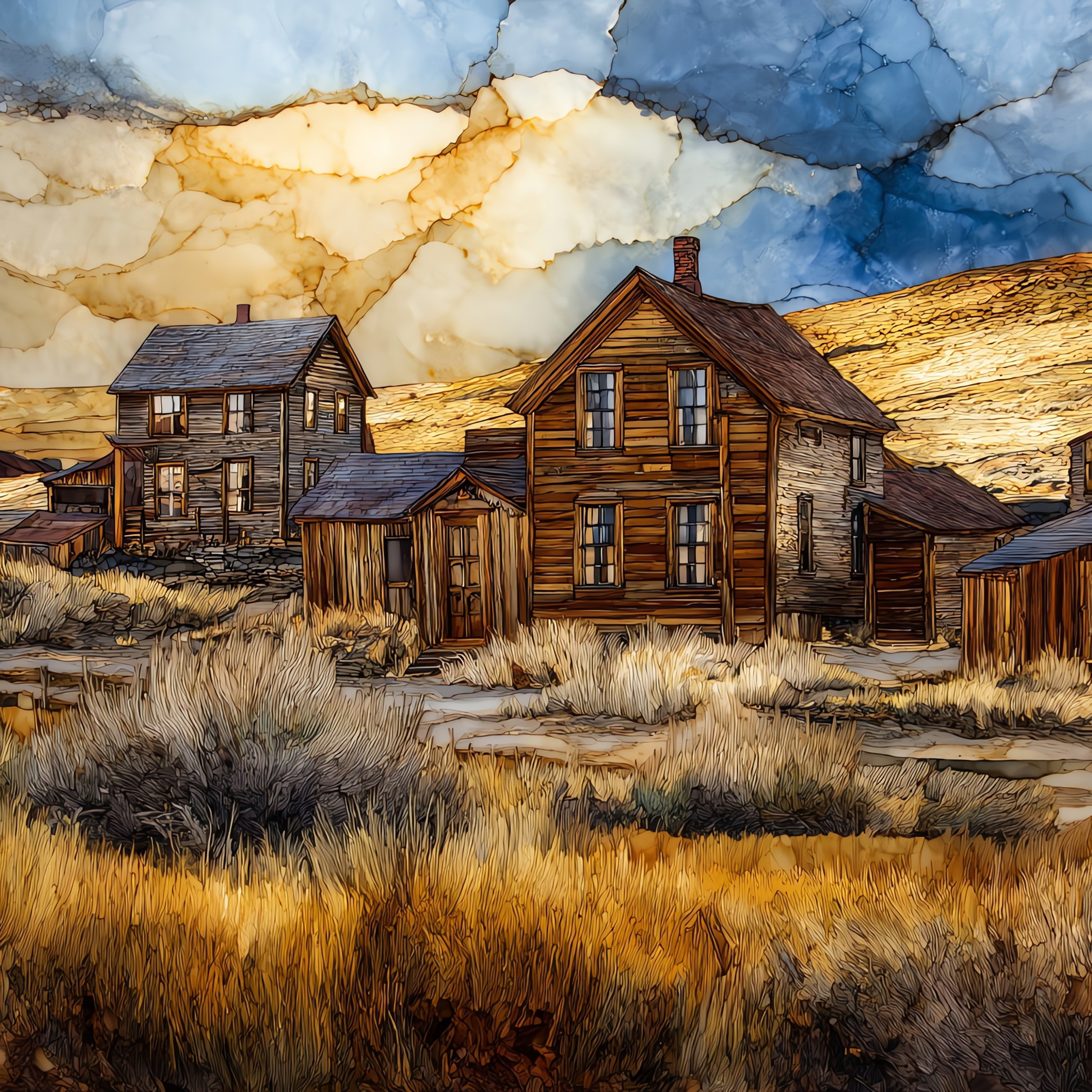
Bodie Ghost Town
— — silver wood the desert is still polishing.
Not only on a wall.
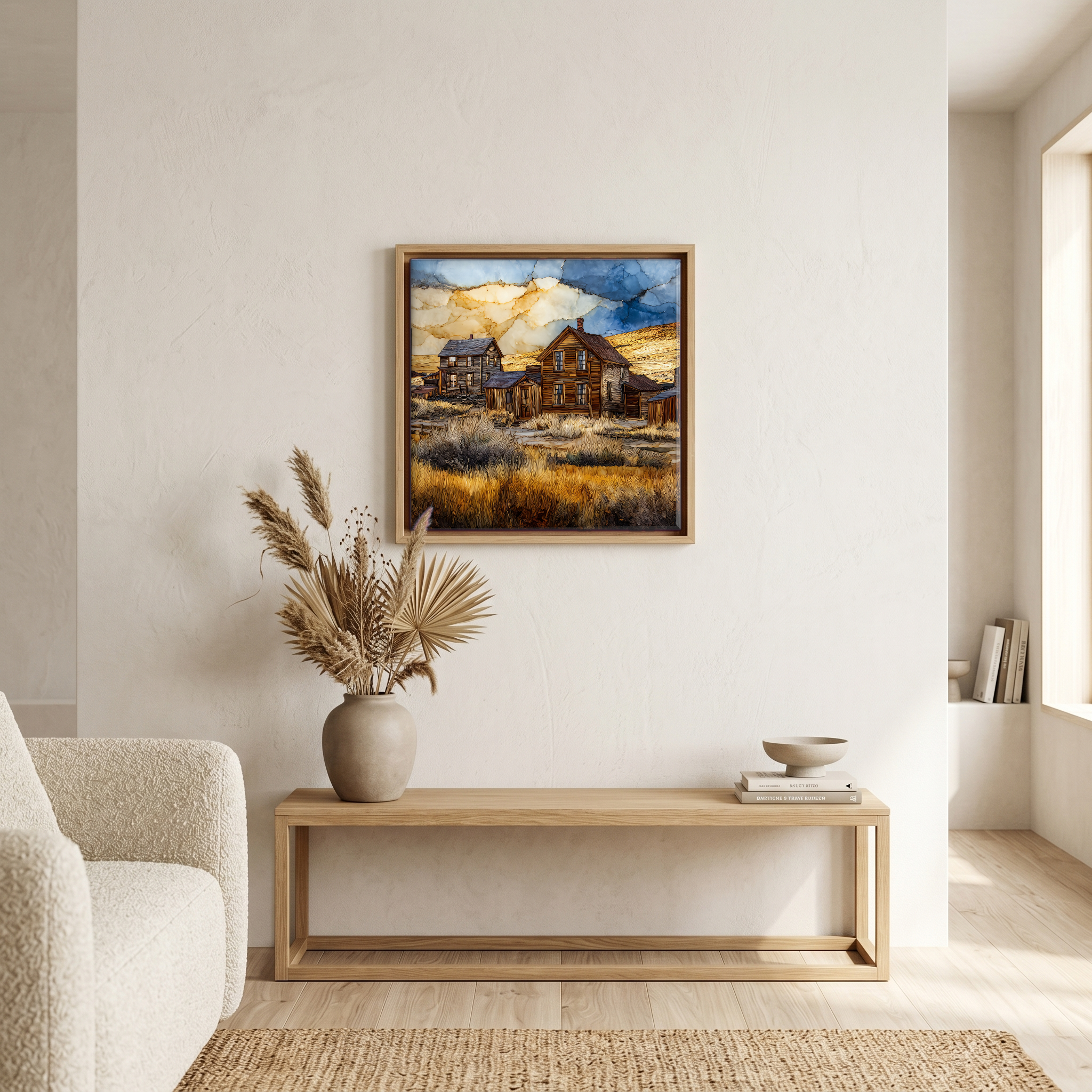
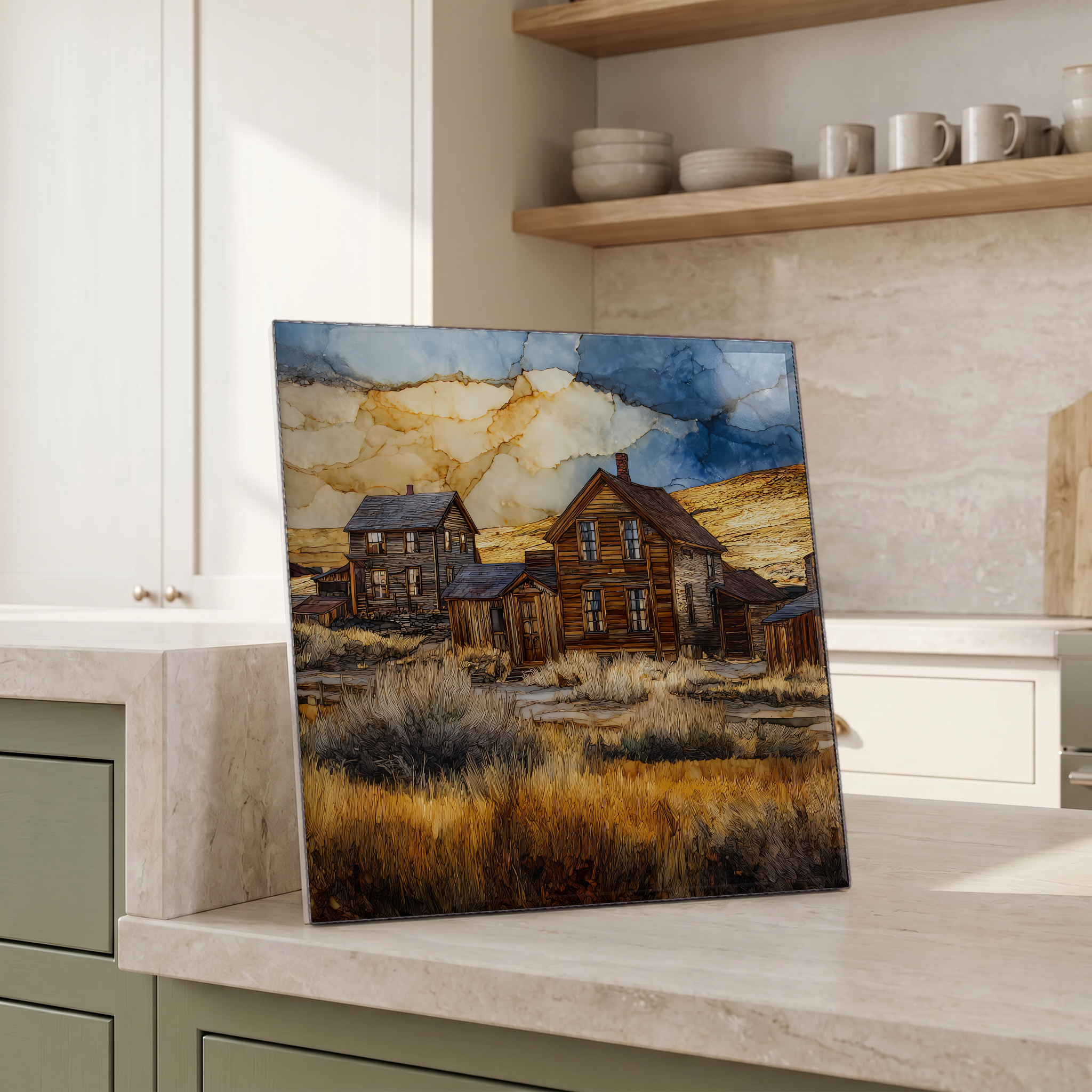
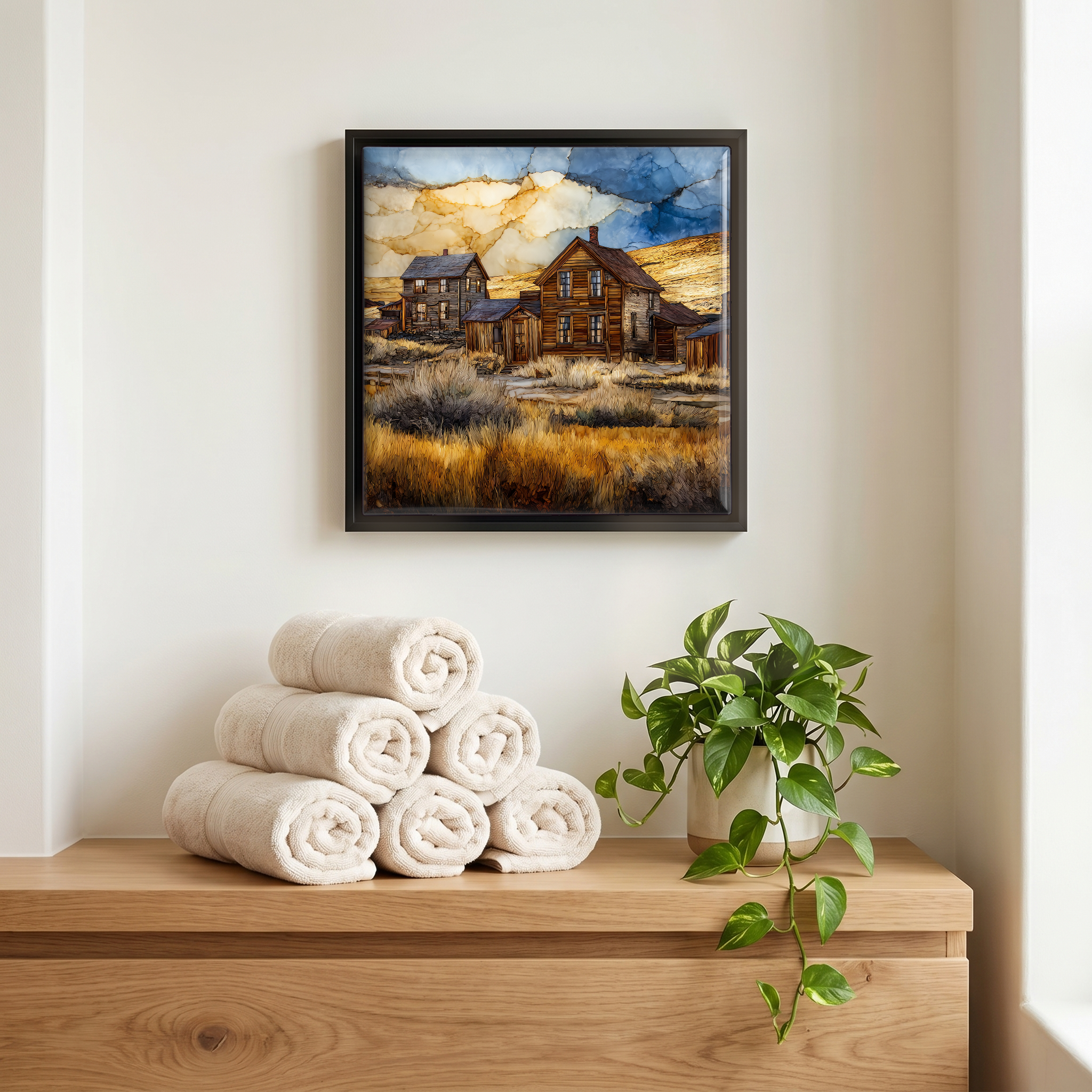
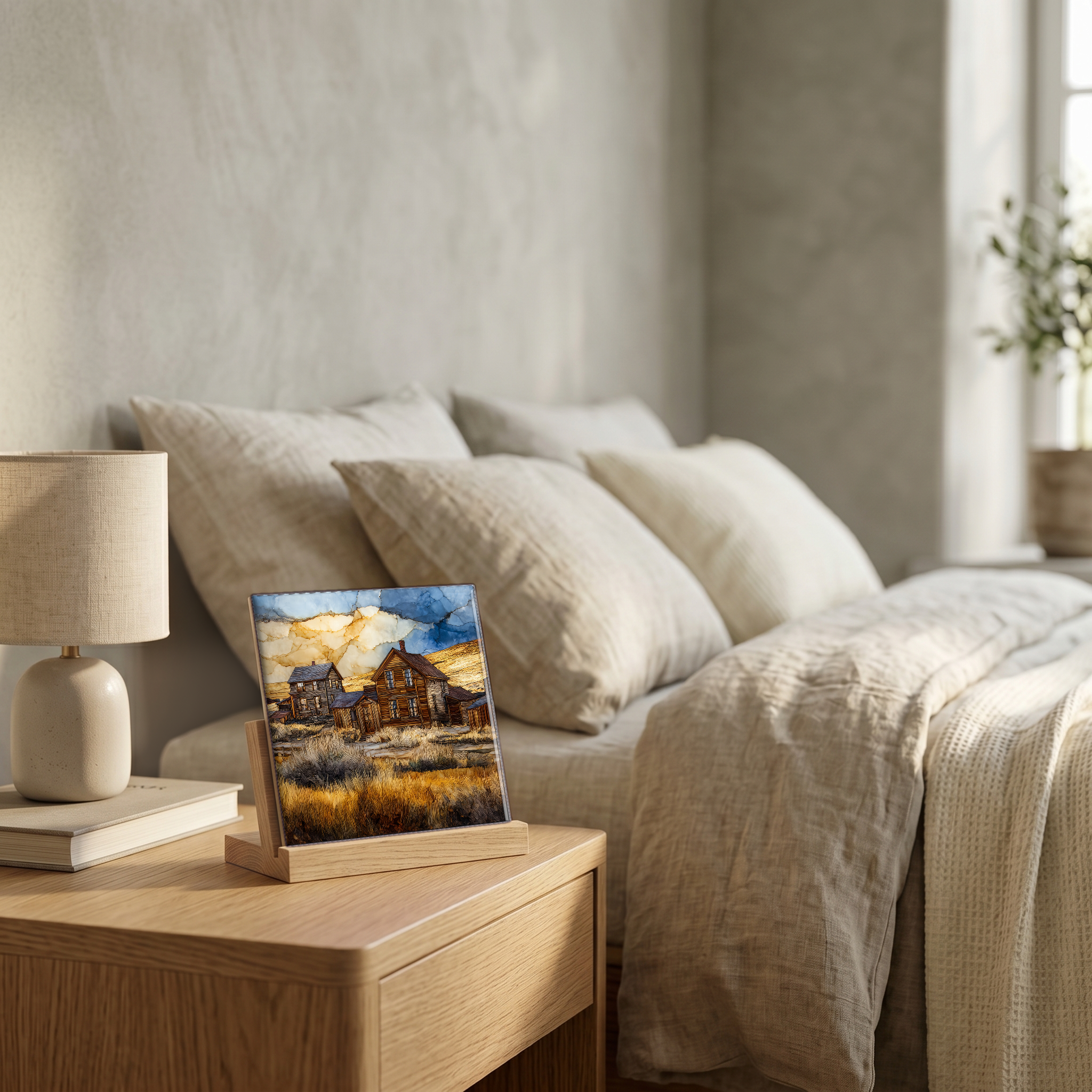
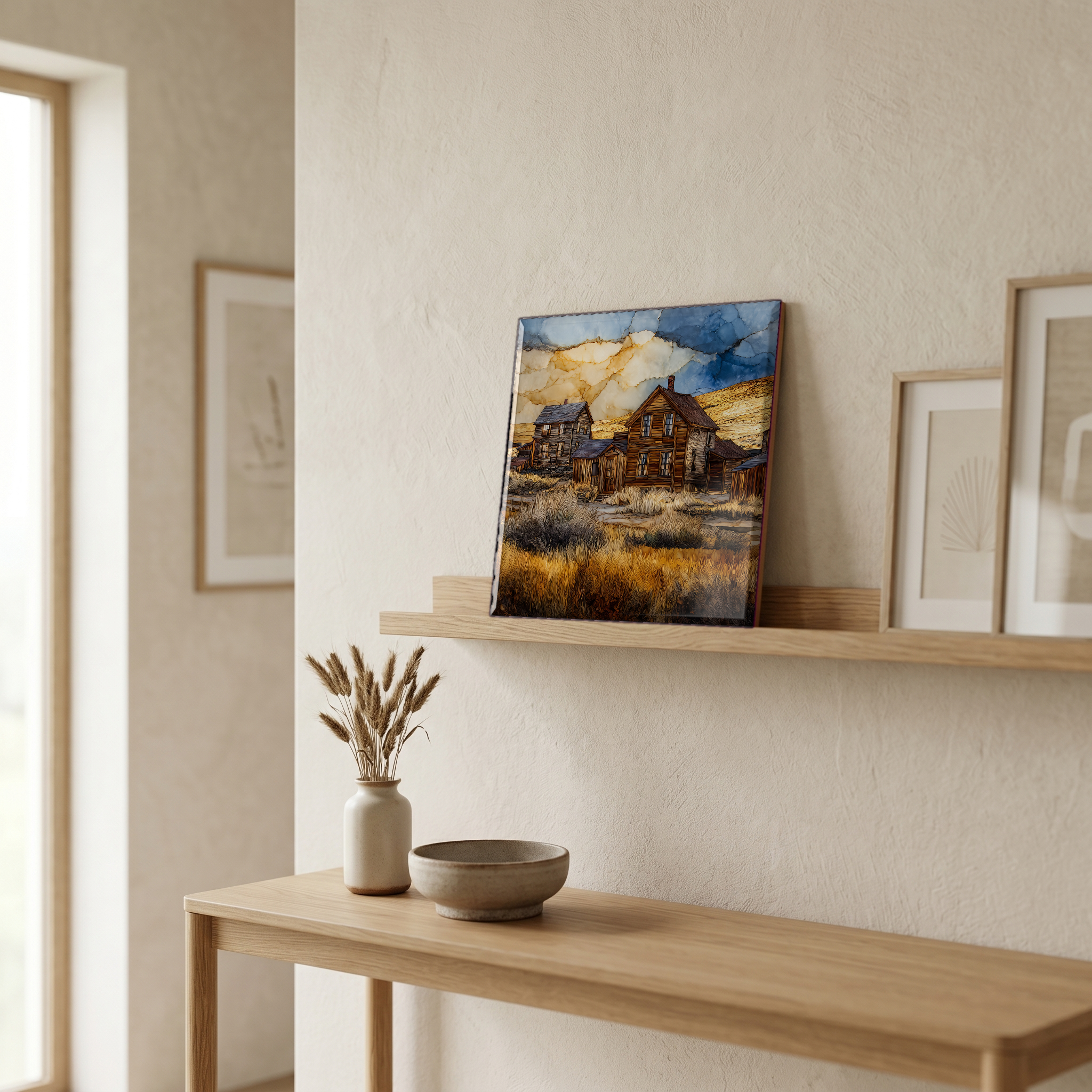
“A boomtown the wind kept. Bodie sits at 8,379 feet in the hills above Mono Lake, where about 110 wooden buildings still stand on the original streets. Chairs at the tables, cans on the shelves, schoolbooks open to the page someone last read. California State Parks calls it arrested decay: not restored, not rebuilt, just held. In summer the road opens and people come in twos and threes, in long coats and no hurry. In winter the road closes and what moves through the doorways is mostly wind.
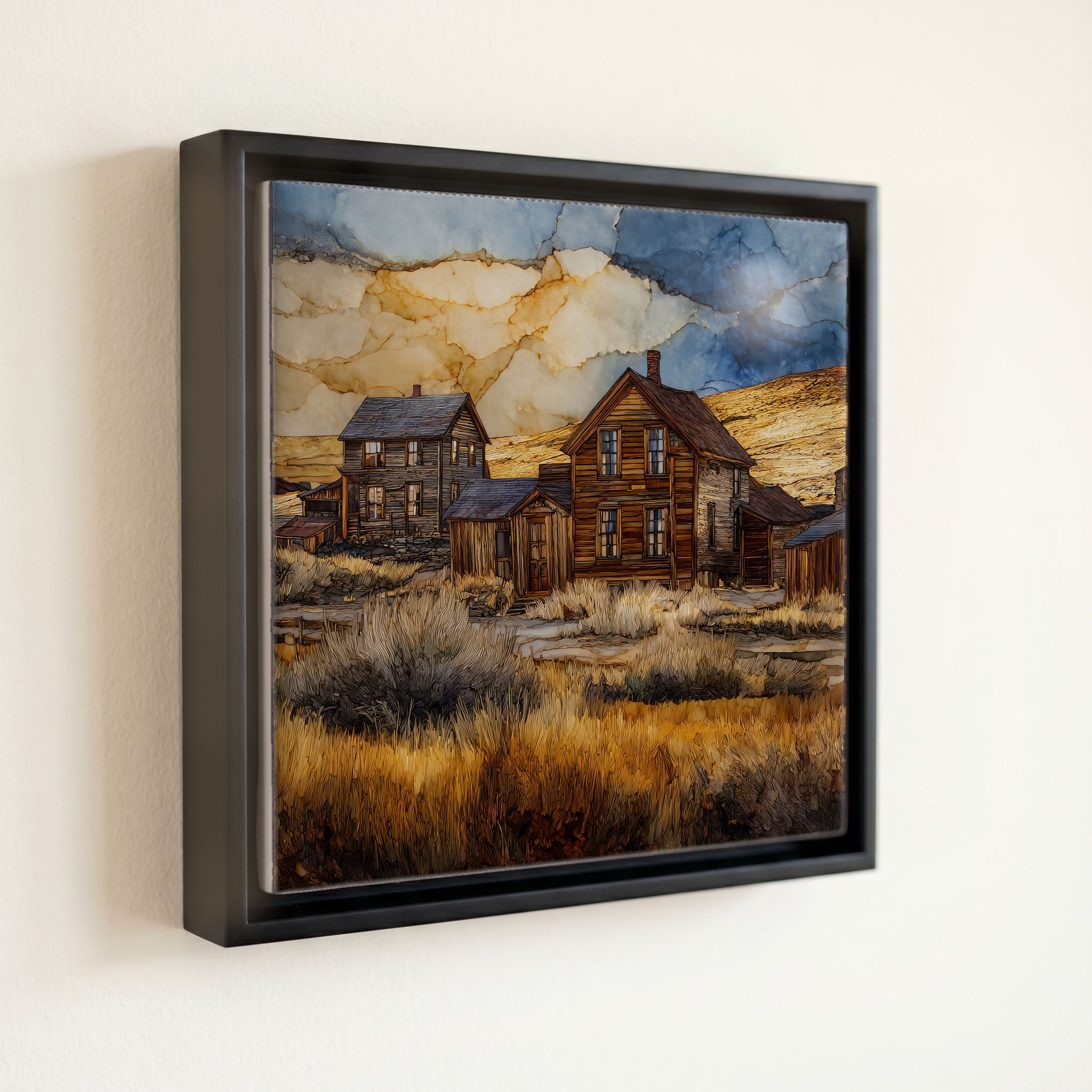
Bodie Ghost Town, on ceramic.
Each tile is finished by hand in our Knoxville studio. Artwork is slowly infused into the ceramic surface under high heat and pressure, and rests beneath a thin glossy finish. The colour lives in the surface, not on top of it.
Pick any four 4-inch tiles — National Parks you've been to, a Smokies set, the four seasons of one place. $ for a set of , cork-backed, ready to live on the table.
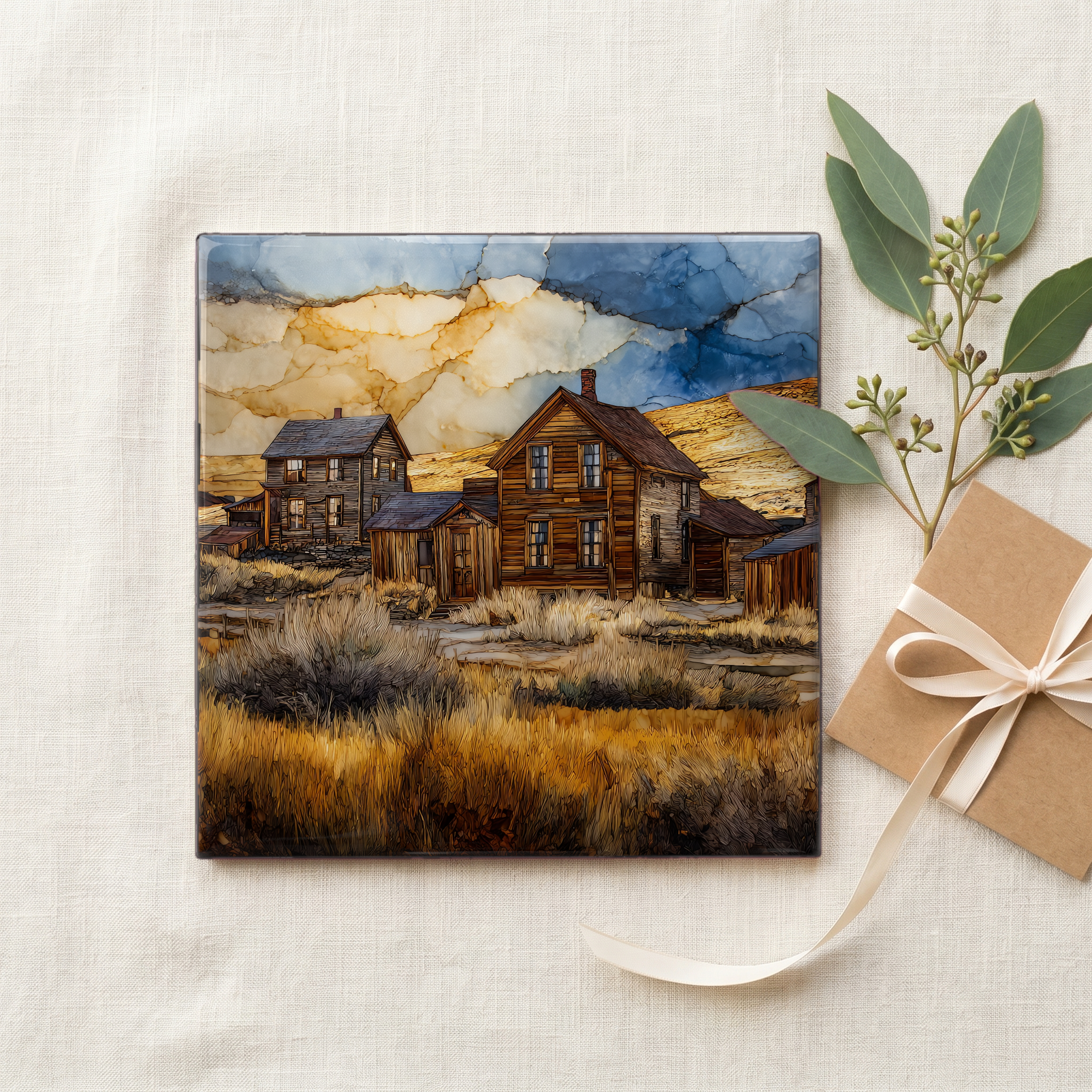
Each tile ships in a kraft box, tied with cream ribbon, with a handwritten note from the studio if you'd like to add one.
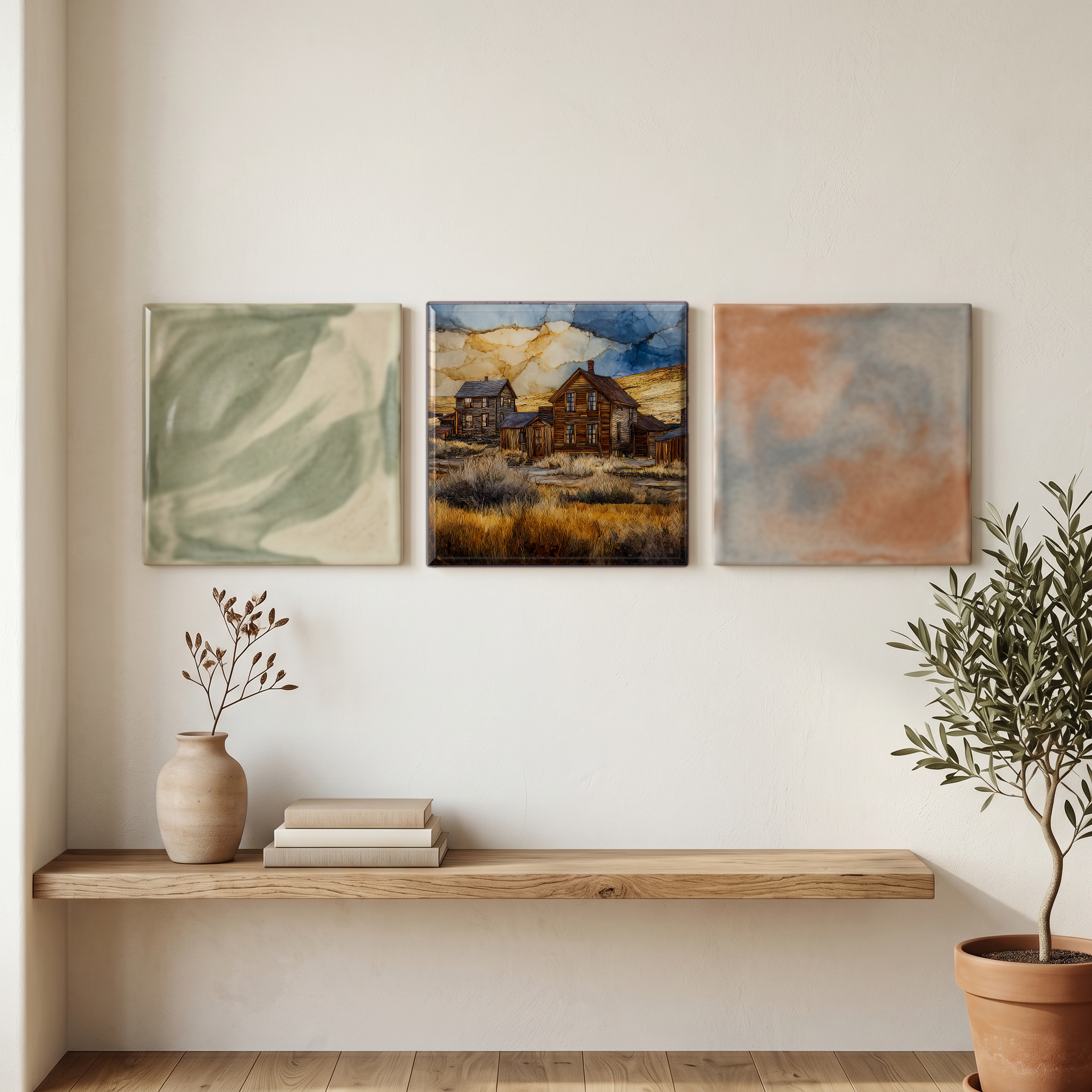
Three or five different vistas, hung together — a chapter of places you've been, or want to go.
The place, in three passes.
Bodie sits at 8,379 feet in the Bodie Hills of Mono County, California, on the east side of the Sierra Nevada about thirteen miles east of U.S. Route 395 and twenty miles north of Mono Lake. The town grew up around an 1859 gold strike and reached an estimated peak between 7,000 and 10,000 residents by 1879. The mines were already failing by the 1890s. A fire in 1932 destroyed roughly ninety-five percent of what remained, and the last permanent residents left in the years that followed. California State Parks took over in 1962 and preserves about 110 buildings on the original townsite as Bodie State Historic Park, a National Historic Landmark.
Bodie sits in open sagebrush at the south end of the Bodie Hills, with no other settlement closer than Bridgeport, seventeen miles to the west. California State Parks holds the townsite under arrested decay, a preservation philosophy adopted in the early 1960s: buildings are stabilised but not restored, and the contents of houses, saloons, and stores are left where the last residents put them. Volunteers and rangers slow the rot but do not reverse it. The wind moves steadily through 110 empty doorways, and visitors who walk the dirt streets in late afternoon often remark that they stop talking somewhere around the schoolhouse.
Bodie State Historic Park is open every day of the year, but vehicle access is seasonal. From roughly late May through October the access road, paved State Route 270 for the first seven miles and unpaved washboard for the last three, is generally passable to standard vehicles when the weather cooperates. A day-use admission is paid at a self-serve kiosk near the entrance. Once snow closes the dirt section, winter access is by snowmobile, snowshoe, or backcountry ski only, and most buildings are locked until spring. The Bodie Foundation partners with California State Parks on preservation and operates the small museum in the former Miners Union Hall during the summer season.