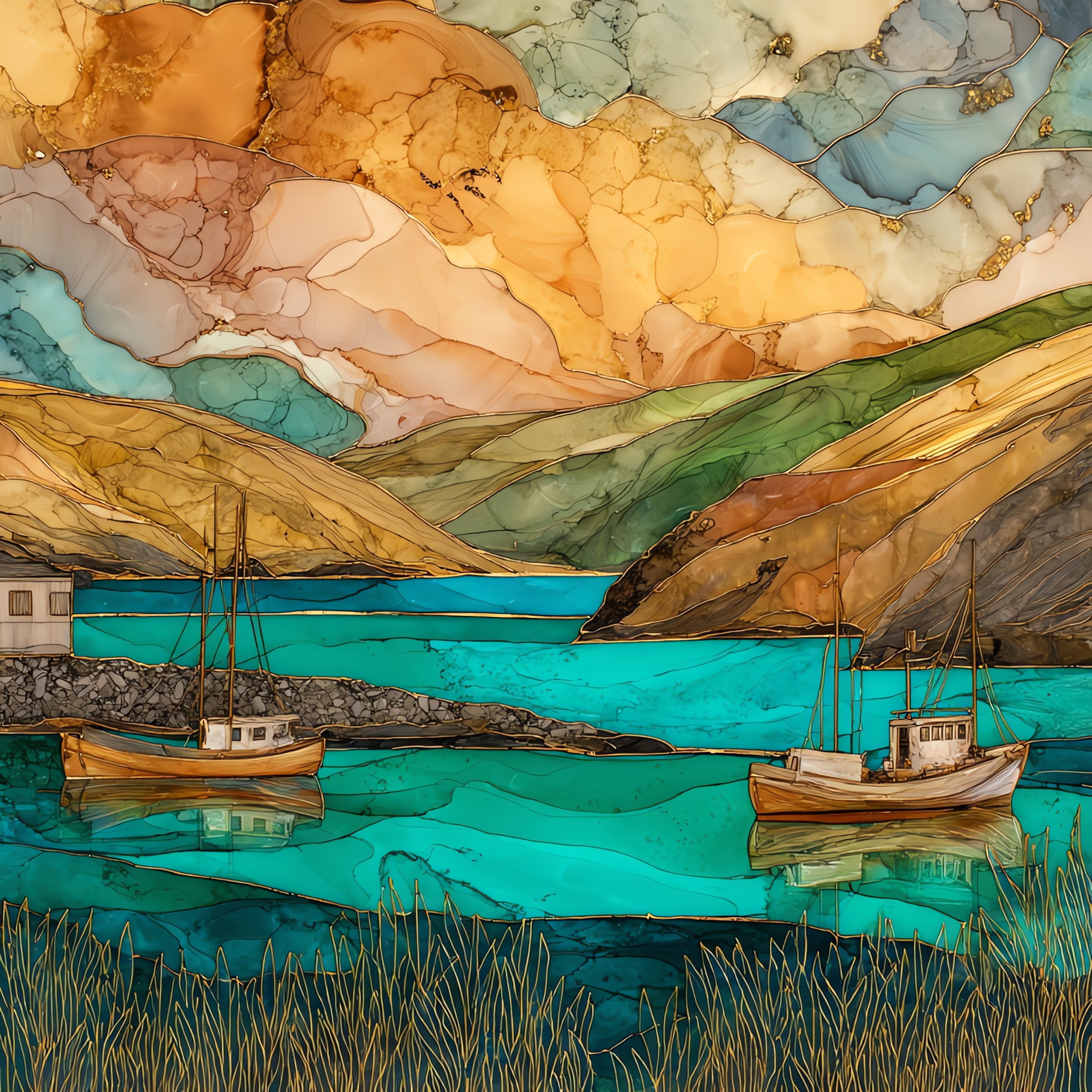
Wender·Vista
Bodega Bay
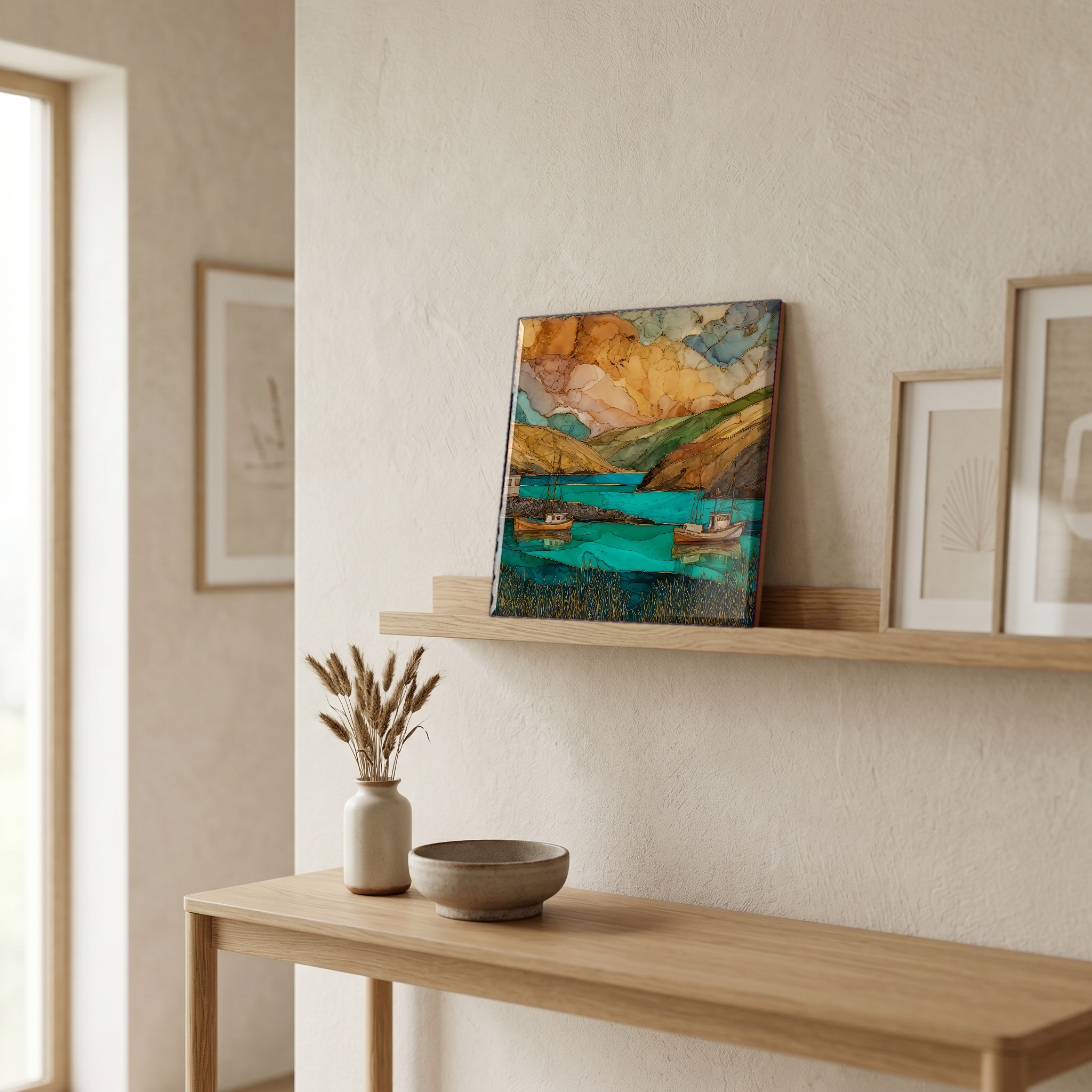
shown on ceramic, 12-inch tileCalifornia · United States
on the Sonoma Coast, north of the Golden Gate

Bodega Bay

the harbor the fog never quite leaves.

Where it lives

Not only on a wall.

A small tile on the nightstand catching the morning. A larger one above the fire. Yours, wherever you spend the slow hours.
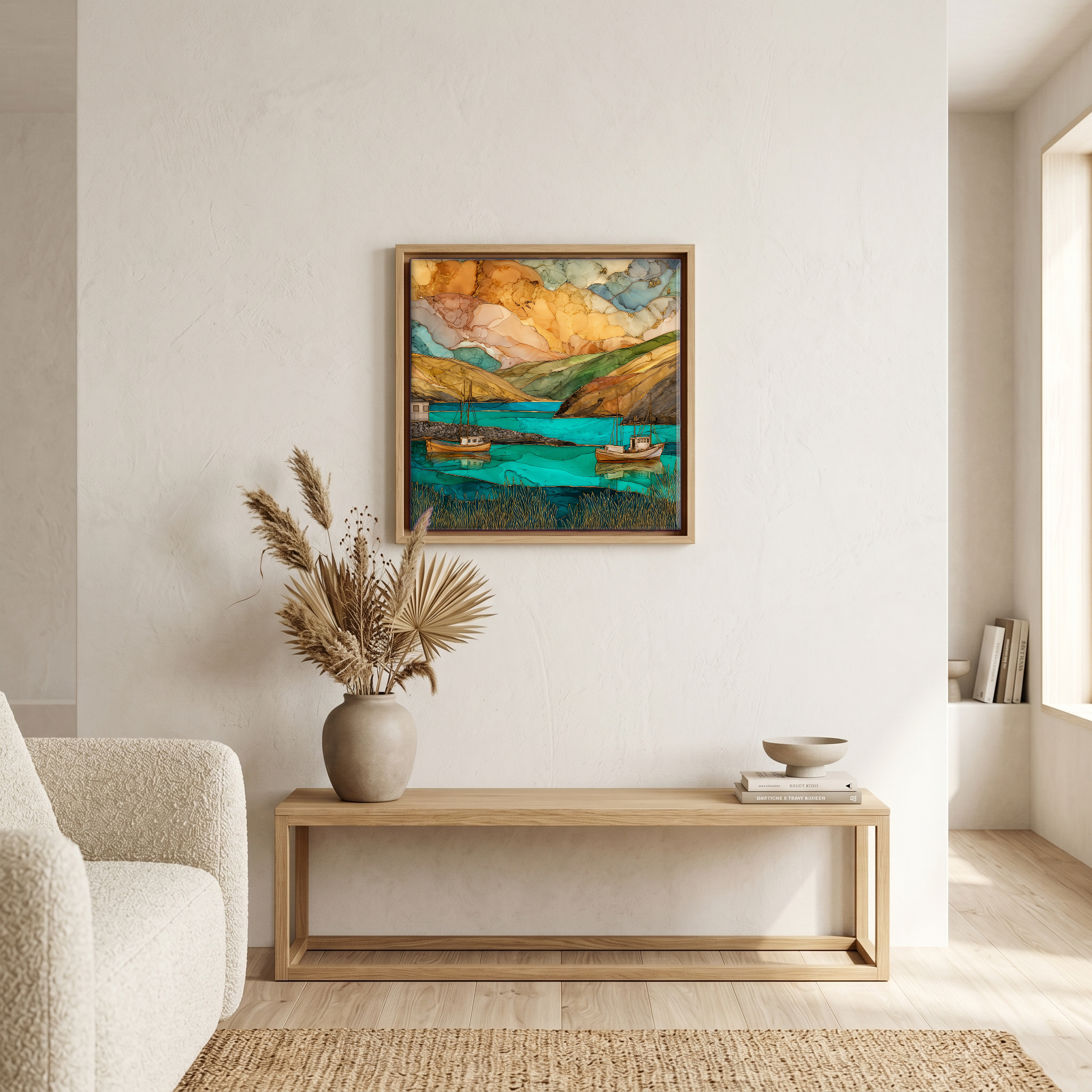
Above the bench, in a warm oak surround.
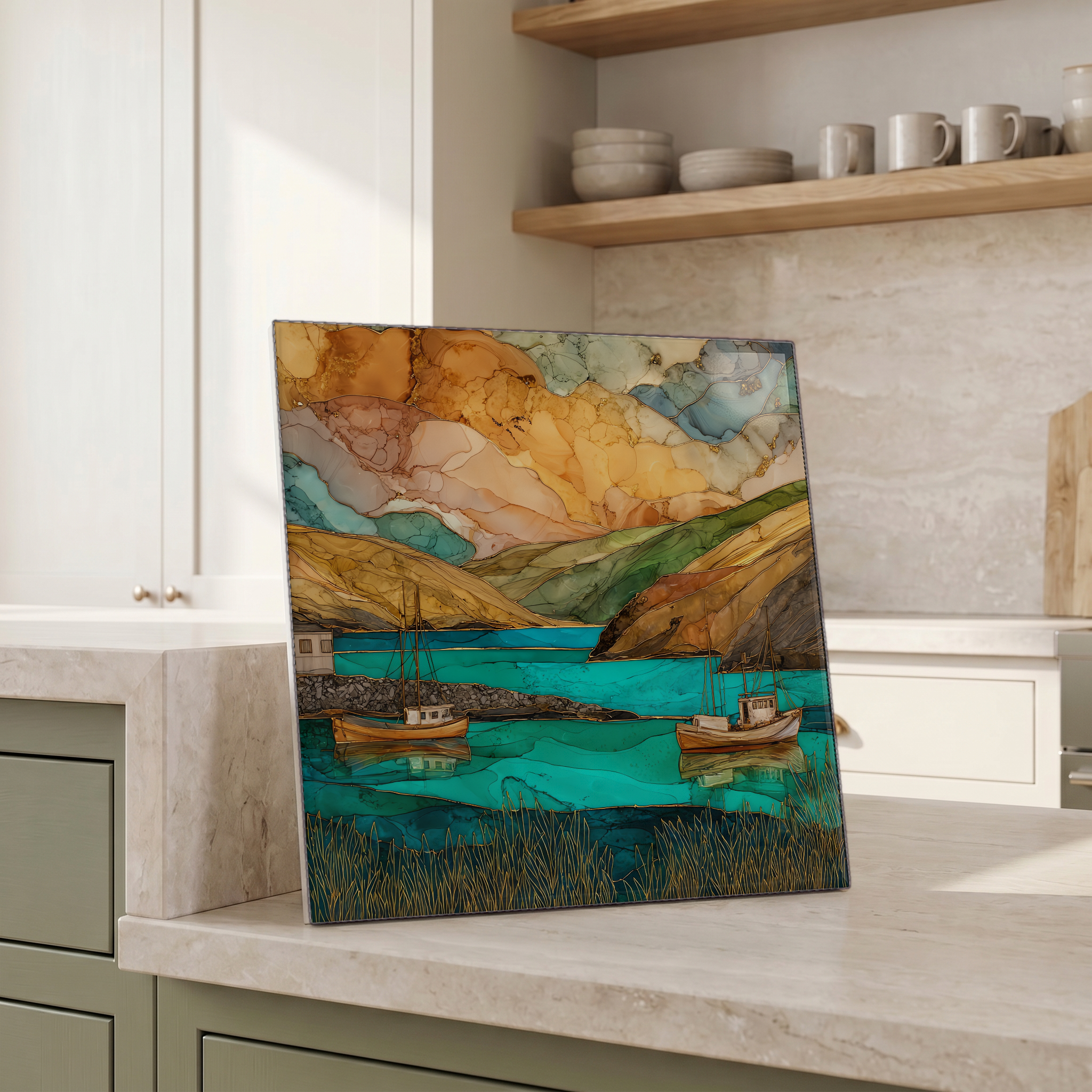
Beside the kettle, propped on the counter.
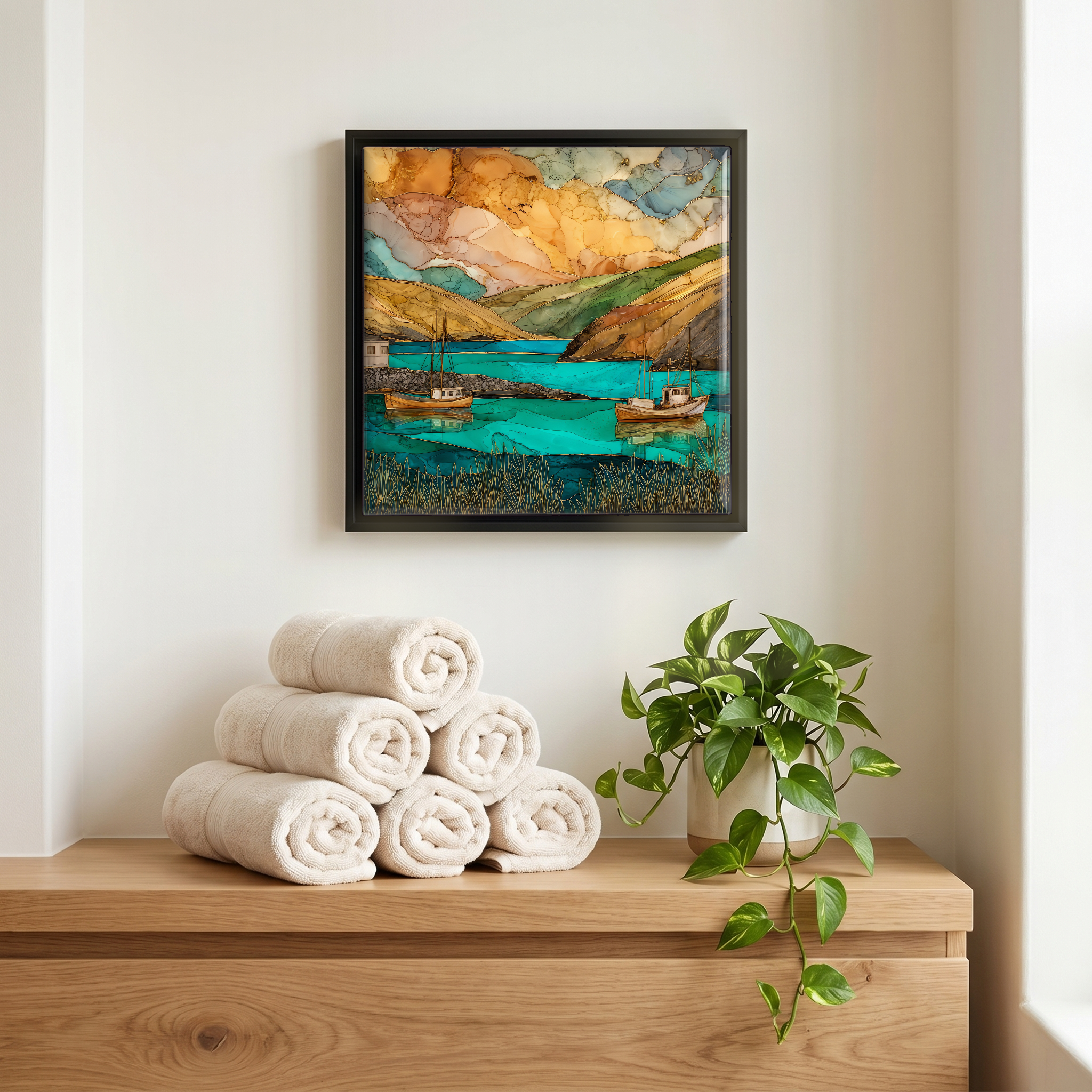
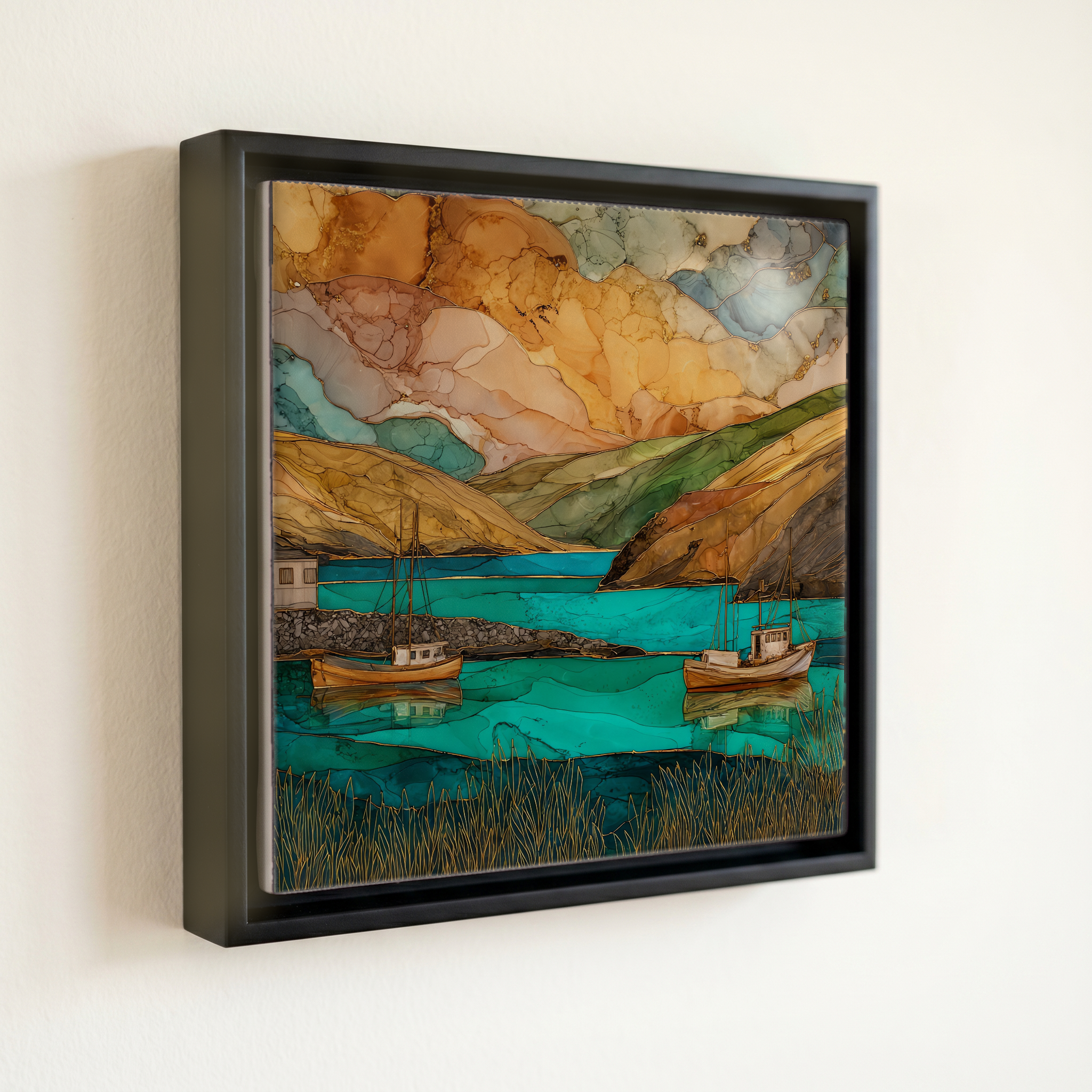
Above the linens, in a slim black surround.
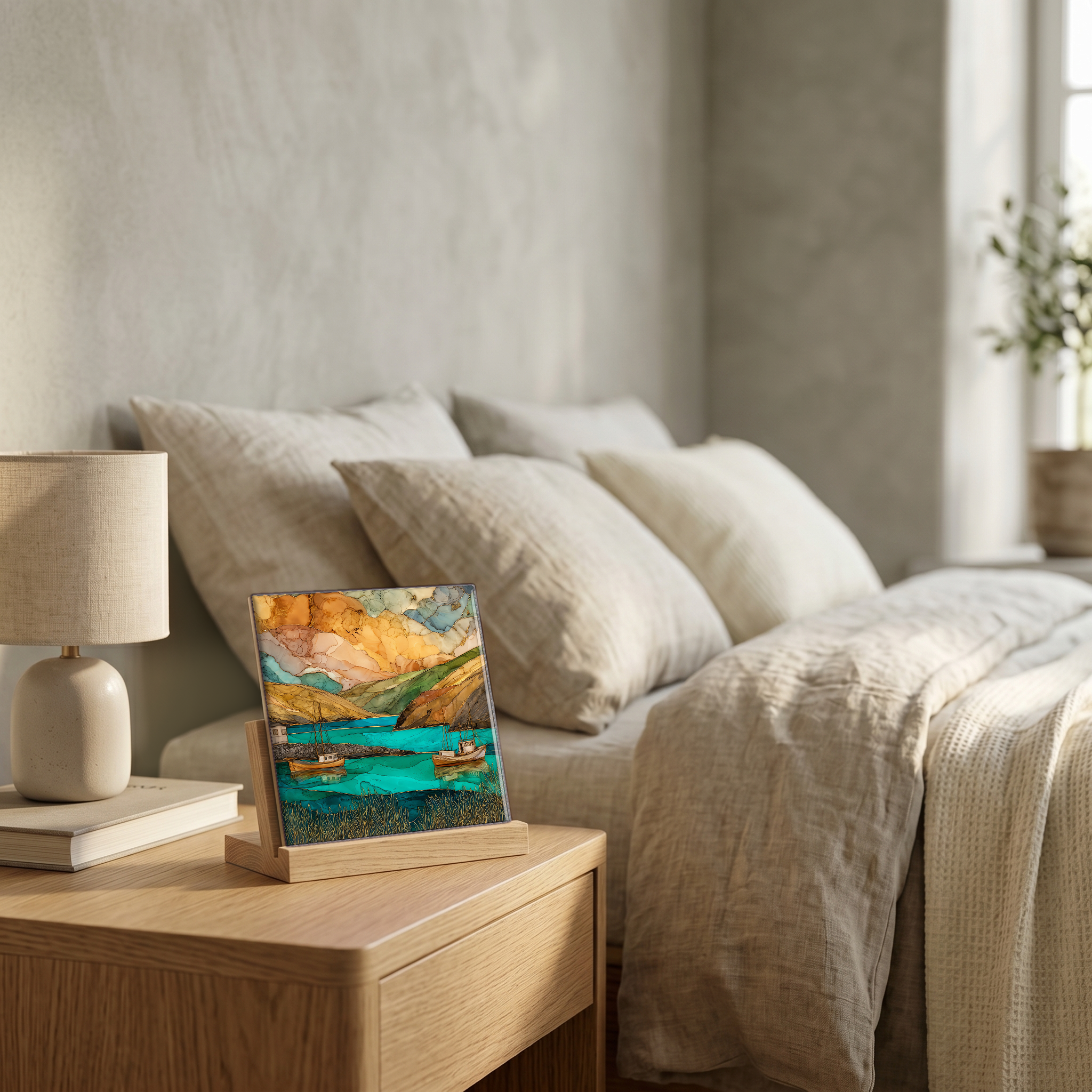
On the nightstand, on a light oak stand.
On a picture ledge, where the light comes in.
a note from the studio

A small harbor town where Highway 1 bends east around Bodega Head. The fishing fleet works Dungeness crab from November into spring; the rest of the year it is salmon and the long swells that come straight off the open ocean. The headland sits on the Pacific Plate side of the San Andreas Fault, granite that started its journey hundreds of miles south. Most afternoons the marine layer comes in around three. Boats return to Spud Point before the wind gets up. The light is the cold blue light of a working coast.
from the studio
shown in a slim black floating frame · 6 × 6 in
— bring it home

Bodega Bay, on ceramic.

Each tile is finished by hand in our Knoxville studio. Artwork is slowly infused into the ceramic surface under high heat and pressure, and rests beneath a thin glossy finish. The colour lives in the surface, not on top of it.

What kind of piece?
One tile — square or rectangle.
How big?
the popular one — counter, shelf, nightstand
6 × 6 in · 15 cm · 1.6 lb
Surface finish
A clear glossy finish — the artwork reads as if under resin. Ideal for show-pieces and framed wall art.
How it sits
A hidden cleat — sits ¼″ proud of the wall.
$58
Hand-finished and shipped from our studio at the foot of the Smokies. On your wall in about ten days.
size
6 × 6 in
15 cm
weighs
1.6 lb
solid in the hand
surface
ceramic, hand-finished
art rests beneath a thin glossy finish
from
Knoxville, TN
our family studio, at the foot of the Smokies
— start a Coaster Set

Pick any four 4-inch tiles — National Parks you've been to, a Smokies set, the four seasons of one place. $ for a set of , cork-backed, ready to live on the table.
comes gift-ready
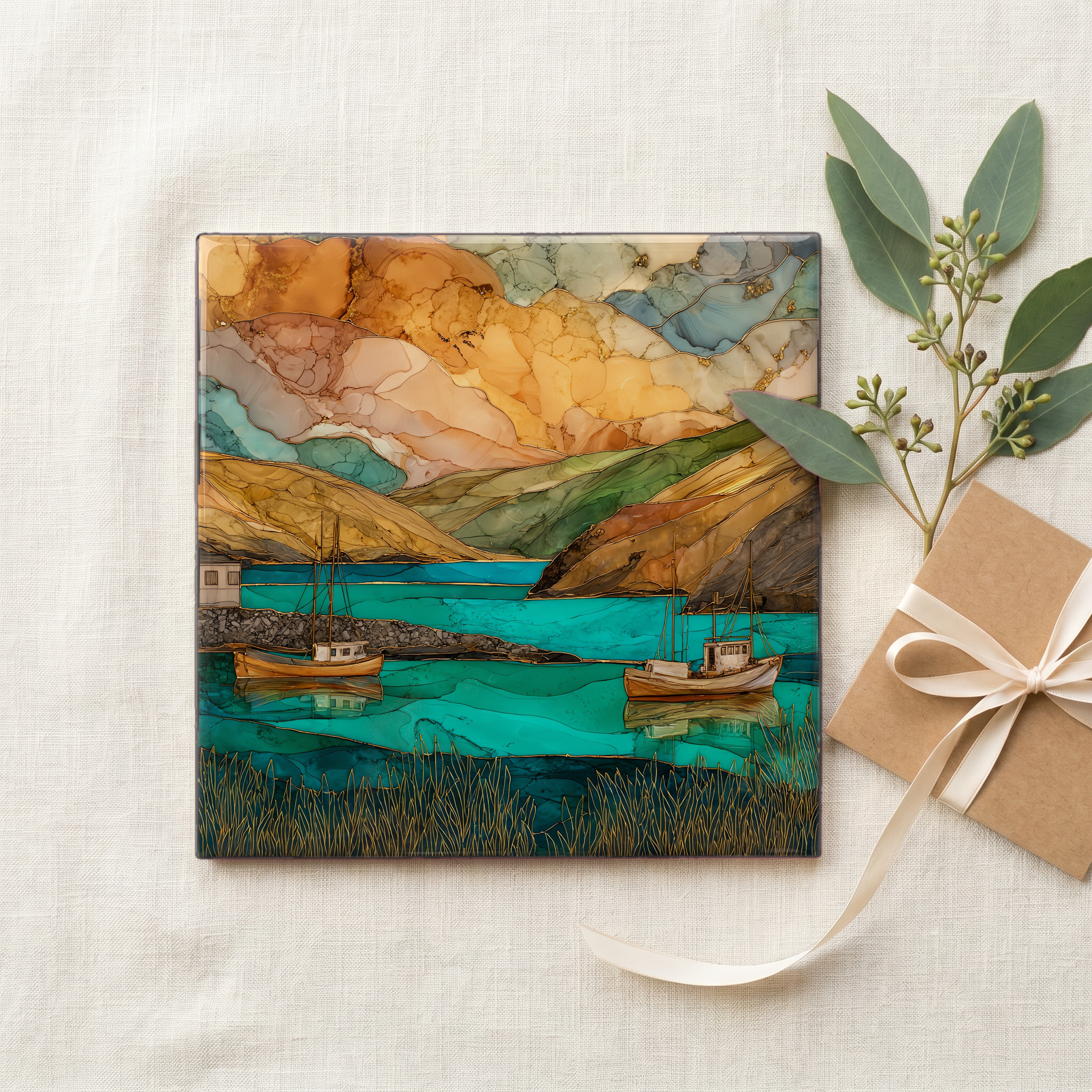
comes gift-ready

Each tile ships in a kraft box, tied with cream ribbon, with a handwritten note from the studio if you'd like to add one.
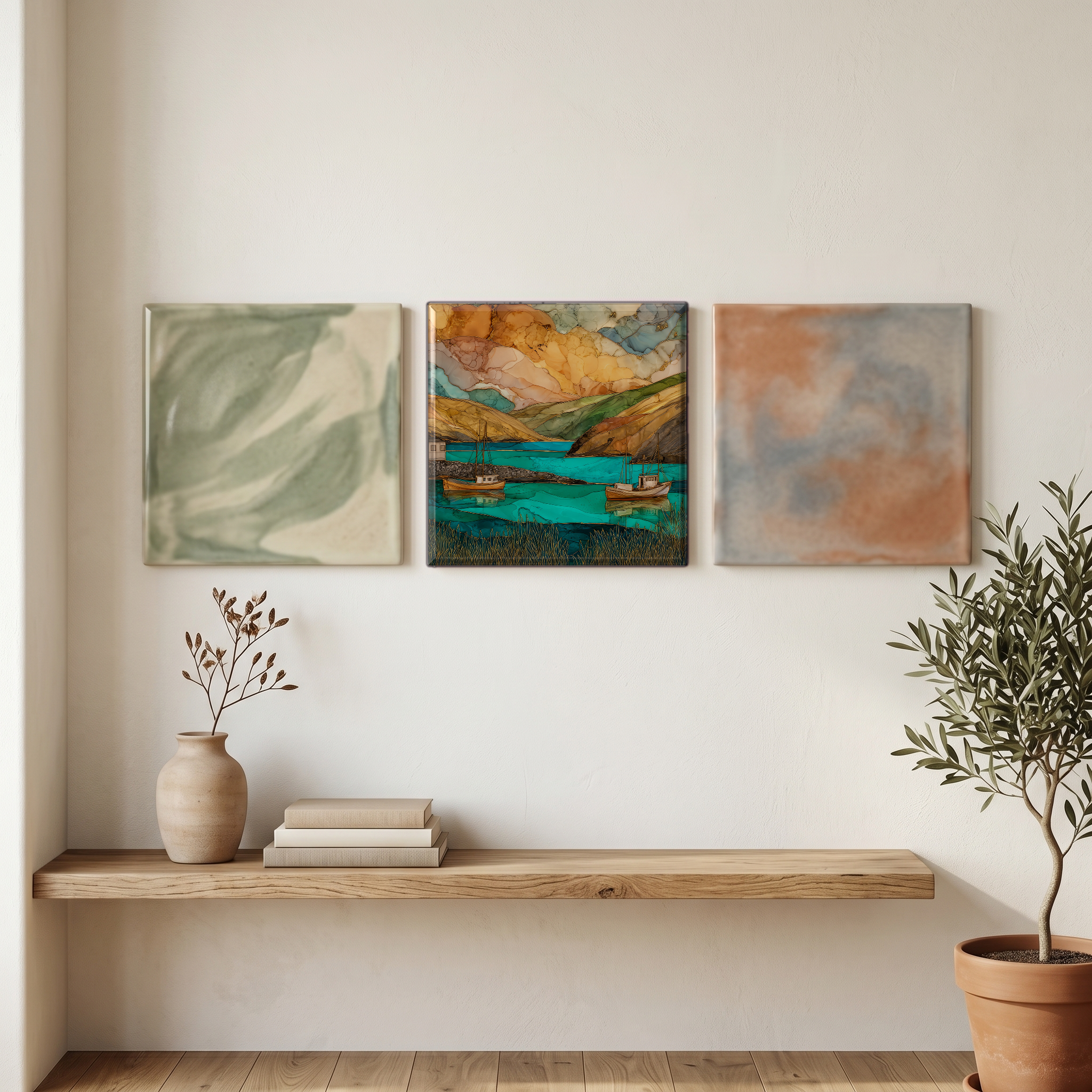
or build a grouping
or build a grouping

Three or five different vistas, hung together — a chapter of places you've been, or want to go.

about Bodega Bay

The place, in three passes.

A little of what's known, in case you fall down the rabbit hole — or want to go see it yourself.
the place

Bodega Bay is a small harbor community on the Sonoma Coast, in Sonoma County, California, about 60 miles north of San Francisco by way of Highway 1. The bay itself is a shallow water body roughly two miles across, sheltered from the open Pacific by Bodega Head, a granite peninsula that sits on the Pacific Plate side of the San Andreas Fault. The town's working harbor is at Spud Point Marina, with Doran Beach forming a long sand spit along the southern shore. UC Davis operates the Bodega Marine Laboratory on the headland, a coastal research station founded in 1966.

the air

Marine fog defines Bodega Bay's daily rhythm from late spring through early fall. The cold California Current keeps offshore water in the low fifties Fahrenheit even in summer; warm inland air drawn over that cold surface condenses into the low cloud locals call the marine layer. Most summer days the fog burns off by late morning and rolls back in by mid-afternoon. The wind that comes over Bodega Head pushes hard enough that the cypress on the bluff lean inland. The Bodega Marine Laboratory has tracked this microclimate since the station opened in 1966, and the area falls within the cool-summer Mediterranean band of the Sonoma Coast.

the season

Dungeness crab season anchors the bay's calendar. The commercial fishery opens around mid-November and runs into late spring, weather and pre-season testing for domoic acid permitting. The fleet works out of Spud Point Marina; the morning the boats head out in November is the working coast's first proper day of winter. King salmon follow from May through October. Gray whales pass on their southbound migration in December and northbound from March, visible from the Bodega Head trail. The summer fog peaks July and August. The clear, cold winter mornings after a storm are the time the Sonoma Coast looks most like itself.

where
United States · Sonoma County, California
elevation
10 m · 33 ft
position
38.3333° N · 123.0489° W
the neighborhood

What's nearby.

A handful of named places within an hour's walk or short drive. Some we've already painted; some we will.
2 km W
Bodega Head
granite headland
3 km S
Doran Beach
sand spit
6 km E
Bodega
inland village
5 km N
Salmon Creek Beach
beach
15 km N
Goat Rock
sea stack
18 km N
Jenner
river-mouth village
N
Bodega Bay
Bodega Head
Doran Beach
Bodega
Salmon Creek Beach
Goat Rock
Jenner
common questions

What people ask.

A few questions we get about Bodega Bay — and about bringing the piece home.
about the place

Bodega Bay is a small harbor town on the Sonoma Coast of California, about 60 miles north of San Francisco. Highway 1 runs through it; the closest town inland is Bodega, four miles east. The bay shelters behind Bodega Head, a granite peninsula on the Pacific Plate side of the San Andreas Fault.

Bodega Head is part of a granitic block that began hundreds of miles south and has been carried northwest along the Pacific Plate. The fault traces along the eastern edge of the headland, separating it from the rest of Sonoma County, which sits on the North American Plate.

Commercial fishing and the marine layer. The Dungeness crab fleet works out of Spud Point Marina from mid-November into late spring, with king salmon following from May through October. The bay is also remembered as the filming location of Alfred Hitchcock's 1963 film The Birds; the schoolhouse from that film stands four miles inland in Bodega.

Late winter and spring, when the marine layer is least persistent and the crab boats are working. Summer mornings burn off to clear afternoons; by three the fog usually rolls back in. October and November are quieter, with steady weather before winter storms.

Yes. Gray whales pass on their southbound migration in December and northbound from March, often visible from the Bodega Head bluff trail. Less commonly, humpback whales and harbor porpoises feed near the headland in summer. The Bodega Marine Reserve trail loops about three quarters of a mile along the western edge.

No. Bodega Bay is the coastal town on the harbor; Bodega is a smaller inland community four miles east, along Bodega Highway. Bodega is the older settlement and holds the Potter Schoolhouse from The Birds. The two are often confused; in regional usage, the coast means Bodega Bay.

about the piece in your home

It has been a meaningful gift for customers from Sonoma County and the broader North Bay. People who grew up driving Highway 1 or who worked the crab fleet recognize the colour of the marine fog at the harbor. A Small or Medium on the wall with a handwritten note from the studio carries well.

Coastal-modern interiors with cool blues and weathered wood; Mountain-modern rooms looking for a cooler counterpoint to warm timber; and pared-back Minimalist palettes that want one piece carrying the colour. The tile's blue-grey marine register sits comfortably alongside oak, ceramic, linen, and brass.

Coastal-modern moved away from beige-and-rope in recent years toward cooler, more honest palettes: the Pacific Northwest greys, the working-harbor blues, and a darker oak. A Bodega Bay tile fits that register. It reads as a working coast rather than a beach holiday, which is the shift the style has been making.

For a sofa, a single Large or a 4-tile Mural reads at the right scale; for a wider sectional or a long console, a 9-tile Mural takes the full wall. Above a narrow console, a Medium centred at eye level works. A Triptych runs lengthwise above a low credenza.

Yes, with the Dura Satin or Matte finish. Both are scratch-resistant and shed splash and steam; the surface keeps its colour through humidity and direct sun. The Glossy finish is meant for framed wall pieces in dry rooms.

Microfibre cloth and water. For stuck-on splatter near a stove, a drop of mild dish soap works; rinse and wipe dry. The colour lives in the ceramic surface, beneath a thin glossy or satin finish, so it does not lift with cleaning.

Yes. Wender Studios is a single family studio in Knoxville, Tennessee. Every WenderVista tile is original work from Reid Wender, the studio's curator and the eye behind the atlas. We do not license to third parties and we do not sell our images for use elsewhere.

if this one stayed with you

A few you might also love.

Hand-picked by the eye that found Sorapis. Same air, same kind of quiet.