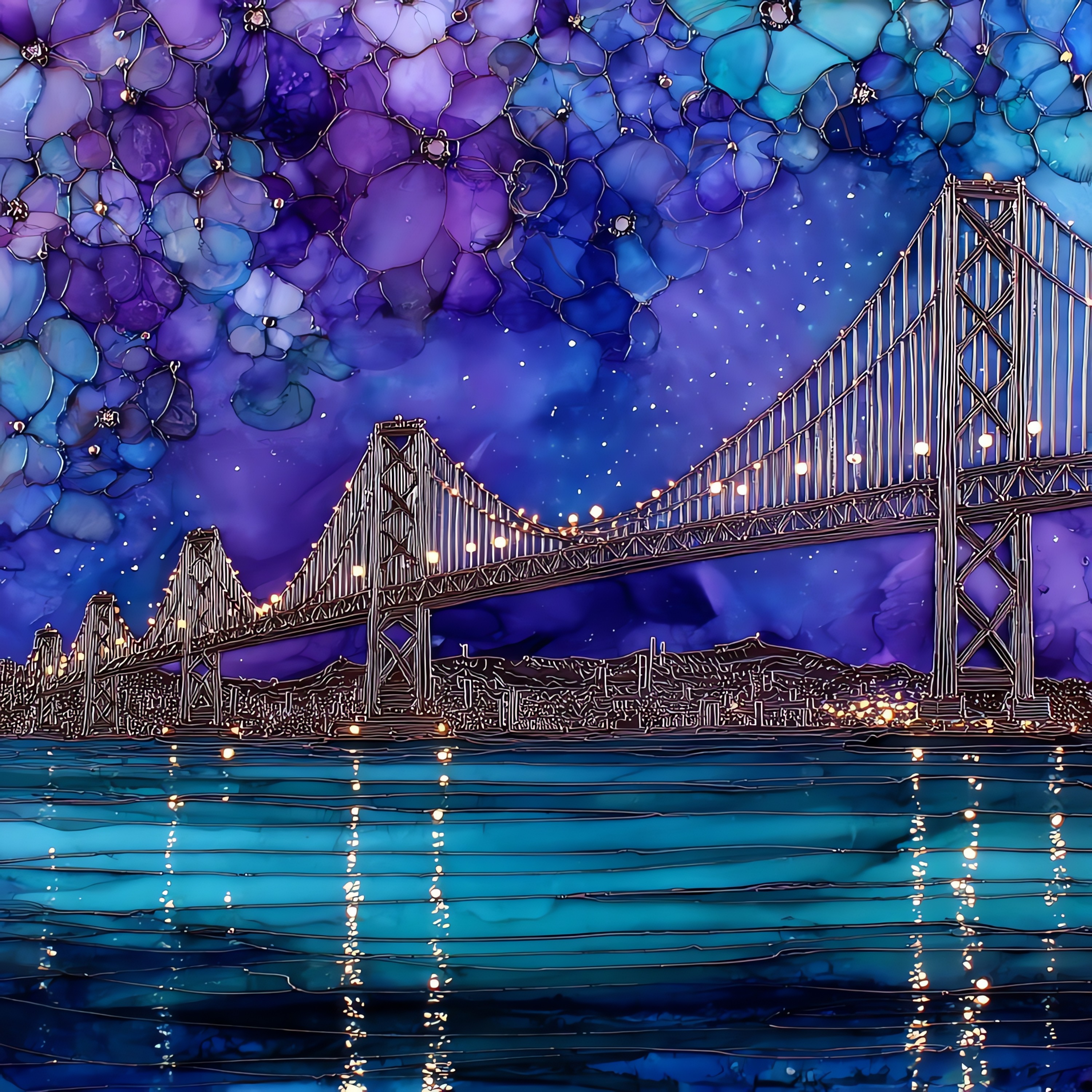
Bay Bridge Night
— — the bay edged in light that never repeats.
Not only on a wall.
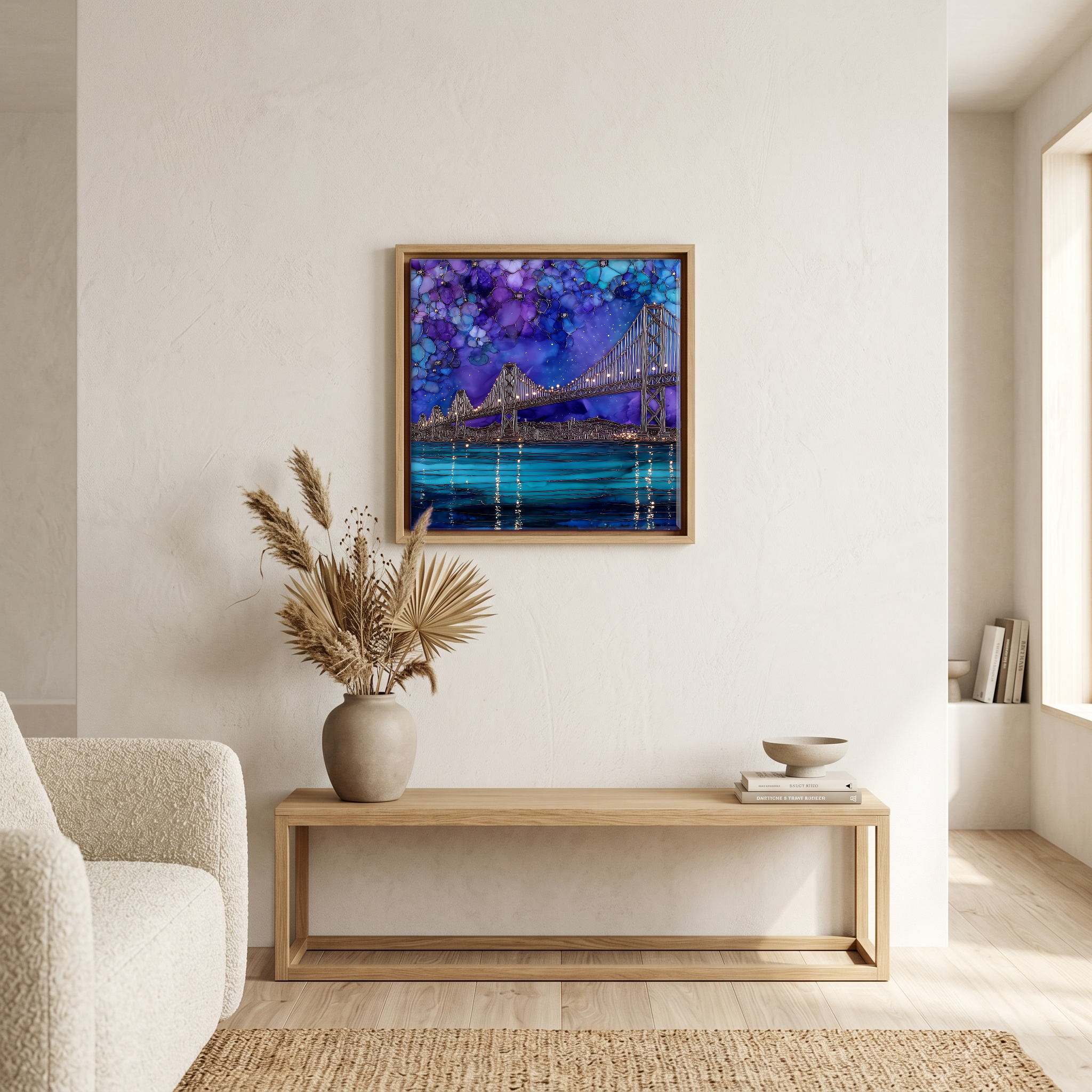
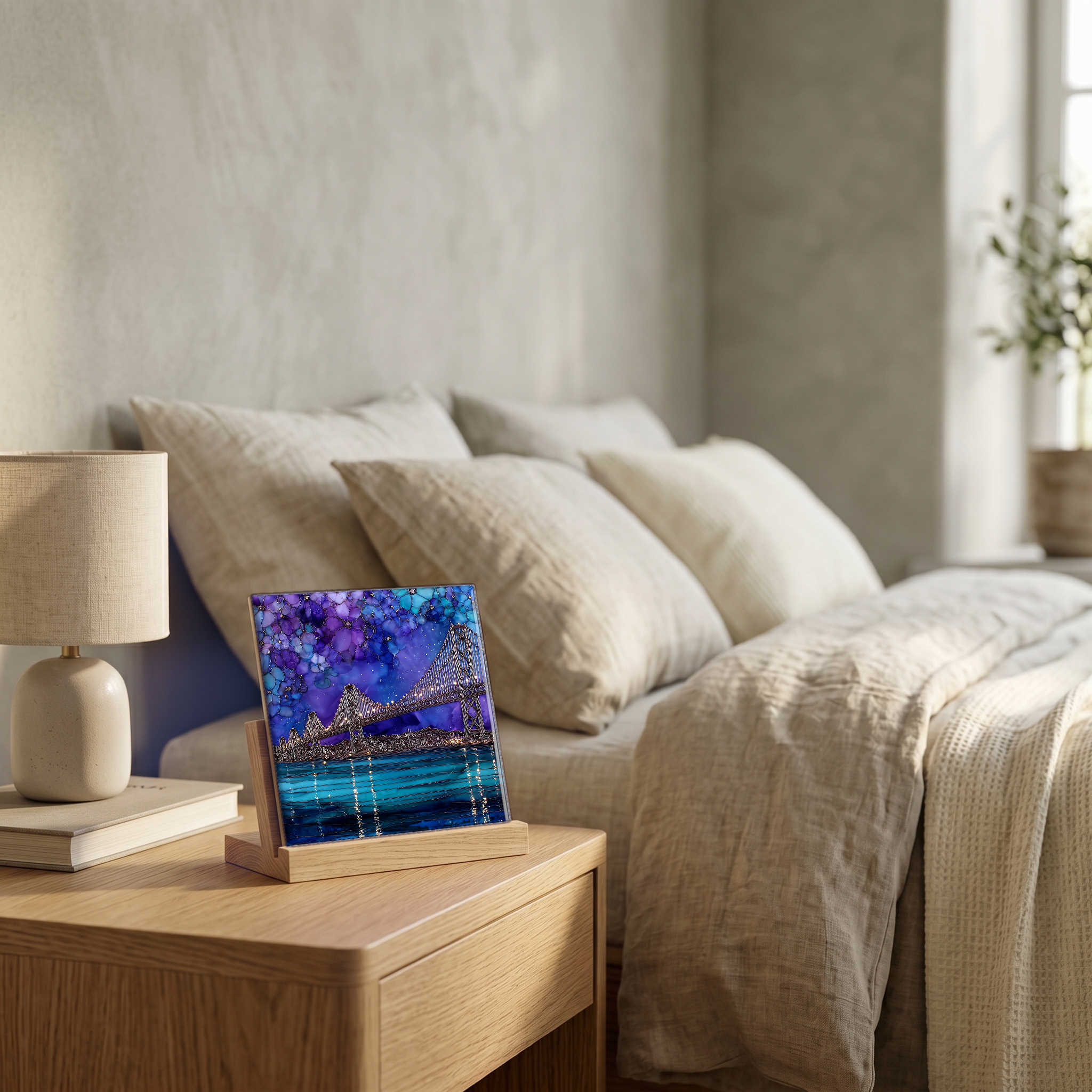
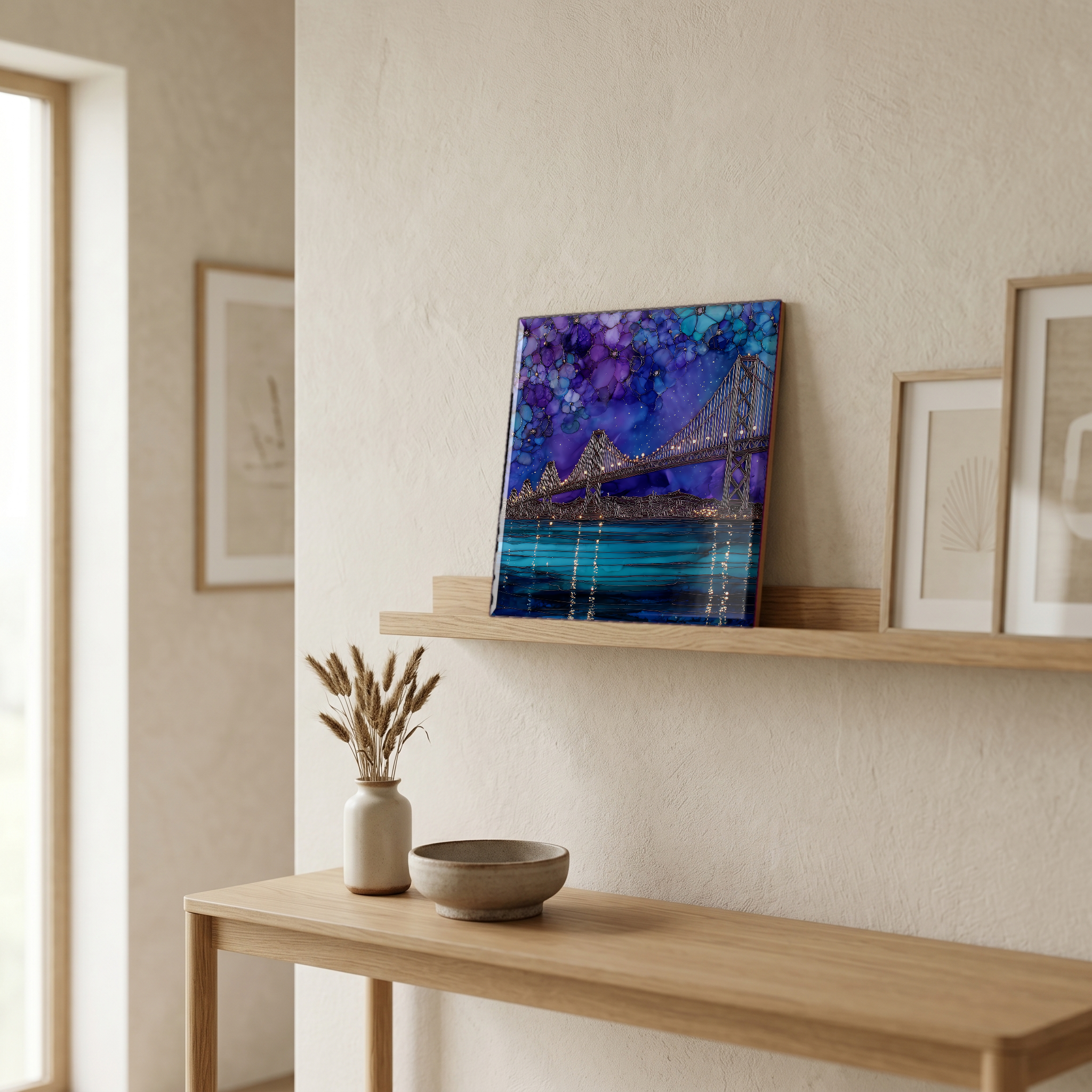
“The western half of the San Francisco–Oakland Bay Bridge, seen from the Embarcadero after sundown. The Bay Lights came back on March 20, 2026, after three years dark. Forty-eight thousand new LEDs run along the northern cables of the suspension span, on an algorithm Leo Villareal wrote so no second of the show repeats. The Golden Gate gets the postcards. The Bay Bridge gets the locals, the ones who watch its cables breathe slow light across the water on the walk home.
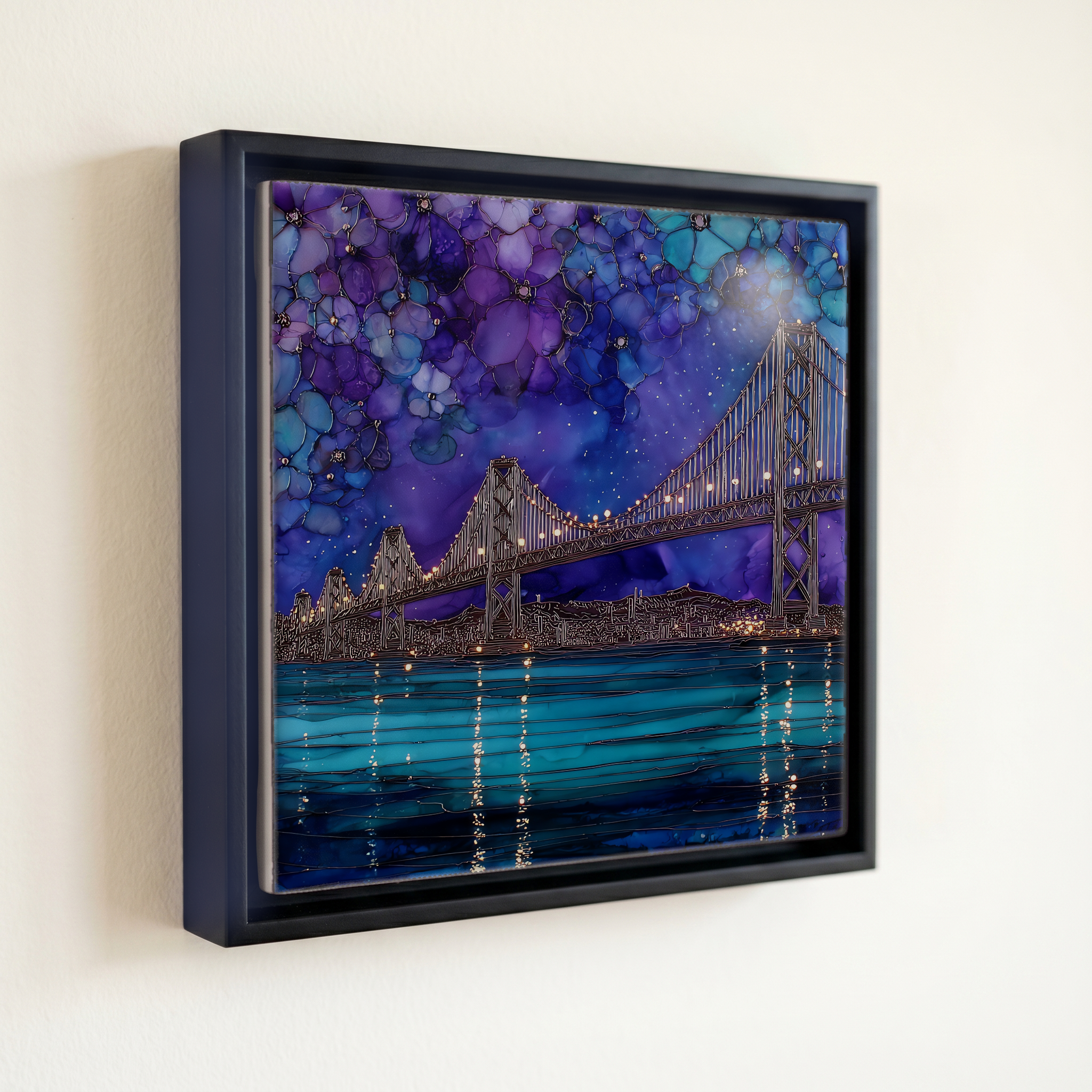
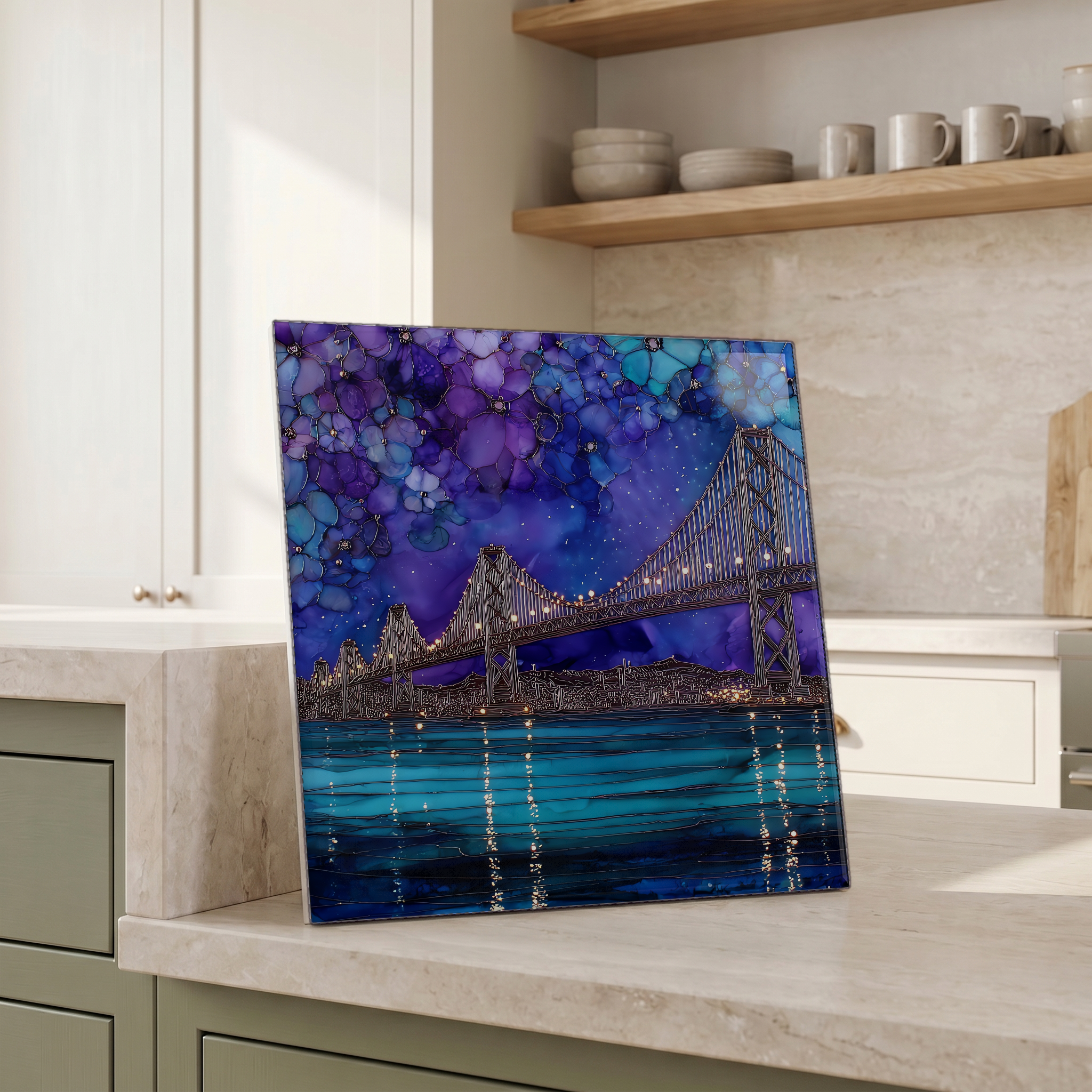
Bay Bridge Night, on ceramic.
Each tile is finished by hand in our Knoxville studio. Artwork is slowly infused into the ceramic surface under high heat and pressure, and rests beneath a thin glossy finish. The colour lives in the surface, not on top of it.
Pick any four 4-inch tiles — National Parks you've been to, a Smokies set, the four seasons of one place. $ for a set of , cork-backed, ready to live on the table.
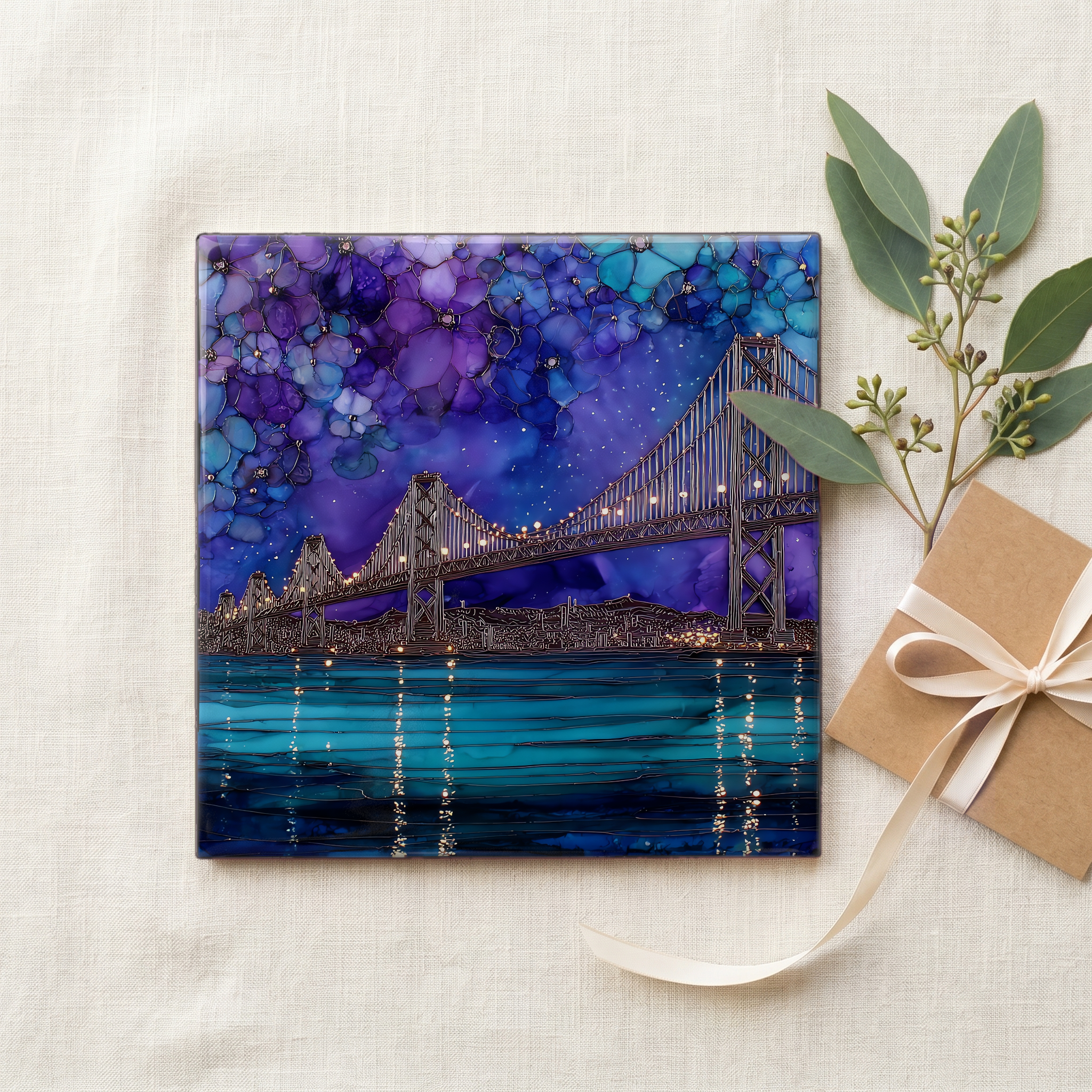
Each tile ships in a kraft box, tied with cream ribbon, with a handwritten note from the studio if you'd like to add one.
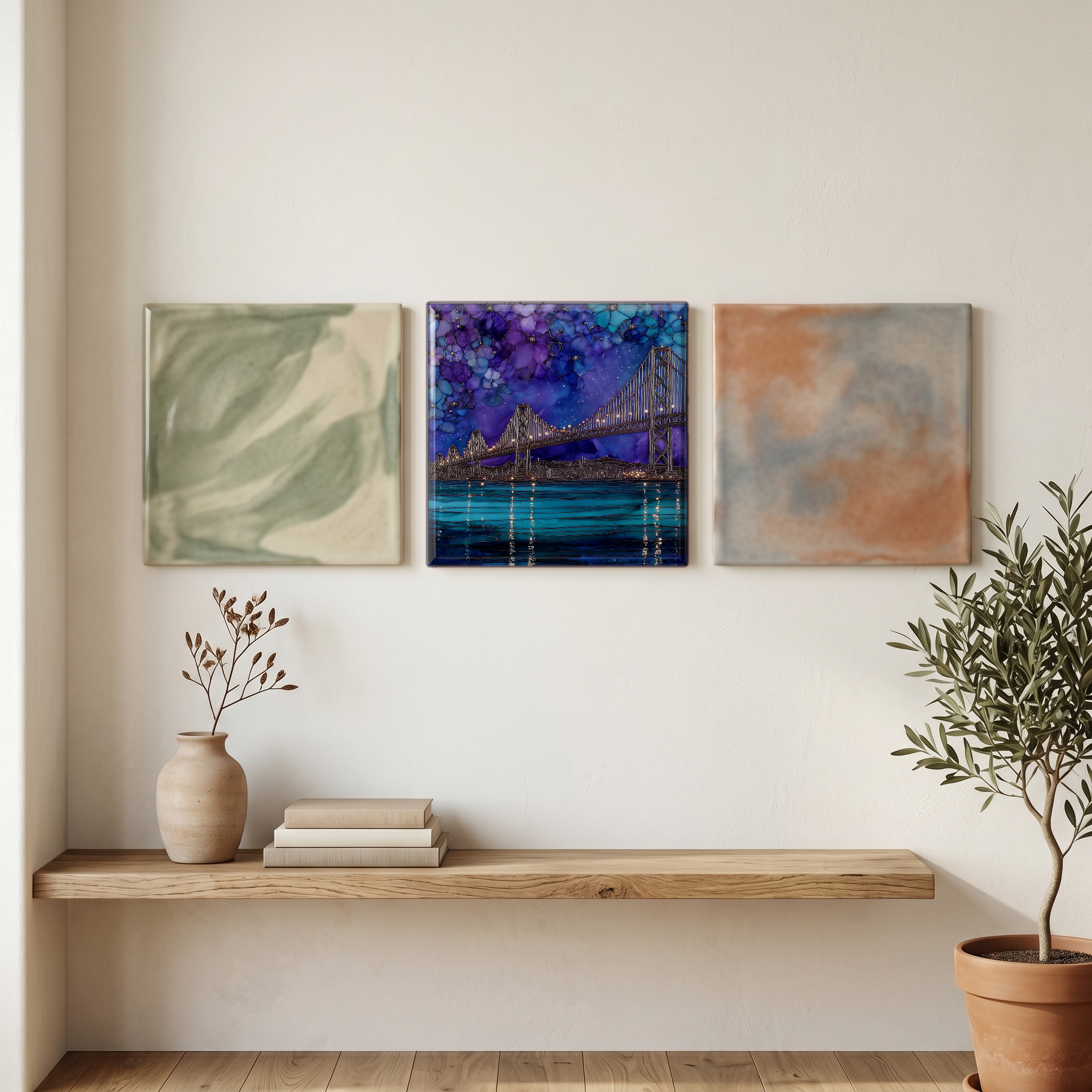
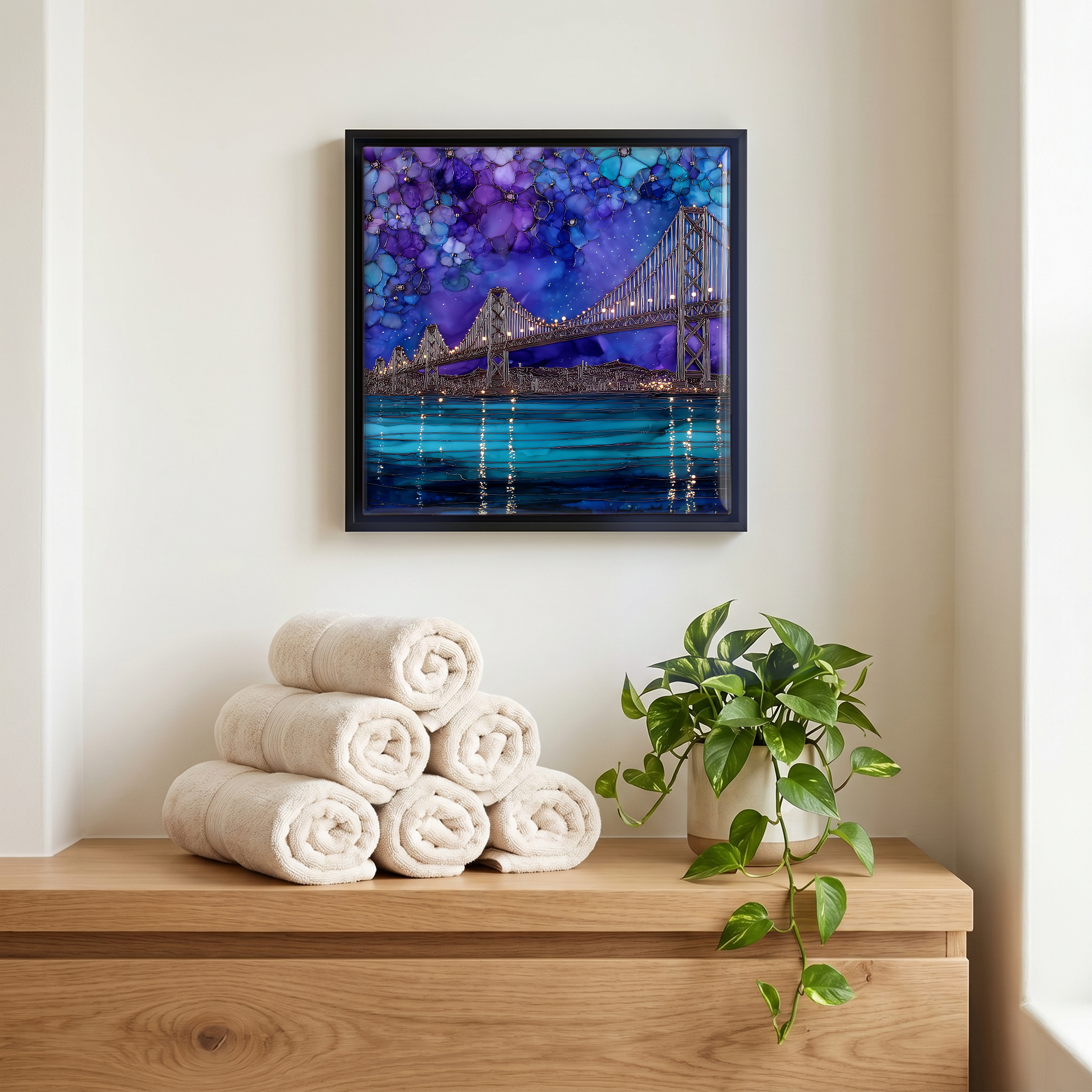
Three or five different vistas, hung together — a chapter of places you've been, or want to go.
The place, in three passes.
The San Francisco–Oakland Bay Bridge crosses the bay in two crossings stitched through Yerba Buena Island, a natural rock outcrop midway across. The western crossing, the one in this painting, is a double suspension bridge running roughly 1.8 miles from Rincon Hill on the San Francisco side to the island. Designed by Chief Engineer Charles H. Purcell and opened on November 12, 1936, six months before the Golden Gate, it carries five lanes of westbound traffic on its upper deck and five eastbound on the lower. In 2013 the western half became a different thing after dark: Leo Villareal's Bay Lights, an LED sculpture along the northern cables that runs a non-repeating sequence indefinitely.
The Bay Lights run on a quiet algorithm. Leo Villareal calibrated forty-eight thousand custom marine-grade LEDs along the northern cable plane of the western suspension span so that no second of the show ever repeats. Slow scrolls, ripples, fades that do not loop. The original installation lit on March 5, 2013 and went dark in March 2023, when salt air, wind, and vibration finally overwhelmed the system. The rebuilt sculpture turned back on at the Grand Lighting of March 20, 2026, after an eleven-million-dollar restoration engineered to outlast the bay's marine weather for at least a decade.
The view in this painting is the postcard angle, north-facing from the San Francisco waterfront. The Embarcadero between Pier 14 and Rincon Park, the Ferry Building plaza, and Treasure Island's western shore all give clean sight-lines to the lighted cables. The sculpture comes on at dusk and runs late into the night, every night the system is online. There is no charge and no ticket. Treasure Island offers the closer vantage but requires a car or the AC Transit bus across the bridge; the San Francisco side rewards a walk down Market Street to the water, especially in the half-hour after the working day spills out of the Ferry Building.