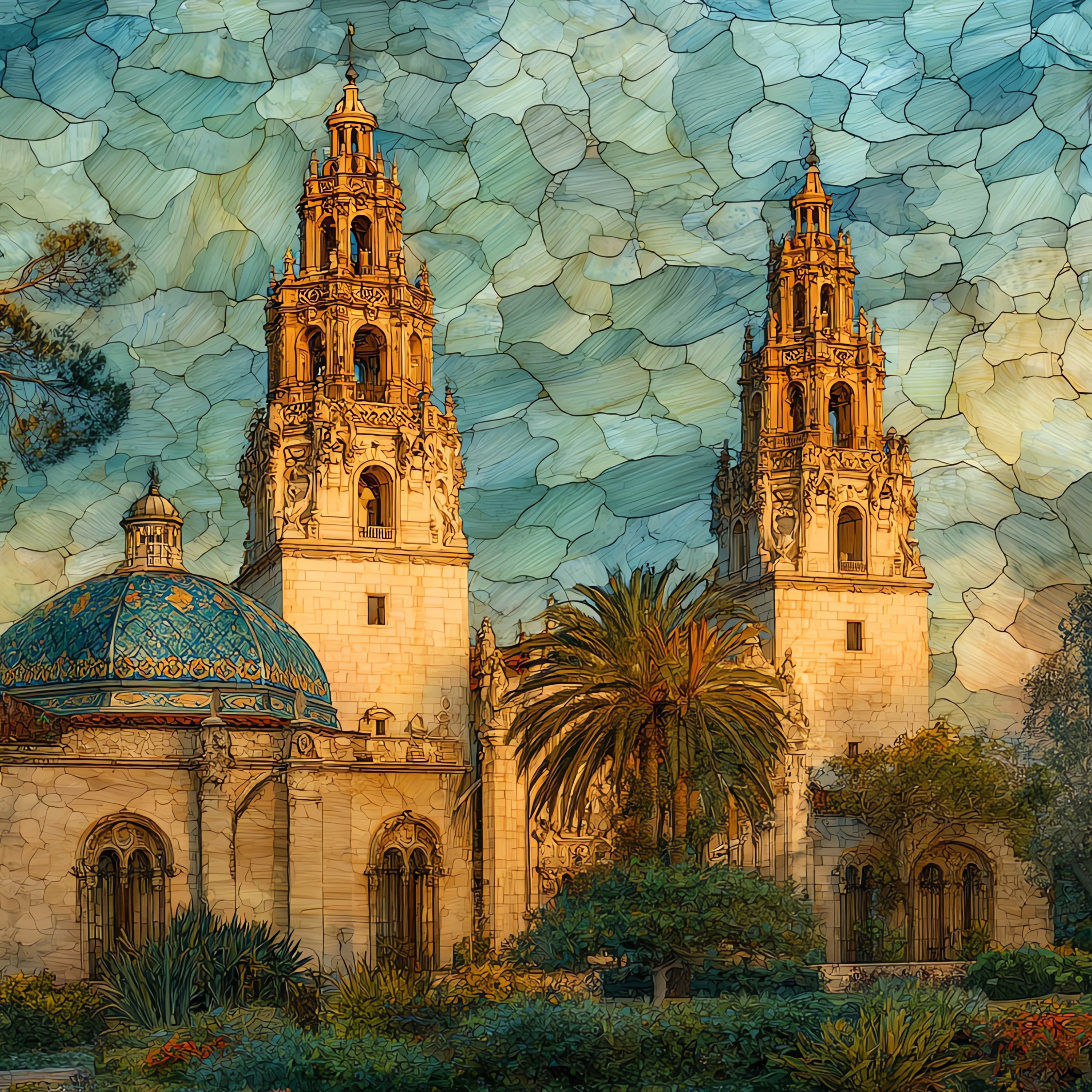
Balboa Park
— the long arcade, the lily pond, the bells.
Not only on a wall.
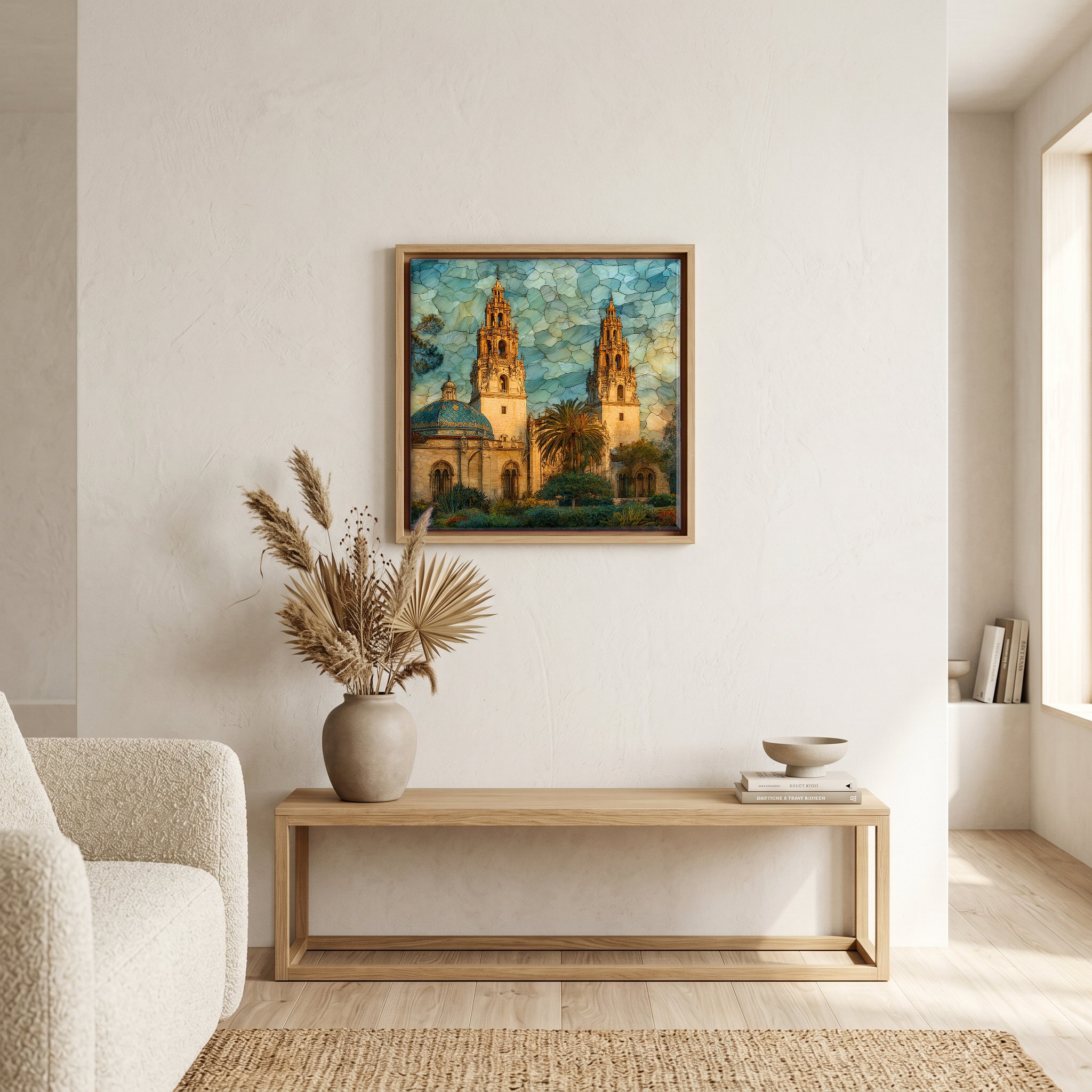
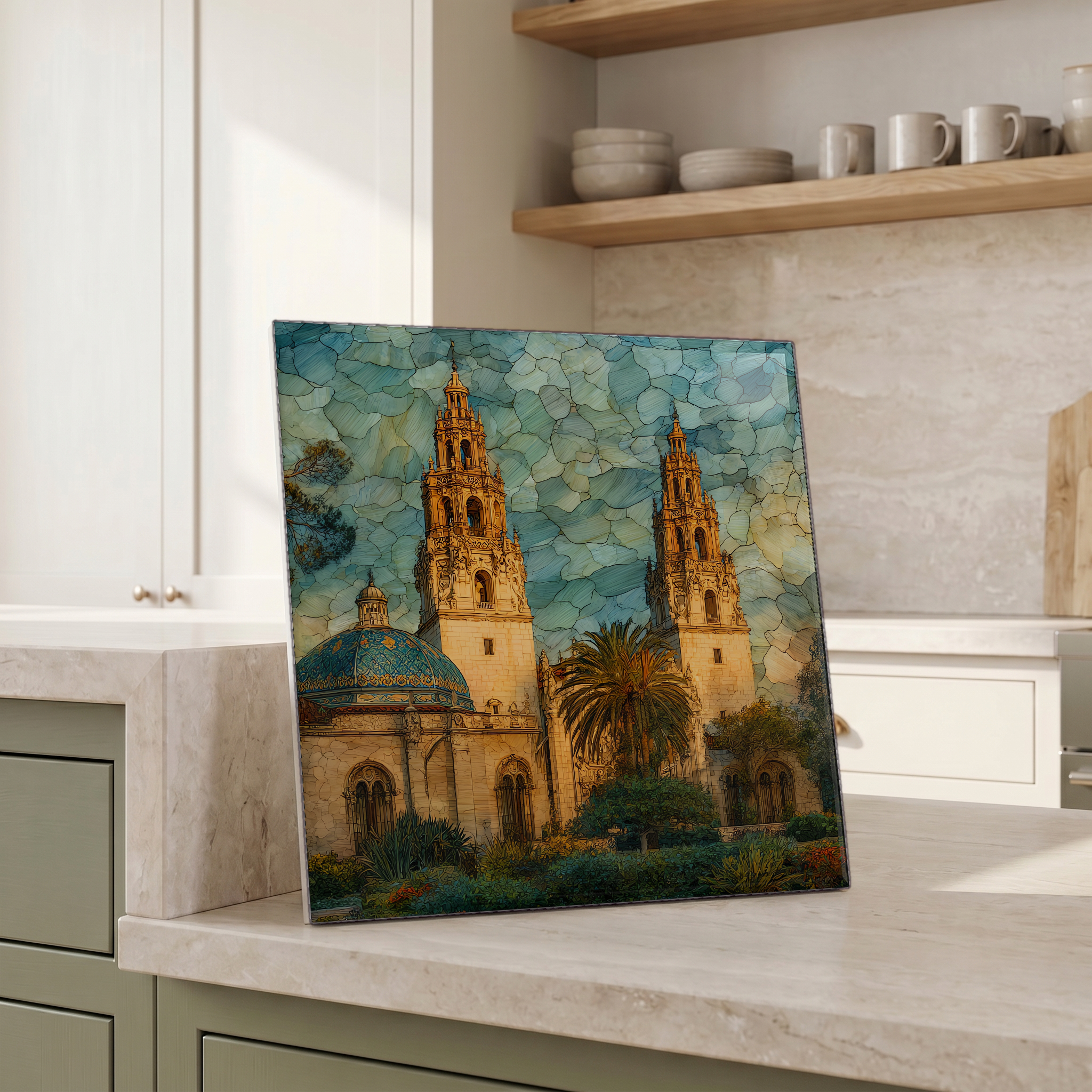
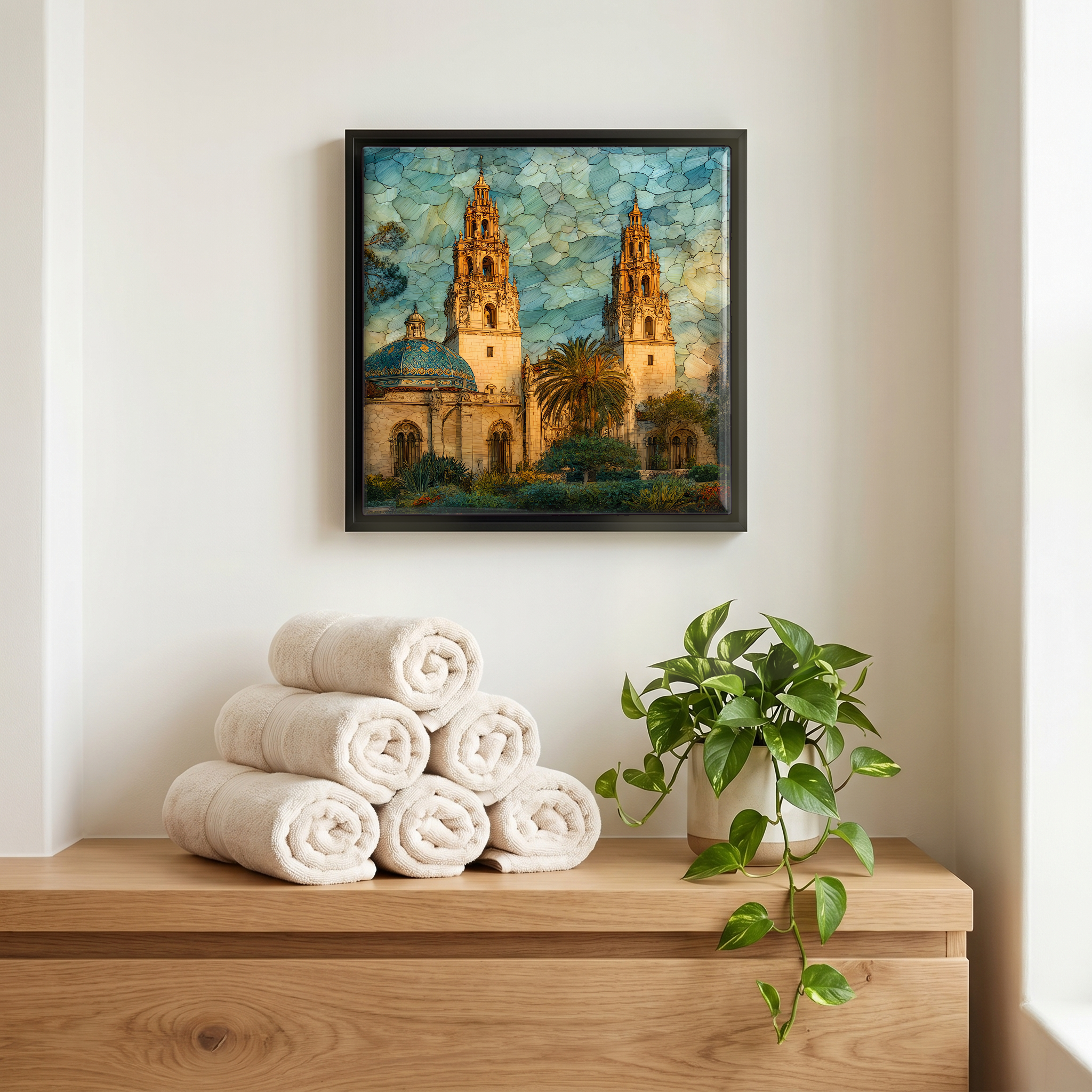
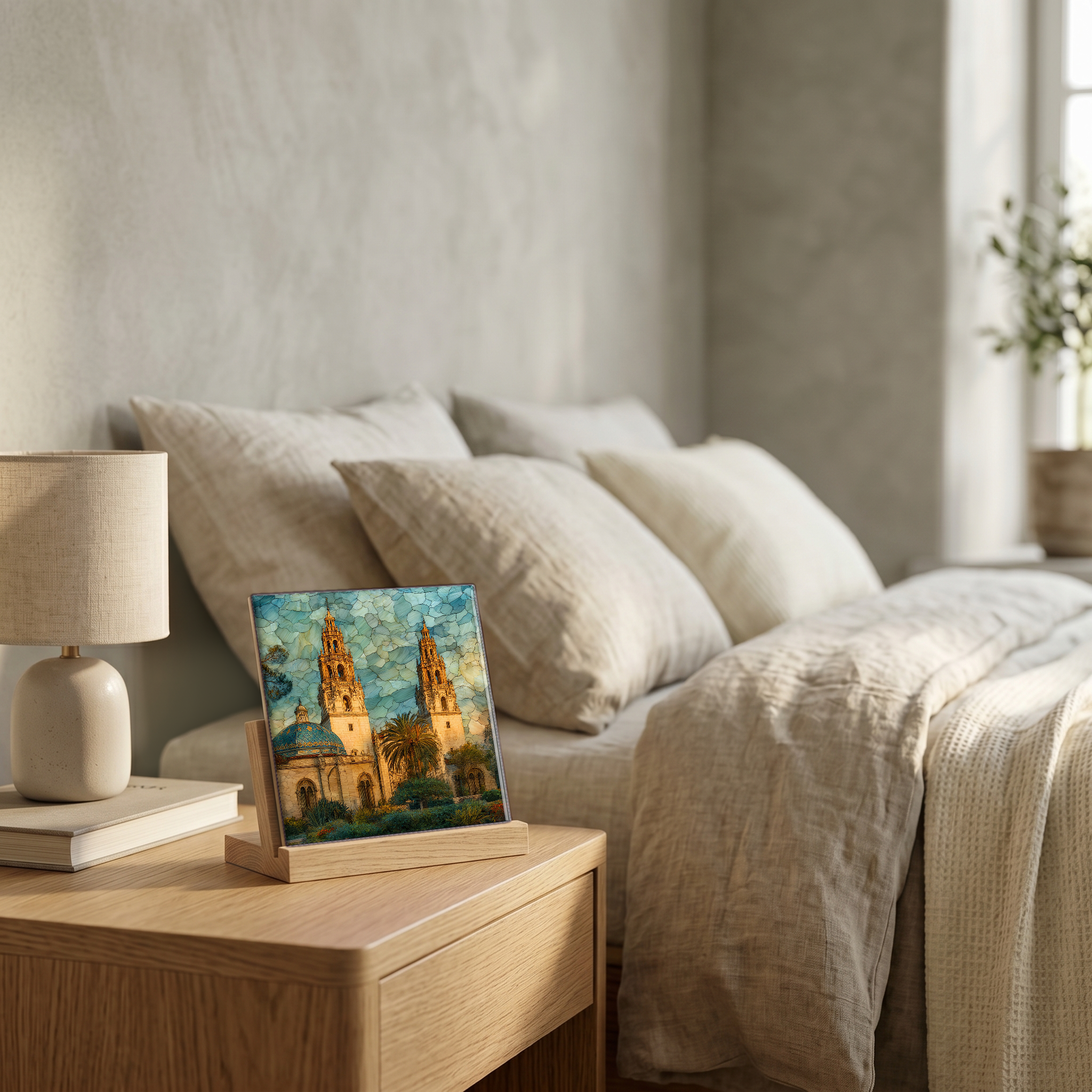
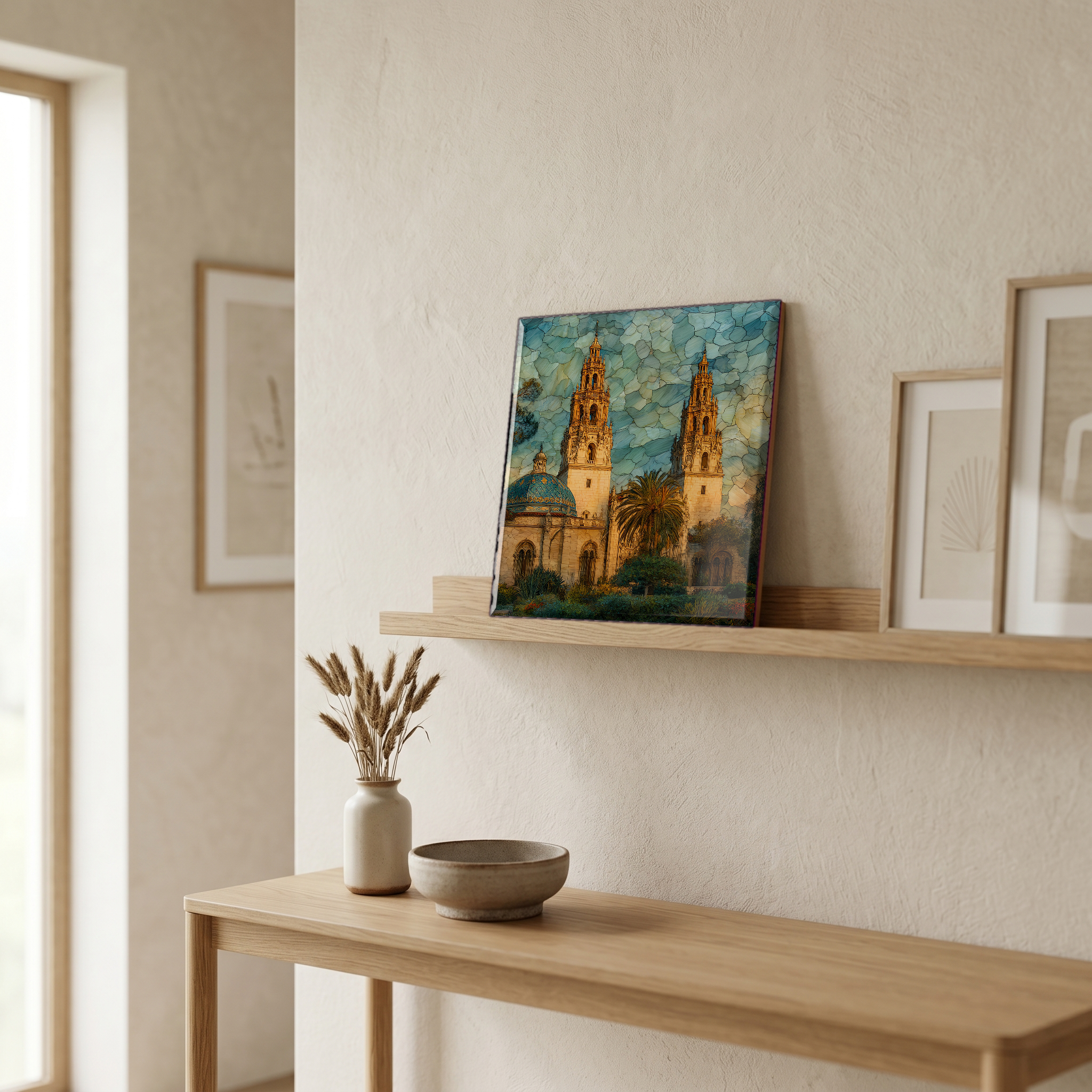
“Spanish Colonial Revival at the center of San Diego, 1,200 acres of arcades, gardens, and museums laid out for the 1915 Panama-California Exposition and never dismantled. The California Tower rises above the El Prado promenade, its 100-bell carillon marking the hour. Below, the Lily Pond mirrors the Botanical Building, one of the largest wood-lath structures in the world. Locals come here for the rose garden, for the Sunday organ concert, for the carousel. The light is the Mediterranean light Goodhue's arcades were designed to hold.
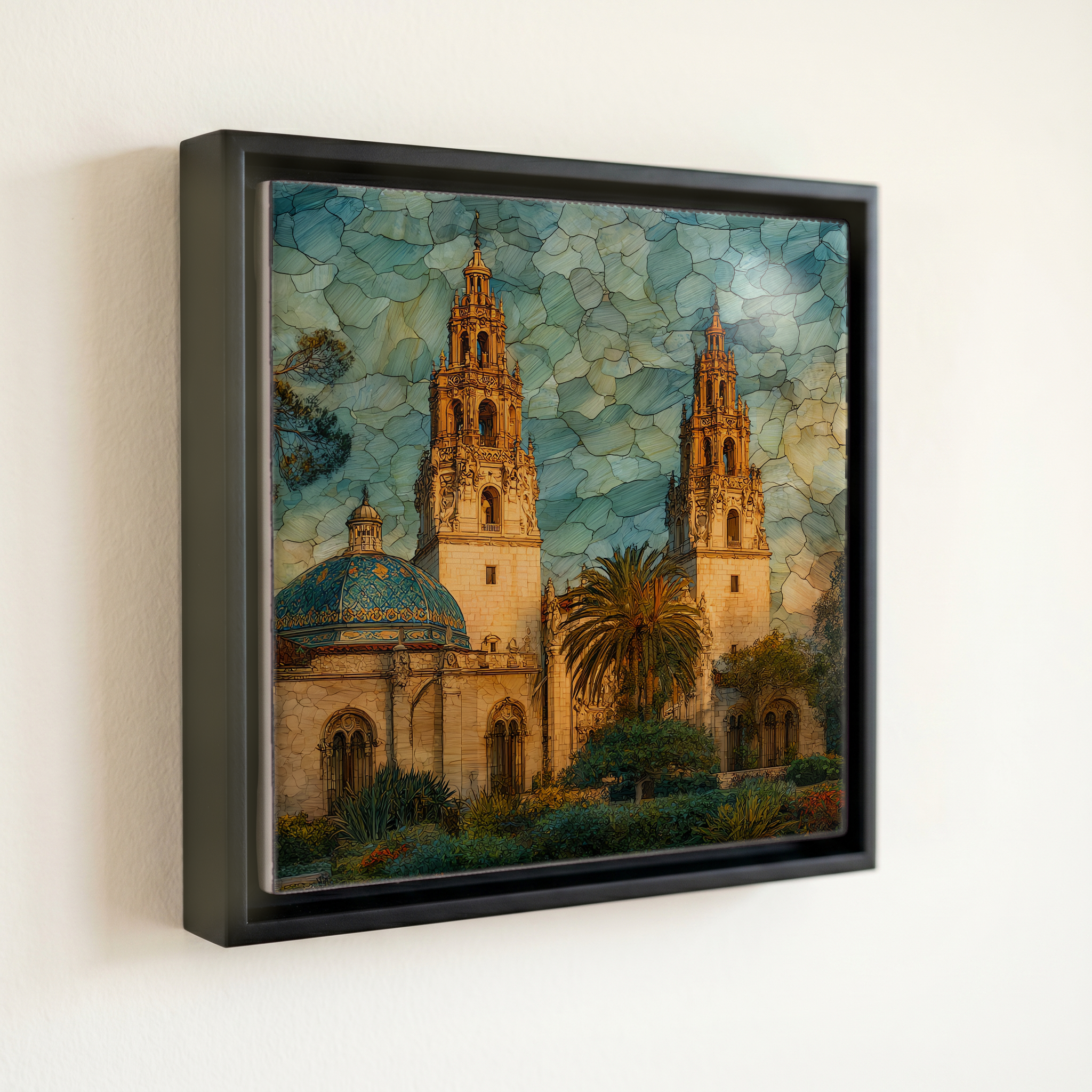
Balboa Park, on ceramic.
Each tile is finished by hand in our Knoxville studio. Artwork is slowly infused into the ceramic surface under high heat and pressure, and rests beneath a thin glossy finish. The colour lives in the surface, not on top of it.
Pick any four 4-inch tiles — National Parks you've been to, a Smokies set, the four seasons of one place. $ for a set of , cork-backed, ready to live on the table.
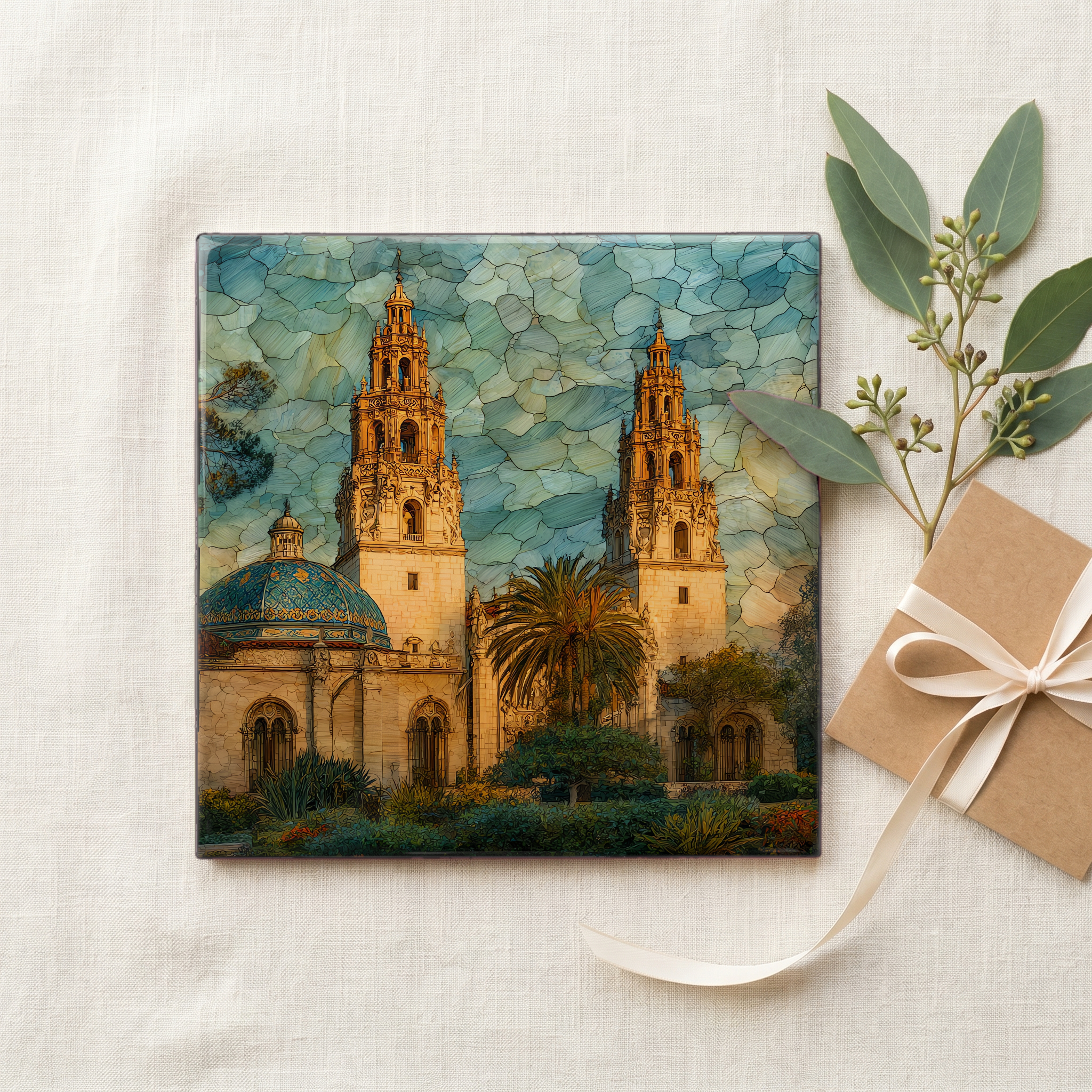
Each tile ships in a kraft box, tied with cream ribbon, with a handwritten note from the studio if you'd like to add one.
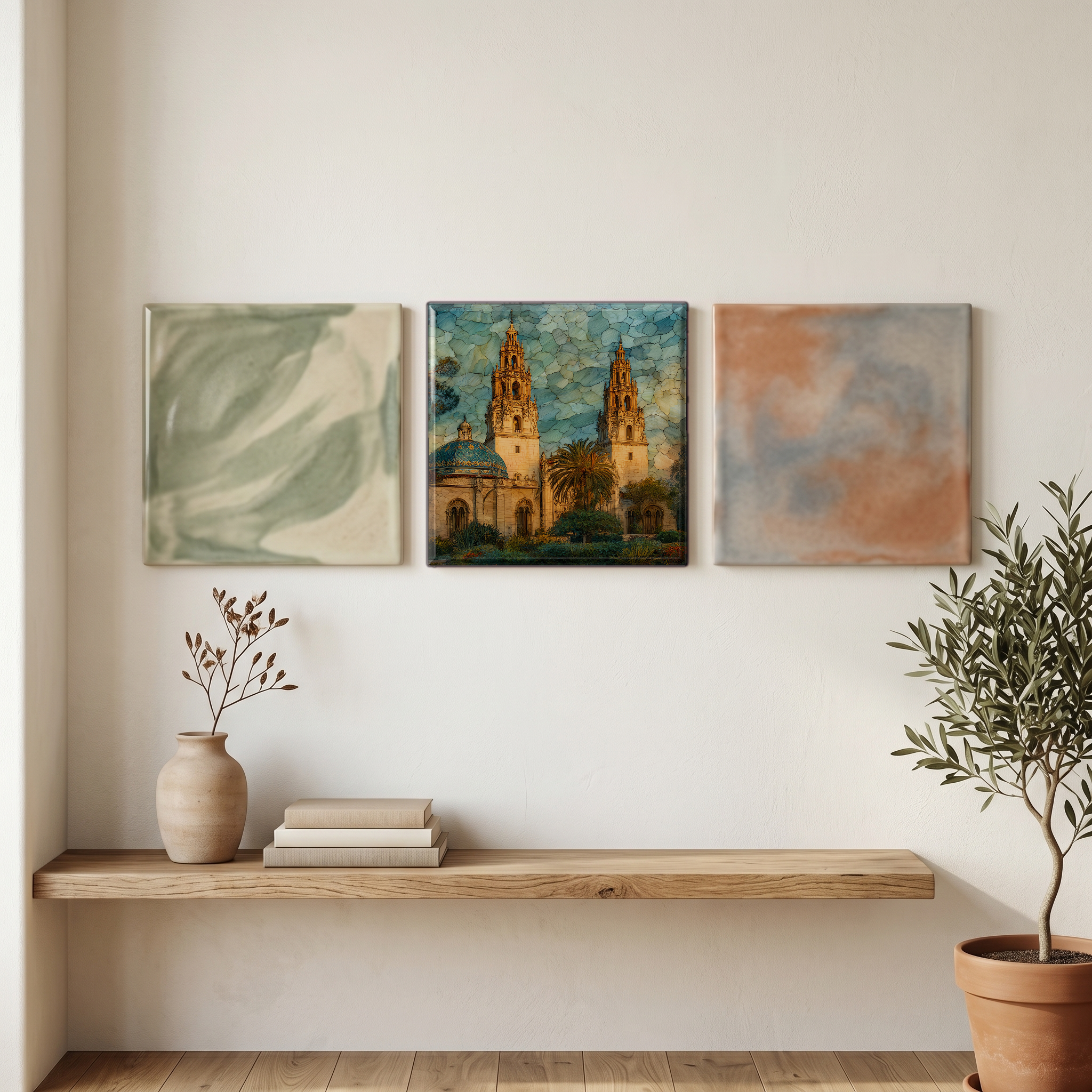
Three or five different vistas, hung together — a chapter of places you've been, or want to go.
The place, in three passes.
Balboa Park covers approximately 1,200 acres (485 hectares) in the urban core of San Diego, California, making it one of the largest urban cultural parks in North America. It sits on a mesa above downtown, bordered by the neighborhoods of Hillcrest, Bankers Hill, and South Park. The land was set aside as City Park in 1868 and renamed in 1910 for Spanish explorer Vasco Núñez de Balboa. The park's signature architecture, Spanish Colonial Revival and Churrigueresque, was largely built for the 1915 Panama-California Exposition under lead architect Bertram Goodhue, with a second wave added for the 1935 California Pacific International Exposition. El Prado, the main pedestrian boulevard, runs east-west across the central mesa.
Spanish Colonial Revival defines the park, and Bertram Goodhue defined Spanish Colonial Revival. The California Building and California Tower, built for the 1915 Panama-California Exposition, draw on Spanish cathedral models: a Churrigueresque facade, a blue-and-yellow tiled dome, and a 100-bell carillon installed in 1946. Across the El Prado, the Botanical Building stretches 250 feet under one of the largest wood-lath structures in the world. The Casa del Prado and House of Hospitality were rebuilt in the 1990s after their temporary 1915 plaster shells failed. The Cabrillo Bridge, a 1914 cantilever span carrying El Prado over State Route 163, gives the park its monumental western approach.
The park is open every day at no charge; the museums inside it set their own hours and admissions, with most adult tickets running $15 to $25. Tuesdays bring rotating free-residents days for one or two museums under the Resident Tuesday program. El Prado, the main pedestrian boulevard, is closed to private cars on weekends, opening the central plaza to walkers. Free park trams loop from the parking lots off Park Boulevard and Presidents Way. San Diego International Airport (SAN) is six miles west; downtown San Diego is a fifteen-minute walk via the Cabrillo Bridge. The San Diego Zoo, inside the park's northwest corner, runs its own gate and ticket.