Wender·Vista
Avenue of the Giants
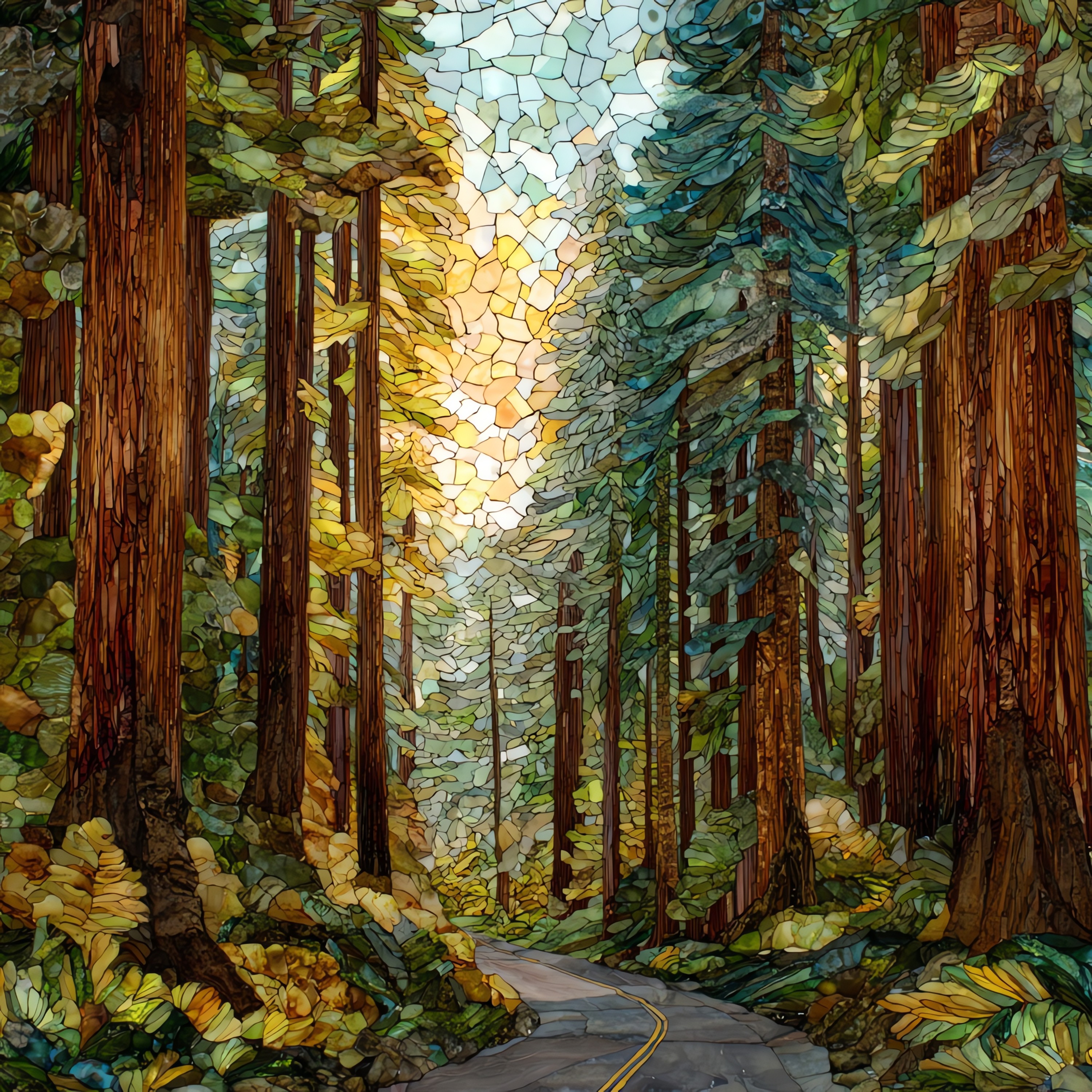
shown on ceramic, 12-inch tileCalifornia · United States
in California's far-north redwood country, along the old US-101

Avenue of the Giants

the cathedral the road runs through.

Where it lives

Not only on a wall.

A small tile on the nightstand catching the morning. A larger one above the fire. Yours, wherever you spend the slow hours.
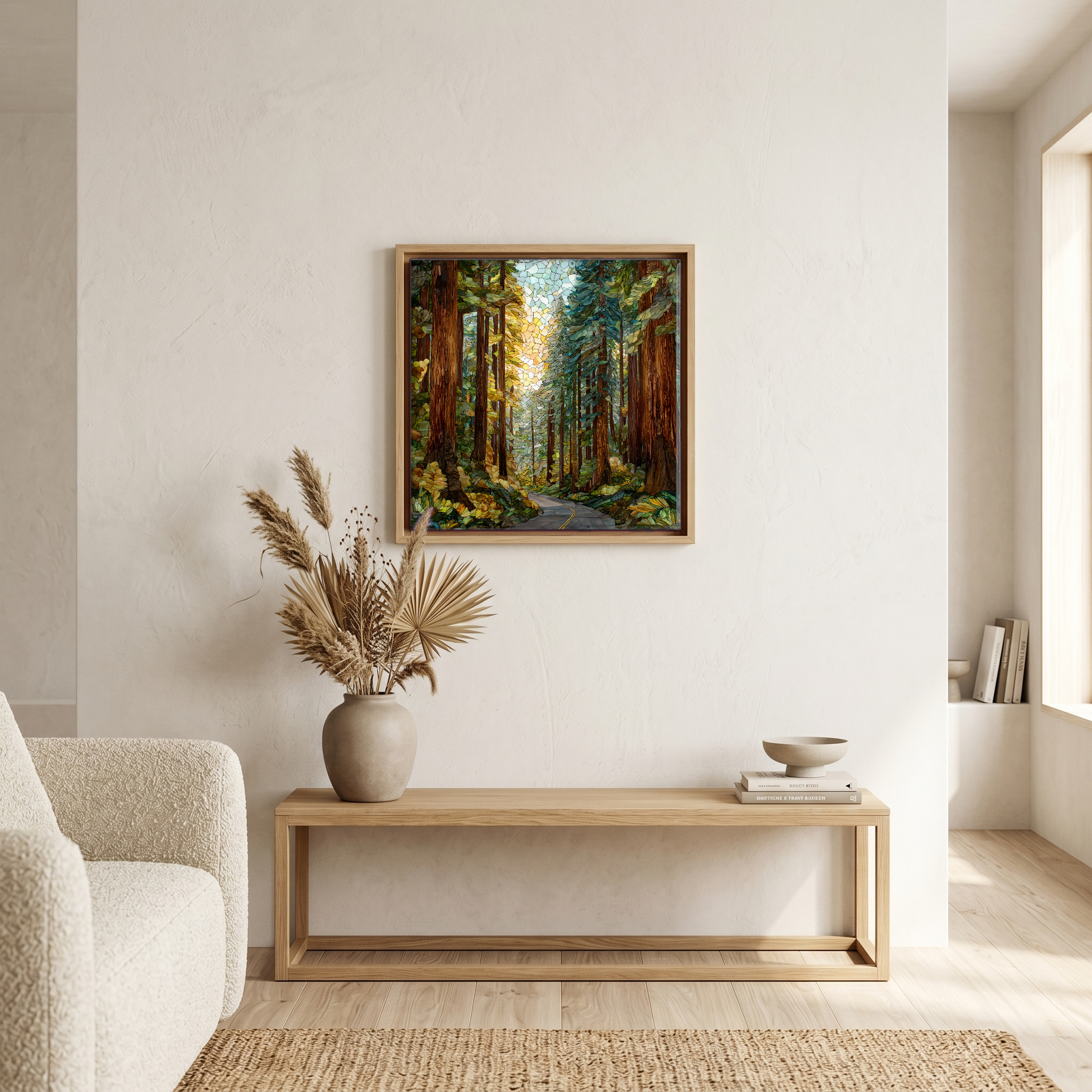
Above the bench, in a warm oak surround.
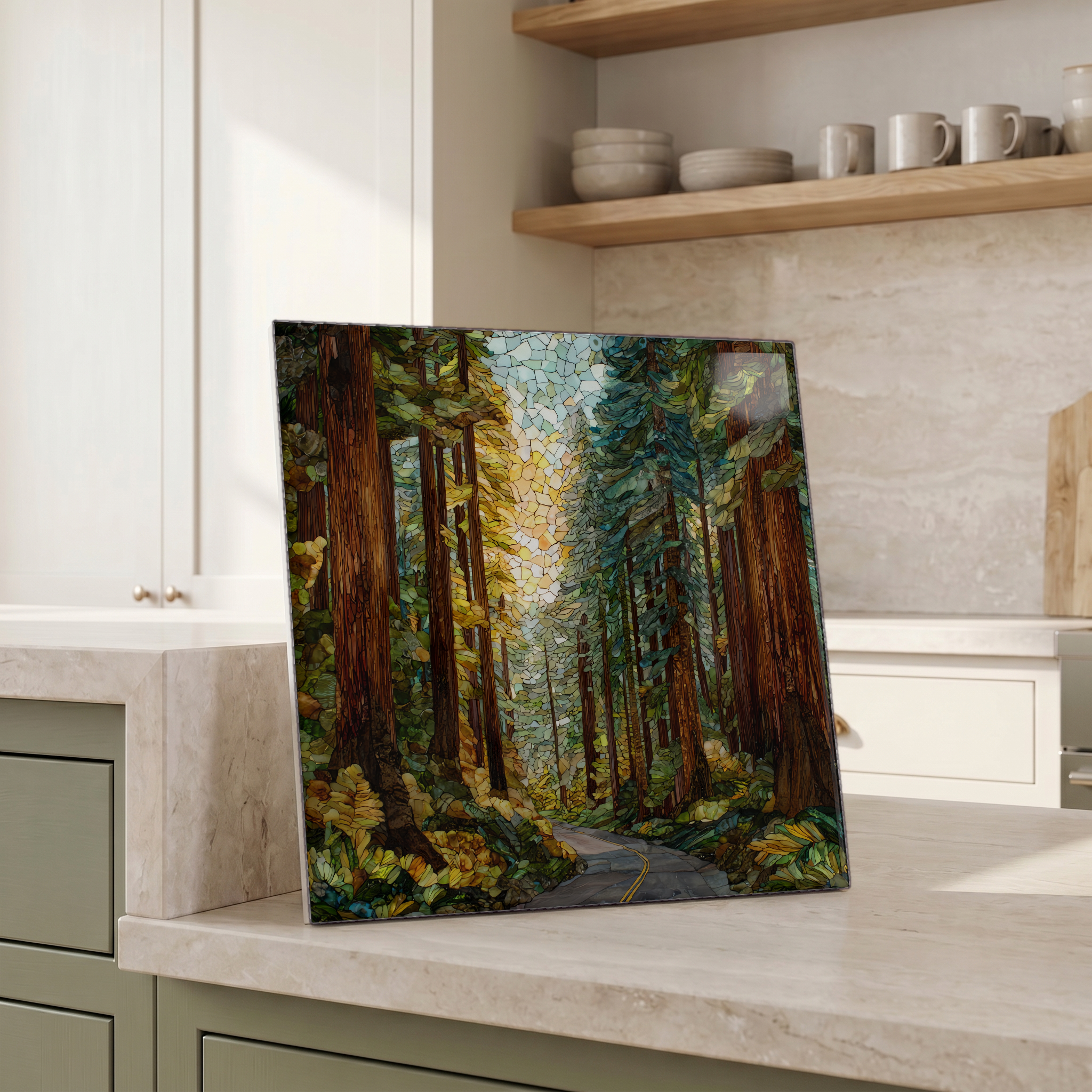
Beside the kettle, propped on the counter.
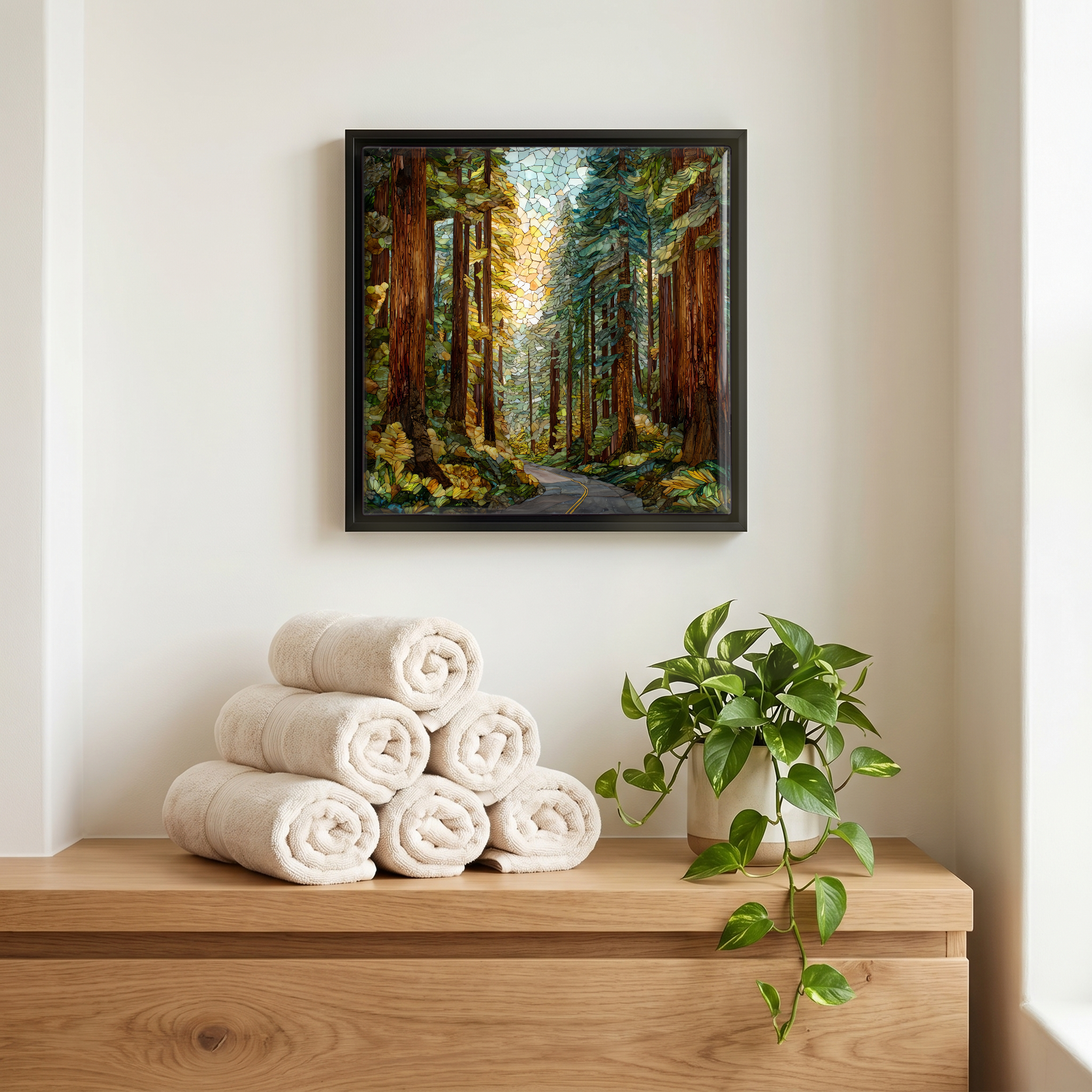
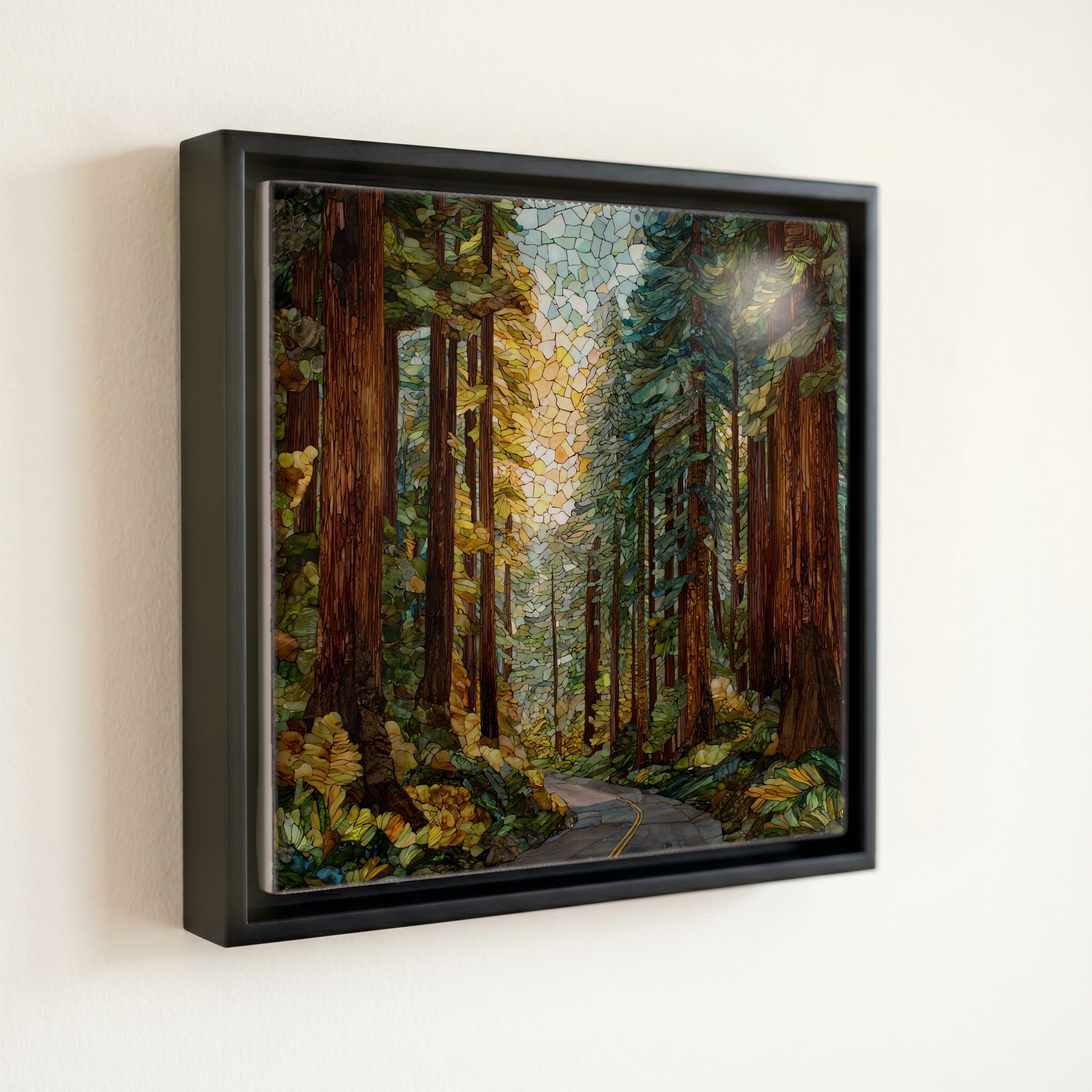
Above the linens, in a slim black surround.
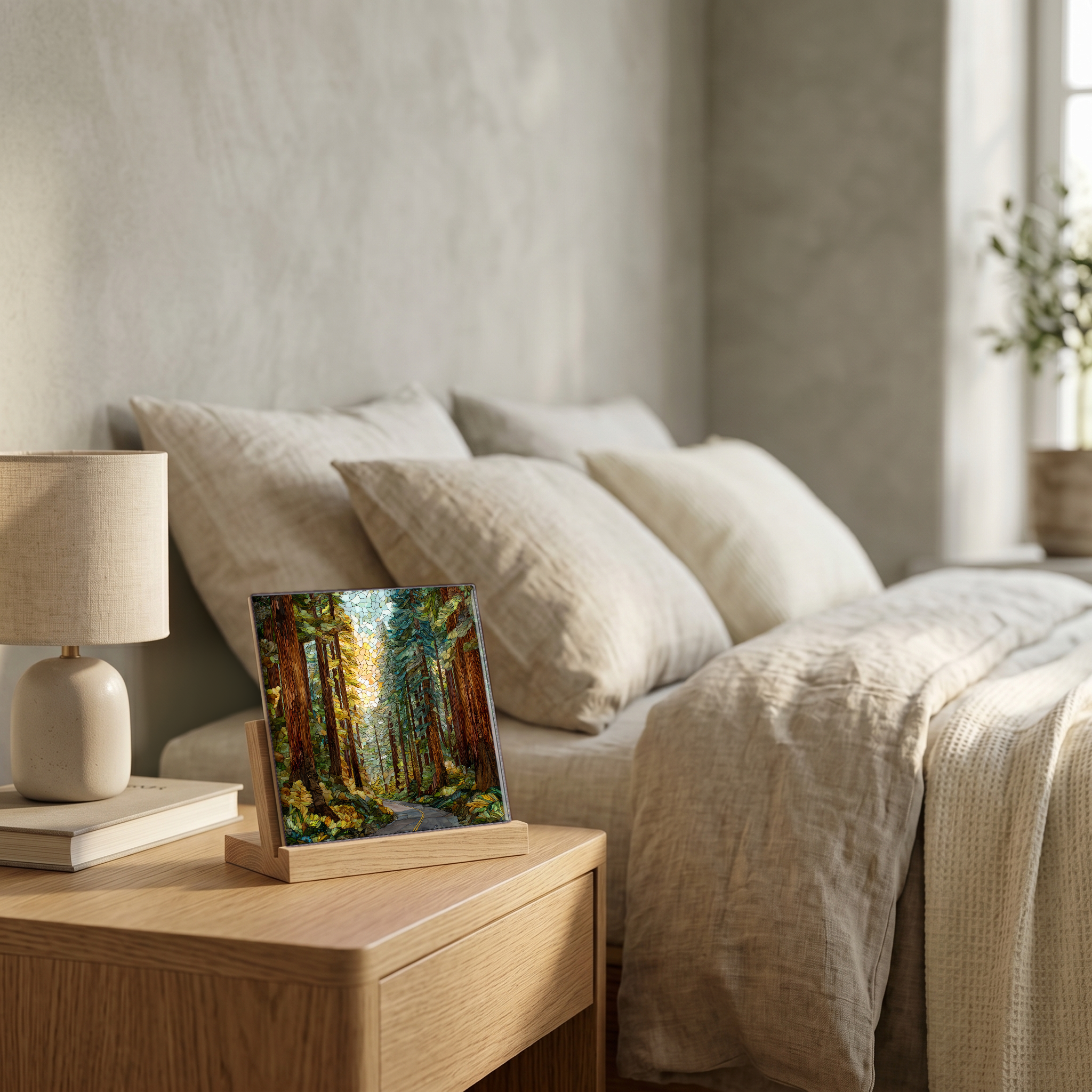
On the nightstand, on a light oak stand.
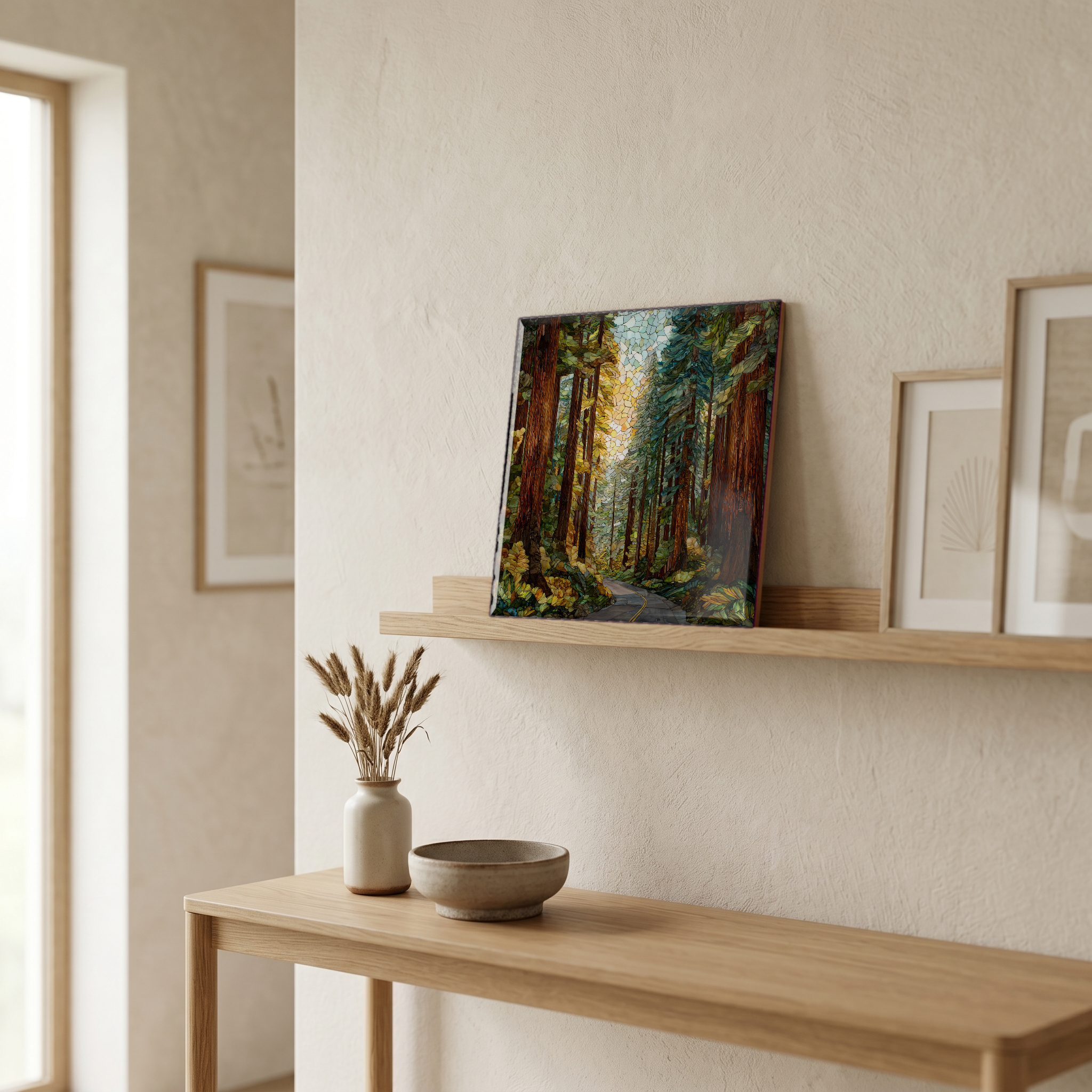
On a picture ledge, where the light comes in.
a note from the studio

Thirty-one miles of two-lane road through Humboldt Redwoods State Park, home to the largest contiguous old-growth coast redwood forest left in the world. The trees are 250 to 350 feet tall, two thousand years old in places, and the road was the original Highway 101 before the freeway moved a little east. People pull off at Founders Grove and stand in the parking lot for a minute before they walk in. Nobody talks much on the trail. The light takes a long time to reach the floor.
from the studio
shown in a slim black floating frame · 6 × 6 in
— bring it home

Avenue of the Giants, on ceramic.

Each tile is finished by hand in our Knoxville studio. Artwork is slowly infused into the ceramic surface under high heat and pressure, and rests beneath a thin glossy finish. The colour lives in the surface, not on top of it.

What kind of piece?
One tile — square or rectangle.
How big?
the popular one — counter, shelf, nightstand
6 × 6 in · 15 cm · 1.6 lb
Surface finish
A clear glossy finish — the artwork reads as if under resin. Ideal for show-pieces and framed wall art.
How it sits
A hidden cleat — sits ¼″ proud of the wall.
$58
Hand-finished and shipped from our studio at the foot of the Smokies. On your wall in about ten days.
size
6 × 6 in
15 cm
weighs
1.6 lb
solid in the hand
surface
ceramic, hand-finished
art rests beneath a thin glossy finish
from
Knoxville, TN
our family studio, at the foot of the Smokies
— start a Coaster Set

Pick any four 4-inch tiles — National Parks you've been to, a Smokies set, the four seasons of one place. $ for a set of , cork-backed, ready to live on the table.
comes gift-ready
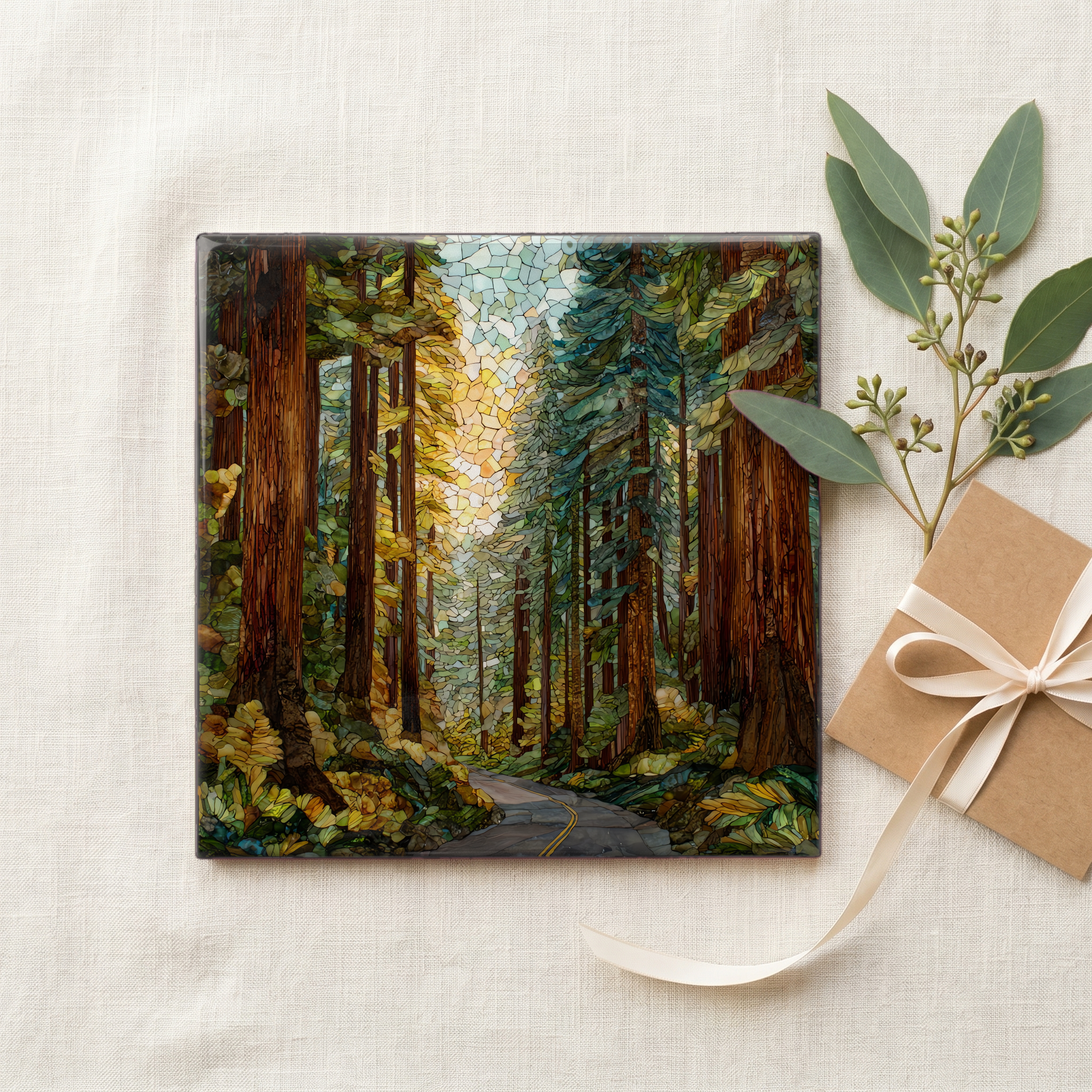
comes gift-ready

Each tile ships in a kraft box, tied with cream ribbon, with a handwritten note from the studio if you'd like to add one.
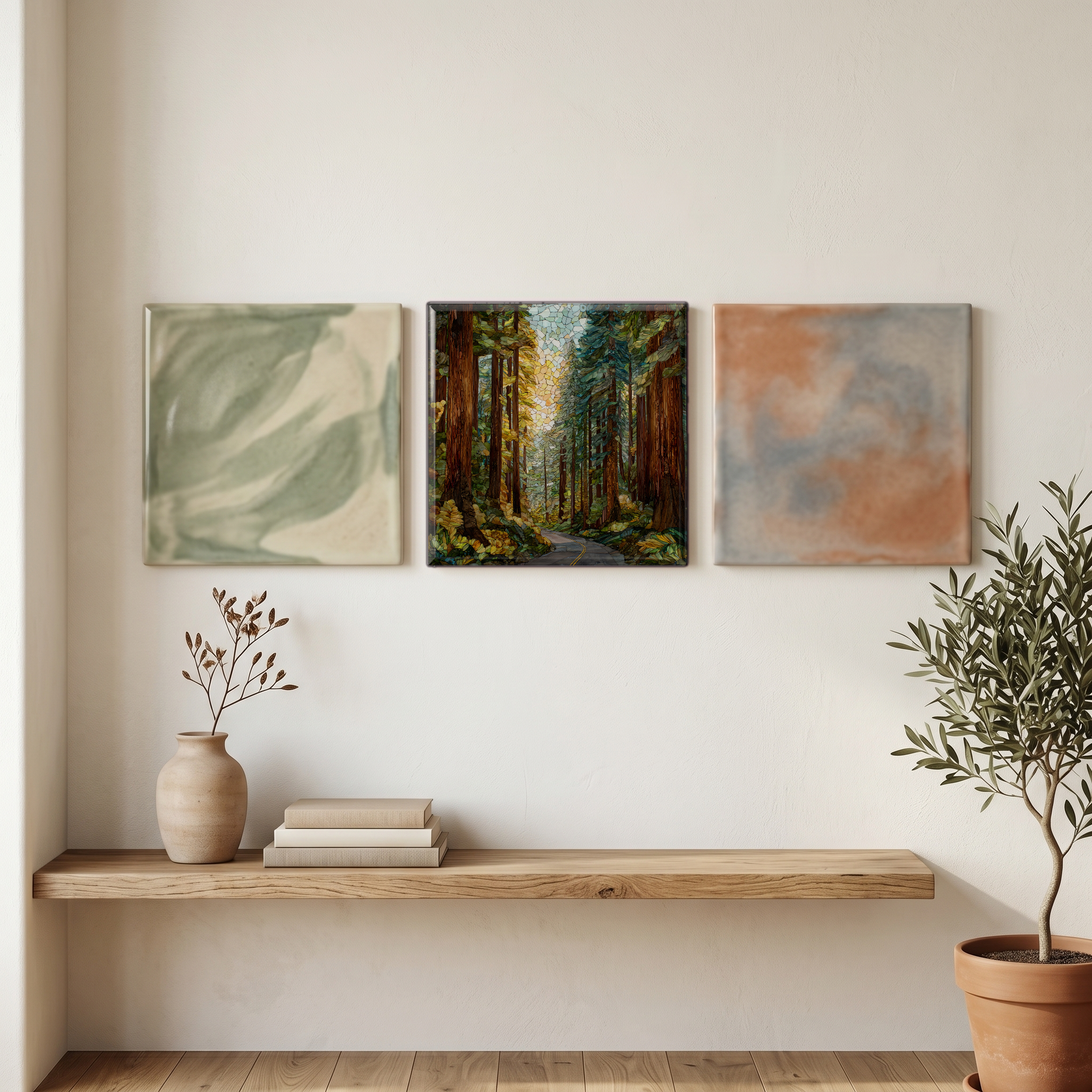
or build a grouping
or build a grouping

Three or five different vistas, hung together — a chapter of places you've been, or want to go.

about Avenue of the Giants

The place, in three passes.

A little of what's known, in case you fall down the rabbit hole — or want to go see it yourself.
the place

Avenue of the Giants is a 31-mile (50 km) scenic drive in Humboldt County, California, paralleling US-101 between Phillipsville and Pepperwood. The road follows the South Fork of the Eel River through Humboldt Redwoods State Park, which protects roughly 17,000 acres of old-growth coast redwood (Sequoia sempervirens). This is the largest contiguous old-growth coast redwood forest remaining on Earth. The park was established in 1921 with land purchases led by the Save the Redwoods League, founded in 1918. The avenue carried the original US-101 until the freeway took its bypass to the east, leaving the old road to the trees and the river. Founders Grove and Rockefeller Forest are the two most visited stops along it.

the air

Coast redwoods live in a narrow strip of fog along the Pacific from Big Sur up into southern Oregon. The species depends on the marine layer: in summer, when there is no rain, the trees draw moisture directly from the fog that drifts inland off the cold California Current. Studies at UC Berkeley have shown that summer fog can supply 25 to 40 percent of a coast redwood's annual water. The air along the avenue is noticeably cooler and damper than the dry valleys an hour east, and the smell of wet bark, fern, and redwood duff is part of why people slow down.

the visit

The road is free and open most of the year, with no entrance fee for driving the avenue. Day-use parking at the signed groves, including Founders Grove, Rockefeller Forest, and Williams Grove, runs $8 to $10. The visitor center near Weott carries the official Auto Tour brochure with eight numbered stops. Drivers should plan around 90 minutes for the full route at posted speed, longer if walking the half-mile Founders Grove loop. That loop holds the fallen Dyerville Giant, a coast redwood more than 360 feet tall that came down in March 1991 and was left where it fell. Cell service is poor inside the park; download maps before turning off the freeway.

where
United States · Humboldt County, California
within
Humboldt Redwoods State Park
position
40.3100° N · 123.9200° W
the neighborhood

What's nearby.

A handful of named places within an hour's walk or short drive. Some we've already painted; some we will.
2 km N
Founders Grove
redwood grove
3 km W
Rockefeller Forest
old-growth redwood forest
35 km S
Garberville
town
55 km N
Ferndale
village
70 km N
Eureka
city
55 km W
Shelter Cove
coastal hamlet
N
Avenue of the Giants
Founders Grove
Rockefeller Forest
Garberville
Ferndale
Eureka
Shelter Cove
common questions

What people ask.

A few questions we get about Avenue of the Giants — and about bringing the piece home.
about the place

Avenue of the Giants is a 31-mile scenic drive in Humboldt County, in far northern California, paralleling US-101 between the towns of Phillipsville and Pepperwood. It runs through Humboldt Redwoods State Park along the South Fork of the Eel River, about 200 miles north of San Francisco.

Coast redwoods (Sequoia sempervirens) are the tallest tree species on Earth, with mature trees commonly reaching 250 to 350 feet. The combination of mild coastal climate, summer fog that supplies moisture during dry months, deep alluvial soils, and a lifespan often exceeding 2,000 years allows individual trees to grow continuously for many generations.

At posted speeds, the 31-mile drive takes about an hour without stops. Most visitors plan 90 minutes to three hours to walk one or two groves. Founders Grove and Rockefeller Forest are the standard stops, both with short, mostly flat loop trails under the largest trees.

Rockefeller Forest, reached by a short side road near Weott, is the largest contiguous old-growth coast redwood forest left in the world. Founders Grove, off the avenue near Dyerville, is the most visited stop on the route. Its half-mile loop passes the fallen Dyerville Giant, a redwood more than 360 feet tall when it came down in March 1991.

No fee to drive the avenue itself or to enter Humboldt Redwoods State Park. Day-use parking at the signed groves runs $8 to $10. The visitor center near Weott carries the official Auto Tour brochure with the eight numbered stops along the route.

The redwoods look their best in late spring through early fall, when the South Fork Eel runs low and the days are dry. Coastal fog often fills the canopy in summer mornings, when the light through the trees reads as long green shafts on the forest floor. Winter brings heavy rain and occasional road closures.

The largest old-growth coast redwoods along the avenue are commonly 1,000 to 2,000 years old, with a few likely older. Coast redwoods can live more than 2,200 years. The park's old-growth groves, including Rockefeller Forest, Founders Grove, and Bull Creek, were never logged, which is rare for the species' range.

about the piece in your home

It tends to land well. Avenue of the Giants is a place many Northern Californians know from family trips: driving up 101, walking the Founders Grove loop, standing under the Dyerville Giant. A Coaster or Small with a handwritten note from the studio carries that memory at the right size.

The redwood greens and the cathedral-vertical composition suit mountain-modern, biophilic, and Pacific-Northwest interiors. The palette also reads well against warm wood, linen, and brass; Japandi and rustic-modern rooms in particular tend to bring out the green. Less suited to high-saturation maximalist rooms where it would compete.

Yes. Biophilic design has been the dominant interior trend since the 2020s, and old-growth forest imagery sits at the center of it. The Large or a 4-tile Mural reads as a deliberate piece, a wall-sized statement that brings the cathedral-green of the redwoods into a room without trying to imitate a real plant wall.

For a sofa, a single Large or a 4-tile Mural carries the wall well. For a console or above a bed, the Medium sits at eye level without dominating. The 9-tile Mural is the format for a full statement wall, typically the right scale for a great room or hallway.

Yes. Specify Dura Satin for a soft sheen with scratch-resistance or Matte for no sheen at all. Both finishes hold up in steam, splash, and direct washing. The Glossy finish is for dry display walls: frames and showpieces, not backsplashes or shower walls.

A soft microfibre cloth and water. The colour is slowly infused into the ceramic surface under high heat and pressure, so it can't scratch off in normal cleaning. Don't use abrasive scouring pads or solvent-based cleaners. The Dura Satin and Matte finishes do not show fingerprints the way the Glossy does.

Yes. Every WenderVista piece is original to Wender Studios in Knoxville, Tennessee. The studio paints in a single distinctive visual language of stained-glass, alcohol-ink, and oil. Reid Wender is the curator who chooses what enters the atlas. Nothing is licensed in from outside.

if this one stayed with you

A few you might also love.

Hand-picked by the eye that found Sorapis. Same air, same kind of quiet.