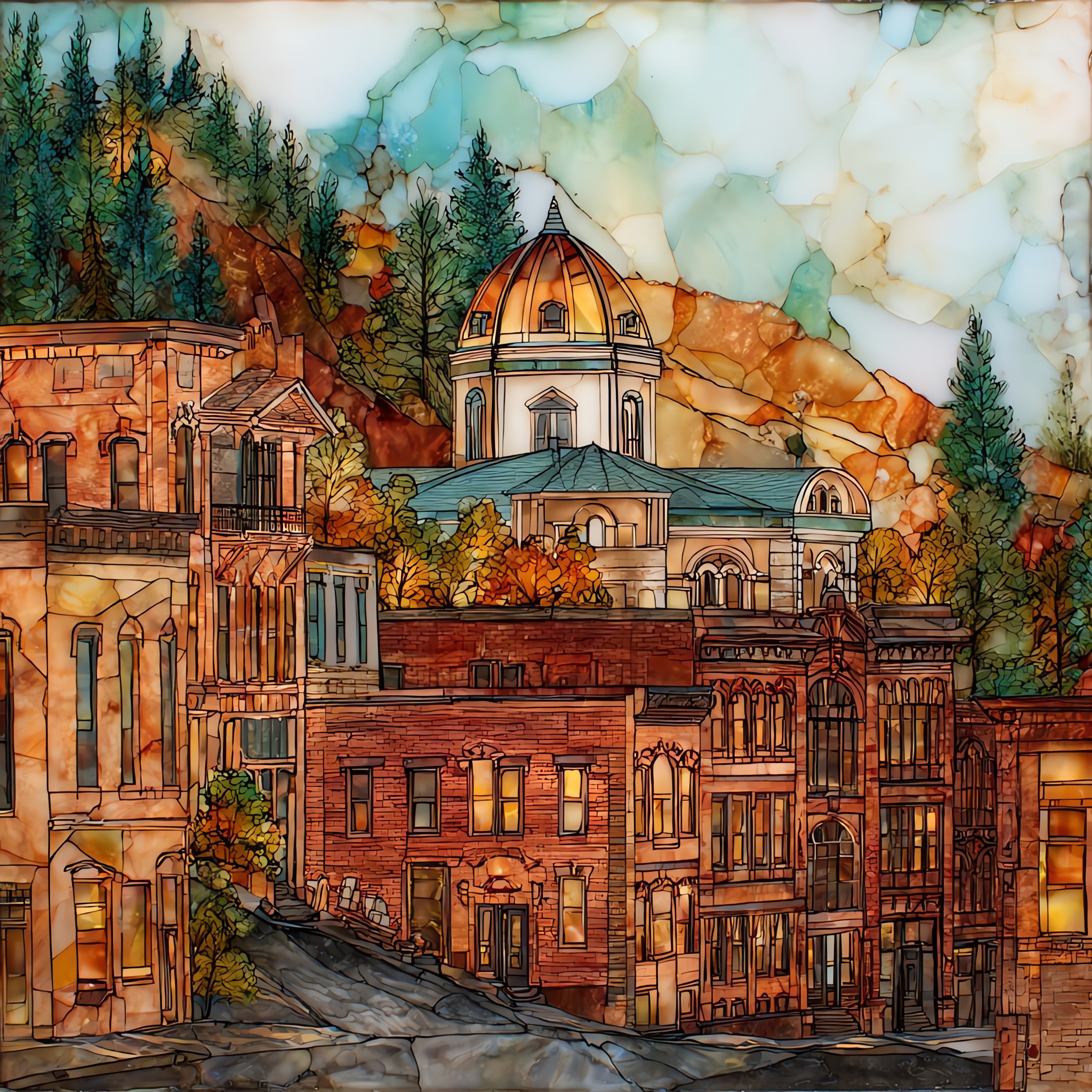
Auburn Old Town
— — brick and iron the Gold Rush built, still open.
Not only on a wall.
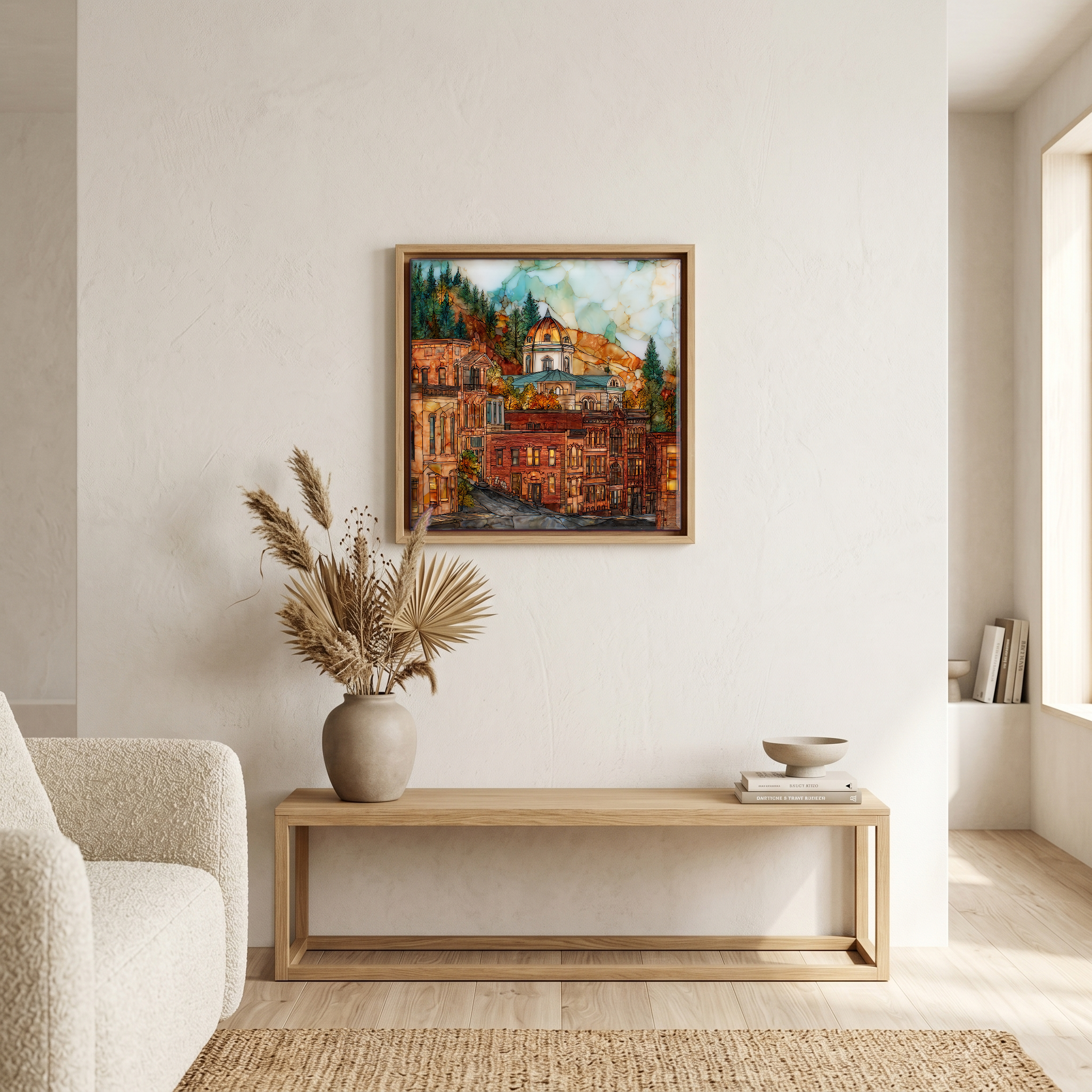



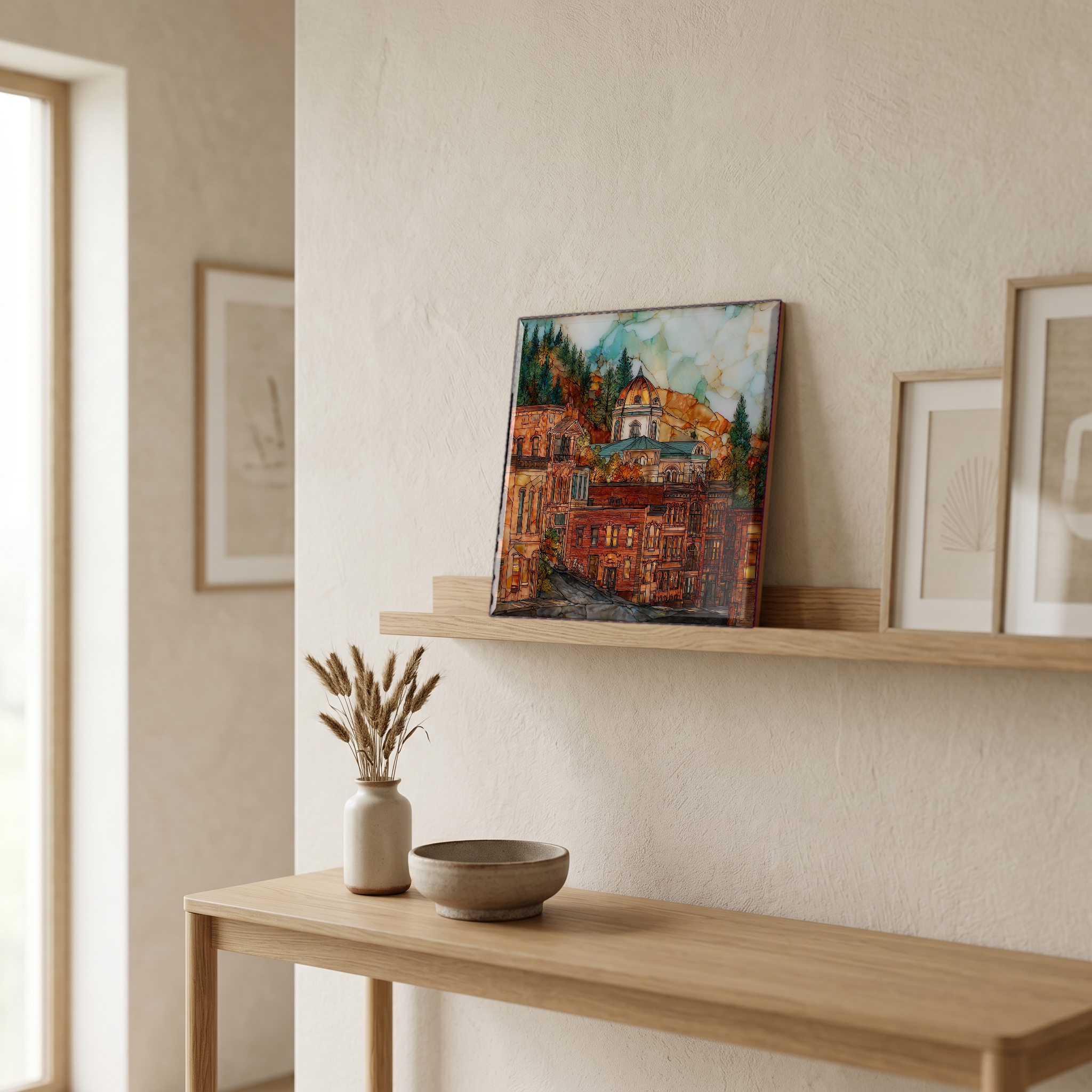
“One of the earliest Gold Rush sites in California, on a hill in the Sierra foothills between Sacramento and Lake Tahoe. Auburn rebuilt in brick and iron after the fires of the 1850s, and the streetfront on Commercial Street still holds the businesses that started in it. Claude Chana, who found gold here in May 1848, watches from a forty-five-foot statue at the lower edge of town. The red firehouse, with its white cupola, has stood at the top of the hill since 1891. The town didn't move on.
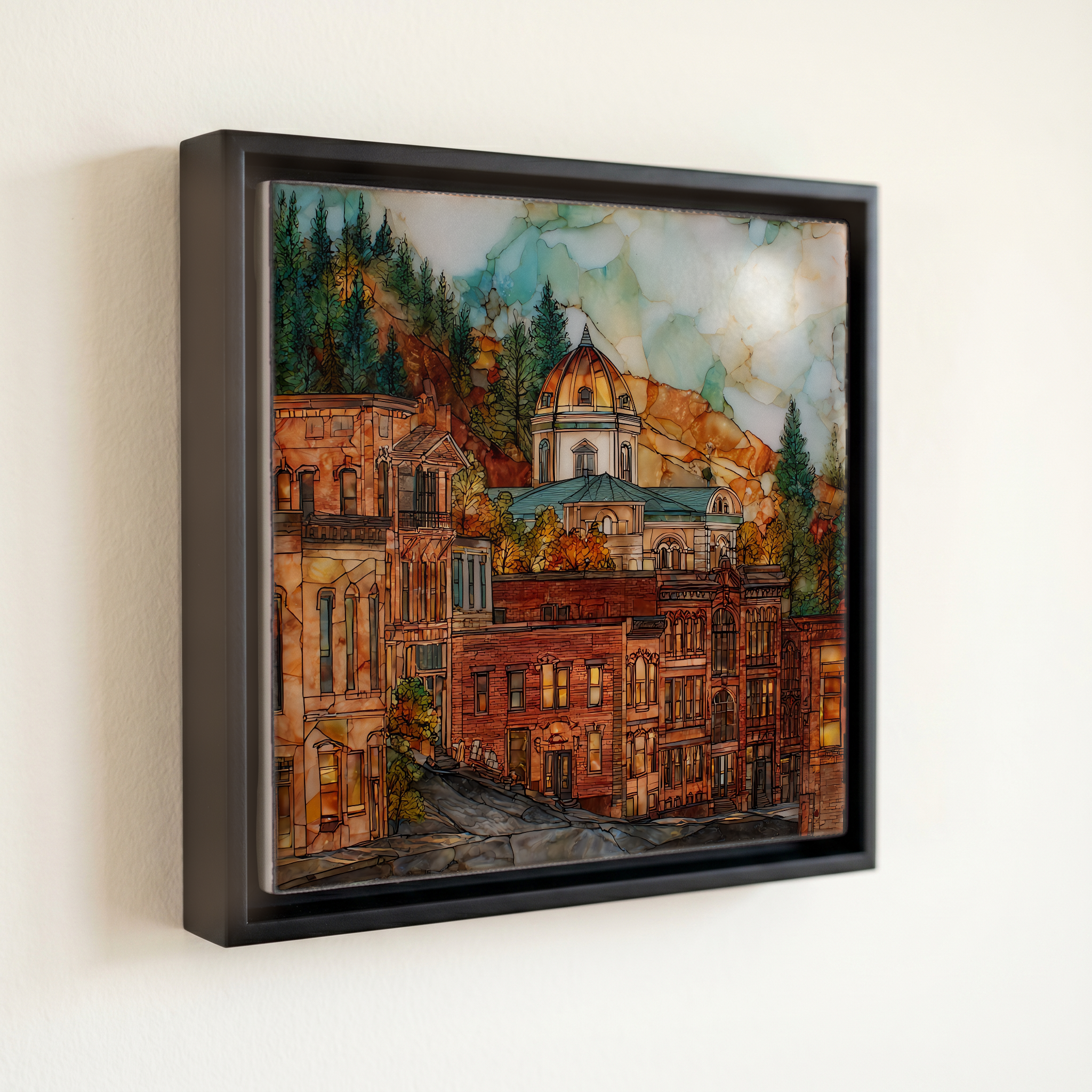
Auburn Old Town, on ceramic.
Each tile is finished by hand in our Knoxville studio. Artwork is slowly infused into the ceramic surface under high heat and pressure, and rests beneath a thin glossy finish. The colour lives in the surface, not on top of it.
Pick any four 4-inch tiles — National Parks you've been to, a Smokies set, the four seasons of one place. $ for a set of , cork-backed, ready to live on the table.

Each tile ships in a kraft box, tied with cream ribbon, with a handwritten note from the studio if you'd like to add one.

Three or five different vistas, hung together — a chapter of places you've been, or want to go.
The place, in three passes.
Auburn Old Town sits at the lower edge of Auburn, the county seat of Placer County, in California's Sierra Nevada foothills. The town climbs a hillside roughly thirty-three miles northeast of Sacramento, at an elevation of about 1,255 feet (383 m) where Interstate 80 meets State Route 49, the Gold Rush Highway. Old Town is the original 1849 settlement, distinct from the later Downtown district uphill around the Placer County Courthouse, completed in 1898. The district is listed on the National Register of Historic Places and traces the bend of the Auburn Ravine where Claude Chana found gold in May 1848, the discovery that founded the town.
The buildings that give Old Town its visual signature were raised in brick and cast iron after the fires of the 1850s. The wooden settlement that grew up around the diggings burned, and the town that replaced it was built to last. The most photographed of these is the Auburn Old Firehouse, a slim red-brick tower with a white cupola at the top of the hill, completed in 1891 and still tended by the Auburn Hose Co. The Joss House, built in 1851 as a temple for Auburn's Chinese miners, is one of the oldest continuously standing structures in town. Both are listed contributing properties to the Auburn Historic District.
Old Town is a small, walkable district, roughly four blocks of brick storefronts wrapping the lower hill, open year-round and free to enter. The Saturday farmers market runs in the district from May through November. The Claude Chana statue, a forty-five-foot work by sculptor Kenneth Fox dedicated in 1968, stands at the entrance to Old Town and is the most common meeting place for visitors. Auburn is also the finish line of two of the world's oldest endurance events, the Western States 100 Mile Endurance Run and the Tevis Cup, both ending at the Gold Country Fairgrounds in late June and early August.