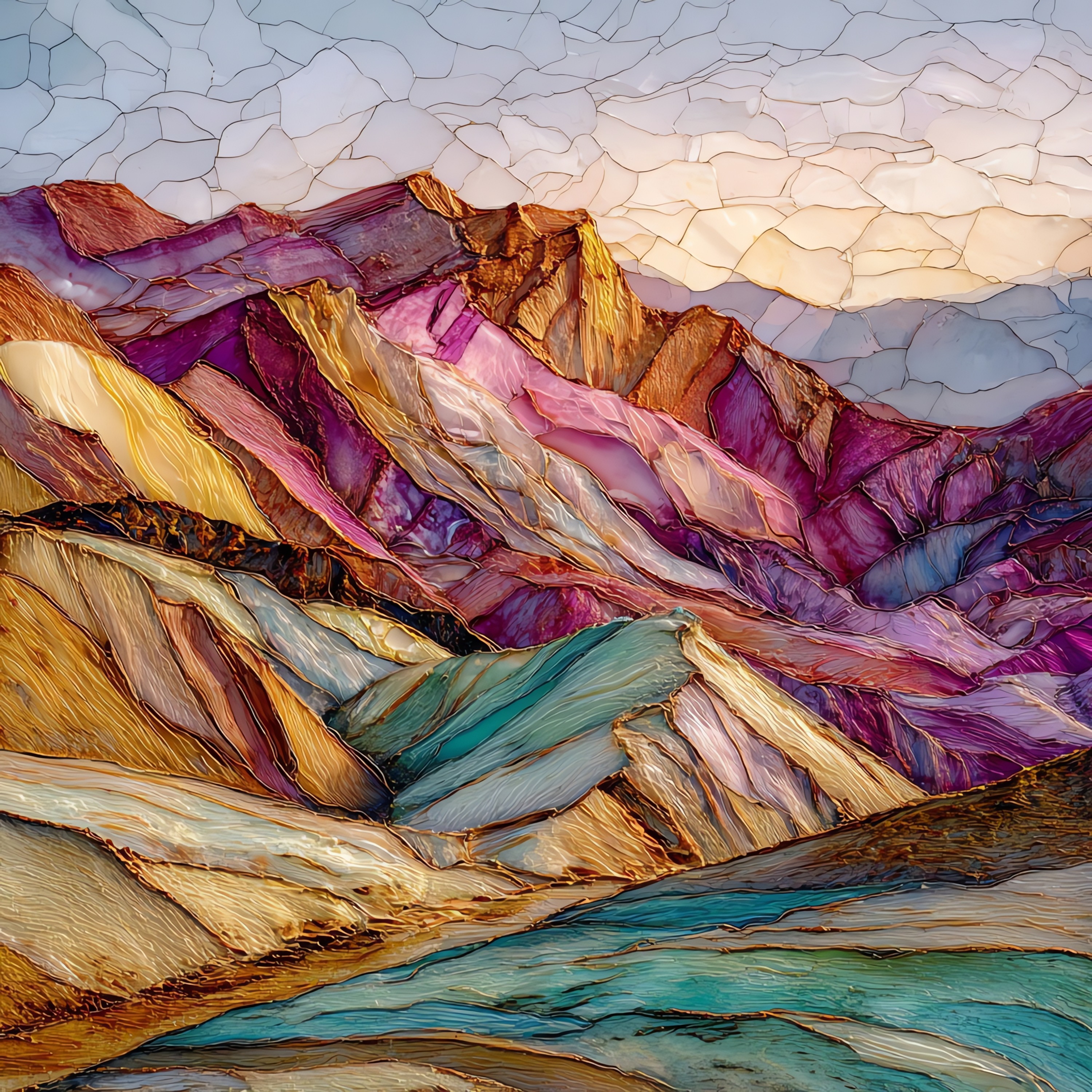
Artists Palette
— the colours the desert keeps for the late light.
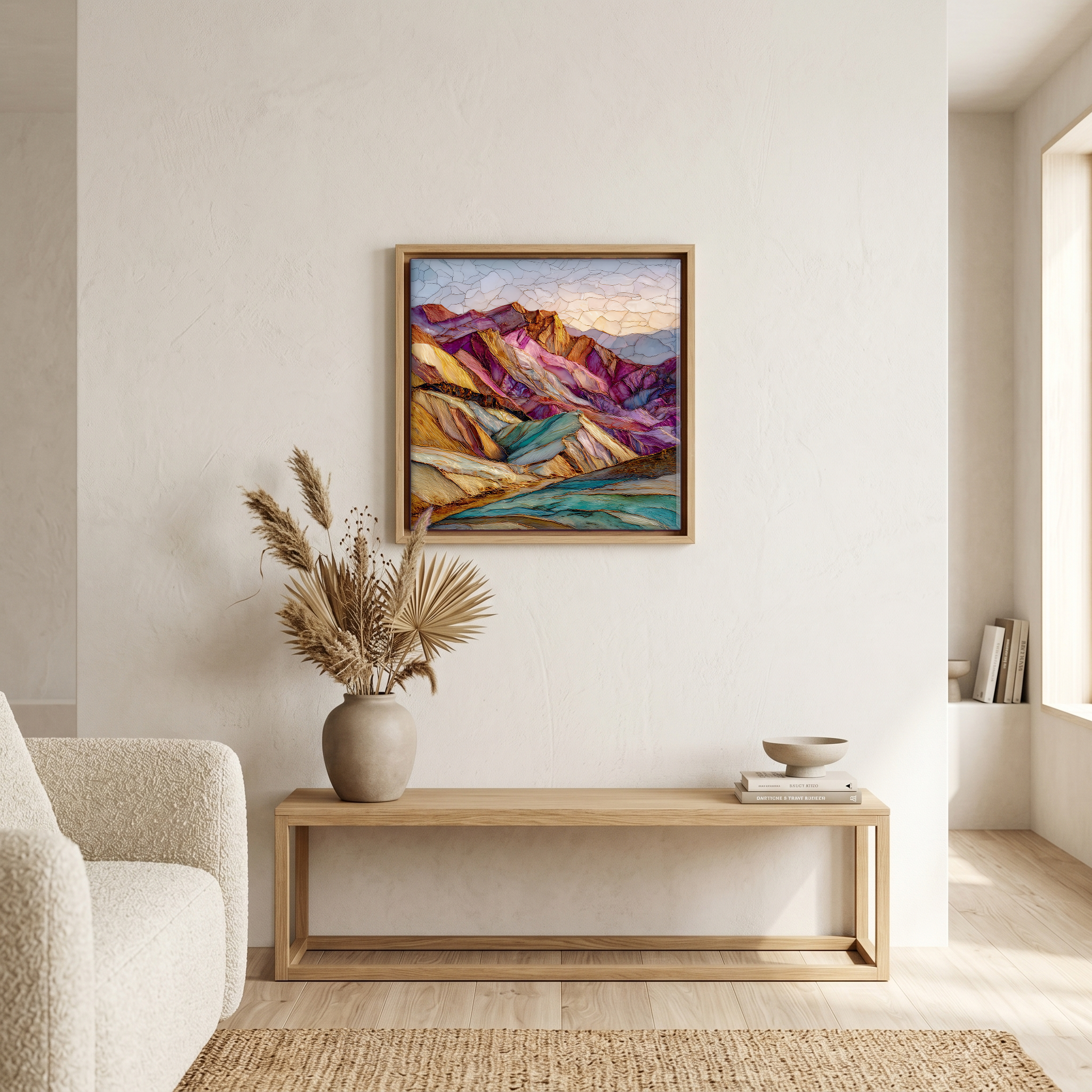
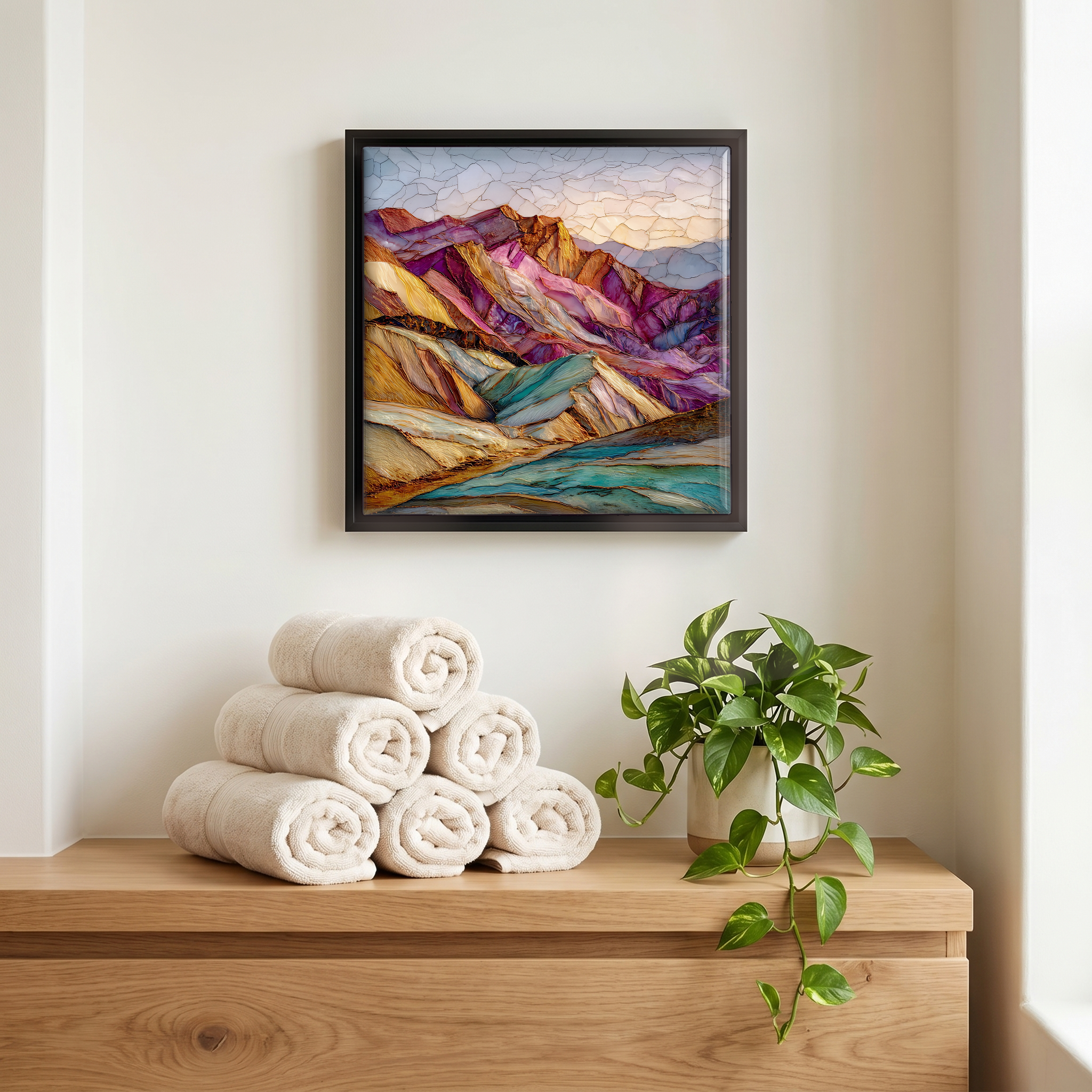
Not only on a wall.
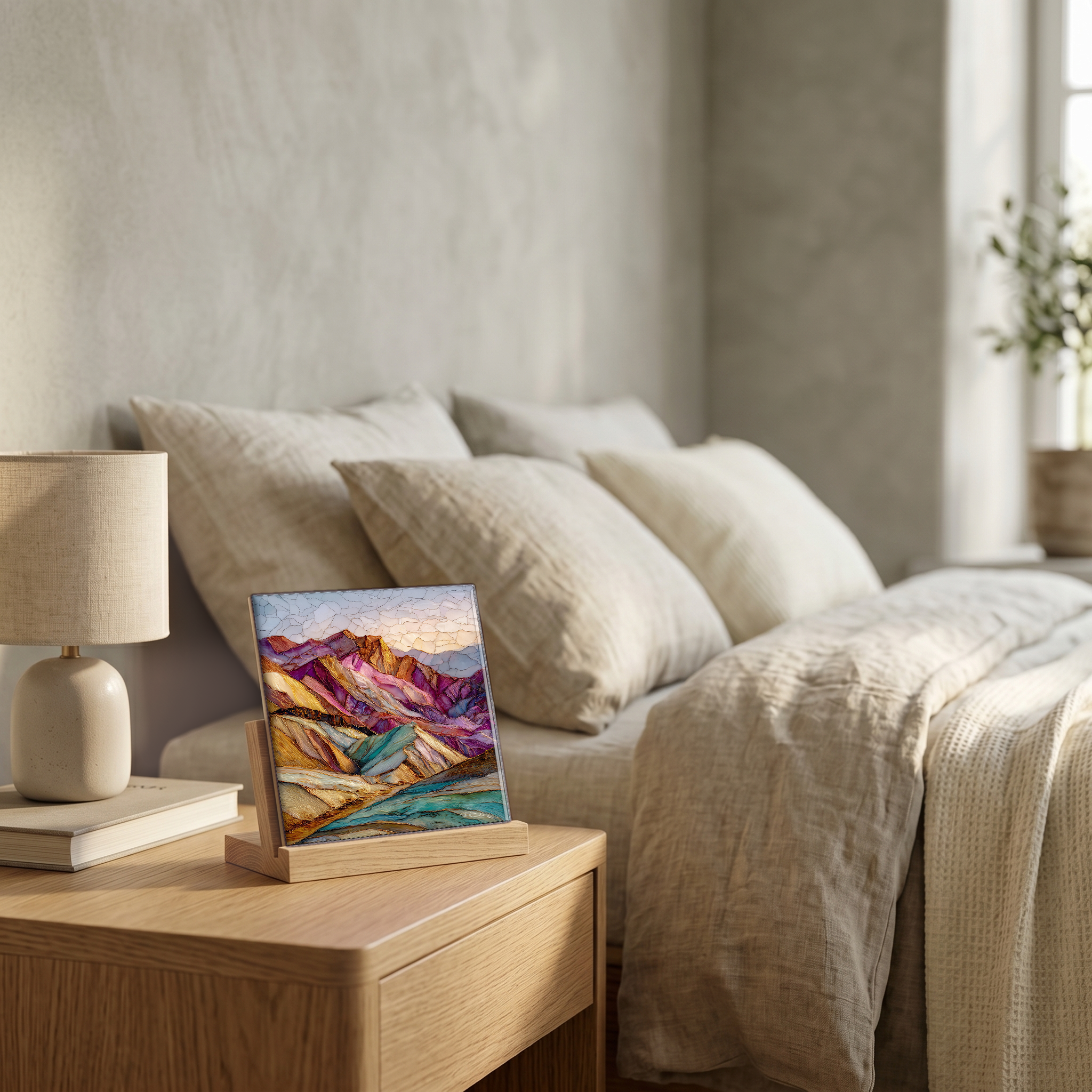
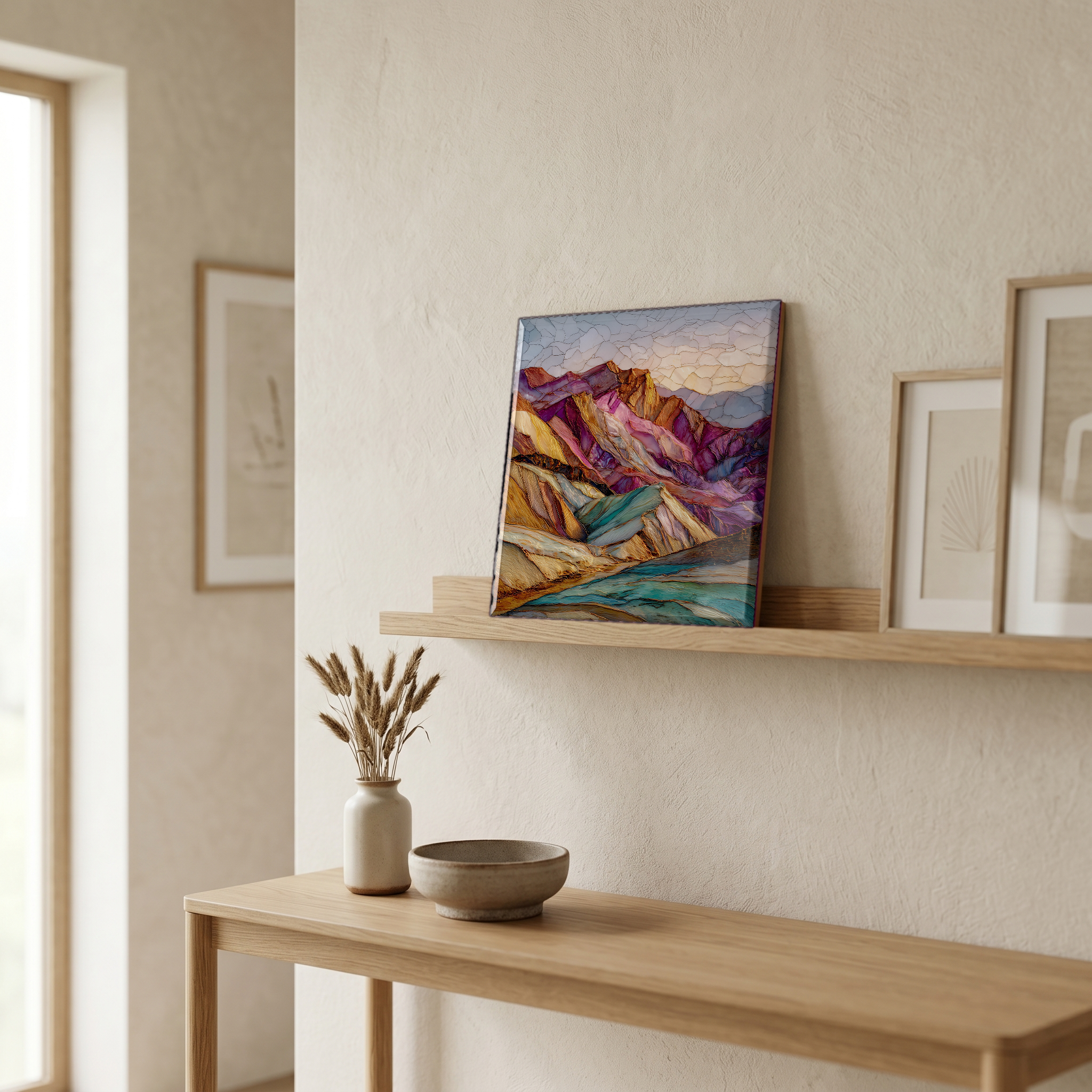
“A nine-mile one-way loop off Badwater Road, between Furnace Creek and the salt flats at Badwater Basin. The colours come from oxidised metals in volcanic ash laid down five million years ago. Iron makes the pinks and yellows, manganese the lavender, decomposed mica the green. The road climbs through narrow canyons, then opens at a small pull-off where the painted hills stand directly across the wash. Most cars roll through in twenty minutes. The light that brings the colour out arrives about an hour before sunset, when the desert is mostly empty.
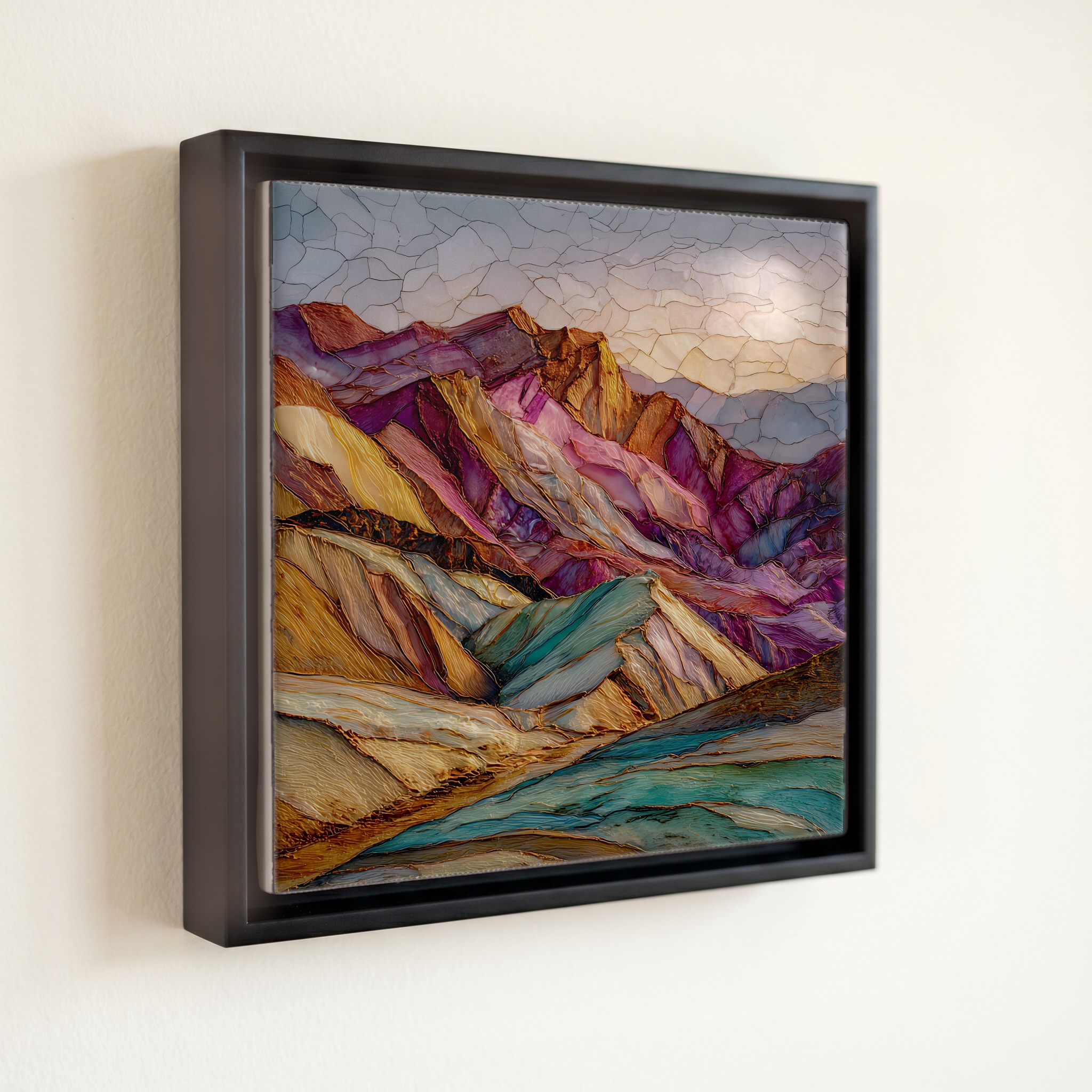
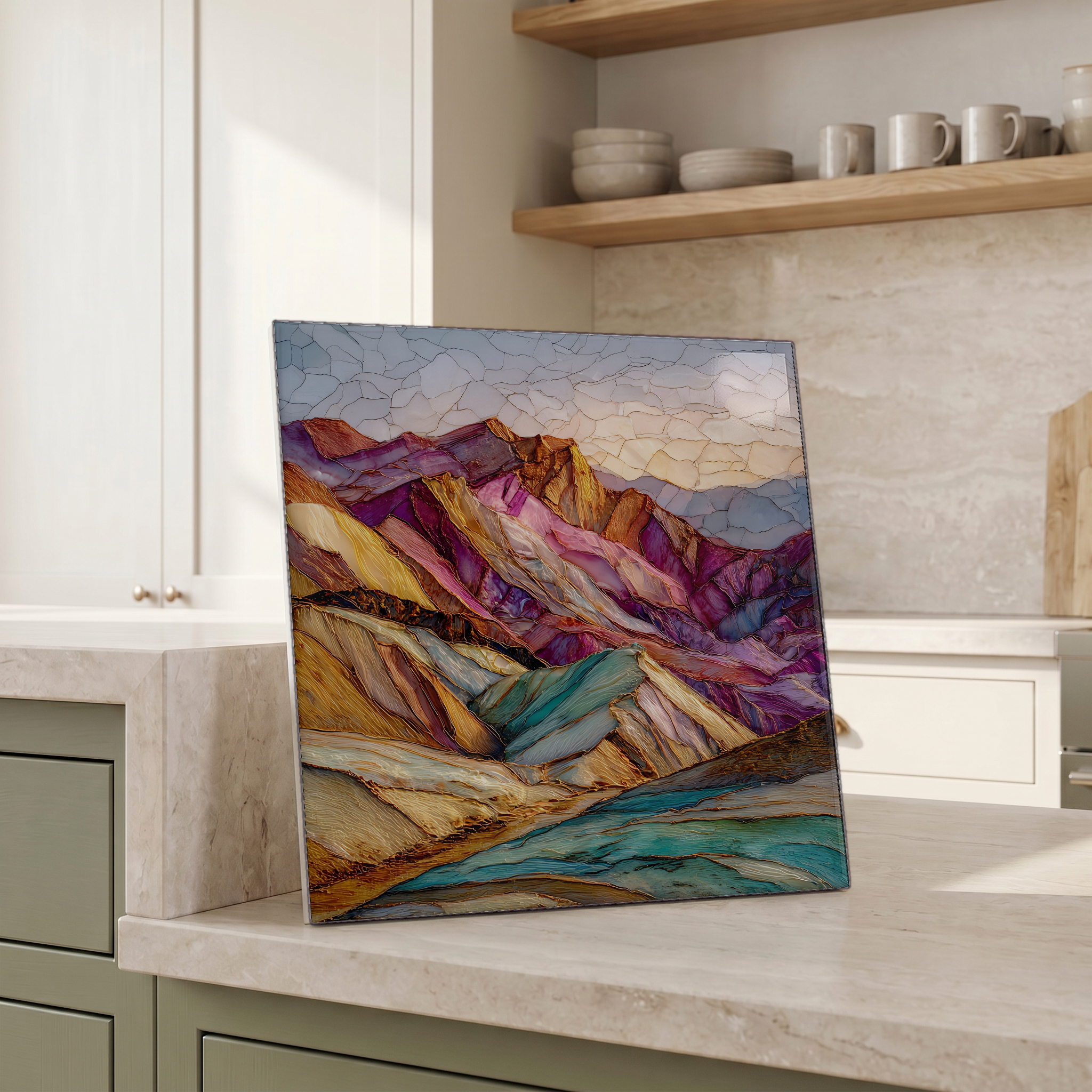
Artists Palette, on ceramic.
Each tile is finished by hand in our Knoxville studio. Artwork is slowly infused into the ceramic surface under high heat and pressure, and rests beneath a thin glossy finish. The colour lives in the surface, not on top of it.
Pick any four 4-inch tiles — National Parks you've been to, a Smokies set, the four seasons of one place. $ for a set of , cork-backed, ready to live on the table.
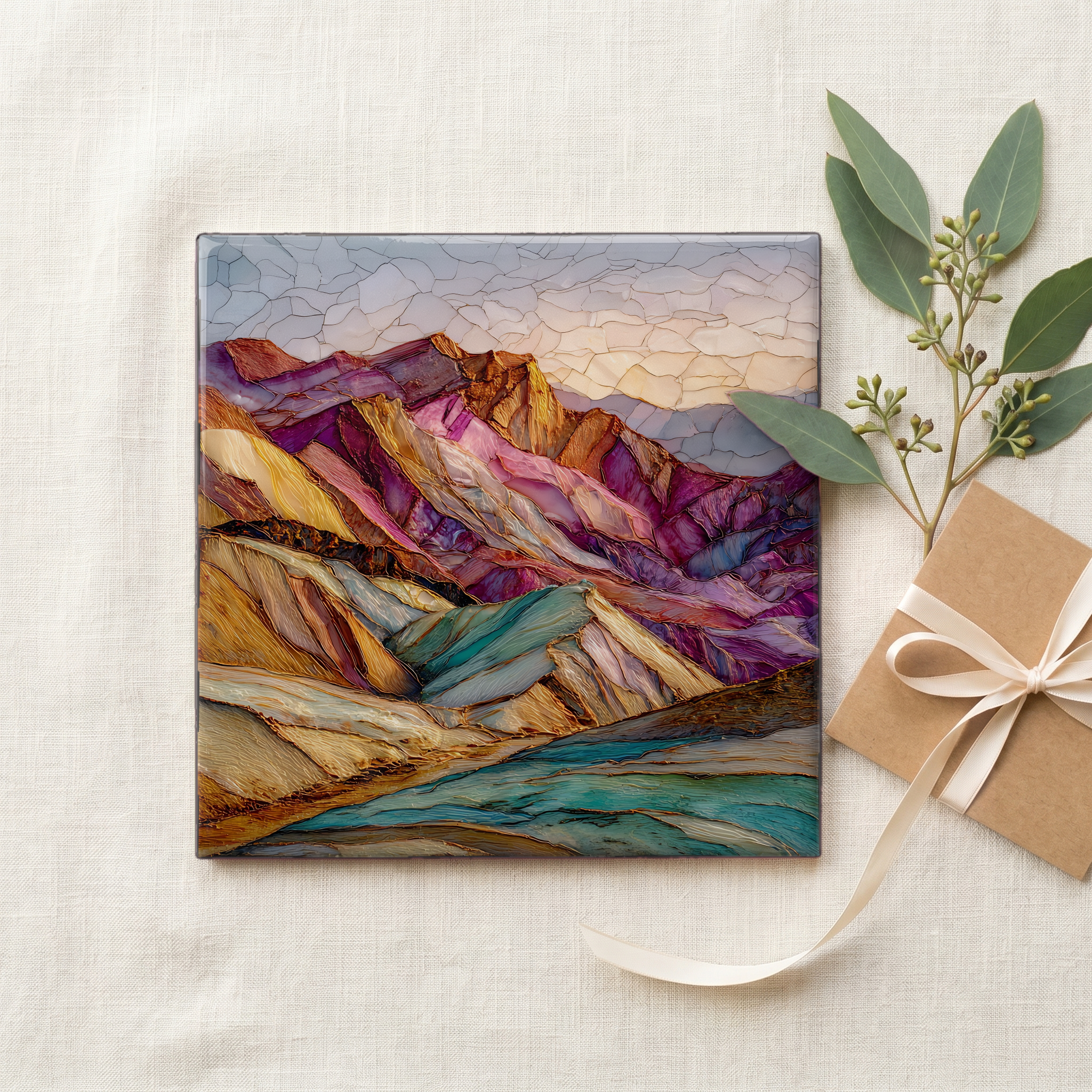
Each tile ships in a kraft box, tied with cream ribbon, with a handwritten note from the studio if you'd like to add one.
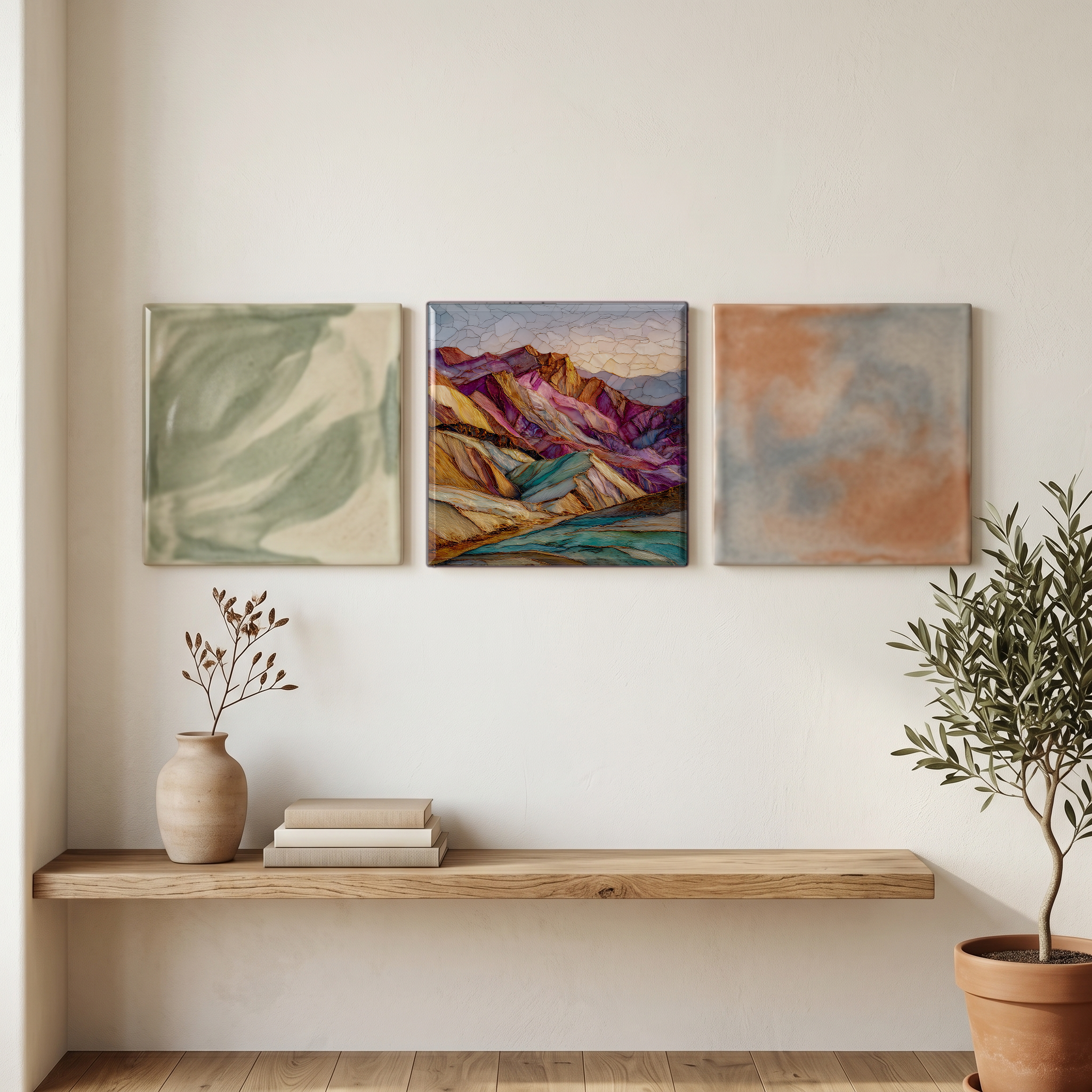
Three or five different vistas, hung together — a chapter of places you've been, or want to go.
The place, in three passes.
Artists Palette is the most-photographed pull-off along Artists Drive, a nine-mile one-way scenic road that climbs through the Black Mountains on the east side of Death Valley National Park. The loop begins about ten miles south of Furnace Creek along Badwater Road and rises from the valley floor to roughly 800 feet of elevation in the foothills above the wash. Death Valley itself is the largest national park in the contiguous United States, established in 1994 and covering about 3.4 million acres across Inyo County in California and Esmeralda and Nye counties in Nevada. The pull-off has no facilities, only a short walk from the parking strip to the base of the painted slopes.
The colour comes from oxidation of metals embedded in volcanic ash laid down during the Miocene, roughly five million years ago. Iron-bearing compounds produce the reds, pinks, and yellows. Manganese gives the purple and lavender tones. The green is decomposing mica with a chlorite influence. The hills are part of the Artist Drive Formation, a sequence of volcanic and sedimentary deposits the U.S. Geological Survey maps across the Black Mountains. The colour itself is constant; what shifts is the light, which deepens the saturation in the slanting hour before sunset and separates one mineral band from the next.
The pull-off faces roughly west into the painted hills, which means the colour reads best in the last hour or two before sunset. In the middle of the day the high desert light flattens the saturation; the same hillside that looks magazine-bright at five o'clock can read almost grey at noon. The National Park Service recommends driving the loop in the afternoon for this reason. Death Valley sits in a rain shadow east of the Sierra Nevada and the Panamint Range, which keeps cloud cover and humidity low and the air clear most of the year. The colour does not need help. It needs the right hour.