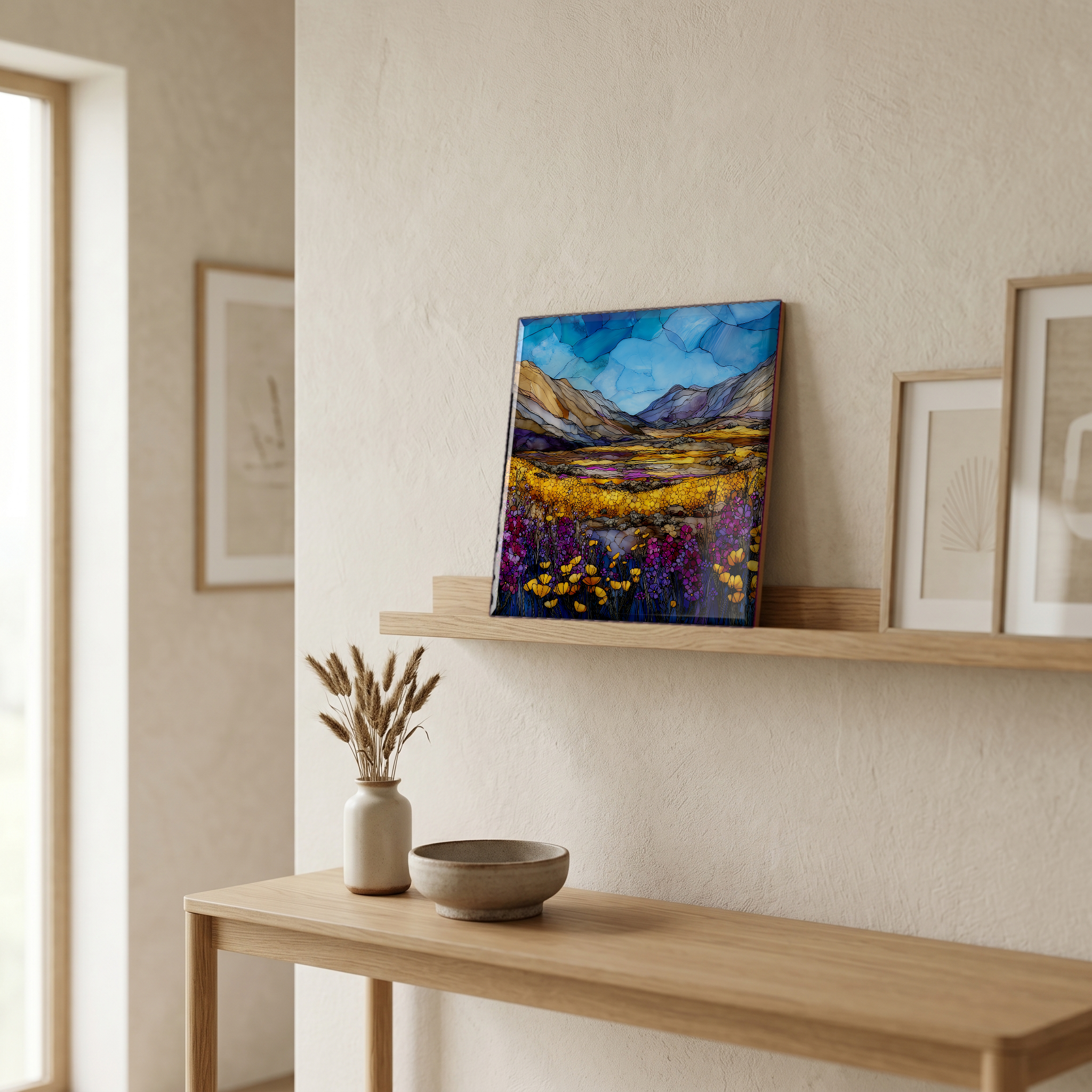
Wender·Vista
Anza-Borrego Superbloom
shown on ceramic, 12-inch tileCalifornia · United States
in the desert east of San Diego

Anza-Borrego Superbloom

— the spring the desert pays the rain back.

Where it lives

Not only on a wall.

A small tile on the nightstand catching the morning. A larger one above the fire. Yours, wherever you spend the slow hours.
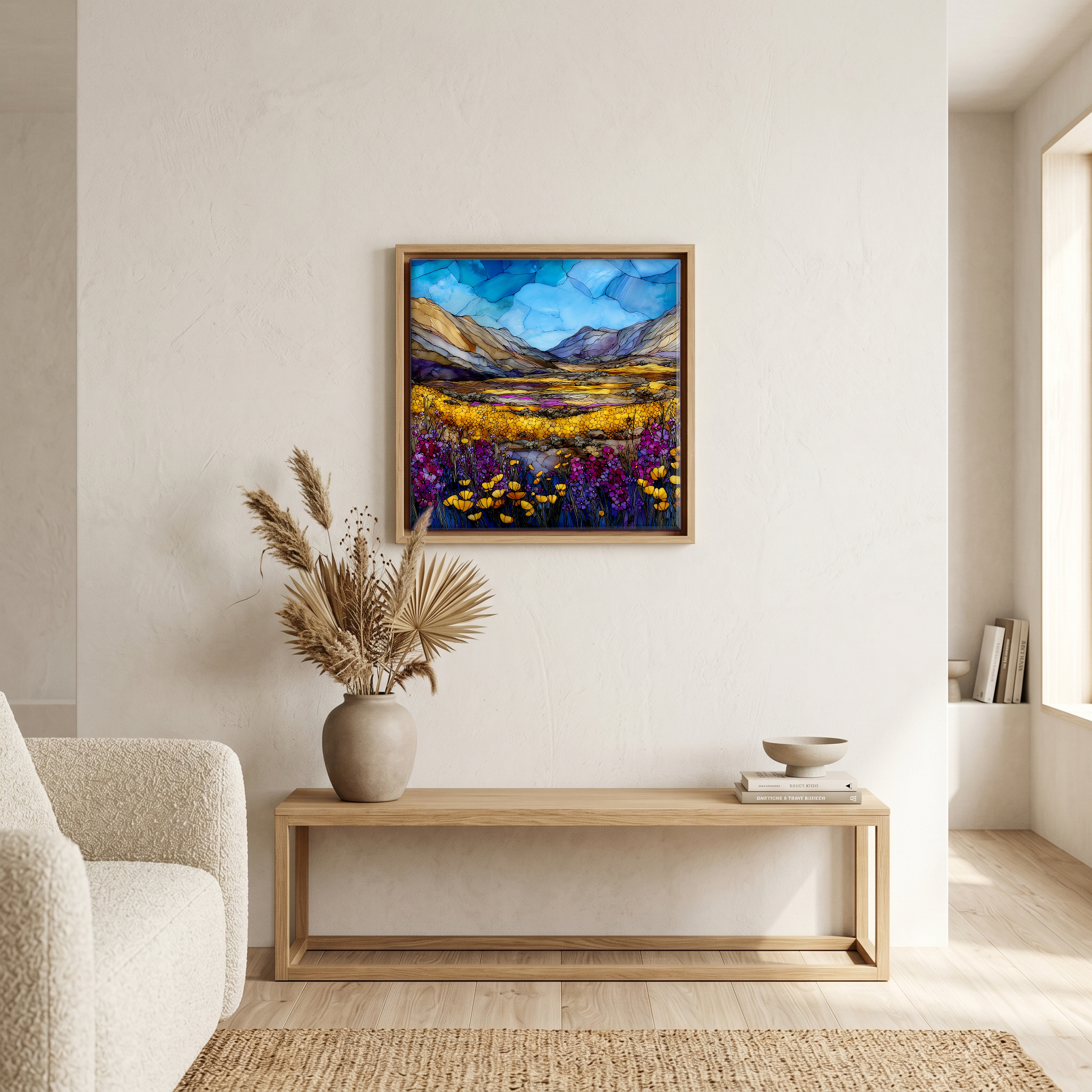
Above the bench, in a warm oak surround.
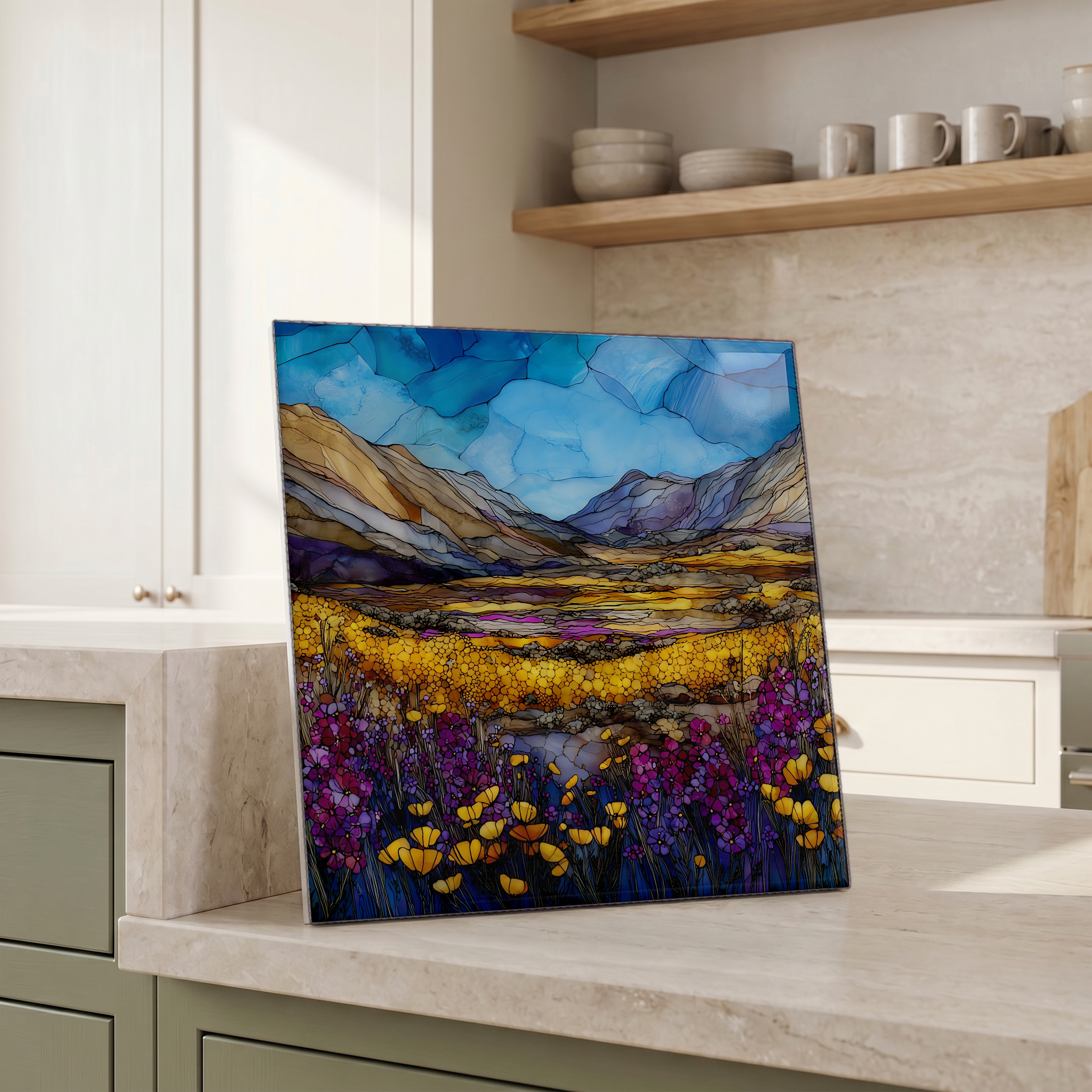
Beside the kettle, propped on the counter.
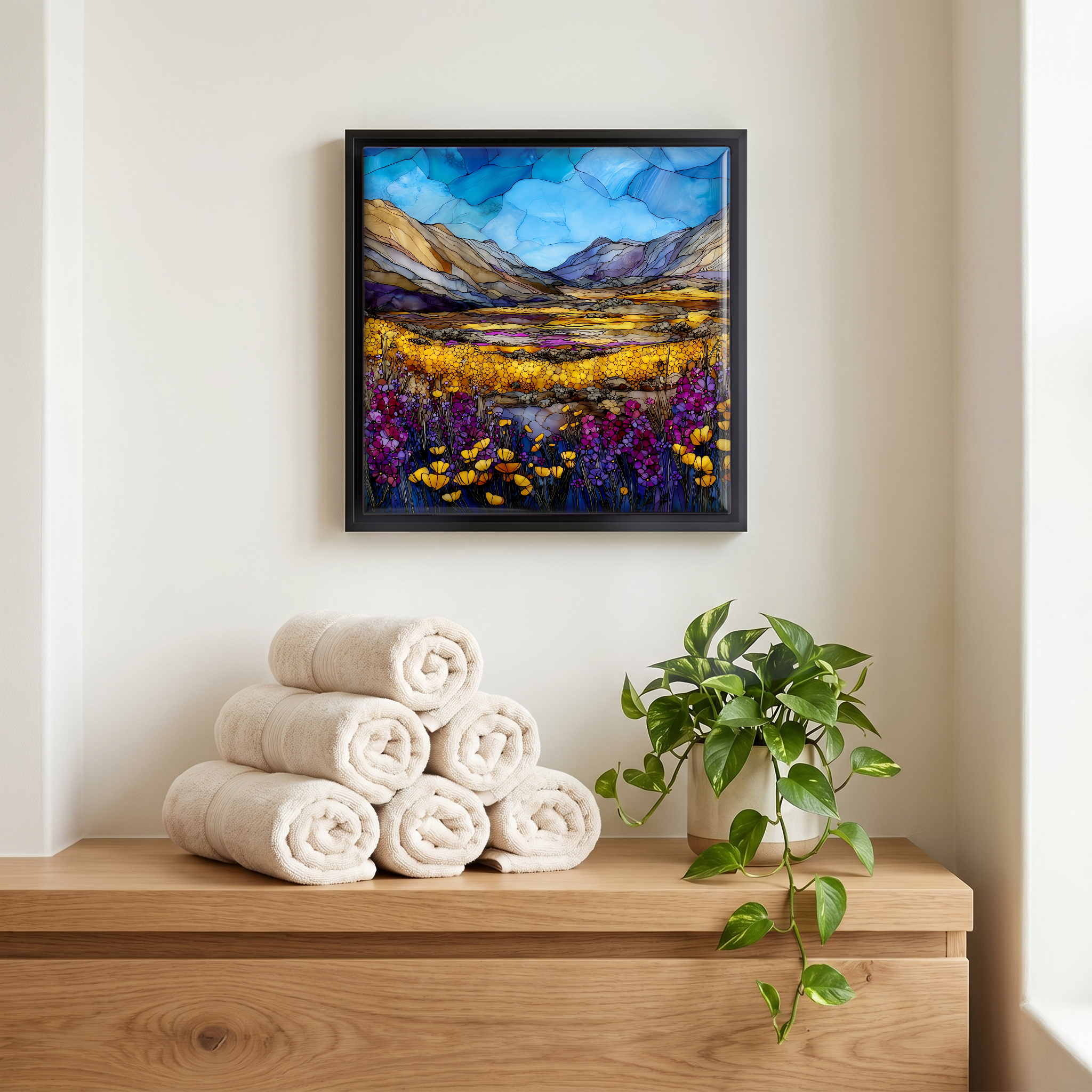
Above the linens, in a slim black surround.
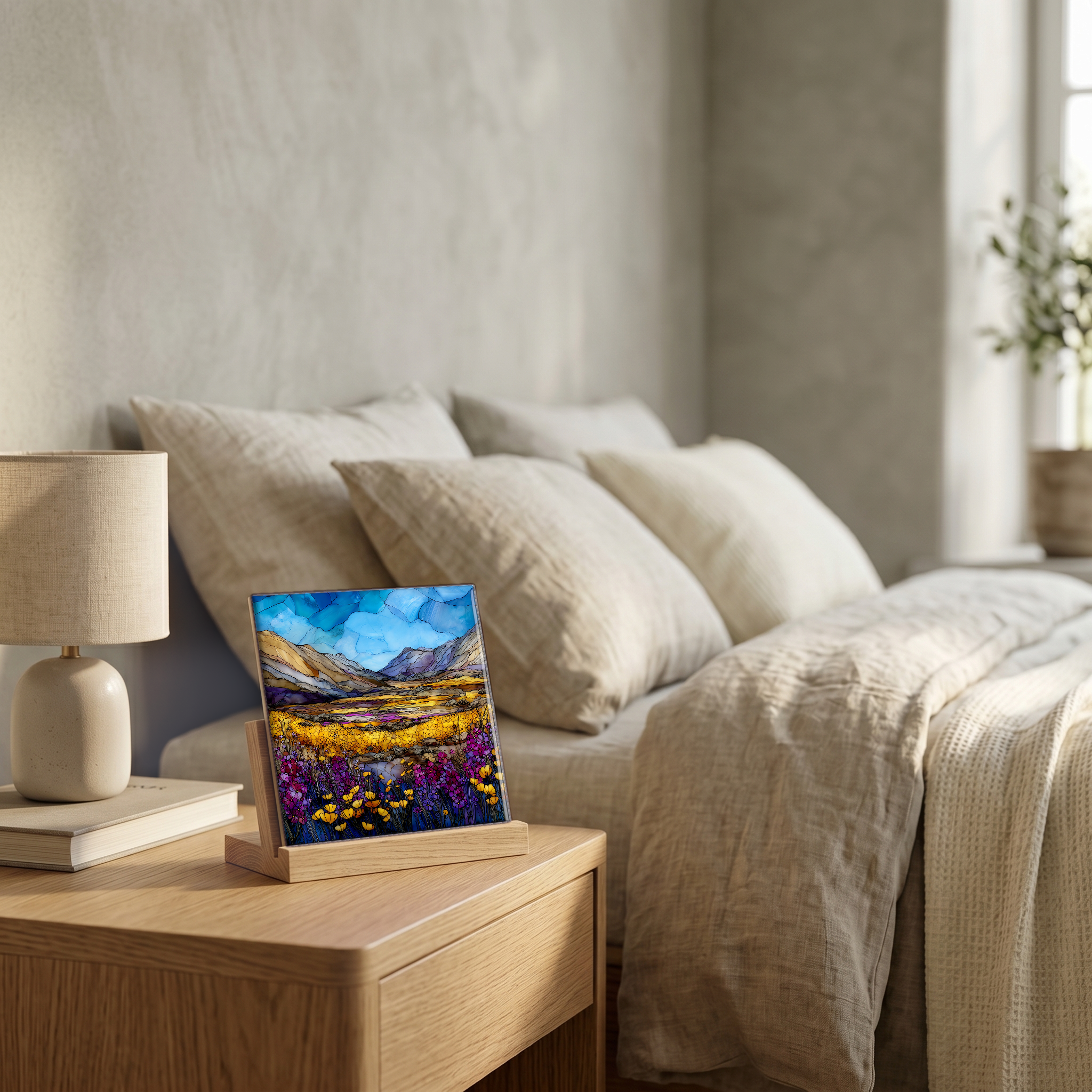
On the nightstand, on a light oak stand.
On a picture ledge, where the light comes in.
a note from the studio

Six hundred thousand acres of desert, east of San Diego. Most years it stays the colour of stone: ocotillo, cholla, dry wash. Then a wet winter comes, and for three or four weeks in March the floor goes gold with desert sunflower, pink with sand verbena, white with dune evening primrose. The locals call it a superbloom. It does not happen on schedule. Big bloom years like 2005, 2017, and 2019 pulled traffic down Henderson Canyon Road in both directions, people pulled over without a place to park. Then the heat comes back and the desert closes again until the next wet winter.
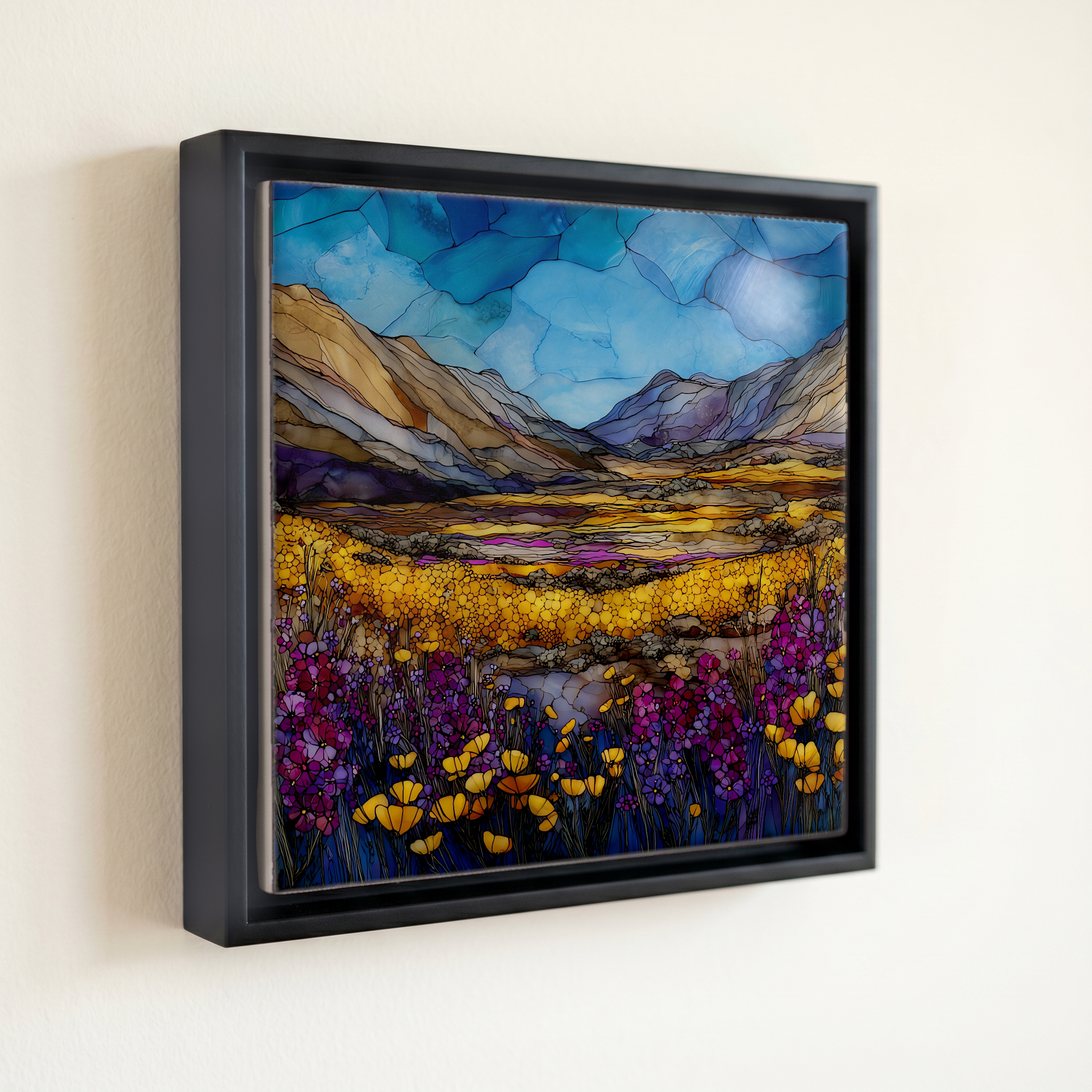
from the studio
shown in a slim black floating frame · 6 × 6 in
— bring it home

Anza-Borrego Superbloom, on ceramic.

Each tile is finished by hand in our Knoxville studio. Artwork is slowly infused into the ceramic surface under high heat and pressure, and rests beneath a thin glossy finish. The colour lives in the surface, not on top of it.

What kind of piece?
One tile — square or rectangle.
How big?
the popular one — counter, shelf, nightstand
6 × 6 in · 15 cm · 1.6 lb
Surface finish
A clear glossy finish — the artwork reads as if under resin. Ideal for show-pieces and framed wall art.
How it sits
A hidden cleat — sits ¼″ proud of the wall.
$58
Hand-finished and shipped from our studio at the foot of the Smokies. On your wall in about ten days.
size
6 × 6 in
15 cm
weighs
1.6 lb
solid in the hand
surface
ceramic, hand-finished
art rests beneath a thin glossy finish
from
Knoxville, TN
our family studio, at the foot of the Smokies
— start a Coaster Set

Pick any four 4-inch tiles — National Parks you've been to, a Smokies set, the four seasons of one place. $ for a set of , cork-backed, ready to live on the table.
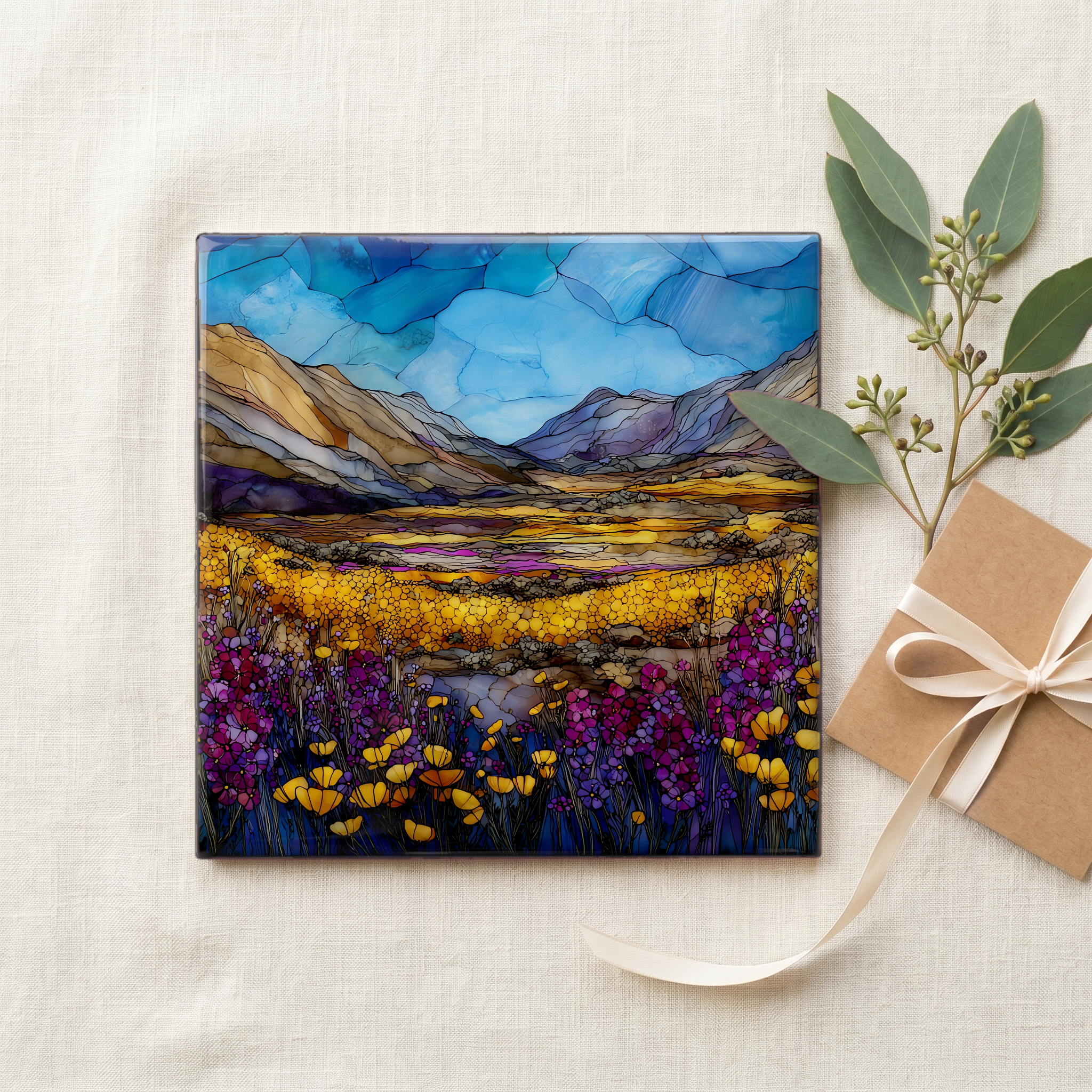
comes gift-ready
comes gift-ready

Each tile ships in a kraft box, tied with cream ribbon, with a handwritten note from the studio if you'd like to add one.
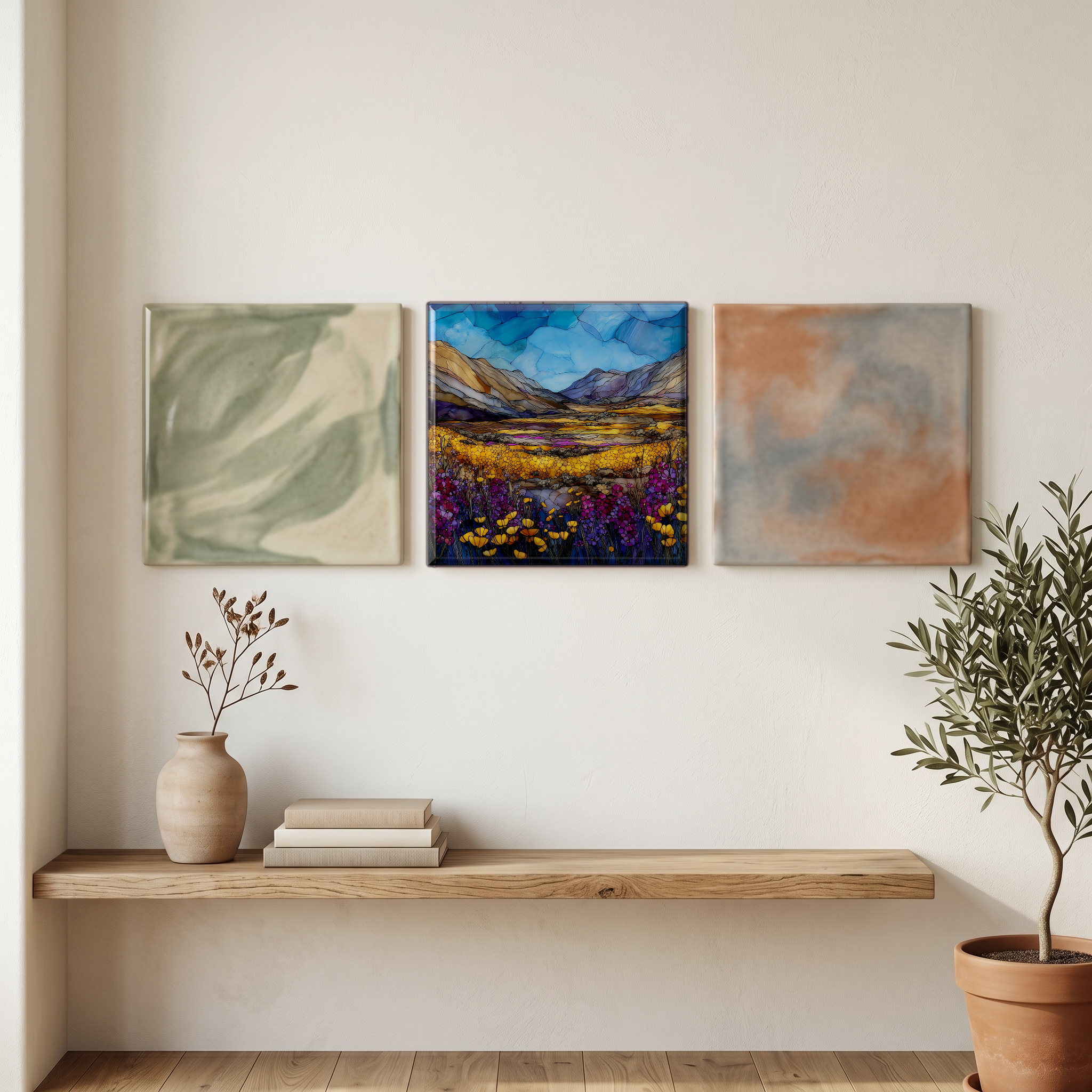
or build a grouping
or build a grouping

Three or five different vistas, hung together — a chapter of places you've been, or want to go.

about Anza-Borrego Superbloom

The place, in three passes.

A little of what's known, in case you fall down the rabbit hole — or want to go see it yourself.
the place

Anza-Borrego Desert State Park is the largest state park in California, covering more than 600,000 acres of the Colorado Desert in eastern San Diego County. The park surrounds the small town of Borrego Springs, which sits at about 590 feet in the broad Borrego Valley, ringed by the Santa Rosa, Vallecito, and San Ysidro mountains. It was established in 1933 and named for Spanish colonial explorer Juan Bautista de Anza and the peninsular bighorn sheep (borrego in Spanish) that still inhabit its higher canyons. The park can be reached in about two hours by car from San Diego on Highway 78 or from Palm Springs on County Route S22.

the season

The superbloom is irregular. It requires a wet winter (at least four to six inches of rain spread across several storms between November and February) followed by mild March temperatures. In a typical year the desert floor stays brown and the show is muted. In a bloom year the wash colour holds for roughly three to five weeks, beginning in mid-February at the lower elevations and finishing by early April in the higher canyons. The most-photographed recent blooms were 2005, 2017, and 2019. The Anza-Borrego Foundation publishes a weekly wildflower update during bloom season, and the park's wildflower hotline confirms whether the year has tipped.

the colour

The colour comes from a small set of annuals that have lain dormant under the sand. Desert sunflower (Geraea canescens) carries the dominant gold and covers the largest sheets along DiGiorgio Road and Henderson Canyon Road. Sand verbena (Abronia villosa) lays a pink-magenta wash through the dune systems, and dune evening primrose (Oenothera deltoides) opens white in the late afternoon and closes by mid-morning. Higher up the bajadas, the ocotillo (Fouquieria splendens) tips red, and the chuparosa (Justicia californica) brings a deep coral that the Costa's hummingbirds work all day. The mix shifts week by week as different species peak, so two visits ten days apart can read as two different places.

where
United States · San Diego County, California
within
Anza-Borrego Desert State Park
elevation
180 m · 590 ft
position
33.2558° N · 116.3744° W
the neighborhood

What's nearby.

A handful of named places within an hour's walk or short drive. Some we've already painted; some we will.
5 km W
Borrego Palm Canyon
desert canyon
2 km N
Galleta Meadows Sculptures
sculpture park
5 km N
Henderson Canyon Road
wildflower drive
15 km N
Coyote Canyon
desert canyon
25 km SE
Font's Point
badlands viewpoint
N
Anza-Borrego Superbloom
Borrego Palm Canyon
Galleta Meadows Sculptures
Henderson Canyon Road
Coyote Canyon
Font's Point
common questions

What people ask.

A few questions we get about Anza-Borrego Superbloom — and about bringing the piece home.
about the place

In eastern San Diego County, about two hours by car from San Diego on Highway 78. It covers more than 600,000 acres of the Colorado Desert and is the largest state park in California, surrounding the small town of Borrego Springs in the Borrego Valley.

A superbloom is an unusually heavy spring wildflower display, when annual species that have lain dormant for years germinate at once. In Anza-Borrego it follows a wet winter of four to six inches of rain or more between November and February, and it lasts roughly three to five weeks.

Mid-February through early April, with peak colour usually in the first two weeks of March. Lower elevations bloom first; the higher canyons follow. The Anza-Borrego Foundation posts weekly updates during bloom season, and the park's wildflower hotline confirms current conditions.

No. It depends on a wet winter and mild March temperatures, which together arrive only once every several years. The most-photographed recent superblooms in Anza-Borrego were 2005, 2017, and 2019. Most years the desert stays muted and the show is small.

Desert sunflower (Geraea canescens) carries the dominant gold; sand verbena (Abronia villosa) lays the pink wash; dune evening primrose (Oenothera deltoides) opens white in late afternoon. Higher up, ocotillo tips red and chuparosa blooms coral, drawing Costa's hummingbirds.

Henderson Canyon Road and DiGiorgio Road, both north of Borrego Springs, run through the most reliable sheet-bloom areas. Coyote Canyon and the dune systems near the visitor centre also bloom well in big years. The Anza-Borrego Foundation publishes a wildflower map each spring.

There is no entry fee for most of the park, which is largely free-access along the public road system. Day-use parking at developed sites like Borrego Palm Canyon and Tamarisk Grove carries a fee, and overnight camping requires a reservation through ReserveCalifornia.

about the piece in your home

It carries well for friends and family with ties to the San Diego back country, hikers who time their year to the bloom, or anyone who lived through the 2017 or 2019 superblooms. A Small or Keepsake with a handwritten studio note travels well.

The piece sits comfortably in Desert-modern, Southwestern, and Jewel-tone Maximalist interiors. The gold-and-magenta palette holds against warm whites and lime-washed walls, and the stained-glass density carries a layered room without disappearing.

Yes. Desert-modern continues to draw from the high-desert palette (Joshua Tree, Marfa, Borrego), and biophilic design favours images of specific, named landscapes over generic green wall art. A Medium or Large reads strongly in both rooms.

Above a standard sofa, a single Large reads cleanly. For a wider wall, a four-tile Mural carries the bloom across the full span, and a nine-tile Mural is the dramatic choice over a long console or above a bed. Smaller tiles work in stacked arrangements.

Yes. For wet or splash-prone spaces, choose the Dura Satin or Matte finish: both are scratch-resistant and handle moisture and steam. The Glossy finish is for framed wall pieces, not behind a sink or stove.

A microfibre cloth and water is enough for the Glossy finish. For Dura Satin or Matte tiles installed as backsplashes, the same cloth with a drop of mild soap clears cooking residue. Avoid abrasive pads, which can dull the surface over time.

Yes. Every WenderVista piece is created in-house by Reid Wender, the curator behind the atlas, and slowly infused into the ceramic surface under high heat and pressure in the Knoxville studio. There is no licensing, no third-party stock, no reproduction of another artist's work.

if this one stayed with you

A few you might also love.

Hand-picked by the eye that found Sorapis. Same air, same kind of quiet.