Wender·Vista
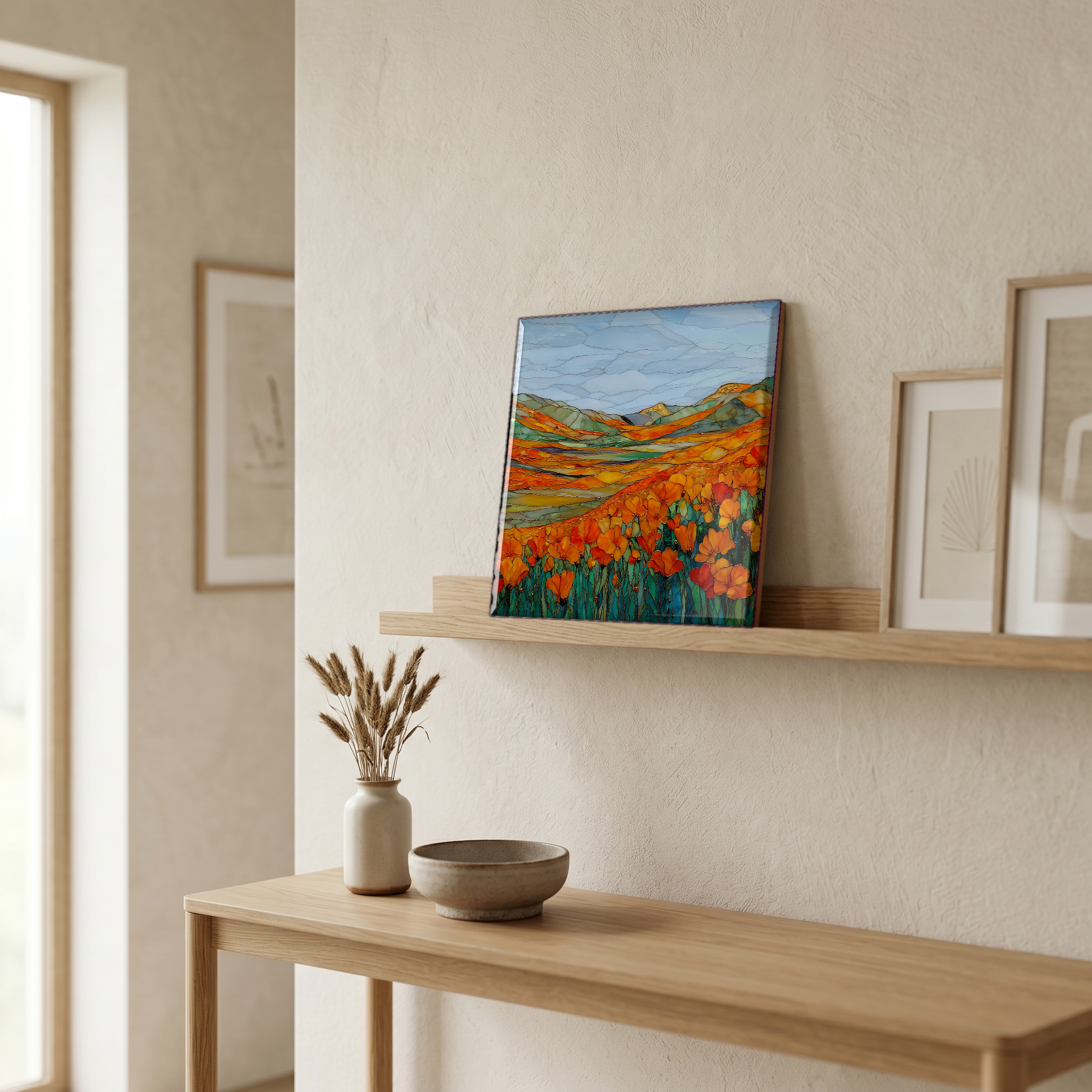
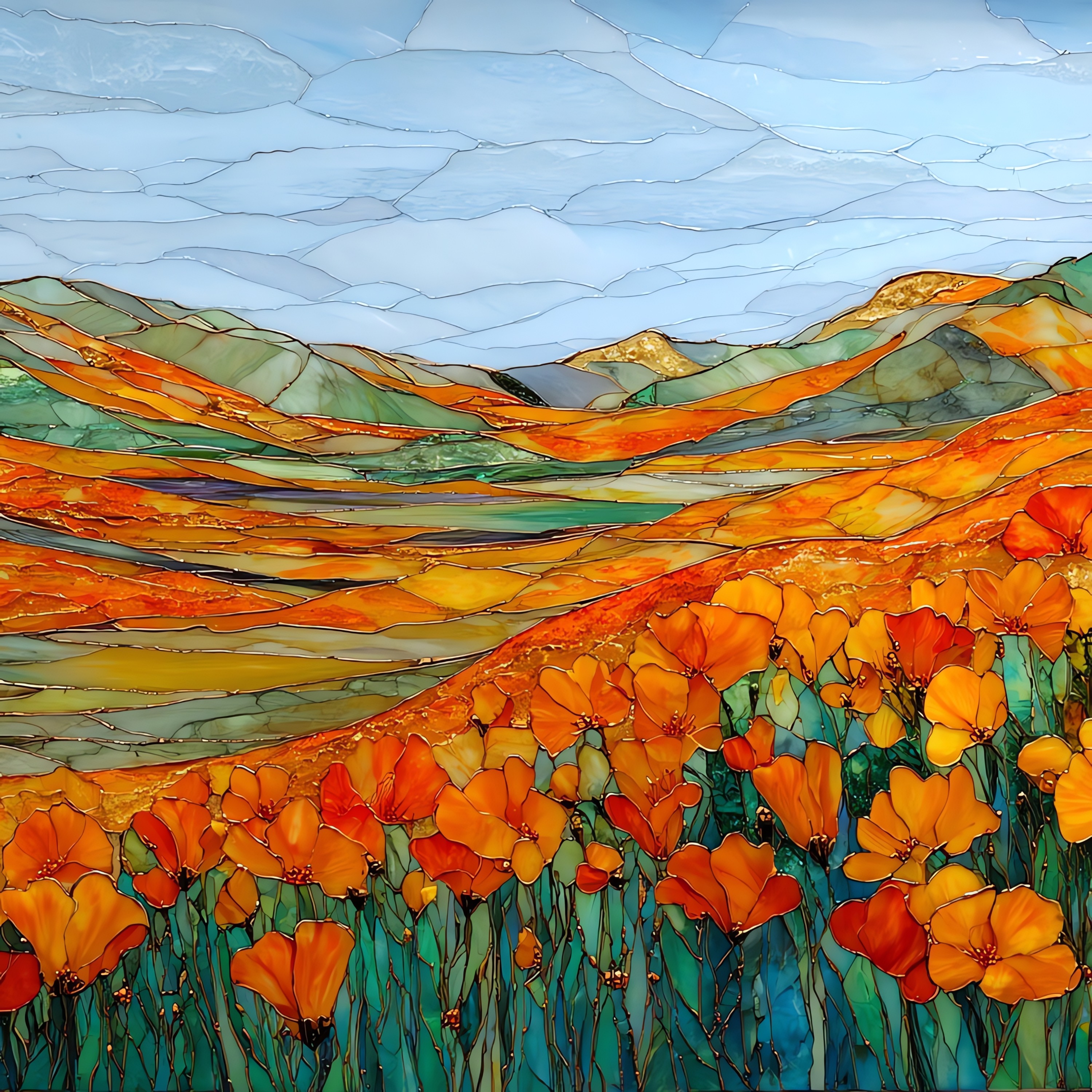
Antelope Valley Poppies
shown on ceramic, 12-inch tileCalifornia · United States
in the Mojave foothills north of Los Angeles

Antelope Valley Poppies

— the colour the desert keeps for two weeks each spring.

Where it lives

Not only on a wall.

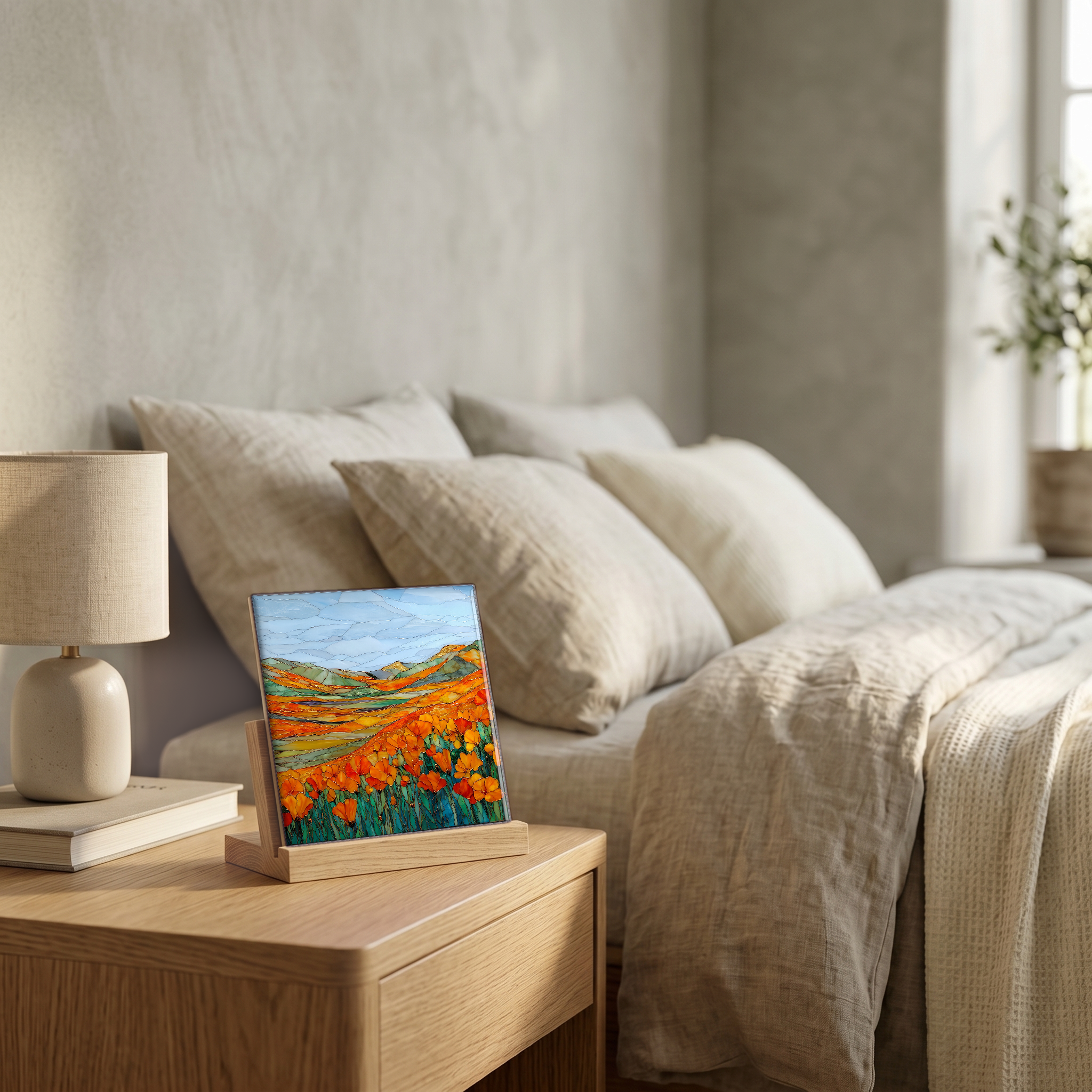
A small tile on the nightstand catching the morning. A larger one above the fire. Yours, wherever you spend the slow hours.
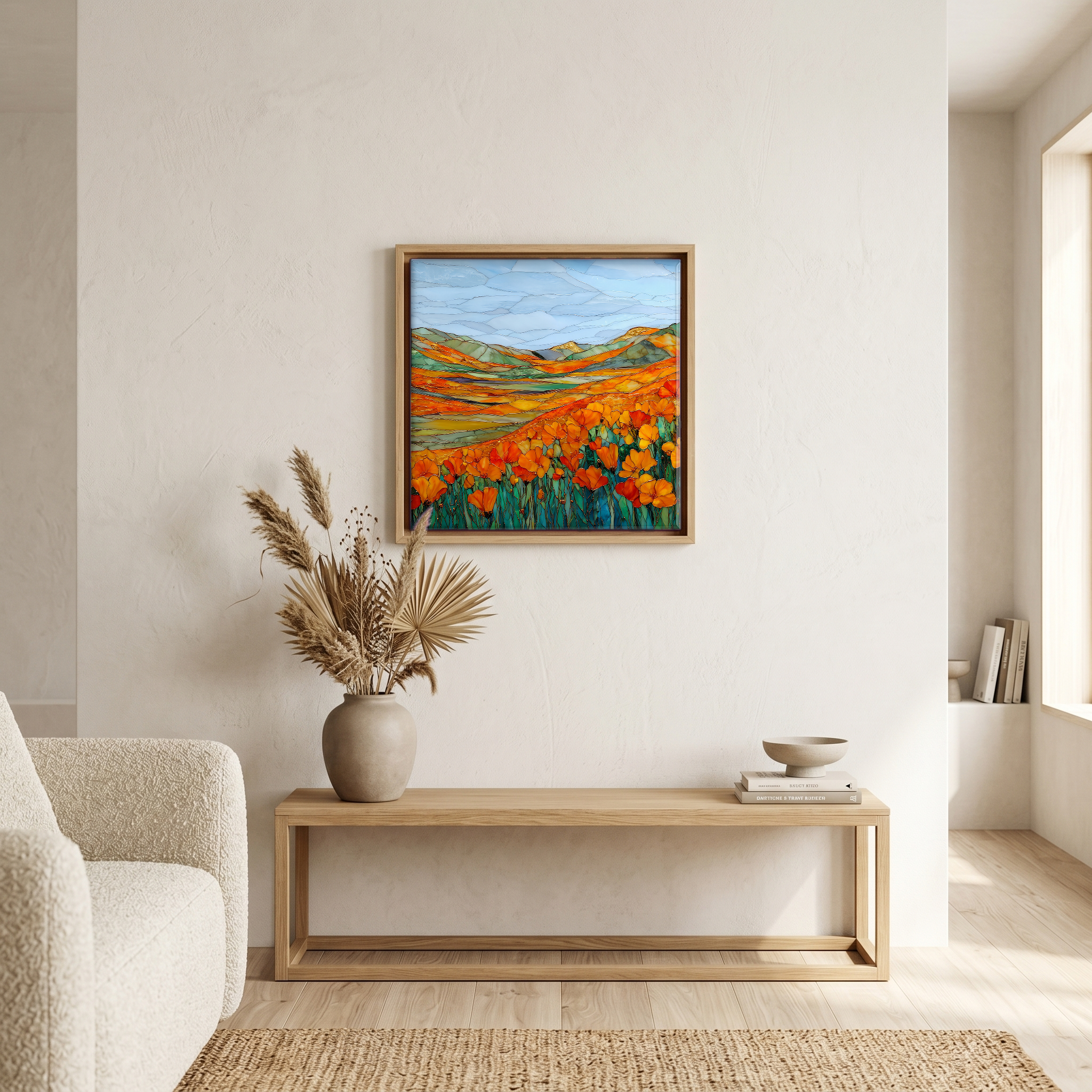
Above the bench, in a warm oak surround.
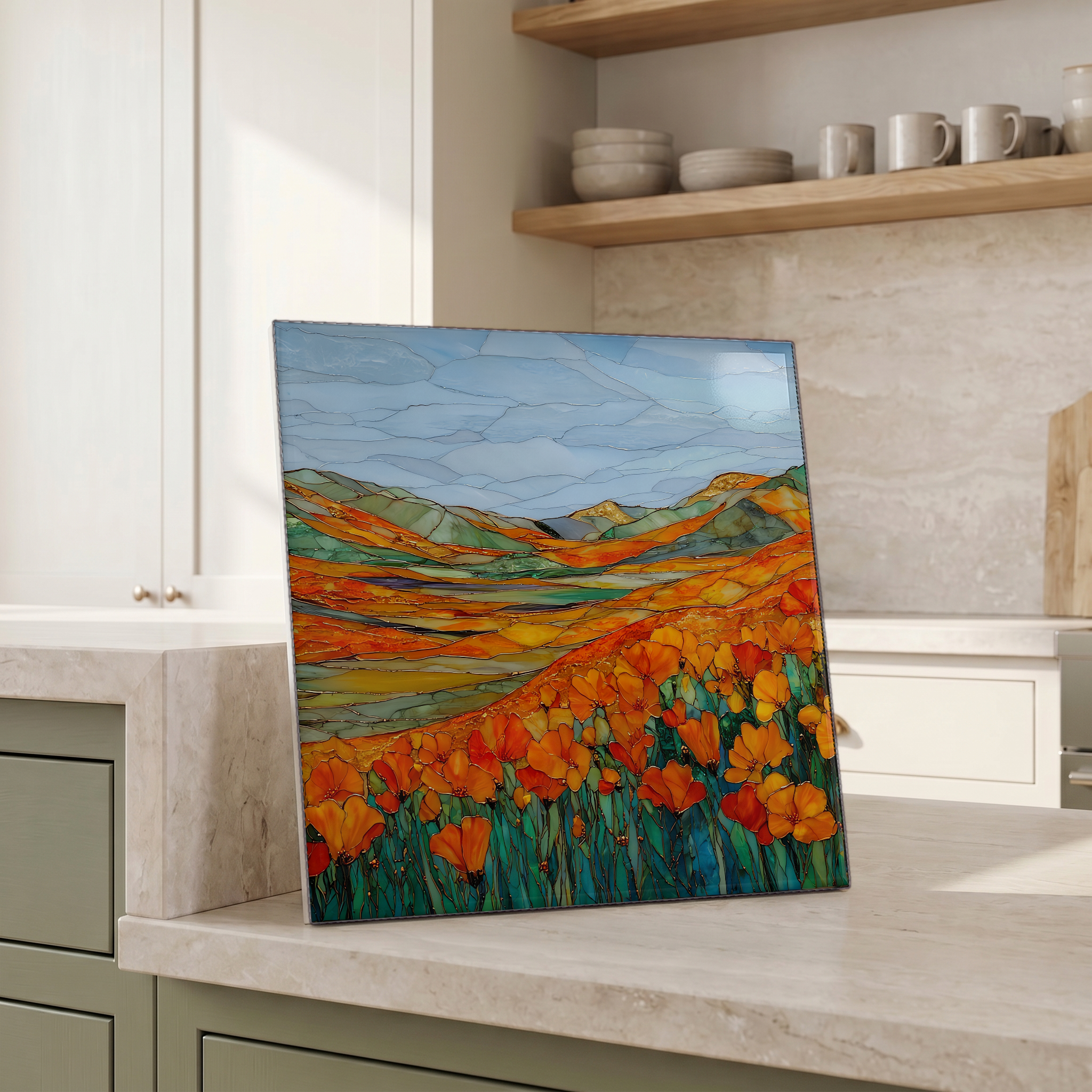
Beside the kettle, propped on the counter.
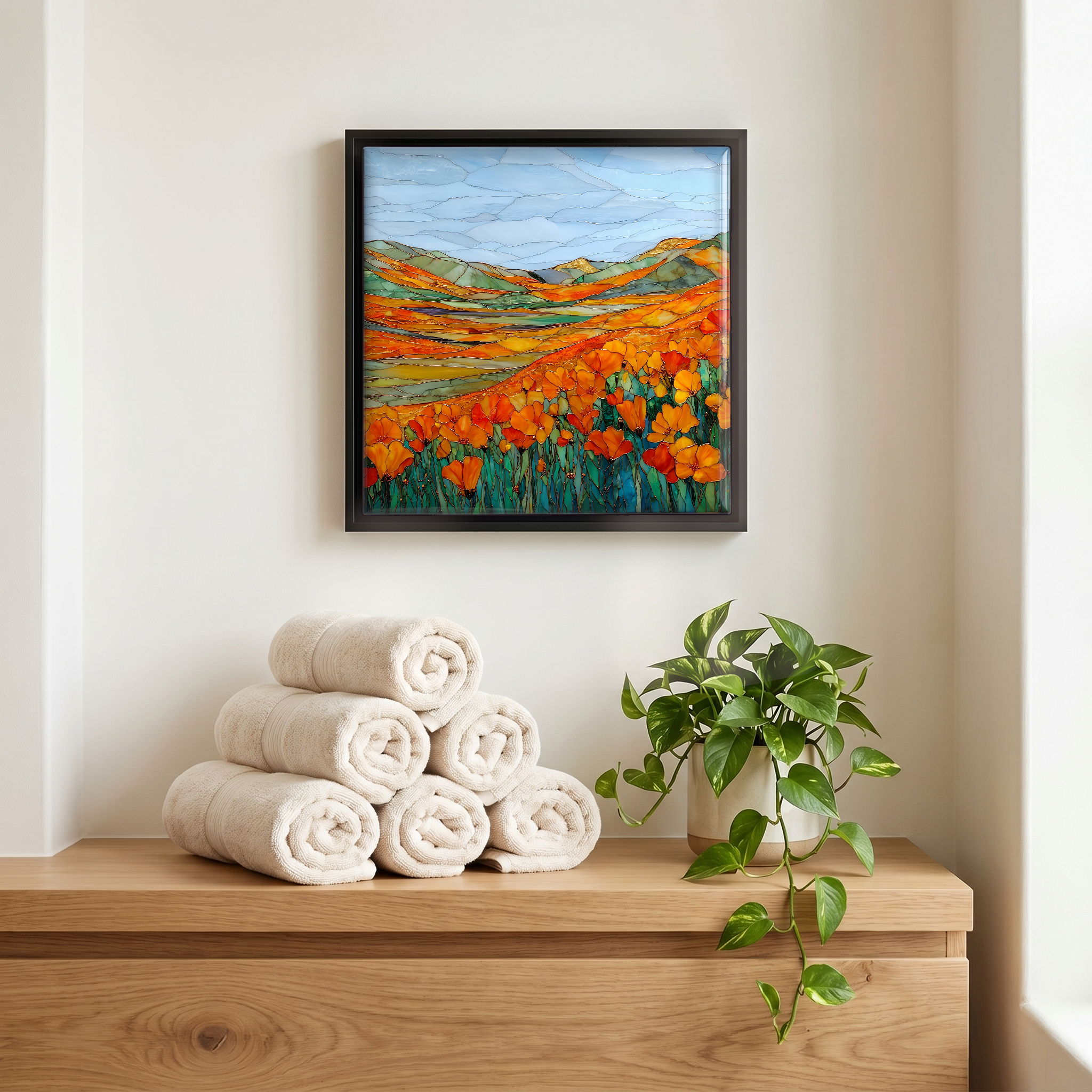
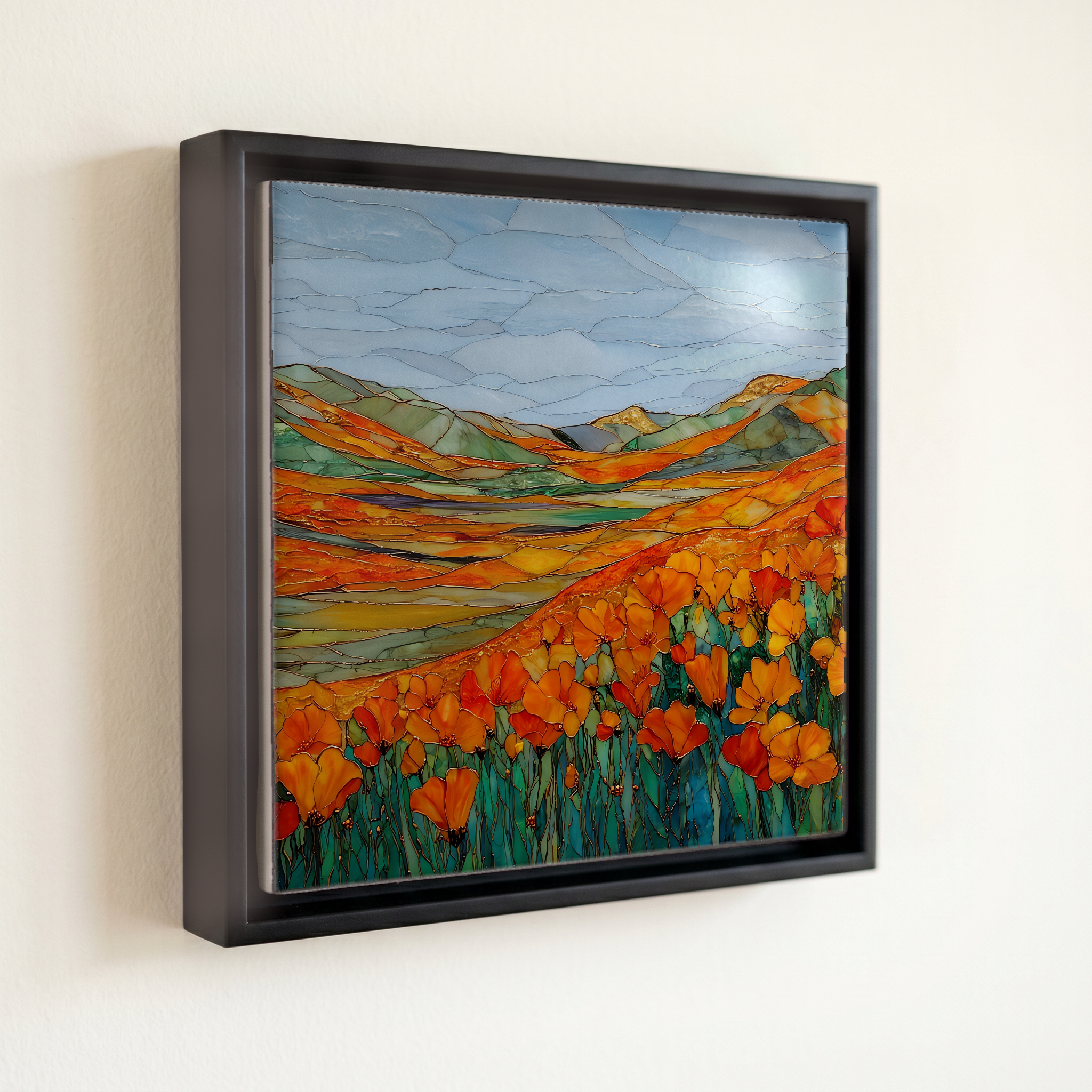
Above the linens, in a slim black surround.
On the nightstand, on a light oak stand.
On a picture ledge, where the light comes in.
a note from the studio

A grassland reserve in the Mojave foothills west of Lancaster, on the high-desert side of the Tehachapi Mountains. Most of the year the slopes are pale gold and stitched together with creosote. Then a wet winter passes, the rains soak through, and for two or three weeks in late March and early April the hillsides go orange. Eschscholzia californica, California's state flower, opens petal by petal as the sun climbs and closes again on cold mornings and against the wind. The first cars queue at the gate before sunrise. By lunch the back loops are quiet.
from the studio
shown in a slim black floating frame · 6 × 6 in
— bring it home

Antelope Valley Poppies, on ceramic.

Each tile is finished by hand in our Knoxville studio. Artwork is slowly infused into the ceramic surface under high heat and pressure, and rests beneath a thin glossy finish. The colour lives in the surface, not on top of it.

What kind of piece?
One tile — square or rectangle.
How big?
the popular one — counter, shelf, nightstand
6 × 6 in · 15 cm · 1.6 lb
Surface finish
A clear glossy finish — the artwork reads as if under resin. Ideal for show-pieces and framed wall art.
How it sits
A hidden cleat — sits ¼″ proud of the wall.
$58
Hand-finished and shipped from our studio at the foot of the Smokies. On your wall in about ten days.
size
6 × 6 in
15 cm
weighs
1.6 lb
solid in the hand
surface
ceramic, hand-finished
art rests beneath a thin glossy finish
from
Knoxville, TN
our family studio, at the foot of the Smokies
— start a Coaster Set

Pick any four 4-inch tiles — National Parks you've been to, a Smokies set, the four seasons of one place. $ for a set of , cork-backed, ready to live on the table.
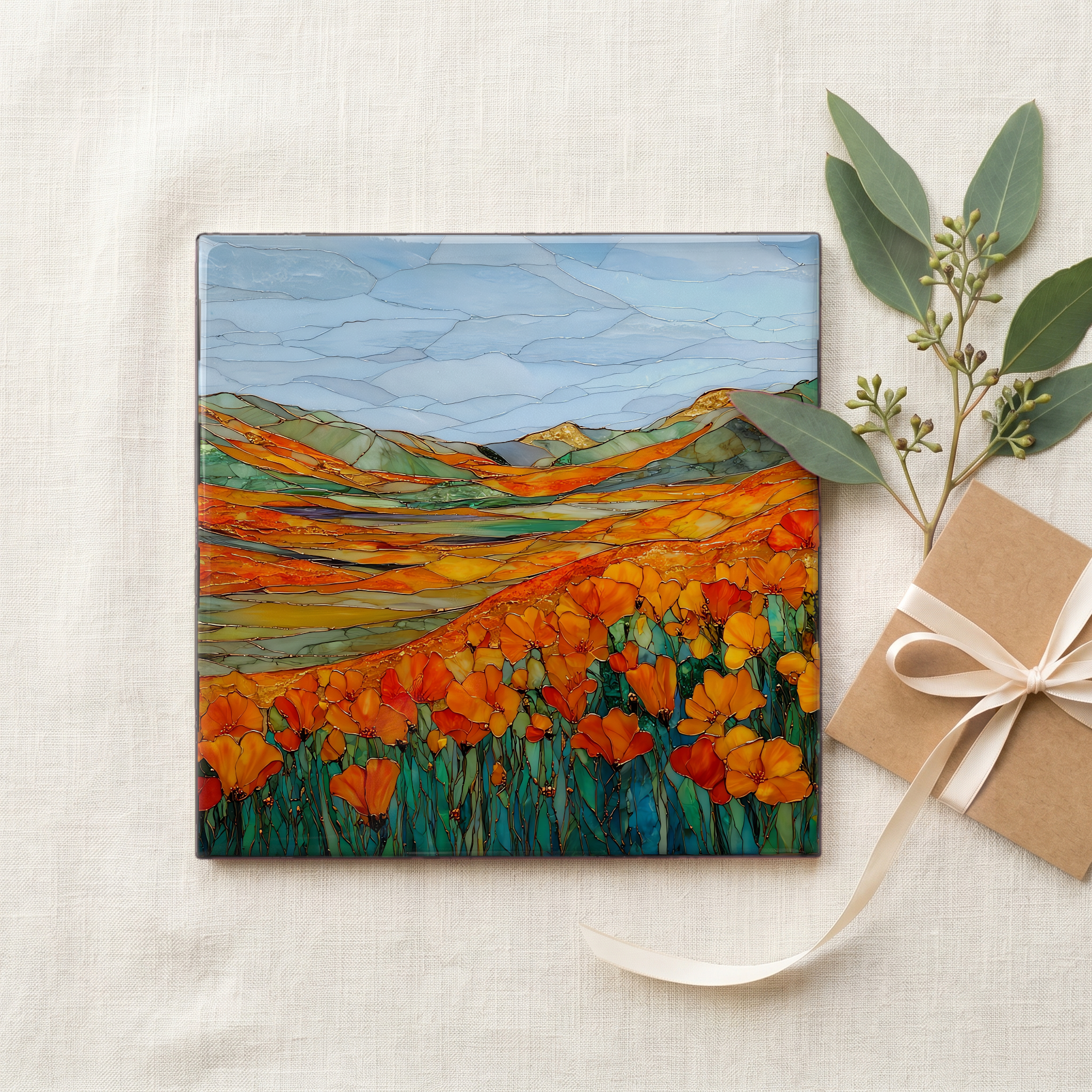
comes gift-ready
comes gift-ready

Each tile ships in a kraft box, tied with cream ribbon, with a handwritten note from the studio if you'd like to add one.
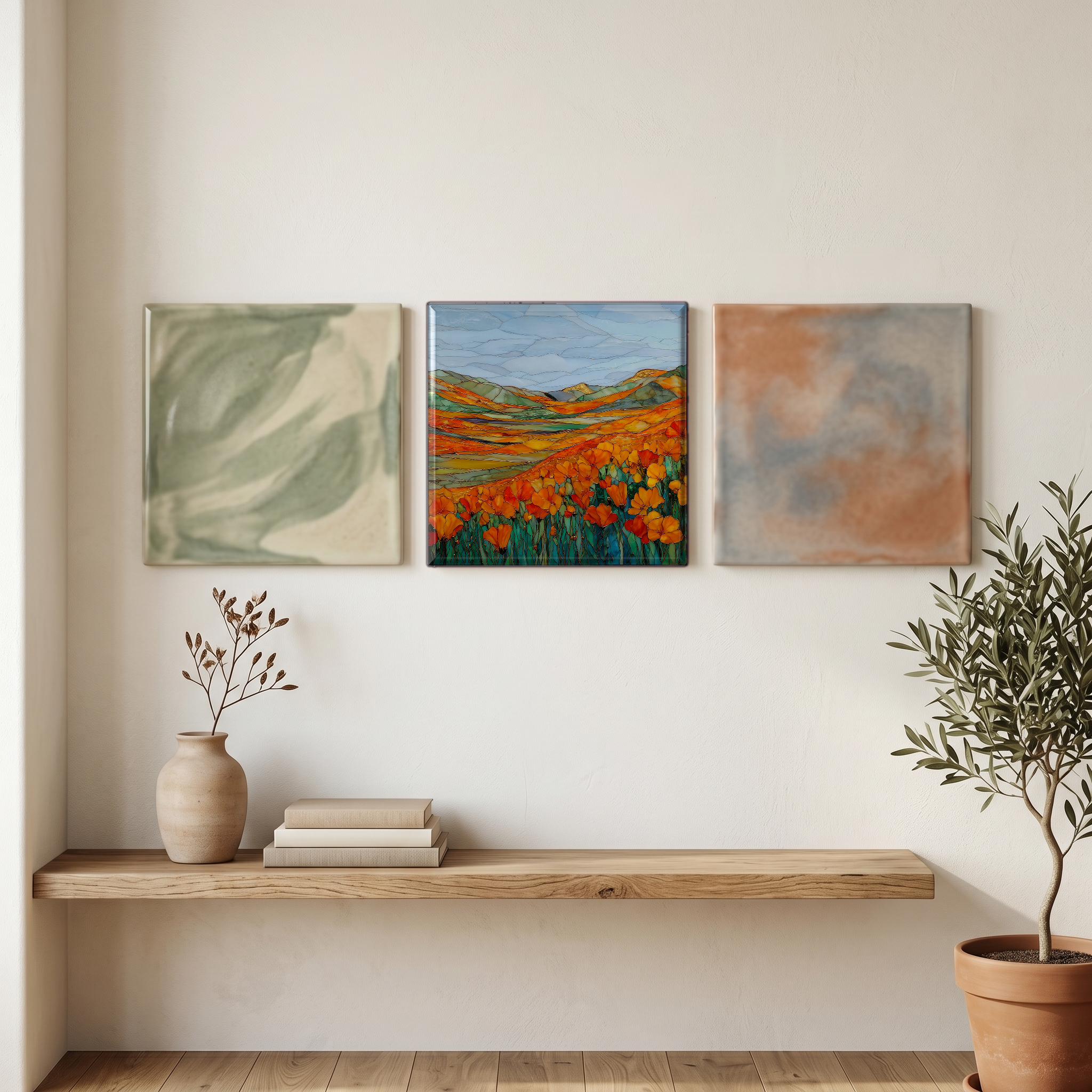
or build a grouping
or build a grouping

Three or five different vistas, hung together — a chapter of places you've been, or want to go.

about Antelope Valley Poppies

The place, in three passes.

A little of what's known, in case you fall down the rabbit hole — or want to go see it yourself.
the place

The Antelope Valley California Poppy Reserve sits at 15101 Lancaster Road, in the western Antelope Valley about 15 miles west of Lancaster and roughly 85 miles north of downtown Los Angeles. The protected grassland covers 1,781 acres at an elevation of 2,600 to 3,000 feet, on the high-desert side of the Tehachapi Mountains where the Mojave begins. The reserve was established in 1976 to protect the most consistent stand of Eschscholzia californica, California's state flower, and is administered by the California Department of Parks and Recreation. Roughly seven miles of trail cross the rolling hills, including a paved loop near the Jane S. Pinheiro Interpretive Center.

the colour

The California poppy is phototropic. Its four petals open as the air warms and close again on cold mornings, in wind, or under heavy cloud, so the orange on the hillside arrives and retreats with the sun across the course of a single day. The petals draw their colour from carotenoid pigments concentrated in the cell layers, the same family of pigments that make a carrot orange and a maple leaf burn at the edge in October. The reserve does not stand alone: owl's clover lays a pink wash across the lower draws, goldfields stitch the meadows yellow, and lupine, cream cups, and coreopsis fill in the seams between.

the season

Wildflowers in the reserve appear from mid-February through mid-May, but the peak orange is narrower than that. Most years the slopes reach their fullest colour in late March and early April, and the window is set the previous autumn and winter by how much rain falls on the Mojave foothills. In dry years the bloom is brief and patchy. In the superbloom years of recent memory the orange ran continuously over the hills and could be seen from the air. The Jane S. Pinheiro Interpretive Center opens March 1 each spring and closes the day after Mother's Day. The reserve itself is open sunrise to sunset, year-round, with a $10 per vehicle day-use fee.

— informed by California State Parks
where
United States · Los Angeles County, California
within
Antelope Valley California Poppy Reserve
position
34.7275° N · 118.3947° W
the neighborhood

What's nearby.

A handful of named places within an hour's walk or short drive. Some we've already painted; some we will.
24 km E
Lancaster
high-desert city
40 km ESE
Palmdale
high-desert city
50 km S
Vasquez Rocks
tilted sandstone formations
55 km E
Saddleback Butte State Park
Joshua-tree desert park
60 km SE
Devil's Punchbowl Natural Area
sandstone canyon
N
Antelope Valley Poppies
Lancaster
Palmdale
Vasquez Rocks
Saddleback Butte State Park
Devil's Punchbowl Natural Area
common questions

What people ask.

A few questions we get about Antelope Valley Poppies — and about bringing the piece home.
about the place

The reserve is at 15101 Lancaster Road in northern Los Angeles County, about 15 miles west of Lancaster and 85 miles north of downtown Los Angeles. It protects 1,781 acres of high-desert grassland on the western edge of the Antelope Valley, at the foot of the Tehachapi Mountains.

The wildflower season runs mid-February through mid-May, with peak orange usually in late March and early April. The exact timing shifts year to year and depends on how much rain falls on the Mojave foothills the previous winter. Drier years bring shorter, patchier blooms.

The California poppy is phototropic. Its petals open in response to warmth and direct sunlight and close again on cold mornings, in heavy wind, or under thick cloud. On a cool overcast day the hillsides can stay closed and green even at the height of bloom season.

The reserve protects a full Mojave grassland community. Alongside Eschscholzia californica, the slopes hold owl's clover, lupine, goldfields, cream cups, and coreopsis. Pink, purple, and yellow washes layer across the orange. Interpretive panels at the Jane S. Pinheiro Interpretive Center key out the smaller species.

The reserve charges $10 per vehicle for day use, with discounts for seniors and disabled visitors. Buses are billed separately. The Jane S. Pinheiro Interpretive Center is free to enter and opens March 1 each year, closing the day after Mother's Day.

The protected grassland sits between 2,600 and 3,000 feet above sea level, on the high-desert side of the Tehachapi Mountains where the western Mojave meets the Antelope Valley floor. The reserve was established in 1976 by the State of California to protect the most consistent stand of the state flower.

Yes. The state established the reserve in 1976 specifically to protect 1,781 acres of native Eschscholzia californica habitat and the grassland community around it. Picking poppies inside the reserve is prohibited. Stay on the trails to avoid trampling seedlings and the smaller wildflowers.

about the piece in your home

It's been a meaningful gift for many of our customers with ties to the high desert. The poppy is the California state flower, and the Antelope Valley bloom is the version most native Californians grew up driving up to see. A Small or Medium with a handwritten note from the studio carries well.

The colour reads as warm and saturated. The orange and ochre palette sits well with Southwest-modern, desert-modern, and Jewel-tone Maximalist interiors. It also pairs well against unfinished wood, clay-toned walls, and the soft whites of a stucco or adobe-leaning home.

The Antelope Valley palette runs warm orange, ochre, and creosote green. Those are the same hues currently anchoring Southwest-modern and high-desert-modern design. It works as a focal piece in a room built around clay walls, woven textiles, and cactus or yucca silhouettes.

Above a standard sofa or a long console, the Large is the most common single-tile choice. A 4-tile Mural works in a larger living room, and a 9-tile Mural carries a tall stairwell or an entryway wall. The Medium suits a reading chair or a shorter console.

Yes, with the right finish. The Dura Satin or Matte finish is scratch-resistant and rated for humid rooms, so the same artwork can live above a kitchen sink, behind a bathroom vanity, or inside a shower surround. The Glossy finish is best reserved for framed wall pieces.

A soft microfibre cloth and warm water. The colour is slowly infused into the ceramic surface under high heat and pressure, so it sits inside the tile rather than on top of it. No abrasive cleaners and no glass spray are needed.

Yes. Every piece in the WenderVista atlas is original work by Reid Wender, the studio's curator and eye. The Antelope Valley Poppies tile is not licensed from a stock image or a third-party photographer, and it is hand-finished at the studio in Knoxville, Tennessee.

if this one stayed with you

A few you might also love.

Hand-picked by the eye that found Sorapis. Same air, same kind of quiet.