Wender·Vista
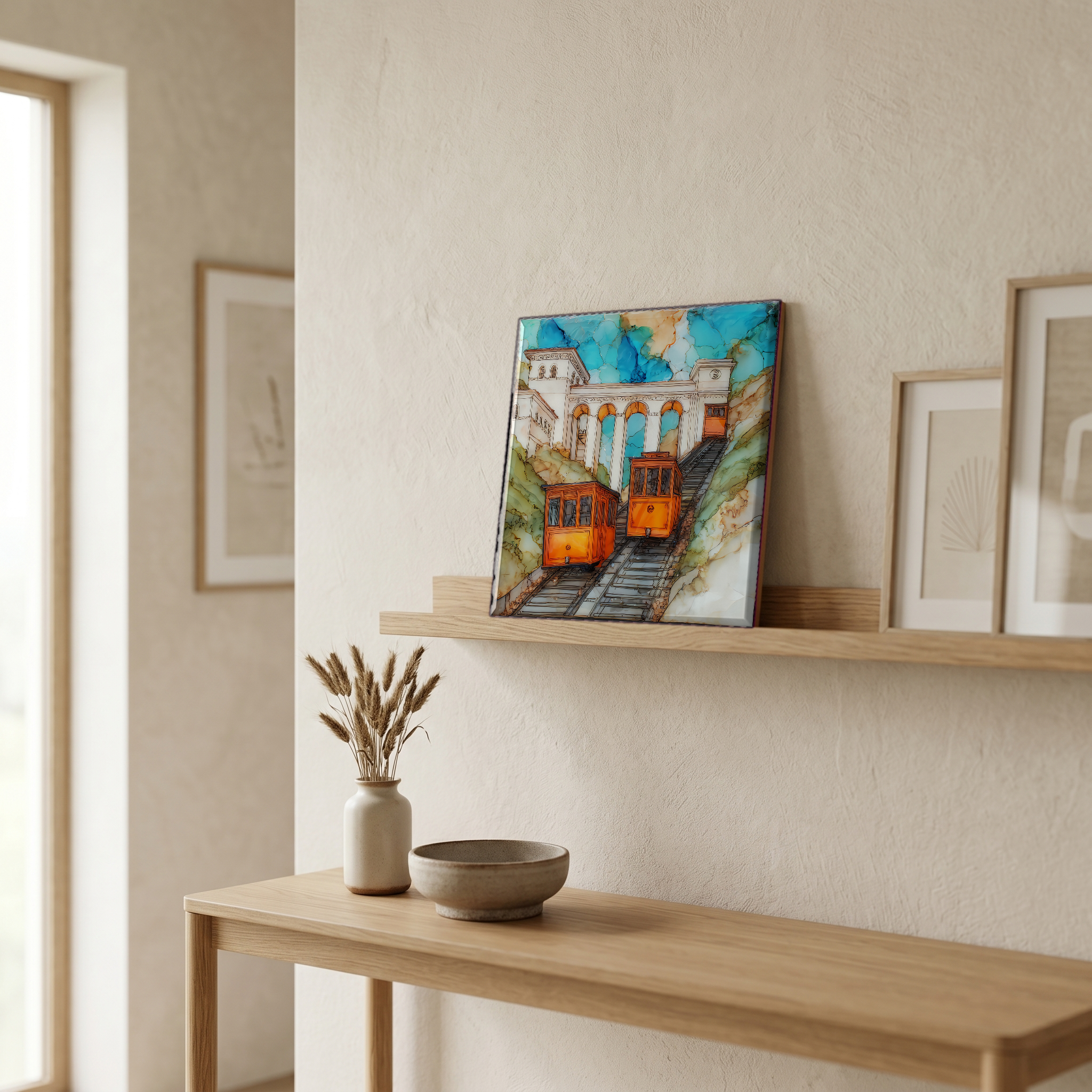
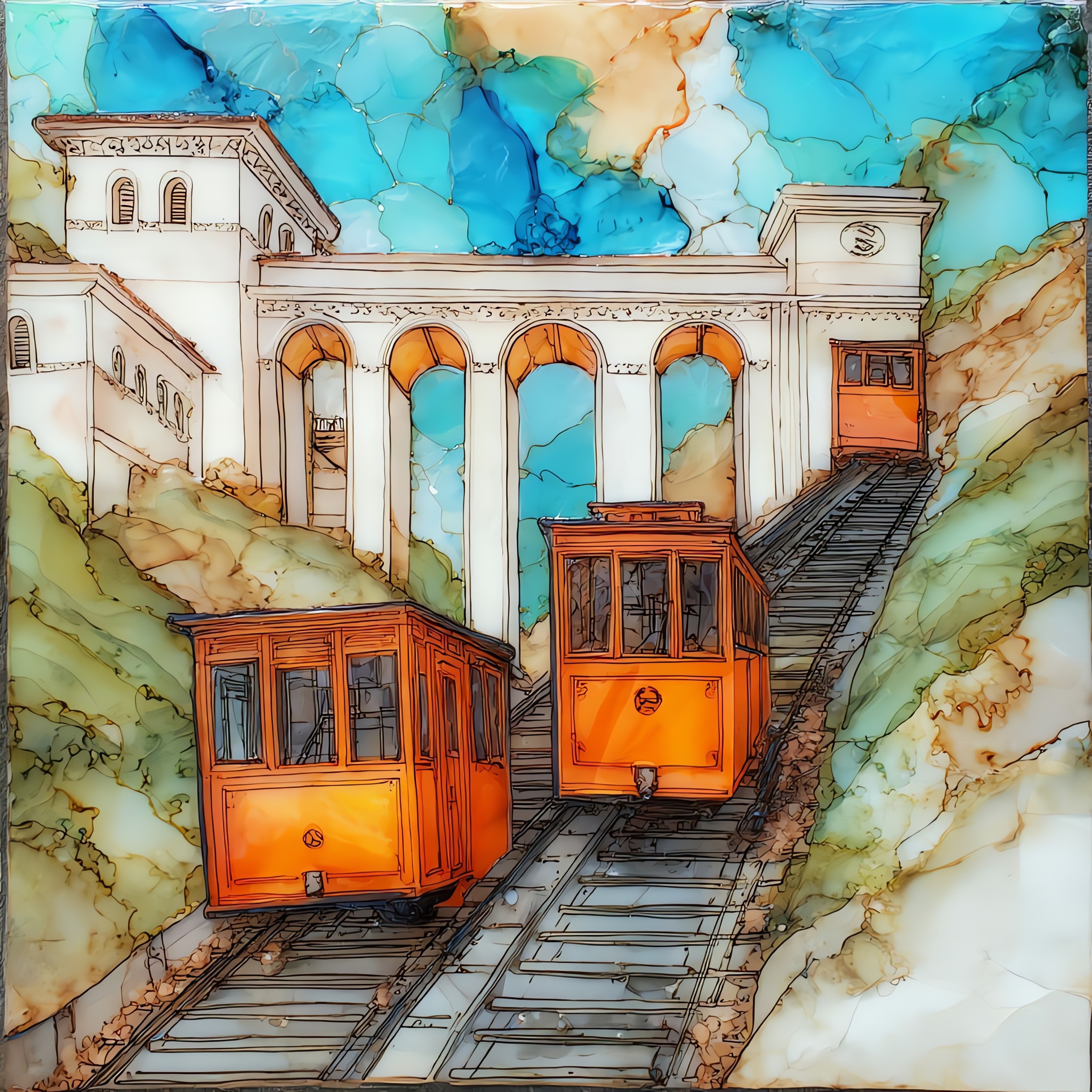
Angels Flight
shown on ceramic, 12-inch tileCalifornia · United States
above Grand Central Market, in downtown Los Angeles

Angels Flight

two orange cars passing halfway up the hill.

Where it lives

Not only on a wall.

A small tile on the nightstand catching the morning. A larger one above the fire. Yours, wherever you spend the slow hours.
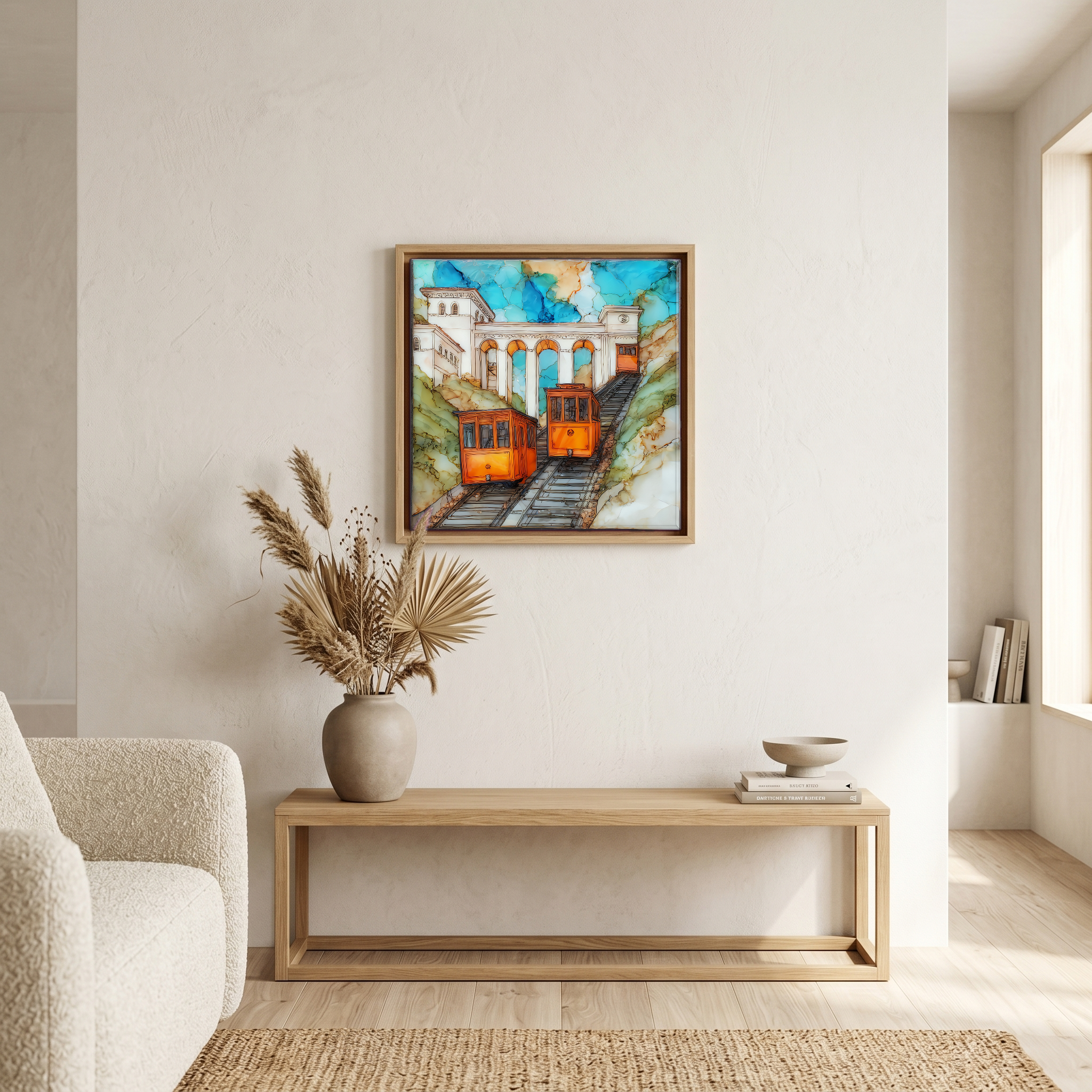
Above the bench, in a warm oak surround.
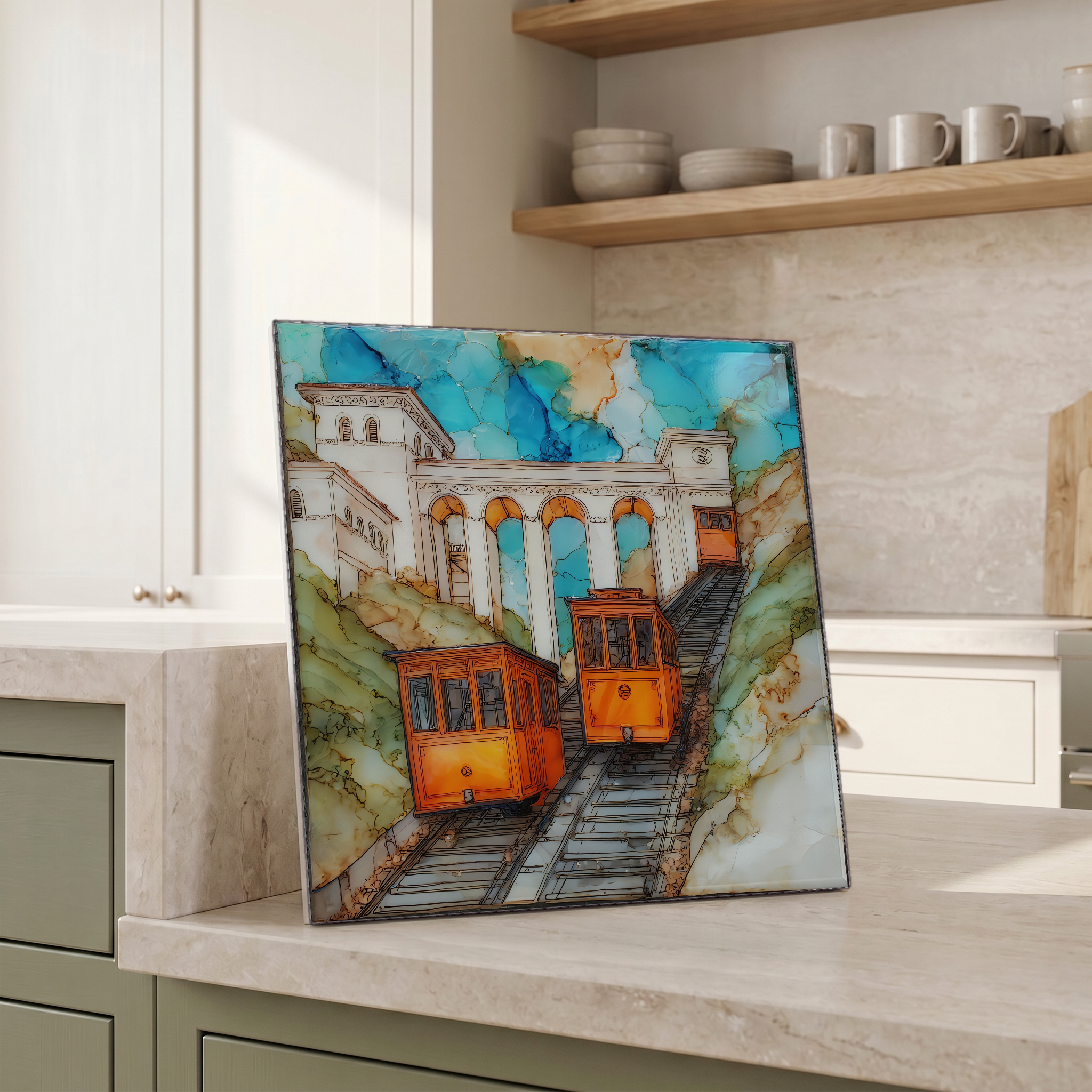
Beside the kettle, propped on the counter.
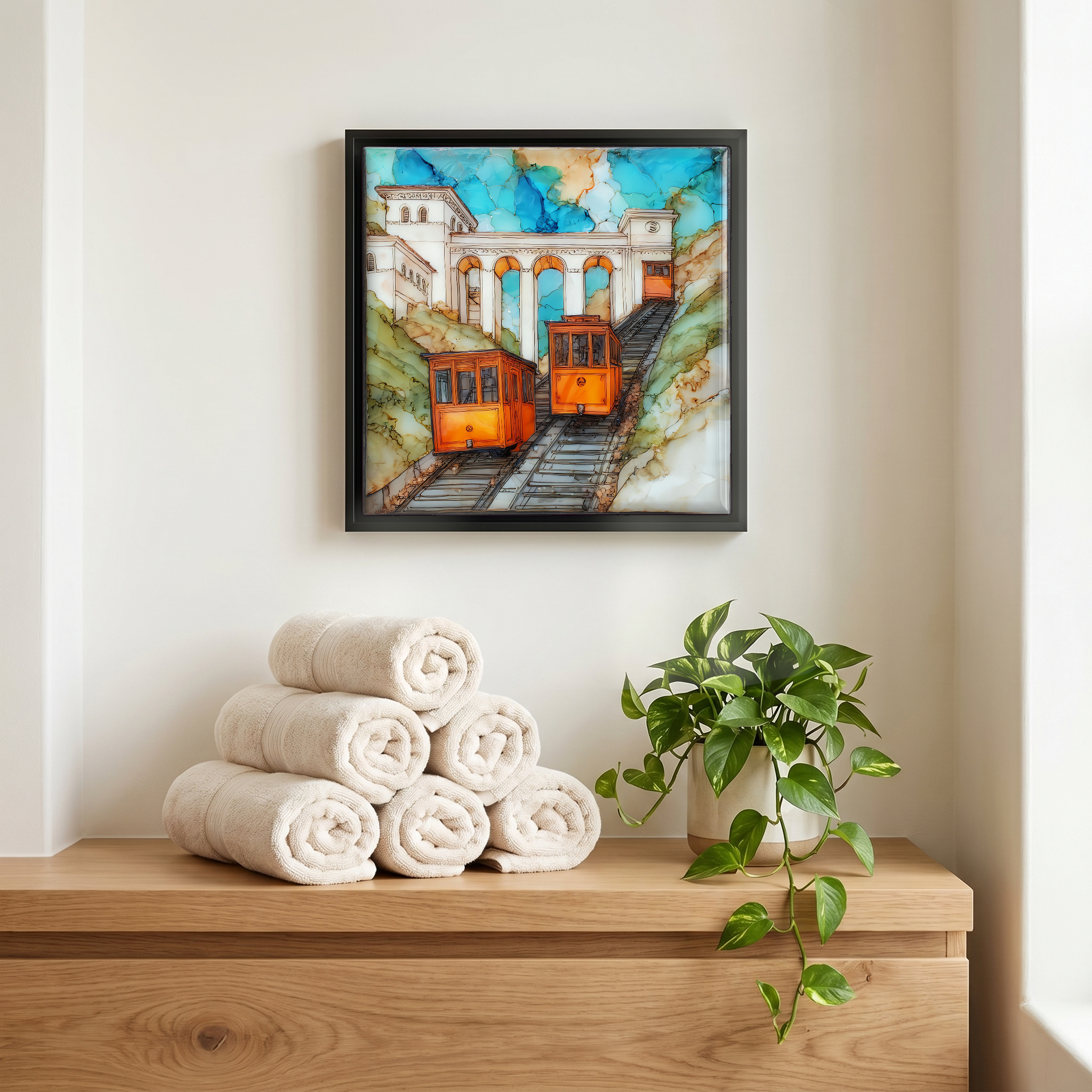
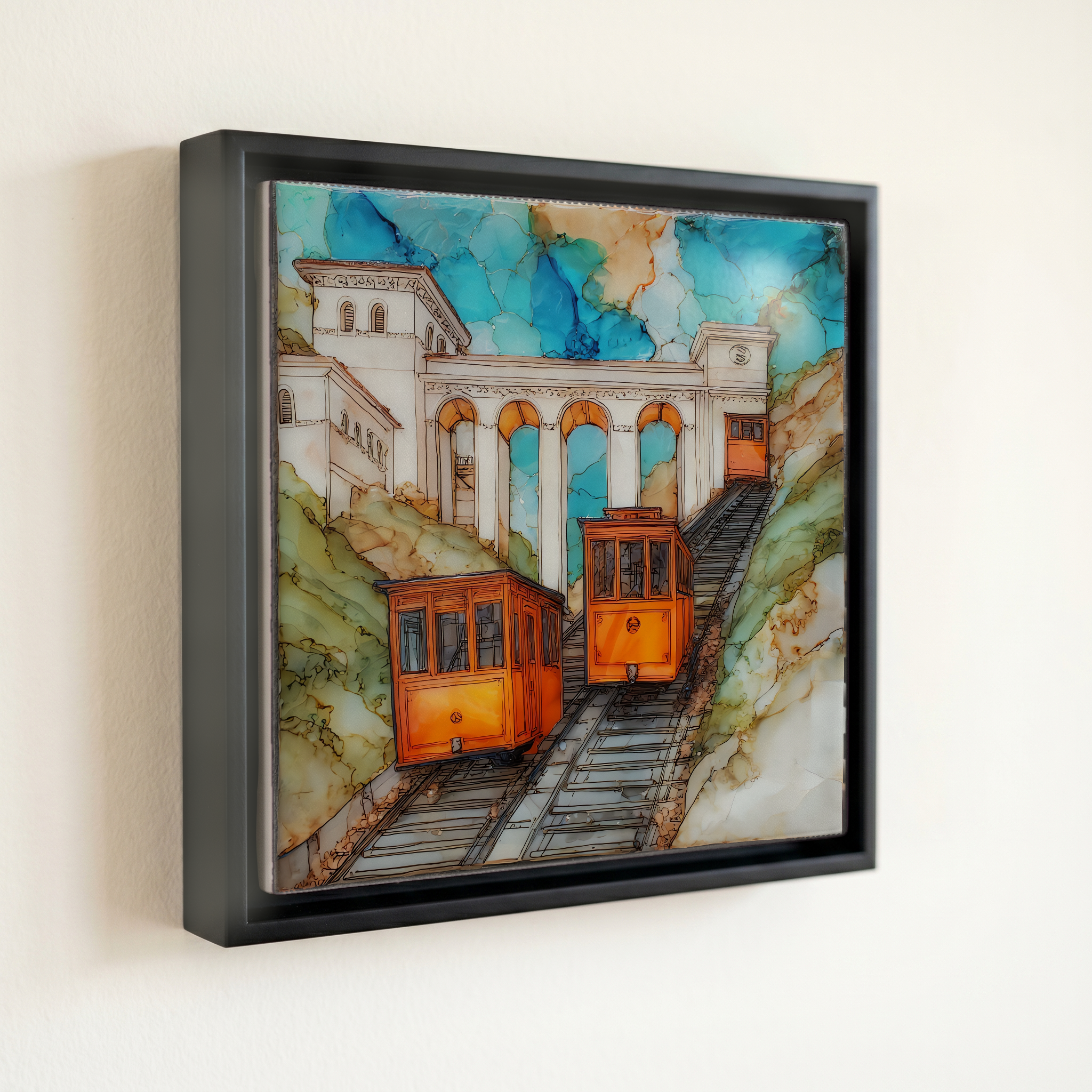
Above the linens, in a slim black surround.
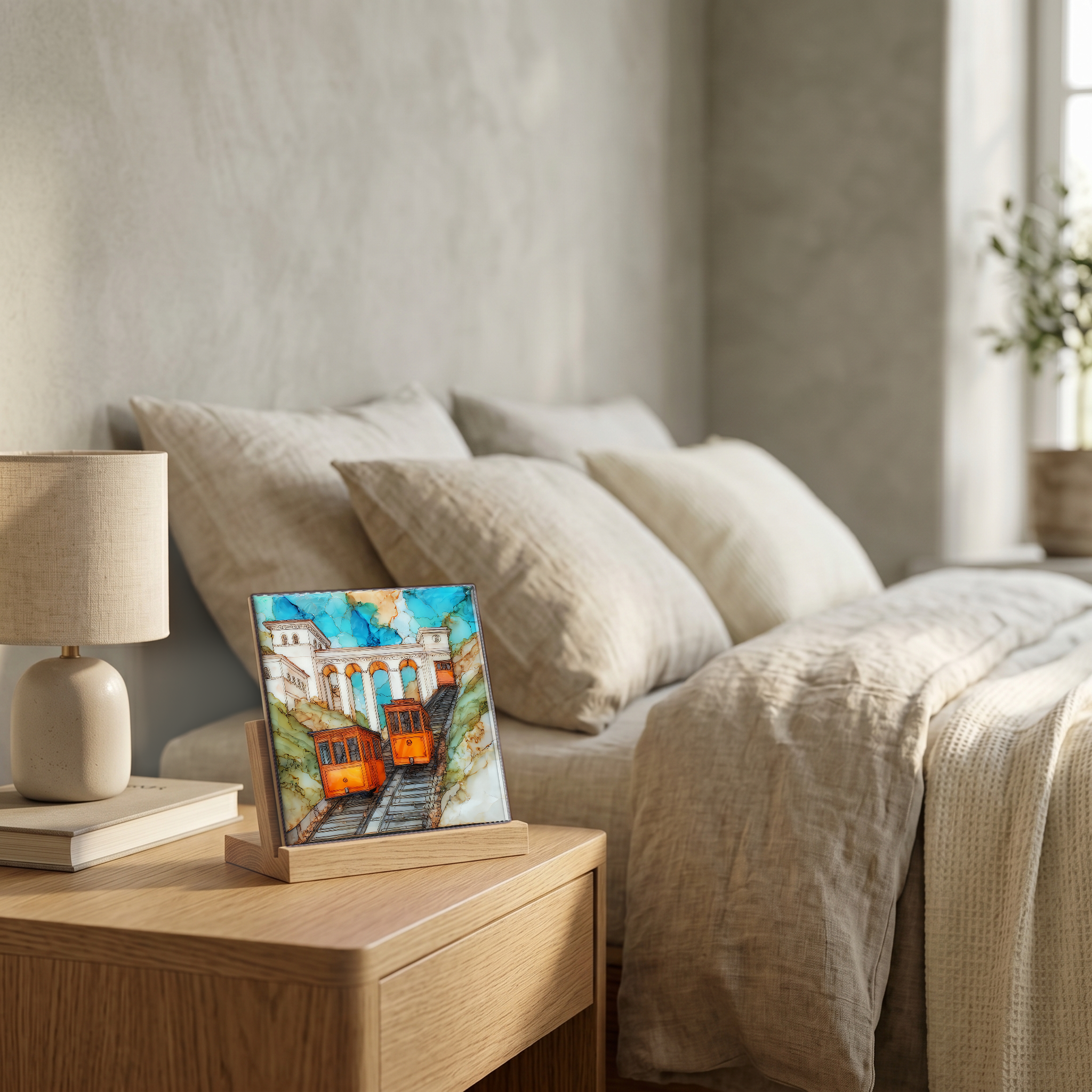
On the nightstand, on a light oak stand.
On a picture ledge, where the light comes in.
a note from the studio

Two small orange cars on the side of Bunker Hill, passing each other halfway. They run on a single cable, counterweighted, so one comes down when the other goes up. Built in 1901 to spare downtown clerks the climb from Hill Street, taken apart in 1969 during the Bunker Hill redevelopment, and brought back in 1996 a block south of where they used to be. The ride is about ninety seconds. People come out of Grand Central Market with sandwiches in paper and take the cars because they're still there.
from the studio
shown in a slim black floating frame · 6 × 6 in
— bring it home

Angels Flight, on ceramic.

Each tile is finished by hand in our Knoxville studio. Artwork is slowly infused into the ceramic surface under high heat and pressure, and rests beneath a thin glossy finish. The colour lives in the surface, not on top of it.

What kind of piece?
One tile — square or rectangle.
How big?
the popular one — counter, shelf, nightstand
6 × 6 in · 15 cm · 1.6 lb
Surface finish
A clear glossy finish — the artwork reads as if under resin. Ideal for show-pieces and framed wall art.
How it sits
A hidden cleat — sits ¼″ proud of the wall.
$58
Hand-finished and shipped from our studio at the foot of the Smokies. On your wall in about ten days.
size
6 × 6 in
15 cm
weighs
1.6 lb
solid in the hand
surface
ceramic, hand-finished
art rests beneath a thin glossy finish
from
Knoxville, TN
our family studio, at the foot of the Smokies
— start a Coaster Set

Pick any four 4-inch tiles — National Parks you've been to, a Smokies set, the four seasons of one place. $ for a set of , cork-backed, ready to live on the table.
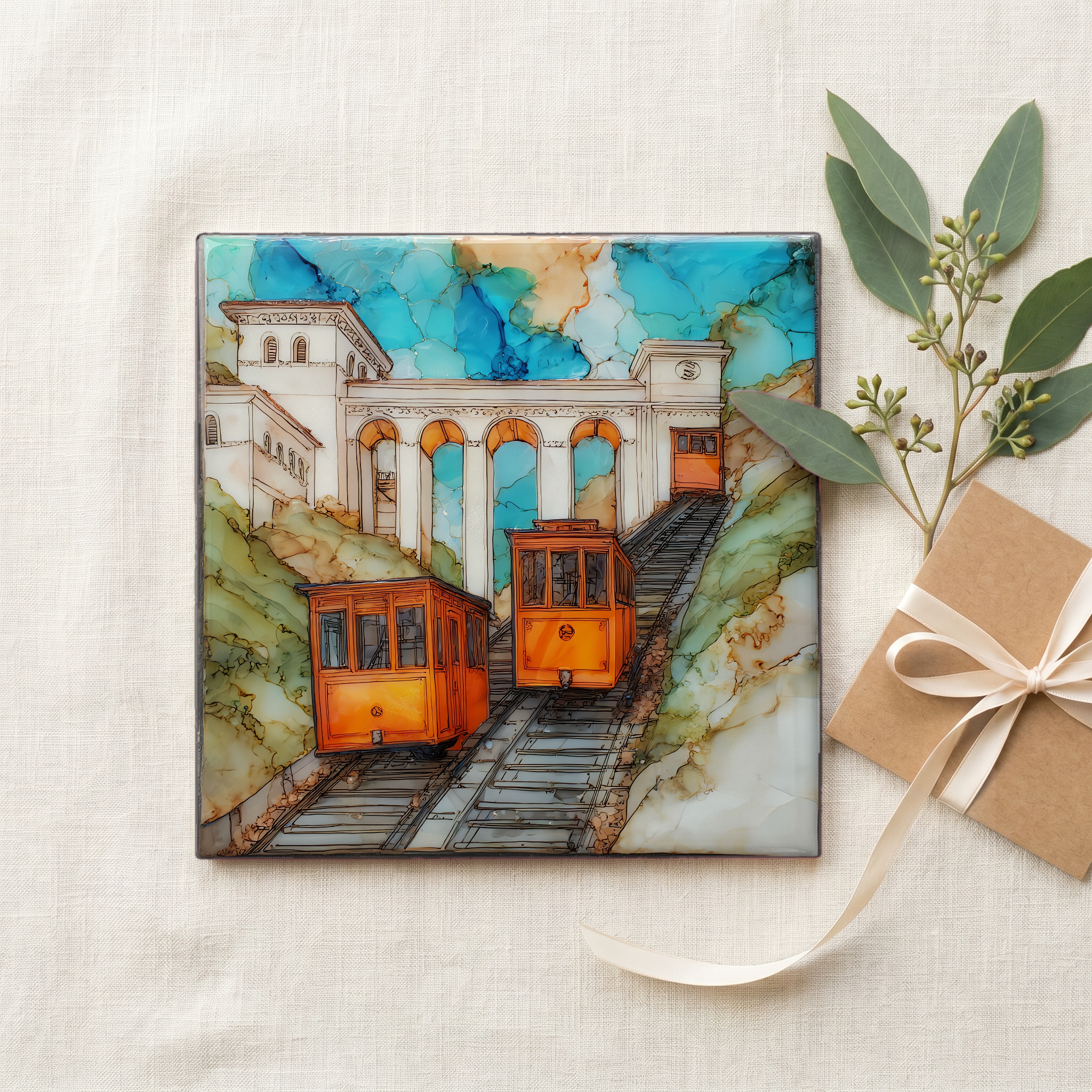
comes gift-ready
comes gift-ready

Each tile ships in a kraft box, tied with cream ribbon, with a handwritten note from the studio if you'd like to add one.
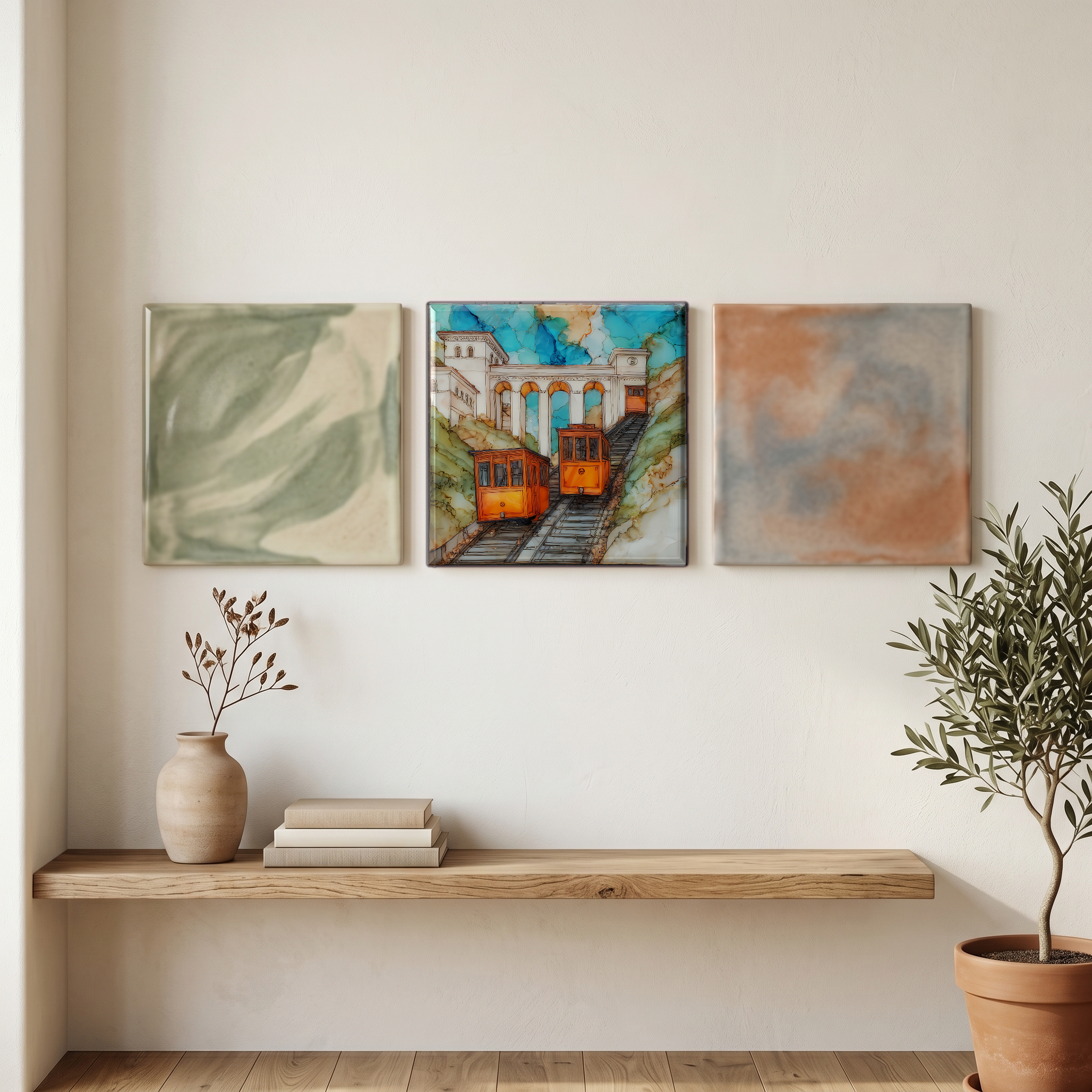
or build a grouping
or build a grouping

Three or five different vistas, hung together — a chapter of places you've been, or want to go.

about Angels Flight

The place, in three passes.

A little of what's known, in case you fall down the rabbit hole — or want to go see it yourself.
the place

Angels Flight is a narrow-gauge funicular railway on the eastern face of Bunker Hill in downtown Los Angeles. The lower station opens onto Hill Street, directly across from the 1917 Grand Central Market; the upper station opens onto California Plaza, above Olive Street. The track runs 298 feet at roughly a 33 percent grade. The railway has long been called the shortest in the world. Colonel J.W. Eddy, an engineer and lawyer, opened the line on December 31, 1901, to carry Bunker Hill residents down to the commercial streets below. The railway is listed on the National Register of Historic Places and operated by the Angels Flight Railway Foundation.

the year

The current cars are not new. Colonel Eddy's funicular ran from 1901 until May of 1969, when the Los Angeles Community Redevelopment Agency dismantled it as part of the Bunker Hill clearance, a redevelopment project that flattened the Victorian neighborhood at the top of the hill and replaced it with the towers along Grand Avenue. The cars and the lettered entrance arch were placed in storage. After a public campaign led by the Los Angeles Conservancy, the same agency reinstalled the funicular in 1996, half a block south of the original site. The cars themselves are Sinai and Olivet, named for biblical mountains, and they returned to service in their 1901 orange livery.

the visit

The lower station sits at 351 South Hill Street, directly opposite Grand Central Market between Third and Fourth. The upper station opens onto California Plaza off Olive Street, near the Museum of Contemporary Art. The current cash fare is one dollar each way, with a small discount for riders using a TAP transit card. Operating hours generally run from 6:45 in the morning until ten at night, seven days a week, with closures for rain and for occasional maintenance. The ride takes about ninety seconds in each direction. The nearest Metro stop is Pershing Square, three blocks east on Hill Street.

where
United States · Los Angeles, California
position
34.0521° N · 118.2502° W
the neighborhood

What's nearby.

A handful of named places within an hour's walk or short drive. Some we've already painted; some we will.
0.05 km E
Grand Central Market
historic public market
0.15 km E
Bradbury Building
historic office building
0.45 km N
Walt Disney Concert Hall
concert hall
0.4 km N
The Broad
contemporary art museum
0.3 km SE
Pershing Square
public square
1.5 km NE
Union Station
historic railway station
N
Angels Flight
Grand Central Market
Bradbury Building
Walt Disney Concert Hall
The Broad
Pershing Square
Union Station
common questions

What people ask.

A few questions we get about Angels Flight — and about bringing the piece home.
about the place

Angels Flight runs between Hill Street and California Plaza on the eastern slope of Bunker Hill in downtown Los Angeles. The lower station, at 351 South Hill Street, sits directly across from Grand Central Market between Third and Fourth Street.

The track runs about 298 feet, or 91 metres, at roughly a 33 percent grade. Angels Flight is often called the shortest railway in the world, though several short funiculars elsewhere make the claim too. The full ride takes about ninety seconds.

Colonel J.W. Eddy, an engineer and lawyer, opened Angels Flight on December 31, 1901. It carried Bunker Hill residents to the commercial streets below for nearly sixty-eight years before being dismantled in 1969.

The Los Angeles Community Redevelopment Agency took the funicular down in 1969 during the Bunker Hill clearance project, then reinstalled it in 1996 a half-block south after years of public campaigning led by the Los Angeles Conservancy. The original cars, Sinai and Olivet, were preserved and returned to service.

Sinai and Olivet, named for biblical mountains. Both cars date to 1901, carry the same wood-and-orange livery, and are counterweighted on a single cable so that one descends as the other rises. They pass each other near the middle of the climb.

The cash fare is one dollar one-way; riders using a TAP transit card pay less. Cars typically run from 6:45 in the morning to ten at night, seven days a week, with shutdowns for rain and for occasional maintenance.

Angels Flight has been a noir landmark since the 1940s, appearing in films from Criss Cross (1949) and Kiss Me Deadly (1955) through to La La Land (2016), where it is the location of the night-time waltz between Emma Stone and Ryan Gosling.

about the piece in your home

Angels Flight is one of the small things people from Los Angeles miss when they leave the city. A Coaster or Small showing the orange cars on the hill has been a meaningful gift for someone who grew up taking the funicular, or who works in the downtown towers and walks past the lower station on the way to lunch.

The tile reads strongest against muted, textured walls. It sits well in Vintage Hollywood, Mid-Century Modern, and Industrial Loft rooms, especially where another piece of orange or warm red is already in play. It can carry a small kitchen wall or a console table beside a leather chair.

California-modern interiors lean into local landmarks rather than generic coastal motifs, and Angels Flight is among the most recognized objects of downtown Los Angeles. A Medium hung against a pale plaster wall, or a Coaster Set on a low table beside vintage barware, carries the room without dominating it.

Above a standard sofa, a single Large reads cleanly without crowding the wall; a four-tile Mural anchors a longer sectional or a tall console. For a smaller console, beside a chair or under a mirror, a Medium with floating mounting hardware holds the eye.

Yes. For kitchens and bathrooms, choose the Dura Satin or Matte finish: both are scratch-resistant and tolerate humidity and direct splashes. The Glossy finish is reserved for show-pieces and dry-wall installations. The colour lives inside the ceramic surface, not in a topcoat, so it will not lift.

Wipe with a soft microfibre cloth and water. The colour is slowly infused into the ceramic surface under high heat and pressure, so it will not lift with mild cleaners. Avoid abrasive sponges and acidic cleaners, both of which can dull the surface over time.

Yes. The painting is by Reid Wender, the curator of the WenderVista atlas, and the tile is finished in-house in Knoxville, Tennessee. Wender Studios does not license its imagery to other manufacturers. Every piece is made by the same small studio that drew it.

if this one stayed with you

A few you might also love.

Hand-picked by the eye that found Sorapis. Same air, same kind of quiet.