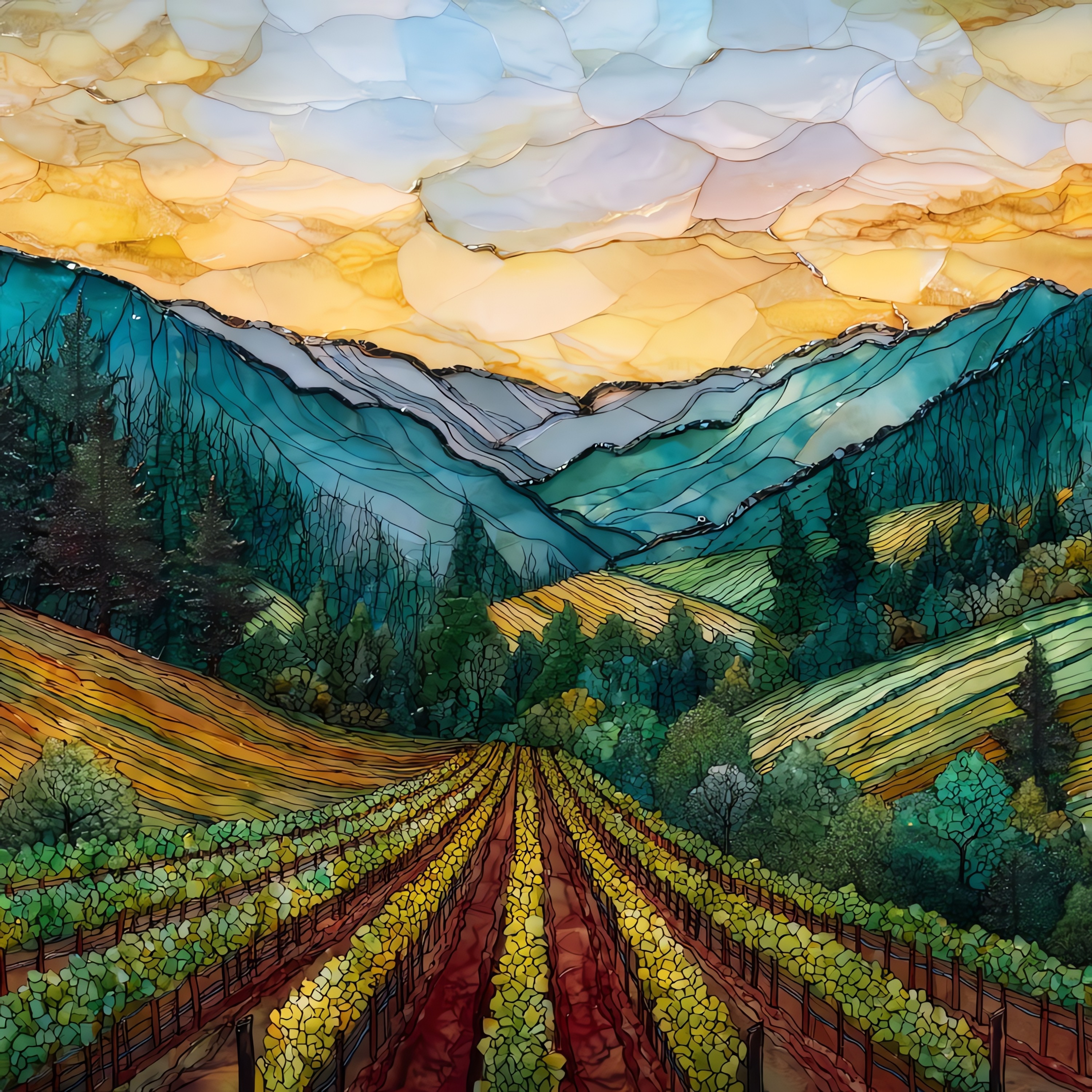
Anderson Valley
— — the fog the Pacific sends up the river.
Not only on a wall.
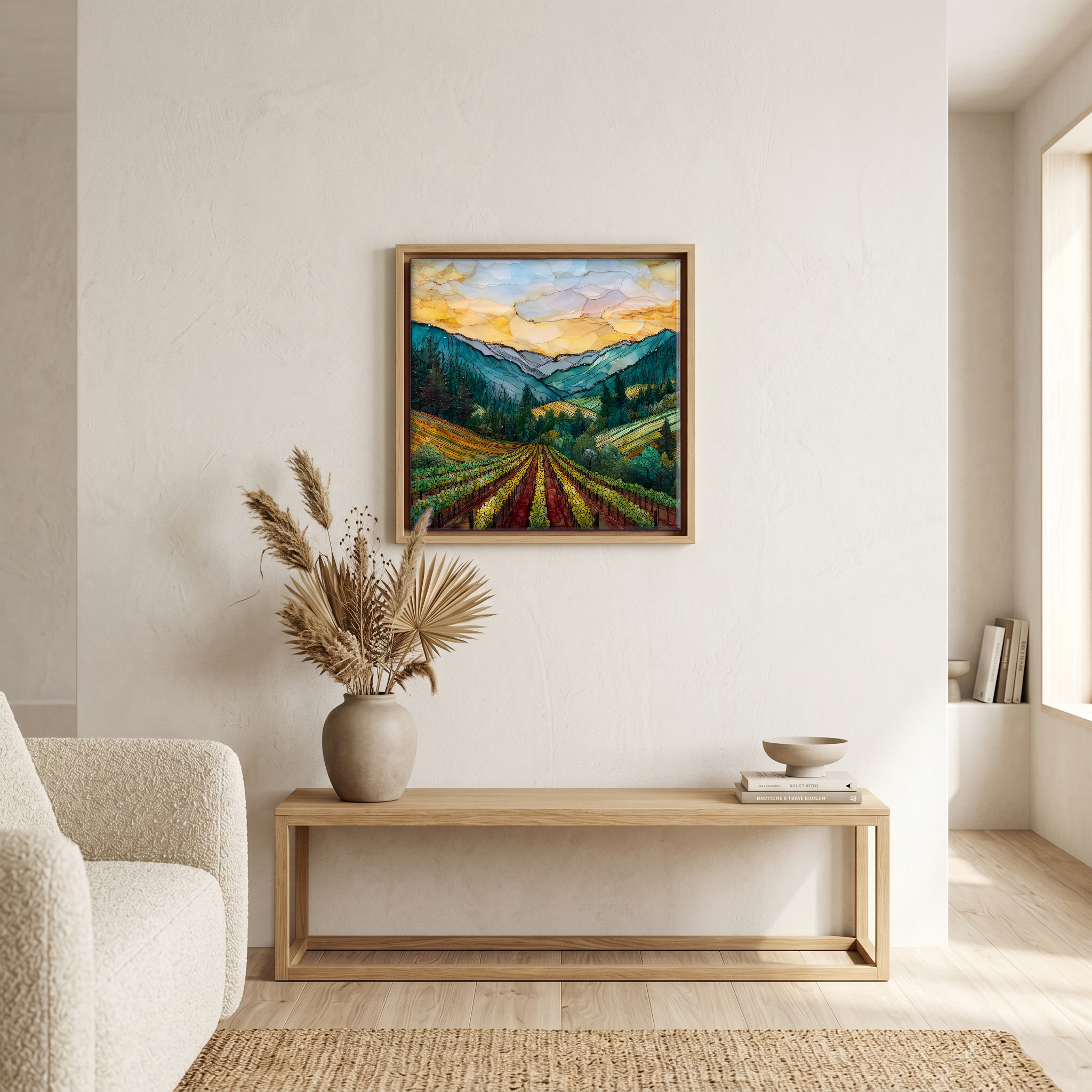
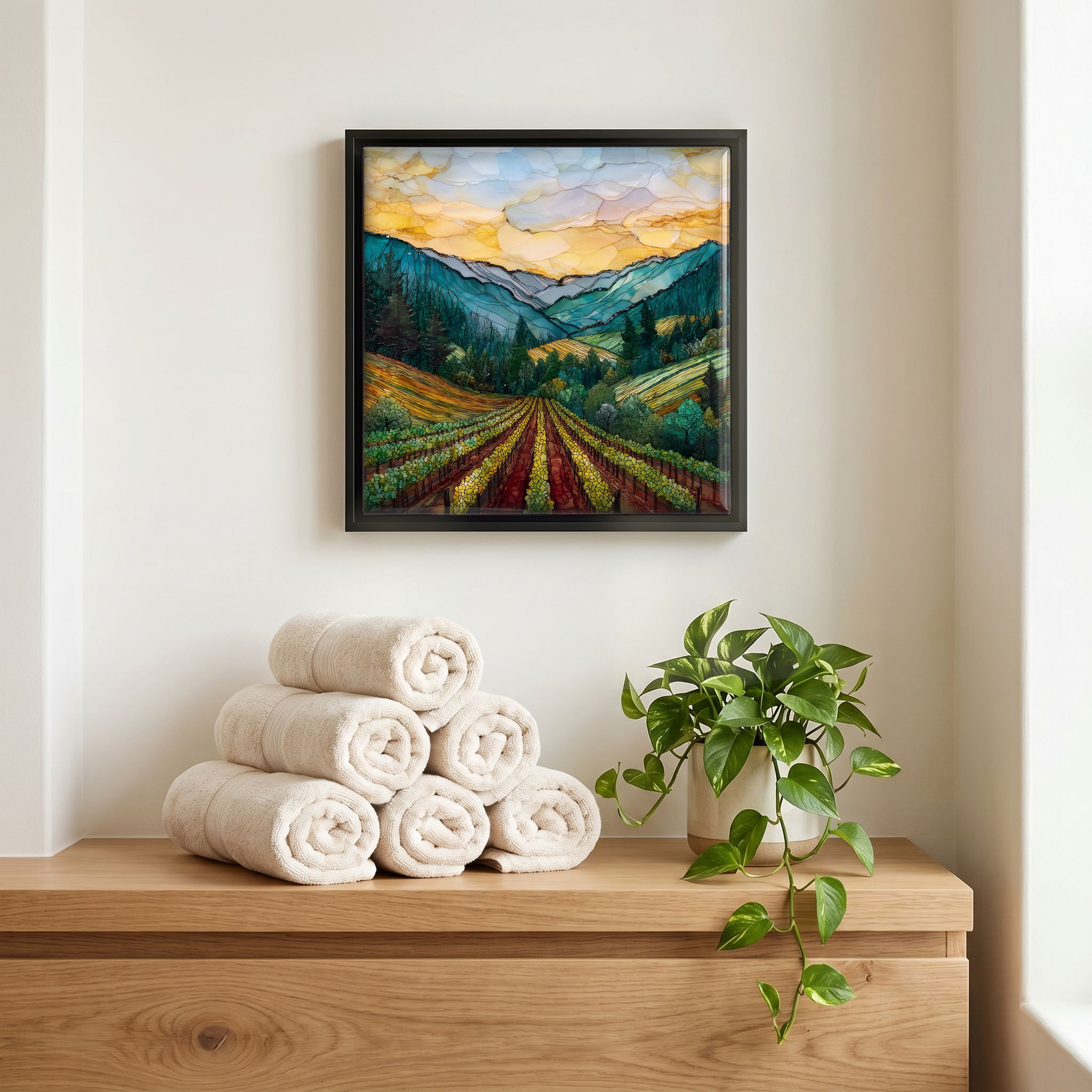
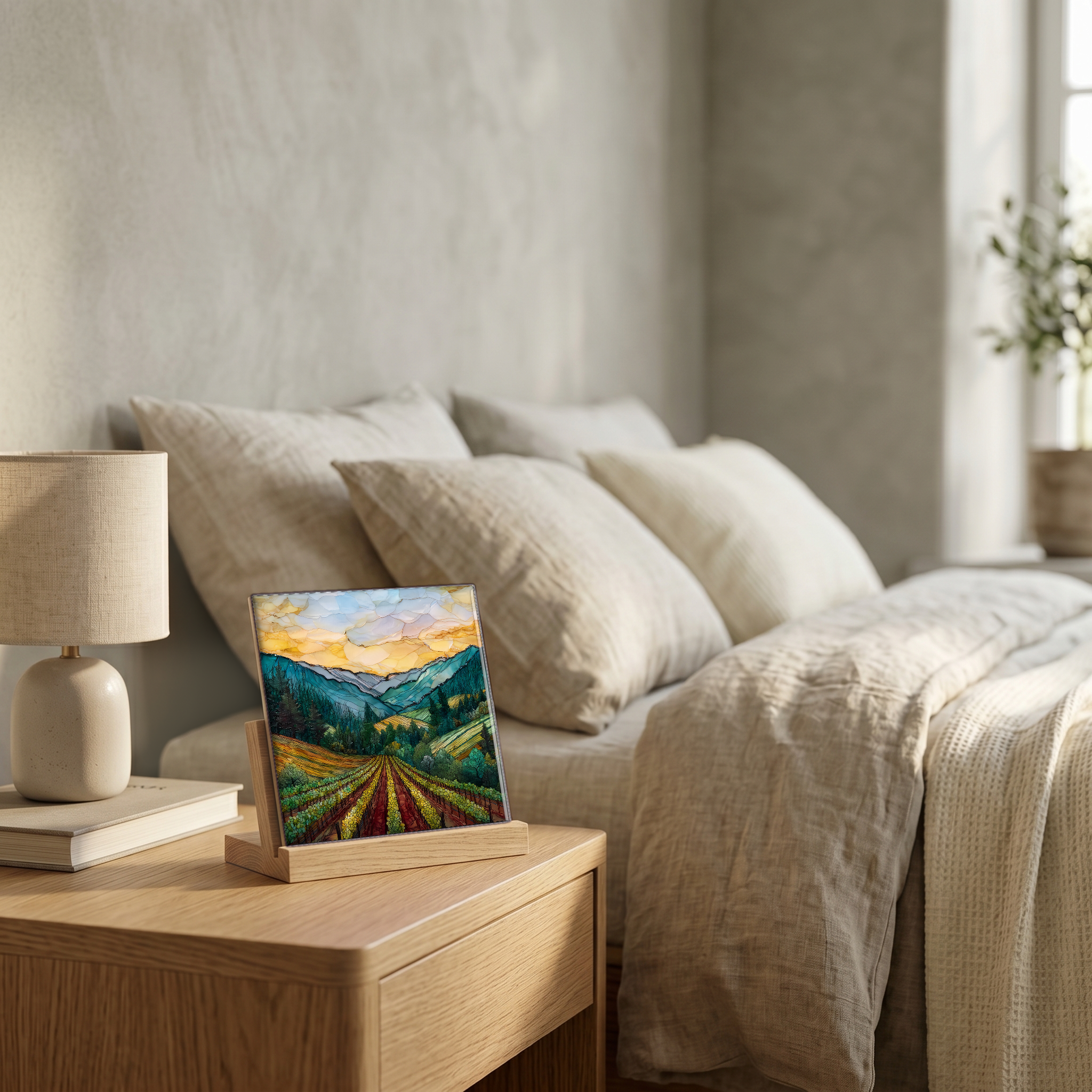
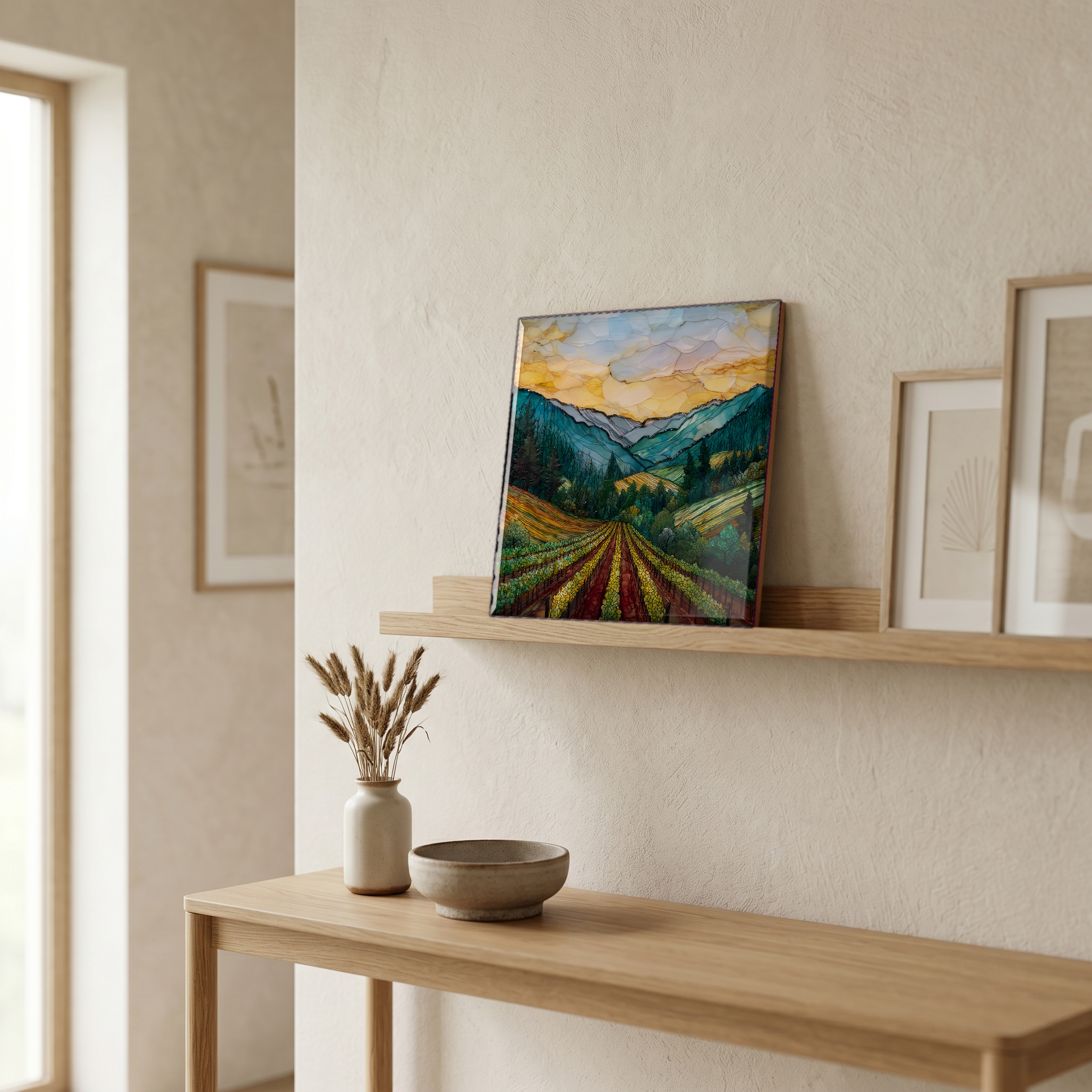
“A long valley in Mendocino County, running roughly twenty-five miles along the Navarro River from Yorkville down through Boonville and Philo toward the coast. The fog comes up the river canyon most summer afternoons, cools the vineyards by twenty degrees, and burns off again by mid-morning the next day. Pinot Noir grows here the way it grows in Oregon's Willamette: slowly, in the cool. Hendy Woods State Park, just outside Philo, still holds two groves of old-growth coast redwood. In Boonville, an older crowd still uses scraps of Boontling, the folk language that began here in the 1880s.
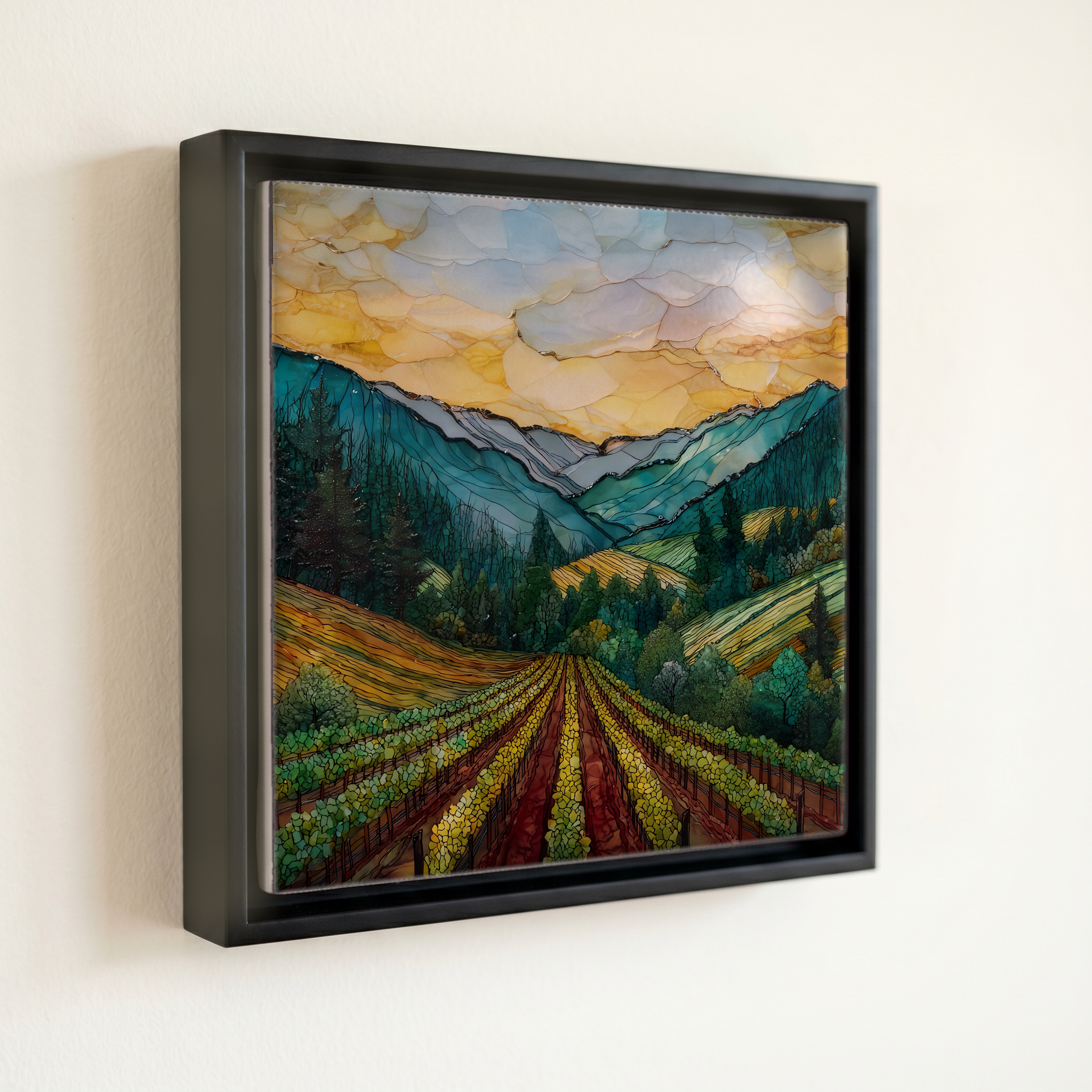
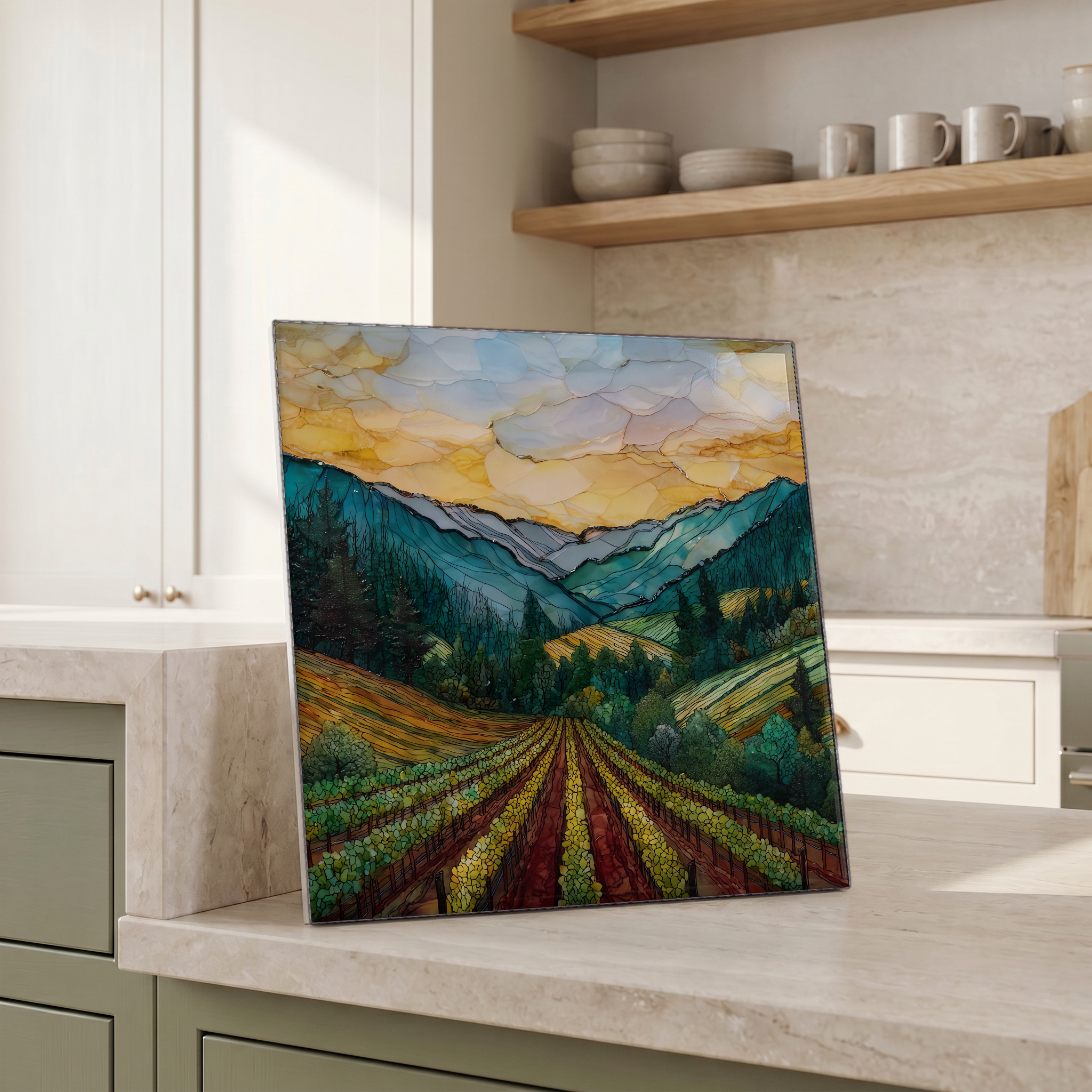
Anderson Valley, on ceramic.
Each tile is finished by hand in our Knoxville studio. Artwork is slowly infused into the ceramic surface under high heat and pressure, and rests beneath a thin glossy finish. The colour lives in the surface, not on top of it.
Pick any four 4-inch tiles — National Parks you've been to, a Smokies set, the four seasons of one place. $ for a set of , cork-backed, ready to live on the table.
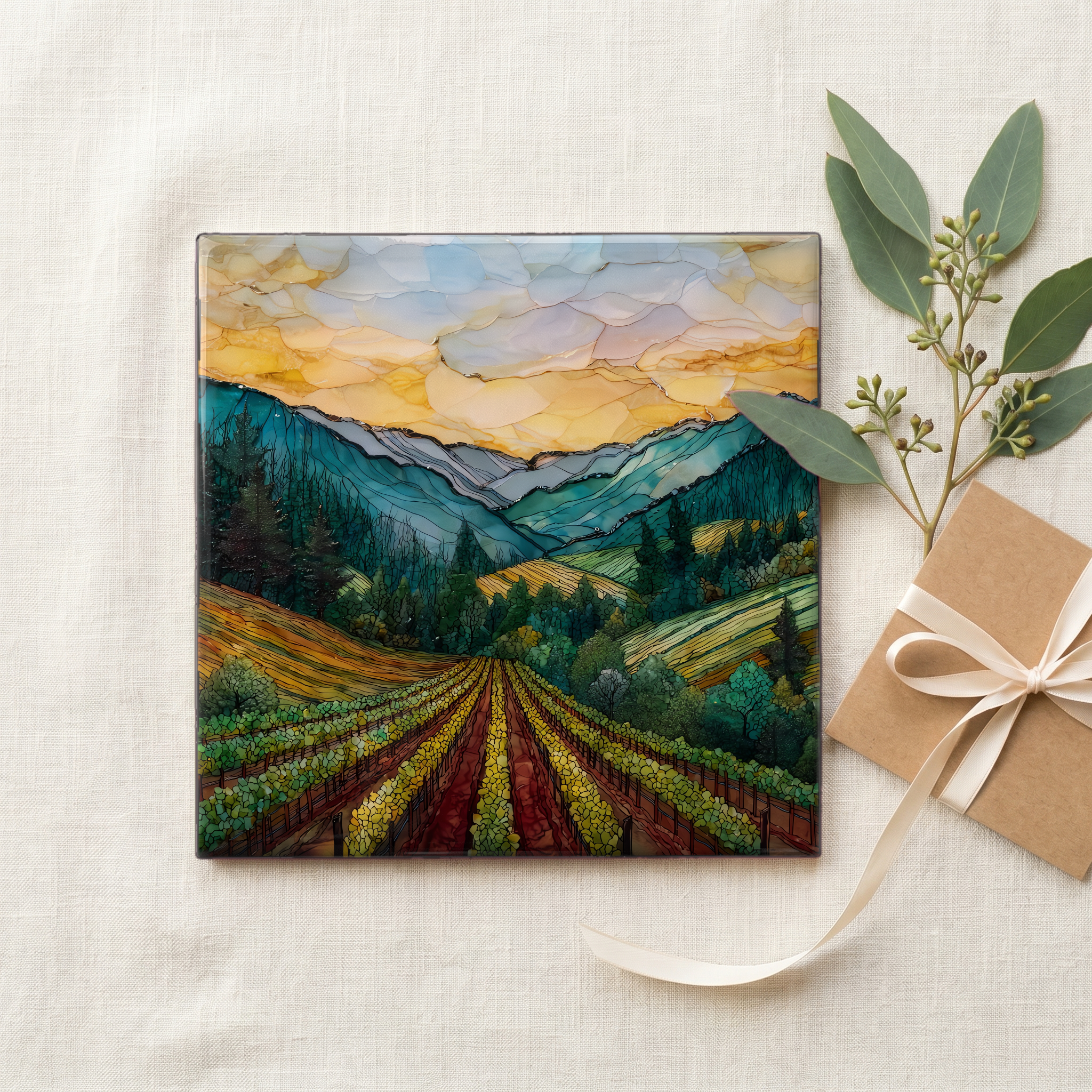
Each tile ships in a kraft box, tied with cream ribbon, with a handwritten note from the studio if you'd like to add one.
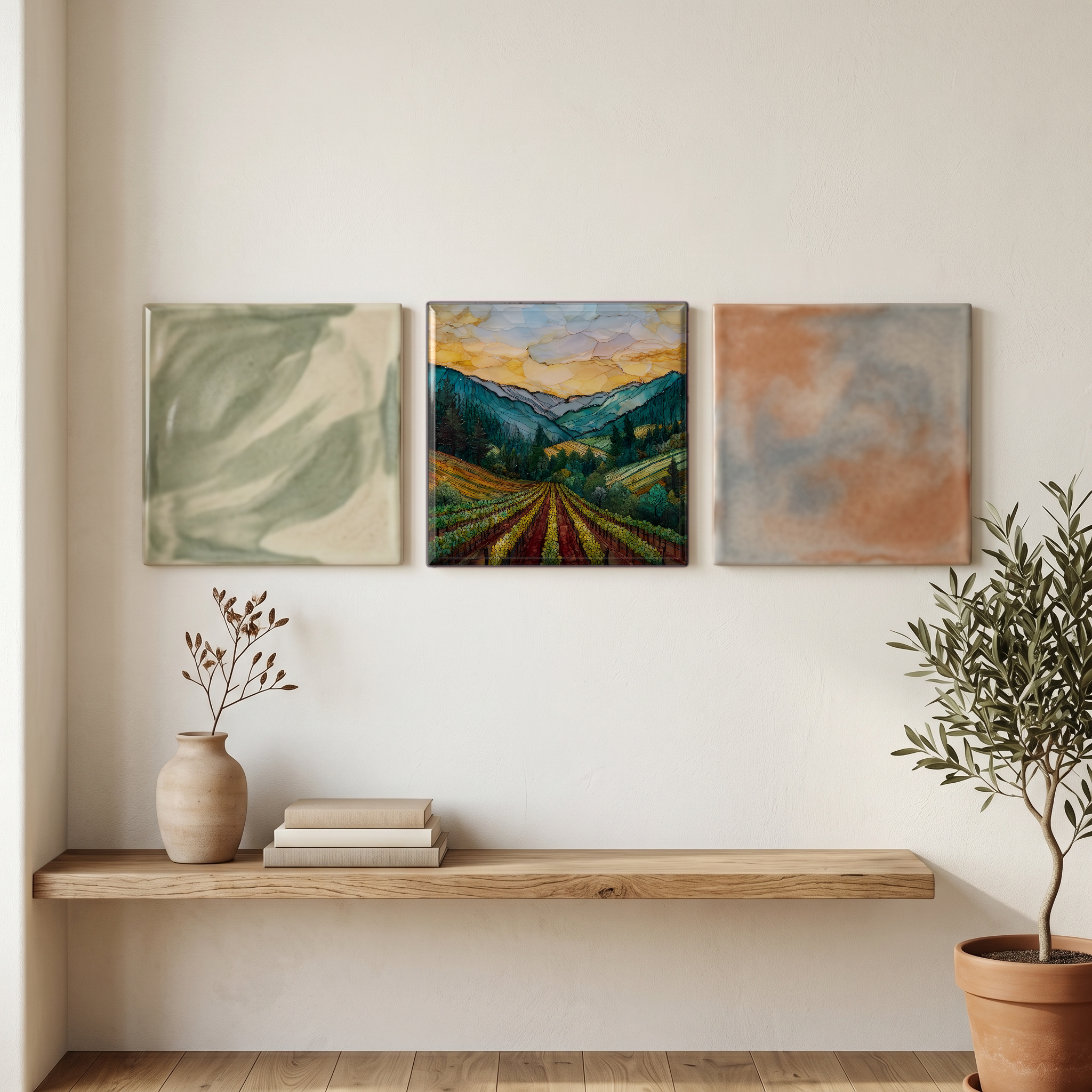
Three or five different vistas, hung together — a chapter of places you've been, or want to go.
The place, in three passes.
Anderson Valley sits in Mendocino County, in California's North Coast region, about 115 miles north of San Francisco. State Route 128 runs the length of it, following the Navarro River roughly twenty-five miles from Cloverdale through Yorkville, Boonville, Philo, and Navarro before reaching the Pacific at the mouth of the Navarro River. Boonville, the largest community, has a population of just under 1,100. The valley floor lies between 300 and 800 feet above sea level, with hillside vineyards rising to about 1,800 feet. The Anderson Valley American Viticultural Area was approved in 1983 and covers roughly 57,600 acres.
The valley's character is defined by maritime air. The Navarro River canyon acts as a corridor for marine fog and cool Pacific wind, which draw upriver from the coast each summer afternoon and pull back out by mid-morning. The diurnal temperature swing, sometimes forty-five degrees Fahrenheit between night and day, is among the largest of any wine region in California. This is why cool-climate grapes like Pinot Noir, Chardonnay, and the Alsace varietals (Gewürztraminer, Riesling, Pinot Gris) thrive here, despite the latitude. Pinot Noir accounts for more than half of the AVA's vineyard acreage.
Bud break in Anderson Valley generally begins in late March, and harvest stretches from early September through mid-October, with sparkling-wine grapes coming in first and the late Pinot Noir blocks last. Crush turns Boonville and Philo into working towns again, with extra trucks on Highway 128 and lights on at the wineries past midnight. Visitors come earliest for spring wildflowers along the river, heaviest during harvest, and quietest in February and early March, when the rains are still working. Hendy Woods State Park, west of Philo, stays open year-round and holds two groves of old-growth coast redwood: Big Hendy and Little Hendy, both reached by short loop trails from the day-use area.