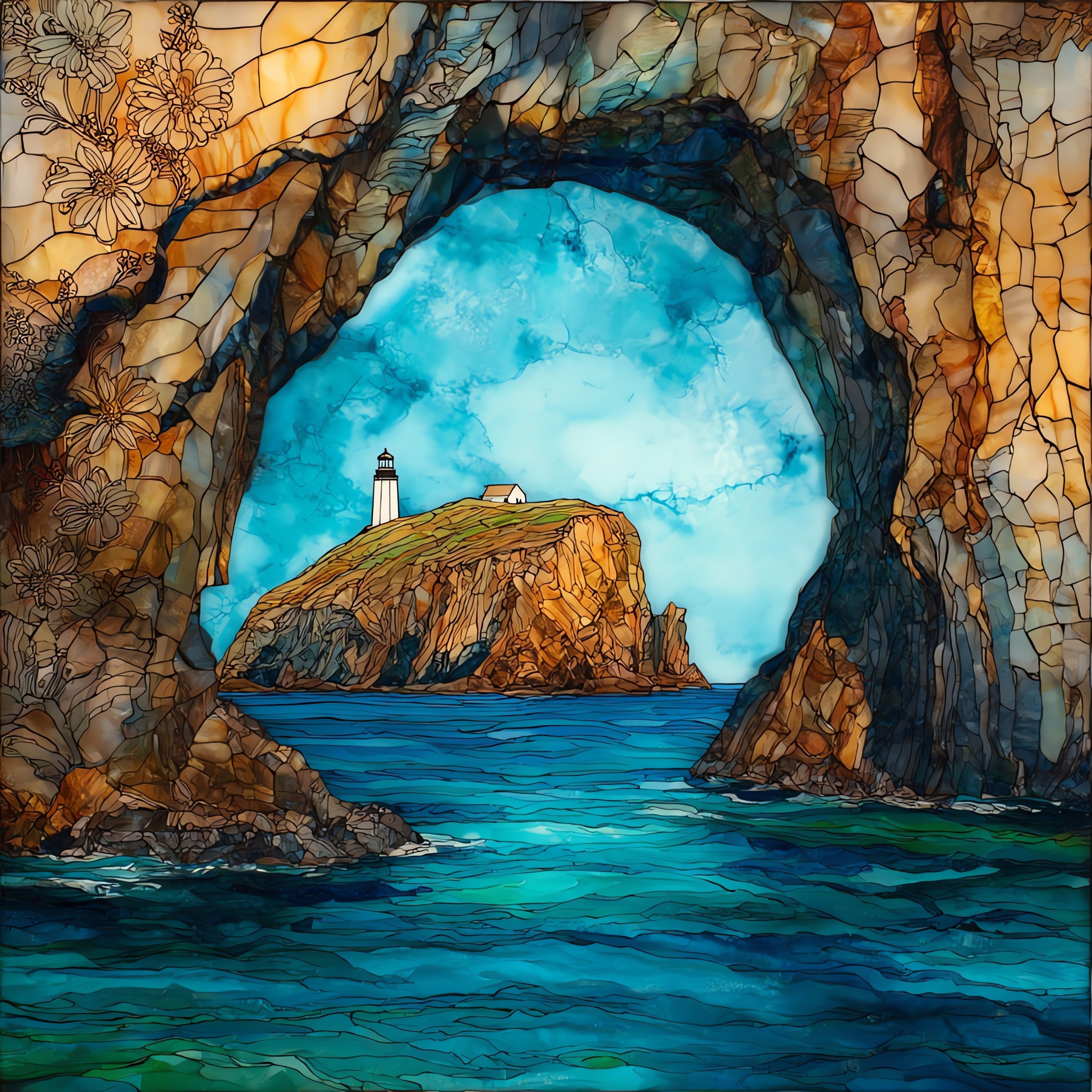
Anacapa Arch Rock
— — a window the sea cut for itself.
Not only on a wall.
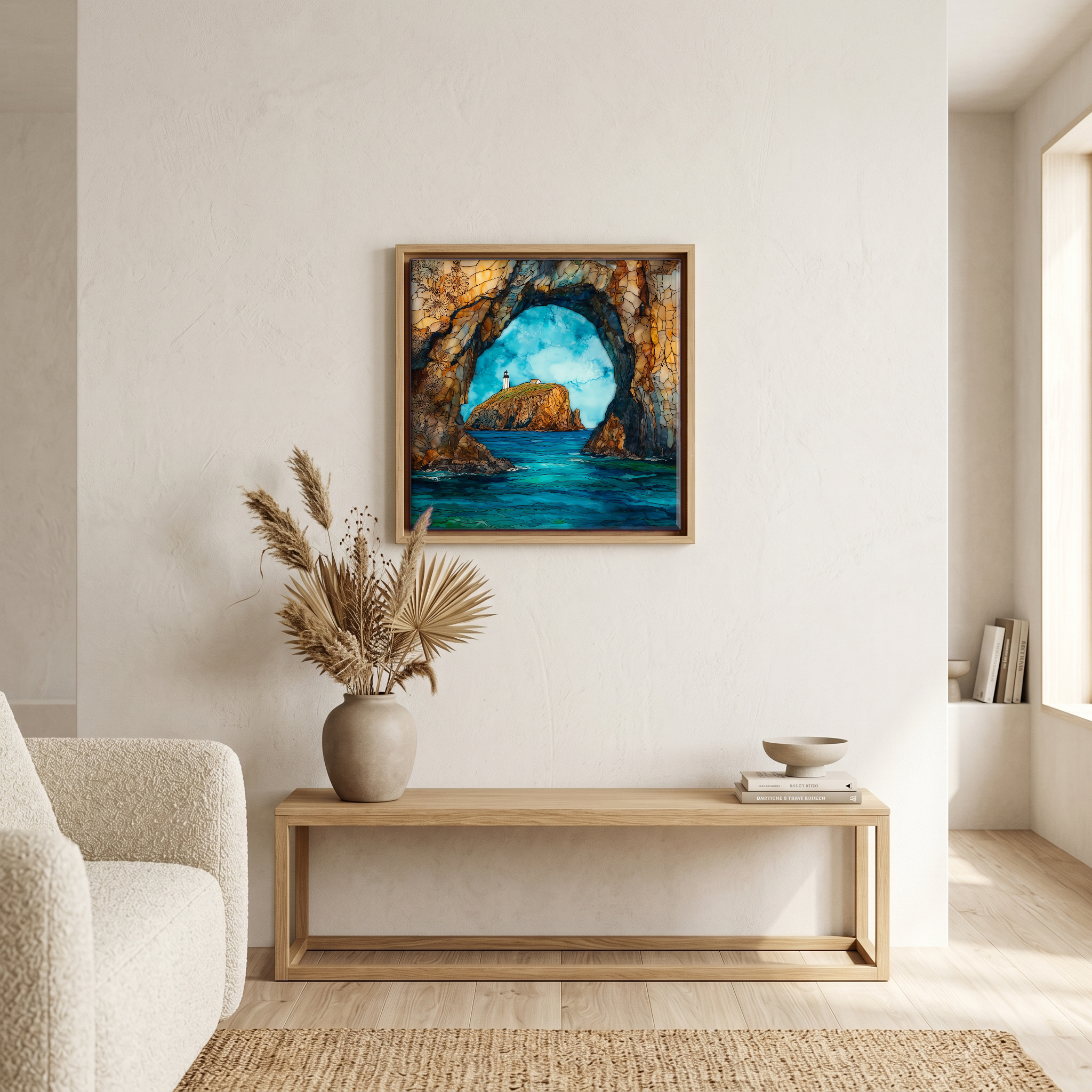
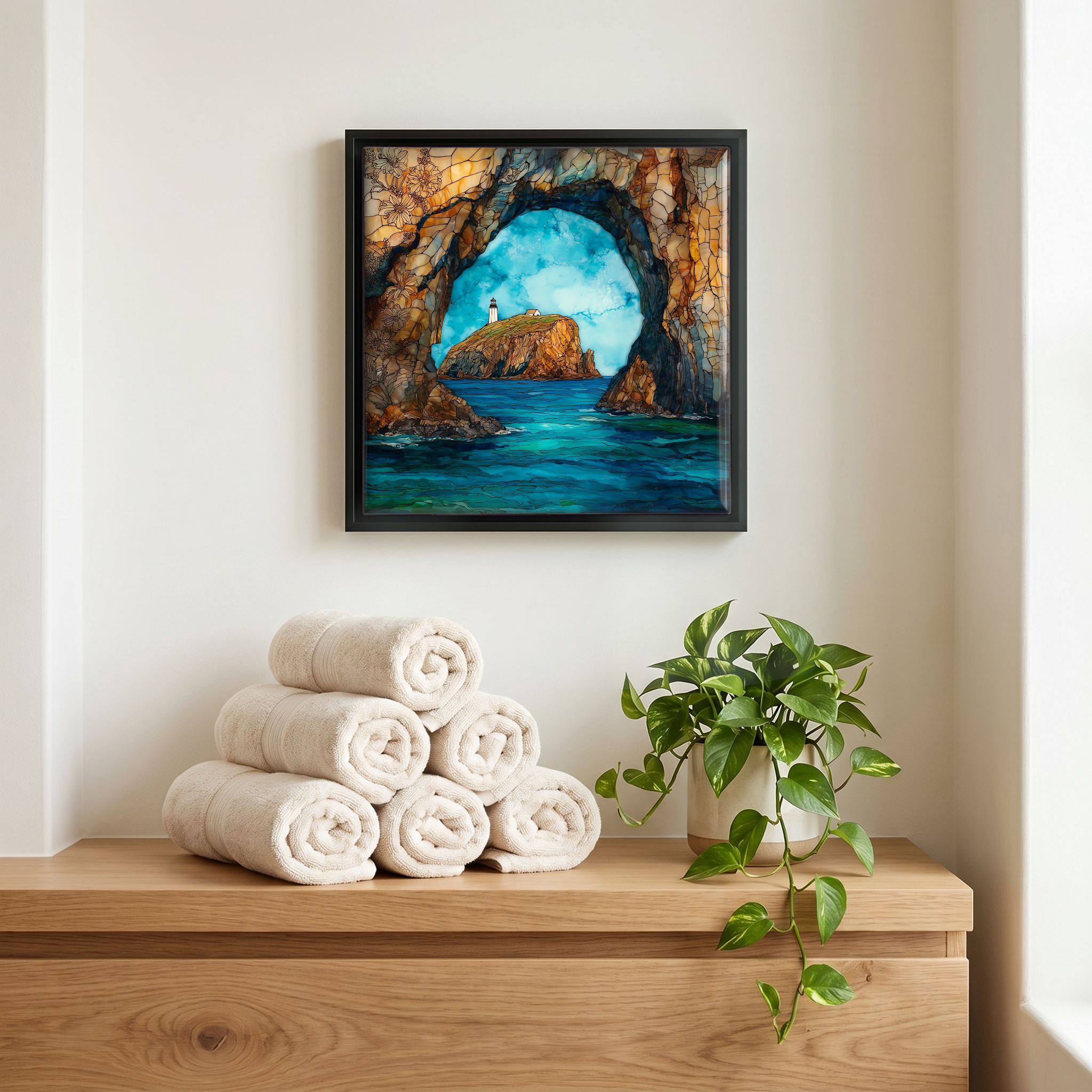
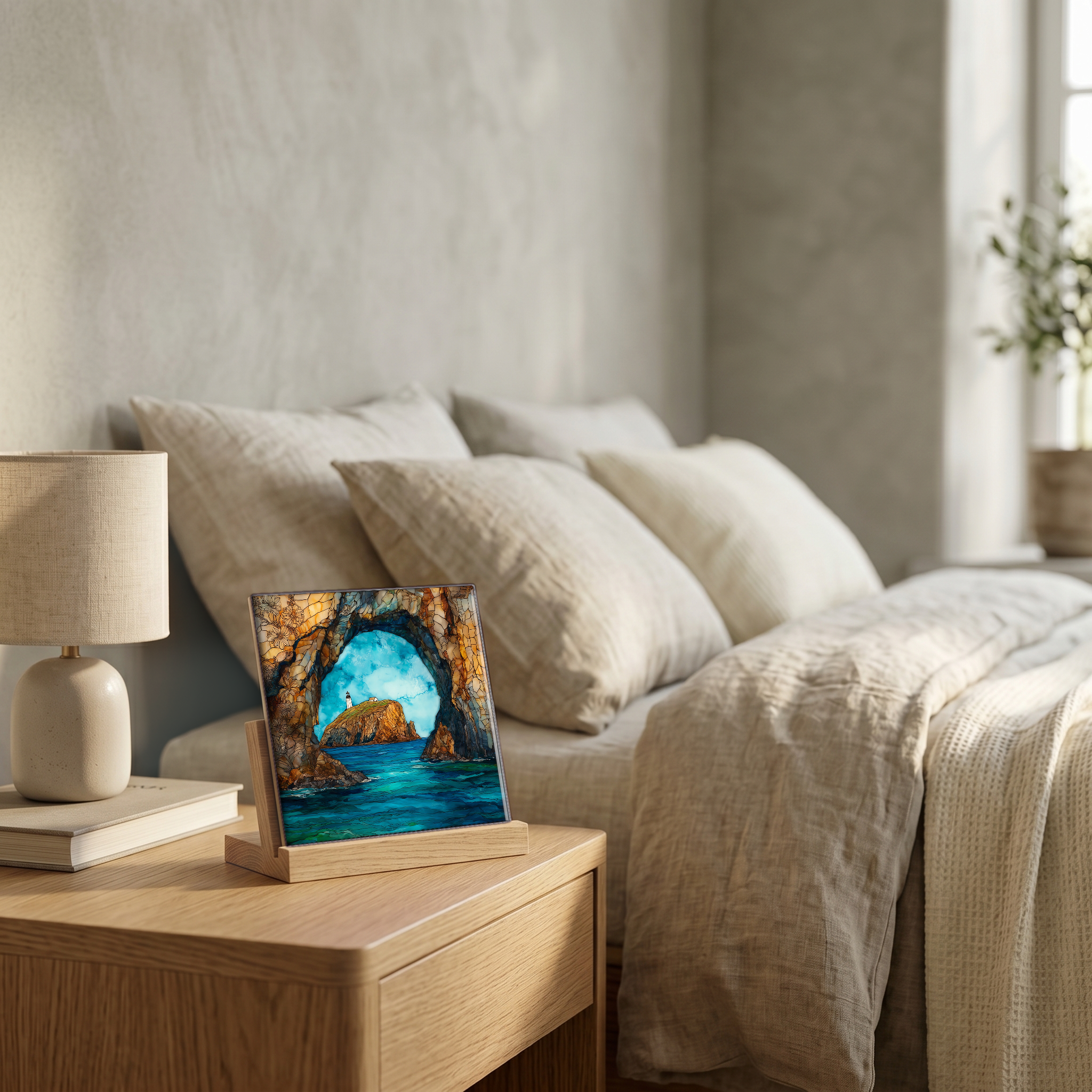
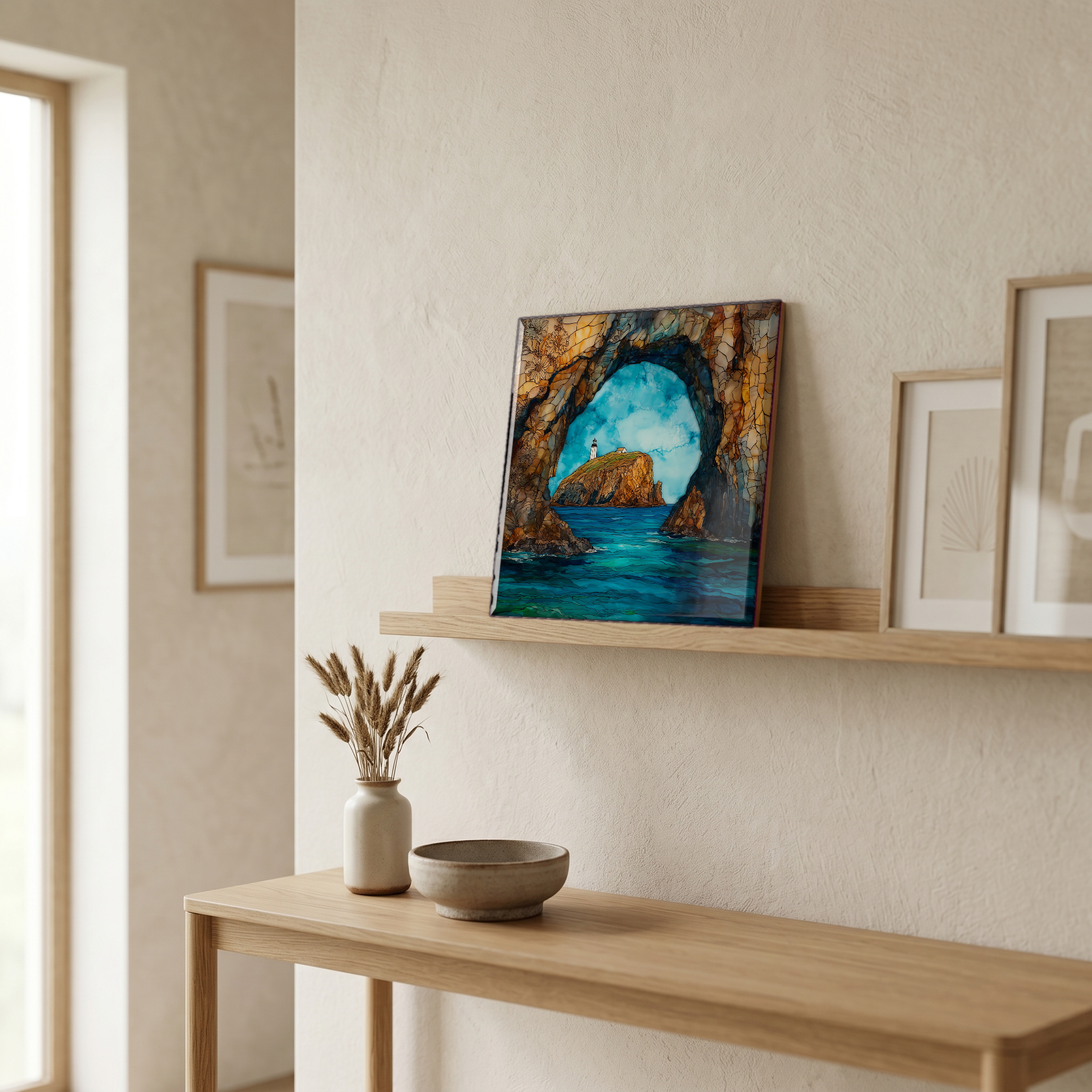
“The eastern tip of Anacapa Island, where the volcanic rock thins to a forty-foot bridge and the swell passes through. Boats out of Ventura round the point on the way to the landing cove, and the arch is the first thing most passengers see: a doorway in the cliff, framed by pelicans. The Chumash called the island Anyapakh, the word for mirage. The light off the water comes and goes; from a passing boat the arch holds steady, the way a long-known landmark does.
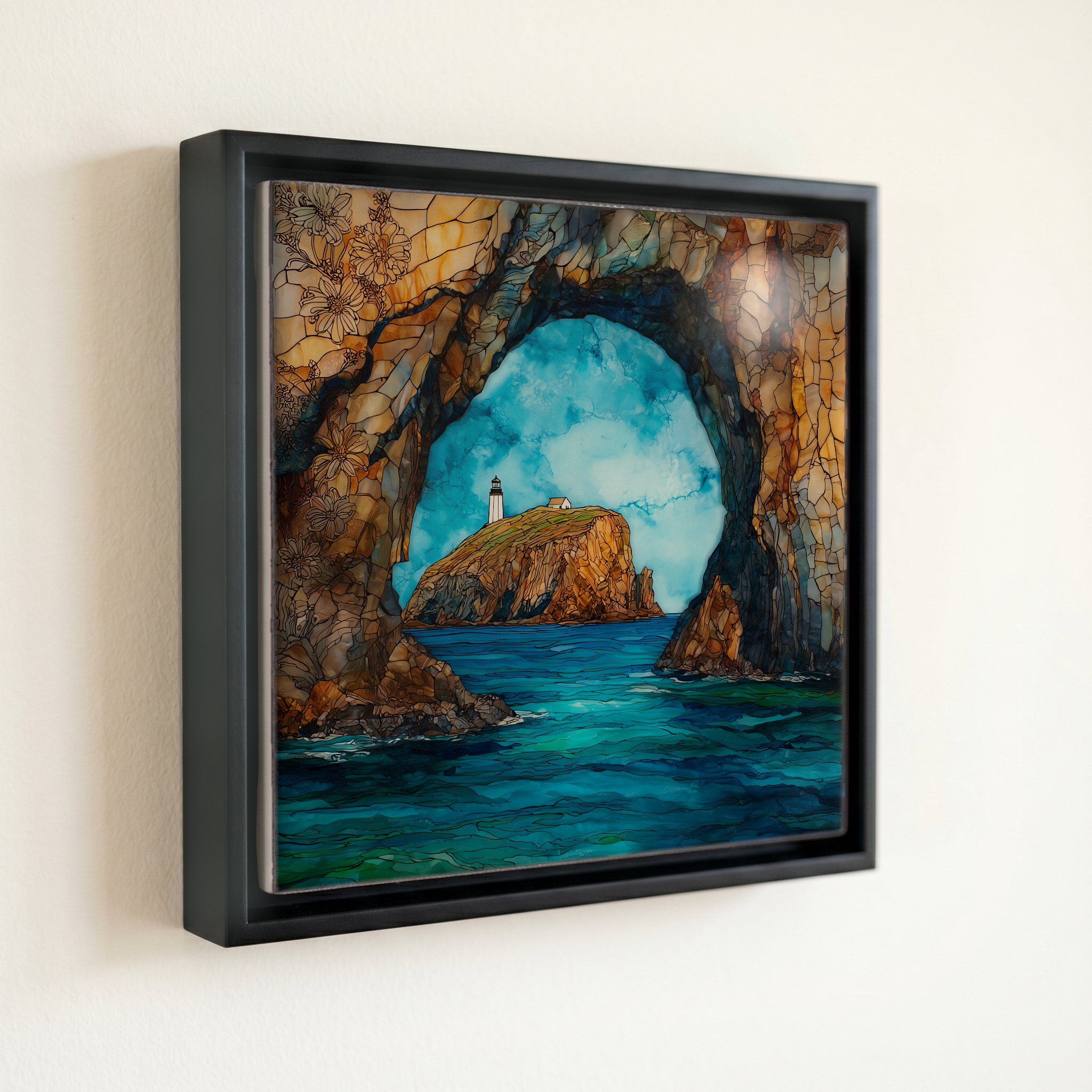
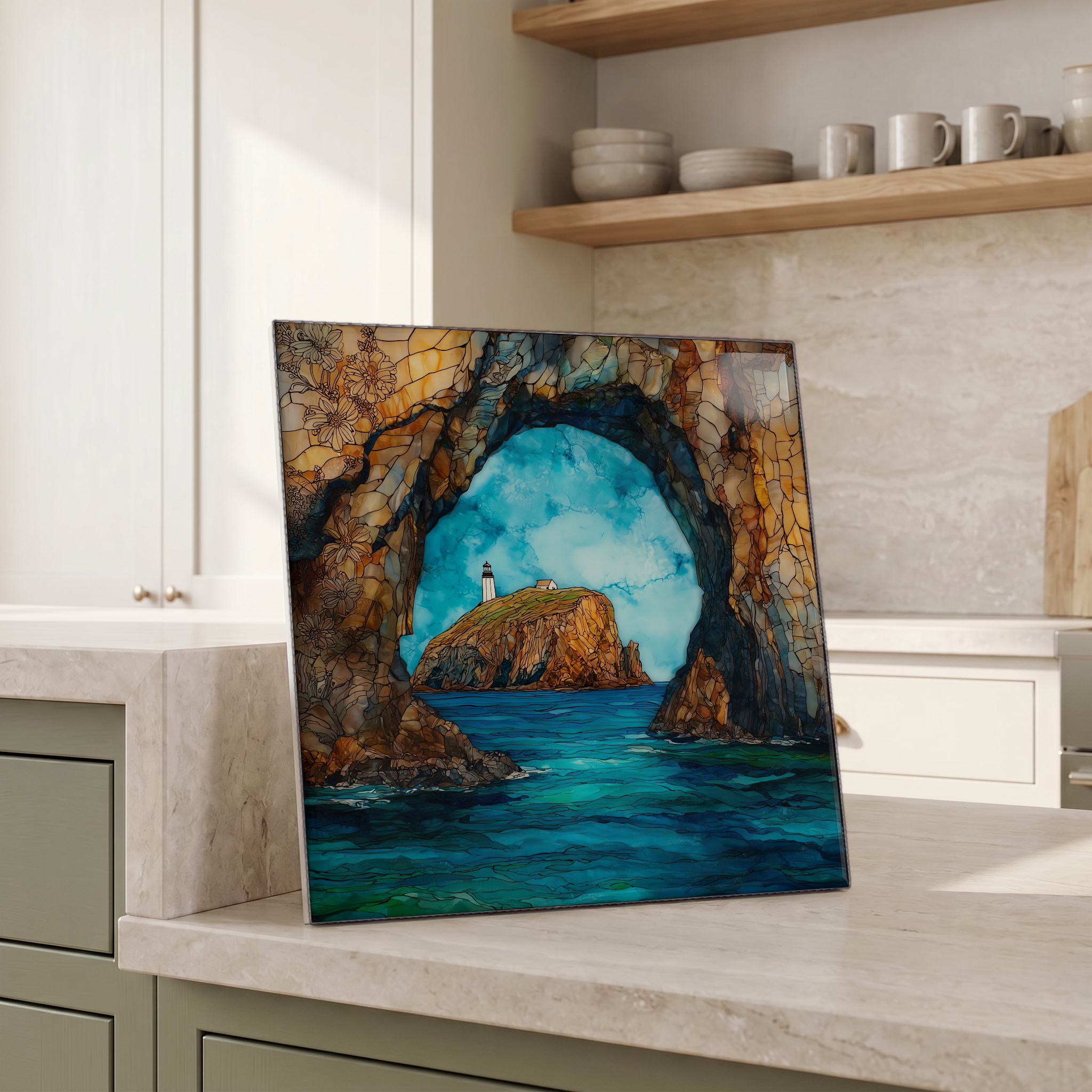
Anacapa Arch Rock, on ceramic.
Each tile is finished by hand in our Knoxville studio. Artwork is slowly infused into the ceramic surface under high heat and pressure, and rests beneath a thin glossy finish. The colour lives in the surface, not on top of it.
Pick any four 4-inch tiles — National Parks you've been to, a Smokies set, the four seasons of one place. $ for a set of , cork-backed, ready to live on the table.
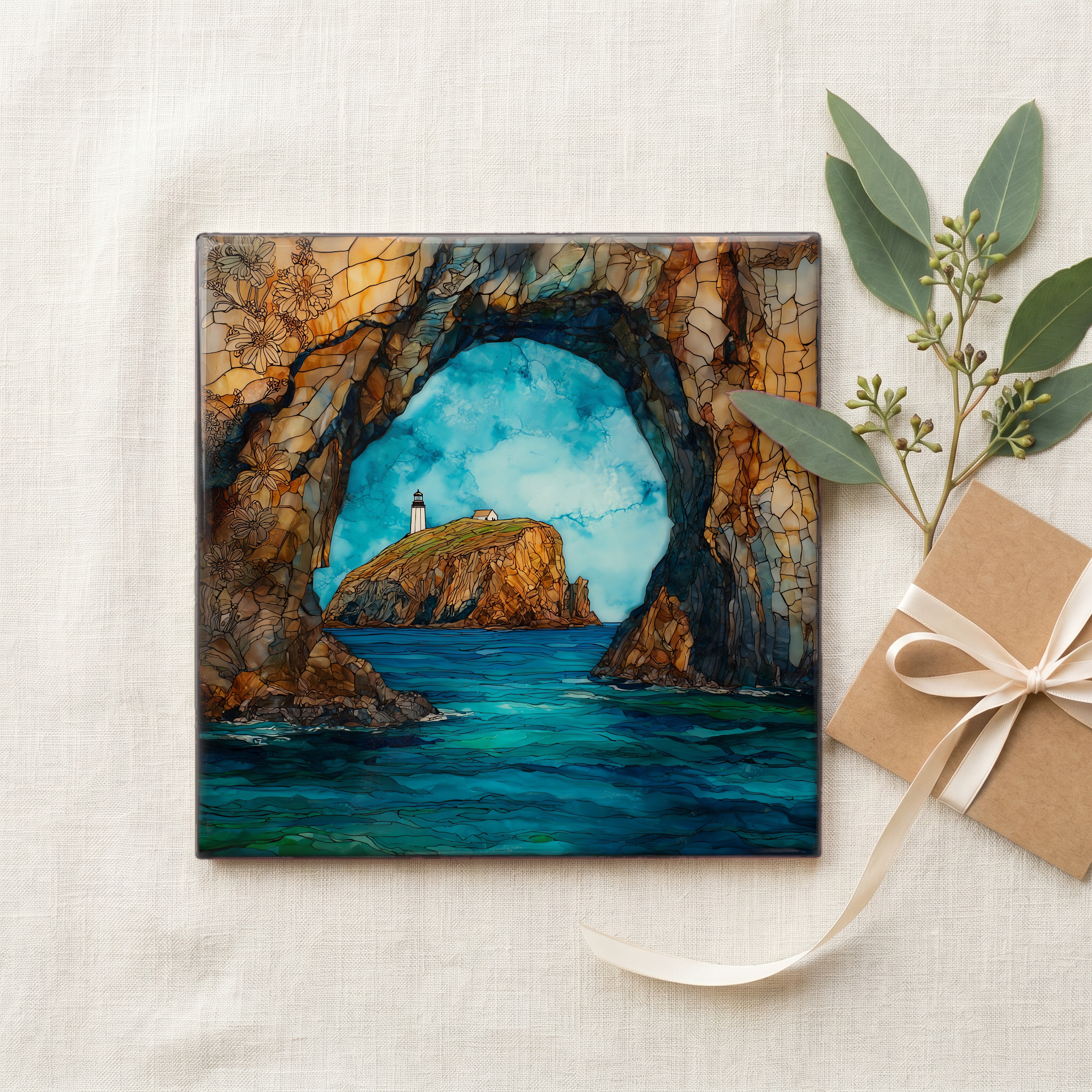
Each tile ships in a kraft box, tied with cream ribbon, with a handwritten note from the studio if you'd like to add one.
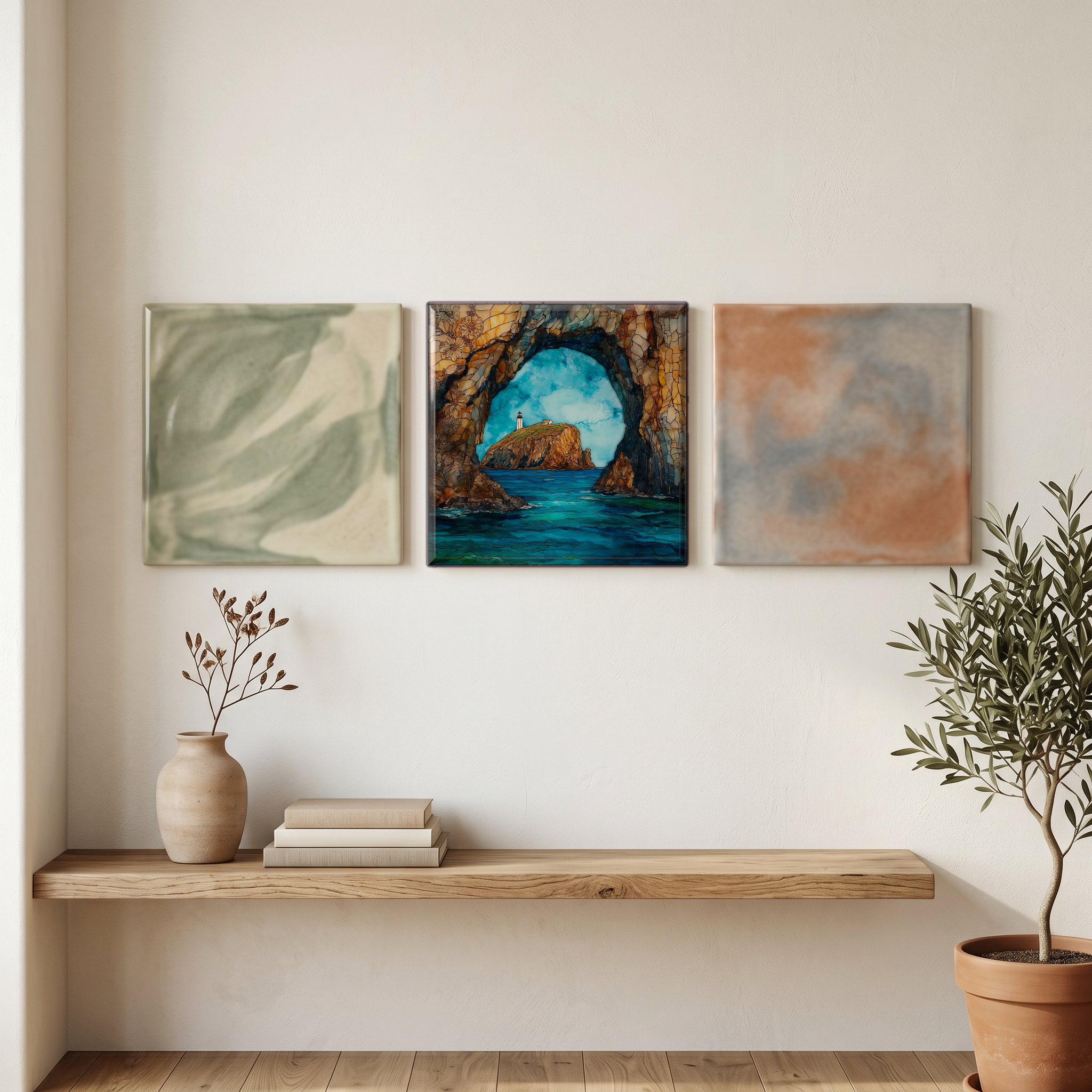
Three or five different vistas, hung together — a chapter of places you've been, or want to go.
The place, in three passes.
East Anacapa Island lies roughly eleven miles south of Oxnard, the easternmost of three small islets that make up Anacapa within Channel Islands National Park. The arch sits at the island's eastern tip, a wave-cut natural bridge of about forty feet that boats from Ventura pass on the way to the landing cove. The Anacapa chain stretches roughly five miles across the channel and rises to 930 feet on the western islet. The Chumash called the island Anyapakh, the word for mirage, for the way it appears to float and shift across the channel from the mainland. Anacapa was added to Channel Islands National Monument in 1938 and became part of Channel Islands National Park when the park was established in 1980.
The arch is a wave-cut bridge in volcanic rock. Anacapa's bones are basalt, laid down by undersea eruptions in the Miocene roughly fifteen million years ago. The whole island chain is the partly submerged crest of the Santa Monica Mountains; the islets stand where the harder rock resisted the Pacific long enough to remain above water. Arch Rock itself formed by a slower trade: the swell working a soft seam through the cliff until the bridge cleared the water on both sides, leaving the opening that boats now sail past. It is one of the most photographed features in the park, and the eastern silhouette, low against the channel, is the image many visitors carry home.
Anacapa hosts the largest breeding colony of California brown pelicans in the United States, and the cliffs above the arch are part of the nesting ground. In late spring and early summer the air around the eastern tip is thick with pelicans, western gulls, and the small Scripps's murrelets that roost in the rock crevices. The island also holds one of the world's largest western gull colonies, with thousands of pairs returning each year. Seabird traffic is densest from April through July; visitors are kept on the boardwalk above the cliffs to protect nest sites. The wind off the channel rarely stops, and the cliffs have shaped to it over centuries.