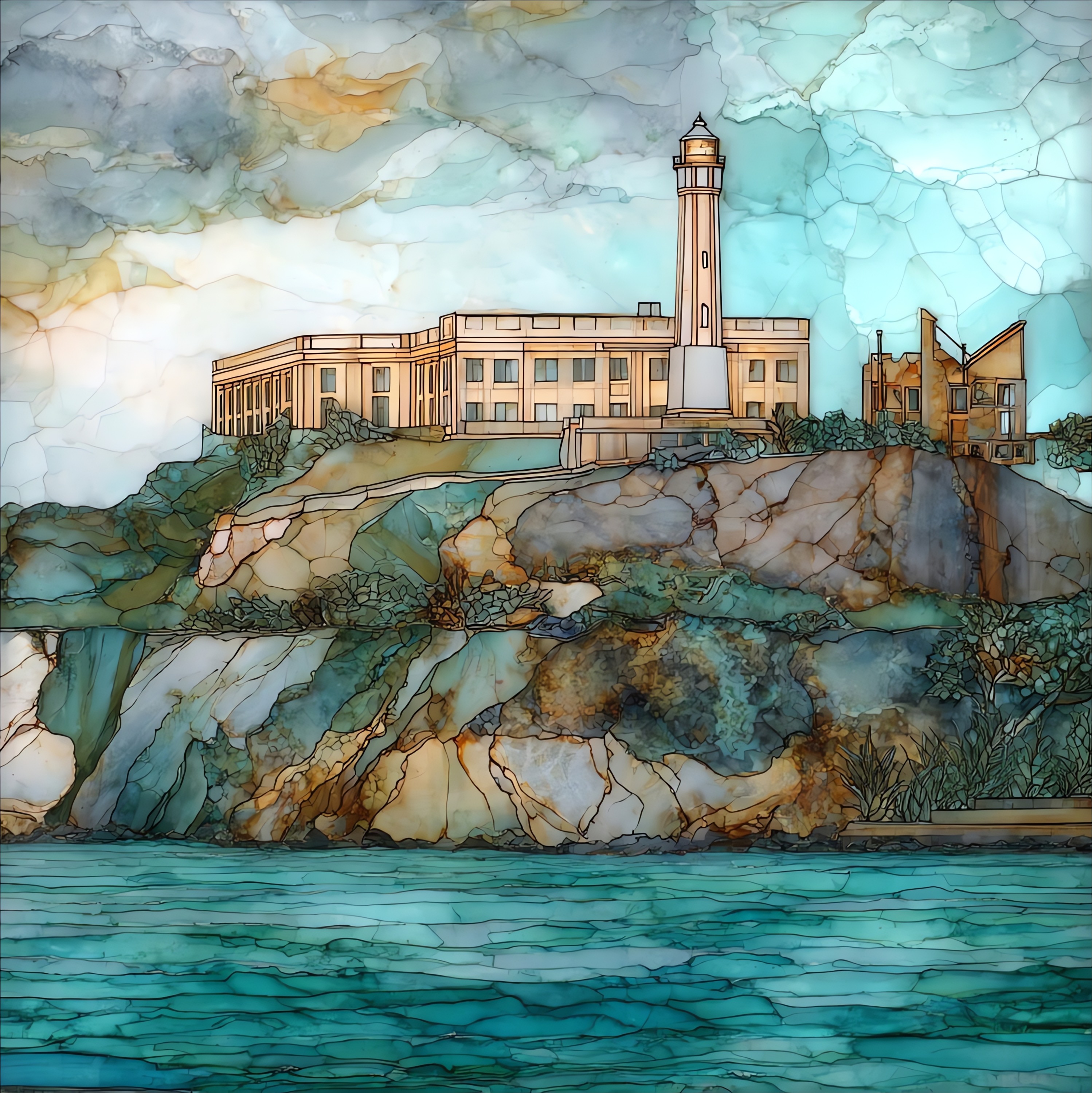
Alcatraz Island
— — a mile and a quarter of cold water, and the city right there.
Not only on a wall.
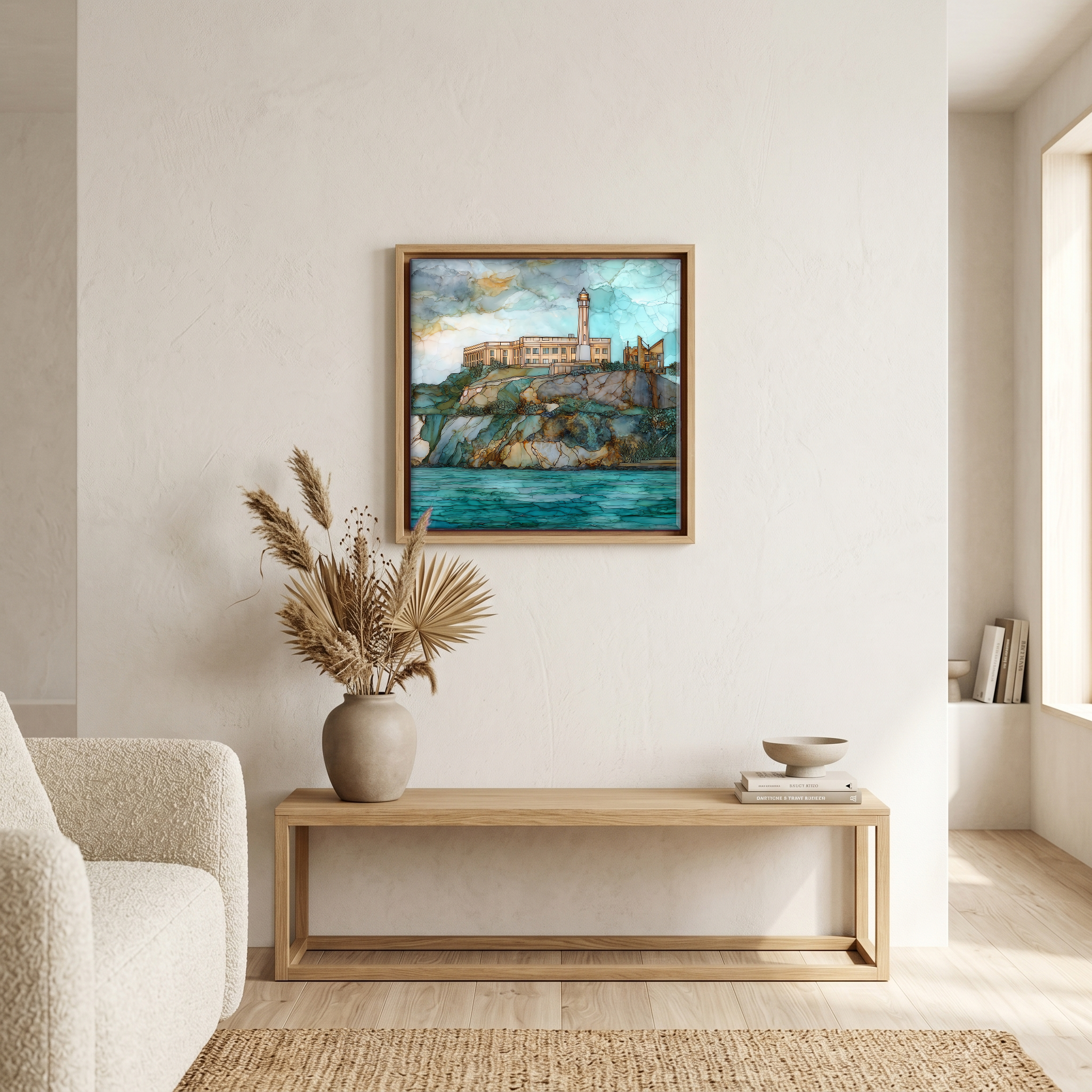
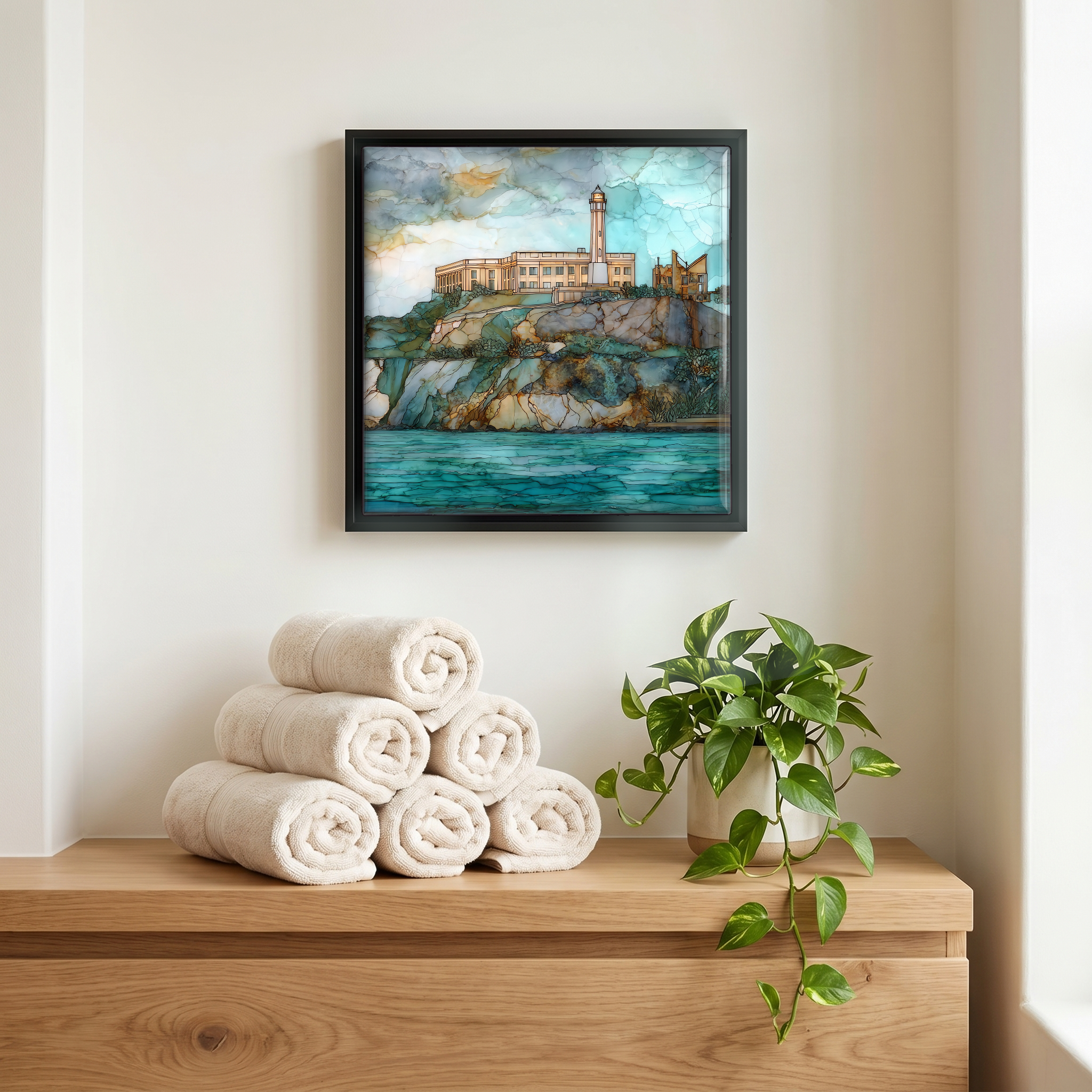
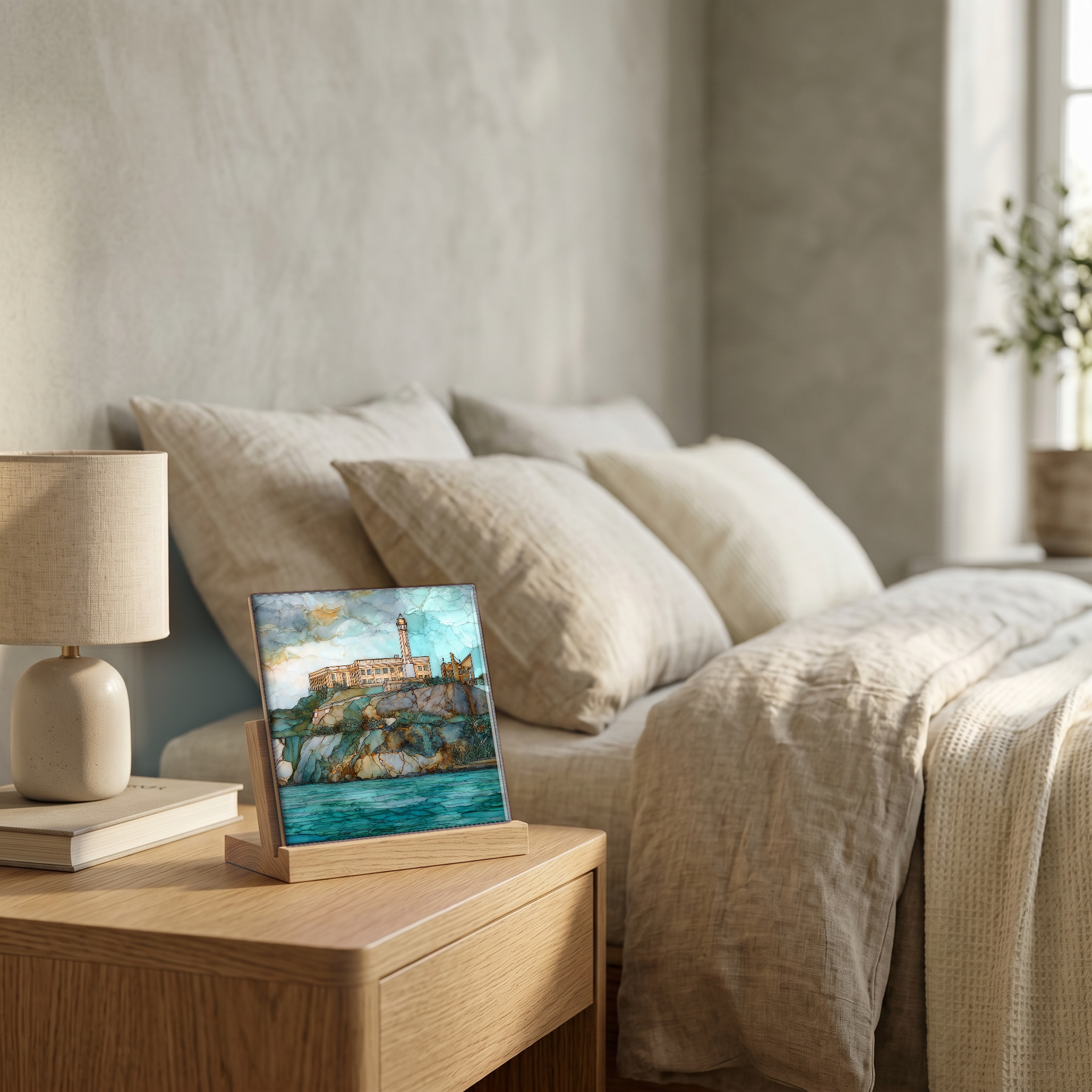
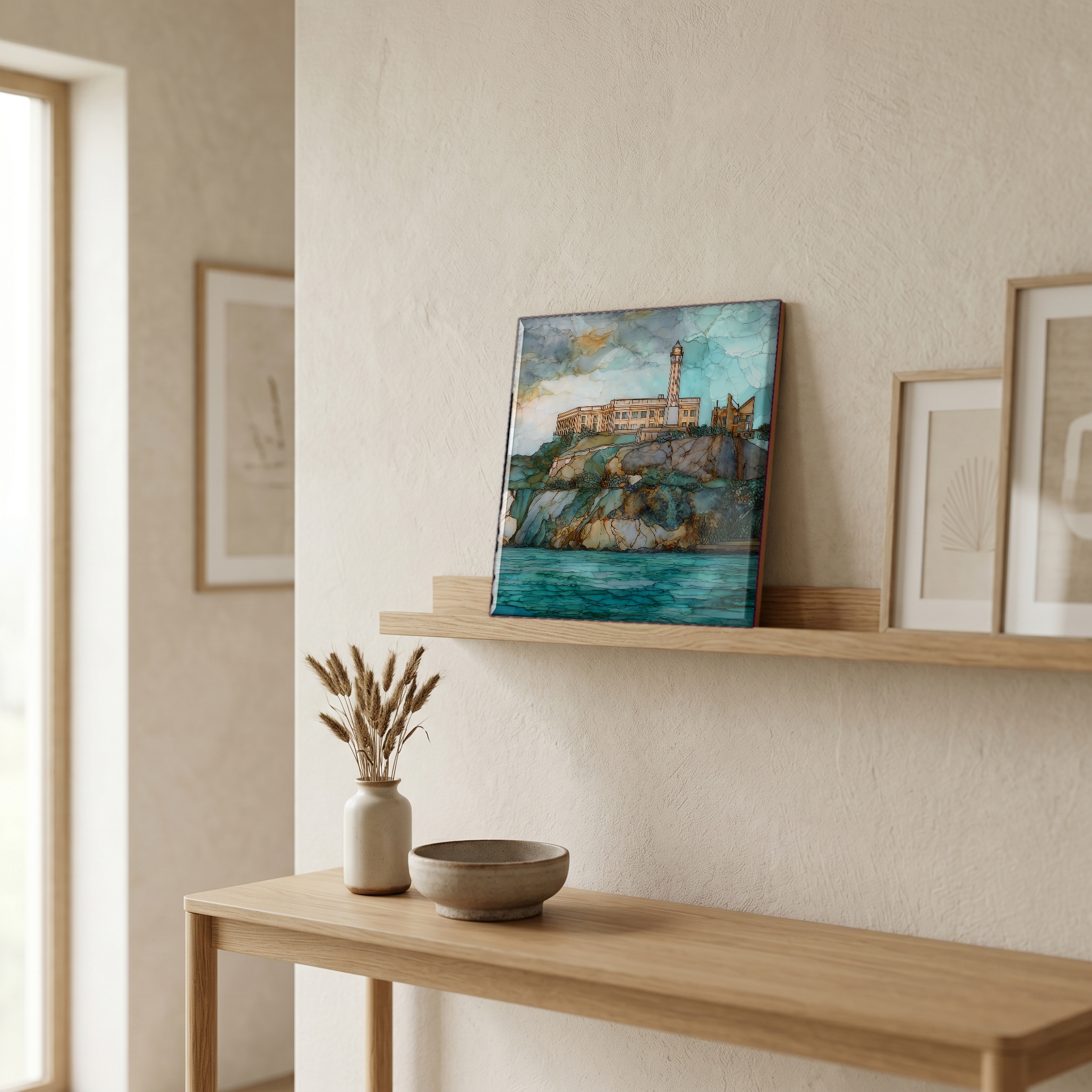
“The island San Francisco watches across the bay. Twenty-two acres of weathered concrete and salt-stripped iron, a mile and a quarter from the Embarcadero, with a foghorn that has done more work than the walls ever did. The federal penitentiary closed in 1963; the National Park Service runs the ferry now. The detail that stays with most visitors comes from the inmates' accounts: on a clear winter night, the lights of the city are visible across the water, and the sound of New Year's carries. Close enough to hear. Never close enough to walk to.
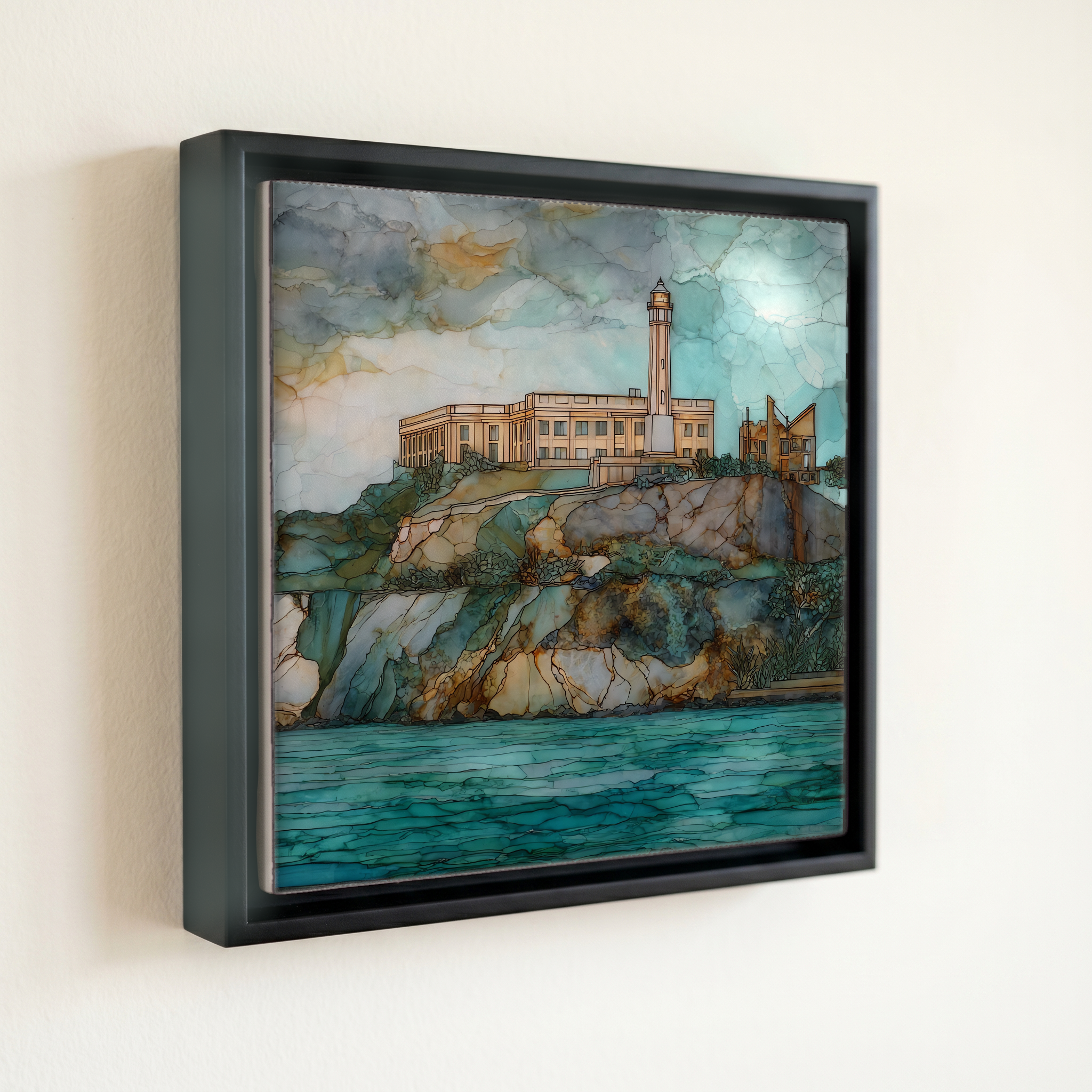
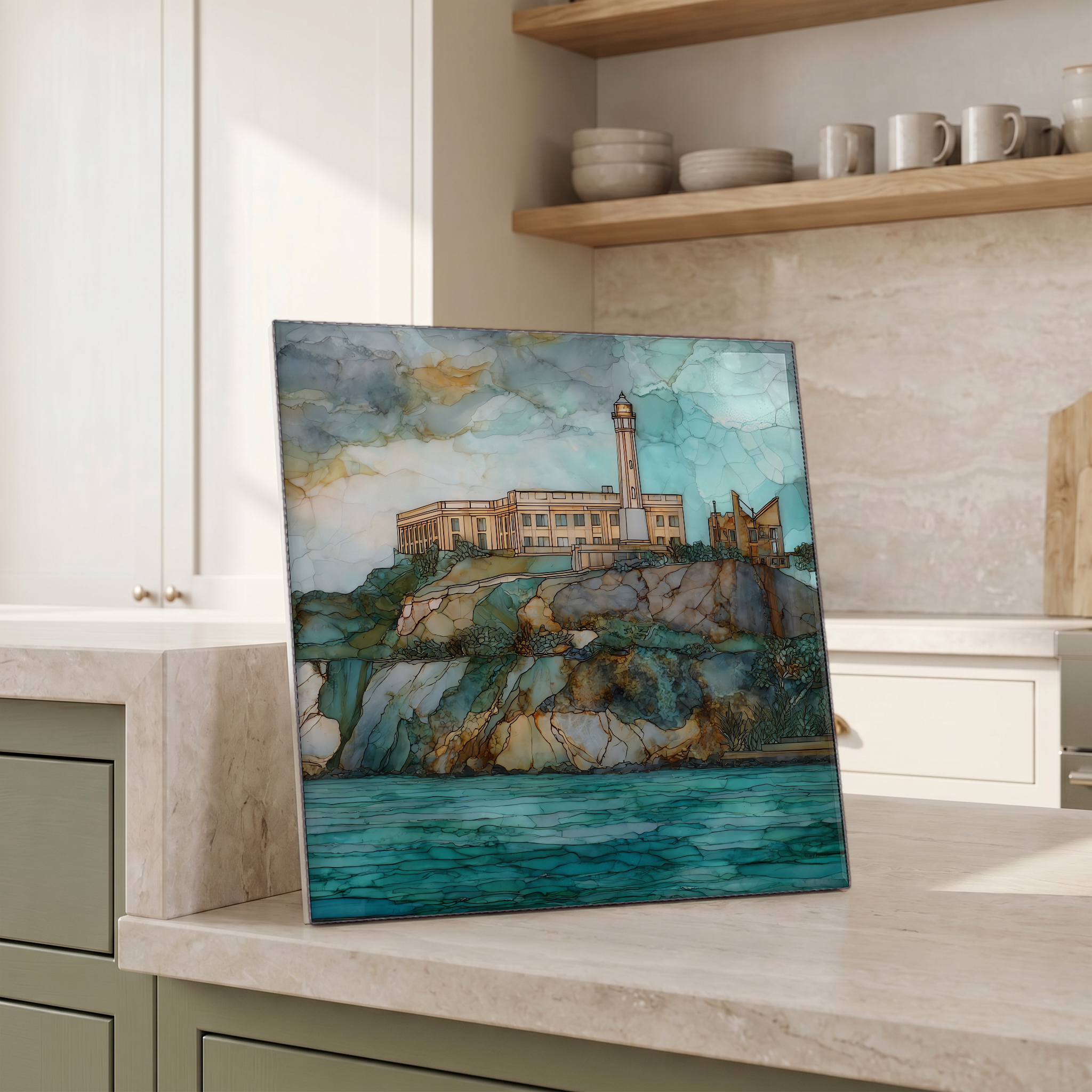
Alcatraz Island, on ceramic.
Each tile is finished by hand in our Knoxville studio. Artwork is slowly infused into the ceramic surface under high heat and pressure, and rests beneath a thin glossy finish. The colour lives in the surface, not on top of it.
Pick any four 4-inch tiles — National Parks you've been to, a Smokies set, the four seasons of one place. $ for a set of , cork-backed, ready to live on the table.

Each tile ships in a kraft box, tied with cream ribbon, with a handwritten note from the studio if you'd like to add one.
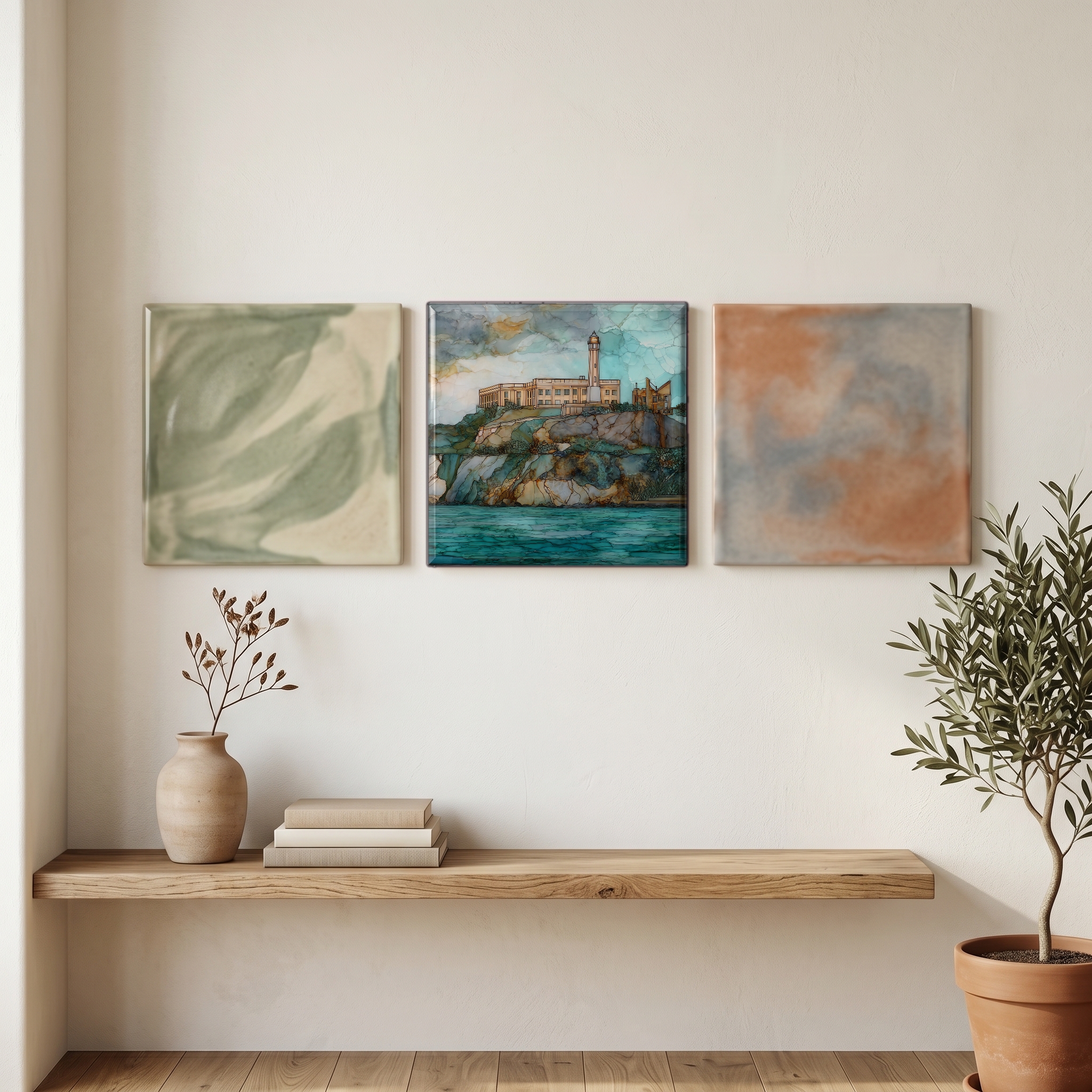
Three or five different vistas, hung together — a chapter of places you've been, or want to go.
The place, in three passes.
Alcatraz Island sits in San Francisco Bay roughly two kilometres north of the Embarcadero, a 22-acre sandstone outcrop now part of the Golden Gate National Recreation Area and managed by the National Park Service. Juan Manuel de Ayala charted it in 1775 and named it La Isla de los Alcatraces for the seabirds nesting on its cliffs. The US Army built a fortification and lighthouse here in the 1850s; the lighthouse, rebuilt in 1909, is the oldest operating navigational light on the West Coast. The island is reachable only by ferry from Pier 33 on the Embarcadero, a crossing of about fifteen minutes. Around 1.5 million people visit each year.
The cellhouse that crowns Alcatraz was built by the US Army in 1912 as a military prison and converted into a federal penitentiary in August 1934 under the Department of Justice. Its main block holds more than three hundred cells in three tiers along the corridors the inmates named Broadway and Michigan Avenue. Salt air corroded the steel and concrete year after year; by the late 1950s the maintenance bill ran roughly three times that of a comparable mainland prison, which was the practical reason the institution closed on 21 March 1963. The current lighthouse, rebuilt in 1909 to clear the new cellhouse, still operates as a navigational aid for the bay.
Access is by boat. The licensed ferry leaves Pier 33 on the Embarcadero roughly every half hour from early morning through mid-afternoon, with separate night tours later in the day; the crossing is about fifteen minutes each way. Tickets are sold by Alcatraz City Cruises and frequently book out two to four weeks ahead in summer. Admission to the island and the cellhouse audio tour, narrated in part by former inmates and guards, are included in the basic ticket. The island is open year-round except Thanksgiving, Christmas Day, and New Year's Day. Arrive at Pier 33 at least thirty minutes before departure.