Wender·Vista
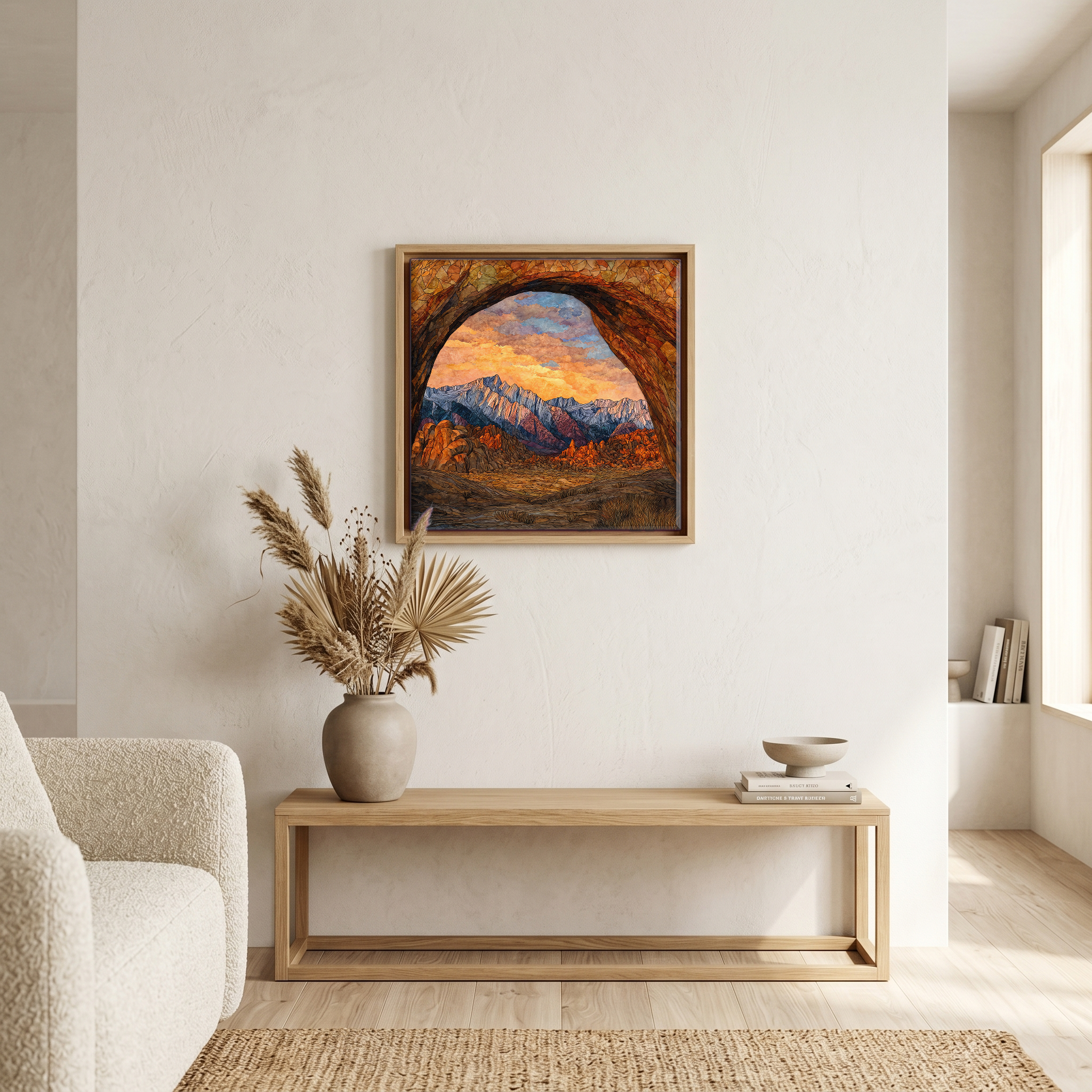
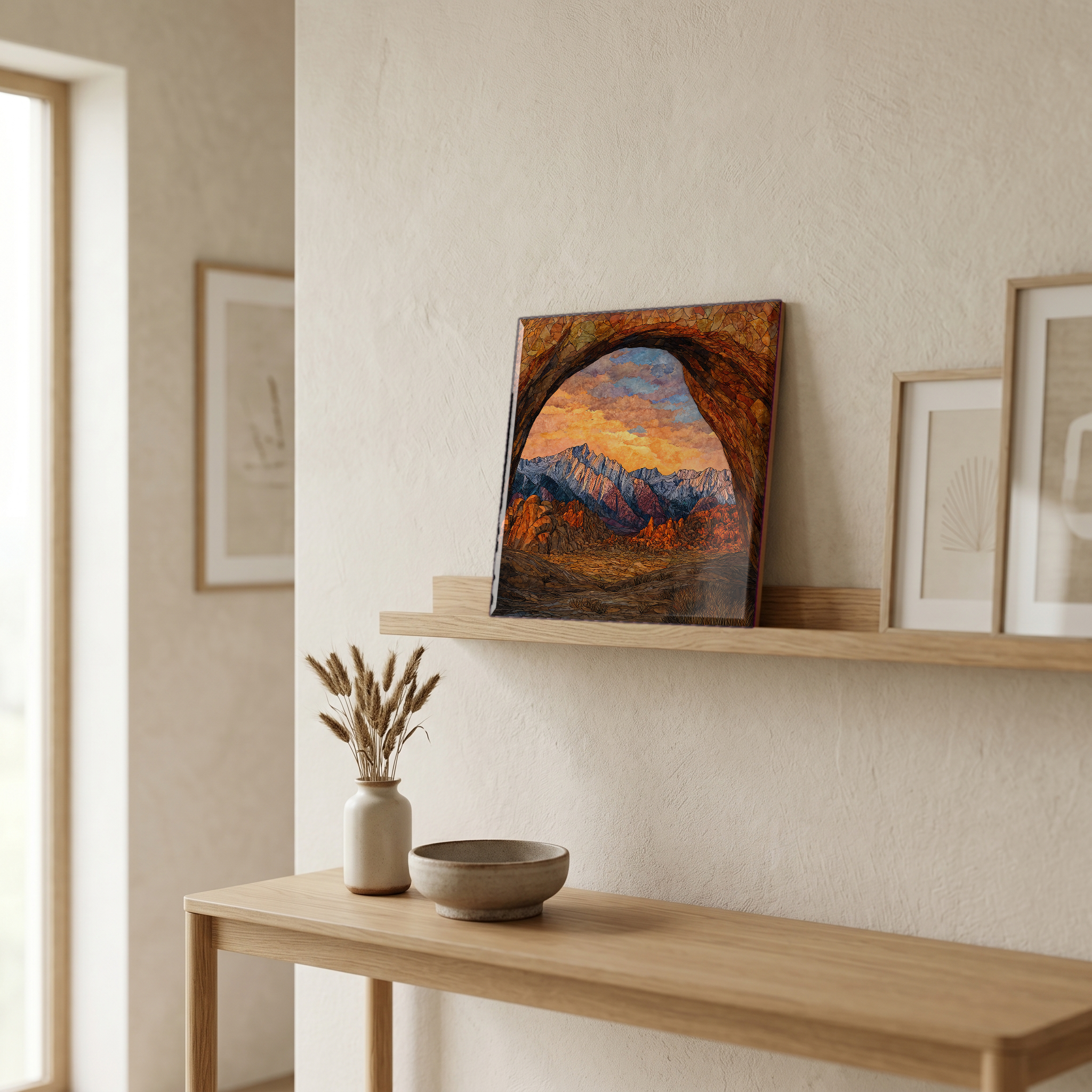
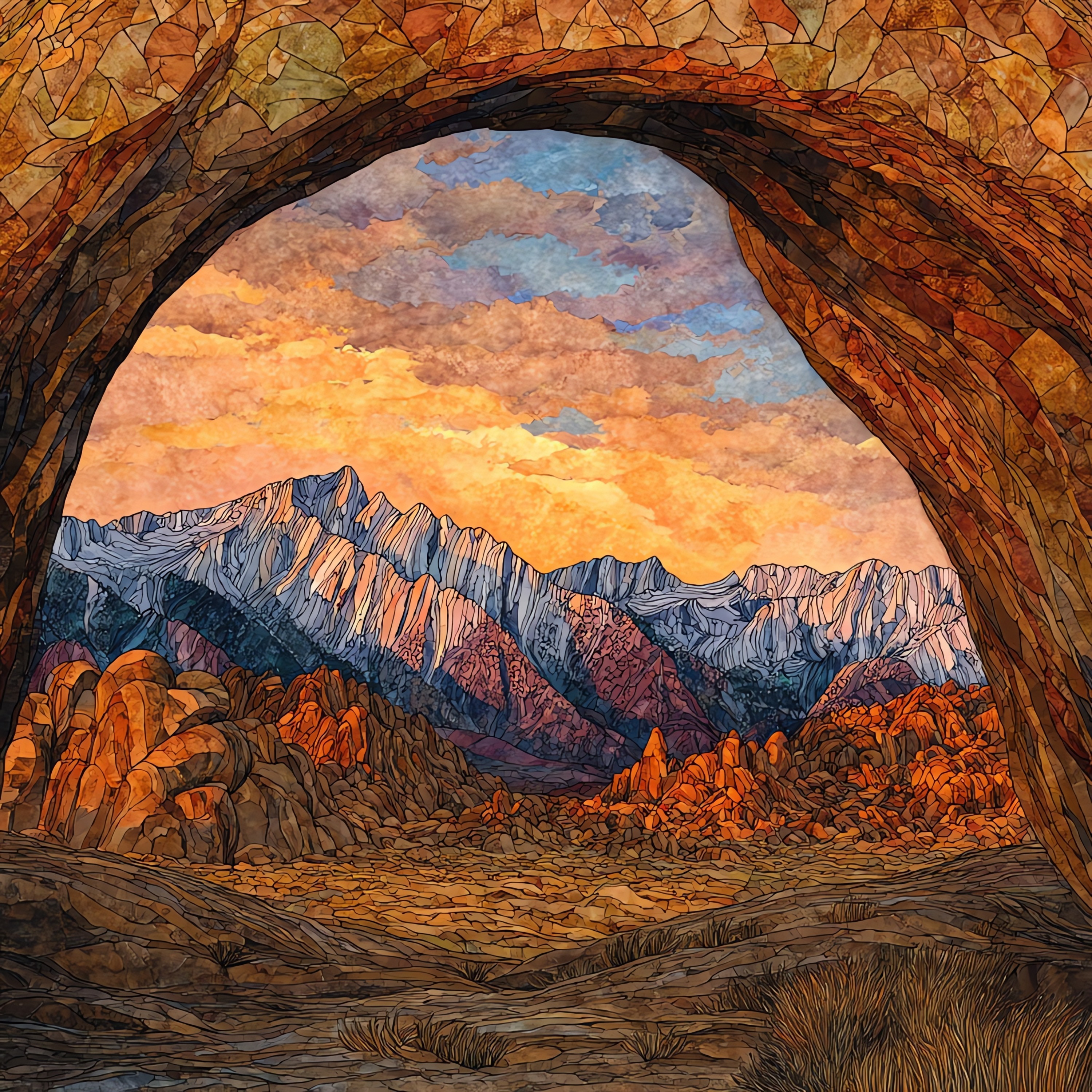
Alabama Hills Mobius Arch
shown on ceramic, 12-inch tileCalifornia · United States
in the high desert below Mount Whitney

Alabama Hills Mobius Arch

— a window the wind cut for the mountain.

Where it lives

Not only on a wall.

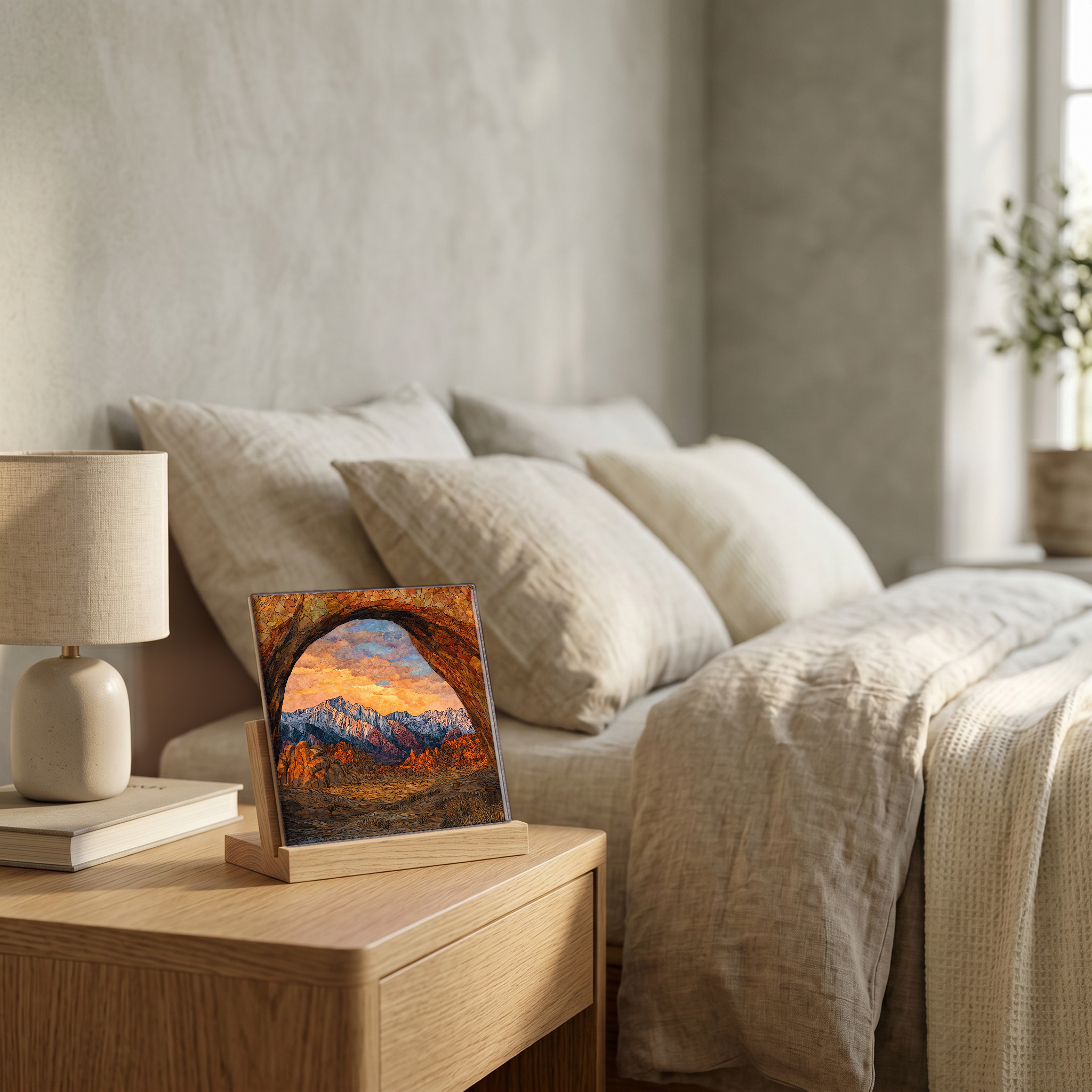
A small tile on the nightstand catching the morning. A larger one above the fire. Yours, wherever you spend the slow hours.
Above the bench, in a warm oak surround.
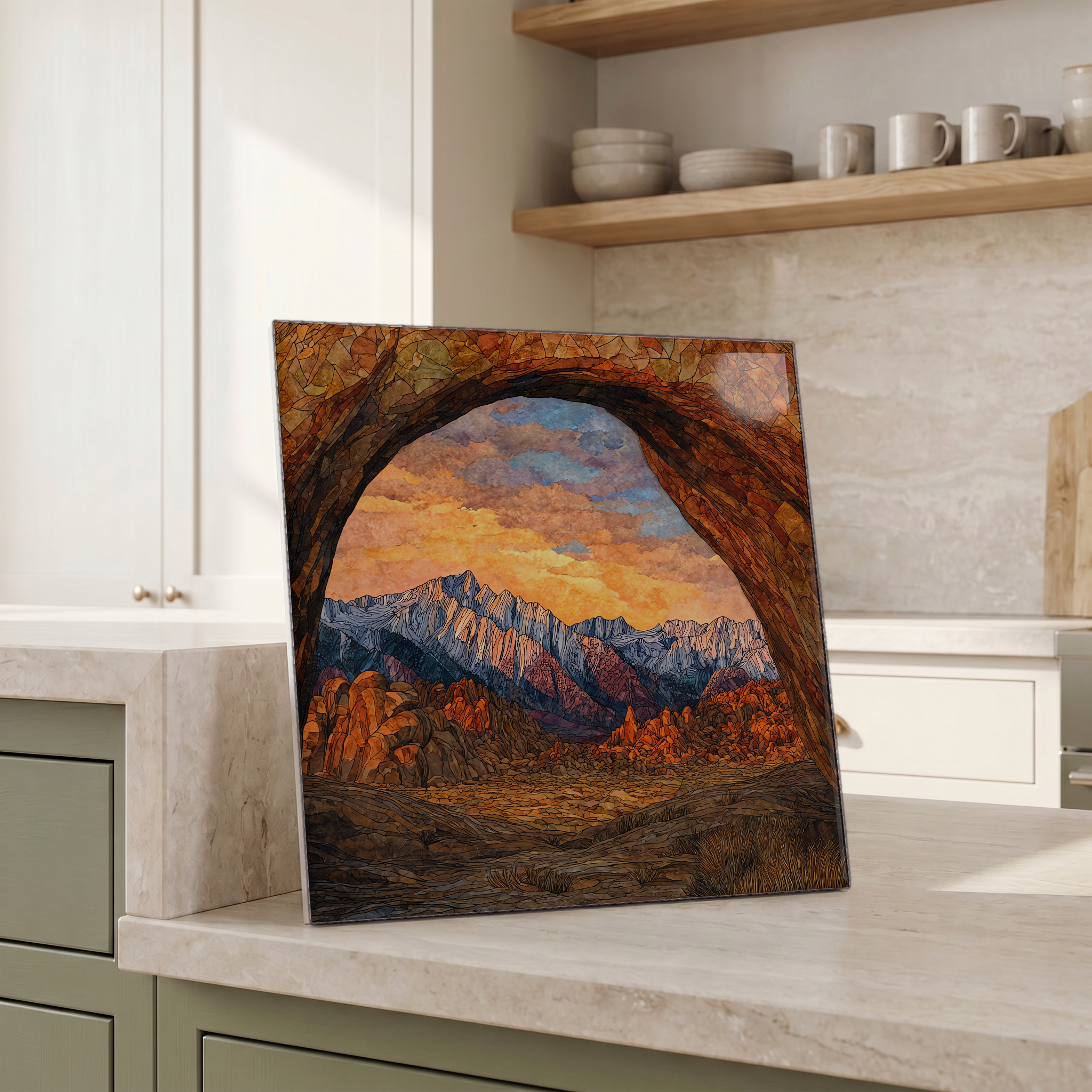
Beside the kettle, propped on the counter.
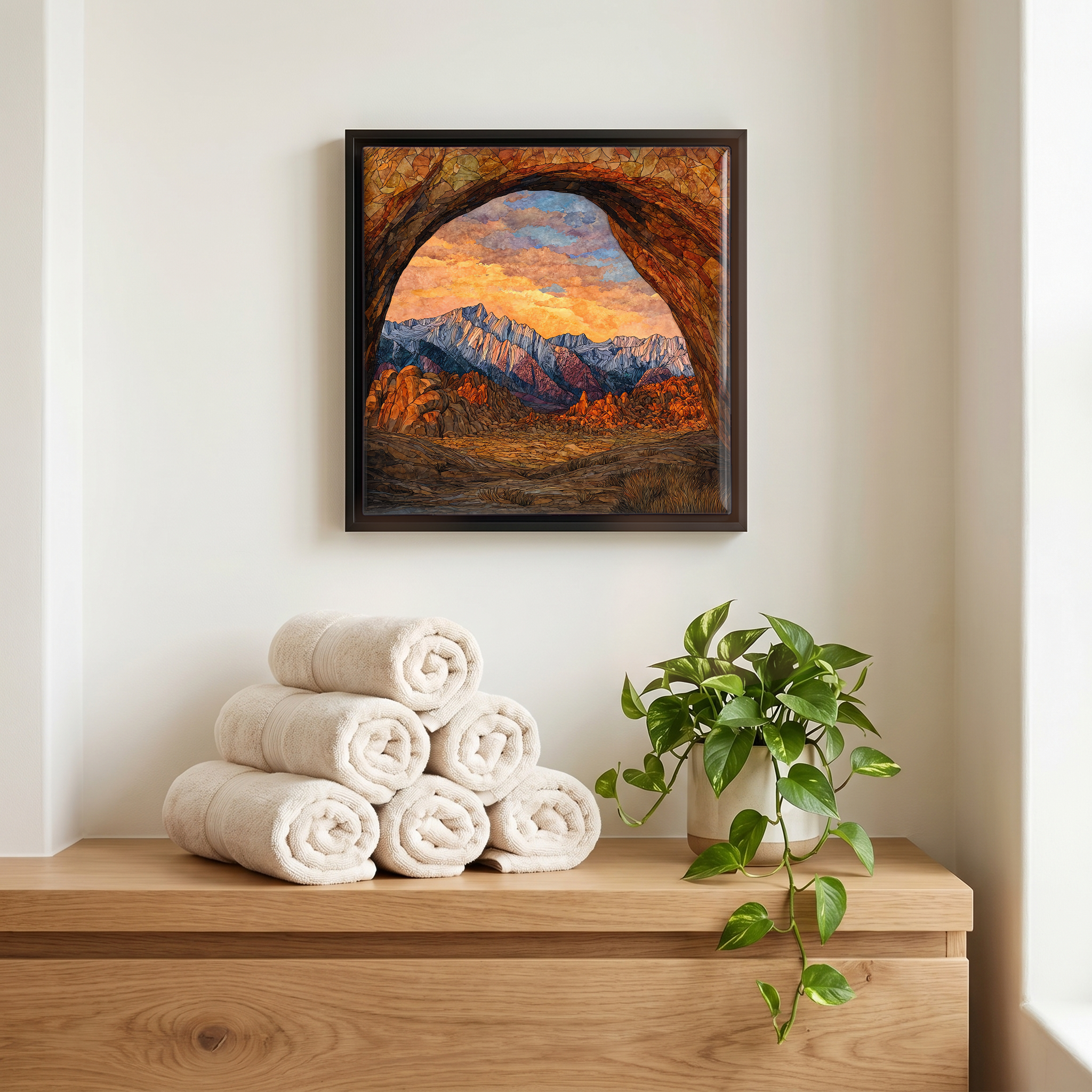
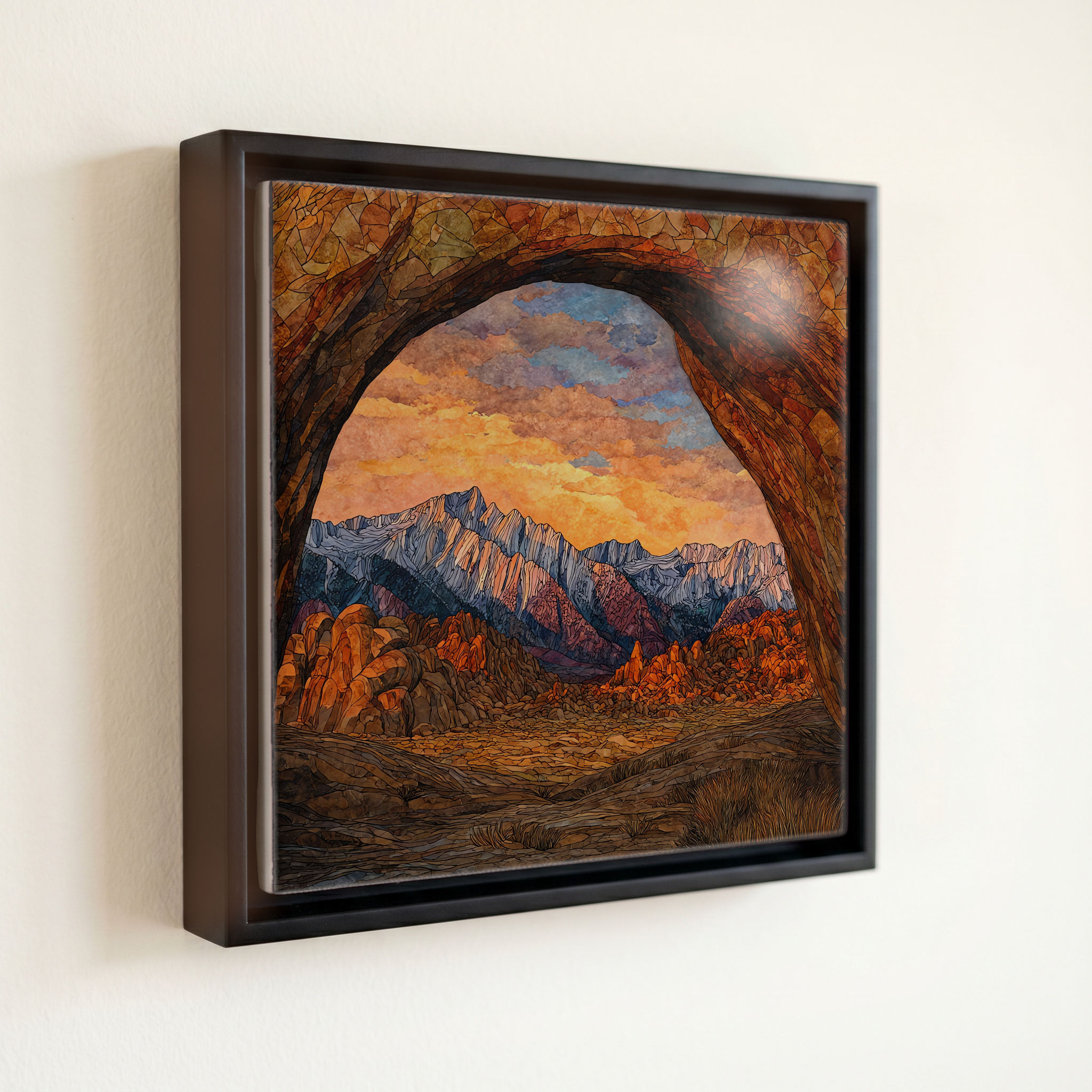
Above the linens, in a slim black surround.
On the nightstand, on a light oak stand.
On a picture ledge, where the light comes in.
a note from the studio

A weathered granite arch in the Alabama Hills, west of Lone Pine. Walk the half-mile loop in the dark and the keyhole frames Mount Whitney just before the sun finds it. Photographers come for the minute the alpenglow climbs the Sierra face through the stone: pink, then gold, then white. The hills themselves are old. Granite weathered round while the peaks behind it stayed sharp. Most days nobody is at the arch by seven. The BLM keeps it open, free, and largely to itself.
from the studio
shown in a slim black floating frame · 6 × 6 in
— bring it home

Alabama Hills Mobius Arch, on ceramic.

Each tile is finished by hand in our Knoxville studio. Artwork is slowly infused into the ceramic surface under high heat and pressure, and rests beneath a thin glossy finish. The colour lives in the surface, not on top of it.

What kind of piece?
One tile — square or rectangle.
How big?
the popular one — counter, shelf, nightstand
6 × 6 in · 15 cm · 1.6 lb
Surface finish
A clear glossy finish — the artwork reads as if under resin. Ideal for show-pieces and framed wall art.
How it sits
A hidden cleat — sits ¼″ proud of the wall.
$58
Hand-finished and shipped from our studio at the foot of the Smokies. On your wall in about ten days.
size
6 × 6 in
15 cm
weighs
1.6 lb
solid in the hand
surface
ceramic, hand-finished
art rests beneath a thin glossy finish
from
Knoxville, TN
our family studio, at the foot of the Smokies
— start a Coaster Set

Pick any four 4-inch tiles — National Parks you've been to, a Smokies set, the four seasons of one place. $ for a set of , cork-backed, ready to live on the table.
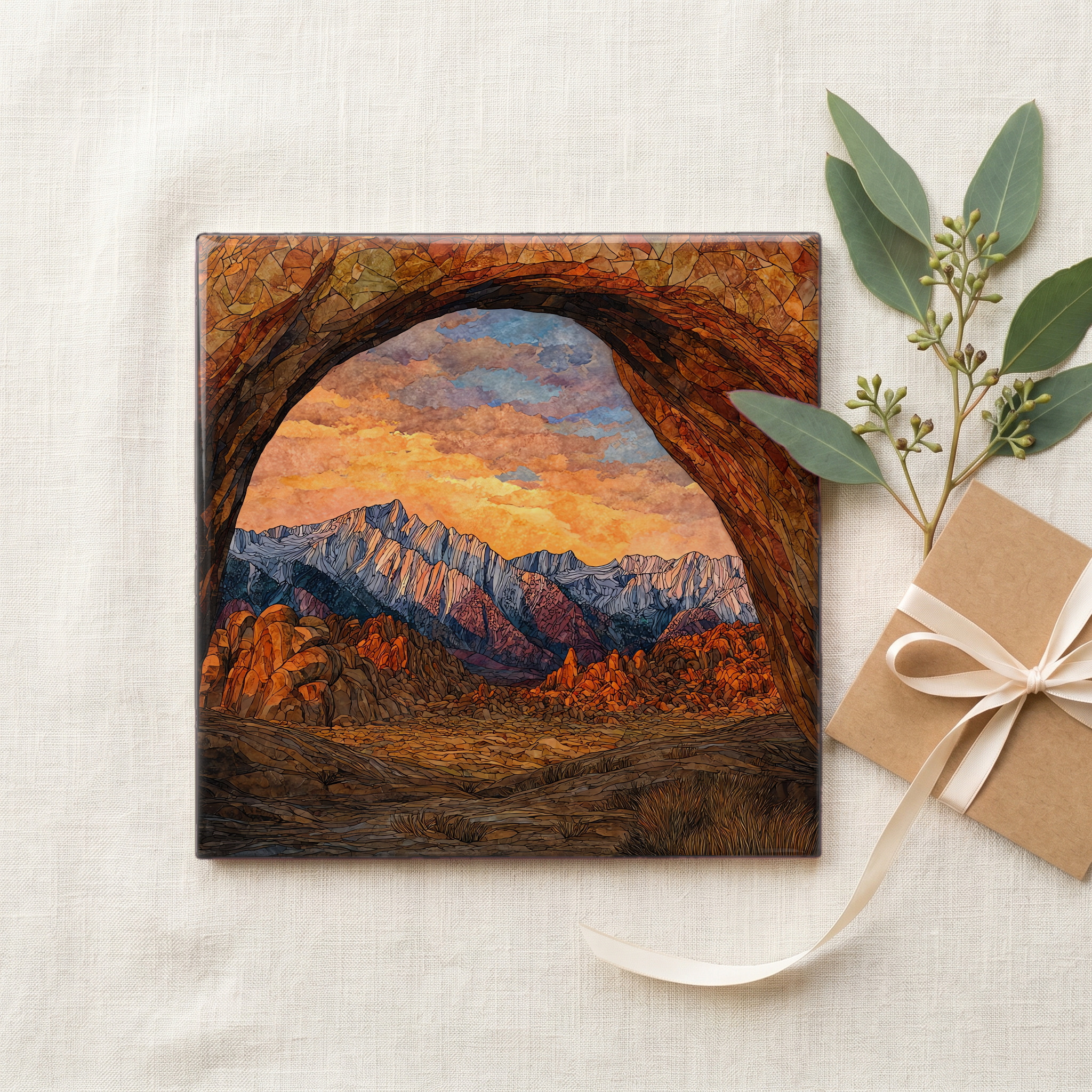
comes gift-ready
comes gift-ready

Each tile ships in a kraft box, tied with cream ribbon, with a handwritten note from the studio if you'd like to add one.
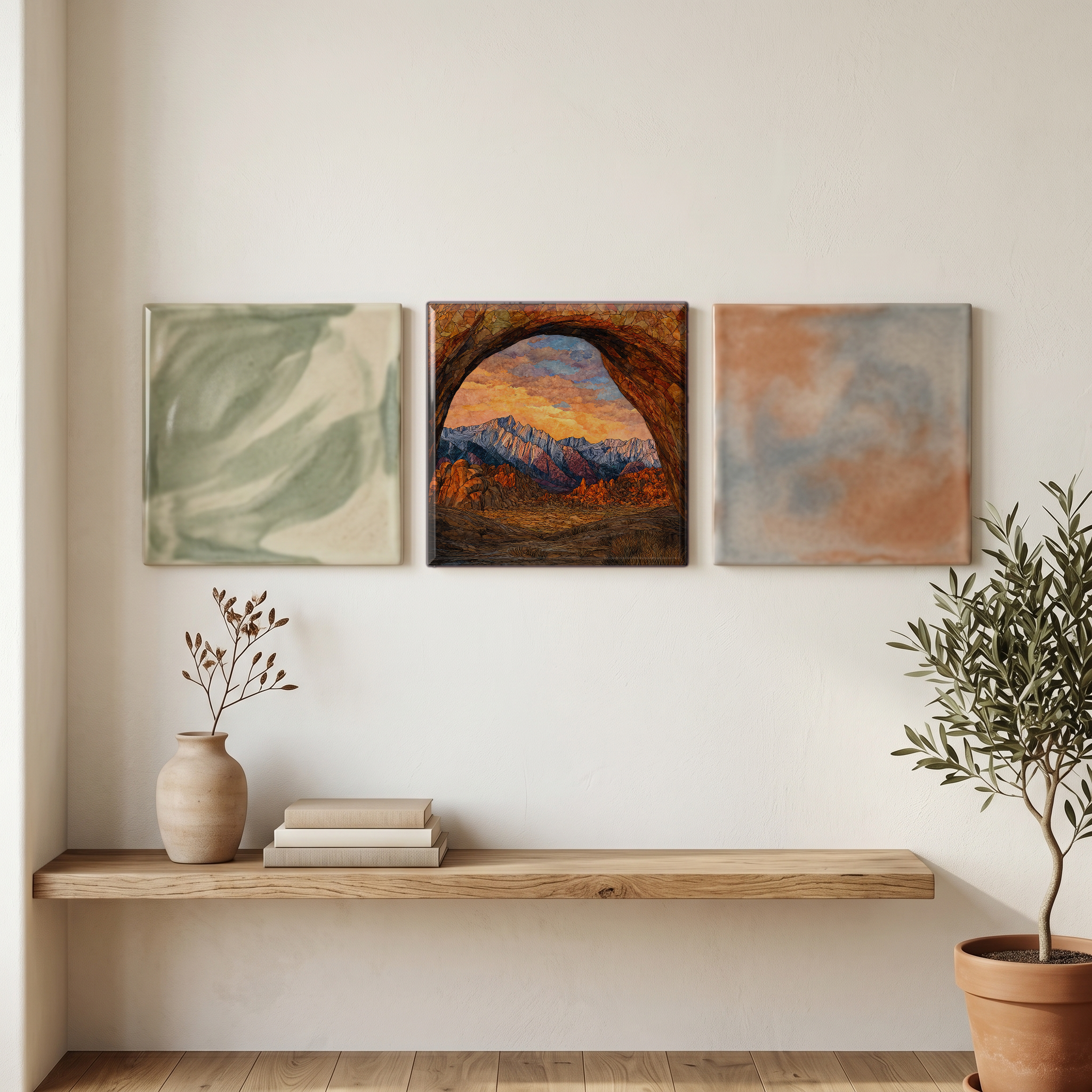
or build a grouping
or build a grouping

Three or five different vistas, hung together — a chapter of places you've been, or want to go.

about Alabama Hills Mobius Arch

The place, in three passes.

A little of what's known, in case you fall down the rabbit hole — or want to go see it yourself.
the place

The Mobius Arch sits in the Alabama Hills west of Lone Pine, California, at roughly 4,800 feet on the eastern slope of the Sierra Nevada. The arch and the rounded granite outcrops around it lie inside the Alabama Hills National Scenic Area, a Bureau of Land Management unit designated by the John D. Dingell, Jr. Conservation, Management, and Recreation Act in March 2019. The trailhead is reached from Movie Road, a graded dirt spur off Whitney Portal Road; the loop is roughly six-tenths of a mile and rises only a few dozen feet. Mount Whitney, the highest peak in the contiguous United States at 14,505 feet, rises directly west through the arch's window.

the stone

The Alabama Hills are weathered granite plutons that cooled at roughly the same time as the Sierra Nevada peaks behind them, between about 80 and 100 million years ago. The two ranges later uplifted along different faults: the Alabama Hills weathered into rounded boulders, windows, and arches, while the Sierra crest, harder and higher, stayed jagged. The contrast of soft russet humps in front and white granite walls behind is what makes the view through the Mobius Arch read the way it does. The arch itself is a small span carved by wind, water, and freeze-thaw cycles working on a single block, the kind of feature geologists call a window. The hills were named for the CSS Alabama, the Confederate commerce raider, by local prospectors in 1864.

the dawn

The defining moment is the eastern blue hour, the half hour before the sun clears the Inyo Mountains east of US 395. The arch faces roughly west, framing Mount Whitney and the Sierra crest, so the first warm light from behind the photographer lands on the granite walls across the Owens Valley. Alpenglow on the Sierra east face moves quickly: a wash of pink that turns coral, then gold, then ordinary daylight in under fifteen minutes. The window of useful colour is shorter in summer, when the sun rises north of east and clears the Inyos sooner. Most workshop guides set up by 5:30 a.m. in June and 7 a.m. in December.

where
United States · Inyo County, California
within
Alabama Hills National Scenic Area
elevation
1,463 m · 4,800 ft
position
36.6107° N · 118.1228° W
the neighborhood

What's nearby.

A handful of named places within an hour's walk or short drive. Some we've already painted; some we will.
17 km W
Mount Whitney
peak
11 km WSW
Whitney Portal
trailhead
11 km SW
Lone Pine Peak
peak
5 km E
Lone Pine
town
13 km N
Manzanar National Historic Site
historic site
6 km SE
Diaz Lake
lake
N
Alabama Hills Mobius Arch
Mount Whitney
Whitney Portal
Lone Pine Peak
Lone Pine
Manzanar National Historic Site
Diaz Lake
common questions

What people ask.

A few questions we get about Alabama Hills Mobius Arch — and about bringing the piece home.
about the place

In the Alabama Hills, about three miles west of Lone Pine, California, on the eastern slope of the Sierra Nevada. The trailhead is on Movie Road, off Whitney Portal Road. It sits inside the Alabama Hills National Scenic Area, managed by the Bureau of Land Management.

The arch frames Mount Whitney, the highest peak in the contiguous United States at 14,505 feet, through its opening. That alignment is why photographers visit at sunrise, when alpenglow lights the Sierra east face through the stone. The loop trail to the arch is about six-tenths of a mile.

About six-tenths of a mile round-trip on the Mobius Arch Loop. The trail is mostly flat with a short rise to the arch and is generally walkable in 20 to 30 minutes. The trailhead has a small dirt lot on Movie Road, accessible to most passenger cars in dry conditions.

Local prospectors named the hills in 1864 after the CSS Alabama, a Confederate commerce raider, during the American Civil War. Confederate sympathy ran high among miners in the area at the time. The Union loyalists nearby answered by naming Kearsarge Pass, in the Sierra Nevada, after the warship that sank the Alabama.

Sunrise is the postcard moment in any season, when alpenglow climbs the Sierra east face through the arch. Spring and fall have the most settled weather and longest comfortable midday windows. Summer is hot in the Owens Valley, often over 100°F. Winter brings cold mornings and the occasional dusting of snow on the granite.

No. The Alabama Hills National Scenic Area is managed by the Bureau of Land Management and admission is free. Dispersed camping is allowed in designated zones with a 14-day limit per stay. Fire and toilet rules vary by season; the BLM Bishop Field Office posts current restrictions.

The Alabama Hills as a whole have appeared in hundreds of films since the 1920s, including parts of Iron Man, Gladiator, Django Unchained, and many classic Westerns. The Mobius Arch specifically is best known for still photography of Mount Whitney through its opening, not as a film location.

about the piece in your home

It travels well as a memento for hikers and climbers with Whitney in their history. The arch view is the postcard alignment of the eastern Sierra, recognised by anyone who has driven Whitney Portal Road. A Small or Medium tile sits comfortably on a desk or a shelf of trail photos.

The piece reads warm and earthen. The Alabama Hills granite shows russet and tawny against the cooler whites and blues of the Sierra crest. That palette works with Mountain-modern, Southwestern-modern, and Desert-warm rooms. It also belongs comfortably in any room of trail photography or maps.

Yes. Desert-modern interiors have moved from sand-and-cream neutrals toward warmer earth tones with strong horizon lines, which is the natural register of an Alabama Hills view. It pairs particularly well with raw wood, leather, and woven-fibre lighting, and reads as serious art rather than decor.

For a sofa or a long console, a single Large carries the wall at the right scale. For a fuller treatment, a 4-tile Mural reads as one composition with clean grout lines, and a 9-tile Mural fills a large wall the way a window does.

Yes, in the Dura Satin or Matte finish. Both are scratch-resistant and handle steam and splashing well, which makes them suitable for bathroom walls, kitchen backsplashes, and shower surrounds. The Glossy finish is best kept to framed wall art in living spaces, away from direct water contact.

A soft microfibre cloth dampened with water handles regular cleaning. For stuck-on residue, a mild non-abrasive soap is safe. Avoid scouring pads, bleach, and citrus-based cleaners; they can dull the surface finish over time. The colour lives in the ceramic, so it will not fade with normal cleaning.

Yes. The Alabama Hills Mobius Arch piece is part of Wender Studios' WenderVista line. Every painting is original to the studio and hand-finished in Knoxville, Tennessee. The colour is slowly infused into the ceramic surface under high heat and pressure, beneath a thin glossy or satin top layer.

if this one stayed with you

A few you might also love.

Hand-picked by the eye that found Sorapis. Same air, same kind of quiet.