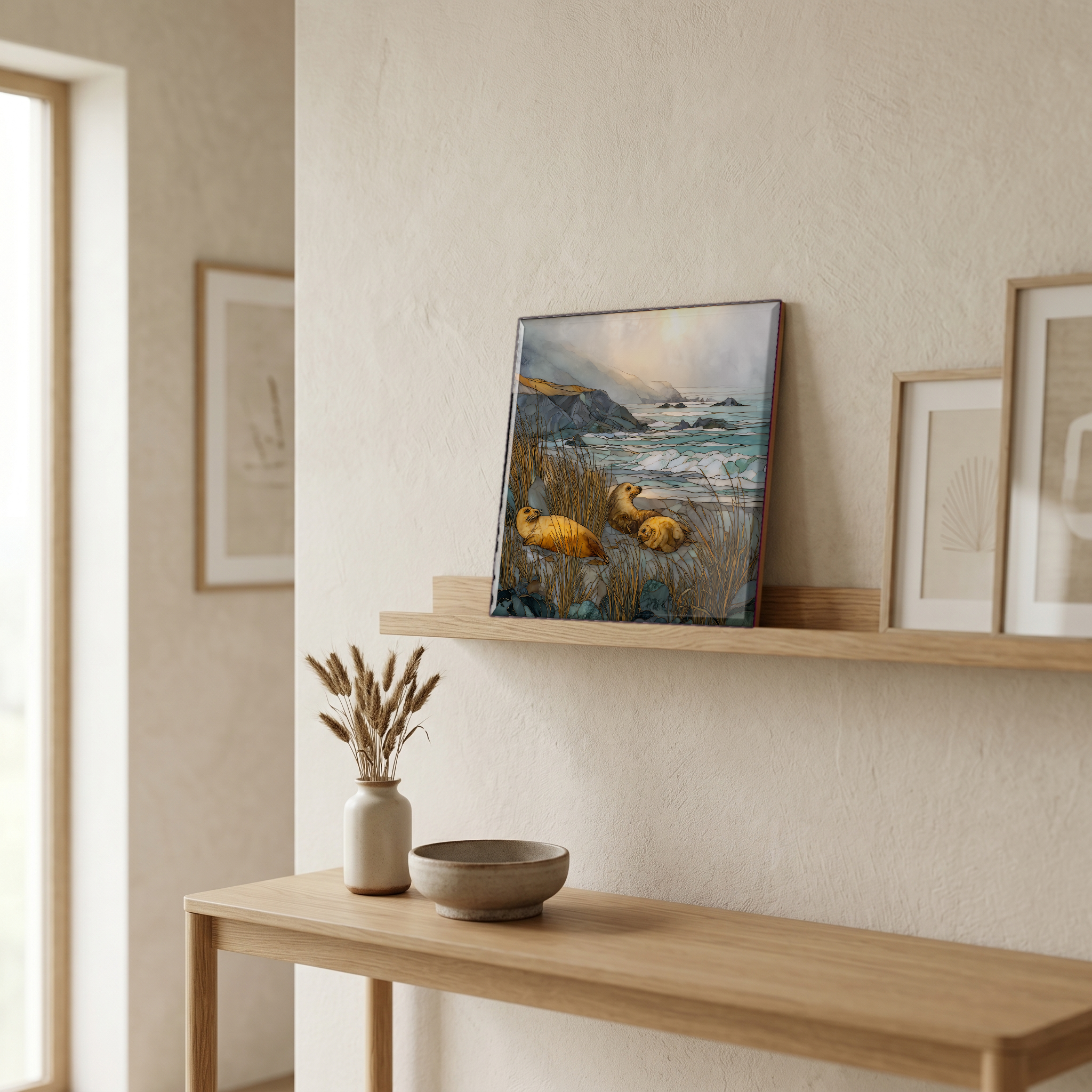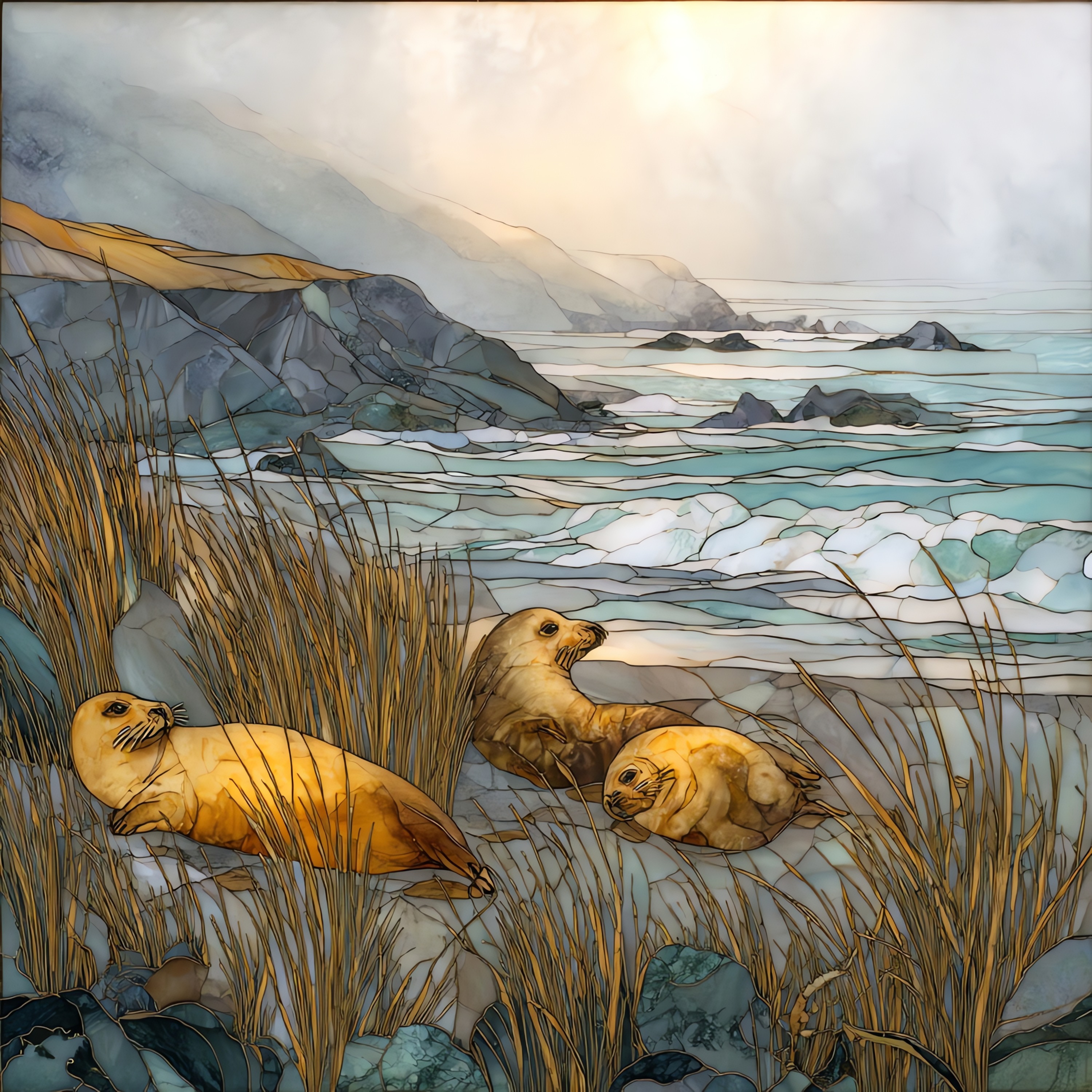
Wender·Vista
Año Nuevo
shown on ceramic, 12-inch tileCalifornia · United States
on the California coast, between Half Moon Bay and Santa Cruz

Año Nuevo

— the winter the beach belongs to the seals.

Where it lives

Not only on a wall.

A small tile on the nightstand catching the morning. A larger one above the fire. Yours, wherever you spend the slow hours.
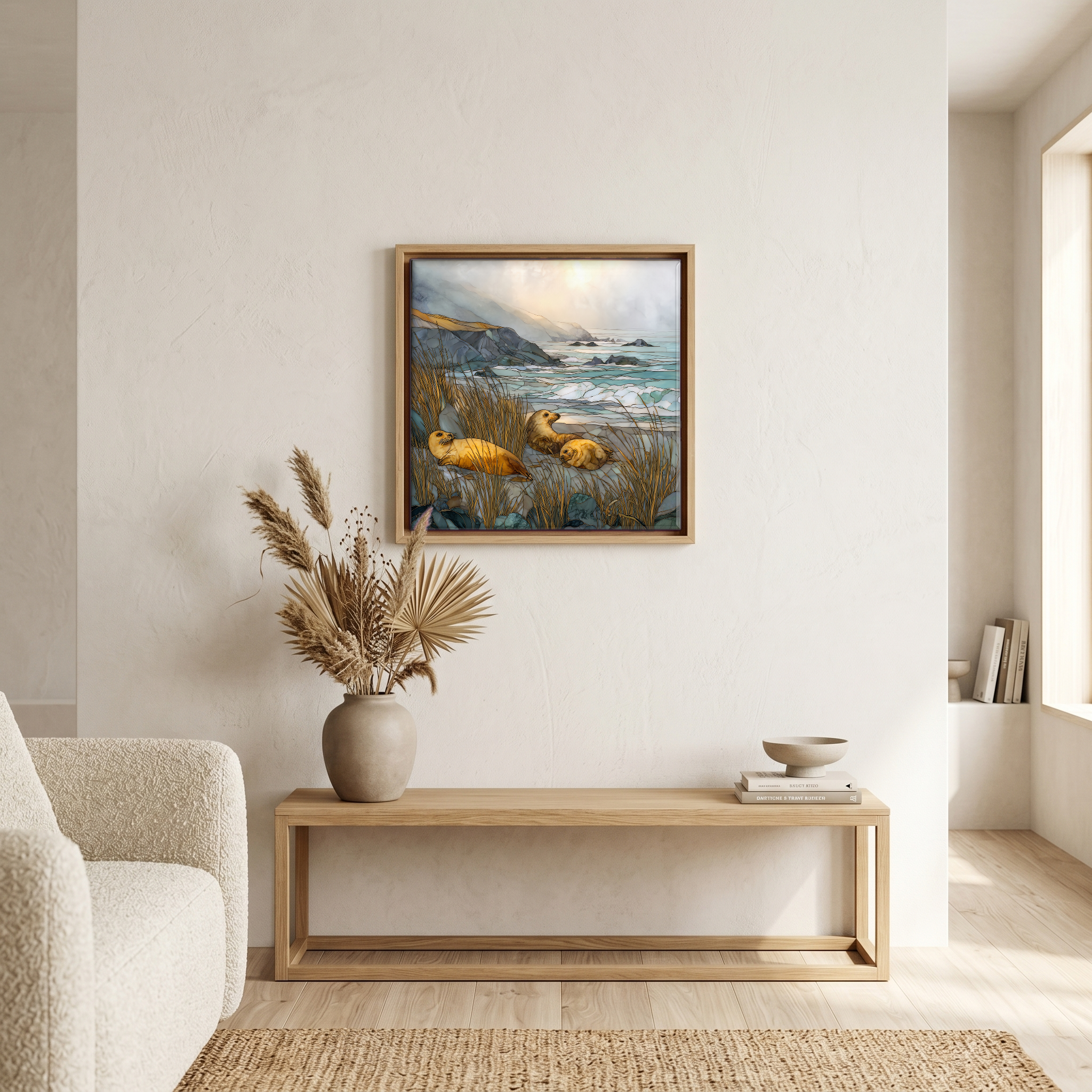
Above the bench, in a warm oak surround.
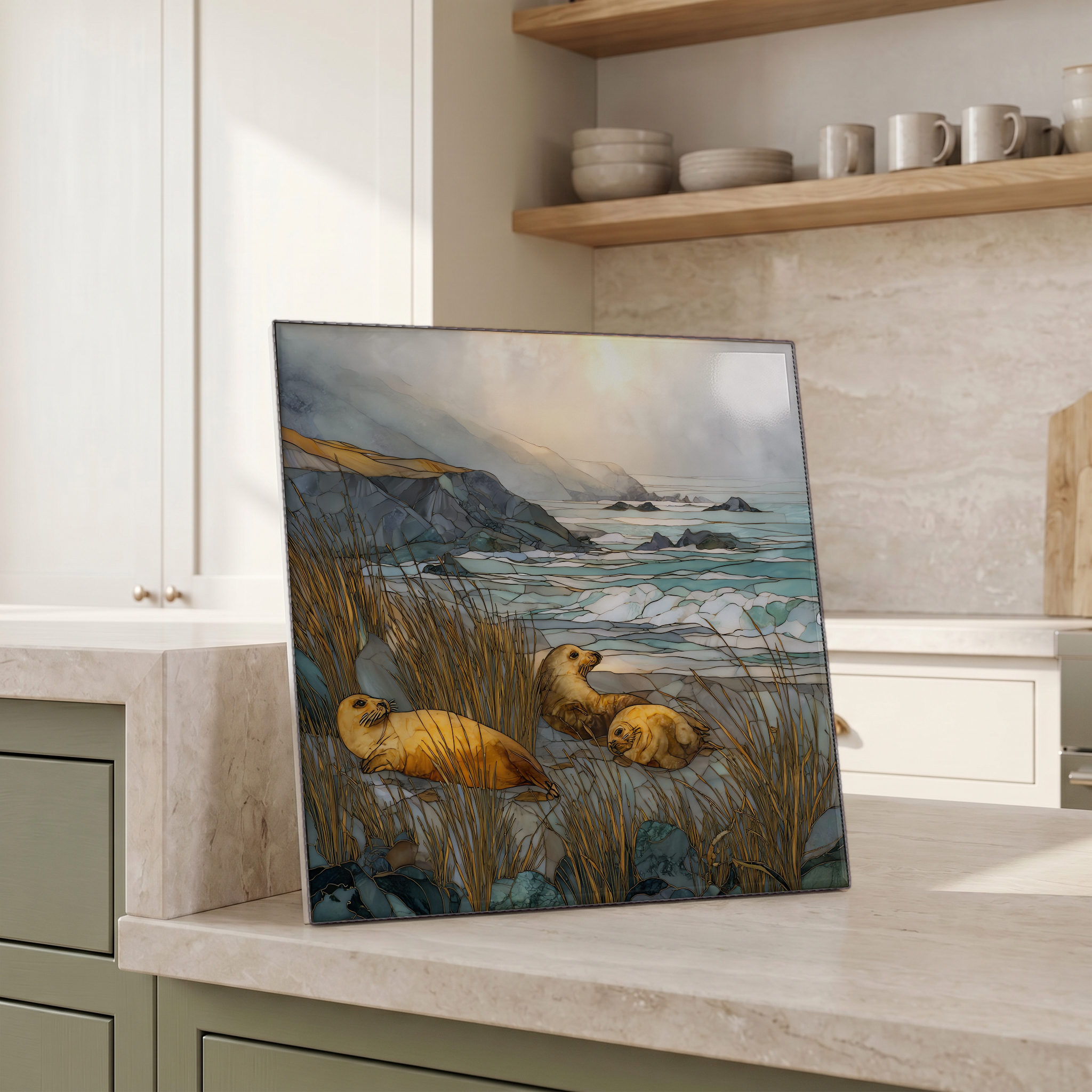
Beside the kettle, propped on the counter.
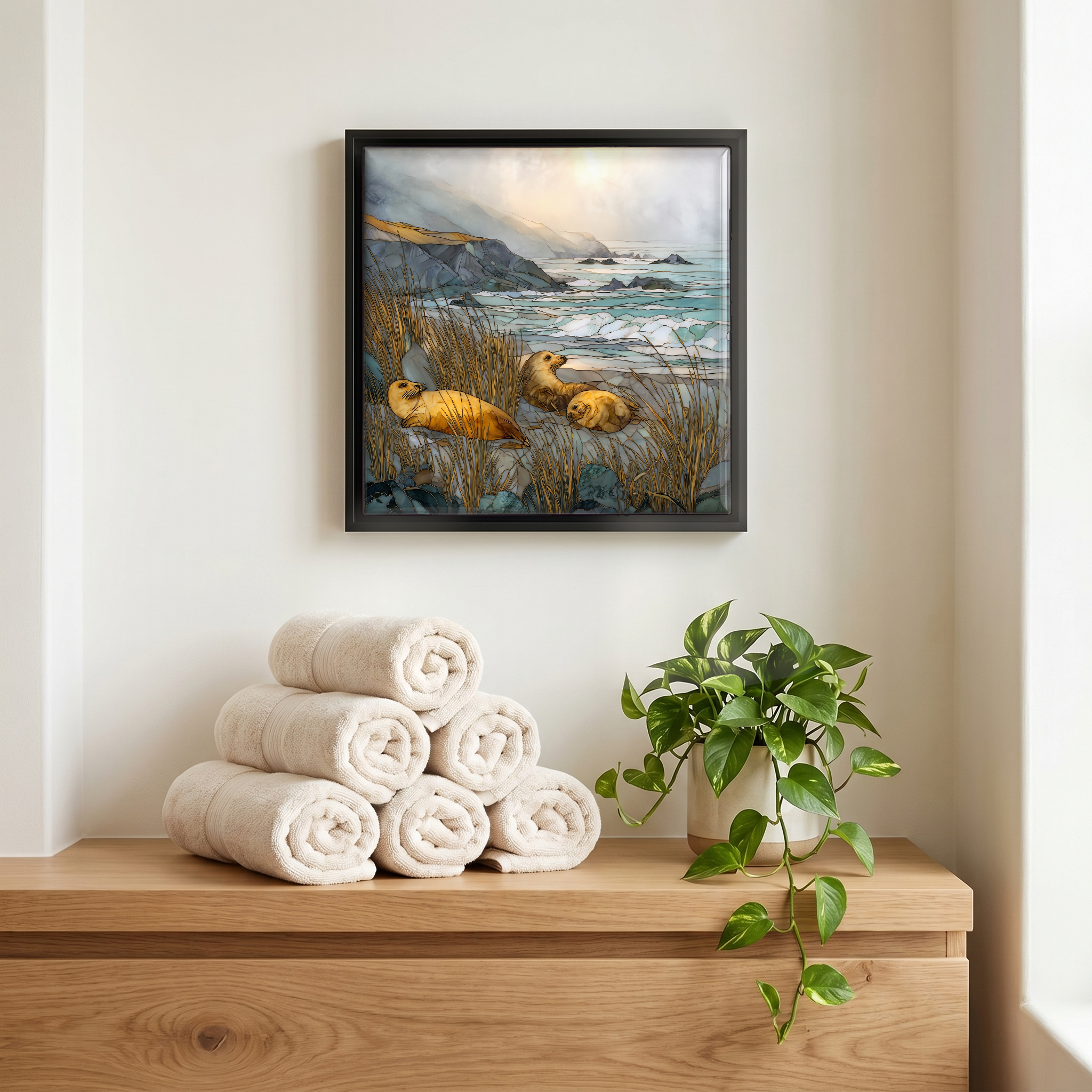
Above the linens, in a slim black surround.
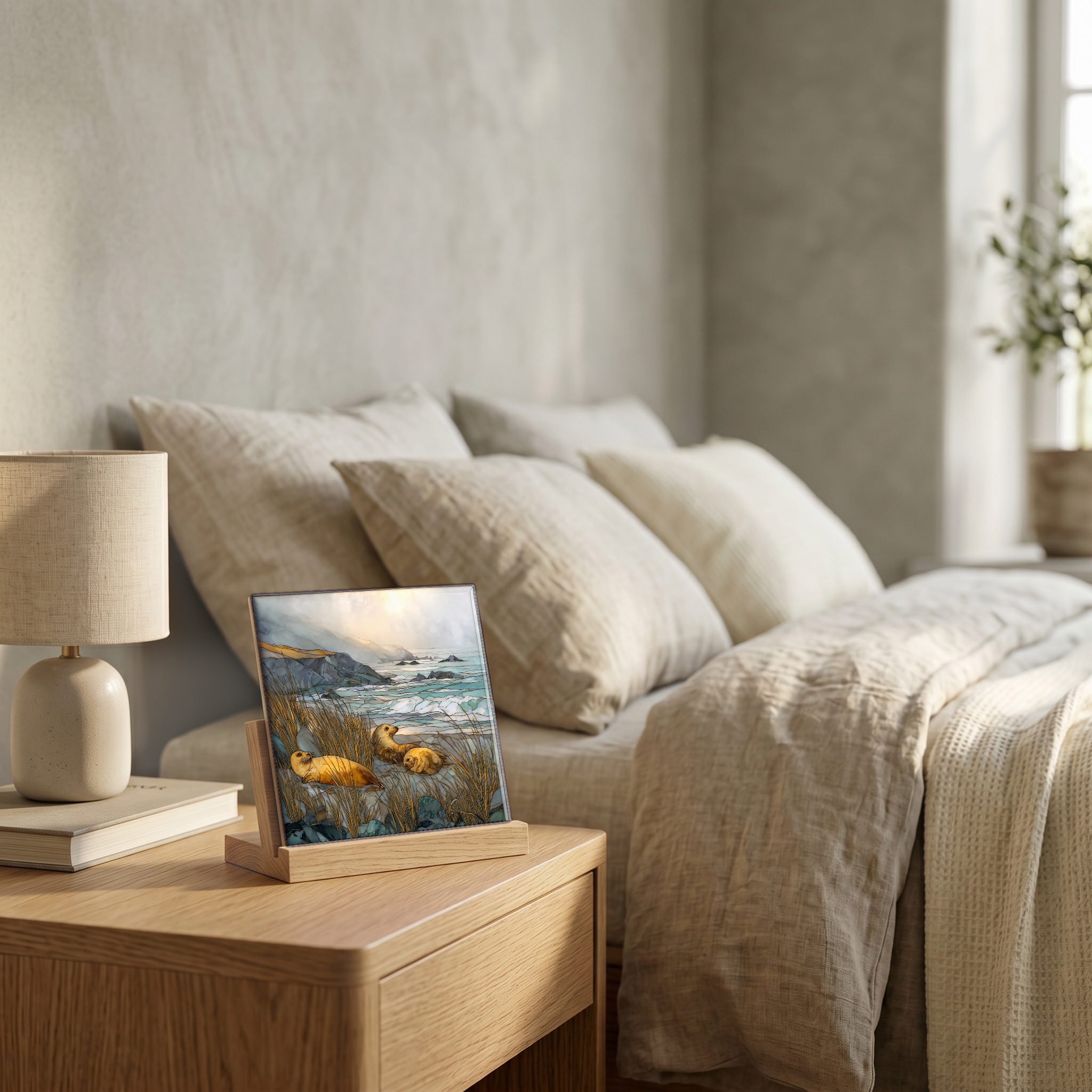
On the nightstand, on a light oak stand.
On a picture ledge, where the light comes in.
a note from the studio

A low headland on the California coast, fifty-five miles south of the Golden Gate. Spanish sailors saw it on the third of January, 1603, and named it for the year. The point is best known now for its elephant seals: two-ton males that come in on the surf each December, females and pups across the dunes by January. From mid-December through March the beach is closed to anyone without a docent. The fog stays late most mornings. The seals stay through April, then the dunes empty out again.
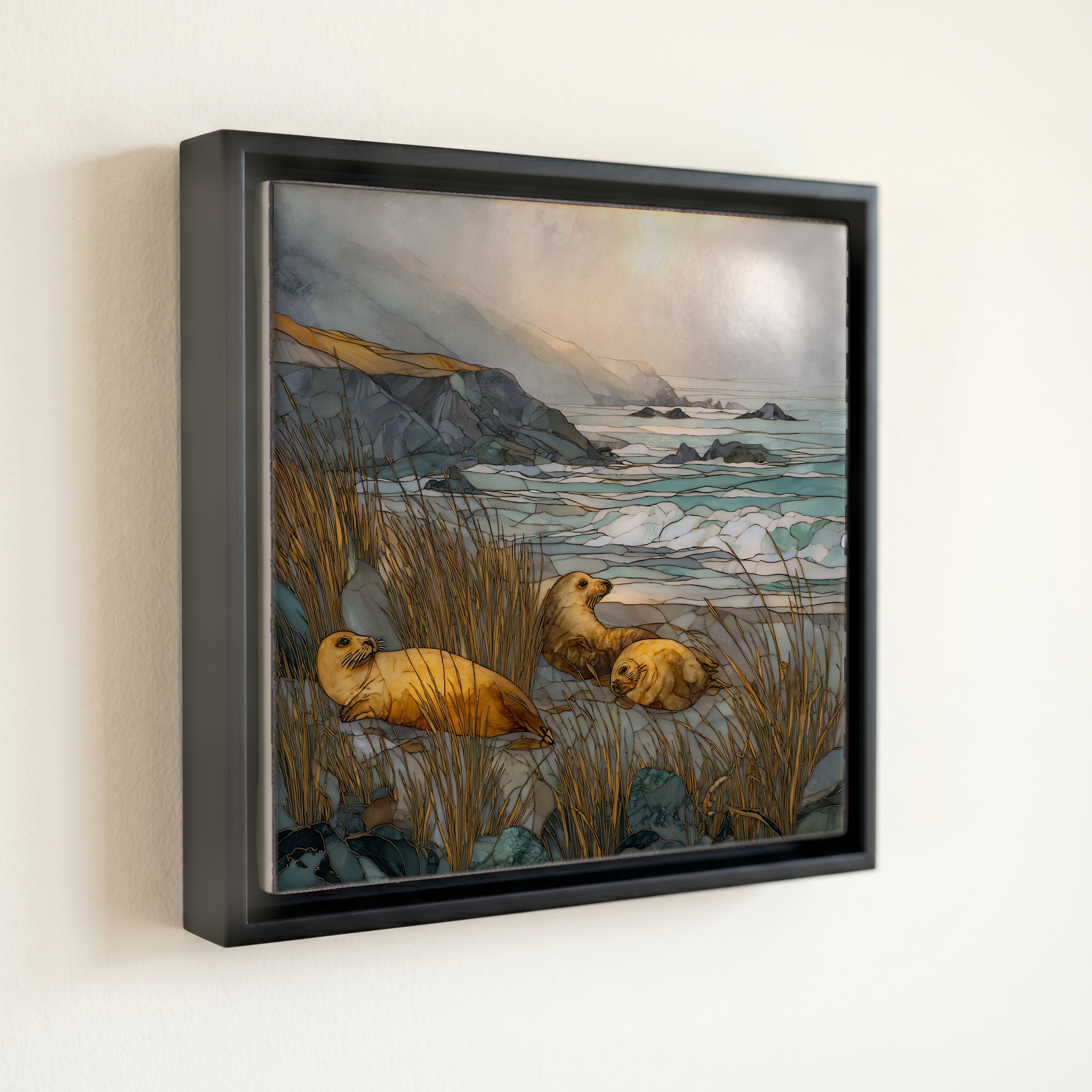
from the studio
shown in a slim black floating frame · 6 × 6 in
— bring it home

Año Nuevo, on ceramic.

Each tile is finished by hand in our Knoxville studio. Artwork is slowly infused into the ceramic surface under high heat and pressure, and rests beneath a thin glossy finish. The colour lives in the surface, not on top of it.

What kind of piece?
One tile — square or rectangle.
How big?
the popular one — counter, shelf, nightstand
6 × 6 in · 15 cm · 1.6 lb
Surface finish
A clear glossy finish — the artwork reads as if under resin. Ideal for show-pieces and framed wall art.
How it sits
A hidden cleat — sits ¼″ proud of the wall.
$58
Hand-finished and shipped from our studio at the foot of the Smokies. On your wall in about ten days.
size
6 × 6 in
15 cm
weighs
1.6 lb
solid in the hand
surface
ceramic, hand-finished
art rests beneath a thin glossy finish
from
Knoxville, TN
our family studio, at the foot of the Smokies
— start a Coaster Set

Pick any four 4-inch tiles — National Parks you've been to, a Smokies set, the four seasons of one place. $ for a set of , cork-backed, ready to live on the table.
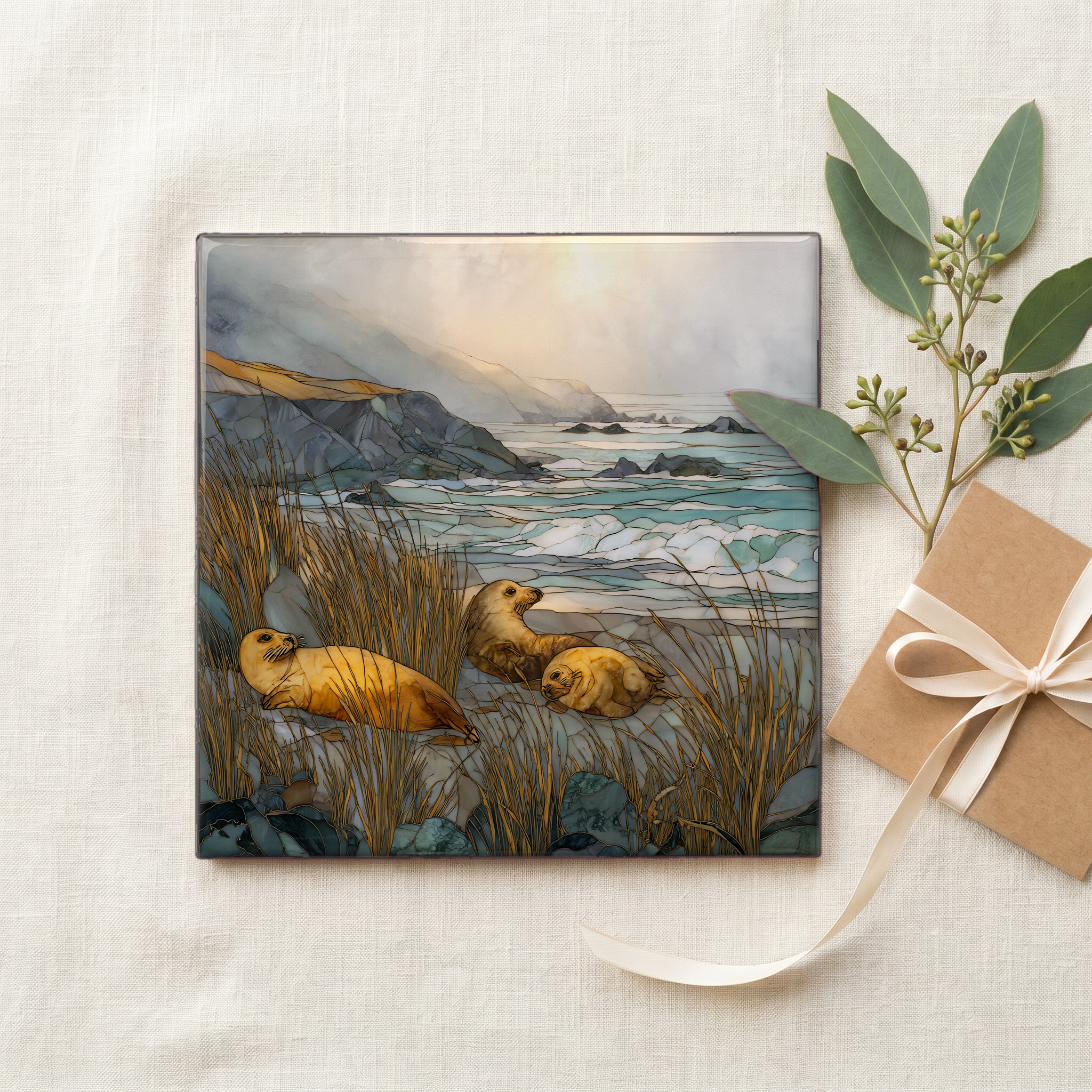
comes gift-ready
comes gift-ready

Each tile ships in a kraft box, tied with cream ribbon, with a handwritten note from the studio if you'd like to add one.
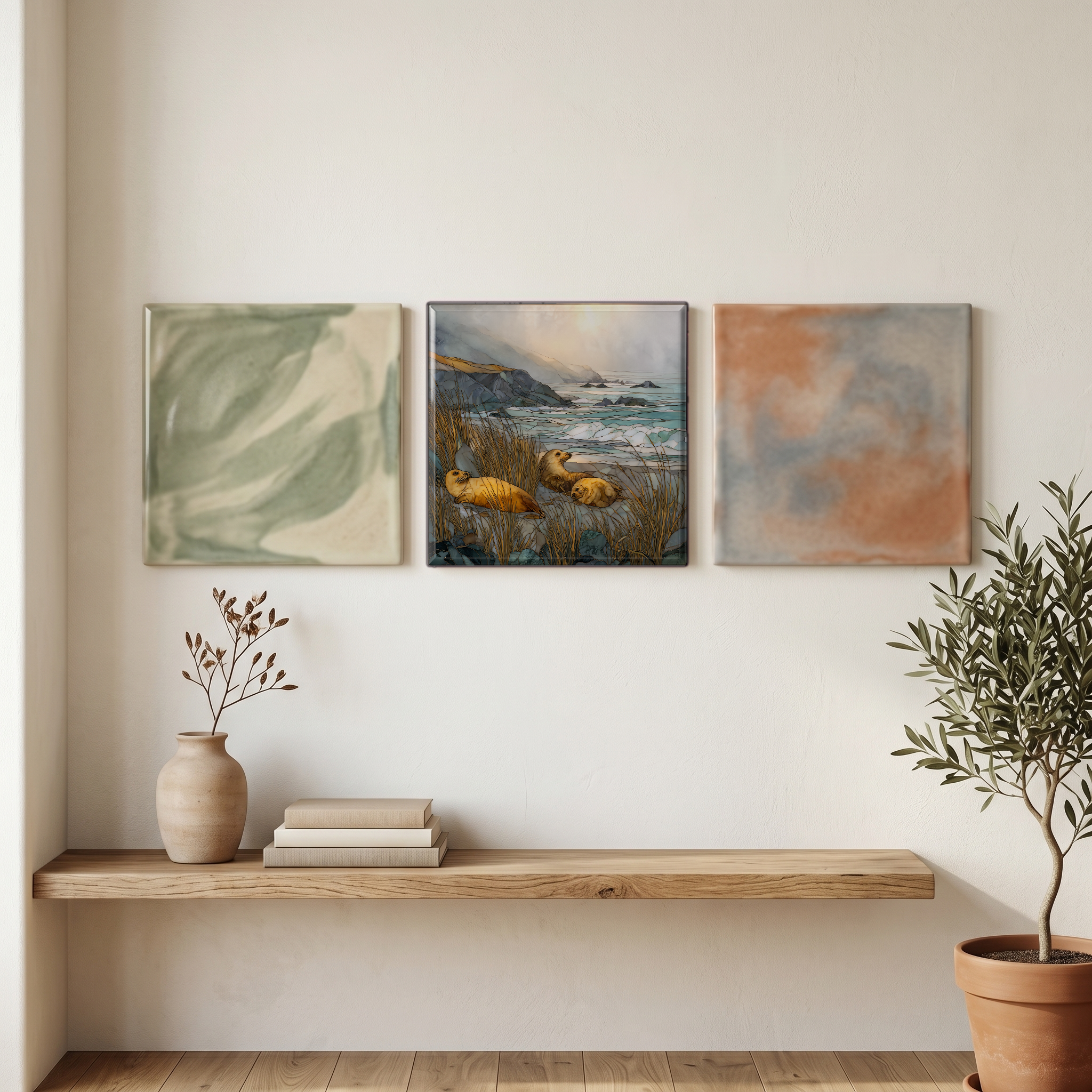
or build a grouping
or build a grouping

Three or five different vistas, hung together — a chapter of places you've been, or want to go.

about Año Nuevo

The place, in three passes.

A little of what's known, in case you fall down the rabbit hole — or want to go see it yourself.
the place

A low, rocky, windswept point on the San Mateo County coast, about fifty-five miles south of the Golden Gate and twenty miles north of Santa Cruz. The 4,209-acre park sits along Highway 1, the Cabrillo Highway, near the small town of Pescadero. The point and the small offshore island that share the name were sighted on January 3, 1603, by the Spanish maritime expedition of Sebastián Vizcaíno; the expedition's chaplain, Antonio de la Ascensión, named them Punta de Año Nuevo for the day they first saw the coast. Long before that, the Quiroste, a coastal Ohlone people, lived seasonally on the headland to fish and gather shellfish. The park became a National Natural Landmark in 1980 and a state park in 1985.

the season

The defining season at Año Nuevo is winter. Northern elephant seals, one of the largest mainland breeding colonies in the world, come ashore from early December through March. Bull seals fight for the beach through December and into January. Females give birth from late December through early February and nurse their pups for about a month. Weaned pups stay on the dunes through April, basking and learning to swim in the intertidal zone. Most adults are gone by mid-March. To protect the colony, the breeding beach is open only to docent-led groups between December 15 and March 31. The walks run about two and a half hours and cover three to four miles over coastal dunes.

the visit

Año Nuevo is one of the few California state parks that closes its main viewing area to the unguided public for the busiest months of the year. From December 15 through March 31, the elephant-seal beach is reachable only on a docent-led walk; reservations open in October through ReserveCalifornia and tend to fill quickly. The route covers about three to four miles round trip over loose sand and exposed bluffs, with little shade; closed shoes, layered clothing, a waterproof jacket, and water are the standard advice. The rest of the year, April through November, the trails are open without a permit, and a smaller permit system covers the spring and summer molting season when adult seals return to shed their coats.

where
United States · San Mateo County, California
within
Año Nuevo State Park
position
37.1331° N · 122.3331° W
the neighborhood

What's nearby.

A handful of named places within an hour's walk or short drive. Some we've already painted; some we will.
7 km N
Pigeon Point Lighthouse
lighthouse station
10 km N
Bean Hollow State Beach
coastal beach
14 km NE
Butano State Park
redwood park
16 km N
Pescadero State Beach
coastal beach
30 km SE
Big Basin Redwoods State Park
redwood park
45 km N
Half Moon Bay
coastal town
N
Año Nuevo
Pigeon Point Lighthouse
Bean Hollow State Beach
Butano State Park
Pescadero State Beach
Big Basin Redwoods State Park
Half Moon Bay
common questions

What people ask.

A few questions we get about Año Nuevo — and about bringing the piece home.
about the place

Año Nuevo State Park sits on the San Mateo County coast about fifty-five miles south of San Francisco and twenty miles north of Santa Cruz. The 4,209-acre park spans the headland along Highway 1, just south of the small town of Pescadero. Half Moon Bay is the nearest small city to the north.

The headland was sighted on January 3, 1603, by the Spanish maritime expedition of Sebastián Vizcaíno. The expedition's chaplain, Father Antonio de la Ascensión, named it Punta de Año Nuevo, New Year's Point, for the day the ship first saw the coast. The name has stayed for more than four centuries.

Northern elephant seals come ashore at Año Nuevo from early December through March. December and January are the bull fights, late December through early February is pupping season, and weaned pups stay on the dunes through April. A separate molting season runs from roughly April through August.

Yes, between December 15 and March 31. The breeding-season beach is reachable only on a docent-led walk that runs about two and a half hours and covers three to four miles over coastal dunes. Reservations open in October through ReserveCalifornia and typically fill before the season starts.

Año Nuevo hosts one of the largest mainland breeding colonies of northern elephant seals in the world. The species was hunted nearly to extinction in the nineteenth century; the modern population recovered from a small remnant herd and now numbers in the tens of thousands across the eastern Pacific.

Yes. From April through November, the park's trails are open without a permit. A smaller permit system covers the spring and summer molting period, when adult seals return to the dunes to shed their coats. Outside breeding season, the bluffs, dunes, and shoreline are quiet again.

The 4,209-acre park includes coastal dunes, freshwater marshes, knobcone pine forest, and four perennial streams that support steelhead and coho salmon. The wetlands shelter the rare San Francisco garter snake and California red-legged frog. Año Nuevo Island, just offshore, holds the ruins of a former lighthouse station.

about the piece in your home

It's been a meaningful gift for customers with ties to the San Mateo and Santa Cruz coast: people who've done the docent walks in January, or driven Highway 1 between Half Moon Bay and Davenport. A Keepsake or Small with a handwritten note from the studio carries well.

The Voynich palette, deep blues and sea-greens with smoke and ochre, settles into Coastal-modern interiors, Pacific-Northwest cabin rooms, and Jewel-tone Maximalist rooms with a lot of texture. It also reads well against weathered wood and warm white walls, and pulls toward fog-coast and headland palettes.

Coastal-modern has moved away from beach-house pastels toward the moodier Pacific palette of slate, fog, kelp green, and bull-kelp ochre, which is exactly where this piece sits. It pairs cleanly with natural linen, oak, and unglazed stoneware, and avoids the over-bright look that dates a room quickly.

Above a standard 84-inch sofa, the single Large or a 4-tile Mural fills the wall well. For a longer sofa or a wide console, the 9-tile Mural carries the space. Above a narrower console, a Medium or Triptych keeps the proportion right.

Yes, with the Dura Satin or Matte finish. Both are scratch-resistant and built for steam and splash, so a coastal piece reads well above a tub or behind a kitchen sink. The Glossy finish is better kept to dry-room wall art and framed pieces.

A soft microfibre cloth and water is all that's needed for normal dust and splash. For kitchens and bathrooms, a damp cloth wipes the surface clean. The colour lives in the ceramic, not on top of it, so it won't lift or scratch with daily handling.

Yes. Every WenderVista tile is hand-finished by our small studio in Knoxville, Tennessee. The artwork is original to Reid Wender, the curator, and is not licensed from any third party. We hold the right to every piece in the atlas.

if this one stayed with you

A few you might also love.

Hand-picked by the eye that found Sorapis. Same air, same kind of quiet.