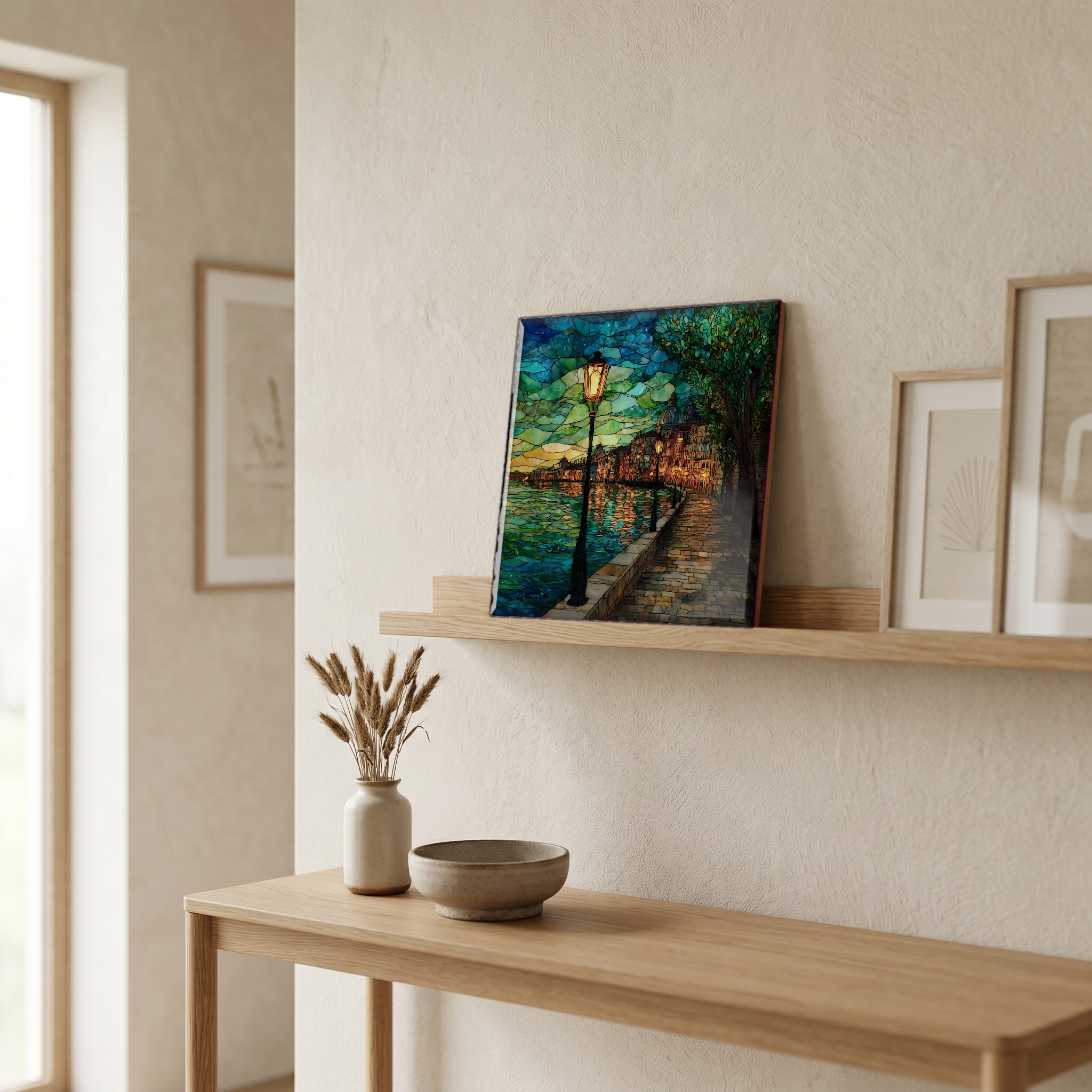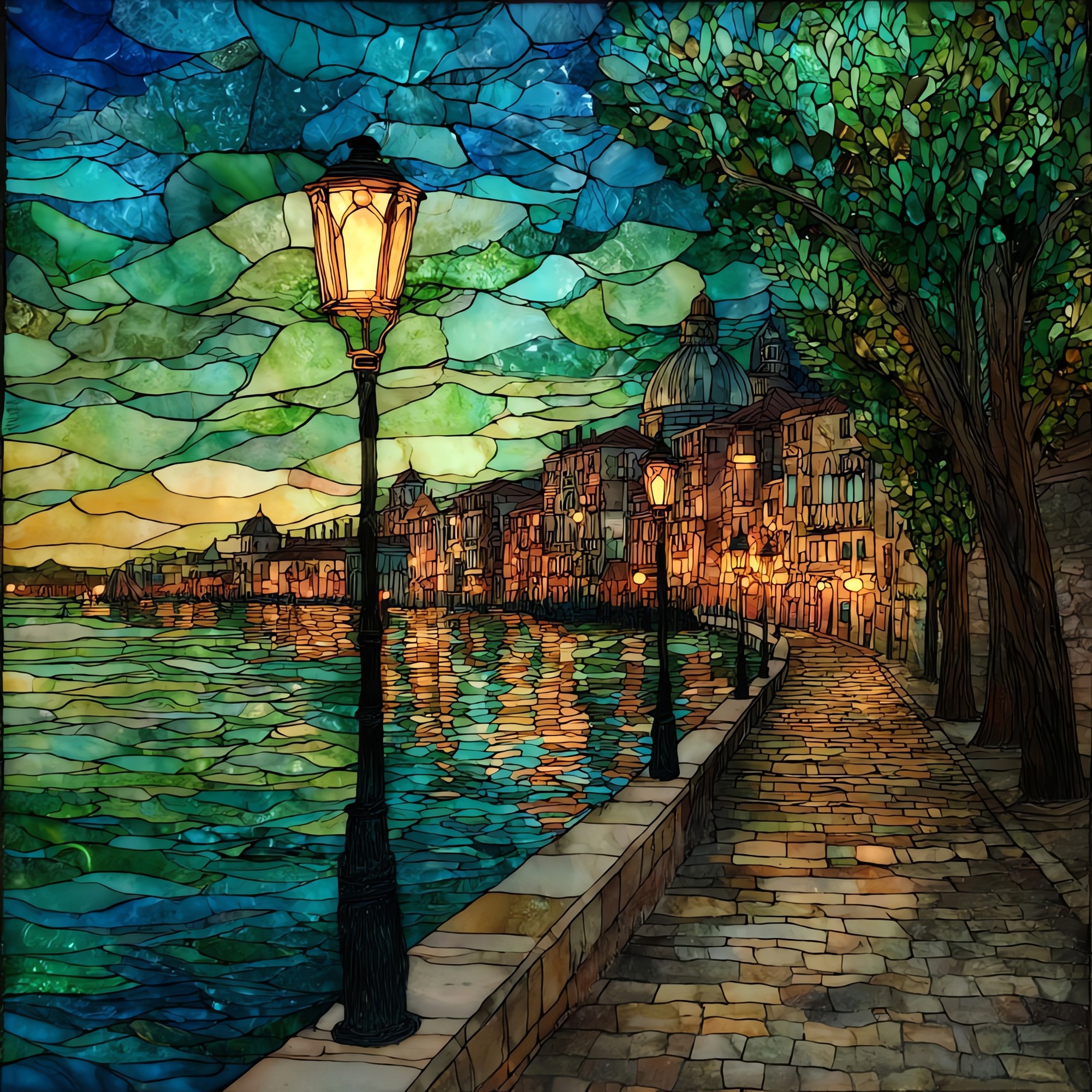
Wender·Vista
Zattere
shown on ceramic, 12-inch tileItaly
on the south side of Venice, facing Giudecca

Zattere

— the side of Venice that keeps the afternoon.

Where it lives

Not only on a wall.

A small tile on the nightstand catching the morning. A larger one above the fire. Yours, wherever you spend the slow hours.
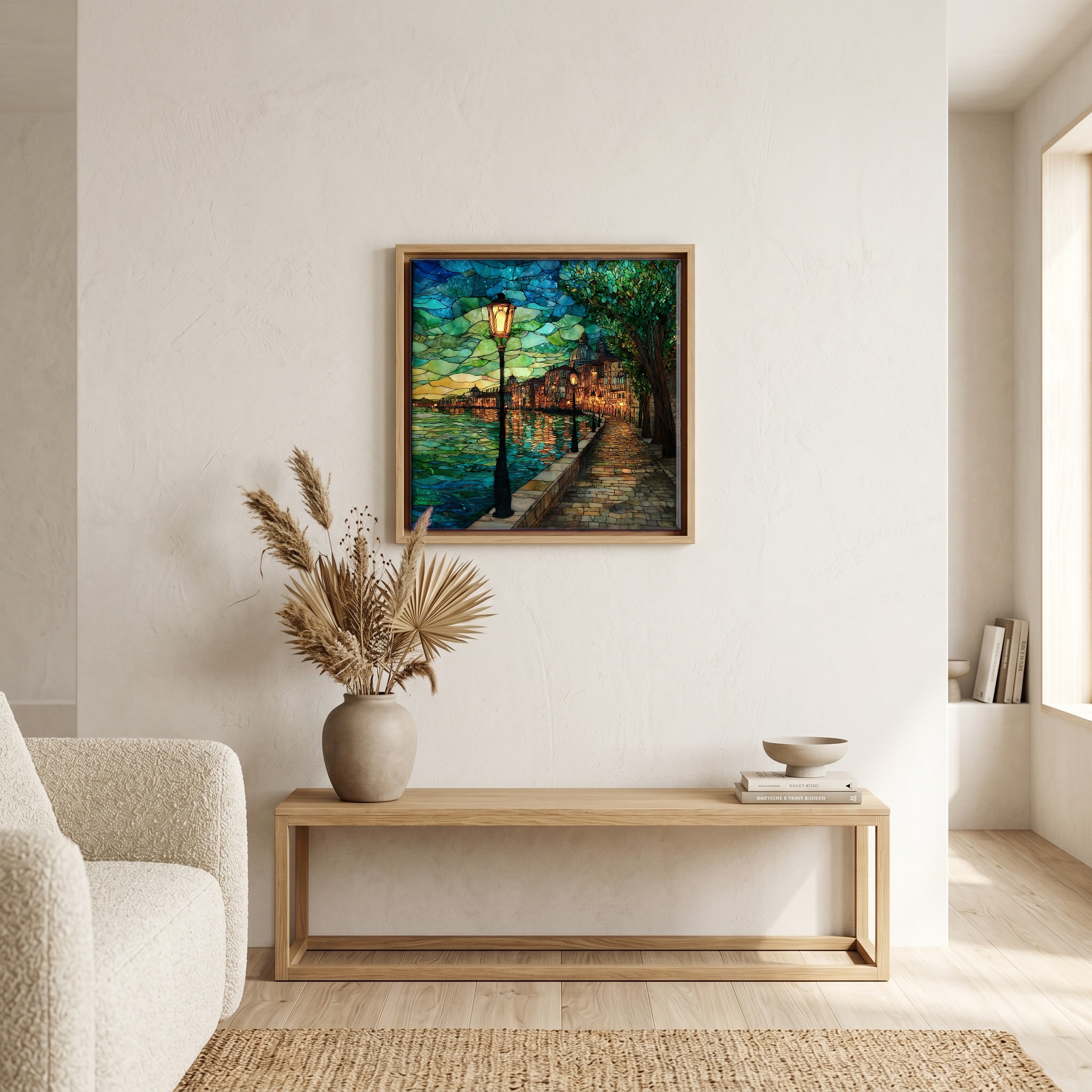
Above the bench, in a warm oak surround.
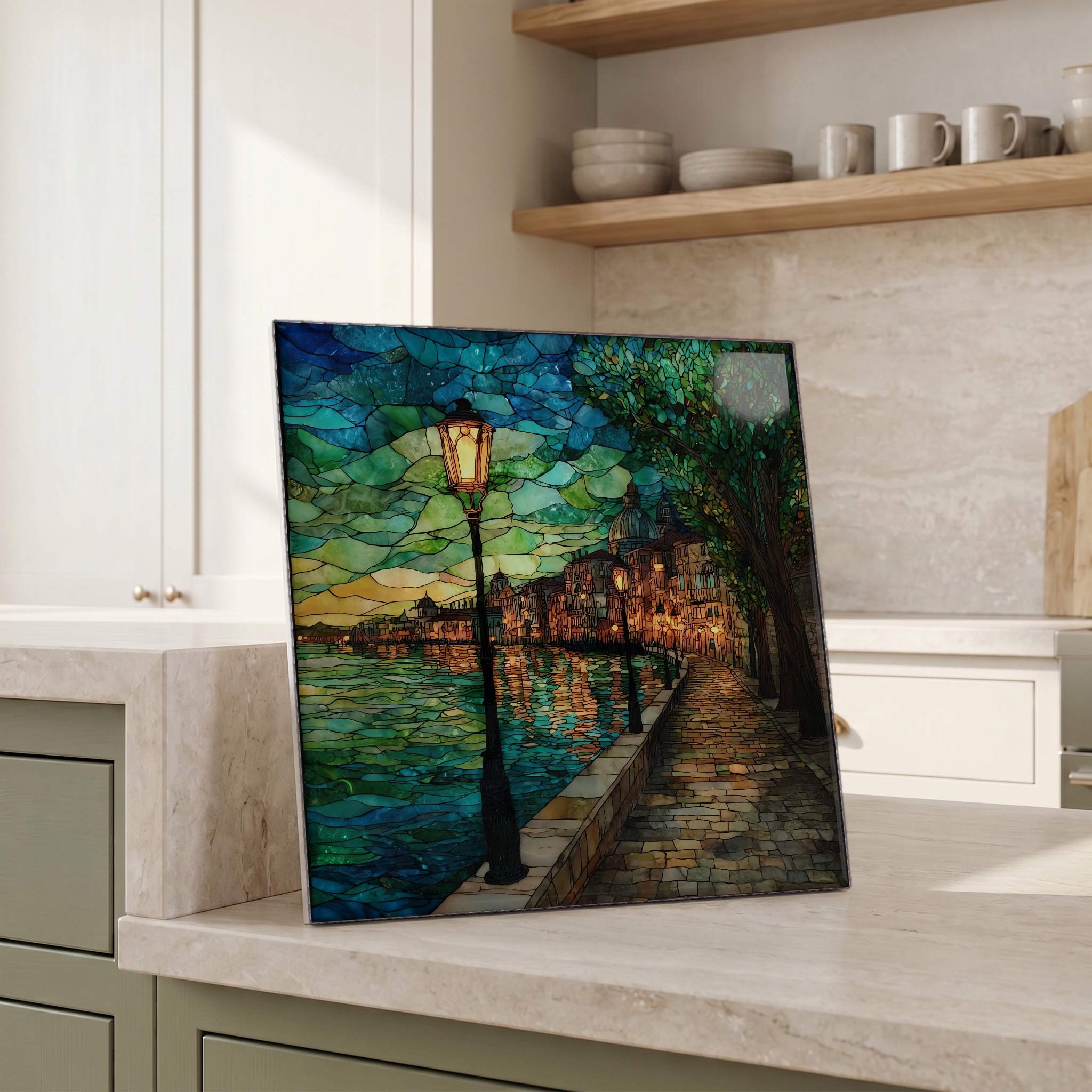
Beside the kettle, propped on the counter.
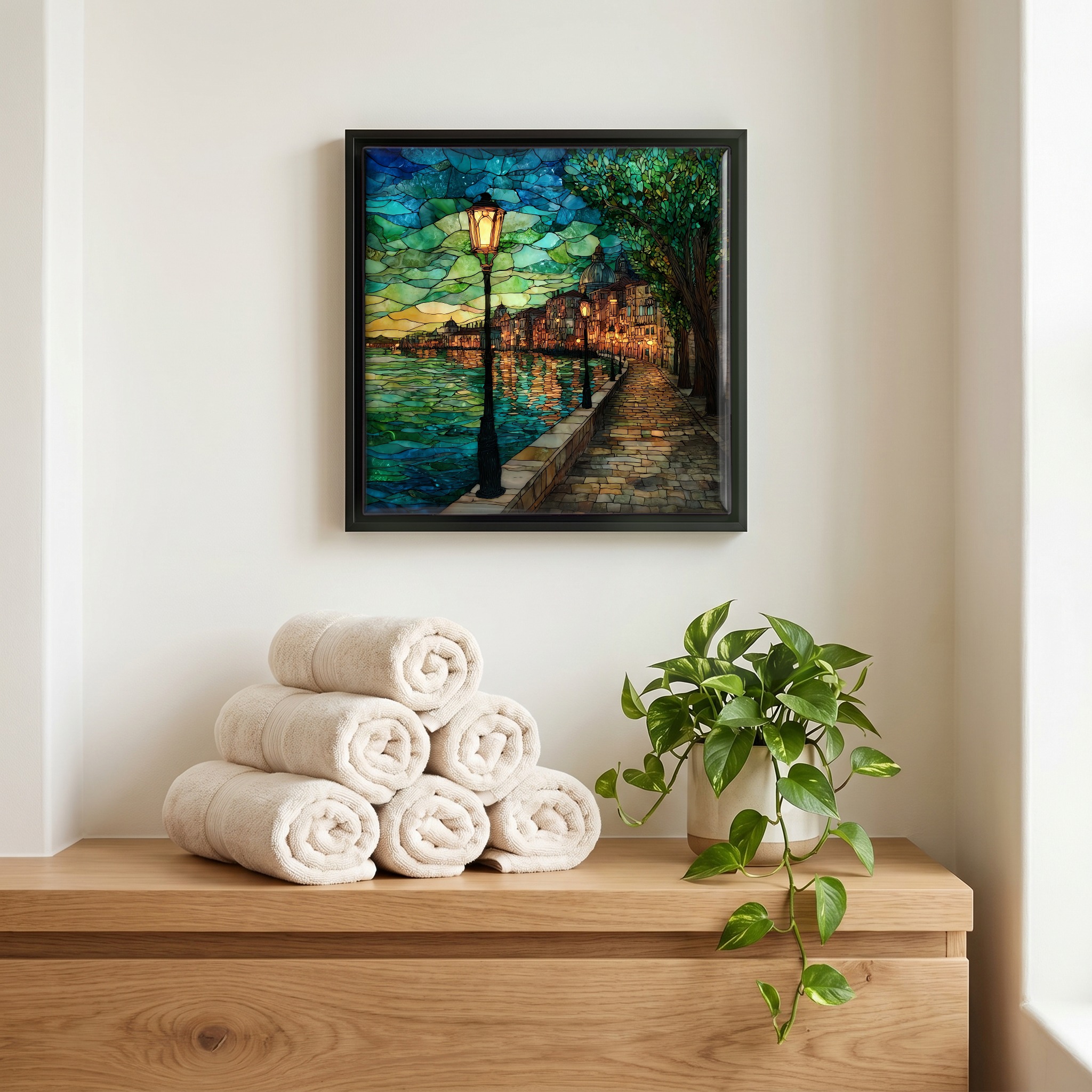
Above the linens, in a slim black surround.
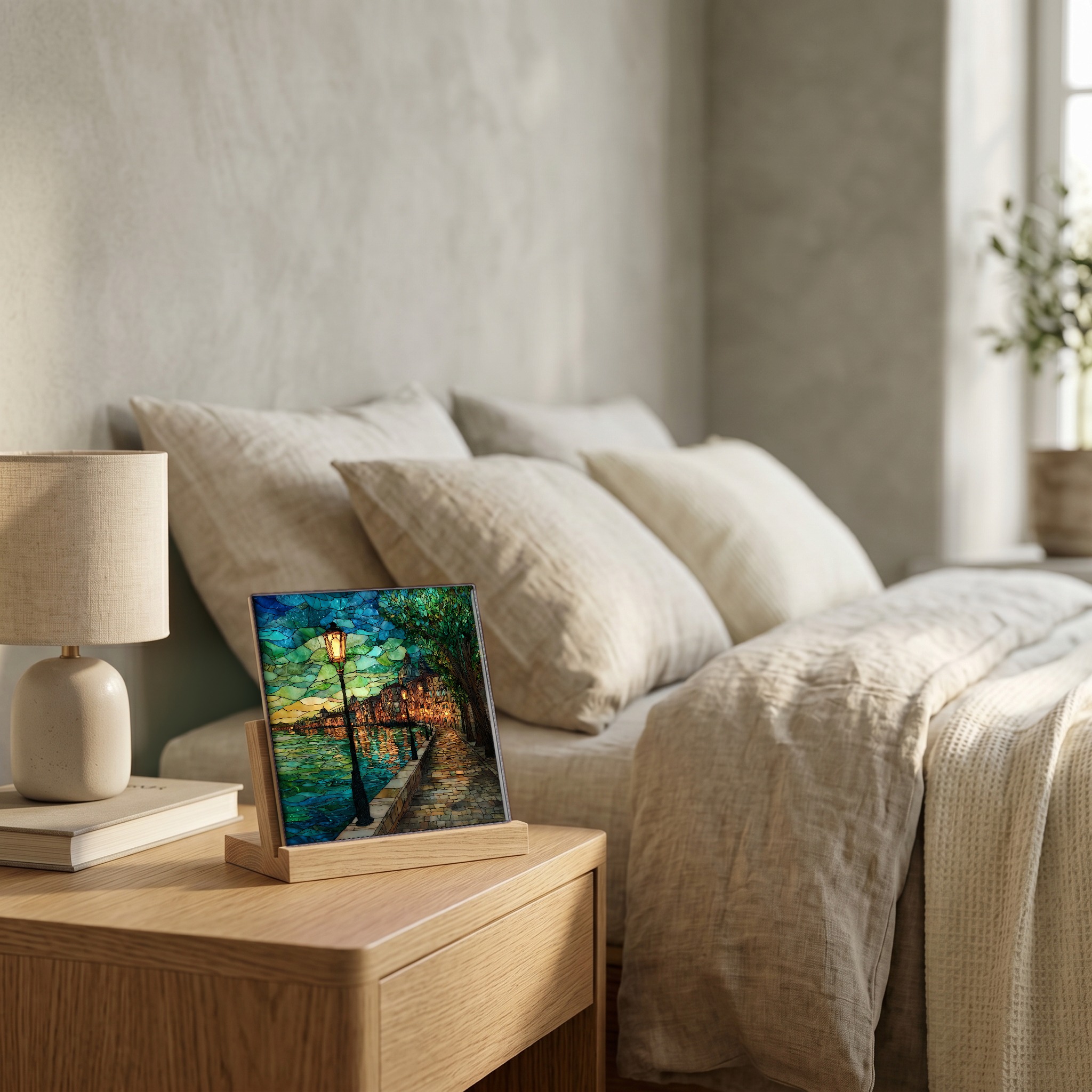
On the nightstand, on a light oak stand.
On a picture ledge, where the light comes in.
a note from the studio

The southern waterfront of Dorsoduro, a long fondamenta facing the island of Giudecca across the canal. The name comes from rafts. Cadore timber once floated down from the Dolomites, lashed together, broken up here when the bargemen arrived. The promenade runs about a kilometre from Punta della Dogana toward San Basilio, wide enough to feel rare in Venice. Locals come here in winter for the south-facing sun. Nico, the gelateria near the Spirito Santo church, has served the same gianduiotto since the 1930s.
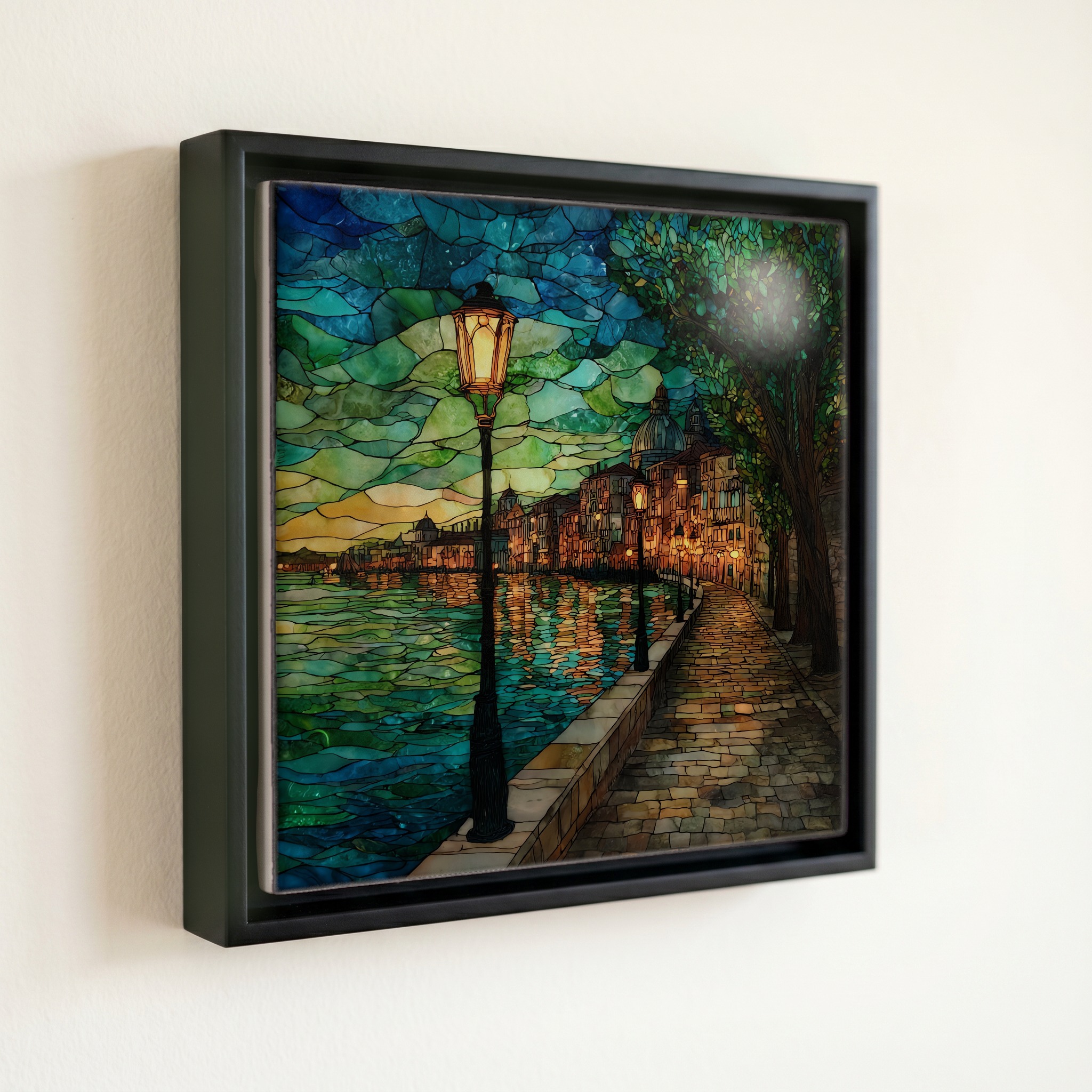
from the studio
shown in a slim black floating frame · 6 × 6 in
— bring it home

Zattere, on ceramic.

Each tile is finished by hand in our Knoxville studio. Artwork is slowly infused into the ceramic surface under high heat and pressure, and rests beneath a thin glossy finish. The colour lives in the surface, not on top of it.

What kind of piece?
One tile — square or rectangle.
How big?
the popular one — counter, shelf, nightstand
6 × 6 in · 15 cm · 1.6 lb
Surface finish
A clear glossy finish — the artwork reads as if under resin. Ideal for show-pieces and framed wall art.
How it sits
A hidden cleat — sits ¼″ proud of the wall.
$58
Hand-finished and shipped from our studio at the foot of the Smokies. On your wall in about ten days.
size
6 × 6 in
15 cm
weighs
1.6 lb
solid in the hand
surface
ceramic, hand-finished
art rests beneath a thin glossy finish
from
Knoxville, TN
our family studio, at the foot of the Smokies
— start a Coaster Set

Pick any four 4-inch tiles — National Parks you've been to, a Smokies set, the four seasons of one place. $ for a set of , cork-backed, ready to live on the table.
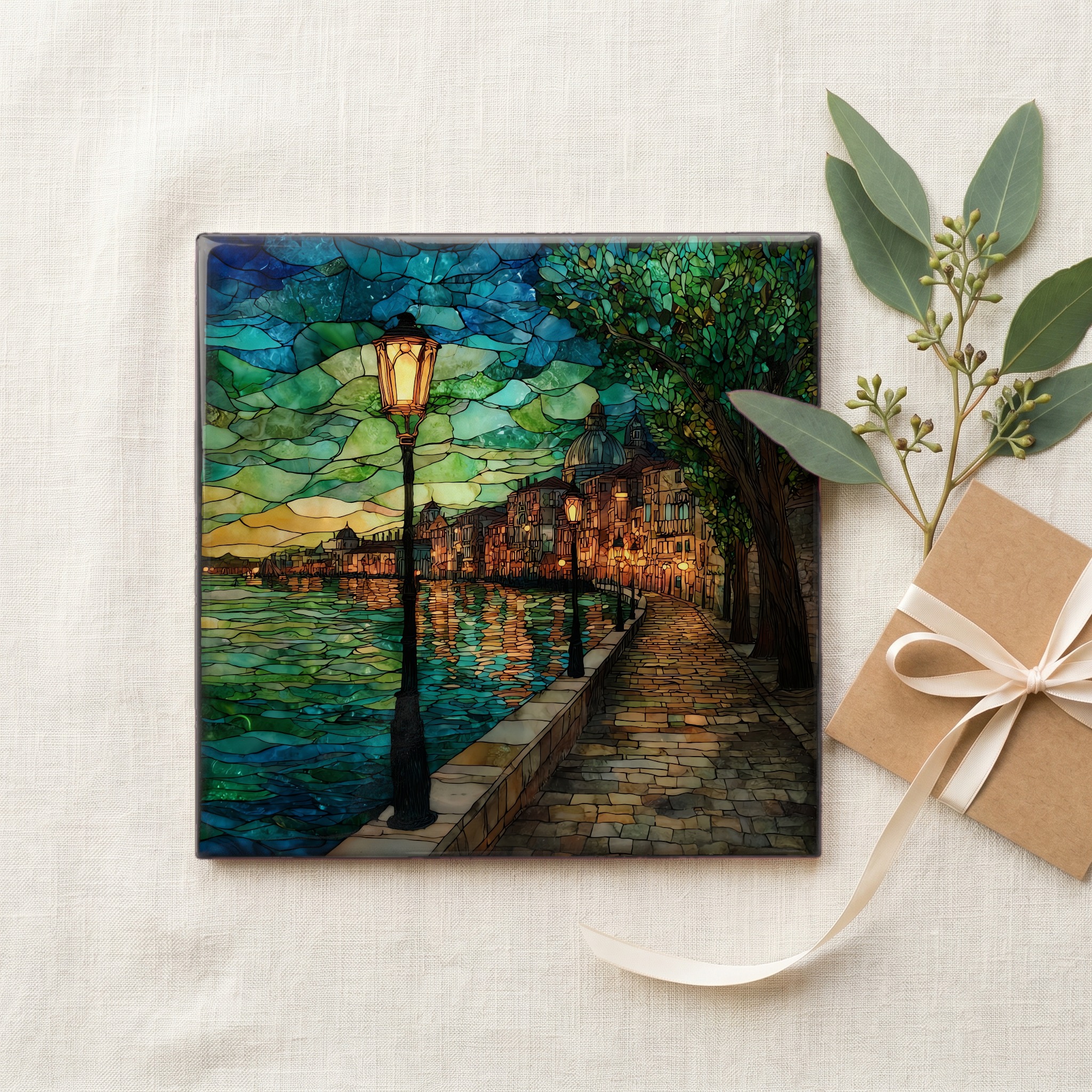
comes gift-ready
comes gift-ready

Each tile ships in a kraft box, tied with cream ribbon, with a handwritten note from the studio if you'd like to add one.
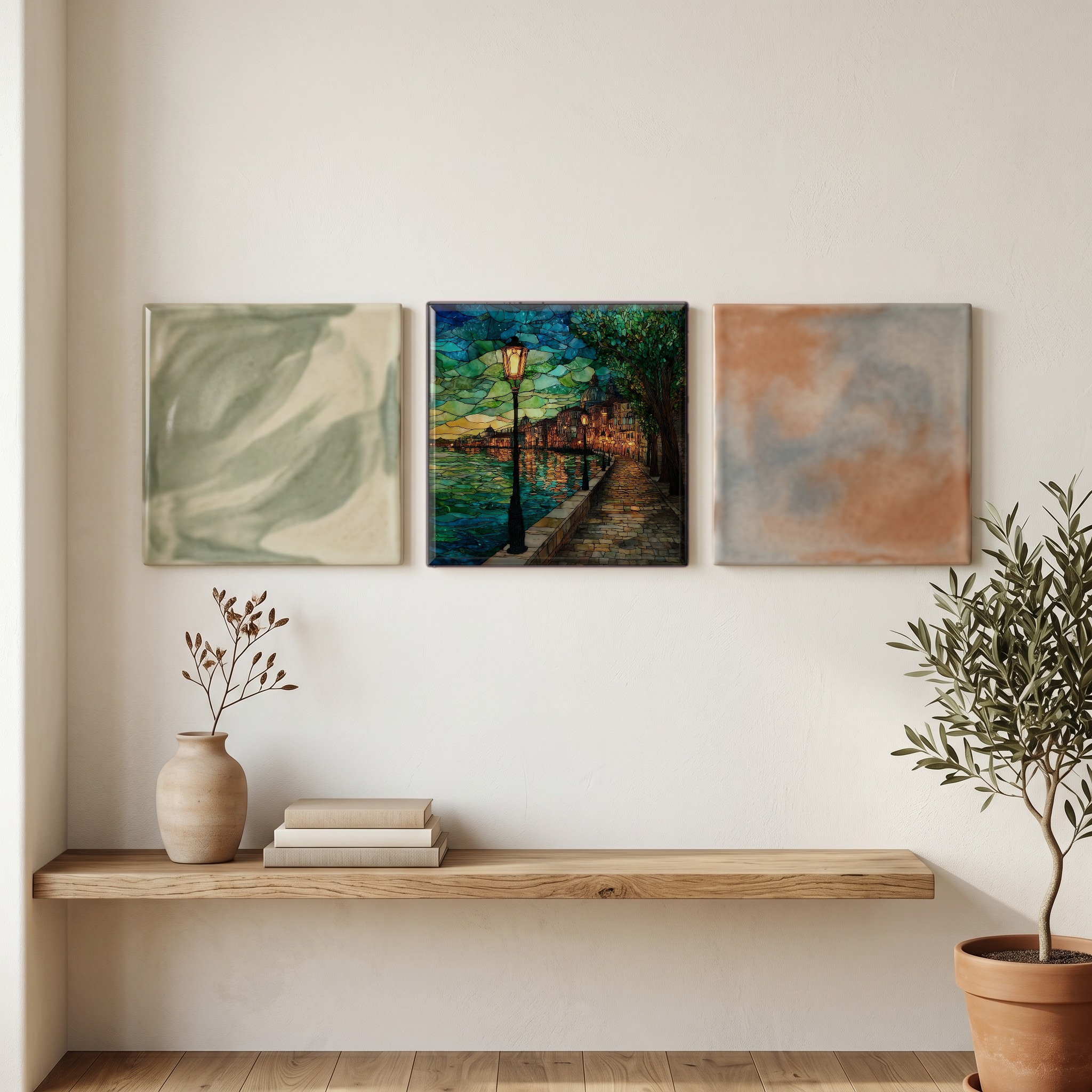
or build a grouping
or build a grouping

Three or five different vistas, hung together — a chapter of places you've been, or want to go.

about Zattere

The place, in three passes.

A little of what's known, in case you fall down the rabbit hole — or want to go see it yourself.
the place

The Zattere is the southern waterfront of the Dorsoduro sestiere in Venice, a continuous fondamenta of about 1,200 metres facing the island of Giudecca across the wide Canale della Giudecca. The name means 'rafts': from the medieval period until the nineteenth century, timber from the Cadore valleys of the Dolomites was floated down the Piave river, lashed into rafts called zattere, and unloaded here for the Venetian Republic's shipyards and palaces. The fondamenta is divided into four named stretches: Zattere ai Saloni at the eastern end, Zattere allo Spirito Santo, Zattere ai Gesuati, and Zattere al Ponte Lungo. The canal opposite is the deepest in central Venice and still carries cruise traffic and the vaporetto network.

the light

Of all the major fondamentas in Venice, the Zattere catches the most direct sun. It faces almost due south across the Canale della Giudecca, which is roughly 300 metres wide. No buildings on the near side throw shade. Cafés and bars set out tables along the entire length from late morning, and on clear winter days the promenade is a destination for Venetians escaping the cool shaded calli of the interior. The light off the water carries across to the Giudecca's brick façades, including Andrea Palladio's Il Redentore church (completed 1592), turning them rose-coloured for the last half hour before sunset.

the visit

The Zattere can be walked end to end in about twenty minutes without stops, but most people take longer. From east to west the route passes the seventeenth-century salt warehouses at Punta della Dogana, the Spirito Santo church, and the Gesuati (Santa Maria del Rosario, built 1726-1736 by Giorgio Massari with a ceiling fresco by Giambattista Tiepolo), then ends near Nico, the small gelateria that has served the gianduiotto al passeggio since the 1930s. The gianduiotto is a wedge of hazelnut-chocolate ice cream floated in a glass of whipped cream. Vaporetto line 2 stops three times along the fondamenta; line 5.1 also calls at San Basilio at the western end. Entry to the promenade itself is free at all hours.

where
Italy · Venice, Veneto
position
45.4296° N · 12.3232° E
the neighborhood

What's nearby.

A handful of named places within an hour's walk or short drive. Some we've already painted; some we will.
1 km E
Punta della Dogana
former customs house, art museum
1 km E
Basilica di Santa Maria della Salute
baroque basilica
1 km S
Il Redentore
Palladian church
1 km N
Squero di San Trovaso
working gondola boatyard
1 km NE
Gallerie dell'Accademia
Venetian painting museum
1 km E
San Giorgio Maggiore
Palladian island church
1 km N
Campo Santa Margherita
neighbourhood square
N
Zattere
Punta della Dogana
Basilica di Santa Maria della Salute
Il Redentore
Squero di San Trovaso
Gallerie dell'Accademia
San Giorgio Maggiore
Campo Santa Margherita
common questions

What people ask.

A few questions we get about Zattere — and about bringing the piece home.
about the place

The Zattere is the southern waterfront of the Dorsoduro district in Venice, Italy, running along the Canale della Giudecca for about 1,200 metres. The east end meets Punta della Dogana; the west end joins San Basilio.

Zattere is Italian for 'rafts'. From the Middle Ages until the nineteenth century, timber from the Cadore valleys in the Dolomites was floated down the Piave river to Venice, lashed into rafts, and unloaded here for the Republic's shipyards and palaces.

The fondamenta faces almost due south across the Canale della Giudecca, the widest canal in the historic city at roughly 300 metres. No buildings on the near side throw shade. Cafés set out tables along its full length on clear winter days.

Directly across the canal is the island of Giudecca with Andrea Palladio's Il Redentore church (completed 1592) and Le Zitelle. The Punta della Dogana sits to the east; the San Basilio waterfront and cruise terminal lie to the west.

Three: the Spirito Santo, the Gesuati (also called Santa Maria del Rosario, built 1726-1736 by Giorgio Massari with a ceiling fresco by Giambattista Tiepolo), and the small Santa Maria della Visitazione next door to the Gesuati.

Vaporetto line 2 stops three times along the fondamenta (Zattere, Spirito Santo, San Basilio). It can also be walked from the Accademia bridge in about ten minutes, or from Piazzale Roma in roughly twenty.

A wedge of hazelnut-chocolate ice cream floated in a glass of whipped cream, served at the Gelateria Nico on the Zattere allo Spirito Santo since the 1930s. It is the dish most associated with the promenade by Venetians.

about the piece in your home

The Zattere is one of the parts of Venice that Venetians themselves return to most often, especially in winter. A Small or Medium with a handwritten note from the studio works well for someone who walked here regularly. A Coaster carries the place at desk scale.

The studio's visual language leans warm-jewel and architectural, reading well in Italianate, Old-World, and Jewel-tone Maximalist rooms. The colours pull from terracotta, deep teal, and the rose of late-afternoon brick. It also works as the single warm element in a Coastal-Modern or Mediterranean palette.

Yes. The pull toward Italian-modern and warmly-coloured European-vintage rooms has been growing through 2025-2026, and Venice tiles pair well with travertine, terrazzo, walnut, and aged-brass hardware. The Medium reads as a focal piece on a console or hallway shelf.

For a sofa, the Large reads cleanly at three to four feet wide and works as a single piece above most three-seaters. For a console, the Medium or a four-tile Mural of Smalls is more proportional. For a long wall, a nine-tile Mural carries the scale of the canal itself.

Yes. Order the Dura Satin or Matte finish for any wet or vertical install: shower surround, backsplash, powder room. Both finishes are scratch-resistant and unaffected by humidity. The Glossy finish is reserved for framed wall pieces only.

A microfibre cloth with water is enough. Avoid abrasives and ammonia-based cleaners. The colour is slowly infused into the ceramic surface under high heat and pressure, beneath a thin protective finish, so it will not fade or scratch with normal handling.

Yes. Every WenderVista piece is original studio work, made and finished in Knoxville, Tennessee. There is no licensed imagery in the WenderVista atlas; each place is painted in our own visual language by Reid Wender, the studio's curator and eye.

if this one stayed with you

A few you might also love.

Hand-picked by the eye that found Sorapis. Same air, same kind of quiet.
— a collection

The Italian Dolomites,
painted slow.

The valleys between Cortina and Val Gardena, the tarns you walk an hour to see, the towers that turn the colour of a banked fire just before dark. Wander the collection by valley, by season, or follow the path Reid walked.

Tre Cime
Braies
Misurina
Sorapis
Cinque Torri
Sassolungo
Marmolada