Wender·Vista
Volterra
shown on ceramic, 12-inch tileItaly
high in the Tuscan hills above the Cecina valley

Volterra

the way light walks through stone.

Where it lives

Not only on a wall.

A small tile on the nightstand catching the morning. A larger one above the fire. Yours, wherever you spend the slow hours.
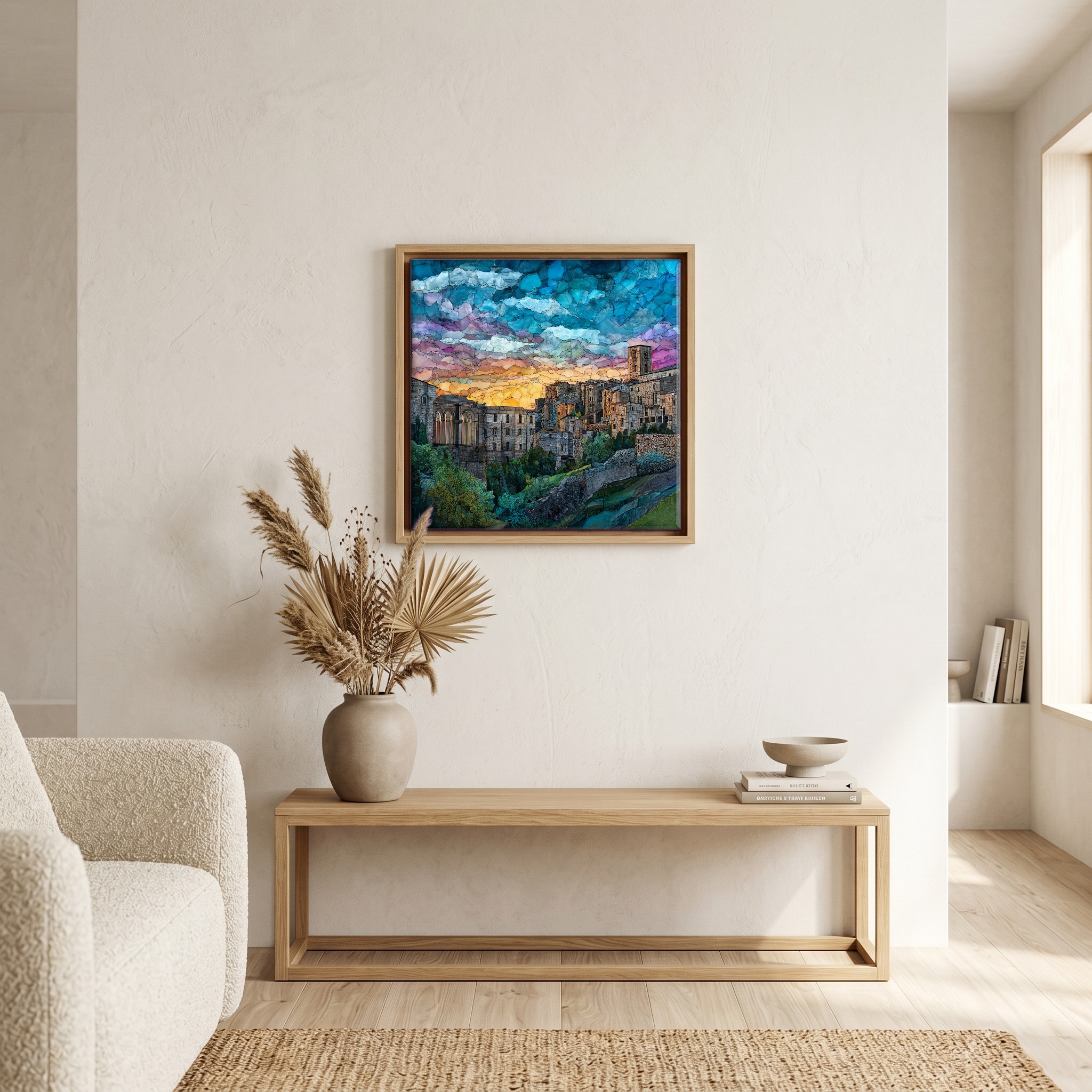
Above the bench, in a warm oak surround.
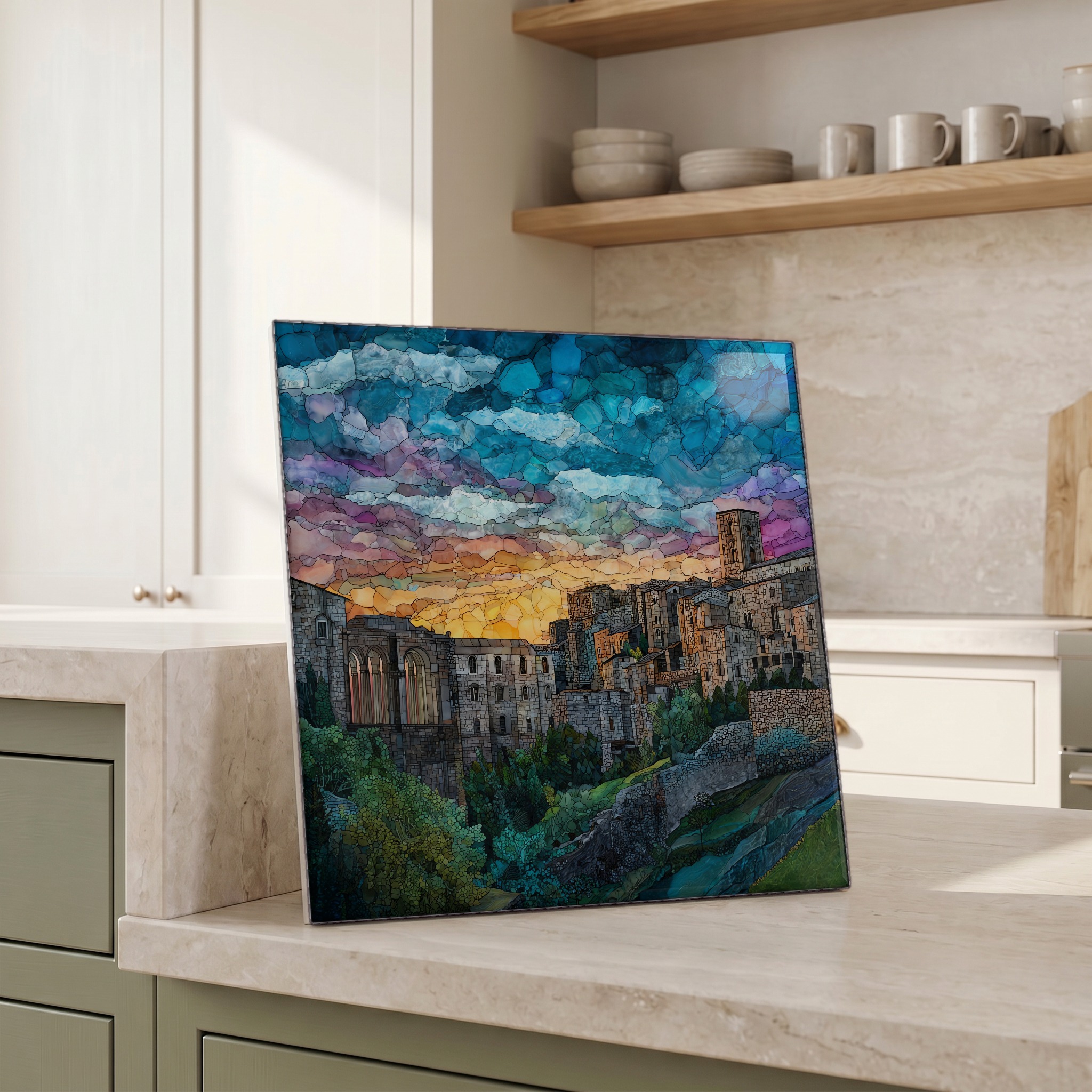
Beside the kettle, propped on the counter.
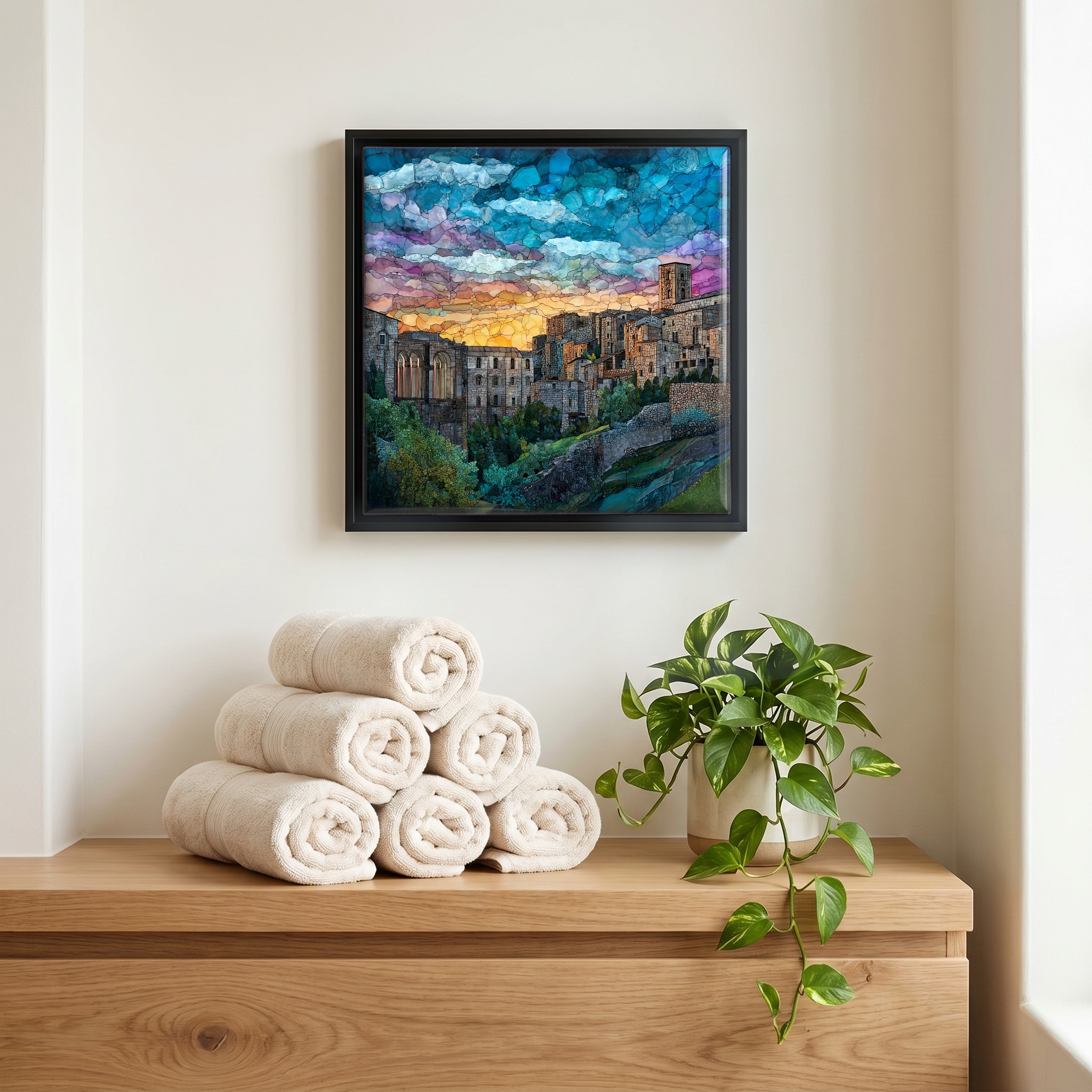
Above the linens, in a slim black surround.
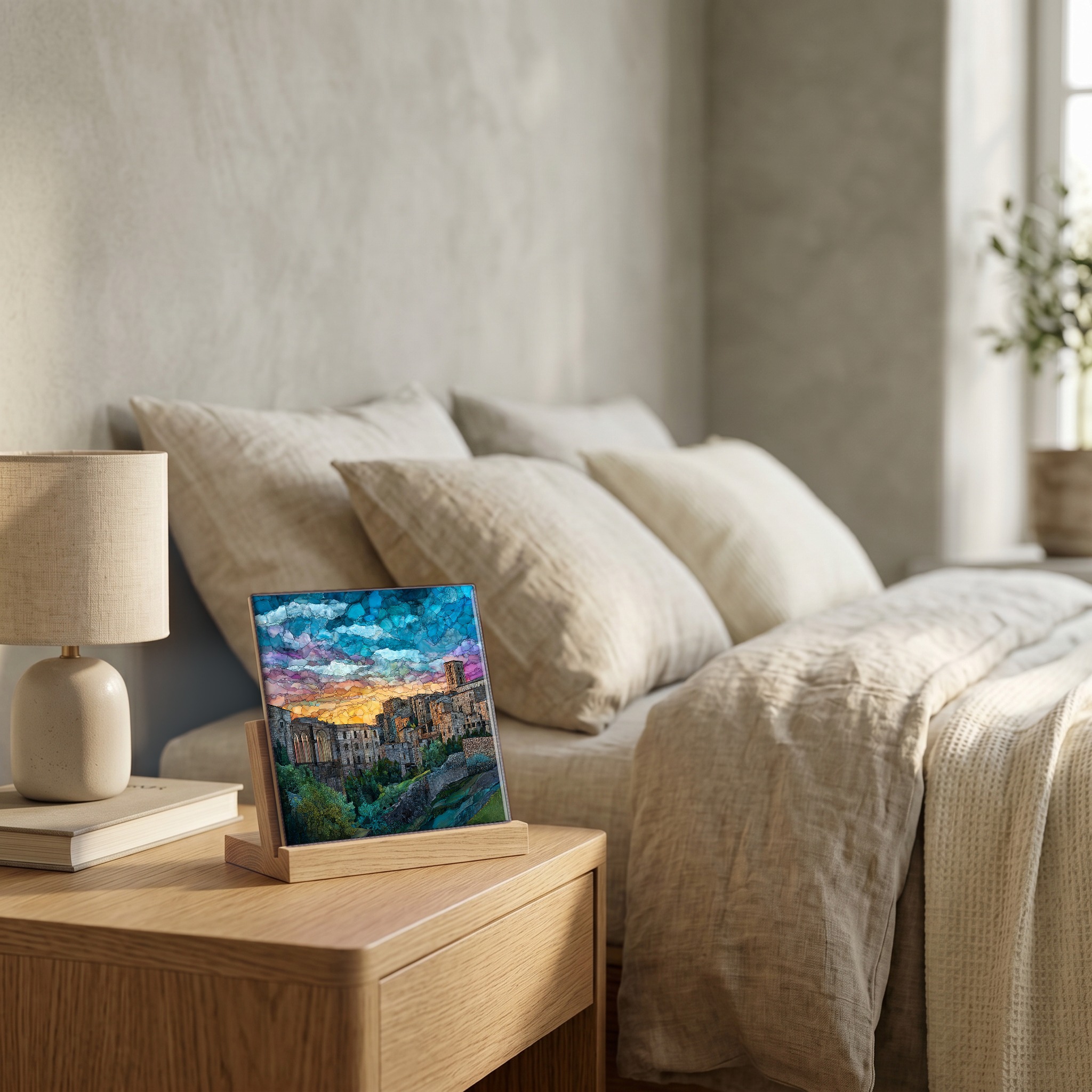
On the nightstand, on a light oak stand.
On a picture ledge, where the light comes in.
a note from the studio

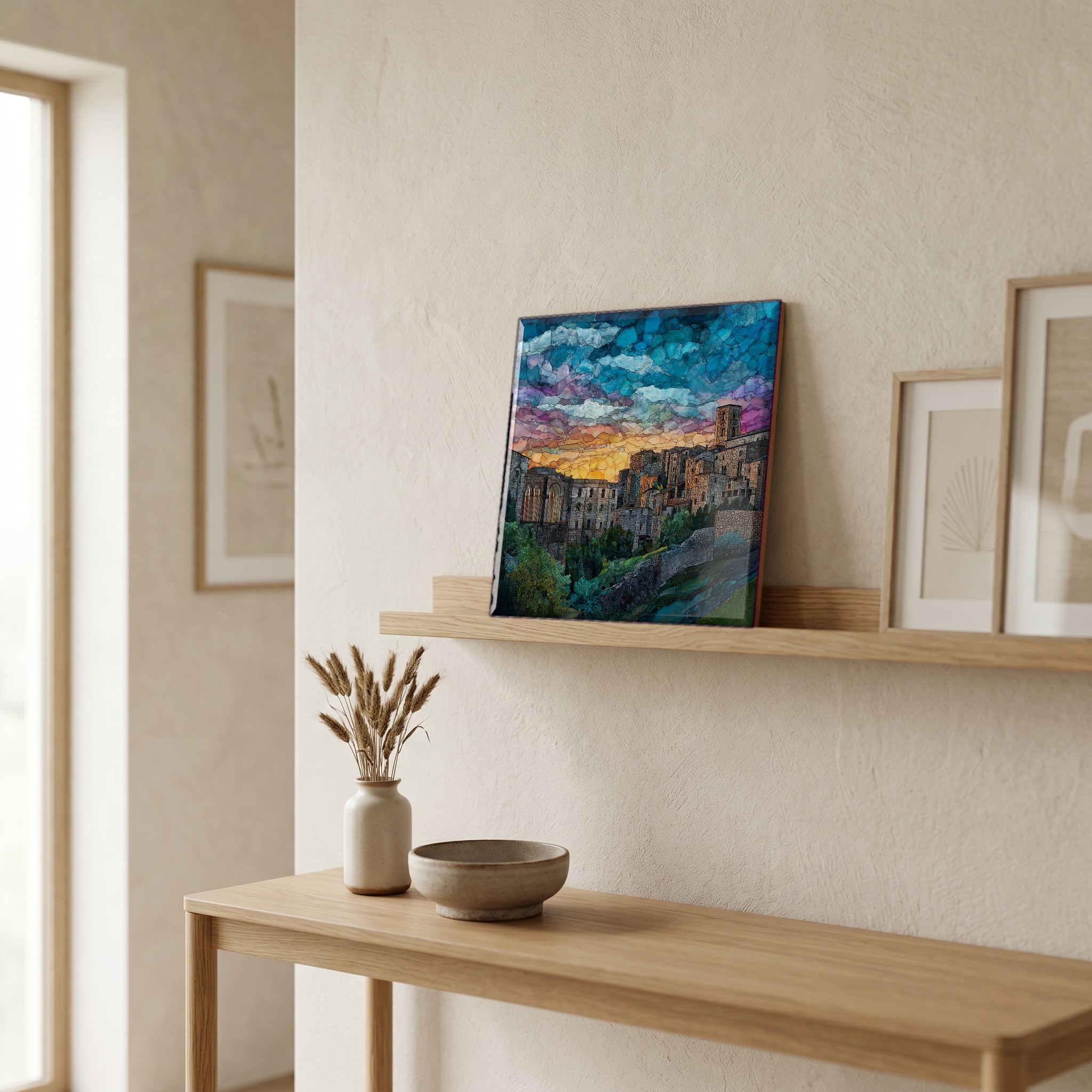
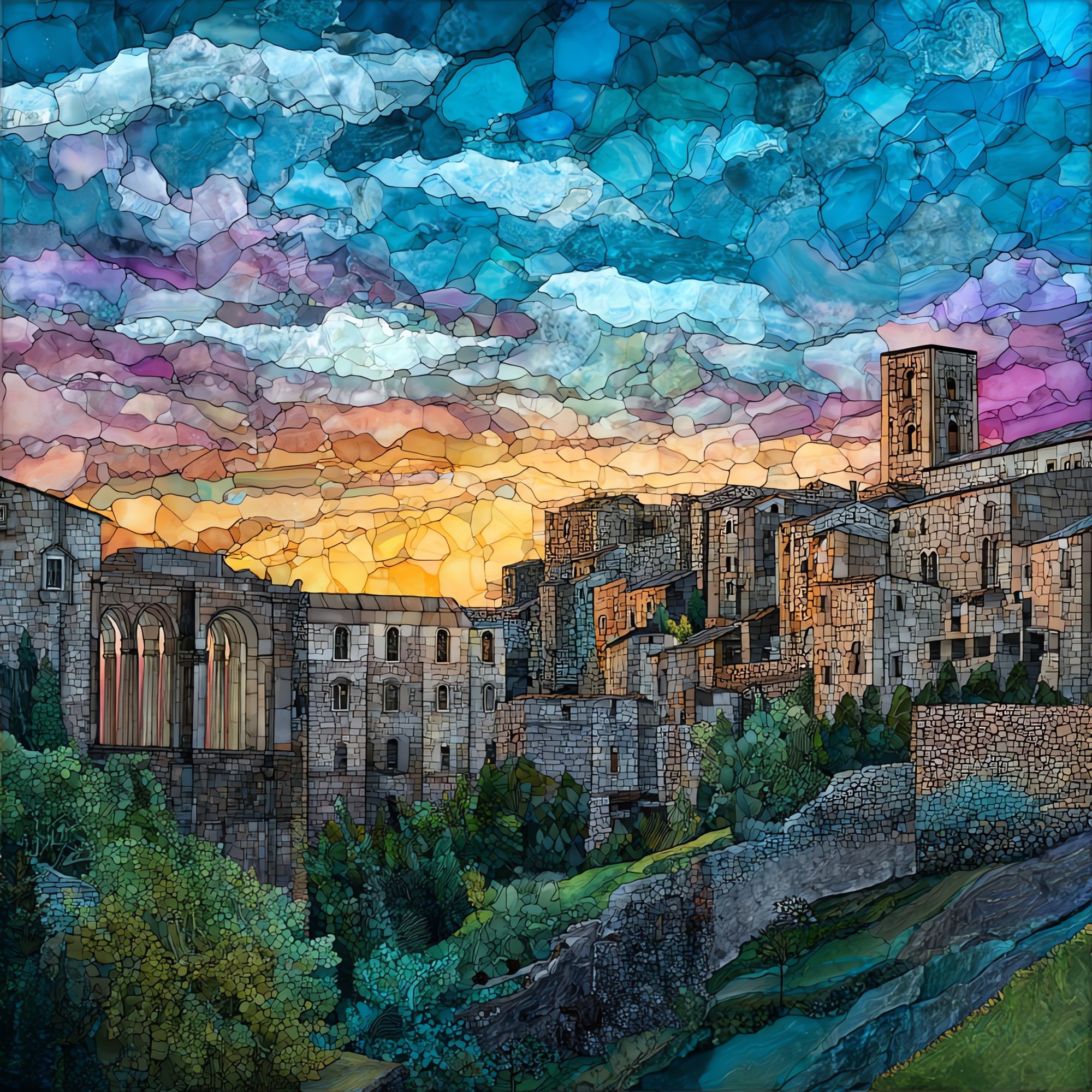
A walled hill town in western Tuscany, above the Cecina valley. The stone is the same grey-gold as Siena but cooler, harder, older. Etruscan walls underneath everything. The trade is alabaster: small lit shops down the side streets where it's still cut on lathes, where the cream and the milk and the storm-cloud veins come out of the same hill. The wind is the constant fact, the tramontana coming down off the ridge for most of the autumn. The light comes up off the alabaster from inside.
from the studio
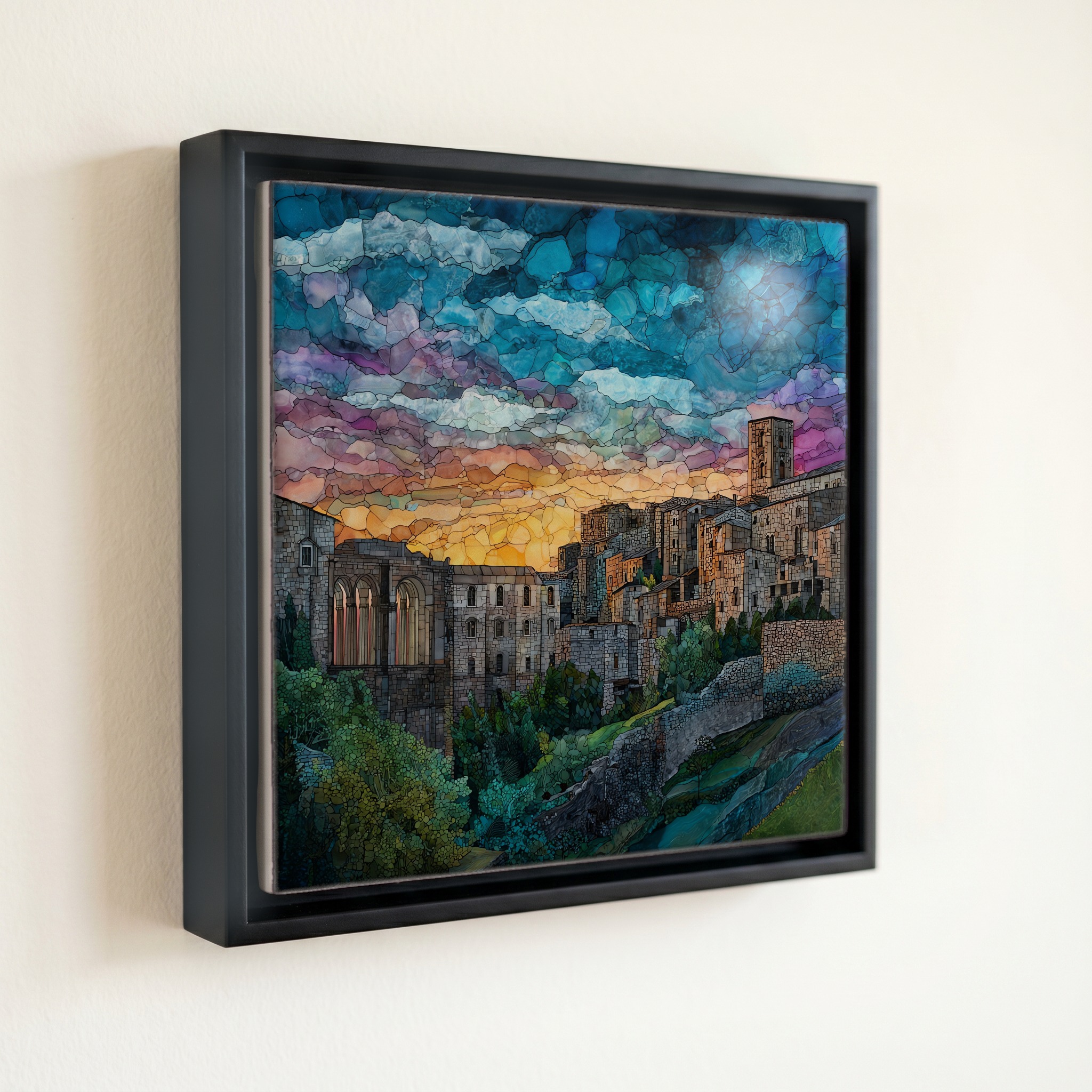
shown in a slim black floating frame · 6 × 6 in
— bring it home

Volterra, on ceramic.

Each tile is finished by hand in our Knoxville studio. Artwork is slowly infused into the ceramic surface under high heat and pressure, and rests beneath a thin glossy finish. The colour lives in the surface, not on top of it.

What kind of piece?
One tile — square or rectangle.
How big?
the popular one — counter, shelf, nightstand
6 × 6 in · 15 cm · 1.6 lb
Surface finish
A clear glossy finish — the artwork reads as if under resin. Ideal for show-pieces and framed wall art.
How it sits
A hidden cleat — sits ¼″ proud of the wall.
$58
Hand-finished and shipped from our studio at the foot of the Smokies. On your wall in about ten days.
size
6 × 6 in
15 cm
weighs
1.6 lb
solid in the hand
surface
ceramic, hand-finished
art rests beneath a thin glossy finish
from
Knoxville, TN
our family studio, at the foot of the Smokies
— start a Coaster Set

Pick any four 4-inch tiles — National Parks you've been to, a Smokies set, the four seasons of one place. $ for a set of , cork-backed, ready to live on the table.
comes gift-ready
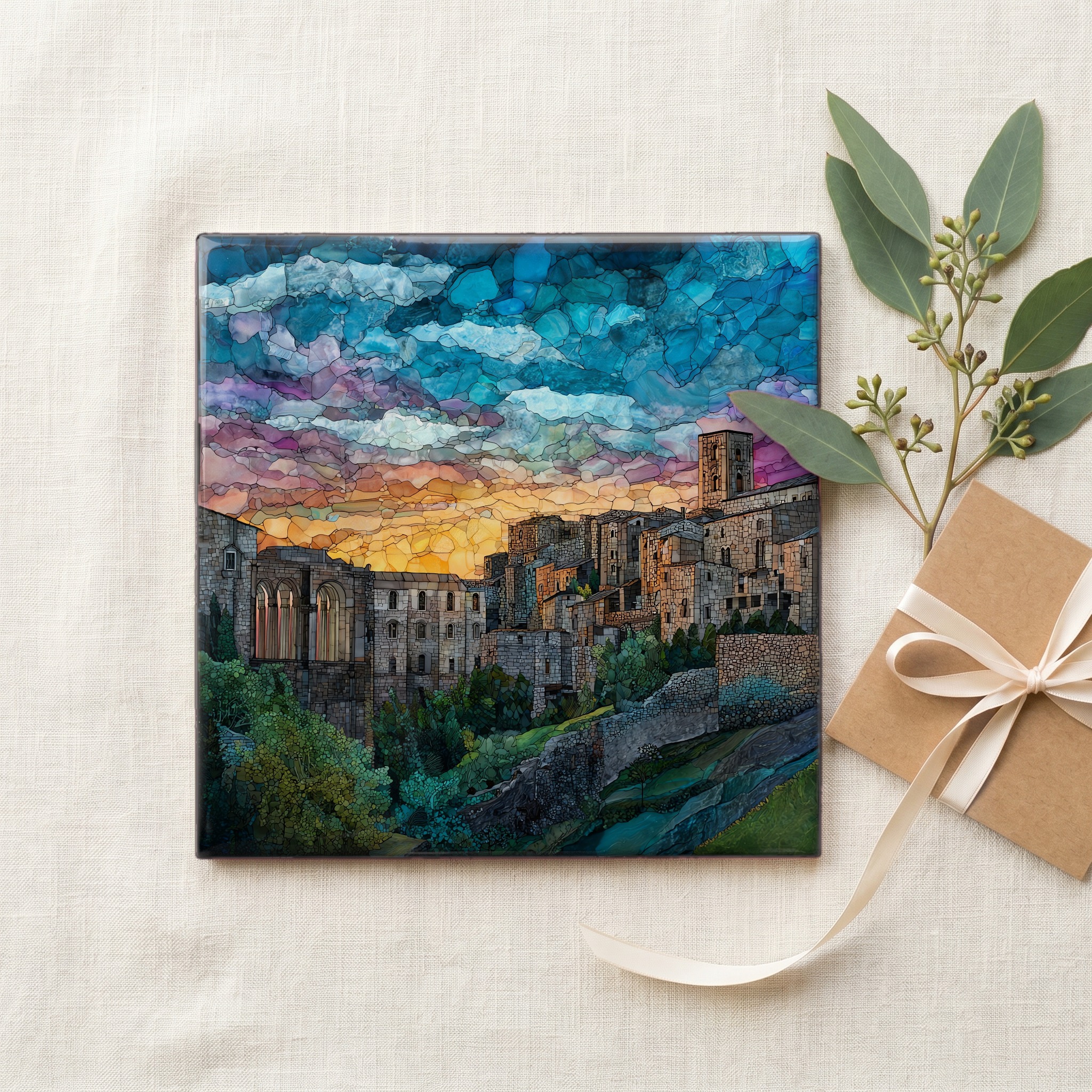
comes gift-ready

Each tile ships in a kraft box, tied with cream ribbon, with a handwritten note from the studio if you'd like to add one.
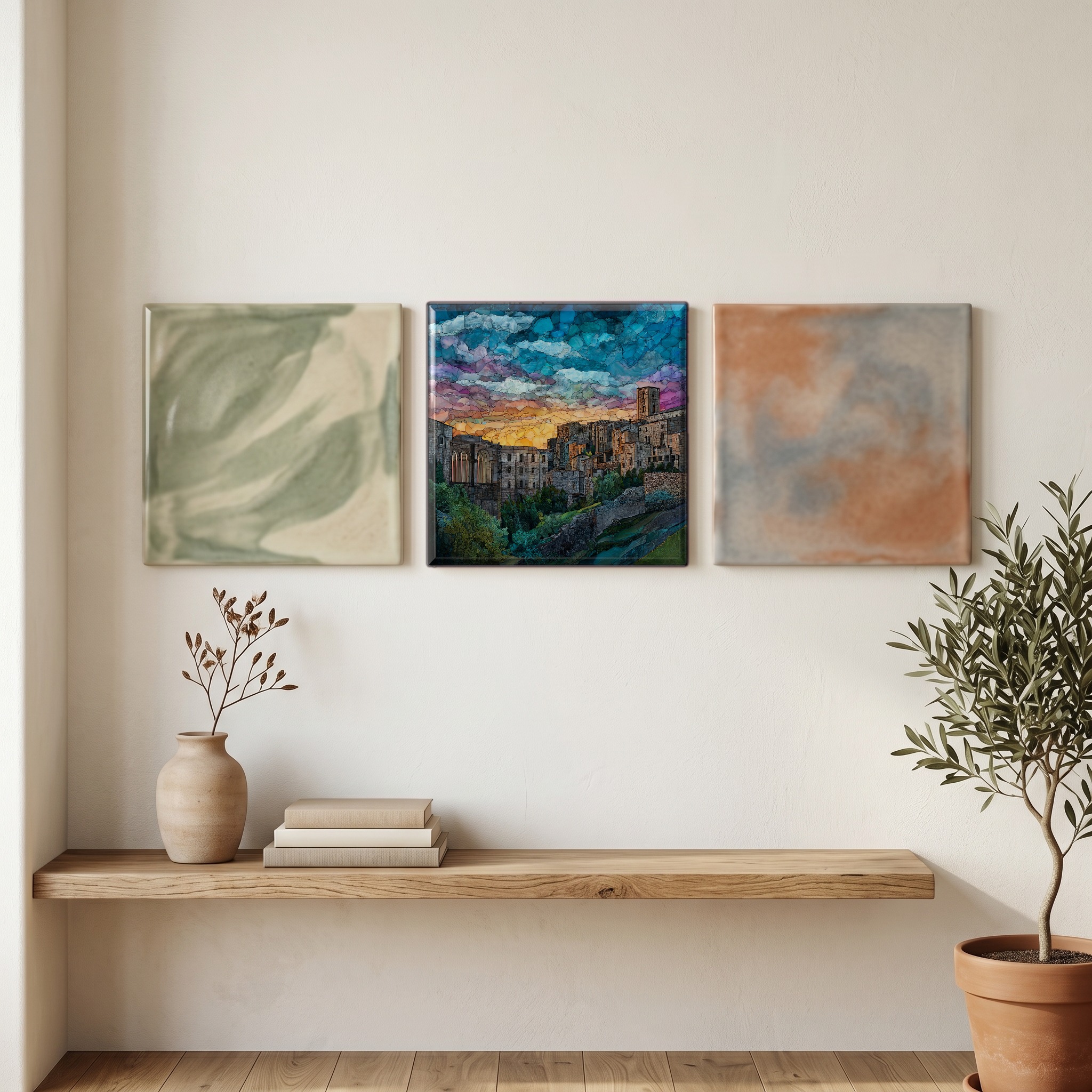
or build a grouping
or build a grouping

Three or five different vistas, hung together — a chapter of places you've been, or want to go.

about Volterra

The place, in three passes.

A little of what's known, in case you fall down the rabbit hole — or want to go see it yourself.
the place

Volterra sits on a hilltop at 531 metres in the Province of Pisa, western Tuscany, between Florence and the Tyrrhenian coast. The site has been continuously inhabited for nearly three thousand years, first as the Etruscan city of Velathri, one of the twelve cities of the Etruscan League, then as the Roman Volaterrae. The town is reached by the SR68, a winding road that climbs from the Cecina valley. Within the medieval walls, the Palazzo dei Priori, begun in 1208, is the oldest communal palace in Tuscany. Outside the walls to the west lie Le Balze, the eroded clay cliffs that have been slowly swallowing the edge of town for centuries.

— informed by Wikipedia — Volterra
the stone

Alabaster has been quarried and worked in Volterra since the Etruscan period. The local stone, a fine-grained gypsum laid down by an ancient lagoon, is unusually pure and translucent, which is why it was carved into cinerary urns for Etruscan tombs by the second century BC. Hundreds of those urns survive in the Museo Etrusco Guarnacci, one of the oldest public museums in Europe, founded in 1761 from the collection of Mario Guarnacci. The trade never fully stopped; today around two dozen workshops still cut and polish alabaster in the alleys below the cathedral, working the same milky cream, dove grey, and storm-veined blocks the Etruscans took from these hills.

the air

The wind is the constant of Volterra. The town sits exposed at the top of its ridge, with the Cecina valley falling away on three sides, and a strong cold north wind, the tramontana, moves through the streets for much of the autumn and winter. The exposure has shaped the town physically: the medieval houses are built tight together with narrow alleys that break the gusts. On the windward edge of the hill, Le Balze, the soft clay is being eroded at a measurable rate, taking ancient walls and Etruscan tombs over the cliff each century. The Badia abbey was abandoned in the nineteenth century after the cliff edge moved up to its walls.

— informed by Wikipedia — Volterra
where
Italy · Province of Pisa, Tuscany
elevation
531 m · 1,742 ft
position
43.4017° N · 10.8617° E
the neighborhood

What's nearby.

A handful of named places within an hour's walk or short drive. Some we've already painted; some we will.
30 km NE
San Gimignano
medieval tower town
25 km E
Colle di Val d'Elsa
crystal-making town
30 km S
Larderello
geothermal valley
17 km S
Pomarance
Val di Cecina hill town
10 km SW
Saline di Volterra
salt and rail valley town
N
Volterra
San Gimignano
Colle di Val d'Elsa
Larderello
Pomarance
Saline di Volterra
common questions

What people ask.

A few questions we get about Volterra — and about bringing the piece home.
about the place

Volterra is a walled hilltop town in the Province of Pisa, western Tuscany, sitting at 531 metres above the Cecina valley between Florence and the Tyrrhenian coast. It's about an hour and a half by car from either Florence or Pisa, reached via the SR68 from Saline di Volterra.

Volterra is known for three things: its alabaster, worked here continuously since the Etruscan period; its Etruscan origins as Velathri, one of the twelve cities of the Etruscan League; and the Palazzo dei Priori, begun in 1208 and the oldest communal palace in Tuscany.

The hills around Volterra contain unusually pure gypsum alabaster, a fine-grained stone that takes a high polish and is translucent enough to glow with light passed through it. The Etruscans were carving it into cinerary urns by the second century BC, and around two dozen workshops in town still work the stone today.

The site has been continuously inhabited for roughly three thousand years. It was a major Etruscan city called Velathri from at least the seventh century BC, became the Roman Volaterrae, and was an independent commune in the early medieval period. Many of its walls and gates date from the Etruscan and medieval centuries.

Late spring and early autumn carry the most settled weather. Summer in town is hot, but the elevation keeps it cooler than the valley below. Winter brings the tramontana wind off the ridge and quieter streets. The Volterra AD 1398 medieval festival takes place on Sundays in late August.

Le Balze are eroded clay cliffs on the western edge of Volterra, where centuries of rainwater have cut deep gullies into the soft pliocene marl beneath the town. The Badia abbey at the cliff edge has been partly lost to the erosion, which takes ancient walls and Etruscan tombs each century.

about the piece in your home

It has been a meaningful gift for customers with roots in Volterra or nearby Tuscan hill towns. The town is loved most by people who know it from quiet visits rather than from guidebooks. A Keepsake or Small with a handwritten note from the studio carries well; the Coaster Set works as a smaller token.

The Volterra tile reads as muted alabaster cream, dove grey, and storm-blue veining, with the stained-glass armature that runs through the WenderVista catalog. It sits well in Italian-modern, Tuscan-rustic, and Jewel-tone Maximalist rooms. It also holds its own against unpainted limewash walls and aged plaster.

Yes. The Volterra palette aligns with the slow-living and Italian-pastoral trends carrying through 2026: muted stones, alabaster surfaces, warm whites, and just enough colour in the veining. The ceramic surface and the matte finish option both suit the same kind of room.

For a standard three-seat sofa or a long console, the single Large at 24 by 24 inches reads well centred above the piece. A 4-tile Mural at 48 by 48 inches scales up for a longer wall. A 9-tile Mural carries a full feature wall and is usually centred with no other artwork.

Yes, with the Dura Satin or Matte finish. The ceramic surface is not affected by humidity, steam, or splash, and the colour lives inside the surface and does not wash out. The Glossy finish is fine for a powder room or a dry wall; Dura Satin is the recommended option for a working bathroom or kitchen.

A soft microfibre cloth with warm water is enough. The colour is slowly infused into the ceramic surface under high heat and pressure and rests beneath a thin glossy or satin finish, so household cleaners are not necessary and abrasives should be avoided. For a deeper clean, a small amount of mild dish soap is safe.

Yes. Every WenderVista piece is painted in our distinctive stained-glass visual language by Reid Wender, the curator and eye of the studio. The art is not licensed from a third party and is not available outside Wender Studios. The Volterra piece is hand-finished in-house in Knoxville, Tennessee.

if this one stayed with you

A few you might also love.

Hand-picked by the eye that found Sorapis. Same air, same kind of quiet.
— a collection

The Italian Dolomites,
painted slow.

The valleys between Cortina and Val Gardena, the tarns you walk an hour to see, the towers that turn the colour of a banked fire just before dark. Wander the collection by valley, by season, or follow the path Reid walked.

Tre Cime
Braies
Misurina
Sorapis
Cinque Torri
Sassolungo
Marmolada