Wender·Vista
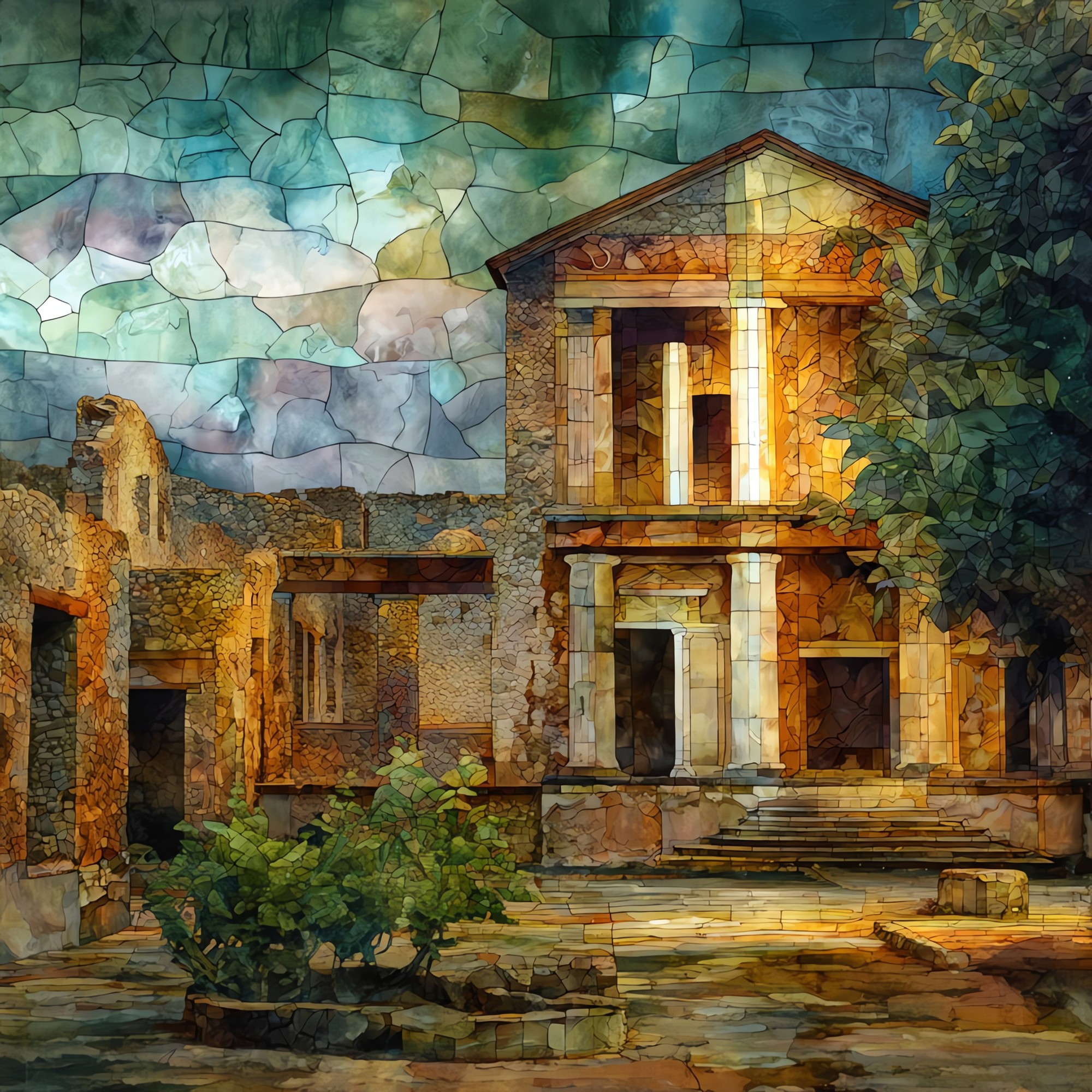
Villa of the Mysteries
shown on ceramic, 12-inch tileItaly
at the edge of Pompeii, under Vesuvius

Villa of the Mysteries

the red the ash kept whole.

Where it lives

Not only on a wall.

A small tile on the nightstand catching the morning. A larger one above the fire. Yours, wherever you spend the slow hours.
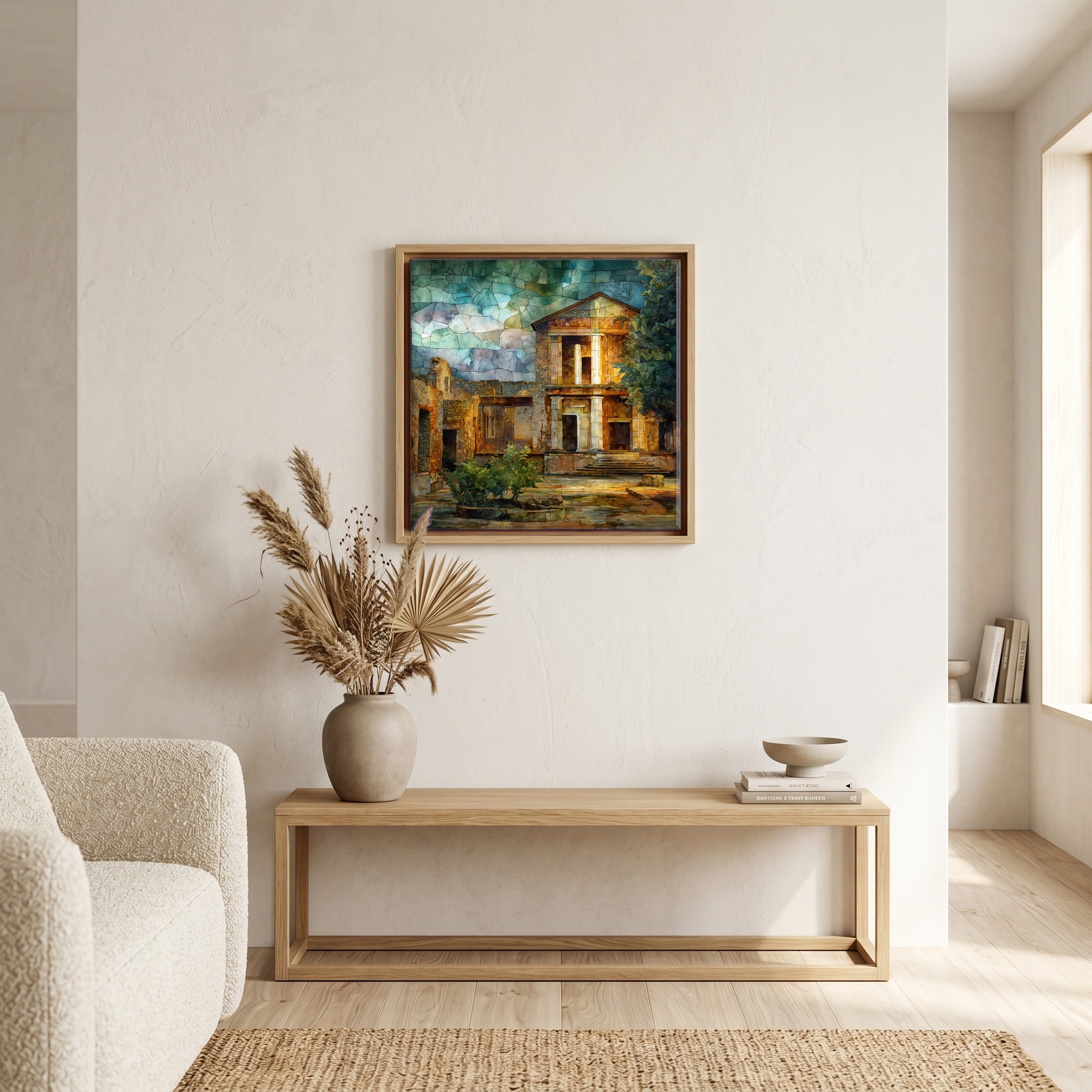
Above the bench, in a warm oak surround.
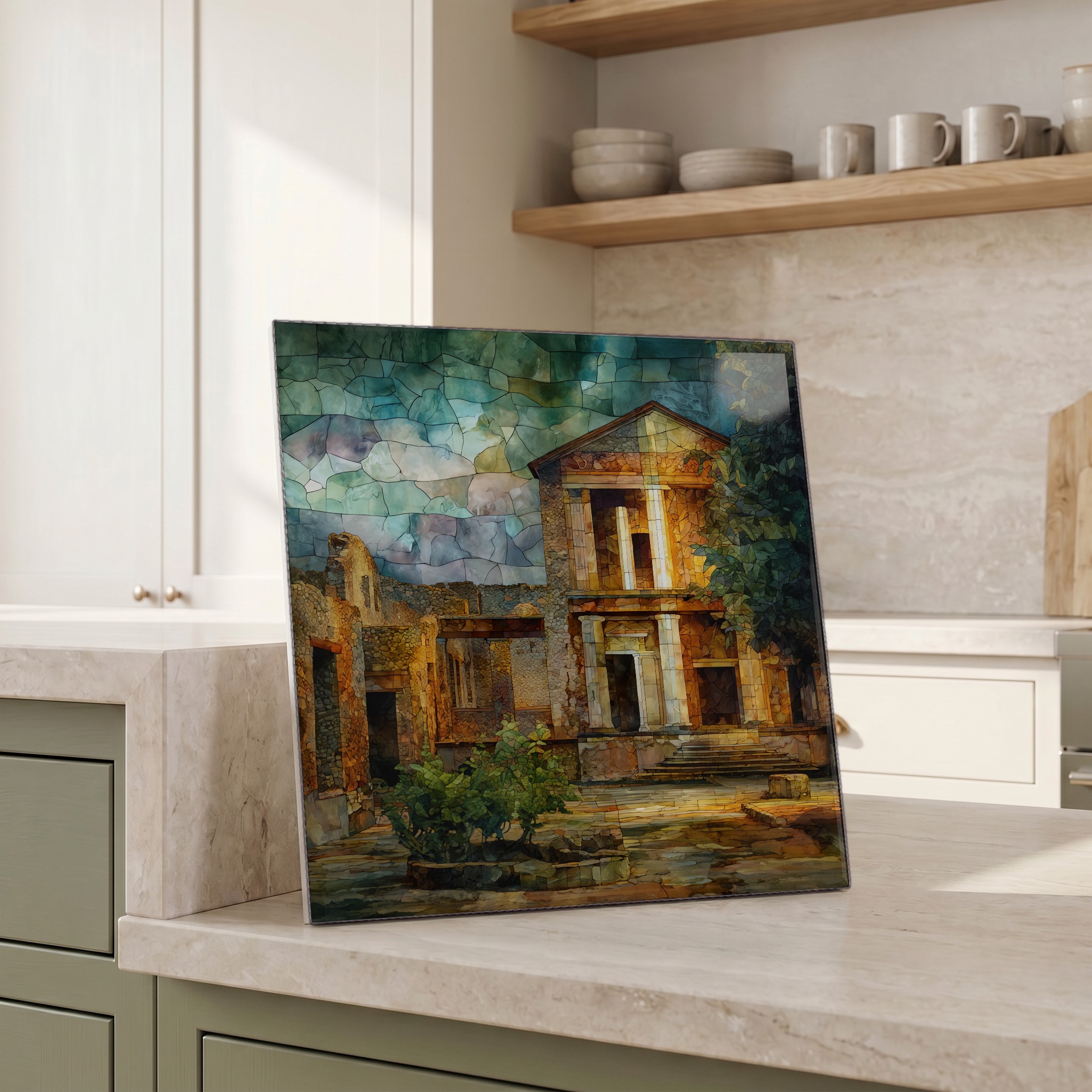
Beside the kettle, propped on the counter.
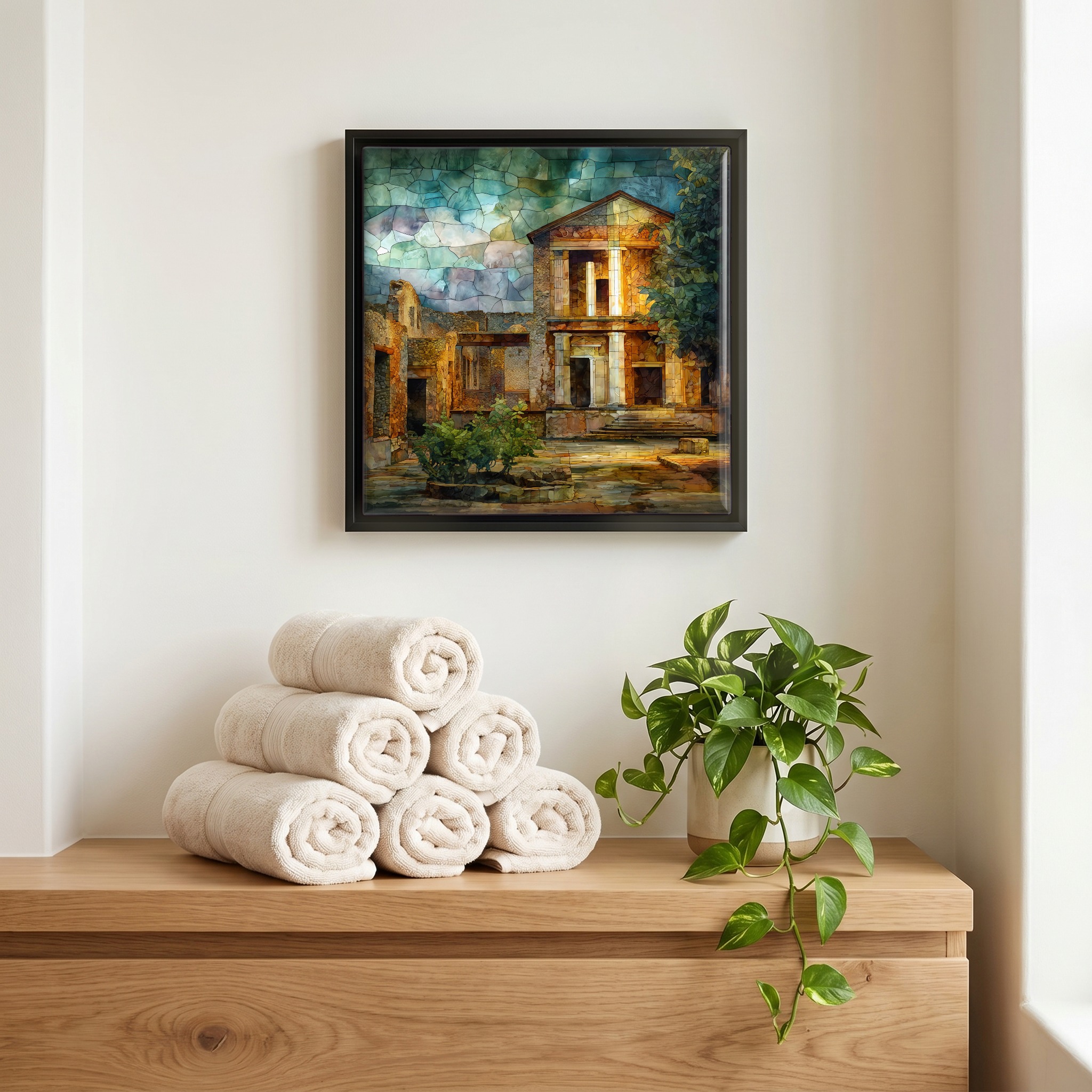
Above the linens, in a slim black surround.
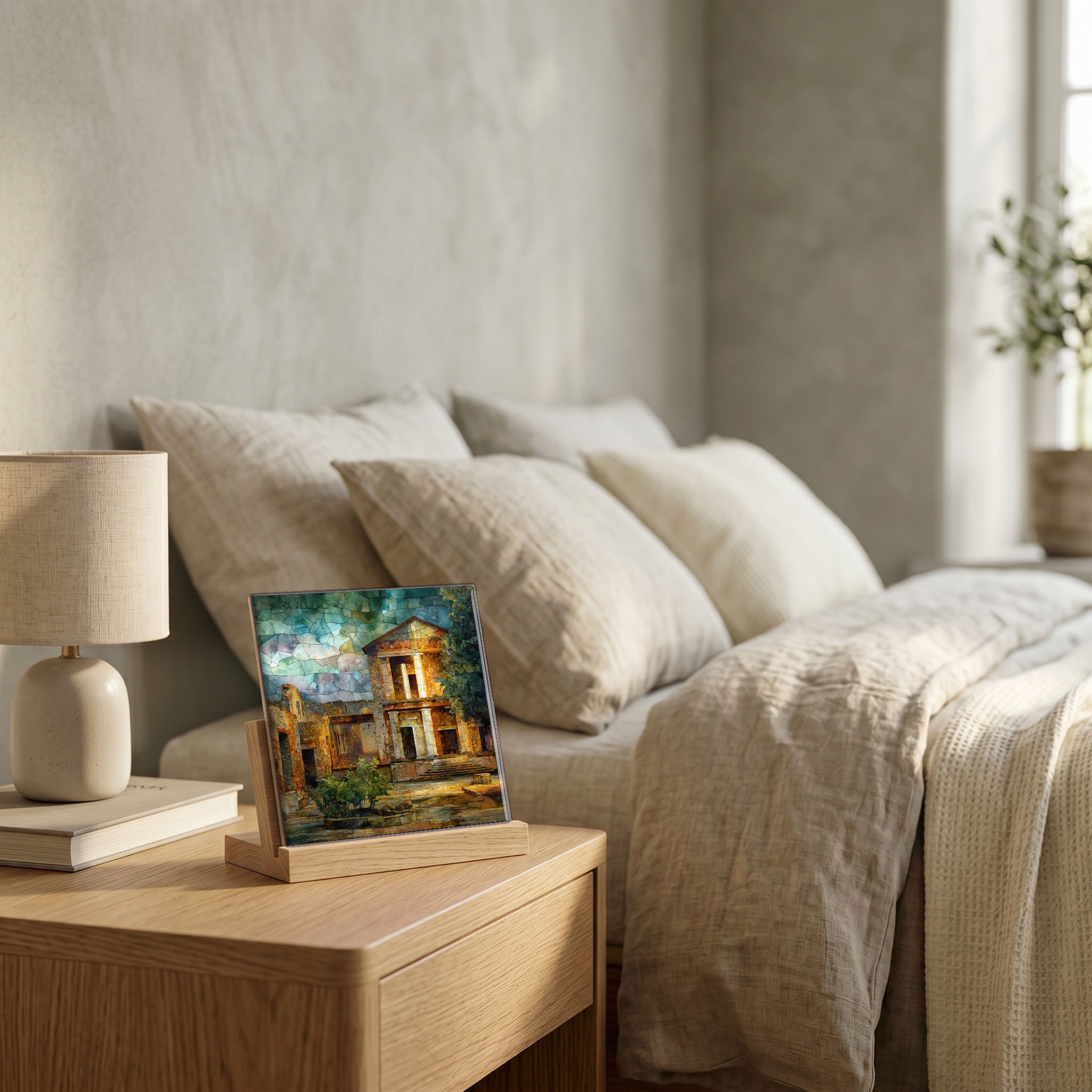
On the nightstand, on a light oak stand.
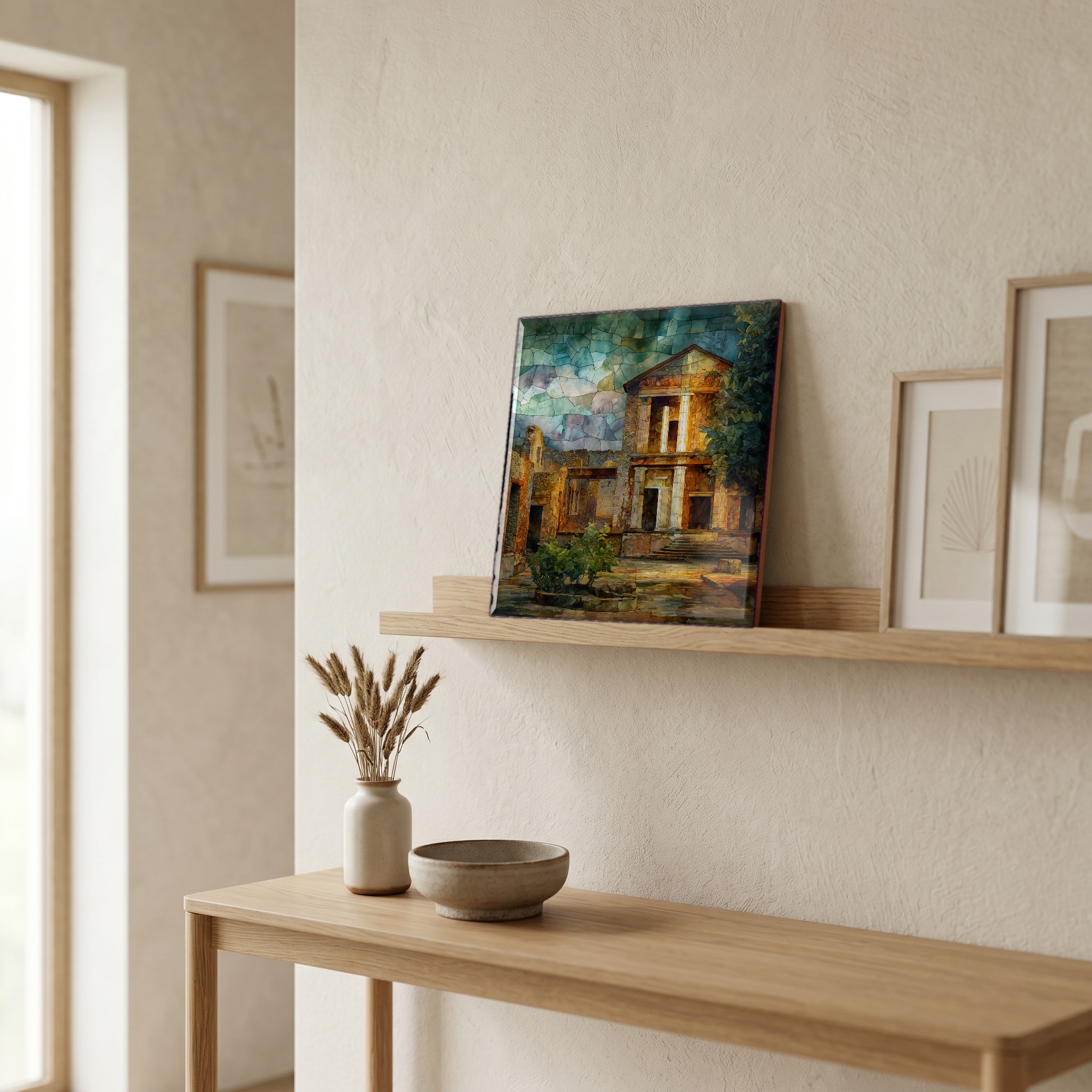
On a picture ledge, where the light comes in.
a note from the studio

A villa on the northwestern edge of Pompeii, outside the old Herculaneum Gate. The Initiation Room is what people come for. Twenty-nine life-sized figures on a wall of dense, deep red, painted before the eruption that buried the city in AD 79. The rite they are caught in has never been fully read. The room kept its colour because the ash kept its air out. It is the longest walk in the park, and most groups turn back before they reach it.
from the studio
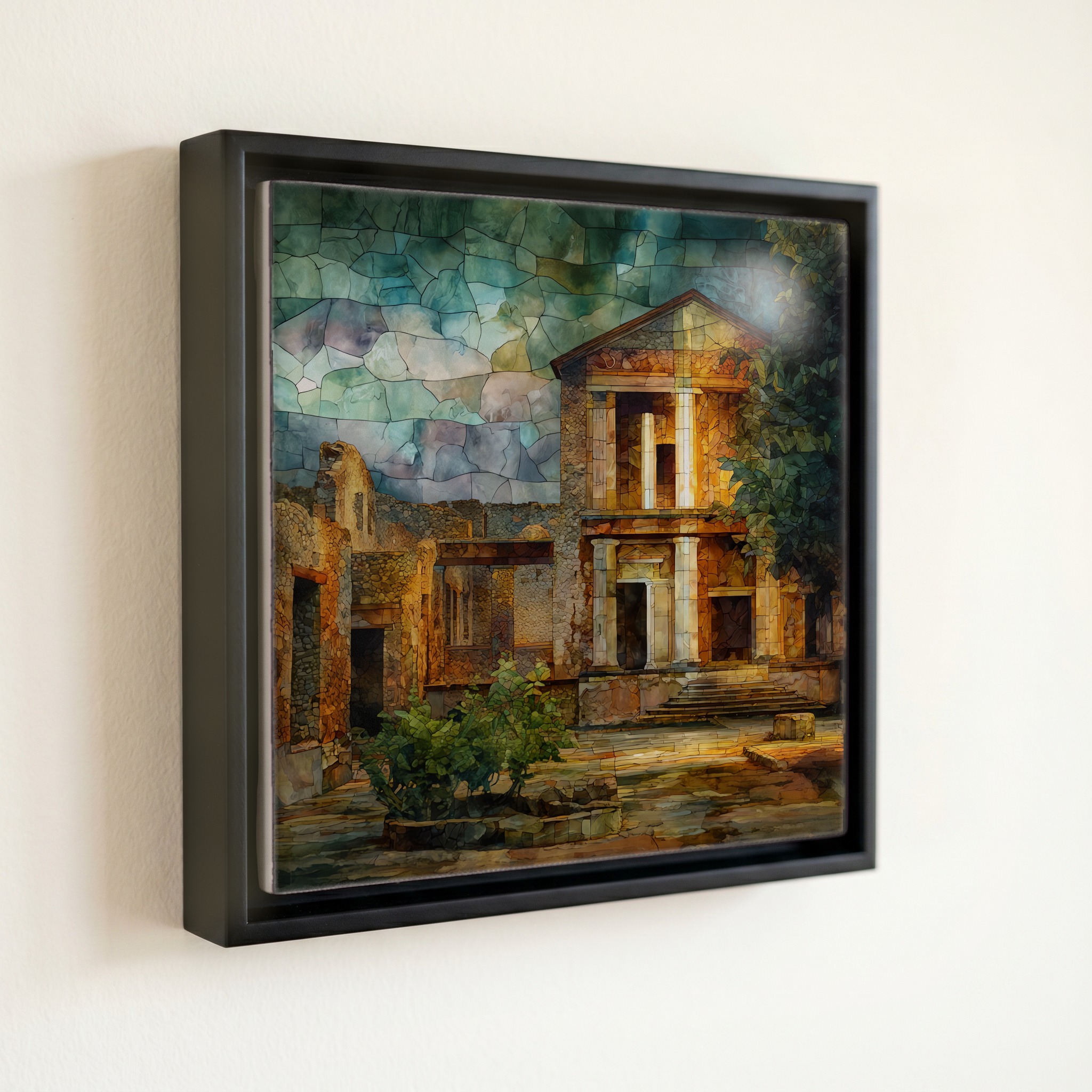
shown in a slim black floating frame · 6 × 6 in
— bring it home

Villa of the Mysteries, on ceramic.

Each tile is finished by hand in our Knoxville studio. Artwork is slowly infused into the ceramic surface under high heat and pressure, and rests beneath a thin glossy finish. The colour lives in the surface, not on top of it.

What kind of piece?
One tile — square or rectangle.
How big?
the popular one — counter, shelf, nightstand
6 × 6 in · 15 cm · 1.6 lb
Surface finish
A clear glossy finish — the artwork reads as if under resin. Ideal for show-pieces and framed wall art.
How it sits
A hidden cleat — sits ¼″ proud of the wall.
$58
Hand-finished and shipped from our studio at the foot of the Smokies. On your wall in about ten days.
size
6 × 6 in
15 cm
weighs
1.6 lb
solid in the hand
surface
ceramic, hand-finished
art rests beneath a thin glossy finish
from
Knoxville, TN
our family studio, at the foot of the Smokies
— start a Coaster Set

Pick any four 4-inch tiles — National Parks you've been to, a Smokies set, the four seasons of one place. $ for a set of , cork-backed, ready to live on the table.
comes gift-ready
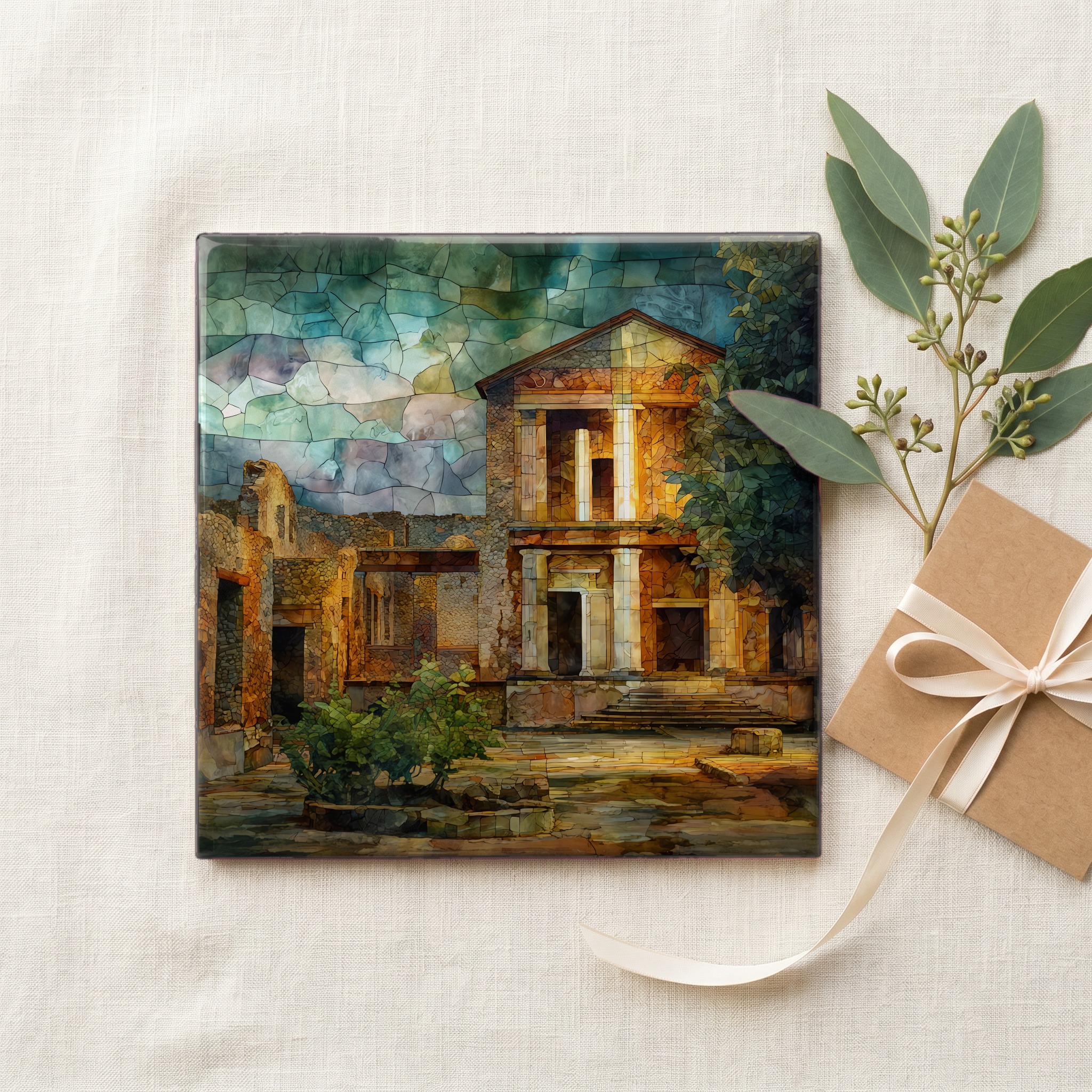
comes gift-ready

Each tile ships in a kraft box, tied with cream ribbon, with a handwritten note from the studio if you'd like to add one.
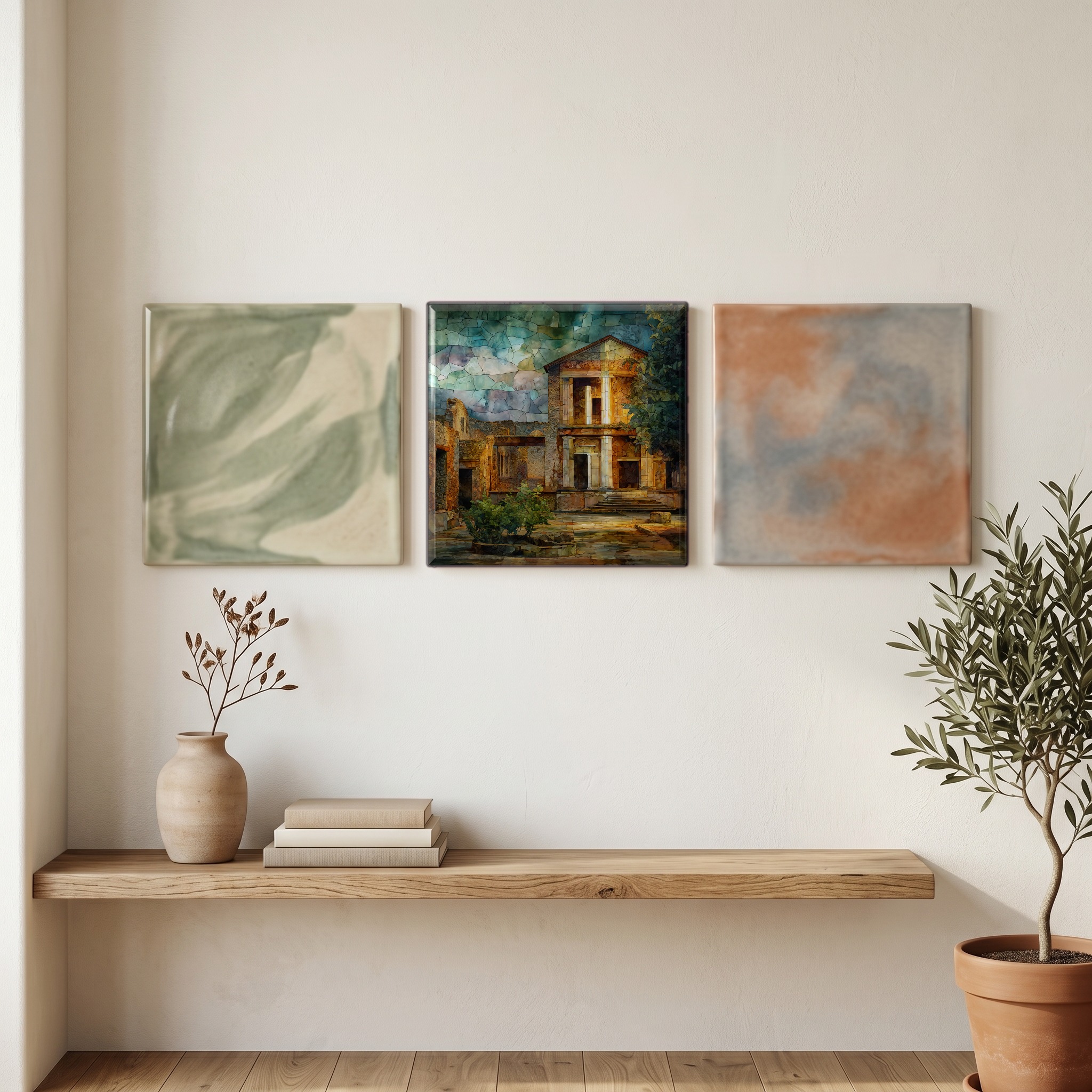
or build a grouping
or build a grouping

Three or five different vistas, hung together — a chapter of places you've been, or want to go.

about Villa of the Mysteries

The place, in three passes.

A little of what's known, in case you fall down the rabbit hole — or want to go see it yourself.
the place

The Villa of the Mysteries sits on the northwestern edge of Pompeii, about four hundred metres outside the old Herculaneum Gate and the city walls. It was a large suburban country house, built in the early second century BC and altered repeatedly over the next two hundred years of Roman occupation. The villa was buried under several metres of volcanic pumice and ash when Mount Vesuvius erupted in AD 79, and rediscovered piece by piece beginning in 1909 under the Pompeii superintendency. The site today is part of the Parco Archeologico di Pompei, a UNESCO World Heritage property inscribed in 1997 that covers roughly 66 hectares of excavated ruins in the Campania region, about twenty-five kilometres southeast of Naples.

the colour

The room people walk so far for is painted a dense, near-saturated red, the tone that historians of Roman painting now call Pompeian red after the city. The colour comes from cinnabar, a mercury-sulphide pigment ground from ore mined in antiquity at Almadén in Spain and at Monte Amiata in Tuscany. Cinnabar was the most expensive red the Roman world had, reserved for the walls of the wealthy. The frescoes in the Initiation Room hold twenty-nine near-life-sized figures across three walls, depicting what is most often read as a Dionysian rite, and are dated to about 60 BC. They survived because the eruption sealed them under metres of ash for more than eighteen centuries.

the visit

The villa lies at the far western edge of the archaeological park, about a fifteen-minute walk from the Porta Marina entrance through the old city. The Parco Archeologico di Pompei is open daily from nine in the morning, closing at five from November through March and at seven from April through October. An adult ticket runs around twenty euros and includes the whole excavated city; a separate Villa dei Misteri ticket gives faster entry directly to this corner of the site through the western gate. The Pompeii Scavi station on the Circumvesuviana line from Naples leaves visitors at that western gate.

where
Italy · Province of Naples, Campania
within
Pompeii Archaeological Park
position
40.7575° N · 14.4762° E
the neighborhood

What's nearby.

A handful of named places within an hour's walk or short drive. Some we've already painted; some we will.
1 km SE
Pompeii Forum
Roman city centre
1 km E
Amphitheatre of Pompeii
Roman amphitheatre
8 km N
Mount Vesuvius
active volcano
15 km NW
Herculaneum
Roman ruins
25 km NW
Naples
city
N
Villa of the Mysteries
Pompeii Forum
Amphitheatre of Pompeii
Mount Vesuvius
Herculaneum
Naples
common questions

What people ask.

A few questions we get about Villa of the Mysteries — and about bringing the piece home.
about the place

A single room of large red-walled frescoes, painted around 60 BC, that show what is most often read as a Dionysian initiation rite. The figures are nearly life-sized across three walls, and the colour and detail survived the eruption of Vesuvius in AD 79 almost completely intact.

Excavation began in 1909, when the area outside the Herculaneum Gate was opened up after a private landowner uncovered the first walls. The Initiation Room and most of the surrounding villa were cleared between 1909 and 1929 by the Pompeii superintendency.

The eruption of AD 79 buried the villa under several metres of pumice and ash before any of the room's pigments could break down. The pigment itself is cinnabar, a mercury-sulphide ore that holds colour for centuries when sealed from light and air. The ash gave it both.

Twenty-nine near-life-sized figures move through what most scholars read as a ritual of initiation into the cult of Dionysus, the Greek and Roman god of wine, ecstasy, and the underworld. A satyr plays the lyre. A woman is whipped. A bride is unveiled. The exact narrative is still debated.

On the northwestern edge of the ancient city of Pompeii, in the Italian region of Campania, about twenty-five kilometres southeast of Naples and roughly four hundred metres outside the Herculaneum Gate of the old Roman walls. The Pompeii Scavi-Villa dei Misteri train station serves the western gate directly.

Yes. It is one of the most distant points within the Parco Archeologico di Pompei, the UNESCO World Heritage site that protects the excavated city. The villa stood just outside the old city walls in a suburban district of villas and small farms.

The Initiation Room frescoes are the best surviving example of the Second Pompeian Style, a phase of Roman wall painting that ran from roughly 100 to 20 BC. The style uses dense fields of pigment, life-sized figures, and shallow architectural framing to make the wall feel like a stage.

about the piece in your home

It often is. The Villa of the Mysteries is the place classicists, art historians, and Latin teachers know better than almost any other in Pompeii. The red of the Initiation Room is one of the most recognised colours in Western art. A Medium with a handwritten note from the studio reads as serious.

The deep red carries best in rooms with warm neutrals: Old World, library, study-with-leather, terracotta-and-plaster Tuscan. It also lands in a more spare scholar-modern room as the single piece of colour on a white wall. It does not fight Maximalist red walls; it joins them.

The return of warm reds and quiet Old World rooms, sometimes called Unexpected Red Theory, has put colours like this back in the centre of the conversation. A red of this depth, set against books or wood, anchors the room rather than decorating it.

A single Large reads well above a console up to about five feet wide. Above a standard sofa, a four-tile Mural carries the eye across the back of the wall. For a long library or dining-room wall, a nine-tile Mural is the piece that holds the room.

Yes. For a bathroom wall, shower surround, or kitchen backsplash, choose the Dura Satin or Matte finish. Both are scratch-resistant and stand up to humidity, steam, and the routine of daily cleaning. The Glossy finish is reserved for framed wall-art use.

A soft microfibre cloth and water. The colour is slowly infused into the ceramic surface under high heat and pressure, and lives beneath a thin protective finish, so it does not lift or fade with cleaning. Skip abrasive pads and harsh sprays.

Yes. Every WenderVista piece is painted by Reid Wender, the curator of the studio. The art is made in-house in Knoxville, Tennessee, and never licensed from a third party. Each tile is hand-finished before it leaves the studio.

if this one stayed with you

A few you might also love.

Hand-picked by the eye that found Sorapis. Same air, same kind of quiet.
— a collection

The Italian Dolomites,
painted slow.

The valleys between Cortina and Val Gardena, the tarns you walk an hour to see, the towers that turn the colour of a banked fire just before dark. Wander the collection by valley, by season, or follow the path Reid walked.

Tre Cime
Braies
Misurina
Sorapis
Cinque Torri
Sassolungo
Marmolada