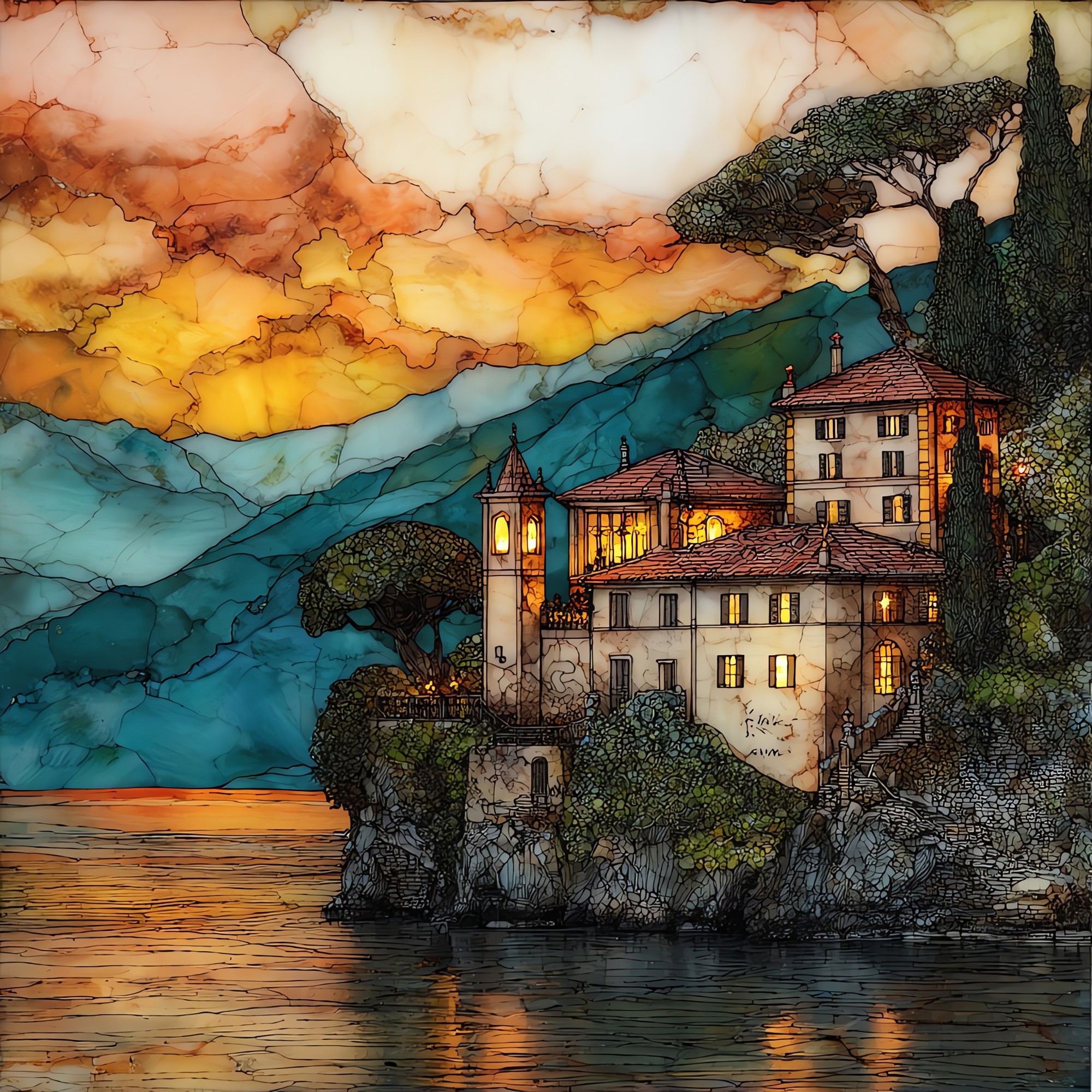
Villa del Balbianello
— a loggia alone above the water.
Not only on a wall.
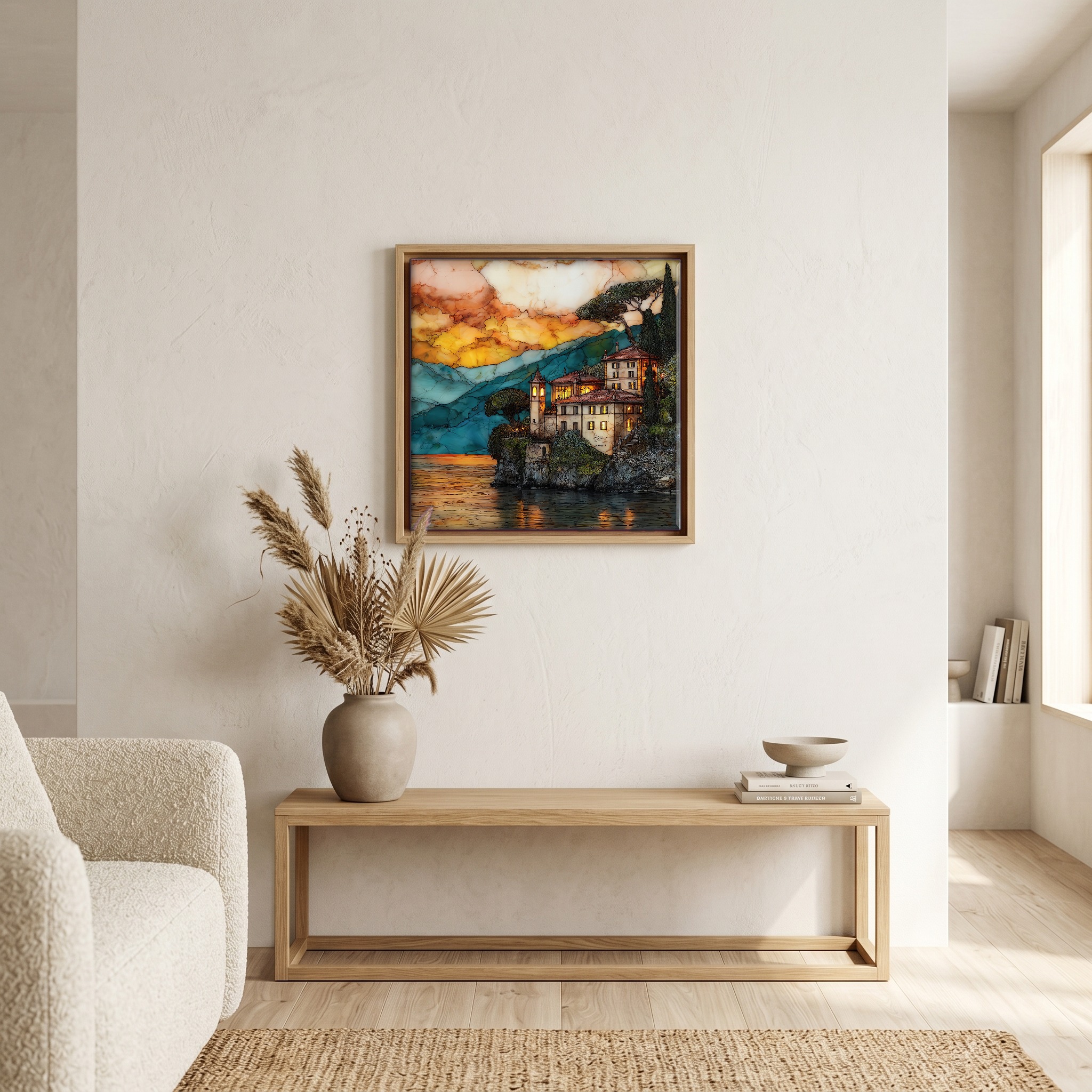
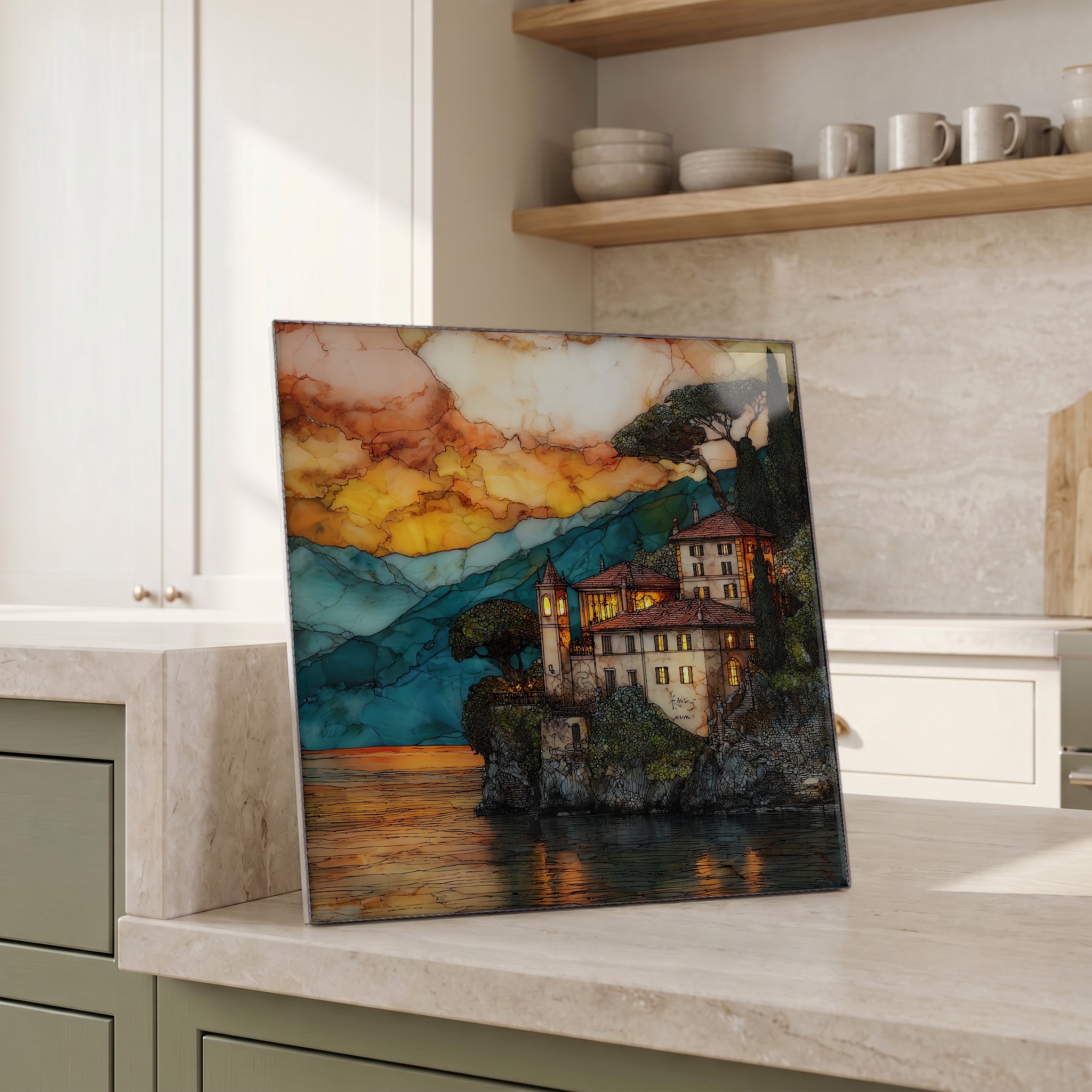
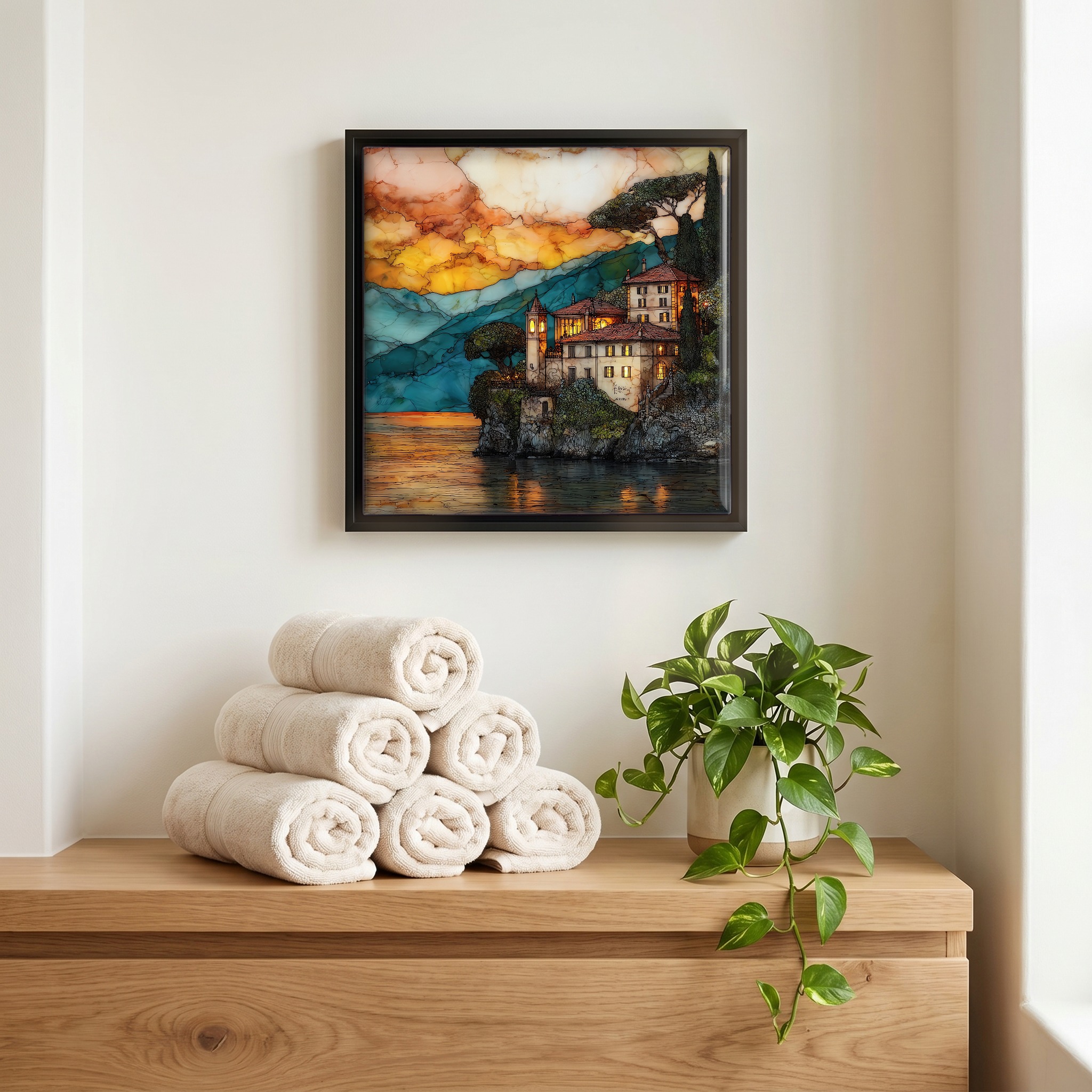
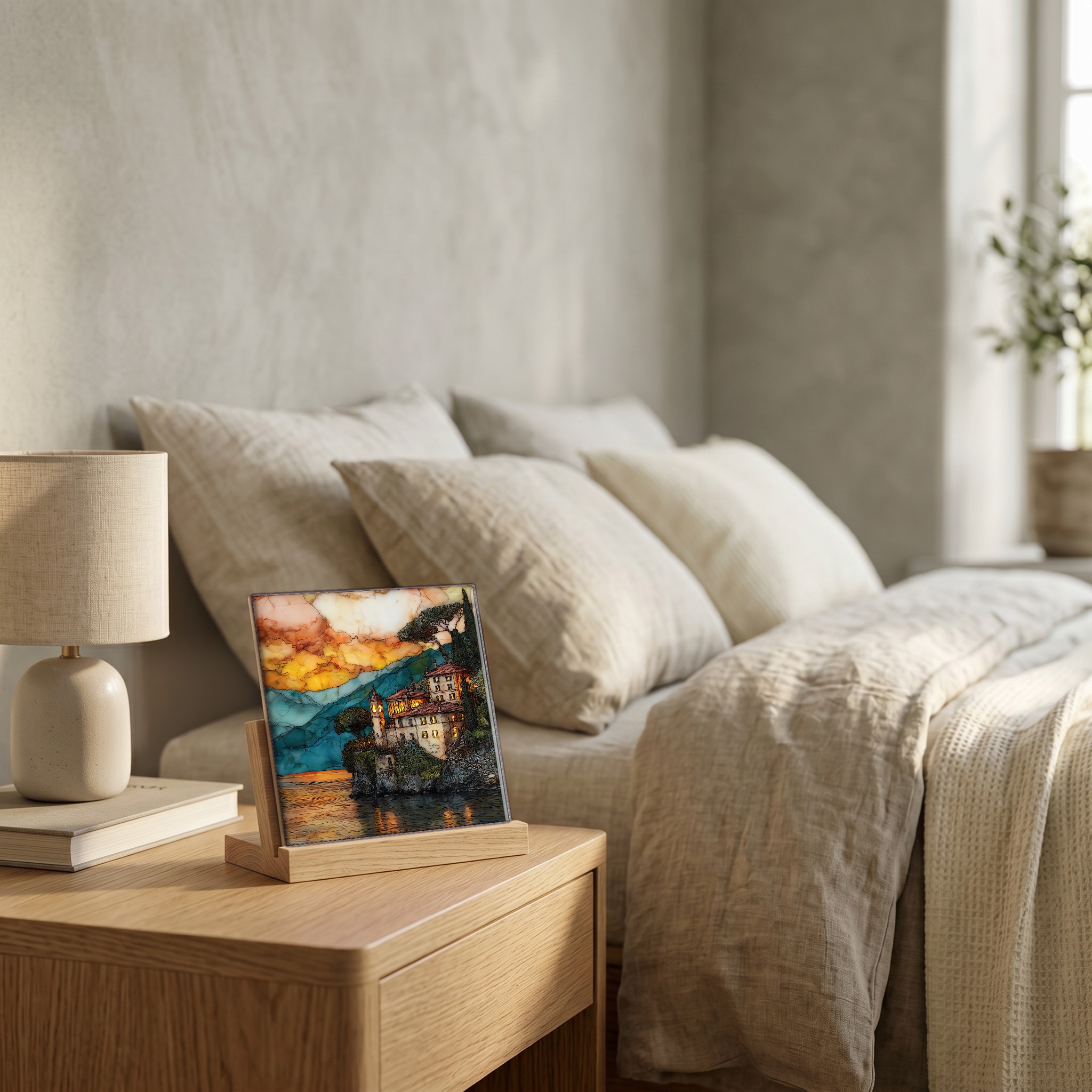
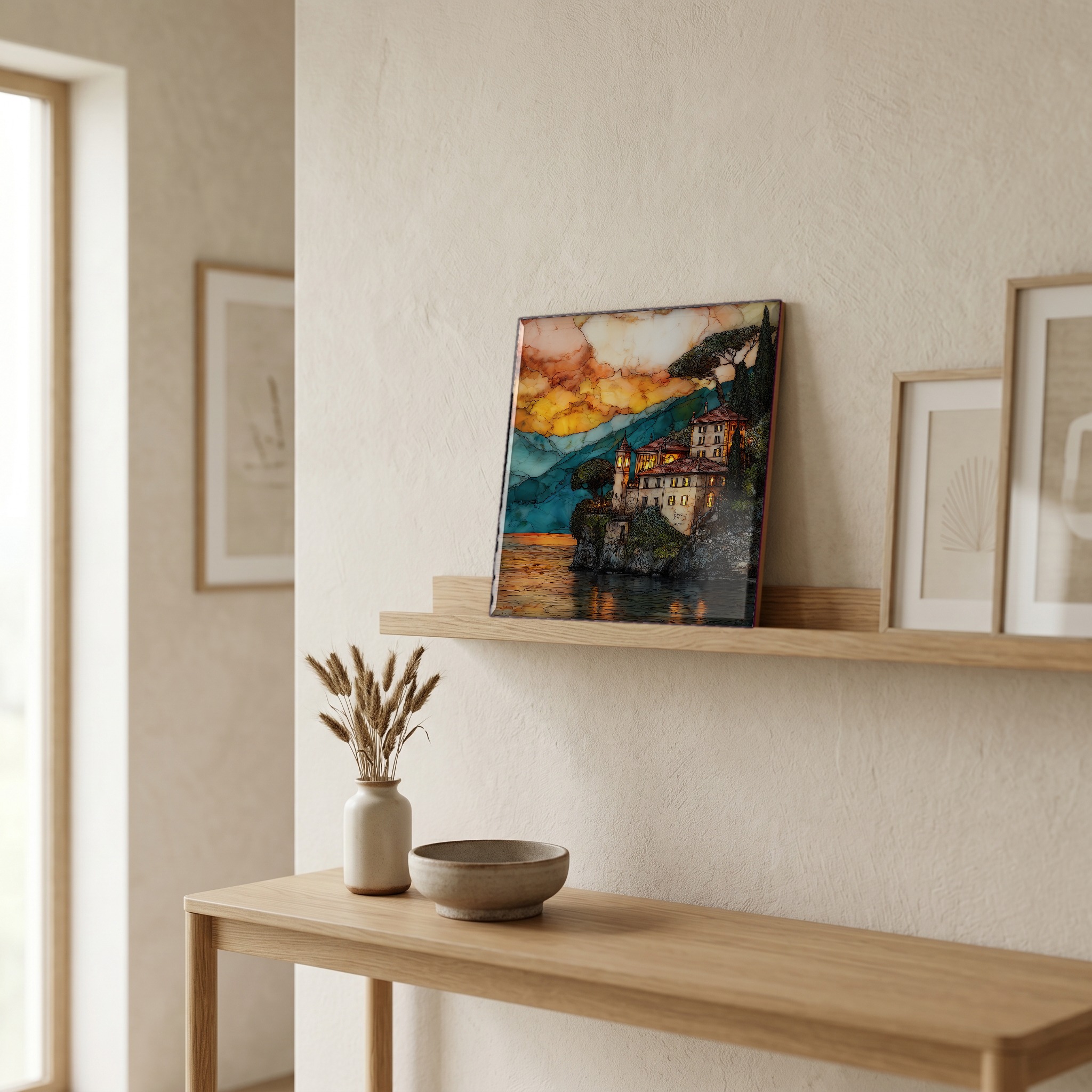
“The villa at the end of a small wooded peninsula on the west shore of Lake Como. Cypress and plane trees come down to the water; above them a long open loggia faces the lake on both sides at once. Built in 1787 on the site of a Franciscan hermitage, the house was Guido Monzino's last home, and his expedition library is still inside. The garden runs in terraces. Most days the visitor lands by boat; the path through the woods opens only a few days a week. The light is best late afternoon, when the lake reads gold and the holm oaks turn dark behind the loggia.
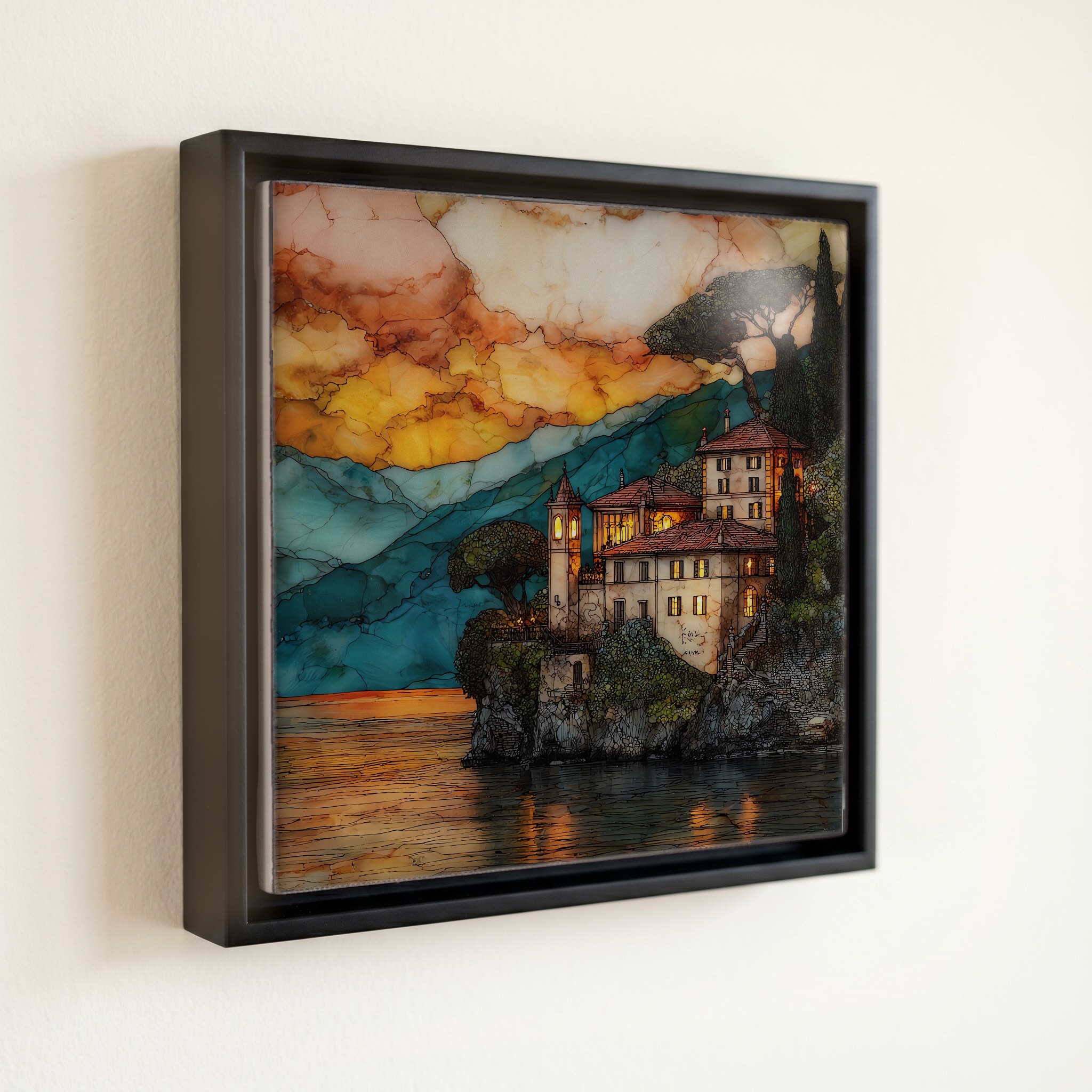
Villa del Balbianello, on ceramic.
Each tile is finished by hand in our Knoxville studio. Artwork is slowly infused into the ceramic surface under high heat and pressure, and rests beneath a thin glossy finish. The colour lives in the surface, not on top of it.
Pick any four 4-inch tiles — National Parks you've been to, a Smokies set, the four seasons of one place. $ for a set of , cork-backed, ready to live on the table.
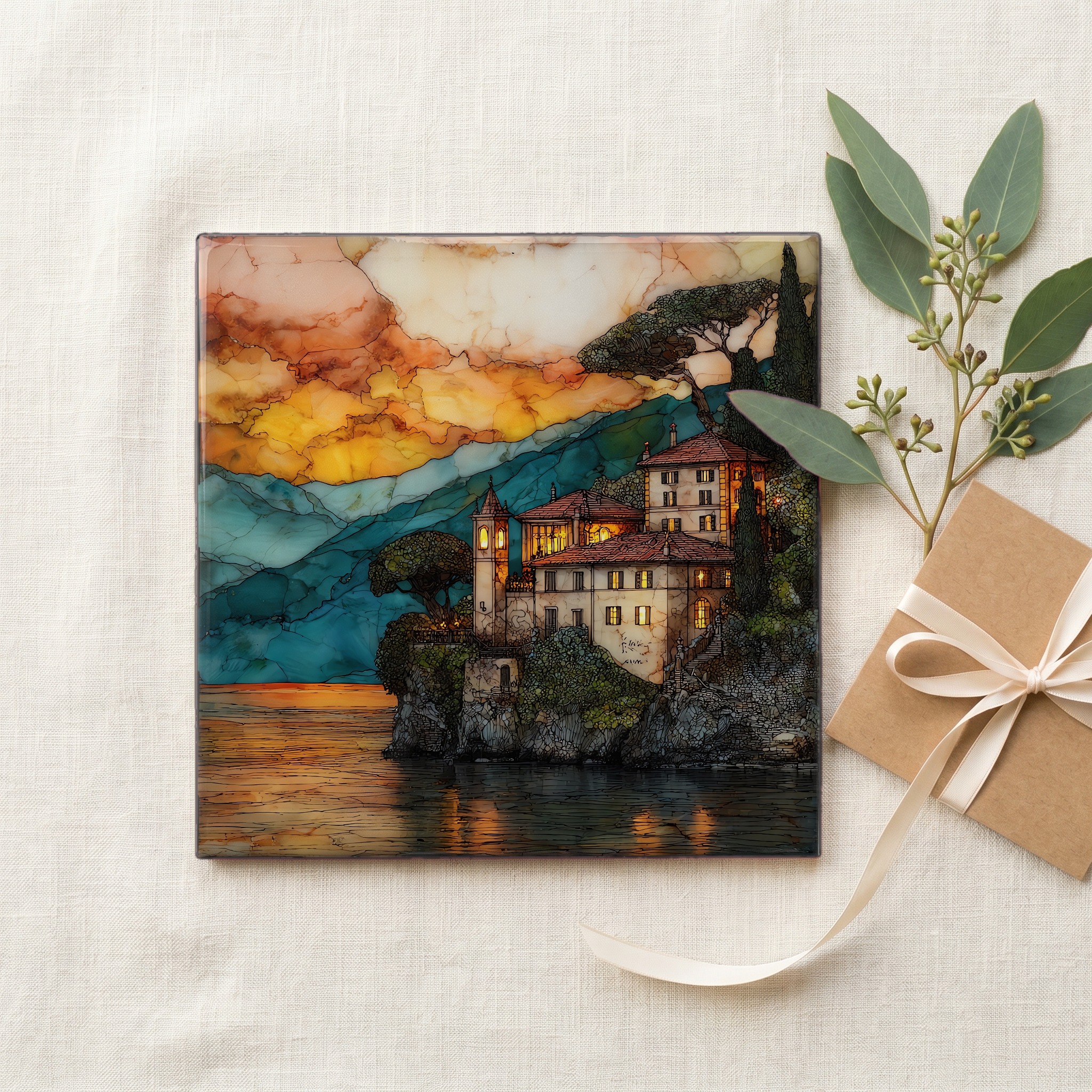
Each tile ships in a kraft box, tied with cream ribbon, with a handwritten note from the studio if you'd like to add one.
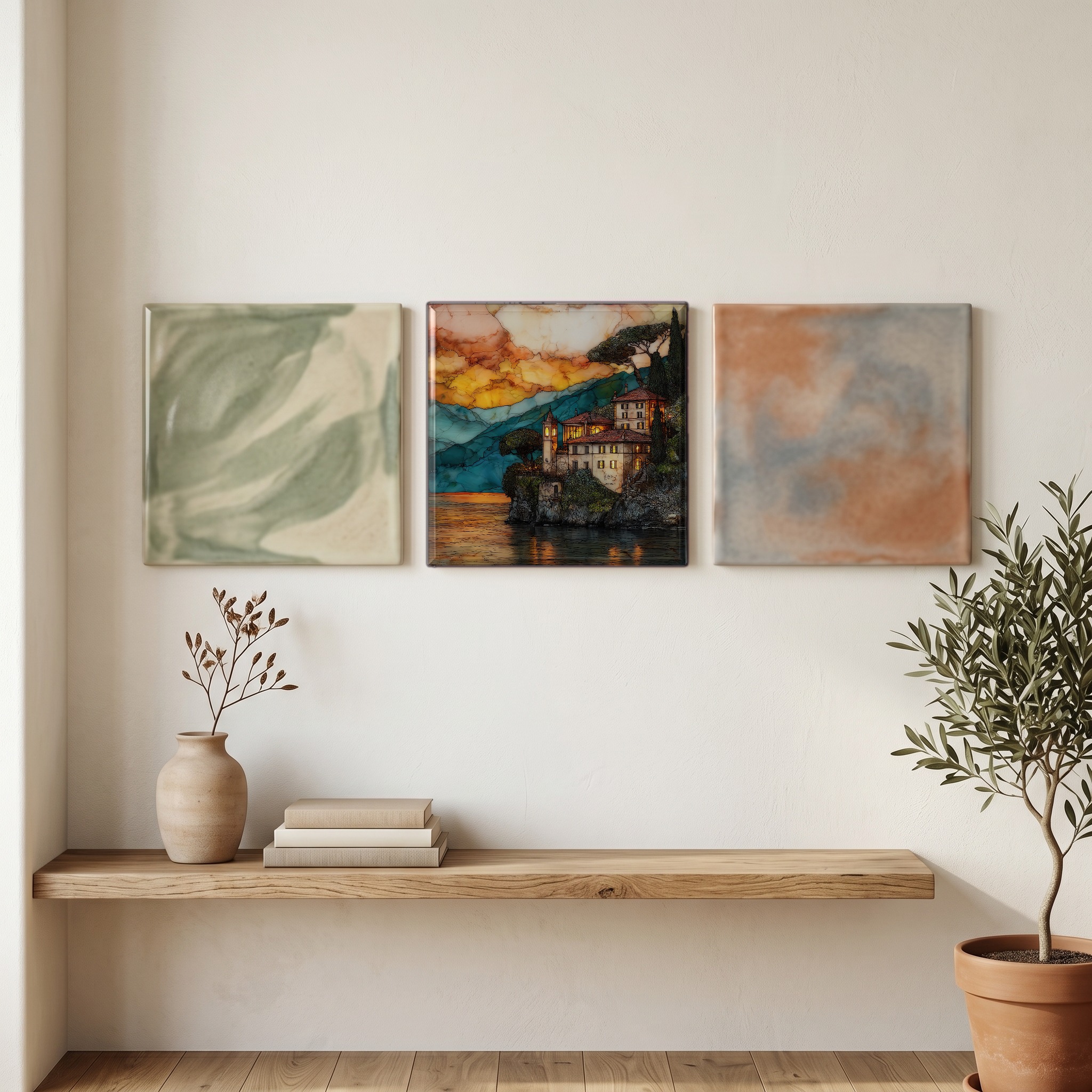
Three or five different vistas, hung together — a chapter of places you've been, or want to go.
The place, in three passes.
Villa del Balbianello sits on Punta di Lavedo, a small wooded peninsula on the western shore of Lake Como, in the commune of Tremezzina about 30 km north of the city of Como ([Wikipedia](https://en.wikipedia.org/wiki/Villa_del_Balbianello)). The peninsula juts into the lake where the Como and Lecco arms divide, at the central junction of the three branches and directly across the water from Bellagio. The house is reached by boat from Lenno's lakefront pier or, on a few open days each week, by a wooded path through the FAI grounds ([FAI](https://fondoambiente.it/luoghi/villa-del-balbianello)). It stands on the site of a 13th-century Franciscan hermitage, partially incorporated into the present buildings. The twin bell towers of the chapel are the surviving fragment of that monastery.
The villa as it stands today was built in 1787 for Cardinal Angelo Maria Durini, a man of letters who kept it as a retreat for poets and visiting scholars ([Wikipedia](https://en.wikipedia.org/wiki/Villa_del_Balbianello)). At the highest point of the peninsula stands the Loggia Durini, a three-arched belvedere open on two sides to the lake, with the dining room and library wings flanking it. The house passed through several owners before the explorer Guido Monzino, who led the first Italian expedition to summit Mount Everest in 1973, made it his final home ([FAI](https://fondoambiente.it/luoghi/villa-del-balbianello)). On his death in 1988 he bequeathed the entire estate, with its library and his expedition collections intact, to the Fondo Ambiente Italiano.
The villa and grounds open from mid-March to mid-November, closed on Mondays and Wednesdays during the season ([FAI](https://fondoambiente.it/luoghi/villa-del-balbianello)). Access is by ferry or private water taxi from Lenno's pier; a wooded path from Lenno is open on Tuesdays, Saturdays, and Sundays, with timed-entry tickets sold by FAI online and at the gate. The interior of the house, which includes Monzino's library, his Everest and Antarctic collections, and the dining and music rooms, is shown only on a separately booked guided tour. The loggia is recognisable from the Naboo wedding scenes in Star Wars: Attack of the Clones and from the closing recovery sequence of Casino Royale (2006).