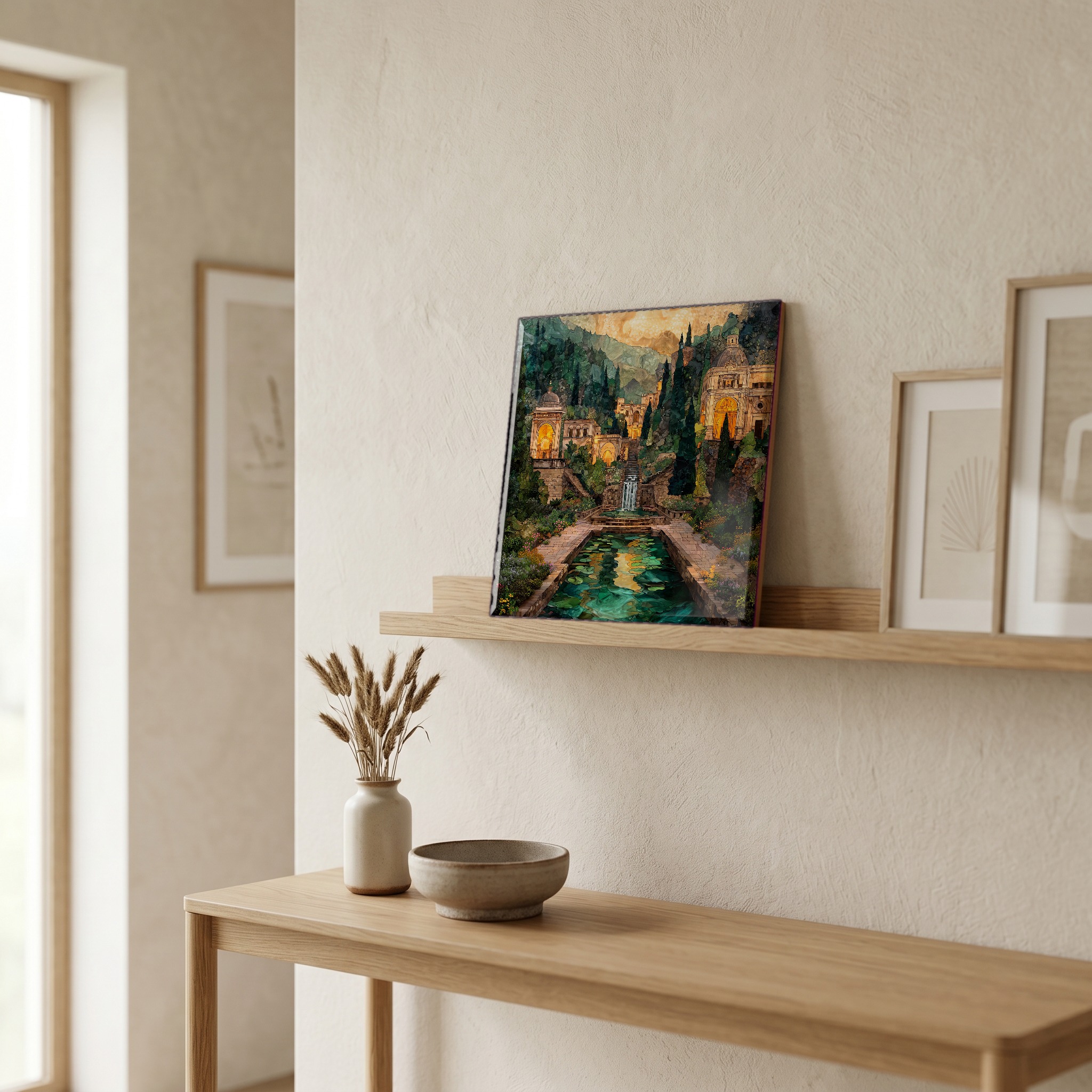
Wender·Vista
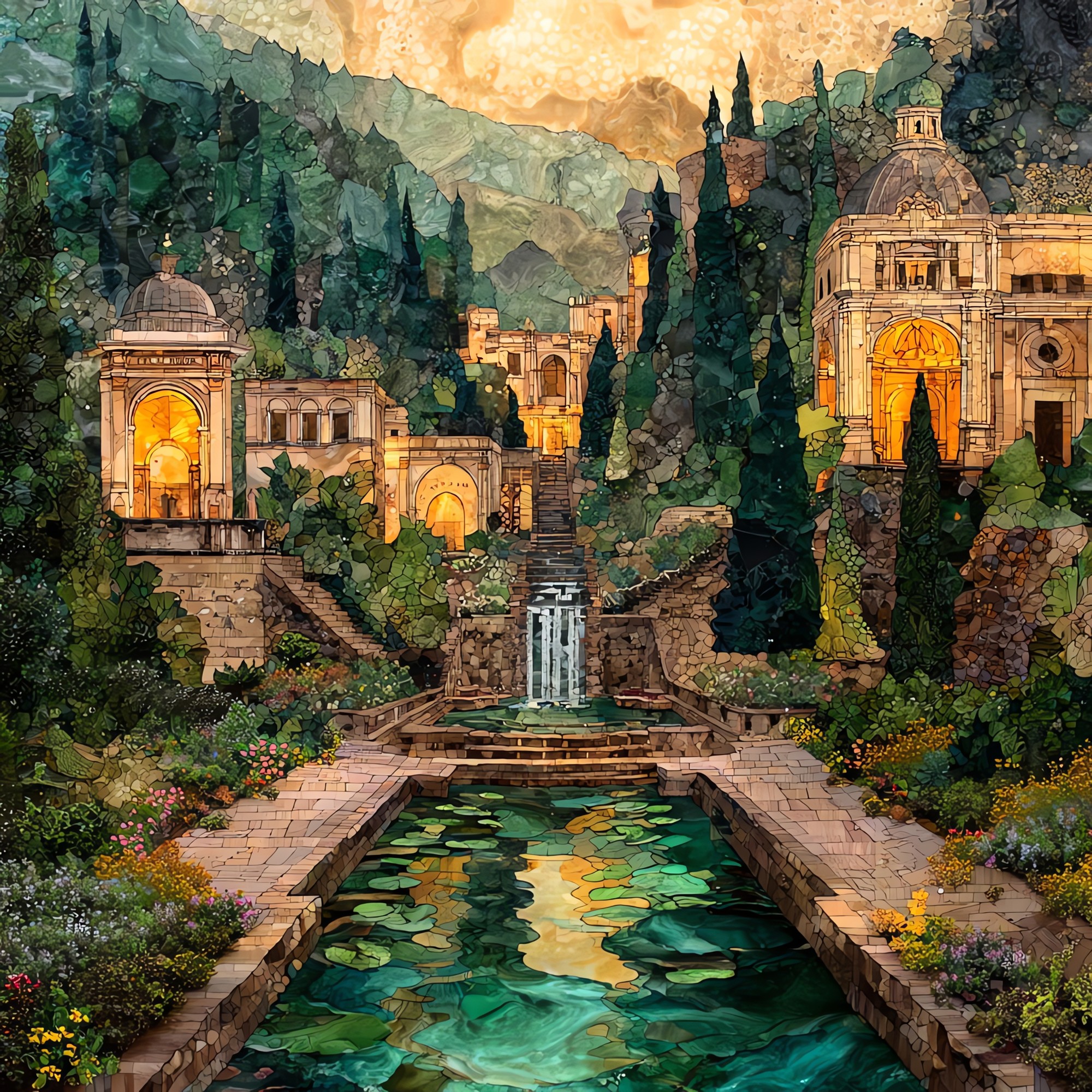
Villa d'Este Tivoli
shown on ceramic, 12-inch tileItaly
above Tivoli, an hour east of Rome

Villa d'Este Tivoli

the sound of water arranged like a garden.

Where it lives

Not only on a wall.

A small tile on the nightstand catching the morning. A larger one above the fire. Yours, wherever you spend the slow hours.
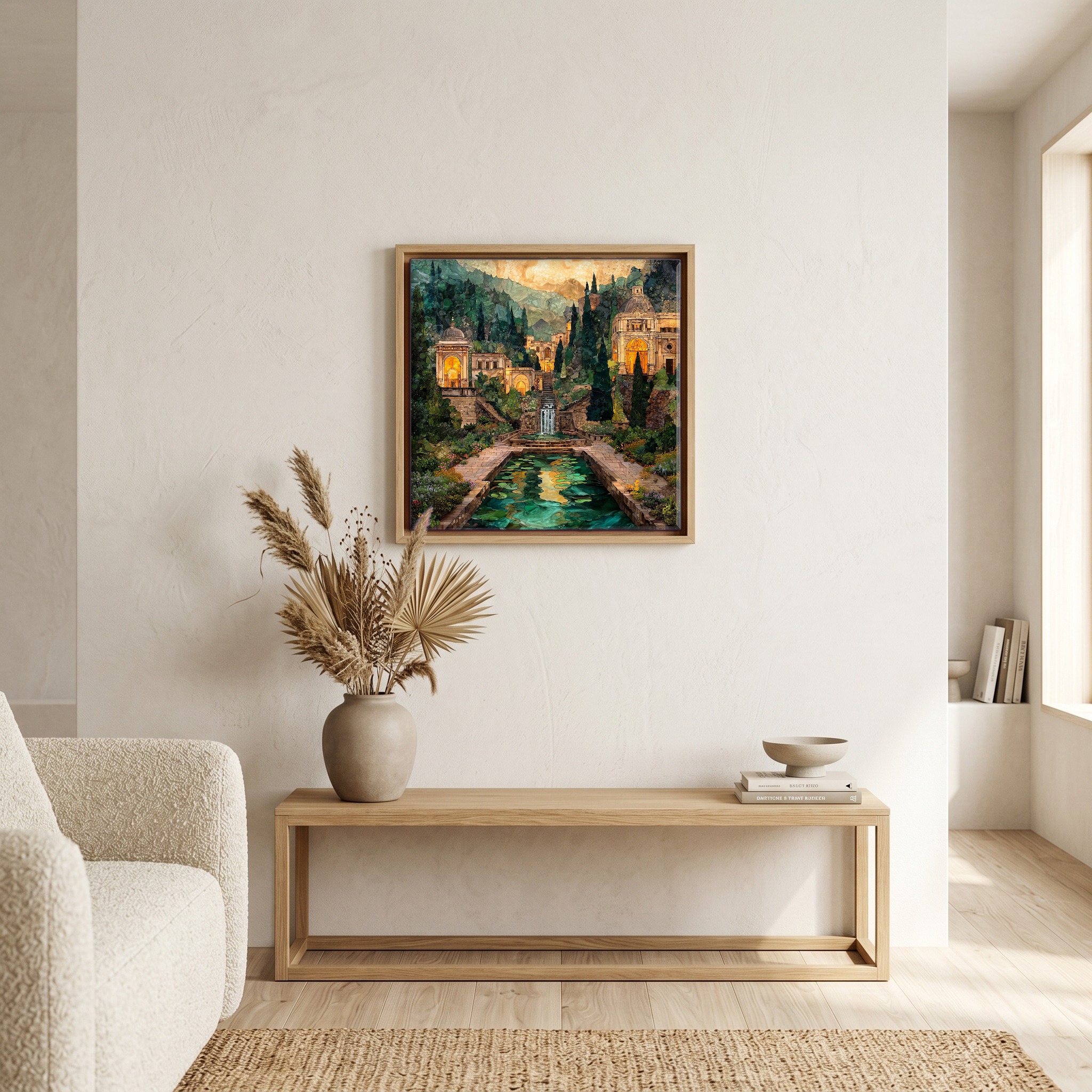
Above the bench, in a warm oak surround.
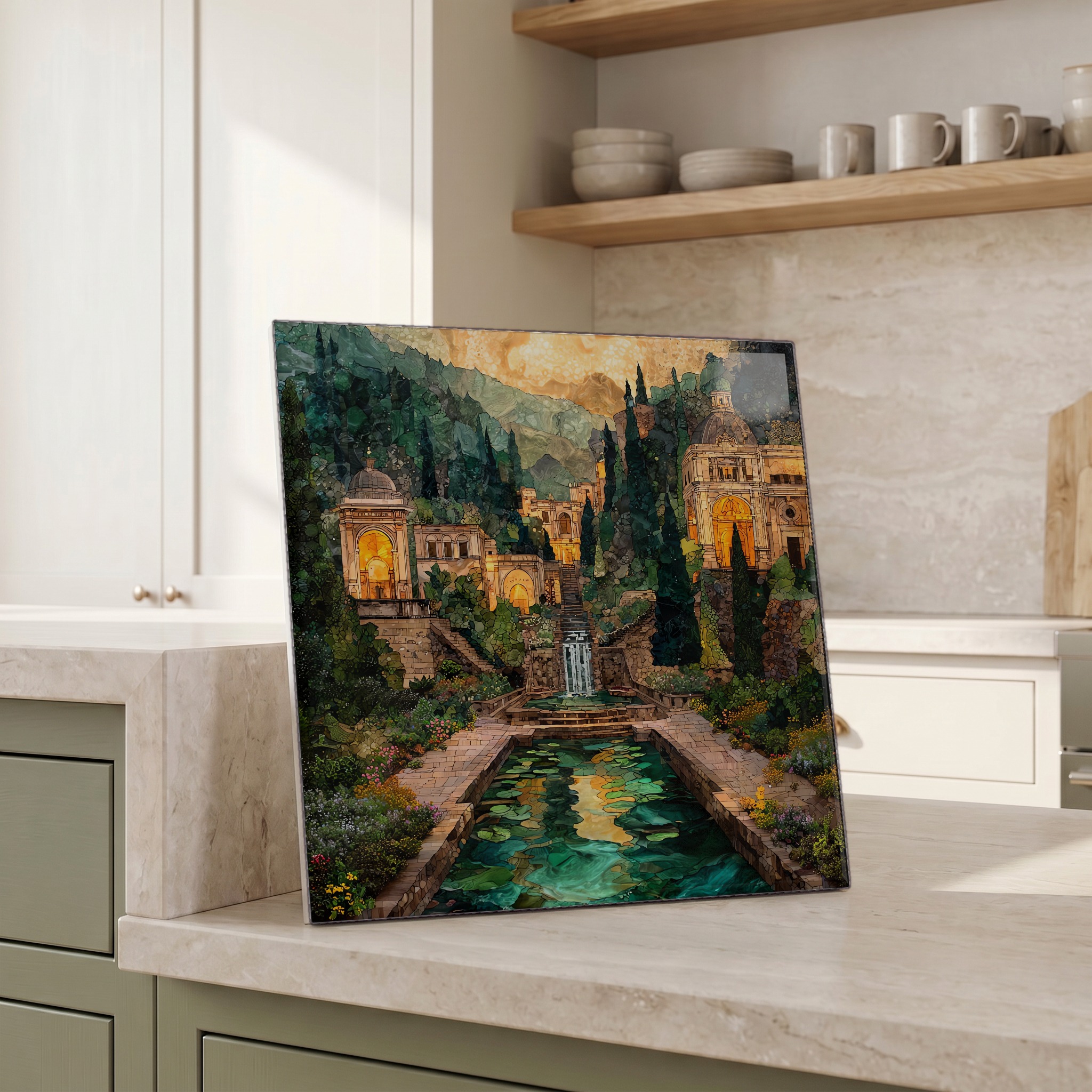
Beside the kettle, propped on the counter.
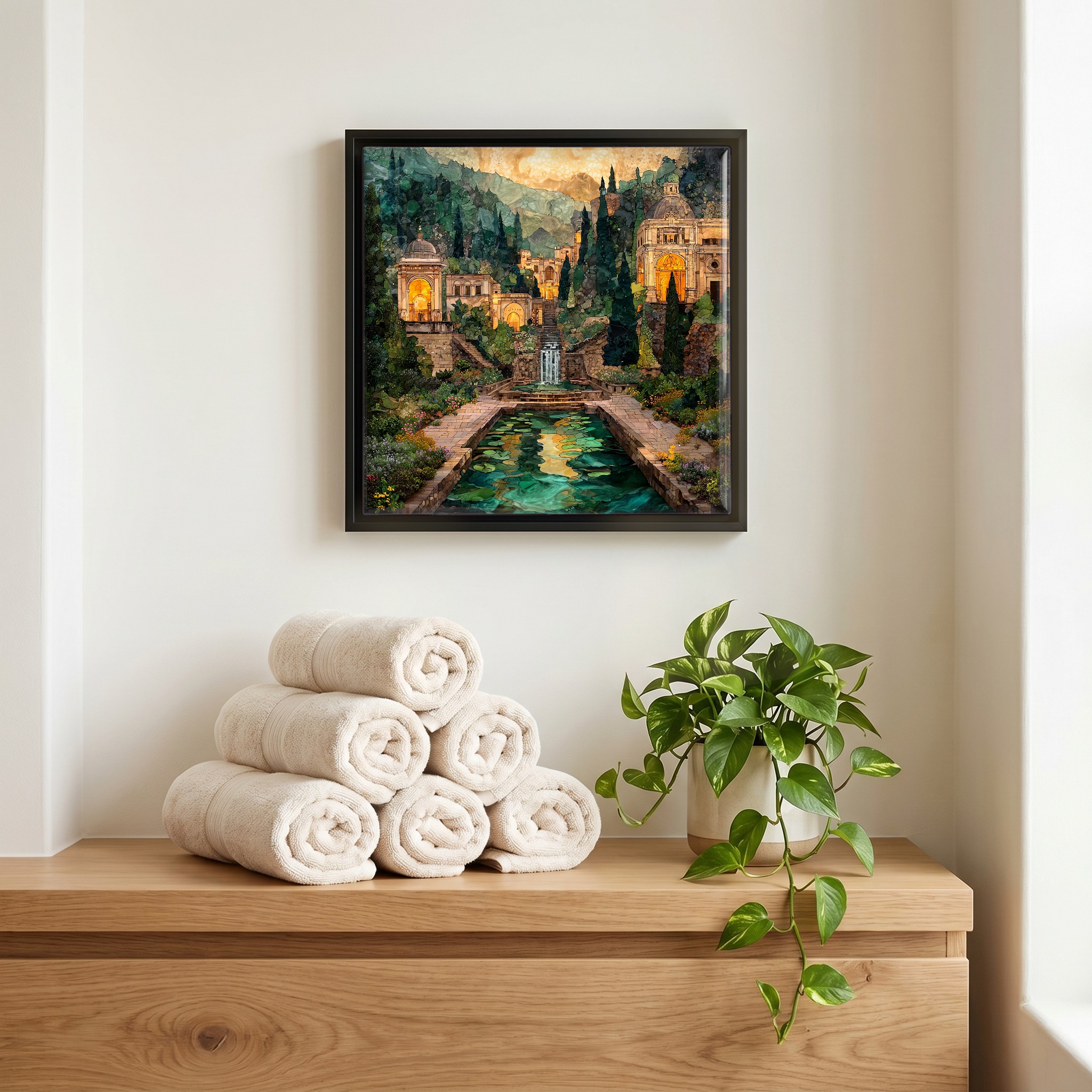
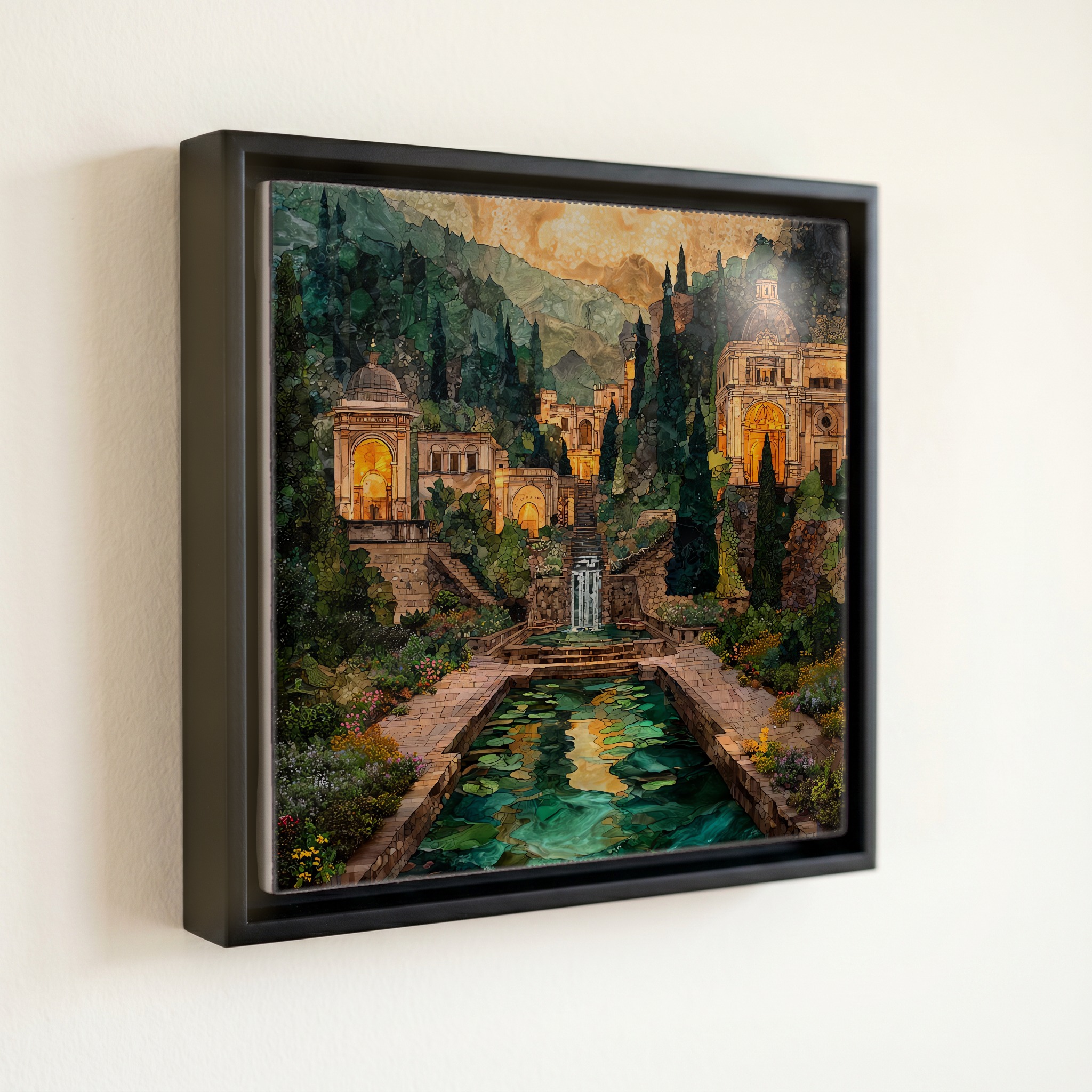
Above the linens, in a slim black surround.
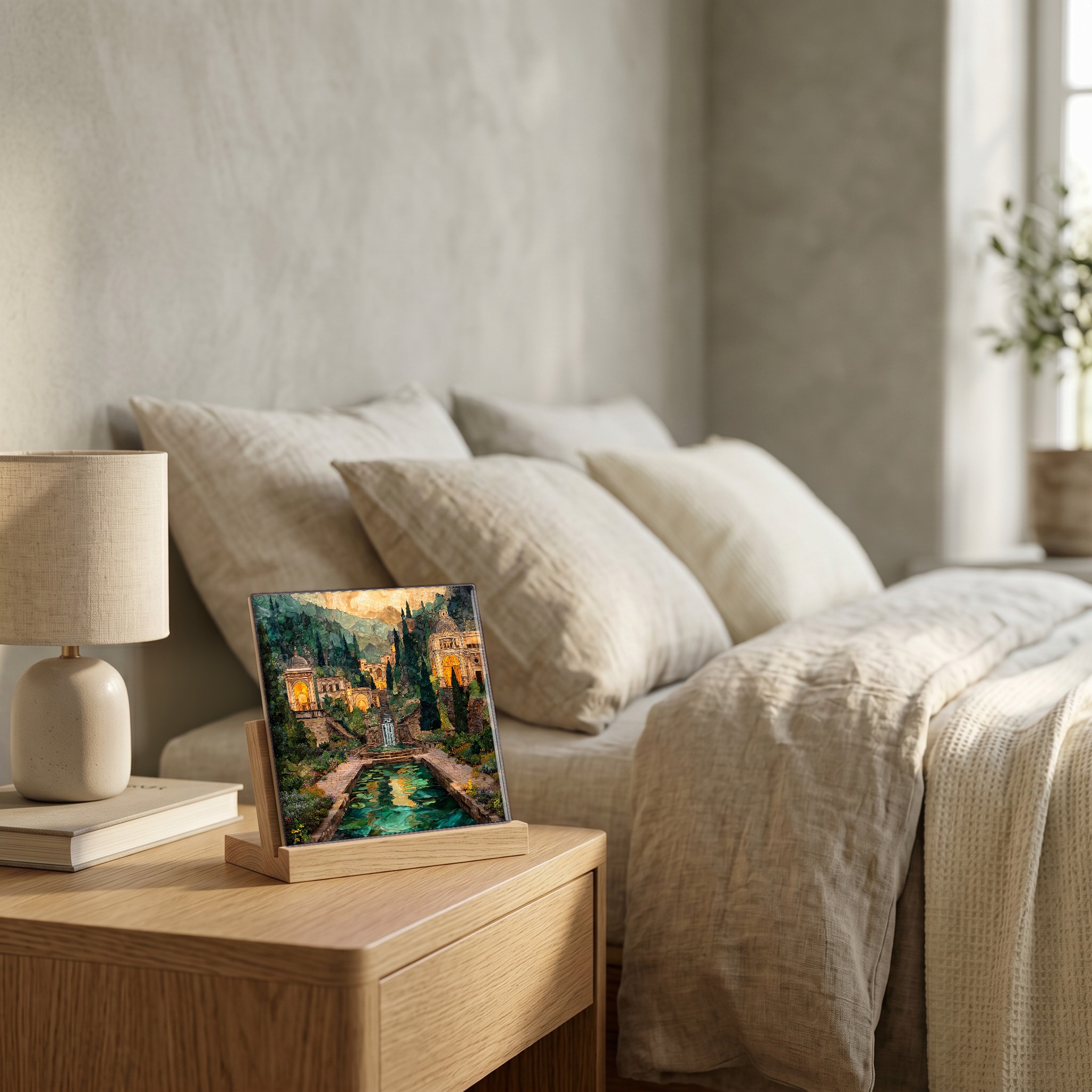
On the nightstand, on a light oak stand.
On a picture ledge, where the light comes in.
a note from the studio

A Renaissance cardinal's hillside, an hour east of Rome. Cardinal Ippolito II d'Este gave the slope to water in 1550 and the engineers worked the rest of his life on the plumbing. Cento Fontane runs the length of one terrace, a hundred small mouths feeding one long pool. The organ fountain still plays a tune on the hour, on water pressure alone. The cascade was old when Liszt sat down at a piano here and wrote about it. Nothing in the garden uses a pump; the water arrives from the Aniene through a tunnel under the town and runs by gravity through every fountain on the slope.
from the studio
shown in a slim black floating frame · 6 × 6 in
— bring it home

Villa d'Este Tivoli, on ceramic.

Each tile is finished by hand in our Knoxville studio. Artwork is slowly infused into the ceramic surface under high heat and pressure, and rests beneath a thin glossy finish. The colour lives in the surface, not on top of it.

What kind of piece?
One tile — square or rectangle.
How big?
the popular one — counter, shelf, nightstand
6 × 6 in · 15 cm · 1.6 lb
Surface finish
A clear glossy finish — the artwork reads as if under resin. Ideal for show-pieces and framed wall art.
How it sits
A hidden cleat — sits ¼″ proud of the wall.
$58
Hand-finished and shipped from our studio at the foot of the Smokies. On your wall in about ten days.
size
6 × 6 in
15 cm
weighs
1.6 lb
solid in the hand
surface
ceramic, hand-finished
art rests beneath a thin glossy finish
from
Knoxville, TN
our family studio, at the foot of the Smokies
— start a Coaster Set

Pick any four 4-inch tiles — National Parks you've been to, a Smokies set, the four seasons of one place. $ for a set of , cork-backed, ready to live on the table.
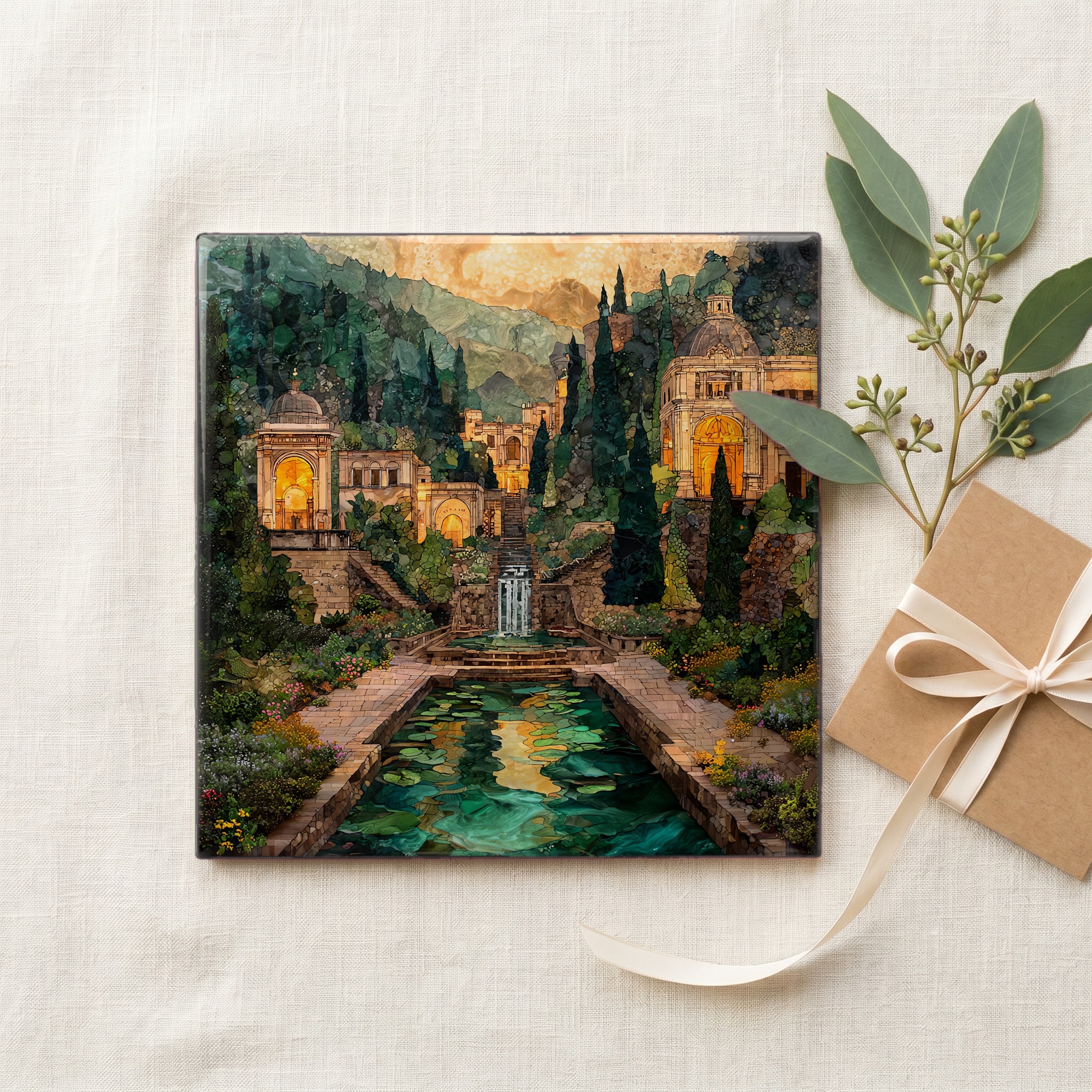
comes gift-ready
comes gift-ready

Each tile ships in a kraft box, tied with cream ribbon, with a handwritten note from the studio if you'd like to add one.
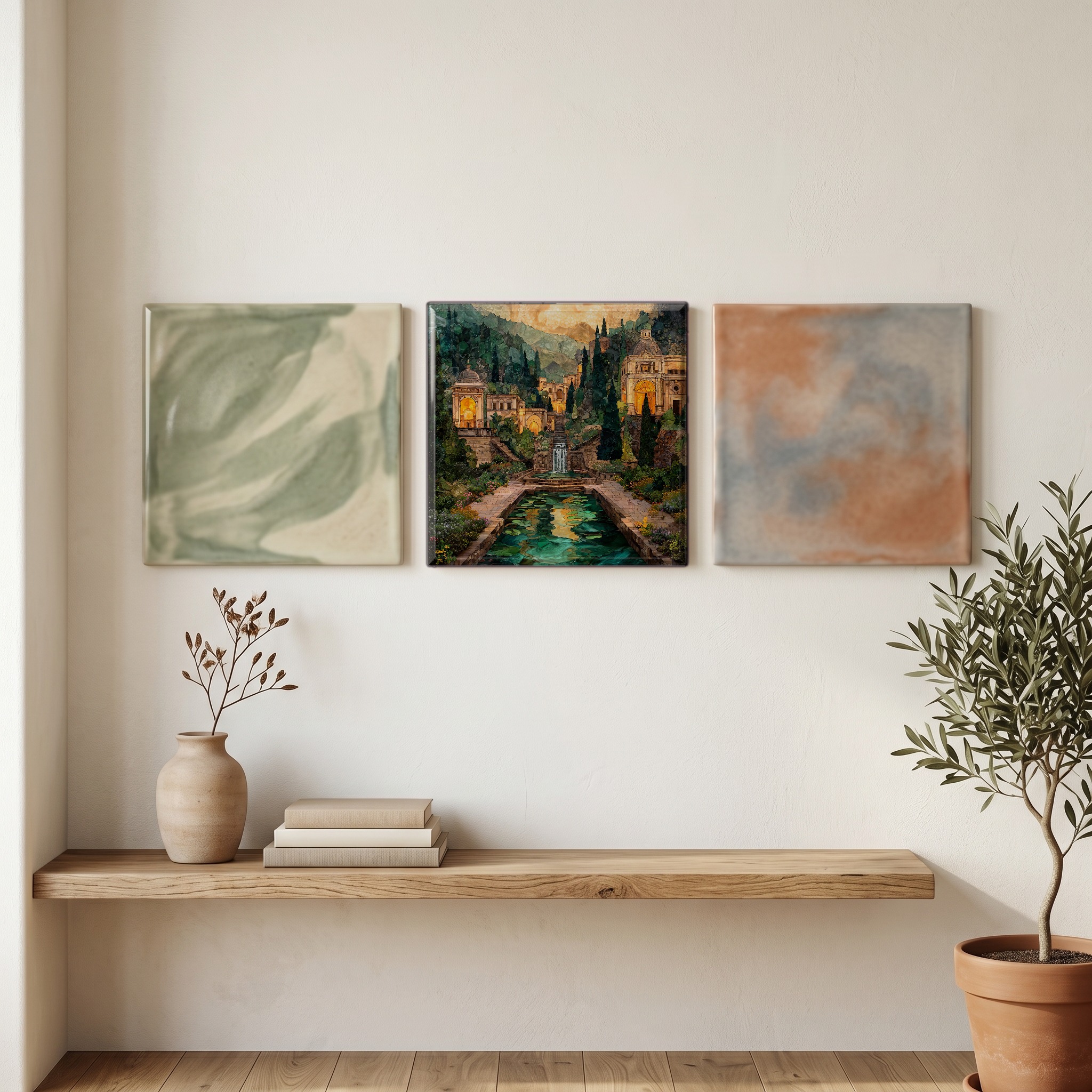
or build a grouping
or build a grouping

Three or five different vistas, hung together — a chapter of places you've been, or want to go.

about Villa d'Este Tivoli

The place, in three passes.

A little of what's known, in case you fall down the rabbit hole — or want to go see it yourself.
the place

Villa d'Este sits on the eastern edge of Tivoli, an old Roman hill town about 30 km east of Rome in the Lazio region. Cardinal Ippolito II d'Este began the project in 1550, the year he was appointed governor of Tivoli, converting a Benedictine convent into his residence and handing the steep terraced slope below it to his architect Pirro Ligorio. Work continued until the cardinal's death in 1572. The site is reached in under an hour from Rome by regional train to Tivoli station. The villa joined the UNESCO World Heritage List in 2001.

the water

No pumps. Every jet, organ, and cascade at Villa d'Este runs on gravity alone, fed by the Aniene river through a tunnel cut beneath Tivoli in the 1560s. The garden covers roughly four hectares of terraced hillside descending from the villa down toward the Roman plain. The Hundred Fountains stretch about a hundred metres along one terrace, the spouts feeding a single channel decorated with carved reliefs of the d'Este eagles, lilies, and boats. The Fontana dell'Organo houses a hydraulic pipe organ that still plays on a posted schedule, the air for its pipes pressed by falling water. The Rometta terrace at the far end of the garden miniatures Rome itself.

the visit

Open daily except Mondays, with hours that shift by season; tickets are bought at the entrance on Piazza Trento in central Tivoli or online in advance. The villa rooms come first, their walls frescoed in the 1560s by a workshop of Roman painters that included Federico Zuccari and Girolamo Muziano, then the garden opens downhill from the loggia. The Fontana dell'Organo's water-powered organ plays on a schedule posted at the entrance, usually a few times each afternoon. From Rome, the regional train from Roma Tiburtina reaches Tivoli in about an hour, then a short walk through the old town. Comfortable shoes matter; the garden is steep and wet, and the lower terraces are slick after rain.

— informed by Wikipedia
where
Italy · Tivoli, Lazio
elevation
235 m · 771 ft
position
41.9631° N · 12.7964° E
the neighborhood

What's nearby.

A handful of named places within an hour's walk or short drive. Some we've already painted; some we will.
6 km S
Villa Adriana
Roman imperial villa
1 km E
Villa Gregoriana
river-gorge park
1 km E
Tempio di Vesta
Roman temple
2 km SW
Santuario di Ercole Vincitore
Roman sanctuary
30 km W
Rome
city
N
Villa d'Este Tivoli
Villa Adriana
Villa Gregoriana
Tempio di Vesta
Santuario di Ercole Vincitore
Rome
common questions

What people ask.

A few questions we get about Villa d'Este Tivoli — and about bringing the piece home.
about the place

Villa d'Este is in Tivoli, a hill town in Lazio about 30 km east of Rome. The Renaissance villa and its terraced gardens sit on the eastern edge of the historic centre, at an elevation of around 235 metres above the Roman Campagna.

Cardinal Ippolito II d'Este, son of Lucrezia Borgia and Alfonso I d'Este of Ferrara, began the project in 1550 after he was appointed governor of Tivoli. The architect Pirro Ligorio designed the gardens. Work continued until the cardinal's death in 1572.

Water arrives from the Aniene river through a tunnel cut beneath Tivoli, then descends by gravity through every fountain, cascade, and grotto on the hillside. The garden uses no pumps. The fall from the river intake to the lowest pool drives every jet, organ, and water effect in the garden.

The Organ Fountain houses a hydraulic pipe organ inside its niche. Falling water compresses air through bellows, which then drives the pipes. After being silent for centuries, the organ was restored in 2003 and now plays on a posted schedule, typically several times each afternoon.

Cento Fontane is a long horizontal terrace lined with about a hundred fountain spouts feeding a single narrow channel decorated with carved reliefs of the d'Este eagles, lilies, and boats. The terrace runs roughly a hundred metres along the upper garden.

Yes. Villa d'Este was inscribed on the UNESCO World Heritage List in 2001, recognised as a masterpiece of the Italian Renaissance garden. Tivoli's other UNESCO site, Hadrian's Villa, was inscribed two years earlier. The two villas are usually visited together on a day from Rome.

Yes. Liszt stayed at Villa d'Este from the mid-1860s onward as a guest of Cardinal Gustav von Hohenlohe. The water of the garden inspired his late piano piece Les Jeux d'eaux à la Villa d'Este, composed in 1877 and often cited as a precursor to Debussy and Ravel.

about the piece in your home

It carries well to anyone who has walked the cascades at Villa d'Este or spent an afternoon in Tivoli. The garden is one of the touchstones of an Italy trip, so a Small or Medium with a handwritten note from the studio tends to land. The Keepsake also travels easily through the mail.

The deep greens, blued cobalt, and oxidised gold of the artwork read most naturally against Italianate-classical, Tuscan-modern, and library-rich Maximalist interiors. The piece also sits well in a Mediterranean kitchen with warm plaster walls. Avoid hanging it where it would compete with a busy patterned wallpaper.

The classical-revival and Italianate look has been strengthening in interiors press over the past few seasons, particularly the pairing of Renaissance-garden imagery with linen-and-plaster wall finishes. The piece sits comfortably in that conversation without being literal about it.

Above a standard three-seat sofa, a single Large (24 inches) reads cleanly when centred. For a wider room, a 4-tile Mural carries weight without crowding. Above a console table, a Medium or a 4-tile Mural in a tight cluster both work. A 9-tile Mural is best on an unbroken wall.

Yes, with the right finish. The Dura Satin and Matte finishes are scratch-resistant and humidity-tolerant, suitable for backsplashes, shower walls, and steamy rooms. The Glossy finish is for framed wall art in dry rooms only. Tell us the room when you order and we'll match the finish.

A soft microfibre cloth and warm water are all the tile needs. The colour is slowly infused into the ceramic surface under high heat and pressure, beneath a thin protective finish, so it doesn't fade or lift with normal cleaning. Avoid abrasive scrubbers and solvent-based cleaners.

Yes. Every WenderVista piece is original to the studio, painted by Reid Wender, and produced in-house in Knoxville, Tennessee. We do not license stock imagery, and the piece you receive is hand-finished. The same is true of every place in the WenderVista atlas.

if this one stayed with you

A few you might also love.

Hand-picked by the eye that found Sorapis. Same air, same kind of quiet.
— a collection

The Italian Dolomites,
painted slow.

The valleys between Cortina and Val Gardena, the tarns you walk an hour to see, the towers that turn the colour of a banked fire just before dark. Wander the collection by valley, by season, or follow the path Reid walked.

Tre Cime
Braies
Misurina
Sorapis
Cinque Torri
Sassolungo
Marmolada