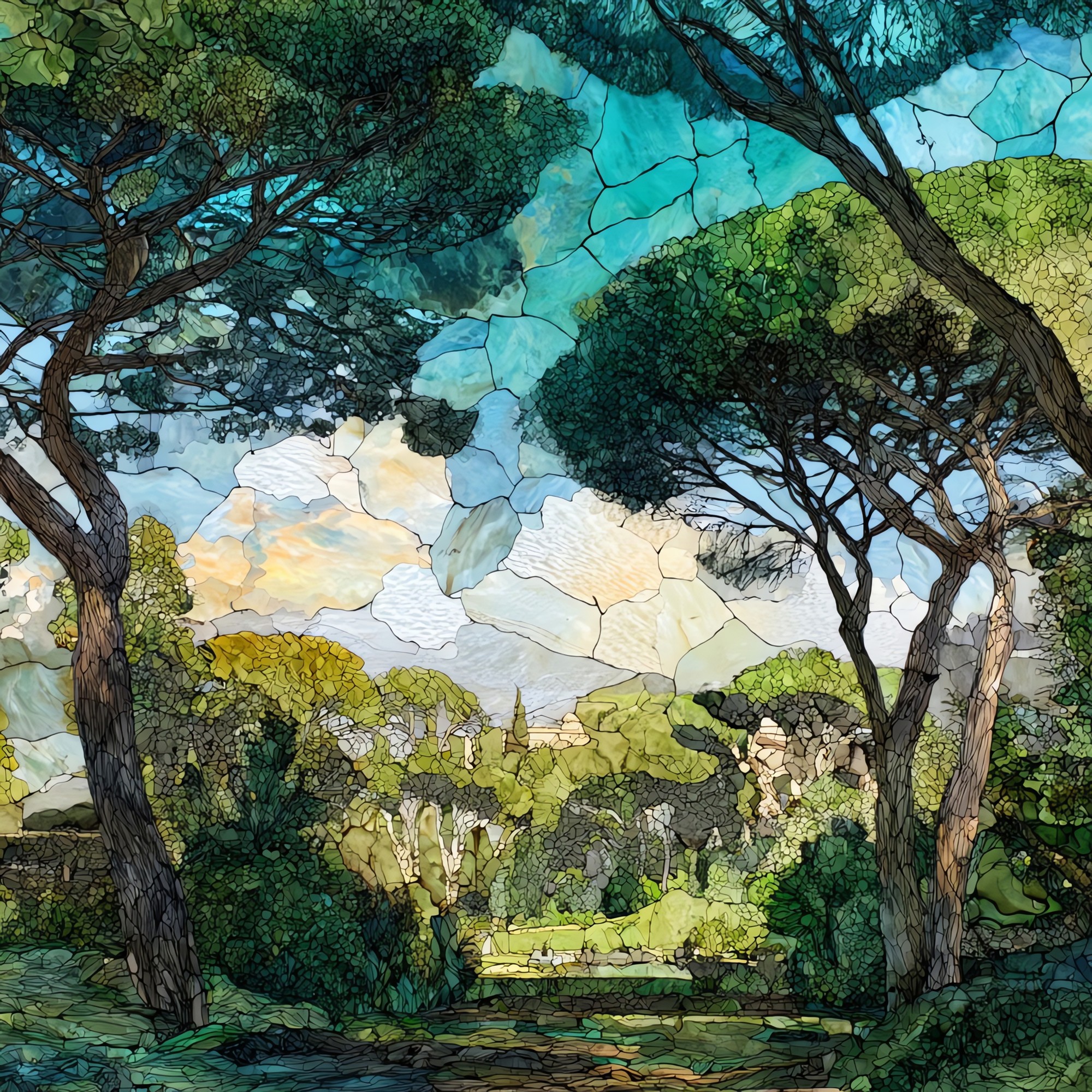
Villa Borghese Gardens
— — the hour the domes go gold.
Not only on a wall.
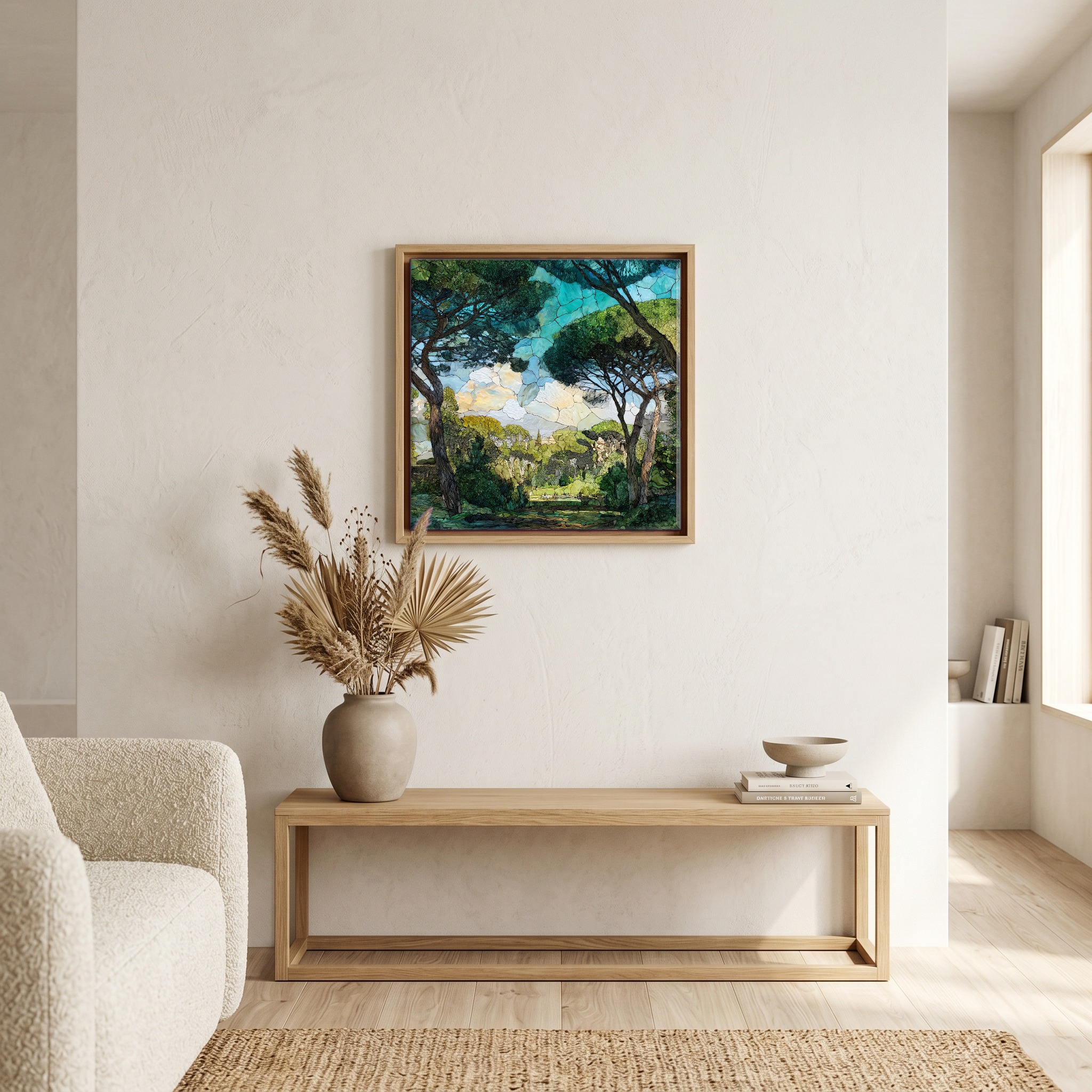
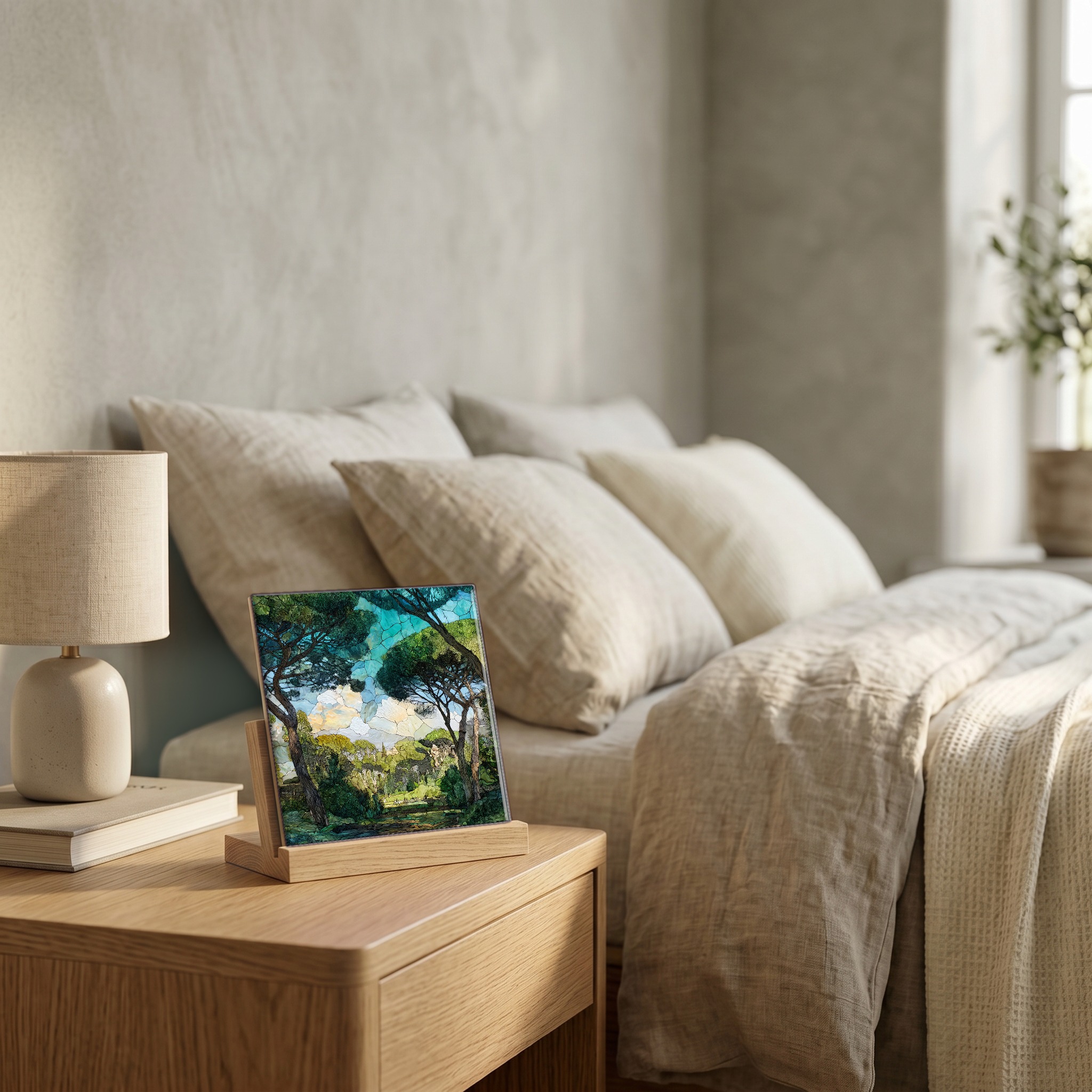
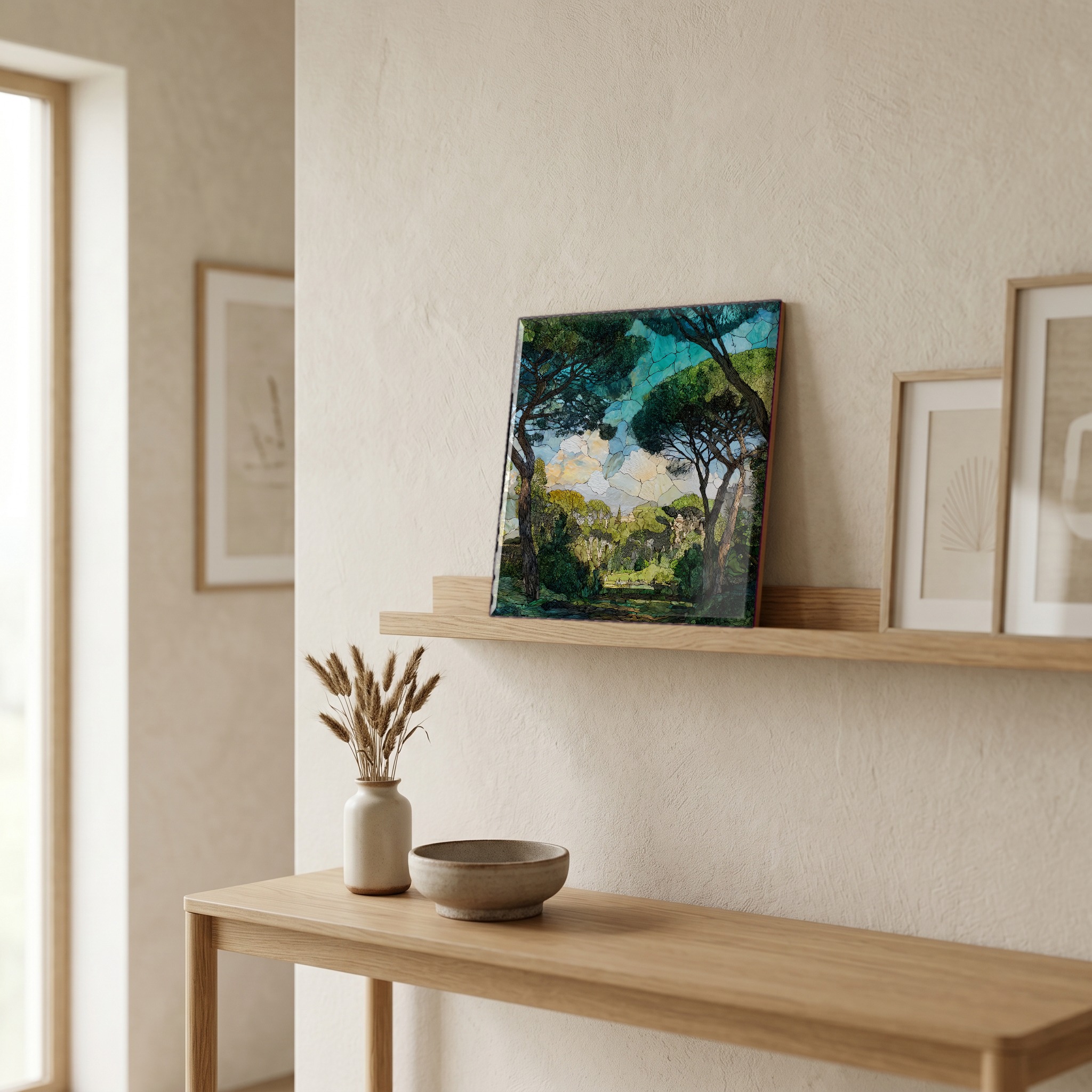
“A wide green park above the Spanish Steps, where Romans go to slow down. The umbrella pines run in long colonnades; the gravel paths trace the shape of a seventeenth-century cardinal's pleasure garden. Cardinal Scipione Borghese laid it out in 1605 as a vigna outside the walls; English landscape designers reshaped it two centuries later, and the city took it in 1903. The Pincio terrace is where the light goes at the end of the day, looking west over Piazza del Popolo, across the river, to the dome of St. Peter's. Locals come here for the gold hour. Tourists find out by accident.
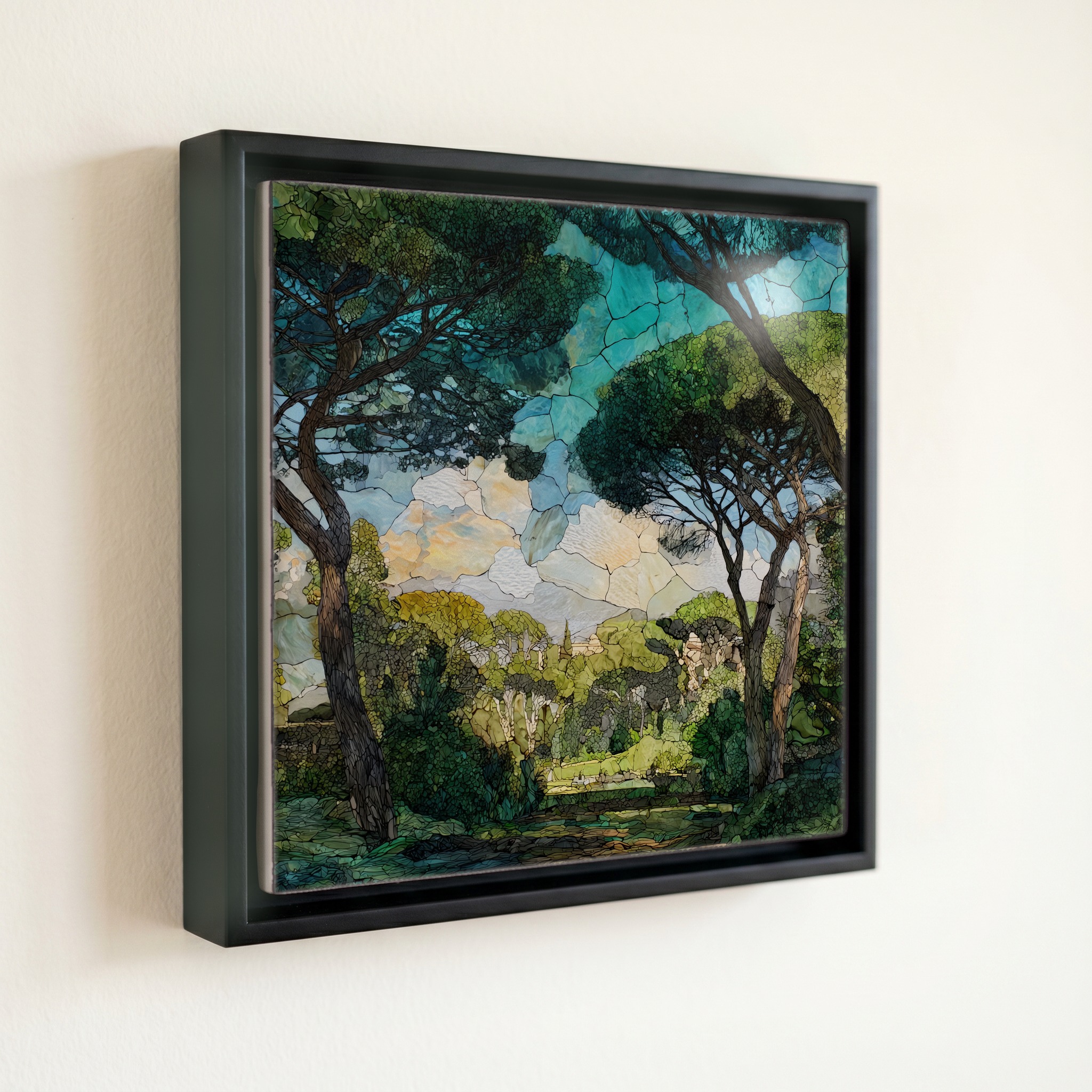
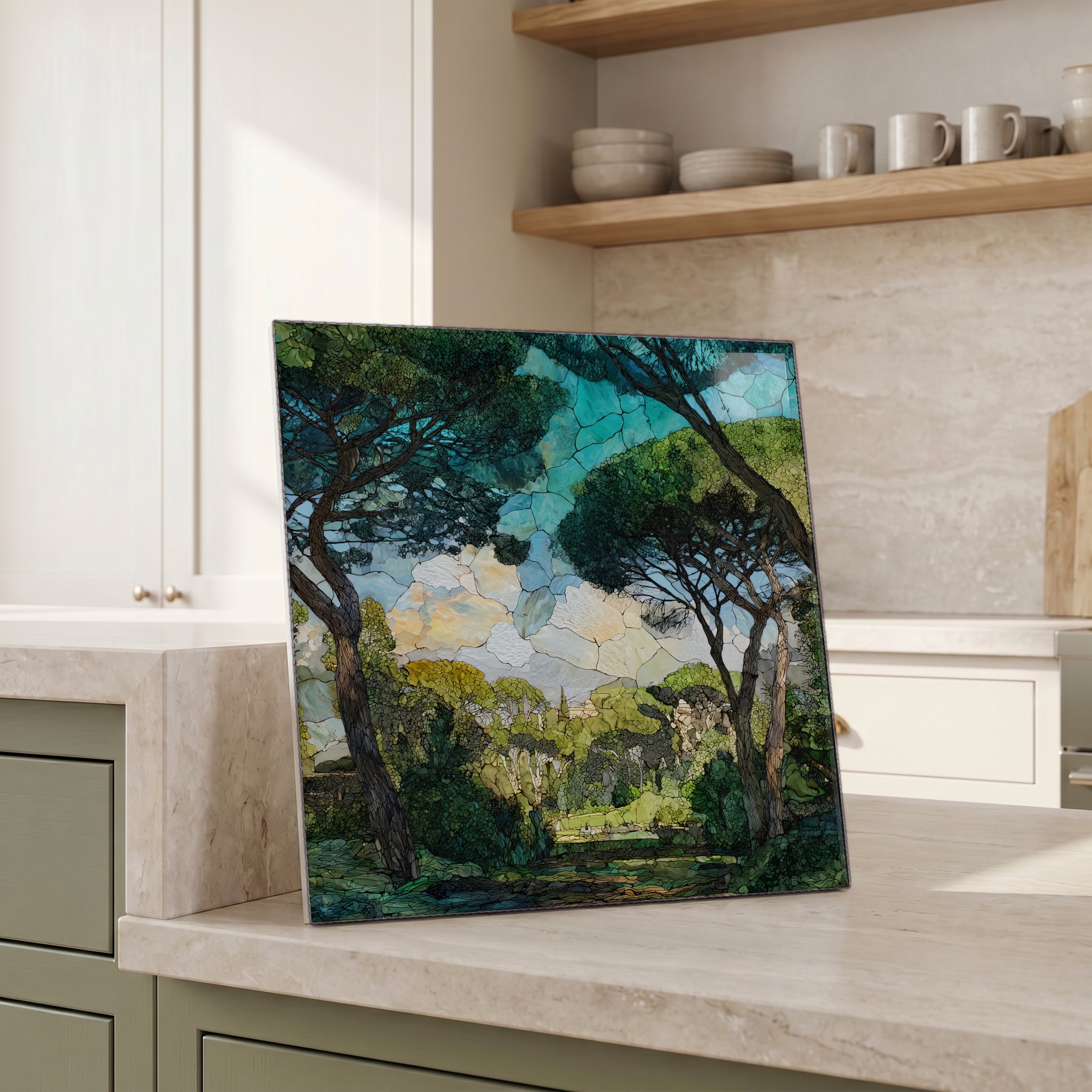
Villa Borghese Gardens, on ceramic.
Each tile is finished by hand in our Knoxville studio. Artwork is slowly infused into the ceramic surface under high heat and pressure, and rests beneath a thin glossy finish. The colour lives in the surface, not on top of it.
Pick any four 4-inch tiles — National Parks you've been to, a Smokies set, the four seasons of one place. $ for a set of , cork-backed, ready to live on the table.
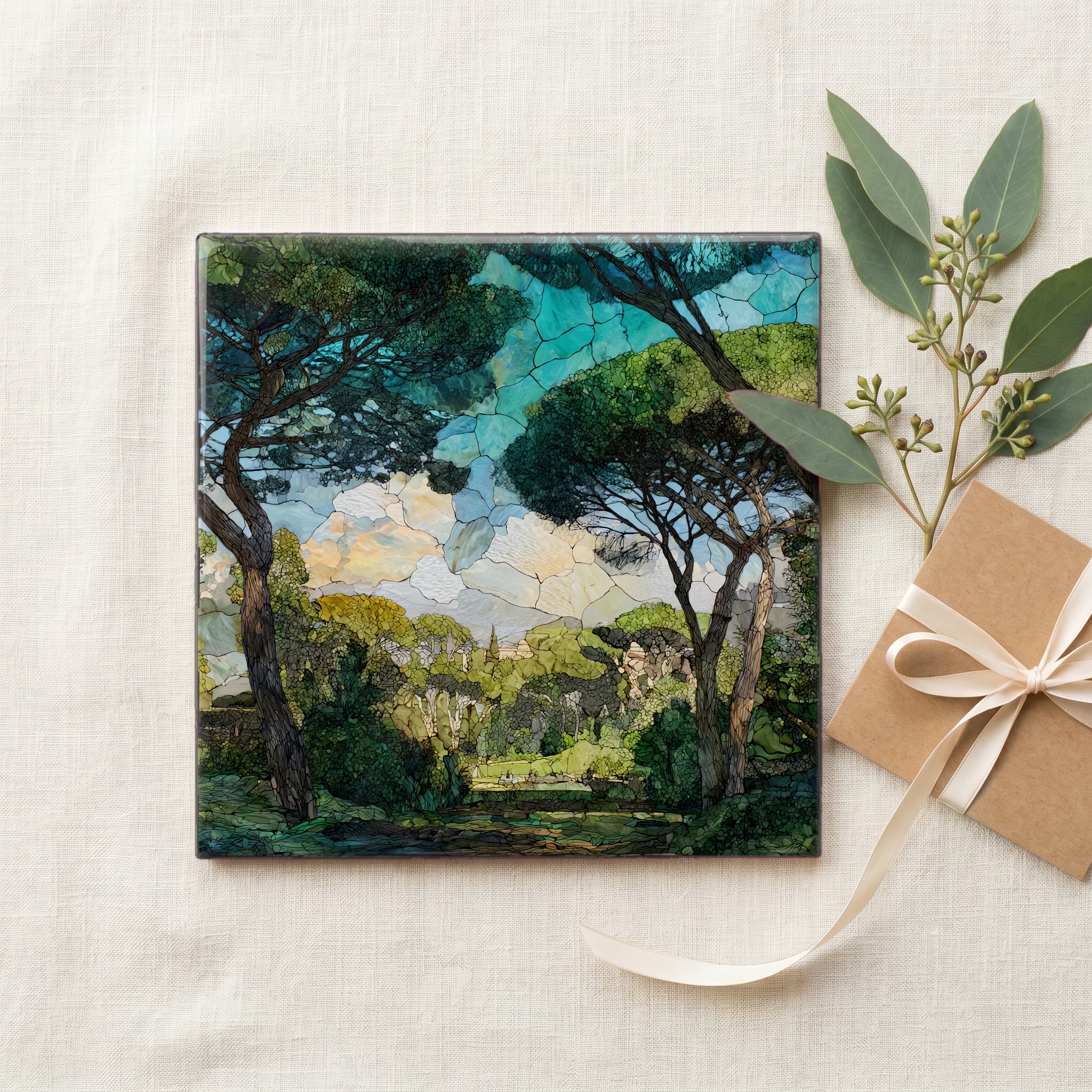
Each tile ships in a kraft box, tied with cream ribbon, with a handwritten note from the studio if you'd like to add one.
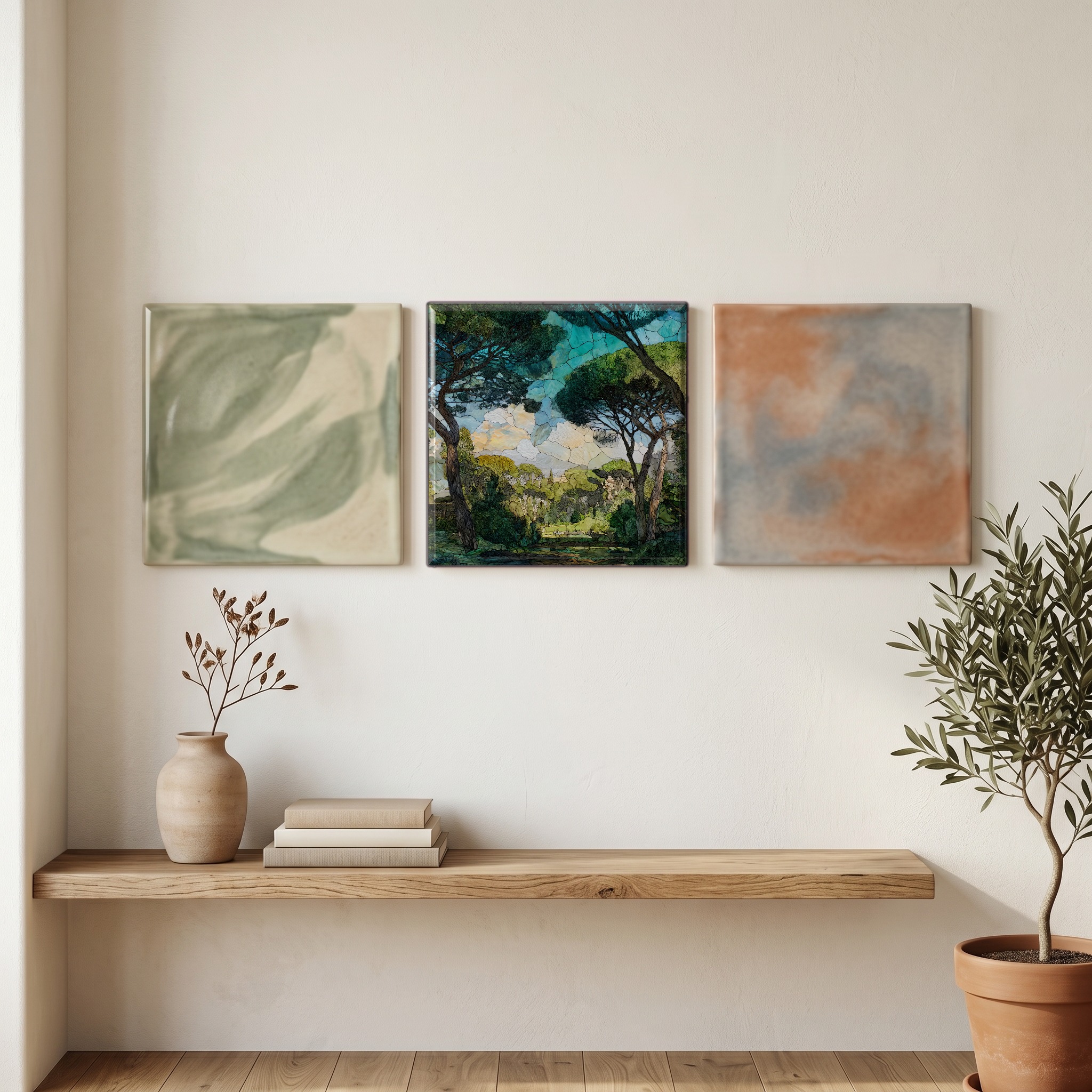
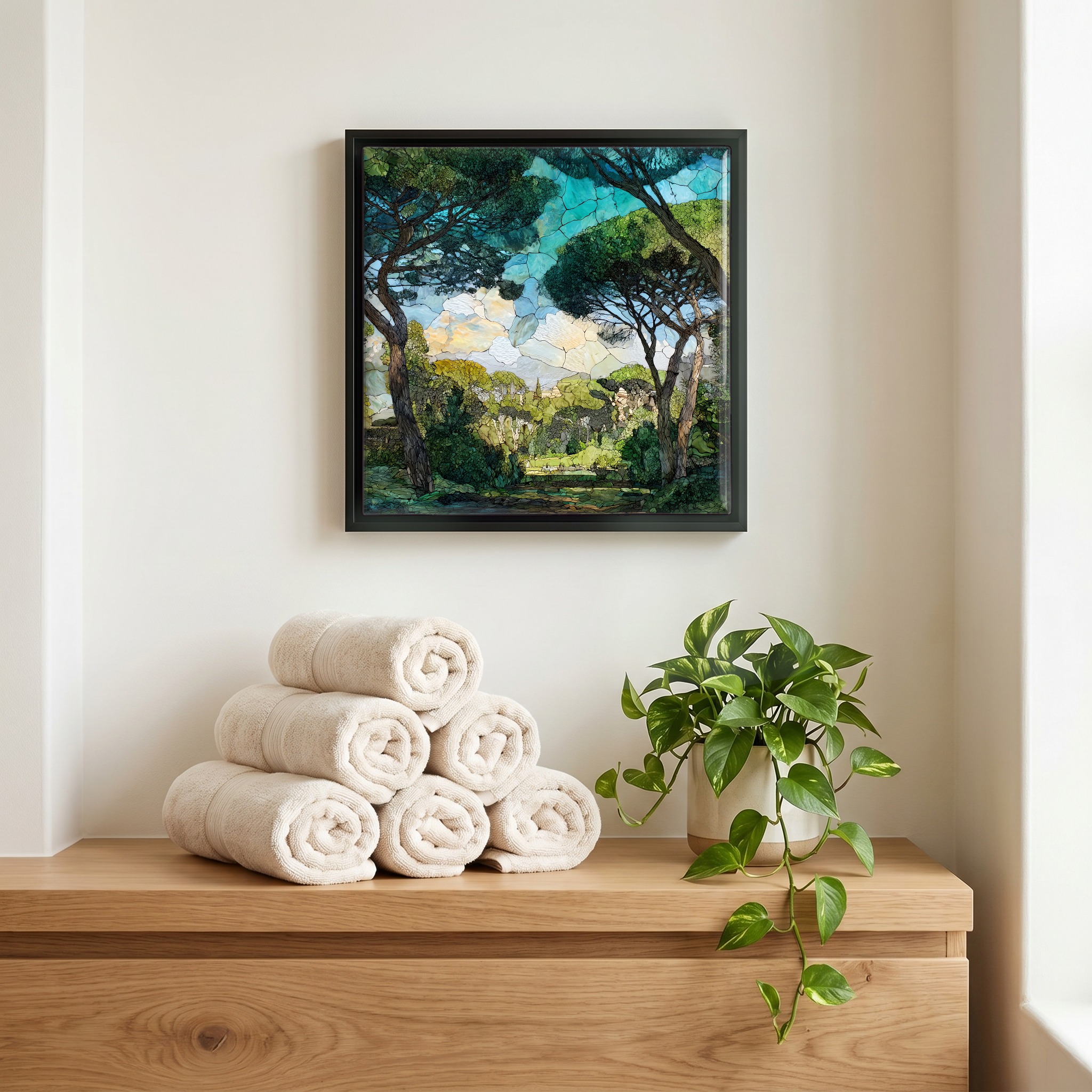
Three or five different vistas, hung together — a chapter of places you've been, or want to go.
The place, in three passes.
Villa Borghese is the third-largest public park in Rome, roughly 80 hectares spreading across the Pincian Hill and the Muro Torto, just north of the historic centre. Cardinal Scipione Borghese, nephew of Pope Paul V, began assembling the land in 1605 as a vigna, a working country estate of vineyards and orchards outside the Aurelian Walls. Flaminio Ponzio and Giovanni Vasanzio drew the original plan; Jacob More, a Scottish landscape painter, redesigned much of the park in the English landscape style in 1786 for Marcantonio IV Borghese. The Borghese family sold the estate to the Italian state in 1901, and the city of Rome took possession two years later. Most visitors enter from Piazzale Flaminio or by climbing the Spanish Steps to the Pincio.
The cardinal's collection still anchors the park. The Casino Borghese, a small palace built between 1612 and 1620 by Flaminio Ponzio and Giovanni Vasanzio, holds the Galleria Borghese, where Bernini's Apollo and Daphne and six paintings by Caravaggio still hang in the rooms the cardinal commissioned to show them. Across the grounds the architecture keeps appearing: the Temple of Aesculapius on a small island in the Giardino del Lago, raised in 1786 by Antonio and Mario Asprucci; the Pincio terrace, drawn by Giuseppe Valadier in the years after 1809 under the French administration; the water clock by the friar Giovanni Battista Embriaco, ticking since 1873. The garden reads as a slow accumulation of Borghese patronage, three centuries deep.
The Pincio terrace, at the western edge of the park, is where Romans go for the end of the day. The view runs west over Piazza del Popolo, across the curve of the Tiber, to the dome of St. Peter's about two kilometres away. Giuseppe Valadier laid out the terrace in the years after 1809, as part of a Napoleonic reorganisation of the city's edges, and finished it after the restoration of papal rule in 1814. The light arrives a few minutes earlier in winter and a few minutes later in summer; the gold half-hour before sunset is the one that draws the crowd. Photographers come for the umbrella pines along the parapet; Pinus pinea, the stone pine, gives Rome at evening its signature silhouette.