Wender·Vista
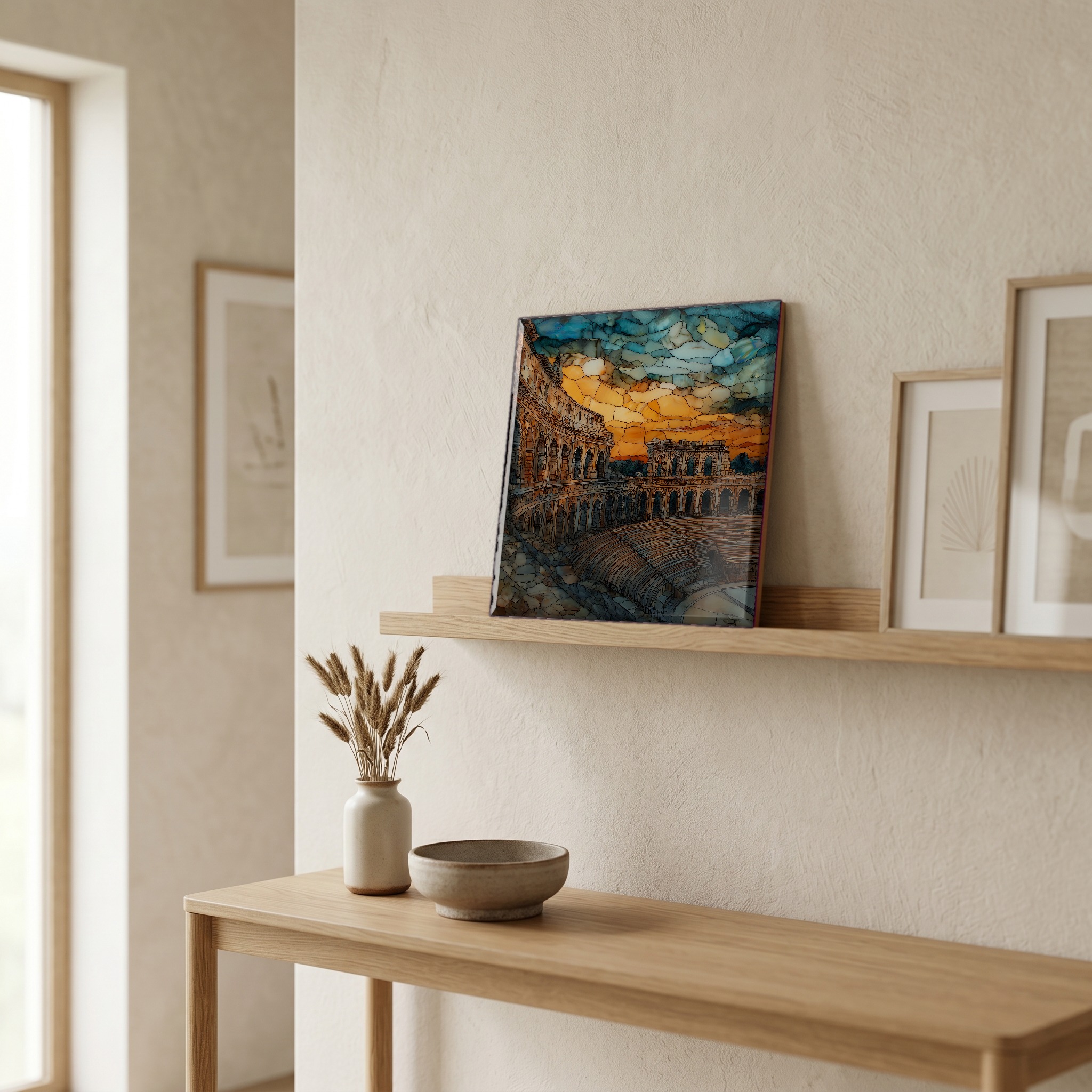
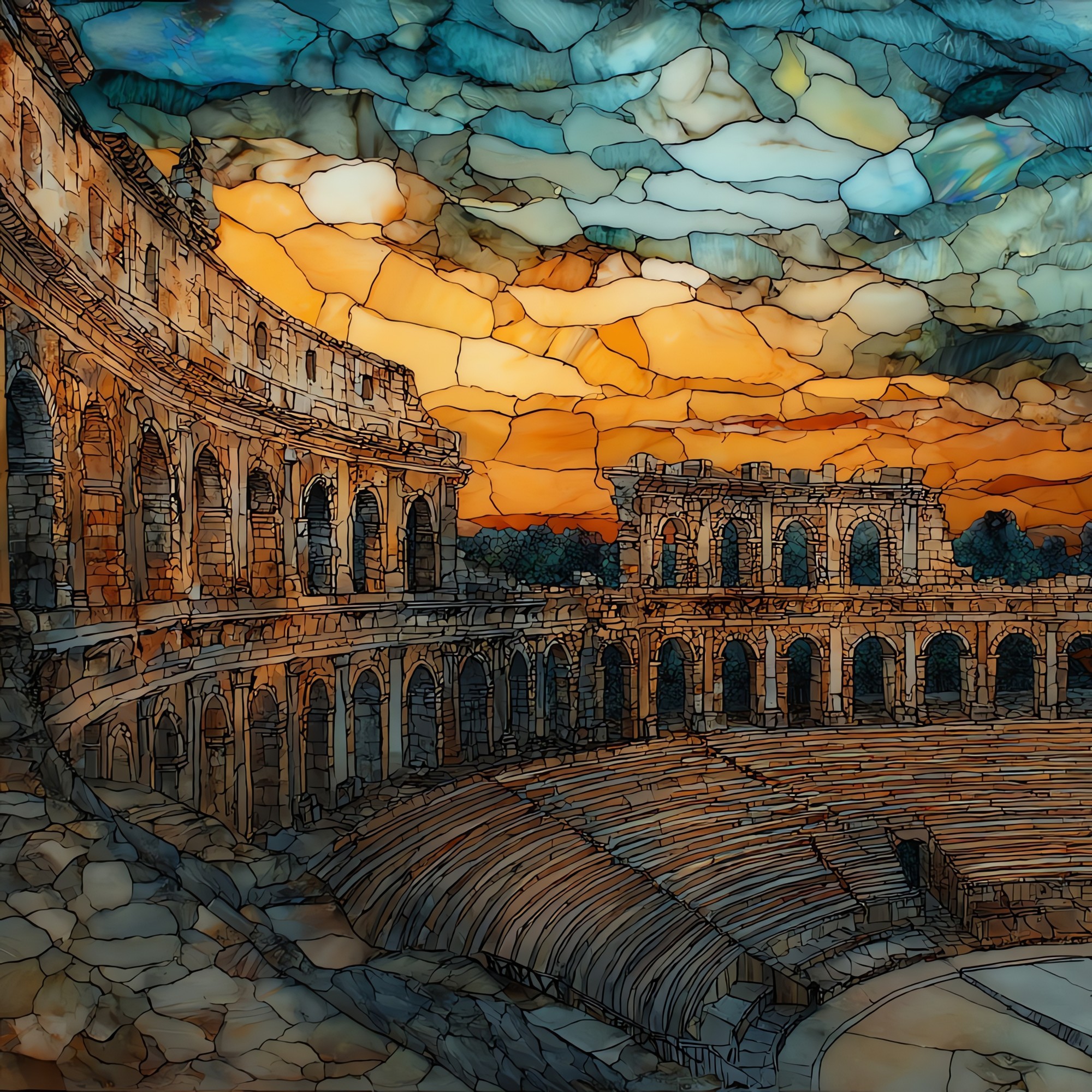
Verona Arena
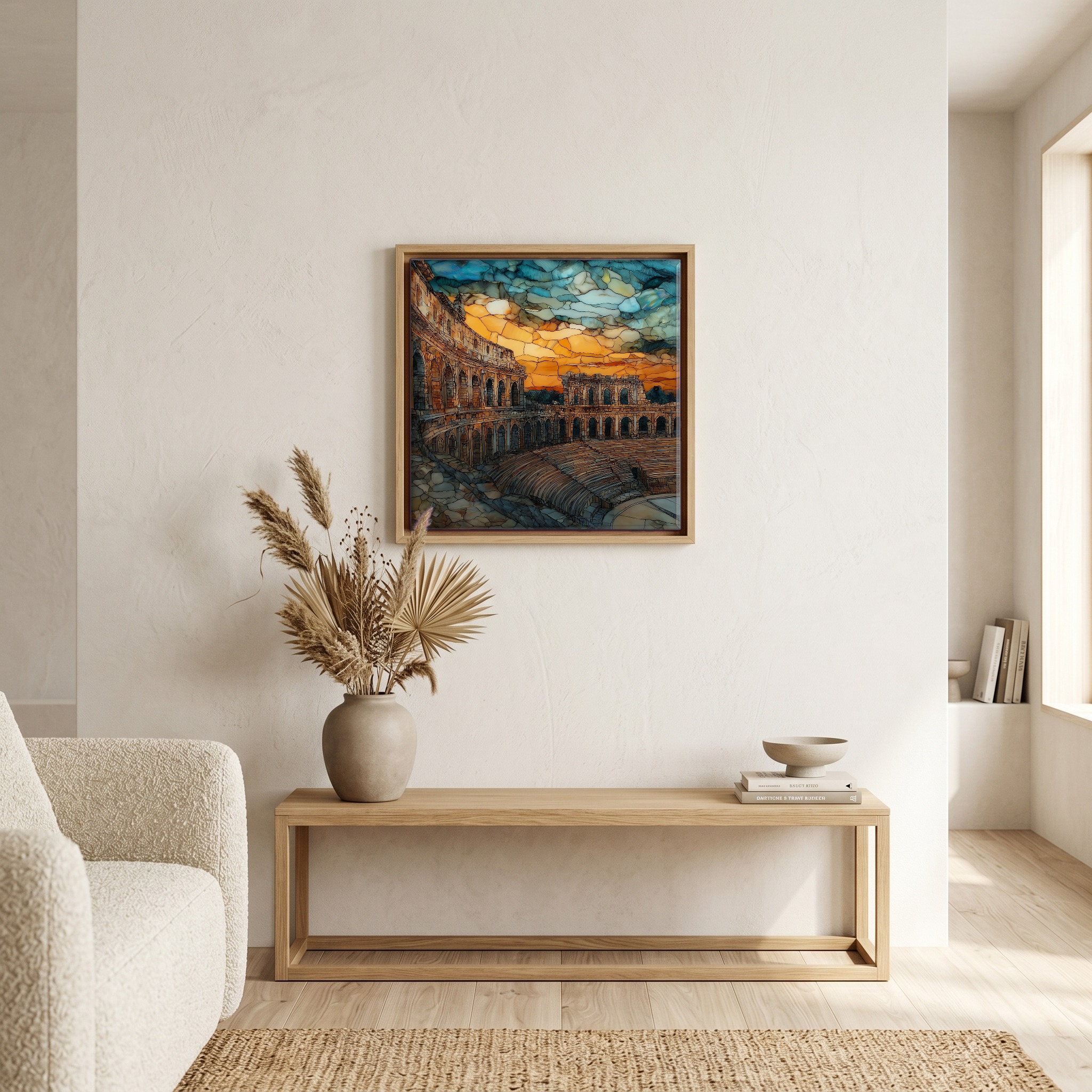
shown on ceramic, 12-inch tileItaly
in old Verona, west of Venice

Verona Arena

pink stone the night fills with song.

Where it lives

Not only on a wall.

A small tile on the nightstand catching the morning. A larger one above the fire. Yours, wherever you spend the slow hours.
Above the bench, in a warm oak surround.
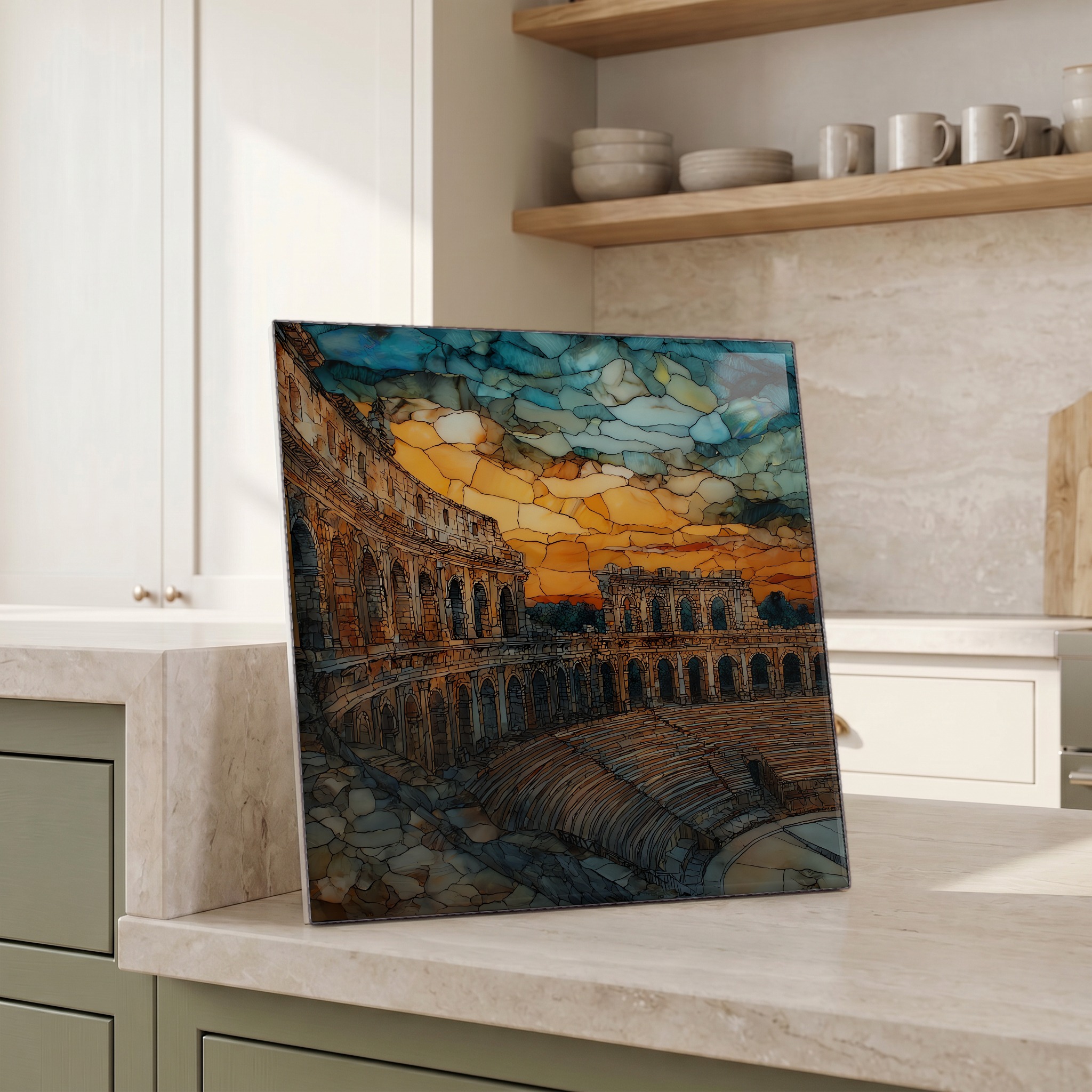
Beside the kettle, propped on the counter.
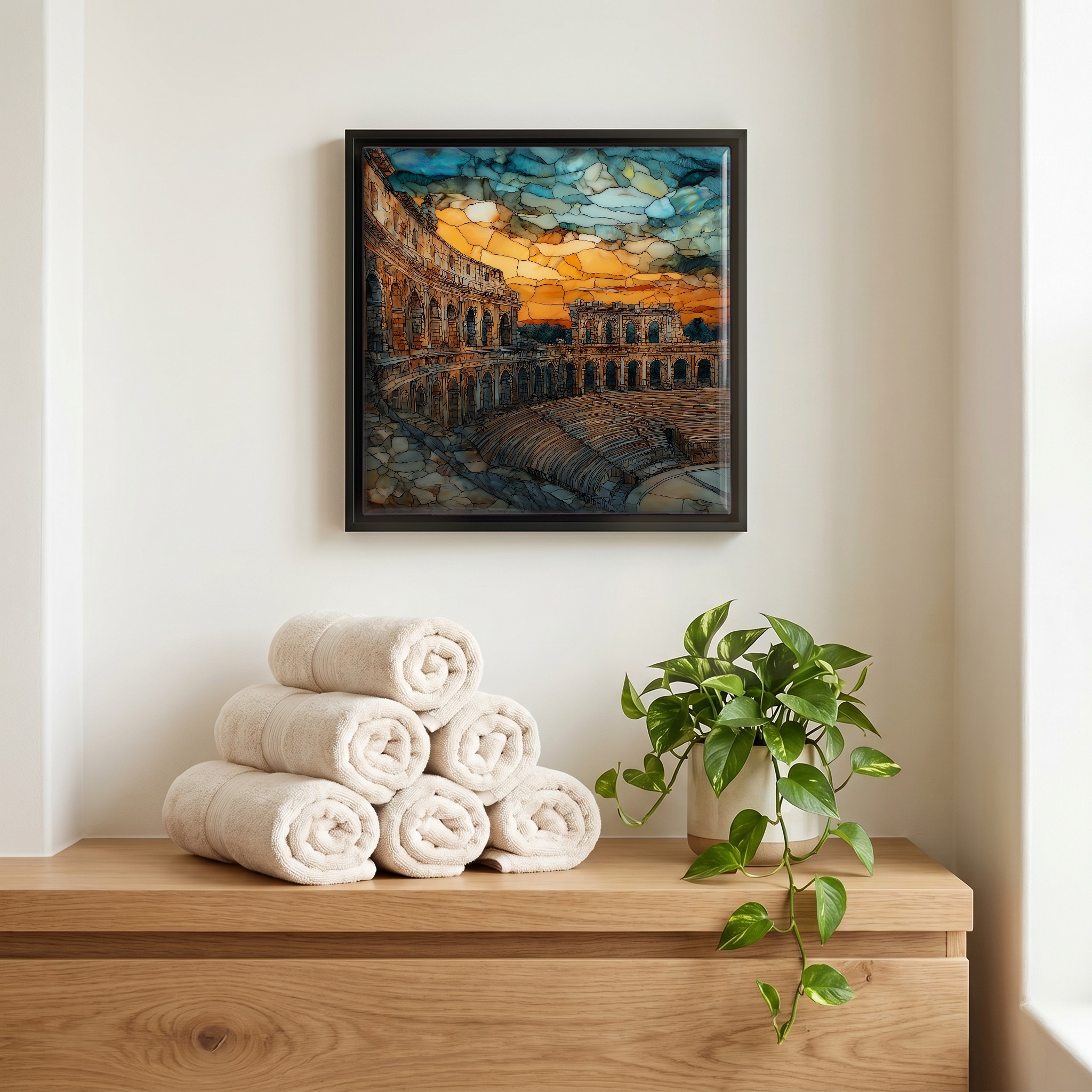
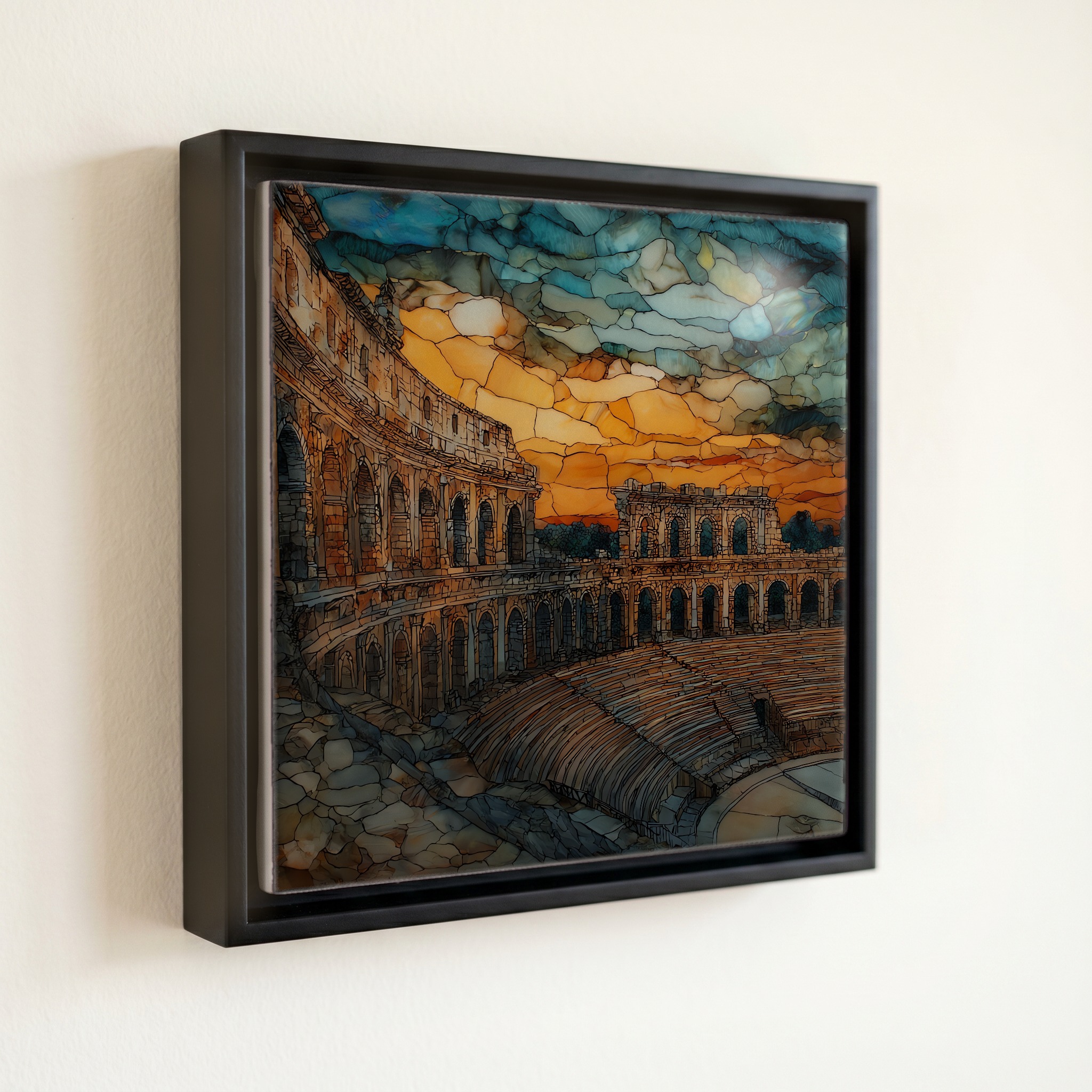
Above the linens, in a slim black surround.
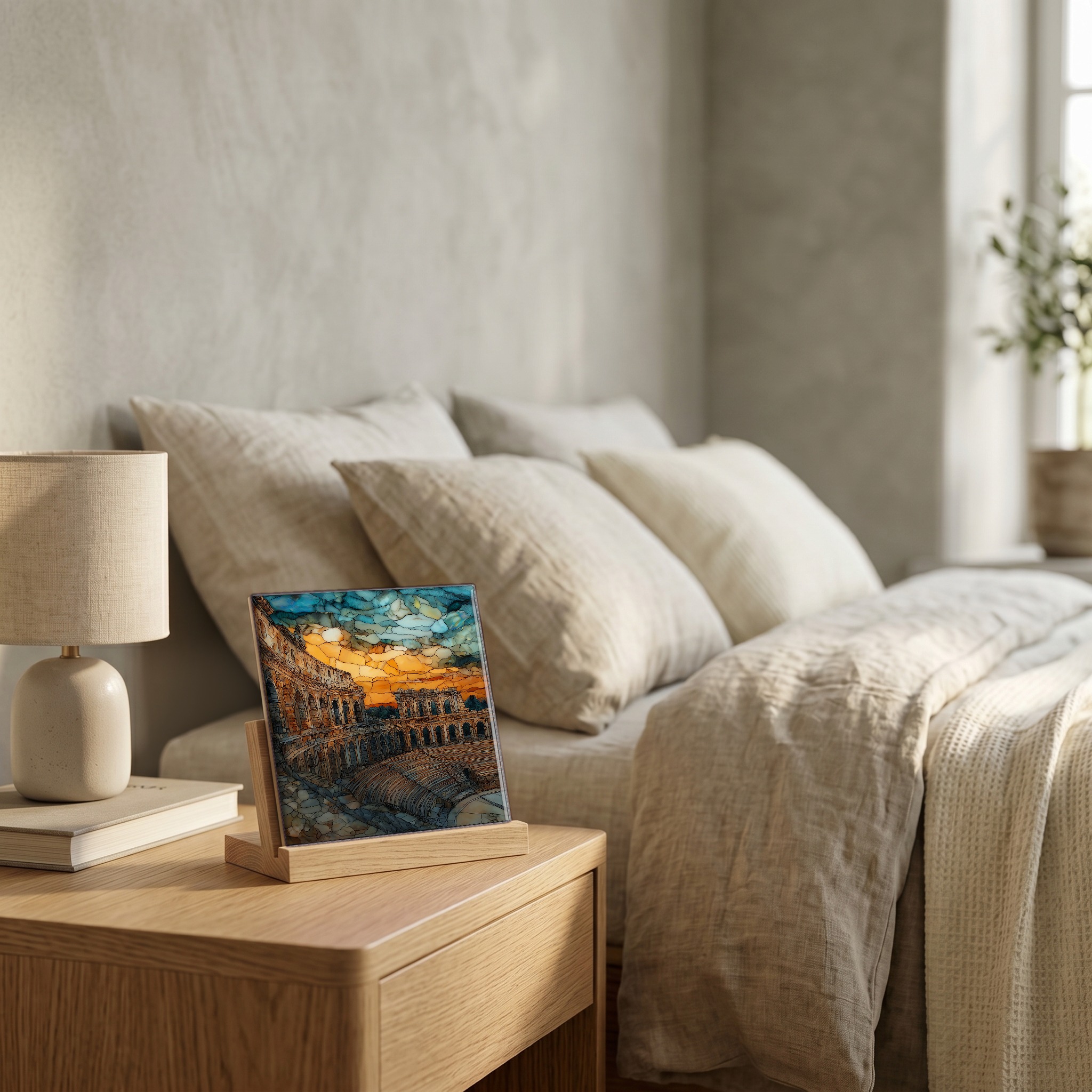
On the nightstand, on a light oak stand.
On a picture ledge, where the light comes in.
a note from the studio

A Roman amphitheatre on Piazza Bra, ringed by the old town. The 1117 earthquake took most of the outer wall; four arches at one corner, the Ala, are what's left of the original three storeys. The interior survived. On summer nights the bowl fills with the voice of opera; it has done since 1913, the year they staged Aida here for Verdi's centenary. Locals bring cushions. Nobody hurries home.
from the studio
shown in a slim black floating frame · 6 × 6 in
— bring it home

Verona Arena, on ceramic.

Each tile is finished by hand in our Knoxville studio. Artwork is slowly infused into the ceramic surface under high heat and pressure, and rests beneath a thin glossy finish. The colour lives in the surface, not on top of it.

What kind of piece?
One tile — square or rectangle.
How big?
the popular one — counter, shelf, nightstand
6 × 6 in · 15 cm · 1.6 lb
Surface finish
A clear glossy finish — the artwork reads as if under resin. Ideal for show-pieces and framed wall art.
How it sits
A hidden cleat — sits ¼″ proud of the wall.
$58
Hand-finished and shipped from our studio at the foot of the Smokies. On your wall in about ten days.
size
6 × 6 in
15 cm
weighs
1.6 lb
solid in the hand
surface
ceramic, hand-finished
art rests beneath a thin glossy finish
from
Knoxville, TN
our family studio, at the foot of the Smokies
— start a Coaster Set

Pick any four 4-inch tiles — National Parks you've been to, a Smokies set, the four seasons of one place. $ for a set of , cork-backed, ready to live on the table.
comes gift-ready
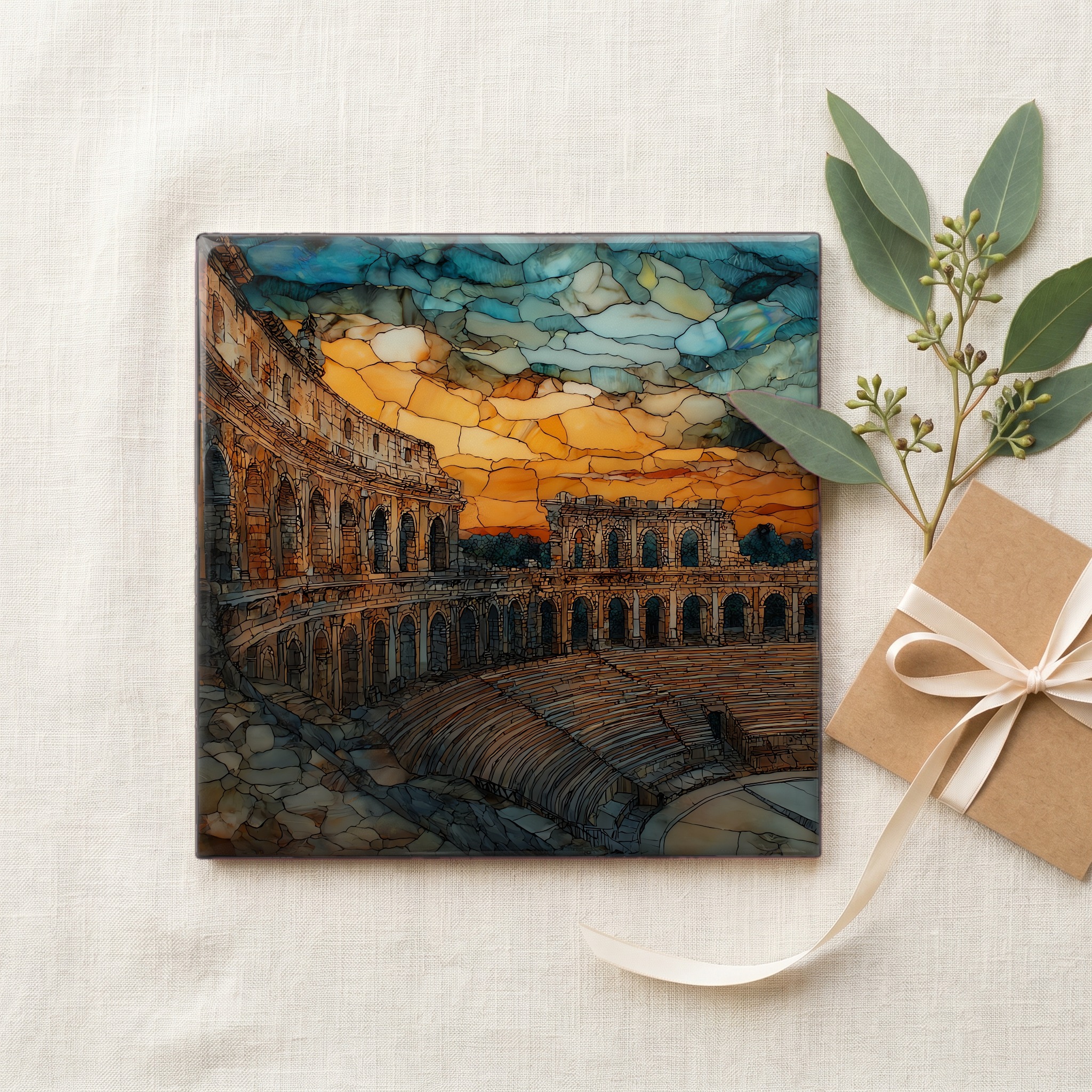
comes gift-ready

Each tile ships in a kraft box, tied with cream ribbon, with a handwritten note from the studio if you'd like to add one.
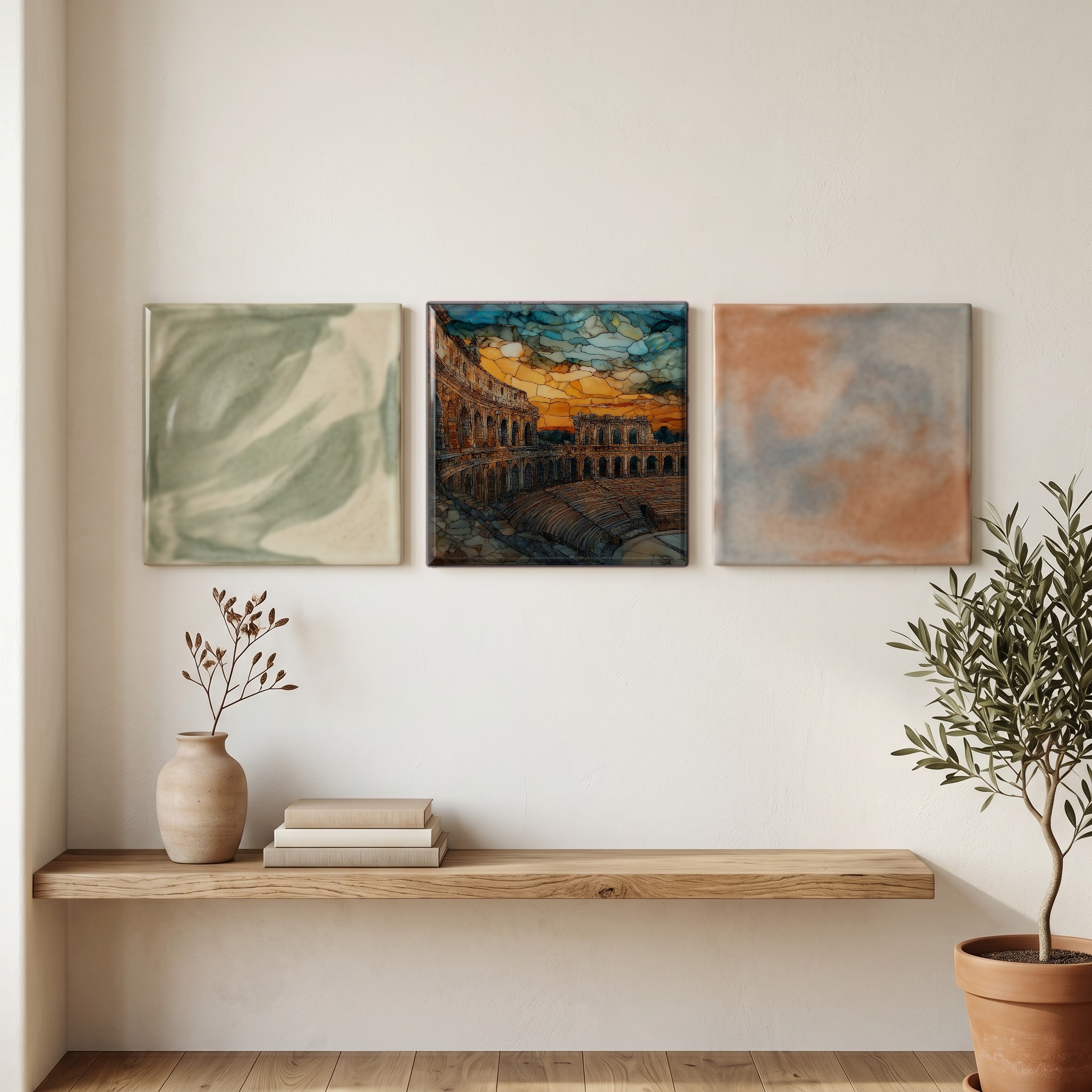
or build a grouping
or build a grouping

Three or five different vistas, hung together — a chapter of places you've been, or want to go.

about Verona Arena

The place, in three passes.

A little of what's known, in case you fall down the rabbit hole — or want to go see it yourself.
the place

The Arena sits on Piazza Bra in the centre of Verona, in Italy's Veneto region, about 110 km west of Venice. It dates to the first century, completed in the early imperial period around the year 30 AD, though some scholars push the date a few decades later. The amphitheatre is 152 metres long and 123 metres wide on its outer axis, with 44 rows of marble seating that hold roughly 15,000 today. Verona itself is reached by direct train from Milan (about 70 minutes) or Venice (about 75); the Arena is a five-minute walk from Porta Nuova station, and the piazza around it stays open all hours.

the stone

The amphitheatre is built of rose-and-white limestone quarried from the Valpolicella hills just north of Verona, the same stone that gives the building its faint pink cast at dusk. The outer wall, three storeys of arches, once rose to about 30 metres. An earthquake in 1117 brought down most of that wall, leaving only a fragment four arches high at the north corner. Locals call this fragment the Ala, the wing. The inner arena and the 44 tiers of seating survived. Verona's medieval government quarried the fallen stone for civic buildings for the next two centuries, so pieces of the original outer wall are scattered through the old town.

the year

The Arena has hosted an annual opera festival since 1913, when the impresario Giovanni Zenatello staged Aida there to mark the centenary of Verdi's birth. The season runs roughly mid-June through early September, with performances starting near sunset and continuing past midnight. Aida has returned almost every summer since; productions of Nabucco, Tosca, and Carmen rotate alongside it. Audiences arrive with cushions for the stone tiers, and small candles are lit in the upper rows before the curtain. Off-season the piazza around the Arena reverts to its weekday rhythm: coffee at Caffè Filippini in the morning, the daily passeggiata in the evening. The opera office stays open all year, at the north end of the building.

where
Italy · Verona, Veneto
elevation
59 m · 194 ft
position
45.4395° N · 10.9944° E
the neighborhood

What's nearby.

A handful of named places within an hour's walk or short drive. Some we've already painted; some we will.
1 km NE
Piazza delle Erbe
medieval square
1 km W
Castelvecchio
medieval castle
1 km NE
Casa di Giulietta
house museum
1 km N
Ponte Pietra
Roman bridge
1 km NE
Torre dei Lamberti
medieval tower
2 km W
Basilica di San Zeno
Romanesque basilica
N
Verona Arena
Piazza delle Erbe
Castelvecchio
Casa di Giulietta
Ponte Pietra
Torre dei Lamberti
Basilica di San Zeno
common questions

What people ask.

A few questions we get about Verona Arena — and about bringing the piece home.
about the place

The Verona Arena stands on Piazza Bra in the centre of Verona, in Italy's Veneto region, about 110 km west of Venice. It is a five-minute walk from Verona Porta Nuova railway station, on the main rail line between Milan and Venice.

The Arena was built in the first century, in the early Roman imperial period, and is among the largest Roman amphitheatres still in regular use. Its original outer wall is dated to roughly the year 30 AD. The 44 tiers of marble seating inside have been continuously usable for nearly two thousand years.

An earthquake on 3 January 1117 destroyed most of the outer ring of the amphitheatre. A four-arch fragment at the north corner survived and is called the Ala, the wing. Most of the fallen limestone was reused in Verona's medieval buildings between the twelfth and fourteenth centuries.

No. The Colosseum in Rome is larger overall, holding around 50,000 in antiquity. The Verona Arena is one of the largest surviving Roman amphitheatres after the Colosseum and Capua. Its outer dimensions are 152 by 123 metres, and it now seats about 15,000.

The Arena di Verona Opera Festival runs from mid-June to early September each summer. The festival began in 1913 with a production of Aida to mark the centenary of Verdi's birth. Performances begin near sunset and frequently run past midnight, on the open-air stone tiers.

The Arena is built of rosso ammonitico, the rose-and-white limestone quarried from the Valpolicella hills north of the city. The same stone is used in many of Verona's older buildings, and it gives the Arena a soft pink cast, especially at sunset and under stage light.

Yes. The Arena hosts the Verona Opera Festival each summer and has done so since 1913. It is also used for concerts, ballet, and civic events. The amphitheatre is one of the few Roman venues still in continuous performance use, nearly two thousand years after it was built.

about the piece in your home

It carries particular meaning for opera lovers, and especially for those who have sat through a summer Aida in the open air. The Arena reads as a kind of pilgrimage site within the form. A Medium or Large with a handwritten note from the studio carries well.

The pink limestone and dusk tones lean warm. They sit well in Italianate, classical-modern, and old-world Mediterranean rooms. The geometry of the ring also suits Maximalist gallery walls. For Coastal-modern or pale Scandinavian rooms the warm tones may compete; consider WenderVista pieces with cooler palettes instead.

Yes. Warm-toned classical interiors (terracotta, oxblood, rose-limestone, burnished brass) have returned to interior writing across 2024 and 2025. Pieces drawn from Italian Roman architecture fit this register directly. The Arena reads as both Roman ruin and living opera house, which lets it carry a room that is doing both old and current.

Above a standard three-seat sofa, a single Large or a 4-tile Mural reads cleanly. Above a console table, a Medium, or a Coaster Set framed together, works well. For a tall wall behind a sofa, the 9-tile Mural fills the field without crowding.

Yes, with the Dura Satin or Matte finish. Both are scratch-resistant and suited to vertical installation in humid rooms like bathrooms, showers, and kitchen backsplashes. The Glossy finish is intended for framed wall art and show-pieces in drier rooms.

Microfibre cloth and water. The colour is slowly infused into the ceramic surface under high heat and pressure, so it does not lift, fade, or scratch off in normal use. Avoid acidic or abrasive cleaners; they are not necessary and can dull the surface finish over time.

Yes. Every WenderVista piece is original to Wender Studios, a single family studio in Knoxville, Tennessee. The artwork is curated and chosen by Reid Wender, and is not licensed from any third party or available through any other shop.

if this one stayed with you

A few you might also love.

Hand-picked by the eye that found Sorapis. Same air, same kind of quiet.
— a collection

The Italian Dolomites,
painted slow.

The valleys between Cortina and Val Gardena, the tarns you walk an hour to see, the towers that turn the colour of a banked fire just before dark. Wander the collection by valley, by season, or follow the path Reid walked.

Tre Cime
Braies
Misurina
Sorapis
Cinque Torri
Sassolungo
Marmolada