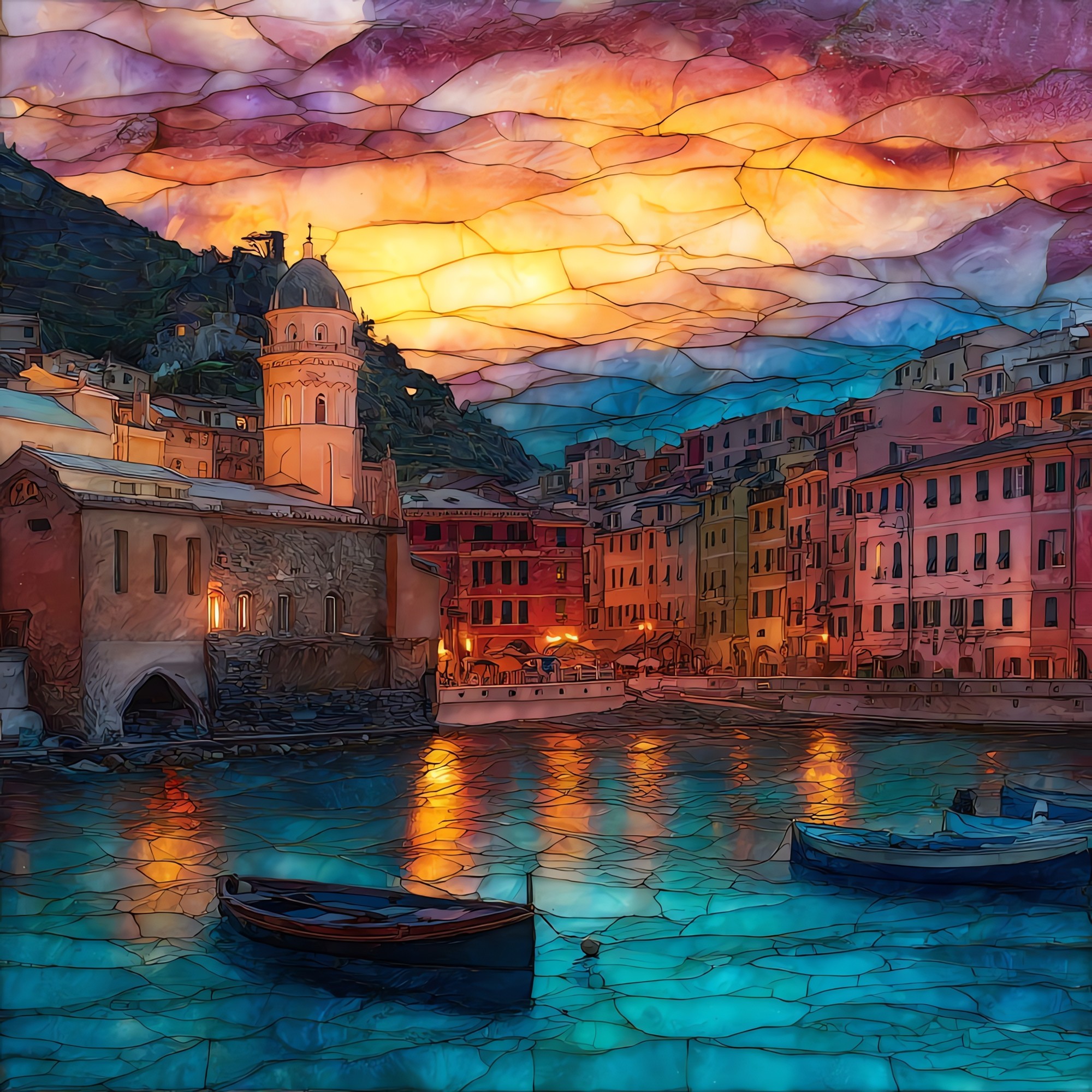
Vernazza
— the colour the sea has been trying to fade.
Not only on a wall.
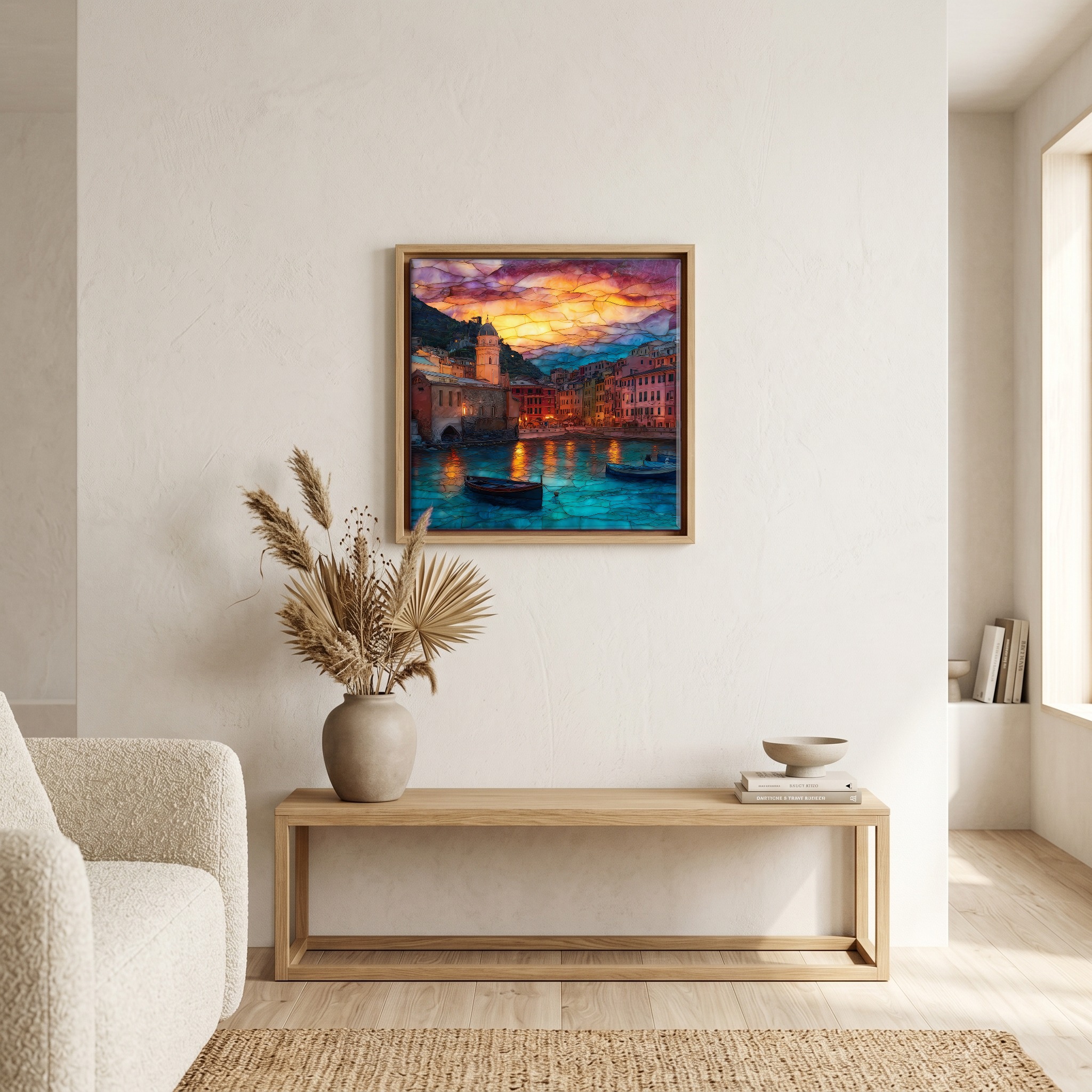
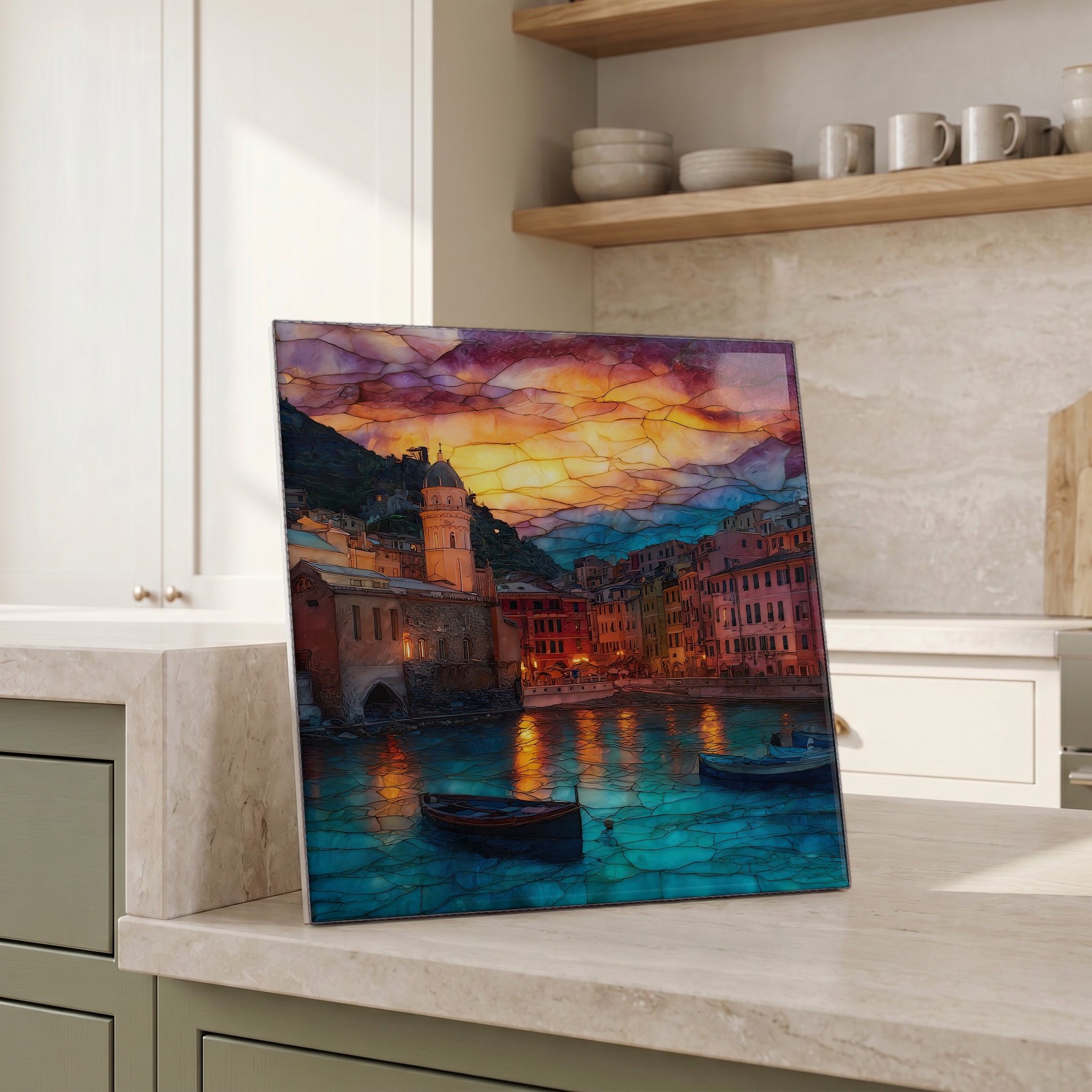
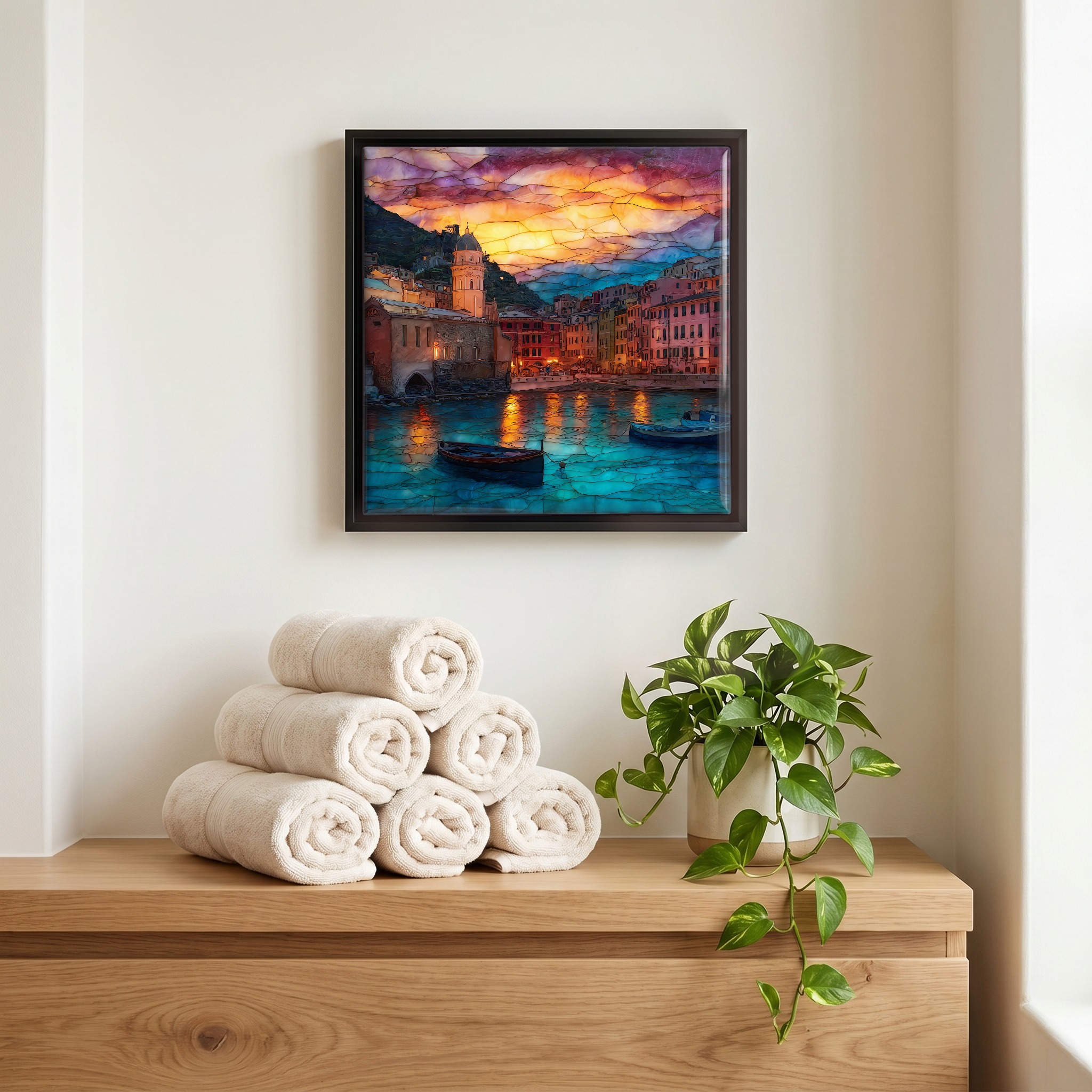
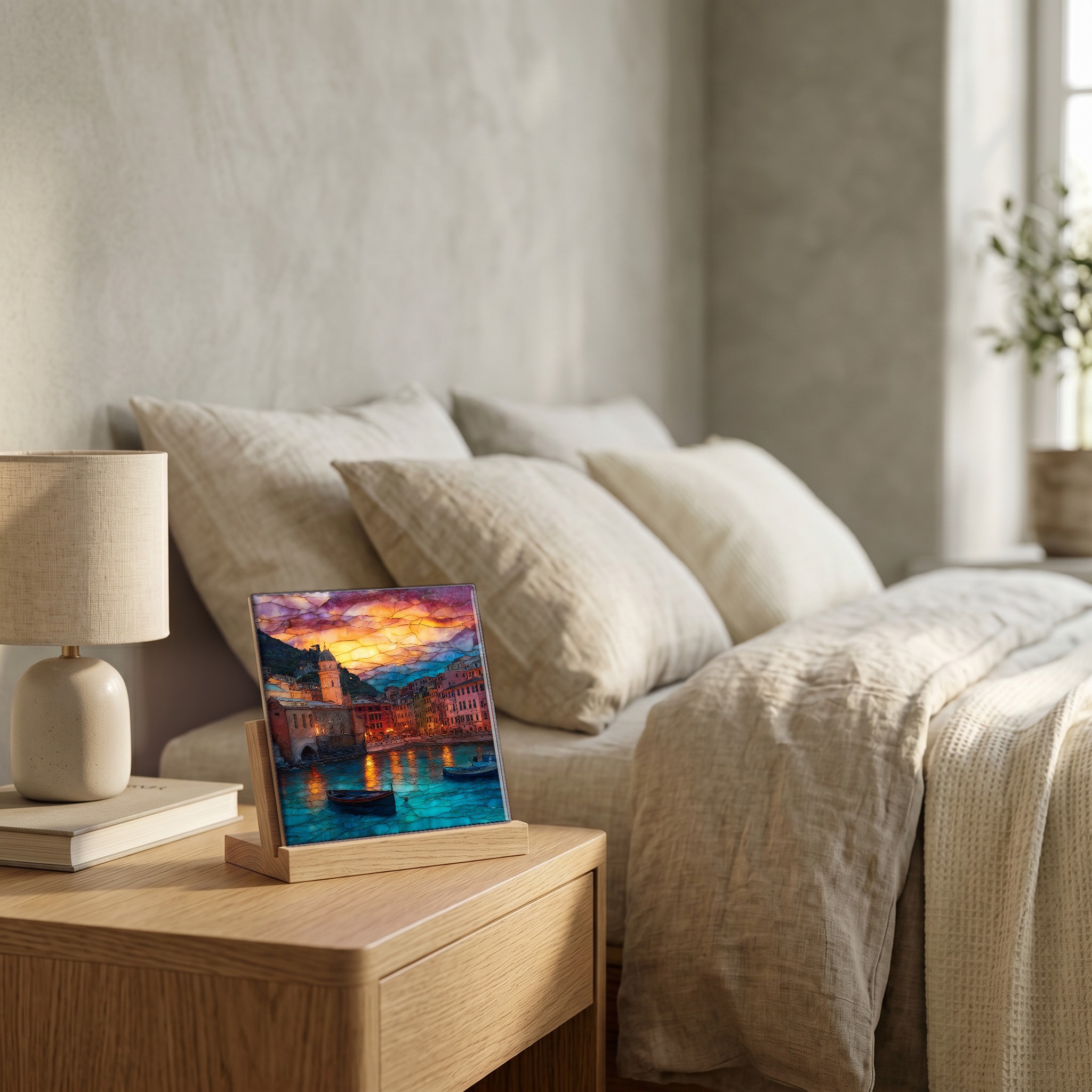
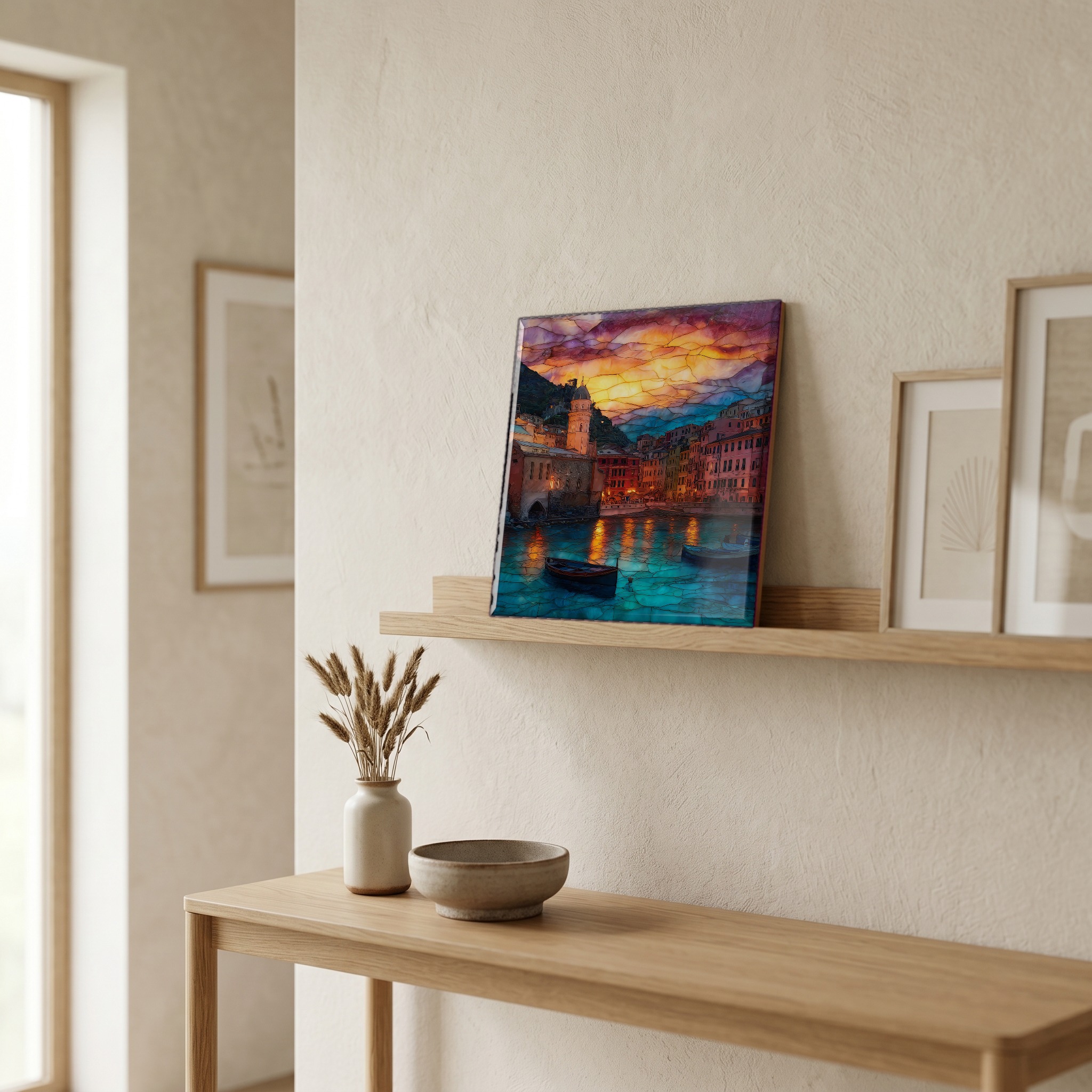
“The only natural harbour of the Cinque Terre, cupped between cliffs the railway tunnels under. Tall houses in ochre, rose, and sun-faded yellow crowd a single piazza that opens straight onto the water. The Doria tower sits on the headland; the church of Santa Margherita stands at the harbour's edge with its feet almost in the sea. The view people carry home is the one from the trail above, looking back at the village from the path to Monterosso, the cliffs still cupping it the way they have since the eleventh century.
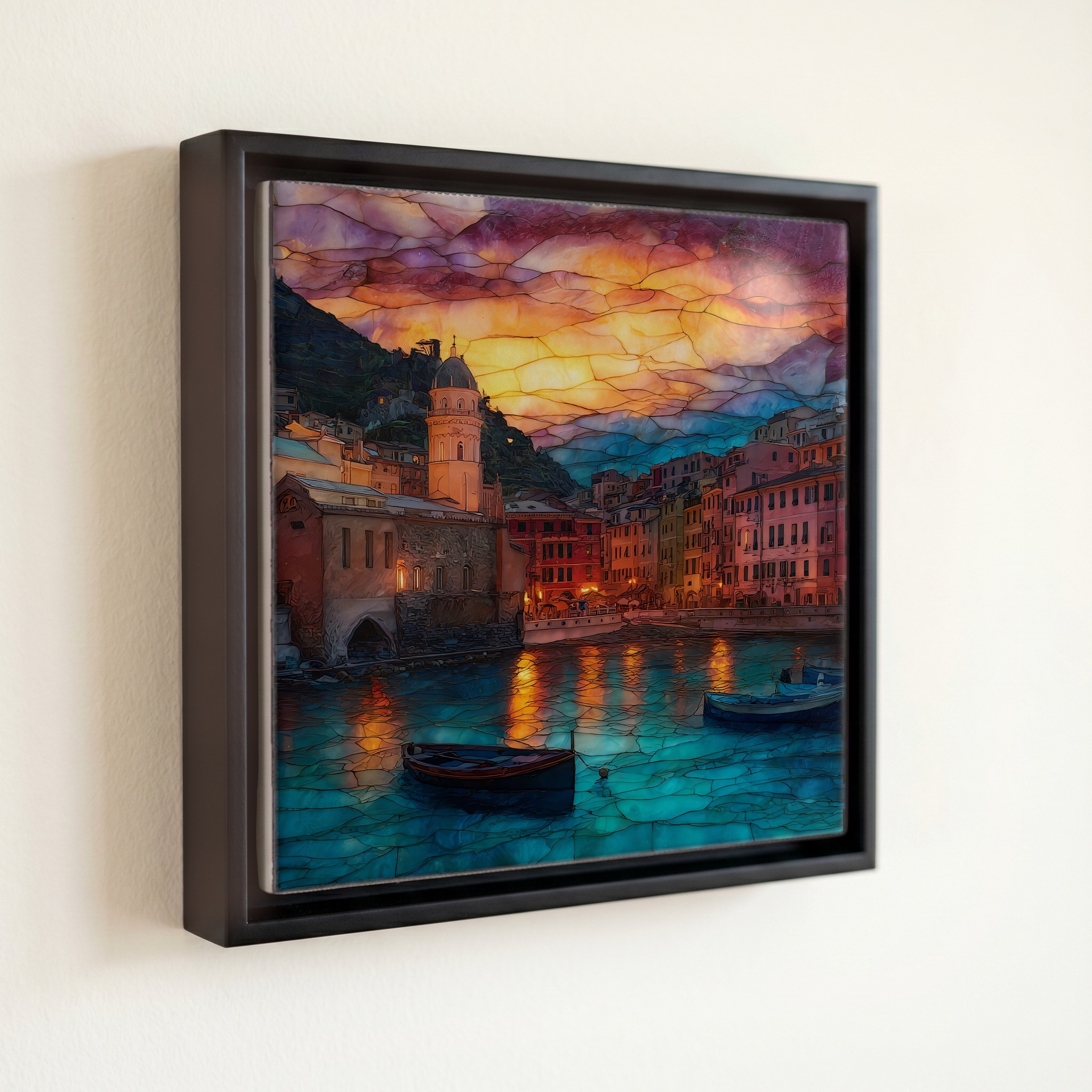
Vernazza, on ceramic.
Each tile is finished by hand in our Knoxville studio. Artwork is slowly infused into the ceramic surface under high heat and pressure, and rests beneath a thin glossy finish. The colour lives in the surface, not on top of it.
Pick any four 4-inch tiles — National Parks you've been to, a Smokies set, the four seasons of one place. $ for a set of , cork-backed, ready to live on the table.
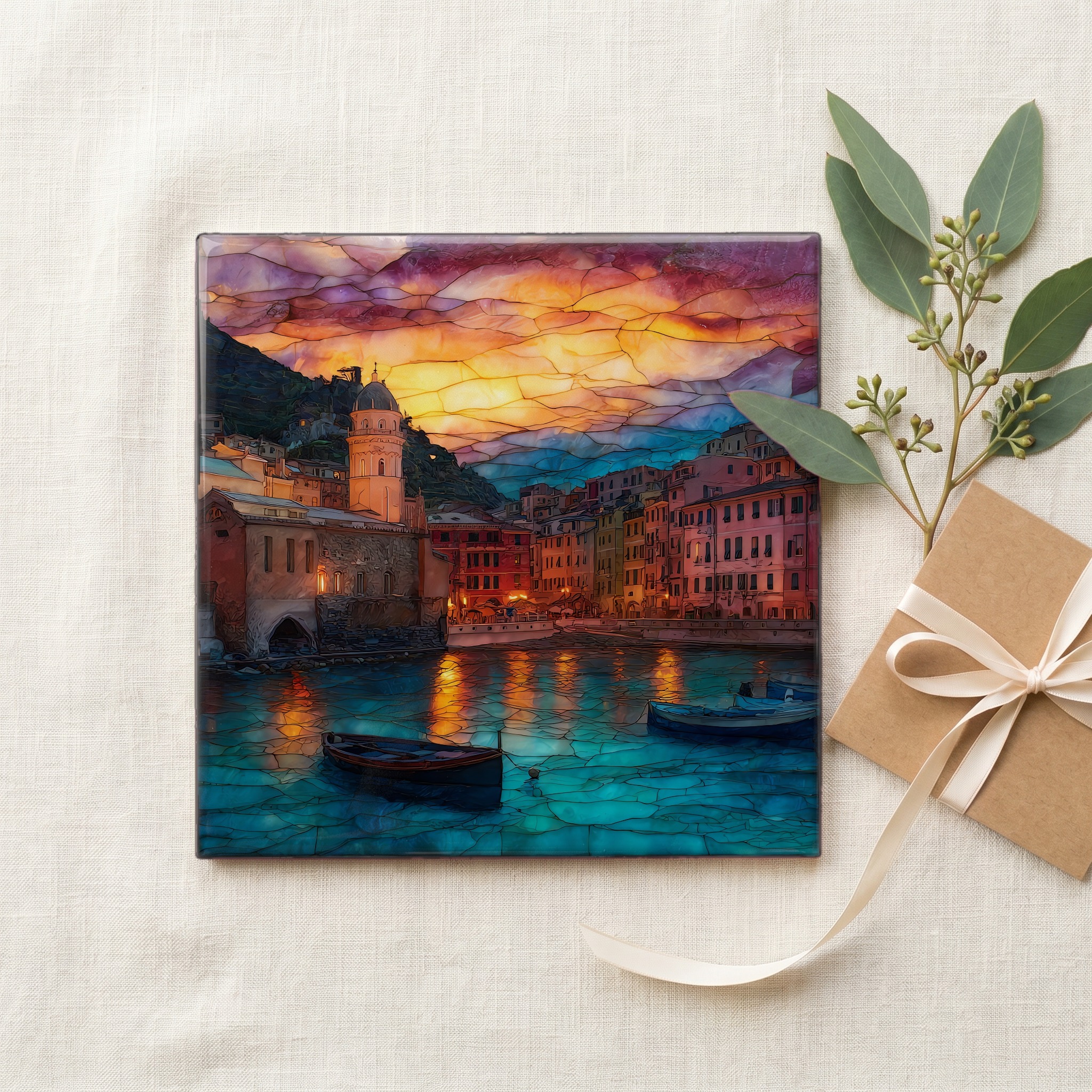
Each tile ships in a kraft box, tied with cream ribbon, with a handwritten note from the studio if you'd like to add one.
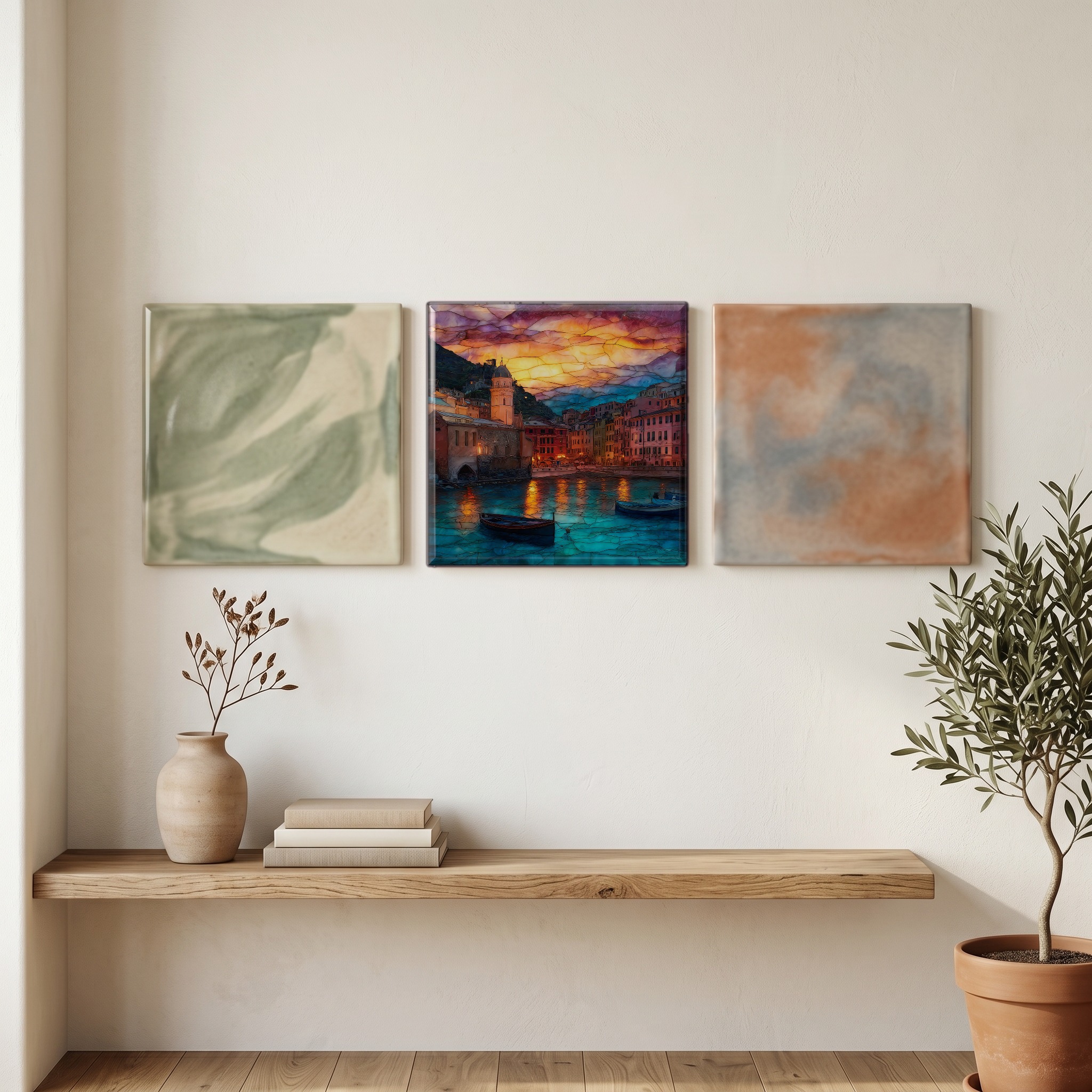
Three or five different vistas, hung together — a chapter of places you've been, or want to go.
The place, in three passes.
Vernazza is one of the five villages of the Cinque Terre, on the Ligurian coast about 90 kilometres south-east of Genoa in the province of La Spezia. The village is documented from around 1080, when it appears in records as a Genoese maritime outpost. It sits between Monterosso al Mare to the north and Corniglia to the south, accessible only by the Genoa to La Spezia rail line that runs in tunnels along the coast, by passenger ferry from La Spezia or Monterosso, or on foot along the Sentiero Azzurro. The whole of the Cinque Terre, together with Portovenere and the offshore island of Palmaria, has been a UNESCO World Heritage Site since 1997, and the surrounding land was declared a national park in 1999.
The Castello Doria sits on the promontory above Vernazza's harbour, a circular watchtower built in the fifteenth century on earlier Genoese foundations to warn of Saracen raids. Below it, at the water's edge, the Church of Santa Margherita d'Antiochia stands with its tall octagonal bell tower, started in 1318 in the Ligurian Gothic style from local dark stone quarried out of the cliffs. Above the village, dry-stone terraces step up the hillside for the vines that make Sciacchetrà, the small-production sweet white the area is known for. The terrace walls total an estimated 7,000 kilometres across the five villages, mostly hand-built between the twelfth and seventeenth centuries.
Cars do not enter the village. Access is by the Genoa to La Spezia regional rail line, with Vernazza station a short walk from the piazza; by the seasonal passenger ferry that runs from Monterosso al Mare, Riomaggiore, La Spezia, and Portovenere between roughly April and October; or on foot along the Sentiero Azzurro, the coastal trail that connects the five villages. The Cinque Terre Card, issued by the national park authority, covers trail entry and unlimited regional rail between Levanto and La Spezia for one or two days. High season runs June through September; the shoulder weeks in May and October hold the same Ligurian light with thinner cruise-day crowds out of the Port of La Spezia.