Wender·Vista
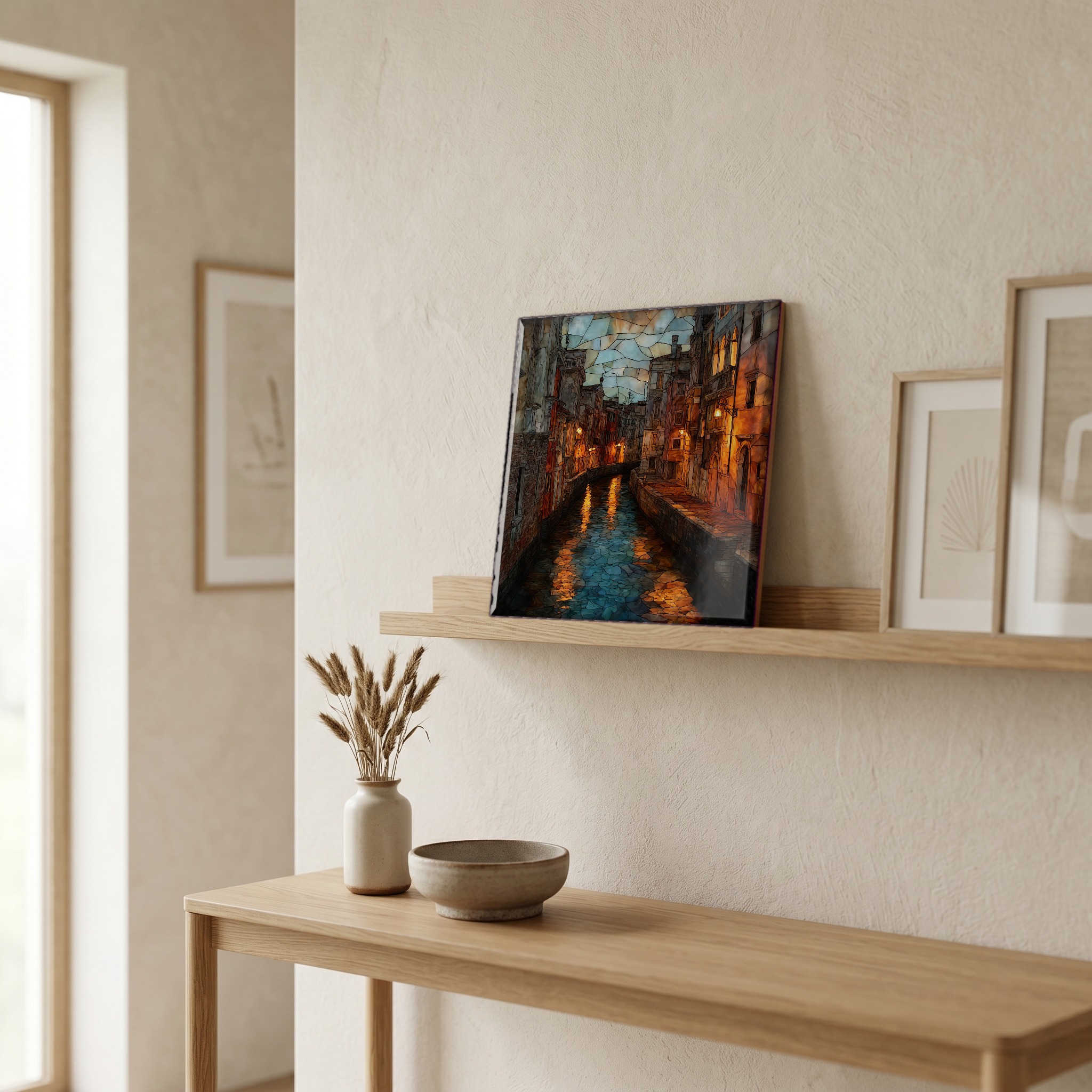
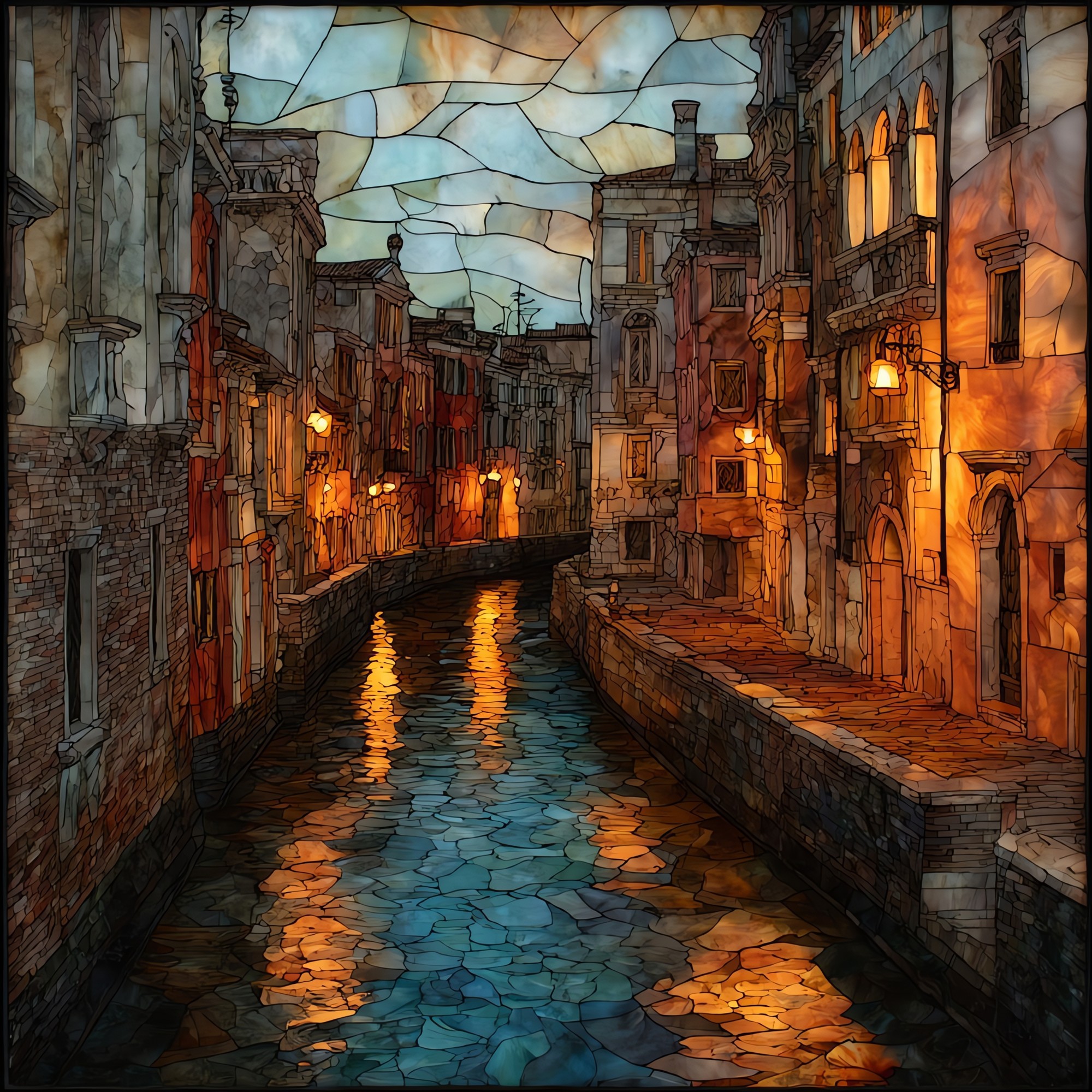
Venetian Jewish Ghetto
shown on ceramic, 12-inch tileItaly
in Cannaregio, north of the Grand Canal

Venetian Jewish Ghetto

the small square the world borrowed a word from.

Where it lives

Not only on a wall.

A small tile on the nightstand catching the morning. A larger one above the fire. Yours, wherever you spend the slow hours.
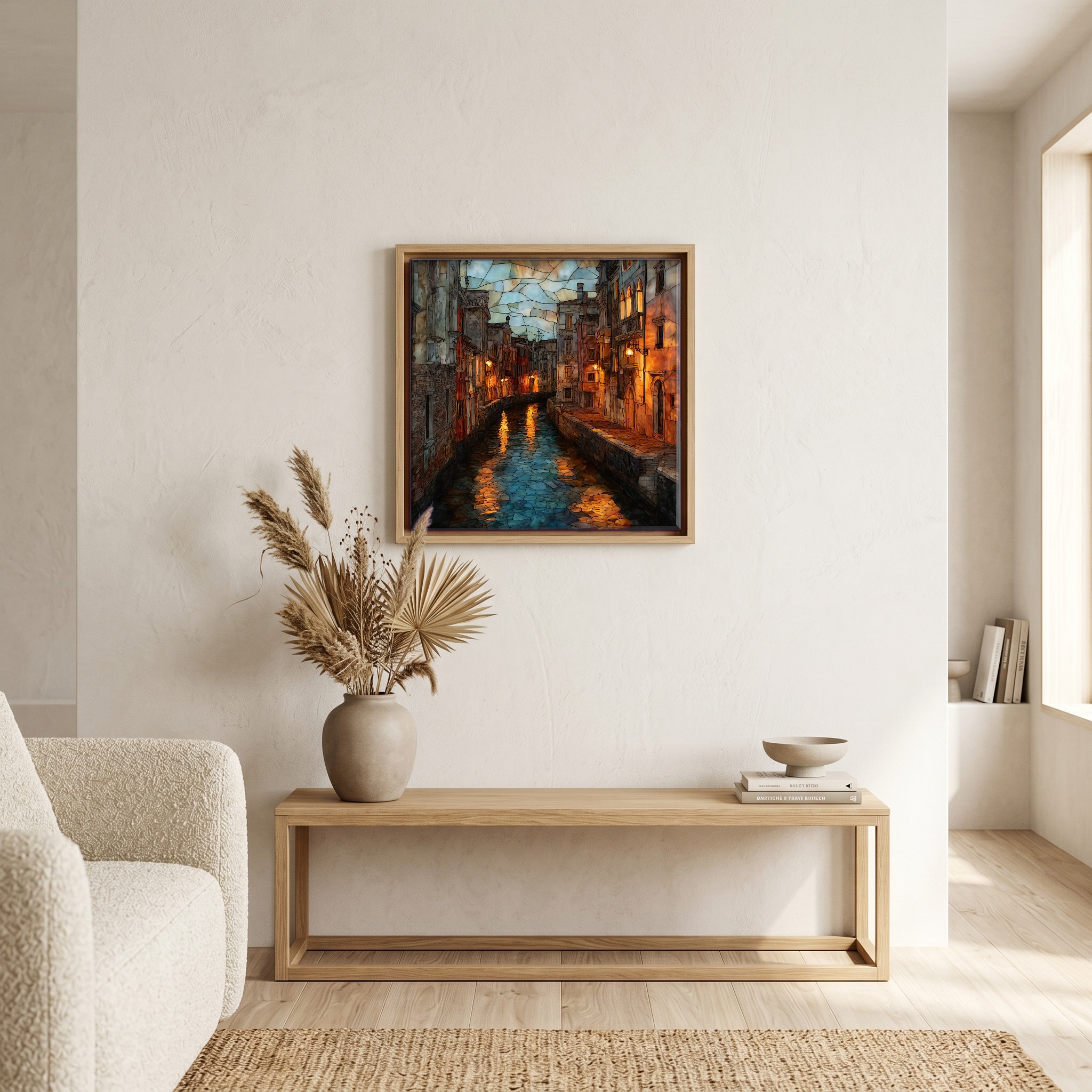
Above the bench, in a warm oak surround.
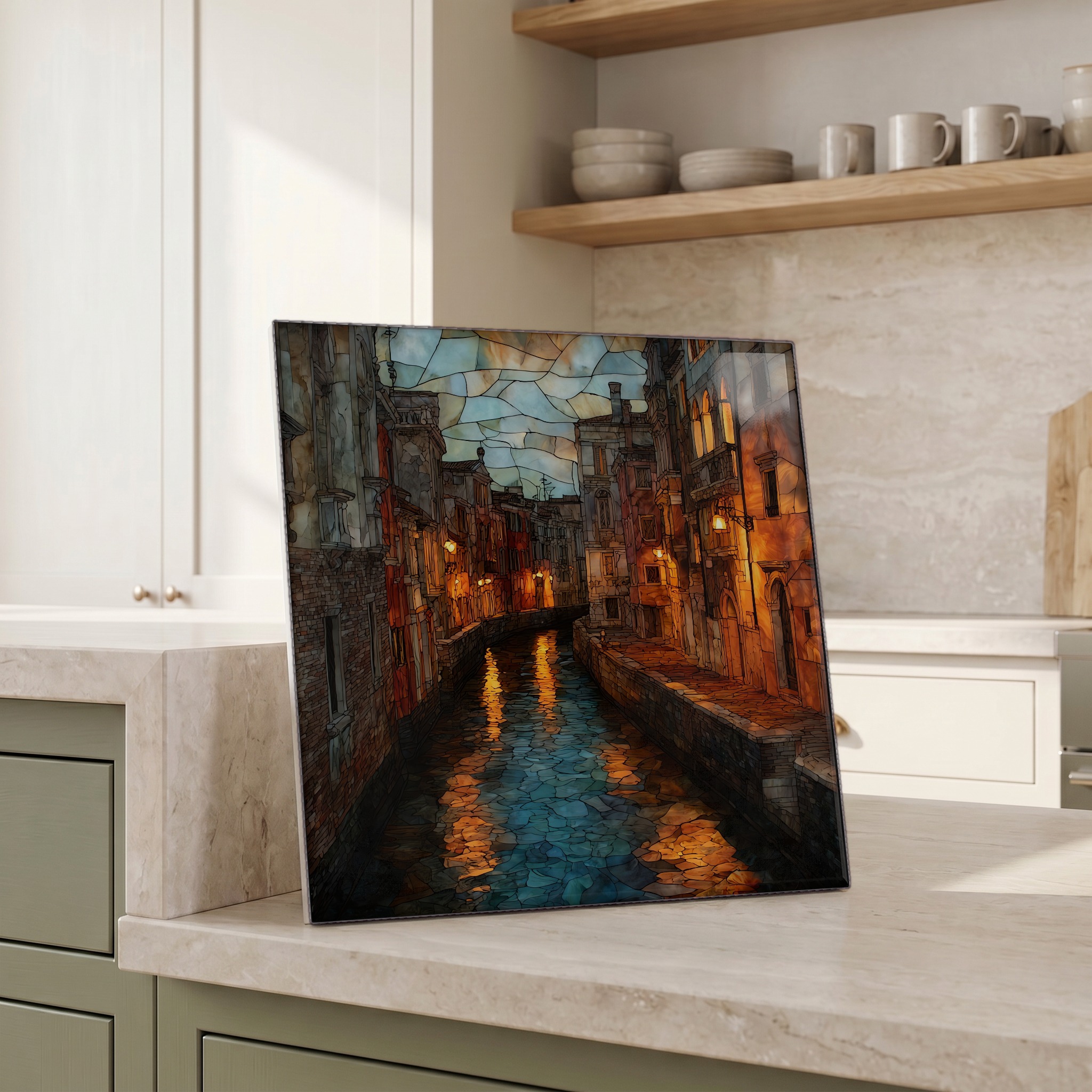
Beside the kettle, propped on the counter.
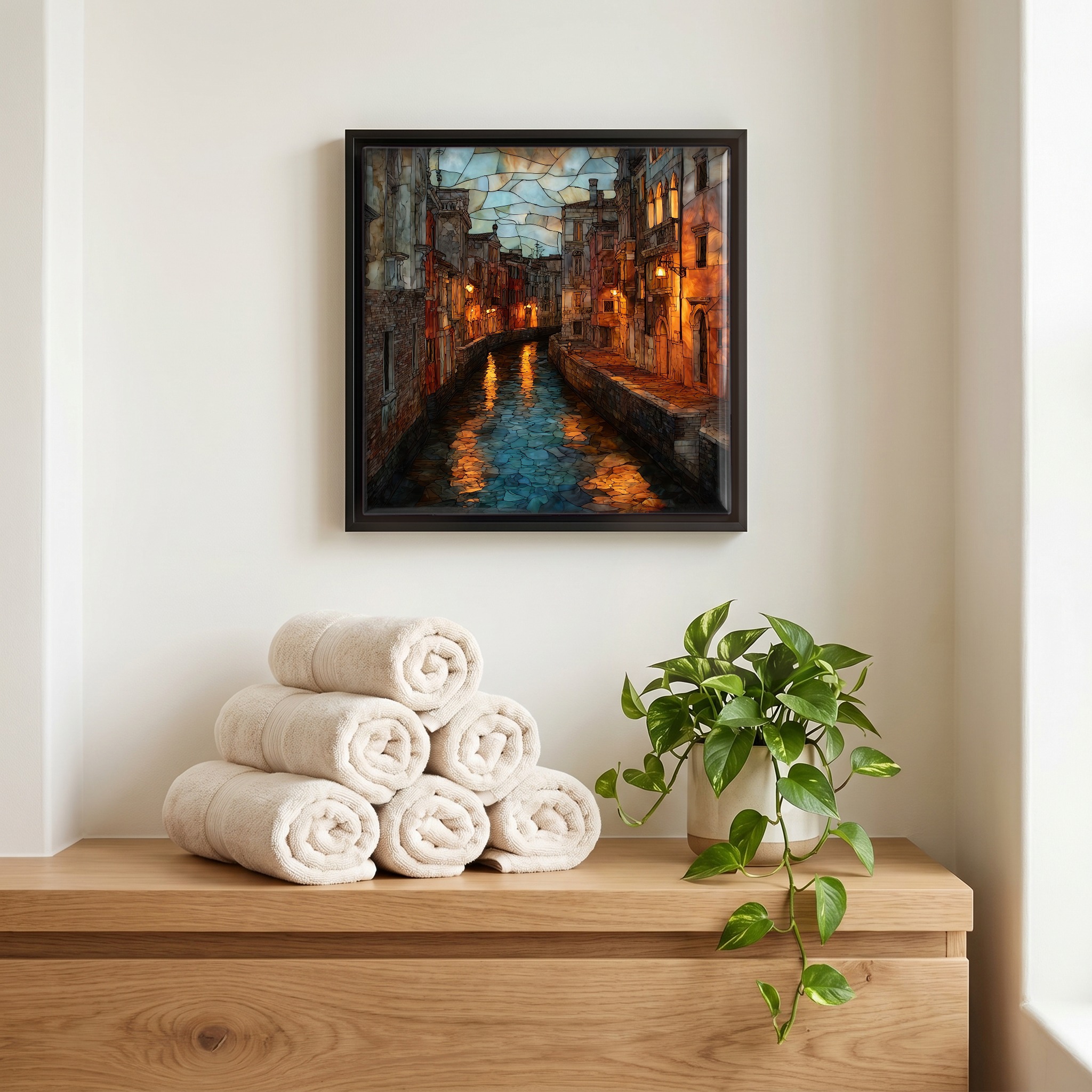
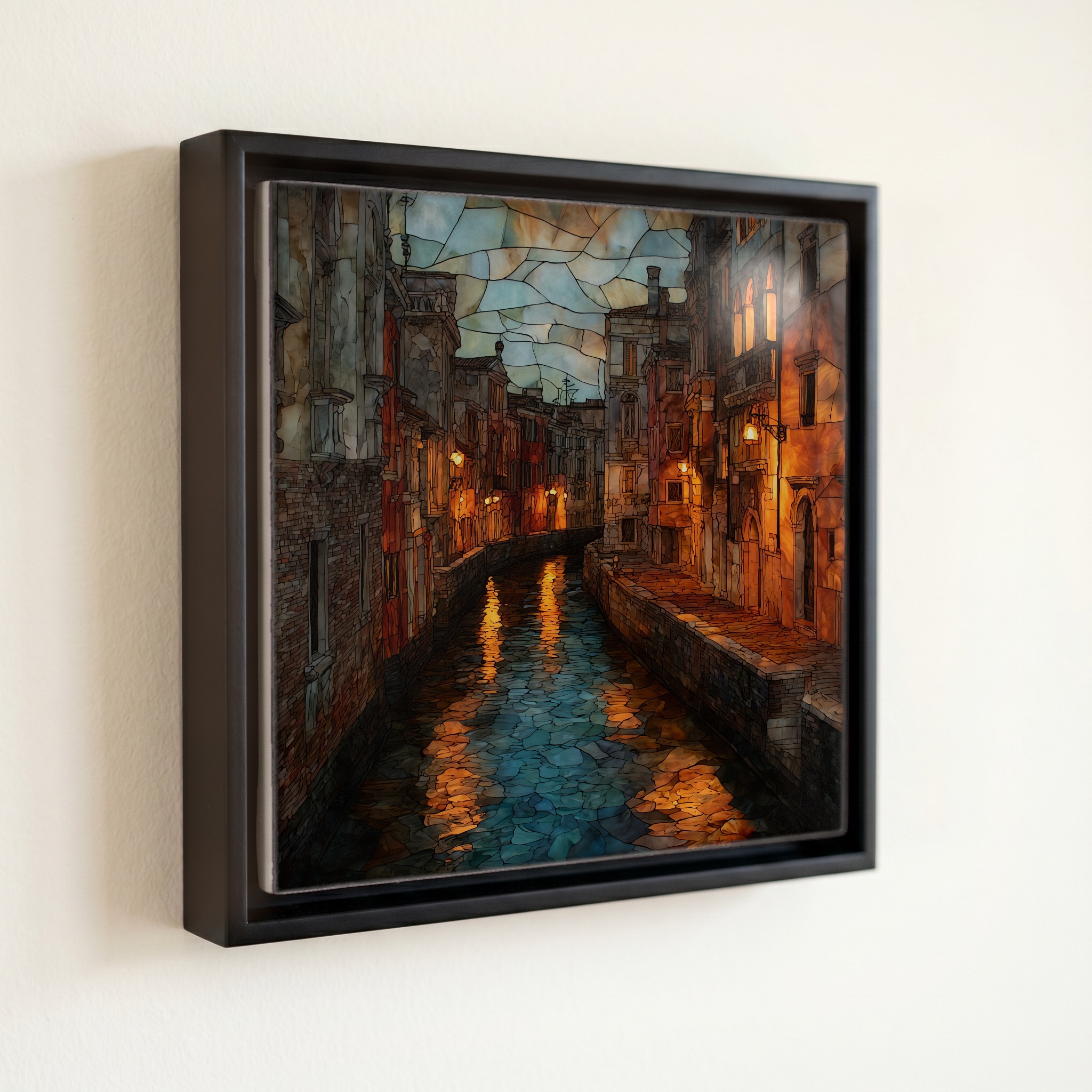
Above the linens, in a slim black surround.
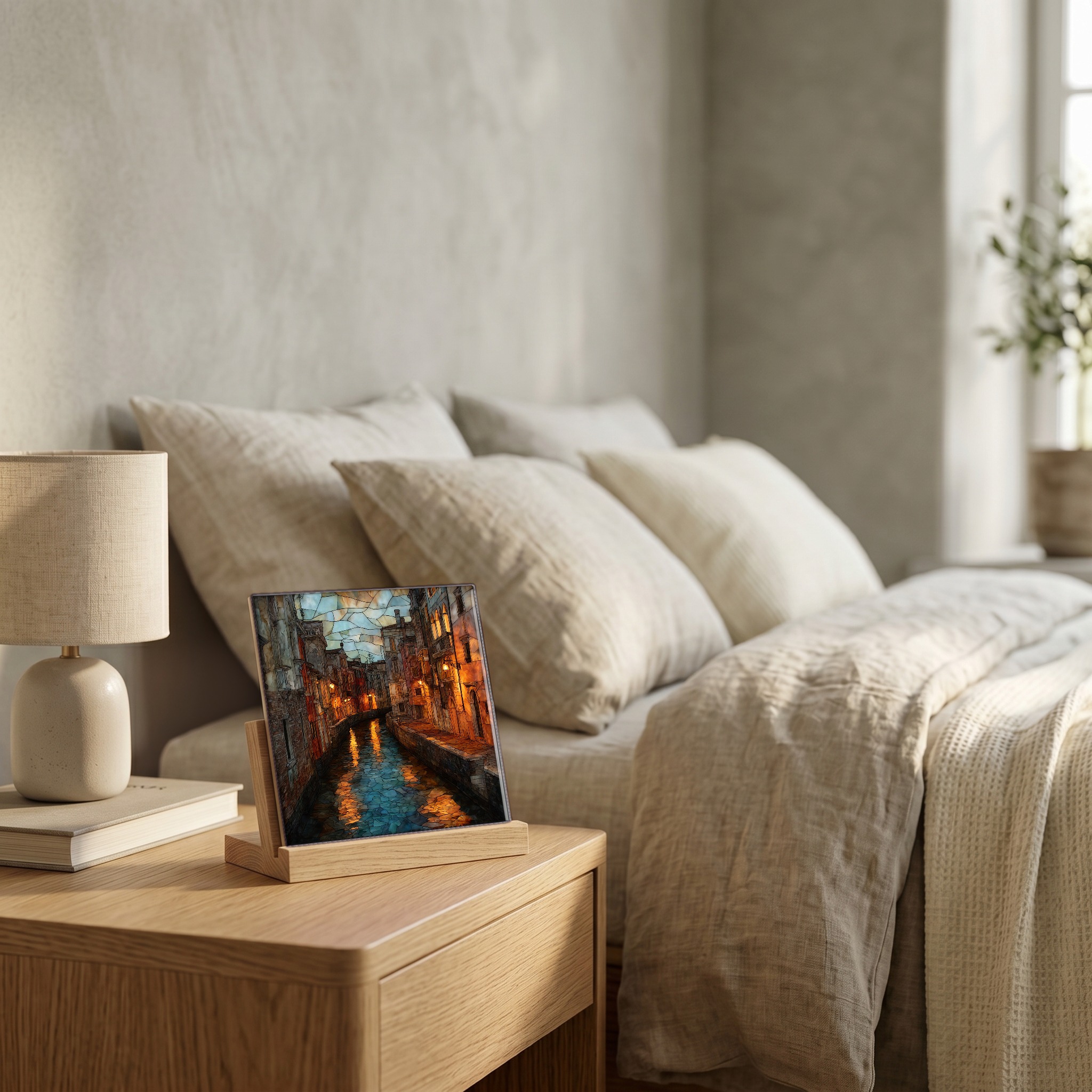
On the nightstand, on a light oak stand.
On a picture ledge, where the light comes in.
a note from the studio

The Ghetto sits in Cannaregio, a quieter sestiere north of the Grand Canal and a short walk from Santa Lucia station. The Campo del Ghetto Nuovo is wide and unornamented, ringed by tenement houses six and seven stories tall because the community was confined and had to build upward. The five historic synagogues are upstairs rooms above ordinary shopfronts, with no visible facades from the street. The square takes its name from a copper foundry that stood here before 1516. Today the campo holds the Jewish Museum, a kosher bakery, a small playground at one corner, and the bronze Holocaust memorial along the north wall.
from the studio
shown in a slim black floating frame · 6 × 6 in
— bring it home

Venetian Jewish Ghetto, on ceramic.

Each tile is finished by hand in our Knoxville studio. Artwork is slowly infused into the ceramic surface under high heat and pressure, and rests beneath a thin glossy finish. The colour lives in the surface, not on top of it.

What kind of piece?
One tile — square or rectangle.
How big?
the popular one — counter, shelf, nightstand
6 × 6 in · 15 cm · 1.6 lb
Surface finish
A clear glossy finish — the artwork reads as if under resin. Ideal for show-pieces and framed wall art.
How it sits
A hidden cleat — sits ¼″ proud of the wall.
$58
Hand-finished and shipped from our studio at the foot of the Smokies. On your wall in about ten days.
size
6 × 6 in
15 cm
weighs
1.6 lb
solid in the hand
surface
ceramic, hand-finished
art rests beneath a thin glossy finish
from
Knoxville, TN
our family studio, at the foot of the Smokies
— start a Coaster Set

Pick any four 4-inch tiles — National Parks you've been to, a Smokies set, the four seasons of one place. $ for a set of , cork-backed, ready to live on the table.
comes gift-ready
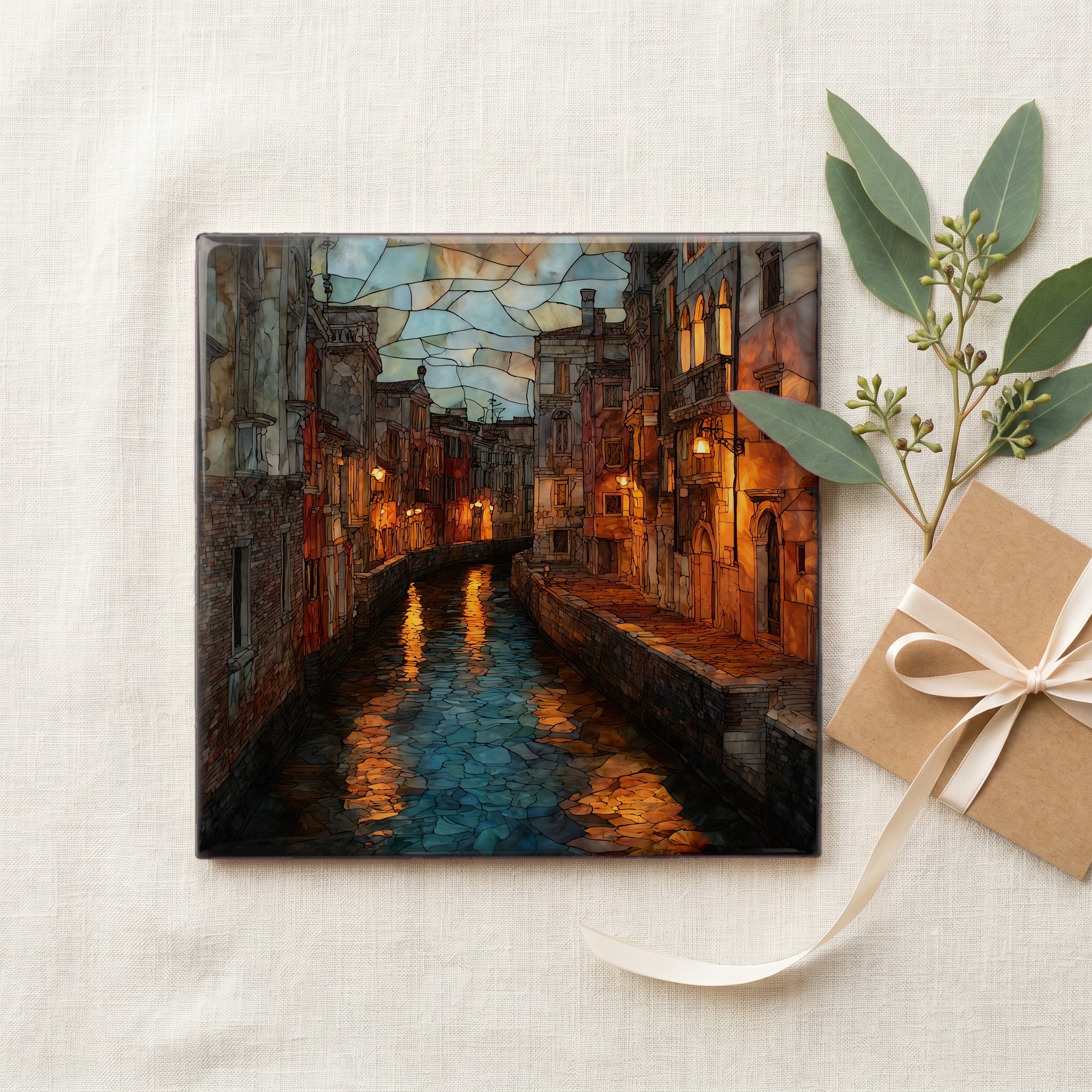
comes gift-ready

Each tile ships in a kraft box, tied with cream ribbon, with a handwritten note from the studio if you'd like to add one.
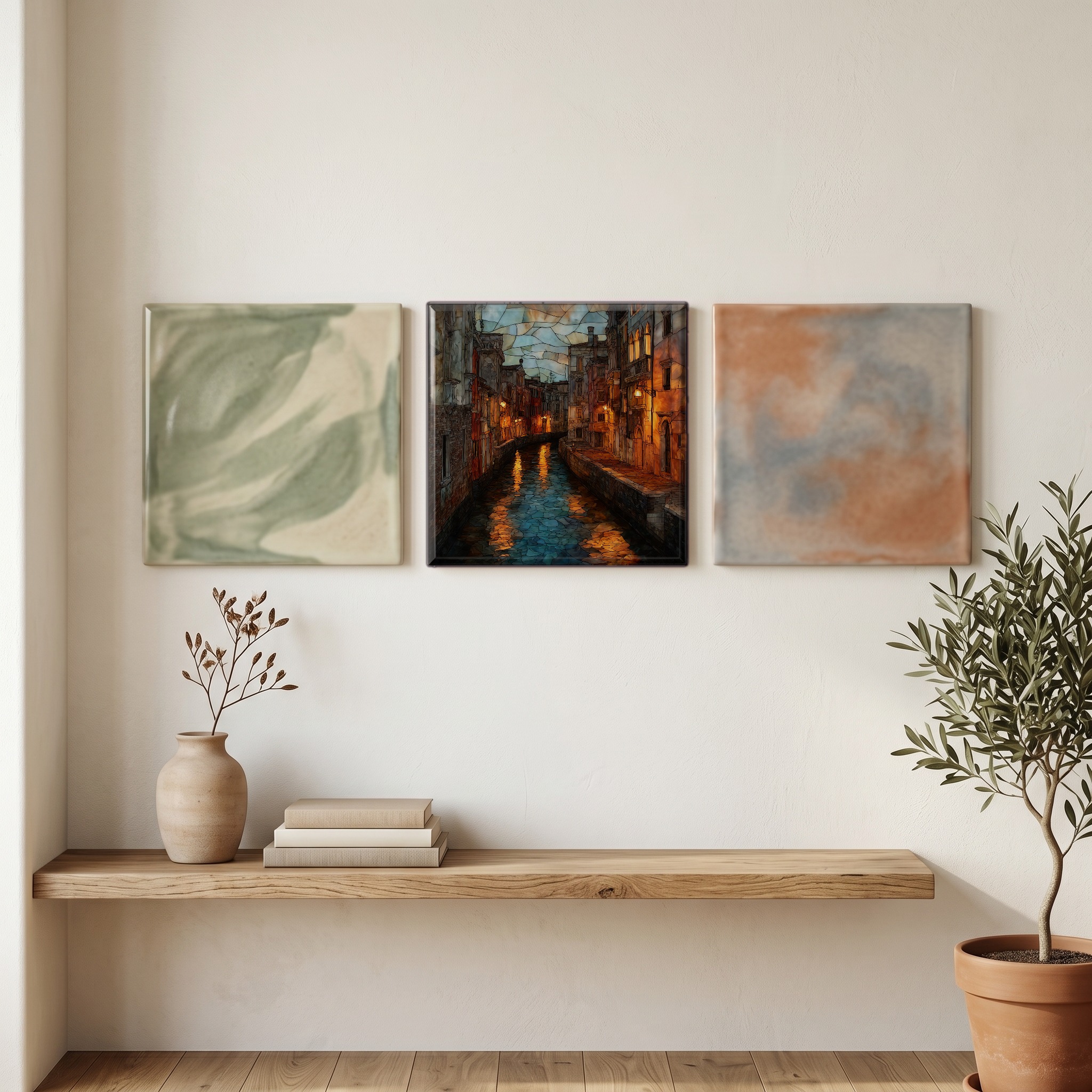
or build a grouping
or build a grouping

Three or five different vistas, hung together — a chapter of places you've been, or want to go.

about Venetian Jewish Ghetto

The place, in three passes.

A little of what's known, in case you fall down the rabbit hole — or want to go see it yourself.
the place

The Venetian Ghetto occupies a cluster of small islands in the Cannaregio sestiere, the northwestern district of Venice. The site is reached on foot from Santa Lucia railway station in under ten minutes, crossing the Ponte delle Guglie and turning into the Sotoportego del Ghetto. Three sections grew over time: the Ghetto Nuovo (established 1516), the Ghetto Vecchio (1541), and the Ghetto Nuovissimo (1633). The central campo, Campo del Ghetto Nuovo, holds the Jewish Museum of Venice and is surrounded by the city's five historic synagogues. About 450 Jews live in Venice today, down from a 17th-century peak of over 5,000. The neighborhood remains a working Jewish quarter, not a preserved relic.

the stone

The Ghetto's most striking architectural feature is its vertical compression. Confined within the gated district by Venetian decree, the Jewish community could not expand outward and so built upward instead. Tenement houses reach six and seven stories where the rest of Venice averages three or four. The five synagogues, called scuole, are concealed above shopfronts and apartments rather than fronted by visible facades: the Scola Grande Tedesca (1528), Scola Canton (1532), Scola Italiana (1575), Scola Levantina (1541), and Scola Spagnola (mid-16th century). Each was funded by a separate immigrant community (German, Italian, Levantine Sephardic, and Iberian Sephardic), and each interior carries the carving and metalwork tradition of its donors.

the visit

The Jewish Museum of Venice (Museo Ebraico di Venezia) in Campo del Ghetto Nuovo is open most days but closes on Saturdays for Shabbat and on Jewish holidays. Guided synagogue tours, departing from the museum, are the only way to see the interiors of the scuole; tour times shift seasonally, and reservations are advised in summer. The Campo itself is freely accessible at all hours and is the better place to spend a slow afternoon. The bronze Holocaust memorial by Lithuanian sculptor Arbit Blatas, installed in 1980, runs along the north wall and lists the 246 Venetian Jews deported in 1943 and 1944; eight returned.

where
Italy · Venice, Veneto
position
45.4453° N · 12.3260° E
the neighborhood

What's nearby.

A handful of named places within an hour's walk or short drive. Some we've already painted; some we will.
0.5 km N
Madonna dell'Orto
Tintoretto's parish church
0.6 km SE
Ca' d'Oro
Gothic canal palace
1 km SE
Rialto Bridge
stone arch bridge
1.6 km SE
Piazza San Marco
central square
2 km NE
Murano
glassmaking island
N
Venetian Jewish Ghetto
Madonna dell'Orto
Ca' d'Oro
Rialto Bridge
Piazza San Marco
Murano
common questions

What people ask.

A few questions we get about Venetian Jewish Ghetto — and about bringing the piece home.
about the place

The Ghetto sits in the Cannaregio sestiere of Venice, in the northwest of the historic city, about a ten-minute walk from Santa Lucia railway station. The main square, Campo del Ghetto Nuovo, is the most photographed point in the district.

The word originates here. The area held a copper foundry, called getto in Venetian, before the Jewish community was confined to it in 1516. The name passed into German and then into every European language to mean a forced enclave.

The Venetian Senate decreed the Ghetto's establishment on March 29, 1516. It is the first place in the world to carry the name. Two extensions followed: the Ghetto Vecchio in 1541 and the Ghetto Nuovissimo in 1633.

The Jewish community was confined behind locked gates and could not expand outward, so additional housing was built vertically. Tenement houses reach six and seven stories where the rest of Venice typically reaches three or four.

There are five historic synagogues, called scuole, each built by a separate immigrant community: the Scola Grande Tedesca (1528), Scola Canton (1532), Scola Italiana (1575), Scola Levantina (1541), and Scola Spagnola from the mid-16th century. Their interiors are visited on guided tours from the Jewish Museum.

Napoleon's troops removed the gates in 1797, ending 281 years of nightly enclosure. The community remained where it was, but movement was no longer restricted. The Italian state granted Jews full civil rights after unification in the 1860s.

The Museo Ebraico di Venezia, opened in 1953 in Campo del Ghetto Nuovo, holds Venetian Jewish ritual objects, textiles, and manuscripts spanning five centuries. It is the only way to enter the five synagogues, which are reached on guided tour from the museum lobby.

about the piece in your home

Yes. The Ghetto is the historical home of many Sephardic and Ashkenazi families now scattered across the world, and a tile of the Campo del Ghetto Nuovo carries that root with quiet weight. A Small or Medium with a handwritten note from the studio reads well as a heritage gift.

The piece works in three families: Old-World Venetian (gilt, layered textiles, dark wood), Modern Jewish home (clean Mediterranean palette, a menorah on a low shelf), and Library-Heritage (oxblood walls, leather bindings, framed maps). The stained-glass and alcohol-ink layers read warm against both light and dark walls.

Heritage-modern interiors, the pairing of family lineage objects with clean contemporary lines, are a growing thread in Jewish home design. A WenderVista tile of a place that holds family history fits the brief better than a print, because the colour lives in the ceramic surface rather than in pigment that fades.

Above a standard sofa, a single Large holds the wall on its own. For a wider sofa or fireplace, a four-tile Mural extends the field; for a focal-wall installation, a nine-tile Mural anchors the whole space. Above a narrow console, a single Medium reads well, or a horizontal Triptych for more presence.

Yes. Order the Dura Satin or Matte finish for those rooms; both are scratch-resistant and tolerant of steam and splashes. The Glossy finish is meant for framed wall art in living areas, while the satin and matte finishes are the ones to install on vertical wet-area walls.

A soft microfibre cloth, dry or with a little water, is all the surface needs. The colour is slowly infused into the ceramic surface under high heat and pressure, beneath a thin glossy finish, so it does not lift with normal cleaning. Skip abrasives and harsh solvents.

Yes. Every piece in the WenderVista atlas is curated and painted in the studio in Knoxville, Tennessee, by Reid Wender. There is no licensing and no third-party stock. The Venetian Ghetto piece is part of our Italy collection and is hand-finished in-house.

if this one stayed with you

A few you might also love.

Hand-picked by the eye that found Sorapis. Same air, same kind of quiet.
— a collection

The Italian Dolomites,
painted slow.

The valleys between Cortina and Val Gardena, the tarns you walk an hour to see, the towers that turn the colour of a banked fire just before dark. Wander the collection by valley, by season, or follow the path Reid walked.

Tre Cime
Braies
Misurina
Sorapis
Cinque Torri
Sassolungo
Marmolada