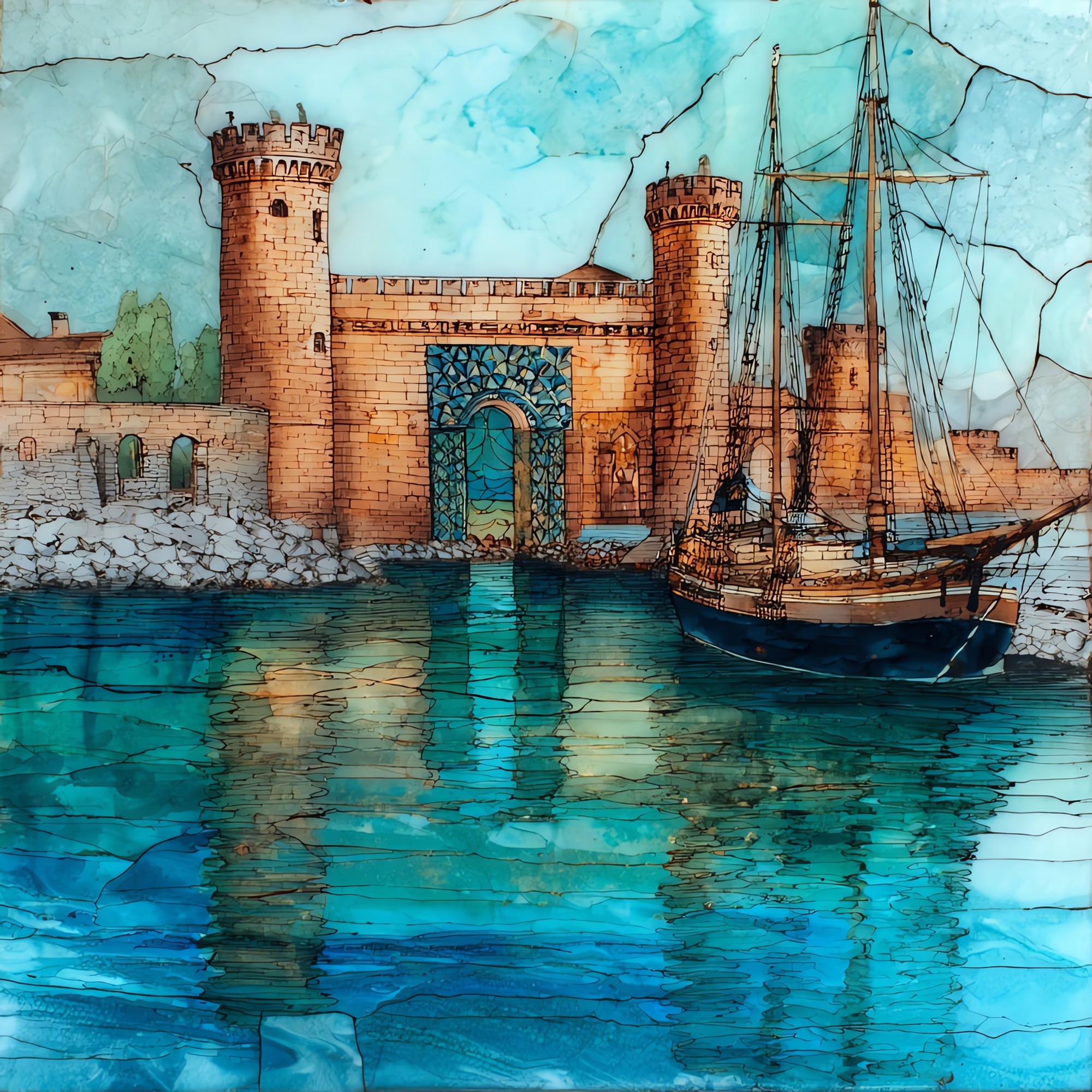
Venetian Arsenal
— a brick city Venice keeps to herself.
Not only on a wall.
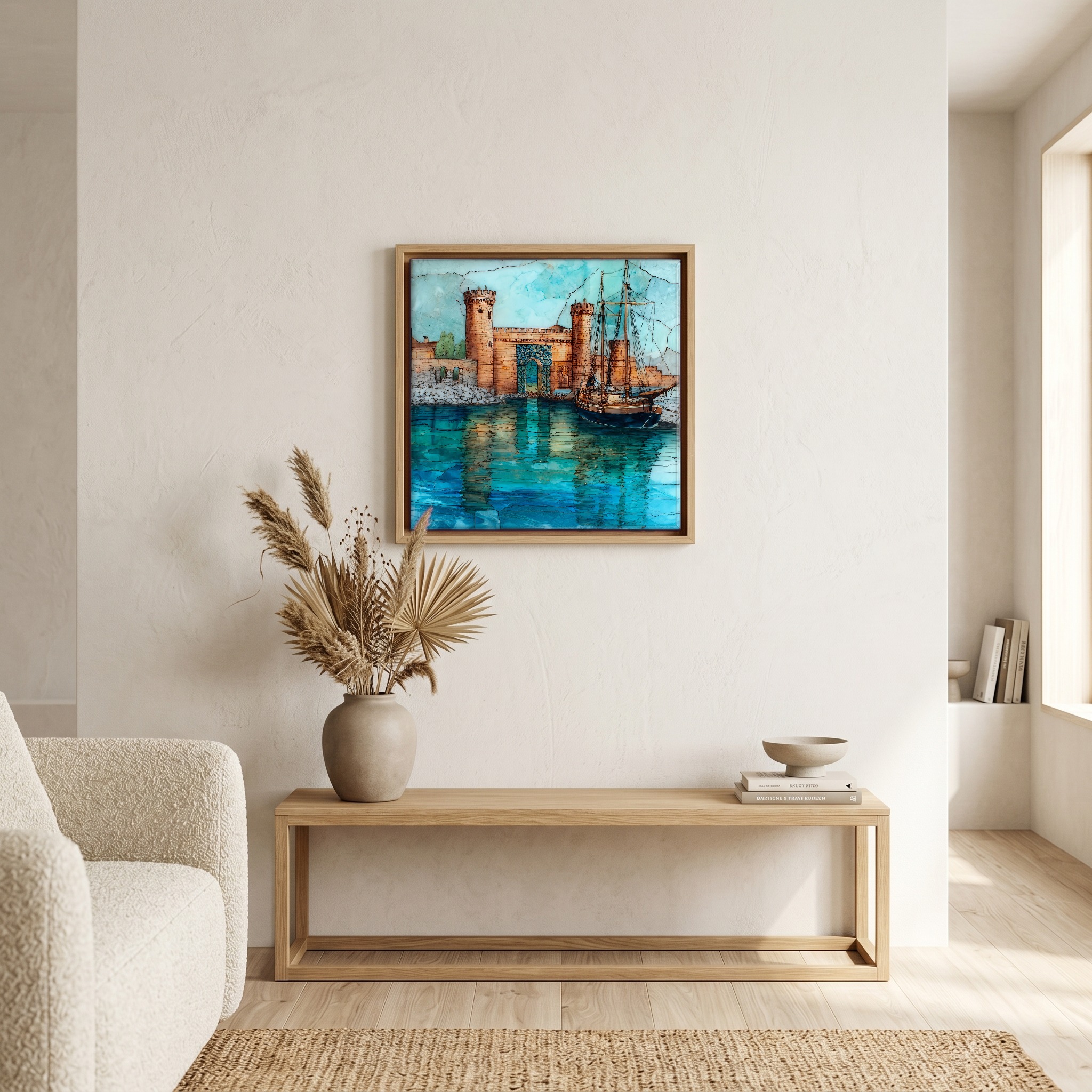
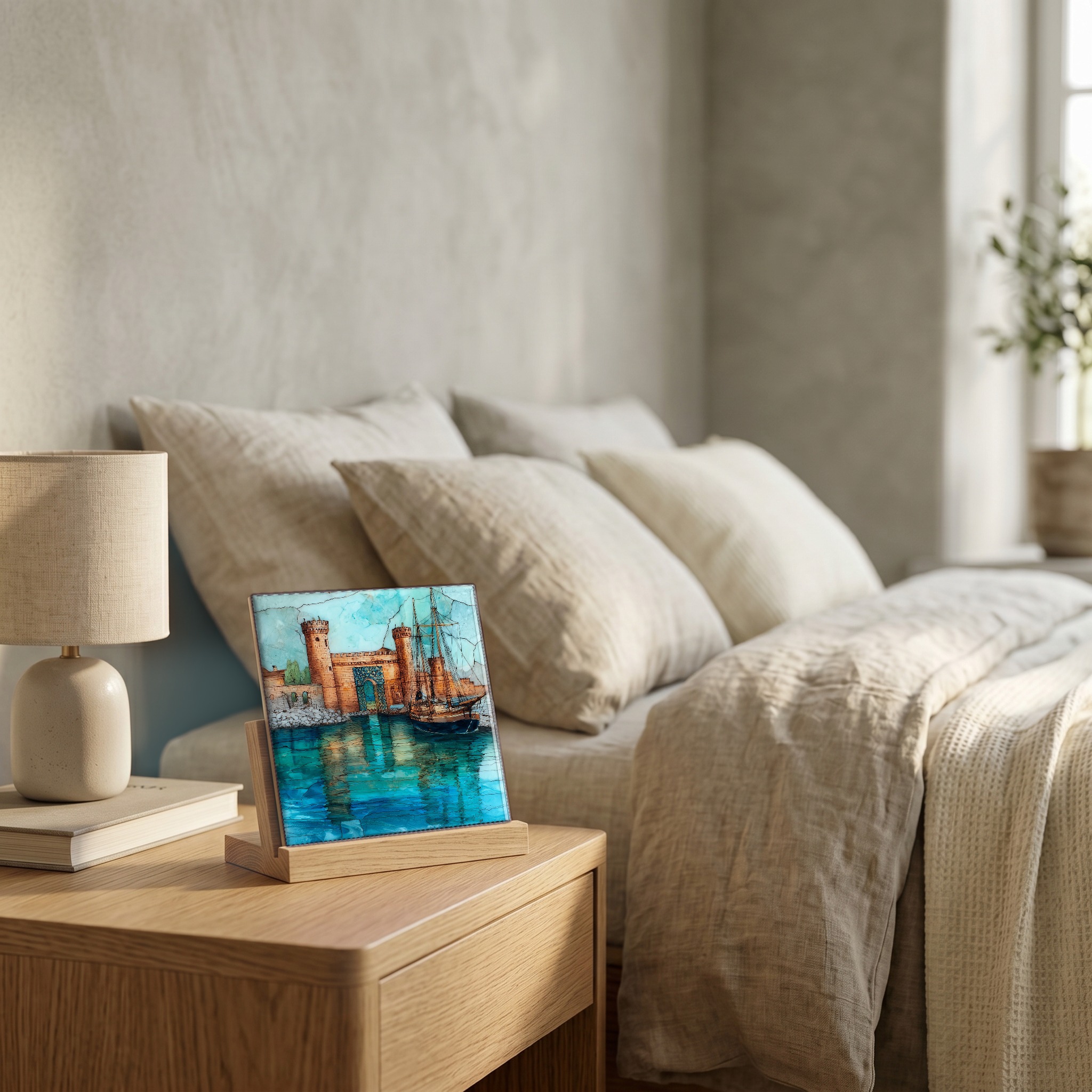
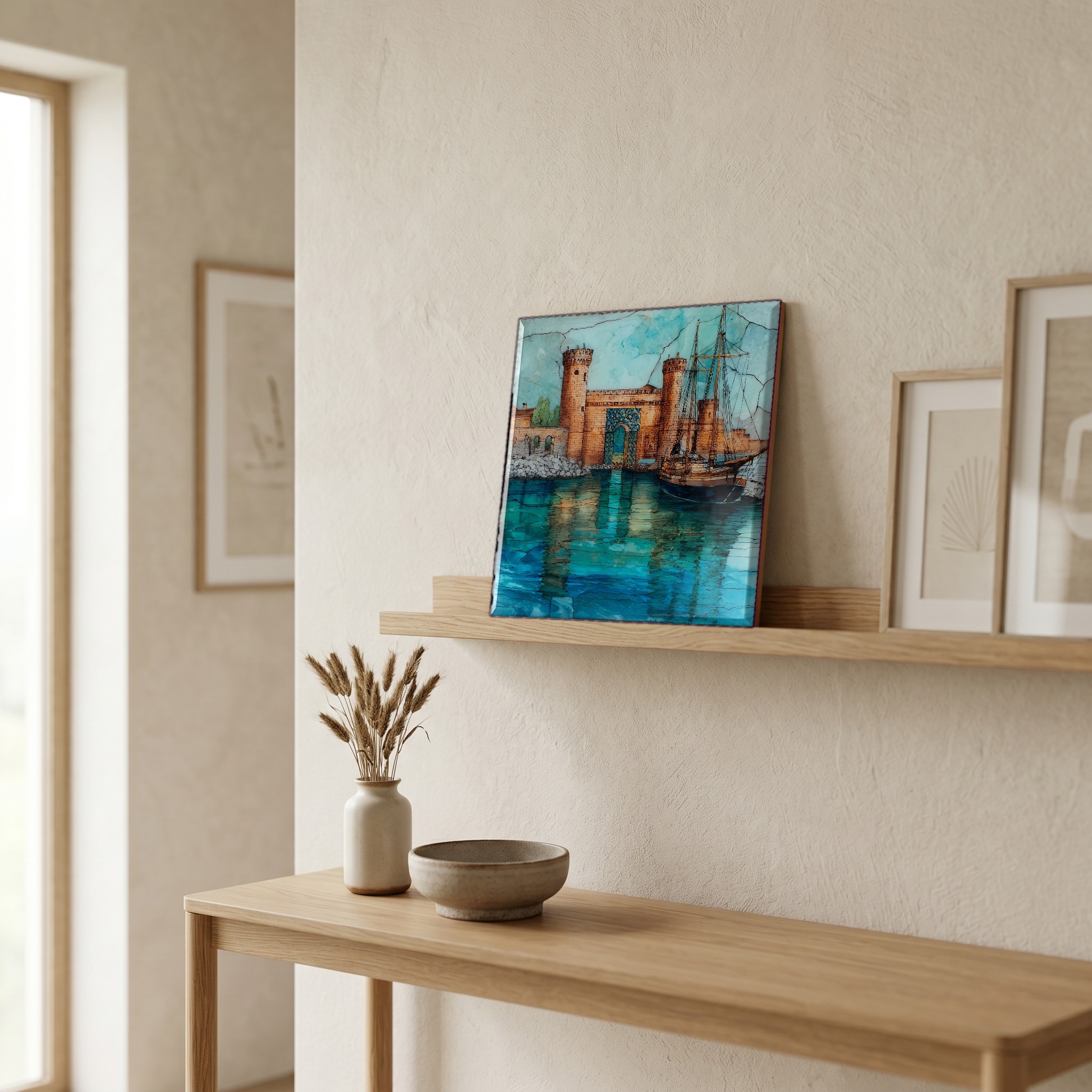
“A walled district in the east of Venice: forty-five hectares of brickyard, dry dock, and rope-walk that built the Republic's fleet for seven centuries. The main gate is the Porta Magna, set with two marble lions taken from Greece in 1687. One of them, the Piraeus Lion, carries runic graffiti cut by Norse mercenaries who served Byzantium in the eleventh century. The Arsenal is mostly closed now; the Biennale opens part of it each year between spring and autumn, and the Italian Navy still holds the rest. From outside the canal gates the basin reads quiet, like a courtyard that doesn't know the sea is just past the brick.
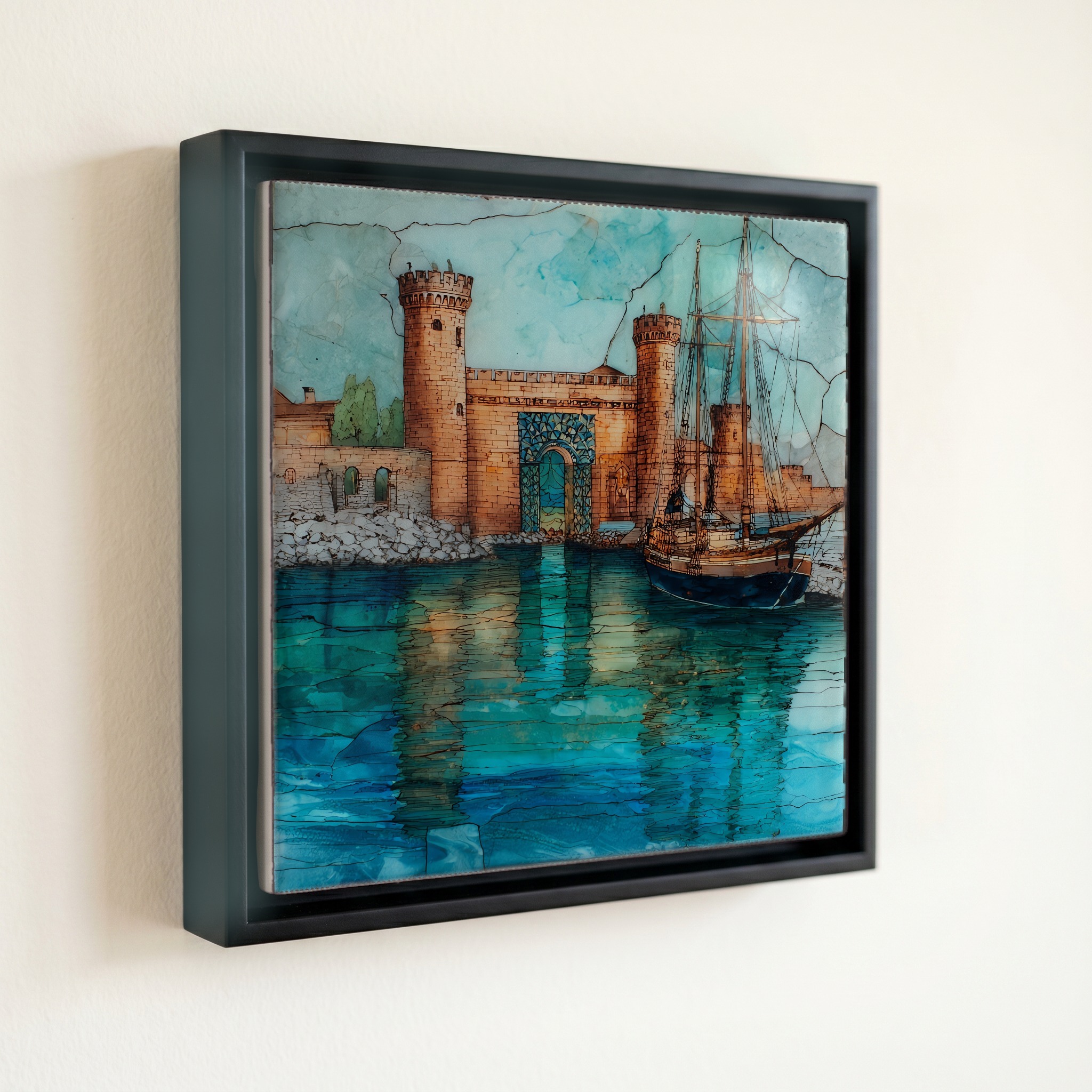
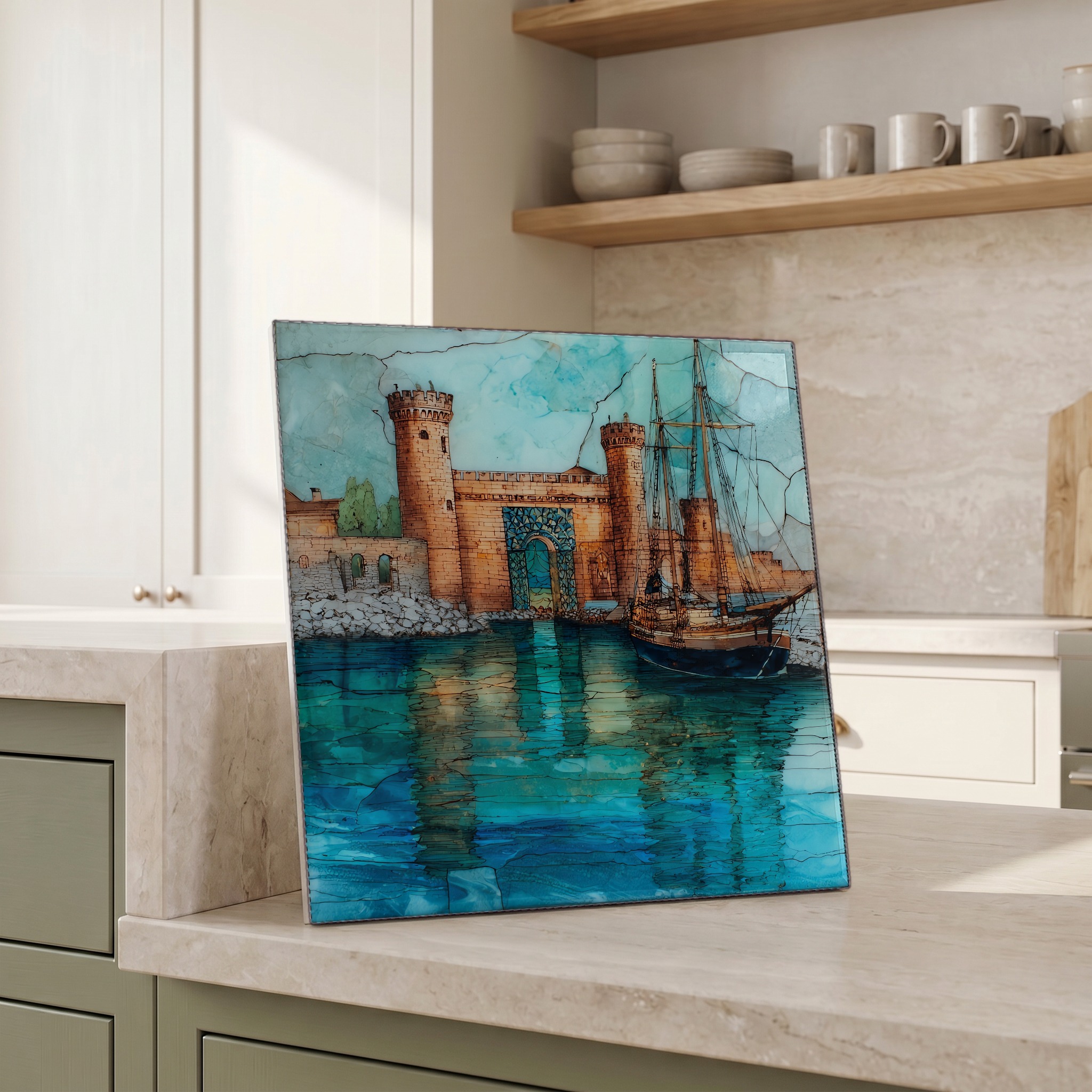
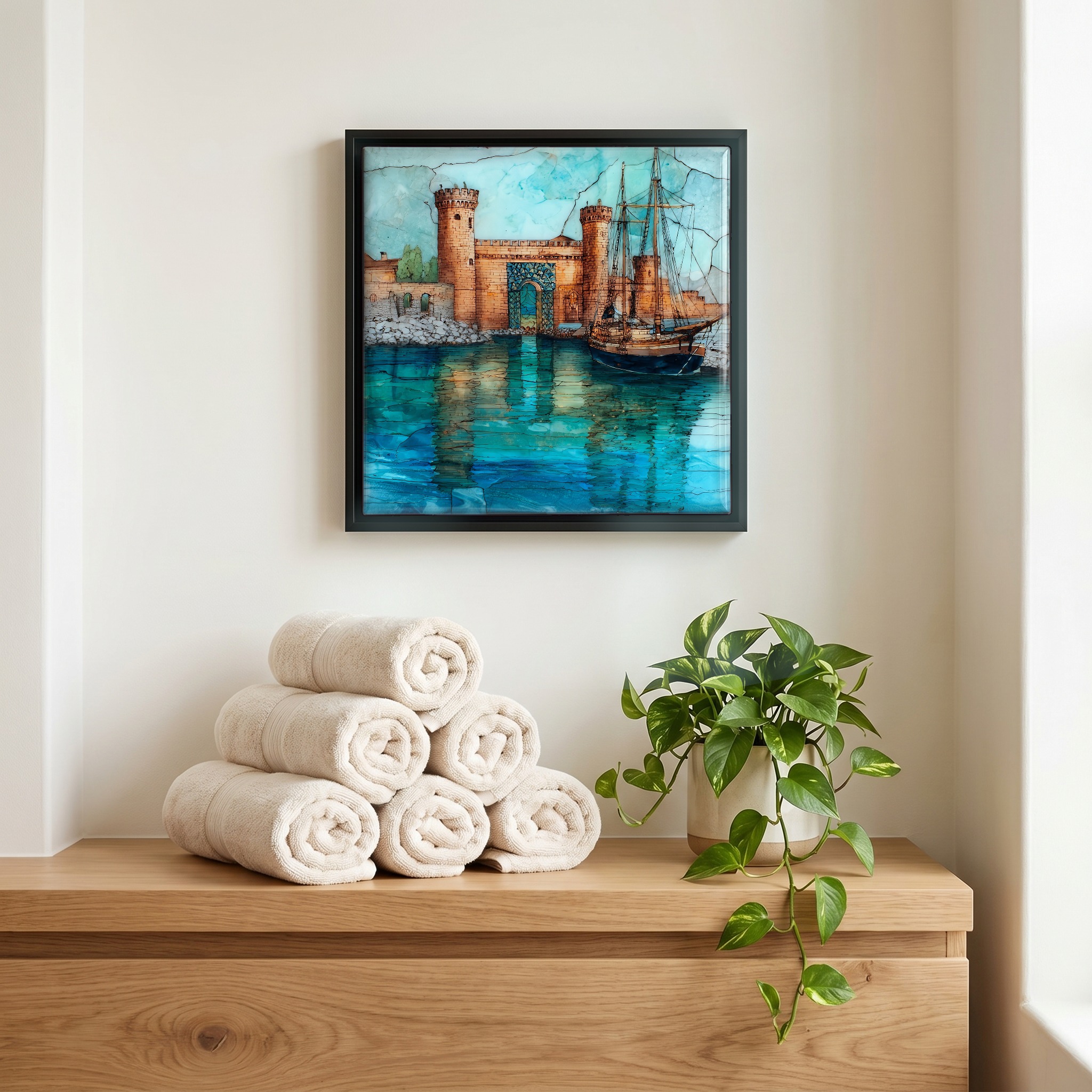
Venetian Arsenal, on ceramic.
Each tile is finished by hand in our Knoxville studio. Artwork is slowly infused into the ceramic surface under high heat and pressure, and rests beneath a thin glossy finish. The colour lives in the surface, not on top of it.
Pick any four 4-inch tiles — National Parks you've been to, a Smokies set, the four seasons of one place. $ for a set of , cork-backed, ready to live on the table.
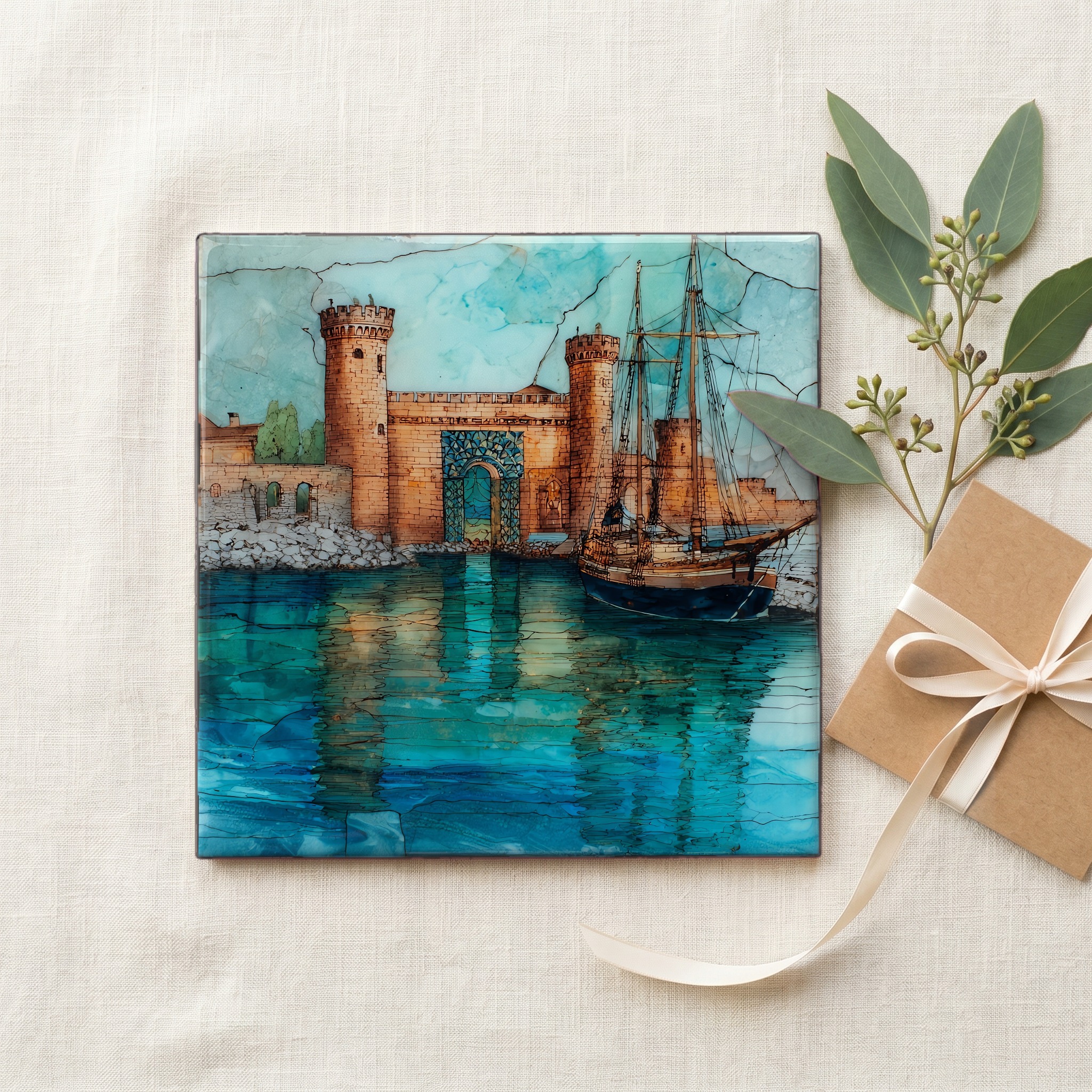
Each tile ships in a kraft box, tied with cream ribbon, with a handwritten note from the studio if you'd like to add one.
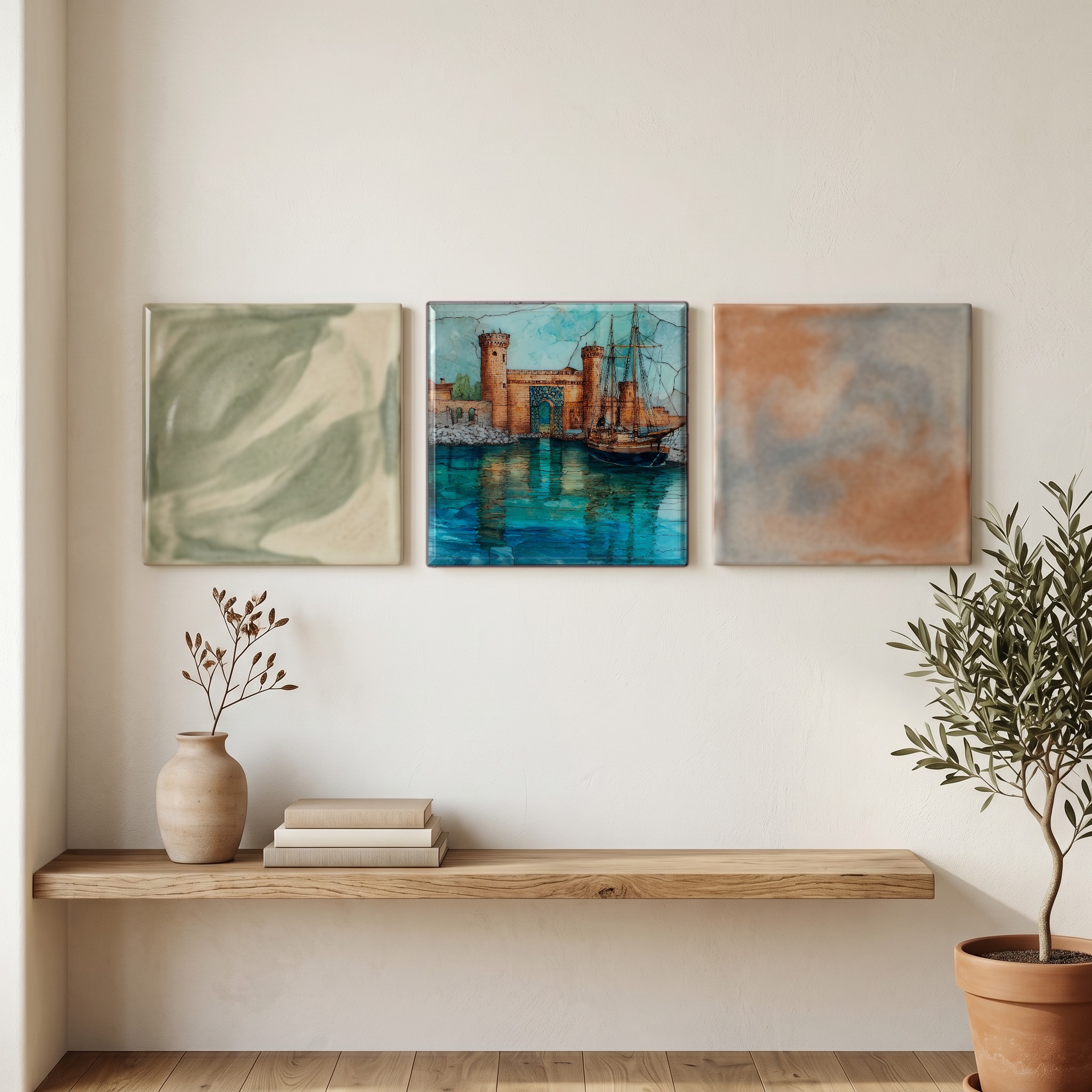
Three or five different vistas, hung together — a chapter of places you've been, or want to go.
The place, in three passes.
The Venetian Arsenal sits in the Castello sestiere, the easternmost district of Venice, about a kilometre and a half east of Piazza San Marco. The complex covers roughly 45 hectares, making it the largest enclosed industrial site of medieval Europe. Its founding is conventionally dated to 1104, though documentary evidence places organised state shipbuilding here from the early thirteenth century. At its peak the yards employed around 16,000 *arsenalotti*, a hereditary guild of shipwrights, caulkers, and rope-makers who lived in the surrounding parishes. Today the Italian Navy retains the northern half; the southern half hosts the international art and architecture exhibitions of the Venice Biennale.
The land entrance is the Porta Magna, finished in 1460 and generally accepted as the first work of Renaissance architecture in Venice. The arch is framed by four marble lions arranged in two groups along the quay. The largest, the Piraeus Lion, stood at the harbour of Athens for more than fifteen hundred years before the Venetian admiral Francesco Morosini shipped it home in 1687 as a trophy of the Morean War. Two faint inscriptions in Scandinavian runes, cut into the shoulders by Norse mercenaries serving the Byzantine emperor in the eleventh century, survive on its flanks, though weathering has rendered them mostly illegible. The Arsenal's outer walls are red brick laid in long Lombard courses, capped by Ghibelline merlons.
Most of the Arsenal is not open to the public. The Italian Navy uses the northern grounds as an active base and exhibition space for the Museo Storico Navale, which sits just outside the western wall on the Riva San Biagio. The southern Arsenale Nord opens during the Biennale's art exhibition in even years and its architecture exhibition in odd years, each running from late April through November. Entrance is via the water-gate at the Tese delle Vergini and a ground-level ticket at Campo della Tana. Outside the Biennale months, visitors typically circle the walls on foot from Via Garibaldi or pass the Porta Magna on a vaporetto down the Rio dell'Arsenale toward San Pietro di Castello.